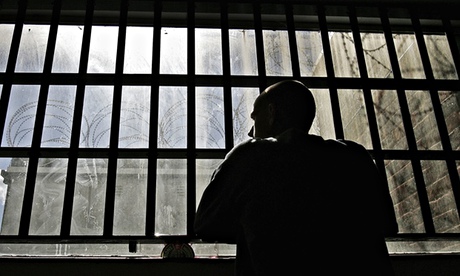
Airedale NHS foundation trust now offers a remote advisor-led service to 15 prisons. Photograph: Peter Macdiarmid/Getty Pictures
Final winter, 93-yr-previous Ernest Towers had entry to arguably 1 of the most transformational resources in healthcare, when his North Yorkshire care house, Sutton Lodge, was linked to Airedale NHS basis trust’s telemedicine service.
For numerous older individuals, unplanned admissions to emergency departments – or even regimen hospital appointments – can be hugely disruptive. The hyperlink to Airedale’s telehealth hub, staffed by nurses knowledgeable in acute evaluation, offers Towers with on phone specialised health-related care close to the clock, albeit by means of video hyperlink.
Rachel Binks, nurse consultant for outreach and critical care at the believe in, argues that higher definition cameras and screens, linked by the NHS’s N3 network, offer a very clear see of the patient. “We can see regardless of whether they are obtaining a problem, say with their breathing, and we can use other products like telemonitoring to assess them,” she says.
Airedale supplies telemedicine to 107 nursing and residential houses, and this yr it is expanding its services with links to a more 180. It has also kitted out 75 patients in their very own residences, typically men and women with continual obstructive pulmonary condition and heart failure.
According to the trust’s figures, in the 12 months from April 2012 telemedicine lowered hospital admissions by 35%, A&E attendances by 53% and bed days by 59% for men and women in nursing and residential care houses. The findings for people with long-phrase situations are related: 45% fewer hospital admissions, a 60% reduction in A&E attendances and a 50% minimize in bed days.
And it claims that feedback from individuals and carers is good. Michael Hebden, manager of Sutton Lodge, says: “We can often contact if we have doubts or queries about our residents. We have utilized it for tips on breathing complaints, a head damage, rashes and chest infections.”
The service reaches across England, as far south as Dartford and as north as Carlisle, and has come a extended way because it started eight years ago with a extremely distinct type of clientele. Airdale’s healthcare director at the time, Dr Richard Pope, saw telemedicine as a way of tackling wellness inequalities and treating hard to reach individuals. Pope was instrumental in initiating videoconferencing consultations with prisoners at Total Sutton maximum security jail.
Rebecca Malin, Airdale’s deputy director of method and organization development, says: “In people early days, because we have been only delivering the services to a handful of prisoners, it brought about scheduling problems. Five prisons does not produce enough referrals to run a total clinic.”
Airedale now gives a remote advisor-led services, such as full trauma, orthopaedic and dermatology clinics, to 15 prisons, which includes Whitemoor in Cambridgeshire which started out generating referrals in April 2014.
The capital outlay for technological innovation is funded by local spot teams, produced in April 2013 by NHS England with duty for contracting and delivering providers for prisoners. Malin points out that the reduction in escort and bed view costs is important. “The minimum value for an escort is £200 and there is really no upper limit if you have a substantial protection prisoner. And if they are super higher protection, then you are into helicopters and guards.”
She says about 50% fewer prisoners have to be escorted to hospital as a end result of telemedicine and that the positive aspects go beyond value cost savings. “If you are a patient in the waiting room it is disruptive to see somebody coming in under guard.
“And then there is the privacy and dignity of prisoners, not currently being paraded by means of an outpatient division in handcuffs.”
Delivering remote care efficiently relies on a resilient technical infrastructure, preferably backed up by e-patient records. Malin says that in spite of the reliance on broadband, there has only been one instance of a care property in which connectivity was also bad to run the service.
A next step for Airedale is to give telehealth for finish of life care. Following pilots, it is rolling out 30 telemedicine units, which will go into the properties of men and women in the last number of months of life.
Malin says the believe in did not at first set out to give telemedicine for finish of daily life sufferers, but feedback from the pilots has been quite positive. 1 woman stated it gave her the confidence to deliver her promise of caring for her husband and allowing him to die in his personal residence.
Are you a member of our on the web community? Join the Healthcare Professionals Network to receive standard emails and exclusive delivers.
Pensioners to prisoners: how telecare can deal with tough to attain patients

Hiç yorum yok:
Yorum Gönder