At the height of the Cold War, a group of health-related specialists swapped stethoscopes for placards in a bid to highlight the risk posed by nuclear weapons.
The Medact archive has just been catalogued at the Wellcome Library, and tells the story of a group of physicians, nurses and other professional health care practitioners, who joined collectively to protest against nuclear weapons, making use of their healthcare knowledge to argue that the bomb was the best threat to human well being and survival.
They were drawn to activism via a sense of specialist responsibility, and I have picked a handful of hidden gems from the assortment which I feel best capture the spirit of this courageous group.
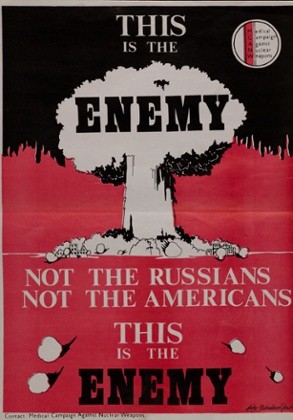
This poster exhibits how Medact– or the Health care Campaign Against Nuclear Weapons (MCANW) as it was then identified –tried to strip the nuclear situation of East versus West dogma, campaigning as an alternative from a place of healthcare authority.
It also provides a nod to the origins of the Worldwide Doctors for the Prevention of Nuclear War (IPPNW), an umbrella organisation born out of an unlikely alliance among two cardiologists from either side of the Iron Curtain: Bernard Lown from USA and the Russian Evgeni Chazov.
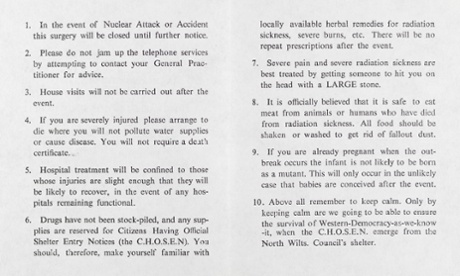
This leaflet responds to a 1985 government circular outlining programs for the NHS and the treatment method of casualties in case of war. The advice was heavily criticised by several physicians for offering unrealistic expectations of how the healthcare profession would cope with an assault.
It charts the tongue-in-cheek, but deeply serious, response of one doctor to the total inadequacy of civil defence preparing. It reveals specialist anger at the reassuring tone of the now-infamous Property Office public information video, Safeguard and Survive (accessible below).
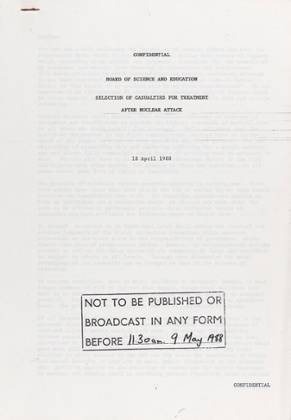
Spurred on by the lack of concrete evidence about the health-related impact of a nuclear attack, the British Health-related Association’s Science and Training Board launched its very own inquiry in 1981, seeking at the health-related effect of nuclear weapons and assessing whether civil defence could ever be satisfactory.
The BMA’s initial report fully contradicted the claims created in Defend and Survive. It identified that the results of a single megaton explosion more than the United kingdom would lead to casualties which would overwhelm the NHS.
The BMA published two additional reviews in excess of the program of the 1980s, which nonetheless make for chilling reading through. Supplying a stark and devastating evaluation of what daily life after a nuclear explosion would be like, they also highlighting the ethical dilemmas about the treatment of nuclear casualties, including the not possible question of choosing who would be permitted to live and who would be left to die.
The BMA reports have been a wake-up contact. They have been crucial evidence for the anti-nuclear campaign, and supplied a potent counter-argument to the Government’s civil defence programme.
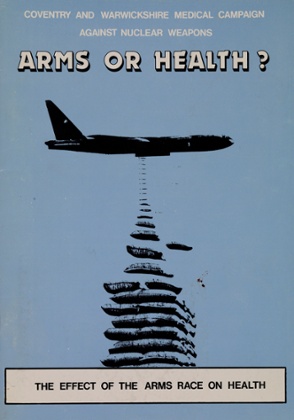
One argument deployed in defence of nuclear weapons was that their manufacture stored people in jobs.
The Health care Campaign’s Arms Conversion special panel attempted to counter this declare, focusing on how the capabilities and companies utilised for military industries could be converted for peaceful functions.
The Arms Conversion Panel, along with the Coventry Alternative Employment Research (CARE), argued that extremely skilled defence contractors could simply be retrained. They known as for military business to be redeployed toward socially beneficial manufacturing, like the building of health-related devices and disability aids.
This publication demonstrates how the Healthcare Campaign adopted financial, as properly as emotive arguments, addressing fears of unemployment and challenging the standing quo.
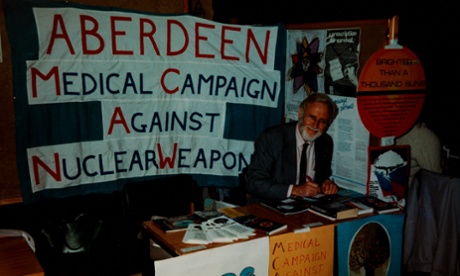
There is a excellent collection of images in the Medact archive, some of which have lately been digitised and will soon be freely available on Wellcome Pictures.
These photos demonstrate the human side of the Campaign, capturing the environment of protests, meetings and rallies. Tucked away in these files are a couple of pictures of the Campaign’s exhibitions and displays. As an archivist, it is uncommon to get a sense of the layout of exhibitions or how men and women responded at the time.
These photographs give us a sense of just that, helping us to recognize how Medact used campaigns and exhibitions to engage the public. My favourite pictures are individuals aboard the group’s legendary Medical Campaign buses.
Medact is nonetheless lively these days, and campaigns for global wellness on issues relevant to conflict, poverty and the environment. If you want to locate out much more about the work of this fascinating organisation, the archive is now accessible for analysis at the Wellcome Library, and searchable on our online catalogue.
Elena Carter is a venture archivist at the Wellcome Library. More than the previous 6 months, she has been cataloguing the Medact archive.
Protest and Survive: highlights from the Medact archive | Elena Carter

Hiç yorum yok:
Yorum Gönder