places etiketine sahip kayıtlar gösteriliyor. Tüm kayıtları göster

31 Mart 2017 Cuma

Experiences of eating disorders: "I"ve been to many dark places"

Anonymous, 22
The first time I was depressed, I was 12 and I didn’t know I was ill. I didn’t even know what depression was. After a family feud and several years of being a victim of bullying, I didn’t want to live any more. I remember standing on my balcony, hands on the railing, and thinking: “Should I jump?” I thought that I was a coward, because I was afraid of dying more than I hated living. I began to self-harm, and my mental illness had the sting of a pair of scissors cutting into my skin.


I was 16 when I decided to lose weight, so the boys and the girls wouldn’t laugh any more, and perhaps, just perhaps, someone, one day, would even desire to touch me. Three years later, I was sitting on the toilet bleeding because I had taken too many laxatives, and my mental illness was as red as blood.


At 19, I gained all the weight back and along with it came anxiety and depression and the sense of failure. I had moved in London, away from my family, to study and build a new life. So why wasn’t I happy? Why had the balcony turned into a tube platform and I was wondering again: “Should I jump?”


I lost the weight again at 21, and by 22 things were OK (in a precarious, risky balance). I decided that I needed help before things got worse again. Now, once a week, I meet with a therapist, thanks to the NHS, and she asks me how my week was, and I am as honest as I can be.


I was as pretty


As a flower


Yours to pick


And then left to wither


Now


I want to be as free as the wind


As tall as a mountain


As fierce as a lion


And beautiful


Like the stars


That keep shining


After they’re long gone.


Jessica Secmezsoy-Urquhart, 23, Hamilton, Scotland, master’s student


Jessica Secmezsoy-Urquhart


Jessica Secmezsoy-Urquhart: ‘I will always have multiple conflicting sides to myself but I’ve found ways to bring them together more now.’ Photograph: Jessica Secmezsoy-Urquhart

This photo is called Alone Together, and represents the duality of my identity. I’m a recovered sufferer of an eating disorder, an abuse survivor and I was hospitalised twice before the age of 15 with depression caused by the social effects of Asperger syndrome. I have everything from attention deficit disorder to anxiety and I’m chronically ill with a connective tissue disease. And yet I’m mentally better than I’ve ever been and have found my place at university, but to get there I’ve been to many dark places.


I had two selves, like in this image – the real one that was disgusting, pathetic and deserved to be dead and mistreated, and one that others saw that was normal and good. I will always have multiple conflicting sides to myself, but I’ve found ways to bring them together more now. Recovery is possible. I’m proof.


Anonymous, 29
I have suffered with anorexia nervosa since I was 12 and have been in and out of several inpatient units. As an adult, having been a service user for the past seven years, I have seen a rapid decline in the quality of services available, not just for eating disorders, but across the whole of mental health.


NHS cuts have led to decreased beds being available for desperately ill patients, resulting in more strain on community services. Working hours and staff shortages have also put a huge strain on nurses in this field, resulting in reduced quality of patient care.


Treatment in all areas of the NHS, but particularly mental health, is being severely compromised. I am currently a patient at a hospital in south London, on the eating disorders unit. Staff shortages, lack of trained nurses and increasing demands on the few nurses on the ward, are seriously jeopardising patient care. In some cases patients are being left to deteriorate to such extremes that they have required nasogastric feeding to save their lives.


Suz Hemming, Aylesbury


Suz Hemming


Suz Hemming: ‘It took six years of my life just to get past the shape and size of the thing I have that keeps me alive – my body.’ Photograph: Suz Hemming

This photo is representative of my battle with mental illness, which I have lived with from a young age. I have borderline personality disorder, that frequently leaves me with this overwhelming sense of identity diffusion and a profound confusion and disparity between my image and my body; my thoughts and who I am. This photo creates a way of capturing who I might be in the one moment, because my rapid mood fluctuations and unstable sense of self often leave me with this idea of my life as a string of photos, disconnected from one another, with no narrative or person a its core. Its black-and-white presentation symbolises the black-and-white, all-or-nothing thinking style that is the cornerstone of my illness. It’s what keeps me stuck, what keeps me searching in the mirror for an answer to the question: “Can I be just one person, a whole, not fractured with flashbacks from my past?”


Also, being in stable recovery from anorexia, the photo asks what is it in a piece of glass that has so much power? Not just over me but over you too. It took six years of my life just to get past the shape and size of the thing I have that keeps me alive – my body. This photo asks me who and what is real. Is it me? Is it her? Is it her image? Or mine? And whether any of those things can be the same as each other – each a part of a bigger part, of a much bigger picture of my journey towards living a life in a “working recovery” from acute mental illness.


In the UK, the Samaritans can be contacted on 116 123.
In the US, the National Suicide Prevention Hotline is 1-800-273-8255.
In Australia, the crisis support service Lifeline is on 13 11 14.


Experiences of eating disorders: "I"ve been to many dark places"

20 Ocak 2017 Cuma

6 Surprising New Places Nuts Are Hiding

My younger son has food allergies and I’m absolutely obsessive about helping him steer clear of peanuts and tree nuts. Yet somehow, last month, I brought him home a pistachio sandwich.


Let me explain: I ran to the deli to buy chicken salad, but it was next to a salad with nuts. Trying to avoid that cross-contamination risk, I pivoted and grabbed Gus, who is 10, a slice of an Italian Combo hero, stupidly without asking what was in it. One bite in he said, “My mouth feels itchy and numb.” I ripped apart his sandwich and found a meat dotted with green flecks…oh no, pistachio? A quick call to the deli revealed he had eaten mortadella—an Italian pork studded with one of his worst allergens.


Thankfully, after an injection of epinephrine and a few hours in the ER, Gus was fine. But my husband and I were traumatized. Where else were there nuts lurking? Raising a child with a food allergy sometimes feels like being a hockey goalie, to use an analogy from Gus’s favorite sport: You’re always guarding against not only the obvious threats (that Thai takeout) but also the surprise wraparound ones you never see coming (nut meat, I’m talking to you).


And, in a way, having a food allergy is a paradoxical health problem: You are perfectly healthy. And yet the wrong food, in the wrong amount, without prompt administration of the right amount of epinephrine, can kill you. To make sure that we know all the wild cards out there, I consulted Sujan Patel, MD, an allergist/immunologist at New York University Langone Medical Center in New York, and David Stukus, MD, a Columbus-based spokesperson for the American College of Allergy, Asthma, and Immunology.


Chili


In 1986, a freshman at Brown University tragically died after she ate restaurant chili thickened with peanut butter. More recently, a 28-year-old dad in England reportedly died from anaphylaxsis after having a chili burger that likely contained peanuts. PB may not be a classic ingredient in this comfort food, says Dr. Patel, “but with chili cook offs and all kinds of ways to prepare things, you shouldn’t assume it is safe.”


RELATED: 31 Everyday Things You Can Be Allergic to


Still, the even more common danger in Mexican joints is the mole sauce. While mole’s most famous ingredient is chocolate (itself a potential disaster for the nut-allergic), peanuts or peanut butter may also be in the mix. “Sauces in general are dicey,” warns Dr. Patel, adding that Indian and Thai cuisines are particularly tricky. “Indian cooking uses cashews and almonds made into a paste and then used as a thickener.”


French fries


Most frites are a-ok, but when grabbing them out, do ask about the oil. Peanut oil is the go-to at some chains such as Five Guys, as well as smaller restaurants. “The interesting thing about peanut oil,” says Dr. Patel, “is that when it’s made in the U.S. it is so refined that almost nobody with a peanut allergy would react to it. But the problem is we don’t know if it is one from China, which are much less refined. We don’t tell people this because we don’t want them to take a chance.”


My family got stumped by cottonseed oil on a trip to Florida. (“Siri, is cottonseed a nut? Help!”) Nope, cottonseed oil, I’ve since learned, is not a nut, though it’s pretty terrible for your health.


Deli meat


My son’s kryptonite—mortadella—is a fancy Italian bologna that was banned from import to America for years due to an Italian outbreak of African swine fever, according to The New York Times. More expensive than bologna and speckled with fat and pistachios, it isn’t a big seller in the U.S (which almost explains how I could be half Italian-American, raised on antipasto spreads, and never heard of it). “A real fluke,” is how Dr. Patel described my son’s close call. And yet in 2016, BJ’s Wholesale Club issued a recall of deli meats for undeclared pistachios; they had been sent Citterio’s Mortadella by mistake and sold it—along with other meats sliced on the same equipment—without listing pistachio on the labels.


So how do you make sure your cold cuts don’t come with an unwanted side of nut residue? “Ask the person at the counter about any potential source of cross contact,” advises Dr. Stukus, who is also an associate professor of pediatric allergy and immunology at the Ohio State College of Medicine.  And if they’re unsure, steer clear and opt for a prepackaged lunch meat with a nut-safe label.


Cocktails


Better ask what’s in that signature cocktail before you knock it back. Major vodka makers now sell bottles infused with hazelnut, almond, and other tree nuts. Frangelico gets its flavor from hazelnuts and Nocello from walnuts. And here’s a who knew: Many gins, including Bombay Sapphire, are flavored with almonds. Not even beer is completely safe. Brown ales may contain peanuts and/or macadamia, walnut, or other tree nuts.


Pet food


Is your toddler at the stage where she puts everything in her mouth? If she’s allergic to peanuts or tree nuts, watch out for your dog food, warns Dr. Patel. Pet foods are not subject to The Food Allergen Labeling and Consumer Protection Act—a law mandating that food labels clearly list out in plain English if they contain any of the top eight most common allergens (peanuts, tree nuts, milk, eggs, wheat, soy, shellfish, fish). But a scan of that puppy chow label should alert you to peanuts, he adds. (When in doubt, call the manufacturer.) Bird food almost always contains nuts, or has a nut warning. Our family’s solution is to buy food-grade sunflower seeds (labeled as nut-safe) for our outdoor feeders.


Gluten-free treats


A gluten-free cupcake or bread may seem harmless for all, but don’t be fooled: It can pack lupin, “a legume frequently used as flour in gluten-free products that can cross react with a peanut,” says Dr. Stukus. He notes that there have been many reports of people with peanut allergies having reactions from lupin. Also watch out for almond flour, sometimes used to hold things together in G-free sweets.


Another 2017 concern? Nut butters popping up in unexpected places. “I had a mom whose child had a reaction to kale chips,” shares Dr. Patel. “Randomly, they were made with cashew butter.”


To stay one step ahead, read labels every time (ingredients on familiar products can change). And, as I learned the hard way, always ask, even when it seems unlikely that a dish would contain nuts. When it comes to managing food allergies, you can never be too careful. My son knows this well: Hand him a banana and he’ll ask you, “Are there nuts in it?”


6 Surprising New Places Nuts Are Hiding

19 Ocak 2017 Perşembe

11 Unexpected Places Mold May Be Hiding in Your Home

When Dana Chianese noticed a musty smell coming from her son’s Sophie the Giraffe teether, she decided to cut it open. Inside the popular baby toy, she discovered a “science experiment”: The latex figurine was lined with “smelly, ugly” mold, Chianese, a pediatric dentist, recently told GoodHousekeeping.com—even though she had always cleaned it according to the instructions (with hot, soapy water and a damp sponge) and never submerged it.


She’s not the only mom to make that disconcerting discovery: Last February an Amazon customer posted a photo of the inside of her child’s Sophie, also covered in mold. Yikes.


But allergist Janna Tuck, MD, a spokesperson for the American College of Allergy, Asthma, and Immunology, isn’t surprised by these reports: “Teething infants drool a lot and I think it would be impossible to keep the inside of a well-loved Sophie completely dry,” she told Health via email. “Mold can grow on almost any surface if there is enough moisture.”


RELATED: 20 Allergy-Control Products to Sneeze-Proof Your Life


The good news is that a moldy chew toy isn’t as risky as it sounds: “While disgusting, the amount of mold in a toy would not likely cause significant harm unless the child has an immune deficiency or a mold allergy,” says Dr. Tuck, who runs a private practice in Cape Girardeau, Missouri.


The not-so-good news? Toys aren’t the only unexpected objects that can harbor fungi (mold is a type of fungus). Mold may be lurking in your washing machine, dishwasher, blender, or refrigerator, says Dr. Tuck. It can be found in the soil of potted plants, on ceiling fans, and in window AC units. In your bathroom, it might be growing in your toilet, sink—even in the bristles of your toothbrush, or inside your electric toothbrush. 


When mold grows in hidden places, it can cause real problems for people who are allergic. “They can suffer with allergic rhinitis symptoms,” Dr. Tuck says, such as itchy eyes, congestion, runny nose, and sneezing. Or the mold may worsen their asthma symptoms.


RELATED: 31 Everyday Things You Didn’t Know You Could Be Allergic To


So what can you do to keep your home fungi-free?


To reduce the growth of mold in your washing machine and dishwasher, you can regularly run the “clean cycle” with diluted bleach. Most manufacturers recommend monthly cleanings, or whenever the machine begins to smell musty, says Dr. Tuck. Check the owner’s manuals to see exactly how much to dilute the bleach before using. “Vinegar is a very good substitute,” she adds. “I personally run vinegar in my dishwasher.”


When you’re taking a bath or shower, always use the vent in the bathroom. Also be sure to turn on the vent in the kitchen whenever you’re cooking and washing dishes, says Dr. Tuck, “to reduce spikes in ambient humidity.”


After you use any food prep vessel (like your blender), clean it promptly and dry it fully, so no moisture is left sitting inside. And replace your toothbrush every three months, says Dr. Tuck.


Another place mold likes to hide: “cold” spots in your home. If you have rooms or closets that seem cooler than the rest of the house, leave the doors open to improve air circulation, and help prevent condensation. Leaving the fan in your central heating/cooling unit on at all times can help as well. ”Mold needs water to grow. Anything you can do in your home to reduce humidity, condensation, or pooling of water goes a long way in reducing mold growth,” says Dr. Tuck.


11 Unexpected Places Mold May Be Hiding in Your Home

15 Kasım 2016 Salı

Expedition medicine: save lives ... and go places

It’s 5am, just before sunrise in the Himalayas. We wake to heavy snowfall, which has slowed our progress to the summit of Kala Patar. It soon becomes clear we will have to wait for the weather to improve. I am the medic with a group of students and staff from special educational needs schools from across the UK. We hunker down for the day and occupy ourselves playing games while we await a weather window.


The role of a medic on expedition has many faces, from doctor to chef, photographer, teacher, pot-washer, latrine-digger and counsellor. You have to earn your salt as a fully-fledged team member, which means being able to fulfil all of these roles and comfortably complete the expedition itself.


For me, expedition medicine offers an exciting combination of the two things I love: medical practice and the outdoors. I have worked all over the world in some incredible places, from Iceland to Belize, the Philippines to Tanzania, Nepal and the Arctic. But it can be challenging combining this with working in the NHS. So how do you go about working abroad as an expedition medic?


Your morning commute, as a medic on expedition in Nepal.


Your morning commute as a medic on expedition in Nepal. Photograph: Extreme Medicine

What opportunities are available in expedition medicine? How do you find out about them?


There are a multitude of optionsfor medics to accompany expeditions or projects overseas. Companies running charity trips often seek medics, and there are also expeditions organised by universities, aid or relief work, commercial expeditions and TV work, although this is harder to come by.


Opportunities are advertised in a variety of ways. I was working in a small emergency department in the north of Scotland when I was contacted about a job in Nepal at short notice, but it is also worth following World Extreme Medicine’s Facebook page for the latest opportunities.


What qualifications do you need? Are there any personal qualities that help?


Doctors usually need to be at least two years qualified; other medical professionals should follow guidance from their governing body. You need to attend an expedition medicine course, to learn how to apply your medical skills in remote environments. World Extreme Medicine run courses several times a year all around the UK and abroad.


Experience in emergency medicine and general practice stand you in good stead to deal with the wide range of medical problems on expedition, and the former is usually a prerequisite. You should have a good working knowledge of managing fractures, wound management and dressings, so spending time learning from nursing staff in your department cannot be underestimated.


Crucially, you need to make sure you possess all of the technical skills required of the expedition itself, from winter mountain skills to simple camp-craft, to ensure you are comfortable operating in extreme environments. It helps to be naturally sociable and able to fit easily into a team, and it goes without saying that you need to be physically fit.


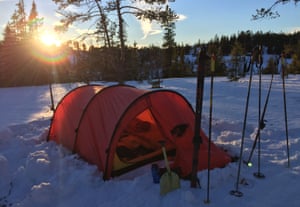
Expedition medicine, camp


‘Make sure you possess all of the technical skills, from winter mountain skills to simple camp-craft.’ Photograph: Claire Grogan

When is a good time to take time out of a career? How do you ensure you will get a job on your return?


There are natural career breaks in the traditional training paths in medicine and it is now common for doctors to undertake an “FY3” year to pursue a particular interest. Some people warned me that taking time out could pose problems for job applications on my return, but my experience was that these were unfounded. At interviews I was often asked more about what I had learned from my experiences as an expedition medic than other details on my CV.


Now I work full-time in the NHS, and it is possible to get away on trips within annual leave restrictions with some creative rota management and a few swaps here and there.


What kind of situations might you face?


Most problems on expedition are minor but occasionally full casualty evacuations need to be carried out, so it is worthwhile ensuring you have a robust system in place for this eventuality. My biggest tip is try to anticipate the unexpected.


In spring 2015, I was volunteering at a high-altitude rescue post in the Gokyo Valley in the Himalayas, running awareness talks on altitude sickness and providing medical assistance to trekkers and porters. A colleague and I had just finished the Saturday morning clinic when a 7.8 magnitude earthquake struck. We knew immediately what was happening and ran outside to safety. Bad visibility masked our view but we heard avalanches roaring in the valley around us.


Over the coming days we established communication with home and our colleagues further up the valley, and helped our local community get back on to its feet. Our rescue post became a place for people to gather and support each other.


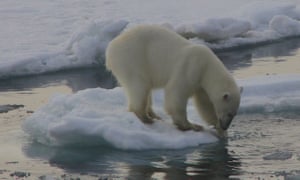
Expedition medicine


‘Try to anticipate the unexpected’ – such as polar bears. Photograph: Claire Grogan

Earthquakes had been one of the risks we discussed before leaving the UK, and we had agreed to always have a grab bag with water, passports and food ready to go in an emergency. It seemed like overkill at the time, but that small amount of forethought really helped. Now I have a grab bag on every expedition, and always keep a head torch by my bed in case of emergency.


How can I gain additional qualifications or experience for this kind of work?


I teach at World Extreme Medicine and we run courses in expedition and wilderness medicine in the UK, as well as environment-specific courses all over the world, such as polar medicine in Arctic Norway, jungle medicine in Costa Rica, and mountain medicine in Nepal. It is a fantastic way to learn when you are immersed in the environment.


In conjunction with University of Exeter Medical School, WEM also run a Masters in Extreme Medicine which may be of interest to those looking to pursue a formal qualification or research in this area.


The World Extreme Medicine Conference, in Edinburgh from 18–21 November 2016, is set to be a brilliant gathering. I love going because it is a chance to meet, share experiences and learn from world-renowned experts in the medical fields of pre-hospital care, expedition, endurance, disaster and humanitarian medicine, and sport, space and extreme medicine.


Claire Grogan is an emergency medical doctor, honorary clinical lecturer at the University of Exeter Medical School and fellow of the Royal Geographical Society.


  • Register here for the World Extreme Medicine Conference and enter the code EXTREMEMEDGUARDIAN10 for a 10% discount on tickets.

Join the Healthcare Professionals Network to read more pieces like this. And follow us on Twitter (@GdnHealthcare) to keep up with the latest healthcare news and views.


Expedition medicine: save lives ... and go places

22 Ağustos 2015 Cumartesi

Outside regions in Victorian eating places to be a smoke-free of charge zone from mid-2017

Smoking will be banned in the outdoor dining locations of all eating places, cafes, get-away stores and licensed premises in Victoria, the state’s well being minister, Jill Hennessy, announced on Sunday.


But the ban will not consider effect until August 2017, with the government set to seek the advice of with well being and sector groups more than the coming months to flesh out the detail of the reforms.


Connected: Cancer Council unaware tobacco giant behind FOI request on youngster smoking routines


In accordance to the most not too long ago accessible statistics from the Victorian Cancer Council, about 13% of Victorians smoke, and about 4,000 lives are lost in the state every single yr due to smoking, costing the healthcare system $ two.4bn.


Its chief executive, Todd Harper, said the council had been advocating for the ban for many years, but that its power would come down to how well hospitality staff have been protected from tobacco smoke.


“We haven’t witnessed the detail yet, and that is due to the fact there is a consulation period,” Harper stated.


“Ultimately, how effective the smoke-free of charge laws are will be observed in how properly they protect hospitality employees from tobacco smoke, due to the fact they are the ones who invest the most time in these environments.


“We’re not concerned that it will take until 2017 to implement this ban, so prolonged as that time is well invested correctly consulting to make certain the legislation, when implemented, protects staff as successfully as achievable.”


Neighborhood assistance for smoke-totally free outside dining is higher. Cancer Council Victoria research showed 73% of Victorians assistance the ban. Smoking bans in enclosed eating places have been introduced in 2001.


Even so, opposition wellness spokeswoman, Mary Wooldridge asked why the outdoor smoking ban was taking the government so long to introduce, provided the Coalition announced the policy in excess of a year in the past when it was nonetheless in government.


Associated: Smoking ban in outside areas the ‘next logical step’, says Melbourne lord mayor


Greens MP Colleen Hartland described Wooldridge’s feedback as “hypocritical,” provided the Coalition voted against a private members’ bill launched by Hartland in 2012 to ban smoking in outdoor places. The bill did not get the numbers to pass by way of the residence at the time.


Hennessy stated the nearly two-12 months period amongst announcing the ban and implementing it was required so that organizations would have adequate time to put together for the alterations.


“We want to function with organizations and consult with them to make sure this important reform is launched and implemented properly,” she explained. “We don’t want to jeopardise jobs.”


However, it will put Victoria behind all other states. New South Wales final month implemented a smoking ban for all industrial outside dining regions, such as hotels, clubs, dining establishments and cafes. Queensland banned smoking in outside dining areas in 2006, and the ACT in 2010.


Earlier this year, the Victorian government brought forward bans on smoking inside 4m of the entrances to public hospitals and neighborhood well being companies, schools, childcare centres, kindergartens and preschools, and government buildings.


Associated: Queensland considers ban on smoking at skate parks, pools and bus stops


Breaching the bans, which are enforced by nearby governments, can appeal to an on-the-spot fine of $ 152, with a optimum penalty of $ 758.


Professor of health policy at Curtin University and president of the Australian Council on Smoking and Well being, Mike Daube, stated with shut to 90% of the Australian population now non-smokers it was hard to see why Victoria was slow on implementing the outside dining ban.


“It isn’t rocket science – Victoria could basically adhere to the example of the other states in which this legislation has been in place for years,” Daube said.


“It is a concern that a two-12 months delay offers the tobacco business and its allies time to lobby for more delays and exemptions.”


Outside regions in Victorian eating places to be a smoke-free of charge zone from mid-2017