India's etiketine sahip kayıtlar gösteriliyor. Tüm kayıtları göster

8 Mart 2017 Çarşamba

Why don’t India’s feminists call out doctors doing unnecessary C-sections? | Mari Marcel Thekaekara

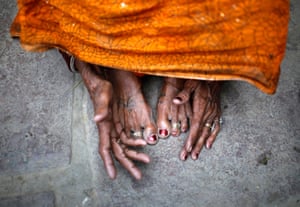
In India, childbirth has turned into a moneymaking racket, with caesarean sections pushed by unscrupulous medical practitioners in search of profit. Healthy young women who could easily have had normal, natural deliveries are lied to, told that they and their babies are at risk, and advised to have invasive surgery. Worried families feel helpless and afraid to refuse doctors’ orders. Thousands of women in even the smallest towns are put through this ordeal for no medical reason at all.


Until 2010, C-sections were limited to 8.5% of all deliveries in India, just under the recommended level of 10-15%, according to a World Health Organisation report. However, during the past decade the numbers have shot up. In Kerala, India’s most educated, aware state, 41% of deliveries are C-sections and Tamil Nadu, another relatively well-off state, has 58% of its deliveries by C-section, reports the ICMR School of Public Health. Major cities in particular have seen an exponential growth in C-sections in both private and public hospitals, while one study revealed a rise from 31% to 51% over just six years in rural Haryana.


As a result, many women are taking unnecessary risks and young couples ending up in debt they can ill-afford and suffering financially for years. Why hasn’t there been a huge noise from Indian women’s organisations and female politicians about this issue? That is the question my daughter asked after she heard about a friend of a friend who had died after a C-section.


“Why does the feminist movement shut up totally when it comes to women and childbirth,” she asked. “Everyone’s vocal about everything connected to a woman’s body before she gives birth. But the minute a woman decides to become a mother, the silence is deafening. Does she cease to be a feminist because she decided to have a child?”


I was nonplussed. I’d never thought about this, in spite of having borne three children, two under pretty tough circumstances. But suddenly three decades of suppressed anger against the medical negligence I’d endured returned. After being admitted into hospital when my waters broke, I was ignored. I didn’t scream – as was considered “normal” – because I had a higher pain threshold than other women.


Finally after 12 hours, at 5am, the nurse appeared armed with a drip to put me on Pitocin, a drug to induce labour. “This is my third child and that drug will harm the baby. I know I’m at the end of the labour, not the beginning,” I pleaded. Ignoring my words, the nurse advanced determinedly, muttering, “Nowadays these patients think they know everything.” Desperate, I screamed, “If you bring that thing near me I will kick you.” Furious, she stormed off to call the head nurse. The senior woman approached me, reprimand ready. “What’s your problem? Why don’t you just obey the nurse?” she scolded. On examining me, her tone changed. “Oh my God,” she shouted, “the baby’s almost out. Rush her into the delivery room.”


My son delivered himself. The gynaecologist whose fees I’d paid for nine months was nowhere in sight. The nurse cut me badly. She then stitched me up and triumphantly announced to her helper “my first delivery”! I honestly wished I’d kicked her hard when I’d had the chance. It would perhaps have saved me a lot of post-pregnancy problems. At the end of 12 hours I was exhausted and weak, both physically and emotionally.


In traditional systems, women are encouraged to squat, because that was the most normal way for the baby to be naturally pushed out. In one tribal community in southern India, the women have a strong rope, like a bell pull, to hold on to while they squat in the final stage.


The rise in C-sections is not restricted to poorer countries. But in India the figures are particularly stark. Meenakshi Gautham, India country coordinator for a maternal and newborn health programme at the London School of Hygiene and Tropical Medicine, accuses private hospitals of being the most “scalpel happy”. Gautham’s survey says that the charges for the procedure, hospital stay and anaesthesia can range from about Rs5,000 (less than $ 75) in a government hospital to upwards of Rs40,000 ($ 600) in a private hospital.


Hope lies in the fact that some gynaecologists are now calling for change. Mumbai obstetrician Sheetal Sabharwal is co-founder of the Tulip Women’s Health Care Centre. She has been in the forefront of the ethical practitioners’ movement demanding that doctors and clinics charge an equal, flat fee for caesarean and vaginal births.


The sharply rising rate of C-sections, though, is only one of many issues surrounding birthing practices and pre- and postnatal care. Perhaps the rights of pregnant women and mothers will find their way into the International Women’s Day debates. They certainly should do.


Why don’t India’s feminists call out doctors doing unnecessary C-sections? | Mari Marcel Thekaekara
26 Ekim 2016 Çarşamba

Will the closure of India"s sterilisation camps end botched operations?

It happened in a classroom, on the desks of the village school. It was dark, so the doctor operated on the women by torchlight. The procedure only took two minutes; many women did not even know that they had been permanently sterilised.


That Saturday night, in January 2012, 53 women from the village of Kaparfora in the northern Indian state of Bihar had tubectomies over a period of two hours, under the supervision of a local NGO. The school desks where the operations took place were never disinfected; the doctor never changed his gloves, and the medicines were past their use-by dates, violating a number of government guidelines. After the operations, the doctor left the school, ignoring the wails of the bleeding women in the classroom.


Devika Biswas, a health activist from the region, who visited Kaparfora a month after the event on a fact-finding mission, says she was “aghast” at the conditions she saw. “I was feeling so bad. I thought, is this my country? Not a single woman was screened to see if there would be any complications. One of the women who was sterilised was actually three months pregnant, and she ended up miscarrying her baby. I mean, they were just butchering women.”


Biswas recalls the words of one woman she met in the village. “She looked sad so I asked her to speak her mind. She said to me, ‘The government puts no value on our lives, so they can do anything to us.’”


Biswas filed a petition to the supreme court based on her findings. After a four-year legal battle with the government, this September the court ordered the government to shut down sterilisation camps across India within three years. Though women can still go to health clinics and request to have tubectomies, sterilisation camps run either by state government officials, or outsourced to local NGOs, in which doctors go out to villages and encourage women to have their tubes tied, will be illegal.


The supreme court’s verdict is a historic victory for women’s rights activists who have campaigned against sterilisation camps for decades. The ruling could mean that, for the first time, India moves away from family planning policies that focus on women rather than men and provide a wider range of contraception, particularly in rural clinics.


The judge told state governments to increase compensation payments to victims of botched surgeries. “It is time that women and men are treated with respect and dignity and not as mere statistics in the sterilisation programme,” wrote Justice Madan Lokur in the judgment.


The mother of 30-year-old Phoolbai, who died after she underwent surgery at a government mass sterilisation camp


The mother of 30-year-old Phoolbai, who died after she underwent surgery at a government mass sterilisation camp. Photograph: Alamy Stock Photo

India’s controversial sterilisation drives, funded by the World Bank, USAID, and other international organisations have been at the core of the country’s efforts to minimise population growth since the 1980s. Unlike China, where, until last year, a strict one-child policy has slowed population growth, India’s government offers cash incentives to women and men who choose permanent sterilisation in an attempt to bring down the national fertility rate.


Quotas for sterilisation and cash incentives to doctors and village health workers who bring women to camps have led to mass operations – sometimes even on very young women in their early twenties – increasing the risks of infection and poor care. The sterilisation camps became a national embarrassment when 15 women died after botched tubectomies in the northern state of Chhattisgarh.


The focus on permanent sterilisation comes from a long-rooted belief that overpopulation is at the heart of India’s major problems of hunger, poverty, poor education and poor healthcare. India has the world’s second biggest population after China, 1.25 billion people, roughly equivalent to the populations of Europe and North America combined.


While family planning clinics around the country offer free oral contraceptives, IUDs and condoms, these methods are unpopular and associated with promiscuity. Vasectomies, cheaper and easier sterilisation procedures for men, are available too, but the stigma of being unmanly, and the memory of former prime minister Indira Gandhi’s fertility control drives in the 1980s, in which millions of men were forcibly sterilised, have stuck.


India sterilises more women than any other country in the world. “The government’s strategy has always been female-focused,” explains Sarita Barpanda, from the Human Rights Law Network.


“All the programmes are targeted at them. Many women are coerced into having sterilisations. The fact that the government has given so much of the responsibility for sterilisations to private organisations suggests how valuable a woman’s life is.”


Barpanda has further stories of atrocities during the sterilisation drives around the country. “In Orissa, they used bicycle pumps in the operations because the doctors did not have up-to-date medical equipment,” she says. “In Himachal Pradesh, one doctor did five surgeries and then passed out drunk halfway through the sixth. In Malda, in West Bengal, they had no beds for the women, so they had to lie out on the ground, in the cold after the operations,” says Barpanda. “Almost every state was reporting violations of the government’s sterilisation guidelines.”


In 2007, the supreme court ruled that the national government was responsible for maintaining standards in sterilisation procedures. It also asked state governments to introduce quality control commissions to ensure high standards in family planning clinics and camps, but these bodies have not been established.


In a statement to the Guardian, a spokesperson from the Ministry of Health and Family Welfare said the botched sterilisations were “a one-off” and were the exception rather than the rule.


The ministry said it had made many attempts to improve standards at state-run sterilisation camps. “The government of India has formulated several manuals and regular updates for the guidance of the state governments and union territories to address all aspects of conducting sterilisation procedures. The government of India has also issued advisories to all the states and union territories to adhere to the standard operating procedures at all levels to prevent and pre-empt incidents that might adversely affect the health of clients due to sterilisation procedures. These have been extensively disseminated across states.”


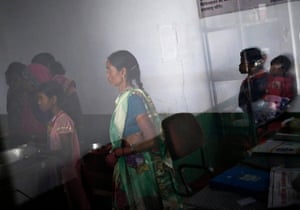
Women who underwent sterilisation surgery queue to receive food inside a hospital in the eastern Indian state of Chhattisgarh, in November 2014


Women who underwent sterilisation surgery queue to receive food inside a hospital in the eastern Indian state of Chhattisgarh, in November 2014. Photograph: Anindito Mukherjee/Reuters

The spokesperson said that the supreme court’s decision to phase out sterilisation camps was “in alignment with the government of India’s own endeavour in that direction over a period of three years”.


Contraceptives were being offered free of charge to any couples wanting them, added the spokesperson, and the government is increasing access to family planning.


But Biswas says she doubts the supreme court’s order will make much difference. “The government is responsible – they are perpetual violators of the rights of women in this country, but I just don’t think anything will change.”


Barpanda is more optimistic. “They’ve already stopped the camps in Orissa,” she says. “This was a really big thing for the supreme court to pass. But I don’t know if I would call it a victory because so many people have lost their lives.”


Will the closure of India"s sterilisation camps end botched operations?

23 Nisan 2014 Çarşamba

Meet Mr Poo, the star of India"s public sanitation campaign


Mixed with a soundtrack of suitably flatulent noises, graphic representations of dancing faeces (which includes a ‘poo disco’) and a refrain of “take the poo to the loo,” the video aims to tackle the country’s widespread public defecation difficulty, which is creating sanitation troubles for the population.


According to Poo2Loo, India has the highest ‘open defecation’ rate in the planet, with 620 million men and women making 65 million kilograms of open waste each and every day. Only half of its population use toilets at all.


Open defecation increases the risk of microbial contamination in water supplies, spreading illnesses this kind of as diarrhoea, which is one particular of the greatest causes of kid death in India.


Critics have questioned whether or not a social-media based mostly campaign featuring English song lyrics will have any influence on impoverished youth without having access to the world wide web.


Maria Fernandez, a Unicef campaign coordinator in India, explained the campaign’s aims: “urban or rural, poo is all about us, in our playgrounds and outdoors our offices. If we’re silent, we’re contributors. So the campaign tries to generate noise so individuals who truly have toilets comprehend the situation and do anything about it.”


“And,” she mentioned, “the song is catchy. I wake up singing it.”


Meet Mr Poo, the star of India"s public sanitation campaign