clothes etiketine sahip kayıtlar gösteriliyor. Tüm kayıtları göster

7 Kasım 2016 Pazartesi

Soap Nuts: Washing Clothes Organically

Soap Nuts: Washing Clothes Organically


Technically a berry, soap nuts received their name because of their nut like appearances.  Native to India and Nepal soap nuts have been brought all over the globe and can be commonly found in both the Eastern and Western hemispheres.  Also known as “soapberry”, soap nuts contain a natural cleaning agent Saponin.  Saponin releases from the soap nuts creating natural surfactant foam which dissolves in water and removes both dirt and odors.  It is often mistaken that the entire soap nut is used for cleaning purposes but in fact it is actually the shell of the soap nut that contains Saponin and not the seed.


Soap nuts are collected organically from trees that typically contain no pesticides or other chemicals.  For resale purposes soap nuts are dried and de-seeded for the convenience of the user.  However, soap nuts can be collected naturally if nearby.  Soap nuts contain natural anti-bacterial properties, anti-fungal properties and anti-microbial properties and are completely safe to use with individuals who have a nut allergy as soap nuts are not technically a nut.


Alternative to Chemical Cleaners


For individuals who have sensitive skin soap nuts make a great alternative to mainstream chemical cleaners.  Many detergents and fabric softeners often contain chemicals that can be the cause for itchiness and even rashes on the skin especially if not thoroughly washed from the laundry.  Soap nuts have been around for centuries and are commonly used amongst environmentally friendly individuals and cultures.  Fortunately soap nuts are becoming increasingly popular amongst prepper and survival groups as well as organically minded groups and even economically minded groups.


Soap nuts are simple and extremely easy to use while washing clothes organically.  Begin by collecting five to six soap nuts and place them in a tied wash friendly bag.  Typically a small wash friendly bag can be found at any local natural and organically friendly store.  Let the soap nuts wash with the rest of the laundry through the entire wash cycle than take the bag out and let dry.  The Saponins will release throughout the wash cycles removing dirt and grime and eliminating odors.  The soap nuts in the wash bag can be used for up to 10 laundry loads saving much money on laundry detergent.


Other Uses for Soap Nuts


There are many common uses for soap nuts such as household cleaners that can be made from a soap nut liquid concentrate.  Since soap nuts have natural cleaning agents in the Saponins this makes soap nuts a great tool to be used in every part of the household.  A liquid concentrate derived from soap nuts is safe to use to clean food and even clean rooms such as the bathroom specifically toilets and even floors.  Soap nuts are great as a cleaning solution that they can fight against yeast, black mold, salmonella, staph and even E. Coli.


Sources:


Premium quality, safe, non-toxic, laundry soap! –Naturoli


Soap Nuts: Washing Clothes Organically

25 Ağustos 2016 Perşembe

Beyond burkinis: why ALL clothes should be banned | Dean Burnett

A lot of people have been upset by images of French police forcing a woman to take a burkini off on a beach, in full view of the public, in accordance with the controversial French burkini ban. There are many reasons to be outraged by this ban: the suppression of individual rights and apparent hypocrisy in the name of “secularism”, the misogyny-tinged policing of women’s clothes specifically, the public display of intimidation, and so on.


All of these complaints are misplaced. The real problem with the burkini ban is, it’s too limited. Forbidding a specific type of swimsuit won’t achieve anything: we must ban ALL CLOTHES! And the sooner the better.


This may sound like a ridiculous notion. But, more ridiculous than banning a swimming costume in order to fight terrorism? I think not! Plus, there are many scientifically valid reasons for us to do away with clothes.


Firstly, clothes cause problems. Look at the long history of clothes being used as a tool of oppression and control, often resulting in political problems. If we didn’t have clothes, we wouldn’t have the means to use them to make people’s lives harder. Even today, in these more “liberated” times, clothes regularly cause problems. How many t-shirt controversies have there been now? Considering how much time has been wasted arguing over them, clothes have probably held back human advancement significantly.


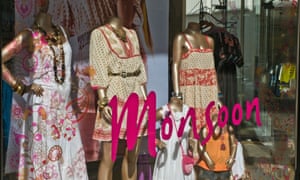
HARROGATE NORTH YORKSHIRE Cloth model dummies Monsoon shop window display woman children clothes. Image shot 2010. Exact date unknown.BPX158 HARROGATE NORTH YORKSHIRE Cloth model dummies Monsoon shop window display woman children clothes. Image shot 2010. Exact date unknown.


In some extreme cases, clothes can lead to decapitation. Photograph: Alamy

If you doubt this, let’s not forget the time a questionable shirt completely overshadowed a major achievement in space exploration. None of this would have happened if we didn’t have clothes. We’d probably be on Jupiter by now! Admittedly, that would be depend on whether you define “space suits” as clothes, seeing as how they’d be banned, but the point still stands.


But you don’t need cite controversy to see that clothes do more harm than good. How long do you spend agonising over what to wear every day? How long to you spend chafing in uncomfortable garments while trying to work because of some unthinking poorly-thought-out office “dress code”? And you dare no deviate from it, or there will be consequences. So you end up spending large sums of money on things you don’t like, don’t enjoy and which don’t really do anything useful.


And that’s without the pressure of judgement risked whenever you walk outside wearing specific clothes. How often do we hear people ask “what your clothes say about you”? Ever changing fashions and clothing choices have just added another layer of stress and paranoia to a world which has plenty of that as it is.


There are other benefits to banning clothes. The environmental damage caused by constantly washing them would be drastically reduced, as would the financial cost of doing so. Everyone would suddenly have more money available, and no need to spend it on clothes! So it would be doubly good.


Let’s not forget the societal benefits. It may be a difficult adjustment at first, but when you consider that most people who practice body shaming or often less-than-perfect specimens themselves then removing the ability to hide your flaws behind opaque cloth could result in more tolerance and sensitivity between people. And if the human obsessions with looking good persists, people would have to work harder to make their own bodies more “presentable” by keeping in shape. The health benefits to all and reduced pressure on medical services that would result from this cannot be understated.


Admittedly, there’d be some down sides, at least at first. Quite a few industries would collapse and livelihoods would be ruined, so the economic impact would be harsh. We’d also be a bit more restricted in the environments we can live in, despite the resilience of the human body.


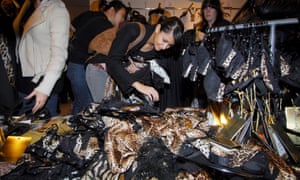
Launch of the new H & M Roberto Cavalli clothes range at the H & M flagship clothing store on Oxford Circus, London, Britain - 08 Nov 2007Mandatory Credit: Photo by Ray Tang / Rex Features Customers looking and buying the new H & M Roberto Cavalli clothes range Launch of the new H & M Roberto Cavalli clothes range at the H & M flagship clothing store on Oxford Circus, London, Britain - 08 Nov 2007 711512n


Scrabbling for the latest sale item or discounted garment could be a thing of the past. A lifetime of being perpetually cold is surely worth that? Photograph: Ray Tang / Rex Features

Women especially, with their difficult-to-restrain breasts, may find the adjustment difficult. Perhaps some exception could be made for sports bras? Although we’d have to carefully monitor the wearing of them, to make sure no woman breaks the arbitrary and questionable rules of what’s acceptable. Can’t see that being a problem though.


Granted, some clothes offer protection, but when you consider it will be virtually impossible to conceal weapons, the safety risks and benefits will hopefully cancel each other out.


There would also need to be some serious revaluation of our social norms, especially our sexual attitudes, but we’d get used to it eventually. Humans are good like that. Although funerals would likely be less sombre affairs for the foreseeable future.


Also, if we’re going to ban clothes, we should do it very soon, because they’re only going to get worse. Developments in flexible, resilient circuits mean we’ll soon see the arrival of genuinely “smart” clothes. Consider the implications; clothes that can think for themselves! Telling you the time, adjusting the heating without asking, sending reminders to your phone. What’s to stop them just calling you for a chat? What’s to stop them getting angry!?!


“Hi, it’s your favourite shirt here, just calling to… what’s that rustling?… WHO ARE YOU WEARING!?”


That’s no life. For this and every other reason mentioned above, clothes clearly need to be banned.


And what this shows is that, even if you can back up a decision with compelling and reasonable-sounding arguments, it doesn’t mean it isn’t ridiculous. Like banning a bathing suit.


Dean Burnett’s debut bookThe Idiot Brainis available now inthe UK,USAand Canada.


Beyond burkinis: why ALL clothes should be banned | Dean Burnett

11 Temmuz 2014 Cuma

Why J Crew is promoting clothes that"s even smaller than dimension zero

Waisting away

Waisting away? No healthful grownup ought to need to have a size 000. Photograph: Alamy


Title: 000.


Age: Brand new.


AKA: XXXS.


Physical appearance: Really modest.


How modest? If it were a particular person, it would have a 58cm (23in) waist.


Is it a particular person? Allegedly.


If it is not a man or woman, then what is it? It really is clothing. Or, far more exclusively, it’s a clothing dimension. Or, even far more particularly, it really is a women’s clothes dimension just lately introduced by US retailer J Crew.


Who the hell is supposed to match it? Officially, J Crew is making 000 clothes to appeal to the “smaller sized-boned” female. But it has been accused of taking “size vanity” to preposterous extremes.


Dimension vanity? It means producing the illusion of thinness in your customer by resorting to quantity deflation. The notorious American “dimension zero”, for example, equates to a United kingdom dimension 4. A minor later, the 00 dimension (United kingdom 2) was introduced, now followed by 000.


Doesn’t that simply help to perpetuate a warped public perception of what constitutes a regular human physique? It undoubtedly does. A 58cm waist is deemed a healthy measurement for a woman aged six to eight.


It really is the two harmful and sickening! Your outrage is mentioned, even though dimension vanity is typically for the advantage of the bigger buyer, ie the size 24s who have been flatteringly downgraded to a twenty.


Is that J Crew’s explanation? Oh no. A spokesman for J Crew stated the 000 innovation was “basically addressing the demand coming from Asia for smaller sizes than what we had carried. Our sizes typically run large and the Asia market place tends to run little.”


Now I do not know what to believe. Or what to wear. Mail Online, alternatively, attributed the demand for the new sizing to a trend on the component of female celebrities of posting skeletal selfies, which are noticed by impressionable young ladies.


I’ve in no way seen any such selfies. Will not fret, Mail On-line reprinted loads of them so you can get the notion.


What next? Zero-zero-hrs contracts? Treble-zero tolerance? Never give anybody any suggestions.


Do say: “It does not even make mathematical sense – zero occasions zero occasions zero is nevertheless zero. Zero to three decimals areas is still zero. YOU Cannot HAVE Smaller sized THAN ZERO.”


Will not say: “Hey, skinny! The children’s division is on the second floor.”


Why J Crew is promoting clothes that"s even smaller than dimension zero

28 Mayıs 2014 Çarşamba

Do thinner mannequins make men and women buy clothes?

With Memorial Day and summertime come a few other traditions: swimsuit purchasing, skimpier clothing – and with them, a host of entire body troubles.


So who needs to search up into a keep window and, currently dissatisfied with one’s physique, see a mannequin with a concave stomach and visible ribs?


Does that spur the impulse to buy out of aspiration? Or is it a turnoff?


La Perla apparently imagined its chic customers – who drop hundreds of dollars on high-standing underthings – would relate to, or admire, this kind of a vision.


It did not really function out that way. “How does #LaPerla consider ribs on a mannequin is ok?! @SethMatlins,” fumed influential tech entrepreneur Michael Rudoy on Twitter, tagging truth-in-marketing activist Seth Matlins.


Score one for Matlins. La Perla quickly eliminated the mannequins, and tweeted that they wouldn’t be utilised in yet another La Perla boutique. The business extra that it is updating its whole mannequin collection.


“The mannequin photographed has been eliminated from the store and will not be employed once again by any La Perla boutique. We are in the process of redesigning all La Perla shops with a new notion image and the mannequins that are at the moment displayed in our US merchants will no longer be employed. We enjoy and value everyone’s feedback, thank you for bringing this to our focus.”


Nevertheless La Perla is not a one particular-time offender – numerous weeks in the past the lingerie company’s Instagram featured a model beside a mannequin with impossibly skinny legs.


“I believe it is a lot worse to have their ribs exhibiting,” stated Jean Kilbourne, a former model and honorary member of Wellesley’s Centers for Women.


But even Kilbourne will inform you: “The extremity of it catches our interest, but this is actually not new.”


In truth, it’s turning out to be a lot more of a trend: expect the impossibly slim, the white and the sinewy to dominate chic windows.


Normal mannequin measurements, excluding the very chesty or bootylicious, are an practically extremely hard excellent: about 6ft tall, 34in bust, 24in waist, 34in hips.


Two massive mannequin suppliers said their most popular colour is alabaster white, though it utilised to be “flesh tone” – that is, flesh-toned if you are white. And each mentioned their clients’ wishes are trending towards a lot more “sculpted” mannequins that display off “musculature”.


“If you do something that’s kind of a thinner mannequin, you’re doing that 1 group that says it is too thin,” stated Goldsmith’s creative director and CEO Dan Evans. His firm supplies mannequins to many high-end division retailers, like Nordstrom, Bergdorf Goodman and Macy’s. Evans has also worked with La Perla.


The enduring very best-vendor of Goldsmith’s assortment, he said, is the “classic” mannequin. The quite in depth female model does not have noticeable ribs instead, she has six-pack abs.


That’s Okay, say suppliers.


“Most individuals are searching at the garment, and not what the mannequin represents,” explained Barry Rosenberg, spouse at Mondo Mannequins, which can make up to two,000 mannequins a day.


“I imply, I am not going to tell you anything you wouldn’t presently know. Why are models 6ft tall with modest breasts, and extremely lengthy legs? Simply because they seem the ideal in the garment,” explained Rosenberg.


Rosenberg laughed at the description of the possibly also-skinny ribby mannequins.


“We do not make mannequins that are 5ft 3in and 160lbs,” he said.


The common American woman is 5ft 3in and 166lbs, according to the CDC.


Venezuelan mannequins
Mannequins with intense proportions on show in Caracas, Venezuela. Photograph: Meridith Kohut/New York Occasions/Redux / eyevine

The industry’s also been questioned about utilizing more substantial mannequins, as Evans mentioned. Dame Sally Davies, England’s chief healthcare officer, advised the Telegraph she felt size-16 mannequins introduced in Britain’s Debenhams department shop “normalized” obesity.


Goldsmith’s Evans suggests it truly is not his choice. “At that stage, the fashion market and our buyer dictate these sizes,” he mentioned.


The trend is in direction of thinner and ribby mannequins encourage unhealthy physique picture, as several truth-in-promoting advocates will tell you.


“It’s undesirable enough that they are so thin,” stated Kilbourne. “It tends to make them search even more anorexic. Obtaining the ribs exhibiting is a signal of starvation, malnutrition, consuming disorders. It really is appalling,” she explained.


Other unrealistic mannequins? In Venezuela and Miami Beach, Florida, chesty mannequins appear like they’ve had silicone implants. In Gap retailers, a Twitter account called @InMySkinnyDream chronicled Gap’s toothpick-legged dolls by the “Always Skinny” jean.


“One of the massive – and I’ve been speaking about this forever – is it all turns into invisible in a way simply because we’re so used to it, and if its brought to people’s focus, that type of breaks by means of the clutter,” mentioned Kilbourne, the body-image advocate. “I consider it truly is fairly freakish for ribs to be exhibiting.”


Do thinner mannequins make men and women buy clothes?