women etiketine sahip kayıtlar gösteriliyor. Tüm kayıtları göster

11 Mayıs 2017 Perşembe

Facebook censors group that helps women obtain abortion pills

Facebook has censored the page of an organization that helps women obtain abortion pills, citing its policy against the “promotion or encouragement of drug use”.


Women on Web, which is based in Amsterdam, helps connect women with doctors who can provide abortion pills if they live in countries where abortion access is restricted. It is a sister organization to Women on Waves, which provides abortions and other reproductive health services on a ship in international waters.


Women on Waves announced that the page had been “unpublished” on its own Facebook account, writing: “Women on Web provides life-saving information to thousands of women worldwide. Its Facebook page publishes news, scientific information and the protocols of the World Health Organization and Women on Web has answered over half a million emails with women who needed scientific, accurate information essential for their health and life.


“We expect Facebook will [undo] this action soon enough, as access to information is a human right.”


This is the second censorship row between Facebook and Women on Web. In January 2012, Facebook deleted the profile photograph of the group’s founder and director, Dr Rebecca Gomperts. The image contained instructions for inducing an abortion using Misoprostol. Gomperts was locked out of her account for two days after re-posting the image, but Facebook subsequently apologized and reinstated both the image and her account.


We expect Facebook will [undo] this action soon enough, as access to information is a human right


Facebook did not immediately respond to a request for comment.


With nearly 2bn users, the social media site plays a crucial role in disseminating news and information around the world. But Facebook has struggled to meet competing demands to allow for the free flow of information while cracking down on graphic material (such as the livestreamed murder of a baby in Thailand in April).


In 2016, the company faced international condemnation over its decision to censor the iconic Vietnam War photograph of a naked girl fleeing a Napalm attack. Facebook subsequently altered its policy to allow for editorial judgments about newsworthiness.


On 3 May, amid criticism over its handling of graphic videos, Facebook announced that it would hire 3,000 more content reviewers. Such content reviewers are tasked with applying the company’s “community standards”, often with uneven results.


Facebook’s has faced particular difficulty enforcing its rules for “regulated goods” – prescription drugs, marijuana, firearms, and ammunition. The company bars “attempts by private individuals to purchase, sell, or trade” such items, but has struggled to halt gun sales.


The company has cracked down aggressively on pages related to legal medical marijuana, however. In 2015, the site temporarily banned business publication Crain’s for promoting a cover story about medical marijuana.


Facebook censors group that helps women obtain abortion pills

27 Nisan 2017 Perşembe

New website offers US women help to perform their own abortions

Fearful that Donald Trump’s presidency poses a once-in-a-generation threat to US reproductive rights, an international advocacy group this week is unveiling what is sure to be a controversial response: a web portal dedicated to helping US women terminate their own pregnancies with abortion-inducing drugs they have obtained outside of a medical setting.


The project, launched by Women Help Women, is a nod to the fact that many US women may already be taking matters into their own hands as abortion options in this country contract.


“Women in the US have been and are using the pills without good guidance,” said Susan Yanow, the US spokeswoman for the group, Women Help Women. “If a woman is anxious and has the pills in her hand, and doesn’t know what to do … we can help her understand what to do. We can help her understand what signs to look for, and what’s going on.”


Research suggests that there is a small but significant number of US women who attempt to induce their own abortions without any medical supervision.


Several studies have shown that many of these women, particularly those living along the US-Mexico border, are using misoprostol, a miscarriage-causing drug that can be legally purchased over the counter in many Central American pharmacies. In the US, it is illegal to administer the drug outside of certain medical clinics.


Rules for taking misoprostol are easy to find online. What Women Help Women has done differently is connect US women with counselors who can provide step-by-step instructions, and answer questions, in real time.


Their counselors are trained by medical professionals to walk women through the process of using misoprostol for a DIY abortion. Counselors will also strive to connect women with abortion funds if payment is the main obstacle for getting an abortion in a clinic.


But the main goal is to support the unknown numbers of women who are performing their abortions themselves.


Part of the inspiration, Yanow said, came from an article the Guardian US published in November. The story followed a young Texas woman who, unable to afford an abortion in the US, traveled to Mexico to purchase an abortion-inducing drug over the counter.


“There’s just so many questions,” the woman told the Guardian. “I would so much rather have a health professional help me in this and kind of guide me through it versus DIY.”


Those words stuck in Yanow’s mind. And as she grappled for a way to respond to November’s election, it occurred to her that Women Help Women could tailor its services to the needs of women in the US.


The project will be titled Self-managed Abortion, Safe and Supported, or SASS, and use the website abortionpillinfo.org.


Women Help Women is already a longstanding provider of abortion pills and instructions in other countries. Every month, its staff members answer 5,000 emails from women around the globe seeking to end their own pregnancies.


The group will not provide abortion-inducing drugs to women in the US. And it has made other changes to its methods because of the United States’ uniquely hostile, anti-abortion atmosphere.


In the US, at least 18 women have been charged with a crime based on allegations that they attempted to induce their own abortion. A handful of states have made it explicitly illegal for anyone but certain medical professionals to administer abortion-inducing drugs.


Enterprising prosecutors have found other, creative ways to levy charges, through the use of laws against child endangerment, practicing medicine without a license, or drug possession.


Women Help Women counselors will inform clients of some of the legal risks that come with self-administering misoprostol, as well as some of the limitations.


But the legal implications of the project are far from certain.


“This area of the law is nothing if not complicated,” said Jill Adams, the chief strategist of the the Self-Induced Abortion Legal Team, a project associated with Berkeley Law. Her group has shared legal information about self-induced abortion with Women Help Women, but stopped short of legally vetting the information that counselors will provide to US women.


In general, the act of looking for or giving out information about self-inducing an abortion is protected by law, Adams said. And she knows of no one who has been prosecuted merely for seeking information.


Still, it could compound the risk of prosecution. Purvi Patel, the first US woman to receive a significant prison sentence for inducing her own abortion, was convicted after prosecutors obtained emails that showed her purchasing an abortion-inducing drug from a Chinese pharmacy.


With those facts in mind, Women Help Women designed its portal to delete conversations between clients and counselors after seven days.Its servers are located abroad – out of easy reach for US prosecutors, the thinking goes – as are all 23 of its counselors.


The legal risks are thought to loom larger than the medical risks.


“In general, I would say there’s kind of a growing recognition that from a safety or a medical perspective, we have few few concerns about” women using abortion drugs on their own, said Daniel Grossman, a clinical professor of obstetrics and gynecology at the University of California–San Francisco who researches self-induced abortion.


“Especially if we’re talking about women using misoprostol on their own. It’s a very safe and effective medication,” he continued. “If women have information about how to use it, then women can safely use it on their own.”


When women go to an abortion clinic, they are typically given two drugs: mifepristone, a drug that blocks hormones necessary to sustain a pregnancy administered in person, and misoprostol, which is taken many hours later and causes the uterus to contract and expel its contents. The Food and Drug administration permits women to leave the clinic and take misoprostol at home.


Researchers believe that women who self-administer abortion drugs are most likely taking misoprostol by itself, because it is easy to obtain from foreign pharmacies. Misoprostol used without mifepristone is less likely to cause an abortion but still has a high success rate.


There are certain medical risks in self-administering an abortion drug without the involvement of medical professionals. An ultrasound is often necessary to confirm a pregnancy and assess how many weeks a woman has been pregnant. Misoprostol is less effective and requires a different drug regimen later in the first trimester.


Medical professionals will also inform women about how to recognize complications, like excessive bleeding, that could occur after they leave the clinic and require medical attention. And using the drug improperly – say, at a high dose in the second trimester – can lead to serious medical complications.


Grossman argued that a project like Women Help Women’s could minimize those risks. “I think that it’s worse to just remain silent while we know women are doing this,” he said.


But abortion rights opponents cite these safety concerns as reasons to oppose any project that makes abortion drugs available outside a clinical setting.


In response to a study, first reported by the Guardian, that tests the efficacy of sending women abortion drugs by mail, a spokeswoman for Americans United for Life said, “We have grave concerns about handing out dangerous, life-ending drugs without medical supervision because women face great risks for chemical abortions.”


Carol Tobias, president of the National Right to Life Committee, asked, “Who are they supposed to call if they have a problem?”


Yanow says that’s exactly the point of Women Help Women’s new portal.


“People are not being advised to use the pills,” she said. “They’re being advised if they’ve already decided to use the pills. What drives this project is the knowledge that women have been managing this on their own.”


New website offers US women help to perform their own abortions

18 Nisan 2017 Salı

More than 800 women sue NHS and manufacturers over vaginal mesh implants

More than 800 women are suing the NHS and the manufacturers of vaginal mesh implants after suffering serious complications.


Some women reported that implants had cut into their vaginas, with one woman saying she was left in so much pain that she considered suicide. Others have been left unable to walk or have sex, according to the BBC.


However, the medical regulator said that the best current evidence supports the continued use of mesh implants to resolve health conditions that could themselves cause serious distress to patients.


The implants are used to treat incontinence after childbirth or pelvic organ prolapse, where the womb or bladder bulge against the walls of the vagina.


Between April 2007 and March 2015, more than 92,000 women had vaginal mesh implants in England, NHS data shows. About one in 11 women suffered complications. The issue reached prominence in Scotland last year after women with painful and debilitating complications formed a support group.


Claire Cooper began to experience pain three years after her operation. Doctors initially thought the discomfort was related to the removal of her womb, a procedure she had undergone aged 39.


When the pain continued, she said a GP told her she was imagining it. This, and the severity of the pain, resulted in suicidal thoughts, which she said she only overcame because of her children. Her constant pain has forced her husband to become her carer.


Cooper said she and her husband have not had sex for more than four years. “This stuff breaks up marriages,” she told the BBC. “I wouldn’t at all be surprised if there are mesh-injured women that have taken their own lives and didn’t know what the problem was.”


Another woman, Kate Langley, described the surgery as “barbaric”. She told the BBC that a surgeon who examined her “could see the [mesh] tape had come through my vagina – protruding through”.


Data from the Medicines and Healthcare products Regulatory Agency (MHRA) for 2012 to 2017 shows there were 703 adverse incidents relating to patients who had been given the implants to treat stress urinary incontinence, where urine leaks when the bladder is under pressure. A further 346 adverse incidents were reported for patients who had been given a mesh support to prevent pelvic organ prolapse.


The MHRA said the figures did not necessarily indicate a fault with any particular device and said evidence supported the continued use of vaginal mesh surgery for certain conditions.


A spokesman said: “What we have seen, and continue to see, is that evidence supports, and the greater proportion of the clinical community and patients support, the use of these devices in the UK for treatment of the distressing conditions of incontinence and organ prolapse in appropriate circumstances.”


A study published in the Lancet in December found that women who were given mesh implants were roughly three times more likely to suffer complications and twice as likely to need follow-up surgery compared with women who had the traditional version of the surgery, where stitches are used to provide support for the organs.


Rachael Wood, a consultant in public health medicine for NHS National Services Scotland and the lead author of the Lancet study, said: “The results were quite clear that women do suffer a higher complication rate and that it is no more effective. You can make quite a clear recommendation that it shouldn’t be the first line of treatment for prolapse.”


However, Wood said that the results on incontinence surgery were less clear, and for incontinence the study found fewer short-term complications when mesh surgery had been used compared to traditional treatment, which involves major surgery.


She said: “There’s no doubt that some women have had very poor outcomes. It is worth saying that nothing is without risk. There are also bad outcomes from traditional surgery and from doing nothing.”


More than 800 women sue NHS and manufacturers over vaginal mesh implants

13 Nisan 2017 Perşembe

One in four young women in UK report mental health problems, study shows

A quarter of young women in the UK have suffered from anxiety and depression, according to a new survey released by the Office for National Statistics (ONS).


The figures were collected as part of a wide-ranging survey gauging the wellbeing of people aged between 16 and 24. They show that, despite an increase in the number of those who said their quality of life had improved since 2009, one in four young women said they had faced symptoms linked to poor mental wellbeing in 2014-15.


The report said that young women were “significantly more likely” than their male counterparts to recognise and admit being anxious or depressed, with less than one in six young men reporting similar symptoms.


The ONS report used data taken from surveys that focused on a person’s overall happiness – shown by their attitudes to issues such as relationships, work, education and finances – to create a nationwide picture.


The results show that while more than a third of young people aged between 16 and 19 who were questioned said they had a “very high” level of life satisfaction, this dropped to just a quarter among people aged between 20 and 24.


The study also reveals that in the four years from 2009-10 to 2013-14, the number of young people saying their mental health had “deteriorated” rose from 18% to 21%.


Tom Madders, campaign director at the mental health charity YoungMinds, said: “There is still a huge amount of misunderstanding about mental health conditions, making people less likely to open up to others if they are struggling to cope. This is particularly difficult for young people who face pressure, including stress at school, college or university and body image issues.”


He said that an environment of 24-hour access to social media led to some young people feeling they needed to “keep up the pretence of having a perfect life”.


Other figures from the study show that the number of young people who believe they are financially comfortable has increased since 2009-10. Seven years ago, 15% said they were struggling to get by, while by 2014-15 the number reporting financial hardship was 7% – and a significantly higher percentage (45%) said they were satisfied with their household income, up from about 30% in 2009-10.


The report added that levels of “general health satisfaction” had risen, with 56% saying they were “mostly or completely happy” in 2014-15, compared with about 52% the year before.


However, the figures also show a rise in households deemed to be living in poverty, based on families who earn less than 60% of the average UK income. One in four said they lived in a household at such a level, compared with 20% in 2008.


YoungMinds recently called on teachers, parents and carers to sign an open letter to the prime minister, Theresa May, urging her to place an increased emphasis in schools and colleges on improving young people’s mental health, and to recognise the pressures caused by exam stress, cyberbullying and fears over employment when they leave education.


Madders said: “A good quality of life includes having positive mental health and wellbeing, so it’s crucial that the problems which young people report are taken seriously and supported to prevent them escalating and going into crises.”


One in four young women in UK report mental health problems, study shows

27 Mart 2017 Pazartesi

Can the contraceptive pill protect women from cancer?

Who is suggesting that the pill might protect women from cancer as well as from pregnancy?


The University of Aberdeen, which has been analysing results from the Oral Contraception Study set up by the UK Royal College of General Practitioners more than 40 years ago. There have always been concerns about the mass medication of healthy women, and it has more often been the risks and harms of the pill, rather than its benefits, that have been trumpeted.


So which cancers does the pill protect women from?


The pill protects women from endometrial cancer – cancer of the womb – ovarian and bowel cancer. That had been established. But this, the longest-ever study, says that protection lasts up to 35 years after women stop taking it, and that there are no other cancers connected to it in the long-term.


But doesn’t the pill increase the risk of breast cancer?


Yes, while taking it, but women on the pill are generally young and have a low risk of breast cancer, unless they have a family history. A small increase on a small risk is not much to worry about, and the increased risk disappears within five years of coming off the pill. There is also a small increased risk of cervical cancer, but that also disappears within five years of stopping.


Did the study discover anything else?


Yes. It found that women who take the pill are no more likely to get other sorts of cancers in later life than women who don’t. So, in relation to cancer, researchers say the pill is very safe in the long term.


What have other researchers found?


Researchers at Oxford University published a major review in 2008, which showed that the pill reduced the risk of ovarian cancer by 20% for every five years that a woman took it. Those on it for 15 years cut their risk in half. That’s an attractive idea, because ovarian cancer is not easily detected at an early stage, and kills two-thirds of those who get it. The Oxford scientists published in the Lancet, which ran an editorial calling for the pill to be available over the counter, as opposed to prescription-only, thereby “removing a huge and unnecessary barrier to a potentially powerful cancer-preventing agent”.


In 2015, the same team published a further review on the protection the pill provided against endometrial cancer. Protection lasted for at least 30 years, said Prof Valerie Beral. Women in their 70s were still being protected due to taking the pill earlier in life. “It is time to start saying that not only does it prevent pregnancy, which is why people take it, but you should know you are less likely to get cancer than women who don’t take the pill,” Beral said.


Why would the pill protect from cancer?


Female hormones are implicated in a number of cancers. The pill contains a low dose of the hormone oestrogen, which is linked to breast and cervical cancer, so it raises these risks, as does HRT (hormone-replacement therapy), which is given to women dealing with menopausal symptoms. But it also contains progesterone, which is known to be protective against endometrial cancer.


Aren’t there other risks involved in taking the pill?


Yes, although the NHS says they are small and that “for most women, the benefits of the pill outweigh the risks”. There is a slight increased risk of stroke because oestrogen can cause blood to clot more readily. In the leg, that can cause deep-vein thrombosis. Clots can also form in the lung or cause a stroke or heart attack. The NHS has a list of conditions that make taking the pill more risky, and says that if women have more than one of them, they should find another form of contraception. They include being over 35, being a smoker, being very overweight and having high blood pressure.


So does this mean most women should take the pill for a while in their youth?


If women want to use the pill to prevent pregnancy, the anti-cancer effect is an added bonus, and might make it a more attractive form of contraception. But no medicine is without any side effects at all, and for a small number of people, the pill is a more risky option.


Can the contraceptive pill protect women from cancer?

23 Mart 2017 Perşembe

Less than half of women breastfeed after two months, survey finds

Almost three-quarters of women in England start breastfeeding after giving birth but less than half are still doing so two months later, according to NHS and Public Health England data.


PHE recommends exclusive breastfeeding for the first six months, as does the World Health Organisation, because it boosts a baby’s ability to fight illness and infection. But a comparison of initial breastfeeding rates and those after six to eight weeks in the final quarter of 2015 found that they were 40% lower for the latter (44% compared with 73%).


A survey of 500 mothers commissioned by PHE found that fears about breastfeeding among women included that it could be painful (74%), prevent them taking medication (71%) and be embarrassing in front of strangers (63%).


The PHE’s chief nurse, Viv Bennett, said:“We can all help women feel comfortable breastfeeding their baby wherever they are. Creating a wider culture of encouragement and support will help make a mother’s experience all the more positive.”


PHE has launched an interactive breastfeeding friend chatbot, accessed through Facebook messenger, to provide personal support for breastfeeding 24 hours a day. Bennett said it would help women through the “crucial” initial period, after which things generally became easier.


A study published in the Lancet last year found the UK had the lowest rate of breastfeeding in the world, with only one in 200 women breastfeeding their children after they reach their first birthday.


The WHO recommends that breastfeeding form part of a baby’s diet up to two years of age. As well as reducing the likelihood of babies getting diarrhoea and respiratory infections, breastfeeding also lowers a mother’s risk of ovarian and breast cancer and burns about 500 calories a day.


The PHE survey found that many women were not only embarrassed about breastfeeding in front of strangers, but also their partner’s family (59%) and around siblings and wider family members (49%).


The results, published on Thursday, suggested high-profile figures who promote breastfeeding can have a positive influence on other mothers. Just under half of respondents said the example of household names such as The Only Way is Essex star Sam Faiers, broadcaster Fearne Cotton and actor Blake Lively, who have recently championed breastfeeding on social media, had inspired them to do so themselves. About two-thirds (64%) said they felt more confident to breastfeed in public because of celebrity mums.


Other concerns raised by more than half of women were not being able to tell if their baby was getting enough or too much milk and that it could potentially place restrictions on the mother.


Jacque Gerrard, the director for England at the Royal College of Midwives, said: “Any initiative that goes towards helping mothers start and sustain breastfeeding for longer is positive as we know the health benefits from being breastfed last a lifetime.”


Less than half of women breastfeed after two months, survey finds

22 Mart 2017 Çarşamba

Using the pill can protect women from certain cancers "for up to 30 years"

Women who have taken the contraceptive pill are protected from some types of cancer for as long as 30 years after they stopped taking it, according to new research.


Those who have used the pill “during their reproductive years” are less likely to have bowel cancer, endometrial cancer or ovarian cancer than women who had never taken it, a study at the University of Aberdeen found.


Researchers also looked at the risk of all types of cancer in women who have taken the pill during their reproductive years and found it does not lead to new cancer risks later in life.


The results are the latest published from the longest-running study in the world into the effects of taking the contraceptive pill.


Established by the Royal College of General Practitioners in 1968, the Oral Contraception Study was set up to look at the long-term health effects of oral contraceptives.


The latest study, led by Dr Lisa Iversen, relates to 46,000 women followed for up to 44 years.


Iversen, research fellow in the Institute of Applied Health Sciences at the university, said: “Because the study has been going for such a long time we are able to look at the very long-term effects, if there are any, associated with the pill.


“What we found from looking at up to 44 years’ worth of data was that having ever used the pill, women are less likely to get colorectal, endometrial and ovarian cancer.


“So, the protective benefits from using the pill during their reproductive years are lasting for at least 30 years after women have stopped using the pill.


“We were also interested in what the overall balance of all types of cancer is amongst women who have used the pill as they enter the later stages of their life. We did not find any evidence of new cancer risks appearing later in life as women get older.


“These results from the longest-running study in the world into oral contraceptive use are reassuring. Specifically, pill users don’t have an overall increased risk of cancer over their lifetime and that the protective effects of some specific cancers last for at least 30 years.”


The study, which has received funding from bodies including the Medical Research Council, Imperial Cancer Research Fund and the British Heart Foundation, published its latest findings in the American Journal of Obstetrics and Gynaecology.


Using the pill can protect women from certain cancers "for up to 30 years"

20 Mart 2017 Pazartesi

Women are capable of choosing whether to continue a pregnancy | Letters

We congratulate Diana Johnston for introducing her bill (New bill to challenge UK’s Victorian-era abortion law, 14 March) and are delighted it was passed by 172 to 142 votes. As a 10-minute rule bill, it has no chance of becoming law, but it is important in starting the debate about whether, after 50 years, it is time to revisit the 1967 Abortion Act. It is time to treat abortion like any other medical procedure, and control it with regulation and the GMC. It is wrong that three women have been jailed or had a suspended sentence, and that doctors responding to women’s requests may face criminal prosecution. Many people (and even some gynaecologists) do not realise abortion is a criminal offence unless it conforms with the conditions set out in the Act. Up to 80% of people polled believe the woman should make the decision in consultation with her doctor and 90% of a random sample of gynaecologists surveyed in 2015 said that the woman should make the decision to end her pregnancy. It is time for women to be treated as autonomous adults capable of making their own decisions about continuing a pregnancy, a view that the some tabloid newspapers seem incapable of understanding.
Wendy Savage
Co-ordinator, Doctors for a Woman’s Choice on Abortion


• Join the debate – email guardian.letters@theguardian.com


• Read more Guardian letters – click here to visit gu.com/letters


Women are capable of choosing whether to continue a pregnancy | Letters

Pregnant women without legal status "too afraid to seek NHS care"

Hundreds of pregnant women without legal status are avoiding seeking NHS antenatal care because of growing fears that they will be reported to the Home Office or face high medical bills, according to charities that work with vulnerable migrant women.


The Guardian has seen letters from one NHS trust sent to women with complex asylum claims warning they will have their antenatal care cancelled if they fail to bring credit cards to pay fees of more than £5,000 for maternity care. These letters contravene NHS guidelines, which state that maternity care should never be denied.


Doctors of the World, which runs clinics for trafficked women, undocumented migrants and asylum seekers whose claims have been rejected, is seeing increasing numbers of women seeking medical help at its clinic in east London in the late stages of pregnancy, who say they are too scared to go to the NHS for fear of high bills or of being reported to the Home Office.


In January, a woman came to the charity’s east London clinic already in labour, having received no antenatal care. “She was very fatigued, she was pale. She had been too frightened to go to hospital because of her immigration status,” said Deman Le Déaut, who runs the women’s and children’s clinic in Bethnal Green.


She was the second woman in four months who had come to the clinic for the first time, at the end of the pregnancy, who had not sought mainstream healthcare. “We are seeing a lot of women six months’ pregnant onwards not accessing medical care. That is incredibly dangerous,” Le Déaut said.


One patient, an asylum seeker from Eritrea, was homeless and living in a bus shelter when she visited the clinic in early pregnancy, having been wrongly turned away from a GP because she had no proof of address.


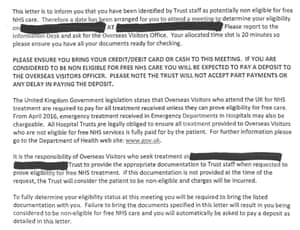
A number of women have visited the clinic, alarmed by debt-collection letters they have been sent by NHS trusts that instruct them to come to their antenatal appointments with money to make deposit payments of several thousand pounds for maternity care.


An extract from a letter sent out by the NHS.


An extract from a letter sent out by the NHS.

“Please ensure you bring your credit/debit card or cash to this meeting. Please note the trust will not accept part payments or any delay in paying the deposit,” one letter sent by Barking, Havering and Redbridge University Hospitals NHS trust states. “Failure to pay a deposit for treatment may result in your future appointments being cancelled. In addition, overseas visitors who incur costs for treatment and do not pay will be reported by the trust to the Home Office and debt collecting agencies. The Home Office will review all records of bad debt and this could be detrimental to any future applications to visit the UK.”


NHS rules stipulate that it is legitimate to ask for payment from those who are not eligible for free care (because they are not ordinarily resident in the UK or because they are living here illegally), but emergency treatment cannot be withheld if a patient cannot pay.


A Department of Health spokesperson said staff should be “especially careful to inform pregnant patients that further maternity healthcare will not be withheld, regardless of their ability to pay … our guidance specifically says that maternity care should never be denied or delayed while a patient’s eligibility is established”.


The Barking, Havering and Redbridge University Hospitals NHS trust said that it had recently “updated” the standard letter to make “it clearer that maternity care would never be withdrawn or appointments cancelled”.


Le Déaut said: “It is bad practice to send these letters demanding credit cards. You are not supposed to threaten pregnant women – documented or undocumented – that you are going to withhold services. We are seeing this kind of letter quite often now. These people have no means whatsoever to pay this debt.”


One patient was telephoned weekly by a debt collection agency, which had a negative effect on her mental health, according to staff at the charity.


The pregnancy discrimination charity Maternity Action runs a helpline for women in this situation and has also noted a rise in demand for its services. “We regularly hear from women who are very distressed about receiving large bills from the NHS for their maternity care. It is pointless sending letters of demand to women who can’t afford to pay for their food and housing,” said its director, Ros Bragg.


The Department of Health spokesperson said no one should be denied urgent treatment and “vulnerable people, including those seeking asylum and refugees, are not charged for NHS care they receive”.


The case of a Nigerian woman who gave birth to quadruplets at London’s Queen Charlotte’s and Chelsea Hospital and incurred a bill of several hundred thousand pounds triggered popular hostility earlier this year, but the charity stressed that its patients had not travelled to the UK in search of free medical treatment.


Sarah Pillai, a volunteer GP who works at the east London clinic, said: “This is not health tourism by any stretch of the imagination. These are people at the outer reaches of society, cleaning, cash in hand jobs, providing the infrastructure for society, but unable to access healthcare.


“The women I’ve seen tend to be very anxious and nervous. A lot of these have been women in hiding until now. Lots of these women present late in pregnancy, which has an adverse effect on their pregnancy because delayed antenatal care can create problems for the mother and baby.”


Staff said there was growing awareness among patients of a controversial memorandum of understanding jointly published by the Home Office and NHS Digital that came into effect on 1 January and set out how the Home Office could request information on immigration offenders from the NHS.


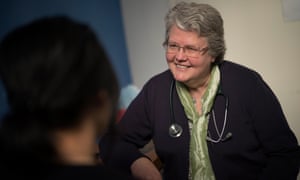
Dr Sarah Pillai


Dr Sarah Pillai, a volunteer at the east London clinic: ‘A lot of these have been women in hiding until now.’ Photograph: Sarah Lee for the Guardian

“When they hear if you go to the doctors, the Home Office might be knocking on your door, they choose to stay away,” Le Déaut said. “The results have serious implications; we see women who are nine months’ pregnant coming to our clinic. We assume that some people are giving birth at home”


She said she understood the need to ensure health tourists paid “but a trafficked woman or an undocumented migrant, who has no way of paying bills should be refused care when she is at her most vulnerable?”


Binta, a pharmacist from Sudan, arrived in 2010 to visit her husband, a doctor from Sudan who had a British passport and who had fled Sudan for political reasons. While she was trying to organise permanent residencyshe became pregnant. She was told by the Home Office that she needed to return home to apply for a new visa but did not feel able to travel because she was in the late stages of pregnancy. She was given leave to remain on appeal, but the papers did not come through immediately so she found herself ineligible for NHS treatment.


When the GP referred her for a scan, she was sent a bill for £2,669. “I was very frightened. I thought that they would deport us or that I would be sent to jail,” she said.


Her husband, who has now requalified and is working as an NHS doctor, was unemployed while he studied for UK medical exams and was receiving only £65 a week. “They kept resending the invoice; we received many letters. We couldn’t afford to pay. It distracted me from that beautiful moment of giving birth – all the time I was thinking about the money, are they going to take me to court? It is a part of my life I don’t want to remember again.”


Li arrived in the UK in 2012 after fleeing China because she was being targeted for promoting Christianity. She paid traffickers to get her out of China and arrived in the UK on a false passport. She spent more than a year locked in a house, forced to work for her traffickers, who produced illegal DVDs, to pay back some of her debts. Later she was freed and moved to live with a boyfriend. During her pregnancy, she was wrongly turned away by a GP when she tried to register because she had no papers.


“They asked me to pay £5,000 before I delivered the child. At one of my antenatal appointments, they brought me to a small room and explained I would have to pay more if I needed a caesarean. I felt very scared. There’s no way I can pay that much. I thought about not going to hospital, but I knew I couldn’t deliver a child by myself. I couldn’t cut the umbilical cord.


“When I was in the little room, explaining about the payment plan, I had to fill in a form with my immigration status, my names and address. They said they would hand that to the Home Office. I didn’t know what the Home Office would do – if they could deport me back to China. When I was in labour I was thinking about money all the time.”


She has subsequently begun the process of applying for asylum. She is not working because she is looking after a baby, so is not yet able to begin paying back her debts to the NHS.


Pregnant women without legal status "too afraid to seek NHS care"

26 Şubat 2017 Pazar

Test all pregnant women for smoking, say NHS chiefs

England’s public health chief is urging hospitals to give every pregnant woman a carbon monoxide test to see if they smoke, as part of an NHS-wide drive to persuade patients to kick the habit.


Duncan Selbie wants midwives and nurses to routinely screen mothers-to-be when their pregnancy is first “booked”, monitor them at all their antenatal appointments and support those who want to quit.


Hospitals would also ban smoking shelters used by staff and patients, hand out nicotine gum and patches and include helping smokers to quit in patients’ treatment plans under Public Health England (PHE)’s plans. It also wants doctors and nurses to use their conversations with patients to advise them how to give up tobacco or encourage them to switch to e-cigarettes instead.


“One in four hospital inpatients smokes, but too many hospitals do too little to try to help them to give up. I want people who are in a hospital bed or in a consulting room to have a conversation about their smoking with a member of staff and, if they want to quit, refer them on to stop smoking services”, Selbie, PHE’s chief executive, told the Observer.


“This isn’t about scaring or hectoring people. It’s about making people aware that if they want to give up, NHS staff can help them. The evidence shows that if someone is helped to quit, they are four times more likely to succeed than if they do it on their own.


“We talk a lot about sugar and diet as health risks, but smoking remains the UK’s biggest killer and is responsible for near half a million admissions to hospital each year. One in four beds is occupied by a smoker and seven in 10 of them want to quit. It is time to consign tobacco to history and for the NHS to help people to give up.


“There’s something anachronistic about the NHS being associated with smoking,” he added.


The Royal College of Midwives (RCM) backed carbon monoxide testing for expectant mothers as long as they had the right to refuse to undergo it if they chose not to.


“The RCM is supportive of pregnant women being offered carbon monoxide testing at a time when it is appropriate to do so. Depending on the circumstances, it could be at the initial antenatal booking or during subsequent antenatal visits. Women should have the ability to decline testing as with any other area of antenatal screening,” said Janet Fyle, the RCM’s professional policy adviser.


But the NHS needed to understand that some women, especially those from poorer backgrounds, smoke as a way of helping relieve the stress of preparing to have a baby, Fyle added. “Having a baby and caring for a newborn along with other family members is one of the most stressful life events for some women, as some new mothers struggle to adapt to their new roles with little or no social support,” she said.


“We know that the incidence of smoking is higher in lower socioeconomic groups. We cannot ignore the psychological, social or economic circumstances of new mothers when developing strategies for how we communicate the risks of smoking and health care.”


PHE officials are frustrated that hospitals are doing too little to tackle smoking. In a strongly worded blog for the British Medical Journal, Dr Mary Black, its head of digital strategy, accused them of displaying “a kind of misguided sympathy [that] keeps the last vestiges of tobacco acceptability alive in the NHS.


“We falter before ill patients in pyjamas dragging their IV fluid stands out into the winter street in front of a hospital to have a fag, we pass with no comment past colleagues clustered around the emergency department exit having a communal smoke – some staff even smoke with patients at the exits of mental health units or in the last few remaining smoking shelters. Tolerating smoking on NHS premises is a form of collusion,” she said.


Black was especially critical of NHS personnel who light up outside their hospital. “Staff who smoke in NHS uniforms are sending a very clear pro-tobacco signal. Health staff who smoke with patients are empathising in a harmful way,” she said.


The National Institute of Health and Care Excellence (Nice) already advises hospitals to screen pregnant women to see if they smoke. However, many do not do so, even though recent evidence shows that it helps double the number of women who quit smoking during pregnancy and that those who do go on to have heavier and healthier babies. Smoking in pregnancy increases the risk of stillbirth, babies being small for gestational age, having trouble breathing and other problems.


Selbie praised Taunton and Somerset NHS Trust for playing messages recorded by children over the loudspeaker system in its grounds to ask those who are smoking to stop. The South London and Maudsley NHS Foundation Trust tells patients in all the letters it sends them that they should not bring tobacco, cigarettes, lighters or matches on to its premises or smoke anywhere in its grounds.


Selbie also highlighted Medway NHS Foundation Trust in Kent’s raft of anti-smoking measures, including its use of wardens to patrol the grounds telling people to stop smoking and a policy of frontline staff checking a patient’s smoking status and referring them for specialist help to quit if wanted.


Test all pregnant women for smoking, say NHS chiefs

14 Şubat 2017 Salı

Trump"s "global gag" aid rule endangers millions of women and children, Bill Gates warns

The “global gag rule” imposed by Donald Trump, blocking US funds to any organisation involved in abortion advice and care overseas, could impact millions of women and girls, endangering their lives and those of their babies, Bill and Melinda Gates have warned.


The changes are expected to result in funding from the world’s biggest donor to family planning and women’s health programmes in the developing world being slashed. It could, Bill Gates told the Guardian, “create a void that even a foundation like ours can’t fill”.


Gates and his wife spoke out as they published a progress letter to Warren Buffett, the businessman who 10 years ago invested a large part of his fortune in the couple’s foundation which has at its centre the mission to save children’s lives. Empowering women and girls, the couple said, was central to that aim.


Trump signed an executive order reimposing the Mexico City policy, also known as the global gag rule, on his first full day in office. Republican presidents since Ronald Reagan in 1984 have imposed the policy, while their Democrat counterparts have lifted it. The rule strips funds from any organisation that “performs or actively promotes abortion as a method of family planning” overseas.


But Trump’s order goes further, applied to any organisation that receives funding from US Aid , not just those involved in family planning. That expansion, said Melinda Gates, was a surprise.


“We’re concerned that this shift could impact millions of women and girls around the world,” she said. “It’s likely to have a negative effect on a broad range of health programs that provide lifesaving treatment and prevention options to those most in need.


“This includes programmes that prevent and treat HIV, TB and malaria, and provide healthcare to women and children around the world. Enabling women to time and space their pregnancies and providing access to treatment and prevention of infectious diseases is lifesaving work. It saves moms’ lives and it saves babies’ lives, and that has long had wide support in the United States.”


Bill Gates said their foundation would not be able to bridge the potential funding gap. “The US is the No 1 donor in the work that we do. Government aid can’t be replaced by philanthropy. When government leaves an area like that, it can’t be offset, there isn’t a real alternative. This expansion of this policy, depending on how it’s implemented, could create a void that even a foundation like ours can’t fill.”


He had an early phone call with Trump in November and then a meeting in December with the president-elect in New York, he told the Guardian. They talked about the eradication of polio, which Gates hopes could come as early as this year, and the research his foundation is supporting towards an Aids vaccine and ways to protect people from pandemics such as Ebola in west Africa.


“So that was a good discussion – the fact that he was interested in having me talk about the Foundation’s work – I was pleased,” said Gates.
But the philanthropist did not anticipate the scope of the executive order affecting family planning, an issue at the centre of the foundation’s work, that Trump was to sign.


Bill (L) and his Melinda Gates (C) with Warren Buffett as the latter pledge of 10m shares of Berkshire Hathaway to the couple’s foundation.


Bill and his Melinda Gates with investment veteran Warren Buffett (R) in 2006. Photograph: Nicholas Roberts/AFP/Getty Images

The letter to Buffett is an assessment of the progress the Gates Foundation has made since 2006, when he pledged 10m shares in his company Berkshire Hathaway in annual instalments worth a total of $ 31bn at the time. The couple write of the progress that has been made in saving children’s lives, particularly through immunisation and vaccine development, and the work that lies ahead in making childbirth safer and tackling malnutrition.


Their letter makes clear what is at stake with Trump’s move to reimpose the global gag rule, arguing that women and maternal health are key to so many global health issues.


Empowering women is a key theme of the letter in which the couple argue that enabling women to access contraceptives control over the number of pregnancies they have is crucial. When women have a gap of at least three years between births, their children are more likely to survive and be healthy and well educated, the couple say. “Like vaccines, contraceptives are one of the greatest lifesaving innovations in history,” writes Bill Gates in the letter.


What is the ‘global gag rule’, and why does Trump support it?

Since they set up their foundation its focus has shift from the hunt for technological solutions towards social change. The attention to women’s empowerment came from the evidence, the couple say.


“You cannot go out and be in the developing world and then come back and look at the data and turn away from the importance of women in the developing world,” said Melinda Gates.


Whether they breastfeed and take their children to be vaccinated makes a profound difference to how the child grows and his or her life chances, and men are not always there, she added. “So you have to look at the woman’s role and when you look at it you realise it can be an accelerator to every single thing you want to have happen in the world for global health and global development and social change.”


In their letter, Bill Gates sats that poverty is sexist, a phrase he first heard from the U2 frontman Bono.


“The poorer the society, the less power women have. Men decide if a woman is allowed to go outside, talk to other women, earn income. Men decide if it’s acceptable to strike a woman. The male dominance in the poorest societies is mind-blowing.”


In the letter, Melinda Gates adds: “It’s also crippling. Limiting women’s power keeps everyone poor.”


She and her husband tell of their visits to sex workers in India whom the couple say they encouraged to form self-help groups, thinking the women would help each other insisting their clients wore condoms to protect themselves from HIV. That vision, said Bill Gates, “was way too narrow”. The sex workers began to support each other in every aspect of their lives.


“Warren, if Melinda and I could take you anywhere in the world so you could see your investment at work, we probably would take you to meet sex workers. I met with a group in Bangalore, and when they talked about their lives, they had me in tears,” writes Bill Gates.


“One woman told us she turned to sex work after her husband left her – it was the only way to feed her children. When people in the community found out, they forced her daughter out of school, which made the girl turn against her mother and threaten to commit suicide.


“That mother faced the scorn of society, the resentment of her daughter, the risks of sex work, and the humiliation of going to the hospital for an HIV test and finding that no one would look at her, touch her, or talk to her. Yet there she was, telling me her story with dignity.”


Bill and Melinda Gates receive medals from Obama at presidential medal of freedom ceremony in November 2016.


Bill and Melinda Gates receive medals from Obama at presidential medal of freedom ceremony in November 2016. Photograph: Carlos Barria/Reuters

There have been setbacks, such as the failure yet to end polio, but the couple emphasise the enormous progress that has been made in the last couple of decades in global health and speak in the letter of their optimism for the future.


“Polio will soon be history. In our lifetimes, malaria will end. No one will die from AIDS. Few people will get TB. Children everywhere will be well nourished. And the death of a child in the developing world will be just as rare as the death of a child in the rich world.


“We can’t put a date on these events, and we don’t know the sequence, but we’re confident of one thing: The future will surprise the pessimists.”


Trump"s "global gag" aid rule endangers millions of women and children, Bill Gates warns

3 Şubat 2017 Cuma

Cancer rates set to increase six times faster in women than men

Cancer rates will increase nearly six times faster in women than in men over the next 20 years, with obesity partly to blame, experts predict.


As several of the obesity-related cancer types only affect women, the growing number of people of both sexes who are severely overweight is likely to have a greater effect on incidence of the disease among women, according to the analysis by Cancer Research UK.


Cases of ovarian, cervical and oral cancers are predicted to rise the most. Rates will rise by around 0.5% for men and 3% for women, meaning an estimated 4.5 million women and 4.8 million men will be diagnosed with cancer by 2035.


That equates to projected UK cancer rates increasing by approximately 0.5% for men and 3% for women.


The figures were released on the same day as the National Institute for Health and Care Excellence (Nice) announced that it was recommending that the breast cancer drug palbociclib should not be routinely funded on the NHS in England.


Charities decried the decision by the drugs watchdog, stressing the importance of developing and supporting more treatments to help women to survive, but they also urged women to change their lifestyles to minimise their risk.


Cancer Research UK’s chief executive Sir Harpal Kumar said: “These new figures reveal the huge challenge we continue to face, both in the UK and worldwide. Research is at the heart of finding ways to reduce cancer’s burden and ensure more people survive, particularly for hard-to-treat cancers where the outlook for patients is still bleak. We need to keep working hard to reduce the devastating impact cancer can have on so many families.


“The latest figures show that more than 8 million people die from cancer each year across the world. More people die from cancer than Aids, malaria and tuberculosis put together. With more investment into research, we hope to make big improvements over the next 20 years in diagnosing the disease earlier and improving and developing treatments so that by 2034, three in four people will survive their disease.”


Smoking is another factor behind the projected growth of cancer cases among women, which will mean the gap between the number of women and men with the disease narrows. Widespread smoking among women happened later than men and lighting up continues to have a big effect on the number of cancer cases diagnosed each year, says Cancer Research UK.


Sarah Toule, head of health information at the World Cancer Research Fund, said lack of exercise and alcohol consumption were also driving the predicted increase in the UK cancer rate for women.


“It is concerning that rates are predicted to rise so sharply in women, especially as so many cancer cases could be prevented,” she said. “For example, about two in five breast cancer cases in the UK could be prevented if women maintained a healthy weight, were more physically active and didn’t drink alcohol – that’s around 20,000 fewer cases a year. Other cancers that could be reduced by women having a healthier lifestyle include womb and ovary.”


Professor Kevin Fenton, the director of health and wellbeing at Public Health England, said: “The top things we can all do to prevent and reduce the risk of cancer are quitting smoking, maintaining a healthy weight, being physically active and attending cancer screening when invited.”


In draft guidance explaining its reasoning for its advice on palbociclib, which is made by Pfizer, the drug watchdog said that a full course of treatment costs £79,560. Although Nice found that the drug stalled the growth of the cancer for an extra 10 months on average “it was still not enough to make palbociclib cost effective at its current price”.


The watchdog estimates that around 5,500 people in England – out of 45,000 new diagnoses of breast cancer each year – would be eligible for treatment with palbociclib.


Baroness Delyth Morgan, chief executive at Breast Cancer Now, said: “This is the clearest illustration to date that the drug appraisal system is totally unfit for purpose in assessing first-in-class breast cancer medicines.


“Palbociclib could benefit a large proportion of metastatic breast cancer patients and may even be the closest thing these women would have to a cure in their lifetime.”


She urged Pfizer to reconsider its decision not to offer the NHS a discount on the list price and said the pharmaceutical giant must work with Nice to ensure the drug can be made widely available to women as soon as possible.


The Institute of Cancer Research (ICR), with its partner The Royal Marsden NHS Foundation Trust, led a major clinical trial of palbociclib.


Dr Nicholas Turner, team leader in Molecular Oncology at ICR and consultant medical oncologist at The Royal Marsden, said: “Palbociclib is one of the most important advances in treating the most common type of breast cancer in 20 years.


“If the manufacturer, Nice, and NHS England can find a way of making this treatment available for patients, they will substantially improve the lives of patients with breast cancer.”


In December, Nice turned down another breast cancer drug, Kadcyla, made by Roche Pharmaceuticals, on financial grounds, triggering an outcry from patients’ groups who say it prolongs the lives of people who are seriously ill with the disease.


At present there are an estimated 7.4 million men and 6.7 million women being diagnosed with cancer worldwide each year. The disease is the leading cause of death globally, accounting for an estimated 8.2m deaths in 2012 and approximately 15% of all deaths.


Cancer rates set to increase six times faster in women than men

30 Ocak 2017 Pazartesi

Why is sex painful for some women – and what can they do?

Sex is painful for nearly one in eight women according to a study in the British Journal of Obstetrics and Gynaecology. Researchers vary in their estimates of how common painful sex is – some studies say it affects up to one in three women – but all agree it’s a neglected problem. Most women never seek help. Some carry on having penetrative sex through gritted teeth.


The medical name for painful sex – dyspareunia – covers a multitude of reasons why intercourse hurts, such as sexually transmitted diseases (chlamydia or herpes), thrush and endometriosis (which causes pelvic inflammation). Then there is anxiety, lack of sexual arousal and/or a previous traumatic experience of sex.


This latest study used survey data from the third annual National Survey of Sexual Attitudes and Lifestyles, on 6,669 sexually active women, and found those between the ages of 16 to 24 and 55 to 64 were most likely to have pain during sex. Women were also asked about other aspects of their sex lives. Those who said sex hurt were four times more likely than other women not to enjoy sex, five times more likely to feel anxious during sex and three times more likely to have difficulty climaxing.


The solution


The strongest link found was between painful sex and vaginal dryness. “In the older age group, this is likely to be due to the hormonal changes in the menopause,” says Dr Kirstin Mitchell, senior research fellow at the MRC/CSO Social and Public Health Sciences Unit at Glasgow University, and lead author of this latest paper. “But in the case of the 16- to 24-year-olds, it may be about young women not feeling sufficiently aroused and therefore not lubricated enough, so that penetration is painful. Young women may then grow up thinking sex hurts.”


Painful sex has often been seen through a mostly medical prism. But Mitchell says that US doctors have moved away from the terms traditionally used to describe it, such as vaginismus (defined as persistent involuntary spasm of the muscles of the outer third of the vagina). Instead, they have come up with genito-pelvic pain/penetration disorder. It’s still a clumsy name for something that affects what Mitchell calls a “significant minority” of women.


But, certainly, there are enough medical causes for painful sex to merit getting checked out by your GP or local sexual-health clinic. “You need to understand what’s causing the pain,” says Mitchell. Menopausal women often find lubricants relieve vaginal dryness. Relationship problems and previous traumatic experiences of sex need more profound help, while infections and inflammatory conditions need medical treatment. Mitchell feels that schools should make sure sex education stresses communication between partners. “Trust and respect are key foundations for good sex,” she says.


Why is sex painful for some women – and what can they do?

27 Ocak 2017 Cuma

Women on the verge of a midlife crisis

It was supposed to be, says the writer Louise Doughty, a feminist indictment of the criminal justice system and of how women are still judged on their sexual conduct in a way that men aren’t. Instead – of course – it has become about the sex. Hot middle-aged sex. A middle-aged woman having hot middle‑aged sex with someone who is not her husband. The TV adaptation of Doughty’s novel Apple Tree Yard began last Sunday, with Emily Watson playing Yvonne Carmichael, a successful geneticist – plus wife and mother to grown-up children – who finds herself with a handsome stranger in a broom cupboard, deep beneath the House of Commons, where she has just been giving evidence before a select committee.


The Observer called it “groundbreaking”, the Spectator noted that midlife crisis novels were “traditionally a male form”. Doughty finds the fuss a bit bewildering. “I honestly didn’t believe I was doing anything that radical when I wrote the book,” she says. “In retrospect, it makes me sound really naive, but as a middle-aged woman who occasionally has sex, I really didn’t think it was big news, and neither did it feel like big news to any of my friends the same age.”


We have seen endless depictions of the male midlife crisis, but very few where a woman derails her previously comfortable life. “I think it’s nonsense that the midlife crisis is the preserve of men,” says Doughty. “I think there are lots of reasons why it doesn’t get talked about so openly by women. I think a lot of women prioritise protecting their families in a way that men maybe don’t. And also, for middle-aged women, it’s very common to still have a huge amount of caring duties. Even if your children are teenage, that doesn’t mean you haven’t still got a lot to do. Quite often you might also have elderly parents.”


So, it seems that there isn’t much time for the indulgence of a midlife crisis, regardless of whether it includes an affair or not. Perhaps women’s midlife crises happen more internally? “I think they do,” says Doughty. “I think they happen externally as well, but I think quite often for women there is a crisis of identity in a more internal way.”


Doughty also points to the changing roles of mothers, as their children grow up.“Once that self-identification starts to fall away, you can end up reassessing who you are and what you want,” she says. “I think that back in the days when women were more likely to be full-time housewives and mothers, once that role had ended there was a sense of the nest being empty. I think one of the bonuses of keeping your career going throughout child-rearing is that you still have something there.


“I wouldn’t want to over-emphasise a crisis of confidence, I think actually a lot of women my age are more confident than we’ve ever been. If you asked me to swap my 53-year-old self with my 23-year-old self, I would tell you to take a running jump. I’m so much happier now. There’s a line very early on in the book where Yvonne says, ‘Self-awareness, it’s our consolation prize,’ and that was very personal to me – I love knowing who I am and what I want. I think it’s something society forgets in its obsessive portrayal of young women as attractive. What you actually know, if you’ve been a young woman yourself, is that often behind the physical attractiveness lies a huge amount of insecurity and worry.”


Although the modern idea of a particular kind of middle-age malaise goes back to Freud and Jung, the term “midlife crisis” was coined in a 1965 paper by Elliot Jaques, a Canadian psychoanalyst, who described how people entering middle age are confronted with the limitations of their life and their own mortality. Middle age, writes the journalist Miranda Sawyer in Out of Time, her book about making peace with her own age, is full of “money problems, of work responsibilities and looming insecurities, of boredom and frustration and a lack of self-realisation, of caring for those younger and older than ourselves, of diminishing fitness, energy and relevance”. Divorce rates are highest among men aged 45 to 49, and for women between 40 and 44. The highest rate of suicide is among men aged 45 to 49. While suicide is less common in women, the age range at which it peaks is 50 to 54. The midlife crisis has become a joke, Sawyer writes, but it “is only easy and wink-wink-hilarious to those who are not in middle age”.


Louise Doughty, author of Apple Tree Yard.


Louise Doughty, author of Apple Tree Yard. Photograph: Ulf Andersen/Getty Images

“For women there’s an awful lot around loss,” says the writer Kate Figes, 59, who has written several books about family life. “Loss of youth, possible dreams, even the future, if you feel your life is about to come to an end. For women I think there is also a sense of invisibility that can enter into it, because appearance – youthful sexuality – seems to be what people value most in women. A lot of women feel suddenly invisible. You no longer matter, you don’t turn heads in the street. One [of the women I interviewed] said, ‘I used to really care about how I looked, now I could put a paper bag on my head, walk out and nobody would even notice.’ So even though that may seem trivial to feminists, it’s actually very important for some women in terms of their sense of self.”


Young men, Figes argues, grow up believing that they get more physically attractive as they get older.


It can be dismaying if, as a woman, all your life you have listened to society’s message that you will be fine as long as you are nice, work hard, do what you are told – only to arrive at middle-age and realise it may have been largely for nothing. Figes agrees. “The positive way that I’ve found, and I think a lot of other women find, is to think, ‘I don’t care any more what anybody else thinks. I will say what I like, I don’t need to be nice.’ There is a sense that losing all those previously quintessential notions of femininity is a liberation.”


The clinical psychologist Linda Blair doesn’t like the word “crisis” at all. It has been 40 years, she points out, since Gail Sheehy wrote Passages, her influential book about life stages. “She talks about the different ‘passages’ that women go through and I think that’s a more appropriate term,” Blair says. “At different stages in our lives, we have different priorities and when those priorities need to change we experience a period of reforming.”


Many women Blair has seen in the course of her work have a sense of loss, but more than that, she says, they have a sense of uselessness. Their children, if they had them, might have left home, or they are feeling sidelined in their work. “‘I’m redundant’ – that’s the main thing I hear. ‘I’m no longer useful.’ Which is a shame, to be defined as no longer useful to others,” she says.


But, for Blair, a crisis – if we insist on calling it that – can be “very exciting, it can make you feel young, revitalised. It’s not what happens to us, I’ve found in 40 years of clinical work, it’s how we see it.”


A crisis is not an inevitable, or even a normal part of midlife, says Margie Lachman, director of the Lifespan Developmental Psychology Laboratory at Brandeis University in Massachusetts. “People have crises at other ages, and it is not more likely at midlife.” It may, she adds, be better described as a “turning point or midpoint check-up. The middle of life is a natural time for reflection on one’s life: how is it going? Is this all there is? Do I want to make changes? When the changes are big or seem sudden, often people characterise it as a midlife crisis.” But change, she adds, “can be a good thing”.


There has not been much research on the differences in how men and women go through a midlife crisis, but one study in 2000 by Elaine Wethington, a sociology professor at Cornell University in New York State, found that the phenomenon was actually more common in women, experienced by 26.3% of women and 25.4% of men. “Their description of the crisis was not that different,” says Lachman. “In a study I did in 1994, the main difference was that women focused more on physical and health changes. Wethington found that men were more likely to tie a crisis to disappointment in their career or job.”


Orangutans have been shown to experience a similar phenomenon to the human midlife crisis.


Orangutans have been shown to experience a similar phenomenon to the human midlife crisis. Photograph: Alamy Stock Photo

However, there is, says Andrew Oswald, professor of economics and behavioural science at Warwick University, “overwhelming evidence that there is a midlife low. Would we call it a crisis? It would depend on your definition but there’s a very pronounced drop in mental wellbeing from about the early 20s down to the mid- to late 40s, and then a rise up. This is often described as looking like a U-shape. At the moment in Britain, say, the happiest people in the country are in their mid-70s.”


Is there a difference between men and women? This is the curious thing, Oswald says. He would have expected to see one – because of different traditional family roles, different ageing patterns, women’s hormonal changes during the menopause – but “the evidence suggests very little difference in the mental wellbeing through life between men and women”. Feelings of midlife crisis do not appear to be related to the stresses of having children, say, because people who do not become parents also bottom out. They also affect both educated and uneducated people. “It appears to be a very deep phenomenon,” adds Oswald, “one of the great social science puzzles.”


According to Oswald, scientists used to think that midlife crisis was connected to commonly accepted factors – facing up to your limitations, accepting that you’re never going to win a Nobel prize, play for Arsenal or be in a stadium-touring rock band. “But recently a group of us, [working] with primatologists, have shown the same U shape in chimpanzees and orangutans. Although that needs to be checked by other researchers, it raises the possibility that this is not a social science phenomenon, but a natural science phenomenon.”


Oswald believes that as we get older, the joy of novelty and youthful energy naturally decline. The question is, what causes the upward climb out of the low point? “How can people be getting happier in their 50s, 60s and 70s, when you would think that the prime of life was earlier?” It may be, he says, that we have learned to regret less or that wisdom is the pay-off for slowing down. I suppose that’s something to look forward to, if you’re in the grip of a midlife crisis – the fact that you will probably grow out of it.


Women on the verge of a midlife crisis