rule etiketine sahip kayıtlar gösteriliyor. Tüm kayıtları göster

18 Nisan 2017 Salı

The Australian Christian Lobby is wrong. Australians don"t support a gag rule | Rebecca Huntley

It’s the photo that launched a thousand memes. The freshly inaugurated Donald Trump, surrounded by a posse of white dudes signing a directive reinstating a “global gag rule” banning US-funded groups around the world from discussing abortion.


I saw the news about it on social media, shuddered, donated to Planned Parenthood and then felt just a little bit more grateful that I live in this country, a place where abortion and reproductive rights aren’t the hysterical hot button issues they are in the United States. I’ve only recently learned that while we might not share their toxic politics around reproductive rights, we have in the past taken America’s lead on the implementation of the global gag rule. It was last removed in Australia in 2009 by Kevin Rudd.


If the Australian Christian Lobby had its way, we’d follow America’s lead yet again. They are currently engaged in a pretty intense letter writing campaign calling for the re-instatement of an Australian global gag rule.


What is the ‘global gag rule’, and why does Trump support it?

Groups like Family Planning NSW are calling for funding to aid programs, specifically in Pacific Island countries, to be maintained in the May budget and with good reason. The Pacific has some of the worst reproductive and sexual health outcomes globally, with high rates of maternal and infant deaths, unintended and teenage pregnancies, sexual violence and unacceptably high rates of cervical cancer deaths.


Women giving birth in the Pacific are dying at 34 times the rate of women in Australia. Women in the Pacific are dying at up to 10 times the rate of women in Australia from cervical cancer. In developing regions, eight in 10 women with curable sexually transmitted infections do not receive treatment. Every two minutes, a woman dies in pregnancy or childbirth – the majority of these deaths are preventable. The main purpose of the global gag rule might be to stop aid agencies providing advice about abortion but the direct consequence is also to stop them providing a whole range of other services associated with sexual and reproductive health.


The people pushing for a gag rule in this country like to think they speak for the silent majority of Australians. Yet there is no evidence they do. Figures from last week’s Essential Report show Australians strongly support the nation’s commitment to providing important health services to women in Pacific Island nations.


In fact, 89% of Australians feel it is important women in Pacific Island countries have access to sexual and reproductive health services like contraception, cervical cancer screening and family planning. A strong majority of men (85%) and an even stronger majority of women (91%) support Pacific Island women having access to these services. There is very little variation in support across generations and party affiliation.


How important is it that women in Pacific Island countries have access to sexual and reproductive health services – like contraception, cervical cancer screening and family planning?

On the issue of whether our foreign aid budget should support the provision of these services in those countries, again there is strong support across gender and generation. This isn’t a women’s issue, it’s a community concern.


How important is it that Australia, through its foreign aid budget, supports Pacific Island countries to provide sexual and reproductive health services including contraception, cervical screening and family planning?

Finally, on the question of the global gag rule, 67% of Australians (64% men and 70% women) would be concerned if Australia also introduced this rule and stopped aid to groups that provide family planning and sexual and reproductive health services in Pacific Island countries. While opposition to the rule is highest among Greens voters, 62% of Coalition voters report being concerned about such a move.


How concerned would you be if Australia introduced a global gag rule and stopped aid to groups that provide family planning and sexual and reproductive health services in Pacific Island countries?

So much for the silent minority. Only 6% of those polled in the Essential Report would be unconcerned about a gag rule being reinstated. It’s clear that bringing vaccines, maternal health care, family planning and cervical cancer screening to the Pacific Island region is the intent of men and women across Australia.


Australians might be fascinated with Donald Trump. They might applaud his recent action in Syria and some of us might even sympathise with the idea of a ban on Muslim immigration. But the research shows there is no widespread support for a Trump-style gag rule that puts a rightwing Christian agenda before the health and wellbeing of Pacific Island women.


The Australian Christian Lobby is wrong. Australians don"t support a gag rule | Rebecca Huntley

2 Mart 2017 Perşembe

Countries pledge millions to plug hole left by US "global gag rule"

Countries have pledged tens of millions for family planning schemes in developing countries to plug a gap left by Donald Trump’s ban on US funding to groups linked to abortion.


About 50 governments are attending the hastily convened She Decides conference in Brussels on Thursday, with early pledges closing in on $ 100m (£80m).


Sweden and Finland each promised €20m to compensate for the reinstated “global gag’ rule”, which bans US funding for NGOs that provide abortion or information on the procedure to women in developing countries.


The UK has sent the international development minister, Rory Stewart, to the one-day conference, but it remains unclear if the government will announce a financial contribution.


Organisers hope to raise $ 600m. “This is not a conference against the American administration; this is a conference for something,” Sweden’s deputy prime minister, Isabella Lövin, told the Guardian.


“We are expressing our strong support for women’s rights, for the progress that has been made. Access to contraceptives and sexual reproduction is a vehicle for development and the eradication of poverty.”


In an executive order signed last month, Trump reinstated the global gag rule, a US aid policy Republican presidents since Ronald Reagan in 1984 have imposed but their Democrat counterparts have lifted.


Sweden’s international development minister cited evidence from the World Health Organization showing that, under George W Bush’s presidency, the rule increased abortions and maternal deaths from unsafe terminations. “This is something we can prevent,” she said.


Alexander De Croo, Belgium’s deputy prime minister, told the Associated Press: “This should not be a moment where we are taking steps back into the dark ages.”


Belgium, Denmark, the Netherlands and Norway have pledged $ 10m each, with further contributions expected to be announced by other wealthy countries.


A government spokeswoman was unable to confirm whether he would announce any financial contribution from the UK.


The Department for International Development has previously described the UK as a global leader on family planning. It points to “a major international summit this summer to secure commitments that increase access to family planning services for women and girls in the world’s poorest and most fragile countries”.


Other wealthy countries are expected to announce donations. Canada’s minister of international development, Marie Claude Bibeau, said: “Women’s rights begin with their right to control their bodies. We should never take that away from them, especially for young adolescents. Canada is proud to stand with its partners and will always stand up for women’s rights everywhere.”


Afghanistan, Chad and Ethiopia are among the developing countries sending representatives to the conference, where they are expected to give evidence on how funding for family planning makes a difference to women’s lives.


Organisers have also expressed hope that US foundations may get involved by contributing funds. While the conference has been warmly welcomed by NGOs, some have voiced fears the money cannot be raised quickly enough to fill the shortfall left by Trump’s executive order.


Lövin expressed hope of hitting the target, but said Thursday’s conference was only the first step.


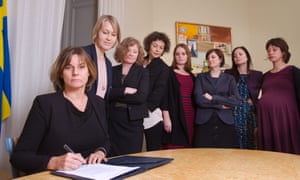
Sweden’s deputy PM, Isabella Lövin, signs bill seen as a parody of Donald Trump signing the ‘global gag’ order.


Sweden’s deputy PM, Isabella Lövin, signs bill seen as a parody of Donald Trump signing the ‘global gag’ order. Photograph: Johan Schiff/EPA

The Swedish deputy prime minister made headlines last month when she appeared to parody Trump and the all-male lineup in the Oval Office that signed the global gag order.


Lövin, who is also environment minister, tweeted a picture of herself and female colleagues, as she signed Sweden’s climate law.


But she brushed aside questions she was mocking Trump and his administration, saying: “The message was not that we were only women in that picture; the message was that we are taking leadership when it comes to tackling climate change.


“This was my staff and myself and my state secretaries and I was signing a bill and that’s all.”


Countries pledge millions to plug hole left by US "global gag rule"

14 Şubat 2017 Salı

Trump"s "global gag" aid rule endangers millions of women and children, Bill Gates warns

The “global gag rule” imposed by Donald Trump, blocking US funds to any organisation involved in abortion advice and care overseas, could impact millions of women and girls, endangering their lives and those of their babies, Bill and Melinda Gates have warned.


The changes are expected to result in funding from the world’s biggest donor to family planning and women’s health programmes in the developing world being slashed. It could, Bill Gates told the Guardian, “create a void that even a foundation like ours can’t fill”.


Gates and his wife spoke out as they published a progress letter to Warren Buffett, the businessman who 10 years ago invested a large part of his fortune in the couple’s foundation which has at its centre the mission to save children’s lives. Empowering women and girls, the couple said, was central to that aim.


Trump signed an executive order reimposing the Mexico City policy, also known as the global gag rule, on his first full day in office. Republican presidents since Ronald Reagan in 1984 have imposed the policy, while their Democrat counterparts have lifted it. The rule strips funds from any organisation that “performs or actively promotes abortion as a method of family planning” overseas.


But Trump’s order goes further, applied to any organisation that receives funding from US Aid , not just those involved in family planning. That expansion, said Melinda Gates, was a surprise.


“We’re concerned that this shift could impact millions of women and girls around the world,” she said. “It’s likely to have a negative effect on a broad range of health programs that provide lifesaving treatment and prevention options to those most in need.


“This includes programmes that prevent and treat HIV, TB and malaria, and provide healthcare to women and children around the world. Enabling women to time and space their pregnancies and providing access to treatment and prevention of infectious diseases is lifesaving work. It saves moms’ lives and it saves babies’ lives, and that has long had wide support in the United States.”


Bill Gates said their foundation would not be able to bridge the potential funding gap. “The US is the No 1 donor in the work that we do. Government aid can’t be replaced by philanthropy. When government leaves an area like that, it can’t be offset, there isn’t a real alternative. This expansion of this policy, depending on how it’s implemented, could create a void that even a foundation like ours can’t fill.”


He had an early phone call with Trump in November and then a meeting in December with the president-elect in New York, he told the Guardian. They talked about the eradication of polio, which Gates hopes could come as early as this year, and the research his foundation is supporting towards an Aids vaccine and ways to protect people from pandemics such as Ebola in west Africa.


“So that was a good discussion – the fact that he was interested in having me talk about the Foundation’s work – I was pleased,” said Gates.
But the philanthropist did not anticipate the scope of the executive order affecting family planning, an issue at the centre of the foundation’s work, that Trump was to sign.


Bill (L) and his Melinda Gates (C) with Warren Buffett as the latter pledge of 10m shares of Berkshire Hathaway to the couple’s foundation.


Bill and his Melinda Gates with investment veteran Warren Buffett (R) in 2006. Photograph: Nicholas Roberts/AFP/Getty Images

The letter to Buffett is an assessment of the progress the Gates Foundation has made since 2006, when he pledged 10m shares in his company Berkshire Hathaway in annual instalments worth a total of $ 31bn at the time. The couple write of the progress that has been made in saving children’s lives, particularly through immunisation and vaccine development, and the work that lies ahead in making childbirth safer and tackling malnutrition.


Their letter makes clear what is at stake with Trump’s move to reimpose the global gag rule, arguing that women and maternal health are key to so many global health issues.


Empowering women is a key theme of the letter in which the couple argue that enabling women to access contraceptives control over the number of pregnancies they have is crucial. When women have a gap of at least three years between births, their children are more likely to survive and be healthy and well educated, the couple say. “Like vaccines, contraceptives are one of the greatest lifesaving innovations in history,” writes Bill Gates in the letter.


What is the ‘global gag rule’, and why does Trump support it?

Since they set up their foundation its focus has shift from the hunt for technological solutions towards social change. The attention to women’s empowerment came from the evidence, the couple say.


“You cannot go out and be in the developing world and then come back and look at the data and turn away from the importance of women in the developing world,” said Melinda Gates.


Whether they breastfeed and take their children to be vaccinated makes a profound difference to how the child grows and his or her life chances, and men are not always there, she added. “So you have to look at the woman’s role and when you look at it you realise it can be an accelerator to every single thing you want to have happen in the world for global health and global development and social change.”


In their letter, Bill Gates sats that poverty is sexist, a phrase he first heard from the U2 frontman Bono.


“The poorer the society, the less power women have. Men decide if a woman is allowed to go outside, talk to other women, earn income. Men decide if it’s acceptable to strike a woman. The male dominance in the poorest societies is mind-blowing.”


In the letter, Melinda Gates adds: “It’s also crippling. Limiting women’s power keeps everyone poor.”


She and her husband tell of their visits to sex workers in India whom the couple say they encouraged to form self-help groups, thinking the women would help each other insisting their clients wore condoms to protect themselves from HIV. That vision, said Bill Gates, “was way too narrow”. The sex workers began to support each other in every aspect of their lives.


“Warren, if Melinda and I could take you anywhere in the world so you could see your investment at work, we probably would take you to meet sex workers. I met with a group in Bangalore, and when they talked about their lives, they had me in tears,” writes Bill Gates.


“One woman told us she turned to sex work after her husband left her – it was the only way to feed her children. When people in the community found out, they forced her daughter out of school, which made the girl turn against her mother and threaten to commit suicide.


“That mother faced the scorn of society, the resentment of her daughter, the risks of sex work, and the humiliation of going to the hospital for an HIV test and finding that no one would look at her, touch her, or talk to her. Yet there she was, telling me her story with dignity.”


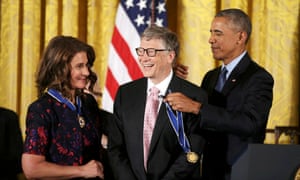
Bill and Melinda Gates receive medals from Obama at presidential medal of freedom ceremony in November 2016.


Bill and Melinda Gates receive medals from Obama at presidential medal of freedom ceremony in November 2016. Photograph: Carlos Barria/Reuters

There have been setbacks, such as the failure yet to end polio, but the couple emphasise the enormous progress that has been made in the last couple of decades in global health and speak in the letter of their optimism for the future.


“Polio will soon be history. In our lifetimes, malaria will end. No one will die from AIDS. Few people will get TB. Children everywhere will be well nourished. And the death of a child in the developing world will be just as rare as the death of a child in the rich world.


“We can’t put a date on these events, and we don’t know the sequence, but we’re confident of one thing: The future will surprise the pessimists.”


Trump"s "global gag" aid rule endangers millions of women and children, Bill Gates warns

9 Şubat 2017 Perşembe

"There will be more deaths": NGOs on Trump"s anti-abortion rule

Three days after his inauguration, Donald Trump reinstated the “global gag” rule, which prohibits the use of US aid money for abortions, prevents NGOs from using private funds for abortion services, from referring women to groups that provide abortions, and even from offering information on services.


We asked NGOs around the world to tell us how the policy impacted them in the past, and what it means for their work today.


‘The policy constitutes bullying and blackmail’


Sally Griffin, director, ICRH-Mozambique


Mozambique is at a crucial turning point. Abortion was recently decriminalised and the government and its partners are preparing to roll out services. We fear this policy could derail the process, either through its impact on funding for services, or through the climate of fear and restraint it creates.


We receive US funding to provide HIV, sexual and reproductive health (SRH) services to sex workers. The ‘global gag’ rule pushes us into a corner: abandon our efforts to support access to safe abortion or close down our programme providing essential SRH services to marginalised people. Either way, vulnerable women will have their reproductive and sexual rights compromised.


The policy constitutes bullying and blackmail, particularly of local organisations that are heavily dependent on US funding to provide services and to survive, and are therefore effectively powerless to turn it down.


This policy is going to undermine the reproductive health of our women


Rani Jha, Nepal


‘Impoverished women may not be able to afford quality abortion care’


Rani Jha, obstetrician and gynaecologist, Nepal


I work to provide free or subsidised safe abortions and contraceptive services to marginalised women. The services are funded by international donations and we are afraid that we may not be able to secure more funds in the future. Then, we may have to curtail our services or start charging patients. But Nepal is a poor country and impoverished women may not be able to afford quality abortion care. We can expect a rise in the rate of unsafe abortions, and subsequent mortality and morbidity. This is going to undermine the reproductive health of our women.


What is the ‘global gag rule’, and why does Trump support it?

‘The rule will reduce our work to near zero’


Claudia Dides, executive director, Miles Chile


In the past, the implementation of the policy meant that only government funding was available to support the promotion of sexual and reproductive rights. There was an increase in the number of girls aged 11–14 having unwanted pregnancies, and an increase in the prevalence of HIV/Aids.


The global gag rule will reduce our work to near zero as we depend almost 100% on external support to promote the sexual and reproductive rights of women and teenagers in Chile. They would be left without information on the latest contraceptive methods, they would have limited access to sex education (government programmes are limited or non-existent), and there would be restrictions on advocating preventive actions around HIV/Aids and other sexually-transmitted diseases.


‘Mothers will visit the clinic with problems they might have avoided’


Heloise, Ghana


In northern Ghana, it is common for poor young women to receive financial support from their boyfriend in exchange for sex. But without SRH and rights education, they often don’t know how to prevent pregnancy. If a woman does get pregnant, she will often rely on her boyfriend and his family to support her. And if she goes to school, she may have to drop out. After the baby is born, the man’s family is considered free of responsibility and this can leave the woman without financial or family support. In this region, girls and women are often so poor they have no money to get treatment for any pregnancy or newborn complications, resulting in extremely high rates of maternal and child mortality.


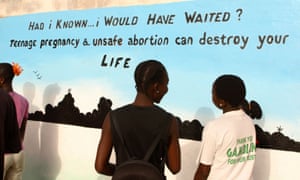
Family planning clinic in Gambia.


Family planning clinic in Gambia. Photograph: Chloe Hall/REX Shutterstock

With the reinstatement of the ‘global gag’ rule, mothers will visit the clinic with gynaecological problems they might have avoided had they received preventative SRHR education. There will be more deaths, our clinics and health professionals will be burdened by higher caseloads of complications, and maternal and child mortality, and an already overburdened and under-financed health system will face yet more problems.


‘The policy violates human rights to information, bodily integrity and autonomy’


Kathy Mulville, executive director, Women’s Global Network of Reproductive Rights, Philippines


The policy will feed stigma around abortion and prevent millions from making informed decisions about their own bodies


Kathy Mulville, Philippines


In countries where abortion is decriminalised, and comprehensive safe abortion information and services and contraceptives are widely accessible, we have seen that unsafe abortions and maternal mortality and morbidity are effectively eradicated. This has significant ripple effects for economic and social development; increased school attendance among girls, reduced levels of household poverty and hunger, reduced inter-generational transfers of poverty, mitigated socioeconomic impact of HIV/Aids, and improved environmental sustainability.


In addition to putting much-needed funding in jeopardy, the ‘global gag’ rule will only worsen the already challenging context in which we, our members and local partners work, further stigmatizing efforts to advocate for safe and legal abortions. The policy will feed the already rampant stigma around abortion and will prevent millions from making free and informed decisions about their sexuality and their own bodies, while also violating their human rights to information, bodily integrity, and autonomy in reproductive decision-making.


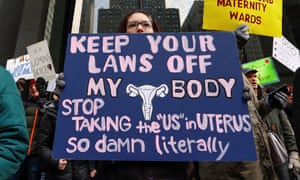
Demonstrators protest at an abortion rights rally in Chicago.


Demonstrators protest at an abortion rights rally in Chicago. Photograph: Kamil Krzaczynski/Reuters

‘It will weaken evidence-based services for the poorest and most vulnerable women and girls’


Suzanne Petroni, senior director – global health, youth and development, International Center for Research on Women, US


The International Centre for Research on Women is not subject to the gag rule, but our local partners around the world would have to sign it – several have already indicated they are not willing to do so. This may constrain our ability to conduct efficient research, used to improve the design and implementation of policies and programmes that reach thousands, if not millions, worldwide.


For example, our US–funded work to understand how to improve the wellbeing of girls in Zambia who are HIV-positive, to ensure adherence to anti-retroviral therapy services by problem drinkers in India, and to expand access to voluntary family planning in numerous countries, may all be affected by the imposition of this new and expanded “global gag” rule. As well as restricting services directly, the rule is likely to diminish the availability and use of solid evidence, and will weaken the design and delivery of evidence-based services for the poorest and most vulnerable women and girls – and men and boys – globally.


‘Women should determine the care they receive, not the US government’


Sera Bonds, CEO, Circle of Health International, US


This is not our first global gag rule rodeo – nor, sadly, is it likely to be our last


Sera Bonds, United States


Too many organisations dependent on big government funds lose funding in times such as these and are no longer able to provide life-saving services like safe deliveries. We have not taken US government funding for this exact reason; women and their trusted healthcare providers should determine the care they receive, not the US government or a donor.


However, the governor of Texas, where we are based, has pledged to stop funding going to women’s health initiatives, and federal and state aid going to refugees in the state. This doubly impacts our work in the Rio Grande valley where we staff a clinic for refugees. I am sure that, together, we can figure a way through this. This is not our first global gag rule rodeo – nor, sadly, is it likely to be our last.


Do you work for a global health organisation funded by US aid? We want to know how the global gag rule will affect your work. Tell us in the comments below.


Join our community of development professionals and humanitarians. Follow @GuardianGDP on Twitter.


"There will be more deaths": NGOs on Trump"s anti-abortion rule

27 Ocak 2017 Cuma

The return of the global gag rule stinks of neocolonialism | Lola Okolosie

Here’s a question I’d like somebody to ask President Trump: “What’s a woman’s life worth?” I’d hazard a guess that his response would attempt to sound reasonable.


Since the word “woman” tends to evoke a particular type, much in the same way the colour nude is taken as beige with whispers of peach, I’d like to ask another: “Mr Trump, what worth do you see in the lives of women in the developing world?”


The answer to that is revealed in Trump’s decision to reimpose the global gag rule. For women in poorer countries reliant on American aid, their lives have been deemed a fair compromise in service of politicking and moralising. It is a brutal use of these women’s bodies in order to mount an ideological assault on the idea that a woman can have bodily autonomy. Women of developing nations have become expendable collateral damage in a war far closer to home. Who isn’t reminded of colonialism and the hierarchy of bodies that matter?


Some 22,000 women will die this year because of unsafe abortions, and 8.4 million will suffer serious illness or injury


The global gag rule, also known as the Mexico City Policy, stops any foreign NGO receiving US government aid for family planning from using their own funds to provide safe abortion services, if legal in that country. Not only that, the rule stops funding NGOs if they are: known to have referred women elsewhere to receive terminations; lobbying their own governments to liberalise restrictions on abortion law; campaigning against governments wanting to restrict abortions; and even educating the public on the fact that they can ask for safe legal abortions.


The rule has been brought in and out of existence by Ronald Reagan in 1984, Bill Clinton nine years later, then George W Bush in 2001, and Obama in 2009, before Trump re-imposed it this week. Trump is in fact expanding the rule’s powers so that it no longer applies solely to family planning assistance given by the US government, but also to funding given to NGOs focusing on disease control.


Some 22,000 women will die this year because of unsafe abortions, and 8.4 million more will suffer serious illness or injury. Millions more will lose access to contraceptives and condoms because the NGOs who once provided them with such services will no longer exist. All because of the moral ideals of a powerful anti-choice lobby is intent on winning something, anything. How easy it is to play political football with the lives of people from the developing world.


[embedded content]

It is the same contingent that calls NGOs working to make abortion part of family planning initiatives “cultural imperialists”. Cultural relativism and the pretence that they are making a charitable intervention is supposed to mask a commitment to enforcing their sense of morality elsewhere. They assume that using the argument of salvaging “traditional” cultures will protect against an essential truth: it is a woman’s right to decide what happens to her body and when. Never mind that women in the developing world are not a homogenous lump with identikit views on abortion. Like colonial missionaries of old, it’s all for the moral good of the natives, apparently.


An American friend recently pointed out the paradox in Trump’s promise to put Americans first, (with its implication of isolationism) and yet make America great again, a sentiment that is nothing if not outward-looking and colonial in spirit. What better way to neatly combine the two than to withdraw billions in funding to poorer nations while making them understand the almighty power of the US dollar?


During Trump’s inauguration speech, the language of moral virtuosity was barely contained, lest it sound too imperialistic for the moment. It has nevertheless been let loose. American religious values, by way of the global gag rule, will be imposed on countries as far flung as Kenya and Peru, Ethiopia and Nepal.


Last year Trump stated that in the event of abortion being criminalised, women who went on to have a termination would have to face “some form of punishment”. Asked by MSNBC’s host Chris Matthews about how you actually ban abortion, Trump said: “Well, you know, you will go back to a position like they had where people will perhaps go to illegal places.”


The casual “you know” seems all the more perverse appearing as it does before an acknowledgement that it would mean putting women’s lives at risk. It seems that the lives of women from the developing world have been taken as a good starting point.


The return of the global gag rule stinks of neocolonialism | Lola Okolosie

Labour MPs urge Priti Patel to stand against Trump"s "global gag" rule

MPs are calling on Priti Patel to take urgent action to support charities that provide women with information on abortion in an effort to limit the impact of one of Donald Trump’s first acts as president.


Six Labour politicians have written to the development secretary suggesting Britain takes similar steps to the Netherlands, which is planning to form an overseas fund after the US ruled that it would stop providing aid to international groups working in this area.


“As we are sure you are aware, the new US president Donald Trump signed an executive order blocking funding for a number of international NGOs that support women’s rights and family planning,” the MPs wrote, about what has been dubbed the Mexico city policy, or global gag rule.


“We would implore you to take urgent steps on funding and policy as the Dutch government has and as the UK government has done so previously, to mitigate the impact of this decision.”


The group – Stephen Doughty, Stella Creasy, Gareth Thomas, Stephen Twigg, Luciana Berger and Anna Turley – praise Patel for championing the work of the Department for International Development (DfID) for women and girls in developing countries. They say it has focused on access to education, health services, family planning, better nutrition and water and sanitation.


“The department has been at the global forefront in helping poor women to lead healthy and productive lives, and to increase voice, choice and control for girls and women,” they add, warning that Trump’s decision could undermine DfID’s work.


They highlight the Dutch plans for a fund to help projects providing access to birth control, abortion and women’s education.


“If Britain is going to show the kind of global leadership the prime minister suggests, then we need to put our money where our mouth is and step in when others fall short” said Creasy, who helped organise the London Women’s March.


“Cutting funding for reproductive healthcare doesn’t end abortion, it ends safe abortions. Trump may not realise that but Britain does and should act accordingly.”


What is the ‘global gag rule’, and why does Trump support it?

Doughty, a former aid adviser who sits on the development committee, argued that Trump had delivered a “sinister start” to his presidency.


“At a time when Donald Trump is advocating torture and slashing contributions to the UN – they are also gagging women’s rights organisations,” he said, urging Patel and Theresa May to try to undo some of the damage.


Thomas, who is a former DfID minister, said he had previously been involved in a decision to set up a fund after George W Bush, the last Republican president, stopped US aid funding safe abortion and family planning.


“We worked with allies in other development agencies to try to ameliorate the consequences of George Bush’s decision,” he said. “Now that Trump has followed suit I hope Theresa May will instruct DfID to once more lead the development community to help close the gap and thus support the rights of women across the world to live the life they want to.”


A DfID source said. “The secretary of state has spoken about the fact that family planning in development is an important priority to her. We will continue to show global health leadership by working to deliver this‎.”


Labour MPs urge Priti Patel to stand against Trump"s "global gag" rule

25 Ocak 2017 Çarşamba

NGOs: How will the "global gag rule" affect your work?

In one of his first acts as president – and two days after millions of people marched for women’s rights – Donald Trump has reinstated the “global gag rule”.


The policy will cut US aid funding to international NGOs which offer family planning programmes associated with abortion. Also known as the Mexico City Policy, it was first introduced by Ronald Reagan in 1984 and has since become a political ping pong – reinstated by Republican presidents and rescinded by Democrats.


Building on the 44-year-old Helms amendment which prohibits the use of US aid money for abortions, the new policy will prevent NGOs from using private funds to offer abortions, from referring women to groups that provide abortions, and even from offering information on services.


What is the ‘global gag rule’, and why does Trump support it?

Some $ 600m of US foreign aid goes towards family planning assistance, but organisations will now have to choose between no longer offering these services, or losing funding from the US.


Two major beneficiaries of US funding for family planning programmes, the International Planned Parenthood Federation (IPPF) and Marie Stopes International have indicated that they would not comply with the gag rule. Marie Stopes estimates that without alternative funding the loss of its services will cause more than 6 million unintended pregnancies during Trump’s first term. The IPPF could lose up to $ 100m of funding, which could lead to cuts to sexual health services in at least 30 countries where its partner organisations work.


The policy could put millions of women’s lives at risk: one in 10 maternal deaths in developing countries are caused by unsafe abortions an estimated 20 million take place each year.


“This blocks access to sexual and reproductive health services in the poorest and hardest to reach communities where we are currently changing lives,” Tewodros Melesse, director general of IPPF, told the Guardian. “We can’t support something which tries to restrict people’s choices or take them away.”


We want to hear from you


Do you work for a global health organisation funded by US aid? We want to know how the global gag rule will affect your work. Tell us your stories, thoughts and concerns using the form below.


NGOs: How will the "global gag rule" affect your work?

24 Ocak 2017 Salı

"Extreme" gag rule on abortion puts $9bn in health aid at risk, activists say

Billions of dollars in US aid to groups combating diseases worldwide could be at risk from Donald’s Trump’s “unprecedented and far-reaching” reversal of abortion-related policy, campaigners warned on Tuesday.


Trump signed an executive order on Monday reinstating the “global gag rule”, which bans funding for groups that offer abortions or abortion advocacy, even if they use their own funds to do so.


Campaigners fear the move could affect a wide range of groups providing life-saving treatment, such as those working to combat HIV and Zika, as well as those helping prevent child and maternal deaths and unwanted pregnancies worldwide.


What is the ‘global gag rule’, and why does Trump support it?

The policy has been repealed and reinstated several times in the past, but women’s reproductive rights groups said Trump had signed the “most extreme” and sweeping order of its kind.


The policy has been expanded to affect “all global health assistance furnished by all departments or agencies”, according to a White House statement published on Monday.


The US is the most generous bilateral donor to reproductive rights causes worldwide – with current funding at $ 575m. What is still unclear is to what extent the gag rule will affect the US’s wider global health funding, which the reproductive rights campaigners PAI estimate to be more than $ 9bn.


Groups are still unpicking what funding “global health assistance” refers to. For example, humanitarian assistance may be exempt because it is funded in a different way.


Suzanne Ehlers, president and CEO of PAI, described the expanded version of the law as “irrational and backward”.


“Our preliminary analysis,” Ehlers said, “based on the presidential memorandum yesterday, is that [the global gag rule] is not only more severe and sweeping, but it’s more expansive than that introduced by previous presidents.


“Family planning assistance funding by USAid is a budget of around $ 610m. But if our reading of this memorandum is accurate, it will cover all global health assistance. That is in the ball park of $ 9.4bn.”


The global gag rule, also called the Mexico City policy, denies foreign organisations US family planning funding if they provide abortion information, referrals or services, or if they engage in any abortion rights advocacy with their own funds.


Projects on the ground are faced with a stark choice – to refuse US funding or to take the funding and end abortion advice. First introduced by the Reagan administration, the measure was repealed by Bill Clinton, reinstated by George W Bush and repealed again by Barack Obama.


But Monday’s White House memorandum suggests the rule will apply not just to family planning funding but to “all global health assistance”.


Ehlers said: “We are talking about work on HIV, tuberculosis, malaria, public and child health.


“So let’s say I’m a US organisation involved in global health assistance in Malawi worth $ 1m. I’m working with 12 or 15 different NGO partners in a malaria programme. All of those partners have to sign a Mexico City policy to say they are not doing anything at all with any of their own private funds to do with abortion.


“What business is it of the US government to determine what groups across the world, working in what might very well be legal in their own countries, do with their own money?


“This is not a pro-life policy,” said Ehlers. “There is already no US-taxpayer assistance going to pay for abortion. This is a policy denying women life-saving services. It will cut off funding for groups providing HIV testing kits to teenagers, it will cut malaria programmes. We are imperilling and endangering global health programmes.”


A spokeswoman for Planned Parenthood said: “This is the most extreme executive order that we have ever seen, in the global health space, under any Republican administration.


“It will not just affect family planning services, but organisations that are working to combat Zika, to combat HIV/Aids. We at Planned Parenthood are very concerned and astonished, coming after a weekend when one in 10 Americans took to the streets in a historic show of strength, that this administration would target the world’s most vulnerable women in this way.”


Caroline Crosbie, acting CEO of Pathfinder, a health programme which works globally, said the policy “risks the lives of millions of people around the world”.


“This vastly expanded gag rule jeopardises millions of lives, and will only serve to undercut decades of American global health leadership.


“While we examine what the precise negative effects the expanded policy will have on our partners in the countries where we work, we do know that it will do more than silence organisations from talking about abortion – it will mean these organisations will not be able to provide HIV prevention, care and treatment services, integrated maternal health care and contraceptive services or counselling on the potential risks of Zika infection, among others, if they intend to receive US government funds.”


Amanda Klasing, a senior researcher in women’s rights at Human Rights Watch, said the expanded rule introduced by the Trump administration would have a chilling impact on freedom of speech and would “dramatically increase” the number of groups affected.


“One of our concerns is that it is a dramatic expansion of the US trying to govern free speech abroad,” said Klasing. “What they are trying to do is hold funding captive.”


Klasing said the effect of the rule would be that organisations that operate in countries that restrict women’s rights and women’s access to services, if in receipt of US funding, would no longer be able to speak out.


“They can’t advocate around loosening those restrictions if they want to continue to receive US funding. How far does this go? Can the groups participate in harm reduction models?”


Anu Kumar, chief strategist of Ipas, an organisation working to combat deaths from unsafe abortion, said: “We are not entirely certain what pot of money will be affected. But it if is global, then even HIV funding could be jeopardised.


“We already know is the gag rule results in cuts to services and clinics are forced to close. Every day there are 840 women who die from pregnancy related cases. We know there are 225 million women in developing countries who don’t want to be pregnant.


“The scale of the problem is enormous.”


Analysis by the Guttmacher Institute found that last year’s US aid budget for family planning gave 27 million women and couples access to contraceptives, prevented more than 2m unsafe abortions and 6 million unintended pregnancies, and helped prevent 11,000 maternal deaths worldwide.


"Extreme" gag rule on abortion puts $9bn in health aid at risk, activists say

23 Ocak 2017 Pazartesi

"Global gag rule" reinstated by Trump, curbing NGO abortion services abroad

In one of a number of sharp reversals from the Obama era, Donald Trump on Monday signed an executive order banning international NGOs from providing abortion services or offering information about abortions if they receive US funding.


The rule will put thousands of international healthcare workers in the difficult position of deciding whether to continue to offer family planning care that includes abortion at the expense of a critical funding stream.


The US is the single largest donor to global health efforts, providing nearly $ 3bn toward health efforts through the United States Agency for International Development (USAid) alone. The state department and groups like the Peace Corps offer additional funding.


Many international health advocates insist that their efforts are not comprehensive without abortion services. Unsafe abortions are a major cause of maternal mortality and kill tens of thousands of women every year.


What is the ‘global gag rule’, and why does Trump support it?

“President Trump’s reinstatement of the global gag rule ignores decades of research, instead favoring ideological politics over women and families,” said Senator Jeanne Shaheen, a New Hampshire Democrat who serves on the foreign relations committee.


“We know that when family planning services and contraceptives are easily accessible, there are fewer unplanned pregnancies, maternal deaths and abortions.


“And when women have control over their reproductive health, it improves the long-term health of mothers and children and creates a lasting economic benefit.”


Trump’s signature reinstates a Reagan-era rule that was not in effect for most of the Obama administration. The order does not eliminate international aid for abortions, which is already prohibited by federal law under the Helms amendment. Rather, the gag rule takes the Helms amendment one step further by preventing NGOs from using private funds to offer abortions or even refer women to groups that provide abortions.


The gag rule also prevents health workers in foreign countries from advocating for abortion rights, which includes testifying about the impacts of illegal abortion.


The rule does not enjoy uniform support along party lines. In 2015, Senate legislation introduced by Shaheen that would have made the gag rule impossible to reinstate by executive order attracted support from several moderate Republicans.


Still, the reinstatement of the global gag rule, also known as the Mexico City policy, has been long sought by opponents of abortion rights. To their eyes, funding groups that perform or even discuss abortions is tantamount to funding the procedure.


“President Trump is continuing Ronald Reagan’s legacy by taking immediate action on day one to stop the promotion of abortion through our tax dollars overseas,” said Marjorie Dannenfelser, president of the anti-abortion political advocacy group Susan B Anthony List.


“President Trump’s immediate action to promote respect for all human life, including vulnerable unborn children abroad, as well as conscience rights, sends a strong signal about his administration’s pro-life priorities.”


Trump is not the first president to reinstate the rule after it was suspended. George W Bush signed a similar order when he entered office in 2001.


As a result, more than 20 developing countries in Asia, Africa, and the Middle East lost access to contraceptives provided by the US and many NGOs were forced to shut down or lay off staff, according to EngenderHealth, a global women’s health organization that supports abortion rights.


EngenderHealth observed the impact in three places – Kenya, Nepal and Zambia – and found that in these countries, the gag rule reduced the availability of family planning services, HIV programs and maternal and child health programs.


"Global gag rule" reinstated by Trump, curbing NGO abortion services abroad

12 Aralık 2016 Pazartesi

Texas rule requiring burial or cremation of fetal tissue shames women, suit says

A women’s rights group has filed a lawsuit in an attempt to block a new Texas rule that requires fetal remains to be cremated or buried.


Accusing the state of a politically-motivated ploy to make it harder for women to have abortions, the Center for Reproductive Rights launched the legal action on Monday, one week before the regulation is set to take effect on 19 December.


The lawsuit against the Texas department of state health services (DSHS), filed in federal court in Austin, alleges that the regulation has no medical benefits, will pose practical burdens by increasing the cost of healthcare services and is an attempt to stigmatise abortion and heap shame on women seeking the procedure.


Whole Woman’s Health, an abortion provider, is the lead plaintiff in the suit. It claims that the new regulation “burdens women seeking pregnancy-related medical care. It imposes a funeral ritual on women who have a miscarriage management procedure, ectopic pregnancy surgery, or an abortion.


“Further, it threatens women’s health and safety by providing no safe harbor for sending tissue to pathology or crime labs. It also forces healthcare providers to work with an extremely limited number of third-party vendors for burial or scattering ashes, threatening abortion clinics’ provision of care and their long-term ability to remain open, as well as cost increases for women seeking pregnancy-related medical care.”


Current Texas regulations on disposal by healthcare facilities do not generally distinguish between fetal remains and other kinds of human materials that would typically be disposed of in a sanitary landfill. The new rule changes that, creating a category for “fetal tissue” and ordering it to be buried or cremated regardless of how far along the pregnancy is. Miscarriages or abortions that happen at home are exempt and birth or death certificates are not required to be issued.


The plan, strongly promoted by Texas’ Republican governor Greg Abbott, was publicly announced last July, four days after the supreme court struck down key parts of an onerous 2013 abortion law that prompted a drastic drop in the number of clinics in Texas. The court found that the law, which mandated that clinics have standards akin to surgical centres, caused an undue burden on women seeking an abortion and did not offer sufficient medical benefits. Abbott, though, has vowed to continue efforts to restrict abortion.


“I believe it is imperative to establish higher standards that reflect our respect for the sanctity of life. This is why Texas will require clinics and hospitals to bury or cremate human and fetal remains,” Abbott wrote in July in a fundraising email to supporters reported by the Texas Tribune. He said the proposal would “help make Texas the strongest pro-life state in the nation”.


According to the DSHS, the rule will benefit public health and safety “by ensuring that the disposition methods specified in the rules continue to be limited to methods that prevent the spread of disease” and by “protecting the dignity of the unborn”. Texas’s Republican-dominated legislature is expected to formally enshrine the regulation in state law during the 2017 session, which starts in January.


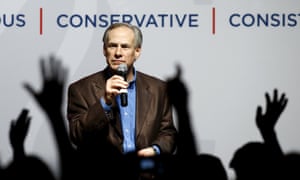
Texas governor Greg Abbott has said the proposal would ‘help make Texas the strongest pro-life state in the nation’.


Texas governor Greg Abbott has said the proposal would ‘help make Texas the strongest pro-life state in the nation’. Photograph: Mike Stone/Reuters

“These regulations are an insult to Texas women, the rule of law and the US supreme court, which declared less than six months ago that medically unnecessary restrictions on abortion access are unconstitutional,” Nancy Northup, president and CEO of the Center for Reproductive Rights, said in a statement. “These insidious regulations are a new low in Texas’ long history of denying women the respect that they deserve to make their own decision about their lives and their healthcare.”


The question of how to handle fetal remains became a rallying point for anti-abortion activists after an organisation released a video in 2015 that falsely appeared to show employees at a Planned Parenthood clinic in Houston illegally selling fetal tissue.


Mike Pence, the Indiana governor and now vice-president-elect, signed a restrictive abortion law in March this year that included a fetal remains provision similar to Texas’s plans. It was stopped by a court in June shortly before it was scheduled to take effect.


Another law in Louisiana is on hold because of an ongoing legal challenge.


Texas rule requiring burial or cremation of fetal tissue shames women, suit says

Women"s groups urge Scotland to scrap two doctors abortion rule

The Scottish government should scrap the legal requirement for two doctors to approve a termination, effectively decriminalising the procedure, and consider regulating abortion drugs for use by women in their own homes, according to a report by a coalition of women’s rights organisations.


With abortion law devolved to Holyrood as part of the Scotland Act 2016, the report argues that the SNP government must now “be bold in creating a distinctive approach” by removing it from criminal statute and regulating it like any other healthcare procedure.


The campaigners – including Amnesty Scotland, NUS Scotland and Scottish Women’s Aid – are calling on politicians to “make a woman’s legal right to choose a reality” by removing the two doctors rule.


Under UK law abortion is permitted for non-medical reasons up to 24 weeks and with the permission of two doctors. The SNP reaffirmed its commitment to current legal protections and to maintaining time limits in line with the rest of the UK in its spring manifesto.


But the report insists it is time to go further, arguing: “There is an opportunity within the devolution of abortion law to develop a distinct Scottish approach to women’s reproductive health and the strengthen women’s rights.”


Since the devolution of abortion law was announced last November, some pro-choice campaigners have raised concerns about the risk of anti-abortion groups exploiting cross-border differences.


Others have suggested the surge in political engagement, particularly among women, brought about by the 2014 independence referendum campaign could bolster any forthcoming drive to extend abortion rights in Scotland.


On a visit to Dublin two weeks ago, Scotland’s first minister, Nicola Sturgeon, said her government would explore how to allow Northern Irish women to obtain free access to abortions in Scotland’s NHS hospitals.


Abortion is legal in Northern Ireland only when the pregnancy poses a direct threat to the mother’s life. The NHS has so far refused to pay for abortions for Northern Irish women who travel to Britain.


Emma Ritch, executive director of the feminist campaign group Engender, which spearheaded the report, said: “It does seem there is a very unique status given to abortion, in that it is the only type of healthcare in which this criminalisation exists. We would want to see decriminalisation happen so that abortion was regulated in the same way as any other type of healthcare.


“Any Scottish approach to abortion should be based on international best practice, so we could adopt a situation as in Canada where there is no criminal law when it comes to abortion. While the debate around time limits is not a focus of the report, there is no compelling evidence of a reason to have time limits at all. Research shows that women want to access abortions at the earliest possible stage, and allowing later-term abortions does not significantly increase demand.”


The report criticises NHS Scotland for lagging behind England in its provision of later-term abortions, with terminations for non-medical reasons not normally available after 20 weeks, forcing some women to travel south.


It also suggests the Scottish government should consider regulating the provision of medical abortion drugs to allow terminations in early pregnancy to be carried out at home. A total of 12,082 abortions were carried out in Scotland in 2015, about 80% of which took place before 12 weeks of pregnancy.


The report counters the assumption that Scottish social attitudes, influenced by strong religious traditions, are more anti-choice than elsewhere in the UK. It says that according to polling carried out in the last year, 75% of Scots support a woman’s right to choose.


Women"s groups urge Scotland to scrap two doctors abortion rule