countries etiketine sahip kayıtlar gösteriliyor. Tüm kayıtları göster

22 Mart 2017 Çarşamba

Pay poor countries for NHS staff they train | Letters

Recruiting NHS staff from other countries saves the British taxpayer the very substantial costs of training them.


However, the proportional financial cost to poorer source countries is much greater than our saving. John Holme (Letters, 21 March) mentions Malawi as one source for NHS staff: six years ago a study published in the BMJ estimated the loss of returns to Malawi just for doctors then working in rich, predominantly white countries, at $ 1.41bn. Of those countries, it was the UK that benefited most, with a net transfer of wealth from nine sub-Saharan countries struggling with HIV/Aids of $ 2.7bn.


Getting poorer countries to pay for our medical training appears to be a deliberate UK policy rather than just the mighty free market, given the cuts in training places and funding.


Rather than selfishly celebrate this neocolonial asset-stripping, we should insist that countries of origin should be fully compensated for the loss. And that the UK should pay its own way in future.
Peter McKenna
Liverpool


Join the debate – email guardian.letters@theguardian.com


Read more Guardian letters – click here to visit gu.com/letters


Pay poor countries for NHS staff they train | Letters

2 Mart 2017 Perşembe

Countries pledge millions to plug hole left by US "global gag rule"

Countries have pledged tens of millions for family planning schemes in developing countries to plug a gap left by Donald Trump’s ban on US funding to groups linked to abortion.


About 50 governments are attending the hastily convened She Decides conference in Brussels on Thursday, with early pledges closing in on $ 100m (£80m).


Sweden and Finland each promised €20m to compensate for the reinstated “global gag’ rule”, which bans US funding for NGOs that provide abortion or information on the procedure to women in developing countries.


The UK has sent the international development minister, Rory Stewart, to the one-day conference, but it remains unclear if the government will announce a financial contribution.


Organisers hope to raise $ 600m. “This is not a conference against the American administration; this is a conference for something,” Sweden’s deputy prime minister, Isabella Lövin, told the Guardian.


“We are expressing our strong support for women’s rights, for the progress that has been made. Access to contraceptives and sexual reproduction is a vehicle for development and the eradication of poverty.”


In an executive order signed last month, Trump reinstated the global gag rule, a US aid policy Republican presidents since Ronald Reagan in 1984 have imposed but their Democrat counterparts have lifted.


Sweden’s international development minister cited evidence from the World Health Organization showing that, under George W Bush’s presidency, the rule increased abortions and maternal deaths from unsafe terminations. “This is something we can prevent,” she said.


Alexander De Croo, Belgium’s deputy prime minister, told the Associated Press: “This should not be a moment where we are taking steps back into the dark ages.”


Belgium, Denmark, the Netherlands and Norway have pledged $ 10m each, with further contributions expected to be announced by other wealthy countries.


A government spokeswoman was unable to confirm whether he would announce any financial contribution from the UK.


The Department for International Development has previously described the UK as a global leader on family planning. It points to “a major international summit this summer to secure commitments that increase access to family planning services for women and girls in the world’s poorest and most fragile countries”.


Other wealthy countries are expected to announce donations. Canada’s minister of international development, Marie Claude Bibeau, said: “Women’s rights begin with their right to control their bodies. We should never take that away from them, especially for young adolescents. Canada is proud to stand with its partners and will always stand up for women’s rights everywhere.”


Afghanistan, Chad and Ethiopia are among the developing countries sending representatives to the conference, where they are expected to give evidence on how funding for family planning makes a difference to women’s lives.


Organisers have also expressed hope that US foundations may get involved by contributing funds. While the conference has been warmly welcomed by NGOs, some have voiced fears the money cannot be raised quickly enough to fill the shortfall left by Trump’s executive order.


Lövin expressed hope of hitting the target, but said Thursday’s conference was only the first step.


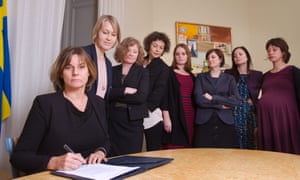
Sweden’s deputy PM, Isabella Lövin, signs bill seen as a parody of Donald Trump signing the ‘global gag’ order.


Sweden’s deputy PM, Isabella Lövin, signs bill seen as a parody of Donald Trump signing the ‘global gag’ order. Photograph: Johan Schiff/EPA

The Swedish deputy prime minister made headlines last month when she appeared to parody Trump and the all-male lineup in the Oval Office that signed the global gag order.


Lövin, who is also environment minister, tweeted a picture of herself and female colleagues, as she signed Sweden’s climate law.


But she brushed aside questions she was mocking Trump and his administration, saying: “The message was not that we were only women in that picture; the message was that we are taking leadership when it comes to tackling climate change.


“This was my staff and myself and my state secretaries and I was signing a bill and that’s all.”


Countries pledge millions to plug hole left by US "global gag rule"

10 Ocak 2017 Salı

Poorer countries fail to act on smoking due to big tobacco threats, says WHO

Many low- and middle-income countries are too scared by the threats and misinformation of big tobacco to raise the price of cigarettes, even though it would hugely benefit both health and the economy, according to a major new report.


The most effective measure to help people stop smoking is to impose high taxes on cigarettes, says the report by the World Health Organisation and the US National Cancer Institute. But even though smoking costs the world economy $ 3trn (£2.5trn) a year, poorer countries are afraid to tackle it in the most effective ways, it says.


“They are scared because of the issues raised by the tobacco industry,” said Jeremiah Paul of the WHO’s tobacco control economics unit. The industry warns of an increase in smuggling and illicit trade in tobacco, for instance, which the WHO and the US National Cancer Institute, the co-producers of the report, say does not happen.


“They are afraid of being taken to court if they increase tobacco taxes,” said Paul. “They [the industry] will scare you that tobacco taxes are anti-poor, that government revenue will go down.” But there is no evidence to support any of these claims, he said.


Six million people die every year as a result of smoking tobacco and although smoking rates are slowly going down, the numbers are increasing as the population of the world grows. There are also fears of a big expansion in Africa and the Middle East as big tobacco targets poorer countries now that hardline control measures such as bans on smoking in public places have taken effect in wealthier ones.


There are 1.1 billion smokers globally over the age of 15 and already 80% are in low- and middle-income countries. Many are already poor – an estimated 226 million smokers live in poverty. Those are the people who would benefit most from stopping, because they are least likely to get good healthcare and most likely to suffer from the disabling and economic effects of tobacco, such as losing their job.


The monograph says that global tobacco excise taxes generated nearly $ 269bn (£221bn) in government revenues in 2013-2014 – yet less than $ 1bn was invested in tobacco control.


High tobacco taxes raise money for governments while deterring smokers. The monograph says annual excise revenues from cigarettes globally could increase by 47%, or $ 140bn, if all countries raised excise taxes by about 80 cents per pack. This tax increase would raise cigarette retail prices on average by 42%, leading to a 9% decline in smoking rates and up to 66 million fewer adult smokers.


Controlling tobacco does not harm economies, the report says. The number of jobs dependent on tobacco has been falling in most countries, and when smokers quit they spend their money on other sectors of the economy instead. Tobacco farmers, who mostly do not earn a good living, can be helped to diversify into other crops.


“Tobacco use remains one of the world’s leading causes of preventable death, and increasingly, the health and economic burden is borne by the poorest countries and people,” said the WHO’s global ambassador for noncommunicable diseases, Michael R Bloomberg, whose philanthropic foundation has invested nearly $ 1bn into tobacco control. “By accelerating the adoption of the many cost-effective tobacco control policies available today, we can save millions of lives,” he said.


José Luis Castro, chief executive of the global health organisation Vital Strategies, warned that the death toll from tobacco will rise if tougher controls are not brought in. “While governments are committed to reduce tobacco deaths, the lack of effective tobacco control laws in many countries means that tobacco will kill one-third more smokers and non-smokers by 2030: 8 million deaths every year,” he said.


“This is avoidable. We urge governments to implement strong tobacco control policies, particularly high tobacco taxes that have the greatest, fastest impact on consumption, while also potentially funding better access to healthcare.”


Poorer countries fail to act on smoking due to big tobacco threats, says WHO

16 Kasım 2016 Çarşamba

Billion people have high blood pressure, mostly in poorer countries

The number of people with high blood pressure has almost doubled in 40 years to more than 1.1 billion worldwide, scientists have said, with the burden of the condition shifting from the rich to the poor.


In the largest study of its kind analysing blood pressure in every nation between 1975 and 2015, the scientists say it has dropped sharply in wealthy countries – possibly due to healthier diets and lifestyles – but risen in poorer ones.


The increases are especially significant in Africa and south Asia, the researchers say, and could be partly due to poor nutrition in childhood.


High blood pressure, also known as hypertension, puts extra strain on the blood vessels and major organs such as the heart, brain and kidneys. It is the world’s top cause of cardiovascular disease, which leads to strokes and heart attacks, and is estimated to cause 7.5 million deaths a year worldwide.


Led by World Health Organisation researchers working with hundreds of scientists internationally, this study covered blood pressure measurements from nearly 20 million people and was published in the Lancet medical journal.


In Europe, Britain had the lowest proportion of people with high blood pressure in 2015. South Korea, the United States and Canada had the lowest hypertension rates in the world.


More than half the world’s adults with high blood pressure in 2015 lived in Asia, the study estimates. Some 226 million people in China have high blood pressure, it says, as do 200 million in India.


“High blood pressure is no longer related to affluence – as it was in 1975 – but is now a major health issue linked with poverty,” said Majid Ezzati, a professor at Imperial College London’s school of public health.


He said that while he could not be sure why the data showed high blood pressure as more of a problem in poorer countries, it may be partly due to overall better health and more consumption of fruit and vegetables in wealthy societies.


In rich countries the condition was also caught more frequently and earlier, and managed more effectively with medicines, Ezzati said.


Blood pressure is defined by two numbers: systolic pressure, which represents the force with which the heart pumps blood into the blood vessels, and diastolic pressure, a measure of the resistance to the blood flow in the body’s blood vessels.


Both numbers are measured in millimetres of mercury (mmHg). High blood pressure is defined as 140/90 mmHg or higher.


The condition is caused by a number of factors including having a diet high in salt and low in fruit and vegetables, and not taking enough exercise.


Billion people have high blood pressure, mostly in poorer countries

16 Ekim 2016 Pazar

Most countries get more calories from alcohol than soft drinks – study

People in the UK and many other countries get more of their calories from alcohol than from sugary drinks like cola and lemonade, according to new data which suggests that tackling Britain’s drink problem may be more important for health than cracking down on sugar consumption.


Of 24 countries tracked by the data analysts Euromonitor International, all but one have higher daily calorie consumption from alcoholic drinks than sugary beverages. In the UK, adults are consuming more than 106 calories per head every day from alcoholic drinks, compared with 98 from sugar-sweetened drinks.


The highest calorie intake from alcohol is in South Korea, with nearly 168 calories a person each day and only 44 calories from sugary drinks. Also high are Poland, the Czech Republic, Finland and Germany while – of the countries examined – only the people of Taiwan get more calories from sweet drinks than alcohol. The US was not included.


Calories from sugar and alcohol

Sugar has been targeted by health experts and obesity campaigners. A number of governments are introducing taxes on sugar-sweetened drinks which are recognised as a major cause of childhood obesity.


But little has been said or done about alcohol, which the new data suggests is more significant even than sugary drinks in obesity in adults. Most people are unaware that alcohol can make you gain weight, because – unlike food – the number of calories are not routinely marked on beer cans and bottles of wines and spirits. Yet a large glass of 13% wine contains 228 calories and a standard glass 160 calories. A pint of 4% beer is also around 160 calories.


“In the UK, alcoholic drinks above 1.2% ABV are currently exempt from having to provide calorie information. This research demonstrates clearly that this exemption should now end,” said Prof Sir Ian Gilmore, chair of the alcohol health alliance.


“The public have the right to know what is in their drinks, so they can make informed choices about their consumption. These labels should make the public aware, for example, that a pint of standard-strength beer contains around 180 calories, about the same as a packet of crisps, and that a large glass of red wine contains around 200 calories, roughly equivalent to the calories found in a doughnut.”


Euromonitor’s nutrition analyst, Sara Petersson, said this did not let sugar off the hook. “It is very interesting because the whole reason why soft drinks are under attack is because they are liquid calories. We don’t have a compensatory mechanism that says we should eat less after drinking them,” she said. “It works the same way with alcohol and if anything, not only does it have a worse health effect but it is an appetite stimulant which makes you eat more. That is not to take anything away from the need to reduce sugar. That is crucial because it is a very important source of weight gain.”


But, she said, tackling alcohol consumption was also crucial to combatting obesity, which can lead to heart disease, type 2 diabetes and cancer, and was in danger of crippling health systems around the world.


Euromonitor’s nutrition data also shows that the average daily consumption of calories in the world is 1,398 calories, with the lowest amount in India at 761 calories per capita per day and the highest in Belgium at 2,559 calories per capita per day. It also shows that most of the developing countries it tracked (78%) get more calories from packaged food than fresh food.


Most countries get more calories from alcohol than soft drinks – study

30 Eylül 2016 Cuma

World Bank to name and shame countries that fail their stunted children

The president of the World Bank has warned he will name and shame countries that fail to tackle the malnourishment and poor growth of their children, as part of a mission to rid the world of stunting.


Jim Yong Kim, the former physician who heads the Bank, told the Guardian he would take to the podium at the World Economic Forum in Davos every year to point the finger at governments who failed to live up to promises to tackle a scourge affecting tens of millions of children.


Kim said stunting – which refers to children with a height considerably below the average for their age – was a humanitarian disaster but also an economic issue that held back nations. Malnutrition, the lack of stimulation and toxic environments take their toll on children’s brain development, modern neuroscience shows.


For the sake of their children but also their countries’ future prosperity in a world that increasingly needs an educated workforce with technological skills, governments must take action, said Kim, adding that equality of opportunity was meaningless when children started with such disadvantage. The problem is huge. In India 38.7% of children are stunted, in Pakistan 45% and in the Democratic Republic of the Congo 70%.


“Everyone puts all their eggs in the equality of opportunity basket,” said Kim. “But we’re essentially lying when 25% of children in the world are stunted. Inequality is baked into the brains of 25% of all children before the age of five. So the only way that we can realistically say there is equality of opportunity is if we bring stunting down to zero.”


Stunting around the world

There were certainly other issues, he added, such as the competence of schools. But there was little point complaining that children in the DRC could not read a single letter after going through three or four years of schooling. “It might not be because the education’s bad,” he said.


“It’s a stain on our collective conscience. I think we can start a global movement. My goal is to cut stunting in half. We have 14 years until 2030. We can cut stunting in half in seven years and then end stunting in the world by 2030. That is the only way we can look ourselves in the mirror and say there is equality of opportunity in the world,” he said.


Kim pointed to a World Bank-supported programme in Peru as an example of what is possible. It gave conditional cash transfers to the mothers of stunted children, enabling and educating them to give their children nutritious food and stimulation through play. Similar incentives were given to health clinics to support them. If the children did well, monthly payments continued. “It was the first time we tried this aggressive, what we called a demand-side intervention. They went from 28% in the mid-2000s to 14% in seven years,” he said.


“We’re going to say to every country in the world that has a problem with stunting, we’re ready to bring you the Peru formula. We’re willing to provide financing for these conditional cash transfers. Conditional cash transfers are great anyway. They help poor people. They stimulate the economy, they are a great thing to do.


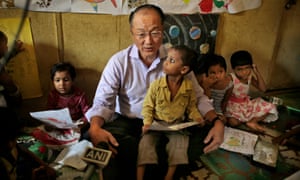
Jim Yong Kim


Jim Yong Kim says equality of opportunity is meaningless when children start with disadvantages as a result of poor growth. Photograph: Altaf Qadri/AP

“But you have to start making an effort at reducing stunting. Or else every year I’m going to stand up in front of all the potential investors in your country and say – you’re not making any progress on stunting. This has very serious implications for the quality of your workforce into the future,” he said.


Scientists have found that all children, regardless of race, should grow 25cm in their first year of life and 12cm in the second.


Only recently has the impact on the brain been explored. Imaging shows fewer neural connections in the brains of stunted children than in those of children who have grown well. That does not necessarily mean they are damaged for life, but their ability to learn can be impaired.


“This is probably the root of intergenerational poverty,” said Kim. “Stunted women who are malnourished become pregnant. Just because they were stunted and malnourished doesn’t mean that their children have to be, but they probably end up not having sufficient nutrition when they are pregnant and they give birth and their children are stunted and it just goes on.”


Technological change means that countries will have ever fewer low-skilled jobs in agriculture and manufacturing. “In that case, the most important infrastructure we can invest in is grey matter infrastructure,” he said.


Many people, including the Nobel economic sciences laureate Amartya Sen, have been arguing for years that investing in people is the way to growth. “I think that with the new science of stunting we have now the direct link. If you don’t have light manufacturing and you don’t have low-skilled work in agriculture, you’re left with mostly services. If you are going to compete in the service economy you’re almost certainly going to have to be digitally competent. And you’re almost certainly going to have to be able to learn throughout your lifetime.


“What I’m arguing is you need to make first and foremost an investment in your people and specifically you need to make an investment in the grey matter of your children.”


Kim believes governments will respond. In 2002, when he was head of the HIV department of the World Health Organisation, he launched a campaign to get 3 million people on antiretroviral treatmentby 2005 and let it be known which countries were lagging behind. Known as 3 by 5, it was controversial, but the initiative resulted in a rapid increase in access to the drugs. There are now 17 million people taking them.


What is stunting?


Childhood stunting is a huge problem worldwide, affecting an estimated 162 million children under five in 2012. These are children whose height is considerably below the average for their age. They are below the 5th centile on the child growth charts of the World Health Organisation – which means that fewer than 5% of healthy children would be expected to be their size.


Undenutrition is the prime cause of stunting. Children can be born to a malnourished mother, so they have not grown properly in the womb, or they can have too little nutrition in the first years of life. Stunting can also be the result of recurrent infections such as diarrhoea in places where sanitation is poor. If children are stunted at the age of two, it is unlikely that their growth will catch up with the norm. They are likely to be small and underweight.


Stunted children tend to have poor cognitive development, with underdeveloped brains. Malnourished children also have little energy, resulting in apathy and a lack of curiosity, which means they are unable to learn and are unlikely to be able to escape poverty.


Producing in-depth, thoughtful, well-reported journalism is difficult and expensive – but supporting us isn’t. If you value the the Guardian’s global health coverage, please help to fund our journalism by becoming a supporter.


World Bank to name and shame countries that fail their stunted children

4 Ağustos 2014 Pazartesi

Top 20 Best Countries For Women

The Globe Financial Forum Worldwide Gender Gap Report 2011 is the sixth yearly ranking of 135 nations by gender equality. Utilizing measures of women’s economic participation and opportunity, access to training, health and survival rates and political empowerment, the following 20 nations are the most equal–and therefore, the best for females.


Top 20 Best Countries For Women

20 Haziran 2014 Cuma

Dwell Q&A, 26 June: generating well being programs perform in poor countries

Global health

How can we help well being techniques to deliver service outcomes? Photograph: Issouf Sanogo/AFP


On Tuesday 24 June the Global Growth Committee begins an inquiry into well being technique strengthening, and if the Globe Health Organisation (WHO) is to be believed, this couldn’t come soon enough.


According to WHO, the lack of powerful healthcare infrastructure in components of the developing planet is currently one particular of the most significant barriers to growing essential healthcare accessibility. Of the millennium improvement goals, the wellness-relevant goals are the least most likely to be met, and regardless of a increasing availability of medication, vaccines and overall health-relevant resources, there is a disconnect in between innovation and the power of worldwide overall health methods to provide them.


So how can we assist shut this gap? As all wellness programs are context-particular, there is no single set of rules that can be put forward to enhance efficiency. But analysis demonstrates that wellness methods with the highest well being outcomes have specified shared traits. To start, they have procurement and distribution techniques that really supply interventions to those in require. Their overall health staff have the correct skills and motivation, and they operate inside monetary processes that are sustainable, inclusive, and honest.


Partnership is also important as Frank Anderson, member of the Institute for Healthcare Policy and Innovation explains: “Worldwide academic partnerships have the potential to make monumental breakthroughs in the wellness of poorer countries. Nonetheless, issues like distance, communication and cultural dfferences usually turn into barriers that stop us from creating the best affect.”


Similarly the size of the job can be daunting. Strengthening health programs requires investments in accessibility, coverage, top quality, or efficiency – the place will minimal and middle revenue nations find the funds amid all the other pressures on the budget? As developing countries face the double burden of disease, quickly-developing populations that are both really young or more and more old, it is important that the backbone that supports overall health delivery is strengthened. Join our expert panel on Thursday 26 June from one-3pm BST to go over how this can be sustainably accomplished.


The live chat is not video or audio-enabled but will consider place in the comments section (under). Get in touch via globaldevpros@theguardian.com or @GuardianGDP on Twitter to advise someone for our expert panel. Follow the discussion employing the hashtag #globaldevlive.


Dwell Q&A, 26 June: generating well being programs perform in poor countries

28 Mayıs 2014 Çarşamba

How obese is the United kingdom? and how does it evaluate to other countries?

Virtually two-thirds of males and women in the Uk are obese or obese, according to new evaluation of obese and weight problems information carried out by Institute for Health Metrics and Evaluation (IHME) at the University of Washington.


The examine which appears at information from 1980 to 2013, claims that far more folks in the United kingdom are either obese or obese than at any other time in the past three decades. The United kingdom, it says, has the third-highest charge of extra weight in western Europe behind Iceland and Malta.


67% of guys and 57% of girls in the Uk are overweight or obese in accordance to the examine which employs a Entire body Mass Index (BMI) of above 25 to define ‘overweight’ and a BMI of thirty or much more to define ‘obese’.


Researchers identified that overweight and weight problems among youngsters and adolescents is also a growing issue in the Uk. The study identified 26% of boys and 29% of girls were obese or obese, compared to 17.5% and 21% in 1980.


The analysis of trend information from 188 nations, discovered that worldwide, the proportion of male grownups with a BMI of 25 or far more, elevated from 29% in 1980 to 37% in 2013 even though the proportion of female adults with the BMI stated over, increased from 30% to 38% in excess of the same period.


Researchers also highlighted a considerable enhance in the prevalence of extra bodyweight in youngsters and adolescents in designed countries – 24% of boys and 23% of ladies around the world had been obese or obese in 2013.


The table at the finish of this post shows obese and weight problems costs by country and gender. You can discover the total data in the downloadable spreadsheet.


The IHME
Click right here to investigate the IHME’s instrument which shows information on prevalence of obese and obesity by nation and more than time. Photograph: /IHME

What is BMI? and why is it used to measure obesity?


BMI is calculated by dividing a person’s excess weight in kilograms by the square of their height in meters (kg/m2). It is generally employed to classify obese and weight problems in adults.


BMI as a measure of weight problems has prolonged been a sizzling subject of debate, with critics arguing that it does not distinguish between unwanted fat and muscle and questioning its validity as a useful way to measure whether or not a man or woman is obese or not.


Nick Trefethen, professor of numerical analysis at the University of Oxford even proposed a ‘new BMI formula’ in 2013.


The Globe Well being Organisation provide a helpful explanation of why BMI is a well-known approach to measure extra excess weight but also why caution ought to be expressed:


BMI provides the most useful population-degree measure of obese and weight problems as it is the exact same for each sexes and for all ages of adults. However, it need to be regarded as a rough guidebook because it could not correspond to the identical degree of fatness in various people.


The National Health Observatory (NHO) identify BMI as an “eye-catching measure since it is an easy, inexpensive and non-invasive indicates of assessing extra body fat” whilst “true measures of physique excess fat are impractical or high-priced to use at population degree”. The NHO do note the draw breaks of it even though:


It is only a proxy indicator of entire body fatness elements such as fitness (muscle mass), ethnic origin and puberty can alter the relationship between BMI and body fatness. Consequently, BMI might not be an exact device for assessing weight status at an personal level, and other ways of measuring physique composition could be much more useful and precise.


BMI does not supply any indication of the distribution of body excess fat and does not fully alter for the results of height or physique form, which might be notably critical when comparing figures across ethnic groups.


However it argues that:


The widespread use of BMI and the resulting supporting literature indicate that extremely convincing arguments would be essential to move to program use of any other index of fatness…investigation has shown that people whose BMI falls into the overweight or obese categories are a lot more probably to knowledge well being issues associated with excess weight.


Download the information


• Information: download the full spreadsheet


A lot more open information


Information journalism and information visualisations from the Guardian


Advancement and support information


• Search the world’s worldwide development data with our gateway


Can you do much more with this information?


• Get in touch with us at information@theguardian.com
• Follow us on Twitter
• Like us on Facebook


How obese is the United kingdom? and how does it evaluate to other countries?

21 Nisan 2014 Pazartesi

Best 10 Countries Where Justice Prevails

Each and every yr, the World Justice Task surveys 99 nations to come up with their Rule of Law Index. The index is utilized by policy wonks and analysts to dig deeper into why some nations are greater at defending civil liberties than other folks, and the place nations rank in comparison to equivalent revenue nations close by. The U.S. ranks large among the 99, but discrimination in the criminal justice technique keeps it out of the best ten. Here is the world’s justice league, and a seem at some of the stragglers.


Best 10 Countries Where Justice Prevails

15 Nisan 2014 Salı

Britain has fewer hospital beds than most European countries, OECD says

There are fewer hospital beds in Britain than most other European countries, with much less than half the number of many, a report has found.


In accordance to the Organisation for Economic Co-operation and Advancement (OECD), the United kingdom had 3 hospital beds per one,000 individuals in 2011, with Ireland getting the exact same amount.


This was far behind the majority of other nations on the continent, with Germany having 8.three per 1,000 individuals, Austria seven.7, Hungary 7.two, Czech Republic six.eight and Poland six.six.


Estonia (5.three) Slovenia (4.6) also had significantly more, with only Sweden obtaining a reduce amount, at 2.7 per 1,000 population.


The figures present that the amount of hospital beds has progressively fallen in Britain because 2000 when there had been four.one per one,000 folks.


As well as a lack of beds, the NHS also has to contend with so-known as “bed blockers” who get up beds that could be utilised by other folks. Several elderly people have unnecessarily extended stays in hospital since social care providers are not in a position to support them once they are discharged.


Last October individuals needing important health-related care in England missed out on almost 80,000 days in hospital beds due to the fact they had been getting taken up by individuals who have been well sufficient to be moved on, NHS England stated.


Chris Hopson, chief executive of the Basis Believe in network, which represents NHS hospitals, stated the OECD figures demonstrate they are working close to complete capability.


He told the Day-to-day Telegraph: “There is no slack in the technique and trusts are consistently juggling their sources to meet patient demand.


“We have to stay away from scenarios exactly where elderly people are moved from one bed to the up coming, or forced to endure long waits on trolleys, but it is not simple since of the pressure the system is below.”


Britain has fewer hospital beds than most European countries, OECD says

28 Mart 2014 Cuma

India and 10 other Asian countries declared polio free

The WHO declared 11 Asian countries free of polio

The WHO declared eleven Asian nations totally free of polio. Photograph: Saurabh Das/AP


India and 10 other Asian nations have been declared totally free of polio, that means the illness has been eradicated in 80% of the world.


The Planet Well being Organisation certified the south-east Asian area – which includes India but excludes Afghanistan and Pakistan – polio-totally free right after three years without having a single new case becoming reported. The WHO stated this meant 80% of the world’s population lived in polio-free of charge areas, an essential stage in direction of global eradication of the crippling condition.


“This is a momentous victory for the millions of health staff who have worked with governments, nongovernmental organisations, civil society and global partners to eradicate polio from the area,” mentioned the WHO’s regional director, Poonam Khetrapal Singh.


There are only three countries exactly where polio is even now endemic: Pakistan, Afghanistan and Nigeria. Even so, isolated outbreaks in the Horn of Africa and war-torn Syria emerged as leads to for concern in 2013, and vaccination workers in Pakistan are nevertheless becoming killed by the Taliban. “Until finally polio is globally eradicated, all nations are at threat, and the region’s polio-free of charge standing remains fragile,” Singh cautioned.


The certification is especially substantial in India, residence to 1.two billion people, which until 2009 accounted for half of all cases globally. The certification confirms one of India’s largest public wellness good results stories, accomplishing one thing once believed impossible, thanks to a massive and sustained vaccination programme.


India celebrated the milestone on 13 January, which marked 3 years because the last reported new situation in the nation, of a teenage lady in a slum in the eastern city of Kolkata. India reported 150,000 situations of paralytic polio in 1985, and 741 new infections that led to paralysis in 2009. In the following year, the number fell to double figures just before the last case in January 2011.


India’s poor sanitation, mass internal migration and dilapidated public health program made many professionals think it would be the final nation to eradicate the illness, if it ever did.


The nations licensed on Thursday were Bangladesh, Bhutan, Burma, Democratic People’s Republic of Korea, India, Indonesia, Maldives, Nepal, Sri Lanka, Thailand and Timor-Leste.


India and 10 other Asian countries declared polio free

2 Ocak 2014 Perşembe

Weight problems soars to "alarming" amounts in building countries

Fat woman obese obesity

There are some 900 million obese men and women in building nations, data demonstrates. Photograph: Jose Luis Pelaez/Getty/Mix Photographs


The extent of the world’s weight problems epidemic has been thrown into stark relief as a report from the Overseas Growth Institute (ODI) puts the number of obese and obese grownups in developing countries at far more than 900 million.


Long term Diets, an analysis of public information about what the world eats, says there are nearly twice as a lot of obese people in bad nations as in wealthy ones. In 2008, the figures have been 904 million in developing nations, in which most of the world’s people dwell, compared with 557 million in industrialised nations.


“The growing charges of obese and weight problems in creating nations are alarming,” stated the report’s writer, ODI analysis fellow Steve Wiggins. “On existing trends, globally, we will see a enormous enhance in the quantity of folks struggling particular varieties of cancer, diabetes, strokes and heart attacks, putting an huge burden on public healthcare programs.”


The report warns that governments are not undertaking enough to tackle the increasing crisis, partly due to politicians’ reluctance to interfere at the dinner table, the strong influence of farming and meals lobbies and a massive gap in public awareness of what constitutes a healthful diet plan.


In accordance to the report, obese and obesity prices since 1980 have almost doubled in China and Mexico, and risen by a third in South Africa, which now has a higher fee than the United kingdom. Regionally, north Africa, the Middle East and Latin America all have overweight and obese prices on a par with Europe.


MDG : Chinese workers install lights on a McDonald Workers set up lights on a giant McDonald’s sign in Beijing. Diet programs in China are proportionally richer in animal products than in the 1960s. Photograph: AP


“The evidence is properly established: weight problems, collectively with the extreme consumption of body fat and salt, is linked to the growing worldwide incidence of non-communicable ailments, which includes some cancers, diabetes, heart condition and stroke,” says the report. “What has transformed is that the vast majority of men and women who are obese or obese these days can be found in the developing rather than the produced world.”


The report highlights a paradox in the building globe. As properly as obesity, under-consumption remains a problem for hundreds of hundreds of thousands of folks in bad nations, where progress on decreasing stunting – reduced height to age – has been slow. Up to a third of infants in the creating globe are stunted.


Variables behind the boost in weight problems include rising incomes and urbanisation, which have a tendency to lead to diets wealthy in animal create, fat, salt and sugar and the a variety of influences of globalisation, amid them advertising and the media, on diets. But the report cautions against jumping to conclusions that nationwide diet programs are converging on a single international norm.


In China, for instance, diet plans, are proportionally richer in animal products and vegetables than in the 1960s, but sugar consumption remains lower. In contrast, Thailand has skilled an enhance in the per-head consumption of starchy roots and pulses as effectively as fruit, which Thais consume far more than animal goods.


This selection in diet plans carries specified implications, the report argues. Globalisation will not – in the medium term – location enormous restrictions on the scope for policy action, and policy needs to start where folks are, in terms of their preferences and traditions. “Trajectories are not preordained there is scope to influence the evolution of diet to get far better outcomes for health and agriculture,” says the report.


Yet, Wiggins acknowledges that governments have been timid in staking out positions on diet plan. “Who desires to take on the foods business?” he explained. “Then there is the moral and ethical dimension: individuals would not like the government to inform us what to place on the dinner table.”


MDG : Tourist boats cruise past Thai villagers selling fruits on a canal Thai villagers sell fruit at a floating industry in Ratchaburi. Fruit consumption has risen in Thailand, the report says. Photograph: Apichart Weerawong/AP


This is not to conclude that diet regime policy have to be timid, says the report, even if that is, apparently, the public mood. It contrasts government reluctance to act on diet programs with robust action to restrict smoking. Although diet program is a much more diverse concern than smoking, says the report, there may be scope for governments to get more incremental measures that could pave the way for the public to accept some thing wants to be completed if potential health costs are to be contained.


Some governments have managed to alter diet programs for the better. South Korea has enhanced fruit and vegetable consumption through a publicity, social advertising and marketing and training campaign, like coaching of ladies to put together classic minimal-excess fat, large-vegetable meals. Denmark banned trans fats, which have made its McDonald’s amid the healthiest in the planet. Further back, the introduction of rationing in the United kingdom for the duration of the 2nd world war ensured that the poorest individuals have been capable to consume a balanced diet regime.


But these are the exceptions. For the most part, diet plans are increasingly unhealthy – with an increase in the consumption of sugar. Sugar and sweetener consumption has risen around the world by more than a fifth per individual from 1961 to 2009.


Less than a third of nations are consuming significantly less than the advisable prime limit of 50g of sugar a day per man or woman, and 69 countries have common per capita sugar consumption of a lot more than double this suggested upper limit. The world’s prime sugar consumers incorporate the US, Belgium, the Netherlands, New Zealand, Costa Rica and Mexico.


Fat consumption remains a concern. Amongst creating countries the highest consumption of excess fat is in east Asia and southern Africa. Even so, industrialised countries even now have considerably greater amounts of body fat consumption – often much more than double their building counterparts.


Weight problems soars to "alarming" amounts in building countries