India etiketine sahip kayıtlar gösteriliyor. Tüm kayıtları göster

20 Kasım 2016 Pazar

Baby bracelet aims to save newborns in India from hypothermia

At the upmarket Cloudnine hospital in Gurgaon, the latest accessory among parents is a temperature-taking bracelet for newborns.


The bracelets, made by Bangalore-based startup Bempu, constantly monitor a baby’s temperature and sound an alert if it goes too high or too low. Doctors use the bracelets while babies are in neonatal intensive care or prescribe them for babies being discharged.


“New mothers are very worried about whether their babies are too warm or too cold,” says Dr Sanjay Wazir, director of the neonatal intensive care unit at the hospital. “[The bracelets] are better than a thermometer because they are continuously monitoring the baby’s temperature.”


In India, 8 million prematurely-born underweight babies every year are at high risk of developing hypothermia, where body temperatures fall below 36.5C, which contributes to fatal conditions such as asphyxia, sepsis and pneumonia. India has the highest number of infant deaths caused by premature birth, most of which could be prevented. Maintaining a newborn’s body temperature is critical to its survival.
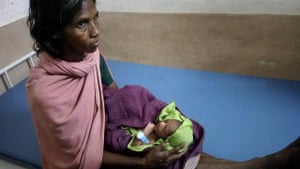


Baby in Gudalur wearing a Bempu bracelet.


Baby in Gudalur wearing a Bempu bracelet. Photograph: Bempu

Bempu is currently running a pilot scheme in the desert state of Rajasthan, funded by health foundation WISH, which aims to make its bracelets a staple free handout for all babies discharged early from government hospitals.


The chaos of government hospitals can lead to oversights when monitoring newborns’ temperatures, says Gini Morgan, head of public health at Bempu, which has benefitted from grants from the Bill and Melinda Gates Foundation, USAid, UK Aid and other agencies.


“The beds are always filled, the entire family is in the waiting room every day, there are often three babies in one incubator, where there should be only one. There’s a lack of staff, the nurses are overworked, running around with competing priorities. In all that, its hard to manage all these high-risk babies.”


Many hospitals discharge babies early to free up cots, or because parents need to return to remote villages and cannot afford to wait for long periods at the hospital. “Parents travel to district hospitals and they need to get back home,” Morgan explains. “Every day that they’re away from work, they’re missing a pay check.”


Once home, parents are less likely to notice symptoms of hypothermia or have adequate information about how to keep babies warm. Half the world’s newborn babies die at home, almost all of those who die are in developing countries. Hypothermia is one of the leading contributors to these deaths. Fortunately Bempu bracelets are powered by a battery that runs for a month, the critical period for newborns.



Baby wearing Bempu bracelet

Bempu bracelets are powered by a battery that runs for a month, the critical period for newborns. Photograph: Bempu

“It’s not the same as using a thermometer because the device is constantly monitoring the baby’s temperature. Say you take the baby’s temperature now, it can fall after 30 minutes, and you may not notice,” says Dr Wazir, who hopes a crowdfunding campaign will help supply Bempu bracelets to underprivileged mothers at his Premature Babies Foundation, ahead of the winter months, when the risk of hypothermia rises.


But the bracelets alone are not enough, says Dr Vishnu Bhat from the Jawaharlal Institute of Postgraduate Medical Education and Research in Pondicherry, who conducted an independent study of their accuracy, the results of which are yet to be published. “We found that the nurses were taking temperatures more accurately than the Bempu bracelets. But the bracelets were good, we found they gave an accurate temperature reading between 85-90% of the time,” he said.


“The bracelets would be useful to mothers who live far from the hospital, the alarm system provides a warning to the mother that the baby is unwell. It would also be good in postnatal wards where nurses are in short supply. But of course, the temperature is not the only issue, mothers need to be trained, they need to be told what to do if the temperature is too low or too high,” he said.


Baby bracelet aims to save newborns in India from hypothermia

25 Ekim 2016 Salı

Antibiotic waste is polluting India and China"s rivers; big pharma must act

Antibiotic-resistant superbugs are a fundamental threat to global health, UN secretary general Ban Ki-moon recently told a general assembly meeting. Failure to address the problem, he said, would make it “difficult if not impossible” to provide universal healthcare, “and it will put the sustainable development goals in jeopardy”.


For pharmaceutical companies the attention on antimicrobial resistance has also brought a focus on one of its key drivers: the unabated environmental pollution of drug factories in developing countries.


In India and China, where a large proportion of antibiotics are produced, the poorly regulated discharge of untreated wastewater into soils and rivers is causing the spread of antibiotic ingredients which cause bacteria to develop immunity to antibiotics, creating superbugs.


A study of drug factories in China found that antibiotic-resistant bacteria were not only escaping purification but also breeding. For every bacterium that entered one waste treatment plant, four or five antibiotic-resistant bacteria were released into the water system, tainting water, livestock and communities.


Superbugs are able to travel quickly through air and water, aboard airplanes and through global food supply chains. By 2050, the total death toll worldwide as the result of contracting an infection that proves resistant to treatment is expected to reach 10 million people (pdf).


Environmental pollution is now a material issue for the pharmaceuticals sector. Global investors such as Nordea and BNP Paribas have raised concern about the potential damage to global health and environment, and are worried that a local factory pollution scandal in India could affect the value of a global pharma company in their portfolio. As the world goes on a global quest to combat antimicrobial resistance, the focus on industry pollution will continue grow.


Last month 13 pharmaceutical companies signed a declaration (pdf) calling for collective action on antimicrobial resistance. They committed to review their manufacturing and supply chains and assess good practice in controlling releases of antibiotics into the environment. They also committed to establish science and risk-based targets for discharge concentrations of antibiotics and to reduce the environmental impact of manufacturing discharges by 2020.


Most global sectors now have a corporate platform where companies seek to tackle intractable sustainability challenges. For pharma companies, the Pharmaceutical Supply Chain Initiative (PSCI) was set up to demand better social and environmental conditions in the communities from where drugs are supplied. However, only 12% of the 140 largest global pharmaceutical companies are members of PSCI according to sector analysts.


Voluntary corporate initiatives are necessary but by no means sufficient to address the industry challenge of environmental pollution. This is partly because not every company signs up and partly because better government policies and law enforcement on the ground are necessary to ensure voluntary commitments are achievable.


The governments where global pharma companies are domiciled – including the UK, US and Switzerland – must play a role. Companies must collaborate with governments to encourage and support a tougher stance on law enforcement in developing counties. At Earth Security Group we call this business diplomacy for sustainable development.


The aid budget of agencies such as the UK Department for International Development could be used to strengthen pollution controls in sourcing countries such as India. This would be a win-win for health in developing countries and for national business interests abroad.


Through the PSCI, the global pharmaceutical industry has called upon governments to collaborate on the threat of increasing antibiotic resistance. PSCI must now also urgently work with governments to achieve the goal of curbing environmental pollution in drug manufacturing.


Ultimately, business diplomacy goes beyond corporate philanthropy and corporate social responsibility, by focusing on the deeper governance failures that threaten progress on sustainable development as well as the license to operate of global companies. Pharmaceutical companies now need to cooperate with governments, to root out pollution from their global supply chains.


Antibiotic waste is polluting India and China"s rivers; big pharma must act

1 Eylül 2016 Perşembe

India rolls out world"s first leprosy vaccine as fight goes on "war footing"

The first lesions appeared on teenager Rammurat’s feet. To those in his village near Gorakhpur, in the vast Indian state of Uttar Pradesh, the cause of the pale sores was clear.


“Some said it was black magic. Some said it was the spirit of the dead catching us,” he recalls.


“What will people think? What will the neighbours think?” he wondered when finally diagnosed at a nearby mission hospital – too late to entirely save his feet. “People used to hate looking at a leprosy patient. You see a lady [with symptoms] coming into the village, they will run away.”


India is officially leprosy free, meaning the disease afflicts fewer than one in 10,000 people. But specialists understand the true infection rate to be far higher, and the disease is still endemic in some of the country’s poorest districts.


Today India accounts for more than 60% of the world’s new leprosy cases and health officials have quietly moved to a “war footing” against it, one senior researcher says.


This week the government announced a major step: the world’s first leprosy vaccine, developed in-country but tied up for years in testing, will be rolled out in Gujarat and Bihar, two states where the problem is sharpest.


Among the oldest recorded references to leprosy – the ulcers, the gnawing away of a fingers, eyes and noses – appear in 4,000-year-old Hindu epics, the disease christened kustha, Sanksrit for “eating away”.


Long associated with sin and contagion, one Vedic legend holds that even a king was banished after developing the telltale sores. Rammurat, a 14-year-old when his symptoms appeared, sought treatment, but stood no chance against the stigma.


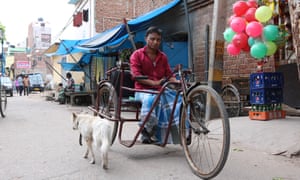
The government has provided residents of Tahir Pur who have leprosy with hand-operated rickshaws. Some have lost tissue in their feet due to leprosy-related injuries.


The government has provided residents of Tahir Pur who have leprosy with hand-operated rickshaws. Some have lost tissue in their feet due to leprosy-related injuries. Photograph: Michael Safi for the Guardian

Older now, Rammurat lives in a 30-hectare slum on Delhi’s north-eastern fringes. Rubbish collects in open sewers along the tight lanes of the neighbourhood and children mingle with tethered goats and chickens in the midday heat. It could be any poor community in the capital, but for the preponderance of wounds: missing toes, fingers, or entire limbs wrapped in white gauze.


Allotted to people with the disease a half-century ago, these blocks in Tahir Pur have grown into Asia’s largest leprosy colonies, home to 2,000 patients and their families, and a remnant of centuries of official policy to segregate them from the world. Rammurat arrived 25 years ago, seeking acceptance and access to treatment. “I moved here to save myself,” he says.


A few hundred metres away is the Leprosy Mission’s Delhi hospital, one of 14 specialist care centres the Christian group runs in India. Inside, hundreds crowd around waiting rooms and dispensary windows awaiting medicine, among them up to 150 leprosy patients each day.


It diagnoses on average one new case of the disease per day. “That’s alarming,” says Stephen Levi, the hospital’s superintendent. “And when we ask them to bring their other family members in, they don’t.”


Beside psalms and lists of symptoms on the hospital’s tiled walls there are, less congruously, pictures of the nine-banded armadillo: the north American mammal the only other species to naturally host leprosy, and a boon for researchers, who are still unable to grow the disease in labs.


For all the fear it conjures, leprosy, caused by the pathogen Mycobacterium leprae, has been effectively treatable since the 1940s. It isn’t particularly contagious either, its spread requiring regular contact with an untreated sufferer, and an immune system already compromised by genetics or poverty. Nor is it “flesh-eating” – limbs more likely to rot away because of injuries sustained by repeated use after the sensation of pain is lost.


“The real problem is the level of stigma,” says Dr Sunil Anand, the executive director of the Leprosy Mission. “Those who get leprosy tend to be ostracised and stigmatised by the community, they tend to hide away.”


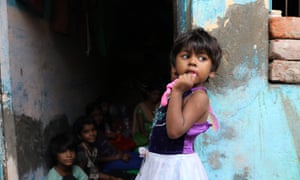
Children work packing balloons in Tahir Pur, home to the largest leprosy colonies in Asia


Children work packing balloons in Tahir Pur, home to the largest leprosy colonies in Asia Photograph: Michael Safi for the Guardian

That makes containing the disease, or treating it before disfigurement sets in, harder. “Discriminatory practices then come into play. Like schools not giving admission to children with leprosy, or from a leprosy family. It’s the same in jobs, even healthcare,” he says.


About 16 national Indian laws still discriminate against people with leprosy, he says, a legacy of the ancient aversion to the disease, but also an 1898 colonial law that segregated patients and prevented them having children, passed in response to British panic an epidemic would spread back home.


A eight-year treatment drive by the Indian government shrunk the number of new cases four-fold by 2005. That year the government celebrated the official elimination of the disease, meaning a rate of fewer than one in 10,000 new cases a year. “Maybe that’s possible,” Levi, the hospital superintendent, says of the official rate. “But only because India has such a huge population.”


One of India’s leading leprosy researchers, Dr Uptal Sengupta, is more sceptical. The elimination figure trumpeted by the government and World Health Organisation was produced “in a hurry”, the 75-year-old says from his office, a bobble-headed armadillo on the desk.


More recent leprosy surveys produced by the Indian Council of Medical Research (ICMR) have a much greater prevalence, he says, but the Indian government has declined to release the exact estimate. (A source with access to the research told the Guardian the research showed a national rate of “roughly five to six cases per 10,000”.)


Battling high rates, health officials are also racing against time: leprosy strains are slowly becoming resistant to the multi-drug therapy that so successfully brought the Indian infection rate crashing down.


“When there was a monotherapy, it took only 30 years for the disease to develop resistance,” Sengupta says. “And we are already seeing resistance cases [for the multi-drug therapy].”


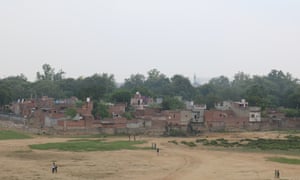
An aerial view of one of Tahir Pur’s 29 leprosy colonies in east Delhi. Spanning 74 acres, the colonies make up the largest leprosy complex in the world.


An aerial view of one of Tahir Pur’s 29 leprosy colonies in east Delhi. Spanning 74 acres, the colonies make up the largest leprosy complex in the world. Photograph: Michael Safi for the Guardian

The rollout of the vaccine, announced earlier this month, is part of a return to a “war footing” against the disease, he says. “The vaccine is the most important thing for elimination. It’s the best answer.”


Beginning in five hotspot districts in Bihar and Gujarat, the vaccine will be administered both to people with leprosy and those in close and regular contact with them, in combination with the antibiotic Rifampicin. Trials of the vaccine have shown it could bring existing rates down by 65% over three years, according to Dr Soumya Swaminathan, the director-general of the ICMR.


The rollout is accompanied by a new round of “active case detection” – health workers going house-to-house “to hopefully detect new leprosy cases which were undiagnosed in the community”. Fifty districts have already been swept, turning up 5,000 previously undetected cases.


“It’s a multi-pronged attack on leprosy, we’re looking to eliminate it” – a second time – “in the next five to 10 years,” Dr Swaminathan says.


That the vaccine is Indian-developed is also a source of pride. “It shows exactly how Indian research and development can solve our own problems,” she says.


In Delhi at least, efforts to remove the stigma around one of the world’s oldest diseases are also paying off – but not without cost.


As the capital expands, the giant leprosy colonies of Tahir Pur suddenly find themselves on prized land. Businesses are illegally setting up shop and developers are eyeing an area society once spurned. “Now, the non-leprosy people are trying to move in,” Levi says.


India rolls out world"s first leprosy vaccine as fight goes on "war footing"

8 Mayıs 2014 Perşembe

India admits Delhi matches Beijing for air pollution threatening public wellness

Children protect their faces from Delhi

Kids safeguard their faces from Delhi’s smog. The WHO explained Delhi had an average PM2.5 level of 153 – London’s is a tenth of that. Photograph: Hindustan Occasions/Getty


India’s state air monitoring centre has admitted that pollution in Delhi is comparable to that of Beijing, but disputed a World Health Organisation (WHO) obtaining that the Indian capital had the dirtiest environment in the globe.


A examine of one,600 cities across 91 nations released on Wednesday by the WHO showed Delhi had the world’s highest annual average concentration of tiny airborne particles (acknowledged as PM2.5) of 153.


These really fine particles of less than 2.5 micrometres in diameter are linked with enhanced charges of continual bronchitis, lung cancer and heart condition as they penetrate deep into the lungs and can pass into the bloodstream.


Indian officials in the past have bristled at study showing the capital as getting worse than Beijing where thick smog has triggered public overall health warnings and public concern that are mainly absent in Delhi.


“If we assess yearly averages for each yr from 2011-2014 then both cities [Delhi and Beijing] are nearly comparable,” Gufran Beig from India’s state-run Method of Air Quality Weather Forecasting and Study (SAFAR) acknowledged in an email sent to AFP.


He disputed the figure cited by the WHO for PM2.five in Delhi, even so, saying it ought to have been in the range of 110-120 micrograms per cubic metre rather of 153.


Beijing’s was underestimated at 56, he explained, and must have been double this, according to an analysis of readings given out by the US embassy in the city.


“Delhi’s air top quality is much better than Beijing in summertime and considerably greater in monsoon season,” he additional. “It is winter pollution in Delhi and sudden spikes – which is fairly higher as in contrast to Beijing – triggered by meteorology.”


Beig maintained that the WHO figures contained in a searchable database released on Wednesday have been biased and misleading.


But even with an yearly typical PM2.five reading of 110-120, Delhi would nonetheless be among the world’s most polluted cities, if not the outright worst.


Rivals would be the Pakistani city of Karachi with an yearly studying of 117, while the regional Indian cities of Gwalior, Patna and Raipur reported 144, 149 and 134 respectively.


By comparison, London had an annual PM2.5 reading of 16.


“The most recent urban air-good quality database released by the Planet Well being Organisation reconfirms that most Indian cities are turning into death traps since of quite high air pollution ranges,” stated an Indian campaign group, the Centre for Science and Environment.


The centre explained that 13 of the 20 most polluted cities in the planet have been in India.


The tiny particles blighting the air of Delhi and other leading establishing cities around the globe are often dust from building websites, pollution from diesel engines or industrial emissions.


The Indian capital also suffers from atmospheric dust blown in from the deserts of the western state of Rajasthan, as properly as pollution from open fires lit by the urban poor to hold warm in winter or to cook foods.


Even though Delhi ranked as worst on the PM2.five scale in the WTO information, measurements of bigger PM10 particles showed other individuals as far a lot more polluted.


Peshawar and Rawalpindi in neighbouring Pakistan trumped all other cities with readings of 540 and 448 respectively. WHO says concentrations of PM10 particles must stay beneath twenty micrograms per cubic metre, averaged out above the yr.


Delhi has had its air high quality underneath scrutiny for some time now with investigation by Yale University scientists in January this yr also suggesting that it was worse than Beijing.


A Globe Financial institution report last 12 months that surveyed 132 nations ranked India 126th for environmental overall performance and worst for air pollution.


The WHO stressed that its new air pollution database, which relies largely on information gathered by the cities themselves, did not aim to rank cities, pointing out that “some of the worst ones … are not collecting data often.”


India admits Delhi matches Beijing for air pollution threatening public wellness

5 Mayıs 2014 Pazartesi

Medical professionals from India a lot more very likely to be struck off

But the GMC figures present that in 2013, 75 per cent of doctors who had been struck off came here from abroad – a rise from 61 per cent in 2009.


In total, 458 medical doctors have been barred from doing work in the United kingdom in the past five years.


The country with the greatest number of medical doctors eliminated from the Uk register is India, followed by Pakistan, Egypt and Nigeria.


Among them, the 4 nations account for a single in six medics doing work right here, but 159 of these who have been struck off – far more than the 142 United kingdom medical professionals who have been barred, the figures present.


Patients’ groups last night expressed alarm about the figures. They come amid increasing concern about the scrutiny of overseas medical professionals, and fears that NHS patients are getting put at danger by medics who are unfamiliar with medical practices in this nation.


Overall health officials are at present attempting to recruit at least 50 medical doctors from India in purchase to plug desperate shortages in the UK’s Accident and Emergency departments.


Final month The Telegraph uncovered that the nationwide programme, which held interviews by means of Skype last week, has suspended the competency exams which are normally essential for medical doctors who come from outside the EU.


The exams themselves beneath increasing scrutiny. Two weeks in the past, study by University School London disclosed that half of foreign medical professionals operating here would fail the exams which permit them to function here, if they had been held to the exact same common as their British colleagues.


The review emerged soon after British Association of Doctors of Indian Origin (BAPIO) brought a high court action towards the GMC claiming it discriminated towards overseas medical professionals who wished to turn out to be GPs, which the judge ruled towards.


BAPIO mentioned the new figures showed that Indian medical doctors are discriminated towards at the GMC.


Dr Ramesh Mehta, president of BAPIO, said “Over the years we have repeatedly pointed out to the GMC that foreign medical professionals are handled harshly in disciplinary procedures a lot more referrals come from the management than from the public, with fewer regional medical doctors getting referred to the GMC who also get off lightly when caught.


“The NHS and the policymakers need to have to make up their minds because it is ironic that on the one particular hand Indian doctors are becoming criticised and on the other hand they are getting courted”.


Around 30,000 doctors from India and Pakistan are at the moment licensed to perform in Britain, along with 150,000 doctors who skilled in this country, and 50,000 from other countries.


When all countries with at least 1,000 medical doctors operating here were in contrast, Egypt and Germany have the highest proportion of doctors struck off over the 5 many years, with 1 in 136 medics eliminated from the register, followed by Poland, with one in 149 struck off.


Even so, the three countries account for just 7,000 medics doing work right here amongst them, and 52 of individuals struck off.


India and Pakistan have exported medics in far greater numbers, with 31,000 physicians at present licensed to perform in the United kingdom.


Joyce Robins from Patient Concern explained: “This is actually worrying. Physicians who come right here require to be at least as great as the physicians we presently have, it shouldn’t be about just filling the slots. The standards need to be higher, and I think the NHS needs to do an terrible good deal far more about instruction those from overseas in the way medical practices functions here prior to they commence perform.”


Julia Manning, chief executive of believe tank 2020Health stated: “At a time when we need to reassure the public about security and top quality, we genuinely require to be diligent and rigorous about making sure that medical professionals come to this country attain large enough requirements.”


She additional: “In the light of these statistics it seems to me that it’s plain stupid that we are suspending regular competency rules for medical doctors currently being recruited from India for the A&ampE programme, I consider we need to believe really difficult about taking the right actions to shield sufferers.”


The GMC said the figures showed that it is committed to taking action where physicians fall below standards. It has commissioned a main evaluation into how the information of foreign medical professionals is assessed.


Niall Dickson, chief executive of the General Health care Council, mentioned: “International medical graduates make a huge contribution to health care in the United kingdom and the huge bulk of them give exceptional care for their patients.


“However, we know that medical professionals coming here from overseas can uncover it tough to adapt to different cultural norms and it is undoubtedly accurate that in the previous not enough was completed to help them when they initial came to practise in this nation.”


Medical professionals from India a lot more very likely to be struck off

1 Mayıs 2014 Perşembe

Britain in a "race with chemists" in India and China generating "legal highs", minister says

“Many of these are actually really hazardous.”


He explained that it is “unhelpful” to describe the medicines as “legal highs”.


It comes as “legal high” merchants mentioned that they are setting up a trade association and known as on the Government to assist them regulate the business.


Mr Baker extra: “We’re in a race against the chemists of new substances getting produced nearly on a weekly basis in locations like China and India.


“They then come in right here and are inaccurately and unhelpfully known as legal highs – some of them are truly unlawful. They are certainly not necessarily risk-free and the word legal implies that they are protected. And individuals are consuming them and final yr I believe it was 68 individuals died, according to coroners reviews, from the ingestion of these substances.”


“My objective…is to minimise the harm from these substances to the public at huge,” Mr Baker mentioned.


Mr Baker has mentioned that he will defy an attempt by the European Union to regulate “legal highs”.


He explained that EU law-makers are not capable to cope with the “fast moving scene” about the thoughts-altering substances becoming offered on the net.


The Office for National Statistics (ONS) mentioned deaths linked with the psychoactive substances jumped from 29 in 2011 to 52 in 2012, an 80 per cent rise. Final yr, it is believed that 68 men and women died due to the substances.


Even as not too long ago as 2007 the annual variety of deaths from the new synthetic drugs was in single figures.


Many of the so-referred to as legal highs – which give the consumer euphoric sensations equivalent to the drug Ecstasy – have been produced unlawful by the Home Workplace but the law struggles to hold pace with a proliferation of various kinds.


Synthetic medicines sold beneath the names Black Mamba and Mexxy were produced Class B drugs in 2012 and Theresa May, the House Secretary, authorised short-term bans on two other groups – Benzofury and NBOMe – in June.


Mephedrone, or miaow miaow, was made unlawful in 2010.


A boom in sites offering mind-altering substances by mail order for as minor as 10p a hit, and a network of large street suppliers, has created the United kingdom the legal medication capital of Europe, according to specialists.


Britain in a "race with chemists" in India and China generating "legal highs", minister says

28 Mart 2014 Cuma

India and 10 other Asian countries declared polio free

The WHO declared 11 Asian countries free of polio

The WHO declared eleven Asian nations totally free of polio. Photograph: Saurabh Das/AP


India and 10 other Asian nations have been declared totally free of polio, that means the illness has been eradicated in 80% of the world.


The Planet Well being Organisation certified the south-east Asian area – which includes India but excludes Afghanistan and Pakistan – polio-totally free right after three years without having a single new case becoming reported. The WHO stated this meant 80% of the world’s population lived in polio-free of charge areas, an essential stage in direction of global eradication of the crippling condition.


“This is a momentous victory for the millions of health staff who have worked with governments, nongovernmental organisations, civil society and global partners to eradicate polio from the area,” mentioned the WHO’s regional director, Poonam Khetrapal Singh.


There are only three countries exactly where polio is even now endemic: Pakistan, Afghanistan and Nigeria. Even so, isolated outbreaks in the Horn of Africa and war-torn Syria emerged as leads to for concern in 2013, and vaccination workers in Pakistan are nevertheless becoming killed by the Taliban. “Until finally polio is globally eradicated, all nations are at threat, and the region’s polio-free of charge standing remains fragile,” Singh cautioned.


The certification is especially substantial in India, residence to 1.two billion people, which until 2009 accounted for half of all cases globally. The certification confirms one of India’s largest public wellness good results stories, accomplishing one thing once believed impossible, thanks to a massive and sustained vaccination programme.


India celebrated the milestone on 13 January, which marked 3 years because the last reported new situation in the nation, of a teenage lady in a slum in the eastern city of Kolkata. India reported 150,000 situations of paralytic polio in 1985, and 741 new infections that led to paralysis in 2009. In the following year, the number fell to double figures just before the last case in January 2011.


India’s poor sanitation, mass internal migration and dilapidated public health program made many professionals think it would be the final nation to eradicate the illness, if it ever did.


The nations licensed on Thursday were Bangladesh, Bhutan, Burma, Democratic People’s Republic of Korea, India, Indonesia, Maldives, Nepal, Sri Lanka, Thailand and Timor-Leste.


India and 10 other Asian countries declared polio free

27 Mart 2014 Perşembe

India could be totally free of polio but the condition has not been eradicated but

Archie Panjabi at a New Delhi polio clinic

‘I visited a health clinic in New Delhi. It brought the whole situation into crisp emphasis. It truly is about reaching one particular kid at a time.’ Photograph: Guardian


This week a regional certification commission is expected to declare the World Health Organisation south-east Asia region polio-free. I could not be prouder about this historic achievement.


Individuals of a certain age will nevertheless bear in mind the concern induced by the polio epidemics of the early 1950s, when this infectious viral ailment sickened and paralysed as numerous as 8,000 kids in the Uk every yr. But many Britons my age and younger will not know significantly, if anything, about polio. By the mid to late 1950s, effective vaccines had been in broad use, and inside two decades or so polio was gone from most of the developed planet.


My circumstance, nonetheless, was somewhat different in that my mother and father came from India, where I lived for two years as a youthful girl. One particular of the items I remember, in the course of my every day stroll to college in Mumbai, was seeing other kids crawling in the streets, their legs withered and deformed. Individuals troubling photographs stayed with me for years. At some point, I learned that the young children have been victims of polio, which until finally really lately was regarded as a grim reality of daily life in India, the place a blend of conditions – polluted water, bad sanitation, severe poverty and a extremely dense population – permitted the illness to flourish.


Then in January, one thing akin to a public wellness miracle occurred: India completed three complete many years without having a new case of polio, proving that the virus had lastly been stopped inside of its borders. India was the final of the eleven countries in south-east Asia to beat the disease, setting the stage for the region’s polio-free of charge certification this month.


Because 2011, I have been a polio eradication ambassador for the humanitarian organisation Rotary Worldwide, 1 of the founding partners in the Global Polio Eradication Initiative, which given that 1988 has been functioning to attain the world’s young children with the oral polio vaccine. My process is to raise awareness and to emphasise the importance of wiping out polio for good.


I am content to report that today polio is 99% gone, down from about 350,000 cases a yr in the 1980s to barely 400 in 2013. With India now free of the illness, only three nations stay polio-endemic: Nigeria, Afghanistan and Pakistan. We need to ramp up our efforts in the endemic countries, because from them polio can re-emerge to infect kids in locations exactly where it had been stopped, such as we noticed final yr in Syria and the Horn of Africa. If we have been to chill out our guard – choose, say, that the planet could reside with a few hundred polio situations a year and cease our mass vaccinations in at-danger countries – specialists inform us polio could rebound with a vengeance, infecting 1000′s of youngsters a yr.


That means we have to preserve the pressure on our political, company and philanthropic leaders to generate the assets to finish the occupation. As a British citizen, I am proud that the UK’s dedication to polio eradication to date now totals more than $ 1.2bn, and I strongly urge our government to proceed to lead by example. The Indian government likewise has invested $ one.3bn to safeguard the nation’s youngsters from polio.


Since my private involvement started, I have learned a wonderful deal about polio eradication, and – due to my powerful ties to my parents’ homeland – I have followed the campaign in India extremely closely. Last year, I went to New Delhi, where I visited polio survivors who have benefited from corrective surgeries paid for by Indian Rotary clubs. I visited a health clinic, where mothers and fathers brought their infants – and older youngsters brought tiny brothers and sisters – to be vaccinated against polio. The most emotional minute came when I immunised a little one, putting two drops of polio vaccine into her small mouth. I realised that the little one in my arms would by no means, ever suffer from this terrible condition. It was a transformative expertise that brought the whole concern into crisp concentrate. It truly is about reaching one particular kid at a time.


• EndPolioNow.org


India could be totally free of polio but the condition has not been eradicated but

20 Ocak 2014 Pazartesi

Tackling malnutrition in India: the role of greater education

india nutrition

In India, medical students struggle to discover funding to study nutrition. Photograph: Deshakalyan Chowdhury/AFP/GETTYIMAGES


The abysmal issue of nutrition in India, each undernutrition and overnutrition, has crept into the worldwide improvement agenda not too long ago, with escalating concentrate from academics, policymakers and activists.


Data from advancement agencies have repeatedly highlighted the high prevalence of stunting, wasting and underweight amongst young children, poor problem of nutrition amongst women, large maternal mortality prices and substantial incidences of non-communicable illnesses in the nation.


The price of underweight children in India is among the highest in the planet, and is virtually double that of Sub-Saharan Africa, according to the Globe Financial institution. Unicef figures indicate twenty% of kids underneath 5 years of age endure from wasting due to acute undernutrition. With slight regional fluctuations, the above-all situation in the country presents an extremely gloomy picture and calls for urgent and instant action.


A powerful concentrate on nutrition inside public health policies must be recognised as essential to sustaining a healthier population. It aids in evolving a co-ordinated strategy across regions and guiding nutrition practice across the public overall health programs. But in spite of policymakers in India having begun to aknowledge the situation, with nutrition featuring in government five-year programs, there is a lack of clear ideas for placing relevent multisectoral policies and programmes in spot.


When a country fares badly in nutrition, one of the the essential questions that needs to be asked is: how far do its healthcare specialists – policymakers, practitioners or teachers – comprehend the scope and significance of nutrition, and to what extent do they reflect that in their function, either in policy or practice? One particular of the biggest, but broadly overlooked variables contributing to India’s nutrition problem is that people are not encouraged to research nutrition, so there is a lack of institutional knowledge and education offered to promote understanding.


A new examine analysing academic public health nutrition initiatives in India gave discouraging benefits. About 190 colleges in India offer one or much more nutrition programs at different levels but the academic discipline of pubic well being nutriution is pretty young. The quality and amount of nutrition information in science textbooks utilised in secondary schooling is also minimal and inconsistent, and very number of Indian schools offering the subject at the postgraduate degree . Though masters in nutrition is offered in 112 colleges and universities, public health nutrition at the postgraduate level is offered in only 13 institutions across India, within which it is largely confined to modules or postgraduate diploma programmes rather than as a entirely-fledged degrees. It is only presented as a master’s course in one particular university, Maharaja Sayajirao in Baroda.


An in-depth curricula examination of the nutrition programs in the country is underway, run by the Transform Nutrition capacity constructing crew, at the Public Well being Foundation of India. Preliminary proof from that work has uncovered a lack of consideration to research, policy, or social determinants and and an overemphasis on food science, clinical and therapeutic nutrition.


This is since nutritionists in Indian society are not generally observed to be health-related professionals, rather these that supply therapeutic advice. Even people who wish to pursue nutrition in a health-related capability struggle to locate funding for their positions, and as a result get absorbed in broader tasks with non-progressive roles.


This faultline in training has had a knock-on effect on mentorship and instruction. Interviews with academics and public health experts from investigation institutes, international organisations, healthcare institutions and public departments highlighted the bad high quality of coaching in public wellness nutrition, a lack of sound mentorship to inspire ideas and action and bad high quality of analysis to inform policies.


In buy to handle India’s acute nutrition difficulties, dedicated education and coaching programmes in nutrition will require to be place in place. Sources want to be invested in curriculum revisions, rigorous education and educating analysis abilities. To see meaningful and optimistic alterations in the country’s overall health profile, academic coaching and human resource generation wants to be complemented with political will, committed money, equity, and multi-sectoral well being promotion programmes.


Dr Tanusree Paul is research associate and Dr Shweta Khandelwal is study scientist at the Public Wellness Basis of India


This content material is brought to you by Guardian Expert. To get a lot more articles like this direct to your inbox, signal up free of charge to become a member of the International Advancement Experts Network.


Tackling malnutrition in India: the role of greater education