Goes etiketine sahip kayıtlar gösteriliyor. Tüm kayıtları göster

24 Nisan 2017 Pazartesi

Wellcome science book prize goes to story of a heart transplant

A novel that “illustrates what it is to be human” has become the first translated book to win the Wellcome prize for science writing.


Maylis de Kerangal’s Mend the Living, which tracks the journey of a heart from donor to recipient over 24 hours, is only the second novel ever to scoop the £30,000 prize, which is awarded to a work of fiction or nonfiction that engages with health and medicine.


Announcing the winner, chair of judges Val McDermid said: “Sometimes you read a memoir and it is just one person’s tragedy, but this is about the tragedy and hope that comes from loss that could affect every single one of us.” She said the judges “felt very strongly” that the book had the potential to change the lives of readers and called it “compelling, original and ambitious”.


De Kerangal’s novel was translated from French by Jessica Moore, who was awarded £10,000. McDermid praised the translation, which she told the Guardian pulled off the difficult trick of shaping a book into a second language without undermining the intention or voice of the original.


Describing herself as a “long-time advocate” of translated fiction, McDermid, a bestselling crime writer, said: “Publishers have very slowly woken up to the importance to readers of translated fiction as a way of understanding a globalised world … The English language doesn’t have a monopoly on terrific writing and I am very happy to be one of the judges who chose this book.”


Mend the Living begins with vibrant young surfer Simon Limbeau suffering catastrophic injuries in a road traffic accident. Faced with a son who has been left brain dead, his parents are forced to decide whether to turn off his life support and donate his heart. The story then follows Limbeau’s heart on its way to a donor recipient and explores how people recover hope in tragic circumstances.


The novel, which was also longlisted for the 2016 Man Booker international prize, has also been adapted to film. Directed by Katell Quillévéré and renamed Heal the Living (Réparer les vivants), it stars Tahar Rahim, Emmanuelle Seigner and Anne Dorval and is set for a UK release at the end of April.


Mend the Living was chosen from a strong shortlist of six books that included two novels, the other being Tidal Zone by Sarah Moss, about a family navigating the NHS as they come to terms with a child’s unexpected illness.


Ed Yong’s I Contain Multitudes, which examines how the 40tn microbes in the human body affect us, was the only debut on the shortlist. The other three books interweaved science with personal experience. Neurosurgeon Paul Kalanithi was the first author to be in contention for the prize posthumously, with his memoir When Breath Becomes Air recounting his final months of life with terminal lung cancer. Siddhartha Mukherjee’s The Gene blends a narrative about genetics with the story of reoccurring mental illness in his family, while David France, a gay man and an eyewitness to the Aids epidemic, wrote of the struggle faced by HIV/Aids activists during the 1980s in How to Survive a Plague.


McDermid chaired a panel of judges that mixed broadcasters and writers with scientists. Cambridge professors Simon Baron-Cohen and Tim Lewens joined the Wire in the Blood author on a panel completed by broadcaster Gemma Cairney and radio producer Di Speirs.


Wellcome science book prize goes to story of a heart transplant

16 Ekim 2016 Pazar

Planned Parenthood is 100 years old, but the fight for reproductive rights goes on | Alexander Sanger

My grandmother served a month in jail 100 years ago. Her crime? Opening the first birth control clinic in the US. Her name was Margaret Sanger, and she was the founder of Planned Parenthood. That first clinic was open for just 10 days in 1916 before the police shut it down; its very existence was considered a “public nuisance”. Today, Planned Parenthood is the single-largest provider of reproductive healthcare services in the country.


At 81, when she was very ill, I saw her give her last speech. “The law was wrong,” she said, standing in front of a crowd in the ballroom of the Waldorf Astoria hotel in New York City, “and I broke it.” She recounted her early struggles and the multiple arrests she endured, all to bring reproductive healthcare to women. I have never forgotten that day. Even into her 80s, my grandmother was always on the move. No sooner would she come to visit us in the suburbs than she would hop on a train to New York, an hour away, to attend a meeting, give a speech or lobby her supporters. She was indefatigable.


Her example led me to join her unfinished fight. As chair of the International Planned Parenthood Federation (IPPF) council for the past 15 years and president of Planned Parenthood of New York City for a decade before that, I have helped continue my grandmother’s legacy. However, she would be appalled that, a century after the founding of Planned Parenthood in Brownsville, Brooklyn, the fight for reproductive rights is far from over.
When you live to be 100, you have either good genes or are doing something very right. For an organisation, it is both. Three million women a year, every year, need Planned Parenthood in the US. We have no national health service. Women are forced to rely on charities to fill the gaps that our federal, state, county and municipal clinics don’t cover. Its mission, to get birth control information to the poor and needy, should have been taken over by government health services, much like countries in western Europe. In the rare US cities where municipal clinics do offer birth control, like New York City, women still come to Planned Parenthood because they know they will get unbiased advice and full options.


It shouldn’t be this way. But Planned Parenthood is doing something right and the US government is doing something, if not exactly wrong, then certainly inadequately. This is made all the more plain by a recent report showing that Texas, a state in the richest country on Earth, has the highest maternal mortality rate in the developed world.


Let all women decide for themselves: that is Planned Parenthood’s mantra


Of course, the severe stigma surrounding women’s reproductive rights and health isn’t limited to the US. At least 47,000 women die every year from unsafe abortion, many in countries where it is legal. US political posturing around reproductive rights negatively impacts countless women beyond US borders.


The Helms amendment, passed in 1973, prohibits US foreign aid from going to organisations that provide safe abortion among their reproductive healthcare services – even if abortion is legal in the recipient country. The exportation of a policy inconsistent with US law means women suffer, whether in Syria, where rape is a weapon of war, or in Latin America, where the Zika virus threatens the health of women and babies. The US should prioritise policies that help to reduce, not exacerbate, the severe health challenges and unnecessary deaths caused by limited access to reproductive healthcare services – including safe abortions – in all countries.


My grandmother insisted that women could not call themselves free until they could decide whether or not to be a mother. That was her mantra. Born poor, Irish, Catholic, tubercular, with an 11th-grade education, my grandmother was a tough and determined woman. She witnessed injustice and was determined to fix it. As a nurse, she saw women having children they didn’t want or, all too often, dying from illegal abortions. “Enough,” she said. Her eye was on women and their babies.


Margaret Sanger


When Planned Parenthood founder Margaret Sanger opened a family planning clinic in Brooklyn in 1916, it was promptly shut down. Photograph: Bettmann Archive

Let all women decide for themselves: that is Planned Parenthood’s mantra, and it transcends national borders. My grandmother was also one of the founders of International Planned Parenthood, launched in 1952. Just last week, I visited IPPF’s member association in Morocco, called the Association Marocaine de Planification Familiale. The association not only operates a reproductive health clinic, but also runs a community school for orphans and offers training facilities in hairdressing, dressmaking and cooking, providing career paths for underprivileged boys and girls. The Moroccan people trust and respect our organisation, as do people in 172 countries where IPPF operates.


To the poor and underserved, to the young and marginalised, to the minorities and immigrants that the US government doesn’t reach, my grandmother said: “We are here for you, all of you, no questions asked.”


A century ago, she was persecuted for this by the government, the churches, and many of her fellow citizens. She went to jail. When she got out, she continued the fight. At Planned Parenthood, we have fought the government, politicians, protestors and many anti-choice institutions, including churches and corporations. We have plenty more to do, nor least repealing the Hyde amendment, which prohibits Medicaid – social healthcare for US citizens of limited resources – from including abortion services, thereby depriving poor women of the right and means to decide on whether and when to have children.


Our international movement has never backed away from the fight to give women a choice. And we aren’t tired, even at 100 years old.


Planned Parenthood is 100 years old, but the fight for reproductive rights goes on | Alexander Sanger

1 Eylül 2016 Perşembe

India rolls out world"s first leprosy vaccine as fight goes on "war footing"

The first lesions appeared on teenager Rammurat’s feet. To those in his village near Gorakhpur, in the vast Indian state of Uttar Pradesh, the cause of the pale sores was clear.


“Some said it was black magic. Some said it was the spirit of the dead catching us,” he recalls.


“What will people think? What will the neighbours think?” he wondered when finally diagnosed at a nearby mission hospital – too late to entirely save his feet. “People used to hate looking at a leprosy patient. You see a lady [with symptoms] coming into the village, they will run away.”


India is officially leprosy free, meaning the disease afflicts fewer than one in 10,000 people. But specialists understand the true infection rate to be far higher, and the disease is still endemic in some of the country’s poorest districts.


Today India accounts for more than 60% of the world’s new leprosy cases and health officials have quietly moved to a “war footing” against it, one senior researcher says.


This week the government announced a major step: the world’s first leprosy vaccine, developed in-country but tied up for years in testing, will be rolled out in Gujarat and Bihar, two states where the problem is sharpest.


Among the oldest recorded references to leprosy – the ulcers, the gnawing away of a fingers, eyes and noses – appear in 4,000-year-old Hindu epics, the disease christened kustha, Sanksrit for “eating away”.


Long associated with sin and contagion, one Vedic legend holds that even a king was banished after developing the telltale sores. Rammurat, a 14-year-old when his symptoms appeared, sought treatment, but stood no chance against the stigma.


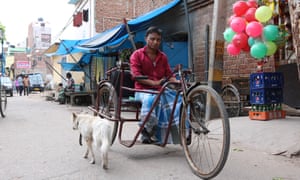
The government has provided residents of Tahir Pur who have leprosy with hand-operated rickshaws. Some have lost tissue in their feet due to leprosy-related injuries.


The government has provided residents of Tahir Pur who have leprosy with hand-operated rickshaws. Some have lost tissue in their feet due to leprosy-related injuries. Photograph: Michael Safi for the Guardian

Older now, Rammurat lives in a 30-hectare slum on Delhi’s north-eastern fringes. Rubbish collects in open sewers along the tight lanes of the neighbourhood and children mingle with tethered goats and chickens in the midday heat. It could be any poor community in the capital, but for the preponderance of wounds: missing toes, fingers, or entire limbs wrapped in white gauze.


Allotted to people with the disease a half-century ago, these blocks in Tahir Pur have grown into Asia’s largest leprosy colonies, home to 2,000 patients and their families, and a remnant of centuries of official policy to segregate them from the world. Rammurat arrived 25 years ago, seeking acceptance and access to treatment. “I moved here to save myself,” he says.


A few hundred metres away is the Leprosy Mission’s Delhi hospital, one of 14 specialist care centres the Christian group runs in India. Inside, hundreds crowd around waiting rooms and dispensary windows awaiting medicine, among them up to 150 leprosy patients each day.


It diagnoses on average one new case of the disease per day. “That’s alarming,” says Stephen Levi, the hospital’s superintendent. “And when we ask them to bring their other family members in, they don’t.”


Beside psalms and lists of symptoms on the hospital’s tiled walls there are, less congruously, pictures of the nine-banded armadillo: the north American mammal the only other species to naturally host leprosy, and a boon for researchers, who are still unable to grow the disease in labs.


For all the fear it conjures, leprosy, caused by the pathogen Mycobacterium leprae, has been effectively treatable since the 1940s. It isn’t particularly contagious either, its spread requiring regular contact with an untreated sufferer, and an immune system already compromised by genetics or poverty. Nor is it “flesh-eating” – limbs more likely to rot away because of injuries sustained by repeated use after the sensation of pain is lost.


“The real problem is the level of stigma,” says Dr Sunil Anand, the executive director of the Leprosy Mission. “Those who get leprosy tend to be ostracised and stigmatised by the community, they tend to hide away.”


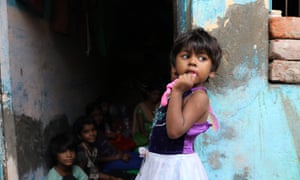
Children work packing balloons in Tahir Pur, home to the largest leprosy colonies in Asia


Children work packing balloons in Tahir Pur, home to the largest leprosy colonies in Asia Photograph: Michael Safi for the Guardian

That makes containing the disease, or treating it before disfigurement sets in, harder. “Discriminatory practices then come into play. Like schools not giving admission to children with leprosy, or from a leprosy family. It’s the same in jobs, even healthcare,” he says.


About 16 national Indian laws still discriminate against people with leprosy, he says, a legacy of the ancient aversion to the disease, but also an 1898 colonial law that segregated patients and prevented them having children, passed in response to British panic an epidemic would spread back home.


A eight-year treatment drive by the Indian government shrunk the number of new cases four-fold by 2005. That year the government celebrated the official elimination of the disease, meaning a rate of fewer than one in 10,000 new cases a year. “Maybe that’s possible,” Levi, the hospital superintendent, says of the official rate. “But only because India has such a huge population.”


One of India’s leading leprosy researchers, Dr Uptal Sengupta, is more sceptical. The elimination figure trumpeted by the government and World Health Organisation was produced “in a hurry”, the 75-year-old says from his office, a bobble-headed armadillo on the desk.


More recent leprosy surveys produced by the Indian Council of Medical Research (ICMR) have a much greater prevalence, he says, but the Indian government has declined to release the exact estimate. (A source with access to the research told the Guardian the research showed a national rate of “roughly five to six cases per 10,000”.)


Battling high rates, health officials are also racing against time: leprosy strains are slowly becoming resistant to the multi-drug therapy that so successfully brought the Indian infection rate crashing down.


“When there was a monotherapy, it took only 30 years for the disease to develop resistance,” Sengupta says. “And we are already seeing resistance cases [for the multi-drug therapy].”


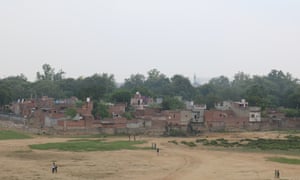
An aerial view of one of Tahir Pur’s 29 leprosy colonies in east Delhi. Spanning 74 acres, the colonies make up the largest leprosy complex in the world.


An aerial view of one of Tahir Pur’s 29 leprosy colonies in east Delhi. Spanning 74 acres, the colonies make up the largest leprosy complex in the world. Photograph: Michael Safi for the Guardian

The rollout of the vaccine, announced earlier this month, is part of a return to a “war footing” against the disease, he says. “The vaccine is the most important thing for elimination. It’s the best answer.”


Beginning in five hotspot districts in Bihar and Gujarat, the vaccine will be administered both to people with leprosy and those in close and regular contact with them, in combination with the antibiotic Rifampicin. Trials of the vaccine have shown it could bring existing rates down by 65% over three years, according to Dr Soumya Swaminathan, the director-general of the ICMR.


The rollout is accompanied by a new round of “active case detection” – health workers going house-to-house “to hopefully detect new leprosy cases which were undiagnosed in the community”. Fifty districts have already been swept, turning up 5,000 previously undetected cases.


“It’s a multi-pronged attack on leprosy, we’re looking to eliminate it” – a second time – “in the next five to 10 years,” Dr Swaminathan says.


That the vaccine is Indian-developed is also a source of pride. “It shows exactly how Indian research and development can solve our own problems,” she says.


In Delhi at least, efforts to remove the stigma around one of the world’s oldest diseases are also paying off – but not without cost.


As the capital expands, the giant leprosy colonies of Tahir Pur suddenly find themselves on prized land. Businesses are illegally setting up shop and developers are eyeing an area society once spurned. “Now, the non-leprosy people are trying to move in,” Levi says.


India rolls out world"s first leprosy vaccine as fight goes on "war footing"

5 Temmuz 2014 Cumartesi

4 in ten assistance paying out much more tax if further goes to NHS

protesters against NHS cuts march in London

Protesters towards NHS cuts march in London last month. With specialists predicting massive yearly shortfalls by 2020, a new NHS tax has been proposed as a wayto fill the gap. Photograph: Paul Davey/Demotix/Corbis


More than 4 out of 10 voters – such as above half of these who assistance Labour – would be prepared to pay a lot more in tax if they knew the further income would go to the NHS.


An Opinium/Observer poll discovered 43% of folks would be prepared to pay larger taxes specifically for wellness care 53% of Labour voters would be willing do so, against 36% of Tory supporters.


The survey showed really sturdy help for keeping the present rule that NHS therapy need to stay totally free at the stage of delivery, with 77% agreeing that this must proceed to be the case, irrespective of the price to taxpayers, in contrast with only 6% who disagreed.


With many specialists predicting that the NHS will face large annual funding shortfalls by 2020 unless added funds is pumped in, there is escalating debate at Westminster in excess of whether or not a new “NHS tax” is required, and would win public help.


1 thought getting examined by Labour is to increase national insurance contributions to develop a specific fund, the proceeds of which would be focused to supplying well being and social care solutions.


Top Tories, which includes former overall health secretary Stephen Dorrell, and Sarah Wollaston, the Conservative MP for Totnes and new chair of the well being pick committee, have mentioned investing on wellness will have to rise in actual terms in the up coming parliament if solutions are to be maintained.


Latest figures primarily based on data from NHS England and the Nuffield Trust recommend that NHS charges alone will go from £95bn a yr now to much more than £130bn a year by 2020.


The public appeared a lot more resistant to the concept of paying out some sort of membership charge for the NHS with just 32% supporting the idea, against 42% who opposed it.


state of the parties Intention of people most likely to vote Photograph: Guardian


The poll place Labour six points ahead of the Conservatives with just 10 months to go until the next basic election. Labour is on 35% (up 2 factors on a fortnight in the past), although the Tories are on 29% (-2), Ukip 18% (+1), the Lib Dems seven% (n/c) and the Greens 5% (n/c).


David Cameron’s private rating has dropped because the final poll by five points to -15% (individuals who approve of his performance, against individuals who disapprove) while that of Labour leader Ed Miliband is unchanged on -26%.


NHS poll in pie charts The poll benefits in full. Photograph: Guardian


4 in ten assistance paying out much more tax if further goes to NHS

4 Haziran 2014 Çarşamba

Snap, Crackle, And Pop Goes The Traditional Wisdom About Breakfast And Weight Loss

Yet another dietary conviction, born of observational studies and significantly standard wisdom, has been routed in a randomized manage trial. The belief that skipping breakfast is negative for you if you want to shed fat doesn’t hold up when subjected to a more rigorous examine style, according to a a lot more rigorously designed study—“The effectiveness of breakfast recommendations on fat loss: a randomized controlled trial,” published in the American Journal of Clinical Nutrition.


“We believed it was essential to check this typically held assumption,” stated lead writer Emily Dhurandhar by e-mail, “since short-phrase scientific studies propose that consuming breakfast could assist regulate appetite and metabolism, it has usually been assumed that this would translate to breakfast improving weight loss.”


The moral of the research: by no means assume.


Previously, only one particular randomized management trial published in 1992–Schlundt et al.—had investigated the affect of skipping versus eating breakfast amongst individuals in search of to shed bodyweight. It discovered that the act of switching from breakfast to no breakfast or vice versa appeared to be driving excess weight loss compared to not changing breakfast habits and the a lot more radical the alter in behavior at breakfast time, the higher the bodyweight loss. This examine was extensively reported in the scientific literature as getting proven that consuming breakfast led to bodyweight reduction, even though that is not what the authors concluded. Because Dhurandhar et al. used a significantly bigger sample—they enrolled 309 topics compared to 52 in the earlier research, they have been in a position to do a better occupation of controlling for the results of switching.


Between these folks who were breakfast skippers when they started out the system, the handle group (people who have been advised only “eat healthy” and offered a US Division of Agriculture pamphlet, but not provided any instructions on eating or not eating breakfast) lost an common of .71 kg but the standard deviation was one.16 kg. This implies that about 68 percent of this group experienced anything at all from a excess weight reduction of 1.87 kg (.71+one.16kg), to a excess weight gain of .61 kg (.71 minus 1.16kg).


Similarly, if you were a breakfast skipper assigned to the group that was advised to eat breakfast, you lost .76 kg on regular, but the standard deviation was one.26, so about two-thirds of men and women lost somewhere between 2.02 kg (76+one.26kg) or acquired .50kg (one.26 minus .76kg).


Ultimately, those breakfast skippers who have been informed not to eat breakfast misplaced on average .61kg, but two-thirds of them misplaced as much as one.79kg (.61+one.18kg) or acquired as small as .57kg (one.18 minus .61kg)–or accomplished one thing in between.


An English breakfast

An English breakfast (Photo credit: Wikipedia)


People who have been breakfast eaters had been cast in similar groupings, with the same results: you see no result of getting a breakfast eater and not being informed anything about breakfast (the control group), compared with the getting informed to eat breakfast group and the getting told not to consume breakfast group.


As Dhurandhar put it, their study was all about timing: to consume or not to eat breakfast “didn’t influence weight reduction in free of charge-residing folks making an attempt to drop bodyweight on their personal.” But, she additional, that doesn’t suggest that certain breakfast food items or consuming a big breakfast wouldn’t be useful for other causes. The next step would be to repeat the experiment hunting at effects on metabolic variables over a longer time period of time relative to certain meals, one thing that would be high-priced to do, but could yield essential insights into regardless of whether all breakfast foods are equal, or whether or not there might be other far more subtle alterations associated to skipping or not that are only revealed in excess of a significantly longer duration. 1 may well say, the “most crucial meal of the day”(sic) deserves nothing much less.


Snap, Crackle, And Pop Goes The Traditional Wisdom About Breakfast And Weight Loss

27 Mayıs 2014 Salı

Corporate Cannabis? Legal Marijuana Goes Legit

Americans could discover from Canada, as the New York Occasions explains in When Cannabis Goes Corporate. Canada’s free of charge-for-all technique prompted complaints from police and nearby governments, so Canada adopted a regulated program for growth and product sales. Enter Tweed Marijuana, one particular of the organizations licensed to grow medical marijuana in Canada.


The new guidelines let prescription holders to get from authorized, large-scale, producers. Much more informal growing operations endure. But the adjustments have spawned an business of more genuine producers with greater enterprise versions. And that need to mean much more income.


Canada expects to gather taxes on in excess of three.1 billion in yearly sales. The figures stateside could be vastly much better. In Washington State, where even recreational marijuana is now legal, the Liquor Management Board hired Prof. Mark Kleiman of UCLA to study the state’s marijuana marketplace. He estimated Washington’s health care and illicit consumption created approximately $ one.two billion in sales yearly.


English: Medical marijuana neon sign at a disp... Medical marijuana neon signal at a dispensary on Ventura Boulevard in Los Angeles (Photo credit: Wikipedia)


Colorado too voted to legalize marijuana even for recreational use. Already, Colorado gets $ 2 million from marijuana taxes. And while there are rules in Colorado and Washington, both states look effectively on their way to regulating and profiting from the business. Medical use is far much more prevalent, now numbering 20 legal healthcare marijuana states and D.C.


Nevertheless in the Feds’ view, regardless of state legality, marijuana is a controlled substance and illegal below federal law. As much more states have clashed with federal law, this mismatch has grow to be much more contentious. The Division of Justice issued a response suggesting that it will lay off the raids and prosecutions.


But the feds will lay off only if the states produce “a tightly regulated market” with rules that handle federal “enforcement priorities” such as stopping interstate smuggling, diversion to minors, and “adverse public overall health consequences.” Those phrases seem to be imbued with discretion. This memo to U.S. attorneys helps make clear that the DOJ can nonetheless prosecute growers and sellers.


To be sure, this is a lot larger than a tax dilemma. And yet the tax troubles of the industry are large and are imagined to be a single of the industry’s major impediments. Section 280E of the tax code denies even legal dispensaries tax deductions. The main culprit is Congress, not the IRS. The IRS has stated it has no selection but to enforce the tax code passed by Congress.


How big is the industry’s issue? “The federal tax predicament is the biggest threat to organizations and could push the total market underground,” the foremost trade publication for the marijuana business reported. One reply has been for dispensaries to deduct expenditures from other firms distinct from dispensing marijuana. If a dispensary sells marijuana and is in the separate business of care-offering, the care-offering expenditures are deductible. If only 10% of the premises are used to dispense marijuana, most of the rent is deductible.


Another notion is for marijuana sellers to operate as nonprofit social welfare organizations. That way Section 280E shouldn’t apply. The market needs to operate far more like other businesses. Occasionally such issues involve structural inquiries. To keep away from problems with the IRS, some claim that dispensaries ought to be organized as cooperatives or collectives.


The Marijuana Tax Equity Act would end the federal prohibition on marijuana and let it to be taxed. The bill would also impose an excise tax on cannabis sales and an yearly occupational tax on staff in the growing area of legal marijuana.


You can reach me at Wood@WoodLLP.com. This discussion is not intended as legal guidance, and cannot be relied on for any function with no the solutions of a qualified specialist.


Corporate Cannabis? Legal Marijuana Goes Legit

5 Mayıs 2014 Pazartesi

Loved ones goes to appeal court in fight over patient resuscitation selections

Addenbrooke

Addenbrooke’s Hospital, Cambridge, in which care residence manager Janet Tracey died. Photograph: Graham Turner for the Guardian


A family members says it hopes to carry a lot more clarity to finish-of-existence decisions for 1000′s of other folks as its prolonged-working legal challenge in excess of the way physicians determine whether to attempt resuscitation of critically sick individuals returns to court.


The husband and daughters of Janet Tracey, a care residence manager who died at Addenbrooke’s hospital, Cambridge, want a national policy requiring medics to consult individuals and relatives ahead of generating such choices.


There is Uk-wide guidance for wellness experts on how they need to figure out whether or not to try cardio-pulmonary resuscitation (CPR), but in England official policy is left to regional NHS trusts.


Tracey, who was 63, broke her neck in a vehicle accident quickly after she had been diagnosed with terminal lung cancer. She died in March 2011 right after getting two “do not resuscitate” (DNR) instructions positioned in her notes, prompting a dispute with her household. Their fight for a national policy on DNRs goes to the appeal court in London this week.


Kate Masters, 47, a single of Tracey’s four daughters, explained the household had realised as the case progressed how a lot of individuals had been affected by DNRs each and every year.


“[The] stats we have been provided had been that approximately seven out of 10 people die in hospital and that 80% of that variety die with a ‘do not resuscitate’ on their files. That is a lot of men and women,” she mentioned. “An situation like that, when it comes to the end of life, wants clarity. At the moment we will not come to feel there is any. There surely was not any for Mum, or for us.”


The problem was not about providing consent, Masters stated. “It is a decision that the physicians make due to the fact they believe CPR would be damaging or it would not function … There is no obligation at the moment for them to communicate that to you, to discuss it with you or locate out your wishes,” she stated.


“However what they try to do is make a decision what would be in your very best interests, what high quality of existence you will accept, and issues they actually cannot know with out getting a chat with you.”


Issues had to change so that no other households were “left like mine”, Masters stated. “How somebody’s finish of life is dealt with truly does live with the household for ever.”


Yet another daughter, Alison Noeland, 43, mentioned healthcare pros had contacted her household, as effectively as patients and their families: “They are hoping we can deliver some adjust.”


Tracey’s husband Dave, 66, stated: “It has been very tough. It has been going on so long … I personally can not turn a corner in my life while this is all sort of hanging in excess of [us].” There was a national policy in Scotland: “Can not it operate right here?” he asked.


The family’s solicitor, Mary Varney, from law company Leigh Day, mentioned it was crucial to set up no matter whether sufferers had a proper “to know medical doctors are contemplating withdrawing CPR from them, to have an chance to give their views, to know the fat attached to people views, to know what the last choice is, and what to do if they disagree.”


The case is getting heard at the court of appeal in London after judges overturned a large court decision that it ought to go no further. They said there were “issues of some standard significance” more than consultation and obtaining a 2nd viewpoint


Judge Nicola Davies had made the decision soon after a seven-day hearing to decide the details in 2012 that a judicial overview on the legal issues would be neither acceptable nor proportionate. She explained the very first DNR had “minimum causative result” as it had been revoked when Tracey’s family objected. The physician involved had spoken to 1 of Tracey’s daughters and believed she had agreed to the notice. Before the 2nd DNR discover was imposed, hospital staff spoke to the household but not to Janet Tracey, the judge explained.


Tracey was by that time very sick and did not want to go over it. “The proof of medical and nursing employees was that Tracey and her loved ones have been in denial as to her prognosis. The truth is plainly documented in the medical information, I discover it is also reflected in the proof of the loved ones …”


The case is going straight to the appeal court rather than becoming heard at the higher court initial, partly since of the money it has currently value.


The Division of Overall health said it was not able to comment since of the legal proceedings.


Cambridge University Hospitals NHS Basis trust, of which Addenbrooke’s is element, stated: “The problems that will be regarded as by the court of appeal have now been considerably diminished. It would be inappropriate to comment more at this stage. Previously the high court judge ruled that that Addenbrooke’s hospital doctors acted professionally and in the greatest interest of Mrs Tracey.”


Loved ones goes to appeal court in fight over patient resuscitation selections

23 Nisan 2014 Çarşamba

"It can"t be correct that a sick man or woman goes to a cell" | Mary O"Hara

When Kim Hayden was 20 she was held in a police station cell for eight hrs, not simply because she was underneath arrest for any crime, but simply because she was in an acute state of mental distress, threatening suicide and there was no other “place of safety” for her to be place and no psychological wellness specialists available to assess or deal with her. “I was in extreme crisis. The police identified me [in the street] and took me to the station. When the [mental health experts] finally arrived I asked them what took so lengthy and they reacted as if I was focus-searching for. It was completely awful. I necessary aid, not to be in a cell,” she says.


Hayden, now 25, has lived with a number of diagnoses including depression and publish-traumatic pressure disorder (PTSD) given that an early age. She has been sectioned, had a number of breakdowns and hospitalisations, and seasoned “very first hand” on many events what happens when good crisis care is not offered. “It has always been difficult to get the care I require,” she says of her encounters with the psychological health program. “The care accessible for folks in actual crisis is nowhere close to good enough.”


The sort of inadequate crisis “care” Hayden knowledgeable would be surprising if it have been one of a modest number of such occurrences but there are thousands of situations across the nation each and every yr. According to most recent official figures far more than 7,000 folks with mental overall health difficulties – some as youthful as 14 – were detained in police custody in 2012-13 in England. This is in spite of the 1983 Mental Overall health Act plainly stipulating that when somebody is detained by the police below part 136 of the Act they need to be taken right away to a “spot of safety” the place a psychological overall health evaluation can be undertaken. This ought to be in a mental health hospital or an emergency division at a basic hospital and the Act says that police cells ought to be used only in excellent circumstances.


Analysis from the mental wellness charity Mind has shown there are massive variations in the top quality of emergency mental overall health care accessible about the country for all ages and glaring distinctions in the degree to which personal police forces use cells for detention of folks in crisis. The dilemma is that the use of cells has turn into the norm, not the exception.


This is frequently since there are no beds offered on mental health wards or in other psychological health services (more and more due to growing stress on NHS assets and cuts to bed numbers). It has been a perennial and contentious situation, not least due to the fact of higher-profile incidents of men and women with mental well being issues dying while in custody.


In current years calls for reform have turn out to be far more insistent – such as from some in the police, who have been arguing for reform so that officers are not left with locking individuals up as their only choice. Last summer, the property secretary Theresa Could extra her voice to other people, including the minister accountable for mental wellness, Norman Lamb, and campaigners, calling for anything to be completed.


Two months in the past, the Department of Health (DH) responded to the mounting pressure with the launch of a “crisis care concordat”. The far-reaching agreement among police, mental wellness trusts and paramedics, is designed to halve the number of instances police cells are employed as a location of security for people possessing a psychological wellness crisis. The concordat was agreed and signed by 22 nationwide organisations, which includes the Association of Chief Police Officers (Acpo), the Residence Office, and the Royal School of Psychiatrists. Mind has been offered a position in overseeing its implementation. It is being pitched as a clear signal that what Lamb has known as an “intolerable, outrageous and indefensible” situation will ultimately be addressed and dramatic enhancements introduced to the treatment method of folks in crisis. Currently, men and women can be detained beneath area 136 for up to 72 hours with no assessment needed (this compares with 24 hours for men and women arrested for a criminal offence).


In a lot of situations, the police detentions arise simply because an person has been or appears to be violent and workers at A&ampE departments really feel ill-outfitted and unqualified to consider them on. In other circumstances people can finish up becoming transported hundreds of miles away to an available hospital bed.


The concordat recommends that overall health-based areas of security and beds be available close to the clock, that police cars ought to not be used in location of ambulances to transfer sufferers, and that nearby agencies like the NHS, social services and the police be encouraged to function a lot more closely to manage crisis situations and lessen cell use.


Nonetheless, inquiries are becoming asked about how significantly the concordat can actually transform such an entrenched difficulty – particularly at a time when the sources of all the agencies concerned are stretched to the restrict. Observers have pointed out that a lot of what it consists of has been flagged up many occasions prior to. Lord Victor Adebowale, chief executive of drugs charity Turning Point, chaired the Independent Commission on Mental Well being and Policing, which concluded last 12 months that greater co-operation in between agencies such as the police, social care and the NHS was important. He stresses that the concordat demands firm commitments from neighborhood agencies. Without these, it risks turning out to be “only a piece of paper”, he says.


Adebowale is far from alone in his reservations. Andy Bell, deputy chief executive of the Centre for Psychological Well being, says there is uncertainty around the degree to which nearby agencies can be produced to co-operate in purchase to meet the concordat’s objectives nationally. The DH needs that “crisis declarations” are jointly produced by companies in all places of England by the finish of 2014 – and that they need to detail specifically how every single spot intends to put into action the concordat.


“What’s in the concordat is excellent it is extremely comprehensive,” Bell says. “But it is not so considerably a blueprint as a initial principle. The query it begs is how places that never previously have good relations [amongst companies] in location will react, specifically with improved pressure on resources.” Making certain adequate places of security are readily accessible inside the NHS is a huge request, he adds. A single “main scuppering point”, he suggests, is the lack of equivalent overall performance targets for mental overall health as for physical health. “We need to see much better accountability. And we want to make certain it sticks,” he says.


Pointing out that folks becoming bounced about between providers is “expensive” as well as ineffective, he adds that cash could be saved if all agencies co-operated to enhance emergency responses to mental health crises. “Numbers of beds [in hospitals] are only part of the difficulty,” says Bell.


Simon Cole, the national lead on mental health and understanding disability for Acpo, says the police support has been “hugely involved” in the concordat. He believes it has real potential to tackle the “disparity” in the encounter of men and women who end up in cells because for the first time there is a nationwide framework to guidebook nearby companies. He argues as well that although resources are tight there is capability to make improvements and conserve cash. “The law says that cells must only be utilized in exceptional situations. It can’t be proper that a sick person goes to a cell.”


Lamb says he is “acutely aware of the chance of fine phrases” but insists the concordat has “real teeth” and that strain will be felt by wellness commissioners to push alter by way of and supply ample locations of safety. As for Hayden, her priorities are clear: “It saddens me that these things are still taking place. The concordat appears like a great thought but I want to see true adjust.”


Children and young folks in psychological distress are being forced into police custody because 35% of NHS spots of security in England refuse accessibility to under-sixteen yr-olds. The overall health and social care regulator, the Care Top quality Commission (CQC), discovered that 56 out of 161 facilities will not admit men and women underneath the age of 16. This benefits in a lack of accessibility for young children in 33 nearby authority places (22%) during the country.


Nearly half of the 580 children and younger individuals detained underneath Part 136 of the Mental Well being Act last yr have been taken into police custody, according to the Association of Chief Police Officers (Acpo). This compares with a single-third of grownups.


The CQC believes that the restrictions on accessibility for youthful men and women to overall health-primarily based places of safety in some places are a key reason for this.


“The mental health crisis care concordat states that a neighborhood health-based mostly place of security should be offered for younger men and women who are in crisis. Youthful folks must be in a position to use this facility even if it is connected to an adult ward. They need to definitely not be taken to police stations routinely,” says Paul Lelliott, the CQC’s deputy chief inspector of hospitals.


In the very first two months of 2014, the CQC collected data from 58 psychological well being trusts all through England, of which 9 restrict entry for 16 to 17 12 months-olds at all of their places of security. The survey is 1 of the CQC’s commitments underneath the concordat. It has developed a map to help the police determine alternatives to custody.


Sean Duggan, chief executive of the Centre for Psychological Overall health, says: “Kids and younger folks facing a crisis should be assessed in an age-suitable surroundings by experts who have a good comprehending of child improvement, safeguarding responsibilities and children’s psychological wellness.


“Children and younger people’s mental wellness solutions have been neglected for as well prolonged. We require to build complete youngster and adolescent psychological well being companies that can prevent crises wherever achievable and offer you efficient and engaging support quickly when they are necessary.”


"It can"t be correct that a sick man or woman goes to a cell" | Mary O"Hara

6 Nisan 2014 Pazar

Half of Lesotho wellness budget goes to private consortium for one particular hospital

Link to video: Healthcare in Lesotho at chance as hospital threatens to bankrupt well being budget


A flagship hospital built in Lesotho employing public/private financing with advice from an arm of the Globe Financial institution threatens to bankrupt the impoverished African country’s health budget.


Far more than half the country’s total wellness budget (51%) is getting invested on payments to the private consortium that created and runs the hospital in the capital, Maseru, led by South-Africa-primarily based Netcare, the largest private healthcare provider in the Uk.


Oxfam, whose report is published on Monday, says the healthcare of the poorest folks is at danger, as the Queen Mamohato memorial hospital draws off income that is badly required for clinics in rural locations. The government is paying $ 67m a yr on the hospital complicated, which consists of a number of major care clinics, in loan repayments and the expense of patient care.


Public/personal partnerships to build hospitals have a bad track record even in the wealthy west. PFIs (public finance initiatives) have proved a hefty monetary burden on the NHS in England, where 22 hospital trusts in 2012 mentioned repayments have been endangering their clinical and fiscal future and one has considering that gone into administration due to the fact of PFI debts.


Oxfam says this is a harmful model for minimal-earnings countries in Africa. In Lesotho, it warns that the predicament is unsustainable. It is sharply vital of the Worldwide Finance Corporation (IFC), the private sector arm of the World Bank, which recommended Lesotho on the deal and is now discussing equivalent projects with Nigeria and Benin.


“Everyone wants the individuals of Lesotho to have the very ideal top quality healthcare. Oxfam is 1st to celebrate folks being saved and healed at the new hospital. But the figures never stack up,” mentioned the charity’s wellness policy adviser, Anna Marriott. “The IFC is opening up Africa’s overall health sector to private enterprise but on this evidence it truly is a flawed and unsafe prepare.”


The IFC says care has enhanced at the hospital. It was developed to exchange the Queen Elizabeth II hospital, which was badly in need to have of renovation. Death charges have considering that dropped there general by 41%, children’s deaths from pneumonia by 65% and stillbirths by 22%, despite the fact that deaths on the healthcare wards and amid female surgical treatment sufferers appear to have risen. Data collection at the outdated hospital for comparison, even so, was not usually reputable.


But any improvements have come at a higher and spiralling fiscal price, says Oxfam. Among the causes are inflation at seven% on repayments and a higher variety of individuals needing remedy than was anticipated. The Lesotho government, which introduced totally free healthcare for all, is billed by the Netcare-led consortium, referred to as Tsepong Ltd, for extra sufferers.


The report is made up of statements from mostly anonymised senior figures within government and the consortium expressing developing concern at the fiscal burden. Lesotho is escalating its well being price range in purchase to meet the expenses of the hospital, while other investing departments this kind of as agriculture and training are getting lower. It quotes the minister of improvement arranging, who stated: “Well being is growing but this will be at the cost of something else. We may be ready to treat folks if they get sick but we will not be capable to make sure they have enough to eat.”


Even the operations director at the hospital acknowledged that the funds invested on it could disadvantage individuals living in rural areas. “I will not consider it is presently a financial dilemma but it has the likely to develop a huge gap in terms of healthcare funding for the rest of the country,” he told Oxfam.


The report says the IFC has acted irresponsibly, “both in terms of its part as a transaction adviser to the government of Lesotho and in its advertising and marketing of the Lesotho well being PPP as a successful model for other reduced-earnings nations to replicate.” It estimates a senior ministry of well being official, who explained: “The IFC had been transaction advisers. We’re in this since of them. They need to have carried out much better and they must aid us to get out of this mess.”


The contract runs for 18 many years, at the finish of which the hospital passes into government ownership. Tsepong Ltd’s return on its investment is 25%. The IFC acquired a charge of $ 723,000 for its work on the deal.


Mark Hellowell, lecturer in global overall health policy at Edinburgh University and an adviser to the Treasury pick committee inquiry into PFIs, said: “There are some actually important hazards to affordability right here.” Final year he visited the hospital. “I had the opportunity to communicate to some folks in Lesotho and had a sense of the increasing concern about how much it was costing.” It is also complex to keep track of and manage. “Globally it is almost certainly the most ambitious public/private partnership in existence, significantly in advance of anything we have in the Uk,” he explained.


Lehlohonolo Chefa, director of the Lesotho Client Protection Association, which is joint author of the report, stated: “Our government is piling far more money into healthcare but not ample of it into rural places exactly where most men and women need it. It really is going alternatively into this otherwise essential tertiary facility in the city and from there into private pockets like of 1 of the world’s largest health organizations.


“Lesotho was promised a much better wellness service for the identical cost – and that just hasn’t took place. Other nations in Africa and indeed all above the world need to seem closely at this experiment in Lesotho and be really wary of repeating it.”


Geoffrey Keele of the IFC queried the figures in the report, but mentioned in a statement: “The World Bank group shares Oxfam’s concern that the overall health network in Lesotho is getting overburdened as it attempts to fulfil higher-than-anticipated public demand for simple overall health providers. The Planet Financial institution group is doing work with the government of Lesotho to strengthen the country’s overall health method so that absolutely everyone in Lesotho, specially the poorest, can access the vital well being services they require.


“IFC and the World Financial institution support a variety of public and private sector options to improve wellness services for individuals in creating nations.


“Public-private partnerships offer you governments the ability to mobilise personal investment and management expertise that increase companies and efficiency at public hospitals. Indicators demonstrate that the Lesotho well being network PPP has enhanced the top quality of healthcare for roughly a quarter of the country’s population given that it went into operation in 2010-eleven. The Globe Financial institution group will continue to perform with the government of Lesotho to make sure that demand can be met.”


Half of Lesotho wellness budget goes to private consortium for one particular hospital

17 Mart 2014 Pazartesi

If NHS data goes on-line, what will occur to the outdated and the bad who cannot entry technological innovation? | Katharine Whitehorn

Jeremy Hunt speaking in front of big NHS logo

Katharine Whitehorn: ‘Jeremy Hunt (pictured) trotted out figures, such as that 70% of us buy our air tickets on-line.’ Photograph: Neil Hall/PA


Well being secretary Jeremy Hunt need to have considered he was saying something cheerful when he explained that the NHS ought to learn from banks and airlines, and use engineering to make our care far more personalized. He trotted out figures, such as that a single in five Christmas presents was purchased online and that 70% of us acquire our air tickets on-line.


Definitely individuals who have income in banking institutions, fly away on vacation and have a pc or its equivalent can do all these things. But has not he observed that a wonderful percentage of individuals who are unwell are previous, and many of them poor? They may not even personal a mobile telephone or be fortunate adequate to have someone younger who can cope with such items on their behalf.


Of program there are some who are techies by nature, other folks who have laptop-wise carers here and there some groups are trying to assist pensioners with the web with all the selfless work that used to go into educating the heathen to read. I realize that even now GPs are usually getting to element in the time it will take to pay attention to, and then proper what their younger sufferers have learned on the net.


But probably there is a great motive hidden in all this: a hope of tackling youth unemployment by hiring them as technical interpreters, to bridge the gulf among the old and sick and the machines with out which, apparently, they could not be cured.


What do you think? Have your say below…


If NHS data goes on-line, what will occur to the outdated and the bad who cannot entry technological innovation? | Katharine Whitehorn

17 Şubat 2014 Pazartesi

Kenyan ladies get cervical cancer vaccine but women"s wait for treatment goes on | Jessica Hatcher

MDG : Kenya HPV vaccination : Schoolgirls been vaccinated against cervical cancer

Schoolgirls in Kitui, eastern Kenya, watch a friend acquiring an injection after they have been vaccinated against cervical cancer. Photograph: Karel Prinsloo/Gavi


Existence is rough for girls with cervical cancer in Kenya. Some of these attending the country’s only public therapy facility rest on benches and concrete floors outside the hospital to save funds for their treatment method. Other folks by no means make it to the capital for assistance because they can not afford the bus journey. Now, a vaccination programme has been rolled out, supplying hope for future generations.


“Cervical cancer vaccine now offered for girls in major school free of charge!” reads the turquoise poster outdoors the office of Christina Mavindu, senior nursing officer at the Kitui district hospital. Mavindu is two-thirds of the way via implementing Kenya’s initial public cervical cancer vaccination campaign in Kitui county. The third and last jabs will be administered in the following couple of weeks.


The campaign has been difficult. The amount of children wanting the vaccine has exceeded the doses obtainable and, at a price of far more than $ 50 (£30) per vaccine, many people have been unable to pay for it privately. “It need to be for everybody,” says Mavindu. Gavi (International Alliance for Vaccines and Immunisation) supported the trial to enable Kenya to demonstrate that it has the needed infrastructure and capability to vaccinate 9- to 13-12 months-olds on a nationwide scale.


Vaccination is needed urgently cervical cancer is a developing lead to of morbidity amongst girls in Africa, and a rising concern. The condition is virtually six occasions much more prevalent in Kenya than in western Europe, according to WHO information. It is also the cancer that kills most ladies in Kenya, whose neighbour Rwanda became the initial lower-earnings African country to attain nationwide accessibility to the vaccine.


The remedy for cervical cancer is inadequate: almost half of the women who have been getting taken care of in Kenya “disappeared” from their programmes, according to the outcomes of a latest survey published in the journal Plos One particular of sufferers at the only public cancer therapy centre. “Most likely they could not afford remedy,” says Dr Ian Hampson, head of gynaecological oncology at the University of Manchester, who oversaw the investigation. Just seven% of women obtained “optimum treatment method”, even though 41% dropped out.


From screening to diagnosis and treatment method, ideal practice in Kenya is impeded at each and every stage. Beatrice Ngomo, a nurse in Kitui district hospital’s maternal and little one wellness clinic, has a difficult time persuading girls to get screened. Several can not afford health care care so do not want to know if they are unwell, she explains. Others do not like invasive procedures, she says, and are scared.


Even when a female starts encountering signs, she will often not look for treatment, Ngomo explains. Some females believe cervical cancer is a outcome of witchcraft so they desire to see conventional healthcare practitioners. “They shed a great deal of time whilst they’re carrying out that,” Ngomo says. Or they go to witchdoctors due to the fact they are more cost-effective than contemporary health care care. As a result, 80% of circumstances at the hospital are late stage cancer, in accordance to doctors’ estimates.


Ngomo has diagnosed two girls with cervical cancer this yr. She recalls that at first the females assumed that the cancer would kill them. Ngomo advised them that treatment method was poshsible and referred them to the Kenyatta nationwide hospital in Nairobi. “But there the troubles really commence,” she says. In Kitui, most people are farmers and the common everyday wage is less than $ two. Girls cannot afford to travel to the capital, allow alone get substantial-price medicines, she adds. At times they reappear at the hospital in Kitui months after referral, possessing in no way made it to Nairobi.


The subsequent difficulty is that the waiting time for a 1st appointment at Kenyatta nationwide hospital can be up to 6 months, according to Dr Orora Maranga, who performed the Manchester research and is now practising in Kenya. “The cancer is not waiting,” he says. In six months, it can grow from stage two to stage 4, dramatically decreasing the likelihood of survival.


When sufferers receive an appointment, they are faced with the expenses of treatment method. Elizabeth Mumbua Njeru, 35, sits on a stage outdoors the casualty ward hugging her handbag to her chest. Njeru has a cancerous tumour in her cervix and is two months into a course of radiation and chemotherapy. Njeru, from Embu, 120km to the north, is unable to afford accommodation in the capital. She has been a resident of the casualty ward for two months and is occasionally forced to rest on this outside. But she is established not to turn into yet another girls who “disappears”.


Her malnourished physique is struggling to cope with the treatment regime. Her nails have turned brown, she suffers from nausea and diarrhoea, and her immune program has been severely compromised by day-to-day injections of cytotoxins. Njeru is aware of the emergency department is no place for her it is a hub of infectious diseases which she may catch at any minute. But she has no selection.


Maranga’s review found that just 7% of patients at Kenyatta nationwide hospital had been getting optimum remedy. But it is not just the price that prevents them getting the right remedy. The hospital lacks one essential piece of equipment: the brachytherapy machine.


As Njeru sits in the hospital canteen enjoying a uncommon plate of fried chicken, she is joined by her pal, Rhonda Waeni Ndundua, who also has cervical cancer. Ndundua has also spent two months sleeping rough in the hospital grounds. Rhonda has received excellent news – she has been discharged. Scribbled on her patient information was 1 word: “brachytherapy”. Rhonda is free of charge to go house, but has to return to see the medical doctor in two months. Then, she will be informed that she requirements to have brachytherapy, radiotherapy delivered internally, in buy to acquire the advised therapy.


Hampson describes Kenyatta nationwide hospital’s brachytherapy unit as having been “in a state of disrepair for a number of many years”. Sufferers like Ndundua must travel to both Dar-es-Salaam in Tanzania, or to Kampala in Uganda. There, they spend 30,000 Kenyan shillings ($ 360) for the brachytherapy food, accommodation and transport are added.


This may go some way towards explaining why just seven% of females in the Manchester research obtained optimal treatment. Hampson suggests there is no cash, and consequently no political will from the government to restore the brachytherapy machine.


Kenyan ladies get cervical cancer vaccine but women"s wait for treatment goes on | Jessica Hatcher

2 Şubat 2014 Pazar

The Super Bowl Goes Nuclear


I haven’t felt this considerably vitality given that I 1st went to Altamont. I’m not sure why this yr is diverse. Perhaps because I dwell following to a nuclear energy plant. Or that the United States now generates much more natural fuel from fracking than will be created from the one.25 billion chicken wings eaten today.


Add to that the 69 million lbs of avacados, 20 million lbs of chips, 4½ million pizzas, 4 million pounds of pretzels, 4 million lbs of popcorn and 2½ million lbs of nuts, not to mention yet another 50 million lbs of “other”, and we can be forgiven for being awed by this amount of energy (SBNation, Latin Occasions).


I, myself, will convert my portion of these calories into 120 Watt-hrs of power, thirty of which I will place to actual work, like raising the temperature of beer from 45°F to 98.6° at the strain generated when Richard Sherman knocked the ball away from Crabtree’s hands.


Note: I have not corrected for the dissolved gas in the beer, and this is certainly not stout.


Only Thanksgiving processes much more calories. But the joule of this crown is the 1.2 billion cans of beer that will be consumed in the couple of hrs right after the pre-game show starts.


Judith and I were in a position to muster the electrical power to appreciate the superhuman volume of chemical energy that will be released by passage of this mass of foodstuffs by means of a hundred million alimentary canals, equivalent to 200 million kWhrs of electrical power. Since it price us $ 25 billion to acquire this meals, but only $ 30 million in energy to cook it, the market place is way in favor of the meals industry relative to the energy market.


But we need to all be truly thankful that America generates this kind of low-cost vitality that the complete output of five-thousand wind turbines, eight gasoline plants, four coal plants, 3 hydroelectric dams the size of Grand Coulee, a square mile solar array, and the nuclear power of the Columbia Producing Station can be place exclusively to grill, fry, bake, boil, chill, pour and mix this large quantity of food to the stage where it can fuel the focused consideration of one hundred million Americans on 44 pounding people. Even much more wonderful is that this 300,000,000 kWhrs only costs us about thirty cents a head, a paltry sum in contrast to the expense of a Super Bowl ticket.


So for all of us who are Tim Turner’s 12th man, I celebrate our ability at this event to increase the universal entropy in this singularly American way. I guess the LOB is set to broaden to one hundred million today.


The Super Bowl Goes Nuclear

22 Ocak 2014 Çarşamba

Arnold Schwarzenegger goes undercover as personal trainer


Arnold Schwarzenegger, the Hollywood film star and former governor of California, has gone undercover at Gold’s Fitness center in Venice, California, wearing a black wig and moustache.


Disguised as Howard Kleiner, a “fitness instructor who had grow to be regional manager for Gold’s Health club”, Schwarzenegger was filmed approaching clientele mid-exercise to give them tips on their instruction.


Standing in excess of a single member doing sit-ups, the star of Terminator tells her: “you have elbows and knees, so touch them.”


He then encourages yet another member to include “10 reps of water sipping” among every single set of workout routines.


Schwarzenegger’s appearance was a stunt to promote and raise money for Following-School All-Stars, a nationwide programme that offers cost-free mentoring, homework support, tutoring and fun actions to students from low-revenue families.


Arnold Schwarzenegger goes undercover as personal trainer

Arnold Schwarzenegger goes undercover as private trainer


Arnold Schwarzenegger, the Hollywood film star and former governor of California, has gone undercover at Gold’s Fitness center in Venice, California, sporting a black wig and moustache.


Disguised as Howard Kleiner, a “fitness instructor who had turn into regional manager for Gold’s Health club”, Schwarzenegger was filmed approaching clients mid-exercise to give them guidelines on their coaching.


Standing above a single member doing sit-ups, the star of Terminator tells her: “you have elbows and knees, so touch them.”


He then encourages one more member to include “ten reps of water sipping” among every set of workouts.


Schwarzenegger’s appearance was a stunt to promote and raise funds for Right after-School All-Stars, a nationwide programme that offers cost-free mentoring, homework aid, tutoring and fun activities to students from low-income families.


Arnold Schwarzenegger goes undercover as private trainer

Arnold Schwarzenegger goes underneath cover as personal trainer


Arnold Schwarzenegger, the Hollywood movie star and former governor of California, has gone undercover at Gold’s Gymnasium in Venice, California, wearing a black wig and moustache.


Disguised as Howard Kleiner, a “fitness instructor who had become regional manager for Gold’s Health club”, Schwarzenegger was filmed approaching consumers mid-exercise to give them guidelines on their education.


Standing more than one particular member doing sit-ups, the star of Terminator tells her: “you have elbows and knees, so touch them.”


He then encourages an additional member to contain “10 reps of water sipping” among every single set of exercise routines.


Schwarzenegger’s appearance was a stunt to advertise and increase funds for Soon after-School All-Stars, a nationwide programme that offers free mentoring, homework aid, tutoring and entertaining actions to students from lower-earnings households.


Arnold Schwarzenegger goes underneath cover as personal trainer

14 Ocak 2014 Salı

New 15-Minute At-Home Check May Detect Alzheimer"s, Goes Viral

The SAGE test for cognitive impairment is a simple 12-question assessment. (Photo: Ohio State University Wexner Medical Center)

The SAGE test for cognitive impairment is a straightforward 12-question evaluation. (Photograph: Ohio State University Wexner Health care Center)


According to research published yesterday in the Journal of Neuropsychiatry and Clinical Neurosciences, a 15-minute at-home check might be capable to detect early indicators of Alzheimer’s Illness, dementia, and cognitive decline.


Titled the Self-Administered Gerocognitive Examination test, or SAGE, and produced by
Douglas Scharre, M.D., of the Division of Cognitive Neurology at Ohio State University’s Wexner Medical Center, it is a remarkably easy 12-query pen-and-paper questionaire. While participants in the study took a supervised check, it can be taken at house.


Scharre and colleagues validated the test by giving it to 1047 folks above 50 in neighborhood settings. Final results showed 28 percent had signs of cognitive decline they had been unaware of.


The test, which comes in 4 versions, assess these locations:
•    Orientation (in time, for instance)
•    Language and verbal fluency
•    Reasoning and computation
•    Visuospatial expertise
•    Executive problem solving and memory


The complete check score is 22 points, and missing 6 points or much more would be a cause for follow-up testing, researchers say. The check can be utilised both as a regimen screening tool and by those already diagnosed with Alzheimer’s or cognitive decline to keep track of their condition.


The check right away went viral, overloading the OSU website hosting the check. A message on the website instructed visitors to consider once more in a number of days. As of right now, the site itself wasn’t loading, but the check can be downloaded at sagetest.osu.edu/download.html‎.


It is not surprising that the promise of an at-home test caught the public’s focus. More than five million people in the U.S. above the age of 65 presently have Alzheimer’s Illness, and it is the sixth leading lead to of death, in accordance to the Alzheimer’s Association of America. (And that’s just people in excess of 65.) But that is just the beginning. The association projects that by 2025 (just 11 years from now), that quantity will leap to seven.1 million—a forty % increase.


Efforts to locate a remedy for Alzheimer’s have been disappointing, but when the ailment is caught early current treatments are a lot more powerful. Consequently the emphasis on early detection.


Scharre and colleagues are not saying the test can diagnose Alzheimer’s Disease (AD), but that it “correlated really nicely with comprehensive cognitive testing.” The test could serve as a red flag, alerting a person to request diagnostic screening.


Surely the discovering that 28 percent of participants in the study showed cognitive impairment seems higher in accordance to the Alzheimer’s Association, long-term studies have found 10 to 20 percent of folks in excess of 65 have mild cognitive impairment.


House testing for Alzheimer’s and memory troubles is controversial in a  report presented by the Alzheimer’s Association Global Conference final summer, free of charge property-based online tests for Alzheimer’s ailment have been discovered to be unreliable.


A crew of researchers led by Julie Robillard, a postdoctoral fellow at the National Core for Neuroethics at the University of British Columbia in Vancouver asked a panel of professionals to fee sixteen on the internet exams for Alzheimer’s Ailment. Rating the web sites primarily based on scientific validity, dependability, ease of use, and other aspects, the panel deemed 75 percent of the tests bad or really bad. In certain the researchers criticized the truth that numerous of the internet sites supplying the exams had been firms offering business items, which might have an interest in slanting the results.


Scharre’s check, which is provided totally free by the University of Ohio, was not a single of people incorporated in Robillard’s examine. And it’s not on-line, it is an outdated-fashioned print-out that you fill in with pen. Right after taking it, you have a document that you can carry to your medical professional if you’re concerned. It is previously in use in clinical settings, supplying further validation for its use as a screening device.


For far more health news, stick to me right here on Forbes.com, on Twitter, @MelanieHaiken, and subscribe to my posts on Facebook.


New 15-Minute At-Home Check May Detect Alzheimer"s, Goes Viral

Female diagnosed with breast cancer goes on raw food diet plan, no longer demands chemotherapy

Following her breast cancer diagnosis, a single woman decided to go raw during her health care treatment method, reinforcing the electrical power behind generating more healthy selections. Rolene Sher, or RawLean, as she’s known in the raw food local community, went 90% raw and says “I never ever finished my radiation because my entire body told me it was enough.” These days, she’s total of existence, healthy and enjoys eating the greens she grows in her very own garden in Cape Town, South Africa.


“The moment I started out with chemotherapy, I went raw,” she says. “I drank a liter of green juice each and every single day.” Sher insists that this green juice, usually consisting of a mixture of spinach, celery, apples and lemon, restored her body’s overall health. She explains that the essence of overall health is “really about hunting after yourself” including that anybody recovering from cancer should swap their huge principal meal plate with their salad plate in buy to eat much more fruits and veggies rather of meats and processed food items.


Her unbelievable transformation not only aided her heal her breast cancer, but she also lost around 86 pounds saying her BMI went from “morbidly obese” to “looking very good.”


———————
Examine out the Rethink Pink Summit here. The motto… quit operating for the cure, stand up for the result in
———————


Along with her husband, Sher runs many workshops at New Beginnings Global designed to empower and transform folks. She views cancer as a present, a subject she usually discusses as properly as how to heal the physique with meals and way of life modifications. Moreover, she’s an Accredited Journey Therapist, a Existence Line Counselor and a Reiki Therapist, deeply centered on the incredible energy of producing good, healing modifications.


A backyard total of wholesome, anti-cancer foods


It is not surprising that Sher’s garden boasts a range of veggies and herbs known to fight cancers and contribute to general wellness. Her backyard contains spinach, squash, lemongrass, eggplant, chili peppers, tomatoes, cabbage and basil.


According to the World’s Healthiest Meals internet internet site, “the chance of aggressive prostate cancer is one well being benefit of spinach consumption that ought to not be overlooked when talking about the anti-cancer properties of spinach.” Furthermore, the internet site explains that spinach is healthier for females as well, citing a review carried out in England that showed its potential to help slow down breast cancer development. Overall, flavonoids in spinach are known to lessen division in abdomen cancer cells.


In addition to growing food items in her own garden, she makes use of juicers, dehydrators and blenders to put together her meals and juices. She also prides herself on organization, with numerous pantries in her home dedicated to taste including the “sweet cupboard” and the “savory cupboard.”


Video: From Breast Cancer To The Raw Existence


Rethink Pink: A Summit About Breast Cancer Prevention


Join the summit at this website link (just click the affiliate hyperlink – it will open in a new window – include your e mail handle, and start getting the content material). It officially commences on January 29, 2014.


This is a summit that discusses the questions:


  • What if radiation exposure from mammograms is Causing cancer?

  • What if underwire, silicon-cushioned, circulation-cutting bras are part of the problem?

  • What if toxic cosmetics are dripping a carcinogenic cocktail into the circulation pathways of women’s bodies?

  • What if all the money raised to “find a cure” went to assistance females understanding about healthier nutrition, sustainable consuming and all-natural beauty care instead?


You will here from medical professionals, activists, survivors, nutritionists, holistic therapists and renegade difficulties-makers.


Get began. Signal up right here.


Note: Your early registration will make sure you acquire extra posts and bonus interviews!


Sources for this write-up incorporate:


Female diagnosed with breast cancer goes on raw food diet plan, no longer demands chemotherapy