patient etiketine sahip kayıtlar gösteriliyor. Tüm kayıtları göster

2 Mayıs 2017 Salı

My experience as a patient revealed how the NHS needed a digital overhaul | Juliet Bauer

After 10 years in the media industry, including several years at the Times as director of digital products, I made the shift from the private to the public sector.


I did this because of a deeply personal experience, a stressful and scary second pregnancy that caused me to spend six months in and out of hospital.


I was fortunate to be treated by excellent NHS staff who saved my life and that of my premature baby daughter. But, as I observed healthcare from a hospital bed, I became fascinated by how the service struggled to make the most of information and technology, and provide the insight, products and services that are commonplace in other areas of modern life.


Patients want to access their test results, book appointments and view their records in the same quick, convenient digital way we access our bank accounts and do our shopping. Without these facilities, patients have less control and clinicians’ valuable time is used with non-clinical questions, reducing the time they have to spend on care.


Patients also need to be able to understand their conditions; they want to know what is likely to happen to them, and what’s happened before to people in the same situation. During my time in hospital I was surprised that often this insight and the answers to my questions were just not there. I recognised that there was a huge opportunity to improve health, if only information was used in a better, more sophisticated way so healthcare professionals can do what they do best – deliver excellent care to patients.


I came away from my experience extremely grateful to the NHS but also feeling that there was a lot of unnecessary demand that could be alleviated. At a time when the NHS is under real pressure and people living longer than ever before, we need to use information and technology to work more efficiently, help people live healthier lives and provide patients with the intelligent, personalised, high-quality care they deserve.


Now, as the director of digital experience for NHS England, I have the chance to deliver the online products and services that enable patients to access health and care information, advice and treatment simply and conveniently and to allow clinicians to focus on what’s most important. We are creating new solutions that put the information they need to make good decisions at their fingertips and are developing new tools to help them interact with, and make choices about, health and care services. Central to this work is the transformation of the NHS Choices website.


NHS Choices provides comprehensive and trusted advice on health conditions and services and receives more than 1.5 million visits per day. We are upgrading the site to become NHS.UK, which will not just offer more personalised advice and information, but will also enable patients to book appointments and access their personal health records. This will enable us to give patients – especially those with long-term conditions who are cared for by a number of specialists – what we know they want: a single joined-up relationship with the NHS.


This spring we launched the NHS Digital apps library, which includes trusted apps to help people manage and improve their own health. The library will include apps approved by the National Institute for Health and Care Excellence, as well as those that can connect to NHS systems and not only utilise their information to provide better, more tailored advice but also enable staff to monitor patients’ health in real time.


We are looking at the solutions and services we’re implementing and appreciate that apps and online services have little value if people can’t access them. That’s why, since January, we’ve implemented free wifi in 1,000 GP surgeries and why, over the next year, we will roll this out to all other surgeries in the country.


Although it was sometimes difficult to navigate the system, and manage my health, I was lucky back in 2015 when I spent my time in hospital. I was treated by brilliant NHS staff who had the right experience and expertise to save my life.


Now I’m fortunate again, because I’m in a position to make positive changes to help ensure that luck does not come in to it, and all patients and clinicians have the technology, services and insight to provide the care needed in the right place, at the right time, every time.


Juliet Bauer, director of digital experience for NHS England, will be speaking at eHealth Week on 3–4 May. The Guardian Healthcare Professionals Network is media partner for the event.


Join the Healthcare Professionals Network to read more pieces like this. And follow us on Twitter (@GdnHealthcare) to keep up with the latest healthcare news and views.


My experience as a patient revealed how the NHS needed a digital overhaul | Juliet Bauer

19 Nisan 2017 Çarşamba

"I don"t think anything can prepare you for seeing a patient die"

‘It’s the best feeling in the world knowing that you were able to care for someone during their last days’


I saw my first patient death a few months ago, during my first placement on a medical ward. It was a woman with dementia. I was there when the doctor made the decision to remove her oxygen mask. We drew the curtains and I rubbed her leg, just to let her know that someone was with her. I was glad to be there as she took her final breaths.


I still think about her. She was unmarried and had no family. She died alone, but we were there, so I guess she wasn’t completely alone.


We joke about certain things on the ward – obviously nothing inappropriate, but humour needs to come into it. The woman had a pair of glasses, and while I was packing her stuff away to bring down to the morgue, a nurse asked me: “Do you think she’ll be needing them?”. We needed a little laugh.


I don’t think anything can prepare you for seeing a patient die. But as a student nurse, it’s the best feeling in the world knowing that you were able to care for someone during their last days and moments, holding their hand.


I went home, where my flatmates are student nurses with their own experiences of death. We sat down and talked it through, which made me feel better. I’d recommend that to new students: make sure you can talk about losing a patient. There’s lots of support out there. First-year nursing student


‘I feel like being upset, but there’s no time.’


‘I feel like being upset, but there’s no time.’ Photograph: Alamy

‘It changes your personality’


Working on the stroke ward was the hardest. Deaths came as more of a shock there because the patient would often have been around for weeks. One morning I admitted a man with his wife. I chatted to them all day – they were lovely. But then he became unresponsive. I did all the tests and noticed that he wasn’t reacting to my voice or pain. His wife was standing right next to me. It was my first emergency situation and I had to comfort the family at the same time. I was trying not to cry in front of them – they were so friendly. It isn’t always the way with relatives when they’re stressed.


Death is more common on other wards. I remember a woman who needed blood transfusions and had to go to intensive care. But she refused. The staff said: “This is serious, you might die if you don’t.” At that point she got quite mouthy.


She eventually said yes to intensive care, but she didn’t get there on time. It wasn’t a dignified death. There was blood pouring out of her in the middle of a transfusion, in front of other patients. She might have been able to recover – but you have to respect the patient’s right to make their own decisions. It was a gnawing feeling, knowing that it could have been different.


The course changes your personality a bit. You cope with stress better after dealing with upsetting situations. It’s like a second skin you develop; I feel like being upset but there’s no time. My philosophy is better nowadays – I’m doing my best to keep people healthy and if the death was unpreventable, I just have to accept it and move on. If I don’t, you can’t be there for the family or the other patients. Third-year nursing student


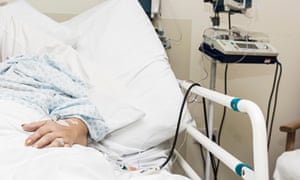
patient in hospital bed


‘Staff often take the opportunity to teach you even though they’re under a lot of pressure.’ Photograph: Alamy

‘It’s important not to shy away from death. You can learn a lot’


It was my fourth day of being on a ward. The patient was an elderly man who’d been in a traffic accident. It was frightening, only being 18 and experiencing that so soon. I was there with the doctor the moment he passed away.


I was worried to begin with. Sometimes, as a student nurse nobody realises you haven’t seen this stuff before. There were doctors and nurses all around me in a busy, enclosed space. Fortunately, the patient wouldn’t have had any idea of what was going on around him.


When I saw that first dead body, I thought, “I don’t know what I’m doing”. I didn’t know how I was supposed to tell the family, or how to clean a body or who to call. It did knock my confidence. But you get used to it – it doesn’t sound like a nice way to put it, but you do.


I stayed with the doctor while he certified the death. I had to listen to the patient’s breath for five minutes to see if there were any sounds. I was lucky to have a good mentor who made sure I was all right afterwards and explained how to tell the family. The nurses seem grateful to have a second pair of hands. People often take the opportunity to teach you even though they’re under a lot of pressure.


I try not to take any of it home with me. I used to live with other students who weren’t studying nursing. I’d come home and they’d listen to my stories, but no one could really relate. They’d just been at lectures or sleeping in all day. Now I live with nurses, which is a lot easier because they get it.


I’ve found it’s important not to shy away from death. You learn a lot if you get involved as much as possible, right from the beginning of your course. Third-year nursing student


Keep up with the latest on Guardian Students: follow us on Twitter at @GdnStudents – and become a member to receive exclusive benefits and our weekly newsletter.


"I don"t think anything can prepare you for seeing a patient die"

6 Nisan 2017 Perşembe

UK"s first double hand transplant patient delights in writing letter to thank surgeon

The first person in the UK to have a double hand transplant has said writing a letter to thank his surgeon has been one the highlights of his first nine months since the operation, as well as being able to clap for his favourite rugby league team.


Chris King, 57, described how he has got his life back since the surgery last July, when he became the second person to have a hand transplant at the UK’s specialist centre for the operation at Leeds General Infirmary (LGI) and the first to have both hands replaced.


King,from Rossington near Doncaster, said he can now do a range of tasks, including writing, making tea and gardening as he progresses even faster than his surgeon anticipated. He said he was improving every week and his next aims are to tie his shoelaces and button up his shirt – he said he had already cracked undoing them.


Looking at his hands, King said: “They are my boys, they really are.


“It’s been going fantastically. I can make a fist, I can hold a pen, I can do more or less the same functions as I could with my original hands. There are still limitations but I’m getting back to the full Chris again.”


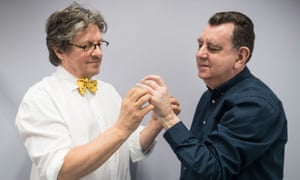
King has his hands examined by Prof Simon Kay, the surgeon who performed the transplant.


King has his hands examined by Prof Simon Kay, the surgeon who performed the transplant. Photograph: Danny Lawson/PA

King has also discovered he is now ambidextrous. “When I picked a pen up first time was with my right hand,” he said. “The next time I picked it up it was left. I might be able to write with both hands now.” He said: “I think it will be the icing on the cake when I can do my laces, and I don’t think that’s far off.”


King lost both his hands, except the thumbs, in an accident involving a metal-pressing machine at his workplace in Doncaster four years ago.


Consultant plastic surgeon Prof Simon Kay, who carried out the operation and two other hand transplants, believes the operation could become as routine as a kidney transplant.


Kay said he was amazed to receive a handwritten Christmas card and thank you letter from King.


Mark Cahill, 55, was the first hand transplant patient in 2012 at LGI, and a third man, who has not been named, became Kay’s third successful transplant patient earlier this year when he was given two new hands and a new forearm.


Two female patients are scheduled for surgery at the LGI as soon as donors become available.


Kay said: “The programme is now well-established. It’s now become mature. We understand the indications, the process. We now have three transplant patients completed and another two to go.”


“We would like hand transplantation to be as routine and unremarkable as kidney transplantation,” he said.


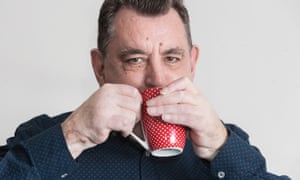
King with a cup of tea


King with a cup of tea. He lost both his hands in an industrial accident four years ago. Photograph: Danny Lawson/PA

Last year, NHS England awarded Leeds Teaching Hospitals NHS Trust the contract to become the UK’s specialist centre for hand transplants.


Referring to King, Kay said: “He’s proved to be, as he proved right at the beginning, a very robust, resilient patient, very enthusiastic about his hands, and I think he’s absolutely delighted.”


“When you bear in mind he will go on improving for another two years, he’s really remarkable – a real vindication for the surgery he’s had.”


“He’s doing more, sooner than we expected. He’s well ahead of our expectations.”


Cahill, a former pub landlord from Greetland, near Halifax, West Yorkshire, has since gained almost complete use of his transplanted hand. He reportedly used it to save his wife’s life last year after she had a heart attack.


Kay urged people to consider the need for future donors. Donating a hands is not yet an option on the organ donor card, but it can be discussed with potential donors if the opportunity arises, a spokeswoman for the NHS’s organ donor register said.


UK"s first double hand transplant patient delights in writing letter to thank surgeon

23 Şubat 2017 Perşembe

The suicidal patient who taught me the value of time

The ambulance pulled in but unusually the crew came into the hospital alone. They informed us that a high risk mental health patient was on their way to the department, and was being accompanied by the police. This set alarm bells in my head.


I qualified as a staff nurse a few years previously. We received no mental health training, but we do look after people in real crisis. In my experience patients with severe mental health problems do not usually want to be in A&E.


I have been spat at, verbally abused and threatened. Though this was normally due to drugs, alcohol and fear, it wears you down. The environment is busy, loud and fast and even with my lack of mental health training, I know this is not conducive to calm.


When I started working in A&E I was in my early 20s and had a very naïve view of the world. A&E taught me that some people have very hard lives, they’ve experienced things no one ever should and it’s taught me everyone has a story, even if they hide it.


The police arrived and when they stepped aside I saw this child-like figure; she had closed body language, her hair was strewn across her face, and mascara ran down her cheeks. She was terrified. She sat down and stared at the floor while the ambulance crew and police handed over.


Knowing what to say is hard. You want to take the pain away but mental torture isn’t cured by painkillers.


She was in her late teens. She was having hallucinations and suicidal thoughts. Her parents had phoned the police because they were scared of her behaviour. She was screaming and shouting. She had arrived without any family. I remember a wave of sadness washing over me as I listened. How had this young, beautiful girl got to this point? How had she got to point of thinking she would be better off dead?


The patient was still visibly agitated but was no longer shouting. The crew and police left, telling us to phone if we needed them. I sat next to her, but she remained closed.


Knowing what to say in this situation is hard. You want to take the pain away but mental torture isn’t cured by painkillers. She didn’t reply to anything I said until I realised that if I was in her situation, I would want to know I was safe. I put my arm on her shoulder and told her she was safe. She fell into my chest sobbing. She stayed there for what felt like hours, holding me so tight as her make-up ran down my uniform.


I was grateful the department wasn’t overflowing that day. My manager looked over to me and mouthed: “Stay with her.” The patient told me how her parents didn’t care, how she hated herself and just wanted to be normal. I just listened, not saying anything. I thought that her parents probably did care, but just didn’t know how to help. Many people’s fear is expressed as frustration.


As her sobbing stopped the exhaustion set in. She was assessed by our psychiatric team and only then did I see how much she needed help. She thought doctors were trying to kill her. Sorrow filled me, knowing her mind was causing her to have these terrible thoughts.


The patient was sectioned. I went home and cried because I couldn’t make her better. She was only a few years younger than me and I could understand what was happening to her. This was not the first or the last time I would cry about a patient.


Weeks later, I arrived at work to find a letter addressed to me. The letter thanked me and told me that if all nurses were like me, everyone would be sane. I welled up reading it. It was my first note from a patient and I treasure it to this day.


I have never forgotten this young woman or how she changed my perception of mental health patients. She taught me so much. Most importantly that spending enough time with someone at the right moment can achieve so much. This situation taught me to take my time whenever I can, and to fight for safe staffing. This story could have been so different if the department was busy.


Years later, when I saw the patient in the local media advocating for mental health patients, I was amazed. For the first time, I felt hope and joy when seeing her; hope for her and for the NHS, joy that she had recovered so well, and that maybe I touched her life in a similar way to how she touched mine.


If you would like to contribute to our Blood, sweat and tears series about memorable moments in a healthcare career, read our guidelines and get in touch by emailing sarah.johnson@theguardian.com.


Join the Healthcare Professionals Network to read more pieces like this. And follow us on Twitter (@GdnHealthcare) to keep up with the latest healthcare news and views.


The suicidal patient who taught me the value of time

9 Şubat 2017 Perşembe

The three questions that every patient should ask their doctor | Ranjana Srivastava

An unimpressed nurse summons the oncology fellow to the chemotherapy chair. “I am not prepared to treat him with chemo. He can barely stay awake.”


“But his oncologist wants to push on,” the fellow responds.


“The patient doesn’t seem to understand how sick he is or how chemotherapy is doing harm. You’ll need to sort this out, I am afraid.”


The fellow sighs, caught on the horns of a dilemma.


Elsewhere, an elderly woman has taken warfarin, a blood thinner, for some time, and now presents with a massive cerebral bleed. She was going to the kitchen one moment and unconscious the next; she is expected to die shortly. As I console her stricken son, it emerges that she had sustained 50 falls that year leading up to the fatal one. There had been many doctor visits but no one had asked specifically about falls.


At the desk, as I solemnly write a note, I overhear the same exchange that’s going on in my head.


“Fifty falls!” one dismayed resident says. “Why would you put her on warfarin?”


“Because someone wanted to reduce stroke risk and someone else watched her heart disease but no one thought of the whole patient.”


“What were they thinking?”


If you listen to doctors and nurses, this is one of the most common questions you will find them grappling with and grumbling about. It reflects part genuine puzzlement and part exasperation that what one doctor has recommended seems ill-advised or even inappropriate to another.


The Grattan Institute estimates the cost of wasted healthcare dollars to be in the order of a billion dollars and the figure stings clinicians but as a disillusioned young doctor sighed, in the age of super-specialisation, it seems expedient to let every doctor manage “their own organ”. Except the practice harms patients who are after all, more than a collection of organs.


If highly trained doctors don’t understand their colleagues’ intentions it stands to reason that most patients feel even more hapless, caught in an endless tangle of tests and explanations but the knowledge and power asymmetry is such that it’s impossible to question the doctor, who must surely know better (if not best).


Physicians overestimated the effect of some interventions on life expectancy by as much as 30%


Unnecessary and expensive medicine is at an all-time high and the usual reasons given are patient expectations, financial incentives, therapeutic uncertainty, medico-legal fears and the sustenance of hope. Now a new study in JAMA Internal Medicine authored by two Australians points out that when it comes to unsound medicine, there is another element at play. It turns out that when prescribing a drug or ordering a procedure doctors are actually quite bad at estimating the benefit and harm associated with it.


In a systematic review of 48 studies performed in 17 countries and involving more than 13,000 clinicians, they found that doctors rarely had accurate expectations of benefits or harms. The inaccuracies were in both directions but more often, harm was underestimated and benefit overestimated.


No group of doctors fared well. As a result, children with acute ear infections may be overprescribed antibiotics and women with troublesome postmenopausal symptoms may be deprived of hormone replacement therapy. Obstetricians and neurologists underestimated the risk of birth defects from antiepileptic drugs and GPs overestimated the benefit of prostate cancer screening and underestimated the benefit of warfarin for atrial fibrillation, a common heart condition. Transplant surgeons were biased towards an inaccurately low estimate of graft failure and all types of doctors were unaware of the risk of radiation exposure from imaging.


Physicians overestimated the effect of some interventions on life expectancy by as much as 30% and for elective but by no means inconsequential surgery on the thyroid, lung, prostate and uterus, there were clinicians who believed that complications “never occurred or had a rate of zero”. Dermatologists couldn’t agree on psoriasis treatment and psychiatrists differed on the risk of harm from long-term antipsychotics. There was a reluctance to convey a numerical estimate of benefit and worryingly, clinicians “overwhelmingly recommend the interventions they provide”.


This study is a wake-up call for doctors because it speaks to our collective failure to appreciate that in prescribing more for our patients we don’t always help, and indeed, commonly inflict harm. The goal of good medicine is not only to avoid harm but also to provide actual benefit, a distinction that’s commonly blurred, including in oncology. Chemotherapy at the end of life improves neither quantity nor quality of life. It leads to more invasive procedures and greater likelihood of dying in an intensive care unit but patients continue to receive it.


In the reign of evidence-based medicine it is discomfiting news that doctors may not understand the data in the form of hundreds of thousands of studies poured upon us.


First, as any patient knows, the art of medicine matters as much as its science. Evidence applied without tact, consideration, empathy and an understanding of the patient’s perspective can be as harmful as evidence not applied at all. Doctors are increasingly exhorted to provide collaborative care and practice shared decision-making. The catch is that both art and science suffer when we don’t know the facts or struggle to convey them.


Part of the problem is the sheer volume of publications. Entwined in increasing bureaucratic demands many doctors lack the time and also the confidence to interpret academic research so we turn to (commonly paid) expert opinion, “peer influencers” and biased pharmaceutical advertising.


Medical schools run the obligatory statistics course but don’t ingrain in doctors that their interpretation of a journal article or more commonly, an “advertorial”, and their participation in marketing disguised as “literature” peddled by pharmaceutical representatives has a direct impact on patient experience, the cost of care and wasted healthcare dollars. Hospitals who should care even more about such education virtually ignore it and when it’s volume, not quality of care that’s rewarded, it all but extinguishes the desire to do better.


Meanwhile, what should patients do? The JAMA study suggests that doctors frequently don’t know and certainly, don’t know best. This is vexing but not all doom and gloom because doctors now have at their disposal an unprecedented number of sound guidelines, robust protocols and genuinely plain-language information for patients, not to mention easy web-based access to experts. When it comes to doctors seeking advice the world really is a global village. In a world of rapidly evolving information, patients should be prepared for a doctor to say, “I don’t know” provided this is followed by, “but I’ll find out.”


Here are three questions that every patient should ask of every new proposed drug or intervention:


  • What are my options?

  • What are the specific benefits and harms to me?

  • What happens if I do nothing?

If patients asked these questions more often and doctors took it upon themselves to answer faithfully, medicine might yet experience a new dawn.


The three questions that every patient should ask their doctor | Ranjana Srivastava

31 Ocak 2017 Salı

Worcestershire hospitals trust ordered to urgently improve patient safety

The NHS watchdog has ordered a troubled hospital trust to urgently overhaul patient safety or face sanctions weeks after two patients died after enduring long waits on trolleys in a corridor.


The Care Quality Commission has given Worcestershire Acute Hospitals Trust six weeks to make significant improvements at the three hospitals it runs in Worcester, Redditch and Kidderminster.


The regulator has served the trust with a section 29A notice, which sets out changes it must make by 10 March or risk penalties such as a special administrator being brought in to start running it.


Caragh Merrick, the trust’s chair, admitted to staff in an email after the CQC’s move that the trust had “lost sight of the basics [of caring for patients]. As staff we must all be held accountable for our actions,” she added.


Previous lapses means that from now action to improve patient safety will be taken from “the ward to the board” in an attempt to “guarantee consistent high professional standards”, said Merrick.


The trust was in the headlines recently when two patients died, reportedly on 1 and 3 January, in the A&E unit at the Worcestershire Royal hospital in Worcester when it was struggling to cope with the sheer number of patients needing care.


In one of the cases, a female patient on an emergency trolley in a corridor within A&E suffered an aneurysm and died later in a resuscitation bay. The second patient died after suffering a cardiac arrest on another A&E trolley within the department after waiting 35 hours for a ward bed elsewhere in the hospital.


The trust was put into special measures in December 2015 after CQC inspectors raised concerns about safety in its A&E, children’s care, and maternity and gynaecology services.


It was embroiled in another controversy last year when CQC staff found that 10,000 patients’ x-rays had not been assessed, which prompted concern that serious illnesses had been missed.


Worcestershire Royal hospital recently became so busy that it had to divert A&E patients to its sister Alexandra hospital in Redditch during the NHS “winter crisis”.


The trust is due to end 2016-17 with a deficit of £37.5m, down significantly on its £59m overspend in 2015-16.


A major consultation to shake up healthcare at the trust’s hospitals is under way.


Worcestershire’s three NHS clinical commissioning groups (CCGs) launched the consultation in January which, if the option proposed was picked, would move many planned operations to the Alexandra, but concentrate most emergency care at the main Worcester hospital.


More day-case and short-stay surgery would go to the county’s smaller Kidderminster hospital.


Worcestershire hospitals trust ordered to urgently improve patient safety

27 Ocak 2017 Cuma

The NHS should protect patient confidentiality | Letters

The agreement of the NHS to hand over patient information to the Home Office immigration authorities (Report, 25 January) fills us with anger and dismay. Patient confidentiality is one of the cornerstones of an ethical and effective healthcare system. That is why, in the absence of a court order, the NHS does not share even the address of a patient with the police or any other public body, except in the most serious cases of harm to the person, involving murder, rape or manslaughter.


There is an obvious asymmetry in adding immigration offences as the one further category where such information can be shared. It marks the intrusion of a political agenda into how our medical records are kept and safeguarded. It shows that NHS Digital cannot be trusted with our confidential information. While this decision affects only a small minority of patients, such an erosion of rights always begins with someone else but ends up affecting us all.


We are especially worried at the impact on trust in the NHS among migrants. They include people who have been tortured, or trafficked, people who have serious communicable diseases, people who have vulnerable dependents including children. The migrants affected by these measures retain the right to access a wide range of NHS services perfectly lawfully. But doctors can no longer provide the assurances of confidentiality they once thought they were able to. This is a further obstacle to confident healthcare access and will in our view cause harm both to individual and public health.


The review leading to this agreement was initiated in response to concerns some of us raised, but we were never given the chance to comment and discuss any proposed process of information sharing, its legal basis and its possible impact. A full consultation and proper scrutiny of this agreement are now needed urgently. We call on NHS Digital to suspend this service to the Home Office until a transparent and public review of its merits has taken place.
Leigh Daynes Doctors of the World
Yusef Azad National Aids Trust
Elizabeth Carlin British Association of Sexual Health and HIV
Chloe Orkin British HIV Association
Natika Halil FPA
Martha Spurrier Liberty
Genevieve Edwards Marie Stopes International
Phil Booth Medical Confidential
Fizza Qureshi Migrants’ Rights Network
Jim Killock Open Rights Group
Sally Daghlian Praxis
Gus Hosein Privacy International
Judith Dennis Refugee Council
Ian Green Terrence Higgins Trust


If illegal immigration is such a serious crime that the government feels entitled to break the confidentiality of medical records, what about benefit fraud or driving when taking certain medicines, or being employed while suffering from certain mental disorders, or even being treated surgically if obese? Doing something about these could all be “in the public interest”, but the main effect would be to make very many people regard doctors as government agents rather than friends they can have confidence in. Immunisation and breast screening rates have already been affected in immigrant communities, and the road to hell is well known to be paved with good intentions. Perhaps doctors will have to go back to writing illegible notes on cardboard medical records if they are to be trusted by their patients in future?
Dr Richard Turner
Harrogate, North Yorkshire


Join the debate – email guardian.letters@theguardian.com


Read more Guardian letters – click here to visit gu.com/letters


The NHS should protect patient confidentiality | Letters

24 Ocak 2017 Salı

Patient who spent two years in hospital evicted under court order

A patient who was evicted from a hospital under a court order after spending more than two years in a bed has insisted that he did not want to stay there.


Adriano Guedes was removed from the James Paget hospital in Gorleston, Norfolk, which said the 63-year-old was occupying the bed “unnecessarily” and was fit to be discharged.


Guedes, who came to the UK from Portugal 15 years ago seeking work and suffers paralysis following a stroke in 2008, said he “didn’t want to stay” but “they forced me to stay”.


He told the BBC: “It’s very bad to occupy a place which should be used by someone in need, but I didn’t cause the situation; on the contrary, I tried to get out of there.”


The hospital obtained a possession order from the court to remove Guedes and it was granted on 1 December and enforced on 10 January.


Guedes said he had asked to be moved from the hospital to a “wheelchair-friendly place” and said he had been on hunger strike since his removal, with his last meal on 10 January.


He said he was initially admitted to hospital in 2014 on mental health grounds and not because of his physical condition.


His request to see a spinal specialist in London for his injuries was ignored, he said, adding: “I wanted to leave, but they always offered what they knew I would refuse.”


Guedes, whose hospital stay is estimated to have cost around £340,000, is now living in a council flat in Suffolk.


The Department of Health says the average daily cost of a hospital bed is about £400.


Director of governance at the hospital, Anna Hills, said Guedes had “repeatedly refused all offers of appropriate accommodation organised by our local authority and social care partners, despite being fit for discharge”.


The hospital said it had worked “in partnership with a range of agencies to achieve a safe discharge from the hospital” for Guedes.


It said “detailed planning” had taken place which “led to a successful discharge in this complex case”.


Guedes has been described as a so-called “bed blocker”, but the NHS Confederation’s director of police, Johnny Marshall, told the Guardian last year that the term was an inappropriate description of people staying in hospital when they did not need to be there.


He said: “These ‘blockers’ are often older people who are frail and vulnerable and who would like nothing more than to return home to their families. The phrase ‘bed blocker’ puts all the emphasis, and blame, on the individual.


“The reality is that it is the system that has failed to move quickly enough to put together the right package of care to enable the person in the bed to return home.”


Patient who spent two years in hospital evicted under court order

6 Ocak 2017 Cuma

NHS on brink of winter crisis after increase in patient numbers

The NHS is on the brink of winter crisis after a larger than expected increase in patient numbers caused a third of hospital trusts in England to warn they needed urgent action to cope last month.


The BBC commissioned the Nuffield Trust health thinktank to look at four weeks of hospital data in the run-up to Christmas and found that 50 of the 152 English trusts were at the highest or second highest level of pressure.


During the time period seven trusts had to declaring the highest level of emergency 15 times, meaning they were unable to give patients comprehensive care.


Nigel Edwards, chief executive of the Nuffield Trust, said the situation could deteriorate further in the next two weeks when the NHS was usually most stretched.


“The real crunch point generally comes in week two or three after the Christmas break … there are early signs that there is a problem,” he told BBC Radio 4’s Today programme.


NHS England insisted hospitals were coping, but Edwards said “there are reasons to be really quite concerned”.


He pointed out that hospitals were having to cope with a 4% increase in A&E attendance, which is more than expected from population growth. At the same time problems in social care was making it “really tricky” for hospitals to free up beds, he said.


“If you can’t get patients out of the back of the hospital, home, then obviously, the whole system begins to seize up,” he told Today.


“Anecdotally, what you are hearing from chief executives of trusts is that they are experiencing very, very high levels of pressure in their A&E departments.”


The Nuffield Trust found that some of worst problems were in Berkshire, the West Country, and parts of the east Midlands. But Edwards pointed out: “This pattern of increase demand is spread right across the country.”


Dr Taj Hassan, president of the Royal College of Emergency Medicine, warned that hospital emergency departments “are in an absolute acute state of distress”. “This is on the background of chronic underfunding, understaffing, both in health and social care and failures in the wider urgent emergency care system.”


Hassan said the issue was the “number one item on the agenda” in a meeting the college had on Thursday with the NHS chief executive, Simon Stevens. “Our four hour performance in A&E departments is the worst in 15 years. We entered this winter in the worst state of affairs possible and we predicted that this situation would arise,” he told Today.


Hassan called for emergency funding to resolve problems in social care to help free up hospital beds.


He said: “There is an absolute and urgent need to address the patients who are fit to be discharged from hospital, which in some systems is running between 10% or 20%.


“We need to move those patients back into the community so that we can create flow in our hospitals and our significantly overcrowded emergency departments which are struggling badly.”


In a statement NHS England said: “The NHS’s tried and tested plan is currently managing the ongoing pressures of winter. The public can play their part avoiding going to A&E and using their local pharmacy and NHS 111.”


NHS on brink of winter crisis after increase in patient numbers

31 Aralık 2016 Cumartesi

Serious mistakes in NHS patient care are on the rise, figures reveal

Serious mistakes by hospital staff that put patients at risk are on the rise, despite the government’s drive since the Mid Staffs scandal to make care safer, official NHS figures reveal.


The last few years have seen more cases of delayed diagnosis, staff failure to act on patients’ test results, poor care of seriously ill patients and blunders during surgery.


The figures, obtained by former health minister Norman Lamb from NHS England, have sparked concern that the unprecedented strain on hospitals – created by rising demand for care, shortages of doctors and nurses, and the need to save money – is making staff more likely to make errors.


The number of cases in which NHS England recorded that a patient whose health was deteriorating received what it calls sub-optimal care more than doubled, from 260 in 2013-14 to 588 in 2015-16. Similarly, the number of diagnostic incidents – either a delayed diagnosis or an NHS worker not acting on test results – rose from 654 to 923.


“Jeremy Hunt [the health secretary] has talked a lot about wanting to make the NHS the safest healthcare system in the world,” said Lamb. “But is that ambition realistic? These figures show worrying rises in the number of incidents which have a damaging and potentially fatal effect on patients.


“My worry is that the NHS is under such impossible pressure, with clinicians too often working under intense strain, that increases the risk of serious harm being caused to patients, which can have incalculable consequences for them and their families.


“These figures confirm the stark and distressing reality that thousands of people are being failed in their hour of need because the NHS is under such intolerable pressure, with overstretched hospital staff unable to give patients the care and treatment they deserve,” he added.


The figures that he obtained, using the Freedom of Information Act, also show that the number of surgical incidents more than doubled from 285 in 2013-14 to 740 in 2015-16. There were 202 surgical errors and 83 cases of wrong-site surgery – in which surgeons operated on the wrong part of a patient’s body – during 2013-14. They rose to 248 and 114 respectively a year later.


Norman Lamb


Norman Lamb: ‘These figures confirm the stark and distressing reality that thousands of people are being failed in their hour of need.’ Photograph: Ben Birchall/PA

But after changing the way it collates data in May 2015 regarding incidents in which patient safety is endangered, NHS England says that 30 surgical errors and 19 wrong-site surgeries occurred in 2015-16, as did another 691 cases of a “surgical/invasive procedure incident”.


The disclosures come amid growing fears among NHS bodies, health trade unions and thinktanks that the service in England will experience its first full-blown winter crisis since 2011-12 and that both the quality and safety of care are in danger of deteriorating in coming weeks and months.


Worsening gaps in medical rotas, big year-on-year rises in the number of patients attending and being admitted, and the growing complexity of patients’ illnesses are also key factors.


Hunt has launched an array of initiatives to improve the safety of NHS care since Robert Francis QC’s seminal report in 2013 into the scandal of poor care at Stafford Hospital between 2005 and 2009, which led to patients dying.


“We have long warned that underfunding and staff shortages within the NHS will impact on patient safety. It appears that our worst fears are now being confirmed,” said Eddie Saville, general secretary of the Hospital Consultants and Specialists Association, which represents several thousand hospital doctors.


“Hospital doctors and fellow medical staff are increasingly hampered by the spending constraints placed on frontline services. It is time that the government listened to those voices warning that it has got funding wrong. It shouldn’t be a case of waiting for a major incident to hit the headlines before acknowledging this fact and changing tack.”


The figures also paint a mixed picture of patient safety in NHS maternity services. There were fewer maternity-service serious incidents (82), mothers’ unplanned admissions to intensive care (134) and unexpected neonatal deaths of a newborn (122) in 2014-15, compared with 2013-14. However, 535 newborn babies had to be admitted to a neonatal intensive care unit in 2014-15, up from 380 the year before. The number of maternal deaths also rose over the same period from 54 to 62.


The Department of Health denied the figures were proof that patient safety was slipping. “To suggest this indicates a decline in standards is a simple misreading of the information,” a spokesman insisted. The rises in these types of serious breaches of safety were due to better recording of such occurrences, he said.


“This data is precisely what we would expect given the government’s focus on building the safest and most transparent healthcare system in the world. The NHS is becoming ‎far better at recording and learning from the open reporting of a wider range of incidents,” he said.


Serious mistakes in NHS patient care are on the rise, figures reveal

16 Aralık 2016 Cuma

What I want to tell my boss: ‘You"re ruled by money, not patient care’

You harass my team constantly while we’re trying to do our job. When I am with a patient, non-clinical staff call me every half hour asking for updates – and apply pressure for the crew to move on to other 999 calls.


What you say on the phone is overheard by patients, often the elderly and vulnerable, which makes them feel guilty about having an ambulance – and at times patients refuse to go to hospital even though they should, so the ambulance can be available for someone else.


You want us to work quicker and quicker, yet this means reporting accidents and safeguarding vulnerable patients can be missed. There’s never time – as the shifts often over-run and the exhausted crews go home without completing the necessary paperwork. Ambulances are also often denied the opportunity to restock drugs, potentially leaving other patients without the care they need.


There are no government targets for this though, so under your leadership the staff, who are caring by nature, become increasingly disillusioned and frustrated – up to the point they need to leave the profession for their own sanity.


The bullying doesn’t end there. There are staff employed by the NHS to pressurise crews at hospital to turn calls around quicker, whether they are in a position to do so or not – yet again chasing a government target.


You revel in having good figures and use all the tactics you can to get them. You chase any government or Department of Health targets, such as sickness rates and flu vaccination rates. You pressurise your management team to harass staff to have the influenza vaccination against their wishes, and instruct managers to sack people on long-term sick leave. This leads to dread, fear, and plummeting moral.


Recruitment and retention of paramedics is a constant, national problem. Pay is being reviewed at a national level, but it’s not just about pay: your management is part of the problem, which is not being addressed. The number of people currently leaving the profession shows this. No amount of money can persuade people to continue to be on the receiving end of unattainable targets and bullying.


There is a cumulative effect: you bully your directors, they bully the more junior managers, who bully the staff. So experienced paramedics leave and take years of practical knowledge and experience with them, to be replaced with inexperienced new staff on significantly less pay.


You pretend in public to focus on patient care and welfare, but then make cuts that leave parts of the community with a second-class service. Bigger is not necessarily better. When the government merged ambulance services, from county services to regional ones, standards went down the pan.


Money is the true deciding factor here, not best practice, so the best care won’t be rolled out on a regional basis. Is it any wonder so many people are leaving, to be replaced by less experienced but, most of all, cheaper, staff?


What I want to tell my boss: ‘You"re ruled by money, not patient care’

17 Kasım 2016 Perşembe

Nurse denies falsifying Ebola patient Pauline Cafferkey"s temperature

A nurse who faces being struck off over a botched Ebola screening in Heathrow airport has said it is “preposterous” that she would have concealed knowledge that Pauline Cafferkey was unwell.


Donna Wood, an NHS nurse who volunteered along with Cafferkey to work in Sierra Leone in 2014, said she would never have put her country, her family or herself in such danger.


She faces being struck off after being charged by the Nursing and Midwifery Council (NMC) with falsifying Cafferkey’s temperature as they passed through the Heathrow screening process on 28 December 2014.


“I absolutely dispute the allegation because if I had been aware of anybody having a temperature it would have been a complete danger, a red alert in my mind,” she said.


She said “alarm bells” would have gone off in her head and she would have immediately taken action if a colleague had had a high temperature, as this is the first symptom of Ebola.


It is alleged that Wood, a reluctant poster girl of the government’s Ebola volunteer recruitment drive, dishonestly recorded Cafferkey’s temperate as 37.2C when she knew it was 38.2C.


Pauline Cafferkey.


Pauline Cafferkey. Photograph: Jeff J Mitchell/Getty Images

Under the Public Health England protocols, anyone who presented themselves with a temperature above 37.5C should have been referred for further assessment by a special infectious diseases expert.


The charges were brought after an investigation launched by Public Health England two days after Cafferkey fell critically ill with Ebola.


A doctor in the returning volunteer group, Hannah Ryan, alleged that Wood had said she would write the temperature down as one degree lower so they could get out of the “chaotic” screening area and “sort it out” themselves later.


“It would be preposterous to even contemplate that I would allow myself to be put in danger, or someone else, or my family or my country,” Wood said. “I just spent six weeks protecting myself from contracting Ebola, ensuring my colleagues working around me were protecting themselves against Ebola. The reason I had gone out to Sierra Leone was to control the spread of Ebola. There is no way I would have let someone else be at risk,” she said.


Wood told an NMC hearing in Stratford, east London, that she had no recollection of filling in Cafferkey’s form, as alleged by a doctor who had previously given evidence. Nor did she know that Cafferkey had taken paracetamol, which could possibly mask an elevated temperature, she said.


She said she remembered that Cafferkey had said she was feeling “warm” when they got off the flight and went to the toilet “to freshen up”. Cafferkey had ascribed her feeling to the fact that she had slept wearing a hoodie on the plane.


Wood said she remembered very clearly telling Cafferkey not to take paracetamol because it could affect her temperatures recordings, which were universally used as the first barrier of infection prevention with checks taken several times a day while they were in Sierra Leone.


“As we were leaving the toilets, we were on a very wide corridor, a lot of people around us. She said it very clearly so that I heard her: ‘I think I’m going to ask Dr Hannah if I should take some paracetamol.’


“Absolutely without a second at all, I responded staight away: ‘Gosh, no, you mustn’t do that. That could mask any temperature or symptoms,’” said Wood.


She told the NMC independent panel that none of the protocols of infection prevention and control were in place at Heathrow. Temperatures of passengers arriving at the airport were not taken as they disembarked from the plane from Sierra Leone, she said.


Although the volunteers were classified as being at the highest Ebola risk level under Public Health England protocols because they had worked on the frontline, Wood told how she was allowed to queue up with hundreds of other passengers arriving from all over the world in passport control before being taken to the Public Health England screening area, where she was again in close proximity to members of the public.


At the time America and Europe were gripped by panic over the potential spread of Ebola from west Africa to other parts of the globe.


The Ebola virus is spread through bodily fluids including saliva and sweat, and those who had worked in Sierra Leone were operating under the same strict “no touch” protocols as the public under the state emergency laws.


Wood told how the volunteers were banned from going to shops or churches or meeting locals in Sierra Leone and were under strict instructions to stay in the beach resort hotel that had been hired by Save the Children, which ran the Kerrytown hospital they were working in.


Describing how she felt standing close to others who had come from Sierra Leone in the screening area, she said: “I remember this wasn’t right. Through my training, you weren’t allowed go out to shops, churches, and here we were in a crowded area with people I didn’t know. They had come from Sierra Leone but thoughts were entering my head: could this person be unwell? Or could this person have been with someone who had Ebola?


“I remember being uncomfortable being that close in a crowded area.”


Under cross-examination Wood said she could recall a doctor holding up a thermometer but no one called out a temperature reading. She said she would have been gripped by panic if she had seen a temperature of 38.2C as it would have been an early warning.


“I would have been putting them at risk, myself at risk, my family at risk, all their families at risk, everyone in that room at risk”, which was something she would not have done “bearing in mind we had just had six weeks seeing horrific deaths”, she said.


Nurse denies falsifying Ebola patient Pauline Cafferkey"s temperature

13 Ekim 2016 Perşembe

My patient told me he is going to stab someone. There"s nothing I can do

“I’m going to go home and I’m going to stab someone.”


Alan is in the weekly ward review meeting with a group of doctors, nurses, and students. We’ve told him we think he is well enough to leave the ward; he disagrees.


I am a consultant psychiatrist with a team working in a secure psychiatric inpatient unit, where he has been treated. He is unusual in that he has had his first psychotic episode later in life. The rest of his story is more depressingly typical; a chaotic childhood, expelled from school, periods in care and prison. He received no professional help and was left to drift between prison, homelessness, alcoholism, using drugs and managing only tenuous, readily broken relationships. Alcohol in very large quantities has, arguably, been what has kept him going, cutting him off from his unfortunate reality.


Possibly because of the alcohol, he began to hear voices and has had a spell in hospital where he was violent towards the staff. Medication has made the psychotic symptoms disappear.


But he doesn’t want to go home. He’s no longer psychotic, but his habit of violence hasn’t disappeared with the voices. If he stabs someone and ends up back in prison he doesn’t care.


So what to do about Alan?


He now has the capacity to make decisions about his actions. He understands, on one level, that being violent towards people is not the best thing to do. He doesn’t care though. Alan is the product of an unfortunate combination of nature and nurture that has left him with an inability to manage even the most minor frustration. If I had been seriously hurt by his actions the police would, probably, have agreed to arrest him. I find myself wondering aloud if that might have been easier for us all.


But the CPS would almost definitely have refused to follow through because Alan has been sectioned in the past and has mental health problems. Mere threats to kill if discharged from hospital will attract little interest from the criminal justice system, although we will go through the motions of talking to the police. Alan is in the mental health system now. The reality is that anything Alan does in the future can come back to bite any mental health professional who has had anything to do with him.


His case joins the many others creating the great sword of Damocles hanging my head and that of most psychiatrists. He can’t stay in hospital for ever. He attacked people before he became psychotic, usually when drunk; he is likely to again as he doesn’t even pretend to want to give up alcohol.


I will try not to worry about Alan stabbing someone. I hope he is bluffing. We will contact the police and will document in detail our view that he is now responsible for his behaviour – and we will discharge him.


Alan is not his real name and some details have been changed


If you would like to contribute to our Blood, sweat and tears series which is about memorable moments in a healthcare career, please read our guidelines and get in touch by emailing sarah.johnson@theguardian.com.


Join the Healthcare Professionals Network to read more pieces like this. And follow us on Twitter (@GdnHealthcare) to keep up with the latest healthcare news and views.


My patient told me he is going to stab someone. There"s nothing I can do

7 Ekim 2016 Cuma

Alzheimer’s Patient Reverses Symptoms by Applying Coconut Oil On A Daily Basis

Carolyn, the devoted daughter of an 88-year-old women who has Alzheimer’s recently decided to take charge of her mother’s care. The almost immediate results she saw were drastic and inspiring.


Additionally, the simple change she implemented in her mom’s life is available for any family struggling and suffering from Alzheimer’s to try for themselves.


Her mother spent the last seven years in a nursing home. As the years wore on and her mother’s condition deteriorated, Carolyn started to worry that her mother was being neglected and potentially abused.


Carolyn decided it was time to make a change and take matters into her own hands. She removed her ailing mother and devoted herself to being her mother’s full-time primary caregiver. On February 14, 2016, Carolyn made the hardest and probably the most important decision for her mother and removed her from the toxic nursing home environment and took her home to care for her.


While in the care of the nursing home, Carolyn’s mother was diagnosed with stage 6 Alzheimer’s. Stage 6 is also known as the “severe decline” stage. In stage 6 most patients need help with day-to-day life activities and near constant supervision. For the last two years, Carolyn’s mother struggled to speak and did not remember people, names, faces, and words. Reading had become almost impossible for her mom due to her memory issues. Communication was becoming a real struggle for Carolyn’s mother.


Coconut oil, the wonder drug


Carolyn had read about and was familiar with the benefits of coconut oil. Immediately after her mother’s liberation from the nursing home, Carolyn started liberally applying coconut oil. She would do this twice a day, after bathing in the morning and again at night before bedtime.


Within 5 days she started noticing an immediate and drastic improvement in her mother’s condition. Her mother started remembering people and names she hadn’t in years. She was able to communicate again. Carolyn was amazed when her mother was able to read, out loud, a Bible storybook and only struggled with a couple of words.


Alzheimers and coconut oil, science backs it up


These results may have been shocking, but they are no surprise given the results of a recent Spanish clinical trial. In December 2015, a clinical trial was published on the effects of coconut oil being used to treat patients who have Alzheimer’s.


The study included giving 40 ml, approximately 2.7 tablespoons, of coconut oil a day to one of two control groups. Both control groups were made up of people of varying ages and genders in various stages of Alzheimer’s. One control group received the coconut oil and the other did not.


The study concluded that there was a statistically significant increase in test scores demonstrating improved cognitive status in the control group that received the coconut oil. The study clearly demonstrated the potentially powerful positive effects of coconut oil on patients struggling with Alzheimer’s.


In addition, a US study currently being conducted in Florida is scheduled for publication in late 2016. The health, wellness, and Alzheimer’s communities are eagerly awaiting those results.


Big Pharma doesn’t welcome the idea


The pharmaceutical industry is the one industry that stands to lose the most if the new studies collaborate Spanish study findings. Alzheimer’s disease affects millions of seniors and is a rapidly increasing disease. Pharmaceutical companies have been working for years to develop a vaccine but to date have come up empty handed. Pharmaceutical companies may be left out in the cold if the connection between coconut oil and cognitive ability increase in Alzheimer patients is proven.


For Carolyn and her mother there is no doubt that coconut oil has made a huge impact in their daily lives. Carolyn and her mother are enjoying this additional time together, their newfound freedom, and their ability to communicate with one another.


Sources:      


http://healthimpactnews.com/2016/88-year-old-woman-recovering-from-alzheimers-and-diabetes-using-coconut-oil/


http://healthimpactnews.com/2015/study-coconut-oil-improves-cognitive-functioning-in-alzheimers-patients/


Looking for a way to shed some pounds or live a healthy, happy lifestyle? Join my ThinForever program here. 


If you enjoyed reading this post, don’t forget to connect with me on Facebook or Google+ or  download my FREE Book “Amy’s Home Kitchen”. It is packed with my family’s favorite healthy, clean and delicious recipes. 


Alzheimer’s Patient Reverses Symptoms by Applying Coconut Oil On A Daily Basis

6 Ekim 2016 Perşembe

My patient ended her life at Dignitas to avoid a slow, undignified death

Some years ago, while working as a district nurse at a GP practice, one of the receptionists came to tell me she had just taken a phone call from the son of a patient to say he had returned from the Dignitas clinic in Switzerland. His mother, who had recently been diagnosed with a neurological condition that would kill her slowly, and with loss of dignity and independence, had taken her life there.


The reception staff were shocked. I was shocked. My team was shocked. I was dismayed that this lady, who I had known for a number of years, had to go to another country to receive the care she wanted and to die earlier than she should have.


The following day her GP asked me what Lily* had been up to over the past few days. You can tell from this perhaps that Lily was a lady who made demands on the surgery team. The GP was upset when I told her what had happened, and contacted Lily’s son.


I had known this lady for a number of years and looked after her husband when he returned from hospital after surgery. Lily would turn up at the surgery immaculately dressed and would not leave until she obtained what she thought would help him. I would sometimes receive a phone call from the surgery asking me to come back from my house calls to see her. I was not the only person at the surgery with whom she could be quite insistent. Yet even as she frustrated us all, I found it noble the way she fought for what she thought was best for her husband.


After he died I saw her only occasionally. A few years later her health deterioriated and I became involved in her care. Occasionally I found it frustrating when, in the middle of a clinic or housecall, I would be contacted to say Lily wanted to see or speak to me. Many a day on my way home I would have to call into her house to reassure her or deal with a problem.


After her diagnosis she was matter of fact as we discussed plans for her care and how to deal with her condition. She was living on her own and had no intention of “burdening” her children. Despite the fact that she could be difficult, I found her likeable with a very dry sense of humour and fun.


I found out later that before she died she had bought a new outfit to travel in, and been to a favourite view she and her husband used to visit and to a favourite restaurant.


The point of telling this story is that I gained great insight into the courage and tenacity it takes to go to Dignitas and that there should be a way of assisting someone who is of firm mind to take their own life in these circumstances. Perhaps if she had felt she would have had control of the situation in this country Lily would not have found it necessary to take her own life at all; certainly she would have had a longer life. I feel privileged to have known a very brave woman, even if she could drive me to distraction.


  • Name has been changed

If you would like to contribute to our Blood, sweat and tears series which is about memorable moments in a healthcare career, please read our guidelines and get in touch by emailing sarah.johnson@theguardian.com.


Join the Healthcare Professionals Network to read more pieces like this. And follow us on Twitter (@GdnHealthcare) to keep up with the latest healthcare news and views.


My patient ended her life at Dignitas to avoid a slow, undignified death

26 Eylül 2016 Pazartesi

Junior doctors suspend strike plans due to "patient safety" concerns

Junior doctors have suspended plans to go on a series of five-day strikes to protest against changes to their contracts after a “vigorous debate” following a change in leadership.


The British Medical Association’s junior doctors committee (JDC) said it would not go ahead with the industrial action, but was “planning other actions over the coming weeks”.


The decision follows a challenge to the leadership of Dr Ellen McCourt, chairwoman of the committee, by doctors from Justice for Health.


McCourt fought off the challengers but there were changes to other members of the junior doctors leadership, who held a summit on Saturday to discuss their new strategy.


“After a vigorous, passionate, thoughtful and wide-ranging debate this afternoon, the JDC has decided to suspend industrial action while planning other actions over the coming weeks,” the committee said in a statement.


The decision was prompted by “feedback from members from every region in England, as well as the views of the wider profession, patients and the public in considering the next steps on the dispute”.


“Our primary consideration in coming to this decision has been our overriding concern about patient safety, the care we provide every day and the ability of the health service to deliver this care,” it added.


“To be absolutely clear, the JDC still opposes the implementation of the contract … The past few months have been difficult and frustrating and we know that members are anxious for information and practical support.”


Junior doctors have been in a long-running dispute with the government over its decision to change their contracts to make it cheaper for the NHS to provide weekend cover.


The health secretary, Jeremy Hunt, decided to impose the new contract on junior doctors, five of whom last week sought to have the decision overturned in the high court. Lord Justice Green’s ruling on that is due on Wednesday.


Union sources say hundreds of trainee medics voicing their concern about the proposed walkouts had led to serious fears that strike turnout would be poor and that the BMA would end up divided, weakened and lowered in public esteem as a result of the stoppages.


Many junior doctors were also concerned that the long duration of the planned strike would put patients’ safety at risk and risk a backlash from the public if anything untoward happened in a hospital while they were protesting outside. Medics have also voiced confusion about the objectives of the stoppages, given that the union’s leadership backed in the early summer the new contract they had negotiated, only to see grassroots juniors reject the improved terms and conditions by 58% to 42%.


McCourt was elected as interim chair after the former leader, Johann Malawana, resigned after 58% of junior doctors rejected a compromise contract.


One senior BMA official said: “Junior doctors don’t want to put patients at risk and don’t want to go ahead with a five-day strike. Quite a few don’t want any more strike action at all. Even the few JDC members who still think that they can’t give up totally wanted the 5-day strike scaled down.


“Junior doctors don’t have the heart or the stomach for this anymore. They don’t see the point of industrial action. They feel let down and blame both Jeremy Hunt and the BMA equally.”


There is also mounting anger and confusion among junior doctors at what many see as the BMA’s lack of clear strategy in first electing to hold all-out stoppages of unprecedented duration without defining what their purpose was.


The Department of Health welcomed the suspension of the strikes, saying: “The best way to rebuild trust now is for industrial action to be called off permanently in the interests of patients – and we urge the BMA to do so.”


The strike action was originally planned for this month, but the first five-day walkout was cancelled after opposition from other members of the medical profession.


Opposition to the planned strikes came from the Academy of Medical Royal Colleges, which represents all the doctors’ professional bodies.


Junior doctors suspend strike plans due to "patient safety" concerns