Nurse etiketine sahip kayıtlar gösteriliyor. Tüm kayıtları göster

27 Mart 2017 Pazartesi

Doctor was "dishonest" in screening nurse who had Ebola, tribunal finds

A doctor acted dishonestly when she lied to investigators about the dangerously high temperature of a nurse who went on to develop Ebola, a tribunal has found.


Dr Hannah Ryan, who had been working in Sierra Leone during the west Africa Ebola outbreak of 2014, was one of the medics who assessed Pauline Cafferkey following the Scottish nurse’s return to the UK in December 2014.


Ryan did not raise the alarm when a colleague wrote down Cafferkey’s temperature as 1C lower than it actually was during a “chaotic” screening process at Heathrow airport on 28 December 2014, a medical practitioners tribunal found on Monday.


A raised temperature can be the first sign of Ebola, which can kill within five days. Cafferkey, who twice nearly died from the virus, went on to develop one of the worst cases on record for people treated in the west.


During screening at Heathrow, Cafferkey insisted she was feeling fine and was eventually allowed to catch her connecting flight to Glasgow. The following day, she developed further Ebola symptoms and was admitted to hospital for urgent treatment.


The tribunal found that Ryan had acted in a “misleading” manner when she agreed that the form recording the lower, wrong temperature be submitted to screening staff from Public Health England (PHE) at the airport.


But Ryan, who had only just graduated from medical school, did not intend to conceal Cafferkey’s real temperature at the airport, knowing it to be at least 38.2C – higher than the 37.5 considered normal – the panel found.


However, the tribunal decided that the doctor had later been “dishonest” when she concealed her role in taking Cafferkey’s temperature during a conversation with Dr Nick Gent on 2 January 2015. Gent, deputy head of the emergency response department at PHE, had phoned her during PHE’s investigation into when Cafferkey’s symptoms first emerged.


Ryan did not tell him she had taken Cafferkey’s temperature and told him words to the effect that the nurse’s temperature was “normal”, the panel found.


The tribunal heard that Ryan and Cafferkey were one group among many British medics who put their own lives at risk by volunteering their medical skills and going to west Africa to help fight the outbreak.


Deployed on 22 November 2014, they were based at an 80-bed treatment centre in Kerry Town, a village in Sierra Leone, working “tirelessly in dangerous and highly pressurised conditions” during which they “formed a strong bond of friendship”, according to Fraser Coxhill, representing the General Medical Council.


The medical practitioners tribunal, which is independent of the GMC, will decide later this week whether Ryan’s fitness to practice as a doctor was impaired due to her actions and whether to impose sanctions.


Doctor was "dishonest" in screening nurse who had Ebola, tribunal finds

13 Şubat 2017 Pazartesi

I moved from Canada to be a nurse in the UK – but now I want to quit

“I don’t think you’re going to like it,” said my manager, turning from her computer. She’d just marked my last day of work in her calendar. I’d finally found the courage to announce I was leaving to move to London.


She wasn’t being mean-spirited or spiteful. She was thinking back on the experience of a friend who had moved to the UK to work as a nurse and how disappointing it had been.


And she couldn’t have been more right. It’s been a year since I touched down in London, and not a single week has gone by where I haven’t daydreamed about finding a new career.


I enjoy nursing and it suits me well. But I can’t help but feel undervalued as a nurse in the UK. The basics are the same: nurses look after sick people. So why does it feel so different this side of the Atlantic? It comes down to responsibility, autonomy and respect.


For starters, in the UK nurses tend to leave most decision-making up to doctors. ECG? Show it to the doctor. Blood results? Let the doctor review them. Can’t find a vein? The doctor will insert the IV cannula. In Canada, nurses look at ECGs to determine whether patients should be treated immediately for heart attack or if it’s fine for them to sit in the waiting room. It’s up to the nurse to get something done if a patient’s electrolytes are out of whack. Putting a needle in a vein? That’s a nursing skill – and they’re the best at it.


Back home I was often told that if a patient’s blood levels were fine, I could go ahead and discharge them from hospital. Here, not many nurses bother looking at blood results. No one expects them to.


In Canada, mentors taught me about how symptoms and anatomy related to diagnoses. I was required to fully assess every patient from head to toe by looking, touching, and listening. In the UK, I most often receive feedback about recording blood pressure on time and making sure patients sign the personal property waiver. Here, a nursing assessment can be done without even touching the patient. Nurses document who patients live with, what mobility device they use, and what their risk for pressure sores is. The nurses I work with here know their stuff . But from what I’ve seen, the NHS is geared towards nurses doing tasks, not applying judgement or critical thinking.


Nurses have an important job; they can make or break a patient’s healthcare experience. To be a nurse requires a university degree and membership in a professional body. Nurses give their all for people who are at their worst. It’s a physically and emotionally draining job on the best of days. Yet most NHS nurses I know do extra shifts on top of their full-time hours to make ends meet.


The nursing salaries here are embarrassingly low. After converting from Canadian dollars, I earn £15,000 less per year here than I did back home. Canada’s healthcare system is publicly-funded just like the NHS, but somehow nurses there are paid well.


In nursing school, one of the first courses I took was about the status and history of the profession, from Nightingale to the present. One day the topic of salary came up. The students knew how well Canadian nurses are compensated, but I recall the energy with which my classmates cheered when our professor exclaimed: “And we’re worth every penny!”


But perhaps the most difficult aspect for me has been public perception of nurses in the UK. Back home when you say you’re a nurse, you say it proudly and people’s eyes light up. “My aunt is a nurse, what type of nurse are you?” they ask with interest. Here In the UK, I find people are less enthusiastic. “A nurse? Oh,” they say, and move on to a different subject.


A Canadian friend landed at Heathrow and handed her visa over to the immigration officer.


“What do you do for work?” he asked.


“I’m a nurse,” she said, beaming. “Why?” he said flatly, as the smile fell from her face.


It was a quick introduction to nursing in the UK.


If you would like to write a blogpost for Views from the NHS frontline, read our guidelines and get in touch by emailing sarah.johnson@theguardian.com.


Join the Healthcare Professionals Network to read more pieces like this. And follow us on Twitter (@GdnHealthcare) to keep up with the latest healthcare news and views.


I moved from Canada to be a nurse in the UK – but now I want to quit

9 Şubat 2017 Perşembe

Nurse gets suspended sentence over fatal blood transfusion mix-up

A nurse whose patient died after she gave him the wrong type of blood has been given a suspended sentence.


Lea Ledesma made a series of mistakes that led to Ali Huseyin, 76, being given type AB blood during a transfusion even though he was blood group O.


The nurse, who was described as the “mother” of the intensive care unit at London Heart hospital, where she had worked since 2001, then tried to blame a colleague for the mistake.


She was given an 18-month suspended sentence at Southwark crown court, after previously being convicted of unlawful manslaughter by gross negligence.


Ledesma, 49, of Stevenage in Hertfordshire, wept and hugged her family after the sentence was passed on Thursday.


The public gallery was packed with dozens of her relatives, friends and former hospital colleagues, many of whom wrote letters of support to the court.


They formed a circle and prayed after the judge announced she would not be going to prison.


Huseyin had been in the care of Ledesma after a successful heart bypass operation in May 2014. He was given the wrong blood type on 7 May 2014 and died later the same day.


Ledesma made several errors, the court heard, including choosing the wrong blood from a vending style machine before checking it against the wrong computer records.


Ledesma initially tried to pass off the error as being a colleague’s mistake and only when questioned further did she admit to being distracted and flustered when checking the patient’s details.


Anthony Metzer, defending, described the case as a “double tragedy” and said Ledesma was “anxious to accept full blame” and had shown extreme remorse.


“Even to this day, I don’t think there’s anything I can point to as to how it was that this tragic and serious error came about,” he said. “This will live with her until her own dying day.”


The judge, Nicholas Loraine-Smith, said: “Mr Huseyin was a much-loved husband, father and grandfather – a kind, considerate family man whose death has devastated his family, particularly his wife, who feels so alone without him after all these years.


“It’s still a mystery to me as to how and why you came to behave in the way that you did, and you remain certain that the details of the other Mr Hussain were shown on the deceased’s monitor and I cannot exclude that as a contributory factor.”


Loraine-Smith said he had “rarely, if ever” seen so many character references and letters of support for a defendant. “You were committed to that unit,” he said. “Everybody talks about how reliable you were, how committed. You were described as the mother of the unit and always prepared to go the extra mile for your patients.”


Nurse gets suspended sentence over fatal blood transfusion mix-up

6 Şubat 2017 Pazartesi

NHS nurse killed himself after losing his job, inquest told

An award-winning nurse who died after setting himself on fire outside Kensington Palace suffered a “mental breakdown” over how his NHS employers handled his dismissal, an inquest heard.


Amin Abdullah, 41, died on 9 February last year close to the London home of the Duke and Duchess of Cambridge after being sacked from Charing Cross hospital where he worked as a charge nurse.


An inquest into his death on Monday heard how he had previously attempted to take his own life and had told a patient in the unit where he was being treated he was going to set himself on fire.


Giving evidence at Westminster coroner’s court, his partner, Terry Skitmore, said Abdullah slipped into a depressive state during a disciplinary investigation which began in September 2015 and after he subsequently lost his job at Imperial College healthcare trust.


Skitmore said Abdullah, who “lived for the job”, was a “caring” and “dedicated nurse” and “struggled to understand what he was being disciplined for”.


The inquest heard how he had written a letter for another colleague caught up in a complaint made by a patient “to show how she could respond”, resulting in him getting embroiled in the issue.


Skitmore said Abdullah, after initial meetings and the investigation, did not hear anything about the disciplinary “for many weeks” and put in a grievance regarding the delays in a bid to get some answers.


On 21 December 2015 he was handed an instant dismissal on the grounds the letter he had written to support his colleague was “untrue”.


Skitmore said the delays in the disciplinary process eventually led to the mental breakdown of his Malaysian-born partner, who grew up in an orphanage and became a British citizen in 2009.


Under questioning, Skitmore said: “The disciplinary and additionally the 10 weeks of ignoring him caused him to have a mental breakdown and caused him to do what he did. I have got to live the rest of my life with that, and I do not want anyone else to go through that.”


Holding up a picture of his partner smiling on holiday in Spain, he described him as the “happiest man in the world”, adding: “Seven months later I’ve got a pot of ashes with candles beside it. They have lost a magnificent nurse and I have lost a magnificent partner.”


Skitmore also revealed in a statement read out by the coroner, Dr Shirley Radcliffe, that Abdullah had told him his mother had killed herself through self-immolation, but that a friend of his partner said she may have jumped in a river.


The inquest heard how on 27 January last year Abdullah was voluntarily admitted to St Charles mental health unit, after attempting to take his own life.


Abdullah had lodged an appeal against his dismissal in January 2016 and a hearing date had been set for 11 February.


The inquest heard how on 8 February Abdullah had been allowed to leave the unit to go to collect a suit ahead of the impending hearing. He had at points during his time in the care of the hospital been placed on observation and had been given 15-minute escorted cigarette breaks because of the risk deemed by staff.


He had also told another patient at one point that he intended to go out the following day and “have sex and set himself on fire” – something he denied when it was later put to him by a doctor.


Consultant psychiatrist Anna Higgitt said the unit took into account things he was saying to people which “varied at times”, when making the decision to extend his unescorted leave to one hour.


She said “a lot of the time he was planning for the future” and had told staff he would find a job somewhere else, and ahead of the hearing had even been out to have a haircut.


“He wanted from the start to have more freedom than we offered. We negotiated and he stuck to what we agreed. Up until he did not come back – he stuck to it really well,” she told the inquest.


The inquest is expected to last three days.


  • In the UK, the Samaritans can be contacted on 116 123.
    In the US, the National Suicide Prevention Hotline is 1-800-273-8255. In Australia, the crisis support service Lifeline is on 13 11 14.


NHS nurse killed himself after losing his job, inquest told

19 Ocak 2017 Perşembe

Nurse shifts left unfilled at nearly every hospital in England, figures show

Almost every hospital in England has fewer nurses on duty than each believes are needed to guarantee safe patient care, research shows.


Analysis of official data by the Health Service Journal (HSJ) found that 96% of NHS hospital trusts in England had fewer nurses covering day shifts in October than they had planned and 85% did not have the desired number working at night.


The disclosure of such widespread failure to ensure hospitals are properly staffed has prompted fresh concern that a chronic lack of nurses and the NHS’s dire finances are putting patient safety at risk.


Nurse shortages have led to patients having to wait for medication, going unwashed or not having observations done on time, the HSJ said.


Janet Davies, the chief executive of the Royal College of Nursing, said: “This is yet more evidence that there are too few nurses caring for patients, putting people at serious risk. Safe staffing levels aren’t an optional extra. Having the right number of nurses is essential to ensure that patients can recover properly.”


The college estimates there are as many as 24,000 vacancies for nurses across the UK.


Nurses told the HSJ that understaffing meant hospitals were already providing substandard care, leading to patient safety “near misses”.


The figures are the worst hospitals have recorded since they were obliged to start publishing details of staffing levels in 2013, in the wake of a report on the Mid Staffordshire care scandal.


The number of trusts that do not have planned numbers of staff at work has gone up despite the recruitment of record numbers of nurses by acute hospitals. Limits introduced in 2015 on the amount hospitals can pay to hire agency nurses may help explain why staffing levels are dropping in many places.


One nurse said: “Sometimes observations get missed and I can recall many times where the patient is found to be deteriorating when they are eventually done. This gives you immense stress as you are left with the realisation you did not pick up on your patient’s condition early enough to prevent an acute episode.”


Another said: “I have seen patients not have proper care, dressings not changed, [and] not given the choice of shower or a wash as it takes more time that we do not have.”


HSJ reached its conclusions by examining data on nurse staffing levels that trusts release through the NHS Choices website. These include the numbers present in general medical wards, maternity units, surgical wards and intensive care units at 214 acute hospitals.


In hospitals in England, a nurse is meant to look after no more than eight medical patients, and the ratio can be as low as one to one in neonatal and intensive care units.


The figures show that Dewsbury and district hospital in West Yorkshire had 75% of the number of nurses it had planned to have on duty last October, down from the 87% it managed in the first three months of 2015.


Princess Alexandra hospital in Harlow, Essex, which went into special measures that month, covered 77% of shifts, as did Pontefract general infirmary in West Yorkshire.


The HSJ found that some trusts were employing unusually high numbers of healthcare assistants. That may suggest they are replacing nurses with cheaper personnel who have little clinical training.


Prof Peter Griffiths, of Southampton University, a member of NHS Improvement’s safe staffing committee for acute wards, said: “This is clearly not a good place for the NHS to be and it isn’t getting any better.” He said healthcare assistants could help plug gaps but relying on them to deputise for nurses in the long term risked compromising patient safety and involved “the risk of a false reassurance”.


The shadow health secretary, Jonathan Ashworth, said: “Tired, overworked nurses cannot be expected to continue providing the quality of care which patients need. The government needs to do much more to make sure nursing remains an attractive profession and to ensure hospitals can get in place the number of nurses they need to keep patients safe.”


A Department of Health spokesman said: “We expect all parts of the NHS to make sure they have the right staff in the right place at the right time to provide safe care. That’s why there are already almost 26,000 extra clinical staff, including almost 11,400 additional doctors and over 11,200 additional nurses on our wards since May 2010.”


Nurse shifts left unfilled at nearly every hospital in England, figures show

25 Kasım 2016 Cuma

Ebola nurse hits out at "blame culture" at Public Health England

Pauline Cafferkey, the Scottish nurse who nearly died twice from Ebola, has called on Public Health England to “recognise their own failings” in a botched Heathrow airport screening process that has led to one of her colleagues being suspended for two months.


She said she was “extremely disappointed” that PHE had employed a “blame culture” that highlighted the possible mistakes made by volunteers who risked their own lives to help Ebola patients but did not acknowledge its own.


Cafferkey made her remarks as Donna Wood, a nurse who was part of the same volunteer group who travelled to Sierra Leone in November 2014, was suspended by the Nursing and Midwifery Council (NMC) after it found she had concealed the nurse’s temperature during the screening process in Heathrow on 28 December 2014.


Najrul Khasru, the chair of the NMC panel, told Wood: “The seriousness of your misconduct … could have contributed to the risk of Ebola, a very serious and dangerous illness, spreading in this country.” The panel described Wood’s “dishonesty” as extremely serious and called it “a momentary lapse of judgment”.


Cafferkey said: “I am very sorry to hear the outcome of Donna Wood’s hearing. I still feel extremely disappointed that in making complaints against volunteers who willingly put themselves in danger for the benefit of others, Public Health England employed a blame culture and failed to recognise their own failings – which were many – on the day the volunteers arrived at Heathrow.


“I hope that Public Health England will now acknowledge their mistakes and accept that as a result of these, they took the decision to allow me to fly on to Glasgow, rather than transferring me to hospital in London. I look forward to this continuing ordeal eventually being concluded.”


During the eight-day disciplinary hearing, it emerged that PHE had run out of screening forms and monitoring kits and had only four cubicles for about 50 passengers.


It emerged during the hearing that Wood and Cafferkey were among five volunteers who decided to take their own temperatures to get out of the “uncomfortable” and “chaotic” screening area more quickly.


Donna Wood


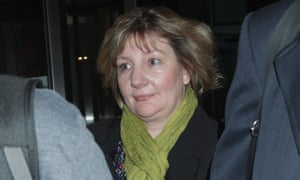
Donna Wood was cleared of falsification but the panel found she was aware of Cafferkey’s higher temperature and had failed to escalate the situation. Photograph: Yui Mok/PA

Wood denied she had falsified Cafferkey’s temperature, which a fellow volunteer recorded as over 38C, a degree higher than average body temperature and a potential early warning sign of Ebola. The panel cleared her of falsification, but found she was aware of Cafferkey’s higher temperature and had failed to escalate the situation.


Later, the doctor who took Cafferkey’s temperature raised the issue with an infectious diseases expert in their group and they agreed that Cafferkey should return to the screening area.


Her temperature was taken three more times by the lead clinician on the PHE team, Deepti Kumar, but she told the disciplinary hearing that she had not been told Cafferkey had taken paracetamol, which can mask a high temperature. Kumar then cleared Cafferkey to make her connecting flight to Glasgow.


The manager of the screening team, David Carruthers, a former police officer, told the panel that Cafferkey had told him she had taken paracetamol and that he had passed this information on to Kumar. However, he was not sure if the doctor had picked up that information.


It also emerged that the PHE manager had mistakenly phoned a hospital switchboard rather than an infectious disease team that was mandated to deal with any referrals from the screening team. Carruthers told the panel he had passed on enough information to those he spoke to get help but he never heard back.


All five of the volunteers were referred to their regulatory bodies by PHE following an early investigation into the screening on that day. The volunteer doctor who took Cafferkey’s temperature will go before a medical disciplinary tribunal in March.


Cafferkey faced being struck off but was cleared of any misconduct in a disciplinary hearing in September after an NMC panel found no evidence that she had set out to mislead PHE. Her solicitor at the time said she had found the proceedings stressful and upsetting.


Ebola nurse hits out at "blame culture" at Public Health England

Ebola nurse suspended after falsifying Pauline Cafferkey"s temperature

The nurse who was found to have concealed her colleague Pauline Cafferkey’s raised temperature before she tested positive for Ebola in 2014 has been suspended from practising for two months.


An independent Nursing and Midwifery Council (NMC) panel had found that Donna Wood was a low risk to future patients but that her fitness to practise had been impaired and a sanction was in the public interest.


Najrul Khasru, the chair of the panel, told Woods that an aggravating factor was that: “The seriousness of your misconduct … could have contributed to the risk of Ebola, a very serious and dangerous illness spreading in this country.”


The panel described Wood’s “dishonesty” as “extremely serious” but told her it was “not premeditated but a momentary lapse of judgment”.


The sanctions were imposed after an eight-day hearing in Stratford, east London, after Public Health England, which was running the screening process in Heathrow, reported her for allegedly falsifying a document recording Cafferkey’s temperature as one degree lower than it was.


Wood was returning from Sierra Leone, where she and Cafferkey had volunteered to work in an Ebola treatment centre at the peak of the epidemic in December 2014.


Khasru said her misconduct had been an “isolated incident in an otherwise unblemished nursing career … and unlikely to be repeated”.


The panel found that Wood had not misrecorded Cafferkey’s temperature on a health screening form, but said she had known it was elevated and had not escalated this despite knowing that a high temperature was a potential early warning sign for Ebola.


In not doing so, she had “put Ms Cafferkey and anyone coming into contact with her at at unwarranted risk of harm”, said Khasru.


In considering what sanctions to impose, Khasru said the panel took into account the stress and exhaustion of the nurses, who had been working up until the day they left Sierra Leone.


It concluded that striking Wood off would be have been disproportionate, and it was in the public interest to retain a highly skilled nurse. Wood currently works as an end-of-life nurse in Burslem, Stoke-on-Trent.


Among the mitigating factors were Wood’s previous good record and her “selfless act” to volunteer to help Ebola patients in Sierra Leone.


The panel also noted the “less-than-ideal environment in the screening area” at Heathrow airport when the passengers returned from west Africa on 28 December 2014.


Khasru noted that Wood had worked as a nurse for two years since the incident without any concerns raised during this period or throughout her 29-year career.


But the panel said her behaviour, though a momentary lapse of judgment, warranted a suspension in order to uphold the public’s confidence in the profession.


“The panel was mindful of its duty to protect the public interest. This includes the protection of patients and others, maintenance of public confidence in the profession and the regulatory body,” Khasru said.


It emerged during the disciplinary hearing that the group of five volunteers including Cafferkey and Wood had decided to take their own temperatures in order to get out of the “uncomfortable” and “chaotic” screening area more quickly.


Cafferkey and her colleagues were cleared to go through to the baggage area but Cafferkey later returned to the screening area after a doctor in their volunteer group raised concerns.


She was subsequently given the go-ahead to take her connecting flight to Glasgow, but the senior clinician on the team was not aware she had taken paracetamol, which can mask a high temperature, the tribunal had heard.


Ebola nurse suspended after falsifying Pauline Cafferkey"s temperature

24 Kasım 2016 Perşembe

Ebola nurse Donna Wood had unblemished record, tribunal hears

The nurse who was found to have concealed her colleague Pauline Cafferkey’s raised temperature before she tested positive for Ebola risked her life for others in Sierra Leone and has an otherwise unblemished record, a tribunal has heard.


Donna Wood’s lawyer told an independent panel at the Nursing and Midwifery Council that he accepted their findings but said her actions amounted to a brief “lapse of judgment” by a professional who had given almost 30 years of “distinguished” service to the NHS.


Ben Rich was speaking the day after Wood had been found guilty of misconduct following allegations that she knew Cafferkey had a high temperature and that she failed to escalate this during the screening process at Heathrow airport when they returned from six weeks volunteering in Sierra Leone in December 2014.


Before the panel retired to consider whether her misconduct amounted to an impairment in the nurse’s current fitness to practice, Rich told them: “On your findings it would be incorrect to find that any of those professionals, Donna Wood included, really thought that Pauline Cafferkey had Ebola.”


He told the panel that several witnesses including the lead clinician on the screening team, Deepti Kumar, had said that Cafferkey did not seem unwell on the day.


“Had there been the slightest suspicion that actually Pauline Cafferekey was ill, you know that witnesses you found to be honest, thought that Pauline Cafferkey seemed completely well,” Rich said.


Cafferkey initially passed the screening process after her temperature was found to be over 38C but was recorded on a form as normal. When she returned to the screening room her temperature was taken three more times and found to be normal.


Cafferkey had told the manager of the screening process, David Carruthers, a former Metropolitan police officer, that she had taken paracetamol about an hour before, which could have masked her real temperature.


But Carruthers, who had no clinical training, did not understand the significance of this and failed to pass the information on to Kumar, who was assessing Cafferkey in the second screening.


Rich pointed out that Kumar was among several witnesses who had nonetheless said that Cafferkey appeared well despite her temperature.


He told the panel on Thursday that the findings amounted to a “momentary lapse of judgment in a nurse who has an otherwise distinguished record of service to the NHS, to the public, a distinguished period of service to Ebola patients before this during which time she risked her own life for the benefit of others”.


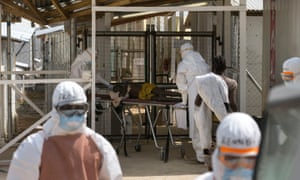
An Ebola treatment centre outside Freetown, Sierra Leone, in December 2014.


An Ebola treatment centre outside Freetown, Sierra Leone, in December 2014. Photograph: Baz Ratner/Reuters

Wood was brought before the NMC on three misconduct charges, including recording Cafferkey’s temperature reading dishonestly in order to hide it from public health officials.


It transpired during the hearing that the group had decided to take their own temperatures because the screening team were not equipped to do so. They had run out of screening forms and only had four screening cubicles for about 50 people.


On Wednesdsay the NMC found that she had not recorded an incorrect temperature as alleged but found that she had suggested that Cafferkey’s temperature be recorded lower so that the volunteer group could leave the “uncomfortable” and “chaotic” area more quickly.


Wood is facing a professional sanction, which could involve being struck off or a suspension.


Aja Hall, the case presenter for the NMC, told the panel the case was “particularly serious” as “Pauline Cafferkey was in the starting stages of Ebola and in an extremely busy and public place”.


She said it was “well established” that a high temperature was the “first sign that there may be infection which is why so much significance was placed on the taking of temperature, both in Sierra Leone but more crucially through the screening process at Heathrow airport”.


The panel is expected to to conclude its deliberations on Friday.


Ebola nurse Donna Wood had unblemished record, tribunal hears

Ebola nurse Donna Wood could be struck off over Cafferkey screening

A nurse once described as a hero after she volunteered to work in an Ebola treatment centre in Sierra Leone faces the possibility of being struck off after being caught up in a botched screening at Heathrow.


Donna Wood has been found by the Nursing and Midwifery Council to have concealed the high temperature of her fellow volunteer Pauline Cafferkey when they landed at Heathrow a day before the Scottish nurse tested positive for the virus.


An independent panel of the NMC had charged her with recording a temperature for Cafferkey one degree lower than it was during a “chaotic” screening process on 28 December 2014.


At the end of a six-day hearing, the panel found this was not proved, but found that she was guilty of two other charges – that she had known Cafferkey had a high temperature and dishonestly concealed this and had failed to escalate the situation, knowing that a high temperature could be seen as a first indicator of Ebola.


Najrul Khasru, the chairman of the panel, said it had fully accepted that Wood’s desire to get out of the area quickly was the primary motivation of her actions. He said: “The panel found you made the suggestion to record Ms Cafferkey’s temperature 37.2C with the intention to conceal that Ms Cafferkey had a temperature higher than 38C from PHE screening staff in order to allow yourself and your group to leave the area sooner rather than later, and deal with it later.”


The panel will now consider whether the findings against Wood are serious enough to involve a sanction, which range from being struck off to having conditions imposed on her future practice as a nurse in Stoke-on-Trent, where she works in end-of-life care.


Wood categorically denied that she falsified Cafferkey’s records and raised questions about the competence of the screening system, which was described as “chaotic”.


The panel heard that in an attempt to help doctors and staff conducting screening at Heathrow airport, the medics decided they would take their own temperatures. Wood said she recalled seeing volunteer doctor Hannah Ryan with the thermometer, and that she had held it up to her at least once.


She said she could not remember whether she had written on any screening forms herself.


The panel could not prove she had written the incorrect temperature on Cafferkey’s forms but said it was satisfied she had dishonestly suggested it be recorded as such.


After the group left the screening room and made it to the arrivals hall, Ryan reported Cafferkey’s high temperature to another doctor, who recommended the Scottish medic return to be screened again.


Cafferkey’s temperature was checked again three times by a Public Health England consultant and was found to be a maximum of 37.6C, meaning she was given the all-clear to travel on to Glasgow.


But at some point before getting to arrivals, Cafferkey had taken paracetamol, contributing to the lower readings.


Pauline Cafferkey


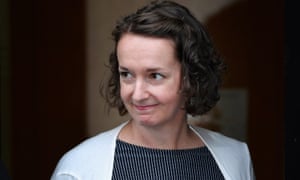
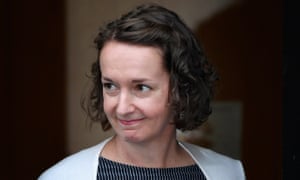
Pauline Cafferkey was cleared of misconduct in September. Photograph: Jeff J Mitchell/Getty Images

PHE says it learned lessons from the Cafferkey case, but denies its process was chaotic or deficient or that its system had failed to detect the one person who did come into the UK on a commercial airline carrying the Ebola virus.


“Screening was not designed to catch someone with Ebola. It was about getting relevant information from people and giving them information so they could be clinically referred if necessary,” said a spokeswoman.


Cafferkey, who nearly died twice from Ebola-related complications, also faced NMC disciplinary proceedings but was cleared of all misconduct after a hearing in September.


Wood was brought before the employment tribunal after a third volunteer told PHE, the body that designed the screening process, that Wood had falsified Cafferkey’s temperature on the form she had to fill out on arrival at Heathrow.


The tribunal raises questions about the efficacy of the screening process. With the disease out of control in west Africa at the time, there was fear and panic in some quarters that the virus could easily be brought into the UK by plane.


About 14,500 people, including aid workers, medics, press and Sierra Leoneans, arrived in Heathrow during the Ebola crisis.


The PHE contended that it was the nurses’ fault Cafferkey passed through undetected as they did not comply with the screening process, referring them to their regulatory authorities. However, those who gave evidence at the NMC spoke of deficiencies in the screening process.


Only half the team in Heathrow on the day had any clinical background. The clinical lead, Deepti Kumar, told how volunteers from the “Cabinet Office” and other government departments were drafted in to the process.


Kumar and the screening manager, David Carruthers, a former police officer, told the panel they were not prepared for the high number of volunteers returning, despite the heavy publicity surrounding their trip to Sierra Leone.


Carruthers admitted they were a bit “disorganised” on the day and that they ran out of screening forms and monitoring kits and had just four screening cubicles for about 50 people.


The future of volunteer doctor Ryan is still in the balance as she faces a separate Medical Practitioners Tribunal Service hearing on 20 March.


Ebola nurse Donna Wood could be struck off over Cafferkey screening

17 Kasım 2016 Perşembe

Nurse denies falsifying Ebola patient Pauline Cafferkey"s temperature

A nurse who faces being struck off over a botched Ebola screening in Heathrow airport has said it is “preposterous” that she would have concealed knowledge that Pauline Cafferkey was unwell.


Donna Wood, an NHS nurse who volunteered along with Cafferkey to work in Sierra Leone in 2014, said she would never have put her country, her family or herself in such danger.


She faces being struck off after being charged by the Nursing and Midwifery Council (NMC) with falsifying Cafferkey’s temperature as they passed through the Heathrow screening process on 28 December 2014.


“I absolutely dispute the allegation because if I had been aware of anybody having a temperature it would have been a complete danger, a red alert in my mind,” she said.


She said “alarm bells” would have gone off in her head and she would have immediately taken action if a colleague had had a high temperature, as this is the first symptom of Ebola.


It is alleged that Wood, a reluctant poster girl of the government’s Ebola volunteer recruitment drive, dishonestly recorded Cafferkey’s temperate as 37.2C when she knew it was 38.2C.


Pauline Cafferkey.


Pauline Cafferkey. Photograph: Jeff J Mitchell/Getty Images

Under the Public Health England protocols, anyone who presented themselves with a temperature above 37.5C should have been referred for further assessment by a special infectious diseases expert.


The charges were brought after an investigation launched by Public Health England two days after Cafferkey fell critically ill with Ebola.


A doctor in the returning volunteer group, Hannah Ryan, alleged that Wood had said she would write the temperature down as one degree lower so they could get out of the “chaotic” screening area and “sort it out” themselves later.


“It would be preposterous to even contemplate that I would allow myself to be put in danger, or someone else, or my family or my country,” Wood said. “I just spent six weeks protecting myself from contracting Ebola, ensuring my colleagues working around me were protecting themselves against Ebola. The reason I had gone out to Sierra Leone was to control the spread of Ebola. There is no way I would have let someone else be at risk,” she said.


Wood told an NMC hearing in Stratford, east London, that she had no recollection of filling in Cafferkey’s form, as alleged by a doctor who had previously given evidence. Nor did she know that Cafferkey had taken paracetamol, which could possibly mask an elevated temperature, she said.


She said she remembered that Cafferkey had said she was feeling “warm” when they got off the flight and went to the toilet “to freshen up”. Cafferkey had ascribed her feeling to the fact that she had slept wearing a hoodie on the plane.


Wood said she remembered very clearly telling Cafferkey not to take paracetamol because it could affect her temperatures recordings, which were universally used as the first barrier of infection prevention with checks taken several times a day while they were in Sierra Leone.


“As we were leaving the toilets, we were on a very wide corridor, a lot of people around us. She said it very clearly so that I heard her: ‘I think I’m going to ask Dr Hannah if I should take some paracetamol.’


“Absolutely without a second at all, I responded staight away: ‘Gosh, no, you mustn’t do that. That could mask any temperature or symptoms,’” said Wood.


She told the NMC independent panel that none of the protocols of infection prevention and control were in place at Heathrow. Temperatures of passengers arriving at the airport were not taken as they disembarked from the plane from Sierra Leone, she said.


Although the volunteers were classified as being at the highest Ebola risk level under Public Health England protocols because they had worked on the frontline, Wood told how she was allowed to queue up with hundreds of other passengers arriving from all over the world in passport control before being taken to the Public Health England screening area, where she was again in close proximity to members of the public.


At the time America and Europe were gripped by panic over the potential spread of Ebola from west Africa to other parts of the globe.


The Ebola virus is spread through bodily fluids including saliva and sweat, and those who had worked in Sierra Leone were operating under the same strict “no touch” protocols as the public under the state emergency laws.


Wood told how the volunteers were banned from going to shops or churches or meeting locals in Sierra Leone and were under strict instructions to stay in the beach resort hotel that had been hired by Save the Children, which ran the Kerrytown hospital they were working in.


Describing how she felt standing close to others who had come from Sierra Leone in the screening area, she said: “I remember this wasn’t right. Through my training, you weren’t allowed go out to shops, churches, and here we were in a crowded area with people I didn’t know. They had come from Sierra Leone but thoughts were entering my head: could this person be unwell? Or could this person have been with someone who had Ebola?


“I remember being uncomfortable being that close in a crowded area.”


Under cross-examination Wood said she could recall a doctor holding up a thermometer but no one called out a temperature reading. She said she would have been gripped by panic if she had seen a temperature of 38.2C as it would have been an early warning.


“I would have been putting them at risk, myself at risk, my family at risk, all their families at risk, everyone in that room at risk”, which was something she would not have done “bearing in mind we had just had six weeks seeing horrific deaths”, she said.


Nurse denies falsifying Ebola patient Pauline Cafferkey"s temperature

14 Kasım 2016 Pazartesi

Nurse may be struck off over Pauline Cafferkey temperature reading

A British medic who helped fight the spread of Ebola in Sierra Leone two years ago faces being struck off or suspended from nursing after allegedly misleading doctors about her colleague Pauline Cafferkey, the Scottish nurse who nearly died twice from the virus.


Donna Wood, a senior sister with more than 30 years’ experience, is accused of failing to record Cafferkey’s elevated temperature when she arrived at Heathrow from west Africa on 28 December 2014.


A raised temperature can be the first sign of Ebola fever, and Cafferkey went on to develop one of the worst cases on record for people treated in the west.


At the Nursing and Midwifery Council (NMC) in Stratford, east London, on Monday, Wood faced three misconduct charges over the botched screening.


She allegedly recorded a temperature 1C lower than it actually was during a screening process at Heathrow, was “dishonest” because she knew this was wrong and failed to escalate the potential marker for Ebola appropriately.


Opening the hearing, the case presenter, Aja Hall, told an NMC panel that Cafferkey’s temperature had been taken by a volunteer colleague, Hannah Ryan, a doctor who had returned from Sierra Leone with Wood and Cafferkey.


Pauline Cafferkey.


Pauline Cafferkey. Photograph: Getty

The first reading from her left ear was 38.2C, above the average body temperature of 37C and higher than the threshold of 37.5C that requires further assessment by a consultant in infectious diseases.


Ryan had stated that she was in “shock” after taking Cafferkey’s temperature in her left and right ears and finding it raised, Hall said. “I told her to stay calm, we were both a bit panicky,” said Ryan.


The hearing was told that an elevated temperature was considered the body’s first reaction to Ebola, which can kill within five days.


“I asked Pauline if she was feeling okay? She said she was feeling fine,” Ryan told the hearing in a written witness statement. “I stood there in shock. It was like I was paralysed. I had no clear thought process. Ebola is such a horrible disease that every time you have a high temperature you worry, even when you know there’s no reason to.”


Ryan said only the three medics were present and that Wood “broke the inertia by saying something like ‘I’m just going to write it down as 37.2 degrees’” so they could “get out of here and sort it out”.


The three medics had returned to a screening area described by various witnesses as “busy, dangerous and even chaotic by some of those present”, Hall said.


They had been asked to fill in a Public Health England form and wait for a PHE medic to taket their temperature. Amid the chaos, they decided to record their own temperatures, the hearing heard.


Cafferkey was subsequently allowed leave the PHE screening area and enter the arrivals section because her form did not state that her temperature was above 38C. At some point Cafferkey had taken paracetamol, the NMC panel heard.


Ryan meanwhile informed Dr Sharon Irvine, another volunteer doctor returning from Sierra Leone. Irvine questioned Cafferkey about her temperature in the arrivals hall and advised her not to proceed with her onward flight to Glasgow.


Cafferkey was then returned to the screening area where her temperature was taken three further times at 15-minute intervals. Only one of those readings was above the threshold of 37.5C and she was allowed to fly home.


That night Cafferkey fell seriously ill and it later emerged that she had one of the highest Ebola virus loads on record.


The NMC claims that Wood’s “fitness to practice is impaired by reason of your misconduct”. Wood’s counsel, Ben Rich, denied the charges on her behalf.


The hearing heard that Cafferkey had remarked that she had felt warm on the plane home, but later said she had said that as a joke. The group of volunteers on the plane with her, including Wood, had “ascribed it to her sleeping in a hoodie on the plane”.


The hearing heard that some weeks later, Wood had written in an email to PHE that “Pauline Cafferkey said to me she had woken on the plane … and she had said she felt very hot and she did not mention having a fever”.


In 2014, Wood, who works at Haywood hospital in Burnslem, Staffordshire, was the face of the government’s campaign to get volunteers to work in Sierra Leone to help stop the spread of the worst Ebola outbreak in history.


The then international development secretary, Justine Greening, said at the time: “These NHS heroes, like Donna, spending Christmas on the Ebola treatment wards are an absolutely essential part of our efforts to contain, control and defeat this terrible disease.”


The misconduct hearing, which is scheduled to last until 25 November, continues.


Nurse may be struck off over Pauline Cafferkey temperature reading

Nurse faces tribunal over Pauline Cafferkey temperature reading

A nurse who was lauded by the government as one of Britain’s heroes of the Ebola epidemic is facing a disciplinary tribunal, accused of concealing the high temperature of her colleague Pauline Cafferkey, who developed Ebola on her return from Sierra Leone.


Senior sister Donna Wood was the face of the volunteers in Medics Behind the Mask, an online feature made by the Department for International Development. She and Cafferkey were among the first 70 volunteers to leave the UK and spend Christmas 2014 in the Ebola treatment units of Sierra Leone, and were publicly thanked by Justine Greening, the then international development minister.


But Wood’s career could end over events at Heathrow airport when the volunteers flew home on 28 December 2014. All the returnees had to be screened to ensure they did not have a high temperature that might be the first sign of Ebola fever. Chaotic conditions and long delays were described in the screening unit, with too few staff to process the exhausted volunteer nurses and doctors, so they took each other’s temperatures.


Pauline Cafferkey after being cleared of misconduct charges.


Pauline Cafferkey after being cleared of misconduct charges. Photograph: Jeff J Mitchell/Getty Images

When Cafferkey’s temperature was found to be high, Wood is alleged to have recorded it on the form as normal, saying they would then “get out of here and sort it out”. They were then allowed to leave the screening area.


Cafferkey later told another volunteer she had a high temperature and returned to the screening area, but she had taken paracetamol and her temperature was found to be within the normal range, so she was cleared to fly to Scotland, where she was taken ill.


Cafferkey was accused by the Nursing and Midwifery Council of misconduct, but was cleared on the grounds that she had already become too ill to understand the implications of her actions.


After she became ill the RAF flew her to a special isolation unit at the Royal Free hospital in London. Cafferkey came close to death but recovered. She then nearly died again when she later developed meningitis as a result of the Ebola virus.


Before travelling to Sierra Leone, Wood was a senior sister at Haywood hospital in Burslem, near Stoke on Trent, and had been nursing for 29 years.


“I’ve always been a caring person – that’s what my mother said. So it always felt like nursing was my vocation. It always will be,” she is quoted as saying on the DfID website.


“I’d been following the stories on the news and I felt I had to do this straight away. I could use the skills I’ve got to make a difference and join a team to help bring the disease under control … You don’t think of it as being heroic. It’s just what we do.”


The misconduct hearing is scheduled to last for eight days.


Nurse faces tribunal over Pauline Cafferkey temperature reading

6 Ekim 2016 Perşembe

Ebola nurse Pauline Cafferkey tests negative for virus

Pauline Cafferkey has tested negative for the Ebola virus, NHS authorities have said, after she was rushed to hospital for a fourth time since her return from Sierra Leone in 2014.


The 40-year-old nurse underwent further tests under the care of the infectious diseases team at Queen Elizabeth University hospital, Glasgow, where she was taken under police escort on Thursday morning.


A spokesperson for the hospital said: “Following a detailed assessment we can provide reassurance that there is no risk to the public.”


Police Scotland confirmed that they had provided an escort “as a matter of course” for the ambulance taking Cafferkey from her home in South Lanarkshire at 9.30am.


Nicola Sturgeon (@NicolaSturgeon)

Sending my very best wishes to Pauline Cafferkey. She has already suffered way too much – & all for trying to help others. Thoughts with her


October 6, 2016


Cafferkey, 40, first became ill from the Ebola virus on her return from Sierra Leone in late December 2014. She flew on from Heathrow to her home in Glasgow, where she was admitted to hospital with a fever later confirmed as Ebola infection. She was flown to London’s Royal Free hospital, which has a specialist isolation unit for Ebola patients.


She nearly died, but when she was pronounced out of danger in January 2015, it was thought the virus had been cleared from her system. That October, however, she became critically ill again and was readmitted to the Royal Free. Her case astonished experts, as the first in which the virus had lurked in her brain or spinal cord undetected and then attacked again, causing near-fatal meningitis.


She has had long-term problems as a result of the second attack, including muscle weakness in one leg, which has meant she is unable to run as she used to do.


Nurse Pauline Cafferkey relieved to be cleared of misconduct over Ebola virus – video

A third admission to the Royal Free turned out to be a false alarm, but the experts have no idea whether the Ebola virus is still lying undetected in her body because too little is known about the virus and the disease.


Three weeks ago, Cafferkey was cleared by her regulatory body, the Nursing and Midwifery Council, which had investigated allegations that she concealed her high temperature at Heathrow on her return from Sierra Leone.


The NMC, which could have struck her off the nursing register, said Cafferkey’s judgment had been compromised by her developing illness, and so she could not be held responsible for putting the public in danger. Cafferkey said she reported her high temperature, but was allowed to fly on to Glasgow.


Ebola nurse Pauline Cafferkey tests negative for virus

31 Ağustos 2016 Çarşamba

From a German doctor to a Dutch nurse: Europeans playing a vital role in the NHS

Some 57,000 Europeans are employed by the NHS, and their position has looked increasingly uncertain since Britain voted to leave the EU. It’s an issue highlighted by the Institute of Public Policy Research, with the thinktank warning that the health service could collapse if those European workers left the UK. Chris Murray, who compiled the report, said: “It is critical to public health that these workers do not seek jobs elsewhere. All EU nationals who work for the NHS, or as locums in the NHS system, should be eligible to apply for British citizenship.”


So, how do European nationals working for our health service feel post-Brexit? Six of them explain.


Spanish pharmacist


Ricardo, 38, Bournemouth: ‘I am not sure how the NHS will cope without Europeans’
After Brexit, me and my wife started thinking of places to go: Spain, Scotland, Canada. My wife is Scottish and works in academia, so we need to find somewhere we could both work. I feel betrayed by the referendum vote, and in some ways it looks like we are going to be allowed to stay for as long as we are useful. This country has decided to shut its doors to globalisation – despite the fact that it’s here to stay.


In my department, more than 50% of the pharmacists come from the EU


Ricardo


I know not everyone voted for Britain to leave the EU because of immigration, but it played a huge part for a lot of people. It makes me feel unwelcome, but I like my life here: I have a great job and met my wife in Britain. My future here now seems very uncertain, which is a shame because Europeans are very important to the NHS. Just to give you an example: in my department more than 50% of the pharmacists come from the EU. Likewise, most hospitals have hired (or are hiring) nurses from Europe. I am not sure how the NHS will cope without us.


Nurse from the Netherlands


Helena, 52, Wales: ‘The way I feel now I am not sure I would even accept British citizenship’
It has now been around two months since Brexit. At the moment I still feel like I am going through the five stages of grief: denial, anger, bargaining, depression and acceptance. Why should I have to apply for dual nationality and pay thousands to do so? I feel as though the goal posts have been shifted and I can no longer remain here on the same terms on which I arrived from the Netherlands in 1995. To be honest, the way I feel now I am not sure I would even accept British citizenship if offered it. I do not really feel welcome in the UK any more, and I am not sure if I will stay or go.


NHS nurse

Shortly after the referendum result was announced my husband got a letter from the university where he works to say they would support EU-citizen-staff and family members who wanted to get permanent citizenship. I have not yet heard anything from my employer, despite being an NHS nurse for more than 14 years. Maybe EU nationals are not important, but this is surprising given the high number who work here. I know that without us the NHS would be unsustainable. There is no budget, investments and slack in the NHS to grow, develop and modernise. A few weeks ago, when I was back in the Netherlands, I had to accompany a family member to hospital and the healthcare service was so much better. It feels tempting to go back home.


Quality improvement officer from Germany
Chuck, 52, London: ‘With 20 years of experience in the NHS, I have a lot to offer this country’


With 30 years of healthcare experience (20 of it in the NHS) I have a lot to offer this country. But I am one of many. We have nurses, doctors and therapists from all countries. Clinical innovation, for example, seems to be supported by high numbers of academic clinicians from Greece, Spain and Italy.


Even if we are being made to feel welcome at work, I no longer feel that welcome on on the streets


David


I am a German expat and have been living in Britain for the past two decades because I like the country, the people, the culture and the NHS. NHS executives have been very supportive and sent messages saying that European colleagues are valued, needed and welcome here. However, the government’s position is not clear, and my wife and I worry about changes in the public mood. Even if we are being made to feel welcome at work, we no longer feel that welcome on the streets. Because of this, we are thinking about leaving Britain. The referendum was the most painful reminder that I don’t have a vote in the country I live in and contribute to.


Doctor from Germany


Stephanie, 42, Portsmouth: ‘The UK can’t afford to loose more committed staff members’


I am in the process of applying for a permanent residency card, which I require if I want to apply for naturalisation (the legal act by which a non-citizen in a country may acquire citizenship). However, currently the German government only allows dual citizenship if the other country is an EU country, and I don’t want to give up my German passport – hopefully I can sort it out before Article 50 is triggered. The whole process is so complex and expensive, however, almost as though it’s designed to put people off. I am a German GP and married to a British citizen. My son already has dual nationality and I feel this is my only option.


GP treating patients

Although my primary degree is from a German university, I did my postgraduate and general practice training in the UK. There is a shortage of GPs at the moment, and Jeremy Hunt’s plan was to recruit 5,000 from abroad to solve the crisis. It is therefore vital that EU nationals working here as doctors are encouraged to stay. The UK can’t afford to lose more committed staff members.


Cardiologist from Austria


Daniel, 43, Surrey: ‘I feel upset that some of the people I treat want me out of the country’


I am already looking for positions in other European countries. Despite the fact that I love my job, my colleagues and my patients, I do not feel that this is the place for my children to grow up. Their opportunities have been taken from them, and it only looks like things will get worse.


EU nationals are critical for the NHS. I come from Austria, and many of my fellow doctors come from all over Europe. We rely on nurses from across the EU, who are all highly qualified and motivated to do their work. The UK alone simply does not have enough trained staff to keep up with the needs of its citizens, and there are too few in training programmes. The staffing problems will just get worse.


I feel upset to know that some of the people I treat want me out of “their” country. I feel that they probably call me all sorts of names behind my back. We Europeans should all work together towards a brighter future for the whole world.


Surgeon from Austria
Peter, 35, Liverpool: ‘I will serve the NHS as long as I can’


My plans, post-Brexit, are to continue serving the people of the UK via the NHS as long as the government allows me to. I would not take British citizenship now, however, if offered it. I was eligible for British citizenship 10 years ago, but I have no interest in giving up my own EU citizenship, especially after the referendum. I would not want to limit my access and rights of free movement in the EU. Working conditions in the NHS are in a steady decline, and many EU countries are opening their arms to fully trained doctors and nurses.


  • Some names have been changed


From a German doctor to a Dutch nurse: Europeans playing a vital role in the NHS

22 Ağustos 2016 Pazartesi

I fail patients in my job as a psychiatric nurse and leave them feeling worse

It’s 5am. An hour ago the bed manager called me and asked me to ask a suicidal woman, who had already been in a busy London A&E department for 11 hours, if she would agree to being admitted to a hospital in Manchester.


I didn’t think it appropriate to wake someone at such a time in the morning but allowing her to sleep was not an option because we need the bed space. I approach the patient; she’s already awake. “I haven’t slept all night, it’s so noisy here” she tells me. “I feel awful; can’t I just go home?” I apologise and explain that the only available psychiatric bed is in Manchester. “No, it’s too far from my family”. I tell her I understand. She starts to cry; I want to cry with her. She feels depressed and worthless and I haven’t been able to help. How am I, as a psychiatric nurse, caring for her and helping lift her out of the awful dark place she finds herself in? I think about people who are in physical pain and ask myself whether we would expect them to wait without any treatment for over 11 hours.


Related: Working in mental health is not like fixing broken legs


I remember a recent patient who had been in the department over 24 hours waiting for a psychiatric bed. He was socially isolated and was hearing voices telling him to end his life. We moved him to a noisy cubicle which made the voices worse. He was in distress, I tried to reassure him. He told me: “I just want to go home, it is making me worse being here”.


I was told later that he had left the department. I frantically called him and fortunately he answered to tell me he had returned home. He said he was frightened but that it was worse in the hospital. I felt immense guilt – this isn’t why I became a nurse. What if he becomes ill again in the future? He will feel reluctant to return to A&E, the place that his community mental health team tell him to go to be safe.


A young man with autism, who has been in our mental health assessment room over 24 hours, is suffering from psychosis. The walls are bare, the air conditioning has broken, the lights, which are movement sensitive and without a switch, remain on throughout day and night making rest impossible. He is covered in sweat and he is terrified. The long wait and his surroundings make him increasingly more distressed. He is eventually sedated – not for the treatment of his condition but rather to alleviate the stress we have caused him.


I tell both him and his mother that the nearest psychiatric bed is 200 miles away. His mother starts to cry; due to the nature of his condition, he finds change very difficult.


Some of the other nurses have children and start to cry themselves. The treatment and care we offer is not of the standard we would expect for our own family and loved ones. The patient’s mother tells us she doesn’t want to leave his side. We talk to senior management, but there is nothing that can be done.


Related: Working as a mental health nurse in today’s NHS drained me of compassion


I watch as the young man is separated from his mother and forced into secure transport – a cage in the back of a vehicle, with a narrow sideways facing seat, and without adequate leg room; it’s hardly fit for a brief journey, let alone one of four hours. I feel ashamed. We have failed this young man and his family.


We take a referral for a patient who wants to end their life. My heart sinks because the bed manager has told us there are no beds. I have to look the patient and their family in the eye and apologise over and over again. I see patients who are acutely disturbed, suffering because of our inability to provide them with appropriate care. We try our best, but there are only two of us on duty – sometimes we have four people waiting for an inpatient bed and 10 patients waiting to be seen. We have to rely on security, who try but are not trained in mental healthcare and sometimes add to the patient’s distress.


I witness human suffering every day and am often amazed by patients’ own resilience in the face of such adversity. Hospital staff are their family, their voice and if we don’t raise this issue for them, it will continue because it is those who speak the loudest in the NHS that are often heard. Our patients already feel worthless and as though they are a burden; if we continue to reinforce that, rates of mental illness and suicide will continue to increase.


In the UK, the Samaritans can be contacted on 116 123. In the US, the National Suicide Prevention Hotline is 1-800-273-8255. In Australia, the crisis support service Lifeline is on 13 11 14. Hotlines in other countries can be found here.


If you would like to write a blogpost for Views from the NHS frontline, read our guidelines and get in touch by emailing sarah.johnson@theguardian.com.


Do you work in the NHS? Please take our survey and tell us whether bullying is a problem and how it affects your work


Join the Healthcare Professionals Network to read more pieces like this. And follow us on Twitter (@GdnHealthcare) to keep up with the latest healthcare news and views.


I fail patients in my job as a psychiatric nurse and leave them feeling worse