Feeling etiketine sahip kayıtlar gösteriliyor. Tüm kayıtları göster

17 Ocak 2017 Salı

UK midwife shortage leaves women feeling like cattle, report finds

A chronic shortage of midwives across the UK means women in labour are left feeling unsafe and frightened or as if they are being treated “like cattle” or “on a conveyor belt”, a new report has found.


In a study of 2,500 women who have given birth since 2014, half were found to have experienced at least one “red flag” event such as not getting timely access to pain relief due to insufficient staffing levels.


The research conducted by the National Childbirth Trust (NCT) and the National Federation of Women’s Institutes (NFWI) found that since a similar report four years ago there has been “scant progress” in women’s experiences of giving birth under the NHS.


A red flag problem is defined by the National Institute for Health and Care Excellence (Nice) as a “warning sign that something may be wrong with midwifery staffing”.


Problems include delays of up to an hour or more in washing or suturing, medication doses being missed, delays of 30 minutes or more in getting pain relief, or when one midwife is not able to provide continuous one-to-one care and support to a woman during established labour.


The report found 17% of women did not get such one-to-one care from midwives, while more than a third who required or received pain relief experienced a delay of 30 minutes or more. Some even reported suffering post-traumatic stress as a result of the way they were treated while giving birth.


Health experts said the findings should serve as a warning to the government that staffing levels are at crisis point. Elizabeth Duff, a senior policy adviser at the NCT, said: “Our research has exposed a crisis in maternity care. No woman should have to suffer a red flag event when bringing a baby into the world. Severe staffing shortages must be acted on so that every family receives an acceptable level of care.”


The study found that 89% of women saw between one and six midwives during their pregnancy with most seeing between one and four. While 88% of women had never met any of the midwives who looked after them during their birth, just over half of those said it did not make a difference to them, mainly due to the professionalism of the midwives caring for them. But 12% said this made them feel alone and vulnerable and 6% said it made them feel unsafe.


Some women wrote about feeling like cattle or a machine, while others reported that a negative birth experience had had a lasting impact on them. One said: “I received a very ‘robotic’ care. It wasn’t very personal and I felt like just another person on the conveyor belt.”


Another said: “I wasn’t treated as a human. I was just a product on a conveyor belt. I was not respected and my birth has left me suffering post-traumatic stress disorder.”


One pointed to staffing issues, saying: “My chosen hospital ward and adjoining birth centre were extremely busy, or so I kept being told on the phone, which resulted in me having an unplanned home birth.”


Another new mother expressed her disappointment at being unable to have the labour she wanted because of “staffing issues”. She said: “There was no room for me on the delivery ward. I ended up giving birth in the antenatal ward, which meant I couldn’t get either a water birth or an epidural.”


Once women had given birth, almost one in five (18%) said they had not seen a midwife as often as they needed, with 36% saying this had caused them great concern. More than a third of women said the diagnosis of a health problem had been delayed due to lack of postnatal care.


Marylyn Haines Evans, the chair of public affairs at the NFWI, said: “The findings from this report show that chronic midwife shortages, an estimated 3,500 in England alone, continue to undermine the delivery of high-quality care for women and their families.”


Louise Silverton, the director for midwifery at the Royal College of Midwives, said the report should be a “red flag event for this government”. She said: “The fact that half of women have experienced a red flag event is hugely worrying. It is a sign of services under too much pressure, with too few resources and not enough staff.”


UK midwife shortage leaves women feeling like cattle, report finds

1 Ekim 2016 Cumartesi

Secret Teaching: I love teaching, but I"m tired of feeling like a failure

When I began teaching 18 years ago, I poured everything I had into it. I started at a tough inner-city Manchester school. I ran after-school football and film clubs, and produced Shakespeare plays with 8- to 11-year-olds. I was glad to be observed 10 times in a gruelling five-day Ofsted visit (it was 1998). I put so much in and got so much out – I was young, single and I didn’t care about late nights and early mornings.


A few years later I moved to another challenging school down the road, as deputy headteacher. The budget was incredibly tight which meant I had zero management time and taught all week; this was before the luxury of PPA (the time that’s set aside for teachers to do planning, preparation and assessment work). I always had a foot out of the door and an ear cocked for trouble in the corridor – even more so when I spent a term as acting headteacher when the excellent head was in hospital.


I think that’s when my downward spiral started. I’d taken on a class where I had to field chairs being thrown at me, coerce one pupil from the roof and fend off physically abusive parents. I would become frustrated and angry when things went badly (being punched by a parent, the local authority demanding that results improve) and completely elated when things went well (transforming 30% of pupils achieving level 4 into 70%, seeing special educational needs and disaffected year 6 students performing Richard III).


Within three years, I hit a wall. I went back to my hometown, to teach in a successful primary in a leafy, middle-class area. I thought it would give me a chance to work in a less stressful environment. I was wrong. The pressure – in school, from the government and families – was different, but equally debilitating.


It was an outstanding school and the local education authority (LEA) had expectations. “Yours is one of the better schools,” we were told. “For us to reach our target, we need you to up your Sats results, because the other schools in the area are rubbish.” I’m paraphrasing, but the message was clear. I made an initial impact and was expected to carry the year 6 can. It wasn’t the school or the staff’s fault, it’s just the way things were and still are.


Each morning I would wake up feeling sick to my stomach. I spent my lunchtimes alone, sitting outside in the street, struggling to eat the lunch I’d prepared. There was just so much to do.


After a spell in hospital, I was diagnosed with severe depression. School wasn’t the only factor, but it tipped the balance. I was given months off work, saw psychiatrists and other mental-health professionals and had to fight to get back into the classroom nine months later. I managed it (in large part thanks to my now-wife, who I met through this illness) but it was a pyrrhic victory.


The next eight years had some highs – days when I really thought I was “winning” and that I’d taught well – but there were also more lows. There were times when I felt I was sinking; my to-do list was never-ending and parents irrationally expected their children to be level-pegging with their peers without understanding that people children learn at different rates.


When my son was born two years ago, I realised that family is more important to me than the increasingly demanding job that teaching has become. It’s more important than juggling targets and trying to keep up with the latest short-sighted initiative from Whitehall.


Now I’m a supply teacher, and am lucky that I can survive on the money. Half the wages, 10 times the happiness. I don’t plan, I’m home by 4pm and the job just pays the bills. And my mental state is so, so much improved.


I loved teaching and I miss it profoundly. But my mental health means I just cannot juggle all the balls necessary to be good at it. I demand a lot of myself as a teacher and the demands placed on the teaching profession – by local authorities, Whitehall, governing bodies, heads, parents – mean that I feel a failure far more often than I feel that I am of worth.


Secret Teaching: I love teaching, but I"m tired of feeling like a failure

25 Ağustos 2016 Perşembe

A year after face transplant, man says he is "feeling great" – video

Patrick Hardison, whose face burned off 15 years ago when a roof of a home on fire collapsed on him, is doing well after his face transplant surgery. Hardison was the subject of media attention last year when he was operated on for 26 hours at New York University’s Langone medical center. He received the face of David Rodebaugh, 26, who was pronounced brain-dead after a cycling accident


A year after face transplant, man says he is "feeling great" – video

22 Ağustos 2016 Pazartesi

I fail patients in my job as a psychiatric nurse and leave them feeling worse

It’s 5am. An hour ago the bed manager called me and asked me to ask a suicidal woman, who had already been in a busy London A&E department for 11 hours, if she would agree to being admitted to a hospital in Manchester.


I didn’t think it appropriate to wake someone at such a time in the morning but allowing her to sleep was not an option because we need the bed space. I approach the patient; she’s already awake. “I haven’t slept all night, it’s so noisy here” she tells me. “I feel awful; can’t I just go home?” I apologise and explain that the only available psychiatric bed is in Manchester. “No, it’s too far from my family”. I tell her I understand. She starts to cry; I want to cry with her. She feels depressed and worthless and I haven’t been able to help. How am I, as a psychiatric nurse, caring for her and helping lift her out of the awful dark place she finds herself in? I think about people who are in physical pain and ask myself whether we would expect them to wait without any treatment for over 11 hours.


Related: Working in mental health is not like fixing broken legs


I remember a recent patient who had been in the department over 24 hours waiting for a psychiatric bed. He was socially isolated and was hearing voices telling him to end his life. We moved him to a noisy cubicle which made the voices worse. He was in distress, I tried to reassure him. He told me: “I just want to go home, it is making me worse being here”.


I was told later that he had left the department. I frantically called him and fortunately he answered to tell me he had returned home. He said he was frightened but that it was worse in the hospital. I felt immense guilt – this isn’t why I became a nurse. What if he becomes ill again in the future? He will feel reluctant to return to A&E, the place that his community mental health team tell him to go to be safe.


A young man with autism, who has been in our mental health assessment room over 24 hours, is suffering from psychosis. The walls are bare, the air conditioning has broken, the lights, which are movement sensitive and without a switch, remain on throughout day and night making rest impossible. He is covered in sweat and he is terrified. The long wait and his surroundings make him increasingly more distressed. He is eventually sedated – not for the treatment of his condition but rather to alleviate the stress we have caused him.


I tell both him and his mother that the nearest psychiatric bed is 200 miles away. His mother starts to cry; due to the nature of his condition, he finds change very difficult.


Some of the other nurses have children and start to cry themselves. The treatment and care we offer is not of the standard we would expect for our own family and loved ones. The patient’s mother tells us she doesn’t want to leave his side. We talk to senior management, but there is nothing that can be done.


Related: Working as a mental health nurse in today’s NHS drained me of compassion


I watch as the young man is separated from his mother and forced into secure transport – a cage in the back of a vehicle, with a narrow sideways facing seat, and without adequate leg room; it’s hardly fit for a brief journey, let alone one of four hours. I feel ashamed. We have failed this young man and his family.


We take a referral for a patient who wants to end their life. My heart sinks because the bed manager has told us there are no beds. I have to look the patient and their family in the eye and apologise over and over again. I see patients who are acutely disturbed, suffering because of our inability to provide them with appropriate care. We try our best, but there are only two of us on duty – sometimes we have four people waiting for an inpatient bed and 10 patients waiting to be seen. We have to rely on security, who try but are not trained in mental healthcare and sometimes add to the patient’s distress.


I witness human suffering every day and am often amazed by patients’ own resilience in the face of such adversity. Hospital staff are their family, their voice and if we don’t raise this issue for them, it will continue because it is those who speak the loudest in the NHS that are often heard. Our patients already feel worthless and as though they are a burden; if we continue to reinforce that, rates of mental illness and suicide will continue to increase.


In the UK, the Samaritans can be contacted on 116 123. In the US, the National Suicide Prevention Hotline is 1-800-273-8255. In Australia, the crisis support service Lifeline is on 13 11 14. Hotlines in other countries can be found here.


If you would like to write a blogpost for Views from the NHS frontline, read our guidelines and get in touch by emailing sarah.johnson@theguardian.com.


Do you work in the NHS? Please take our survey and tell us whether bullying is a problem and how it affects your work


Join the Healthcare Professionals Network to read more pieces like this. And follow us on Twitter (@GdnHealthcare) to keep up with the latest healthcare news and views.


I fail patients in my job as a psychiatric nurse and leave them feeling worse

11 Ağustos 2016 Perşembe

"Brain training" technique restores feeling and movement to paraplegics

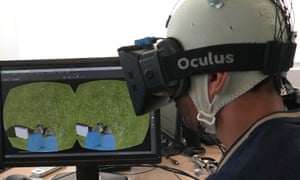
Eight paraplegics – some of them paralysed for more than a decade by severe spinal cord injury – have been able to move their legs and feel sensation, after help from an artificial exoskeleton, sessions using virtual reality (VR) technology and a non-invasive system that links the brain with a computer.


In effect, after just 10 months of what their Brazilian medical team call “brain training” they have been able to make a conscious decision to move and then get a response from muscles that that have not been used for a decade.


Of the octet, one has been able to leave her own house and drive a car. Another has conceived and delivered a child, feeling the contractions as she did so.


The extent of the improvements was unexpected. The scientists – part of the Walk Again Project that unites 100 scientists from 25 countries – had intended to exploit advanced computing and robotic technology to help paraplegics recover a sense of control in their lives. But their patients recovered some feeling and direct command as well.


The implication is that even apparently complete spinal cord injury might leave some connected nerve tissue that could be reawakened after years of inaction.


VR technology is combined with harnesses and other walking aids to get the patients accustomed to making a link between movement, and thinking about movement.


VR technology is combined with harnesses and other walking aids to get the patients accustomed to making a link between movement, and thinking about movement. Photograph: AASDAP

The patients responded unevenly, but all have reported partial restoration of muscle movement or skin sensation. Some have even recovered visceral function and are now able to tell when they need the lavatory. And although none of them can walk unaided, one woman has been able to make walking movements with her legs, while suspended in a harness, and generate enough force to make a robot exoskeleton move.


“Some of our patients, for the first time, were able to get out of their houses and go back to work,” said Miguel Nicolelis, co-director of the Duke University Centre for Neuroengineering, and based at the Alberto Santos Dumont Association neurorehabilitation laboratory in Sao Paulo.


The study parallels other approaches to spinal cord injury: there are hopes of stem cell therapy that could make possible natural repairs to the nervous system, and of electronic implants that might bypass a spinal cord injury to transmit the brain’s message to the muscles.


The Brazilian trial was originally intended as a test of the third approach: robotic aids driven by brainpower. The scientists gave an example of what they thought possible in 2014 when Juan Pinto, a 25-year-old paraplegic, used a brain-controlled robotic exoskeleton to kick a football during the opening ceremony of the World Cup in Sao Paulo.


The exoskeleton technology existed. Scientists had already demonstrated in a number of ways the capacity of a computer to “read” the electrical signals from a conscious command in the brain, and perform a correct action.


But after the eight patients had performed more than 2,000 sessions of brain training, for a collective total of almost 2,000 hours, the Brazilian team began to see entirely unexpected results.


“We stumbled into this clinical recovery, which is something that is almost like a dream, because it took the approach to a whole new level,” said Dr Nicolelis.


[embedded content]

Dr Miguel Nicolelis describes the research
Credit: AASDAP and Lente Viva Filmes, São Paulo, Brazil

“They have seen on their own terms a very significant improvement in their lives, in terms of mobility, of being able to feel their legs, to feel their skin; improvements in sexual performance for the men for instance. One of the ladies basically decided to deliver a baby because she now had visceral sensation,”


The scientists – 20 in all from Brazil, Switzerland, Germany and the US – describe their approach in the journal Scientific Reports. They fitted patients with electrodes that could register electroencephalogram signals from the brain. Then they asked the patients to “think” about moving their legs. None of them could do so: the motor cortex of the brain has a pronounced apparatus for representing movement, and the patients could “think” hand movements, but the leg connection had been wiped clean.


None of the patients in the experiment had benefited from any traditional rehabilitation before they joined the project. And none of the eight could control any movement below the level of the spinal cord injury.


The next stage was to introduce VR, and off-the-shelf walking devices now used in physical therapy centres for the injured, as well as overhead harnesses to get the patients accustomed to making a link between movement and thinking about movement. The experimenters fed back the sensation of walking to a pressure pad on the patient’s forearm, and used a VR avatar, to help give the patient the illusion of walking, and then the distinctive sensations of walking over grass or sand.


Gradually, and at different rates, they began to experience voluntary muscle function below the injury. They went from a total absence of touch sensation to the capacity to sense pain, pressure and vibration, though not temperature. Gastrointestinal function improved, and those who spent most time upright and walking saw the most improvement in bowel control. Men reported experiencing erections. All had been diagnosed as cases of complete paralysis. Since the training, some of them have now been reclassified as partially paralysed.


None yet can walk unaided, but one has progressed to walking – without any help from a therapist – with crutches and braces from hip to ankle to support the legs. The research paper describes results after the first 10 months of the study. But the training continues, and there is more yet to be published.


“We are already thinking about ways of disseminating this protocol with more affordable technology,” Nicolelis said.


“If you remember your first cellphone, it looked like a brick, and now I am talking to you from a tiny little cellphone in Brazil, so things have evolved very quickly. I think that at the moment we can show clinical benefits. There are about 25 million people in the world paralysed just with spinal cord injuries and when you receive a diagnosis of being a complete paraplegic people usually don’t do anything anymore to you. They just try to get you adapted to life in a wheelchair.”


"Brain training" technique restores feeling and movement to paraplegics

21 Temmuz 2014 Pazartesi

"Miscarriage leaves partners feeling invisible and with no support"

“Many keep their real feelings hidden from their wife or girlfriend for dread of saying the incorrect issue or triggering far more distress. Buddies and household typically request how the lady who has miscarried is coping, but never consider to inquire her companion.”


Numerous partners also felt sidelined by hospitals, with 22 per cent saying they felt excluded by overall health care staff and 38 per cent not provided additional data.


A more 63 per cent mentioned they have been not told of any assistance groups for folks who had experienced miscarriage and 13 per cent were distressed by hospitals continuing to send antenatal care letters after the miscarriage.


‘I have to be strong’


In the course of the review, male partners typically mentioned they felt they had to be strong for their partners.


A single respondent replied: “It was an expertise that we went via together and I think that she is the only other person who understands what I come to feel.


“However, there is definitely a pressure – both perceived or genuine – that as a male it is crucial to be sturdy and supportive for the other individual, which can be challenging.”


What would aid?


The partners surveyed explained the main issues which would have aided them. These incorporated obtaining pals or loved ones check out they’re Ok, hearing other people’s stories and experiences, and having healthcare professionals communicate immediately to them, as effectively as the lady, going by way of the miscarriage.


Dr Petra Boynton of UCL Healthcare School and Telegraph Wonder Women’s agony aunt mentioned: “We discovered, contrary to the limited present research, that partners do want to talk about miscarriage. Although some described possessing to fill a function of being ‘strong’ for the lady who miscarried, most really want to talk about their experiences but struggle to locate a way to do this.


“The miscarriage typically impacted their friendships, operate and physical and mental wellbeing. Despite the fact that they wanted to have somebody to talk to, or care for them, they mentioned they did not come to feel capable to request for assist from close friends, family members or their employers. And people individuals didn’t look conscious that partners may well be upset or in require of support.”


A display of assistance


These findings are why the Miscarriage Association is launching a public awareness campaign today. ‘Partners Too’ highlights the problem and directs these impacted in the direction of relevant sources.


Atik stated: “All also usually the voices of partners go unheard and their needs go unmet. We want this campaign to highlight their stories, exhibiting partners that they are not alone in their feelings and telling them where they can uncover help.


“We want them to be regarded, rather than sidelined, for the duration of and after pregnancy reduction.”


Professor Lesley Regan, vice president for strategic development at the Royal School of Obstetricians and Gynaecologists welcomes the campaign – including that females and their partners should have comply with-up appointments soon after a miscarriage.


Professor Regan mentioned: “These survey final results reveal the accurate effect the loss of a little one has on the partners of ladies. It is genuinely critical that we do not overlook the partners distress and grief reaction.


“Following the miscarriage women and their partners must be provided a adhere to-up appointment with a member of the healthcare crew. Several couples uncover talking aids and they need to be directed to other sources of assistance and counselling.


“Both mother and father want to be supported totally by way of the physical and emotional process.


“Creating sense of what has took place can consider time. It is a deeply personal expertise that influences everyone in a different way.”


"Miscarriage leaves partners feeling invisible and with no support"

5 Temmuz 2014 Cumartesi

How Feeling Grateful Improves Your Selection Making

Ancient wisdom traditions have extended held that gratitude is a prerequisite for fulfillment. Focusing on what we have, rather of what we consider we require, fortifies the mind towards rampant desire that eventually leaves us feeling empty.


The problems we encounter in living out that wisdom comes in the type of issues to self-handle – our perilous dance with quick gratification and temptation. Now new analysis suggests that gratitude can aid us out right here as properly, by enhancing our selection-creating chops by fortifying our patience.


Researchers tested this concept by placing review participants via a test of financial self-management right after they have been pre-conditioned to feel one of 3 emotional states: (1) Grateful, (2) Happy, or (three) Neutral. The pre-conditioning was accomplished by getting the participants publish about a daily life encounter that created them feel both grateful, satisfied, or left them feeling a whole lot of practically nothing.


The fiscal test was extremely standard: participants could both decide on to acquire $ 54 now or $ 80 in three days. Alternatively, they could negotiate to receive a lesser or better volume now instead of a lot more later on (for illustration, a participant could pick to take a $ 60 payout now as an alternative of an $ 85 payout later on).


The standard response to these exams is that most individuals opt for less funds upfront instead of waiting for a lot more. Participants in this examine who had been pre-conditioned to feel satisfied or no certain emotion largely reacted specifically as anticipated – they wished the funds now.


But participants feeling grateful showed much more restraint, with considerably far more in this group opting to wait longer for the bigger sum of income. And the a lot more grateful participants reported feeling, the more patient they were.


“Showing that emotion can foster self-manage and finding a way to minimize impatience with a straightforward gratitude exercise opens up remarkable possibilities for minimizing a broad selection of societal ills from impulse getting and insufficient saving to weight problems and smoking,” said Assistant Professor Ye Li from the University of California, Riverside School of Company Administration.


It’s not completely clear why feeling far more grateful increases patience, but it may possibly just be that gratitude is an emotional counterbalance to selfishness.


Juliann Wiese, an executive coach who consults with several leading-tier organizations, says the research buttresses one thing she’s identified to be repeatedly accurate in her encounter.  “In my coaching practice, I’ve observed that once men and women shift their focus to what’s already worthwhile in their lives–instead of what they feel they are missing–their decision-making capabilities quickly boost.”


Just as people in this research were pre-conditioned to feel grateful, there is most likely advantage in putting ourselves in a grateful mindset to alter our standpoint. In accordance to Wiese: “Filtering decisions via a gratitude-centered perspective is not only crucial for producing greater choices on the job, but across all factors of their lives. Men and women are merely a lot more patient and much less prone to jumping at the 1st offer or fleeting hint of temptation when they’re grounded in gratitude.”


The study was published in the journal Psychological Science.


How Feeling Grateful Improves Your Selection Making

5 Haziran 2014 Perşembe

Nutrition: "I"m feeling extremely Zen"

Obtaining the correct volume of nutrition is essential for healthful living. As portion of David’s wellbeing evaluation Dr Laura Marshall-Andrews from Brighton’s Overall health and Wellbeing Centre recommended that he ate healthily, scheduled appropriate mealtimes and increased his water consumption. As David explains below, improved consuming habits can have a positive impact on mood and productivity.


David’s reflections


Today’s gone very effectively, even even though it’s been such a active day. I’ve drunk water, I have eaten at standard instances – even though dinner’s going to be late. I didn’t consider the kids to school but nowadays was the Queen’s speech. I’ve also downloaded the mindfulness app – and listened to it.


I had a spare 10 minutes before the speech, so I went into my workplace and listened to it then, and genuinely began to get into it. I just began striving to target, and stop myself from considering about the following point and just consider to be in the minute. And I have to say I went into the Queens’ speech feeling extremely Zen. Not fairly so Zen that I discovered David Cameron’s speech persuasive, but, you know, possibly a bit more than typical! It can all get fairly partisan, but I have hardly ever approached it feeling so balanced and calm.


In truth, I have been in a extremely good mood all day. I woke up, drank some water (warmish) and then had porridge with my family members. Thankfully the young children truly like porridge. I went for the healthy choice in the Commons canteen too: poached fish with grilled greens. I actually passed on jerk chicken for that! My mom would be rolling in her grave. But my wife will be delighted.


I have to admit that I did come to feel a bit peckish in the afternoon, and I began pondering about a bumper pack of prepared salted crisps. But alternatively I had a modest salad. Just some cucumber, tomato and a bit of cheese. I’m becoming really self-disciplined this week, eating very healthily and not permitting myself to graze – that’s often a weak spot.


Virginia Bottomley gave me some good health guidance after she informed me: “Darling, if you never ever eat or drink while you are standing up you may be fine!” She was speaking actually about the type of political do with canapés and drinks – to be honest I’m generally rather great about individuals.


Five leading guidelines to boost your nutrition


1. Download an app to your telephone to help you keep track of what you’re consuming. Fooducate gives letter grades and specifics about the substances and wellness value of the merchandise you find in meals stores, so you can begin creating more healthy dietary selections. You could also try MyFitnessPal’s calorie counter, which estimates the nutritional value of meals you consume when out and about.


2. Eat fresh fruit entire rather than as juices or smoothies. Consuming fruit juice increases your threat of creating kind 2 diabetes by eight%. If you do want a smoothie or juice, try out producing 1 from veggies and roots such as kale, spinach, carrot and ginger.


3. Begin your day with a minimal-sugar, high-protein breakfast. Eggs, or porridge made with water and additional bananas is better than toast, cereal, fruit or body fat-totally free yoghurt, which can all incorporate large quantities of sugar.


four. Consuming at least 7 portions of fresh fruit and greens a day is linked to a 42% decrease risk of death from all triggers. It is also associated with a 25% decrease chance of cancer and 31% lower risk of heart illness or stroke. Minimize up carrot, celery sticks or apple portions (for example) to make these straightforward to snack on and so you are not tempted to reach for chocolate bar or crisps.


five. Observe Jamie Oliver’s award-winning TED speak on how we require to modify our connection with the meals we eat, starting up with schooling kids about nutrition.


Nutrition: "I"m feeling extremely Zen"

27 Mayıs 2014 Salı

GPs" gut feeling about cancer is exact: research

Only 50 per cent of patients who have cancer very first go to their GP with alarm symptoms, the researchers stated.


The study was performed within 400 GPs who noticed 16,000 individuals in Denmark. The GPs have been asked at the end of every consultation if they had the slightest suspicion of cancer or one more severe disease.


the results have been published in the British Journal of General Practice.


Lead writer, Dr Peter Hjertholm, of the Research Unit for Common Practice at Aarhus University, said: “In our study we located that if a GP suspects serious condition you have a one particular in 10 possibility of being diagnosed with a critical illness inside of two months. This is a rather good performance.


“Some so-named alarm signs of cancer only have a constructive predictive value of 5 per cent.


“It is some thing to get critically when GPs grow to be suspicious of significant ailment. It is really critical that GPs are in a position to refer for additional diagnostic work-up quickly.”


The risk of a cancer diagnosis or other significant illness was twice as large in patients whose GP was suspicious about them, than those in which the GP was not suspicious, it was identified.


GPs were suspicious of cancer or critical illness in 6 per cent of all consultations in the examine.


Dr Hjertholm wrote in the journal: “The Uk and Denmark have organised cancer investigation as a rapidly-track system, for example, 2-week wait referrals, that calls for patients to current with certain alarm signs and symptoms to qualify for instant referral.


“Nevertheless, as several individuals in basic practice present with vague or unspecific signs and symptoms, GP entry to pertinent and speedy diagnostic investigations is essential. Organisation of the major diagnostic pathways and how to help GPs should be a major emphasis in future studies in this location.”


Dr Chaand Nagpaul, chairman of the standard practice committee at British Healthcare Association, mentioned: “This is a actually exciting examine that demonstrates we need to have both approaches of GP utilizing algorithms and stringent protocols but also their expertise of the patient and their instincts about them.


“We need to not diminish that sixth sense a GP will have about their patient. The gold standard has to be a face to face consultation, we should be mindful about rushing into e-consultations since these subtle signs and signals would be missed.


“If GPs are prevented from investigating or referring based on stringent algorithms would suggest numerous patients we not be ready to accessibility the timely care they deserve.”


Dr Maureen Baker, chairman of the Royal College of GPs said the research bears out what is happening in general practice in the Uk.


She said: “Frequently GPs say they are not happy with a patient but cannot place their finger on why. These are the patients who do not match the criteria to be entered into the two-week wait pathway and for that reason may wait longer as a end result.


“GPs do not have direct entry to scans or other exams which would help in these conditions.”


GPs" gut feeling about cancer is exact: research

30 Nisan 2014 Çarşamba

Overall health sector spin-outs: "There"s a feeling of ownership"

When Cabinet Office minister Francis Maude launched his worker-ownership scheme in 2010, he declared that small, workers-led mutuals would be “1 of the key varieties of organisation supplying superb public companies” inside a decade. However a handful of ambitious teams jumped at the very first opportunity, inquiries had been raised in excess of whether staff – who had often worked a large, public organisation all their lives – would have the appetite for alter.


Just 4 years later on, the scheme seems to have been a achievement. There are now 66 live mutual public providers, with 58 in overall health and social care. A closer search reveals that the vast vast majority are providing wellness services housing, by contrast, has accomplished just two mutuals in the identical time period.


So what is it about health that make it so suited to mutualisation? Sandy Bradbrook, former chief executive of Heart of Birmingham principal care believe in, thinks it is all about character.


“If you appear at the attitudes of workers in the well being sector, the people there are very committed to their stake, to their function in life, the purpose of their job,” he says. “In many circumstances it is vocational. It truly is a good inspiration for personnel – and they have to want to make it operate.” Most also have little selection of different employer if companies are shifting, they want to defend their work and mutualisation might enable that.


Fear about a attainable potential for a fragmented overall health service, underneath the government’s reforms, could also have ignited passions. Bradbook adds: “For some there will be a concern or a determination not to allow something go into private sector hands. The workers will be much happier making an attempt to make it work as a social enterprise of some description, rather than placing it into the hands of some personal sector organisation.”


Exclusive ethos


Dr Les Goldman agrees. He spun his practice, Bevan Healthcare, out of Bradford PCT following fearing that its distinctive ethos could be lost in the reorganisation of the overall health services.


Bevan offers overall health companies to sufferers frequently pushed out of normal principal care providers, this kind of as homeless folks, asylum seekers, addicts and sex staff. His staff provide longer appointments, and supply drop-in companies for folks with chaotic lives. “We were like a safety net practice for people falling by means of the net of standard major care,” he says. “We knew that we couldn’t carry on as we have been, there was no likelihood. Something had to alter. Social enterprise seemed to be the one that would give us most handle over our destiny.”


Following a bit of a rush, says Bevan, the services submitted its enterprise situation to the PCT in June 2011 and grew to become independent in August. The is a local community curiosity firm restricted by shares, a model that allows shareholders and personnel to retain their NHS pension.


In the previous 3 many years it has been able to broaden. A drop-in services for sex employees runs 3 weeks a month, and funding is being secured for a street medicine group to give healthcare to homeless people where they are.


Goldman says the procedure has been smoother in overall health because GPs and other local providers are utilized to managing their affairs. “Primary care is sort of excellent for this. The truth is that general practice runs as a tiny company. The transition and the comprehending of contracting is there.”


He says employees in wellness are also far more cozy with the modifications taking area in our public companies as they’ve had longer to get utilized to it. “The notion of the marketplace, whether or not you like it or not, has become considerably much more accepted. It has turn into a lot far more of a reality of life in well being. If we accept that the market culture is here to keep then social enterprise could be noticed as 1 way of creating the market function in the interests of the community, rather than in the interests of private enterprises.”


The introduction of new companies to the overall health services started nearly a decade ago, beneath the preceding Labour administration. In accordance to Karen Cherrett, managing consultant at PA Consulting, substantial cultural modify takes 3 to 5 many years – often up to a decade – to embed in an organisation. Health workers are ready to take on a new construction, whilst other companies demonstrate reluctant.


“By far the hardest bit is getting it going,” she says. “Tons of lessons that were prohibiting spin outs, in the two a self-assurance and potential to get things going, is now becoming addressed. We have significantly much more targeted assistance on self-confidence and competence.”


‘We have been just determined’


The 5 PCT employees who created Lymphcare Uk, a nurse-led services that treats patients with lymphoedema, admit they had been nervous at first. “It was very difficult at times. It appeared very a novel point for everybody. There was a great deal of uncertainty and people didn’t know sufficient about it,” says Mary Warrilow, nurse manager and director. “But we’re quite passionate about what we do. We were just determined.”


The Macmillan-funded particular support was element of a dissolved PCT and could not see a spot for itself as the wellness sector restructured. “There had been always debates about whether or not the service would carry on. We imagined if we had a bit a lot more management about it there would be far more certainty,” Warrilow says.


The freedom from NHS hierarchy has permitted the group to launch new solutions that could not be funded prior to. A laser trial will offer you minimal-level light therapy for individuals, and yoga lessons are also accessible.


Warrilow says: “Before, if you required to recruit an individual, it would always get two months to recruit a nurse. HR had to be concerned. With a easy factor like that now, we just get on and do it. There’s a feeling of ownership from us on the staff, that passion to keep on.”


Lymphoma United kingdom has won a contract with Sandwell and Dudley to run solutions in a neighbouring area and its team has expanded. Bradbrook believes that the early movers have benefited from this certainty of earnings securing lengthy contracts from now-defunct major care trusts.


“The capability of [PCT] commissioners to do that was one particular of the elements that would have stimulated the development of social enterprises in the health sector. I’m not entirely positive that they would consider very the same good see,” he says. “My suspicion is that the price of boost will decline now. In the existing setting, I feel it truly is going to be quite difficult to launch a social enterprise.”


Are you a member of our on-line local community? Join the Healthcare Specialists Network to get regular emails and exclusive delivers.


Overall health sector spin-outs: "There"s a feeling of ownership"

13 Mart 2014 Perşembe

Feeling Stressed? Go through this.

It occurs to all of us. We often come to feel overwhelmed. We come to feel tired. We can not focus on what we’re doing. This is what I call pressure.


You are searching at that laptop display with a blank stare. You really don’t bear in mind ever having chopped individuals two onions.


You think to oneself, “Let me just maintain going”, even even though some thing is just not feeling  right inside. You require to end. Now. You are feeling pressure.


Tension indicates that You are making an attempt to inform You one thing and it is time to pay attention.


Very first thing’s 1st. Close your eyes. Breathe. Breathe yet again. Appear for a quiet room exactly where you can be alone and loosen up, be it at function, home or (even much better) outdoors.


Even though siting down, really feel your bum on the ground or seat. Come to feel how the ground or seat is supporting you.


Loosen up your entire body, or as several muscle groups as you can, and breathe. Ahh! Doesn’t that currently really feel better?


Now, let’s gently go a minor deeper. Breathe by way of your mouth at a slow, regular speed for a few moments. Be curious about what you are feeling. Observe any discomforts or ache in your entire body. Is your chest tight? Perhaps your shoulders are tense. Do you have a headache?


Turning out to be mindful of our bodily sensations first can assist us feel emotions we have a challenging time with or didn’t even know we had.


While staying with your breath and these bodily sensations, you could begin to recognize diverse feelings coming up. Are you feeling unhappy about that argument? Perhaps you’re feeling angry with that colleague? You may well even feel unhappy and are crying for no reason at all. Very good. This is all quite excellent. You are listening to and honouring your self!


This is the time to allow all of that to occur. It is actually a lot more than ok to feel angry, sad and harm. It’s called currently being human. The important issue is to consider a handful of moments to really feel individuals issues and to allow it all with out judgement, and not place them aside and “wait for later” trigger “it’s not a very good time”, and my personal favourite, “I shouldn’t come to feel this way”. All of these feeling are energies that need to be launched, just like when you feel like dancing when you truly feel happy…it just needs to happen.


Power demands to move!


Something incredible can take place when you express exactly who you are and how you really feel….


You come to feel free of charge and alive and You have turn into your very own greatest good friend. You were there for You!


Plus, you may well even remember how numerous onions you chopped.


Jivan Dios is a therapist residing and operating in Stockholm, Sweden and more than Skype.


Check out her at www.opentherapy.se


Feeling Stressed? Go through this.

6 Mart 2014 Perşembe

A small girl"s gesture to cease kids with cancer from "feeling sad"


First haircuts are, to some mother and father, specific events. But this video of a 3-yr-outdated girl’s first trim is far more particular than most.


Emily James, from Innisfil, Canada, made the decision to chop of 7 inches of her hair so she could donate it to kids suffering from cancer soon after seeing of them with no hair.


“What I want to do is give them my hair due to the fact I have lengthy hair. I want to minimize some of it off and give it to somebody,” says Emily, who also asks her own doll will get a matching bob.


A small girl"s gesture to cease kids with cancer from "feeling sad"

5 Şubat 2014 Çarşamba

"Feeling" prosthetic hand makes it possible for guy to touch once more

Mr Sørensen lost his left hand nine years in the past right after an accident with a firework.


“It was fairly remarkable since abruptly I could truly feel some thing I had not been feeling for 9 years,” he explained.


Mr Sørensen was capable to use the hand to distinguish in between challenging, medium and soft objects as well as identify shapes such as a cylinder and sphere whilst blindfolded, for the duration of a 4-week clinical trial.


“The sensory suggestions was incredible,” said Mr Sørensen.


“You can feel round things and difficult items and soft items. The feedback was totally new to me, and suddenly when I was doing the movements I could really feel actually what I was performing, as an alternative of seeking at what I was performing.”


Scientists have currently produced prosthetic hands and arms that can be controlled employing ideas by connecting electrodes to the remaining nerves in patient’s shoulders.


It is now hoped that by including tactile functions to this kind of prothesis, it could allow amputees to reside fully unimpeded lives.


However, scientists say that the improvement of this kind of a completely functional “bionic hand” is still some many years away, even though the latest advancement offers a step in that course.


It was produced by Dr Silvestro Micera and a team at the Swiss Federal Institute of Technology, Lausanne along with the The Sant’Anna School of Innovative Studies in Italy.


The prosthesis functions utilizing electronic sensors in the hand which detect tension in artificial tendons that handle the motion of the fingers.


This details is turned into an electrical current and a personal computer in the hand sends an impulse to sensory nerves in Mr Sorensens remaining upper arm.


Ultra thin electrodes were surgically implanted into these nerves in Mr Sørensen’s upper arm to carry the signal from the hand into his entire body and then to his brain.


Scientists mentioned they have been concerned about lowered sensitivity in the father-of-three’s nerves as he had not employed them for nine years.


Nevertheless, they identified they were in a position to reactivate Mr Sørensen’s sense of touch when he was sporting the prosthesis.


Dr Micera stated: “This is the very first time in neuroprosthetics sensory feedback has been restored and used by an amputee in genuine-time to manage an artificial limb.”


The next stage is to refine the electronic program for sensory suggestions, so it can be made into a transportable prosthetic and produce the engineering to produce enhanced awareness about angular movement of the fingers.


The investigation is reported in journal Science Translational Medication.


Writing in the journal, the scientists stated replacing a lost hand and its functions is a “major unmet clinical want.”


They extra: “This approach could improve the efficacy and ‘lifelike’ quality of hand prostheses, resulting in a keystone technique for the near-all-natural substitute of missing hands.”


Dr Alastair Ritchie, Lecturer in Biomaterials and Bioengineering, at the University of Nottingham, said the improvement was a important advancement for amputees becoming ready to really feel how tightly they have been gripping objects, and to be able to adjust this based on what they were holding. At the second this can only be managed by viewing the prosthesis.


He said: “This is extremely intriguing work, taking study in upper limb prosthetics into the up coming stage by incorporating sensory suggestions.


“Upper limb prosthetics has long been a challenge for bioengineers – our hands are 1 of our principal interfaces with the world, and in recent many years we have witnessed true advances.”


Nonetheless he said the use of a sensor, linked to an electrode embedded into the nerves, would need to have to be managed meticulously in the prolonged phrase to avoid infection.


"Feeling" prosthetic hand makes it possible for guy to touch once more

3 Şubat 2014 Pazartesi

31 Days To Feeling Physically And Emotionally Lighter

Like most of you, I have attempted to participate in all sorts of 21 day, three month, 8 week-long plans in order to drop my muffin best, create muscle tissues, increase memory, detox…you title it. I have never ever finished a single challenge. I get about half way through and then just get bored or cannot keep up with the complicated day-to-day regimen or it is tailored to an eating program or exercise that doesn’t match my life style.


In December of last 12 months I acquired to pondering: why do I have to follow someone else’s program? We are all exclusive so why are there so many one-size fits all packages? Why don’t I figure out what I WANT to do and customize it to me. Crazy, I know.


My motivation stemmed from last yr, 2013 was a genuinely tough year for me and I felt burnt out for most of it. 2014 is my yr to emphasis on mental health and balance. I wanted to figure out how to be much more in the current alternatively of constantly considering ahead and all the a lot of issues I needed to get completed, reduce stress that was triggering shoulder and neck soreness and be the simple going individual that I preferred.


Meditation

Meditation (Photograph credit: Moyan_Brenn)


Requirements


  1. The mind and entire body are linked so I needed to produce a program that mixed the two.

  2. A single month seemed to be just adequate time to get into a regimen, but not also considerably time to turn out to be miserable if the plan wasn’t operating nicely for me. Allowing for changes seemed vital to achievement if I planned to continue after the very first month.

  3. I necessary a program that was flexible time-smart, could travel with me and did not require a whole lot of gear.


Every day Plan


  • Yoga – at least 15 minutes

  • Meditation – at least ten minutes

  • Vitamins – multi-vitamin, B6, B12, Zinc, Biotin, five-HTP, Flaxseed oil, Vitamin E, Vitamin D, liquid iron, magnesium, calcium.

  • Water 8x/day (wake-up, prior to breakfast, before shower, enroute to operate, prior to lunch, enroute house, before dinner, before bed)


And to prime it all off, I went on a sugar detox and didn’t let myself to eat anything with the following components: refined sugar, maple syrup, agave, honey. A lot of men and women asked me about fruit, and the solution is yes, I ate fruit, lots of it. We are a vegan home and getting rid of fruit is not an option. Note that I never drank juice.


Advice


I relied on a good deal of mobile apps or YouTube…basically anything at all I could accessibility through my iPhone or iPad.


Mindfulness Meditation - There are a variety of apps and classes to help you in pursuing a calm thoughts. My personalized expertise dictated that I was most successful and felt the greatest when I meditated very first issue in the morning before checking my mobile phone and the rest of  my family members was awake.


Headspace
I finished the totally free 10 day system. I liked it since it assisted train me to often go back to my breath when my thoughts wandered. They provide  subscription to continue on for an additional 355 days.
Calm.com
If I really want to focus on anything for the day, this app has all sorts of great topics such as target, gratitude, minimize anxiety and a lot more. The cost-free apps comes with a handful of sessions and you can subscribe to download additional sessions.
Mindfulness Meditation App
This is a no fuss app. The free model comes with a timer so if you do not want any advice, you can just set your alarm to the volume of time you want to practice.
Walking Meditation by Meditation Oasis
When a week I walk to the train station at 7am and so I am capable to combine strolling and meditation. I commenced listening to Meditation Oasis podcasts many years in the past and truly like how simple going the guide’s voice is so was Okay having to pay 99 cents for the app.


Yoga - I’ve been training ashtanga yoga off and on for about twenty years but have in no way been steady previous a handful of months. I think part of the cause was possessing to make my way to a studio and they have a tendency to be on the high-priced side. Thankfully now there are tons of YouTube movies and apps to follow along to and so if I really don’t have the time or inclination to head to class I can do it at home.


Do You Yoga
There was a thirty day challenge last yr and all of the movies are available on-line. The instructor, Erin Motz, is adorable and easy to stick to.


Rodney Yee
I have had his DVDs for a decade and have constantly enjoyed his simple going educating strategy.


Neighborhood Fitness center
My yoga instructor is also named Tara and she runs 1 and 2 hour courses. This is an reasonably priced selection because yoga is incorporated in my month to month membership which is a lot significantly less than a yoga studio membership.


LA River Walk
There are yoga pose signs along the river and sometimes when I am walking my dog with my younger son, we stop at each and every sign, do the pose and move onto the next 1. It’s a exciting household activity.


Monitoring
Instead of utilizing an app, I marked on my physical calendar when I completed some thing for the day. There is anything about producing an X with a pen on paper that bring a feeling of fulfillment that a finger swipe will never ever bring.


calendar


I tracked my excess weight making use of the Fitbit Aria scale which I truly like. It can detect me versus my husband and son and the on-line dashboard is complete. My husband happily took my body measurements with an old fashioned tape measure. I’d like a much more correct way to do this because I’m not confident he wrapped the tape about the exact exact same spot every time. There are some guides on-line that can help.


Benefits
Fat: down five.9 lbs
Size: two inches off my waist (my pants match a lot much better!)
Jiggle check: when I walk and run my stomach no longer feels like a bowl of jelly


Mental Well being – I am astounded and thrilled about how good I truly feel. I am 1 of people folks that boils, boils, boils and then explodes. I also have a tendency to hone in on some thing that is irritating me and allow it consume away at me triggering me to get stressed. Mindfulness meditation is teaching me to let ideas to come in but to gently allow them go. This practice is bleeding into my day and I feel that I am just much more degree-headed and really don’t let problems eat away at me. I am finding out to be a lot more in the existing and focusing on the people I’m with and what they are saying and possibly even interrupt much less throughout a conversation.


Yoga – has assisted me develop my core, and along with meditation, I have turn out to be a greater breather. I have been going to a structural body therapist and just lately he focused on my ribs and diaphragm and I can breather deeper now. I learned from him that many females like myself that put on underwire bras have shallow breathing due to the fact their rib cages are currently being constricted. (side note: Can a person please design and style a bra that makes it possible for us to breathe unencumbered??). Breathing is a single of the most critical, healthy and Free of charge things we can do for our physique and mind but so a lot of of us practice shallow breathing.


Nutritional vitamins – I was sick a whole lot final year and I imagined maybe it was because I wasn’t taking my nutritional vitamins. I didn’t get sick this month, except for on a single of the final days of the month I was feeling a bit rotten, but I feel I was much more tired than anything at all. I consider maybe my sugar break wasn’t so hard simply because I was taking the appropriate nutritional vitamins to eliminate any cravings – B, magnesium and zinc.


Water – I feel that since I was consuming almost certainly closer to the volume of water that I should intake than I ever have prior to, that my physique was functioning more smoothly. I’m sorry for the TMI right here, but elimination was a heck of a whole lot less complicated and standard. I would guess that also assisted with weight loss.


31 Days To Feeling Physically And Emotionally Lighter