Year etiketine sahip kayıtlar gösteriliyor. Tüm kayıtları göster

10 Mayıs 2017 Çarşamba

Designed by patients: the mental health centre saving the NHS £300,000 a year

Soft, neatly folded blankets hang invitingly over the backs of the modern but comfy armchairs in the Gellinudd Recovery Centre’s communal living room. In the en suite bedrooms, there are white waffle slippers and dressing gowns embroidered with the centre’s tree symbol.


Staff and guests – those who stay are not termed patients – join forces to cook, clean and tend the fruit and veg they then sit down to eat together at Gellinudd, which is the UK’s first inpatient mental health centre to be designed by service users and their carers. “If you’re a psychiatrist you’ll still be expected to be in the kitchen chopping vegetables alongside everyone else,” says the centre’s director, Alison Guyatt.


Over three years, via consultation meetings attended by up to 50 people and annual general meetings attracting as many as 300, service users and carers who are also members of the Welsh charity Hafal, which runs the centre, have influenced everything from the policies and procedures to the decor, facilities and recovery-focused activities on offer.


“They’re the experts,” says Guyatt. “They can say how it feels to be on the receiving end of care, how anxious you would be, what your concerns would be. They have such powerful stories to tell.” The lack of privacy and dignity in hospital settings, together with old and decrepit buildings that provide little access to fresh air, were common themes among those who gave input. “A lot of them feel very clinical, rather than homely and welcoming,” Guyatt says.


Ensuring a different atmosphere at Gellinudd, which opened in April 2017, was therefore critical. Members met the architects in the earliest stages, and Guyatt arranged for furniture makers to bring chairs, tables and beds to consultation events to be tested.


Hafal believes co-produced, recovery-focused services improve outcomes for patients and reduce costs. It has estimated that Gellinudd, which was developed with Big Lottery funding of £1m and £500,000 from the Welsh government’s Invest to Save scheme, will generate year-on-year NHS savings of £300,000 in Wales.


Could the model be copied elsewhere in the UK? Commissioners are increasingly interested in co-production, according to Grazina Berry, director of performance, quality and innovation at the Richmond Fellowship, a voluntary sector mental health support provider that involves its users in shaping services. But the resources to make it happen are not necessarily available.


“We’re seeing many more opportunities coming up which directly ask for co-produced innovations,” Berry says. “But the money to match that isn’t always there because funding is reducing. We as a provider can say we’ll implement a whole range of innovative services. But to prove they work we want to evaluate them, and evaluation costs money.” Berry has no doubt that services designed with users bring better outcomes: “They give power to the people who understand recovery the most.”


At the National Survivor User Network (NSUN), a charity which helps mental health service users shape policy and services, managing director Sarah Yiannoullou believes the extent to which service users are listened to remains patchy. “There are some really good examples where the rhetoric is starting to become the reality, but it’s not consistent,” she says.


“I think we’re still in a system where the medical model is dominant and there’s this culture that the professional still knows best. The problem for the voluntary sector is that quite often what you say works and helps is regarded as anecdotal or dismissed as not credible.”


But it is crucial service users are listened to: “Meaningful, effective involvement can transform people’s lives, improve the quality and efficiency of services and develop the resilience of communities,” says Yiannoullou. “If commissioners and clinicians really listen to us, respect us and treat us as equals then our experience of services will improve.”


Designed by patients: the mental health centre saving the NHS £300,000 a year

2 Nisan 2017 Pazar

Paramedics taking tens of thousands of days a year off sick with stress

Paramedics are taking tens of thousands of days a year off sick with stress, as growing numbers of 999 calls add to the pressure on NHS ambulance services.


The number of days being lost to paramedics having time off work because they are struggling with stress, anxiety or other mental health conditions is rising, official figures show.


Statistics have revealed that paramedics working for seven of England’s 10 NHS regional services have been signed off sick with such ailments for 183,962 days in the last four years.


In all, 35,872 days were lost for that reason in 2013-14; that went up to 41,412 in 2015-16. Figures for the first nine months of 2016-17 suggest last year’s total will be even higher.


Paramedics and health unions claim staff shortages, pressure to meet 999 response targets, routinely long shifts lasting up to 15 hours and the emotional toll of dealing with sick patients and their families are behind the trend.


There is concern that stress leave is exacerbating the existing pressures on ambulance services’ ability to respond fast enough to the increasing number of emergency calls at a time when vacancies and early retirement are widespread.


“Paramedics provide life-saving care, often in stressful circumstances, but the blue lights flashing right now are for the ambulance service. It is unacceptable that such high levels of stress are now seen as part of normal life for ambulance staff,” said Tim Farron, the leader of the Liberal Democrats, who obtained the figures under freedom of information laws.


“The things paramedics see and have to deal with on a daily basis must keep people up at night. We need to do more to care for those who care for us”, he added.


The London ambulance service has lost the most paramedic days through stress. It lost 11,911 days to it in 2013-14 but that rose to 12,215 in 2015-16 and then again to 14,447 in the first nine months of 2016-17 alone.


The South-East Coast ambulance service’s figures rose from 5,659 to 6,366 figures, and the South West’s from 4,162 to 5,228, over the same period. Only the West Midlands service saw a significant fall in its numbers in that time.


“Ambulance services are haemorrhaging staff, and struggling to hire new recruits. That puts extra pressure on those left behind with crews having to work very long shifts,” said Alan Lofthouse, Unison’s national ambulance officer, who is a former paramedic.


“Rising demand on 999 services means patients wanting not just emergency treatment but also medical care as they can’t see their GPs. Overstretched A&E departments with long waits to hand over patients, abuse and threats of violence from motorists, relatives or under the influence casualties. It’s no wonder ambulance staff are having to take time off for stress.”


The true figures for England as a whole will be a lot higher as the North West, Yorkshire and South Central ambulance services did not provide any figures.


A survey of ambulance staff undertaken by the union Unite last year found that 89% of ambulance staff said that morale and motivation in their workplace was falling and 88% identified stress as the main reason for that. In the same poll 91% of the 362 ambulance crews questioned said their workloads were growing and 85% said they worked beyond their contracted hours.


Meanwhile, Labour claims NHS England’s plan to significantly relax the requirement on hospitals to treat 92% of patients waiting for an operation within 18 weeks may be illegal.


Labour has challenged the health secretary, Jeremy Hunt, to set out the legal basis for dropping a commitment on waiting times that is enshrined in the NHS constitution.


The move, announced on Friday, prompted widespread criticism from medical groups.


Paramedics taking tens of thousands of days a year off sick with stress

30 Mart 2017 Perşembe

Record number of EU citizens quit working in NHS last year

A record number of EU nationals left the NHS last year, renewing fears that Brexit could exacerbate a staffing crisis.


The figures, compiled by NHS Digital, prompted medical leaders to call for more reassurances to European workers about their future in the UK. A total of 17,197 staff, including nurses and doctors, left their posts in 2016, compared with 13,321 in 2015 and 11,222 for 11 months in 2014.


Even though EU staff numbers rose across the period analysed, experts fear the number of people leaving is the more significant trend.


As Britain embarks on fraught Brexit negotiations, the Royal College of Physicians (RCP) and the British Medical Association (BMA) blamed the increase in departures on the prime minister’s lack of assurances about the position of EU nationals resident in the UK. Theresa May has said such a pledge would weaken her ability to negotiate a good deal for Britain as it prepares to leave the trade bloc.


Prof Jane Dacre, the RCP president, said: “These figures confirm our fears that EU doctors are feeling unsettled and, at worst, leaving or planning to leave the UK. We need the government to provide reassurance that we will be able to keep our European colleagues, in the NHS and research, as we will not be able to replace them with homegrown doctors for many years to come.”


The BMA’s council chair, Dr Mark Porter, said: “Following the EU referendum, thousands of EEA [European Economic Area] nationals working in the NHS and wider health and social care system have been left feeling uncertain as to whether they and their families will have the right to live and work here.


“Worryingly, one in four EEA doctors working in the UK have told the BMA that they are considering leaving following the referendum, with many feeling substantially less appreciated by the government. These are people who have dedicated years of service to healthcare, staffing our hospitals, GP surgeries and leading medical research.”


Analysis by the Guardian shows 2,348 doctors from the 27 other EU states left NHS England between July and September 2016 compared with 1,281 in the same period in 2015. That is a rise of 83% year on year. The figures mirror concerns raised about the growing numbers of nurses leaving the health service and the falling number EU nationals registering as nurses in England, which dropped by 92% since the Brexit vote last June.


Number of EU doctors who left NHS England each month between February 2014 and November 2016

The NHS Digital data also shows an increase in other members of NHS staff leaving the health service. In total, 6,391 EU workers quit in the three months after the EU referendum, compared with 4,125 in the same period in 2015 – a 55% increase. The increase in the number of EU staff employed by NHS England in the same period was 15%.


A number of NHS staff told the Guardian they knew colleagues who were considering leaving. One health worker from London, who asked to be anonymous, said: “I am worried. I work in operating theatres and I walk into some of them and they are all EU staffed.


“Every theatre in London has a European citizen in it. Heaven help us if they leave. A few of my colleagues have already left – the good ones.”


A midwife from Worcester, an EU national, said: “I do know of quite a few of my colleagues who are considering leaving. Also junior doctors who aren’t eligible for permanent residency because they don’t meet the criteria. It’s a total disaster.”


Jonathan Ashworth, the Labour party health spokesman, said: “Safeguarding the future of these staff should be an absolute priority in the Brexit negotiations. Theresa May and Jeremy Hunt [the health secretary] have been totally negligent in failing to guarantee a future for these staff before article 50 was triggered.”


Concern has also been raised about a slowdown in EU nationals joining the NHS since the referendum. Figures from the Nursing and Midwifery Council show a 90% drop in the number of nurses from EU states registering to join in December.


Barry Pactor, the managing director of TTM Healthcare, an international recruitment company, said: “Since Brexit TTM Healthcare has seen a marked difference in UK perception among EU healthcare professionals.


“Overwhelmingly concern centres on a lack of clarity around their status and not knowing whether they should plan a long-term future in the UK. With such concerns it is unavoidable that EU specialists will choose alternative countries to continue their careers.”


Some were more cautious about linking the departures with the Brexit vote. Jackie Smith, registrar and chief executive of the Nursing and Midwifery Council, said: “This is the first sign of a change and it is too early to say definitively that changes in this area are due to any one reason.”‎


The Department of Health sought to downplay fears of a staffing crisis. “As the secretary of state has repeatedly made clear, overseas workers form a crucial part of our NHS and we value their contribution immensely,” a spokesperson said.


“We are continuing to invest in the frontline: there are over 34,800 more professionally qualified clinical staff, including over 11,600 more doctors and over 13,400 more nurses on our wards since May 2010. Furthermore, there are 30,000 students training to be doctors and over 52,000 training to be nurses.”


Record number of EU citizens quit working in NHS last year

29 Mart 2017 Çarşamba

Fifth Bristol university student takes own life this academic year

A third-year languages student is understood to have killed herself in the fifth case this year of suspected suicide involving students at the University of Bristol.


Elsa Scaburri, who was studying for a degree in French and Italian, was halfway through her year abroad. According to a statement released by the university, she died last week near her home, which is understood to be in Wiltshire.


An inquest has been opened and adjourned. A University of Bristol spokesperson said: “We were very saddened to hear that one of our third-year students, Elsa Scaburri, sadly died near her home last week.


“We understand from her family that Elsa took her own life, although it will be for the coroner to determine the cause of death.


“Elsa was halfway through a year abroad as part of her French and Italian degree. The university offers its condolences to her family and friends and our thoughts are with them at this very sad time.”


Her death will once again raise concerns about mental health among students and the capacity of universities to address growing demand for support.


Three Bristol students – philosophy student Miranda Williams, 19, history student Daniel Green, 18, and Kim Long, 18, who was studying law, died late last year in their first term at university. Final-year neuroscience student Lara Nosiru, 23, also studying at Bristol and originally from Essex, was found dead in Avon Gorge in January.


Following last year’s deaths, the university said it did not believe there was a link between any of the incidents and insisted annual figures did not show any trends. In the last academic year Bristol had one death by suicide; there were none the year before that, and one the previous year.


A review has been under way at Bristol to find out how best to support students with mental health needs. The number of staff in support services has been increased and additional funding has been put into the system to meet growing demand.


A Guardian investigation last year revealed that the number of students seeking counselling at university has risen by 50% in the past five years. And a report in September by the Higher Education Policy Institute thinktank said some institutions needed to triple their spending on mental health services to meet increased demand.


Students have a lower suicide rate than the general population, but it appears to have grown. Figures from the Office for National Statistics show that in 2014 there were 130 deaths by suicide of full-time students aged 18 and over in England and Wales. This compares with 112 in 2011, and 75 in 2007. The increase can be explained in part by the growing university population, which has doubled since 1997 and now stands at 2 million.


“The welfare of our students and staff continues to be our highest priority and it is distressing for all members of the university community that one of our students has died,” the University of Bristol spokesperson said. “We would urge any students affected by this tragic incident to seek support from university services, friends or family.


“In the context of increasing national concerns about student mental health we have been working with our staff and students to review how best to support all students including those with enduring mental health difficulties.


“We have increased staffing levels in our support services and have committed to invest an additional £1m per year to provide wellbeing support for students in each academic school. We will also be signing the Time to Change pledge to help reduce the stigma of discussing mental health issues.”


In the UK, the Samaritans can be contacted on 116 123. In the US, the National Suicide Prevention Hotline is 1-800-273-8255. In Australia, the crisis support service Lifeline is on 13 11 14. Hotlines in other countries can be found here


Fifth Bristol university student takes own life this academic year

22 Mart 2017 Çarşamba

Rotavirus vaccine could save lives of almost 500,000 children a year

A vaccine capable of enduring scorching temperatures for months at a time could strike a decisive blow in the fight against rotavirus, preventing nearly half a million children around the world from dying of diarrhoea each year.


Médecins Sans Frontières (MSF) has hailed successful trials of the BRV-PV vaccine in Niger as a “game changer” in tackling rotavirus infection, which is the leading cause of severe diarrhoea globally and claims the lives of an estimated 1,300 children daily, most of them in sub-Saharan Africa.


According to results published in the New England Journal of Medicine, the vaccine has proven as effective as those currently used to treat severe gastroenteritis. Trials in Niger’s Maradi region successfully treated 4,000 children under the age of two.


Unlike existing vaccines, the BRV-PV vaccine does not require refrigeration and can remain stable for up to one year at 37C or six months at 40C. It is particularly effective against the strains of rotavirus found in sub-Saharan Africa, as well as affordable: at only $ 2.50 (£2), the vaccine could potentially be rolled out quickly in routine immunisation programmes.


“This is a game-changer,” said Dr Micaela Serafini, MSF’s medical director. “We believe that the new vaccine can bring protection against rotavirus to the children who need it most.”


Diarrhoea is the second largest cause of death in infants and children worldwide, primarily in low-income countries where access to clean water and sanitation is limited. Rotavirus is highly contagious, particularly among babies and young children, and can be spread by contaminated hands, objects such as toys and surfaces, and water and food.


Children in the world’s poorest countries account for 82% of rotavirus deaths, but vaccines make a significant difference. In Mexico, diarrhoeal deaths among children under five declined by as much as 50% after rotavirus vaccines were introduced.


The trials in Niger – the first of their kind to be approved in an African country – were conducted by MSF’s research and epidemiology branch Epicentre, in collaboration with Niger’s ministry of health, the Cincinnati children’s hospital and the makers of the vaccine, the Serum Institute of India. According to MSF, the results demonstrated no safety concerns and as a result the vaccine is hoped to fill the current supply gaps of the existing rotavirus vaccines, RotaTeq and Rotarix, both of which require refrigeration.


The World Health Organization recommends that rotavirus vaccines should be included in all national immunisation programmes, and considered a priority in south and south-east Asia and sub-Saharan Africa. The BRV-PV vaccine is awaiting pre-qualification from the WHO before it can be rolled out.


Licensing the product could take up to 18 months, said Anna-Lea Kahn, a WHO technical officer looking at innovations for facilitating vaccine supply and delivery. During that period, WHO scientists evaluate data supporting the vaccine’s quality and safety, drawing on independent specialist help when needed.


Most difficulties with vaccine delivery tend to arise during the “last mile” of the vaccine supply chain, said Kahn. “That’s where it goes wrong the most: where being able to maintain the cold chain is hardest; where constraints are most pronounced, be it due to lack of electricity or lack of resources, or inability to maintain a cold fridge. There may be geographical barriers, too, presenting a logistical challenge.


“In these scenarios, not having to depend on the cold chain … can make a valuable difference in getting vaccines to those who otherwise might not receive it.”


Serafini said: “The success of this trial shows that research and development into vaccines that are specifically adapted for use in low-income countries yields results.”


A spokesperson for Gavi, the international vaccine alliance, said BRV-PV’s results were encouraging.


“Adding more flexibility to the cold chain could allow more vaccines to reach the hardest-to-reach locations, boosting coverage and giving many more children access to lifesaving vaccines,” the spokesperson said. “However, it is anticipated that an important consideration for the countries will be the final recommendations on temperature control conditions of the vaccine, which could be different than the conditions used during the clinical trial.”


Rotavirus vaccine could save lives of almost 500,000 children a year

16 Mart 2017 Perşembe

“Every year I get a Flu Shot and every year I get the Flu!” Just say NO (thanks)

Every year, thousands of people line up for the flu shot. Very soon after –they get the flu. I’ve heard it so many times in the last month and I know from personal experience working as a nurse years ago, the flu shot can cause the flu. Why keep getting one?


The question then, is how did humanity survive throughout millennia without the flu shot? To answer, we have to study ancient history, or we’re destined to repeat it.


In fact, epidemiologists and viral geneticists studied the worst flu pandemic in the history of the world–the 1918 flu, which infected one-third of the entire world population at the time—over 500 million people. The first wave of this epidemic was typical of the flu—respiratory symptoms, fever, and malaise. As the virus spread beyond the respiratory track, it turned deadly. Instead of being confined to the lungs, the second wave of attack caused massive hemorrhaging from every opening in the body. People bled out from everywhere, not because of the virus—but due to the virus-stimulated cytokine storm, that burst vessels open from inflammation.


A “Cytokine Storm” occurs when the immune system continues to be activated and remains activated against the immune stimulant long after it is necessary. This causes collateral, damaging inflammation.


From scientific research of the viral genome, it appears two events aligned at just the exact time to create the 1918 pandemic:


  • A new influenza strain had “jumped species” aka an “antigenic shift” occurred from avian (birds) just before 1913. Then by 1915 the virus split into two new forms infecting pigs and humans. Analysis of data showed that the severity of this flu was due to the powerful cytokine cascade initiated by the immune system response to infection. Cytokines are immune regulatory proteins that the body sends out to attempt to kill off an invading pathogen. But the response was a thousand times more extreme than the normal. Usually, those with weakened immune systems succumb because they can’t mount an immune response quickly (the elderly and the young)— but this was the opposite—these were mostly young people with healthy, strong immune systems, thrown together in the middle of war, crowded in trenches with no time to rest. This is what spread and what killed so many so quickly.

  • The war itself, which began in 1914. This new strain of influenza spread like wildfire through the ranks on both sides of the conflict. Crowded together in trenches, hospital tents, and extremely unhealthy and contagious conditions, the virus found a perfect breeding ground. Sometime between 1915 and late 1917, the virus mutated again. The first to die, after the infected soldiers, were the first to respond—nurses and doctors; followed by morticians. These people were dealing with massive numbers of casualties, bleeding out from everywhere, completely overwhelming the systems in place—so many in fact, and so much blood—that machines were brought in to scoop up and bury bodies en masse. Day after day for two years, the machines, and the mass burials continued as hospitals, school gymnasiums, and any large building were emptied of bodies. As the war ended, millions of infected soldiers crowded onto ships heading home (no air travel yet). As these ships sailed from port to port, so did the influenza virus—and then further from trains, buses, and cars.

And then, between November and December 1920, simultaneously, around the world, the worst pandemic ended. What did we learn? Would a flu shot have prevented this? These are exactly the kind of questions that keep viral researchers and epidemiologists awake at night.


Fast forward. Could it happen again? Well, we have crowded animal feedlots with little inspection and several different animal species living side by side in virus breeding ground conditions—allowing viruses to jump species and mutate more readily. We have lots of population dense areas like inner city housing, day care centers, schools, hospitals, nursing homes, and even corporate offices. And we have air travel—enabling one human to come in contact with infected animal blood in a remote village and to carry that virus (HIV in the 80’s) across the globe, spreading exponentially, in a matter of hours.


Flu vaccines take time to make—at least 4-6 months from production to distribution. By the time the vaccine is available, the infrastructure of the health care system to quarantine and treat those infected, and effectively administer it would already be decimated. Remember– first to succumb are the first to respond—nurses, doctors, health care workers; followed by morticians. If a vaccine could be distributed quickly—it would only work on the specific virus that emerged in that year, that instance, and was administered within 48 hours from the onset of illness. Any viral mutation would render the entire batch useless. Such exact conditions are essentially impossible to predict. In other words—without an actual human with the flu—it is impossible to make the right vaccine for that particular strain and by the time one case is discovered, it is too late. Drugs like Tamiflu are only active when metabolized in the body, and don’t break down before being excreted in the active form to flow unaffected through wastewater treatment plants. As this active form ends up in streams and waterways—it comes in contact with waterfowl. Thus, the avian strains develop resistance; and as the avian, swine, and human strains get together for dinner and share survival strategies—super resistance is passed on to strains infecting humans.


Tamiflu has some serious, questionable side effects too. Is it worth it?


If an epidemic began in an area where you live, would you know how to protect yourself? Your children?


The best defense is a pro-active offense. Find your truth.
Stephen Harrod Buhner wrote an amazing and informative book to help you called Herbal Antivirals, listed below.


RESOURCES:


CYTOKINE STORM


https://www.quora.com/What-is-a-cytokine-storm-and-what-are-the-diseases-that-cause-that


FLU SHOT


http://www.realfarmacy.com/flu-shot-respiratory/


TAMIFLU


http://www.cchrflorida.org/warning-tamiflu-causes-mental-health-issues/


STEPHEN HARROD BUHNER


http://www.barnesandnoble.com/w/herbal-antivirals-stephen-harrod-buhner/1116395381


Thomasina Copenhaver

Thomasina Copenhaver is a naturopathic doctor and registered nurse with over 30 years experience in the healthcare profession. Her passion is writing, researching, and empowering all humans with knowledge of healing at the cellular level; to enable them to make educated and informed choices regarding their health. For more information visit her website www.notesfromanaturopath.com or to buy her book, “Notes from a Naturopath” visit Amazon or Barnes and Noble.


“Every year I get a Flu Shot and every year I get the Flu!” Just say NO (thanks)

“Every year I get a Flu Shot and every year I get the Flu!” Just say NO (thanks)

Every year, thousands of people line up for the flu shot. Very soon after –they get the flu. I’ve heard it so many times in the last month and I know from personal experience working as a nurse years ago, the flu shot can cause the flu. Why keep getting one?


The question then, is how did humanity survive throughout millennia without the flu shot? To answer, we have to study ancient history, or we’re destined to repeat it.


In fact, epidemiologists and viral geneticists studied the worst flu pandemic in the history of the world–the 1918 flu, which infected one-third of the entire world population at the time—over 500 million people. The first wave of this epidemic was typical of the flu—respiratory symptoms, fever, and malaise. As the virus spread beyond the respiratory track, it turned deadly. Instead of being confined to the lungs, the second wave of attack caused massive hemorrhaging from every opening in the body. People bled out from everywhere, not because of the virus—but due to the virus-stimulated cytokine storm, that burst vessels open from inflammation.


A “Cytokine Storm” occurs when the immune system continues to be activated and remains activated against the immune stimulant long after it is necessary. This causes collateral, damaging inflammation.


From scientific research of the viral genome, it appears two events aligned at just the exact time to create the 1918 pandemic:


  • A new influenza strain had “jumped species” aka an “antigenic shift” occurred from avian (birds) just before 1913. Then by 1915 the virus split into two new forms infecting pigs and humans. Analysis of data showed that the severity of this flu was due to the powerful cytokine cascade initiated by the immune system response to infection. Cytokines are immune regulatory proteins that the body sends out to attempt to kill off an invading pathogen. But the response was a thousand times more extreme than the normal. Usually, those with weakened immune systems succumb because they can’t mount an immune response quickly (the elderly and the young)— but this was the opposite—these were mostly young people with healthy, strong immune systems, thrown together in the middle of war, crowded in trenches with no time to rest. This is what spread and what killed so many so quickly.

  • The war itself, which began in 1914. This new strain of influenza spread like wildfire through the ranks on both sides of the conflict. Crowded together in trenches, hospital tents, and extremely unhealthy and contagious conditions, the virus found a perfect breeding ground. Sometime between 1915 and late 1917, the virus mutated again. The first to die, after the infected soldiers, were the first to respond—nurses and doctors; followed by morticians. These people were dealing with massive numbers of casualties, bleeding out from everywhere, completely overwhelming the systems in place—so many in fact, and so much blood—that machines were brought in to scoop up and bury bodies en masse. Day after day for two years, the machines, and the mass burials continued as hospitals, school gymnasiums, and any large building were emptied of bodies. As the war ended, millions of infected soldiers crowded onto ships heading home (no air travel yet). As these ships sailed from port to port, so did the influenza virus—and then further from trains, buses, and cars.

And then, between November and December 1920, simultaneously, around the world, the worst pandemic ended. What did we learn? Would a flu shot have prevented this? These are exactly the kind of questions that keep viral researchers and epidemiologists awake at night.


Fast forward. Could it happen again? Well, we have crowded animal feedlots with little inspection and several different animal species living side by side in virus breeding ground conditions—allowing viruses to jump species and mutate more readily. We have lots of population dense areas like inner city housing, day care centers, schools, hospitals, nursing homes, and even corporate offices. And we have air travel—enabling one human to come in contact with infected animal blood in a remote village and to carry that virus (HIV in the 80’s) across the globe, spreading exponentially, in a matter of hours.


Flu vaccines take time to make—at least 4-6 months from production to distribution. By the time the vaccine is available, the infrastructure of the health care system to quarantine and treat those infected, and effectively administer it would already be decimated. Remember– first to succumb are the first to respond—nurses, doctors, health care workers; followed by morticians. If a vaccine could be distributed quickly—it would only work on the specific virus that emerged in that year, that instance, and was administered within 48 hours from the onset of illness. Any viral mutation would render the entire batch useless. Such exact conditions are essentially impossible to predict. In other words—without an actual human with the flu—it is impossible to make the right vaccine for that particular strain and by the time one case is discovered, it is too late. Drugs like Tamiflu are only active when metabolized in the body, and don’t break down before being excreted in the active form to flow unaffected through wastewater treatment plants. As this active form ends up in streams and waterways—it comes in contact with waterfowl. Thus, the avian strains develop resistance; and as the avian, swine, and human strains get together for dinner and share survival strategies—super resistance is passed on to strains infecting humans.


Tamiflu has some serious, questionable side effects too. Is it worth it?


If an epidemic began in an area where you live, would you know how to protect yourself? Your children?


The best defense is a pro-active offense. Find your truth.
Stephen Harrod Buhner wrote an amazing and informative book to help you called Herbal Antivirals, listed below.


RESOURCES:


CYTOKINE STORM


https://www.quora.com/What-is-a-cytokine-storm-and-what-are-the-diseases-that-cause-that


FLU SHOT


http://www.realfarmacy.com/flu-shot-respiratory/


TAMIFLU


http://www.cchrflorida.org/warning-tamiflu-causes-mental-health-issues/


STEPHEN HARROD BUHNER


http://www.barnesandnoble.com/w/herbal-antivirals-stephen-harrod-buhner/1116395381


Thomasina Copenhaver

Thomasina Copenhaver is a naturopathic doctor and registered nurse with over 30 years experience in the healthcare profession. Her passion is writing, researching, and empowering all humans with knowledge of healing at the cellular level; to enable them to make educated and informed choices regarding their health. For more information visit her website www.notesfromanaturopath.com or to buy her book, “Notes from a Naturopath” visit Amazon or Barnes and Noble.


“Every year I get a Flu Shot and every year I get the Flu!” Just say NO (thanks)

7 Mart 2017 Salı

“Every year I get a Flu Shot and every year I get the Flu!” Just say NO (thanks)

Every year, thousands of people line up for the flu shot. Very soon after –they get the flu. I’ve heard it so many times in the last month and I know from personal experience working as a nurse years ago, the flu shot can cause the flu. Why keep getting one?


The question then, is how did humanity survive throughout millennia without the flu shot? To answer, we have to study ancient history, or we’re destined to repeat it.


In fact, epidemiologists and viral geneticists studied the worst flu pandemic in the history of the world–the 1918 flu, which infected one-third of the entire world population at the time—over 500 million people. The first wave of this epidemic was typical of the flu—respiratory symptoms, fever, and malaise. As the virus spread beyond the respiratory track, it turned deadly. Instead of being confined to the lungs, the second wave of attack caused massive hemorrhaging from every opening in the body. People bled out from everywhere, not because of the virus—but due to the virus-stimulated cytokine storm, that burst vessels open from inflammation.


A “Cytokine Storm” occurs when the immune system continues to be activated and remains activated against the immune stimulant long after it is necessary. This causes collateral, damaging inflammation.


From scientific research of the viral genome, it appears two events aligned at just the exact time to create the 1918 pandemic:


  • A new influenza strain had “jumped species” aka an “antigenic shift” occurred from avian (birds) just before 1913. Then by 1915 the virus split into two new forms infecting pigs and humans. Analysis of data showed that the severity of this flu was due to the powerful cytokine cascade initiated by the immune system response to infection. Cytokines are immune regulatory proteins that the body sends out to attempt to kill off an invading pathogen. But the response was a thousand times more extreme than the normal. Usually, those with weakened immune systems succumb because they can’t mount an immune response quickly (the elderly and the young)— but this was the opposite—these were mostly young people with healthy, strong immune systems, thrown together in the middle of war, crowded in trenches with no time to rest. This is what spread and what killed so many so quickly.

  • The war itself, which began in 1914. This new strain of influenza spread like wildfire through the ranks on both sides of the conflict. Crowded together in trenches, hospital tents, and extremely unhealthy and contagious conditions, the virus found a perfect breeding ground. Sometime between 1915 and late 1917, the virus mutated again. The first to die, after the infected soldiers, were the first to respond—nurses and doctors; followed by morticians. These people were dealing with massive numbers of casualties, bleeding out from everywhere, completely overwhelming the systems in place—so many in fact, and so much blood—that machines were brought in to scoop up and bury bodies en masse. Day after day for two years, the machines, and the mass burials continued as hospitals, school gymnasiums, and any large building were emptied of bodies. As the war ended, millions of infected soldiers crowded onto ships heading home (no air travel yet). As these ships sailed from port to port, so did the influenza virus—and then further from trains, buses, and cars.

And then, between November and December 1920, simultaneously, around the world, the worst pandemic ended. What did we learn? Would a flu shot have prevented this? These are exactly the kind of questions that keep viral researchers and epidemiologists awake at night.


Fast forward. Could it happen again? Well, we have crowded animal feedlots with little inspection and several different animal species living side by side in virus breeding ground conditions—allowing viruses to jump species and mutate more readily. We have lots of population dense areas like inner city housing, day care centers, schools, hospitals, nursing homes, and even corporate offices. And we have air travel—enabling one human to come in contact with infected animal blood in a remote village and to carry that virus (HIV in the 80’s) across the globe, spreading exponentially, in a matter of hours.


Flu vaccines take time to make—at least 4-6 months from production to distribution. By the time the vaccine is available, the infrastructure of the health care system to quarantine and treat those infected, and effectively administer it would already be decimated. Remember– first to succumb are the first to respond—nurses, doctors, health care workers; followed by morticians. If a vaccine could be distributed quickly—it would only work on the specific virus that emerged in that year, that instance, and was administered within 48 hours from the onset of illness. Any viral mutation would render the entire batch useless. Such exact conditions are essentially impossible to predict. In other words—without an actual human with the flu—it is impossible to make the right vaccine for that particular strain and by the time one case is discovered, it is too late. Drugs like Tamiflu are only active when metabolized in the body, and don’t break down before being excreted in the active form to flow unaffected through wastewater treatment plants. As this active form ends up in streams and waterways—it comes in contact with waterfowl. Thus, the avian strains develop resistance; and as the avian, swine, and human strains get together for dinner and share survival strategies—super resistance is passed on to strains infecting humans.


Tamiflu has some serious, questionable side effects too. Is it worth it?


If an epidemic began in an area where you live, would you know how to protect yourself? Your children?


The best defense is a pro-active offense. Find your truth.
Stephen Harrod Buhner wrote an amazing and informative book to help you called Herbal Antivirals, listed below.


RESOURCES:


CYTOKINE STORM


https://www.quora.com/What-is-a-cytokine-storm-and-what-are-the-diseases-that-cause-that


FLU SHOT


http://www.realfarmacy.com/flu-shot-respiratory/


TAMIFLU


http://www.cchrflorida.org/warning-tamiflu-causes-mental-health-issues/


STEPHEN HARROD BUHNER


http://www.barnesandnoble.com/w/herbal-antivirals-stephen-harrod-buhner/1116395381


“Every year I get a Flu Shot and every year I get the Flu!” Just say NO (thanks)

6 Mart 2017 Pazartesi

BMA calls for extra £10bn a year for NHS in Hammond"s budget

The British Medical Association has urged the government to increase health spending by £10bn a year to bring funding into line with other leading European economies and shore up the NHS.


The union for doctors said increasing health spending to a proportion of GDP that matched that of the 10 leading economies across Europe could pay for at least 35,000 extra beds a day and several thousand more GPs.


In a letter to the chancellor, Philip Hammond, before Wednesday’s budget, the BMA council chair, Dr Mark Porter, wrote: “Our members report that services are truly at breaking point, with unprecedented rising patient demand met only with financial restraint and directives for the NHS and social care to make huge, unachievable savings through sustainability and transformation plans (STPs) across England.


“We are not calling for more than other comparable nations, we are simply calling for you to match the average spending of other leading European economies. Based on our analysis of the figures available, this would, in 2015, have equated to an increase of £10.3bn for NHS funding; an increase which is desperately needed.”


The BMA’s call for substantial extra investment comes at a time when the NHS is feeling the strain amid rising demand, staff shortages and pressures on its finances. The service is supposed to be seeking to achieve £22bn in efficiency savings by 2020, which NHS England chief Simon Stevens said would still leave the service with an £8bn funding gap.


However, the health service in England is on course to overspend by £1bn by the end of the current financial year after running up a deficit of £2.45bn in the previous 12 months.


The BMA has been a vocal critic of the STPs, claiming they are unworkable and will not secure the sustainability of the NHS as they are intended to do but threaten it by reducing services on a drastic scale.


The reference in the letter to Hammond to the number of beds that could be funded is particularly emotive as several thousand beds in acute district general hospitals face being axed under STPs submitted by 44 areas.


Additionally, lost bed days due to patients being unable to be discharged because of constraints on community or social care, have hit record levels in recent months.


They were also partially blamed for a deterioration in NHS finances in England in the last three months of last year as providers lost income from elective operations because of a lack of capacity.


The BMA’s analysis suggests that the 10 leading economies across Europe spend an average of 10.4% of their GDP on health in comparison with the UK’s 9.8%, using the current definition from the Organisation for Economic Co-operation and Development. According to this, the UK’s spending on health in 2015 should have been £10.3bn higher than it was.


Porter said if the government matched its peer group it could recruit an extra 10,000 GPs, along with other healthcare professionals, and improve surgeries so that practices could host more staff and deliver additional appointments to patients.


It could also reverse cuts already made to the public health budget rather than introduce further reductions of almost 4% up until 2020, he added.


“The crisis currently facing the NHS and social care is well known and becoming increasingly severe – the government cannot remain a bystander any longer,” Porter wrote.


“An entire system under such strain is not due to frontline financial mismanagement, or individual chief executives’ poor decision making, it is due to the conscious underinvestment in our health service.”


A Department of Health spokeswoman said: “We are committed to the NHS, which is why total health spending is above the OECD average as a percentage of GDP, and why we are investing £10bn in the NHS’s own plan for the future, including almost £4bn this year.


“What’s more, the NHS was ranked the best and most efficient healthcare system in the world by the independent Commonwealth Fund, showing that we make every bit of spending count.”


BMA calls for extra £10bn a year for NHS in Hammond"s budget

22 Şubat 2017 Çarşamba

Mexico"s sugar tax leads to fall in consumption for second year running

Mexico’s sugar tax appears to be having a significant impact for the second year running in changing the habits of a nation famous for its love of Coca-Cola, and will encourage countries troubled by obesity and contemplating a tax of their own.


An analysis of sugary-drink purchases, carried out by academics in Mexico and the United States, has found that the 5.5% drop in the first year after the tax was introduced was followed by a 9.7% decline in the second year, averaging 7.6% over the two-year period.


Mexico has high rates of obesity – more than 70% of the population is overweight or obese – and sugar consumption. More than 70% of the added sugar in the diet comes from sugar-sweetened drinks. Coca-Cola is particularly popular and holds a place in the national culture, while former president Vicente Fox was the regional head of the company.


Health experts worldwide have been watching the progress of the Mexican tax closely because it could potentially lower the rates of obesity-related diseases and type 2 diabetes in a country with a population of more than 122 million.


The scientists cannot yet calculate the effect on health. But they write in the journal Health Affairs: “These reductions in consumption could have positive impacts on health outcomes and reductions in healthcare expenses in Mexico.”


The Mexican tax, if successful, may pave the way for taxes in other countries. “At the global level, findings on the sustained impact over two years of taxes on the beverages in Mexico may encourage other countries to use fiscal policies to reduce the consumption of unhealthy beverages … to reduce the burden of chronic diseases,” they say.


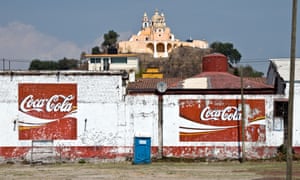
The church of Nuestra Senora de los Remedios in Cholula, Mexico, and signs for Coca Cola


Mexico is a nation famous for its love of Coca-Cola.
Photograph: Alamy

The study has been carried out by the University of North Carolina at Chapel Hill’s Gillings School of Global Public Health and the Mexican Instituto Nacional de Salud Pública (National Institute of Public Health). They found that the tax, which is just 1 peso (4p) per litre of sugary drink, had its biggest impact on the poorest households, where the decline in purchases was 18.8ml per person per day in 2014 and 29.3ml in 2015.


Purchases of other untaxed drinks went up on average by 2% over the two years, although the second year showed a decline. There is evidence from other data, however, of an increase in the production of still bottled water two years after the tax began, which the authors say may suggest some consumers are turning to water instead.


“Overall the results from our study contradict industry reports of a decline in the effect of the tax after the first year of its implementation. We found a greater reduction in purchases of sugar-sweetened beverages in 2015 than in 2014. Moreover, both the absolute and relative reductions were highest among households at lower socioeconomic levels,” said the paper.


Barry Popkin, distinguished professor in the department of nutrition at Gillings and one of the authors, looked forward to collecting data on the health impact. “It will be important for us to continue to monitor this tax and see how this actually will affect overall diets, diabetes prevalence and other biological markers of the many noncommunicable diseases linked with excessive sugary beverage consumption,” he said.


Adam Briggs, of the Nuffield department of population health at Oxford University, said the results of the study were “really encouraging, particularly from a UK perspective where the sugar-sweetened beverages levy is due to be introduced in just 12 months’ time.


“These are very important data for policymakers considering implementing soft drink taxes and it will be fascinating to see how sales continue over time … measuring independent health outcomes of such isolated policies is really challenging but, as the authors say, these reductions in consumption would likely have important population-level health benefits in terms of diabetes and obesity-related diseases.”


The UK planned levy is different to the Mexican tax in its design and structure, he said. “However, the principle that price change leads to sustained behaviour change remains important.”


Gavin Partington, director general of the British Soft Drinks Association, said: “Given their fervent belief in the principle of taxing soft drinks we should at least be encouraged that the authors accept causality cannot be established in terms of the impact of the tax in Mexico and the claimed falls in consumption. Nevertheless, while it seems obvious that price can have an impact on sales levels, it is far from clear that the tax on soft drinks in Mexico has had any impact on levels on obesity.”


Sugar tax graphic

A new report from Euromonitor International said that 19 countries had so far introduced what it called “sin taxes” on food and drinks and more would do so in the near future, with the aim of reducing sugar consumption by 20% in line with guidance from the World Health Organisation.


Euromonitor suggested the Mexican tax may be too low to have the desired effect and that the higher tax of 33 US cents per litre introduced in Berkeley, California, has been a bigger success. Berkeley “is said to have reduced SSB [sugar-sweetened beverage] consumption by 21% and increased water consumption by 63%. In comparison, other cities in the US reported a 4% increase in SSB consumption, and only 19% increase in water consumption in that time,” said the report.


It pointed to countries that might want to introduce “sin taxes” in the near future. “According to the NHS in the UK, consumers should not exceed more than 70g of fat and have no more than 90g of total sugar a day. Euromonitor’s Passport Nutrition data shows that 37 of the 54 (69%) researched countries exceed the fat intake recommendation, and 38 (70%) exceed the sugar recommendation. The top three sugar consumers are Chile, the Netherlands and Belgium, while the top three fat consumers are Germany, Sweden and Austria,” it said.


Mexico"s sugar tax leads to fall in consumption for second year running

18 Şubat 2017 Cumartesi

Bio-terrorism could kill 30 million people in a year, says Bill Gates – video

Bill Gates, the co-founder of Microsoft who has spent billions on philanthropic efforts over the past several decades, speaks at the Munich security conference on Sunday and says that the world must be on guard for bio-terrorism attacks. Telling the audience that “a synthetic version of the smallpox virus … or a super contagious and deadly strain of the flu” could kill more than 30 million people in a year, Gates says there is a “reasonable probability” that such an event could occur in the next 10 to 15 years


Bio-terrorism could kill 30 million people in a year, says Bill Gates – video

3 Şubat 2017 Cuma

Doctors shortage left 4 million patients without cover last year

At least 4 million people were left without access to an out-of-hours doctor at some point last year because of inadequate staff cover and pressure on resources, it has been revealed.


The figures, which have raised alarm about patient safety in the NHS, were obtained by the GP’s magazine Pulse in a freedom of information request to 104 out-of-hours commissioners of care.


Ten of the providers, covering about 4 million people, admitted that on some occasions last year shifts had been left unfilled, leaving patients with no out-of-hours cover.


In the areas hit, patients were told to go to A&E, while services had to rely on non-medically qualified urgent health practitioners, or nurses and paramedics.


Pulse identified five of the areas worst hit in 2016 as:


  • Peterborough, where there were nine shifts and 230,000 patients were left without access to an out-of-hours GP. All children under the age of four were “defaulted” to A&E, the magazine said.

  • Tower Hamlets, east London, where no GP was available on 12 occasions. This meant a population of more than 250,000 was told to contact A&E or the “community night team”.

  • Doncaster, where nurses and paramedics had to cover a population of 300,000 patients on three occasions, with no GP available by phone on one occasion.

  • The Highlands, which has a population of 340,000, where there were 31 times when out-of-hours centres were closed due to lack of staff. Shifts there had to be covered by centres up to a 30-minute drive away.

  • In southern and western Northern Ireland, the survey found that one GP regularly had to cover 370,000 patients overnight.

Many of the doctors in those areas spoke of their concern for the safety of patients.


Dr Frances O’Hagan, who works for the out-of-hours service in southern and western Northern Ireland told Pulse the system was “broken”. She added: “Having only one doctor on call used to be rare but is becoming the norm.”


Dr Dean Eggitt, medical secretary for Doncaste’sr local medical committee, said “the system is not safe”. He added: “I think 24-hours-a-day patients should be able to contact a senior clinician, a GP. If that is not available that is a very serious situation that must be remedied asap.”


Dr Alan Woodall, an out-of-hours GP in England and a GP partner in Wales, told Pulse: “The pressures on the out-of-hours service are approaching critical.


“I cover an area that stretches 800 sq miles on the evening shift because there is nobody else. It only takes two sick people at either end of the patch to result in doctors having to be pulled in from other patches, leaving their area uncovered. We are constantly trying to firefight demand.


“Because of the rota gaps and pressure on resources, we will have to employ a lot of urgent care practitioners and paramedics to help us cope.”
Other GPs told Pulse high insurance costs were a factor in why doctors turned down shifts.


Dr Emma Rowley-Conwy, who works in south-east London, said: “Indemnity is a deterrent as it costs about 10 an hour to get insurance from a defence organisation.”


The Royal College of GPs urged the government to do more to make out-of-hours working more attractive to family doctors.


Prof Helen Stokes-Lampard, chair of the organisation, said more GPs were needed to tackle a national shortage, but the high cost of insurance was also to blame.


She said patients should be able to access GPs when they need it, and that it “very concerning” that this was not always the case.


Stokes-Lampard said the Pulse report “hammers home how important it is for the government to make good on its promise to deliver 5,000 more extra GPs by 2020”.


Ruth Rankine, deputy chief inspector of general practice at the Care Quality Commission, said


“If we find on our inspections that staffing levels are leading to patients receiving unsafe care and treatment, including delays in response times, then we have a range of enforcement powers we can use to ensure that appropriate action is taken.”


Doctors shortage left 4 million patients without cover last year

27 Ocak 2017 Cuma

Record number of urgent operations cancelled in England last year

Hospitals cancelled a record number of urgent operations last year as bed shortages left them struggling to cope with the growing number of patients needing surgery, NHS figures show.


Hospitals in England cancelled a total of 4,093 urgent procedures during 2016, which equates to 341 per month. That was 8% more than the 3,777 they had to put off in 2015 and 27% up on the 3,216 such operations they cancelled during 2014.


While some cancellations occur because of the patient’s health, the large majority are due to hospitals having too few beds, especially in intensive care or high-dependency units in which patients can recover afterwards, often because a more urgent case has arrived. A few involve staff shortages or a surgeon becoming unexpectedly unavailable.


The latest figures mean that in all 17,598 patients have had their urgent operation cancelled over the past five years, often at the last minute, despite their condition requiring surgery without delay.


Opposition parties claimed the figures, published on Friday by NHS England, showed that problems in the health service were deepening and that the government was not giving it sufficient money to keep up with the rising demand for treatment.


“Theresa May’s NHS crisis continues, and the problems are worse and more widespread than in previous years. By underfunding and overstretching the NHS, the Tories have pushed health services to the brink”, said Jonathan Ashworth, Labour’s health spokesman.


Norman Lamb, his counterpart for the Liberal Democrats, added: “The government’s stubborn refusal to give the NHS emergency funding means record numbers of operations are being cancelled as hospitals face weeks on end of intolerable pressure. This will inevitably have serious repercussions for patient care and the morale of NHS staff.”


The NHS England data shows that hospitals also cancelled 38,129 non-urgent elective operations between April and October – again, the largest-ever number for those six months.


Of those patients, 2,204 did not have their rescheduled surgery within 28 days, as the NHS Constitution says they should, in another sign of the huge pressures on the service.


However, NHS England’s latest winter situation reports data showed on Frida that hospitals came under slightly less strain last week than during the “winter crisis” that unfolded in the early weeks of January.


Overall 43 acute hospital trusts were forced to divert A&E patients to another emergency department because they could not cope with the large numbers of people needing care, down from 52 the week before. Similarly, 51 trusts declared some sort of alert during the week, down from 68 a week earlier.


A further Eleven people died from flu last week, bringing the total to 53 since the start of December, and 65 needed to be treated in an intensive care or high-dependency unit.


NHS England and Public Health England said the number of flu cases hospitalswere treating was worrying and linked to the particularly cold weather affecting much of England recently.


Record number of urgent operations cancelled in England last year

16 Ocak 2017 Pazartesi

Word of the Year: Purity

I feel that the purer the thought, the purer the life.


This may sound boring, but once someone lives through plenty of drama, heartache, and destruction, one may consider purity desirable.


I get that all ups and downs are a “part of life” but I feel that to what level… is largely up to us. And I feel that what we participate in, naturally affects our thoughts, and ultimately affects what goes on around us.


This isn’t a: violent video games creates a violent child speech


But, I am abfirm believer that the seemingly “normal” things that happen during the course of a day, like: sudden illness, outbursts of anger, poor reactions to situations, and so on, may be a direct result of thought. At least to some level.


And no, I haven’t been watching Drew Barrymore’s Firestarter on repeat, but I have been practicing this myself at some level over the years, and have seen positive results. Perhaps it is as some may say, coincidence, but I feel happier and healthier when I am conscious of more pure thoughts.


How About a Challenge?


I am big on 30-day, or 1-week, or whatever length… challenges. This helps people realize how ingrained a behaviour is, helps them pay closer attention to the activity and the results, and ultimately can encourage positive changes.


Consider the following challenges for yourself for this year:


Stop watching TV I think overall, TV-watching is an extremely unhealthy habit, and not watching for a month feels like an easy task to me. However, I get that TV watching is a big deal for many people. So, perhaps consider a deviation of this challenge if it seems too drastic for you. Maybe drop the late night news for a month. Maybe stop late night trash TV. How about just being conscious of how much TV you *actually* watch, and drop it to 1, 2, or 3 hours per day. Or better, what about replacing all programs with more wholesome TV. Programs like: The Little House on the Prairie, The Waltons, and Anne of Green Gables feel like appropriate choices for the whole family. They can give everyone an entirely different way of thinking. Little House is on every weekday at 4:00 Eastern in Canada on Cogeco 19, with The Waltons right after for those interested.


Spend more time doing nothing A lot of people avoid this I think because idle time means lots of undesirable thoughts. But, just pausing life, even for 10 minutes, feels very valuable for a plethora of reasons. And I feel that overall, we control our own thinking. If thought goes in a direction that doesn’t feel “pure”, or at least desirable, then push that thought a way. Visualize the removal of that thought, and deliberately choose a better feeling thought. Be careful with this practice though. Sometimes, “better feeling” means indulging in destructive fantasy. Well, I’m not the first to say this, and it’s what I have been suggesting all along… your thoughts affect your reality in one way or another. Focus on thoughts that you would like to exist in *real life* and see how your life transforms. It’s worth a shot no?


Read more What about picking up the habit of reading something for an hour a day? It doesn’t have to be something that helps you perfect your craft, although it can be. Choose wisely though. Just like TV, and even the people that you surround yourself with, what you choose to read has a direct affect on your thoughts. Which… as many believe… has a direct affect on your reality.


Think more purely!


Naturally, these are just my opinions, and what I feel has been beneficial in my life. I am no “expert” on the topic. I just enjoy the benefits of this in my own life, and it has been adopted as the path I chose to take, to put some of the major challenges that I am facing today, in my past.


If you aren’t much of a believer on the topic of thought patterns being important to everyday life, and having the potential to affect your relationships with others and yourself, consider listening to any of these audio books on the topic. Some of what is said may change your thinking, or reinforce your belief.


You can get an audio book free from Amazon’s Audible if you are a new member. You do need to provide your CC details, but you can cancel by next month if you don’t want to participate in the monthly audio book subscription. I do get a bounty from Amazon, if you use the link above, for introducing a new customer to them. But I wholeheartedly believe in the subject, it’s not just a referral in order to receive a commission.


Word of the Year: Purity

13 Ocak 2017 Cuma

NHS crisis: 40% of hospitals issue alert in first week of new year

More than 40% of hospitals had to declare an alert in the first week of January because they were experiencing major problems caused by having too many patients and too few spare beds.


Figures released by NHS England on Friday also show that 32 people have died from flu so far this winter and scores of others had to be treated in intensive care last week alone.


The data reveals that hospitals in England came under huge pressure in the first week of the new year. Serious levels of overcrowding worsened to levels generally regarded as dangerously high.


Overall, 95% of hospital beds were full from 2-8 January, up from 91% the week before.


A&E units became so busy they had to divert patients to other emergency departments 39 times, slightly fewer than the 42 a week earlier.


Bed shortages were exacerbated by outbreaks of norovirus, the diarrhoea and vomiting bug, forcing hospital managers to close 933 beds that were occupied and another 164 that were empty, making a total of 1,197 – almost one in 100 of the NHS’s total supply of 130,000 beds.


In that week, 58 of England’s 153 acute hospital trusts had to go on to what NHS England calls an Opel 3 alert and eight on to the highest form of alert, Opel 4. Both mean trusts are struggling to cope with the weight of demand.


Both take their name from NHS England’s Operating Pressures Escalation Levels framework. It sets out what steps trusts should take to manage the large numbers of patients.


The 58 trusts that went on Opel 3 alert did so because, according to guidance form NHS England, they were “experiencing major pressures compromising patient flow” – their ability to get patients in and out quickly enough – and needed to take “urgent actions” to keep functioning.


Eight went on Opel 4, also known as black alert, after becoming so stretched they were “unable to deliver comprehensive care” and there was “increased potential for patient care and safety to be compromised”.


A total of 375,687 people sought help at an A&E unit in the first week of January, up from 371,599 the week before. However, the number of people who needed to be admitted as an emergency fell from 92,480 to 89,712.


The Guardian reported this week that close to 30 trusts had been forced to declare a black alert since Monday, suggesting that already severe pressure on the NHS intensified this week.


NHS England has warned that the current spell of freezing weather could trigger a rise in the number of people falling seriously ill and also interfere with the running of services.


“This weather could increase the health risks to vulnerable patients and disrupt the delivery of services,” it said.


Prof Paul Cosford, Public Health England’s director for health protection and medical director, said people should keep their homes heated to at least 18C (64F), wear lots of thin layers rather than fewer thicker ones, and wear footwear with a good grip to cope with the snow and ice in many part of the country.


NHS crisis: 40% of hospitals issue alert in first week of new year

12 Ocak 2017 Perşembe

The Five New Years Resolutions I Should Have Made Last Year

Am I the only one who laughs myself to tears when I read the meme: “Either my house is clean and I look like a dirty truck driver, or my house is a mess, and I look like JLo. There is nothing in between?” I’m so tired, and I can’t do it all and myself, or my house is generally always in disarray. I am 38 years old and have three small children, who suck the life from me. I’m trenched in tantrums, diapers, laundry and sleepless nights. For these three reasons – I didn’t get to check off any of my New Years resolutions from last year, so is setting resolutions this year even worth it?


Almost half of the people in the United States make New Years Resolutions, and eight percent actually keep their New Years goals. These numbers are a little discouraging, and I admit I am rarely a part of the coveted eight percent, but honestly my conscience would suffer too much if I didn’t at least try to commit to doing better.


So this year I’m going to lower my expectations, and set goals that make more sense for a young mom raising three children under six. I hope the goals will be as good for my kids as they are for me. The following are my 2017 goals in no particular order:


I’ll cut down on Facebook, Instagram, and Pinterest usage. During my downtime instead of spending time on social media, I’ll take in the sound of silence. When I am with my kids, I’ll watch them play and interact with them, instead of my iPhone.


It’s too hard to pack up the kids and take them to the daycare at the gym or to your friends. It takes twice the time to do. I used to swear off of at home workouts, but now they seem like the only option that actually makes sense. My little ones might get in the way a little, but most of the time they work out right alongside of me.


When you realize a 300-calorie workout is destroyed with a handful of chocolate chips, you are more particular about what you eat. I won’t walk away from sugar completely this year; I’ll just have one less handful of chocolate a day.


I’m going to leave my house without my kids more often. This year I will go on more dates, I will take more ‘me’ time, go to bed an hour earlier, or whatever else it takes to regain some of the sanity my children robbed me of during the day.


It’s a long-standing tradition of moms to pile on the responsibilities, and I am no exception to this rule. I’m going to set more boundaries in 2017. Take unnecessary things off of my plate. Learn to say ‘no’ more often to friends, family, and co-workers.


Young motherhood is one heck of a season. I never thought I would spend so much time crying over sappy commercials. Or laughing at really goofy things my toddlers says. Or wondering how long it will be before my kids are off to college.


Being an older mother of young children is tough and spare daytime hours are not generally on my side. But when I look at the bigger picture it does make sense to make and keep goals. Right now really is the best time to set New Year’s resolutions. My kids are still young, and I am still their world. Wish me luck this time around, because I hope to make 2017 count for my kids and for me.


The Five New Years Resolutions I Should Have Made Last Year

4 Ocak 2017 Çarşamba

2016 was the worst year in NHS history – we must fight for its survival

The last 12 months have been the worst in the history of the NHS. Our health system is under pressure like never before. The moment of crisis many warned of has arrived, and it is not clear that the NHS can be retrieved from this state of affairs.


We used to say that flailing A&Es represented an early warning sign that the health service was under pressure. And so that has proven to be. England’s major A&Es are under record strain with black alerts being regularly sounded, and in some instances wards turning patients away. Last year the A&E crisis spread to other sectors.


Ambulance response times have reached critically low levels, with one third of ambulances failing to meet their targets for life threatening callouts. The acute care sector is bulging with unnecessary admissions particularly from over-75s who are presenting themselves at A&Es when they should be cared for by the social care sector that has suffered £5bn of cuts.


In the community, general practice is on life support; as more is demanded of it, the proportion of the NHS budget that goes to primary care has effectively shrunk. Primary care provides 90% of the consultations in the NHS yet only gets 8% of the budget. GPs are leaving, and new entrants are declining to enter general practice.


We once bickered with the Treasury for clawing back millions in Department of Health underspend under Labour. Under the Tories, that is a distant memory as NHS trusts recorded a deficit in excess of £2bn last year.


A government elected to fix near-bankrupted banks has replaced that by bankrupting our hospitals. Idiotic spending decisions in the NHS have been rife.


The most worrying aspect of the government delivering the lowest additional funding increase to the NHS in its history has been the knock-on effect on patients, in terms of treatment and facilities available. More than 13,000 beds have been closed, cutting the capacity of the NHS by 5 million a year.


So bad was 2016, that nine former health secretaries condemned the government for failing to live up to its promises on mental health.


Commissioners and providers alike have had to resort to rationing care to try to balance their books. Unfortunately, this is not always to the benefit of customers or patients.


As the health service’s budget faces greater pressure than before, it is difficult to ignore the toll the intrusion of the free market has taken. Last year, £13bn of healthcare was purchased from non NHS providers (pdf), a 76% increase since 2010. Given that the private sector has a stated goal to make 8%-14% profits from the NHS, can taxpayers really afford this choice?


While the NHS has increased the cash it takes from the private sector by 30% to £558m last year (pdf), waiting lists have soared to an eight-year high. Now, 4 million patients are on waiting lists. This in effect means NHS patients are being delayed in their treatment to make way for wealthy private patients who can afford to skip the queue.


The pressure on our staff has also reached unprecedented levels. Nurses have seen real-term pay cuts since 2010 of over £2,000. Moreover, aspiring nurses will also be denied a bursary to train and this at a time when unfilled nursing vacancies have climbed 600% since 2010. It will not surprise you to learn that applicants for trainee nursing courses have fallen 20% this year.


Likewise, the pressure on junior doctors remains intense. They too have seen real-term pay cuts, as well as an enforced contract.


It remains impossible to meet the demands of the ill-described seven-day NHS until serious funding issues have been resolved, otherwise we are asking our doctors to shoulder the blame for unsafe care.


The continuing media war Jeremy Hunt has waged against doctors has so depleted workforce morale that there are more doctors wanting to leave the NHS than are in training.


It will take a political will only witnessed twice in the last 70 years, 1948 and 1997, to alter the current trajectory on which the NHS is set. The £22bn of efficiencies (a euphemism for cuts), dressed up as sustainability and transformation plans smacks of what was tried with the Nicholson challenge. The National Audit Office has warned that these efficiencies are not possible without causing lasting damage to the NHS’s ability to provide safe care.


We are at a cliff edge. Do we carry on into the unknown with broken funding promises and more cuts or do we cry foul now, and demand a rethink before it is too late?


Let’s pledge in 2017 to fight for its survival. The NHS belongs to us, not the politicians and not the privateers. We cannot trust the government to be its safe custodian. It’s up to each and every one of us to fight for the NHS, otherwise it won’t be there to look after us, never mind the next generation.


Join the Healthcare Professionals Network to read more about issues like this. And follow us on Twitter (@GdnHealthcare) to keep up with the latest healthcare news and views.


2016 was the worst year in NHS history – we must fight for its survival

2 Ocak 2017 Pazartesi

Guns, wages and pot: the new laws taking effect across the US this year

In 2017, new laws across the US will go into effect. Here are some of the new, noteworthy, and impactful policies:


Guns: there may be more armed teenagers in Tennessee


A range of new gun legislation will go into effect, and while places such as California are working to restrict guns, Tennessee is opening up its gun laws. Starting in 2017, 18-year-olds who are on active duty in the military, are retired veterans or were honorably discharged will be able to receive handgun carry permits. The age remains 21 for everyone else. The bill passed unanimously in the state senate.


Other laws:


  • More assault weapons are off limits in California, including semiautomatic rifles

  • Californians will have to go through a background check to purchase not just guns but also ammunition

  • Babysitters and other guests will be permitted to use deadly force against intruders, as part of Missouri’s new concealed carry law

Minimum wage: many states to see minimum wage rise in 2017


Minimum wage increases remain a contentious political issue but in 2017, a record 20 states and the District of Columbia will see increased pay for low-wage workers. The fight for $ 15 is on in New York and California. New York is working toward a statewide $ 15-per-hour minimum wage but Governor Andrew Cuomo has different timelines, depending on each industry and location in the state. California’s minimum wage will go up to $ 10.50, with the hopes of reaching $ 15 by 2022. Ohio’s state legislature took steps to block Cleveland’s efforts to reach a $ 15 minimum wage by passing a law that forces local jurisdictions to maintain the same wage as the state rate, which will go up to $ 8.15 in 2017.


The following minimum wage increases go into effect 1 January:


  • Massachusetts: $ 10 to $ 11

  • Connecticut: $ 9.60 to $ 10.10

  • Arizona: $ 8.05 to $ 10

  • Colorado: $ 8.31 to $ 9.30

  • Arkansas: $ 8 to $ 8.50

  • Michigan: $ 8.50 to $ 8.90

  • Vermont: $ 9.60 to $ 10

  • Maine: $ 7.50 to $ 9

  • Hawaii: $ 8.50 to $ 9.25

  • Washington state: $ 9.47 to $ 11

Several other states will raise their minimum wages later in the year. The Economic Policy Institute tracks all the changes here.


Domestic violence and sexual assault: hairdressers to provide support to victims


Starting 1 January, cosmetologists, hairdressers and nail technicians in Illinois will be required to undergo one hour of training on how to provide support to victims of domestic violence or sexual assault. It will also be mandatory for establishments to hang posters with helpline details.


Several California laws passed this year will also go into effect, addressing the prosecution of sexual assault crimes:


Alcohol and pot: Californians can get tipsy at beauty parlors


A new law allows beauty parlors and salons to serve up to 12 ounces of complimentary alcohol without violating state liquor law requirements.


In other substance-related developments, on election day in 2016, four states approved ballot initiatives legalizing recreational marijuana. Recreational pot will become legal in Nevada on 1 January. Maine’s law should go partially into effect in late January.


In Connecticut, advanced practice registered nurses will now be allowed to certify a patient for medical marijuana use (except for glaucoma). New York announced a similar regulation in November.


Health: doctors with religious objections will have to refer patients elsewhere


A new law amends Illinois’s Health Care Right of Conscience Act to require that providers, including doctors and clinics,who refuse services for moral or religious reasons ensure their choice does not endanger patient health. That means doctors must either refer patients elsewhere or at least provide information on alternatives.


The measure has proved controversial – a small number of clinics sued because they objected to giving referrals or information related to abortion. A judge recently issued a preliminary injunction temporarily preventing the state from enforcing the law against the clinics that sued, according to the Chicago Tribune.


Other new health-related laws:


More foam bans, more civics lessons


San Francisco will implement the country’s widest ban on plastic foam, which environmentalists say can take hundreds of years to degrade. The new law will ban the substance in food products such as meat trays, packing peanuts, ice chests, dock floats and mooring buoys, and even coffee cups.


In Tennessee, students will now be required to take a civics test before they graduate from high school. The questions will be similar to those on the US citizenship test, part of a movement to improve Americans’ engagement and understanding of the country’s democratic process.


Guns, wages and pot: the new laws taking effect across the US this year

1 Ocak 2017 Pazar

How we transition into the new year

You may have woken up today feeling a little more wobbly than usual, not just from last night’s festivities, but about what 2017 holds. We can’t help our memories of last year colouring our expectations of the next. We’re wired that way.


We know this from the Colour Phi experiment in 1976, where respondents were shown a blue dot at the top left hand corner of a screen followed soon after by a red dot at the bottom right.


What they reported seeing was a dot moving from top to bottom, and changing to red midway. Our brain creates an illusion, joining up the two dots and projecting the colour of the red dot backwards in time.


The same applies to how we view our own life story and our hopes for the new year. It’s a funny point each January where we’re caught between imagining the future and knowing the past. In Roman tradition, Janus is the god of endings and beginnings, with two faces, looking backwards and forwards.


This story of transition should reassure us. We make it up as we go along. So we can allow ourselves the possibility of change: nothing is fixed, it’s only a matter of perception.


Dr Daniel Glaser is director of the Science Gallery at King’s College London


How we transition into the new year

15 Aralık 2016 Perşembe

Spotting sepsis "could prevent 37,000 deaths a year"

Health officials are launching a campaign to help spot the early signs of sepsis, a condition that has been blamed for about 37,000 deaths a year in England. The campaign, run by Public Health England and the UK Sepsis Trust, is aimed at parents and carers of newborns to four-year-old children. It is part of a series of measures by the NHS to tackle the condition, which arises as a complication of an infection.


“We need to get far better at spotting it across the NHS. By raising awareness and improving clinical practice, we will save lives in the fight against this horrible illness,” said the health secretary, Jeremy Hunt.


Melissa Mead, a UK Sepsis Trust ambassador, whose baby son William died of sepsis two years ago, will appear in a new film that forms part of the campaign. “Sepsis is a cruel, ruthless condition that doesn’t discriminate and can affect anyone,” she said. “I hope this campaign reaches as many people as possible, so all parents out there know about sepsis and how serious it can be. The more parents know, the quicker they can act if they suspect their child may be suffering from sepsis – it could be life-saving.


“I will never hear my sweet child say, ‘Mummy, I love you.’ I will never know the man that William would have grown to be. So please, it is too late for me to ‘think sepsis’ but it’s not too late for you.”


Millions of leaflets urging parents to take their child to A&E or call 999 if their child is displaying symptoms will be delivered to GP surgeries and hospitals across the country. Parents should take immediate action if their child looks mottled, bluish or pale, appears lethargic or difficult to wake, is abnormally cold to touch, is breathing rapidly, has a rash that does not fade when pressed, or has a fit or convulsion.


Hunt praised Mead – as well as “families who have tragically lost children to sepsis” – for her help with the campaign.


Sir Bruce Keogh, national medical director for NHS England said: “This campaign is an important addition to our ongoing work – we will never treat sepsis in time unless everyone ‘thinks sepsis’.”


Dr Ron Daniels, the chief executive of the UK Sepsis Trust, said: “With sepsis claiming over 37,000 lives annually in England, this awareness campaign is a crucial step forward. Clinicians and members of the public can save thousands of lives every year if they just ask: could it be sepsis?


“The UK Sepsis Trust welcomes this initiative, but system-wide improvements to sepsis care must follow. We’re delighted to have developed campaign materials that will empower parents to identify sepsis symptoms in their children and seek medical attention immediately.”


Spotting sepsis "could prevent 37,000 deaths a year"