record etiketine sahip kayıtlar gösteriliyor. Tüm kayıtları göster

6 Nisan 2017 Perşembe

Record number of GP closures force 265,000 to find new doctors

A record number of GP practices closed last year, forcing thousands of patients to find a new surgery, in spite of government attempts to stop local doctors shutting their doors.


NHS England data showed nearly a hundred practices closed in 2016, a 114% increase in GP closures compared with figures from 2014. Of the 92 practices that shut, 58 did so completely, while 34 merged with other local surgeries in order to pool resources.


The drop in GP numbers meant 265,000 patients – an increase of 150% from 2014 – had to change their practice last year, often travelling further for care. Brighton was particularly badly affected with 9,000 patients displaced when four practices closed. There have been a total of seven closures in the city over the past two years.


The new data, obtained by the GP website Pulse, has renewed fears that family doctors are not coping with increased demand and need an urgent cash injection to survive. Senior doctors also expressed concern that government funding was not being targeted correctly.


patients displaced
gp practices close

It comes despite the NHS announcing its GP forward view plan last year, promising to invest an annual £2.4bn into services by 2020. The government also announced £500m investment as a rescue package, which included £16m to support vulnerable practices.


Dr Chaand Nagpaul, chairman of the British Medical Association’s GP committee, told Pulse: “We know the money, targeted in the right way, for the most severely affected practices, can make a difference.


“The tragedy is clinical commissioning groups have not delivered their part in making the resources available. Many practices that should have received support have had none to date. That’s been a failing of local delivery.”


Prof Helen Stokes-Lampard, chair of the Royal College of GPs, said: “Too many practices are being forced to close because GPs and their teams can no longer cope with ever-growing patient demand without the necessary funding and workforce to deal with it. This has serious consequences for patient safety and the wellbeing of hard-working family doctors and their practice teams.”


The findings are likely to put more pressure on the government to address a growing NHS crisis, with hospitals and family doctors under increasing pressure.


Jonathan Ashworth MP, the shadow health secretary, said: “These are startling revelations and really bring home the extent to which Theresa May’s NHS funding squeeze is impacting on people every day in communities across the country.”


He added: “Given the crisis in hospitals we’ve seen we need to be taking the pressure off hospitals. That means doing much more to protect GP services. With Labour, general practice will be at the heart of making the English NHS more focused on care closer to home.”


Norman Lamb, the Liberal Democrat health spokesman, said: “There is a pressing need for a national, cross-party discussion about how we can afford a modern, efficient, and effective health and care system. I once again urge the prime minister to begin such a process. We must face up to the scale of this challenge, and to the possibility that we might have to pay a little more in tax to ensure that everyone gets the high-quality healthcare they should expect.”


An NHS England spokesperson said: “All NHS patients wanting to register with a GP practice are guaranteed to be able to do so and we have increased investment in general practice by £1bn in two years in order to improve services and boost GP numbers.


“These figures as presented don’t reflect the full picture as they include patients whose records automatically transfer after a merger and therefore don’t have to change practice. As part of our plans to improve general practice services and boost the workforce, many practices are choosing to merge in order to offer patients a much greater range of services.”


Record number of GP closures force 265,000 to find new doctors

31 Mart 2017 Cuma

NHS to fast-track nurses as record EU staff leave service after Brexit vote

NHS England is to launch a new nursing training programme to help plug the gap created by the record number of Europeans leaving the service in the wake of Britain’s vote to leave the European Union.


Simon Stevens, the chief executive of NHS England, acknowledged that the service relies on international staff, including more than 12,000 nurses who are EU nationals out of the 315,000 nurses on its payroll.


Speaking on the BBC Radio 4’s Today programme before the launch of a five-year plan for the NHS, he announced a training programme to “grow the workforce from within this country”.


The moves comes after new figures revealed that a record 17,197 EU nationals, including doctors and nurses, left the NHS last year.


Asked if he was worried about the impact of Brexit, Stevens said: “The NHS has always relied on international staff as well as staff from this country. It is about 4% of our nurses who come from the rest of the European Union. We are grateful for the work that they do.”


But he suggested newly trained British nurses could help fill the gap left by EU nationals once Britain leaves the bloc.


Stevens said: “We have got a curious situation where many more people in this country would like to train to be nurses than we have nurse training places. So we want to expand the number of nurse training places and the routes into nursing so that we can grow the work force from within this country as well.”


He said the new training programme would be modelled on an initiative to recruit more teachers.


“We are announcing a new programme called Nurse First, which is the equivalent of the Teach First programme, whereby new graduates can fast-track into nursing alongside other apprenticeship routes … so that we can expand the number of nurses we have.”


The programme will boost the number of newly qualified nurses by up to 2,200 more a year in 2019 when the UK is due to leave the EU.


In a wide-ranging interview, Stevens denied he was abandoning the 18-week waiting time target for non-urgent operations by relaxing the deadline for hospitals to meet the deadline.


He said: “Fifteen years ago you might be waiting 18 months for your hip or your knee operation, now for nine out of 10 people it’s 18 weeks. The average wait for an operation is 10 weeks. Over the next couple of years we want to have more funded operations on the NHS, but we recognise that the rate of growth is probably going to have to be a little bit slower than it has at points in the past, because we also want to make big improvements in cancer care, in GP services and in mental health services as well.”


The Royal College of Surgeons said the new guidelines amounted to “waving the white flag on the 18-week target”.


Asked if the target had been jettisoned, Stevens said: “It hasn’t. The reality is that there are pressures right across the health service. Under those circumstances we have to make a start on sorting out particularly those pressures in A&E departments which we have seen over the course of the last winter. But over the course of the next several years we want to continue to expand the amount of surgery that is being done, so that waiting times stay low.”


He also announced that all major A&E hospital departments will have to provide GP services to help emergency medics focus on the sickest patients. Steven said: “You can find about 60 hospitals right now that have got this arrangement. This is going to be rolled out to all major A&Es.”


Stevens confirmed that the NHS wanted to stamp out an estimated £4m spent on homeopathic medicine. He dismissed homeopathy as a “placebo at best” and said it was a “classic example of what we want to see less of”.


NHS to fast-track nurses as record EU staff leave service after Brexit vote

30 Mart 2017 Perşembe

Record number of EU citizens quit working in NHS last year

A record number of EU nationals left the NHS last year, renewing fears that Brexit could exacerbate a staffing crisis.


The figures, compiled by NHS Digital, prompted medical leaders to call for more reassurances to European workers about their future in the UK. A total of 17,197 staff, including nurses and doctors, left their posts in 2016, compared with 13,321 in 2015 and 11,222 for 11 months in 2014.


Even though EU staff numbers rose across the period analysed, experts fear the number of people leaving is the more significant trend.


As Britain embarks on fraught Brexit negotiations, the Royal College of Physicians (RCP) and the British Medical Association (BMA) blamed the increase in departures on the prime minister’s lack of assurances about the position of EU nationals resident in the UK. Theresa May has said such a pledge would weaken her ability to negotiate a good deal for Britain as it prepares to leave the trade bloc.


Prof Jane Dacre, the RCP president, said: “These figures confirm our fears that EU doctors are feeling unsettled and, at worst, leaving or planning to leave the UK. We need the government to provide reassurance that we will be able to keep our European colleagues, in the NHS and research, as we will not be able to replace them with homegrown doctors for many years to come.”


The BMA’s council chair, Dr Mark Porter, said: “Following the EU referendum, thousands of EEA [European Economic Area] nationals working in the NHS and wider health and social care system have been left feeling uncertain as to whether they and their families will have the right to live and work here.


“Worryingly, one in four EEA doctors working in the UK have told the BMA that they are considering leaving following the referendum, with many feeling substantially less appreciated by the government. These are people who have dedicated years of service to healthcare, staffing our hospitals, GP surgeries and leading medical research.”


Analysis by the Guardian shows 2,348 doctors from the 27 other EU states left NHS England between July and September 2016 compared with 1,281 in the same period in 2015. That is a rise of 83% year on year. The figures mirror concerns raised about the growing numbers of nurses leaving the health service and the falling number EU nationals registering as nurses in England, which dropped by 92% since the Brexit vote last June.


Number of EU doctors who left NHS England each month between February 2014 and November 2016

The NHS Digital data also shows an increase in other members of NHS staff leaving the health service. In total, 6,391 EU workers quit in the three months after the EU referendum, compared with 4,125 in the same period in 2015 – a 55% increase. The increase in the number of EU staff employed by NHS England in the same period was 15%.


A number of NHS staff told the Guardian they knew colleagues who were considering leaving. One health worker from London, who asked to be anonymous, said: “I am worried. I work in operating theatres and I walk into some of them and they are all EU staffed.


“Every theatre in London has a European citizen in it. Heaven help us if they leave. A few of my colleagues have already left – the good ones.”


A midwife from Worcester, an EU national, said: “I do know of quite a few of my colleagues who are considering leaving. Also junior doctors who aren’t eligible for permanent residency because they don’t meet the criteria. It’s a total disaster.”


Jonathan Ashworth, the Labour party health spokesman, said: “Safeguarding the future of these staff should be an absolute priority in the Brexit negotiations. Theresa May and Jeremy Hunt [the health secretary] have been totally negligent in failing to guarantee a future for these staff before article 50 was triggered.”


Concern has also been raised about a slowdown in EU nationals joining the NHS since the referendum. Figures from the Nursing and Midwifery Council show a 90% drop in the number of nurses from EU states registering to join in December.


Barry Pactor, the managing director of TTM Healthcare, an international recruitment company, said: “Since Brexit TTM Healthcare has seen a marked difference in UK perception among EU healthcare professionals.


“Overwhelmingly concern centres on a lack of clarity around their status and not knowing whether they should plan a long-term future in the UK. With such concerns it is unavoidable that EU specialists will choose alternative countries to continue their careers.”


Some were more cautious about linking the departures with the Brexit vote. Jackie Smith, registrar and chief executive of the Nursing and Midwifery Council, said: “This is the first sign of a change and it is too early to say definitively that changes in this area are due to any one reason.”‎


The Department of Health sought to downplay fears of a staffing crisis. “As the secretary of state has repeatedly made clear, overseas workers form a crucial part of our NHS and we value their contribution immensely,” a spokesperson said.


“We are continuing to invest in the frontline: there are over 34,800 more professionally qualified clinical staff, including over 11,600 more doctors and over 13,400 more nurses on our wards since May 2010. Furthermore, there are 30,000 students training to be doctors and over 52,000 training to be nurses.”


Record number of EU citizens quit working in NHS last year

19 Mart 2017 Pazar

Record numbers of EU nurses quit NHS

The number of EU nationals registering as nurses in England has dropped by 92% since the Brexit referendum in June, and a record number are quitting the NHS, it can be revealed.


The shock figures have prompted warnings that Theresa May’s failure to offer assurances to foreigners living in the UK is exacerbating a staffing crisis in the health service.


Only 96 nurses joined the NHS from other European nations in December 2016 – a drop from 1,304 in July, the month after the referendum.


At the same time, freedom of information responses compiled by the Liberal Democrats from 80 of the 136 NHS acute trusts in England show that 2,700 EU nurses left the health service in 2016, compared to 1,600 EU nurses in 2014 – a 68% increase.


The haemorrhaging of foreign staff is being blamed by the Royal College of Nursing (RCN) on the failure of the government to provide EU nationals in the UK with any security about their future. May has claimed that Britain cannot act unilaterally to guarantee residency as it would weaken her hand in the coming article 50 negotiations over Brexit.


Janet Davies, chief executive and general secretary of the RCN, said the government’s tactic was backfiring, and now threatened the sustainability of the health service.


“The government risks turning off the supply of qualified nurses from around the world at the very moment the health service is in a staffing crisis like never before,” she said. “As she pulls the trigger to begin negotiations, the prime minister must tell EU nurses and those in other occupations that they are needed and welcome in the NHS. Sadly, it is no surprise that EU staff are leaving – they have been offered no security or reassurance that they will be able to keep their jobs. Few are able to live with such uncertainty.


“The government has failed to train enough British nurses and cannot afford to lose the international workforce on which the NHS so heavily relies.”


There are an estimated 57,000 EU nationals working for the NHS, including 10,000 doctors and 20,000 nurses. On Saturday the Liberal Democrats passed a motion at their spring conference in York calling for a guaranteed right to live and work in the UK for all EU citizens working in the NHS and care services.


The former Lib Dem health minister Norman Lamb said that the government’s attitude to EU nationals in the UK was “deeply damaging”, and that the creation of a so-called “NHS passport” could be a vital step. “These shocking figures show you can’t have a strong NHS and a hard Brexit,” he said. “The government’s refusal to guarantee that nurses from the EU can stay here is not only morally unjustifiable, it is deeply damaging for the NHS.


“Theresa May must urgently give EU nationals the certainty they need before we see an even bigger exodus of nurses on whom our health service relies.”


Joan Pons Laplana, a Spanish national and a senior nurse at the James Paget Hospital in Great Yarmouth, who came to the UK 17 years ago, told the Observer that he had personally witnessed the collapse in morale of foreign nurses.


“Since Brexit, I feel like a second-class citizen,” he said. “My son asked me if I was going to be forced back to Spain and my daughter doesn’t want to visit her grandparents because she fears I will not be able to come back.


“The UK is no longer the first choice for EU nurses. The uncertain future means many they are starting to leave. We are people with feelings, not a commodity at the Brexit table.”


The NHS is already under pressure because of a long-term failure to hire enough people. Applications for nursing courses plummeted by almost a quarter in a year after the government axed bursaries for trainees in 2016. Numbers fell by 9,990 to 33,810 in 12 months, according to figures released in February by the university admissions service Ucas. Meanwhile, one in three nurses is due to retire in the next 10 years and there are 24,000 nurse jobs unfilled, RCN figures show.


The Department of Health said: “While the stock of nurses is broadly stable, some of the changes described are owing to the introduction of more rigorous language testing. The secretary of state has repeatedly said that overseas workers form a crucial part of our NHS and that we value their contribution immensely.


“We continue to invest in the frontline, with 13,400 more nurses on our wards since May 2010 and over 52,000 nurses in training.”


MPs vote to reject Lords amendments to Brexit bill

Record numbers of EU nurses quit NHS

9 Mart 2017 Perşembe

Google"s DeepMind plans bitcoin-style health record tracking for hospitals

Google’s AI-powered health tech subsidiary, DeepMind Health, is planning to use a new technology loosely based on bitcoin to let hospitals, the NHS and eventually even patients track what happens to personal data in real-time.


Dubbed “Verifiable Data Audit”, the plan is to create a special digital ledger that automatically records every interaction with patient data in a cryptographically verifiable manner. This means any changes to, or access of, the data would be visible.


DeepMind has been working in partnership with London’s Royal Free Hospital to develop kidney monitoring software called Streams and has faced criticism from patient groups for what they claim are overly broad data sharing agreements. Critics fear that the data sharing has the potential to give DeepMind, and thus Google, too much power over the NHS.


In a blogpost, DeepMind co-founder, Mustafa Suleyman, and head of security and transparency, Ben Laurie, use an example relating to the Royal Free Hospital partnership to explain how the system will work. “[An] entry will record the fact that a particular piece of data has been used, and also the reason why, for example, that blood test data was checked against the NHS national algorithm to detect possible acute kidney injury,” they write.


Suleyman says that development on the data audit proposal began long before the launch of Streams, when Laurie, the co-creator of the widely-used Apache server software, was hired by DeepMind. “This project has been brewing since before we started DeepMind Health,” he told the Guardian, “but it does add another layer of transparency.


“Our mission is absolutely central, and a core part of that is figuring out how we can do a better job of building trust. Transparency and better control of data is what will build trust in the long term.” Suleyman pointed to a number of efforts DeepMind has already undertaken in an attempt to build that trust, from its founding membership of the industry group Partnership on AI to its creation of a board of independent reviewers for DeepMind Health, but argued the technical methods being proposed by the firm provide the “other half” of the equation.


Nicola Perrin, the head of the Wellcome Trust’s “Understanding Patient Data” taskforce, welcomed the verifiable data audit concept. “There are a lot of calls for a robust audit trail to be able to track exactly what happens to personal data, and particularly to be able to check how data is used once it leaves a hospital or NHS Digital. DeepMind are suggesting using technology to help deliver that audit trail, in a way that should be much more secure than anything we have seen before.”


Perrin said the approach could help address DeepMind’s challenge of winning over the public. “One of the main criticisms about DeepMind’s collaboration with the Royal Free was the difficulty of distinguishing between uses of data for care and for research. This type of approach could help address that challenge, and suggests they are trying to respond to the concerns.


“Technological solutions won’t be the only answer, but I think will form an important part of developing trustworthy systems that give people more confidence about how data is used.”


The systems at work are loosely related to the cryptocurrency bitcoin, and the blockchain technology that underpins it. DeepMind says: “Like blockchain, the ledger will be append-only, so once a record of data use is added, it can’t later be erased. And like blockchain, the ledger will make it possible for third parties to verify that nobody has tampered with any of the entries.”


Laurie downplays the similarities. “I can’t stop people from calling it blockchain related,” he said, but he described blockchains in general as “incredibly wasteful” in the way they go about ensuring data integrity: the technology involves blockchain participants burning astronomical amounts of energy – by some estimates as much as the nation of Cyprus – in an effort to ensure that a decentralised ledger can’t be monopolised by any one group.


DeepMind argues that health data, unlike a cryptocurrency, doesn’t need to be decentralised – Laurie says at most it needs to be “federated” between a small group of healthcare providers and data processors – so the wasteful elements of blockchain technology need not be imported over. Instead, the data audit system uses a mathematical function called a Merkle tree, which allows the entire history of the data to be represented by a relatively small record, yet one which instantly shows any attempt to rewrite history.


Although not technologically complete yet, DeepMind already has high hopes for the proposal, which it would like to see form the basis of a new model for data storage and logging in the NHS overall, and potentially even outside healthcare altogether. Right now, says Suleyman, “It’s really difficult for people to know where data has moved, when, and under which authorised policy. Introducing a light of transparency under this process I think will be very useful to data controllers, so they can verify where their processes have used or moved or accessed data.


“That’s going to add technical proof to the governance transparency that’s already in place. The point is to turn that regulation into a technical proof.”


In the long-run, Suleyman says, the audit system could be expanded so that patients can have direct oversight over how and where their data has been used. But such a system would come a long time in the future, once concerns over how to secure access have been solved.


Google"s DeepMind plans bitcoin-style health record tracking for hospitals

14 Şubat 2017 Salı

A&E in England registers record delays: readers share their experiences

A&E patients in England endured a record-breaking month of delays in January, with more than 60,000 people waiting between four and 12 hours for a hospital bed, and more than 780 waiting over 12 hours.


The figures are at the highest level since 2004, when a target was introduced that 95% of patients must be seen and either admitted or discharged in under four hours.


We asked Guardian readers to share their experiences of A&E in January. Here’s what they said.


‘It angers me that this is being portrayed as a normal winter crisis’ – Laura White, 30, Wiltshire


On 19 January, I was rushed to hospital by ambulance. I suffer from severe asthma so spend a lot of time in hospitals. The staff were swift, calm, professional and outstanding, but as someone with much experience of emergency care over the past few years, a marked increase in response time is noticeable. I am always a high-priority case as there is a real risk of sudden death, but even then there simply aren’t enough paramedics to cover demand. I was extremely ill en route and the paramedic had to help me to breathe. He phoned the hospital to warn them of a high-priority case coming in and allow them to prepare for arrival.


I was wheeled straight around to the high-dependency area. I was shocked to see around half a dozen trollies in the corridor with patients on. This has never been the case in my experience of this hospital.


The staff were caring and helpful and trying to attend to all patients, but they were clearly stressed. The lead doctor and junior had a discussion over my bed about needing to do a blood gas test, but were reluctant to because the only working machine was in intensive care. This was followed by a nurse asking how everyone was, to the reply: “I have a full resuscitation, a full high care, no beds available. But there is a woman in the corridor who needs to be in here so I have to choose one of these people who are extremely ill to put in the corridor. I can’t do this; this is not a decision I should have to make.”


It angers me that this is being portrayed as a normal winter crisis and the sort of thing we see each year. I can assure you it has got progressively worse in the past year and is currently well beyond breaking point.


‘No one was ever left waiting for attention or care’ – Hannah Powell, 47, North Yorkshire


I was admitted to A&E six times in four weeks at the start of this year, twice by ambulance, because of problems with my heart. On each occasion I was seen immediately, with almost no wait. I was admitted to the coronary care unit on three occasions and, although there was clearly a bit of bed juggling going on, there were beds available. There were some waits: two days to have pacemaker surgery, and a weekend to see a cardiologist. But on the ward no one was ever left waiting for attention or care.


Obviously heart trouble is a high priority at the triage stage, but it was clear to me that the hospital’s systems and processes were working well. Although the staff were under pressure the whole time, they were, without exception, utterly committed to the care they delivered and were not going to let shortages of beds or staff to get in their way.


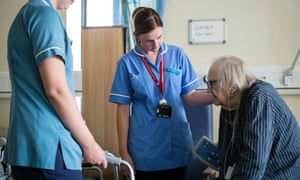
‘A defining moment was seeing the tenderness with which the nurses and assistants treated an elderly patient.’


‘A defining moment was seeing the tenderness with which the nurses and assistants treated an elderly patient.’ Photograph: David Sillitoe for the Guardian

A defining moment was seeing the tenderness with which the coronary care nurses and assistants treated an elderly patient, despite being rushed off their feet during a busy night shift.


‘A&E was extremely busy and there seemed to be a shortage of staff’ – Karen Hourihan, 57, social worker, Liverpool


I waited 55 minutes in excruciating pain for paramedics to arrive. I was taken to A&E and after a short wait in the corridor I was taken into a cubicle. My son was with me and he was able to advocate on my behalf by seeking out medical people and requesting updates. Nobody came to speak to me directly about my injury. I was taken to a holding ward while waiting to be admitted. I arrived at 8pm and was admitted to a ward at 4am when a bed became available. A&E was extremely busy and there seemed to be a shortage of staff.


Staff appeared to have little time to spend explaining things and reassuring patients. This was not too much of an issue for me as my son was present the whole time. However, for anybody alone or older I imagine it would have been an isolating experience. Having said that, the staff did their best to provide a good standard of care.


‘I was put in a room and forgotten about’ – Melanie Salinger, 53, Bishop’s Stortford, teacher


When I visited A&E, I was put into a side room and promptly forgotten about. Eventually, a nurse asked how my consultation had gone and I said I still hadn’t had one. It turns out I had been forgotten; they had no record of me. I was diagnosed with pneumonia and had to leave that room and sit in a chair for 10 hours as there were no beds. I was sat in a busy area with everyone looking at me. My blood pressure was very low, so I actually needed to lie down.


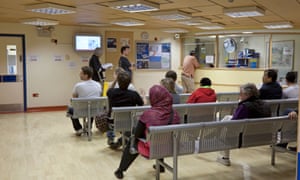
A hospital waiting area


‘I had to sit in a busy area with everyone looking at me. My blood pressure was very low, so I actually needed to lie down.’ Photograph: Alamy Stock Photo

Once a bed was found for me the nurses in the ward cared for me very well. However, the noise at night was constant. It sounded like an all-night party. Someone on my ward complained so it went quiet for half an hour – then started again. How are we meant to recover? I asked to be discharged as I knew I would recover quicker at home.


‘Wonderful service, could not be beaten’ – Larissa, 38, Bexley


I injured my wrist on a Sunday afternoon, but attended the hospital on the Monday morning. I had been told of the awful waiting times so I came prepared with a sandwich, thermos and my kindle.


However, I waited less than 10 minutes to see the nurse. She took my details and asked a few questions about my injury. I was then sent for an X-ray. The nurse informed me there could be quite a wait, but I only waited around 10 minutes. The radiographers were lovely, caring and professional.


The nurse called my name after 10 minutes, showed me the X-ray of my fracture and put me in a temporary cast. I was triaged, X-rayed and plastered in less than an hour and a half. I barely had time to open the thermos, and the kindle remained shut.


Wonderful service, could not be beaten. The NHS staff were great.


A&E in England registers record delays: readers share their experiences

27 Ocak 2017 Cuma

Record number of urgent operations cancelled in England last year

Hospitals cancelled a record number of urgent operations last year as bed shortages left them struggling to cope with the growing number of patients needing surgery, NHS figures show.


Hospitals in England cancelled a total of 4,093 urgent procedures during 2016, which equates to 341 per month. That was 8% more than the 3,777 they had to put off in 2015 and 27% up on the 3,216 such operations they cancelled during 2014.


While some cancellations occur because of the patient’s health, the large majority are due to hospitals having too few beds, especially in intensive care or high-dependency units in which patients can recover afterwards, often because a more urgent case has arrived. A few involve staff shortages or a surgeon becoming unexpectedly unavailable.


The latest figures mean that in all 17,598 patients have had their urgent operation cancelled over the past five years, often at the last minute, despite their condition requiring surgery without delay.


Opposition parties claimed the figures, published on Friday by NHS England, showed that problems in the health service were deepening and that the government was not giving it sufficient money to keep up with the rising demand for treatment.


“Theresa May’s NHS crisis continues, and the problems are worse and more widespread than in previous years. By underfunding and overstretching the NHS, the Tories have pushed health services to the brink”, said Jonathan Ashworth, Labour’s health spokesman.


Norman Lamb, his counterpart for the Liberal Democrats, added: “The government’s stubborn refusal to give the NHS emergency funding means record numbers of operations are being cancelled as hospitals face weeks on end of intolerable pressure. This will inevitably have serious repercussions for patient care and the morale of NHS staff.”


The NHS England data shows that hospitals also cancelled 38,129 non-urgent elective operations between April and October – again, the largest-ever number for those six months.


Of those patients, 2,204 did not have their rescheduled surgery within 28 days, as the NHS Constitution says they should, in another sign of the huge pressures on the service.


However, NHS England’s latest winter situation reports data showed on Frida that hospitals came under slightly less strain last week than during the “winter crisis” that unfolded in the early weeks of January.


Overall 43 acute hospital trusts were forced to divert A&E patients to another emergency department because they could not cope with the large numbers of people needing care, down from 52 the week before. Similarly, 51 trusts declared some sort of alert during the week, down from 68 a week earlier.


A further Eleven people died from flu last week, bringing the total to 53 since the start of December, and 65 needed to be treated in an intensive care or high-dependency unit.


NHS England and Public Health England said the number of flu cases hospitalswere treating was worrying and linked to the particularly cold weather affecting much of England recently.


Record number of urgent operations cancelled in England last year

25 Ocak 2017 Çarşamba

MoJ launches inquiry after record number of prison suicides in 2016

The Ministry of Justice has launched an internal inquiry into the mental health backgrounds of prisoners who killed themselves, as new figures are expected to reveal that 2016 was a record high for self-inflicted deaths across prisons in England and Wales.


The justice secretary, Elizabeth Truss, has also ordered more prison staff to be trained as part of the specialist Tornado anti-riot squads after eight serious disturbances and riots broke out in the prison system in the last three months.


The latest quarterly “safety in custody” statistics are expected to confirm the increasingly volatile state of prisons in England and Wales. Self-inflicted deaths are expected to have risen to 113 in 2016, while incidents of self-harm have increased by more than 25%.


If confirmed, the final figure of 113 self-inflicted deaths in 2016 will compare with 89 in 2015 and the previous record high of 96 in 2004.


One key indicator of prison violence – assaults on staff and other inmates – is thought to have risen by more than 33% to an average of 65 a day across the prison system.


Official figures obtained by the Guardian under the Freedom of Information Act reveal that the number of incidents requiring the specialist Tornado riot squads to regain control of a prison tripled between 2013 and 2015.


The riot squads, which are specially trained to handle violent disorder, were called out five times in 2013, 16 times in 2014 and 15 times in 2015. The Ministry of Justice has not yet released figures for the Tornado squads for 2016, but recent figures for the deployment of the national tactical response group which deals with more minor incidents including rooftop protests, showed they were being deployed more than 60 times a month last summer.


Truss has told MPs that the existing force of 2,000 Tornado-trained prison staff is being increased “to make sure we can deal with any incidents that arise across our prison estate, particularly while we are building up the strength of our frontline”. An extra 2,500 prison staff are being recruited partially to reverse the deep cuts which have seen 8,000 fewer staff working in prisons over the past six years.


The justice ministry has also launched an internal inquiry following the recent inquest into the death of Dean Saunders, a prisoner at Chelmsford jail, who had mental health problems when he was sent to prison.


Dr Phillip Lee, a junior justice minister, has begun an inquiry into recent deaths in custody to see whether there is a pattern in why they are happening and whether policy changes are needed to the way mental health assessments are conducted in prisons.


Deborah Coles, director of Inquest,said: “This is a complacent response. Dean should never have been in prison in the first place. His death was entirely preventable.


“There have been repeated failures to act on the repeated recommendations arising from investigations, reviews, inspection and monitoring boards. We don’t need more reviews – the evidence is all there. It just needs government to take decisive action.”


Her reaction was supported by the shadow justice secretary, Richard Burgon, who said during a Commons debate that evidence from monitoring boards and inquest juries suggested too many people with mental health problems were in prison. “What needs to happen is that the ministry must ensure the recommendations of such bodies are acted upon,” he said.


Truss told MPs that immediate action was being taken to improve security and stability across the prison system, including the recruitment of 2,500 extra prison officers. She is shortly to introduce a new prison and courts reform bill to transform prisons, reduce reoffending and get prisoners into employment.


MoJ launches inquiry after record number of prison suicides in 2016

30 Aralık 2016 Cuma

The Cancer Journals record a new way for women to face ill-health

“This is it Audre, you’re on your own,” wrote black feminist poet and writer Audre Lorde in The Cancer Journals, a collection of diary entries and essays in which she recorded her experience with breast cancer. Published first in 1980, Lorde’s book predates the popularity of the cancer memoir, now an established genre of sorts. “I have cancer, I am a black feminist poet. How am I going to do this now?” she asks. She does do it, and her book radiates with rebellion, even four decades later.


I do not have cancer, but I am a feminist and one diagnosed with an avalanche of overlapping autoimmune diseases. There is a particular dread, I’ve learned, in labelling oneself as “sick”: with its looming and corrosive reality, the word threatens to engulf everything else. Sick writers, both male and female, have often reflected on how illness overwhelms their work. In a letter to a friend, the tuberculosis-addled Kafka wrote: “My head and lungs have come to an agreement without my knowledge.” True for all the unwell, his description points to the particular irony that sickness represents for feminists, those against the equalling of a woman’s worth with her physical self. Does sickness, with its attendant infirmity, its gloomy shadow over the intellectual, represent feminist defeat?


Lorde’s account does not allow such prognostications of surrender. Her diagnosis comes months after an initial cancer scare and a lump that proves (after a harrowing period of waiting and wondering) to be benign. It is not so the second time, and agonising days are spent in the hospital between the biopsy that bears the bad news and the mastectomy that excises her right breast. The violence is not limited to the excision; beyond the fog of pain lie the expectations of a culture that wants, even demands, that women look a certain way. Then as now, it is other women who are selected to deliver the news regarding the requirements of conformity and compromise. In Lorde’s case, “a kindly woman” comes bearing “a soft sleep bra and a wad of lambswool pressed into a pale pink breast-shaped pad”. The message is clear: the absent breast must be made up for somehow, such that Lorde’s one-breasted deviation from the ideal female form is never visible. “You’ll never know the difference,” the woman insists. “I knew sure as hell I’d know the difference,” Lorde concludes.


She is both brave and right. Embracing her one-breasted self, Lorde refuses to render invisible her difference and the experience of pain that is somehow embarrassing to others. Not only does she refuse to wear the prosthesis home from the hospital, she shirks it completely, refusing to be cowed even when a previously decent nurse accuses her of damaging the morale of other patients. In this, a head-on, one-breasted confrontation with societal expectation, Lorde reveals the nobility and worth of strength that is tested. It is not an incidental or reactive position; in Cancer Journals, Lorde explains the feminist rationale behind it. Cosseted in prosthesis, literal or figurative, she argues, women are kept from confronting loss, of breasts or of formerly healthy selves. Entrapped in the “terror and silent loneliness” of denial, they experience a second victimisation. No feminist must permit this.


There is inspiration in Lorde’s position, for me and for all women who have spent time in doctors’ offices and surgeries, feeling estranged from the strong or whole selves of a bygone before. Before reading The Cancer Journals, I had long inhabited their ranks. Arming myself with many medications and some delusion, I believed in the words of the lady who first offers Lorde a prothestic breast; I would “never know the difference” between my pre- and post-sick self. Lorde’s argument proved the vacuity of this. Making my way through the book’s pages, I found a different model of feminist power – not a sidestepping of sickness, but a defiant avowal of the reality of pain and respect for the transformed self it leaves behind. I emerged as neither a contradiction nor an oxymoron, but a vanguard, a model, for others less brave.


The Cancer Journals record a new way for women to face ill-health

15 Aralık 2016 Perşembe

Smoking and drinking among young people at lowest level on record

Young people in England born since the turn of the century are the most clean-living generation in recent times, with the rates of those choosing to smoke cigarettes and drink alcohol the lowest on record.


Fewer than 5% of children aged eight to 15 have smoked, down three-quarters since 2003, while only about 17% admitted ever drinking alcohol, a fall of two-thirds, according to an annual survey of health trends.


At the same time, the proportion claiming to eat five portions of fruit and veg has almost doubled in the same period to a fifth. Despite that, 28% of children aged two to 15 were overweight or obese in 2015, and only one in five were as physically active as they ought to have been.


Nine in 10 mothers and eight in 10 fathers of overweight children did not recognise the problem, according to the Health Survey for England 2015, published by NHS Digital on Wednesday, with charities warning that obesity is still an urgent public health epidemic.


The dramatic fall in the number of young smokers follows a cultural shift in the perception of smoking, as well as significantly tighter restrictions on tobacco sales.


In the past decade, the government raised the legal age for buying tobacco from 16 to 18, banned smoking in enclosed public spaces, introduced graphic health warnings and introduced rules that hide tobacco products from view in shops.


At the same time, off-licences have become far stricter about sales to teenagers, and bars and clubs have introduced stringent ID requirements for entry.


Gillian Prior, the head of health at the National Centre for Social Research, which carried out the survey of 8,034 adults and 5,714 children on behalf of the NHS, said: “Changes to the law mean that under-18s are prohibited from buying cigarettes and the Challenge 25 policy adopted by many retailers has meant that these laws are more rigorously enforced than they have been in the past.


“But we should not underestimate the importance of changes in the nature of childhood; changes in technology and society mean that teenagers in particular spend their time in a very different way compared to teenagers 15 years ago.”


A Department of Health spokesperson said: “We are committed to helping people lead healthier lives so it is encouraging to see a decline in smoking rates and fewer children drinking alcohol.


“However, this survey reaffirms that we can’t let up in our efforts to tackle childhood obesity – and we are confident our world leading plan will make a real difference in the long term.”


Smoking and drinking among young people at lowest level on record

24 Kasım 2016 Perşembe

Ebola nurse Donna Wood had unblemished record, tribunal hears

The nurse who was found to have concealed her colleague Pauline Cafferkey’s raised temperature before she tested positive for Ebola risked her life for others in Sierra Leone and has an otherwise unblemished record, a tribunal has heard.


Donna Wood’s lawyer told an independent panel at the Nursing and Midwifery Council that he accepted their findings but said her actions amounted to a brief “lapse of judgment” by a professional who had given almost 30 years of “distinguished” service to the NHS.


Ben Rich was speaking the day after Wood had been found guilty of misconduct following allegations that she knew Cafferkey had a high temperature and that she failed to escalate this during the screening process at Heathrow airport when they returned from six weeks volunteering in Sierra Leone in December 2014.


Before the panel retired to consider whether her misconduct amounted to an impairment in the nurse’s current fitness to practice, Rich told them: “On your findings it would be incorrect to find that any of those professionals, Donna Wood included, really thought that Pauline Cafferkey had Ebola.”


He told the panel that several witnesses including the lead clinician on the screening team, Deepti Kumar, had said that Cafferkey did not seem unwell on the day.


“Had there been the slightest suspicion that actually Pauline Cafferekey was ill, you know that witnesses you found to be honest, thought that Pauline Cafferkey seemed completely well,” Rich said.


Cafferkey initially passed the screening process after her temperature was found to be over 38C but was recorded on a form as normal. When she returned to the screening room her temperature was taken three more times and found to be normal.


Cafferkey had told the manager of the screening process, David Carruthers, a former Metropolitan police officer, that she had taken paracetamol about an hour before, which could have masked her real temperature.


But Carruthers, who had no clinical training, did not understand the significance of this and failed to pass the information on to Kumar, who was assessing Cafferkey in the second screening.


Rich pointed out that Kumar was among several witnesses who had nonetheless said that Cafferkey appeared well despite her temperature.


He told the panel on Thursday that the findings amounted to a “momentary lapse of judgment in a nurse who has an otherwise distinguished record of service to the NHS, to the public, a distinguished period of service to Ebola patients before this during which time she risked her own life for the benefit of others”.


An Ebola treatment centre outside Freetown, Sierra Leone, in December 2014.


An Ebola treatment centre outside Freetown, Sierra Leone, in December 2014. Photograph: Baz Ratner/Reuters

Wood was brought before the NMC on three misconduct charges, including recording Cafferkey’s temperature reading dishonestly in order to hide it from public health officials.


It transpired during the hearing that the group had decided to take their own temperatures because the screening team were not equipped to do so. They had run out of screening forms and only had four screening cubicles for about 50 people.


On Wednesdsay the NMC found that she had not recorded an incorrect temperature as alleged but found that she had suggested that Cafferkey’s temperature be recorded lower so that the volunteer group could leave the “uncomfortable” and “chaotic” area more quickly.


Wood is facing a professional sanction, which could involve being struck off or a suspension.


Aja Hall, the case presenter for the NMC, told the panel the case was “particularly serious” as “Pauline Cafferkey was in the starting stages of Ebola and in an extremely busy and public place”.


She said it was “well established” that a high temperature was the “first sign that there may be infection which is why so much significance was placed on the taking of temperature, both in Sierra Leone but more crucially through the screening process at Heathrow airport”.


The panel is expected to to conclude its deliberations on Friday.


Ebola nurse Donna Wood had unblemished record, tribunal hears

17 Ekim 2016 Pazartesi

Use of strongest antibiotics rises to record levels on European farms

Use of some of the strongest antibiotics available to treat life-threatening infections has risen to record levels on European farms, new data shows.


The report reinforces concerns about the overuse of antibiotics on farms, following revelations from the Guardian of the presence of the superbug MRSA in UK-produced meat, in imported meat for sale in UK supermarkets, and on British farms.


According to the data from the European Medicines Agency, medicines classified as “critically important in human medicine” by the World Health Organisation appear to be in frequent use on farm animals across the major countries of the EU, including the UK. This comes in spite of WHO advice that, because of their importance, these drugs should be used only in the most extreme cases, if at all, in treating animals.


The latest report from the EMA collates data from member states on the sales of antibiotics for veterinary purposes in 2014, and shows that antibiotic use on farms fell by about 2% on the previous year overall, and by as much as 12% in many countries. But this disguises the rise in the use of the strongest medicines, such as colistin, which is a last resort for life-threatening human illness.


The percentage of antibiotics sales made up by the most potent antibiotics remained steady or in some cases increased slightly, indicating an increase in the amount of so-called critically important antibiotics used.


For instance, sales of fluoroquinolones – the newest versions of which are used to treat life-threatening illnesses including pneumonia and Legionnaire’s disease – stood at 141 tonnes across the countries surveyed in 2013, and rose to 172 tonnes in 2014. Sales of macrolides, also classed as critically important to human health, rose from 59 to 67 tonnes in the same period. This shows that efforts to prevent the drugs most crucial for human health from being used in farming are failing.


Experts are increasingly concerned by growing evidence that the overuse of antibiotics on farms – which in the EU account for three times the quantity of antibiotics dispensed to the human population – is endangering human health by fostering the development of bacteria resistant to even the strongest medicines.


Cóilín Nunan, of the Alliance to Save Our Antibiotics, which comprises several NGOs concerned with animal and human health, said: “The shocking overuse of farm antibiotics shown [in the report] is a result of the continued failure by most countries to ban routine preventative mass medication in intensive farming.


“Spain now uses 100 times more antibiotics per unit of livestock than Norway, 80 times more than Iceland and 35 times more than Sweden. The main reason for the difference is that Spain, like most of Europe, allows routine mass medication, whereas the Nordic countries do not. The increased use of last-resort and critically important antibiotics is particularly alarming and confirms that reliance on voluntary and softly-softly approaches is not working.”


The Guardian has exposed new evidence of the superbug MRSA present in meat produced in the UK and on sale in UK supermarkets. When present in food, the bug can be killed by cooking, but lapses in hygiene can result in human infection. It can be contracted from infected farm animals, so the finding that UK farms are becoming a reservoir for the disease shows there is a danger of it spreading more widely in Britain.


Antibiotic resistance has been called a threatened “apocalypse” by the UK’s chief medical officer, Dame Sally Davies. She has warned that in less than two decades operations now regarded as simple, such as hip replacements, could become dangerous to patients because of the risk they could contract untreatable infections. The overuse of antibiotics has been a key factor in the rise of resistant bacteria.


The government’s review of the situation, conducted by Lord O’Neill and published last year, found that farms were a potential source of increasing resistance. Germs that acquire immunity to strong antibiotics in animals can spread to humans.


Routine use of antibiotics on animals – which is frequently practised across the world as a method of promoting their growth – is supposed to be banned within the EU.


However, the new data from EMA showed that farmers and vets are over-using strong antibiotics, campaigners told the Guardian. The O’Neill review advised that the UK and other countries should aim to use no more than 50mg of antibiotic per kilogramme of livestock, but the data shows that the average use across the EU is three times higher at 152mg per kg, according to the Alliance to Save Our Antibiotics.


Use of strongest antibiotics rises to record levels on European farms

Maternity wards in England to be rated by safety record

The government is to release new ratings for maternity wards across England to allow prospective parents to compare and contrast services in NHS hospitals, as part of a drive to reduce instances of stillbirth and brain injuries during labour.


Maternity data detailing the frequency of accidents within clinical commissioning groups and the health prospects of expectant mothers – including the percentage of smokers, for example – will be collated to form England-wide ratings.


In a major speech on Monday, Jeremy Hunt will also unveil proposals to allow the NHS to offer compensation automatically to parents of babies left stillborn or brain-damaged because of poor care. The health secretary wants parents of children starved of oxygen at birth no longer to endure a wait of about 11 years for compensation.


Jeremy Hunt arrives for the fourth day of the Conservative Party Conference 2016


Stillbirth rates are still among the highest in western Europe, according to Jeremy Hunt. Photograph: Carl Court/Getty Images

At present parents often become embroiled in lengthy and costly legal action against the NHS, forcing grieving families to fight for months or even years before the health service agrees to compensation.


Bereaved parents often have to instruct solicitors to determine the cause of their child’s death, with health bosses sometimes denying any liability until they are ordered to pay compensation by a judge.


Under the new scheme, which was first recommended by Tory peer Baroness Cumberlege earlier this year, an independent rapid resolution and redress scheme will be set up to investigate tragedies in childbirth, which would quickly decide whether compensation should be paid.


The launch comes as figures showed that the cost of settling claims with parents whose children are damaged at birth has reached more than £0.5bn. The NHS as a whole pays out more than £1bn a year in negligence compensation, and reducing that cost is seen a key way of mitigating the financial crisis facing the service.


In February this year, Cumberlege recommended the investigations into maternity cases and any subsequent payouts are made by the trusts without any court involvement. The recommendation was one of several made by Cumberlege, who has been chairing an independent review of maternity services in England.


The new proposals are modelled on a Swedish scheme, which has reduced serious avoidable birth injuries by about 50% in the past six to seven years.


Health secretary Jeremy Hunt said he hoped to end the culture where going to court was an automatic “first step” and instead foster a culture of transparency so the NHS can learn from its mistakes.


Under the plans, claims by parents who believe medical errors have caused severe damage to their children – such as cerebral palsy or brain damage – would be assessed by investigators working independently of the NHS trust. The investigators would quiz NHS staff and parents and look at medical records.


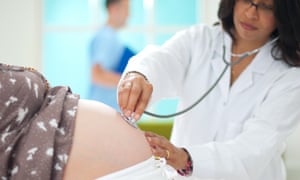
pre natal check upPregnant woman gets bump checked


Compensation for errors around the time of birth has reached more than £500m a year. Photograph: Sturti/Getty Images

Their findings would be presented to a panel of legal and medical experts who would decide whether any compensation is warranted and arrange for payments to be made to the family.


The government hopes the scheme – which would assess about 500 cases a year – will help dismantle what it sees as a “litigation culture”. It would work out far cheaper for the NHS than the current route, in which cases go to court or are settled out of court, often for millions of pounds.


Data from the NHS Litigation Authority shows the compensation bill to the NHS for errors around the time of birth is rising, reaching £509.3m in 2015/16 – up from £393.2m in 2014/15.


A spokeswoman for the Department of Health said the plan, which will be the subject of a consultation, would not “lock” parents into the scheme and would let them bring their own legal case against the trust if they were unhappy with the outcome.


The new maternity ward ratings follow Hunt’s recent creation of similar schemes to help patients and families compare the quality of cancer and dementia care. However, once they start being published, they will set out details for services within each of the NHS’s 209 GP-led clinical commissioning groups rather than the 156 acute hospital trusts with maternity services. Hunt said that openness about the quality of care will help empower patients and reduce wide variation in care quality.


In a speech at the Royal College of Obstetricians and Gynaecologists, Hunt will also set out £8m for training, with at least £40,000 available to each NHS trust in England.


A £250,000 maternity safety innovation fund will pilot new ideas for improving care, while maternity ratings for every part of England – using data that already exists – will be published together to encourage greater transparency.


Other measures being unveiled include a new Healthcare Safety Investigation Branch, modelled on the Air Accidents Investigation Branch. A new tool will also standardise the investigation of every stillbirth and early baby death so lessons can be learned.


Hunt said: “Our NHS maternity staff do a fantastic job under huge pressure. But even though we have made much progress, our stillbirth rates are still among the highest in western Europe and many on the frontline say there is still too much of a blame culture when things go wrong – often caused by fear of litigation or worry about damage to reputation and careers.


“These comprehensive measures will give practical support to help trusts improve their approach to safety – and help to foster an open and transparent culture so that the courts become a last resort not an automatic first step.”


In May this year a new report revealed figures that 15 babies are dying every day in the UK from stillbirth, during labour or within four weeks of being born.


The report was published by MBRRACE-UK (Mothers and Babies: Reducing Risk through Audits and Confidential Enquiries in the UK), which is a collaboration of academics and medical experts.


It found that there were big variations in death rates across the country, from 4.1 to 7.1 per 1,000 births. Women from the poorest backgrounds and black and Asian mothers run a higher risk that their baby will die in the womb or soon after birth.


In nearly half of all stillbirths (46%), the causes of death are unknown, said the report. The biggest causes of death in the early weeks of life are complications following birth (32%) and congenital anomalies such as heart defects (28%), and very premature birth (13%).


The MBRRACE team flagged up the need for research into premature births and also called for every maternity unit to review and record the causes of death in the same way to try to discover why there are such stark variations around the country.


James Taylor, head of policy and public affairs at disability charity Scope, said of the new plans: “Finding out that your child has been affected by a birth injury can be a very traumatic time for parents.


“So it is very positive that the government will be listening to disabled people and their parents on how the NHS can better support families when serious issues do occur during birth.”


Maternity wards in England to be rated by safety record

7 Ekim 2016 Cuma

Britain’s poor record on health spending | Letters

For a rich nation, we are asking our NHS doctors and nurses to provide excellent care with comparatively limited levels of support, and it is hardly surprising that standards of delivery in particular areas of care appear low (Nine out of 10 NHS groups failing on cancer care, ratings show, 4 October).


OECD figures for 2014-15 show that the UK ranks 15th out of 42 countries surveyed in public spending on health provision. The 14 countries ranked above the UK spend, on average, 25% more per capita than the UK. With 2.8 doctors per 1,000 inhabitants, the UK ranks 24th out of 39 countries surveyed by the OECD; and with 8.2 nurses per 1,000 inhabitants, the country ranks 17th out of 38.


It is in levels of bed provision, however, that the figures appear most disturbing. With 2.7 beds per 1,000 inhabitants, the UK ranks joint 27th of 35 countries surveyed. Thirteen countries have more than twice this number of beds per patient and four – Japan, Korea, Russia and Germany – have three times as many.


These figures reflect the relatively low priority that successive governments have given to public health provision over several decades.
David Wilcock
Dalston, Cumbria


I am dismayed to see the Guardian persisting with the popular conception that suffering from cancer somehow equates to having a fight (Actor Ben Stiller discloses prostate cancer fight, 5 October). Can we please remember that cancer is just one of a list of serious diseases, and that it does a profound disservice to cancer sufferers to infer that it is some sort of battle that you can either win or lose? As with all diseases, whether you get better or not is very often not in your control.


I, like Ben Stiller, had prostate cancer which was detected by a blood test and then treated by a radical prostatectomy. It was bad luck on me to have contracted the disease but I was fortunate to have been diagnosed at an early stage and to then receive the correct treatment with a successful outcome. I was not a winner. I had not won any fight but merely been well treated for a serious disease. If I had been less fortunate with my treatment would I be seen as a loser, one who had not fought hard enough?
Peter Clark
Nottingham


Join the debate – email guardian.letters@theguardian.com


Britain’s poor record on health spending | Letters

28 Eylül 2016 Çarşamba

Care home residents deprived of liberty in record numbers

Record numbers of care home residents are being deprived of their liberty by being put in straps, locked in or given behaviour-controlling drugs, fuelling fears that some are being mistreated.


Campaigners have voiced concern that some residents, including dementia patients, are being wrongly denied their freedom and treated as “second-class citizens” – for example, by being locked in their rooms.


In 2015-16, care homes in England asked local councils to approve 195,840 applications to deprive a resident of their liberty – most of them older people – under the deprivation of liberty safeguards (DoLS) legal framework. The figure was the highest since the system began in 2009 and a big jump on the 137,540 applications in the previous year.


Hospitals occasionally seek permission to keep a patient locked up, but care homes make by far the most DoLS applications and have been entering requests much more regularly since a supreme court ruling in March 2014. That judgment, which clarified the form of an “acid test” for what constitutes a deprivation of liberty, sparked an immediate and sustained increase in the number of applications.


DoLS requests are usually made to avoid someone harming themselves. Councils have to assess if applications have fulfilled six criteria and respond within 21 days, or within seven days if it is an urgent case. The system is meant to ensure independent assessment of decisions to deny the liberty of people deemed to lack the mental capacity to consent to the care they receive.


Of last year’s 195,840 applications, councils processed 105,055. They approved 76,530 (73%) of those and rejected the rest as inappropriate – a big rise on the 10,520 rejected in the previous year. However, applications are usually considered only after someone has been denied their freedom, which means that last year about 28,500 people were restrained, locked in or given medication before the move was deemed inappropriate.


Martina Kane, senior policy officer at the Alzheimer’s Society, said: “The safeguards granted by deprivation of liberty safeguards are an essential part of protecting the right to liberty of people with dementia. It is disgraceful that nearly 30,000 people were wrongfully deprived of their liberty, and in over a quarter of cases practitioners are still locking people in, sedating them, restraining them or otherwise treating them as second-class citizens.


“Depriving someone of their liberty should always be a last resort and only ever done in someone’s best interests. It is crucial that the quality of care provided to people with dementia is improved to ensure that.”


Understaffing in care homes could lead to every door in an entire premises being locked overnight, Kane added.


The latest annual DoLS figures collated by NHS Digital show that applications are more likely to be made for older age groups; 44% are for people aged 85 or over. Many of these older people suffer from dementia.


The Local Government Association, which represents councils, said the figures were of great concern. “These alarming figures are further evidence of the significant added pressure facing local government as a result of increased DoLS assessments, which is estimated to be costing councils more than £170m a year,” a spokeswoman said.


“The government needs to fulfil its promise to overhaul the system as a matter of urgency and provide adequate funding so that councils have the time and money to do this properly.”


Care home residents deprived of liberty in record numbers

8 Eylül 2016 Perşembe

NHS "in perpetual winter of Narnia" as waiting list reaches record 3.9m

The NHS is missing so many of its key performance targets that it has entered “the perpetual winter of Narnia”, a medical leader has said, after figures revealed the highest ever number of patients on waiting lists.


Claire Marx, president of the Royal College of Surgeons, criticised the NHS’s failure to give patients planned care in hospital within the required 18 weeks, such as surgery for cataract removals, hernia repairs and hip and knee replacements.


The number of people in England who are awaiting such treatments has climbed to almost 3.9 million.


Hospitals are meant to treat 92% of patients on the “referral-to-treatment” (RTT) waiting list within 18 weeks, according to guarantees in the NHS constitution. However, they did so in just 91.3% of cases in July, NHS-wide performance data released on Thursday shows. It was the service’s worst RTT performance in more than five years.


Hospitals met the 92% target in nine categories of RTT patients, including those requiring treatment for eye problems (92.7%), cardiac care (92.7%) and gynaecological problems (92.3%). However, it missed the target in 10 other categories. It treated barely four of of five (81.7%) of all those awaiting neurosurgery within 18 weeks, 86.9% of those needing plastic surgery and 88.9% of trauma and orthopaedic patients.


“It feels as if the NHS has stepped through the wardrobe and into the perpetual winter of Narnia,” Marx said. “We cannot forget that behind these statistics are potentially very ill and anxious patients who are being made to wait far too long for treatment. This is the true impact of the serious financial pressure we’ve seen the NHS come under in recent months.”


The NHS also missed targets covering A&E, ambulance response times, diagnostic tests, two forms of cancer treatment and rapid first treatment for those experiencing psychosis for the first time.


Dr Mark Holland, president of the Society for Acute Medicine, said: “This data reflects a system which is close to breaking down.”


Bed blocking has reached record levels. In July a total of 184,188 bed days were lost to delayed discharges – when patients are fit to leave but social care support is not in place – up sharply from 147,376 in the same month last year, and the highest number since records began in August 2010.


At midnight on the last Thursday in July, 6,364 patients who were fit to leave were still in their beds, up from the previous record of 6,105 patients the month before.


“For every 100 people who come to A&E, around 30 are admitted and, of these, 20 come under acute medicine. That number is increasing and our front-of-house workforce is depleted”, Holland said.


“However, performance is most significantly hampered due to our inability to discharge people at the backdoor of our hospitals. Failure to get people home is, in my view, a national emergency.”


Medical leaders want ministers to urgently pledge more money for the NHS to tackle its growing problems.


Marx said: “The forthcoming autumn statement offers an opportunity for the government to provide more money for the NHS and social care, and to agree to a cross-party commission to review how we can make the NHS sustainable for the long-term. Without a serious look at what the NHS needs in funding, we will remain in a state of constant winter.”


NHS England said that despite missing so many targets, its performance was still very good by international standards.


“As the NHS responds to ever increasing care needs, hospitals are continuing to look after more than nine out of 10 A&E patients within four hours, and more than nine in 10 patients are waiting less than 18 weeks for their routine operations,” said Matthew Swindells, its national director of operations and information.


“While this is probably the best performance of any western nation, these figures underline the pressures facing the NHS, and the obvious risks to patient care posed by weeks of further drawn-out industrial action.”


NHS "in perpetual winter of Narnia" as waiting list reaches record 3.9m

31 Ağustos 2016 Çarşamba

US teen pregnancy rate drops to record low due to "increased contraceptive use"

A precipitous drop in the US teenage pregnancy rate to record lows was driven by improved use of contraception, a new analysis from the Guttmacher Institute found.


“There was no significant change in adolescent sexual activity during this time period,” Dr Laura Lindberg, a principal research scientist with the Guttmacher Institute and the paper’s lead author, said in a statement. “Rather, our new data suggest that recent declines in teens’ risk of pregnancy – and in their pregnancy rates – are driven by increased contraceptive use.”


Linberg and her co-authors found that while teenage girls’ sexual activity remained constant from 2007 to 2012, the percentage of sexually active teens who used at least one type of birth control the last time they had sex increased significantly, rising from 78% to 86%.


The researchers found the use of all “highly effective methods”, like the birth control pill or IUD, increased from 2007 to 2009. There was a marginal significant increase in the use of the IUD or implant from 2007 to 2009 and in use of the pill overall. There were non-significant increases in condom use and withdrawal, while use of the ring or patch declined significantly over the 2007 to 2012 period.


The changes in contraceptive use resulted in a 28% decline in pregnancy risk index from 2007 to 2012. Not only did improvements in contraceptive use drive that entire decline, but they were also responsible for neutralizing a 6% rise in risk over the same period due to increased sexual activity among teens. The pregnancy risk index is a calculation that “summarizes the risk of pregnancy among all adolescent women, estimating the influence of both changes in the level of recent sexual activity and changes in the level of contraceptive risk”, according to the study.


In April, the Guttmacher Institute reported that the national pregnancy rate declined 23%from 2008 to 2011 for women aged 15 to 19, falling from a rate of 68.2 pregnancies per 1,000 women to 52.4. That means about 5% of teens became pregnant in 2011. It was the “lowest rate observed in the last four decades”, they said, with declines across all 50 states and racial and ethnic groups, though some disparities remained. In 2011, they found a rate of 31.3 births per 1,000 teen women, down from 40.2 in 2008, and 13.5 abortions per 1,000 teen women, down from 18.1 in 2008.


The new study used data from the National Survey of Family Growth, a survey conducted by the Centers for Disease Control and Prevention, on sexual activity, contraceptive use and contraceptive failures to estimate the pregnancy risk index for the years 2007, 2009 and 2012.


The authors noted it was important to ensure teenagers’ “access to comprehensive sexuality education that provides medically accurate information about contraception”. They wrote that the percentage of adolescents “who report receiving formal instruction about birth control has declined, while the share receiving only abstinence instruction has increased”. The American Academy of Pediatricians recently urged doctors to fill in the gaps of sexual health education with their patients. They noted that abstinence-heavy education is a concern for doctors when it comes to reducing sexually transmitted infections and unintended pregnancies, as those programs can exclude information about contraceptives.


The internet, the authors suggested, can offer new opportunities for teenagers looking for information on sexual health, and recommend further research to examine that hypothesis. A separate study from last year found a correlation between decline in transmission of sexually transmitted infections and access to high-speed internet.


“Policy discussions should focus on supporting teen contraceptive use generally, including ensuring access to a full range of contraceptive education, counseling and methods,” Heather Boonstra, the Guttmacher Institute’s director of public policy, said in the release.


The Guttmacher Institute’s study used data up until 2012, however, more recent data from the CDC’s Youth Risk Behavior Survey “shows sharp declines in sexual activity among high school students from 2013 to 2015 – after a long plateau from 2001 to 2013”, the authors wrote. “At this point, it is unclear whether these new data represent a new trend or are the result of other factors,” the authors wrote.


Another analysis from earlier this month found that millennials are having less sex than those in previous generations.


US teen pregnancy rate drops to record low due to "increased contraceptive use"