Britain's etiketine sahip kayıtlar gösteriliyor. Tüm kayıtları göster

22 Nisan 2017 Cumartesi

What do Britain’s younger voters see as the key challenges?

TECHNOLOGICAL DISRUPTION


ALICE MUIR, 22


Glasgow
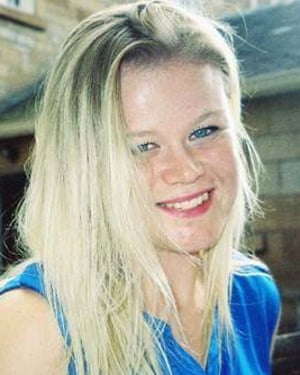


Alice Muir.

Alice Muir.

Like a lot of people in the country, perhaps, it’s the first time in my life when I have absolutely no idea who I’m going to vote for or, to be quite honest, what I want to vote for.


I made my decision about Brexit and, previously, about Scottish independence and the disappointment in not seeing the results I was hoping for in either of those polls was hard enough, but at least at that point I could accept those results were final and assume that life would move on and that the job would be done by the people who get paid to do it.


Maybe what we need, now more than ever, is the ability to express our views in a country that is rapidly changing (or, as some would say, rapidly deteriorating). We need the ability to protest, not just physically, but to be able to utilise the tools of new technology to bring the public together and seriously hold politicians to account.


But if the internet is going to be the main platform for political expression and accountability, then we also need security in the face of technological disuption. Systems need to be put in place to ensure that the information that we put online is not exploited and that the freedom of information on the world wide web that we benefit from is not corrupted.


Therefore, I have decided that, come 8 June, I will make my decision based on each party’s position on internet security.


So, while that automatically knocks the Tories from my line of view, this is an opportunity for opposing parties to think seriously about the importance of the internet to them and the influence it has on political change.


MENTAL HEALTH


TOM CHIGBO, 29


Leeds



Tom Chigbo.

Tom Chigbo.

I would love it if mental health became the big issue at this election. I have close family and friends who have wrestled with anxiety, depression and psychosis for many years. They have required a range of interventions, including self-care, talking therapies, medication and detention under the Mental Health Act.


On top of the inner turmoil, navigating through the various systems and services has often been a tortuous journey. My wife is a psychiatrist and every day I learn more about the incredible pressures faced by overstretched NHS staff.


Mental health has also become the leading concern in my work for Leeds Citizens, a branch of the community organising charity, Citizens UK. Our listening campaigns with faith groups, schools and community organisations across the city have revealed the catastrophic consequences of our failure to invest properly in mental health.


One couple spoke movingly about losing their son, Martin, who took his life while on a four-month wait to see a psychiatrist.


We are now campaigning for our clinical commissioning group to fund mental health workers based in every GP surgery, so that people like Martin no longer fall through the gaps in a system unable to cope.


In recent years, there has been growing support for anti-stigma campaigns, which have done a great deal to raise public awareness and break taboos. We know that every time a celebrity speaks about their own struggles, whether it’s Stormzy or Prince Harry, more people are encouraged to open up and seek support.


But changing attitudes alone is not sufficient and people can’t be directed to services that aren’t there. My hope for the election is that all this awareness is channelled towards clear commitments from party leaders and candidates to increase funding, make specific improvements to services and secure more accountability from NHS leaders.


GENDER EQUALITY


LUCY WHITEHOUSE, 25


London



Lucy Whitehouse.


Lucy Whitehouse.

Theresa May is a woman. She’s also the second female Conservative leader and our prime minister. Hooray for gender equality – genuinely, so far so good. There’s an important value in visible female role models.


However, as May’s leadership ably illustrates, representation can easily become a smokescreen for equality failings. It’s pretty ridiculous and fairly insulting to suggest, as many do, that because of our prime minister’s double X chromosomes, gender equality sees automatic progress under the Tories.


Let’s dismantle that myth. First, women make up just 21% of the Conservatives’ parliamentary members, compared to Labour’s 44%. May still fails to take action on Yarl’s Wood, the immigration detention centre that Yvette Cooper has called “state-sponsored abuse of women”’, and that has seen, for example, a disabled victim of trafficking dragged along “like a goat”. . The government’s proposed child tax credit reform is currently seeing robust, on-the-ground opposition, particularly aimed at its “rape clause” that will see women forced to prove their third child was born as a result of non-consensual sex. And then there’s the gutting impact of austerity. Figures from the Women’s Budget Group have found that women will be hit with a massive 85% of the burden of the government’s cuts to social security and tax changes by 2020.


So what’s the alternative? As a freshly expelled member of the Labour party, and with no Women’s Equality candidate standing in my constituency, my vote is to play for. I may well still back my former fellows if their manifesto goes beyond lip service.


Here are some core pledges on gender equality that we need now: equal parenting and care-giving, equal pay and opportunity, equality healthcare and research, equal education and the end of violence against women. And, Lib Dems and Labour, let’s see women leaders next time. Because having women at the top really does matter, and clearly, we can’t afford to leave it to the Tories.


SCHOOLS AND SKILLS


JOE PORTER, 20


Staffordshire
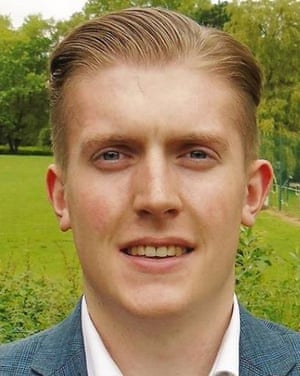


Joe Porter.

Joe Porter.

For too long, our education system has failed young people. We are too often told that the university route is the only viable option, leaving us with a massive skills shortage. Brexit gives us a unique opportunity to improve our education system; that requires ambitious, radical reform because today the UK is placed only 16th out of the world’s 20 developed economies on technical education.


Improving technical training through the newly announced T-levels in the Spring Budget will help to make the system more balanced and reverse our huge productivity problem. It will allow us to equip young people with the skills they need to fill in gaps in certain sectors, rather than often having to rely on immigration. A solid ground in academic subjects is also vital. Meritocracy therefore needs to be at the heart of this country’s education system.


It is unacceptable that for far too many children, their chances are determined by where they live or the size of their household income. School selection based on house prices and parental income is wrong. The ban on grammar schools should be lifted. A new generation of them will help to increase the capacity and diversity of the school system. Too many young people from ordinary working families have been left behind and are deprived of a good education. Theresa May can defeat the social injustices of our time.


EMPLOYMENT OPPORTUNITIES


Khadija Mannan, 22


Manchester



Khadija Mannan.

Khadija Mannan.

I was brought up in Tameside, in Greater Manchester, one of the most deprived areas in England. I attended a secondary school that at that time was quoted as a failing school. There was no real stability and head teachers came and went; many of my friends and peers never saw education as beneficial to them. However, I recently graduated – in law – from Manchester University. So it is not surprising that the potential for education to change lives means that I will pay a huge amount of attention to policies on schools. (I’m currently a volunteer at a primary school, courtesy of a youth and education charity, City Year UK.)


But equally, in areas like this, what can young people do even if they have acquired a good education? How do the parties propose to help create a healthy and high-skilled jobs market?


I can understand that it was precisely because of a sense of frustration on this front – anxiety about jobs – which caused many people, in these parts and elsewhere, to decide to vote to leave the European Union.


But now that article 50 has been invoked, it is important that the next government ensures that the decision made by the people does not harm the jobs market.


I think that volunteering of the sort that I am doing enhances skills and experience. I have been given a huge amount of responsibility through running breakfast and after-school clubs. But you can’t make an economy out of volunteers and I fear that Brexit will make it increasingly difficult to find a job. It’s great that education – and volunteering – introduces you to new possibilities, but it’s the uncertainty about future employment that most exercises me.


HIGHER EDUCATION


SARA ABBASI, 24


London



Sara Abbasi.


Sara Abbasi.

I believe good-quality education should be accessible to all and free of hefty price tags. While Scotland and most continental countries charge nothing (or next to nothing) for university degrees, universities in other parts of the UK are some of the most expensive to study in the world.


To make matters worse, tuition fees are increasing year on year – with a 2.8% inflation-linked rise coming into effect this autumn.


In a study published by the Sutton Trust last year, it was found that undergraduate debt in England was the highest in the English-speaking world, with students celebrating graduation with an average £44,000 debt looming over them.


To make matters worse, international students, who spend the most on their British university education, end up getting an ever worsening deal.


Due to the strict visa rules, it is becoming increasingly difficult for them to stay on in the UK to work after graduation. Saajid Wasik, a student from Sri Lanka, has paid on average £20,000 a year on fees. Working in the UK after graduation would mean some return on investment.


Sending students back home also means that the British labour market is missing out on great talent, as qualified foreign graduates bring with them not only expertise in their fields but also a breadth of cross-cultural awareness.


It is clear to me that we are taking a huge step backwards when it comes to higher education. With the abolition of maintenance grants, an overwhelming number of young people, especially those from underprivileged backgrounds, might now be dismissing the idea of going to university altogether.


While countries such as Germany create a lot of room in their federal budget for education and research, they no longer seem to be a priority on Britain’s to-do list.


ENVIRONMENT


MEG KNEAFSEY, 23


Bolton
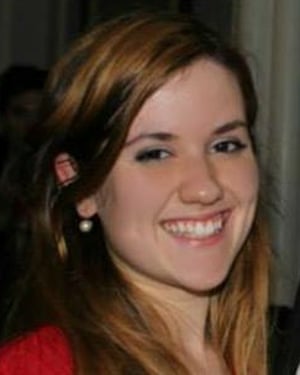


Meg Kneafsey.

Meg Kneafsey.

One of the topics that we continue to avoid – helped by the all-consuming Brexit – is the environment. Are we waiting for the point of no return?


Human-induced climate change causes irreversible damage to our planet. Beyond its devastating effects on wildlife, it is contributing to the strain on food resources and creating the most extreme weather. If we committed to altering our ways, we could make a real difference.


This change must be government-led. If it is left to companies, short-term profits will ultimately take priority. We’ve seen what simple changes can be made, such as the plastic bag ban that meant in one year alone we used 6bn fewer. Similarly, in France they’ve introduced bans on single-use plastic cutlery and in Sweden the government has been praised for its recycling programme.


Over recent months, I’ve heard complaints from Remainers concerned that leaving the EU will mean weaker environmental laws in the UK. Currently, the EU has an action plan to tackle climate change with targets for all member states that include emissions, efficiency and renewable energy. However, this has been criticised as simply not being enough to address the problem.


Leaving the EU does not mean that we as a nation will abandon our commitment to the environment. In fact, I see this as an opportunity to define the UK as a climate change warrior and look forward to a greener, brighter future with laws that are more progressive than the requirements of the EU.


REDUCTION IN VOTING AGE


JOE STOCKLEY, 21


Cardiff
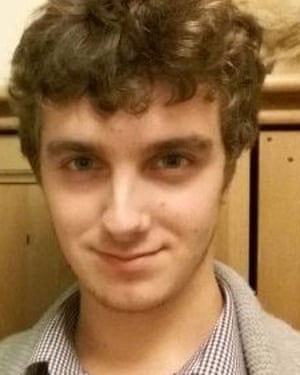


Joe Stockley.

Joe Stockley.

According to British Youth Council statistics, only one of the major parties doesn’t support votes at 16.


That party is the one in power and the one expected to have major success in the forthcoming general election. And I quote: “We are not convinced by the argument for changing our longstanding voting arrangements and for reducing the voting age.”


It’s the Tories, if you didn’t guess. But why? Why deny 1.5 million 16- and 17-year-olds a vote? Scotland demonstrated the impact of young people voting in large numbers, with 75% of 16- and 17-year-olds taking the opportunity to have a say in their future in the Scottish referendum.


If young people can have an impact on the future only in the future, then they will hit upon the same problems that challenge their elders.


It’s time for fresh eyes and fresh opinions and, most importantly, it seems only fair to offer votes for those who legally can and do join the army, get married or pay taxes.


Slightly more broadly, will we see politicians attempting to engage young people in the lead-up to the general election? Or will the same pattern be followed: young people will be talked about, not talked to? Quite frankly, I’m becoming bored with that.


I’m not sure which way I will vote but on this issue alone, the Tories have alienated themselves with their lonely opinion on votes at 16.


What do Britain’s younger voters see as the key challenges?

8 Ocak 2017 Pazar

Theresa May denies "humanitarian crisis" in Britain"s NHS

Theresa May has rejected claims by the British Red Cross of a “humanitarian crisis” in the health system but acknowledged there were “huge pressures” on the NHS.


“I don’t accept the description the Red Cross has made of this,” the prime minister said.


“Yes, there are huge pressures on the NHS, but first of all we should thank all the dedicated professionals in the NHS who have been working so hard over what is always a difficult period in terms of the number of people using the NHS – the Christmas and New Year period.”


Theresa May interviewed by Sophy Ridge on Sky News


Theresa May interviewed by Sophy Ridge on Sky News. Photograph: John Stillwell/PA

She told Sky News’ Sophy Ridge on Sunday programme: “Yes, there are significant pressures, but we recognise those pressures. We asked the NHS a while back to set out what it needed over the next five years in terms of its plan for the future and the funding that it would need. They did that, we gave them that funding, in fact we gave them more funding than they required.


“So funding is now at record levels for the NHS, more money has been going in.”


May added: “There are pressures in the NHS, we see those pressures. We have an ageing population, this brings pressures, particularly in the interface between the health service and social care.


“We have taken some immediate steps in relation to that issue but we are also looking to ensure best practice in the NHS and looking for a long-term solution to what has been a problem that has been ducked by government over the years.


“The NHS is facing the pressures of the ageing population, that is why it is important that it is the NHS that has produced its five-year plan and is now putting that plan into practice.”


Labour has called for May or the health secretary, Jeremy Hunt, to make an emergency statement on the NHS when parliament returns on Monday.


Theresa May denies "humanitarian crisis" in Britain"s NHS

25 Ekim 2016 Salı

The police can’t continue to pick up the pieces of Britain’s mental health cuts | Ian Blair

In my time as the deputy and then commissioner of the Metropolitan police, my primary concerns were with terrorism and issues around diversity. But a constant problem for my officers was dealing with people exhibiting psychotic behaviour in public, which seemed to be getting worse. A main driver of this was the inadequacy and local unpredictability of mental health services.


Since I left office in 2008 the situation has deteriorated more dramatically than I could have imagined, with the latest report suggesting that police across England and Wales are now using powers under section 136 of the 1983 Mental Health Act 50% more than they did a decade ago – nearly 30,000 times in 2014-15. These numbers are a symptom of a crisis in mental health provision.


Section 136 is the power given to police officers to remove individuals who appear to be exhibiting signs of acute mental distress from public places to what is described as “a place of safety”. This should be a hospital but, in an emergency, can be a police station.


There is a similarity here with the much more widely understood crisis in social care for the elderly, with too many simply frail people staying in hospital when they should be being looked after at home. The closure of many psychiatric hospitals in the 1980s under the policy of “care in the community” has put pressure on mental health provision, while the increased geographical mobility of many families makes care by relatives much more challenging


But the real issue, both in social care and mental health, is that money is being spent on crisis-handling rather than on prevention.


The police and hospital A&E units have, in the past decade, become the only 24-hour public services for people in crisis. The police have had severe funding cuts but are still there at the end of a telephone. Anyone working in the NHS will admit that the government’s vaunted “parity of esteem” between physical and mental health has not been honoured, particularly for young people. Meanwhile local authority budgets, which part-fund child and adolescent mental health service and community health teams, have not been protected at all.


In my early service in the 1970s it was a rare sight to see a cell door open with an officer sitting outside, watching


This means funds for services that would have previously been available are being rationed on the basis of seriousness of need. Adult care provision is being refused by cash-strapped local authorities to hundreds of thousands of people who would have previously received it; now they will only get it when their incapacities worsen to the point where they end up in A&E, then in a ward from which they cannot be released because there is no adult social care service to support their recovery at home.


I have lost count of the number of officers dealing with distressed young people – and of friends and acquaintances whose children are so ill as to be taken by police to local psychiatric institutions only to be assessed as not ill enough to be given a bed. All of these are therefore released into the care of community mental health services, whose budgets have also not been protected. Over 200 people took their own life last year while under the care of such services, which lack sufficient resources to prevent difficulties becoming disasters.


Last year the government announced that police cells should never be used for the housing of mentally ill people. Fine, but announcing that something is forbidden is not the same as providing an alternative, as was highlighted during prime minister’s questions last week.


In my early service in the 1970s it was a rare sight in a police station to see a cell door open with an officer sitting outside, watching over a vulnerable person with mental health problems because there was nowhere more suitable to take him or her. Later, it became less rare. Contrary to the government’s intention, that sight will probably remain commonplace for some time, as will cases on the street where officers end up dealing with psychotic individuals without sufficient backup from mental health professionals. It is interesting that the chief constable of Devon and Cornwall is reported to be threatening to sue his local NHS trusts over a lack of mental health beds.


The social care crisis will affect most of us in the coming years, whether as patients or as relatives. Such experiences can be deeply distressing and long-lasting, but unless more money is put into mental health provision, both in residential care and in the community, significant numbers of people will suffer; and families will face the acute and agonising dilemma of how to look after someone at home whose psychotic state is unpredictable, occasionally violent and sometimes self-harming.


Meanwhile the police will continue working to provide a service for which they were not and are not designed. When Robert Peel, who founded the Metropolitan Police in the 1820s, said the police are “only members of the public who are paid to give full-time attention to duties which are incumbent on every citizen in the interests of community welfare”, I don’t think he envisaged them as community mental health workers.


The Home Office judges the success or failure of individual police services by reductions in crime – not on dealing with mental health crises – but unless NHS and council-run mental health services are adequately funded, too much police time will continue to be taken up with a task they are ill-equipped to perform, and which risks jeopardising their role as protectors of the community from crime and terror.


The police can’t continue to pick up the pieces of Britain’s mental health cuts | Ian Blair

7 Ekim 2016 Cuma

Britain’s poor record on health spending | Letters

For a rich nation, we are asking our NHS doctors and nurses to provide excellent care with comparatively limited levels of support, and it is hardly surprising that standards of delivery in particular areas of care appear low (Nine out of 10 NHS groups failing on cancer care, ratings show, 4 October).


OECD figures for 2014-15 show that the UK ranks 15th out of 42 countries surveyed in public spending on health provision. The 14 countries ranked above the UK spend, on average, 25% more per capita than the UK. With 2.8 doctors per 1,000 inhabitants, the UK ranks 24th out of 39 countries surveyed by the OECD; and with 8.2 nurses per 1,000 inhabitants, the country ranks 17th out of 38.


It is in levels of bed provision, however, that the figures appear most disturbing. With 2.7 beds per 1,000 inhabitants, the UK ranks joint 27th of 35 countries surveyed. Thirteen countries have more than twice this number of beds per patient and four – Japan, Korea, Russia and Germany – have three times as many.


These figures reflect the relatively low priority that successive governments have given to public health provision over several decades.
David Wilcock
Dalston, Cumbria


I am dismayed to see the Guardian persisting with the popular conception that suffering from cancer somehow equates to having a fight (Actor Ben Stiller discloses prostate cancer fight, 5 October). Can we please remember that cancer is just one of a list of serious diseases, and that it does a profound disservice to cancer sufferers to infer that it is some sort of battle that you can either win or lose? As with all diseases, whether you get better or not is very often not in your control.


I, like Ben Stiller, had prostate cancer which was detected by a blood test and then treated by a radical prostatectomy. It was bad luck on me to have contracted the disease but I was fortunate to have been diagnosed at an early stage and to then receive the correct treatment with a successful outcome. I was not a winner. I had not won any fight but merely been well treated for a serious disease. If I had been less fortunate with my treatment would I be seen as a loser, one who had not fought hard enough?
Peter Clark
Nottingham


Join the debate – email guardian.letters@theguardian.com


Britain’s poor record on health spending | Letters

4 Ekim 2016 Salı

We should be ashamed of what we’re doing to Britain’s children | Owen Jones

A society should be judged by how it treats its children. A country that fails to invest in its children is imperilling its future. And that’s why we should all be alarmed by the crisis of mental health among Britain’s girls and boys – and the chronic lack of support to overcome it.


Nearly a quarter of a million young people are receiving specialist health care for mental distress, ranging from depression to eating disorders. Disturbingly, it is a crisis that is getting worse: Childline reports a doubling in five years of the number of children contemplating suicide. But the services simply aren’t there to support them. A Guardian poll finds that seven out of 10 specialist nurses believe mental health services for children and adolescents are inadequate, and 43% believe the services are actually getting worse. Overwhelmingly, a lack of nurses and delays in appointments are identified as the main culprits. The price of this failure is our children’s wellbeing – and, more horrifyingly, even their lives.


It is easier to diagnose a crisis than to cure it, of course. Part of the problem is the expectations society places on our children: changing them is necessary, but will not be easy. Research by Girlguiding finds that just 61% of girls and young women aged between seven and 21 are happy with their bodies, a sharp decline from 73% in 2011. That over a third of girls aged between seven and 10 say that they are made to feel their looks were the most important thing, or that 38% felt they were not pretty enough, is chilling. For those aged between 11 and 21, an astonishing 80% felt looks were the most important thing about them. Here are the consequences of a sexist society that imposes impossible standards that even little girls are expected to abide by.


Gender expectations damage boys, too. A rigid and unreconstructed form of masculinity is enforced, sometimes brutally, in the playground. Boys deemed to be insufficiently manly face being abused as “girls” or “gays”. Speaking about mental distress is certainly not seen as “manly” – it is “weak” – and that there are more boys in contact with mental health services is striking.


Yes, we need investment in services. But there must be a remorseless focus on what drives children to mental distress in the first place. Overcrowded and poor housing. Poor diet. Lack of exercise. Family conflict. The stresses of poverty, from internalised shame to being conscious of not having the same opportunities as other children. Consumer capitalism, which judges and defines children by what trainers they wear. An educational culture obsessed with exams. If we want a society that promotes happiness and wellbeing among children, these are all problems that have to be addressed. How tragic, then, that life is being made harder for children by both government policy and ever harsher attitudes and expectations. The children will suffer for it, and so will our country’s future.


We should be ashamed of what we’re doing to Britain’s children | Owen Jones

22 Eylül 2016 Perşembe

May more trusted than Corbyn on Britain"s key issues, poll finds

Theresa May is more trusted than Jeremy Corbyn to tackle the most urgent problems in post-Brexit Britain, including safeguarding the NHS, according to a new poll seen exclusively by the Guardian.


Asked what politicians’ priorities should be, the top three choices in the Britain Thinks poll were safeguarding the health service, significantly reducing immigration and striking new trade deals as Britain leaves the European Union.


Theresa May was more trusted on all three issues, outpacing Corbyn on protecting the NHS by 38% to 30%. On reducing immigration, 46% of voters trusted May; just 12% said Corbyn.


Deborah Mattinson, the director of Britain Thinks, said: “When we look at the policies that are people’s highest priorities – the economy post-Brexit, immigration – Theresa May is more trusted than Jeremy Corbyn to deliver. She is even more trusted in Labour’s traditional heartland area: the NHS.


“Jeremy Corbyn has failed to engage with ordinary voters. Half of the people in our focus groups did not recognise him when shown a photograph – the lowest level of recognition I have ever seen for the leader of a mainstream political party.”


Corbyn’s low standing on immigration may be understandable, as he has made clear his support for continued freedom of movement within the EU, although he would like the government to take action to mitigate the impact on low-paid workers.


But it will chime with the fears of centrist Labour backbenchers, including Rachel Reeves and Stephen Kinnock, who have argued that Labour should be ready to push for curbs on immigration in the wake of the Brexit vote.


Theresa May


Theresa May was trusted more on the NHS, but less with supporting struggling families. Photograph: Eduardo Munoz/Reuters

Corbyn is more trusted by voters to implement a series of other policies, including opposing grammar schools, abolishing university tuition fees and providing “better support for struggling working families” (by 41% to May’s 28%), according to the poll.


That may suggest voters do not believe the rhetoric of the prime minister’s first speech in Downing Street, when she promised to tackle social injustice and govern on behalf of the “just managing”, instead of the “privileged few”.


Corbyn’s critics have repeatedly highlighted Labour’s low polling during this summer’s bruising leadership campaign – though he insists that large attendances at rallies up and down the country show he has a groundswell of support that will eventually be felt at the ballot box.


A separate analysis of recent polling by elections expert John Curtice, published in the journal of the IPPR thinktank on Friday, suggests Corbyn is a polarising political figure. “Mr Corbyn is more accurately described as a divisive opposition leader than as an unpopular one,” Curtice says. “More voters have had an opinion of him, either for good or ill, during his first year as opposition leader than have had a view about any of his predecessors during their initial 12 months in the post, Tony Blair included.”


He adds: “There is evidently a section of the British public, to be found particularly among younger voters, for whom the Labour leader does have an appeal; it just does not look like a section that is big enough, on its own at least, to enable Labour to win a general election.”


The Britain Thinks poll was backed up by focus group interviews in Harlow, Essex, and Leamington Spa, Warwickshire, which revealed a deeply divided Britain. “Our research tells the story of a fractured nation, with people dividing themselves into two groups – the haves and the have nots,” Mattinson said. “While the first group feel at ease with themselves and their lives, the second, larger group faces a daily struggle, and feels a deep sense of injustice.”


She added that while immigration did not emerge as voters’ primary concern, a number of other issues – including pressures on public services and the NHS – were viewed through the prism of immigration.


The polling found that delivering a well-funded and efficient NHS was the most popular choice when people were asked for their top priorities for Britain, selected by just under a third of people. Next came a significant reduction in immigration, with notably less support for negotiating strong post-Brexit trade deals, supporting struggling families or building new homes.


May more trusted than Corbyn on Britain"s key issues, poll finds

13 Temmuz 2014 Pazar

Foods capsules "could fight Britain"s weight problems crisis"

The findings, published in GUT, the worldwide journal of gastroenterology and hepatology, present that supplements could have the same effect as bodyweight reduction surgical procedure – without having the complications and expenses.


Scientists behind the breakthrough mentioned they are hopeful the capsules could be extensively offered on the NHS within 5 years.


Charities said the “leading edge science” could have a major affect on costs of obesity in Britain, with one in 4 folks now obese.


On Friday NHS rationing bodies proposed lowering the threshold for weightloss surgical treatment, so that any individual with a Body Mass Index of 30 – the threshold among obese and obese – could be regarded as for the surgery if they have been diagnosed with diabetes in the last decade.


The proposals – which indicate practically one particular million much more folks would qualify to be regarded for the procedures – provoked an instant backlash, and calls for the NHS to aid avoid weight problems, rather than fund thousands a lot more operations at £5,000 each and every.


Final evening specialists explained last evening that finding new approaches to tackle spiraling obesity rates in Britain was critical.


Prof Ashley Blackshaw, Professor of Enteric Neuroscience, who led the team, mentioned: “At the second, obese individuals undergo gastric bypass surgery the place they are in essence re-plumbed.


“Undigested foods bypasses the tiny intestine and is shunted straight to the decrease bowel where it triggers the release of hormones which suppress the appetite and assist with the release of insulin.


“That helps make the patient truly feel total and stops even the hungriest individual from consuming.


“We think it really is attainable to trick the digestive program into behaving as if a bypass has taken area.


“This can be done by administering distinct food dietary supplements which release powerful stimuli in the same location of the reduce bowel.


“It’s a bit like sending a specific meals parcel straight to the body’s emergency exit, and when it gets there, all the alarms go off.”


It is recommended that the gut could be targeted with a capsule containing naturally occurring food dietary supplements.


The dietary supplements would target the reduced bowel and would intervene with the pathway of fatty acid, amino acid and protein in direction of the reduced bowel.


Prof Blackshaw stated: “It’s a entirely novel idea, and we’re quite thrilled at the final results so far. We are hopeful that the treatment will be extensively accessible in NHS hospitals in the subsequent five years.”


Deborah Gilbert, Chief Executive of Bowel &amp Cancer Investigation, which funded the research, mentioned: “This is major edge science. Not only could Professor Blackshaw’s function have a significant effect on the expanding problem of obesity and Type II diabetes, but with the hyperlink with fat and bowel cancer clearly established, it could have even wider implications.”


There has been a marked improve in weight problems in the Uk. In 1993, 15 per cent of the population have been obese. In 2011, this rose to 25 per cent.


Excess weight-reduction surgery has enhanced thirty-fold in the final decade. Far more than 8,000 operations get place yearly on the NHS, and a lot of a lot more by means of personal clinics.


Foods capsules "could fight Britain"s weight problems crisis"

11 Temmuz 2014 Cuma

The NHS - Britain"s nationwide religion - doesn"t have a prayer

The OBR assumes that productivity gain in the NHS will match the extended-term trend of 2.two per cent for the economic climate as a whole. If it does, it will be a healthcare miracle tantamount to raising the dead. Productivity gains in well being care are traditionally significantly less than half that. If this poorer fee is utilized, the OBR admits, you get a a lot far more alarming public healthcare spend of virtually 15 per cent of GDP 50 years from now.


Nor does the forecast consider account of the nearly limitless nature of demand. To consider it can be contained at current amounts, offered the quick evolution of new therapies and techniques of maintaining men and women alive, is naive. People’s expectations of what the NHS can and must provide are on a strongly increasing trend. One particular illustration suffices. The cut-off level for dialysis in the event of renal failure used to be around 60. Right now, it is routine to treat this largely age-relevant disorder in the eighties and even nineties. Growing longevity comes at an extraordinarily high price tag.


Regardless of these realities, the clamour for ever increased amounts of investing continues to mount. Chris Ham, chief executive of the King’s Fund, the health-care think tank, not too long ago mentioned that with no additional funding to relieve strain on companies, scandals this kind of as Mid Staffordshire would soon be commonplace.


The Conservative MP Sarah Wollaston, echoing remarks created by her predecessor as chairman of the overall health pick committee, Stephen Dorrell, has likewise stated that without having more cash, it is difficult to see how current requirements can be maintained, given the ever-growing demands of an ageing population.


Paul Burstow, a former wellness minister in the Coalition, is much more apocalyptic: the NHS requirements an added £15 billion above the up coming 5 years, he says, to steer clear of collapse.


What none of them deal with is exactly where the funds is going to come from. Health spending is currently ringfenced from the principal thrust of the Government’s cuts. Paying on the NHS may well consequently reasonably be witnessed as already at the outer limits of affordability relative to other public companies. To devote far more would demand even deeper cuts elsewhere.


Alternatively, increased spending could be met by way of higher taxes, a probability Labour would seem to be flirting with by way of increased Nationwide Insurance coverage contributions. Great luck with that a single. As an electoral message, the notion of larger taxes tends to be even less well-known than the obvious taboo of committing to healthcare investing cuts. The Government, meanwhile, puts its faith in a £30 billion efficiency drive. Once more, great luck with that one particular. To the extent that it is delivering at all, it’s substantially down to decreased spend, which is not a sustainable prolonged-phrase remedy.


A probably much better strategy is the 1 advised in a survey of NHS professionals by the Nuffield Trust. Practically half of them predicted that, such have been the strains, that people would be forced to pay for some services within ten many years.


This is portion-privatisation, and no doubt in which we will end up. Throwing ever higher sums of public funds at healthcare is not, and can not be, the way forward even if the political consensus for it could be identified.


Demand is a bottomless pit. If provision is witnessed to be efficiently free of charge at the stage of delivery, it can never be sated.


There is no limit to what doctors can, and will, spend trying to hold people alive. The older society gets to be, the much more high-priced it gets. If a publicly funded NHS is to survive, some way of capping the demands that are place on it, leaving the rest to private provision, has to be identified. Ethically, and morally, this is a considerably greater challenge than the politically heated debate about largely futile NHS reform. But it need to ultimately be faced.


The NHS - Britain"s nationwide religion - doesn"t have a prayer

10 Temmuz 2014 Perşembe

Britain"s Youngest Carers, Channel 4, assessment: "a difficult road"


When six-12 months-outdated Ty-Reese handed his mom a glass of water for her to take her drugs, she stated: “Thank you, little one.” He replied: “You’re welcome, Mummy.” Following this formal little exchange, he went into the kitchen to load the washing machine, for he had previously spent 18 months of his existence helping to be a carer for his mother, who has kidney problems and arthritis, and is fitted with a pacemaker.


Officially there are 200,000 kids who are classified as “carers”, based on the 2011 census, but Professor Saul Becker, a Nottingham sociologist, told the camera that a more accurate variety is nearer 700,000, 1 in 12 of all kids in the country.


He was asked about this by Oritsé Williams, greatest identified as a member of the former boy-band JLS. The cause he was presenting Britain’s Youngest Carers (Channel 4) is that, from the age of twelve, he cared for his very own mother, Sonia, who has several sclerosis.


Williams wisely said, “I’m constantly suspicious of celebrity involvement” in this kind of complex difficulties, and he had no illusion that a magic wand could be waved to save schoolchildren investing forty hrs or much more caring for a mother or father on top of their scientific studies. He presented a literal shoulder to cry on for far more than one particular youngster in this brief documentary, and repeated that one particular of the most troubling problems is their getting no one particular to share their feelings with. Kids are even bullied at college if they reveal their parents’ dependence.


A single, Josh, aged 13, helps his mom and sister look right after his terminally unwell father. A critical youth, he also goes to Air Cadets, which he finds “takes your thoughts off it” but he has advised no one there of his commitment at home. “He has to slowly watch his father die,” Williams commented, “something which no one of any age ought to have to do, and not at 13.”


That sounds a sympathetic thing to say, but it cannot be true. Absolutely everyone has to see their parents die, gradually or speedily, unless they die 1st. Josh must tread a hard road, and one particular probably unnecessarily lonely, but, for all his hidden anguish, he appears to be undertaking it bravely. What’s the different?


One particular substitute is the probability that small Ty-Reese’s mom fears: that, now he has a social employee allotted to him, he will, when she gets to be even less capable to look following herself, be “taken into care”. That, in our day, is a prospect as chilling as the workhouse when was.


Stick to TELEGRAPH Tv ON FACEBOOK


Britain"s Youngest Carers, Channel 4, assessment: "a difficult road"

9 Temmuz 2014 Çarşamba

Britain"s Youngest Carers, Channel 4, assessment: "more than a celebrity endorsement"


When six-12 months-old Ty-Reese handed his mom a glass of water for her to take her drugs, she stated: “Thank you, little one.” He replied: “You’re welcome, Mummy.” After this formal small exchange, he went into the kitchen to load the washing machine, for he had already spent 18 months of his lifestyle helping to be a carer for his mom, who has kidney difficulties and arthritis, and is fitted with a pacemaker.


Officially there are 200,000 kids who are classified as “carers”, based mostly on the 2011 census, but Professor Saul Becker, a Nottingham sociologist, informed the camera that a more correct variety is nearer 700,000, 1 in twelve of all young children in the nation. He was asked about this by Oritsé Williams, very best recognized as a member of the former boy-band JLS. The reason he was presenting Britain’s Youngest Carers (Channel four) is that, from the age of 12, he cared for his own mom, Sonia, who has multiple sclerosis.


Williams wisely explained, “I’m usually suspicious of celebrity involvement” in such complex problems, and he had no illusion that a magic wand could be waved to save schoolchildren investing 40 hours or far more caring for a mother or father on best of their scientific studies. He offered a literal shoulder to cry on for much more than a single youngster in this brief documentary, and repeated that one of the most troubling troubles is their obtaining no one to share their emotions with. Kids are even bullied at college if they reveal their parents’ dependence.


A single, Josh, aged 13, helps his mom and sister seem soon after his terminally ill father. A serious youth, he also goes to Air Cadets, which he finds “takes your thoughts off it” but he has told no one there of his dedication at property. “He has to gradually watch his father die,” Williams commented, “something which no 1 of any age should have to do, and not at 13.” That sounds a sympathetic factor to say, but it can not be real. Everyone has to see their dad and mom die, slowly or quickly, unless they die first. Josh must tread a challenging street, and 1 perhaps unnecessarily lonely, but, for all his hidden anguish, he would seem to be doing it bravely. What’s the substitute?


One particular substitute is the chance that minor Ty-Reese’s mom fears: that, now he has a social worker allotted to him, he will, when she turns into even significantly less in a position to look after herself, be “taken into care”. That, in our day, is a prospect as chilling as the workhouse after was.


Britain"s Youngest Carers, Channel 4, assessment: "more than a celebrity endorsement"

5 Haziran 2014 Perşembe

I"ve witnessed the long term of Britain"s healthcare and it operates | Jackie Ashley

Nordic walking

‘One stroke survivor had identified that Nordic strolling – with ski poles – assisted his motion and fitness, so the staff persuaded him to lead a group in ­Nordic walking after a week.’ Photograph: Alamy


It’s in a sprawling home in Twickenham, west London, housing a staff of 30 in former bedrooms. It doesn’t seem significantly like the long term of healthcare in Britain, but at a time when the debate rages about NHS costs, privatisation and scarce resources, this organisation could provide part of the response.


Integrated Neurological Providers (INS) was set up back in 1999 by Liz Grove and Ellie Kinnear to fill the gaps left by the NHS. It is there for individuals with Parkinson’s ailment, multiple sclerosis, stroke and several other neurological complaints that impact movement, memory, stability and communication – certainly, every little thing vital to a normal life. The charity helps make the distinction among a lifestyle devastated by severe sickness and a life that can make the most of the possibilities still obtainable. It is all about expanding horizons and realising what is attainable.


At 1st, the organisation operated from a church hall with just a number of patients. Nowadays 600 men and women a yr benefit from the service. In the well-equipped gyms, ten individuals are attending a balance class. Beatta, a Parkinson’s patient, is dropping her stability, but needs to display her fellow sufferers how yoga has aided her. John has agreed with Frank to swap skills – John will educate Frank guitar-enjoying, even though Frank will assist John on the personal computer. Other sufferers take part in memory classes, cooking skills and speech therapy.


It truly is all about mutual assistance. When you are hit with a long-term health-related situation your existence – and your family’s life – modifications completely. But the charity aims to help you adapt, to share experiences with folks suffering from the very same situations and to learn skills that may possibly enable you to reside a fulfilling life, perhaps following a different pathway.


The two key words from all employees are “patient-centred”. These people are ill, frequently extremely unwell. But every person is individually assessed, and offered a “care navigator” to help them by means of the technique. That can be anything from locating clinical aid, medication, bodily therapy, emotional help, housing assistance and aid for the carers too.


The individuals I met felt valued, supported and empowered. One particular stroke survivor had identified that Nordic walking (with ski poles) aided his movement and fitness, so the team persuaded him to lead a group in Nordic walking as soon as a week.


Patients suffering from Parkinson’s assess notes. Is their expert really as knowing as another? Is the medication all that is available? Are there bits of tools, from kitchen aids to mobile phones, that can assist deal with the difficulties?


All really effectively, you may say, this is just a patient help group. But no, it emphatically is not. Parkinson’s, several sclerosis and stroke are the conditions we are increasingly struggling from, as the health care advances in heart ailment and cancer indicate that we reside longer. Physical therapy, just as a lot as medicines, can support with recovery from stroke and with delaying the onset of signs and symptoms from Parkinson’s and multiple sclerosis.


So now here is the rub. How is INS financed, and how can it be spread nationwide? Its founding principle is that therapy is totally free to all of these who want it. It receives £250,000 a year from the NHS, and the salary of the chief executive, Ann Bond, and one of the two fundraisers are paid from the Large Lottery fund. As it happens, the charity’s contract comes up for renewal in a year’s time. If Big Lottery does not renew this funding it would be a huge error.


This is specifically the variety of support the NHS need to be supplying. About 300,000 folks a 12 months are impacted by neurological conditions and often dwell for another 15 or twenty many years – so you can see the scale of the problem.


I request Bond regardless of whether she worries that by delivering this charitable support she is, in effect, letting the NHS off the hook. Let’s be sincere, she says: can you think about the NHS delivering this kind of services any time quickly? At a time when all the speak is of cuts, it is of course ludicrous to propose that the NHS alone will roll out this variety of essential services nationwide.


So how can this little but brilliant organisation in Twickenham give a national model? Alan Britten, the acting chair of its trustees, fears that any expansion will dilute the level of support. That’s accurate, but perhaps INS could train other local units, as the services grows. NHS commissioners could be encouraged to help this kind of groups.


At the core of this achievement story is versatility – what the individuals want. There is no speak of outcomes, waiting times, services provision and the rest of the NHS jargon. Over all, there is no talk of revenue. Revenue is the last thing that would encourage workers – their reward is seeing the progress of their patients, and in merely continuing, year on yr, to provide that help.


This is completely not a privatised services, in contrast to Hinchingbrooke hospital in Cambridgeshire, run by Circle group. INS started out from the bottom – two therapists who saw a desperate need to have in the local community. It has been nurtured by the local community, with many volunteers assisting to increase funds.


Ultimately, it will only be sustained by NHS contracts, lottery cash and community spirit. Definitely, right up until the great British public is ready to shell out higher adequate taxes to fund the NHS effectively, it is portion of the long term.


I"ve witnessed the long term of Britain"s healthcare and it operates | Jackie Ashley

1 Haziran 2014 Pazar

Britain"s most famous pools winner has dementia


Britain’s most famous pools winner, who became a household name with her vow to “spend, spend, spend”, is suffering from dementia, her son has revealed.


He told the Sunday People: “Mum’s always been larger-than-life and to see her dementia rob her of her sparky personality is devastating.


“I ask what her catchphrase was and she can’t remember.


“When I tell her, she smiles as if she recognises it – but I don’t know if she does.”


Following her husband’s death, Mrs Nicholson moved to Malta, but was deported following an altercation with a police officer.


She also married a further three times, with one marriage lasting a matter of just days.


Mr Nicholson, his brother Tim and sister Sue, were sent to a private boarding school in Lancashire when he was just three, but they returned home every two weekends.


He recalled: “Mum would be dancing and Dad would be drinking.


“It [life] was a rollercoaster, but we always knew she [his mother] loved us.


“Mum did her best for us so I’ll do my best for her.”


He is planning a sponsored walk along China’s Great Wall to raise funds for Dementia UK and said: “If she could, Mum would urge everyone to spend, spend, spend – this time to fight dementia.”


Britain"s most famous pools winner has dementia

10 Mayıs 2014 Cumartesi

Britain"s new radicals 2014: how you can make a good impact

Radical, as background readily attests, is a word considerably open to challenge and debate. Two years in the past, when the Observer and Nesta, a charity that supports innovation in a variety of areas which includes wellness, recycling, ageing, the setting and the digital world, launched a search for Britain’s 50 new radicals (BNR), discussion was heated. But it was not so heated that it deterred much more than 200 individuals, tasks and organisations from sending in their nominations.


This 12 months, the hunt is on again. We define “radical” not in the party political sense but in the context of difficult the mainstream, working outdoors orthodox frameworks and obtaining the skill to place collectively often extremely acquainted substances in a surprising way to meet a true social want: inventions for the public great. So, between the 50 final year, for instance, was Dementia Journey, creating action-packed holidays (sailing, strolling, climbing) and nature trips for men and women with dementia otherwise incarcerated by their sickness. Dementia Journey follows in the footsteps of numerous social breakthroughs. Meals on Wheels, for instance, place together meals, cars and isolated older people. Often, the instant response to the accomplishment of a venture or support in this mould is: “That is so obvious. Why didn’t an individual consider of that sooner?”


The 50 in 2012 received neighborhood media interest, came together for a celebration reception, and in some situations obtained ongoing help and became a network of peers. How else did BRN make a variation? In 2008, two medical college students, Nick Rhead and Simon Jackson, set up the Liverpool Project. They volunteered to give youthful men and women, aged 11 to 17, training in cardiopulmonary resuscitation (CPR) in Liverpool. They found that every person in the initial group had witnessed stabbings. Some had been struggling from publish-traumatic tension disorder. Violence is the third major trigger of death between youthful folks in Europe.


The two worked with the Liverpool Younger Offenders services, recruited much more health-related college students “ready to give and take banter”, and provided intensive programs to young people aged 12 to 17 in how to deal with stabbings on the street. The healthcare students have been usually middle class and had their assumptions challenged the young people in the procedure reflected on the dangers of what they have been carrying out, and aspirations had been raised. The project was inexpensive, costing £5,000 to run.


Now, renamed StreetDoctors, the undertaking supplied programs to 700 young individuals final 12 months. The healthcare director is Dr Charlotte Nearey-Bremer. “The most common question is, Exactly where is the safest area to stab somebody? The response is, There isn’t 1.” The scheme has 200 medical student volunteers in 4 key cities with plans to open 3 far more sites in the autumn. StreetDoctors teaches street 1st aid that saves lives, but also underneath way is the recruitment and training of some of the younger people. “Numerous of them are bright and enthusiastic. We want to open up a world in which they can entry a occupation in health,” Nearey-Bremer says. “Becoming one particular of the 50 created a big big difference. We had been so new, we didn’t know what we have been carrying out, and we just went for it. Choice gave us credibility, it raised our profile, we learned more and we were funded by Nesta.”


Shared Lives Plus, an additional of the 2012 50 BNRs, trains men and women with households and networks and then backlinks them with individuals who need to have a property or every day or occasional care who may possibly be frail, disabled, older or have special requirements. The key is that the hobbies and interests of the carer and the particular person who receives help are meticulously matched so that they boost each and every other’s lives. So Paul, 50, moved in with Sheila and her loved ones. Sheila helped Paul, who has limited speech and unique requirements, to get a bus pass, learn to cycle and get up painting. She has encouraged folks in her local community “to look out” for him.


Shared Lives Plus was recently awarded funding by the Large Lottery, Nesta and the Cabinet Workplace. (Funding also comes from the social care personalized budgets of people requiring care.) CEO Alex Fox says that “BNR created a lot of distinction. We have been looked at in a distinct way. It was also heartening to be in the company of the other folks on the listing. Now, we have £2m above 5 years to double the numbers of folks [to twenty,000] who are authorized to grow to be shared life carers.” If successful the growth should save the NHS and nearby authorities £50m a 12 months by improving wellbeing and people’s independence for longer. “Sharing lives goes back to the 14th century,” Fox adds. “What is new is having to pay a particular person not by the hour but for a whole support, and valuing the contribution, which is unpaid, in sharing interests, friends and family.”


So, what may possibly this year’s contenders appear like? Jack Graham, 30, is founder of Year Right here. He estimates Jeff Hammerbacher, former manager of data at Facebook, who recently mentioned: “The greatest minds of my generation are thinking about how to make people click ads. That sucks.” Graham agrees. “We don’t bat an eyelid when a 21-12 months-outdated starts a business that will get acquired for a billion dollars, but shouldn’t the brightest minds of our generation be performing something more purposeful than creating one more photograph-sharing app?” he asks. “What if these minds applied themselves to some of the major challenges of our time such as inequality, isolation and poverty?”


12 months Here is a scheme that takes a modest group of graduates each year and gives them an intensive 12-month course in what Jack calls “social leadership”. Yr Right here fellows are drawn from a range of backgrounds and disciplines such as engineering, maths, the arts and economics. They operate in a frontline service such as Centrepoint, dementia care and Age Concern for several months. They are given intensive training in modules that contain technologies, company models, politics and electrical power, and layout. They develop their personal social enterprises and have mentor support. “Hopefully, we are reinventing perform experience, ” Jack says. The dividend is to make a difference.


Three of last year’s graduates, Louise Ellaway, Nadia Daghistani and Indie Shergill, have developed their very own enterprise referred to as Rootless Garden. It transforms rooms in care properties into short-term gardens and improves present gardens since in urban older people’s care facilities, greenery is frequently lacking. A 1989 Harvard study exposed that residents in care who had been offered a plant to nurture in their rooms lived, on average, 18 months longer than other residents. Shergill sees Rootless Backyard as a way to hold older folks stimulated and engaged even as, in some circumstances, dementia takes hold. Ruba Huleihel, 26, is a 12 months Here fellow who is currently operating with young homeless men in the YMCA. “The most significant challenge is to get them out of their rooms,” she says. “They are not employed to undertaking things simply because they want to, only what they have to do to survive. They need to find out how to reside a daily life.” As element of the coaching, she has to devise a fresh way to tackle this isolation. Huleihel is a Palestinian with Israeli citizenship. She has an MSc and worked as a headhunter in personal banking for a yr. “It was horrible. I want to operate in something that offers back and that has an aim other than profit.”


Digital Mums intend to apply for Britain’s New Radicals 2014. Kathryn Tyler, 37, initially comes from the Rhondda valley and Nikki Cochrane, 42, is from Essex. Last 12 months, they founded Digital Mums, a twist on apprenticeships. “Mums at home shed self-assurance and locate it tough to find inexpensive childcare but want to function,” Tyler explains. “At the very same time, you have very modest firms who need to have assistance in social media, and who could generate far more jobs and growth in their own communities if they had inexpensive entry to social media. The result is a 5-month instruction scheme, just lately finished by eight mothers, in which the mums, aged 30-plus, receive award-winning instruction at property, are provided a mentor and a minimal wage, plus task expertise and support in obtaining work they can do from home. “We have discovered there are pots of funds for young folks in the discipline of instruction and employment, but no one, including government, wants to know about mums,” Tyler says.


Austerity has hit all budgets, but it can also produce experimentation and increase new partnerships. In one of the most deprived areas in Coventry, Grapevine, initially a centre to support folks with understanding disabilities headed by Clare Wightman, 49, and Coventry Law Centre, headed by Sue Bent, 58, have mixed in a scheme to aid folks and families with complex needs. Explains Bent: “In legal assist, there is a single transaction. You have a legal problem, we operate on it, and then the situation is closed. Now, legal assist has been significantly reduce, but the need to have doesn’t go away. So together we act as a staff.” Wightman adds: “We remain with the individual, and begin with his or her aspirations and hopes. We focus on the people and their conditions, and aid them to rebuild their lives.”


Tasks, schemes and vibrant tips all have to be funded, evaluated – what is defined as good results? – and observed to be making a constructive effect. Several are small scale, but a small spark can ignite key positive modify. Pioneers who are doing work to generate a far better Britain, valuing what issues, not what carries the highest cost tag, are the nation’s check-bed of ingenuity. Provided the scale of cuts nonetheless to come, they are required a lot more than ever, so please spread the word. We would like to hear from you.


Submit your nomination for Britain’s New Radicals 2014 right here


Britain"s new radicals 2014: how you can make a good impact