challenges etiketine sahip kayıtlar gösteriliyor. Tüm kayıtları göster

22 Nisan 2017 Cumartesi

What do Britain’s younger voters see as the key challenges?

TECHNOLOGICAL DISRUPTION


ALICE MUIR, 22


Glasgow
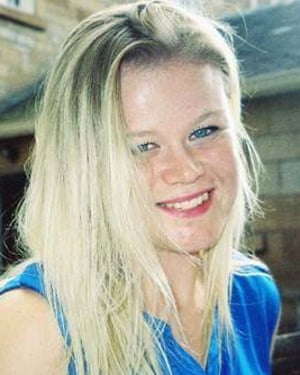


Alice Muir.

Alice Muir.

Like a lot of people in the country, perhaps, it’s the first time in my life when I have absolutely no idea who I’m going to vote for or, to be quite honest, what I want to vote for.


I made my decision about Brexit and, previously, about Scottish independence and the disappointment in not seeing the results I was hoping for in either of those polls was hard enough, but at least at that point I could accept those results were final and assume that life would move on and that the job would be done by the people who get paid to do it.


Maybe what we need, now more than ever, is the ability to express our views in a country that is rapidly changing (or, as some would say, rapidly deteriorating). We need the ability to protest, not just physically, but to be able to utilise the tools of new technology to bring the public together and seriously hold politicians to account.


But if the internet is going to be the main platform for political expression and accountability, then we also need security in the face of technological disuption. Systems need to be put in place to ensure that the information that we put online is not exploited and that the freedom of information on the world wide web that we benefit from is not corrupted.


Therefore, I have decided that, come 8 June, I will make my decision based on each party’s position on internet security.


So, while that automatically knocks the Tories from my line of view, this is an opportunity for opposing parties to think seriously about the importance of the internet to them and the influence it has on political change.


MENTAL HEALTH


TOM CHIGBO, 29


Leeds



Tom Chigbo.

Tom Chigbo.

I would love it if mental health became the big issue at this election. I have close family and friends who have wrestled with anxiety, depression and psychosis for many years. They have required a range of interventions, including self-care, talking therapies, medication and detention under the Mental Health Act.


On top of the inner turmoil, navigating through the various systems and services has often been a tortuous journey. My wife is a psychiatrist and every day I learn more about the incredible pressures faced by overstretched NHS staff.


Mental health has also become the leading concern in my work for Leeds Citizens, a branch of the community organising charity, Citizens UK. Our listening campaigns with faith groups, schools and community organisations across the city have revealed the catastrophic consequences of our failure to invest properly in mental health.


One couple spoke movingly about losing their son, Martin, who took his life while on a four-month wait to see a psychiatrist.


We are now campaigning for our clinical commissioning group to fund mental health workers based in every GP surgery, so that people like Martin no longer fall through the gaps in a system unable to cope.


In recent years, there has been growing support for anti-stigma campaigns, which have done a great deal to raise public awareness and break taboos. We know that every time a celebrity speaks about their own struggles, whether it’s Stormzy or Prince Harry, more people are encouraged to open up and seek support.


But changing attitudes alone is not sufficient and people can’t be directed to services that aren’t there. My hope for the election is that all this awareness is channelled towards clear commitments from party leaders and candidates to increase funding, make specific improvements to services and secure more accountability from NHS leaders.


GENDER EQUALITY


LUCY WHITEHOUSE, 25


London



Lucy Whitehouse.


Lucy Whitehouse.

Theresa May is a woman. She’s also the second female Conservative leader and our prime minister. Hooray for gender equality – genuinely, so far so good. There’s an important value in visible female role models.


However, as May’s leadership ably illustrates, representation can easily become a smokescreen for equality failings. It’s pretty ridiculous and fairly insulting to suggest, as many do, that because of our prime minister’s double X chromosomes, gender equality sees automatic progress under the Tories.


Let’s dismantle that myth. First, women make up just 21% of the Conservatives’ parliamentary members, compared to Labour’s 44%. May still fails to take action on Yarl’s Wood, the immigration detention centre that Yvette Cooper has called “state-sponsored abuse of women”’, and that has seen, for example, a disabled victim of trafficking dragged along “like a goat”. . The government’s proposed child tax credit reform is currently seeing robust, on-the-ground opposition, particularly aimed at its “rape clause” that will see women forced to prove their third child was born as a result of non-consensual sex. And then there’s the gutting impact of austerity. Figures from the Women’s Budget Group have found that women will be hit with a massive 85% of the burden of the government’s cuts to social security and tax changes by 2020.


So what’s the alternative? As a freshly expelled member of the Labour party, and with no Women’s Equality candidate standing in my constituency, my vote is to play for. I may well still back my former fellows if their manifesto goes beyond lip service.


Here are some core pledges on gender equality that we need now: equal parenting and care-giving, equal pay and opportunity, equality healthcare and research, equal education and the end of violence against women. And, Lib Dems and Labour, let’s see women leaders next time. Because having women at the top really does matter, and clearly, we can’t afford to leave it to the Tories.


SCHOOLS AND SKILLS


JOE PORTER, 20


Staffordshire
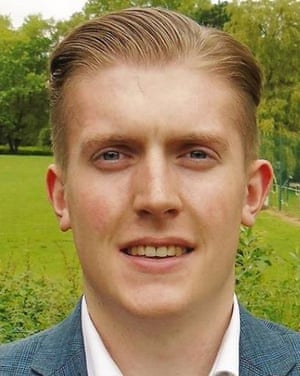


Joe Porter.

Joe Porter.

For too long, our education system has failed young people. We are too often told that the university route is the only viable option, leaving us with a massive skills shortage. Brexit gives us a unique opportunity to improve our education system; that requires ambitious, radical reform because today the UK is placed only 16th out of the world’s 20 developed economies on technical education.


Improving technical training through the newly announced T-levels in the Spring Budget will help to make the system more balanced and reverse our huge productivity problem. It will allow us to equip young people with the skills they need to fill in gaps in certain sectors, rather than often having to rely on immigration. A solid ground in academic subjects is also vital. Meritocracy therefore needs to be at the heart of this country’s education system.


It is unacceptable that for far too many children, their chances are determined by where they live or the size of their household income. School selection based on house prices and parental income is wrong. The ban on grammar schools should be lifted. A new generation of them will help to increase the capacity and diversity of the school system. Too many young people from ordinary working families have been left behind and are deprived of a good education. Theresa May can defeat the social injustices of our time.


EMPLOYMENT OPPORTUNITIES


Khadija Mannan, 22


Manchester



Khadija Mannan.

Khadija Mannan.

I was brought up in Tameside, in Greater Manchester, one of the most deprived areas in England. I attended a secondary school that at that time was quoted as a failing school. There was no real stability and head teachers came and went; many of my friends and peers never saw education as beneficial to them. However, I recently graduated – in law – from Manchester University. So it is not surprising that the potential for education to change lives means that I will pay a huge amount of attention to policies on schools. (I’m currently a volunteer at a primary school, courtesy of a youth and education charity, City Year UK.)


But equally, in areas like this, what can young people do even if they have acquired a good education? How do the parties propose to help create a healthy and high-skilled jobs market?


I can understand that it was precisely because of a sense of frustration on this front – anxiety about jobs – which caused many people, in these parts and elsewhere, to decide to vote to leave the European Union.


But now that article 50 has been invoked, it is important that the next government ensures that the decision made by the people does not harm the jobs market.


I think that volunteering of the sort that I am doing enhances skills and experience. I have been given a huge amount of responsibility through running breakfast and after-school clubs. But you can’t make an economy out of volunteers and I fear that Brexit will make it increasingly difficult to find a job. It’s great that education – and volunteering – introduces you to new possibilities, but it’s the uncertainty about future employment that most exercises me.


HIGHER EDUCATION


SARA ABBASI, 24


London



Sara Abbasi.


Sara Abbasi.

I believe good-quality education should be accessible to all and free of hefty price tags. While Scotland and most continental countries charge nothing (or next to nothing) for university degrees, universities in other parts of the UK are some of the most expensive to study in the world.


To make matters worse, tuition fees are increasing year on year – with a 2.8% inflation-linked rise coming into effect this autumn.


In a study published by the Sutton Trust last year, it was found that undergraduate debt in England was the highest in the English-speaking world, with students celebrating graduation with an average £44,000 debt looming over them.


To make matters worse, international students, who spend the most on their British university education, end up getting an ever worsening deal.


Due to the strict visa rules, it is becoming increasingly difficult for them to stay on in the UK to work after graduation. Saajid Wasik, a student from Sri Lanka, has paid on average £20,000 a year on fees. Working in the UK after graduation would mean some return on investment.


Sending students back home also means that the British labour market is missing out on great talent, as qualified foreign graduates bring with them not only expertise in their fields but also a breadth of cross-cultural awareness.


It is clear to me that we are taking a huge step backwards when it comes to higher education. With the abolition of maintenance grants, an overwhelming number of young people, especially those from underprivileged backgrounds, might now be dismissing the idea of going to university altogether.


While countries such as Germany create a lot of room in their federal budget for education and research, they no longer seem to be a priority on Britain’s to-do list.


ENVIRONMENT


MEG KNEAFSEY, 23


Bolton
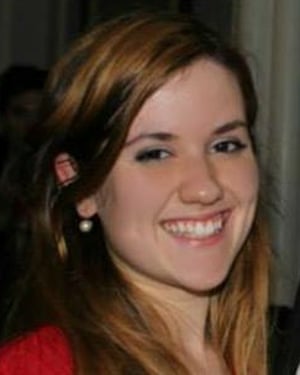


Meg Kneafsey.

Meg Kneafsey.

One of the topics that we continue to avoid – helped by the all-consuming Brexit – is the environment. Are we waiting for the point of no return?


Human-induced climate change causes irreversible damage to our planet. Beyond its devastating effects on wildlife, it is contributing to the strain on food resources and creating the most extreme weather. If we committed to altering our ways, we could make a real difference.


This change must be government-led. If it is left to companies, short-term profits will ultimately take priority. We’ve seen what simple changes can be made, such as the plastic bag ban that meant in one year alone we used 6bn fewer. Similarly, in France they’ve introduced bans on single-use plastic cutlery and in Sweden the government has been praised for its recycling programme.


Over recent months, I’ve heard complaints from Remainers concerned that leaving the EU will mean weaker environmental laws in the UK. Currently, the EU has an action plan to tackle climate change with targets for all member states that include emissions, efficiency and renewable energy. However, this has been criticised as simply not being enough to address the problem.


Leaving the EU does not mean that we as a nation will abandon our commitment to the environment. In fact, I see this as an opportunity to define the UK as a climate change warrior and look forward to a greener, brighter future with laws that are more progressive than the requirements of the EU.


REDUCTION IN VOTING AGE


JOE STOCKLEY, 21


Cardiff



Joe Stockley.

Joe Stockley.

According to British Youth Council statistics, only one of the major parties doesn’t support votes at 16.


That party is the one in power and the one expected to have major success in the forthcoming general election. And I quote: “We are not convinced by the argument for changing our longstanding voting arrangements and for reducing the voting age.”


It’s the Tories, if you didn’t guess. But why? Why deny 1.5 million 16- and 17-year-olds a vote? Scotland demonstrated the impact of young people voting in large numbers, with 75% of 16- and 17-year-olds taking the opportunity to have a say in their future in the Scottish referendum.


If young people can have an impact on the future only in the future, then they will hit upon the same problems that challenge their elders.


It’s time for fresh eyes and fresh opinions and, most importantly, it seems only fair to offer votes for those who legally can and do join the army, get married or pay taxes.


Slightly more broadly, will we see politicians attempting to engage young people in the lead-up to the general election? Or will the same pattern be followed: young people will be talked about, not talked to? Quite frankly, I’m becoming bored with that.


I’m not sure which way I will vote but on this issue alone, the Tories have alienated themselves with their lonely opinion on votes at 16.


What do Britain’s younger voters see as the key challenges?

2 Nisan 2017 Pazar

Labour challenges Hunt over dropping NHS waiting times target

Labour has challenged the health secretary over the legal basis for dropping a commitment on NHS waiting times.


The shadow health secretary, Jon Ashworth, wrote to Jeremy Hunt claiming the government and NHS England were acting unlawfully by accepting that the 18-week target would be missed.


NHS England’s chief executive, Simon Stevens, said he expected waiting times to rise slightly as a “trade-off” for improvement in other areas such as hitting the four-hour A&E target and better cancer care.


Longer waits can be expected for planned operationssuch as hip and knee replacements, cataract removal, hernia operations and laparoscopies.


The NHS target is for 92% of patients to be treated within 18 weeks of referra. Ashworth said: “The absolute nature of this legal duty to meet the 92% is reflected in the NHS constitution.


“The NHS constitution isn’t just a pledge by politicians; it’s a legal guarantee about the standards of care that patients can expect to receive in the English NHS. That includes a guarantee to treatment within 18 weeks, which NHS England have now said they can no longer provide because the government has denied them the funding they need.


“Government ministers need to urgently clarify they are not breaching the NHS constitution and must outline the consequences of denying patients their legal right to treatment within 18 weeks.


“As a first step, the secretary of state must publish his department’s legal advice urgently.


“Earlier this week NHS chiefs announced – without any public consultation or changes to the law – that the NHS will no longer be required to meet the 18-week treatment target because the financial crisis has got so bad. It’s utterly unacceptable and a striking admission of how badly the Tories are running the NHS.


“Since Theresa May became prime minister standards of care for NHS patients have been in a rapid downward spiral. She might be prepared to ignore NHS staff and the public but she can’t just ignore the NHS constitution based on legislation voted upon by parliament.”


On Sky News’ Sophy Ridge on Sunday Ashworth said he thought the NHS needed up to £5bn extra funding this year, suggesting the government should scrap tax cuts in order to pay for the health service.


“We can afford the NHS if the government is prepared to put the money in and make different decisions on tax,” he said.


Asked if he was prepared to consider tax increases to fund the NHS, he said: “I am ready to have that discussion with people about how we fund the NHS.”


But he added that money was being wasted because of the “privatisation agenda” and a failure to deal with public health problems such as obesity.


Labour challenges Hunt over dropping NHS waiting times target

18 Ocak 2017 Çarşamba

Anti-abortion report challenges law reform in Northern Ireland

A report by anti-abortion campaigners in Northern Ireland has claimed that 100,000 people were born in the region because the 1967 Abortion Act was never extended to the province.


The Both Lives Matter report published on Wednesday comes as the former justice minister in Northern Ireland confirmed this week that he will resubmit his private member’s bill in the next Stormont assembly calling on the new devolved parliament to legalise abortions in cases of fatal foetal abnormalities where the pregnancies are doomed.


Dawn McAvoy of Both Lives Matter said: “The debate around abortion is in danger of becoming polarised by those only concerned with the unborn child on the one hand and those solely concerned with the rights of the women on the other. The reality is that both lives matter.”


“There are people alive in Northern Ireland today who would not have been born if the 1967 Abortion Act had been introduced here. People we all know and love – spouses, children, friends and family.”


“We estimate that there are 100,000 people alive today, who would not be, had we introduced the 1967 Abortion Act.


The group’s report comes at a time when the battle lines are being redrawn over abortion in Northern Ireland, the only part of the UK where the procedure is banned in almost all circumstances except when there is a direct threat to the mother’s life.


Thousands of Northern Irish women are forced to travel across to England to terminate their pregnancies due to the near-total ban.


David Ford, the former leader of the cross-community Alliance Party, who was justice minister in the regional government before it collapsed on Monday, has vowed to continue to press for abortion reform.


He said that in the next parliament after the scheduled elections on 2 March, there would be another private members bill calling on assembly members to liberalise the near-total ban on abortion.


Ford said: “Should the people of South Antrim re-elect me to the position of their MLA, on my first day back I will go to the Speaker’s office and resubmit my bill, with a view to progressing it through the next assembly term.”


The Both Lives Matter campaign is being backed by the former police ombudsman in Northern Ireland Nuala O’Loan, who said extreme cases of crisis pregnancies were being used to push a pro-abortion agenda.


Lady O’Loan said: “There is an urgent requirement at a time when heart-rending cases are being extensively utilised by those seeking to diminish legal protection for the unborn, to be more focused on recognising and providing for the needs and care of both mother and child. ‘Both Lives Matter’ is an excellent response to that pressing need.”


The group has also won the support of economist Esmond Birnie, a former adviser to ex-first minister and Nobel peace prize winner David Trimble.


Both Lives Matters said it is a new collaborative movement of individuals and organisations seeking to reframe the abortion debate in Northern Ireland.


In 2015 a high court judge in Belfast ruled that Northern Ireland’s almost outright ban on abortion breaches the human rights of women and girls, including rape victims. The ruling is being challenged by the province’s attorney general John Larkin.


At least 1,000 women and girls from Northern Ireland travel to hospitals in Britain for terminations every year.For instance, official figures for 2013 suggest 800 Northern Irish pregnancies were terminated in Britain – although that number is regarded as an underestimate. Among the 800 was that of a 13-year-old who became pregnant through incest.


The only law applying to abortion in Northern Ireland is the Offences Against the Persons Act 1861, which contains a life sentence for anyone convicted of carrying out a termination even in cases of rape or incest.


Anti-abortion report challenges law reform in Northern Ireland

1 Aralık 2016 Perşembe

Planned Parenthood and ACLU mount abortion law challenges in three states

Reproductive rights advocates announced a significant slate of challenges to anti-abortion laws on Wednesday, taking aim at major restrictions in three states which advocates say are unconstitutional.


Planned Parenthood, the American Civil Liberties Union, and the Center for Reproductive Rights, a legal advocacy group which argued a landmark abortion case earlier this year, filed three lawsuits in Alaska, Missouri and North Carolina. In Missouri, the groups will challenge a pair of abortion restrictions that have reduced the number of abortion providers to just one. They are taking aim at a similar clinic restriction in Alaska. In North Carolina, they will mount a challenge to a 20-week ban on abortion that has some of the nation’s strictest exceptions.


The two Missouri restrictions are highly similar to laws in Texas that the US supreme court struck down in June. They require abortions to be performed in expensive, hospital-like facilities and require abortion providers to have certain professional relationships with a local hospital.


The supreme court ruled that such restrictions served no medical purpose and were unconstitutional. But similar restrictions remain on the books in several states. In Missouri, where 1.2 million women of reproductive age live, the laws have forced two Planned Parenthood clinics, in Columbia and Kansas City, to stop providing abortions in recent years. The only remaining clinic is located in St Louis, forcing many Missouri women seeking an abortion to travel long distances.


“Because of laws like the ones we are challenging today, for too many women across our country the constitutional right to have an abortion is more theoretical than real,” said Jennifer Dalven, the director of the ACLU’s Reproductive Freedom Project.


But it is the North Carolina challenge that may have the bigger impact on abortion rights nationwide. This is only the second time reproductive rights advocates have challenged a 20-week ban on abortion in federal court – potentially setting the table for these restrictions to go before the supreme court.


North Carolina’s law bans abortions after 20 weeks except in a medical emergency where a woman’s condition is so grave that she requires an abortion immediately. That is stricter than other 20-week bans, which have health exceptions but don’t require there to be a medical emergency.


The bill defines medical emergency as a condition which “so complicates the medical condition of the pregnant woman as to necessitate the immediate abortion of her pregnancy to avert her death or for which a delay will create serious risk of substantial and irreversible physical impairment of a major bodily function” not including mental health.


In their lawsuit, the ACLU, Planned Parenthood and the Center for Reproductive Rights argue that the language essentially forces women having an abortion for health reasons to wait until she becomes gravely ill.


Laws banning abortion several weeks before a fetus is viable outside the womb are increasingly common. Across the country, more than a dozen states ban abortion two weeks before viability on the medically dubious grounds that the fetus can feel pain.


But despite the fact that Roe v Wade prohibits states from banning abortion before the point of viability, most of those laws have not faced a legal challenge. Only Arizona’s 20-week ban, passed in 2012 and struck down permanently over the next two years, was ever the subject of a legal battle in federal court.


The challenge is especially significant now that Donald Trump has been elected president. Trump, in a wholesale embrace of the anti-abortion movement’s top priorities, has promised to sign into law a nationwide ban on abortion at 20 weeks.


One reason is that very few abortion providers have standing for such a challenge. “To challenge these laws, you would have to be actually doing abortions after 20 weeks,” said Priscilla Smith, an abortion rights advocate and a senior fellow at Yale law school. “And there are just so few states where you can obtain abortions at that stage of pregnancy. Despite the anti-abortion world’s focus on post-20-week abortions, they’re very rare.”


But another reason may be that reproductive rights advocates have been hesitant to launch a lawsuit that could reach the supreme court. In the past several decades, many such legal challenges have resulted in the supreme court chipping away at abortion rights.


That changed this summer, when the court ruled 5-to-3 to strike down a set of harsh Texas abortion restrictions. The ruling prohibited states from enacting abortion restrictions based on medically questionable arguments about protecting women’s health. Justice Anthony Kennedy, who is often skeptical of abortion rights, joined the majority.


With Trump potentially empowered to shift the balance of the court rightward, Smith said, reproductive rights advocates are probably facing the friendliest bench possible under the new president.


Courts have struck down early bans on abortion before, including an Arkansas law banning abortion at 12 weeks and a North Dakota law banning abortion at six weeks – before many women realize they are pregnant. In defense of 20-week bans, abortion foes commonly argue that fetuses at that stage of development will feel pain during the procedure. But the evidence is slim. While select studies have found evidence for this, the most recent systematic review of studies on this topic concluded that the fetal nervous system is not developed enough to feel pain until the third trimester.


Still, bans on abortion at 20 weeks occupy fraught emotional territory. Public support for abortion restrictions grows with gestational age, and a substantial portion of Americans are ambivalent or opposed to abortion rights in the second trimester.


Anti-abortion activists place an emphasis on these cases, even though they account for only 1% to 2% of all abortions in the US. Abortion rights advocates argue that many women obtaining later abortions are doing so for health reasons or after discovering a severe or fatal fetal anomaly – although the evidence suggests these are not the majority of cases.


On Wednesday, representatives for Planned Parenthood, the ACLU and the Center for Reproductive Rights said the three lawsuits were the beginning of a spate of legal challenges the groups would mount jointly.


“We are going to fight back state by state and law by law until every person has the right to pursue the life they want,” said Dr Raegan McDonald-Mosley, Planned Parenthood’s chief medical officer.


Planned Parenthood and ACLU mount abortion law challenges in three states

3 Haziran 2014 Salı

Addressing the large challenges dealing with the NHS | @guardianletters

We, as leaders of NHS organisations and organisations supplying NHS care across England, believe that the NHS is at the most challenged time of its existence. Growing demands indicate that the cost of providing the overall health support rises each and every year by about four% over inflation. At the very same time, the companies we commission and run are not developed to cope with the care needs of the 21st century – especially the big number of folks with a number of extended-term conditions and an increasingly elderly population.


As local organisations, we are urgently planning the transformation of how we care for individuals to ensure we carry on to supply a support that meets people’s demands and improves the public’s wellness. Our ideas start to deal with the issues that are nicely set out in the 2015 Challenge Declaration, published by the NHS Confederation on six May, in association with health care royal colleges, regional government and patient organisations. But far more will want to be done if we are to be profitable.


With a yr to go to the standard election, it is essential that the political events recognise the scale of the challenge we are addressing – and that their manifestos should address. At the 2010 basic election not 1 of the political parties talked about the fiscal challenge facing the NHS in its manifesto. In 2015, the parties have to handle the complete selection of issues dealing with the NHS or take duty for it getting to be unsustainable in the type individuals want it.


We get in touch with on every single of the party leaders to publicly recognise the problems dealing with well being as spelt out in the NHS Confederation’s 2015 Challenge Declaration – and to ensure their manifestos are written to assistance how we will deal with them.
Rob Webster Chief executive, NHS Confederation, Ron Kerr Chief executive, Guy’s and St Thomas’ NHS Basis Believe in, Peter Homa Chief executive, Nottingham University Hospitals NHS Believe in, Prof Tricia Hart Chief executive, South Tees Hospitals NHS Foundation Trust, Dr Matthew Patrick Chief executive, South London and Maudsley NHS Foundation Believe in, Stuart Bain Chief executive, East Kent Hospitals University NHS Basis Trust, Jonathan Michael Chief executive, Oxford University Hospitals NHS Trust, Tim Goodson Chief officer, Dorset Clinical Commissioning Group, Christopher Baker Chair, Aintree University Hospital NHS Foundation Believe in, Marie Gabriel Chairperson, East London NHS Basis Believe in, Dr Avi Bhatia Clinical chair, NHS Erewash CCG, Stephen Swords Chairman, Hounslow &amp Richmond Neighborhood Healthcare NHS Trust, David Edwards Chairman, Cambridgeshire and Peterborough Foundation Believe in, Michael Luger Chair, Airedale Hospitals NHS Basis Believe in, Dr Nick Marsden Chair, Salisbury NHS Foundation Trust, Prem Singh Chairman, Derbyshire Community Wellness Companies Believe in, David Griffiths Chairman, Kent Local community Wellness NHS Believe in, Ken Jarrold Chair, North Staffordshire Combined Healthcare NHS Believe in, Stuart Welling Chairman, East Sussex Healthcare NHS Trust, Stephen Wragg Chairman, Barnsley NHS Basis Believe in, Chris Wood Chair, Burton Hospitals NHS Basis Believe in, Gary Web page Chair, Norfolk and Suffolk NHS Foundation Trust, Robert Dolan Chief executive, East London NHS FT, David Wright Chairman, James Paget University Hospital FT, David Jenkins Chair, Aneurin Bevan University Health Board, Ruth FitzJohn Chair, 2gether NHS Basis Trust, Stephen Ladyman Chairman, Somerset Partnership NHS Foundation Trust, Harry Turner Chairman, Worcestershire Acute NNS Believe in, Jane Fenwick Chair, Humber NHS FT, Hugh Morgan Williams Chairman, NTW NHS Wellness Believe in, Jo Manley Director of operations, Hounslow Richmond Community NHS Trust, Dr Christina Walters Programme director, Community Indicators Programme, David Law Chief executive, Hertfordshire Local community NHS Believe in, Julia Clarke Chief executive, Bristol Local community Wellness CIC, Matthew Winn Chief executive, Cambridgeshire Neighborhood Providers NHS Trust, Simon Perks Accountable officer, NHS Ashford CCG &amp Canterbury and Coastal CCG, Stephen Conroy CEO, Bedford Hospital, Stephen Firn Chief executive, Oxleas NHS Foundation Believe in, Katrina Percy Chief executive officer, Southern Health NHS Basis Trust, Mark Hindle Chief executive, Calderstones Partnership NHS Basis Believe in, Christine Briggs Director of operations, NHS South Tyneside CCG, John Wilderspin Managing director, Central Southern CSU, Alison Lee Chief executive officer, NHS West Cheshire Clinical Commissioning Group, Andrew Funds Chief executive, Sheffield Teaching Hospitals NHS Foundation Trust, Christine Bain Chief executive, Rotherham Doncaster &amp South Humber NHS FT, Sarah-Jane Marsh Chief executive officer, Birmingham Children’s Hospital, Tracy Allen Chief executive, Derbyshire Local community Health Services NHS Believe in, Chris Dowse Chief officer, NHS North Kirklees CCG, Stuart Poynor CEO, SSOTP, Dominic Wright Chief officer, Guildford &amp Waverley CCG, Steven Michael Chief executive, South West Yorkshire Partnership NHS Foundation Believe in, Dr Mark Newbold Chief executive, Heart of England NHS Foundation Trust, Andrew Donald Chief officer, Stafford and Surrounds and Cannock Chase Clinical Commissioning Groups, John Matthews Clinical chair, NHS North Tyneside CCG, Lisa Rodrigues Chief executive, Sussex Partnership NHSFT, Jonathon Fagge Chief executive officer, NHS Norwich CCG, Steve Trenchard CEO, Derbyshire Healthcare Foundation NHS Believe in, Louise Patten Accountable officer, Aylesbury Vale CCG, Jane Tomkinson CEO, Liverpool Heart and Chest Hospital FT, Allan Kitt Chief officer, South West Lincolnshire Clinical Commissioning Group, Darren Grayson Chief executive, East Sussex Healthcare NHS Trust, Katherine Sheerin Chief officer, NHS Liverpool CCG, Edward Colgan Chief executive, Somerset Partnership NHS Basis Believe in, David Stout Managing director, NHS Central Eastern Commissioning Help Unit, Andrew Bennett Chief officer, Lancashire North CCG, John Brewin Interim chief executive, Lincolnshire Partnership Foundation Believe in, Andrew Foster Chief executive, Wrightington, Wigan &amp Leigh NHS Basis Trust, Richard Paterson Associate chief executive, Royal Brompton and Harefield NHS Basis Believe in, Glen Burley Chief executive, South Warwickshire NHS FT, Joe Sheehan Managing director, Healthcare Companies Ltd, Robert Flack Chief executive, Locala


• I am grateful to Ian Birrell (The NHS need to evolve – or encounter a agonizing death, 2 June) for assisting to hold the debate about privatisation of the NHS alive. Final Thursday I resigned from my place as vice-chairman and non-executive director of the Royal Cornwall Hospital Trust in excess of the choice by the board to privatise hotel providers – catering, cleaning, portering, safety and reception. I had been a board member for nearly seven many years and a member of NHS boards in Cornwall for a lot more than 25 years.


My opposition to this selection is based mostly on pragmatism. A quantity of years ago I sat on the small committee which established the out-of-hrs contract for Cornwall. I was the only member of that committee who didn’t support the granting of the contract to Serco. I had researched Serco’s governance procedures and found them wanting. Sadly for patients in Cornwall it was not long just before the committee’s decision became a pricey error.


A cursory trawl reveals a long list of employment tribunals and strikes by minimal-paid employees in these outsourcing firms. The only way these businesses can reap large profits for shareholders and pay ludicrous salaries to senior executives is by reducing the terms and situations of employment of the workers they inherit from the NHS. 


At least Birrell is currently being steady with his preceding post (Salute the super-rich, 13 May possibly). The continued movement of taxpayers’ income into the bank accounts of private well being companies is certainly going to obtain an enhanced flow of cash to the wealthy.
Rik Evans
Truro


• While I am positive there are wasteful practices in the NHS, managers and clinicians would have much more time to deal with these if the services was not being frequently reorganised and topic to cuts which make planning challenging. We are a wealthy nation, as Cameron reminded us in Gloucestershire, and because 2009 have slipped down the OECD list of expenditure on the NHS.


Considerably money could be saved by receiving rid of the marketplace, the place massive sums are going to accountants and lawyers due to the fact CCGs believe they are forced to put companies out to tender underneath the Wellness and Social Care Act 2012. This was supposed to have decreased bureaucracy and place clinicians in charge but this has not happened nor has the overall health secretary stopped managing the NHS whilst being relieved of the legal accountability to “safe and provide a complete well being support”. The private firm that runs Hinchingbrooke hospital has a excellent PR machine but it has not managed to accomplish the savings it proposed when it created its bid, and this was a nicely-run hospital destabilised by the private unit constructed in their grounds.


The NHS has handed back to the Treasury a lot more than £3bn in the last two years. This cash could be utilized to assist the hospitals whose finances are inadequate for their workload or have high PFI charges. We can afford our NHS, despite our ageing population, as lengthy as politicians quit striving to restructure it and the wasteful competition enshrined in the 2012 act is eliminated by repealing this pernicious piece of legislation. A lot more cash wants to go to the GP companies, which have acted as efficient gatekeepers that allowed the NHS – regardless of getting underfunded for decades – to be rated by independent sources as a single of the most expense-successful wellness services in the world.
Wendy Savage
President, Maintain Our NHS Public


• Ian Birrell is certainly proper in pointing out that the debate around the large issues faced by the NHS largely revolves close to low cost politics. But then his post reproduces two of the main delusions at the centre of that debate: that the NHS is excessively expensive, and that privatisation would minimize fees. Even a cursory comparison with the overall health programs in other industrialised countries suggests that the NHS is underfunded, but comparatively productive. In comparison with methods that systematically pay physicians far more for treating individuals far more, the NHS tends to undertreat individuals. Funding it even though taxation charges a lot less than paying out-of-pocket or through insurance coverage and charges have spiralled out of handle in nations such as the US or Switzerland that have allow the marketplace rule and the insurance firms cash in. Thinking about the reality that most of us think about our wellness to be rather more essential than most of the other issues that make up the economy, we must continue to be sceptical of pundits who think privatising is the response, with out even understanding what the true troubles are.
Thomas Smith
Neston, Wirral


• I welcome Ian Birrell’s plea for an open and honest debate. But there are some concerns he does not refer to. There are effective publicly run hospitals in the NHS what are their characteristics? Is the psychology of profit-creating to be accepted as the only inspiration? Can we not identify and cultivate the attributes of good leadership and management in the public support? Rethinking the funding basis is naturally crucial. Procurement traditions and other habits can certainly be shaken up inside of a public service. Is all the world a industry?
Howard Layfield
Newcastle on Tyne


• Ian Birrell says that £100bn is “roughly the current expense of the health services”. Roughly the existing price of corporate and elite tax avoidance and scams is £120bn. Now what could we do with the excess £20bn?
Ted Woodgate
Billericay


Addressing the large challenges dealing with the NHS | @guardianletters

13 Mart 2014 Perşembe

Second girl challenges Ireland"s abortion laws at the UN

Pro-Choice supporters hold placards in f

Professional-option supporters hold show outside the Irish parliament creating in Dublin last July ahead of a vote to introducing limited abortion. Photograph: Peter Muhly/AFP/Getty Pictures


An Irish woman who claims to have been demeaned by doctors when she asked for an emergency abortion is to consider her case towards the Republic to the United Nations.


Siobhán Whelan said she was “created truly feel like it was unlawful” to request Irish health care employees if she be provided the alternative of abortion soon after studying in September 2009 that her infant was would die.


Backed by the New York-based mostly Centre For Reproductive Rights, Whelan on Thursday grew to become the second Irish woman to file a challenge at the UN towards the ban on abortions for health care motives.


The centre has filed a petition with the United Nations Human Rights Committee to hold Ireland accountable for subjecting Whelan to inhuman and degrading therapy, interfering with her privacy and discrimination on the basis of her gender.


The committee can not sanction Ireland but the centre hopes to maintain global stress on its legislators.


Although restricted abortion was introduced in the Republic final 12 months, women cannot get terminations in Irish hospitals if they learn they are struggling from fatal foetal abnormalities when pregnant.


Following about 21 weeks into her pregnancy, Whelan was told by medics at Dublin’s National Maternity hospital that her little one had a fatal anomaly called Trisomy 13.


She mentioned a single medical doctor informed her she would be have been supplied a termination in another jurisdiction, but that this was not attainable in Ireland. Whelan stated yet another physician handed her a report of the scan suggesting she would want it if she determined to travel overseas to have a termination.


But she claimed that workers did not do anything at all to enable her to get in touch with with a United kingdom hospital and did not clarify what a termination entails. In addition, the medics by no means mentioned if or what support she could count on post-diagnosis, she mentioned.


Whelan made the decision that ending the pregnancy was the ideal choice for her and her family members. She extra that her husband had to organize for time off work and for childcare, as effectively as find the required money to pay out for travel, accommodations and the process at the Fetal Assessment Centre at Liverpool Women’s hospital.


Johanna Westeson, regional director for Europe at the Centre For Reproductive Rights, stated: “Ireland’s harsh policies manufactured Siobhán fearful to even ask about her possibilities and allowed her healthcare suppliers to give up on her after she made the decision to finish her pregnancy. The United Nations Human Rights Committee need to act swiftly and call on Ireland to broaden woman’s accessibility to abortion care as demanded beneath human rights law.”


Whelan said on Thursday: “The Irish doctors manufactured me come to feel like it was illegal to examine the alternative of termination for dread of getting the door slammed in my encounter or of not getting any help whatsoever.


“I will never comprehend why I had to pack my bags and leave Ireland so I could access the medical care I essential. It is genuinely demeaning and I will never forget it.”


Second girl challenges Ireland"s abortion laws at the UN