Girl etiketine sahip kayıtlar gösteriliyor. Tüm kayıtları göster

10 Nisan 2017 Pazartesi

Meet the girl who has had four hearts – video

Born with a serious heart condition called dilated cardiomyopathy, Chloe Narbonne had five major operations – and four hearts – by the age of 12. She defied the odds to become the youngest person in Europe to receive an artificial heart thanks to groundbreaking surgery involving 30 NHS staff. Now Chloe, her mother and medical personnel tell her amazing story for the first time


Meet the girl who has had four hearts – video

"When I met Chloe she was dead": one girl, four hearts and an NHS miracle

[unable to retrieve full-text content]


Chloe Narbonne’s heart failed when she was 11, starting a near-hopeless fight for survival. A year on from groundbreaking surgery, she is alive and this is her story


  • Revealed: girl of 13 is first child in Britain to receive artificial heart

“By the time I met Chloe she was dead,” André Simon says matter-of-factly. “I told her parents clearly that she didn’t really have a chance to survive. What I was proposing gave her a theoretical chance.” He pauses. “But I also said that the operation might just prolong her agony and suffering – I didn’t even know if she would survive it – and that it was OK just to let her go.”


Simon, one of the world’s leading heart and lung specialists, is recalling the conversation he had at the beginning of May last year with Fabienne and Todd Narbonne that led to him implanting an artificial heart inside their 12-year-old daughter Chloe. “It was an emotional meeting, it was tense, it was horrible. They were trying to be calm but they were extremely anxious and were holding on to each other for support. They put their last hopes in me and they prayed for a miracle.”


We owe the donors and their families eternal thanks


Continue reading…


"When I met Chloe she was dead": one girl, four hearts and an NHS miracle

Revealed: girl of 13 is first child in Britain to receive artificial heart

A 13-year-old girl from Worcester is the first child in Britain to have received an artificial heart, the Guardian can reveal, after doctors decided it was the only way to save her life.


Chloe Narbonne had the device installed in a complex nine-hour operation that involved 30 NHS staff at the Royal Brompton, a specialist heart and lung hospital in London. The artificial heart kept the then 12-year-old girl alive until a human heart became available a few weeks later.


While others have had a device known as a “Berlin heart”, which replicates its functions outside of the body, Chloe is the youngest person in Europe to have had an artificial heart implanted. With her fourth heart now beating in her chest almost a year on, she told the Guardian: “I feel well, like my normal self, but not quite my normal self, not after what I’ve been through. I guess the artificial heart was my lifesaver; it’s what kept me alive until I got another heart. What I’ve been through is life-changing.”


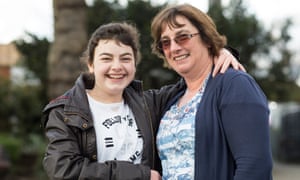
Chloe and her mum, Fabienne.


Chloe and her mum, Fabienne. Photograph: David Levene for the Guardian

Chloe was diagnosed with dilated cardiomyopathy when she was four weeks old. Her heart failed when she was 11 and still at primary school. She then had a stroke while waiting for a new heart, and when that first transplant failed to work, she was left close to death.


At that point, medics decided an artificial heart was the only option to keep her alive until another heart could be transplanted. André Simon, the director of heart and lung transplantation at the Royal Brompton and Harefield specialist hospitals, flew back early from a conference in the US to operate on Chloe last May.


What doctors said was an “extremely risky” surgery involved two medical firsts. Chloe was the first person in the world to be transferred from one hospital to another with her chest open and while on a life-saving extracorporeal membrane oxygenation machine, which delivers oxygen to a patient from outside the body. And Simon had to rebuild her heart’s atrium, or upper chamber, which had been removed during the failed transplant days earlier. A few weeks later, after her health stabilised on the artificial heart, she received the new heart.


Chloe’s mother, Fabienne Narbonne, said: “How they saved Chloe should be recognised for what it is – a miracle. Without the artificial heart she would be dead. It kept her alive for those crucial few weeks. By the time she got it she had run out of options.”


Simon, who has carried out all 13 artificial heart surgeries that have occurred in London hospitals, believes the success of Chloe’s operation should prompt other specialists to consider the devices for more children.


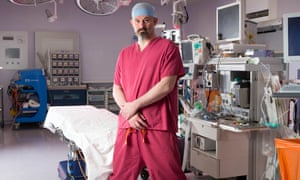
Heart surgeon André Simon.


Heart surgeon André Simon. Photograph: Richard Saker for the Observer

Chloe’s long waits for a transplanted heart have made her and her parents, Fabienne and Todd, passionate advocates for a change in the law on organ donation. Chronic shortages of donated hearts, lungs, livers and kidneys result in thousands of people a year dying while on the transplant waiting list. The family want the rest of the UK to follow the example of Wales, which in December 2015 switched from the opt-in system of organ donation to one of opt-out, where people have to specifically refuse consent for organ retrieval if they die.


Fabienne Narbonne said: “We owe eternal thanks to the donors and their families, without whom none of this would be possible as without donors there is no point being on a waiting list, however long you have to wait. We cannot thank them enough for offering Chloe a second chance at life, no words can explain how it feels and we have nothing but respect and gratitude for their gift of life.”


how it works

Only 1,690 people in the world have ever received an artificial heart. Of those, 34 were under 18. The oldest person in the UK to receive one was 62. Chloe is the third youngest in the world, after a nine-year-old and an 11-year-old in the US.


“Chloe is an example of a patient who would have been out of options without the 50cc total artificial heart,” said Michael Garippa, the president of SynCardia, the American firm which makes the devices. “It was the only device that could save her.”


Revealed: girl of 13 is first child in Britain to receive artificial heart

17 Mart 2017 Cuma

The girl who said no to FGM – video

Jaha Dukureh, a survivor of FGM and forced child marriage, became a lightning-rod for change in the Gambia, her activism contributing to the eventual government ban on FGM and child marriage. She was named by Time magazine as one of the 100 most influential people in the world. Here she confronts her past, her family, her culture, her religion, her country and its leaders


  • WARNING: Contains images that some viewers might find disturbing

  • This is an edit from the Guardian and Accidental Pictures’ feature documentary Jaha’s Promise


The girl who said no to FGM – video

14 Şubat 2017 Salı

Father of meningitis death girl accuses government of complacency

A man whose daughter’s death from meningitis sparked a nationwide petition for more children to be vaccinated against it has accused the government of complacency.


On the first anniversary of Faye Burdett’s death, her father, Neil said the government has done “absolutely nothing” to raise awareness of the disease, despite promises to do so.


He also revealed that two-year-old Faye – who fought meningitis B for 11 days – mouthed the word “mummy” just before she died.


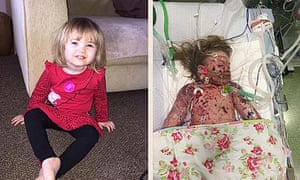
Burdett and his wife, Jenny,, made the decision to turn off Faye’s life support last Valentine’s Day after her body was ravaged by sepsis caused by meningitis. They released photos of their dying daughter covered in a rash, prompting more than 820,000 people to sign a petition for the meningitis B jab Bexsero to be given to all children.


The government has since declined to make the vaccine more widely available, saying it is not a good use of money. Ministers have yet to release calculations on how vaccines are deemed to be affordable and have not launched a meningitis awareness campaign, promised by a former public health minister.


Burdett said the decision not to extend the vaccine to more age groups was “insulting and devastating”. He said he has heard nothing since appearing before MPs on the petitions committee last March. “Children under five are vulnerable to meningitis and they can’t tell you exactly what is happening,” he said. “They are solely reliant on their parents and carers to spot that something is wrong.


“We have been through something so terrible and we thought if we could stop it happening to other families, that’s what we wanted to do. But since going to parliament, we’ve heard nothing.


“If nobody in parliament is going to take any notice and do something, who else is there? The government is being complacent and we feel badly let down. There is just this massive hole that children are falling into.


“We feel like we were ushered out of the building and that was that. It’s all been brushed under the carpet. The MPs there said they would keep pushing for an awareness campaign but we’ve heard nothing, not even from our own MP. It’s not acceptable and it’s not fair because children are still dying.”


Faye’s meningitis was initially mistaken for a virus: she was sent home from Maidstone hospital but returned seven hours later.


Burdett, 38, said an investigation was still ongoing into what happened at the hospital but he is critical of the process in which hospitals carry out their own investigations when things go wrong. “This is a process where people are investigating themselves. The hospital is judging itself,” he said. “This needs to be an outside, independent process.”


Asked how he and his wife were coping, he said: “I don’t think it ever gets any better. You learn to cope, you learn that you can do crazy things or push the self-destruct button, but none of that is going to bring Faye back.


“Every day we miss her, we talk about her. There’s a huge hole in our lives that is never going to be filled. But we’re also proud of her – because of the petition and because for 11 days she fought meningitis against the odds. That shows her strength and her fight.”


Burdett, a lorry driver, and his wife Jenny, 36, a beautician, spent every day at Faye’s hospital bedside. “She could hear and she could react,” he said. “Every morning I would sit with her and she would squeeze my finger.


“Once, she opened her eyes and she looked around. She mouthed the word ‘mummy’. We never heard her voice again because of the ventilator.”


Doctors told them Faye’s chance of survival was minimal. The couple had already signed forms consenting to the amputation of both Faye’s legs at the hips, one complete arm and the other arm just below the elbow. “There was also the internal damage that sepsis had done,” Burdett said. “Her kidneys weren’t working and the list went on and on. Turning off the machine was the hardest decision we have ever had to make but it was the right thing to do. We’ve never regretted that decision.”


Faye Burdett before and after she contracted meningitis.


Faye Burdett before (left) and after she contracted meningitis. Photograph: Meningitis Now/PA

The Burdetts plan to spend the anniversary of Faye’s death quietly at home in Maidstone, Kent. “We will go and visit her gravestone and take flowers,” Burdett said. “We will light a candle for her as we do every night.


“Faye was a very happy girl who loved to run around. She loved painting and was very clever for her age, she was so bright and determined.


“Faye loved curry. I would make her chicken tikka masala and she loved it. She was such a happy little girl but that’s the thing with meningitis – in the click of a finger, it all changes.”


Burdett warned other parents not to give their child ibuprofen or paracetamol before taking them to the hospital or GP. The couple gave Faye ibuprofen, which they believe masked some of her symptoms.


Last April, Jane Ellison, then public health minister, pledged to launch an awareness campaign for parents on the signs of meningitis and the government agreed to release its cost-modelling for vaccines. There is concern that the current model does not adequately account for the lifetime costs of caring with somebody left disabled by meningitis.


Bexsero is available on the NHS for babies aged two months, followed by a second dose at four months and a booster at 12 months. Parents who wish to have older children vaccinated must pay privately. Burdett said the government had promised to include a page on meningitis symptoms in the red book given to the parents of newborns, but this had also not yet been done.


A Department of Health spokesman said: “The UK is the first country in the world to have introduced a national Men B vaccination programme using Bexsero. We have made important progress, vaccinating more than one million babies since September 2015, in which time the number of cases in infants aged one and under has dropped by 50%.”


Public Health England has launched a separate campaign on sepsis. The charity Meningitis Research Foundation estimates that 400 cases of meningitis B among children up to the age of five could have been prevented if they had been given access to the vaccine.


Father of meningitis death girl accuses government of complacency

19 Kasım 2016 Cumartesi

Cryonics may be a fantasy. But who would begrudge a dying girl that? | Deborah Orr

There is so much that is distressing about the case of JS, the 14-year-old girl with terminal cancer who wished to be cryonically preserved after death, in the hope that she could be revived when a cure for her rare illness had been discovered. Her mother supported the girl in her wishes; her estranged father did not. So, without the consent of both parents, the child had to apply to the courts for permission for the procedure to take place.


JS and her mother both seem to have been determined to secure the preservation. JS got in touch with a Michigan storage facility and also with a UK charity that offers cryonic preservation and makes travel arrangements. Her maternal grandparents raised the estimated £37,000 to fund the process. After the death of JS, her hospital sent a note to the court, saying that their patient’s mother had been too preoccupied with complex postmortem arrangements to be “fully available” for her daughter as she died.


It seems cruel, placing that observation in the public domain, in reference to a woman whose daughter lost her life just a month ago. A lot of people will be familiar with the weird displacement activities that are indulged when a relative is dying. As my father died of cancer, his family fretted over whether he was eating enough and drinking enough water. The last time I offered Dad water, he said to me, very crossly: “Deborah. Enough.”


When my mother was dying of cancer, I got rid of the piano to make space for a bed in the living room, called private ambulance companies and contacted local hospices and care homes, trying with immense futility to arrange for her to be brought the 400 miles from Airdrie to London. Would I allow myself to be taken over by my child’s fantasy of future life? I fear I might.


How easy things were when we all agreed that all good children – and adults – go to heaven. My parents had always seemed to me very pragmatic in their atheism and their belief that this life was all there was. I was hugely shocked when my father, faced with his own death, said: “I didn’t think this would happen to me.” If anything, I was even more shocked when my mother said the same thing, just six years later. I’d had cancer myself in the interim, and had stared hard at the prospect of my own death. I’m absolutely certain that it’s going to happen to me. My doleful preoccupation is with how long I’ve got.


As for the father in the case, who also has cancer, he seems to be the ultimate example of a man who is clever but not wise. His objections included worries that she might be revived in the future and be unhappy and isolated. He thought it through. Unbelievable, really. He took a dying child’s complete fantasy, of a rebirth that medical science does not offer and is never likely to, imagined how things might pan out if this wasn’t a fantasy, and decided he was going to deny his child because his verson of this fantasy didn’t end happily. Also, he’s on benefits, and expressed concern about becoming liable for costs.


Yet one feels for this man too. Even this brief vignette of his psyche explains why he was bitterly estranged from his wife and daughter. Neither mother nor child had seen him for many years. Yet still, when they asked something of him in their baleful situation, he said no. Eventually he came round, saying he would agree if he could see his daughter’s body after she died; they said no, in turn. That’s how high-conflict family fractures go: one person says no and the other says no right back, the first chance they get.


It’s possible too, that it was the need for a court order that made the whole thing real to the mother and daughter, encouraged them to pin down details, check out logistics, make costings, seek funding. The case has certainly made things real for the rest of us.


The judge in the case, Mr Justice Peter Jackson, was at pains to emphasise that in granting permission he was not endorsing cryonics. Rather, he suggested that there was a need for regulation to be drawn up. I can’t help feeling that the regulation of a few exploitative, science fiction-based companies can only give an imprimatur of seriousness to ghastly people who exploit the human fear of death. These places don’t need regulating. They need exposing as morbid confidence tricksters.


In the absence of religion, humans still have philosophy to help those in distress make sense of life and death. At its best, religion is just a theatrical version of philosophy with a comforting final act. Even the resolutely irreligious understand the importance of a funeral – because funerals are for the living.


That’s why it’s easy to see the mother as even more tragic than the daughter. Perhaps she believed in her daughter’s fantasy too. In that case, she is likely to spend the rest of her life tracking progress in the treatment of her daughter’s illness. If that cure ever comes, this might be the point at which she will have to accept that her child is really dead. It’s a miserable thought. One can only hope that she knew what she was doing – offering false but compassionate hope to a child who didn’t want to die.


Cryonics may be a fantasy. But who would begrudge a dying girl that? | Deborah Orr

5 Kasım 2016 Cumartesi

My granddaughter, the girl who refused to let joy into her life

My granddaughter killed herself because the rent was due. She was 21. She left her parents a note. In part it read: “I’m about to do something ungodly. I’m sorry.”


In retrospect, she was hell-bent on self-harm. I don’t know what her body did to offend her, but for the last half decade of her life she punished it without remission. She extended the maltreatment to her immediate family, excoriating her mother, defaming her father, denouncing them to her brother and sister. Then she moved out “to be free”, and spent the next subsidised 18 months resisting every available mode of occupation or trade or pastime, insisting that all she really wanted to do was to “come home” – the home where the seeds of persecution and victimisation were allegedly sown, the home where anorexia took root and bulimia blossomed, the home where even she had begun to see that she was ill.


Yes, from time to time she accepted that she was ill and presented herself to those who could provide custodial intervention and sufficient carbohydrates to enable her to insist that she never had been other than entirely well, and whose domestic or institutional havens she would then renounce so that she could starve herself into the commencement of the next cycle. Every tactic contradictory, every endeavour repercussive, obviously she was on the path to self-destruction. In retrospect.


Every spate of professional counselling added to her education in the methodology of professional counselling. Each medical intervention augmented her command of its jargon. On her last admittance to Toronto’s prime psychiatric facility, sufficiently refreshed by a few days of its available stodge, she opposed remaining there long enough for a diagnosis to be accomplished, and she argued for her release at an official tribunal during which she held her own against a panel of psychiatrists, social workers and ward supervisors for four hours – a hospital record for duration – and ended the marathon by offering to return on a voluntary basis to provide art instruction to the inmates who, unlike her, needed to be incarcerated and, in her estimation, were bored.


On this occasion as on all the others, her glib protest was accepted. She was adjudged to be no danger to herself or to anyone and was released, doubtless to the sound of a vast institutional sigh. Meanwhile, in her private journal she reiterated that her ideal body weight was 88lb (40kg). These aspirations were accompanied by illustrative sketches of herself, redolent of Auschwitz.


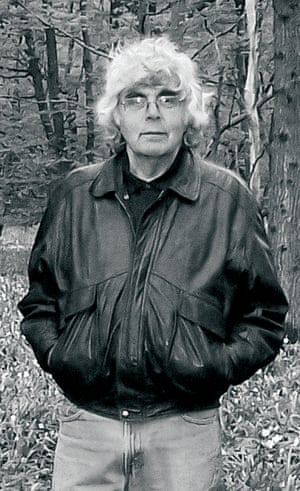
Jack Winter

‘By the time Emma emerged from the back seat, the owl sanctuary excursion had been converted into “the worst experience” of her life … Jack Winter.

Emma’s default vision was black. It was where she felt most comfortable. When she was 10, my wife and I took her to an owl sanctuary near our home in Bath. I need no photograph to recall her expression when a 10lb self-guided feather-bomb with a six-foot wing-span, a great grey, skimmed the surface of a meadow and landed on the leather gauntlet Emma wore and which I helped her to support. Yet, within the 20-minute interval of the return drive, she’d subjected ecstasy to her typical revisionism. By the time she emerged from the back seat, the excursion had been converted into “the worst experience of my whole entire life”.


Once again, she’d consumed pleasure at the moment of delivery and then divested herself of its nutritional value, perhaps because something in her knew what followed happiness, and she feared it and pre-empted it with its inevitable consequence.


On her last transatlantic visit, Emma was escorted by my younger daughter who sacrificed much of her own tranquillity to her niece’s wilderness years. We took them to Rudyard Kipling’s garden at Rottingdean, near Brighton. The day was hot, the garden abloom with mid-July. Along the corkscrew path, Emma lagged behind, reportedly vigilant of insect life and its poisonous sting. To my backward glance she was luminous in the haze, joyous, incandescent and reckless as any rose.


That outing features largely in the scrapbook she compiled to commemorate the trip. She rarely completed any project. She completed this one. Uniformly enthusiastic, touchingly adolescent, unbearably normal, the scrapbook contains no hint of anxiety, not a blemish of doom. Apparently, she was able to acknowledge pleasure in recollection when she was insulated by paper from the sting of its worldly process. On the occasion of Kipling’s garden, it took my intervention to nudge her along her wonted course … the spiral to despair.


At supper that evening, I made her cry by pointing out that her description of her fellow students at art college as “retards” was offensive and a tad judgmental. To my daughter, who spotted impending tears and intervened to spare her niece further abuse at my hands, she whispered, “It’s as if he doesn’t like me.”


Later, she spun the incident and memorialised it in her scrapbook. “Papa Jack,” she wrote, “says sad things.”


In truth, Emma’s decline didn’t improve any of us unless, in the Catholic sense, by making us disproportionately conscious of our futility and lack of grace. My mother, however, was Jewish as, through the maternal line whether they will it or not, are my daughters and, therefore, theirs and theirs. Even among the least orthodox Jews, suicide continues to bear a tincture of abomination … something that invites a very Jewish spasm of self-blame. I shouldn’t have made her cry. I should have withheld my inhospitable corrective, deferred my display of liberal credentials, suppressed my pedagoguery, my self-aggrandisement, my vainglory. True enough, some of it. And none of it explains the fact that she’s gone.


An exaggeration of her virtues honours her as little as an extirpation of her faults. In a life as short as Emma’s, every action is notable, every event historic. Besides, doing it doesn’t work. The greater our distortions and omissions, the more the recollection of her performance corrects them. What also doesn’t work is regretting the years she might have had. They never were hers. Twenty-one of them were, and are hers still to occupy and expend as she did. Any more are in the possession of some other Emma, the one we encounter nightly who departs at dawn.


The statistics were against her. For women between 15 and 24, eating disorders have been claimed to incur the highest mortality rate of any mental illness, 12 times higher than that associated with all other causes of death for that age group … significant when applied to the population; meaningless when measured by the criterion of one. Faced with the particularity of Emma, everyone looked elsewhere and hoped otherwise and was disappointed.


There always was a surfeit of available explanations for Emma’s irrational conduct. Self-dramatisation, attention-seeking, shortcuts to fame, laziness, hormones, bad seed … there’s a clarity, a sensibleness, a sameness to them all, the inexorable logic of those convinced of their own rationality.


And now there’s something about Emma’s death that encourages interpretations that never quite apply and illuminate the interpreter more. Sensibleness is their least common denominator. Her last social worker – over the years she had several; he was her favourite – called her decision to step off the top floor of her six-storey Montreal apartment building “an existential tantrum”. At her bleakest, her mother suggested it was “logical”. I think it was an accident based on a flawed assessment. In an ecstasy of starvation, a gossamer dream of abnegation, she believed she’d rise, not fall. The ungodly thing she was about to do was fly.


I remember Emma’s first trip to Niagara Falls with this grandfather who hated heights combined with the motion of rushing water, but had decided to “man up” in front of his six-year-old firstborn third generational who wasn’t afraid of them or of anything else. Careening down the highway, I heard a grunt beside me. Her gumdrop had popped out of her mouth. She bent forward, recovered it from the grubby floor mat and contemplated it lovingly. “Throw it out the window,” I said. She looked at the hairy gumdrop in her hand, glanced up into my profile and back to the gumdrop. I could hear the clicks as her brain calculated the probability of my relinquishing the steering wheel to confiscate the contaminated sweet. “No way,” she said, and rammed the gumdrop home.


Then she moved from Toronto to Montreal to be free. And then the rent came due. And she’d already spent it.


In the UK, the Samaritans can be contacted on 116 123.


In the US, the National Suicide Prevention Hotline is 1-800-273-8255.


In Australia, the crisis support service Lifeline is on 13 11 14.


My granddaughter, the girl who refused to let joy into her life

8 Eylül 2016 Perşembe

Sam is a convicted paedophile … and a teenage girl

Sam* is a paedophile. Sam’s offence was a serious one – threatening a young boy and forcibly kissing and touching him. Sam was found guilty of this offence, and has a past history of offending including assaults, theft and drug use.


Sam is not in prison. Sam is in hospital. Sam was sent to hospital because the court took the view that the degree of mental illness that Sam had, in the form of schizophrenia and post-traumatic stress disorder, was so severe that Sam would not be safe in a custodial setting.


Sam is a teenage girl. Her history of contact with social services began before she was born. Her mother also had mental health problems, and was using heroin throughout her pregnancy. Sam never knew her mother who abandoned her soon after the birth. Instead, Sam was looked after by her father who was part of a paedophile ring. Sam suffered chronic abuse and still lives with the physical side effects.


The paedophile ring was subsequently exposed by the police, her father went to prison and Sam spent most of her childhood with a relative, who failed to protect her from a series of physically and at times sexually abusive partners. Social, health and education services all raised concerns that she was often inappropriately dressed for the weather, looked undernourished and had bruises that were hard to explain, but the family frequently relocated when people came knocking at the door. She had few friends, and when she did go to school she often sat quietly on her own in the corner so that she could see who was around her.


She began self-harming, took an overdose and attempted suicide. She has scars that will be visible for the rest of her life. She’s had psychotic episodes as a result of using a mixture of amphetamines and ketamine. She continues to experience voices that tell her that she is worthless and should try to kill herself. On her worst nights, she relives her experiences at the hands of every abuser that has ever touched her – they’re holding her down, and nobody ever comes to make it stop.


Sam’s story is not the worst I’ve come across. Sam is not simply defined by her behaviour. She is a frightened, fragmented and traumatised little girl who finds praise terrifying, because in the past it was so often associated with abuse of her trust. We’re working with her and with the other girls on my ward, to try to begin the process of healing. She doesn’t understand why we are trying, but she knows that we are, and that we will never give up on her, even when she begs us to. We are very conscious of her risks to others, but the most pressing need is to stop her from killing herself.


Sam is already surprising us with her shy sense of humour and resilience despite her background. When she gets frightened or feels insecure, she carries around a stuffed toy that carries stains and holes in the same manner and frequency that Sam carries her scars.


I’m a child and adolescent forensic psychiatrist and I have worked in a secure adolescent service for six and a half years. I understand why the general public and the media tend to have binary definitions of people – when awful things happen, it helps us to make sense of it. We have a reason, an explanation – they’re “evil”, born bad, they have wonky genetics, they’re “not like us”. We’re right – Sam is not like us. She didn’t have the same childhood, the same opportunities or the same care. She never had anyone to tell her that things would be OK, or to rescue her when she was in pain and thought she would die. She never had anyone to help her understand that she can be whoever she wants to be, that she doesn’t have to replicate the same cycle, or that relationships with other people can be safe. She never had anyone to share her hopes and dreams with. She never had anyone that she could trust.


It is my great privilege to work alongside our clinical team in trying to help people like Sam. When young people begin to trust us and reach out for the first time, my faith in the human spirit surpasses anything I ever thought possible. By day, I love my job with a passion, I work hard to help my patients recover from extreme trauma and illness, and I would never want to do anything else – by night, I dare to dream of a better world for the next Sam that is born.


*Sam is a composite of this psychiatrist’s experiences of patient care


  • In the UK, the Samaritans can be contacted on 116 123. In the US, the National Suicide Prevention Hotline is 1-800-273-8255. In Australia, the crisis support service Lifeline is on 13 11 14. Hotlines in other countries can be found here

If you would like to contribute to our Blood, sweat and tears series which is about memorable moments in a healthcare career, please read our guidelines and get in touch by emailing sarah.johnson@theguardian.com.


Join the Healthcare Professionals Network to read more pieces like this. And follow us on Twitter (@GdnHealthcare) to keep up with the latest healthcare news and views.


Sam is a convicted paedophile … and a teenage girl

20 Temmuz 2014 Pazar

Elaine Stritch: a girl who knew how to live

——————


There’s NO Rapid Correct FOR DIABETES


Pre-diabetes is not in fact officially recognised as a illness. It doesn’t seem on the World Well being Organisation record of conditions, but doctors and researchers increasingly use the phrase to describe men and women who, they suspect, are on the cusp of building diabetes. They might have no symptoms of unwell-well being, but their blood sugar ranges are at the upper selection of typical. Thanks to hefty marketing and advertising by the pharmaceutical sector, there is rising strain to prescribe diabetic medicine for them – to reduce their probabilities of creating full-blown type 2 diabetes.


The toxic blend of enhanced existence expectancy and a diet that is higher in sugar, salt and fat is undoubtedly causing sort two diabetes to attain epidemic proportions. This single situation will take up 10 per cent of the whole NHS budget, thanks to the litany of complications it brings.


The chance of stroke in newly handled variety 2 diabetics, for instance, is far more than double that of the basic population. Folks with diabetes are four instances a lot more very likely to have cardiovascular disease. Between 20 and thirty per cent of diabetics have suffered injury to their renal system, major to kidney failure and the want for dialysis. Injury to the delicate blood vessels in the eyes of diabetics is a foremost cause of blindness, even though damage to nerves is a main result in of foot wounds and ulcers, which could end result in amputation.


Prevention is, of course, better than cure, so there is an argument for identifying pre-diabetics, treating them and encouraging lifestyle adjustments. But creating in the British Healthcare Journal, John Yudkin, a professor of medication at University School London, has challenged this. He factors out that the term “pre-diabetes” medicalises perfectly healthful individuals, and risks placing “unsustainable burdens” on health care systems.


Organisations this kind of as Diabetes Uk strongly disagree. I have some sympathy with their place. As well a lot of folks think about variety 2 diabetes as nothing at all a lot more than an irritant, some thing that can easily be fixed with a pill. They are wrong. Irrespective of how effectively it is managed, kind two diabetes is a progressive disease that outcomes in the need to have to boost drug therapies over time.


A recent study conducted in Australia showed that following 6 years, 44 per cent of sufferers no longer responded to oral medication and essential insulin injections. Without a doubt, oral medicine sooner or later fails in most individuals, meaning that injections are virtually inevitable at some point. So if we can determine folks who are at risk sooner – when they are pre-diabetic – rather than later on, it have to be advantageous for the two the patient and the NHS.


Nevertheless, there is still one thing inherently dishonest about the term pre-diabetes. It suggests that, without having intervention, it will inevitably lead to kind 2 but that is not the situation, as Prof Yudkin explains. For pre-diabetes, the danger of progressing to diabetes is about ten-20 per cent. In addition, he argues that there is no confirmed benefit from treating pre-diabetics with medicines. So the health-related occupation is needlessly leading to worry and distress in most of these it labels with this situation. And it has been produced worse by the American Diabetic Association, which in 2010 widened the parameters for what is considered pre-diabetes, so that now even far more people fall inside the variety.


Medication is not as clear-minimize as we’d like it to be. The reality is that most diseases are defined by arbitrary lower-off points, and diabetes is no distinct. Anything at all above a particular blood sugar level is deemed to be pathological, and outcomes in a diagnosis. As a clinical instrument, the phrase pre-diabetic is useless.


Some doctors argue that this doesn’t matter if it signifies men and women can be persuaded to adopt a more healthy lifestyle as a result of a diagnosis. But the worry is that if the parameters for a diagnosis of pre-diabetes are permitted to be set as ludicrously wide as they are at the moment, so many folks will be diagnosed with it that it will turn into the norm. It would get rid of its shock issue: if a third of folks have pre-diabetes, what does it matter?


So the chance is, it would have fairly the opposite impact to that intended. It would merely make even a lot more men and women complacent about diabetes.


———————-


DIGNIFIED DEBATE In excess of A DIVISIVE Issue


Lord Falconer’s Assisted Dying Bill have to be one of the most divisive and controversial pieces of legislation in latest many years. It has split medical professionals, lawyers, clergy, politicians and the standard public.


For years, I have supported the thought of assisted dying, but arguments put forward by critics of the Bill have been compelling. Andrew Lloyd Webber spoke movingly to this paper of how final year he deemed going to Dignitas, the suicide clinic in Switzerland, when he grew to become depressed soon after a series of operations. He now considers this would have been “stupid and ridiculous”.


I do think that those with terminal sickness need to be able to get manage of their lives and be assisted to die if that is what they need. But I’m impressed and heartened by the mature, dignified nature of the debate that has taken area, and how the emphasis of the arguments – both for and against – has been on the men and women this proposed Bill will influence most.


Max Pemberton’s newest book, ‘The Medical doctor Will See You Now’, is published by Hodder. To buy a copy, contact Telegraph Books on 0844 871 1515 books.telegraph.co.united kingdom


Elaine Stritch: a girl who knew how to live

14 Temmuz 2014 Pazartesi

Bone marrow donor discovered for girl, 8, soon after #pantsonyourhead social media campaign

Their campaign inspired an extraordinary response with the world’s most expensive footballer, Gareth Bale lending his help.


He was joined by other well-known names which includes comedian Russell Howard, Wales rugby captain Sam Warburton, Tv presenter Gethin Jones and EastEnders actor Richard Elis.


The appeal led to a two,580 per cent increase in the variety of folks in Wales joining the Anthony Nolan register in contrast to the very same period final 12 months.


Right after waiting a gruelling 3 months, Hollie discovered out last week that a donor had been located.


Sharing the information on Hollie’s campaign Facebook webpage, Mrs Clark wrote: “We want to thank everyone who has acquired off their BOTT and aided us.


“There are virtually also several to identify, suffice to say, you know who you are and what you did Its difficult to make clear how we really feel so we will not try out, it would be messy.


“We get massive power and comfort from you all. We could not have began this journey without having the response to this campaign. You all genuinely did Assist Hollie. You really did #putyourpantsonyourhead.”


She urged individuals to carry on registering to help others like Hollie in require of a donor.


“Although we are full of happiness we still have a lengthy way to go,” she wrote.


“We know there are many Mums and Dads looking out of a window right now. Hunting and asking yourself if that special man or woman will join a bone marrow register to save their child’s lifestyle.


“Trust us, it’s not a nice feeling. Trust us when we say, it truly is not a place you EVER want to be in. It is despair, fear and terror.


“Try &amp envision just for a minute. Try out and imagine seeking for that one particular special person in the globe who could conserve your child’s life. It does not have to be like this. It could be distinct. It is simple, here is the remedy, right here is the secret. Register as a bone marrow donor and tell your close friends to do the exact same.”


Mrs Clark added: “In a brief time Anthony Nolan have turn into part of us. They were there for us and we Positive AS HELL will be there for them. We cannot and will not walk away from them.


“We will get Hollie fixed &amp be back to aid soon. We will be returning the favour.


“Parents in a similar place, preserve constructive &amp stay powerful.


“We will be there for you, that is a promise.”


Hollie, of Roath Park, Cardiff, was diagnosed with Myelodysplastic syndrome (MDS), a blood disorder which triggers a drop in the quantity of healthier blood cells in the body, three months in the past.


Mrs Clark, a GP, mentioned: “It was an absolute shock, it is practically the worst factor as a parent you could be informed.


“It was difficult to believe because she’d been so active at the time, she loves swimming and cycling and taking part in with her pals, and she’d been doing all these things with no us even knowing that her haemoglobin levels have been dangerously reduced.”


Right after discovering her younger brother Sam was not a match, her mothers and fathers made the decision to take action to locate one as quickly as achievable which led to the campaign.


In Cardiff, there was a 2,600 per cent enhance in individuals joining the register and, in the United kingdom as a total, the figure was 170 per cent compared to the exact same time last 12 months.


Karen Archer, regional register development manager at Anthony Nolan stated: “We are absolutely delighted that a match has been located for Hollie and we want her and all of her household the greatest of luck for the potential.”


To indicator up to the register visit www.anthonynolan.org/helphollie.


Bone marrow donor discovered for girl, 8, soon after #pantsonyourhead social media campaign

Bone marrow donor located for girl, eight, following worldwide social media campaign

Their campaign inspired an amazing response with the world’s most high-priced footballer, Gareth Bale lending his help.


He was joined by other well-known names like comedian Russell Howard, Wales rugby captain Sam Warburton, Television presenter Gethin Jones and EastEnders actor Richard Elis.


The appeal led to a 2,580 per cent boost in the variety of people in Wales joining the Anthony Nolan register in contrast to the same period last yr.


Right after waiting a gruelling 3 months, Hollie discovered out last week that a donor had been discovered.


Sharing the information on Hollie’s campaign Facebook page, Mrs Clark wrote: “We want to thank every person who has acquired off their BOTT and helped us.


“There are virtually too numerous to title, suffice to say, you know who you are and what you did Its tough to explain how we truly feel so we will not consider, it would be messy.


“We take huge power and comfort from you all. We could not have started out this journey with out the response to this campaign. You all truly did Help Hollie. You genuinely did #putyourpantsonyourhead.”


She urged men and women to continue registering to assist other individuals like Hollie in need to have of a donor.


“Although we are full of happiness we nevertheless have a extended way to go,” she wrote.


“We know there are a lot of Mums and Dads hunting out of a window correct now. Looking and wondering if that specific individual will join a bone marrow register to conserve their child’s lifestyle.


“Trust us, it is not a nice feeling. Believe in us when we say, it’s not a place you EVER want to be in. It is despair, concern and terror.


“Try &amp picture just for a moment. Consider and envision seeking for that one particular specific individual in the planet who could save your child’s daily life. It does not have to be like this. It could be various. It is straightforward, here is the answer, right here is the secret. Register as a bone marrow donor and inform your close friends to do the exact same.”


Mrs Clark added: “In a short time Anthony Nolan have grow to be component of us. They were there for us and we Confident AS HELL will be there for them. We cannot and will not walk away from them.


“We will get Hollie fixed &amp be back to assist soon. We will be returning the favour.


“Parents in a equivalent place, hold positive &amp remain sturdy.


“We will be there for you, that is a guarantee.”


Hollie, of Roath Park, Cardiff, was diagnosed with Myelodysplastic syndrome (MDS), a blood disorder which triggers a drop in the amount of wholesome blood cells in the physique, three months in the past.


Mrs Clark, a GP, stated: “It was an absolute shock, it is literally the worst point as a mother or father you could be advised.


“It was tough to believe simply because she’d been so lively at the time, she loves swimming and cycling and taking part in with her buddies, and she’d been performing all these issues without having us even understanding that her haemoglobin ranges were dangerously minimal.”


Following finding her younger brother Sam was not a match, her mother and father decided to take action to find 1 as speedily as attainable which led to the campaign.


In Cardiff, there was a two,600 per cent enhance in folks joining the register and, in the United kingdom as a total, the figure was 170 per cent compared to the same time final 12 months.


Karen Archer, regional register growth manager at Anthony Nolan mentioned: “We are completely delighted that a match has been discovered for Hollie and we want her and all of her loved ones the greatest of luck for the potential.”


To sign up to the register go to www.anthonynolan.org/helphollie.


Bone marrow donor located for girl, eight, following worldwide social media campaign

13 Temmuz 2014 Pazar

Mystery of the 13-year-old girl who kept falling down

Hope is the third of 4 daughters of Jimmy and Kala Horncastle, who dwell in Southend-on-Sea, Essex. She was 12 when she was first referred to Dr Prabhakar. “Her signs and symptoms had begun the year ahead of,” says Mrs Horncastle. “A couple of instances, on the way to school, she’d have a brief tremor. A single day, when we have been out shopping, her body went rigid and her legs went floppy. It lasted for about five or 10 seconds. The GP imagined it went back to her babyhood when, simply because she was double-jointed, she had trouble walking. Then on holiday in France that summer time, the spasms suddenly elevated.”


The tests run by their local hospital showed no abnormality, but when Hope commenced secondary college the attacks lasted longer and became a lot more frequent, often occurring many instances a day. Hope never ever misplaced consciousness but she was obviously at threat of damage and often needed a instructor or assistant with her.


It is not clear what factors may possibly have been involved in the attacks, but Jimmy, 54, who is retired, says: “Hope disliked college normally. Although she appreciated enjoying with her close friends, she would much rather have stayed at residence with her mum. When she was twelve, her two elder sisters left the college – 1 went to university, the other to sixth kind elsewhere.”


Hope adds: “If I ever had an situation at school, I’d go and uncover one particular of my sisters or the teachers would inquire them to appear after me. When they left college, the attacks received worse.”


So significantly worse, in truth, that the college made a decision it could not cope. Hope missed Yr 8 fully and was tutored at property. She returned in Year 9, but the school insisted that she use a wheelchair and wear a helmet to stop damage.


Dr Prabhakar says that tests on Hope showed none of the electrical activity associated with epilepsy, and the final results of heart and brain exams had been all normal. The hospital suggested loved ones therapy and artwork therapy. “It was very good to speak about stuff,” says Hope of the loved ones therapy, which lasted for two-and-a-half years, “but it created no variation to the attacks.”


In desperation, her mother and father tried osteopathy, cranial massage, tai chi and constellation treatment (which seems at household programs, as effectively as trauma in previous generations). “As extended as intervention is not hazardous, we are open to substitute methods of remedy,” says Dr Prabhakar.


One this kind of substitute therapy does seem to have helped. By November 2012, Hope was having attacks almost hourly, typically lasting 15 minutes at a time. “It was the worst she had ever been,” says her mother. They started hypnotherapy sessions with Max Kirsten, a clinical hypnotherapist with a private practice in London. A month later on, soon after four 90-minute sessions, her parents say she was virtually cost-free of her attacks, apart from the occasional momentary “flutter” on the way to school. After two more sessions final yr, she has become 98 per cent free of charge of the episodes.


In clinical hypnotherapy, the practitioner utilizes the unconscious to focus on a patient’s thoughts, emotions and behaviour. Kirsten has been practising clinical hypnotherapy and NLP (Neuro-Linguistic Programming, which uses language to enable a person to “recode” the way the brain responds to stimuli) for a lot more than a decade.


“Emotional anxiety often leads to physical reactions,” Kirsten says. “In seizure-like attacks, the signs are actual: patients have no voluntary, conscious control over them. They are the bodily expression of psychological concerns.”


The essential, says Kirsten, is to change damaging ideas – which are cumulative – with constructive ones. “By doing work with Hope’s unconscious mind and making use of guided imagery to supplant the unfavorable with positive emotions, we are creating her unconscious her ally.”


Hope says: “I felt quite relaxed. It was truly calming having Max speak to me while I stretched out in the chair.”


Dr Prabhakar agrees that some kids can reply nicely to a variety of different treatment options, such as cognitive behavioural therapy, physiotherapy or hypnotherapy. “Whichever it is, it requirements to be tailored to the youngster.”


Hope has been properly now for far more than 15 months and is performing her GCSEs. She enjoys school and swimming and has started out going out with buddies once more. “The hypnotherapy was brilliant and very, very valuable. I always looked forward to my sessions with Max – and my signs were reducing all the time. I come to feel truly satisfied now.”


Dr Prabhakar is conducting a far more systematic overview of MUNS, involving other paediatric neurology centres. “Compared to other unexplained situations, this kind of as persistent fatigue syndrome, MUNS is underneath-recognised. This is a neglected group of patients,” he says. His aim is “to make the Government acknowledge that this is a severe issue considerably affecting young adolescents”.


For far more specifics, go to www.maxkirsten.com. British Society of Clinical Hypnotherapy: www.bsch.org.united kingdom


Mystery of the 13-year-old girl who kept falling down

11 Temmuz 2014 Cuma

HIV professionals take stock soon after virus reappears in "cured" girl

A laboratory technician examines blood samples for HIV/Aids

The lady treated in Mississippi appeared to be living evidence that it was achievable to outwit HIV. Photograph: Eliseo Fernandez/Reuters/Corbis


The brave hopes of HIV scientists that they were on the path in the direction of a remedy for Aids have received a substantial blow with the news from the US that, soon after appearing to have been completely cleared from the entire body of one particular small woman, the virus has been detected once more.


The Mississippi infant was the poster little one of the “hunt for a remedy”, which is the mantra scientists and campaigners have adopted given that more widely accessible medicines stemmed the rise in the Aids pandemic and lowered the sense of emergency. We have in no way known her title, but the little one treated in the Jackson Memorial Hospital in Mississippi appeared to be residing proof that it was possible to outwit the virus. Research have been planned to test the treatment method she acquired in other infants. Now there will have to be a rethink. During the HIV local community, there will be genuine dismay.


Pregnant ladies with HIV are put on antiretroviral medication to suppress the virus in their blood, for their own overall health and to protect their child. In North America and Europe, the vast bulk of babies with HIV-optimistic mothers are born free of charge of the virus as a outcome. The Mississippi baby’s mom, however, had never ever attended an antenatal clinic. Dr Hannah Gay, a paediatric HIV consultant at the hospital, took the choice to place the child on a specifically strong course of antiretroviral drugs inside of thirty hrs of the birth, just before she even had any HIV test outcomes. This was an unusual procedure, but confident sufficient, when the test outcomes came back, they confirmed HIV in the baby.


The youngster continued to be offered antiretroviral drugs for 18 months, when doctors lost contact with her. Ten months later, mom and daughter reappeared. When tests have been done, there was no indicator of the virus anywhere in the girl’s body. A buzz of amazement and excitement went all around the planet. But now, at nearly 4 many years old, the typical tests to which the child has been subjected have shown traces of the virus after once more. She is no longer in remission and has been place back on remedy.


HIV has proved a formidable opponent for scientists striving to develop vaccines as well as drugs simply because of its ability to hide in the body. Medicines can suppress the virus till it is almost undetectable, but after they are stopped, the virus rebounds.


The events in Mississippi might nevertheless educate scientists a great deal. It does appear that treatment method hit the virus harder in this child’s situation than any person has managed to do prior to. Other medical doctors have been keen to consider the method. In March it was exposed that a second infant, in Los Angeles, had been treated with a equivalent sturdy cocktail of drugs inside just 4 hrs of her birth. Tests could not find the virus afterwards, but that child is even now on treatment method and now probably to continue to be so.


There have been strategies in the US to carry out a federally funded review of early aggressive treatment in newborn infants with HIV. If there was no signal of HIV after two years, medical professionals would end the medication. No matter whether such a examine can now be ethically done will be in question.


“We’re going to get a good tough appear at the review and see if it requirements any modifications,” mentioned Dr Anthony Fauci, director of the National Institute of Allergy and Infectious Conditions. At a minimal, consent types to join the research would have to be revised, he stated. He added that scientists remained committed to obtaining a cure for HIV.


Jeffrey Safrit, analysis chief at the Elizabeth Glaser Pediatric AIDS Foundation, was one of these to supply an upbeat view. “What we have learned from this situation is really very wonderful,” he said. “They were able to suppress the virus for a extremely lengthy time with no treatment. We need to have to take the good aspects of this case and find out from them to move forward [with the federal examine]“.


Hopes have been raised before. Like the Mississippi little one, the “Berlin patient” appeared to offer a blueprint for a cure when his story emerged in 2008. The patient was an American, Timothy Ray Brown, who obtained a bone marrow stem cell transplant in Germany to deal with his cancer, acute myeloid leukaemia. His doctors managed to get the donation from a man who is a single of the tiny minority who have organic immunity to HIV. Brown’s HIV has not recurred. Stem cell transplants from donors have considering that been provided to other individuals with HIV, but the virus has constantly produced a comeback.


At the International Aids Conference, which opens in Melbourne at the finish of next week, the promise of babies freed from HIV was anticipated to be a single of the greatest and most hopeful themes. Now there will be a lot of stoical talk from HIV specialists about what can be discovered from the setback. They have been right here ahead of and will be right here yet again ahead of HIV is, hopefully, last but not least conquered.


HIV professionals take stock soon after virus reappears in "cured" girl

8 Temmuz 2014 Salı

How did a perform expertise girl make a major cystic fibrosis breakthrough?

“[Professor Denning] just showed me the [details] and informed me to get on with it and do something with it,” she says. “I emailed each and every single particular person I could uncover on the web who had anything to do with cystic fibrosis to get as a lot data as I could. I invested hundreds of hours on it all summer season.”


In the end, that a single summertime wasn’t adequate and she spent the up coming academic year on it also. She was paid a modest amount for her function expertise (she purchased a bike with the cash) but she worked for the following 9 months cost-free of charge.


Jo pursuing her love of mountaineering and hiking


Cystic fibrosis breakthrough


It was well worth it however, since Armstead’s mindful operate meant that for the 1st time there was a figure on how numerous folks around the world had cystic fibrosis. Out of the thirty countries she managed to find the details for, she discovered 75,000 people had the genetic disorder.


Employing a previous United kingdom examine that showed all around 40 per cent of men and women with cystic fibrosis were contaminated with the aspergillus fungus, Armstead was then about to estimate that all around half of the 75,000 folks had been contaminated with aspergillus.


At the second, aspergillus bronchitis (this specific strand of cystic fibrosis) isn’t diagnosed by anybody in the planet, but now that scientists know the big scale of it, they can adjust the way they work with cystic fibrosis.


Raising awareness


“It’s just to raise awareness that individuals need to have to alter their mind-sets about the diagnosis,” explains Armstead. “It’s to attempt and increase other nations to create their personal scientific studies. It is all to try and increase treatments.”


Professor Denning, explained: “By painstakingly crunching the numbers, Jo has helped us better recognize the scale of the challenge which will lead to better diagnostics and remedy approaches. There will be many individuals who in excess of the coming years will be grateful to Jo and her operate.”


The findings have now led to Armstead’s operate currently being featured in the foremost research journal, the Public Library of Science. She has also spoken at an international cystic fibrosis conference in Barcelona, exactly where she was the only student in sight. It is not the typical result of a summer’s work knowledge for any pupil.


‘I had a breakdown at one particular point’


“It’s been genuinely interesting and it’s taught me a good deal,” says Armstead. “It was quite fulfilling especially now it’s been published it is wonderful to have all your operate published. I just imagined it was a typical paper. I wasn’t expecting it to go in the press.”


Her surprise was produced higher by the reality that there had been instances during the study that she “broke down” emotionally. “There was a moment in summer time exactly where I was having a breakdown simply because I wasn’t acquiring any information from any nations,” she says.


“But when I began acquiring the information that was valuable. Some people weren’t positive I could do it which was off-placing. The other things I located nerve-racking was the IT side of items.”


Although she was continuing the function during the third 12 months of her medicine degree, she gave up a couple of evenings every single week to carry on sourcing the information. “It fitted in quite nicely because a whole lot of it was e-mail based so I could do it in my very own time,” she says. “[Just] ahead of it was published I had to do quite a good deal. A couple of occasions when friends were going out, I had to do [the research].”


Her real dream


Her operate has now paid off and she tells me her university professors are “very impressed”, but Armstead isn’t really positive she desires to go into scientific investigation or something to do with cystic fibrosis.


“I almost certainly must say that I want to be a respiratory medical doctor for cystic fibrosis,” she laughs. “It’s something I’d take into account and no matter what you do as a medic you’ll often be coming across these sufferers.


“[But] the absolute dream is I genuinely like climbing and the outdoors. The dream would be to be an A&ampE medic and be an expedition medic.”


She does not expect something to hold her back, even even though she says that as a female pupil, “we’re told you can’t go into these specialised areas due to the fact you are female and it’s male-dominated. There’s nonetheless that sort of, go off and make babies attitude”.


But even even though territories like A&ampE are nevertheless male-dominated, if Armstead approaches her life ambition with anyplace close to the exact same sum of determination as she did her summer operate experience, I’m rather sure she’ll be on our wards ahead of we know it and they will be all the greater for her diligence.


How did a perform expertise girl make a major cystic fibrosis breakthrough?

24 Haziran 2014 Salı

Doctors inquire judge to permit them to let girl, 20, die

The girl – recognized only as AB – has a extreme learning disability, sever cerebral palsy, severe curvature of the spine, diabetes, epilepsy and other well being troubles.


In excess of the course of her lifetime she has had a variety of respiratory tract infections requiring hospitalisation, and is at the moment in hospital, otherwise she is cared for at residence by her devoted dad and mom father – CD and mum EF.


The Trust seek out a declaration that it would not be in AB’s ideal curiosity for her to have invasive ventilation, cardio pulmonary resuscitation and renal help treatment if her problem deteriorates.


But her mother and father do not support the place of the Trust and oppose the granting of a declaration.


The judge will decide what to do in AB’s bets interest when she has deemed all the evidence at the hearing following month.


Doctors inquire judge to permit them to let girl, 20, die

19 Mayıs 2014 Pazartesi

Senegal rape: eleven-year-old girl denied abortion gives birth to twin boys

MDG : Senegal abortion laws and teenager raped : Senagalese girls

Senagalese women at a village gathering to honour girls’ schooling. Photograph: Getty


The 10-year-outdated girl who was raped but unable to terminate her pregnancy due to Senegal’s ban on abortion has given birth to twin boys.


In an interview with the Senegalese girls lawyers’ association, the woman, who has just turned eleven, was asked whether she was pleased that the rapist – her neighbour – was in police custody. “No,” she answered. “I want him to be killed because he has stopped me from going to college.”


The lady gave birth in the seventh month of her pregnancy, on 21 February. The infants invested a week in an incubator and are understood to be in excellent overall health.


“I did not realise I was pregnant. My mom noticed my entire body shifting and because I was vomiting she took me to the hospital. In the last couple of months my head ached and I could hardly stand up.”


Asked what she remembered about the birth she mentioned: “Nothing. I woke up and I realised I was not pregnant any far more, and I saw the twins.


“The twins are fine, but they want a lot of breastfeeding, and I do not have adequate milk. My mother buys milk at the pharmacy. We are in a position to get it, thanks to donations from generous individuals and a pharmacist who is currently being extremely kind,” she said.


The girl’s mother, who sells veggies at the market place, mentioned she had approached a female local community leader for guidance right after medical professionals confirmed the pregnancy. Her moves to strategy the state prosecutor had been supported by legal volunteers. The rapist was swiftly taken into police custody, the place he awaits trial.


“In direction of the finish of the pregnancy she could not get up on her very own at night and frequently panicked. Her father, from whom I am divorced, blames me. He says I have not brought her up appropriately, which is why it happened. When I advised him on the cellphone that the twins had been born he said, ‘I hear what you say’. Because then he has neither phoned nor come to see us.”


She asked the lawyers’ association to support the girl financially to let her to continue her training. However, she said her daughter would need to have to adjust colleges to steer clear of currently being bullied by other pupils.


Describing the rape, the 11-12 months-previous stated: “My mom had gone to perform. There was no 1 around in my place. I was enjoying with my friends and I abruptly wanted to go to the toilet. He identified me in the toilet and closed the door.”


She said he threatened to destroy her if she informed anyone of her ordeal. “Afterwards, I had pain at the bottom of my abdomen. I could not even stroll effectively but I forced myself to hold myself effectively as I was afraid he would kill me.”


She extra that the guy raped her a 2nd time in the exact same toilet. “This time he stated he would kill not only me but my mom if I told any person.”


Senegal rape: eleven-year-old girl denied abortion gives birth to twin boys

1 Mayıs 2014 Perşembe

Girl forced to phone national NHS variety to see physician in following area

“We are so cross and angry and what issues the household is that this could occur to a person who is in a vulnerable state and has no household or friends nearby to support.”


Ms Riddle, of Midsomer Norton, Somerset, was sooner or later capable to book in to see the doctor in the following room at Paulton Hospital close to Bath.


But there was a even more complication when the system showed she had been booked into the Royal University Hospital in Bath without having becoming advised.


The household is writing to the NHS to complain.


A spokesman for the Bath and North East Somerset Medical professionals Urgent Care explained: “Healthcare professionals which includes Small Damage Unit Nurses can contact our support directly employing a focused phone line to go over patient requirements with a single of our physicians who will then decide an proper program of action. An appointment for the patient to see 1 of our medical professionals for a face to encounter consultation will be organized by our service if suitable.”


He mentioned medical professionals primarily based in centres will talk to patients on the cellphone to give tips as well as see them encounter to face, meaning appointments are not always obtainable.


He added: “Appointment times presented to patients are primarily based on the patient’s assessed clinical want.”


Girl forced to phone national NHS variety to see physician in following area

15 Nisan 2014 Salı

Pregnant girl dies right after ovary removed by blunder

The mom-of-3 gave birth to a nevertheless-born boy and died on the operating table on November ten following a second operation to take away her appendix, the tribunal heard.


The two medical doctors are dealing with fitness to practise proceedings at the Health-related Practitioners Tribunal Service in Manchester, the place they could encounter being struck off.


Opening the situation Peter Horgan, representing the Standard Medical Council, told the Health-related Practitioners Tribunal Services advised the panel Mrs De Jesus, known as Patient A, was admitted to hospital with serious stomach discomfort on October 21, 2011, and was diagnosed with appendicitis two days later.


Trainee surgeon Christopher Liao, who had been working at the hospital for much less than three weeks, made the decision she required her appendix eliminated and Mr Coker agreed.


The consultant was informed Mr Al-Abed, a fifth-12 months trainee, who had also only been at the hospital for three weeks, was performing emergency operations and she was additional to his listing.


There had been a amount of other employees current in the theatre on Sunday October 23, including a youthful physician “keen to get some encounter”, Osman Chaudhary.


Mr Chaudhary was permitted to make the very first incision, but when issues arose Mr Al-Abed took in excess of.


“Patient A had begun to bleed quite heavily. Anything was not proper,” Mr Horgan explained.


“In the midst of this, Mr Al-Abed eliminated what he clearly believed to be the appendix. He believed he found it, removed it and gave to a nurse what later on turned out to be Patient A’s ovary.”


A colleague later reported that the medic “appeared reluctant to call for aid” and Mr Coker was by no means called.


He had been in the coffee room although the operation took spot and acquired no details it was underway.


“He had lunch, then went home and didn’t turn out to be mindful till Monday,” stated Mr Horgan.


“Thereafter Patient A remained in hospital till she was discharged on October 31. She returned to hospital and was readmitted on November seven suffering abdominal pains.


“On November 9 it was found by an additional physician that in fact the histology report showed an ovary had been eliminated and not the appendix.


“Tragically on November eleven Patient A gave birth to a even now-born male baby.”


Mrs De Jesus once again consented to go under the knife and this time her appendix was removed by Mr Liao.


“But sadly later on that afternoon Patient A died whilst on the operating table,” Mr Horgan mentioned.


The submit-mortem concluded she had died of a number of organ failure brough on by septicemia, the panel heard.


Dr Coker admits to failing to appropriately undertake his part in not attending or supervising the operation, but denies a number of other comparable costs.


Dr Al-Abed has admitted the bulk of the expenses. The hearing continues.


Pregnant girl dies right after ovary removed by blunder

Pregnant girl dies following ovary removed by error

The mother-of-3 gave birth to a still-born boy and died on the operating table on November ten following a 2nd operation to remove her appendix, the tribunal heard.


The two doctors are dealing with fitness to practise proceedings at the Healthcare Practitioners Tribunal Support in Manchester, the place they could face becoming struck off.


Opening the situation Peter Horgan, representing the General Health-related Council, advised the Healthcare Practitioners Tribunal Services advised the panel Mrs De Jesus, recognized as Patient A, was admitted to hospital with extreme abdominal soreness on October 21, 2011, and was diagnosed with appendicitis two days later on.


Trainee surgeon Christopher Liao, who had been functioning at the hospital for significantly less than 3 weeks, decided she essential her appendix eliminated and Mr Coker agreed.


The consultant was told Mr Al-Abed, a fifth-yr trainee, who had also only been at the hospital for 3 weeks, was executing emergency operations and she was additional to his record.


There had been a quantity of other personnel current in the theatre on Sunday October 23, which includes a youthful physician “keen to get some knowledge”, Osman Chaudhary.


Mr Chaudhary was permitted to make the first incision, but when complications arose Mr Al-Abed took above.


“Patient A had begun to bleed quite heavily. Some thing was not right,” Mr Horgan said.


“In the midst of this, Mr Al-Abed removed what he plainly believed to be the appendix. He considered he located it, eliminated it and gave to a nurse what later on turned out to be Patient A’s ovary.”


A colleague later reported that the medic “appeared reluctant to phone for support” and Mr Coker was in no way called.


He had been in the coffee room whilst the operation took location and received no information it was underway.


“He had lunch, then went residence and didn’t become aware until finally Monday,” said Mr Horgan.


“Thereafter Patient A remained in hospital till she was discharged on October 31. She returned to hospital and was readmitted on November 7 struggling abdominal pains.


“On November 9 it was discovered by one more physician that in fact the histology report showed an ovary had been removed and not the appendix.


“Tragically on November eleven Patient A gave birth to a nevertheless-born male child.”


Mrs De Jesus once more consented to go underneath the knife and this time her appendix was eliminated by Mr Liao.


“But sadly later that afternoon Patient A died while on the operating table,” Mr Horgan said.


The publish-mortem concluded she had died of several organ failure brough on by septicemia, the panel heard.


Dr Coker admits to failing to appropriately undertake his position in not attending or supervising the operation, but denies many other related charges.


Dr Al-Abed has admitted the majority of the charges. The hearing continues.


Pregnant girl dies following ovary removed by error