worldwide etiketine sahip kayıtlar gösteriliyor. Tüm kayıtları göster

12 Nisan 2017 Çarşamba

Recorded childhood cancers rise by 13% worldwide, study finds

Childhood cancers have risen across the globe by 13% over 20 years, according to data from the World Health Organization’s cancer section.


Cancer in children is comparatively rare; when it does occur it is more likely to have been triggered by something in the child’s genetic makeup than by anything to do with lifestyle or the environment.


Part of the reason for the rise is thought likely to be better detection. But experts say it is vital to collect better data from all over the world to establish all the causes, which could include infections and environmental pollutants.


The International Agency for Research on Cancer (IARC), which has published its findings in the medical journal Lancet Oncology, says the numbers recorded in cancer registries around the world have gone up since the 1980s. Between 2001-2010, there were 140 children in every million who were diagnosed with cancer under the age of 14, which represents a 13% increase.


IARC for the first time gives numbers for adolescents with cancer. There were 185 adolescents in every million diagnosed with cancer, most commonly lymphomas, which are cancers of the white blood cells.


“Cancer is a significant cause of death in children and adolescents, in spite of its relatively rare occurrence before the age of 20 years,” said IARC’s director, Christopher Wild. “This extensive new set of information on the pattern and incidence of cancer in young people is vital to raise awareness and to better understand and combat this neglected area of health early in life.”


A third of the cases under the age of 15 were of leukaemia, a cancer of the blood that is now successfully treated in Europe and the US.


A second paper, published in the Lancet Haematology journal, looks at the stark variation in survival from acute lymphoblastic leukaemia (or ALL) in childhood around the world between 2005 and 2009. In Germany, 92% of children survived for at least five years but in Colombia the figure was 52%.


Survival rates have improved significantly in all countries. From 1995-99 and 2005-09, five-year survival for the disease ALL, in children, increased from 79% to 89% in the UK, and from 83% to 88% in the US.


Regarding a second form of the disease, acute myeloid leukaemia (AML), five-year survival increased from 59% to 68% in the UK and from 52% to 63% in the US. Survival in China increased substantially over the same period – from 11% to 69% for ALL survival, and 4% to 41% for AML survival.


The IARC study on the global cancer rise has gathered information from cancer registries worldwide. But while the data covers 100% of children in Europe and North America, it accounts for only 5% or a lower percentage in Africa and Asia, where the information is not routinely collected.


In poorer countries, some children’s cancers are never diagnosed and their deaths will not be investigated. Social factors may explain why the cancer numbers for girls and small babies are very low.


In wealthier countries, greater understanding of cancers affecting children and adolescents and the development of better tools will account for much of the rise in numbers.


“It’s likely that this reported rise in children’s cancers is, in part, due to improvements in diagnosis,” said Anna Perman, Cancer Research UK’s senior science information manager. “We now have a better understanding of the symptoms of children’s cancers, which helps doctors to spot those who might have gone undiagnosed before. It’s unlikely environmental factors that children are exposed to either early in life or during development in the womb play a big role in this rise. Although some environmental and lifestyle factors that do play a role in cancer are on the rise, these usually take many years to influence cancer risk and would be unlikely to cause cancer at a young age.”


Recorded childhood cancers rise by 13% worldwide, study finds

11 Nisan 2017 Salı

Recorded childhood cancers rise by 13% worldwide, study finds

Childhood cancers have risen across the globe by 13% over 20 years, according to data from the World Health Organization’s cancer section.


Cancer in children is comparatively rare; when it does occur it is more likely to have been triggered by something in the child’s genetic makeup than by anything to do with lifestyle or the environment.


Part of the reason for the rise is thought likely to be better detection. But experts say it is vital to collect better data from all over the world to establish all the causes, which could include infections and environmental pollutants.


The International Agency for Research on Cancer (IARC), which has published its findings in the medical journal Lancet Oncology, says the numbers recorded in cancer registries around the world have gone up since the 1980s. Between 2001-2010, there were 140 children in every million who were diagnosed with cancer under the age of 14, which represents a 13% increase.


IARC for the first time gives numbers for adolescents with cancer. There were 185 adolescents in every million diagnosed with cancer, most commonly lymphomas, which are cancers of the white blood cells.


“Cancer is a significant cause of death in children and adolescents, in spite of its relatively rare occurrence before the age of 20 years,” said IARC’s director, Christopher Wild. “This extensive new set of information on the pattern and incidence of cancer in young people is vital to raise awareness and to better understand and combat this neglected area of health early in life.”


A third of the cases under the age of 15 were of leukaemia, a cancer of the blood that is now successfully treated in Europe and the US.


A second paper, published in the Lancet Haematology journal, looks at the stark variation in survival from acute lymphoblastic leukaemia (or ALL) in childhood around the world between 2005 and 2009. In Germany, 92% of children survived for at least five years but in Colombia the figure was 52%.


Survival rates have improved significantly in all countries. From 1995-99 and 2005-09, five-year survival for the disease ALL, in children, increased from 79% to 89% in the UK, and from 83% to 88% in the US.


Regarding a second form of the disease, acute myeloid leukaemia (AML), five-year survival increased from 59% to 68% in the UK and from 52% to 63% in the US. Survival in China increased substantially over the same period – from 11% to 69% for ALL survival, and 4% to 41% for AML survival.


The IARC study on the global cancer rise has gathered information from cancer registries worldwide. But while the data covers 100% of children in Europe and North America, it accounts for only 5% or a lower percentage in Africa and Asia, where the information is not routinely collected.


In poorer countries, some children’s cancers are never diagnosed and their deaths will not be investigated. Social factors may explain why the cancer numbers for girls and small babies are very low.


In wealthier countries, greater understanding of cancers affecting children and adolescents and the development of better tools will account for much of the rise in numbers.


“It’s likely that this reported rise in children’s cancers is, in part, due to improvements in diagnosis,” said Anna Perman, Cancer Research UK’s senior science information manager. “We now have a better understanding of the symptoms of children’s cancers, which helps doctors to spot those who might have gone undiagnosed before. It’s unlikely environmental factors that children are exposed to either early in life or during development in the womb play a big role in this rise. Although some environmental and lifestyle factors that do play a role in cancer are on the rise, these usually take many years to influence cancer risk and would be unlikely to cause cancer at a young age.”


Recorded childhood cancers rise by 13% worldwide, study finds
31 Mart 2017 Cuma

Depression is leading cause of disability worldwide, says WHO study

Cases of depression have ballooned almost 20% in a decade, making the debilitating disorder the leading cause of disability worldwide, the World Health Organization (WHO) has said.


By 2015, the number of people globally living with depression, according to a revised definition, had reached 322m, up 18.4% since 2005, the UN agency said on Thursday.


“These new figures are a wake-up call for all countries to rethink their approaches to mental health and to treat it with the urgency that it deserves,” WHO chief Margaret Chan said.


According to the agency’s definition, depression is a “persistent sadness and a loss of interest in activities that people normally enjoy, accompanied by an inability to carry out daily activities for two weeks or more”.


Lack of energy, shifts in appetite or sleep patterns, substance abuse, anxiety, feelings of worthlessness and thoughts of self-harm or suicide are also common, and can affect entire families.


Jamal Edwards breaks taboos around men’s mental health

The drop in productivity, and other medical conditions often linked to depression, also takes a financial toll, with the global cost estimated at $ 1tn annually, the WHO said.


Shekhar Saxena, head of the agency’s mental health and substance abuse department, said both psychosocial and medical treatments could be highly effective, insisting on the importance of reaching more of those in need.


Even in the most developed countries, about half of people suffering from depression are not diagnosed or treated, and the percentage soars to between 80-90% in less developed nations.


Treatment can be difficult to access, while a fear of stigma also prevents many people from seeking the help required to live healthy and productive lives, the agency said.


According to the WHO, every dollar invested in improving access to treatment leads to a return of $ 4 in better health and productivity.


And “early identification and treatment of depression is a very effective means of decreasing death by suicide,” Saxena said.


There are about 800,000 suicides worldwide every year, amounting to one every four seconds. And the link to depression is clear.


Saxena pointed to studies showing that 70-80% of people who kill themselves in high-income countries, and around half of those in low-income countries, suffer from mental disorders, of which depression is the most common.


In the UK, the Samaritans can be contacted on 116 123. In the US, the National Suicide Prevention Hotline is 1-800-273-8255. In Australia, the crisis support service Lifeline is on 13 11 14. Hotlines in other countries can be found here


Depression is leading cause of disability worldwide, says WHO study

29 Mart 2017 Çarşamba

Thousands of pollution deaths worldwide linked to western consumers – study

Western consumers who buy cheap imported toys, clothes and mobile phones are indirectly contributing to tens of thousands of pollution-related deaths in the countries where the goods are produced, according to a landmark study.


Nearly 3.5 million people die prematurely each year due to air pollution, the research estimates, and about 22% of these deaths are associated with goods and services that were produced in one region for consumption in another.


The analysis provides the first detailed picture of the extent to which consumer demand in the US and western Europe contributes to pollution in developing countries, with profound health consequences.


“If the cost of imported products is lower because of less stringent air pollution controls in the regions where they are produced, then the consumer savings may come at the expense of lives lost elsewhere,” the authors conclude.


The study also reveals how emissions from industrial hotspots affect the health of people in neighbouring countries and, to a lesser extent, more distant regions, as pollutants circulate on global air currents. About 12% (411,100) of early deaths globally were related to air pollutants emitted in a different region of the world, the research found.


The study focused on the emission of fine particulate matter pollution (PM 2.5) from power stations, factories, aeroplanes and shipping in 13 regions, taking in data from 228 countries. Particulates are thought to account for more than 90% of the global mortality from outdoor air pollution, raising the number of deaths from heart disease, stroke, lung cancer and asthma.


The tiny particles can trigger asthma attacks in the lungs and can cross from the air sacs in the lung into the bloodstream, where they can cause inflammation, alter the way blood clots, and make blood vessels more permeable. Particulates have also been shown to migrate into other tissues, such as the liver, kidneys and brain, although it is less clear what the health consequences are in these organs, and the effects also depend on the chemical makeup of the particulates.


“In general, air pollution links to general ill health,” said Matthew Loxham, a toxicologist at Southampton University who was not involved in the study. “It’s a range of different conditions.”


The scientists used a combination of air pollution data, emissions measurements and models of global air currents to tally up where pollution was emitted and where it ended up in 2007. An economic model, based on data from the Global Trade Analysis Project, was then used to attribute air pollution to the demand of consumers for finished goods, although the results were not broken down by product type.


Chinese emissions caused more than twice the number of deaths worldwide than the emissions of any other region, followed by emissions produced in India and the rest of the Asia region. The scientists calculated that PM 2.5pollution produced in China is linked to more than 64,800 premature deaths in other regions, including more than 3,000 deaths in western Europe and the US.


However, this figure was significantly outweighed by the 108,600 premature deaths in China linked to consumption in western Europe and the US.


Steven Davis, a co-author based at the University of California, Irvine, said that the paper simply aimed to lay out the evidence for the benefit of policymakers. “It’s not really up to us to say what’s fair or not,” he said.


In a press briefing this week, his co-authors called for international action on the issue.


“For greenhouse gas emissions we have a global agreement. People can argue about whether its been effective or not – but at least we have a global framework,” said Dabo Guan, a professor in climate change economics at the University of East Anglia and the paper’s senior author. “People have thought air pollution was a local issue.”


Guan cites the example of mobile phones made in China, which might be sold for $ 200, around 70% of which goes to the company that designed the product and just $ 5-6 to the Chinese manufacturer.


“On average every six months we change our phone,” he said. “It has a health cost on the other side of the world.”


For countries like China, whose economies are dependent on exporting cheaply-made goods, improving environmental standards has to be balanced against potential negative economic impacts.


“Some other country would step up and say hey, we’re willing to let our people die to have that business,” said Davis.


Improving pollution control technologies in China, India and elsewhere in Asia would have a disproportionately large health benefit in those regions and worldwide, according to the analysis in the journal Nature.


Qiang Zhang, another author from Tsinghua University, Beijing, said that consumers in Europe and the US who buy cheap imported toys and clothes also bear a responsibility.


“We need to move our lifestyles away from cheap and wasteful,” he said.


Oliver Hayes, a pollution campaigner for Friends of the Earth air pollution, said: “No-one should be denied the right to breathe clean air, whether they live in Beijing or Barking. But air pollution doesn’t recognise borders, and it’s clear that the devastating impacts of polluters can be felt many miles from their activities.


Thousands of pollution deaths worldwide linked to western consumers – study

7 Ekim 2016 Cuma

Junk food shortening lives of children worldwide, data shows

Junk food and sugary drinks are taking an enormous toll on children around the world, with soaring numbers who are obese and millions developing conditions such as type 2 diabetes and high blood pressure previously seen only in adults, data has revealed.


Children were facing crippling illnesses and shortened lives because of the spread of the heavily marketed fast-food culture, experts said, and health services around the world would struggle to cope. They predicted that the UN target to stop the rise of childhood obesity by 2025 would be missed.


Among the countries facing the worst scenarios were Egypt – where more than a third (35.5%_ of children aged five to 17 were overweight or obese in 2013 – Greece (31.4%), Saudi Arabia (30.5%), the United States (29.3%), Mexico (28.9%) and the UK (27.7%).


More than 3.5 million children now had type 2 diabetes, which was once unknown in this age group and can lead to horrible complications in later life, such as amputations and blindness. The World Obesity Federation, which compiled the data, predicted that number would rise to 4.1 million by 2025.


About 13.5 million children have impaired glucose tolerance, which is a precursor to diabetes. Around 24 million have high blood pressure and more than 33 million have fatty liver disease as a result of obesity, which is more often associated with alcoholism and can lead to cirrhosis and liver cancer.


If anything, the experts said, the figures were an under-estimate because they were based on the numbers of obese children, and some who were classified as overweight would also have the diseases.


The figures are alarming for rich and poor countries alike, signalling soaring medical bills to treat the coming epidemic of disease. But the WOF experts who compiled the data said that, while rich countries were struggling, poorer countries were ill-equipped to cope.


Child obesity incidences

“These forecasts should sound an alarm bell for health service managers and health professionals,” said Tim Lobstein, policy director of the World Obesity Federation. “They will have to deal with this rising tide of ill health following the obesity epidemic.


“In a sense we hope these forecasts are wrong: they assume current trends continue but we are urging governments to take strong measures to reduce childhood obesity, and meet their agreed target of getting the levels of childhood obesity down to 2010 levels before we get to 2025.”


By 2025, say the experts whose findings are published in the journal Pediatric Obesity, 49 million more children will be obese or overweight than in 2010, the year from which the UN said there should be no further increase in obesity – a total of 268 million worldwide. By then, 91 million of these children will be obese.


Lobstein, one of the authors of the paper published ahead of World Obesity Day next Tuesday , said the food children are now eating is at the heart of the problem and that in poor countries, obesity and stunting go hand in hand.


“We find that the large majority of children suffering excess bodyweight are in low- and middle-income countries. Following the recent evidence from the World Bank on the continuing high levels of stunting in children in underdeveloped regions of the world, it is obvious that something is severely wrong with the way our food supplies are developing,” said Lobstein.


“You cannot replace contaminated water with Coca-Cola or Chocolate Nesquik, or a lack of good meals with a pack of fortified noodles, and still expect children to grow healthily. Breastfeeding is rapidly giving way to infant formula in large areas of Asia where markets have tripled in value in a decade – an area where we have seen some of the most rapid increases in overweight and obesity.


“Stunting and obesity are part of a continuum of poor nutrition, and can be found together in the same communities, the same families, and even the same individual children. Health is a key factor in sustainable development, and healthy food supplies are essential for economic development. Healthy food supplies are also a basic human right for this and the next generation.”


In the past 10 years, consumption of sugary drinks worldwide increased by a third. More than half of the world’s population now live in urban environments, while 80% of young people aged 11-17 fail to get sufficient physical activity.


The President of the World Obesity Federation, Professor Ian Caterson called for governments to take tough regulatory action to stop junk food companies targeting children.


“The obesity epidemic has reached virtually every country in the world, and overweight and obesity levels are continuing to rise in most places,” he said. “Common risk factors, such as soft drink consumption and sedentary environments, have increased. Fast food advertising continues to really influence food choices and what is eaten, and increasing numbers of families live in urban environments without access to space to exercise or time to exercise.


“If governments hope to achieve the WHO target of keeping child obesity at 2010 levels, then the time to act is now. Governments can take a number of actions to help prevent obesity, including introducing tough regulations to protect children from the marketing of unhealthy food, ensuring schools promote healthy eating and physical activity, strengthening planning and building rules to provide safe neighbourhoods, and monitoring the impact of these policies.”


Additional reporting by Pamela Duncan


Junk food shortening lives of children worldwide, data shows

15 Eylül 2016 Perşembe

Maternal deaths worldwide drop by half, yet shocking disparities remain

The number of women dying from causes related to pregnancy and childbirth has almost halved since 1990, a global report has revealed.


Worldwide the annual number of maternal deaths per 100,000 live births fell by 44% between 1990 and 2015, from approximately 385 to 216.


But the figure came far below the target set by the United Nations as part of its millennium development goals in 2000, which aimed to see a drop of 75% by 2015.


The report also highlights that global inequalities in maternal healthcare are increasing, with the gap between countries with the lowest level of maternal deaths and the highest doubling between 1990 and 2013, reaching a 200-fold difference.


“Lots of people worked very hard and progress was achieved, but it was patchy,” said Wendy Graham from the London School of Hygiene and Tropical Medicine, who was a co-coordinator of the report. “Like many things in health, in the progress that the average receives invariably there are some left behind.”


It is estimated that 210 million women become pregnant every year, with 140 million babies born. But according to the report – a series of six papers published in the Lancet by an international team of researchers – provision of maternal healthcare worldwide is hugely variable.


“This is about human rights and a lack of standardised care across the world,” said Stephen Kennedy, head of the Nuffield department of obstetrics & gynaecology at the University of Oxford, who was not involved in the series.


“Women should be as healthy as possible before pregnancy and have access to adequate health care when they are pregnant,” he added. “There is then no reason why common problems in pregnancy shouldn’t be managed in exactly the same everywhere because the evidence base is so strong. We know what to do. The problem is that we are failing to implement that knowledge.”


According to the new Lancet series, the chances of a woman dying from childbirth over her lifetime is about one in 4,900 in high-income countries, while for women in sub-Saharan Africa the figure is one in 36. By contrast, according to the World Health Organisation, the UK figure is one in 5,800.


“[What] drives some of the risk is that we still have high fertility in some parts of the world,” said Graham. “We still have large parts of low- income countries where there is a high unmet need for contraception.”


While births in the presence of skilled birth attendants rose from 57% to 74% between 1990 and 2013, the authors warn that many women in poor and rural settings do not have access to such care, while the increase in coverage does not necessarily mean such care is of high quality.


“There are still about 53 million women who have no care at all at the time of delivery,” said Graham.


“If you have coverage of care that is not good quality you are not going to prevent the deaths,” she added. “There is a non-trivial proportion of facilities that are called maternity units but don’t have running water, don’t have electricity, don’t have trained providers.”


Where women do make use of maternal healthcare services, the quality of care can vary dramatically, the authors add, with some receiving too little care, too late. That, they say, can be down to delays in recognising or accessing care, as well as poorly-equipped facilities, with too few staff and a lack of evidence-based care.


The situation, they add, can arise not only in low income countries, such as those in sub-Saharan Africa, but also in high- and middle-income countries due to social inequalities: black women were more likely to die in childbirth in New York in 2010 than women in North Korea or Vietnam.


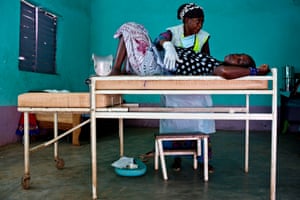
A woman is examined by a midwife at a health clinic near Doko, Siguiri, Guinea.


A woman is examined by a midwife at a health clinic near Doko, Siguiri, Guinea. Photograph: Kate Holt/UNICEF

The opposite end of the spectrum is also of concern, the authors write, citing the over-medicalisation of birth that they dub “too much too soon”, as shown by high rates of caesarean sections and induced labour as well as unnecessary ultrasound examinations and excessive use of antibiotics.


“You have countries like Brazil and parts of Latin America where about 40% of deliveries are by caesarean section, they are a very common procedure,” said Graham. “Now there is no way that 40% of women need a caesarean section.”


By contrast, around a quarter of babies in England and Wales are delivered by caesarean section, while almost 19% of births worldwide involve the procedure. “Globally, caesarean section rates are rising, and medically unnecessary caesarean sections are prevalent,” the authors report.


The authors also reveal that about 27 million cases of serious pregnancy-related complications occurred in 2015 from the five main direct obstetric causes including haemorrhage and problems arising from abortions. “Death is the tip of the iceberg,” said Graham. “Morbidity is a very large burden on families and health systems.”


The authors highlight a need for maternal healthcare services to respond to growing diversity in the health problems affecting pregnant women as well as the trend for women to have babies later in life. The latter, they say, includes offering care not just regarding the pregnancy and birth itself, but also taking into account that older mothers are more likely to have medical conditions that also need to be addressed and considered, as well as different preferences for their care.


“That joined-up thinking and that joined-up working among professionals and services doesn’t really exist in low income countries in many places on the scale that can respond to these epidemiological transitions,” said Graham.


Other challenges, the authors note, lie in the boom in people moving into urban centres, as well as the rise in obesity, pointing out that in 2014, 13% of mothers were obese.


“Again it is this issue of getting prepared for services to meet the needs of obese patients,” said Graham.


The report also highlights the need for emergency services to provide better maternal health care during crises, from outbreaks such as that of the Zika virus to mass migration, whether political or environmental.


“Your first line services have to recognise that pregnancy will continue and births will happen,” said Graham. “Systems need to be more resistant to what we call shocks – whether it is Zika or indeed ebola, shocks happen.”


“The new report makes it evident that there is a growing divide between the haves and the have-nots,” said Katja Iversen chief executive of Women Deliver.


“We have come far in bringing down maternal mortality, but we are definitely not there yet,” she added. “It is not just about increasing the number of health centres, it is also about women’s economic status in society. It is not just about increasing the quality of care that women receive, it is also about education, nutrition and equality. And it is not just about low income countries, it is also something that we see in pockets of very wealthy countries.”


Maternal deaths worldwide drop by half, yet shocking disparities remain

5 Eylül 2016 Pazartesi

Fall in ovarian cancer deaths worldwide linked to contraceptive pill use

Deaths from ovarian cancer have fallen around the world, largely because of the widespread use of the contraceptive pill, according to a major new study.


Another factor is the decline in long-term use of hormone replacement therapy (HRT), according to Italian academics who carried out the study, published in leading cancer journal Annals of Oncology.


While taking the hormonal contraceptive pill for five years or so protects women from ovarian cancer when they grow older, taking hormones in middle-age to alleviate the symptoms of the menopause carries a risk. The drop in women using HRT for long periods of 10 years or more, following revelations concerning risk of both breast and ovarian cancer and heart disease in 2002, is thought to be a factor behind the fall in deaths.


Deaths from ovarian cancer dropped by 10% in the 28 countries of the EU between 2002 and 2012, according to the study. There are substantial variations in the size of the drop between countries. In the UK, the fall was 22%; in Denmark and Sweden it was 24%; but in Hungary, just 0.6%.


Death rates fell in the United States by 16% and in Canada by 8%. In Australia and New Zealand it went down by 12%.


The protective impact of taking the pill is experienced decades later. More than 40% of the over 4,000 deaths year in the UK are in women aged over 75. Women began taking the pill in the 1960s in the UK.


HRT, however, is usually given to women in their fifties to help them with severe symptoms of the menopause, including hot flushes, night sweats and difficulty sleeping.


The research into the change in death rates was led by Professor Carlo La Vecchia of the University of Milan, who said that the difference between European countries evened out somewhat as the pill became more generally available to women over the years.


“The large variations in death rates between European countries have reduced since the 1990s when there was a threefold variation across Europe from 3.6 per 100,000 in Portugal to 9.3 in Denmark,” he said. “This is likely to be due to more uniform use of oral contraceptives across the continent, as well as reproductive factors, such as how many children a woman has.


“However, there are still noticeable differences between countries such as Britain, Sweden and Denmark, where more women started to take oral contraceptives earlier – from the 1960s onwards – and countries in Eastern Europe, but also in some other Western and Southern European countries such as Spain, Italy and Greece, where oral contraceptive use started much later and was less widespread.


“This mixed pattern in Europe also helps to explain the difference in the size of the decrease in ovarian cancer deaths between the EU and the USA, as many American women also started to use oral contraceptives earlier. Japan, where deaths from ovarian cancer have traditionally been low, now has higher rates in the young than the USA or the EU – again, reflecting infrequent oral contraceptive use.”


Some of the countries where long-term use of HRT used to be high and has now declined – with women now opting to take it for just a couple of years or not at all – such as the UK, USA and Germany, are also countries that have seen marked drops in death rates.


“The problem of HRT is not the short-term use for two to three years for menopausal symptoms,” said La Vecchia. “The problem was the long-term use for 10 to 15 years or longer, which proved to be unjustified.”


Fall in ovarian cancer deaths worldwide linked to contraceptive pill use

14 Temmuz 2014 Pazartesi

Bone marrow donor located for girl, eight, following worldwide social media campaign

Their campaign inspired an amazing response with the world’s most high-priced footballer, Gareth Bale lending his help.


He was joined by other well-known names like comedian Russell Howard, Wales rugby captain Sam Warburton, Television presenter Gethin Jones and EastEnders actor Richard Elis.


The appeal led to a 2,580 per cent boost in the variety of people in Wales joining the Anthony Nolan register in contrast to the same period last yr.


Right after waiting a gruelling 3 months, Hollie discovered out last week that a donor had been discovered.


Sharing the information on Hollie’s campaign Facebook page, Mrs Clark wrote: “We want to thank every person who has acquired off their BOTT and helped us.


“There are virtually too numerous to title, suffice to say, you know who you are and what you did Its tough to explain how we truly feel so we will not consider, it would be messy.


“We take huge power and comfort from you all. We could not have started out this journey with out the response to this campaign. You all truly did Help Hollie. You genuinely did #putyourpantsonyourhead.”


She urged men and women to continue registering to assist other individuals like Hollie in need to have of a donor.


“Although we are full of happiness we nevertheless have a extended way to go,” she wrote.


“We know there are a lot of Mums and Dads hunting out of a window correct now. Looking and wondering if that specific individual will join a bone marrow register to conserve their child’s lifestyle.


“Trust us, it is not a nice feeling. Believe in us when we say, it’s not a place you EVER want to be in. It is despair, concern and terror.


“Try &amp picture just for a moment. Consider and envision seeking for that one particular specific individual in the planet who could save your child’s daily life. It does not have to be like this. It could be various. It is straightforward, here is the answer, right here is the secret. Register as a bone marrow donor and inform your close friends to do the exact same.”


Mrs Clark added: “In a short time Anthony Nolan have grow to be component of us. They were there for us and we Confident AS HELL will be there for them. We cannot and will not walk away from them.


“We will get Hollie fixed &amp be back to assist soon. We will be returning the favour.


“Parents in a equivalent place, hold positive &amp remain sturdy.


“We will be there for you, that is a guarantee.”


Hollie, of Roath Park, Cardiff, was diagnosed with Myelodysplastic syndrome (MDS), a blood disorder which triggers a drop in the amount of wholesome blood cells in the physique, three months in the past.


Mrs Clark, a GP, stated: “It was an absolute shock, it is literally the worst point as a mother or father you could be advised.


“It was tough to believe simply because she’d been so lively at the time, she loves swimming and cycling and taking part in with her buddies, and she’d been performing all these issues without having us even understanding that her haemoglobin ranges were dangerously minimal.”


Following finding her younger brother Sam was not a match, her mother and father decided to take action to find 1 as speedily as attainable which led to the campaign.


In Cardiff, there was a two,600 per cent enhance in folks joining the register and, in the United kingdom as a total, the figure was 170 per cent compared to the same time final 12 months.


Karen Archer, regional register growth manager at Anthony Nolan mentioned: “We are completely delighted that a match has been discovered for Hollie and we want her and all of her loved ones the greatest of luck for the potential.”


To sign up to the register go to www.anthonynolan.org/helphollie.


Bone marrow donor located for girl, eight, following worldwide social media campaign

29 Mayıs 2014 Perşembe

Portrait of the Worldwide Obesity Pandemic

A new, comprehensive analysis, published in the Lancet, paints a frightening portrait of the international weight problems pandemic.  Analyzing information from a broad range of worldwide sources, the Global Burden of Condition Research 2013 finds that from 1980 by way of 2013, the globally prevalence of obese and weight problems rose by 27.5% for grownups and by 47.1% for children. The end result was an absolute enhance from 857 million obese and obese individuals in 1980 to 2.one billion in 2013.


For guys, the proportion with a BMI of 25 or better enhanced from 28.8% to 36.9%. For ladies, the proportion improved from 29.8% to 38.%. Although the increase was observed in each and every nation, the patterns were different amongst designed and establishing countries. In developed countries, there were much more males than ladies who were overweight or obese in developing countries, the pattern was reversed. In 2013, almost a quarter of youngsters and adolescents in designed nations were obese or obese.


The multinational group of researchers reported that the biggest gains in overweight and weight problems took area in between 1992 and 2002. 1 hint of very good information: the improve in adult weight problems appeared to slow starting in 2006.


Portrait of the Worldwide Obesity Pandemic

26 Mayıs 2014 Pazartesi

Melinda Gates on the worldwide family planning revolution video

Two many years on from the London Summit on Family members Planning, Melinda Gates, businesswoman and co-chair of the philanthropic Bill and Melinda Gates Foundation, discusses the progress produced on tackling the issue. She explains how initiatives to widen entry to contraception have had a good impact on girls and ladies in creating nations. She also stresses the relevance of sexual wellness training in nations such as Niger, which has one of the highest fertility prices in the world


Melinda Gates on the worldwide family planning revolution video

14 Nisan 2014 Pazartesi

The Worldwide Fund"s China Legacy

Last week, twelve African nations met in Windhoek, Namibia to examine the new funding model of the Global Fund to Battle HIV/AIDS, Tuberculosis (TB) and Malaria. With its emphasis on real disease burden and flexibility, the launch ofthe new funding model put the final nail in the coffin of the previous strategy, which allocates grants based on the require of person nations and the top quality of every single proposal. Indeed, even prior to the unveiling of the new funding model, the International Fund had manufactured China and several other G20 upper-middle earnings countries ineligible due to their “less than an extreme illness burden.” China, which started receiving Worldwide Fund support in 2003, rapidly became one of the Global Fund’s biggest recipients. This determination hit China difficult, as China had been expecting to be eligible for some $ 880 million in grant renewals for the duration of the 2012-sixteen time period. Since China also decided to forego transitional funding from the Global Fund, the Fund officially closed its portfolio in China rather unceremoniously at the end of 2013.


In our working paper, Jia Ping and I clarify how the Worldwide Fund’s one particular-decade presence in China has left behind a deeply mixed legacy. The Fund’s cash has played a crucial function in boosting sources to fight AIDS, TB, and malaria in China. It has contributed to reduced growth in new HIV infections and considerable drops in TB and malaria infections. And at the same time, the International Fund has also assisted bridge the normative gap among China and the worldwide community in disease prevention and management, and, for the very first time, enabled China’s civil society groups to formally participate in well being policymaking.


But for the numerous successes, the problems and difficulties are equally glaring. The Fund’s vertical, ailment-particular interventions are hardly scalable or conducive to nationwide health technique strengthening. The funding model incurred considerable chance fees and, with its emphasis on quantifiable indicators, produced moral hazard. Equally important, by overemphasizing the amount of civil society organizations working with the Fund and the share of funding channeled to such organizations, International Fund applications have, at times, unintentionally hindered the healthful improvement of Chinese civil society. In the absence of an exit technique for emerging powers, the International Fund runs the risk of seeing China repeat the Russian missteps in submit-Fund condition prevention and manage.


Consider a look at the paper and allow me know what you consider.


This article originally appeared on the Council on Foreign Relations’ Asia Unbound website and can be found here.


The Worldwide Fund"s China Legacy

North Korea stages its very first worldwide marathon


The event was held to commemorate the birthday of its founder, Kim Il Sung, and was open to foreign athletes for the 1st time.


The country’s state-run television reported that about 400 foreigners, including amateurs, from 15 distinct nations took component.


North Korean Pak Chol won the men’s class, with Rwandan Mvuyekure Jean Pierre finishing second and Ukrainian Babaryka Ivan third.


North Koreans took all the medals for the women’s race, with Kim Hye Gyong finishing first.


North Korea stages its very first worldwide marathon