'shocking' etiketine sahip kayıtlar gösteriliyor. Tüm kayıtları göster

20 Kasım 2016 Pazar

Shocking neglect uncovered at two care homes in Cornwall

An undercover investigation has exposed shocking levels of neglect at two care homes in Cornwall.


Hidden camera footage filmed by BBC Panorama reporters recorded vulnerable people left unattended, including one left on a bed pan for 40 minutes, an out-of-date prescription supplement relabelled for use by another resident, and the threat of morphine being used to silence a resident.


One of the homes, Clinton House in St Austell, is closing down as a result of safety concerns and the other, St Theresa’s, in Callington near Plymouth, has been placed under investigation by the Care Quality Commission (CQC) and Cornwall council.


Two other nursing homes with the same owners – Morleigh Group – as those featured in Monday’s edition of Panorama are also being investigated.


The four care homes under scrutiny had all previously been rated as “requires improvement” by the CQC, which said it had had “serious concerns with the Morleigh Group for some time”.


The reporter Janice Finch booked into St Theresa’s and Clinton House posing as a resident. She witnessed staff rushed off their feet, compromising the privacy and dignity of some fellow residents. She paid £750 a week for a room where the bin was not emptied, the soap dispenser had no soap and the toilet seat was broken.


Another reporter worked as a care assistant at Clinton House, doing 14 shifts without her references being taken up or a criminal records check being completed.


Secret footage showed a nurse announcing her intention to give morphine to a resident “to shut her up”.


It also showed an elderly resident with severe dementia in a bed with a loose safety rail. The undercover reporter, worried that the resident might hurt herself, was advised to hold the rail in place with her foot.


The resident had a wound on her leg, and staff did not know how she had come by it even though she was supposed to be receiving 24-hour one-to-one care.


Trevor Doughty, Cornwall council’s strategic director for children, families and adults, said: “The health, wellbeing and dignity of residents absolutely comes first; we are shocked and saddened at the incidents reported by Panorama, and are very sorry that this has happened in these privately run homes. On behalf of everybody who dedicates their careers to keeping people safe, and seeing them treated with dignity and respect, I am sorry for what has happened in these homes.”


Andrea Sutcliffe, chief inspector of adult social care at the CQC, said the regulator had brought forward its inspections of Clinton House and St Theresa’s after Panorama had shared its concerns about the homes.


“We are taking tough action against the Morleigh Group to protect the people living in four of its nursing homes in Cornwall,” she said. “This follows a significant deterioration in the quality of care it has been providing as uncovered through our most recent inspections.”


The other two Morleigh Group homes under investigation are Elmsleigh in Par and Collamere in Lostwithiel.


Moreleigh Group said in a statement that investigations carried out prior to the receipt of information from Panorama had “resulted in the removal of the staff involved, together with a thorough review of our systems and procedures”.


Panorama: Nursing Homes Undercover will be broadcast on BBC1 on Monday 21 November at 8.30pm


Shocking neglect uncovered at two care homes in Cornwall

23 Ekim 2016 Pazar

NHS figures show "shocking" rise in self-harm among young

The number of children and young people self-harming has risen dramatically in the past 10 years, new NHS figures obtained by the Guardian show.


The sharp upward trend in under-18s being admitted to hospital after poisoning, cutting or hanging themselves is more pronounced among girls, though there have been major rises among boys, too.


Experts say the rise is “shocking” confirmation that more young people are experiencing serious psychological distress because they are under unprecedented social pressures.


The number of girls under 18 who have needed hospital treatment after poisoning themselves has gone up from 9,741 in 2005-06 to 13,853 – a rise of 42% – figures collated by NHS Digital show. The numbers of boys ingesting a poisonous substance have stayed almost unchanged; 2,234 did so in 2005-06 and 2,246 did so in 2014-15.


Poisonings among girls were 42% higher in 2014-15 than 10 years previously

However, the number of girls treated as inpatients after cutting themselves has almost quadrupled over the same period, from 600 to 2,311 – a 385% rise. The number whom A&E teams have treated after hanging themselves has also risen during that decade, from 29 to 125.


While far fewer boys end up in hospital after cutting themselves, the numbers went up from 160 in 2005-06 to 457 in 2014-15 – a rise of 286%. Similarly, the numbers of boys who hanged themselves also doubled from 47 to 95 over the same period, the figures show.


“This is a depressing confirmation of the clinical experience of child and adolescent psychiatrists’ experience on the ground,” said Dr Peter Hindley, chair of the Faculty of Child and Adolescent Psychiatry at the Royal College of Psychiatrists.


“It is also shocking because it appears to confirm our clinical experience that levels of distress are rising, though not all young people who self-harm have mental health problems, and [that] mental health disorders are rising, for both girls and boys,” he said.


Experts said the rises were likely to be due to a variety of factors, including pressure to succeed at school, the damaging effects of social media, family breakup, growing inequality in recent years, children’s body-image fears, a history of abuse, including sexual abuse, and increasing sexualisation.


The NHS’s most senior doctor responsible for young people’s health said the “distressing” figures underlined that greater improvements were needed to boost support for troubled children.


“It’s clearly distressing that more young people are causing harm to themselves and we know that the problems facing children are growing,” said Dr Jackie Cornish, NHS England’s national clinical director for children, young people and transition to adulthood.


“In common with most experts, we believe this is due to increasing stress and social pressure on young people, including to succeed at school, and emerging problems with body image leading to eating disorders and self-harm.


Poisoning accounts for 88% of all self-harm admissions among under-18s

She added: “We recognise that vital care for children and young people’s mental health is an area where more work needs to be done.”


Jeremy Hunt, the health secretary, severely criticised NHS care of troubled young people last week. Child and adolescent mental health services (CAMHS) were the “biggest single area of weakness in NHS provision” and beset by “big problems”, including failure to intervene early enough when problems such as eating disorders emerged, which meant that “too many tragedies” were occurring, he said.


Hindley added: “The rise is likely to be as a result of many factors but the most important ones are likely to be: growing inequality in the age of austerity, the negative impact of the digital age, increasing sexualisation – this is particularly important for girls – and the impact of abuse and sexual exploitation, and increased pressure to succeed.”


Sarah Brennan, the chief executive of Young Minds, said that troubled young people were harming themselves partly because help for them is so inadequate that some do not receive specialist support once it is obvious they have psychological problems. “It’s extremely worrying that the number of young people needing hospital treatment for self-harm has risen so sharply. There needs to be far more investment in early intervention, so that problems are dealt with when they first emerge.”


Budget-driven local council cuts to social workers, educational psychologists, parenting classes and mental health services in schools had reduced care and support for under-18s in distress, she said. CAMHS teams were responding to rising demand by rationing care.


“The pressure on CAMHS has forced services to raise the bar for access to treatment. Consequently, about a quarter of young people are being turned away, and this will include many who self-harm. At the moment too many vulnerable children end up going to A&E because no other help is available,” Brennan added.


Young Minds is concerned that children who self-harm and then turn to the internet for help could come across unhelpful information about, and even encouragement to continue, their behaviour. Young people who self-harm are most likely to go online for information and few to seek their parents’ support, according to a survey it conducted in March with Childline, Self-Harm UK and The Mix. While 76% of youngsters said they would search the web, just 16% would look to their mother or father, while 61% would ask a friend, and 27% cited a GP and 17% a teacher.


The government has promised to put an extra £1.4bn into care of troubled children during this parliament to ensure that at least 70,000 more under-18s get high-quality care. However, NHS England chief executive Simon Stevens has admitted that even if that target is met, it will still only increase the proportion of young people being helped from a quarter to a third.


Hunt last week pledged to make children’s mental health a top priority. Cornish added that NHS England has created 56 extra beds in specialist inpatient units for children and young people in the last two years and is putting £30m into improving services for those suffering from an eating disorder such as anorexia nervosa. Earlier this month, it allocated £25m to help cut young people’s waiting time for treatment and reduce the backlogs of those awaiting urgent care.


NHS England collated the figures it shared with the Guardian from those covering self-harm and self-poisoning from its Hospital Episodes Statistics datasets from the past decade.


  • In the UK, the Samaritans can be contacted on 116 123. In the US, the National Suicide Prevention Hotline is 1-800-273-8255. In Australia, the crisis support service Lifeline is on 13 11 14.


NHS figures show "shocking" rise in self-harm among young

20 Ekim 2016 Perşembe

5 Shocking Examples of Food Lies and Politics

Food politics is always controversial, and it exists because there’s a clear separation between profitable food and public health.


Our food is supposed to sustain our health, but big corporations are always seeking greater profits. By selling the cheapest possible food for the highest possible price, they make their money. At the same time, people who regularly eat this ultra-processed food lose their health.


Rather than admit the food they sell is unhealthy, commercial food corporations use their massive wealth to promote it as healthy.


As part of these food lies, they lobby to the government and spend huge sums on public advertising. All this is to convince us that their factory-made food is healthy.


In shocking examples of food lies and politics, this article will look at five unethical events that jeopardized (or are currently compromising) public health.


#1 Dietitians Taking Money From Coca-Cola to Oppose a Soda Tax


A flurry of activity on Twitter drew suspicion in early October 2016. Many dietitians suddenly, and in tandem, started tweeting against a soda tax. Included in these tweets were clear examples of fear-mongering, attempting to persuade their followers that a soda tax will push up the overall price of groceries.


Several newspapers and media sources broke stories about it early. Under pressure, coca-cola admitted that they had been funding dietitians and released the list of names. Unsurprisingly, the dietitians who spoke out against a soda tax had all received financial compensation from the soda giant for doing so.


The question to ask is this: what place does the promotion of sugar have in public health? Dietitians are the ‘official source’ for dietary advice, yet they promote an ingredient that destroys health.


Of course, there are many great dietitians out there, and I don’t want to paint all with the same brush. However, why are some dietitians (health advisors) even able to take money from companies who make ultra-processed food?


Isn’t that a conflict of interest in itself?


#2 Healthy Professionals Taking Money to Promote Coca-Cola


Interestingly, a very similar thing happened in 2015. Coca-cola were caught paying nutrition professionals (mainly dietitians again) to pen nutrition articles in the media. If you’re wondering what these articles regarded, then the answer is “how coca-cola mini cans are a healthy drink”.


When the information became public, Coca-Cola apologized and said they would aim for greater transparency in the future. It seems like they haven’t quite got there yet?


#3 Food Lies, Labels and Unknown Animals


It’s important to realize that food labels can be wildly incorrect. Whenever you buy refined, packaged food with a list of ingredients you never truly know what you’re getting.


The primary example I want to talk about here is burgers. Burgers obviously come in different scales of quality, ranging from 100% beef to a big list of unpronounceable ingredients.


However, 100% beef doesn’t sound too bad right?


Well, thousands of Europeans probably thought the very same thing when they bought their burgers from a range of stores and fast food joints. The only problem was that these burgers were not 100% beef at all, and instead, they were a random mixture of horse meat and beef.


Among the stores selling “100% beef burgers” (made of horse meat) were the British retail giant Tesco and Burger King.


However, at first, Burger King gave their “absolute assurance” that their products were in no way involved. A few weeks later they had to backtrack on their position after tests revealed horse DNA in their burgers. In an apology, Burger King stated they were “deeply troubled by the findings.”


Probably not as troubled as the people who ate horse meat after receiving “absolute assurance” it was beef.


#4 Margarine is ‘Heart Healthy’


Study after study shows that saturated fat isn’t truly a dietary villain.


Despite this, big food spends huge sums of money to promote their “low in saturated fat” products.


In reality, any product that claims to be low in saturated fat is most likely bad for you. Additionally, it probably contains a huge load of refined carbohydrates, sugar and vegetable oil.


The reason for this is likely the profits involved. Margarine and vegetable oils can be made entirely from machinery; it’s an automated process, cheap to produce, and sold for a large profit.


The fact that it’s bad for us is a threat to these profits, and so the industry uses advertising funds to convince us that it’s healthy.


Sure, it’s morally and ethically wrong, but for the companies involved it makes sense for business.


An obvious example of this is Australia’s ‘health star’ system. The general idea of this scheme is to rate a food based on its health properties, with ratings on a 5-star score system.


How does butter score? 0.5 stars. As for margarine, it gets five health stars!


So, they are telling us that butter, made naturally from cream, is a terribly unhealthy product.


At the same time, they are telling us that solidified vegetable oil that is chemically flavored (to hide the terrible taste) and chemically colored (to make it look yellow instead of gray) is a perfect example of a health food.


The truth is that margarine, as well as vegetable oils in general, are damaging to our health.


As for butter, there’s nothing to fear about healthy fats.


#5 The Myth of a Balanced Diet


<insert any junk food> is healthy as part of a balanced diet.”


This kind of promotion is pretty much the slogan of every company that produces ultra-processed food.


In addition, health authorities (commonly sponsored by the food companies) repeat the balanced diet mantra.


The simple truth is this: an unhealthy food in moderation is moderately harmful.


Unfortunately, this truth isn’t very profitable, and that’s why the ‘balanced diet’ myth persists.


There’s no problem with someone enjoying unhealthy food from time to time if that’s what they want.


But enough of these food lies; it’s about time the food industry were honest about their products rather than purposefully trying to mislead people.


If you are interested in food politics, then here are some great books that cover food politics and big industry.


5 Shocking Examples of Food Lies and Politics

23 Eylül 2016 Cuma

Shocking Study: E-Cigarette Vapor Kills 85 % of the Cells in Your Mouth

Smoking e-cigarettes may not be much safer than tobacco when it comes to oral health, a new study suggests. People claim that EC can reduce the harm which regular cigarettes are causing. But this theory has many holes in it. According to the Centers for Disease Control and Prevention (CDC), between 2011-2012, e-cigarette use more than doubled among 15 and 19 age students in the United States, and in 2014, more than a fifth of adults who currently smoke reported also using e-cigarettes.


What Are E-Cigarettes?


E-cigarettes are battery-operated electronic devices that provide a way to get nicotine. Nicotine is an addictive drug that is naturally found in tobacco. E-cigarettes also allow nicotine to be inhaled, but they work by heating a liquid cartridge containing nicotine, flavors, and other chemicals into a vapor.


New Study Conducted by Dr. Shen Hu


A number of studies have shown that electronic cigarettes are not as harmful as the conventional cigarettes. New researchers found e-cigarettes contain toxic substances and nano-particles that could kill the top layer of skin cells in the oral cavity behind teeth and gums.


The researchers – led by Dr. Shen Hu, an associate professor of oral biology at the University of California-Los Angeles (UCLA) – came to their conclusion by analyzing the effects of e-cigarette vapor on cell cultures in laboratory tests.


How it Effects Our Oral Health


Inhaling heated chemicals, including the e-liquid ingredients nicotine, couldn’t possibly be good for you.


Vapours contain toxic substances and particles which damage skin cells.
Exposure reduced body’s natural defences of the antioxidant glutathione.
Scientists say it could lead to increased risk of oral disease like cancer.


Conclusion:


“On assessing the effects of e-cigarette vapor on oral cavity cell cultures, the researchers found that the vapor reduced levels of glutathione within the cells, which is an important antioxidant that protects them from damage. As a result, the e-cigarette vapor destroyed around 85 percent of the cells.”


The substance directly kills airway cells and weakens the immune system, researchers found.


Sources:


1) http://www.medicalnewstoday.com/articles/311313.php


2) http://healthyhousetips.com/reasons-stop-using-e-cigarettes/


3) http://www.dailymail.co.uk/health/article-3663839/E-cigarettes-toxic-mouth-Vaping-kills-cells-oral-cavity-raising-risk-disease.html


4) http://www.healthy-holistic-living.com/ecigarette-vapor-destroys-mouth.html?t=DA


Look Also:


Shocking Study: E-Cigarette Vapor Kills 85 % of the Cells in Your Mouth

15 Eylül 2016 Perşembe

Maternal deaths worldwide drop by half, yet shocking disparities remain

The number of women dying from causes related to pregnancy and childbirth has almost halved since 1990, a global report has revealed.


Worldwide the annual number of maternal deaths per 100,000 live births fell by 44% between 1990 and 2015, from approximately 385 to 216.


But the figure came far below the target set by the United Nations as part of its millennium development goals in 2000, which aimed to see a drop of 75% by 2015.


The report also highlights that global inequalities in maternal healthcare are increasing, with the gap between countries with the lowest level of maternal deaths and the highest doubling between 1990 and 2013, reaching a 200-fold difference.


“Lots of people worked very hard and progress was achieved, but it was patchy,” said Wendy Graham from the London School of Hygiene and Tropical Medicine, who was a co-coordinator of the report. “Like many things in health, in the progress that the average receives invariably there are some left behind.”


It is estimated that 210 million women become pregnant every year, with 140 million babies born. But according to the report – a series of six papers published in the Lancet by an international team of researchers – provision of maternal healthcare worldwide is hugely variable.


“This is about human rights and a lack of standardised care across the world,” said Stephen Kennedy, head of the Nuffield department of obstetrics & gynaecology at the University of Oxford, who was not involved in the series.


“Women should be as healthy as possible before pregnancy and have access to adequate health care when they are pregnant,” he added. “There is then no reason why common problems in pregnancy shouldn’t be managed in exactly the same everywhere because the evidence base is so strong. We know what to do. The problem is that we are failing to implement that knowledge.”


According to the new Lancet series, the chances of a woman dying from childbirth over her lifetime is about one in 4,900 in high-income countries, while for women in sub-Saharan Africa the figure is one in 36. By contrast, according to the World Health Organisation, the UK figure is one in 5,800.


“[What] drives some of the risk is that we still have high fertility in some parts of the world,” said Graham. “We still have large parts of low- income countries where there is a high unmet need for contraception.”


While births in the presence of skilled birth attendants rose from 57% to 74% between 1990 and 2013, the authors warn that many women in poor and rural settings do not have access to such care, while the increase in coverage does not necessarily mean such care is of high quality.


“There are still about 53 million women who have no care at all at the time of delivery,” said Graham.


“If you have coverage of care that is not good quality you are not going to prevent the deaths,” she added. “There is a non-trivial proportion of facilities that are called maternity units but don’t have running water, don’t have electricity, don’t have trained providers.”


Where women do make use of maternal healthcare services, the quality of care can vary dramatically, the authors add, with some receiving too little care, too late. That, they say, can be down to delays in recognising or accessing care, as well as poorly-equipped facilities, with too few staff and a lack of evidence-based care.


The situation, they add, can arise not only in low income countries, such as those in sub-Saharan Africa, but also in high- and middle-income countries due to social inequalities: black women were more likely to die in childbirth in New York in 2010 than women in North Korea or Vietnam.


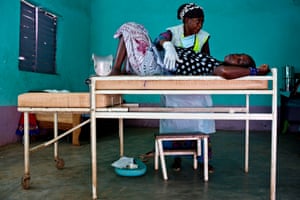
A woman is examined by a midwife at a health clinic near Doko, Siguiri, Guinea.


A woman is examined by a midwife at a health clinic near Doko, Siguiri, Guinea. Photograph: Kate Holt/UNICEF

The opposite end of the spectrum is also of concern, the authors write, citing the over-medicalisation of birth that they dub “too much too soon”, as shown by high rates of caesarean sections and induced labour as well as unnecessary ultrasound examinations and excessive use of antibiotics.


“You have countries like Brazil and parts of Latin America where about 40% of deliveries are by caesarean section, they are a very common procedure,” said Graham. “Now there is no way that 40% of women need a caesarean section.”


By contrast, around a quarter of babies in England and Wales are delivered by caesarean section, while almost 19% of births worldwide involve the procedure. “Globally, caesarean section rates are rising, and medically unnecessary caesarean sections are prevalent,” the authors report.


The authors also reveal that about 27 million cases of serious pregnancy-related complications occurred in 2015 from the five main direct obstetric causes including haemorrhage and problems arising from abortions. “Death is the tip of the iceberg,” said Graham. “Morbidity is a very large burden on families and health systems.”


The authors highlight a need for maternal healthcare services to respond to growing diversity in the health problems affecting pregnant women as well as the trend for women to have babies later in life. The latter, they say, includes offering care not just regarding the pregnancy and birth itself, but also taking into account that older mothers are more likely to have medical conditions that also need to be addressed and considered, as well as different preferences for their care.


“That joined-up thinking and that joined-up working among professionals and services doesn’t really exist in low income countries in many places on the scale that can respond to these epidemiological transitions,” said Graham.


Other challenges, the authors note, lie in the boom in people moving into urban centres, as well as the rise in obesity, pointing out that in 2014, 13% of mothers were obese.


“Again it is this issue of getting prepared for services to meet the needs of obese patients,” said Graham.


The report also highlights the need for emergency services to provide better maternal health care during crises, from outbreaks such as that of the Zika virus to mass migration, whether political or environmental.


“Your first line services have to recognise that pregnancy will continue and births will happen,” said Graham. “Systems need to be more resistant to what we call shocks – whether it is Zika or indeed ebola, shocks happen.”


“The new report makes it evident that there is a growing divide between the haves and the have-nots,” said Katja Iversen chief executive of Women Deliver.


“We have come far in bringing down maternal mortality, but we are definitely not there yet,” she added. “It is not just about increasing the number of health centres, it is also about women’s economic status in society. It is not just about increasing the quality of care that women receive, it is also about education, nutrition and equality. And it is not just about low income countries, it is also something that we see in pockets of very wealthy countries.”


Maternal deaths worldwide drop by half, yet shocking disparities remain

7 Eylül 2016 Çarşamba

"Shocking" number of Indigenous teenagers rate happiness at zero

The Indigenous leader Tom Calma says he is “shocked” by a Mission Australia survey that found 10% of young Indigenous men and 5% of young Indigenous women rated their usual mental state as “very sad”, compared with just 1% of non-Indigenous people of the same age.


The national Aboriginal and Torres Strait Islander youth report 2016, released on Thursday, asked 1,162 Aboriginal or Torres Strait Islander teenagers aged 15 to 19 to rate their general happiness out of 10, where zero was “very sad” and five was “not happy”.


One in 10 young Indigenous men and one in 20 young Indigenous women rated their happiness as “zero”, compared with one in 100 non-Indigenous respondents.


Calma, a former Aboriginal and Torres Strait Islander justice commissioner who is now chancellor of the University of Canberra, said he was “not easily shocked” but that Mission Australia’s report “rang a loud alarm”, particularly when coupled with high rates of Indigenous suicide.


The suicide rate among Indigenous people aged 15 to 24 is four times higher than for non-Indigenous people of the same age. In children under 14, the rate is nine times higher for Indigenous people than non-Indigenous people.


Calma said the report showed the need for a “fundamental shift” in policies and services aimed at Indigenous youth. “We must re-set the relationship so that Aboriginal and Torres Strait Islander people are genuinely and meaningfully engaged in policymaking,” he said in a foreword to the report.


“It is my hope, as these young people grow to become leaders in their culture, communities and nation that government policies and programs will be made with them and not for them.”


The survey was conducted in 2015 and had 18,727 respondents, of which 6.2% were Indigenous. About 3.5% of the Indigenous respondents said they spoke an Indigenous language at home.


Indigenous respondents were more likely to have an unstable home life, with 30% saying they had spent time away from home in the past three years because they felt they could not go back, compared with 15% of non-Indigenous respondents, and 36% saying they had left home more than 10 times in that period, compared with 25% of non-Indigenous respondents.


Indigenous respondents also showed higher levels of concern about gambling, drugs, discrimination, suicide and personal safety.


Catherine Yeomans, the chief executive of Mission Australia, said the results showed the need for an urgent rethink of how programs and services are delivered to Aboriginal and Torres Strait Islander people. “Australia has a moral, social and economic duty to support all young people to reach their potential,” she said.


“And sadly, this report shows we are failing miserably, with too many Aboriginal and Torres Strait Islander young people falling through the cracks. This is not a sustainable way for us to proceed as a nation and to me it suggests a divided society.”


But the survey also showed high levels of participation in education, with 84.3% of Indigenous respondents saying they were engaged in full-time education and 35.1% saying they planned to attend university. That was higher for young Indigenous women, with 44.8% saying they planned to go to university.


Half of all Indigenous respondents said they were confident of achieving their goals.


Yeomans said services should be calibrated to help young Indigenous people achieve. “Their ambitions are often thwarted by the lack of age and culturally appropriate mental health services, alcohol and drug services and homelessness services,” she said.


“These gaps in the service system are leaving Aboriginal and Torres Strait Islander young people unsupported during the important time of transition to adulthood and should be urgently remedied.”


"Shocking" number of Indigenous teenagers rate happiness at zero

26 Temmuz 2016 Salı

The Shocking Truth About Statins Drug

The truth about prescription drugs – Are you aware of them?


As reports show a quarter of Americans are taking potentially harmful prescription drugs, we ask – is there another way?


You may think that the medical industry’s primary concern is to aid you to improve your overall health but sadly, this is not necessarily the truth. The medical establishment is, in fact, much better at treating disease than they are at getting you healthy, as this is where they make colossal amounts of money. Improving your health is sometimes the last thing that medical establishments want, as they much prefer making you pay for pharmaceutical drugs and therapies that treat only the symptoms of disease rather than the cause.


Heart disease and statins


One of the leading causes of death in America is heart disease; killing around 610,000 people every year in the US. The medical industries believe that cholesterol is the primary factor in the development of heart disease and this has led to the pharmaceutical industry developing drugs called statins, which were designed to lower cholesterol and reduce the risk of heart disease. Accompanied by a large marketing campaign, these drugs have turned into huge money makers for the pharmaceutical companies that create them. In 2013 alone, statins created around $ 29 billion of sales for the pharmaceutical industry. This is the kind of return you can expect from convincing 1 in 4 Americans over the age of 45 that they need to take statins – but does everyone really NEED them?


Are statins all they’re cracked up to be?


There is a wide range of detrimental health effects that have been linked to statin drugs, but, as a regular Joe Public, you are likely not to have heard of many of the below:


Interference with the production of coenzyme Q10, which supports the body’s immune and nervous systems, boosts heart and other muscle health, maintains normal blood pressure, and much more.


Weakening the immune system and increase the production of cytokines, which trigger and sustain inflammation.


They make some patients unable to concentrate or remember words, and are linked to muscle and neurological problems.


Reduction of the beneficial effects of omega-3 fatty acids by promoting the metabolism of omega-6 fatty acids, which increases insulin resistance and the risk of developing diabetes.


Reduction in the benefits of exercise. Exercise increases the activity and numbers of mitochondria, cells’ “power plants” that process sugars and fat. The study found that with statin use, mitochondrial activity actually decreases with exercise.


Reduction of the body’s ability to produce cholesterol, which is essential to brain health—the brain is 2% of the body’s weight, but contains 25% of the entire body’s cholesterol.


Higher incidence of nerve degeneration and pain, memory loss, confusion,depression, and a higher risk of ALS and Parkinson’s.


An increase in likelihood of overeating.


An animal study linked statin use to muscle damage. Animals that exercised on statins had 226% more muscle damage than those not given statins.


They affect the quality of sleep.


Increased risk of prostate and breast cancer.


Result in liver damage by increasing the liver’s production of digestive enzymes.


Speed aging and lower sex drive.


Linked to aggressive and violent behavior in women.


Statins, the media and the AHA


It is very rare that the media actually question or critically analyze the press releases they receive from medical establishments, and this is why you very rarely hear about any negative side effects of statins. When you do, they are closely followed by the published opinion that the risks are greatly outweighed by the benefits of the drugs.


However, this is not necessarily true.


Even those at the forefront of heart disease prevention sometimes get it wrong. The American Heart Association (AHA) published a study based on the over-simplified and out-dated notion that there are just 2 types of cholesterol – “good” (HD) and “bad” (LDL). The AHA also centered their dietary recommendations on the debunked theory that “bad” cholesterol causes heart disease and that saturated fats raise LDL and should therefore be avoided.


What the AHA and other medical establishments don’t seem to realize is that cholesterol is actually vital to human health. It is too simplistic to think that “bad” cholesterol is the route of all heart disease evil. It can be harmful to health if the is an excess of cholesterol but we should also be worried if there isn’t enough cholesterol in our bodies as we age; even “bad” cholesterol is essential.


Numerous studies have linked an insufficient amount of cholesterol to deaths caused by heart attacks and gastrointestinal and respiratory diseases. A study of over 15,000 patients over 18 years found that those with a higher LDL count and overall cholesterol level had a reduced chance of developing atrial fibrillation, an irregular heart rate which reduces blood flow to the body.


Government agencies are finally realizing that cholesterol isn’t the time bomb it has been made out to be. The Dietary Guidelines Advisory Committee is about to withdraw its longstanding advice to avoid all high cholesterol foods.


How to really live a healthy life


It is perfectly clear that all the independent science and studies, not those paid for by the pharmaceutical and medical industries, show that the way to a healthy and longer life is a simple balance of eating well, exercising regularly and taking natural and healthy supplements instead of pharmaceutical drugs.


Poor eating habits, lack of exercise and obesity are direct causes of most metabolic diseases and these problems can all be addressed in a natural and simple way without the intervention of pharmaceutical drugs. Regular exercise and a good balanced diet, such as the ketogenic diet, can help you to live a long and healthy life without handing over your hard earned cash to pharmaceutical giants.


Remember, the way you manage your own health is your decision and no doctor can force you to take any drugs that you don’t want to. Don’t always assume that the medical industry has your best interests at heart, as they are more than likely more concerned with the state of your wallet than of your health.


Given the pharmaceuticals’ influence over the mainstream media, it is not surprising that the media is full of misinformation. To make sure you are fully informed about ways to improve your health you should always do your own research into the real side effects of drug therapies and the many benefits of more holistic natural approaches to healthcare.


Do you want to know how I cured my own prostate disease naturally without any harmful pharmaceutical drugs or invasive surgery? Click Here to find out. 


I Wish You Good Health,


Ben


References


Ong, Ben. All About The Prostate. USA: bensprostate.com, 2016. Print.


The Shocking Truth About Statins Drug

7 Temmuz 2014 Pazartesi

Warning above "shocking gaps" in mental overall health companies for new mothers

Dr Dan Poulter, health minister

Dr Dan Poulter, a wellness minister, stated the government had ensured each trainee midwife would get instruction in perinatal psychological health. Photograph: Felix Clay


The NHS offers patchy and at instances dangerously inadequate care to ladies who suffer psychological overall health problems linked to possessing a infant, new research displays, prompting claims that it is neglecting mothers at risk of suicide.


Ladies in virtually half the Uk can’t achieve access to support and treatment method from expert teams to aid them cope with mental well being difficulties that develop while they are carrying their baby or in the very first yr following giving birth.


The Maternal Mental Overall health Alliance (MMHA), which collated the figures, said the lack of devoted providers was “an embarrassment for the NHS” and a trigger of alarm, given that, if left untreated, such difficulties could have devastating results.


“The figures are an embarrassment for the NHS. Pregnancy and the 1st postnatal yr are a vital time, with numerous pressures, demands and responsibilities, when girls and their families must obtain the greatest top quality care,” said Dr Alain Gregoire, chair of the alliance.


Despite the vital role of professional perinatal mental well being solutions, there are “shocking gaps in United kingdom maternal mental overall health companies” for the one particular in ten ladies who expertise postnatal depression or other childbirth-associated mental issues, the MMHA explained. It extra that suicide was 1 of the major brings about of death for girls during pregnancy and one 12 months soon after birth.


Making use of data provided in 2013 by members of the Royal School of Psychiatrists’s perinatal faculty, the MMHA located that 106 of the 237 clinical commissioning (CCG) regions in England and well being board areas in Scotland, Wales and Northern Ireland offered no such care at all. Just thirty of the 237 offer you what the alliance says is the highest degree of provision, all of which are in England, plus NHS Higher Glasgow and Clyde in Scotland. They all have the very best sort of professional community perinatal community psychological health team to help such ladies.


Mental health 0807 Female psychological health


More than 40% of England’s 211 CCGs have no professional group. The scenario is the same for about forty% of Scottish, 70% of Welsh and 80% of Northern Irish wellness boards. There is large variation: inside London, for illustration, seven of the 32 CCG areas provide the highest degree of provision but nine give none.


There is also a continual shortage across the United kingdom of mother and little one units, which admit women with critical mental health troubles late in their pregnancy or soon after possessing their child, and monitor how they are bonding with their infant.


The Royal School of Midwives explained each birthing unit across the United kingdom should have a dedicated, specially qualified midwife to help girls in this kind of situations.


Dr Dan Poulter, a wellness minister, said the coalition had ensured each and every trainee midwife would receive mandatory coaching in perinatal psychological overall health so that each maternity unit would have a professional member of personnel from 2017.


The Department of Health’s mandate to NHS England also calls for them to reduce the incidence and impact of postnatal depression via earlier diagnosis and better intervention and assistance, a DH spokesman extra.


“The NHS mandate also consists of an objective that each and every girl has a named midwife who is accountable for making certain she has personalised care all through pregnancy, childbirth and throughout the postnatal period. This will aid clinicians to determine perinatal psychological well being troubles as early as feasible and to give women the support they require,” he additional.


Warning above "shocking gaps" in mental overall health companies for new mothers

2 Temmuz 2014 Çarşamba

The Shocking Point That Kills Far more People Than Shark Attacks Every Yr

Collectively as a society, we spend a great deal of time worrying about shark attacks. Whether it’s from viewing jaws or hearing true stories, many people knowledge a sturdy fear of sharks. And but, the United States averages just sixteen shark attacks each yr and somewhat much less than one shark-attack fatality each and every two many years.


What’s far more hazardous than a shark? Coconuts. And Cows.


Falling coconuts lead to about 150 deaths annually. You know, although you were keeping an eye on the sharks.


Cows result in the death of about 20 Americans every year, largely from blunt-force trauma. They could search innocent, but actuality proves otherwise.


Why does any of this matter for your enterprise? It is a strong metaphor.


Our brains are wired to emphasis on concern as a technique of ensuring our survival. As a caveman, this was a quite crucial daily life ability. If our ancestors didn’t more than-react to each and every rustle in the trees, they could be attacked and eaten by a lion. We, on the other hand, are not threatened by literal death on a everyday basis. As an alternative, we are threatened by our e-mail inbox, targeted traffic, our boss’s approval, our children’s safety and several other everyday occurrences that produce a strong sense of anxiety and worry.


1 of the greatest ways to shift out of this dread and into a area of calm self confidence is to practice mindfulness. And to begin naming not only your sharks, but also your coconuts and cows.


Consider a moment and consider of the greatest concern you have for your company proper now. How typically do you consider about this dread?


Up coming, can you feel of an example in your recent past of something that was a difficulty, and however you didn’t seem to be to notice it till it was also late? This is your cow.


Can you believe of a predicament in which you imagined something would be beneficial to your enterprise, and it ended up hurting you? This is your coconut.


We are usually centered on the wrong factors, worrying about severe circumstances that are unlikely to happen rather than noticing the dilemma that is appropriate beneath our nose.


The resolution to this dilemma is two fold.


Very first, we need to have to quit worrying so considerably about the sharks. Positive, take precautions, really don’t swim in blood infested waters, but if you are simply sitting on land worrying about sharks, you are wasting your vitality.


Believe about the 1 spot of your company or daily life that you be concerned about the most proper now. On a scale of one-ten, how likely is it that this catastrophe Really would happen? Compose that variety down.


If this predicament did get place, can you record at least three methods in which it might be a gift or an possibility in disguise? Write that record now.


Commence to balance these extreme “shark” fears with positive intentions and you will recognize their power diminish.


The Shocking Point That Kills Far more People Than Shark Attacks Every Yr

23 Haziran 2014 Pazartesi

The reality about obesity: 10 shocking issues you need to know

1. Almost two-thirds of the United kingdom population is both obese or obese


Fat, not thin, is today’s norm. But research present that we never notice since it has occurred steadily and we have received utilized to seeing folks who are obese. Children in pictures taken on the seashore in the 1950s, with ribs displaying, search famished to modern eyes. They are of normal excess weight. A quarter of us are in fact obese, defined as a physique mass index (excess weight in kg divided by the square of your height in metres) of 30 or over. BMI is not a brilliant tool for every personal – biceps packed with muscle weigh as considerably as flab – but it is satisfactory at a population level.


Males are fatter than girls (67% of males and 57% of girls are obese or obese in the United kingdom, according to the Worldwide Burden of Illness research from the Institute of Wellness Metrics and Evaluation in Seattle). Socio-economically deprived regions tend to have higher charges of folks who are overweight, but no earnings group is immune. There is a local community result: you are more likely to be overweight if your close friends and neighbours are and you see it as the norm.


Skinny? No, normal. Boys running on the beach in the 1950s. Skinny? No, normal. Boys operating on the seashore in the 1950s. Photograph: Orlando


two. Weight problems is shortening our lives


Moderate weight problems (BMI 30-35) cuts lifestyle expectancy by two to 4 years and serious obesity (BMI forty-45) by an entire decade, in accordance to a main examine in the Lancet in 2009. This is most very likely to impact today’s kids much more than a fifth of 5-yr-olds and a third of 11-year-olds are overweight or obese. “Weight problems is this kind of that this generation of youngsters could be the very first in the historical past of the United States to live less healthful and shorter lives than their mother and father,” said Dr David S Ludwig, director of the weight problems programme at the Children’s Hospital Boston and 1 of the authors of a paper that, in 2005, came to comparable conclusions in the New England Journal of Medicine . The proportion of obese young children in the US and the United kingdom is comparable.


3. Obesity could bankrupt the NHS


The NHS spends £5bn a yr on conditions this kind of as strokes and diabetes that are linked to weight problems. Inside of a few decades, that is predicted to climb to £15bn. Kind two diabetes is a huge problem: 10% of the NHS price range already goes on that alone. Becoming obese is the chief result in and the numbers are soaring, from 1.four million in 1996 to a lot more than three million nowadays, with a predicted rise to five million by 2025.


A review this month unveiled that one-third of the population is on the verge of variety 2 diabetes, obtaining high blood glucose amounts classified as prediabetes. “If this boost in prediabetes and diabetes is not tackled now, it will destroy the health support,” stated Barbara Younger, chief executive of Diabetes United kingdom. “A lot of of the problems the secretary of state is trying to tackle, this kind of as as well several people coming in as emergencies to hospitals, are about the one in 6 men and women in any hospital at any time who’ve received diabetes. So it’s a substantial affect on the NHS and it’s going to get even bigger.”


Kind 2 diabetes is costly in each sense – apart from issues such as blindness and amputation, it can make you 5 occasions more very likely to have a heart attack or stroke.


The food industry encourages us to buy fattening foods. The food sector encourages us to buy fattening meals. Photograph: 64/Ocean/Corbis


four. It is an unfair battle


The government spends £14m a 12 months on its anti-weight problems social advertising programme Change4Life. The meals market spends a lot more than £1bn a yr on advertising and marketing in the Uk. Guess who has the subtler operation?


Huge Foods is watching you. Technologies has permitted its scientists to track shoppers’ eye movements, logging exactly which supermarket shelves we glance at – and which maintain our consideration. It really is not just the in-your-encounter vibrant packaging with content slogans, but which aisle the solution is in. Food companies spend a premium to have their merchandise on end-displays, which account for 30% of supermarket sales. We are not as in manage of our purchasing as we like to believe. We go in with great intentions – we come out with big bottles of fizzy drinks and packets of biscuits.


5. Weight problems took off in the have-it-all 80s


But it was unregistered by the government in power. McDonald’s moved its headquarters into Margaret Thatcher’s Finchley constituency in 1982, three many years right after she grew to become prime minister. She opened the creating in 1983 and visited yet again in 1989, on the 10th anniversary of her prime ministership, when she congratulated the organization on the jobs it had produced and its economic good results.


The then prime minister Margaret Thatcher prepares to tuck into a BIg Mac, 1983. Margaret Thatcher at McDonald’s HQ, 1983. Is she genuinely going to eat that Huge Mac? Photograph: Neville Marriner/Connected /REX


6. Snacking is “a newly produced behaviour”


It was practically unknown before the 2nd world war, in accordance to Barry Popkin, professor of nutrition at the University of North Carolina at Chapel Hill School of Public Overall health. It is now a big lead to of obesity and deemed a main growth sector for the food and drink sector. Popkin published a examine showing US kids had been consuming practically constantly, with 3 snacks a day as nicely as their ordinary meals. “Our youngsters are moving in direction of continual eating,” he mentioned.


seven. The meals industry is behaving as the tobacco market did


Critics say it pays professionals, funds scientific papers that assistance its case, rubbishes the evidence that goes against it and declares, as component of its participation in the government’s Accountability Deal, that it is producing its items much more healthy.


Massive Food and the politicians who support the industry say there is no such thing as undesirable meals. There is an element of truth in that. A single Mars bar (when marketed as a healthier, vitality-providing snack with the slogan: “A Mars a day aids you work, rest and perform”) won’t in itself do you any harm. Day-to-day sweet snacks, washed down with sugary drinks and supplemented with crisps, prior to a cheeseburger with chips, are highly most likely to contribute to heart illness, nonetheless.


Big numbers of scientists advise the meals industry and get funding for investigation because they are focused on the micro, not the macro picture. The “sustaining members” of the British Nutrition Basis incorporate Coca- Cola, Kellogg’s, Mondelez (proprietor of Cadbury), Nestlé, PepsiCo, Tate &amp Lyle, Related British Foods and Unilever. The chair of the government’s dietary advisory committee investigating carbohydrates, like sugar, is Professor Ian Macdonald from Nottingham University, who has been an adviser to Coca-Cola and Mars.


eight. Your brain, not your stomach, tells you when to stop consuming


Hunger is in the mind. Dr Suzanne Higgs at Birmingham University carried out a exceptional experiment to show it. Her group gave a group of amnesiacs a lunch of sandwiches and cakes. When everybody had completed eating, they cleared away and brought in a fresh lunch ten minutes later. A manage group of folks with no memory troubles groaned and refused any more meals. The amnesiac group tucked in and ate the same again.


When we consume in front of the television or whilst seeking at our pc display at work, we are not offering lunch or dinner our total focus. Our brain is not registering how much we have eaten and we might well really feel we have not had ample. Higgs is functioning on a telephone app so that individuals can consider images of their meals and snacks as a reminder that they’ve in fact had enough.


9. By the age of five, it is virtually also late to intervene


An overweight child. Much more and far more quite youthful young children are putting on bodyweight they will locate hard to shed. Photograph: Najlah Feanny/Corbis


The EarlyBird diabetes study of 300 youngsters in Devon showed that they had previously gained 70–90% of their excess weight prior to main college. It is far tougher to get rid of bodyweight than to put it on, even as a kid. Some authorities feel that if we want to prevent weight problems, we’re going to have to discover methods to assist mothers and fathers from, or even just before, the birth of their little one.


We think weight problems is about grownups consuming fried chicken and chips. But most babies in the United kingdom are overfed – 75% of people aged 4 to 18 months in the government-commissioned Diet plan and Nutrition Survey of Infants and Youthful Kids, published in 2013, have been obtaining more calories than they essential from formula milk and strong food items. Breastfed babies, who can appear skinny compared with their bottle-fed friends, are in truth generally the correct weight. Massive, bouncing infants, contrary to the outdated wisdom, are not more healthy babies. Slow development is ideal. Low birthweight babies, in distinct, need to not be overfed in a bid to assist them catch up.


Individuals who consider young children are receiving fat due to the fact they sit in front of the tv as well much might also be wrong. Yet another discovering from EarlyBird was that inactivity does not lead to weight problems – obesity prospects to inactivity. Obese youngsters come to feel less like working about. Shockingly, out of 300 youngsters monitored from the age of 5 for twelve many years, three had created diabetes by the end and fifty five had large blood glucose levels that suggested they had been on the verge of it as well.


10. Obese kids are more and more getting taken into care


Watching too much TV doesn Watching also considerably Television doesn’t result in weight problems – it is obesity that helps make little ones turn into couch potatoes. Photograph: RayArt Graphics/Alamy


At least 74 in the previous five years, in accordance to a Freedom of Information request from the Daily Mirror, which received usable responses from only 128 out of 206 regional authorities in England, Scotland and Wales, suggesting that the numbers are even larger. Their request followed the revelation that a five-12 months-outdated girl weighing 10st 5lb had been taken away from her loved ones in Newport, south Wales, in August 2012. Earlier this month it was unveiled that mothers and fathers in King’s Lynn, Norfolk, had been arrested on suspicion of neglect and kid cruelty due to the fact their 11-year-outdated son weighed 15 stone.


Doctors and social workers have a dilemma, nevertheless. Obese young children may have caring (probably also obese) dad and mom who could not realize success in getting their child’s (or their very own) excess weight down. “As obesity remains really hard for pros to treat, it is untenable to criticise mother and father for failing to deal with it efficiently if they engage adequately with treatment,” explained Dr Russell Viner of the Institute of Child Overall health, who along with colleagues proposed a framework for action in the British Health care Journal in 2010.


The reality about obesity: 10 shocking issues you need to know

29 Mayıs 2014 Perşembe

Shocking photographs of mother lying in agony on hospital floor days ahead of she died

Her family members accuse staff at University Hospital of North Staffordshire of “abandoning” Mrs Lamberty before she died in April.


They are getting ready to sue the hospital.


Daughter Laura explained her mother was left to lie in blood-stained bed sheets for 24 hours and had to wait half-an-hour for a nurse to appear following buzzing for assist.


The 28-12 months-outdated stated: “My mum was failed by the physicians and the nurses.


“She was abandoned in a side room while she died in agonising soreness.


“It was horrific for her and the worst point I have ever had to see. We told the physicians in excess of and in excess of again she suffered from blood clots but they simply ignored us.


“We are established to get justice for mum and find out the truth about what happened. “No one ought to go through what she did.”


Mrs Lamberty, who also had eight grandchildren, was rushed to A&ampE at the University Hospital of North Staffordshire when she collapsed all of a sudden at property in Stoke-on-Trent on April 27.


Preliminary blood tests, CT scans, X-rays and a laparoscopy all came back clear and Mrs Lamberty was placed in a ward to await more exams.


She was transferred to a critical care ward two days later on on April 29 when her issue deteriorated.


Medical professionals then found Margaret had a blood clot in her bowel which brought on her organs to shut down and she died at 10pm on April 30.


Mother-of-5 Laura, from Chell Heath, Stoke-on-Trent, explained she took surprising photos of her mum writhing in agony to show the physicians how considerably soreness she was in.


“Before she was admitted to hospital, mum was match and healthy,” she stated.


“But then she was cradling her abdomen in a ball on the floor, she was in so considerably ache. She has been taken from us and we want to know why.


“My mum had arterial ailment but it was beneath control. A recognized difficulty is blood clots so I can not comprehend why it wasn’t spotted.


“She had scars on her legs from the other operations she had to remove blood clots. How could the physicians have missed them?


“If they had treated her for a blood clot earlier then she would even now be right here nowadays.


“She was in so much soreness. I pressed the buzzer to get in touch with for a nurse and we waited 30 minutes.


“I took pictures of her on the floor of the hospital due to the fact I wanted to display them to the medical doctors to demonstrate them how significantly agony she was in.


“When I went home that night mum rang begging me to do one thing. It broke my heart.


“The hospital advised me that she had far more exams when she was crucial and that medical professionals located a blood clot on her bowel which had shut all her organs down.


“I couldn’t think it. Mum had check soon after test. How could the physicians miss it?


“Mum wasn’t the type of lady who would moan for no purpose. She just acquired on with items.


“I just want the physicians would have taken her significantly and then maybe she would even now be right here.


“Two days ahead of she went into hospital we had been celebrating her starting up a new existence with her companion. She was so satisfied. But now she has been taken away from us.”


Mrs Lamberty underwent surgical procedure in 2011 to remove blood clots from her legs and took blood thinners to control her situation.


She leaves behind her 4 kids Laura, Sarah, 27, Tony Hills, 19, and 14-year-old Gemma Riseley.


Gemma stated: “I’m really angry about what occurred. Our mum was let down.


“I didn’t even get the opportunity to say goodbye simply because she was unconscious when I visited.


“We just want solutions about what took place.”


The loved ones have now written to the hospital complaining about their mother’s therapy.


A spokesman for the University Hospital of North Staffordshire NHS Believe in explained: “We not too long ago received correspondence from Mrs Lamberty’s household.


“The trust would like to offer its sincere condolences to Mrs Lamberty’s family members.”


North Staffordshire Coroners Court confirmed it had received a report into Margaret’s death and an inquest is expected to open later on this yr.


Shocking photographs of mother lying in agony on hospital floor days ahead of she died

5 Nisan 2014 Cumartesi

Shocking Discovery: Seventh Generation fails Toxicity Test

I’ve determined the only way to take away items with toxins from our family is to not purchase ANY merchandise whatsoever.  I’m so amazingly annoyed proper now with companies, labeling, government agencies and the common public in regards to enabling identified harmful toxins to finish up in just about everything we use.  In which it just went completely south for me is that even people companies out there marketing themselves as primarily based on toxin cost-free ideas are failing miserably.


Here’s a extremely shocking discovery I created right now whilst researching organizations we can trust to supply us with merchandise you don’t have to read through the labels on.  I imagined that Seventh Generation whose mission statement is: To inspire a buyer revolution that nurtures the wellness of the subsequent seven generations would be one particular of these businesses.  They checklist all the methods they are lobbying for toxin totally free items and a greener, safer world for our potential generations but when I put in a record of their goods into EWG merchandise security guidebook quite a few of their merchandise do not pass the toxicity test! Even though launching a large PR campaign with cute minor youngsters sporting super hero capes and masks with the slogan “Join the Toxin Freedom Fighters” all the although producing merchandise that don’t come shut to producing the grade. In which has the idea of social conscience and integrity gone?


Seventh Generation Automatic Dishwashing Gel, Lemon.


When I place this merchandise into the EWG Item Safety rating method it obtained an F.  This is on a scale of A – F (A becoming ideal and F essentially failing the toxicity check).


Ingredient Health, Environment, and Disclosure Worries


SODIUM BORATE  Substantial Concern: developmental/endocrine/reproductive effects Some Concern: skin irritation/allergic reactions/injury, respiratory results (EWG Score F)


METHYLISOTHIAZOLINONE  Large Concern: acute aquatic toxicity Some Concern: skin irritation/allergies/damage  (EWG Score D)


Seventh Generation Natural 2X Concentrated Liquid Laundry Detergent, Cost-free &amp Clear (EWG Score D)


And most of the  seventh generation all normal, supposed to be excellent for you and higher priced cleaning products acquire a EWG Score of D.


I subscribed to Seventh Generation’s updates and on the bottom of the welcome electronic mail there was this tiny Quite DISTURBING footnote:


All Seventh Generation products are not acutely toxic and are free of charge of persistent toxicants these and all other solution advantages are plainly promoted to our shoppers.


Sorry, but what the heck does NOT ACUTELY TOXIC mean?


Following coming to this realization that even those out there making an attempt to be better and healthier are genuinely just about selling more item.  I have made the decision that we should all be referred to as to make our personal Everything from things we develop or acquire from somebody we know and trust.  I’m positive a lot of of you readers of Normal Information have already come to this conclusion and are undertaking just that. I believed I could help my readers by delivering the identify of organizations that are truly providing us with toxin cost-free items would not be this kind of an extremely hard activity.


I do encourage you to get the quite valuable app from EWG or use their online manual to be much more informed about the merchandise you use. You can get the EWG Skin Deep App here!


The Organically Clean House: 150 Everyday Organic Cleaning Goods You Can Make Yourself–The Natural, Chemical-Cost-free Way


Connected Site: Toxic Totally free Homes


http://www.ewg.org/guides/search?page=1&ampper_page=15&ampq=seventh+generation&amputf8=%E2%9C%93&ampx=47&ampy=10


Pass this on and please checklist in the feedback any merchandise and/or businesses you think can actually be trusted!


Shocking Discovery: Seventh Generation fails Toxicity Test

24 Ocak 2014 Cuma

Dad and mom of heart patient, 4, who died in hospital demand public inquiry into "shocking" care

Mrs Turner, a foster carer, informed BBC Breakfast why she wished a public inquiry into her son’s death.


“Sean suffered a whole lot of failings in his care. We truly feel at each and every degree the ward did not recognise his deterioration and that led to the problems that led to his death,” she mentioned.


“We feel there is significantly a lot more that demands investigating and the coroner’s inquest didn’t do that completely.”


Her husband, a carpenter, explained: “I believe we truly feel now that the coroner was really weak. We wished she would have done some letters of recommendation to the trust.


“We come to feel that Sean was handled extremely poorly.


“We are pleased they have manufactured alterations within the hospital. We just feel they must have been imposed while Sean was in there.


“They clearly weren’t in spot when Sean was in there due to the fact they would not have spent £1.3 million on it so quickly right after Sean.”


Mr Turner added: “All we’ve ever desired is the truth and we only want the hospital to be truthful with us that they failed Sean, and they did fail Sean.”


For the duration of the inquest, Mr and Mrs Turner gave harrowing accounts of their son’s care and therapy during a six-week stay at the hospital, which is regarded as a centre of excellence.


They mentioned Sean was so desperate for a glass of water that he resorted to sucking the moisture from tissues employed to amazing his forehead.


Mr and Mrs Turner accused doctors of transferring their son to Ward 32 from intensive care too quickly and explained they missed the indicators of his worsening situation – with increasing blood pressure, vomiting and fluid loss from his chest.


Sean, who was born with a congenital heart defect, died in March 2012 from a brain haemorrhage soon after previously struggling a cardiac arrest – six weeks right after he underwent crucial corrective heart surgical procedure.


His parents claim their son’s death was not isolated and other kids with heart troubles have died at the hospital.


Up to ten households are believed to be taking legal action towards the believe in above treatment method on Ward 32.


With each other with the dad and mom of seven-yr-outdated Luke Jenkins, from Cardiff, Mr and Mrs Turner complained to the independent healthcare watchdog, the Care High quality Commission.


The CQC carried out an unannounced inspection and issued a formal warning to the hospital about standards on Ward 32.


A 5-bed high-dependency unit has now been set up on Ward 32 and the believe in commissioned its own independent evaluation of paediatric nursing across the hospital with its findings implemented.


Believe in chief executive Robert Woolley apologised to Mr and Mrs Turner and explained the trust often sought to increase services.


“The coroner has heard that their son Sean was born with a really uncommon and complex heart condition and was undergoing a method which carries a known chance of death,” he explained.


“But the inquest has also highlighted some missed possibilities in the care we gave to Sean when managing his submit-operative issues and shortcomings in our communication with the household.


“We are always improving our services and we have manufactured important alterations because Sean was on the ward in early 2012.”


Dad and mom of heart patient, 4, who died in hospital demand public inquiry into "shocking" care