Venezuela’s infant mortality rose 30% last year, maternal mortality shot up 65% and cases of malaria jumped 76%, according to government data, sharp increases reflecting how the country’s deep economic crisis has hammered at citizens’ health.
The statistics, issued on an official website after nearly two years of data silence from President Nicolás Maduro’s leftist government, also showed a jump in illnesses such as diphtheria and Zika. It was not immediately clear when the ministry had posted the data, although local media reported on the statistics on Tuesday.
Recession and currency controls in the oil-exporting South American country have slashed both local production and imports of foreign goods, and Venezuelans are facing shortages of everything from rice to vaccines. The opposition has organized weeks of protests against Maduro, accusing him of dictatorial rule and calling for elections.
In the health sector, doctors have emigrated in droves, pharmacy shelves are empty, and patients have to settle for second-rate treatment or none at all. A leading pharmaceutical association has said roughly 85% of medicines are running short.
The health ministry had stopped releasing figures after July 2015, amid a wider data blackout.
Its statistics for 2016 showed infant mortality, or deaths of children aged 0-1, climbed 30.12% to 11,466 cases last year. The report cited neonatal sepsis, pneumonia, respiratory distress syndrome, and prematurity as the main causes.
Hospitals often lack basic equipment such as incubators, and pregnant women are struggling to eat well, including taking folic acid, factors that can affect a baby’s health.
Maternal mortality, or death while pregnant or within 42 days of the end of a pregnancy, was also up, rising 65.79% to 756 deaths, the report said.
The health ministry did not respond to a request for further information. Maduro’s government says a coup-mongering elite is hoarding medicines to stoke unrest.
Diphtheria, a bacterial infection that is fatal in 5-10% of cases and that Venezuela had controlled in the 1990s, affected 324 people, the data showed – up from no cases the previous year.
Diphtheria was once a major global cause of child death but is now increasingly rare thanks to immunizations, and its return showed how vulnerable the country is to health risks.
Reuters documented the case of a nine-year-old girl, Eliannys Vivas, who died of diphtheria earlier this year after being misdiagnosed with asthma, in part because there were no instruments to examine her throat. She was shuttled around several run-down hospitals.
There were also 240,613 cases of malaria last year, up 76.4% compared with 2015, with most cases of the mosquito-borne disease reported in Bolivar state.
Cases of Zika rose to 59,348 from 71 in 2015, reflecting the spread of the mosquito-borne virus around Latin America last year. There was no data for likely Zika-linked microcephaly, in which babies are born with small heads, although doctors say there have been at least several dozen cases.
Achieving the ambitious target to end maternal and child deaths, enshrined in the sustainable development goals (SDGs), will require ingenuity. The good news is that 11 health innovations could save more than 6 million mothers and children by 2030, if they are invested in and used widely in 24 priority countries.
When I began working in global health (at the World Health Organisation in 1990) 12.7 million children under five and 532,000 new mothers died every year. The challenge looked insurmountable. But in the two decades that followed, unprecedented global cooperation resulted in annual child deaths being cut by more than half, to 5.9 million in 2015, and annual maternal deaths to just over 300,000.
As impressive as the progress has been, it’s not enough. The current rate of decline in maternal and child mortality will not get us to the ambitious SDG targets by 2030. We need innovative tools and approaches to accelerate progress.
The 11 innovations modelled in our analysis, crowdsourced from experts around the world, are gamechanging health technologies and approaches that will have wide-scale impact, ensure healthier babies, protect mothers, and secure better health in the long term.
1 Injectable contraceptives
A new formulation that combines a widely used long-acting contraceptive in an easy-to-use injection is already improving access to this life-changing intervention by allowing community health workers to bring the drug directly to women. Several countries are even studying the potential for women to self-inject, further empowering women and their choices.
Modelling showed that this innovation, making long-acting contraception more accessible, could save more than 3 million lives – including women, newborns, and children – by helping women space their pregnancies in a healthy way.
Accurately diagnosing pneumonia in young children is very difficult. New tools to diagnose and treat the condition, including better respiratory rate monitors and portable pulse oximeters, can save many more lives from this disease, which is the leading infectious killer of children under five.
3 Kangaroo mother care
There is so much we can do now to give newborns a better chance at a healthy life. Studies have shown that kangaroo mother care, or skin-to-skin contact between the newborn and mother immediately after birth, improves breastfeeding and thermal regulation of newborns, both critical for survival in low-resource settings.
4 Chlorinators for water treatment
Beyond traditional interventions for mothers and newborns, we also need to ensure access to clean water. New technologies, like a chlorinator for community water treatment, are making the use of chlorine for disinfecting water easy and economical.
5 Antiseptic gel
Chlorhexidine, a low-cost antiseptic, is a very simple gel that, if applied to the newborn’s umbilical cord, can prevent deadly infections.
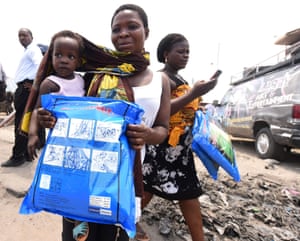
Despite widespread distribution of mosquito nets, malaria is still one of the world’s biggest killers. Photograph: Pius Utomi Ekpei/AFP/Getty Images
6 Single-dose anti-malarial drugs
Better drugs to protect against diseases like malaria are in the works, including a potent single-dose anti-malarial drug.
7 Neonatal resuscitators
As many as one in 10 newborns need help breathing at birth, new, simple, neonatal resuscitators can help prevent deaths.
8 Low-cost balloon tamponade
Women with postpartum haemorrhage can also be stabilised and treated by a balloon tamponade, a common tool in high-income countries. Recently, this tool has been adapted using readily available materials in low-income countries. Using the materials at hand, a healthcare provider can create a tamponade out of condoms and rubber tubing. Now simple low-cost kits and pre-assembled versions are available, that make this solution more accessible and effective.
9 Drugs to stop blood loss after childbirth
New forms of the drug oxytocin are currently being developed and tested that could increase coverage because they won’t require skilled health workers to administer or refrigeration for storage. These innovations could help ensure this highly effective drug reaches and treats hundreds of thousands of women at risk of death from postpartum haemorrhage (or severe bleeding after delivery) each year.
10 Rice fortification
For children who live in areas where rice is a staple food, we are seeing amazing developments in rice fortification, a process that enriches rice with vitamins and iron supplements. Better nutrition is at the core of better health and smarter ways to supplement staples and introduce foods with more nutritional value are essential.
11 New tests for a life-threatening maternal condition
Preeclampsia is another danger that affects more than one in 20 pregnant women. It is associated with dangerously high blood pressure that can lead to seizures. New diagnostic tools to treat preeclampsia will help identify at-risk women so that they can receive low-cost treatment.
How will these life-saving innovations be funded? Traditional donors cannot do it alone. Governments in low- and middle-income countries have a critical role to play and so do local entrepreneurs with the potential to take forward affordable solutions. The private sector and social impact investors, also want to engage. But all these groups need better data to assess what is available, what is coming soon, or where there is a gap that requires new ideas.
To achieve the goal of ending preventable maternal and child deaths, the world must invest in new and emerging health innovations so that bright ideas turn into real solutions. The lives of millions of women and children depend on it.
Join our community of development professionals and humanitarians. Follow @GuardianGDP on Twitter. Join the conversation with the hashtag #Dev2030.
Of the Australian women who give birth, 23% are over 35 but these older mothers account for 40% of maternal deaths across the country, a study has revealed.
Australia has the second highest rate of births to older women among 14 developed countries – behind only Spain, where 35% are above that age – and the highest rate of caesarean section births, a study in the Lancet says.
Just over 32% of Australian women have a caesarean section, it says.
The report noted that while hospitals were well set up to cater for high-risk women, they were not always ideal for low-risk mothers-to-be who were subjected to more interventions, such as caesarean sections and inductions of labour, than was necessary for most.
As a result, maternity care costs can escalate and some mothers and newborns can face complications.
“Cost increases over time are largely attributed to use of interventions,” the report said.
The study showed Australia was one of the most expensive countries in the world for women to give birth, ranking behind only the US.
The cost of a caesarean section is estimated at A$ 14,000 in Australia, compared with more than A$ 20,000 in the US, figures compiled by the Lancet show.
A vaginal birth in Australia costs A$ 9,000, while in the US it is almost A$ 14,000.
The report said that while high-income countries including Australia had taken many steps to reduce maternal and neonatal mortality rates, the cost of maternity care could be high and medical liability costs “enormous”.
“Although mortality is generally low, the picture is far from perfect,” the Lancet’s latest Maternal Health series, released on Friday, said.
“In some settings, fear prevails among subsets of women and providers, driving increased and inappropriate intervention.”
Most women in high-income countries deliver their babies in hospital, regardless of whether they have low or high-risk pregnancies, the report said.
Two per cent of Australian mothers have their babies in a birth centre, and less than 1% give birth at home.
The study also highlighted that pregnant Canadian and Australian Indigenous women had high rates of gestational diabetes and pre-existing diabetes, and that Torres Strait Islander women had an incidence of diabetes of three to six times the national average.
The number of women dying from causes related to pregnancy and childbirth has almost halved since 1990, a global report has revealed.
Worldwide the annual number of maternal deaths per 100,000 live births fell by 44% between 1990 and 2015, from approximately 385 to 216.
But the figure came far below the target set by the United Nations as part of its millennium development goals in 2000, which aimed to see a drop of 75% by 2015.
The report also highlights that global inequalities in maternal healthcare are increasing, with the gap between countries with the lowest level of maternal deaths and the highest doubling between 1990 and 2013, reaching a 200-fold difference.
“Lots of people worked very hard and progress was achieved, but it was patchy,” said Wendy Graham from the London School of Hygiene and Tropical Medicine, who was a co-coordinator of the report. “Like many things in health, in the progress that the average receives invariably there are some left behind.”
It is estimated that 210 million women become pregnant every year, with 140 million babies born. But according to the report – a series of six papers published in the Lancet by an international team of researchers – provision of maternal healthcare worldwide is hugely variable.
“This is about human rights and a lack of standardised care across the world,” said Stephen Kennedy, head of the Nuffield department of obstetrics & gynaecology at the University of Oxford, who was not involved in the series.
“Women should be as healthy as possible before pregnancy and have access to adequate health care when they are pregnant,” he added. “There is then no reason why common problems in pregnancy shouldn’t be managed in exactly the same everywhere because the evidence base is so strong. We know what to do. The problem is that we are failing to implement that knowledge.”
According to the new Lancet series, the chances of a woman dying from childbirth over her lifetime is about one in 4,900 in high-income countries, while for women in sub-Saharan Africa the figure is one in 36. By contrast, according to the World Health Organisation, the UK figure is one in 5,800.
“[What] drives some of the risk is that we still have high fertility in some parts of the world,” said Graham. “We still have large parts of low- income countries where there is a high unmet need for contraception.”
While births in the presence of skilled birth attendants rose from 57% to 74% between 1990 and 2013, the authors warn that many women in poor and rural settings do not have access to such care, while the increase in coverage does not necessarily mean such care is of high quality.
“There are still about 53 million women who have no care at all at the time of delivery,” said Graham.
“If you have coverage of care that is not good quality you are not going to prevent the deaths,” she added. “There is a non-trivial proportion of facilities that are called maternity units but don’t have running water, don’t have electricity, don’t have trained providers.”
Where women do make use of maternal healthcare services, the quality of care can vary dramatically, the authors add, with some receiving too little care, too late. That, they say, can be down to delays in recognising or accessing care, as well as poorly-equipped facilities, with too few staff and a lack of evidence-based care.
The situation, they add, can arise not only in low income countries, such as those in sub-Saharan Africa, but also in high- and middle-income countries due to social inequalities: black women were more likely to die in childbirth in New York in 2010 than women in North Korea or Vietnam.
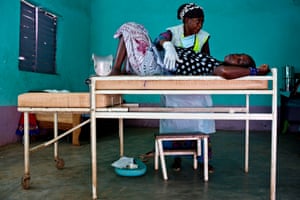
A woman is examined by a midwife at a health clinic near Doko, Siguiri, Guinea. Photograph: Kate Holt/UNICEF
The opposite end of the spectrum is also of concern, the authors write, citing the over-medicalisation of birth that they dub “too much too soon”, as shown by high rates of caesarean sections and induced labour as well as unnecessary ultrasound examinations and excessive use of antibiotics.
“You have countries like Brazil and parts of Latin America where about 40% of deliveries are by caesarean section, they are a very common procedure,” said Graham. “Now there is no way that 40% of women need a caesarean section.”
By contrast, around a quarter of babies in England and Wales are delivered by caesarean section, while almost 19% of births worldwide involve the procedure. “Globally, caesarean section rates are rising, and medically unnecessary caesarean sections are prevalent,” the authors report.
The authors also reveal that about 27 million cases of serious pregnancy-related complications occurred in 2015 from the five main direct obstetric causes including haemorrhage and problems arising from abortions. “Death is the tip of the iceberg,” said Graham. “Morbidity is a very large burden on families and health systems.”
The authors highlight a need for maternal healthcare services to respond to growing diversity in the health problems affecting pregnant women as well as the trend for women to have babies later in life. The latter, they say, includes offering care not just regarding the pregnancy and birth itself, but also taking into account that older mothers are more likely to have medical conditions that also need to be addressed and considered, as well as different preferences for their care.
“That joined-up thinking and that joined-up working among professionals and services doesn’t really exist in low income countries in many places on the scale that can respond to these epidemiological transitions,” said Graham.
Other challenges, the authors note, lie in the boom in people moving into urban centres, as well as the rise in obesity, pointing out that in 2014, 13% of mothers were obese.
“Again it is this issue of getting prepared for services to meet the needs of obese patients,” said Graham.
The report also highlights the need for emergency services to provide better maternal health care during crises, from outbreaks such as that of the Zika virus to mass migration, whether political or environmental.
“Your first line services have to recognise that pregnancy will continue and births will happen,” said Graham. “Systems need to be more resistant to what we call shocks – whether it is Zika or indeed ebola, shocks happen.”
“The new report makes it evident that there is a growing divide between the haves and the have-nots,” said Katja Iversen chief executive of Women Deliver.
“We have come far in bringing down maternal mortality, but we are definitely not there yet,” she added. “It is not just about increasing the number of health centres, it is also about women’s economic status in society. It is not just about increasing the quality of care that women receive, it is also about education, nutrition and equality. And it is not just about low income countries, it is also something that we see in pockets of very wealthy countries.”
She irritates your parents. She baffles your grandparents. The preoccupied young mum feeding, with one hand, organic sweet potato puree to her eager eight-month-old, and checking her Facebook notifications with her smartphone in the other. A stereotype which would pass for a member of the Modern Tribe and one I’m sure you already recognise. Perhaps she is closer to yourself than you would like to admit.
To say that parents will have to adjust to a new way of life when they have a baby is perhaps the most cliched of all understatements. Social contact becomes less face-to-face due to the physical and logistical challenges a new baby brings. Leaving the house for a simple errand becomes a near military operation incorporating sleep schedules, changing supplies, feeding equipment. A spontaneous evening out to the cinema with friends? An impossibility. Text messages become almost nostalgic, phone calls time consuming and social media quickly fills the social void for the new parent, who is likely to be surviving on caffeine, chocolate and very little sleep.
Connecting with people via social media is immediate, with responses often instant. Positive replies can become an addictive gratification, bringing confirmation of the image people want to project of themselves, be it intelligence, charisma or wit. Social media offers an uninhibited space in which people can express themselves freely, bringing with it the bounty of validation of who they are, where they fit within a social circle and their place within a community. Arguably, this is the essence of good mental health and is particularly pertinent when talking about women – and men – when they have a baby.
The elephant in the nursery
Although social media presents an opportunity to make a connection with other new parents who, reassuringly, may be going through the same uncharted newborn territory, it may reveal the elephant in the nursery. The pressure to appear as the perfect parent is omnipresent online, and these platforms are particularly unhelpful when they present the Hollywood edit of parenthood. Carefully crafted sepia-toned Instagram glimpses of yoga mum or zen dad may actually disguise a multitude of imperfect truths. Research has found there are many barriers to disclosure of perinatal mental health problems including embarrassment, stigma and “failure at being perceived as not coping”. What role does social media play in facilitating this unhelpful undermining of confidence and capability of a new parents? Is social media a witness to the development of perinatal mental health problems or a sly accomplice?
My interest in the relationship between social media and maternal mental health has developed during the five years I have been working as a GP, as well the last 18 months working as a clinical fellow for the Royal College of General Practitioners (RCGP). Despite mental health problems during the perinatal time affecting one in five women and one in 10 men, only 50% of these cases are identified, meaning many people are struggling on without receiving appropriate treatment they need. The RCGP is working to raise awareness on these issues, and social media has helped in many of these projects such as #MumTalk in conjunction with Sport Relief , open access e-learning modules in conjunction with Health Education England and most recently the Perinatal Mental Health Toolkit which was launched in July 2016 on the RCGP website.
The toolkit offers more than 300 free resources to help professionals care for those directly affected, as well as information for women who are affected. Social media has helped recruit women with lived experience to contribute in this important work, as well as sharing links across the healthcare online global community.
Shared support
Through this role, I have met many inspiring women who show courage and conviction in telling their stories on blogs, such as Laura Clark @butterflymum83 and Eve @littlemissevec. In sharing their recovery narrative so eloquently, they encourage others to come forward and seek help. There are also Twitter discussion groups, the most established of which is the brilliant #PNDHour (weekly, Wednesdays 8-9pm), which is run by Rosey @PNDandMe and recently hosted by Laura @cooksferryqueen, both of whom have had postnatal depression. This platform in particular is unusual in that health professionals are welcome to contribute – the voice of a woman with expertise through her experience is considered equal to that of a professional expert by training, and both groups can learn much from each others’ contributions. Misconceptions such as “I thought it meant I was a bad mother” and “I didn’t think I could take antidepressants if I was breastfeeding” are commonly challenged, and damaging myths debunked.
However, there is a risk that professional boundaries of the doctor/patient relationship become blurred and less visible to both parties, with unintentional consequences possible. This should not discourage GPs from contributing to these forums but the principles guiding their practice in the consultation room should be maintained on line, as discussed in the RCGP Social Media Highway Code,including respecting privacy, treating others with consideration and maintaining confidentiality. This is in addition to a general consensus within the profession that social media is inappropriate for giving personalised medical advice on an individual basis.
Peer support or trigger trouble?
Another innovative development of digital technology in mental health is online peer support groups. These are often quoted by women with lived experience as an important part of their recovery. One of the most established of these is the one run by the charity Action of Postpartum Psychosis . Importantly, these groups need moderators who have access to training and clinical supervision so they can redirect someone to seek medical help when appropriate and moderate any unhelpful or unkind behaviour from those participating. This kind of forum may carry “trigger warnings”. Triggering is a fairly new phrase for a familiar concept of bringing up negative emotions or memories from other people’s words and is also something to be considered when discussing mental health online. Trolling or cyberbullying, misinformation and misdiagnosis are all potential risks from using social media to discuss maternal mental health. But the prospect of reaching so many women who are socially isolated, facing self-stigma or just living with undetected illness and encouraging them to come forward is a persuasive argument for exploring this area further.
Social media has been a great driver for recognition of Perinatal mental health,raising professional and public awareness and influencing policymakers and commissioners – most recently future investment from NHS England has been promised. The full benefit of the public and healthcare professionals using social media in the ways described here are only just becoming apparent and are yet to be fully understood, with a quality evidence base slowly developing. So whilst social media is far from a panacea in terms of helping women facing perinatal mental health problems, there is great scope for health professionals to further exploit its full potential.
References:
Khan L. Falling through the gaps: perinatal mental health and general practice. 2015; London: Royal College of General Practitioners and Centre for Mental Health.
National Institute for Health and Care Excellence. Clinical Guideline 192. Antenatal and postnatal mental health: clinical management and service guidance. 2014; London: NICE.
The rate of Texas women who died from complications related to their pregnancy doubled from 2010 to 2014, a new study has found, for an estimated maternal mortality rate that is unmatched in any other state and the rest of the developed world.
The finding comes from a report, appearing in the September issue of the journal Obstetrics and Gynecology, that the maternal mortality rate in the United States increased between 2000 and 2014, even while the rest of the world succeeded in reducing its rate. Excluding California, where maternal mortality declined, and Texas, where it surged, the estimated number of maternal deaths per 100,000 births rose to 23.8 in 2014 from 18.8 in 2000 – or about 27%.
But the report singled out Texas for special concern, saying the doubling of mortality rates in a two-year period was hard to explain “in the absence of war, natural disaster, or severe economic upheaval”.
From 2000 to the end of 2010, Texas’s estimated maternal mortality rate hovered between 17.7 and 18.6 per 100,000 births. But after 2010, that rate had leaped to 33 deaths per 100,000, and in 2014 it was 35.8. Between 2010-2014, more than 600 women died for reasons related to their pregnancies.
No other state saw a comparable increase.
In the wake of the report, reproductive health advocates are blaming the increase on Republican-led budget cuts that decimated the ranks of Texas’s reproductive healthcare clinics. In 2011, just as the spike began, the Texas state legislature cut $ 73.6m from the state’s family planning budget of $ 111.5m. The two-thirds cut forced more than 80 family planning clinics to shut down across the state. The remaining clinics managed to provide services – such as low-cost or free birth control, cancer screenings and well-woman exams – to only half as many women as before.
Related: The biggest US city without an abortion clinic: El Paso’s sole facility faces closure
At the same time, Texas eliminated all Planned Parenthood clinics – whether or not they provided abortion services – from the state program that provides poor women with preventative healthcare. Previously, Planned Parenthood clinics in Texas offered cancer screenings and contraception to more than 130,000 women.
In 2013, Texas restored funding to the family planning budget to original levels. But the healthcare providers who survived the initial cuts reported struggles to restore services to their original levels.
Indeed, the report said it was “puzzling” that Texas’s maternal mortality rate rose only modestly from 2000 to 2010 before doubling between 2011 and 2012. The researchers, hailing from the University of Maryland, Boston University’s school of public health and Stanford University’s medical school, called for further study. But they noted that starting in 2011, Texas drastically reduced the number of women’s health clinics within its borders.
The report comes just as public health advocates are raising questions about Texas’s ability to prepare for the Zika virus, which is transmitted by a common species of mosquito and has been linked to severe birth defects. The World Health Organization has advised women in areas of local transmission to delay pregnancy.
Texas is one of several southern states where health officials say there is a risk of a local outbreak. But about half the state lacks ready access to OB-GYN care, making it difficult for women to obtain contraception or for pregnant women to confirm the health of their babies. Just this month, Texas’s health department drew fire for allocating $ 1.6m of the $ 18m the state budgets for low-income women’s family planning to an anti-abortion group that does not provide basic health services.
“There is a need to redouble efforts to prevent maternal deaths and improve maternity care for the 4 million US women giving birth each year,” the authors said.
Published in Proceedings of the National Academy of Sciences, the review performed by Eyal Abraham of Bar-Ilan University, Israel, builds on previous work which mapped the alterations in the brains of new mothers.
It was not clear if that pattern is a outcome of the hormonal and other changes that accompany pregnancy or a response to the knowledge of motherhood.
To find out, Mr Abraham, doing work with Ruth Feldman of Bar Ilan and Professor Talma Hendler of the Tel-Aviv Sourasky Center, filmed 89 new mothers and fathers interacting with their infants at house.
They then measured the parents’ brain activity even though watching these videos in an MRI tube, as properly as viewing movies their young children did not star in.
For the twenty mothers in the research watching their infants triggered heightened exercise in the brain’s emotion-processing areas, especially in a framework known as the amygdala, which was 5 instances a lot more active than when watching other video clips.
“These are areas that react unconsciously to indications of an infants’ wants, and that derive deep emotional reward from seeing the baby,” research co-writer Ms Feldman said.
For the 21 heterosexual fathers, who have been really involved in raising their infant but whose wives took the parenting lead, viewing their infant enhanced activation of cognitive circuits, notably a construction that interprets a baby’s cries and non-verbal cues.
The 48 gay fathers raising youngsters with their husbands mirrored each mothers and fathers in terms of the modifications to brain activity.
Their emotional circuits have been as energetic as these of the mothers and the interpretive circuits showed the same additional action as that of heterosexual fathers.
The far more time a guy invested as principal caregiver to a child, the greater the connectivity suggesting playing the two parental roles brought on the brain to integrate the structures essential for every single.
Ms Feldman stated: “In all fathers, the overlap, or connectivity, amongst the two brain systems – emotional processing and mentalizing or amygdala and STS – is higher the much more the father is involved in childrearing responsibilities. That is, the mentalizing network recruits the emotional network.”
She extra: “Fathers’ brains are very plastic.
“When there are two fathers, their brains should recruit each networks, the emotional and cognitive, for optimum parenting.”
The following stage will be for scientists to execute neuroimaging on males and ladies just before and then right after they became mothers and fathers, to check that any heightened activity followed junior’s arrival and was not current before.
But Feldman is assured that the brain action benefits from parenting.
Deaths from preventable brings about related to pregnancy and childbirth dropped has dropped 45% since 1990, in accordance to a new report from the Globe Well being Organisation.
In 2013, an estimated 289,000 women died around the world, down from 523,000 in 1990. But 800 ladies a day are even now dying from complications in pregnancy and childbirth globally- equivalent to 33 an hour.
Sub-Saharan Africa is the riskiest area in the planet and 99% of all maternity connected deaths arise in developing countries.
Dr Geeta Rao Gupta, deputy executive director of UNICEF says:
A 15-12 months-old lady residing in sub-Saharan Africa faces about a 1 in 40 chance of dying throughout pregnancy and childbirth throughout her lifetime. A girl of the very same age residing in Europe has a lifetime threat of one in 3300 – underscoring how uneven progress has been close to the globe.”
Despite advances in the last twenty years, the report says, there has been too minor progress in avoiding adolescent pregnancies, abortions, maternal deaths, sexually-transmitted infections and HIV. There are also considerable gaps in availability, high quality and accessibility to extensive intercourse training and services for young folks, particularly in reduced-earnings nations.
The ten nations beneath collectively account for about 60% of global maternal deaths. Two countries alone accounted for virtually a third of all worldwide maternal deaths- India at 17% (50 000) and Nigeria at 14% (forty 000).
The sub-Saharan Africa region accounted for 62% (179 000) of international deaths in 2013 followed by Southern Asia at 24% (69 000). It is hard to draw any conclusions, nevertheless, when these figures have not been adjusted for population.
Deaths per one hundred,000 live births
A lot more indicative than the raw numbers is the international Maternal Mortality Rate (MMR),primarily based on the number of maternal deaths per one hundred,000 dwell births.
In 2013, there have been 210 maternal deaths per each and every one hundred 000, down from 380 in 1990.
The MMR in developing areas was identified to be 14 occasions greater than in developed areas. Sub-Saharan Africa has the highest regional MMR (510) with Sierra Leone topping the checklist with an estimated 1,one hundred deaths per 100,000 dwell births.
The graph under displays the ten countries with the highest number of deaths per one hundred,000 reside births. The only two countries to have comparably higher prices of maternal mortality outside the sub-Saharan African region were Afghanistan (400) and Haiti (380).
Cabo Verde and Mauritius had been the only two sub-Saharan African regions to have a reasonably minimal maternal mortality fee at 53 and 73 per 100,000 dwell births, respectively.
Triggers of maternal deaths
A second WHO examine, also published these days in The Lancet Worldwide Overall health, examined the brings about of more than 60,000 maternal deaths in 115 countries.
It discovered that at least one in four maternal deaths are caused by pre-existing health care situations such as diabetes, HIV, malaria and weight problems, whose wellness impacts can all be aggravated by pregnancy. Extreme bleeding throughout pregnancy and childbirth also created up a quarter of all such deaths.
Sub-Saharan Africa accounted for 6800 (91%) of the estimated 7500 maternal deaths attributed to acquired immunodeficiency syndrome (AIDS) globally. South Africa topped the record with 41.4% of all maternal deaths attributed to HIV.
Dr Marleen Temmerman, Director of reproductive health and analysis at WHO, and co-author of the research stated:
The new information exhibits a shifting profile in the circumstances that result in maternal deaths reflecting the growing burden of non-communicable conditions in females throughout the world.
Ending preventable maternal deaths will demand both continued efforts to minimize problems straight relevant to pregnancy, and much more of a focus on noncommunicable diseases and their result in pregnancy. Integrated care for women with conditions like diabetes and weight problems will lessen deaths and avoid prolonged-lasting well being problems.
The report lists a number of key methods which require to be taken to the lives of far more females. They contain quality care the two just before and following birth, secure blood supplies, access to essential medicines this kind of as antibiotics along with contraception and risk-free abortion services.
Better information needed to save lives
The report stresses that a essential challenge in addressing maternal deaths is the lack of accurate information. Though expertise on the number of females dying and the factors behind their deaths is strengthening, a lot stays unrecorded and unreported.
In a lot of lower-earnings nations, maternal deaths go uncounted and usually the trigger of death is unknown or not recorded correctly, especially when girls die at residence. This is constant with basic worldwide trends: only one-third of all deaths around the world are recorded and fewer than 100 countries record the trigger of death employing WHO’s International Classification of Ailment.
As a outcome, it is frequently hard for national wellness programmes to allocate assets in which they are needed most. At current, less than forty% of countries have a full civil registration program with very good attribution of result in of death necessary for the correct measurement of maternal mortality.
Tim Evans, Director of Well being, Nutrition and population for the globe bank group stresses the value of improving data assortment throughout the world:
33 maternal deaths per hour is 33 also a lot of. We want to document every single a single of these tragic events, establish their trigger, and initiate corrective actions urgently.
Download the data
• Information: download the full spreadsheet
Much more open information
Information journalism and information visualisations from the Guardian
Growth and aid information
• Search the world’s worldwide growth data with our gateway
Can you do far more with this data?
• Contact us at data@theguardian.com • Stick to us on Twitter • Like us on Facebook