give etiketine sahip kayıtlar gösteriliyor. Tüm kayıtları göster

16 Mayıs 2017 Salı

3D-printed ovaries allow infertile mice to give birth

Infertile mice have given birth to healthy pups after having their fertility restored with ovary implants made with a 3D printer.


Researchers created the synthetic ovaries by printing porous scaffolds from a gelatin ink and filling them with follicles, the tiny, fluid-holding sacs that contain immature egg cells.


In tests on mice that had one ovary surgically removed, scientists found that the implants hooked up to the blood supply within a week and went on to release eggs naturally through the pores built into the gelatin structures.


The work marks a step towards making artificial ovaries for young women whose reproductive systems have been damaged by cancer treatments, leaving them infertile or with hormone imbalances that require them to take regular hormone-boosting drugs.


“Our hope is that one day this ovarian bioprosthesis is really the ovary of the future,” said Teresa Woodruff at Northwestern University in Chicago. “The goal of the project is to be able to restore fertility and endocrine health to young cancer patients who have been sterilised by their cancer treatment.”


[embedded content]

Of seven mice that mated after receiving the artificial ovaries, three gave birth to pups that had developed from eggs released by the implants. The mice fed normally on their mother’s milk and went on to have healthy litters of their own later in life.


Writing in the journal Nature Communications, the scientists describe how they printed layered lattices of gelatin strips to make the ovary implants. The sizes and positions of the holes in the structures were carefully controlled to hold dozens of follicles and allow blood vessels to connect to the implants. Mature eggs were then released from the implants as happens in normal ovulation.


Chemotherapy and high doses of radiation used in cancer treatment can destroy some or all of a woman’s eggs, putting them at risk of infertility and an early menopause. And while doctors have had some success in restoring women’s fertility from frozen ovarian tissue, an implant could potentially help those who do not bank healthy tissue when they are children.


Monica Laronda, a co-author on the study, said that an ovary implant could also help cancer survivors whose eggs are so damaged that they need hormone replacement therapy to trigger puberty. “We’re thinking big picture, meaning every stage of the girl’s life, so puberty through adulthood to a natural menopause,” she said.
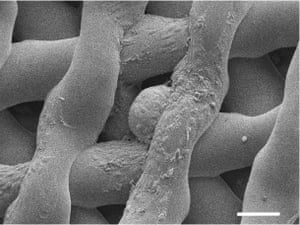


A microscopic image of an immature mouse egg, surrounded by supportive cells, after it has been housed in a bioprosthetic ovary scaffold for six days.

A microscopic image of an immature mouse egg, surrounded by supportive cells, after it has been housed in a bioprosthetic ovary scaffold for six days. Photograph: Northwestern University

Scientists have made artificial ovaries for mice before, but the latest research is believed to be the first time that researchers have used 3D printing to manufacture them. It is not clear if the same approach will work in people because human follicles are much larger and grow rapidly until they are visible to the naked eye.


Other animal experiments performed nearly a decade ago hinted that women who had ovarian tissue transplants later in life might enjoy broader benefits from the procedure than restored fertility. In 2010, scientists at Kato Ladies Clinic in Tokyo found that ovarian transplants extended the lives of old mice, and led older females, who were normally inactive, to seek out mates and have babies. The researchers conceded that far more work was needed to assess the effects in women.


Advances in 3D printing have already transformed some areas of medicine by allowing the doctors to make bespoke body parts that can be directly implanted into patients. Last year, South Korean surgeons printed a titanium heel bone for a man who had a tumour removed from his foot.


Meanwhile, researchers in North Carolina announced that they had made ears, jawbones and skeletal muscles by 3D printing structures laced with living cells. Other groups have printed vascular networks that will be vital for creating large synthetic organs in the lab.


3D-printed ovaries allow infertile mice to give birth

26 Nisan 2017 Çarşamba

Labour will give pay rise to "overworked and underpaid" NHS staff

NHS workers who have been “taken for granted” by the Tories will get a pay rise if Labour wins the election, the shadow health secretary is to announce.


Jonathan Ashworth will say in a speech on Wednesday that NHS staff have been “undervalued, overworked and underpaid”by the Conservative government, with cuts to pay and training forcing workers out of the health service and putting young people off applying.


This has led to short staffing that is a threat to patient safety, Ashworth will say.


In March, the government announced that around 1.3 million NHS staff would receive a 1% pay rise but critics pointed out the rise would see nurses, midwives and radiographers earn barely £5 a week more.


The settlement for 2017-18 is the sixth year in a row in which NHS staff’s annual pay rise has been lower than the cost of living – inflation is running at 3.2%.


Labour plan to lift the 1% cap on pay rises for NHS staff and move towards public sector wages being agreed through collective bargaining and the evidence of independent pay review bodies.


At the Unison Health Conference in Liverpool, Ashworth will say: “Our NHS staff are the very pride of Britain. Yet they are ignored, insulted, undervalued, overworked and underpaid by this Tory government. Not any more. Enough is enough.


“NHS staff have been taken for granted for too long by the Conservatives. Cuts to pay and training mean hard-working staff are being forced from NHS professions and young people are being put off before they have even started. Now Brexit threatens the ability of health employers to recruit from overseas.


Labour also plan to create legislation requiring NHS trusts to have regard for patient safety when setting staffing levels, as “Tory mismanagement” has left the health service “dangerously understaffed”.


It will ask the National Institute for Health and Care Excellence to assess whether legally enforced staffing ratios should be introduced in some health settings. The party will also reinstate funding and support for students of health-related degrees and incentivise NHS jobs to boost staffing levels.


Ashworth will say: “What is bad for NHS staff is bad for patients too. Short staffing means reduced services and a threat to patient safety. Labour’s new guarantees for NHS staff will help keep services running at the standard which England’s patients expect.”


The move was welcomed by unions and representative bodies.


Jon Skewes, director for policy, employment relations and communications of the Royal College of Midwives, said: “These are very welcome commitments from the Labour party. They recognise the effort, determination and commitment on the part of our hard-working midwives and other NHS staff to deliver the safest and best possible care for those using the NHS.


He also criticised the government for abolishing NHS bursaries, which has led to a fall by 23% of applications by students in England to nursing and midwifery courses at British universities.


The government’s policy of a 1% pay cap amounts to a drop in real wages, the TUC has calculated. Adjusting for inflation, a nurse, for example, would have earned £30,929 in 2010, but only £28,462 last year.


There are currently 24,000 nursing vacancies, according to the Royal College of Nursing as roles become harder to fill.


Frances O’Grady, general secretary of the TUC said: “Under the government’s current plans, NHS workers will lose thousands of pounds from their salaries. This is unfair, it will demoralise staff and it will increase the number who decide to quit.


“We hope all the parties will make an election pledge to scrap the unfair pay restrictions and give our hard-working NHS staff the pay rise they deserve.”


Unison general secretary Dave Prentis said NHS staff are “struggling to get by” on below-inflation pay rises and lifting the 1% cap would make them feel valued.


Conservative health minister Philip Dunne said: “We’ve protected and increased the NHS budget and got thousands more staff in hospitals. But all that’s at risk with Jeremy Corbyn’s nonsensical economic policies that would mean less money for the NHS. Just look at Wales where Labour’s economic mismanagement means they had to cut funding.”


Labour will give pay rise to "overworked and underpaid" NHS staff

21 Mart 2017 Salı

Good social workers are invaluable. So let’s give them proper support | David Brindle

About three in every 10 people in Britain think social workers help with household chores like cooking and cleaning, with personal care like washing and dressing, and with childcare. Two in 10 reckon they will nip to the shops for you. Asked to choose from a given list of professionals they consider important providers of mental health support, 69% of people identify psychiatrists and 65% GPs – but only 41% pick social workers.


These findings come from a ComRes survey commissioned by Think Ahead, the fast-track training graduate scheme for mental health social workers, to mark this week’s World Social Work Day. As Lyn Romeo, England’s chief social worker for adults, comments with a certain understatement, “there is still more to do to communicate the crucial role of social workers”.


That was to have been the role of the short-lived College of Social Work, set up by ministers in 2010 with plans for it to grow to become a royal college on a par with those for the most esteemed professions, but shut down in chaos five years later. News that the College of Occupational Therapists is to become royal – richly deserved, by the way – has rubbed a good deal of salt into that wound.


There is a fresh plan, however. From 2018, part of the brief of a proposed new regulator for social workers in England will be “to promote and maintain public confidence” in the profession. The mandate for the organisation, provisionally titled Social Work England (SWE), is contained in the children and social work bill currently before parliament. After a rocky start, it enjoys broad support.


One reason SWE is being welcomed is that it will give social work its own regulator again after six years under the generic Health and Care Professions Council. A second is that ministers accept it cannot be self-financing, at least in the short term, and are underwriting it by £16m in its first two years. And the most significant reason is that an initial idea for it to be run direct by Whitehall has been ditched.


Just how independent it will be remains moot: a quango accountable to government, not parliament, it will need ministerial approval of the professional standards it polices. But the social work world sees the lifting of the spectre of regulation by a government department as a clear win.


Another success being celebrated is the withdrawal of clauses from the bill that would have allowed councils to seek exemptions from children’s social care law to test innovative ways of working. Critics saw the idea as erosion of vital safeguards and mounted a strong, successful campaign against it – but the issue was almost certainly settled when Eileen Munro, the leading social work academic often cited by ministers in support of professional reform, opposed it.


However, real tensions remain between the government’s social work reform vanguard led by Isabelle Trowler, chief social worker for children, and the bulk of the sector establishment, with plans for accreditation tests for children’s social workers looming as a new flashpoint. But there is a sense of a thawing in relations.


Herbert Laming, sector elder statesman and crossbench peer who led both the seminal inquiry into the death of Victoria Climbié, which published its report in 2003, and a review of child protection six years later following the Baby P affair, hopes the thaw continues. He tells me: “What social work needs above all at this time is a bit of tender loving care.”


In a lecture on Wednesday at the University of Suffolk, Lord Laming will spell out the enormously high expectations that society has of frontline workers’ skills and judgment when dealing with vulnerable children and adults. The task, he will say, has been made infinitely more difficult by austerity, which is why he joined the call for withdrawal of the exemption clauses at this point even though he understood and backed the case for innovation.


Social workers are crying out for support and encouragement, Laming says. He is surely right. There has been too much stick and not enough carrot in the mix of late.


Good social workers are invaluable. So let’s give them proper support | David Brindle

15 Mart 2017 Çarşamba

After my suicide crisis I set up a centre to give others a safety net | Joy Hibbins

It took just minutes for a deeply traumatic experience in March 2012 to fracture my life. I experienced such terror during those moments that I couldn’t sit with my back to a door for weeks. I was convinced that someone would come in and harm me. The event replayed constantly in my mind. I couldn’t escape. I was in the grip of severe post-traumatic stress disorder and within days I was at the point of suicide.


I called my out of hours GP and was referred to a mental health crisis and home treatment team, but I found it hard to connect with the number of different people involved in my care. Their methods were very practical. They would tell me to distract myself when I felt suicidal. But what I wanted was emotional support from a team who knew and understood me as an individual. The clinical distance of psychiatric staff left me feeling detached and alone


On a summer’s day in that year I started to picture in my mind what would have helped me: a suicide crisis centre. It would be a place I could visit every day. If I was at imminent risk of suicide, I could be supported there over a number of hours. The staff would be highly trained, skilled professionals – but they would also be kind, caring and empathic.


In the months that followed I worked tenaciously to make that picture a reality: focusing on setting up the crisis centre gave me a reason to live. There are now 25 of us working there, and we will soon be marking four years of providing services. A high proportion of our clients are men, and this is significant; nationally, three times (pdf) as many men die by suicide as women.


We never set out to achieve zero suicides. That would have been a massive pressure on all of us. We simply set out to do everything that we could for each individual to help them survive. We have never had a suicide of a client under our care.


One of our clients says he carries us in his pocket. He feels that we are always with him


We don’t just provide a static centre for people to visit when they are in crisis. If they are very distressed, they may not be able to get to us, so sometimes we need to go out to them. The combination of an accessible crisis centre, home visits and our emergency phone lines places a safety net around our clients.


The quality of the relationship is so important when you’re supporting someone at risk. We work hard to build a strong connection with our clients. It’s the reason they call our emergency line at 3am, when they might not have called another service. They get through to someone they know and that makes a difference. Clients often say they wouldn’t have called an anonymous service at that point.


If you build a strong connection with clients, it can “hold” them even when you are not with them. One of our clients says he carries us in his pocket. He feels that we are always with him.


I sometimes get asked how I cope with the emotional intensity of the work. Firstly, we get excellent support and supervision from senior staff who are available at very short notice. Secondly, I see such wonderful personal qualities in our clients and that’s a source of optimism. They will go out into the world and affect other people in a positive way. That gives me huge hope for the future.


When I started to talk about my plans back in 2012, people were sceptical. It seemed such an ambitious project for a person who had recently been in crisis. But I knew it had to be set up.


MPs on the Commons health select committee recently asked us to provide evidence about our suicide crisis centre for an inquiry into suicide prevention. Their final report has just been published.


We are contacted by people from all over the country who would like a similar centre in their area. I hope that will be possible. I know how much they are needed.


  • Joy Hibbins is founder and director of Suicide Crisis, which runs a suicide crisis centre in Cheltenham, Gloucestershire.

In the UK, the Samaritans can be contacted on 116 123. In the US, the National Suicide Prevention Hotline is 1-800-273-8255. In Australia, the crisis support service Lifeline is on 13 11 14. Hotlines in other countries can be found here.


Comments on this article will be switched on later. Comments on this article will be pre-moderated and will only be visible after being approved by a moderator.


The day I made a difference is the Guardian Voluntary Sector Network’s series that showcases the work of people involved with charities. If you have a story to share about a landmark moment in your life, email voluntarysectornetwork@theguardian.com.


Talk to us on Twitter via @Gdnvoluntary and join our community for your free fortnightly Guardian Voluntary Sector newsletter, with analysis and opinion sent direct to you on the first and third Thursday of the month.


After my suicide crisis I set up a centre to give others a safety net | Joy Hibbins

8 Şubat 2017 Çarşamba

PMQs verdict: Jeremy Corbyn"s leaked texts give him the upper hand

Key points


A rowdy exchange, in which the Speaker interrupted four times to call for order. Jeremy Corbyn returned to a consistent theme this winter: the funding crisis in social care and the broader strain on the NHS. This time he came armed with what he described as leaked texts, exchanged between David Hodge, leader of Surrey county council, and a mystery official named “Nick” in the Department for Communities and Local Government.


Surrey had until this week planned to hold a referendum on a 15% rise in council tax to pay for the spiralling costs of social care, but on Tuesday abandoned the idea. Corbyn said the texts indicated the government had cut a secret deal with Surrey council – presumably to provide extra funding in return for the referendum being called off – and demanded to know the details, and whether the same deal would apply to councils across the country.


He wondered if it was merely coincidence that the health secretary and the chancellor represented Surrey constituencies. Theresa May dodged the question but said every council had been given the opportunity to raise a 3% “precept” to fund social care provision. She accused Corbyn, in a nod to US politics, of presenting “alternative facts” and claimed the Conservatives would spend £0.5tn on the NHS during the course of this parliament, whereas Labour wished to borrow the same amount.


Snap verdict


Flash rhetoric and clever questions are fine at PMQs, but facts are better – and Corbyn demonstrated how nothing beats a good, old-fashioned, leak-inspired ambush. His first two questions were a bit vague and waffly, he sought to lay a trap with his third, but then he surprised May with his leaked text allegations and, to his credit, he kept pressing her for an answer as to whether Surrey was getting a special deal for the rest of the session.


It was a successful hit. May stonewalled his questions quite forcefully, but without being able to conceal the fact that she was not answering his key question. Even without Corbyn’s Surrey deepthroat, May’s answers would have been unsatisfactory – she has not got anything substantial to say about her long-term review of care, and her attack lines on Labour on health, about spending, read as if they have come from David Cameron’s pre-2015 PMQs file – but having a strong attack story meant Corbyn easily had the upper hand.


Memorable lines


“Congratulating NHS staff on their hard work is one thing, paying them properly quite another” – Corbyn on NHS funding


“What we get from Labour is alternative facts. What they really need is an alternative leader” – May channels Donald Trump adviser Kellyanne Conway


PMQs verdict: Jeremy Corbyn"s leaked texts give him the upper hand

7 Şubat 2017 Salı

Organic Breakfast Ideas That Will Help Give Your Day A Good Start

There’s nothing healthier than starting your day with an organic breakfast.


Bread, cereal, fruits, yogurt, eggs, and pancake mix are just some of the many delectable morning meal ingredients available as organics. If you’re new to an organic lifestyle, you’ll be surprised how you can still enjoy your favorite breakfast dishes. You’ll realize that going organic isn’t as hard. It may even inspire you to create your own selection of deliciously healthy, satisfying morning meals.


Here are some organic breakfast ideas that will help give your day a good start:


  1. Organic Flourless Peanut Butter Jelly Pancakes

This one is a classic favorite, easy to prepare breakfast not just for you, but for the whole family. For sweet and pancake cravings at the start of your day, here’s a pleasantly delightful pancake recipe. It doesn’t only taste great, but it’s packed with protein. It’s an awesome grain-free and gluten-free breakfast.


Here’s what you’ll need:


  1. 4 pieces of Organic Eggs

  2. A cup of Peanut, Almond, or any Nut Butter (Organic)

  3. 1/4 cup of Organic Greek Yogurt

  4. A tablespoon of Vanilla Extract

  5. 2-3 Tablespoons of Organic Jam (Strawberry, Blueberry, Raspberry, Apricot, or any jam that you prefer)

  6. Agave or Maple Syrup (Organic)

  7. Coconut Oil

Here’s how to prepare:


  1. Mix the first 5 ingredients in a bowl, and blend them with a whisk.

  2. Heat your frying pan/skillet to 350F.

  3. When the frying pan is hot, pour a small amount of coconut oil.

  4. Pour the pancake batter mix into the frying pan and cook till both sides are golden brown.

  5. If you prefer, add some agave/maple syrup or more jam on your pancake.

  6. Enjoy!

  1. Organic Avocado Pineapple Sandwich Toast

This sandwich toast offers a good balance of protein and vitamins. This recipe is made even more delicious with honey mustard as a supplement.


You’ll only need:


  1. 2 Slices of Toasted Organic Wheat or Oat Bread

  2. Avocado

  3. Fresh Pineapple Slices

  4. Spring Mix

  5. Organic Honey Mustard

How to prepare:


  1. Just combine the ingredients to make a sandwich. So simple, so fast.

  1. Green Organic Smoothie

Green smoothies will surely give your day a good start. It offers a healthy and nutritious blend that’s easy on your stomach and will also energize you for the day.  You may want to swap some of the ingredients according to your preference.


Here’s what you’ll need:


  1. Banana

  2. Spinach

  3. Organic Greek Yogurt

  4. 1/2 Orange

  5. Almond Milk or just Water

How to prepare:


  1. Simply mix them all in your blender until it’s creamy. That’s just about it.

These super quick organic breakfast ideas are perfect for those who love eating healthy and getting fit. You can never go wrong with going organic. Organic foods or ingredients are now easily found in every grocery store.


Author bio: The article on organic breakfast ideas has been written by Ignacio D. Pena who is a very active blogger and loves to write in the Food niche.


Organic Breakfast Ideas That Will Help Give Your Day A Good Start

5 Ocak 2017 Perşembe

Give babies peanut-based foods early to prevent allergies, doctors suggest

Most babies should start eating peanut-containing foods well before their first birthday, according to new guidelines that aim to protect high-risk tots and other youngsters, too, from developing the dangerous food allergy.


The guidelines from the US National Institutes of Health mark a shift in dietary advice, based on landmark research that found early exposure dramatically lowers a baby’s chances of becoming allergic.


The recommendations released on Thursday spell out exactly how to introduce infants to peanut-based foods and when – for some, as early as four to six months of age – depending on whether they’re at high, moderate or low risk of developing one of the most troublesome food allergies.


“We’re on the cusp of hopefully being able to prevent a large number of cases of peanut allergy,” said Dr Matthew Greenhawt of the American College of Allergy, Asthma and Immunology, a member of the NIH-appointed panel that wrote the guidelines.


Babies at high risk – because they have a severe form of the skin rash eczema or egg allergies – need a checkup before any peanut exposure, and might get their first taste in the doctor’s office.


For other children, most parents can start adding peanut-containing foods to the diet much like they already introduced oatmeal or mushed peas.


Instead of whole peanuts, which are choking hazards, the guidelines suggest options like watered-down peanut butter or easy-to-gum peanut-flavored “puff” snacks.


“It’s an important step forward,” said Dr Anthony Fauci, director of NIH’s National Institute of Allergy and Infectious Diseases, which appointed experts to turn the research findings into user-friendly guidelines. “When you do desensitize them from an early age, you have a very positive effect.”


Peanut allergy is a growing problem, affecting about 2% of US children who must avoid the wide array of peanut-containing foods or risk severe, even life-threatening, reactions.


For years, pediatricians advised avoiding peanuts until age three for children thought to be at risk. But the delay didn’t help, and that recommendation was dropped in 2008 – although parent wariness of peanuts persists.


“It’s old news, wrong old news, to wait,” said Dr Scott Sicherer, who represented the American Academy of Pediatrics on the guidelines panel.


Thursday’s guidelines make that clear, urging parents and doctors to proactively introduce peanut-based foods early.


“Just because your uncle, aunt and sibling have an allergy, that’s even more reason to give your baby the food now” – even if they’re already older than six months, added Sicherer, a pediatric allergist at Mount Sinai Hospital in New York.


In Columbus, Ohio, one doctor told Carrie Stevenson to avoid peanuts after her daughter was diagnosed with egg allergy. Then Stevenson found an allergy specialist who insisted that was the wrong advice – and offered baby Estelle a taste test of peanut butter in his office when she was seven months old.


“I was really nervous,” Stevenson recalled, unsure which doctor to believe. But, “we didn’t want her to have any more allergies”.


Now 18 months old, Estelle has eaten peanut butter or peanut-flavored puffs at least three times a week since then and so far seems healthy. Stevenson, pregnant again, plans early exposure for her next child, too.


The guidelines recommend:


  • All babies should try other solid foods before peanut-containing ones, to be sure they’re developmentally ready.

  • High-risk babies should have peanut-containing foods introduced as early as four to six months after a checkup to tell if they should have the first taste in the doctor’s office, or if it’s OK to try at home with a parent watching for any reactions.

  • Moderate-risk babies have milder eczema, typically treated with over-the-counter creams. They should start peanut-based foods around six months, at home.

  • Most babies are low-risk, and parents can introduce peanut-based foods along with other solids, usually around six months.

  • Building tolerance requires making peanut-based foods part of the regular diet, about three times a week.

Researchers noticed a tenfold higher rate of peanut allergy among Jewish children in Britain, who aren’t fed peanut products during infancy, compared to those in Israel where peanut-based foods are common starting around age seven months.


Then in 2015, an NIH-funded study of 600 babies put that theory to the test, assigning them either to avoid or regularly eat age-appropriate peanut products. By age five, only 2% of peanut eaters – and 11% of those at highest risk – had become allergic. Among peanut avoiders, 14% had become allergic, and 35% of those at highest risk.


Whether the dietary change will spur a drop in US peanut allergies depends on how many parents heed the new advice – and if a parent seems skeptical, the guidelines urge doctors to follow up.


Give babies peanut-based foods early to prevent allergies, doctors suggest

11 Aralık 2016 Pazar

AA Gill said NHS could not give him new cancer treatment

AA Gill, the revered critic who died on Saturday aged 62, described in his final article how the NHS could not give him a cutting-edge, potentially life-extending cancer treatment but triumphed on a human level where private healthcare does not.


Described as “a giant among journalists”, the Sunday Times columnist died three weeks after revealing he had the “full English” of cancers.


In a final piece published in the Sunday Times, Gill said he had been denied an expensive therapy – costing up to 100,000 a year – that may have helped him live “considerably” longer and was the weapon of choice for “every oncologist in the first world”.


The former smoker was diagnosed with lung cancer that had spread to his neck and pancreas, with tumours that were inoperable and unsuitable for radiotherapy, after noticing his health was failing in the autumn.


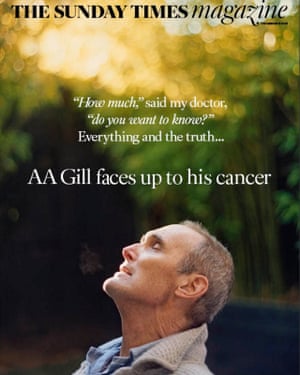
AA Gill on the front of Sunday Times magazine


AA Gill on the front of Sunday Times magazine. Photograph: Sunday Times

He described how he was told by a consultant oncologist that a pioneering new treatment for cancer, immunotherapy, would give him his best chance at fighting the disease, but it was not available on the NHS.


“The National Institute for Health and Care Excellence (Nice), the quango that acts as the quartermaster for the health service, won’t pay,” he wrote.


The consultant told Gill the treatment would be “particularly successful” with his kind of cancer, but told his wife Nicola Formby: “If he had insurance, I’d put him on immunotherapy – specifically, nivolumab. As would every oncologist in the first world. But I can’t do it on the National Health.”


Gill said that the prohibitive cost of nivolumab was £60,000 to £100,000 a year for a lung cancer patient, about four times the cost of chemotherapy.


However, he said that “old men who think they’re going to die anyway aren’t very effective activists” and do not see the “public or press pressure that young mothers’ cancers and kids’ diseases get”.


He added: “As yet, immunotherapy isn’t a cure, it’s a stretch more life, a considerable bit of life. More life with your kids, more life with your friends, more life holding hands, more life shared, more life spent on earth – but only if you can pay.”


Gill, who previously said he wanted to have his treatment on the NHS due to a sense of “human connection”, drew attention to the health service’s performance in international oncology rankings.
He wrote: “It was the first question I asked my oncologist, Dr Conrad Lewanski. ‘Why is this such a bad place to get cancer, when we have lots of hospitals, when we teach doctors from all over the world, when we’ve won more Nobel prizes than the French?’. ‘It’s the nature of the health service,’ he says.”


AA Gill, journalist and restaurant critic, dies aged 62

Gill eventually underwent a course of platinum chemotherapy at the Charing Cross hospital in London.


He told how, in the weeks before he died, he was rushed to hospital in pain “by miles and miles the worst thing I have ever lived through”. After doctors discovered his pancreatic tumour had grown to the size of a fist they offered more chemotherapy.


Gill finished the article, which was printed before he died and published in the Sunday Times, with a conversation he had with a cancer nurse. “(She said) ‘You’re supposed to be with me down in chemotherapy. I saw your name. Why are you up here?’,” he wrote. “’Well, it turns out the chemo isn’t working’. Her shoulders sag and her hand goes to her head. ‘F***, f***, that’s dreadful.’ I think she might be crying. “I look away, so might I. You don’t get that with private healthcare.”


AA Gill said NHS could not give him new cancer treatment

21 Kasım 2016 Pazartesi

Scotland’s offer to give abortions to Northern Irish women shames Stormont | Patrick Corrigan

Scotland and Northern Ireland are separated by just a few short miles of sea. But when it comes to access to abortion, they are divided by more than 150 years of history. While Scots women are able to access abortions on the same basis as their counterparts in England and Wales, Northern Irish women still face a near-total ban on the termination of pregnancy.


In 2014-15, only 16 women were able to have lawful abortions in Northern Ireland. By contrast, 833 Ulster women travelled to England or Wales and paid for terminations at private clinics. And despite being full and equal taxpayers, Northern Ireland-resident women have been barred from accessing free abortions in NHS hospitals in England, Wales and Scotland.


It was into this breach that Scotland’s first minister, Nicola Sturgeon, stepped last week when she told the Scottish parliament that she would explore the possibility of women and girls from Northern Ireland being able to access terminations through NHS Scotland. Her intervention has enraged the deeply conservative Democratic Unionist party (DUP), Northern Ireland’s largest party of government, but been welcomed by pro-choice and human rights campaigners in the region.


While healthcare has been a devolved matter in Scotland since the creation of the Scottish parliament, it was only in May this year that abortion law was handed over to Holyrood. It is against this backdrop that Sturgeon’s intervention has demonstrated leadership on behalf of Northern Irish women sorely lacking both at Stormont and Westminster. There is near unanimous support in the Holyrood parliament for keeping abortion provision for Scotland in line with the 1967 Abortion Act. The picture couldn’t be more different across the water.


As recently as February this year, the Northern Ireland assembly voted to keep the region’s abortion law as it is, refusing to legislate for abortion even in cases of rape, incest, or where the foetus has no chance of survival outside the womb. This was despite a Belfast high court finding, just two months previously, that Northern Ireland law breaches the European convention on human rights.


Meanwhile, the UK health secretary Jeremy Hunt has determined that the NHS in England must operate a residence-based system so that women who live in Northern Ireland are barred from accessing NHS abortion services in England, despite being UK citizens. This position is currently the subject of a legal challenge at the UK supreme court taken by a Northern Ireland teenager and her mother. They want women and girls from Northern Ireland to receive free abortions on the NHS in England.


The young woman at the centre of the case was 15 in 2012 when she and her mother travelled from Northern Ireland to Manchester and were asked to pay for a private termination. It is estimated that, with private clinic charges as well as the cost of travel and accommodation, a Northern Ireland woman needs to find anything between £400 and £2,000 to obtain a lawful abortion across the water in Britain – NHS care available for free to women in every other part of the UK.


Northern Ireland’s politicians are being left behind by the people


Stephen Cragg, who is acting as QC for the mother and daughter, told the supreme court at a hearing earlier this month that women and girls like his client are “second-class citizens” who “live in the UK, but – unlike all other women and girls in the UK – they are at risk of the most serious criminal penalty if they procure an abortion in their own area”.


In Northern Ireland, any woman or girl who has an abortion deemed unlawful is liable for prosecution and could face a sentence of up to life imprisonment. Earlier this year a woman who had induced her own miscarriage by taking abortion pills obtained over the internet was found guilty under the 1861 Offences Against the Person Act and given a three-month suspended sentence. There are a number of other similar cases poised to come before the courts in Northern Ireland, including the prosecution of a mother who obtained the pills on behalf of her pregnant teenage daughter.


Despite all this, a majority of Northern Ireland’s politicians have set their face against reform. Comfortable in their self-designation as “pro-life”, they appear to be immune to criticism – even from the UN, whose human rights committee recently ruled that this part of the UK’s laws prohibiting and criminalising abortion constitute a human rights violation.


But, increasingly, Northern Ireland’s politicians are being left behind by the people. Independent polling published recently by Amnesty International showed that seven in 10 people want to see Northern Ireland’s harsh abortion laws changed, while more than half want to see abortion decriminalised altogether. The tens of thousands of people who are calling for abortion to be decriminalised also speak to that shift.


Sturgeon’s offer of possible help to Northern Irish women and girls should be a matter of deep embarrassment to ministers in Northern Ireland. Theresa May should match Sturgeon’s offer to stand up for Northern Irish women abandoned by their own politicians. When it comes to the human right to healthcare, lines on a map should be no barrier.


Scotland’s offer to give abortions to Northern Irish women shames Stormont | Patrick Corrigan

20 Kasım 2016 Pazar

Zika: Let"s give women the contraception they so desperately want

As Zika continues to spread through the western hemisphere, the women’s health aspect of the virus has not entered the public conversation. Perhaps more than the failure to control mosquito populations, lack of access to widespread, effective contraception is the root cause of microcephaly in most of Latin America and the Caribbean, and yet remains the least talked about aspect of the epidemic.


Ebola, like HIV before it, offered an impetus to improve general healthcare infrastructure in west Africa, as international money and political will joined the fight against the epidemic. For all its negatives, the Zika outbreak similarly provides an opportunity to press strongly for universal access to contraception and reproductive services for women in all Zika-affected countries, but this opportunity is being largely overlooked.


To prevent babies being born with microcephaly, the Centers for Disease Control and Prevention (CDC) and the World Health Organisation are choosing to encourage “delaying pregnancy”, as well as to recommend mosquito nets and protective spray to those who are already pregnant. Without putting any resources behind widespread contraception, this is merely lip service and fails to deal effectively with the problem. Only 62.5% of Latin American women use some form of contraception [pdf], and in Haiti, only 34% of women have access to contraception. In the US, 45% of pregnancies are unintended, and 65% in Puerto Rico are as well [pdf]. Health authorities in El Salvador estimate that as many as 90% of pregnancies may be unintended, and Haiti, without an effective public health system or quotable statistics, is likely not far off from this figure.


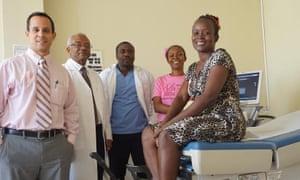
Dr. Vince DeGennaro, Dr. Jean Renald Cornely, Dr. Valery Caleb Suprien, Nurse Ursilia Saintil in a gynecology exam room at Hospital Bernatd Mevs in Port au Prince, Haiti.


Doctors Vince DeGennaro, Jean Renald Cornely and Valery Caleb Suprien with nurse Ursilia Saintil in a gynaecology exam room at Hospital Bernatd Mevs in Port au Prince, Haiti. Photograph: Grace Tillyard/IHI

The choice to focus on expectant mothers rather than considering women as a whole will be costly, most of all for vulnerable women who are most likely to have an unintended pregnancy. In Haiti, where we work in women’s health, the cost – both social and economic – could be catastrophically high as the scale of the epidemic is probably drastically under-reported to date. In most low- and middle-income countries in Latin America, marginalised women’s chances of resuming their schooling and work will be decimated when they have to look after a severely disabled child.


The CDC’s efforts in Puerto Rico have been limited to handing out Zika-prevention kits, including insect repellent, mosquito nets, brochures and a condom as a reminder of the possibility of sexual transmission of Zika, and not as a form of contraception where no pregnancy is desired. Local authorities have also collected 1.2 million discarded tyres, dropped larvicide into abandoned pools, educated residents and trained local brigades in fumigation.


Efforts in Puerto Rico have been confounded because the US Congress has been unable to pass a Zika funding bill. None of the $ 250m (£200m) planned for Zika in Puerto Rico or the $ 376m for the Caribbean was earmarked for reproductive health services, sending signals to other governments and non-profits where to steer their efforts.


Widespread contraception would be one of the cheaper options for dealing with the Zika crisis, at only $ 31 per woman per year, including all the personnel costs of healthcare workers. Some have estimated that the cost of one child with Zika birth defects in the US is $ 4m, including extra ultrasounds, hospitalisations, surgeries and critical care. The CDC estimates that 138,000 women of reproductive age in Puerto Rico (19%) do not currently desire pregnancy and are not using contraception. At $ 31 per woman per year, the $ 4.3m additional cost for achieving universal access to contraception is dwarfed by the $ 250m in the US Senate bill allocated for the prevention of Zika infections in pregnant women and associated medical costs.


Widespread contraception would be one of the cheaper options for dealing with the Zika crisis


Dr Vincent DeGennaro


Our work in Haiti strives towards empowering women through delivering healthcare services. The failure to provide services that help women is in part due to the age-old problem of reducing women’s health to simply maternal health, and propelling programmes that tell women what to do rather then empowering them to make decisions for themselves. Zika, it seems, is no different.


Declaring contraception as the cheapest and most effective way to deal with the crisis would be a bold step towards lobbying all governments in the region to expand these much-needed services. In addition, contraception in low- and middle-income countries results in better birth-spacing, reduced maternal mortality and infant mortality, and advances in the socio-economic status of women.


The Zika crisis, like abstinence-based teachings for HIV prevention, is a missed opportunity to invest in women’s health infrastructure, where ideology trumps public health and financial logic in Latin America and the Caribbean. Transnational public health authorities, like the CDC and WHO, are allowing politics with antipathy to women’s reproductive health to pollute public health logic, forcing countries to commit ineffective funds and set a standard that leaves women behind. Will we let yet another crisis go by without addressing reproductive health services for half our population?


Grace Tillyard is Director of Communications and Outreach for Innovating Health International in Haiti.


Dr Vincent DeGennaro Jr is President of Innovating Health International in Haiti and Assistant Professor in the Division of Infectious Diseases and Global Medicine at University of Florida College of Medicine.


Zika: Let"s give women the contraception they so desperately want

18 Kasım 2016 Cuma

Can dry cleaning give you cancer? The hidden hazards of delicates

With the results of the most recent presidential election, Americans are faced with all sorts of uncertainty in regards to their health. But there are some consumer choices that individuals can make to protect against future illness: cutting down on sugar, for example; exercising daily; and, surprisingly, being careful about how you clean your delicates.


You may not know it, but most dry cleaning isn’t dry at all – and it isn’t clean. Instead of water, professional cleaning processes use a liquid solvent to dissolve stains on garments. This typically involves a chemical known as perc that, while highly effective at getting scuff marks out of clothing, is also a known health and environmental hazard.


Health organizations, including the Environment Protection Agency (EPA) and the International Agency for Research on Cancer (IARC), have classified perc as a toxin, but it’s still widely used across the industry. In 2012, the EPA classified perc as a “likely human carcinogen”, meaning that prolonged exposure to the chemical has been linked to an increased risk of cancer.


Perchloroethylene, also known as tetrachloroethylene, PCE or perc for short, is a chlorinated hydrocarbon used primarily by the dry cleaning industry, but it’s also used as a metal degreaser in industrial cleaning.


In the EPA’s 2012 press release on the subject, the agency warned: “Studies of dry cleaning workers exposed to tetrachloroethylene have shown associations between exposure and several types of cancer, specifically bladder cancer, non-Hodgkin lymphoma and multiple myeloma.”


In the same year the IARC, found perc to be “probably carcinogenic to humans” based on evidence from epidemiological data and animal studies.


According to the most recent data, the EPA estimates that 28,000 dry cleaners in the US use perc. In 2006, the agency significantly tightened its requirements for the use of air toxins in dry cleaning. A spokesperson for the agency said: “The rule includes a phase-out of perc use at dry cleaners located in residential buildings, along with requirements that will reduce perc emissions at other dry cleaners.”


The requirement includes the complete phase-out of perc machines in dry cleaners located in residential buildings by 2020. New York, Illinois and New Jersey are among some of the states to have passed recent legislation clamping down on the use of perc. But a decade after the EPA ruling, the only state to pass legislation outright banning perc has been California.


The main health risk with perc is not through wearing clothes that have been cleaned with it, but rather, exposure through air or soil. The effects of short term exposure (breathing in high amounts over a short span of time) include dizziness, headaches and loss of consciousness, according to the EPA.


It is long term exposure that can increase the risk of cancer, putting dry cleaning workers and people who live in close proximity to shops at the highest risk.


A 2009 study in the Journal of Environmental and Public Health found that living near a dry cleaner that uses perc increases the risk of developing kidney cancer.
Proximity to a dry cleaner does not mean that exposure to perc is a given. Not all dry cleaners use perc, and many that do send the clothing off-site to an industrial complex away from residential buildings.


Additionally, with correct ventilation and maintenance, the amount that leaks into the air can be minimized.


The National Association for Cleaners (NCA), a trade group that looks after the business interests of dry cleaners, does not view perc as dangerous. In an interview with the Wall Street Journal, director of technical services Alan Spielvogel said the latest perc machines are much safer, and that alternatives to perc don’t clean as well. The NCA did not return the Guardian’s request for comment.


As a chlorinated hydrocarbon, perc breaks down very slowly in the air so it can travel long distances, meaning that in urban areas there are trace amounts of it in the air even if there is no dry cleaner nearby. According to air samples of urban areas in different parts of the US, the typical background level of perc is roughly a couple of micrograms per cubic meter.


The New York Health Department recommendations for a safe level of perc in the air is no more than 30 micrograms per cubic meter. The guidelines, however, state that “reasonable and practical actions should be taken to reduce perc exposure whenever air levels are above background”.


The agency has a particular concern that indoor levels of perc in the air are kept as close to background levels as possible.


Measuring the levels of perc in the air, however, isn’t all that straightforward. In New York, the authorities do not regularly monitor dry cleaning emissions and generally, environmental agencies in other parts of the country only do so when there has been a complaint or reason to suspect a contamination.


Earlier this year, a Crains investigation into the use of perc in the city found that since 2011 the health department received 250 complaints from dry cleaners and residential laundry rooms about their emissions.


Consumers are becoming increasingly aware of the health hazards of perc, as well as its environment impact, and are questioning why it’s taking so long for the chemical to be phased.


Dr Ivan Rusyn, a committee member for the National Academies of Sciences, Engineering and Medicine, who reviewed the EPA’s risk assessment of perc, said that in the grand scheme of how federal agencies work, it’s not been that bad. “It’s a very long process to create these human health assessments,” Rusyn said.


The California air board spokesperson said the biggest challenge in phasing out perc has been a resistance on the part of dry cleaners who think it’s the most effective way to clean clothes.


Tim Maxwell, the president of GreenEarth, a widely used silicone-based alternative to perc, echoed that challenge. He also said that the unstructured nature of the dry cleaning business, which has been in decline for the last ten years, makes implementing drastic changes difficult.


“Most dry cleaners are mainly small mom-and-pop businesses,” he said. “The hardship of replacing that perc machine is anywhere from $ 40,000 to $ 100,000 and that’s very economically challenging.”


GreenEarth is among many of the alternatives to perc, which also include water-based cleaning technologies known as wet cleaning, carbon dioxide technology and a host of other chemical cleaning systems. While the alternatives are thought to be preferable both from a health and environmental standpoint, research into these other systems is still in its nascent stages.


Other options for consumers looking to avoid the potential risks associated with dry cleaning is to launder clothes at home or in a regular laundromat. Despite clothing labels saying otherwise, consumers often find that clothes marked as “dry-clean-only” will come out of a regular wash unscathed (for the most part).


Can dry cleaning give you cancer? The hidden hazards of delicates

24 Ekim 2016 Pazartesi

Many procedures give "no more benefit than doing nothing" – leading doctors

A number of common treatments and procedures routinely undertaken by doctors are largely pointless, leading physicians have said.


The Academy of Medical Royal colleges (AMRC) said that many treatments for conditions from minor grazes to terminal cancers often give no more benefit to the patient than simply doing nothing.


The body, which represents 22 royal medical colleges, said that some broken bones, for example, would not always require a plaster cast and that an x-ray was not always necessary for patients with back pain. The college said it wanted doctors to think carefully about whether certain procedures were required, given their possible side-effects.


“We all have a duty to look after resources in healthcare, especially when the NHS is under so much pressure, but that’s not the main motivation for this initiative,” said professor Dame Sue Bailey, the AMRC chair.


“What’s much more important is that both doctors and patients really question whether the particular treatment is really necessary. Medicine or surgical interventions don’t need to be the only solution offered by a doctor and more certainly doesn’t always mean better.”


The college identified dozens of conditions for which common treatments were not necessarily beneficial, considering the side-effects they can produce.


“Studies have shown that drinking-quality tap water is just as effective for cleaning and washing cuts and grazes as sterile saline solution,” it said. It also said that broken bones in the feet “do not usually need to be put into a plaster cast as they will heal just as quickly in a removable boot”, nor does a child’s wrist when it suffers a certain type of fracture.


And the college said routine cholesterol level checks were not needed for people taking statins who did not have “pre-existing conditions, such as a heart attack, a stroke or a family tendency towards problems with high lipids”.


Other conditions it identified, included terminal cancers – particularly those that that have not responded well to previous courses of chemotherapy. The treatment is “by its very nature toxic”, the college said. “Therefore, the combination of failing to achieve a response and causing toxicity can ‘do more harm than good’.”


The Department of Health declined to comment.


Many procedures give "no more benefit than doing nothing" – leading doctors

8 Ekim 2016 Cumartesi

NHS leadership needs to give staff a powerful voice in any system change

Inevitably the NHS reform drive got caught up in the party conference crossfire. Diane Abbott, in her last few days as shadow health secretary, attempted to rebrand sustainability and transformation plans (STPs) as “secret Tory plans”, while prime minister Theresa May made the ludicrous assertion that the government had given the NHS “more than its leaders asked for”, conjuring up an image of NHS England trying to work out what to do with all the extra cash.


But clinicians as well as politicians are becoming increasingly vocal on the current round of reform. The Royal College of GPs is getting angry over the obsessive focus on sorting out hospital deficits rather than transforming care. At their annual conference this week, college chair Maureen Baker accurately pointed out that if there is insufficient investment in general practice, system transformation simply won’t happen, and the whole process will have been in vain.


NHS England has expressed concern about the lack of clinical involvement in drawing up local plans. At the recent NHS Expo, chief nursing officer Professor Jane Cummings revealed that she had had “mixed responses” when pushing for nurses to have a greater role in STPs, and urged healthcare professionals to make their voices heard.


The RCN backs the drive for patients to increasingly manage their own care, but has warned that the only way to do that effectively is to listen to patients and clinicians. In many areas this did not happen before the plans were submitted to NHS England.


The extraordinary speed with which the plans are being put together is causing concern. Last week Julia Simon, who has just finished as the head of commissioning policy at NHS England, went so far as to claim there were “a lot of lies in the system about the … benefits that will be delivered; it’s just a construct, not a reality”. She described the speed as “mad” and “shameful”.


NHS England is rushing the process for a reason. As NHS Improvement chief executive Jim Mackey made clear from his first days in the job, it would be a calamitous failure for the NHS to push the Department of Health over its parliamentary spending limit. The possible consequences are far greater than simply NHS England chief executive Simon Stevens losing his job; it could lead to a fundamental change in the relationship between frontline health services and government.


Despite Health Secretary Jeremy Hunt’s determination to keep a personal grip on the health service, and despite the numerous weaknesses in the current structure, the NHS does at least have a meaningful degree of autonomy from direct Whitehall control. Busting the spending limit runs the serious risk that this would be reversed, to the detriment of the whole system.


But NHS England and NHS improvement need to balance the need for quick action to stabilise the finances with acceptance that the only way to deliver the transformation they seek is for it to be led by clinicians as much as managers.


STPs are focused on structures and process, but as thousands of pages of visions and plans that have come to little over the years demonstrate, documents like these are ultimately worthless without clinical buy-in and leadership, because they all depend on clinicians taking different decisions with their patients on the best way forward.


The frenetic pace of the STP process gives the erroneous impression that, at least for the most advanced areas, it will all be over by Christmas. In reality, this is just the beginning of many years of work to change the culture of the entire health and care system.


Once the immediate panic over getting financial plans in place has subsided, the NHS leadership needs to focus relentlessly on giving staff a powerful voice in system change. Clinicians need to be empowered and supported in making the improvements that they know are needed, while also being challenged to develop their thinking around crucial areas such as building services around the needs of the patients rather than the institution.


Either clinicians start to lead this, or it will fail.


Join the Healthcare Professionals Network to read more pieces like this. And follow us on Twitter (@GdnHealthcare) to keep up with the latest healthcare news and views.


NHS leadership needs to give staff a powerful voice in any system change

6 Ekim 2016 Perşembe

GPs offered thousands of pounds to give private consultations via app

GPs attending the UK’s biggest family doctor conference are being urged to accept thousands of pounds to treat private patients.


Medics can earn £50-£60 per hour on top of their NHS salary – or up to £90,000 a year if they work full-time – by offering consultations to patients on their smartphones.


The cash is being offered by the firm Babylon to GPs who want to work “flexibly”. Doctors are told they can work from home or their usual workplace.


The Royal College of GPs (RCGP) has accepted thousands of pounds from Babylon to put recruitment flyers in about 1,500 delegate bags at the RCGP annual conference in Harrogate. Babylon has also paid for its logo to appear on the conference handbook and website.


On Thursday the chair of RCGP, Prof Maureen Baker, said NHS doctors were under intense pressure. She said GPs were “worried about making errors because they are so overwhelmed with work. This is a serious threat to patient safety.”


Babylon is an app-based service that works by offering patients unlimited private GP consultations for £4.99 per month or one-off appointments for £25. Patients can get access to one of 100 doctors for video-call or text-message consultations seven days a week from 8am to 8pm. The firm also offers appointments with specialists from £49.


Katherine Murphy, chief executive of the Patients Association, said GPs were often trying to tackle long waiting lists, but added: “What is disconcerting about this situation is that private firms are allowed to advertise positions at a conference of the RCGP.


“What this means is that NHS doctors are being targeted to give up their role working for our NHS and instead work for private companies, which I think most patients would consider unethical. When the NHS is so desperately short of GPs, how can this be right?”


The RCGP accepts sponsorship money from a wide range of firms for its conference, including the pharmaceutical companies Pfizer and Novartis. In 2014, the most recent year for which figures that are publicly available, bronze sponsors paid the RCGP £11,500 plus VAT.


Dr Mobasher Butt, global medical director of Babylon, said: “As a GP, I see doctors across the country working in public, private and voluntary organisations. At Babylon we work with NHS and private patients. Our GPs are often juggling family and professional commitments, and value the flexibility that we offer.


“Without this flexibility, many would not work additional sessions to their NHS work, which in effect is actually increasing our total national GP capacity. All of our GPs carry out face-to-face practice, mostly in the NHS, and Babylon provides them with a much-welcomed addition to their portfolio of work.”


He added: “We have an excellent relationship with the RCGP, having met members of the RCGP council to discuss our service in detail, which they found impressive. Many of our GPs, including myself, are RCGP members and Babylon is proud to support the college.”


Despite Babylon flyers telling GPs they have the “freedom to work from home or your workplace”, Butt said: “All of our GPs work from home and we do not recommend working from their NHS practice.”


A spokeswoman for the RCGP said: “The RCGP exhibition is a commercial venture that generates income for the college’s charitable work. It showcases latest developments in general practice and all exhibitors go through a rigorous process before they are allowed to take part.


“The decision to allow Babylon to become a bronze sponsor at this year’s conference was taken on the basis that it is an emerging digital healthcare company.”


She added: “They are also working with the NHS in some areas to reduce pressure on GP surgeries by offering virtual consultations. At the moment, general practice in the UK is struggling, and we need to pull out all the stops to recruit as many GPs to the NHS as possible, and retain existing ones. But that is not to say we are in a position to close the doors to opportunities for our members.


“Babylon’s presence at the annual conference is in line with the college’s sponsorship policies. Due to commercial confidentiality we are unable to disclose further details of the sponsorship.”


Last month it emerged that another Uber-style app-based medical service, Doctaly, was being rolled out nationally.


GPs offered thousands of pounds to give private consultations via app

16 Eylül 2016 Cuma

Women above 35 who give birth account for 40% of maternal deaths in Australia

Of the Australian women who give birth, 23% are over 35 but these older mothers account for 40% of maternal deaths across the country, a study has revealed.


Australia has the second highest rate of births to older women among 14 developed countries – behind only Spain, where 35% are above that age – and the highest rate of caesarean section births, a study in the Lancet says.


Just over 32% of Australian women have a caesarean section, it says.


The report noted that while hospitals were well set up to cater for high-risk women, they were not always ideal for low-risk mothers-to-be who were subjected to more interventions, such as caesarean sections and inductions of labour, than was necessary for most.


As a result, maternity care costs can escalate and some mothers and newborns can face complications.


“Cost increases over time are largely attributed to use of interventions,” the report said.


The study showed Australia was one of the most expensive countries in the world for women to give birth, ranking behind only the US.


The cost of a caesarean section is estimated at A$ 14,000 in Australia, compared with more than A$ 20,000 in the US, figures compiled by the Lancet show.


A vaginal birth in Australia costs A$ 9,000, while in the US it is almost A$ 14,000.


The report said that while high-income countries including Australia had taken many steps to reduce maternal and neonatal mortality rates, the cost of maternity care could be high and medical liability costs “enormous”.


“Although mortality is generally low, the picture is far from perfect,” the Lancet’s latest Maternal Health series, released on Friday, said.


“In some settings, fear prevails among subsets of women and providers, driving increased and inappropriate intervention.”


Most women in high-income countries deliver their babies in hospital, regardless of whether they have low or high-risk pregnancies, the report said.


Two per cent of Australian mothers have their babies in a birth centre, and less than 1% give birth at home.


The study also highlighted that pregnant Canadian and Australian Indigenous women had high rates of gestational diabetes and pre-existing diabetes, and that Torres Strait Islander women had an incidence of diabetes of three to six times the national average.


Women above 35 who give birth account for 40% of maternal deaths in Australia

15 Eylül 2016 Perşembe

Beans do more than give you gas

The more you eat, the more you lower your risk of certain cancers.


Beans have more servings of fiber than any other vegetable. One single serving will give you 20 percent of your daily recommended fiber.


Researchers in Japan did a seven-year study. They studied more than 43,000 people between the ages of 40 and 79 that had high cancer rates and ate little fiber. The more fiber they got from beans, the lower the risk of colon cancer, especially in men, became. It was the bean fiber that impacted the colon cancer statistics more than any other source of fiber.


Other research indicates that the fiber in beans like garbanzo’s actually keep your body from absorbing carcinogens. When you take in less carcinogens, the less damage is done to your cells, tissues, and other organs. Less damage equates to lower cancer risk in the long run. It’s too bad that the same cannot be said for ingesting flesh foods.


Beans contain phytochemicals, which naturally fight cancer and free radicals, which ruin your cells and tissues through oxidation. The phytochemicals neutralize the free radicals before they do damage.


Greek researchers tested extracts from 11 different legumes (beans are legumes) and found that all of them neutralized free radicals. Not only that, but most of them also protected DNA from oxidative damage, which more or less explains the key to beans’ anti-cancer potential.


What about beans helping women thwart breast cancer? In a study of 90,000 young nurses, the ones who ate beans or lentils at least twice a week were less likely to develop breast cancer.


The experts assumed that the flavonols, again phytochemicals, block the free radicals, prevent oxidative damage to the cells, and encourage cancerous cells to die. All you have to do is to work at least two servings of beans and lentils into your weekly diet.


We all know there’s quite a fad about cutting carbs. If you are concerned, at all, about colon cancer, fagetaboutit.


The carbs in beans are a unique kind that the body cannot digest. As such, they wind up fermenting in your colon, thanks to the bacteria living in your gut. The fermentation produces a compound called butyrate that basically squashes inflammation and the abnormal cell growth that can lead to cancer. In addition, the indigestible carbs help give beans a low glycemic index, meaning a low risk of colon cancer. This is the super benefit of eating low glycemic index foods.


Theory leads to subjectivity. The researchers decided to put their theories to work. They took people that previously had colon polyps removed, changed their diets to include more cooked, dry beans, and after four years, those that ate the most beans were 65 percent less likely to see their polyps return.


All beans work, be it baked, pinto, kidney, navy, white, black, garbanzo, human (only kidding), or lima – all cut colon cancer risk. The more legumes that men eat the less likely they are to get prostate cancer. Three major studies found that eating lots of legumes, including beans, lentils, and split peas, dropped prostate cancer risk between 29 and 38 percent. If flesh foods are eliminated altogether, those percentages climb incredibly.


Another weapon against cancer is the folate found in B vitamins, which beans are a great source of. Eating high-folate foods reduces the risk of pancreatic and colon cancer. In addition, the folate helps to build and repair DNA. Too little leads to DNA damage and supplements will not provide the protection that folate-rich foods do.


Aloha!


To learn more about Hesh, listen to and read hundreds of health related radio shows and articles, and learn about how to stay healthy and reverse degenerative diseases through the use of organic sulfur crystals and the most incredible bee pollen ever, please visit www.healthtalkhawaii.com, or email me at heshgoldstein@gmail.com or call me at (808) 258-1177. Since going on the radio in 1981 these are the only products I began to sell because they work.
Oh yeah, going to www.asanediet.com will allow you to read various parts of my book – “A Sane Diet For An Insane World”, containing a wonderful comment by Mike Adams.
In Hawaii, the TV stations interview local authors about the books they write and the newspapers all do book reviews. Not one would touch “A Sane Diet For An Insane World”. Why? Because it goes against their advertising dollars.


Beans do more than give you gas

3 supplements to give right away for a concussion

Three supplements to give right away if your child sustains a head injury or concussion


Both of my sons have played competitive and contact sports for many years.  They also have sustained more head injuries and concussions than I would like.


Over the course of time and as a nutritionist I learned that there is more you can do than just rest and avoid TV and video games (although those steps are very important too!).


My son was recently in a roll over car accident and thankfully all three in the vehicle were wearing seat belts. He said that if they weren’t they most likely would have been ejected.


But it got me thinking of what I would do right away if he did sustain a head injury.


I am currently putting together an herbal/nutritional first aid kit for both of my sons (yes, they are thrilled…sarcasm) and it will include the ingredients I have listed here in their first aid kits.


With kids back in school it also means kids are back into their sport activities so I hope you find this helpful should the need arise.  It may be a good idea to keep these items on hand.


This is by no means meant to replace medical care after a head trauma but rather in addition to.  Always discuss these options with your doctor, especially if on medications.


But here are some supplements that can provide the tools to allow the brain to begin to heal.  These are not “cures” but rather they are used to optimize brain health for healing.


Here is a good starting place if your child sustains a concussion, even a mild one.


Homeopathic Arnica Montana: While traditional medicine is very skeptical in regards to homeopathic remedies, this is one that I keep in my son’s sport bags and is the first thing I reach for when a head injury occurs.  There are other homeopathic remedies for head injury side effects but this should be in your first aid kit to reduce swelling and inflammation due to the trauma.  Use it as soon as you can but it can also be used for head injuries that have occurred even months prior.


When using homeopathic remedies, it is best to consult with a specialist who is trained to work with them.


Otherwise, to keep on hand for these emergencies, I purchase Boiron brand Arnica Montana 200 ck. You can usually find this at Whole Foods or your local health food store.  Dose out 5 pellets every 15 minutes if you can but neither water nor food should not be consumed 15 minutes prior nor 15 minutes after so you may have to dose out more than every 15 minutes in those first few hours. Ideally just get as many doses in as you can. Do not touch the pellets-just pour them from the vial cap into your mouth.  Let them dissolve under the tongue.  After the first 24 hours you can start to space the doses out and give the pellets 3 to 5 times daily for the first week.


While others continue to be skeptical, I have seen great results with homeopathic remedies so I do use them in certain instances.


Curcumin (from Turmeric): This compound has been shown to have neuro-protective properties and has been shown to be beneficial in rehabilitation from brain injuries.  Giving Curcumin can result in a significant reduction in neuro-inflammation.


For a brand I like Terry Naturally Curamed 750 mg. capsules and I would give one to two three times per day for the first several days following the trauma.  There are other reputable brands out there but I have seen positive results with this product in my clients and so I stick with what has been effective.


High dose fish oil: Studies show that animal’s receiving fish oil after a head injury for 30 days had a greater than 98% reduction in brain damage compared with the animals that did not receive supplementation.


For a head injury I would give an immediate high dose of fish oil that contains 1 gram.   There are many contaminated fish oil products to be wary of. Also avoid farmed salmon and only consume wild caught Alaskan salmon for your fish oil dose or consume sardines (I like Wild Planet brand)


Start with a high dose for the first 1-2 weeks and then reduce the dose. Depending on the research the range can be from 4 grams of combined EPA/DHA to 10 grams.  Take 3 grams three times per day for the first week. I know that is a lot of fish oil but this is short term only.


For the second week reduce that to 3 grams two times per day. After week two it depends on how you are feeling as to whether you should continue on the high dose or reduce the maintenance dose.  Once you are feeling better, reduce the dose to 3 grams every day.


Always take your fish oil with a meal that contains fat.  If you are eating a low fat diet you will have difficulty reaping the benefits from the fish oil.


There are many more supplements that I would suggest for a head injury but this is a good place to start within the first few hours after the impact.


In addition to that, the diet should be clean, meaning free of sugar and processed foods.  Provide plenty of healthy fats such as avocado and it’s oil, quality EVOO, raw nuts and seeds, organic protein sources and plenty of organic leafy greens, vegetables and fruits.  This is not the time for sugar, candy, soda, fast food and frozen meals.  These are inflammatory foods. Avoid any foods with toxins for now so if you can buy all organic during this time that is the best choice.  Otherwise, choose your organic foods following the clean 15/dirty dozen guide provided by www.ewg.org.  The goal is to reduce brain inflammation and provide optimum conditions for healing.


While some are able to return back to their normal routine within weeks, others may have long lasting side effects from their concussion such as ADD symptoms, fatigue, confusion, forgetfulness, anxiety, depression and more. If you or your child needs more nutritional support during the healing process, please contact me or your holistic health professional.


Sources


Chapman, E., Weintraub, R., Milburn, M. et. al. Homeopathic Treatment of Mild Traumatic Brain Injury:


A randomized, Double-blind, Placebo-controlled trial.  Journal of Head Trauma Rehabilitation, 14, 6,


Dec. 1999, 521-542.


Ji, S. (10/1/14) How Whole Turmeric Heals the Damaged brain.  http://www.greenmedinfo.com/blog/how-whole-turmeric-heals-damaged-brain-1


Mercola, J. (2/9/14) Fish Oil Cited in Dramatic Healing After Severe Brain Trauma.  http://articles.mercola.com/sites/articles/archives/2014/02/09/fish-oil-brain-health.aspx


Wu, A., Ying, Z., Gomez-Pinilla, F. Dietary Curcumin counteracts the outcome of traumatic brain injury on oxidative stress, synaptic plasticity and cognition.  Exp. Neurol, 2006  Feb., 197(2):309-17  http://www.ncbi.nlm.nih.gov/pubmed/16364299


www.brainhealtheducation.org


Karen Brennan, MSW, CNC, Board Certified in Holistic Nutrition (candidate), author of the E book Tru Foods Depression Free Nutrition Guide; How Food Supplements and herbs can be used to lift your mood and owner of Tru Foods Nutrition Services, LLC believes in food first when addressing the root causes to your health conditions.  For more information, visit her website at www.trufoodsnutrition.com


The information provided is meant for educational purposes only. As a nutrition professional, Karen Brennan does not treat, cure nor diagnose.


3 supplements to give right away for a concussion