upper etiketine sahip kayıtlar gösteriliyor. Tüm kayıtları göster

18 Nisan 2017 Salı

The stiff upper lip: why the royal health warning matters

It was Diana, of course, who opened the floodgates of tears that swept away the notion of the British “stiff upper lip”. The public mourning at her death was seen as a turning point for a nation where emotional repression had been a point of pride. So it seems fitting that this week it is her sons, William and Harry, who are warning us that our emotional journey is not yet over.


Last week, Prince Harry described how he went for counselling after repressing his own grief over the loss of his mother led to a two-year period of anxiety, anger and “total chaos”. This week, his brother, the Duke of Cambridge, has gone on to warn in an interview that keeping “a stiff upper lip” should not be at “the expense of your health”.


More than 25 years since Paul Gascoigne’s famous tears during the 1990 World Cup made him a national hero, haven’t we moved on from this buttoned-up stereotype? From Barack Obama crying over the death of children at Sandy Hook to Vladimir Putin shedding tears at a victory rally, these days even world leaders are unafraid to show their emotions. Yet, as consultant clinical psychologist Sally Austen points out, such public weeping invariably takes the form of “tidy tears”. The emotion we accept, or even encourage, in public figures is still controlled. “To be with someone who is crying snot and choking on their sadness takes a level of courage for which we might not yet be ready,” she says.


For individuals, the terror that strong emotions will overwhelm us remains deep-seated. “The fears are underpinned by negative automatic thoughts; powerful, often unexamined thoughts that affect the choices we make, often without us even noticing. This leads us to worry that, ‘If I start crying I will never stop’ or, ‘If I cry my colleagues will lose all respect for me’, and even, ‘I can’t cry because I need to look after everyone else’.”


This can come at a cost. “People who might be classed as emotionally ‘strong’ – the stiff upper lipped – are more likely to end up with depression or PTSD than those who recognise their need to express their feelings,” she says.


It’s not hard to find pockets of nostalgia for the idea of a stiff upper lip in the UK, fuelled in part by a hankering for a time when boarding school-bred army officers were moulded to take charge of the empire. A recent Sky News article, for example, railed against “thin-skinned millennials” as it mourned the loss of the days when tough “ploughmen and labourers” were “led by youth from the middle and upper classes tempered and toughened in the forges of public school”.


The journalist Alex Renton, whose book about the dark side of boarding schools is titled Stiff Upper Lip: Secrets, Crimes and the Schooling of a Ruling Class, says this is what makes William’s words “stunning”. “Those three words are understood across the world to sum up a sense of British reserve and resilience and qualities that, to many people, are what made Britain great. It’s the core creed of the empire. The notion that the British were exceptional and the best rulers the world has known through the training of being tough and taking things on the chin is very strong. So it’s pretty revolutionary to have one of the titular heads of a nation say it’s not always a good thing and that speaking up might be better.”
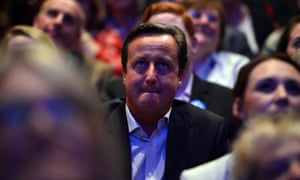


David Cameron fights back the tears listening to William Hague’s final speech as an MP in 2014


Keep calm and carry on: David Cameron fights back the tears listening to William Hague’s final speech as an MP in 2014. Photograph: Carl Court/AFP/Getty Images

Psychotherapist Philippa Perry says an old French and Saunders sketch neatly sums up the problem with the stiff upper lip. In it, a caricature of a “hunting, shooting and fishing” woman accidentally chops off her finger and, rather than crying, throws it to her nearby dog. When another dog starts barking for a similar treat, she cuts off another finger. This, says Perry, illustrates “how ridiculous it is not to listen to your feelings”.


“The stiff upper lip type thinks there are only two options,” she says. “Either you try to put [your emotions] in a box” or you “allow them to be the horses to your chariot – you are led around by them. Of course, there is a middle way – when you hear and listen to your feelings, and are guided, but not led by them.” This, she says, is the difference between allowing your emotions to “spill out everywhere”, and containing them.


By refusing to acknowledge our own emotions, Perry argues, we risk losing our ability to empathise with others. The long-term effects can be detrimental. Counselling psychologist Victoria Galbraith says: “There is still this idea that men need to ‘keep it together’. Suicide is much greater among younger men, which might be down to them feeling they have to keep these things to themselves. Having the opportunity to talk to people … I can’t overemphasise how positive that is.


“If we keep our emotions in, they come out somehow. That can be through poor physical health in time, or anger outbursts or taking things out on other people. It’s almost impossible for it not to have an impact – it’s about how soon we choose to engage with the emotions we experience.”


Linda Blair says she has noticed a change in the UK’s attitude in the near 40 years she has been a psychologist. UK patients were much more likely to be ashamed or defensive about seeking help, and saw it as being a “bother”. And, she says, there was a lingering feeling that men should not ask for help; where once only one in six of her patients were male, this is now around one in three.


But Blair does have a word of warning about letting everything hang out: we should think about who we are releasing our emotions on to. “We need to be sensitive. If someone is very stressed, dumping your problems on to them is not a favour. If you are meeting your best friend, say: ‘I know we are meeting for a fun lunch but I need to talk about a problem.’ We can’t lose our sense of community as we start being able to feel.”


Ultimately, however, she thinks the princes should be thanked for their intervention in reducing the stigma around showing your emotions. As she puts it: “Ugly feelings left unattended just fester.”



Captain Lawrence Oates


Captain Lawrence Oates: the epitome of British stiff upper lip. Photograph: Scott Polar Research Institute, University of Cambridge/Getty Images

‘I decided to give up crying’: Tim Dowling on his emotional journey


When I was a small boy growing up in the US, I was what was technically known as a cry baby. I cried over everything including, on many occasions, spilt milk. So prodigious was my ability to produce tears that other children used to take things away from me, just to see me cry.


Eventually, I realised this was putting me at a social disadvantage, so I decided to give up crying. It took years to learn how to choke off this particular emotional outlet, but I managed it. I figured, good riddance.


I suppose this was my version of the stiff upper lip – at the time, I thought I had invented it. It didn’t quite turn me into the confident, fearless person I hoped it might. I remained self-conscious, awkward and anxious. I just didn’t cry. There was only one thing left to do: I found an island nation over the sea where all the men were like me, and I moved there.


The earliest citations for the expression “keep a stiff upper lip” are actually from the US, but I won’t pretend I have ever considered it an American trait. I have never even really thought much about what it means. As an admonition, it seems a little wrongheaded; when you are on the cusp of betraying emotion, the lower lip is usually the first to go. It also seems to imply the presence of an enemy – perhaps somebody standing on the deck of a nearby frigate with binoculars trained on your face – who might take comfort from your weakness.


There is nothing wrong with prizing resolve, but the most famous examples of the stiff upper lip in action – think of Antarctic explorer Captain Oates leaving the tent and walking into the blizzard with the words, “I may be some time” – often seem more like evocations of futility. To remain calm in the face of a situation that warrants considerable panic is generally a sign that you are mentally unwell, or in shock, or both. Over the years, I have learned to avoid people who would have me maintain a stiff upper lip on their behalf.


I have also learned that most British traits come with a competing countertrait: they are the uncomplaining people who complain all the time; they have an intimate relationship with their weather, but they never, ever dress for it; the men aspire to stiff upper lips, but they are also happy to admit to deep insecurities; everybody spurns help in the first instance, but nobody likes to be thought of as well-adjusted. I love it here, I really do.


I do sometimes worry about raising three sons in a nation where the myth of the stiff upper lip still holds sway. I was conscious of trying not to dissuade them from crying when they were little, but of course one ends up doing it anyway. A crying child triggers a strong emotional reaction in a parent; it’s exhausting. Somewhere along the line, children have to learn the lesson about spilt milk.


What I can never do is create an emotionally appropriate world for my children to live in. It is how it is out there, and they learn more about how a young British man is supposed to comport himself from a one-hour bus ride than they ever will from me. We all figure out where and when we can let our guard down. There is a kind of resilience in just possessing that information.


That said, there are two lessons we can take away from the publicity created by William and Harry speaking out. The first is that if people habitually avoid displaying emotions, they can get into terrible mental distress without anyone else knowing about it, and that’s dangerous. The second is that if you don’t actually engage with your own emotions, like I stopped doing decades ago, you end up hauling them about with you like an overfull bucket. It’s time to stand up and be British: face your scary emotions squarely, with a stiff upper lip.


• Samaritans is available around the clock, every single day of the year, to listen and offer confidential support. Phone 08457 90 90 90 or visit samaritans.org


The stiff upper lip: why the royal health warning matters

The Guardian view on the stiff upper lip | Editorial

The stiff upper lip has been declared overrated by those who are supposed, traditionally, most ardently to uphold it: the royal family, or at any rate the junior members thereof. Speaking about mental health to the charity Campaign Against Living Miserably, the Duke of Cambridge declared that “There may be a time and a place for the ‘stiff upper lip’, but not at the expense of your health.” Prince Harry, too, has told of the damage caused to his own psyche by years of “shutting down my emotions”, culminating in two years of “total chaos”.


The paradox is that the great traumatic event of the princes’ childhoods, the one that caused Prince Harry’s emotional shutdown, was often seen as marking the end of an era of British repression, as tearful mourners lined the streets for the funeral cortege of the princes’ mother and the gates of Kensington Palace were heaped with bouquets. Now lips unstiffen at the faintest provocation, it seems. Judges weep, journalists weep and contestants in TV cookery competitions weep at the drop of a hat.


The stiff upper lip, in truth, may never have been as persistent and fundamental a part of British emotional life as it has been cracked up to be, and its high watermark was probably the first half of the 20th century, when a no-blubbing rule was one way (at least in the short term) to deal with the demands of an empire and fighting two world wars. But the very fact that lips have been seen as requiring cementing into position suggests that they have had, all along, a propensity to wobble – and that what Robert Burton called “excrementitious humours of the third concoction” have always had a habit of falling. The novels of Charles Dickens brim with tears, and have always elicited them – even when certain scenes, such as Little Nell’s deathbed, may also have provoked a snigger from wits such as Oscar Wilde. The grim, uncomplaining work ethic associated with 19th-century, nonconformist, manufacturing Britain may not have favoured snivellers, but there were still mass emotional outbursts – such as the passionate expressions of religious feeling that accompanied the early Primitive Methodist gatherings.


The greatest works of literature, after all, tell us that real men and women cry. The Odyssey is deeply soaked in tears: when the reader meets the poem’s hero, longing for home, he is sitting on a headland “weeping there as always / wrenching his heart with sobs and groans and anguish / gazing out over the barren sea through blinding tears”. In the words of Virgil in the Aeneid (and in Robert Fagles’s translation): “sunt lacrimae rerum” – the world is a world of tears.


The Guardian view on the stiff upper lip | Editorial

9 Şubat 2017 Perşembe

Fish Oil – Get The Upper Hand On Bipolar Cognitive Disfunction With The Potent Natural Health Benefits of Omega 3’s

“Omega-3 fatty acids are considered essential fatty acids
The benefits of omega 3’s in fish oil cannot be overstated.”


My Story
According to the psychiatric community, I have bipolar 1 with ultra rapid cycling, but I don’t take pharmaceutical medications. What I do instead is, take responsibility for my own life by taking control of my sleep, food, diet and fish oil regimes.


It hard enough for most people to get their life in order according to what is healthful, useful and what serves you well. When you factor in a chemically imbalanced brain, the challenge is a little greater, but it’s certainly doable. I’m proof.


Out Of Control 20’s To Zen Mistress 40’s
I suppose that, yes, it’s partly to do with maturation, however, I feel that the process of my recovery from bipolar can be pinpointed to have started with the introduction of fish oil at the age of 35.


I have many years of working-out-my-stuff under my belt, and I’ve pretty much got my act together these days, especially when compared to my younger years. Out of control, thinking everyone ELSE was the problem, didn’t help in any way, to get better in the head. It was only once I seized onto the ideas of fish oil and omega 3’s and that yes I could help myself, than life started settling down for me.


It was only after I’d tried a few different pharmaceutical drug cocktails before the thought occurred to me, ‘Now hang on, this totally sucks and what if I NEVER find the right combo of drugs to meet someone else’s definition of normal?’


My Way Isn’t For Everyone
Not being on pharma meds is definitely NOT for everyone. Being an advocate for natural living, I don’t know that I’d ever recommend going the pharma route for anyone? I’m sorry if this offends, but, I see putting pills down my throat as non effective, lazy and a cop out. I also think that it’s quite enabling of non self responsibility.


It’s just about the easiest thing in the world to make a doctors appointment once a week, throwing pills down your throat all the while. To me, that looks a lot like sloughing off one’s responsibility to be the best version of yourself that you can be. Pills don’t change anything about the root cause of the problem, can make you very sick, and, psychiatry is based on you coming up with your own answers. The harder route, but infinitely more powerful and life affirming route, is that of self awareness and natural living. It actually works and without poisoning your body!


My Laypersons Logic
This is a disorder of chemical imbalance, so, let’s get a little logical about that idea and think about it for a minute. To effect a change in chemical balance, you add or subtract something from the equation, right? Therefore, your body being the chemical soup that it is, will also be affected by a change in it’s chemistry. All you need to do is hunt down the source of the missing vitamins, minerals, enzymes and molecules and put them back in. In a certified organic way, of course.


What’s harder to deal with is the root cause/s of why you’re so sick. I’m referring to your emotional health. Emotions have long been known to affect the body. I’ve known inherently for a long time that ‘bad thinking’ will give you cancer. It’s nice to know that the science bears me out on this.


How I Do My Best To Maintain Balance
So, no pharma for me, but I have to work hard at maintaining my whole life. This is something I think we should ALL do, not just those of us that have a problem to correct. Because I choose the non pills way, that means I MUST look after my body and life especially well. To be able to not only exist, but to thrive with bp and no meds, I MUST get 4 things right MOST of the time; sleep, exercise, diet and fish oil.


Sleep – I am naturally a night owl, but to get proper sleep I force myself to go to bed at 10.30/11pm every night except about once a week. I do love to stay up!


Exercise – I get in the form of yoga of about 30 min every second day. Or yogahh as I like to call it. It’s just that delicious!


Diet – is slowly getting better, forcing myself to eat at least one piece of fruit per day, and I love eating my own organic veges so that makes it easier to get the nutrients I need.


Fish oil – This is WONDER stuff! When I’m talking about fish oil, I’m referring to the EPA (Eicosapentaenoic Acid) and DHA (Docosahexaenoic Acid) levels in organic fish oil. The oil you choose should have very specific levels of EPA and DHA.


The Main Benefits Of Fish Oil
Fish oil will help you with;
– Supporting healthy cognitive function
– Relieving arthritis symptoms
– Keeping triglyceride levels within the normal range
– Supporting the body to maintain a normal LDL:HDA cholesterol ratio.


Dosage
The recommended adult dose is for 5mL daily, which is about a teaspoon’s worth.
You should be aiming for at least an equivalent of 500mg EPA and 800mg of DHA daily.


BIG HINT: Have a hot drink to wash it down with. NEVER use a cold drink!


If you really don’t want fish oil then you can get your EPA and DHA from flaxseed, chia seeds, tofu, walnuts, linseed and pumpkin seeds. However, before the body can uptake the EPA and DHA, it gets converted from alpha-linolenic acid (ALA) Bear in mind that getting your omega-3’s this way requires a bigger intake to achieve the same therapeutic benefits as from fish oil.


I first started taking 5ml of liquid fish oil daily approx 5 years ago. Yes, I do mean the “liquid” form. It’s pretty wrong-feeling in the mouth, but…
Within the first 5 minutes (I kid you NOT!) I was saying “Is this how balanced most people feel, most of the time?” This effect continues in the same way, even all these years later. Fish oil has removed the ‘sobbing-all-day-for-no-reason’ days and you can feel the clarity of the cognitive effect nearly immediately. It feels like you’re smarter. There’s no other way to explain the cognitive effect.


It Feels Like You’re Smarter
That’s because you are smarter on fish oil! The positive cognitive effects from taking fish oil are very, very well documented. The Google scholar results when I typed in ‘research review paper cognitive effect fish oil omega 3’ are in the reference section below. There are  20,500 results!


Please, bp’ers that aren’t on meds, get yourself on fish oil TODAY! It’s cheap and life changing-ly worth it!


Do It, Do It Now! 


The only other thing I have to say is DO IT, DO IT, DO IT because it’s a BIPOLAR LIFE CHANGER!


Remember to always choose a certified organic product to get the purest product as you can.
p.s. I was first recommended fish oil by a pdoc, who also put me on a script for pharma meds at the same time. So, I THINK you can still use the fish oil while on meds. I would check with your pdoc first to be sure.


References:


http://umm.edu/health/medical/altmed/supplement/omega3-fatty-acids


https://www.choice.com.au/health-and-body/medicines-and-supplements/vitamins-and-supplements/articles/omega-3-supplements
http://www.ehealthme.com/drug_interactions_side_effects/Adderall-XR-25mg-3109001


Fish Oil – Get The Upper Hand On Bipolar Cognitive Disfunction With The Potent Natural Health Benefits of Omega 3’s

8 Şubat 2017 Çarşamba

PMQs verdict: Jeremy Corbyn"s leaked texts give him the upper hand

Key points


A rowdy exchange, in which the Speaker interrupted four times to call for order. Jeremy Corbyn returned to a consistent theme this winter: the funding crisis in social care and the broader strain on the NHS. This time he came armed with what he described as leaked texts, exchanged between David Hodge, leader of Surrey county council, and a mystery official named “Nick” in the Department for Communities and Local Government.


Surrey had until this week planned to hold a referendum on a 15% rise in council tax to pay for the spiralling costs of social care, but on Tuesday abandoned the idea. Corbyn said the texts indicated the government had cut a secret deal with Surrey council – presumably to provide extra funding in return for the referendum being called off – and demanded to know the details, and whether the same deal would apply to councils across the country.


He wondered if it was merely coincidence that the health secretary and the chancellor represented Surrey constituencies. Theresa May dodged the question but said every council had been given the opportunity to raise a 3% “precept” to fund social care provision. She accused Corbyn, in a nod to US politics, of presenting “alternative facts” and claimed the Conservatives would spend £0.5tn on the NHS during the course of this parliament, whereas Labour wished to borrow the same amount.


Snap verdict


Flash rhetoric and clever questions are fine at PMQs, but facts are better – and Corbyn demonstrated how nothing beats a good, old-fashioned, leak-inspired ambush. His first two questions were a bit vague and waffly, he sought to lay a trap with his third, but then he surprised May with his leaked text allegations and, to his credit, he kept pressing her for an answer as to whether Surrey was getting a special deal for the rest of the session.


It was a successful hit. May stonewalled his questions quite forcefully, but without being able to conceal the fact that she was not answering his key question. Even without Corbyn’s Surrey deepthroat, May’s answers would have been unsatisfactory – she has not got anything substantial to say about her long-term review of care, and her attack lines on Labour on health, about spending, read as if they have come from David Cameron’s pre-2015 PMQs file – but having a strong attack story meant Corbyn easily had the upper hand.


Memorable lines


“Congratulating NHS staff on their hard work is one thing, paying them properly quite another” – Corbyn on NHS funding


“What we get from Labour is alternative facts. What they really need is an alternative leader” – May channels Donald Trump adviser Kellyanne Conway


PMQs verdict: Jeremy Corbyn"s leaked texts give him the upper hand