System etiketine sahip kayıtlar gösteriliyor. Tüm kayıtları göster

11 Mayıs 2017 Perşembe

To improve mental health, start with benefits system | Sarah Chapman

Two-thirds of British adults have experienced mental health problems at some point in their lives, according to the Mental Health Foundation. For people forced to use a food bank like ours, the figures are even higher.


It’s no wonder. The NHS says depression can be caused by “an upsetting or stressful life event, such as bereavement, divorce, illness, redundancy and job or money worries”. People who use food banks face many of these – often at the same time.


A blister from new work boots leads to an ulcer; you’re struggling to walk round the building site and the foreman lays you off with no warning and no sick pay. It takes weeks to access sickness benefits. Your marriage breaks down and you’re suddenly homeless. This is just one story, of a man in his 60s facing an onslaught most of us would struggle to withstand.


Our research highlights that poor mental health is both a cause and a consequence of poverty. Of 20 food bank users we interviewed during one week, 18 said they had experienced poor mental health – stress, anxiety and depression – in the last 12 months. Six said they had considered or attempted suicide in the past year.


Philip*, for instance, had just left hospital when he came to us, after being sectioned six weeks earlier when he attempted to take his own life. Sue*, a grandmother in her 50s, told us, “I’ve had suicidal thoughts. Sometimes I do feel it is the answer. I constantly think of different ways, you know – that can take up a whole evening”.


This is the reality of food banks across the country. Research with referrers to our food bank (such as GPs, mental health services, schools and children’s centres) highlights the same issue; nine out of 10 cite seeing poorer mental health as a direct consequence of poverty.


Time and time again, research [pdf] shows that poverty exacerbates mental health issues by increasing feelings of humiliation, fear, distrust, isolation, insecurity and powerlessness.


Insecurity when you lose your low-paid temporary job or you don’t get the hours you need in a zero-hours contract; when your benefits are due to change as a child turns five, or your Disability Living Allowance needs replacing with Personal Independence Payment; when your private landlord calls time and you join the queue at the council, desperate to be accepted on to the housing list.


Humiliation when your benefits are sanctioned for missing one appointment and “you can’t complain because they’ve got control of you by the money”, as one lady told us after being referred to our food bank by the job centre that sanctioned her. “They can do what they want with you, unless you say please and thank you, and beg.”


Policies that create appalling situations that damage people’s health make me more angry than I can say


Isolation when your “one offer” of temporary accommodation is miles away in another borough, where you don’t know anyone but you’ll still need to get your children back to primary school every day (and you’ll receive no financial help for the extra travel costs).


Fear and distrust when you are called for a medical assessment and the report bears little relation to the interview you had, and even less relation to the expert testimony of your GP, hospital consultant or support worker. Your benefit stops.


We listen to these stories every day at the food bank, keeping how we feel to ourselves as we nod, hand out tissues and make more tea. The short-sightedness of policies that worsen – sometimes even create – appalling situations that damage people’s health makes me more angry than I can say.


You try it. “The job centre told him he needed to do his job in a wheelchair,” says Asha*, mum of three, about her husband, a supermarket delivery driver whose back problems mean he can’t walk properly. “His job? It doesn’t make sense. But to even get to work, he needs to get out of his depression first. Last week he took an overdose.”


“It’s like a nightmare,” she continues. “The system makes it worse and in the end they just leave you with your problems. Any small change and you can lose everything. When it will stop?”


If politicians are serious about tackling poor mental health, our social security system needs to be strong – and for those lining up at our door every day to put food on the table for their kids, it just isn’t.


We should be a country in which people are treated with humanity, fairness, respect and compassion. We need a safety net that is more responsive to unexpected changes in circumstances and health, and less quick to penalise people for whom, at one particular moment in time, life has become an unbearable struggle. That would mean a benefits system which actually boosts people’s chances of improving their life prospects. Until then, we’ll have to keep training our volunteers in mental health issues, because we’re not just handing out food – we’re a source of solace.


* Some names have been changed


Sarah Chapman is a trustee at Wandsworth food bank


Talk to us on Twitter via @Gdnvoluntary and join our community for your free fortnightly Guardian Voluntary Sector newsletter, with analysis and opinion sent direct to you on the first and third Thursday of the month.


To improve mental health, start with benefits system | Sarah Chapman

11 Nisan 2017 Salı

928 carers in England quit a day as social care system "starts to collapse"

More than 900 adult social care workers a day quit their job in England last year, figures reveal, as homecare providers warn the adult social care system has begun to collapse.


Analysis by the BBC of data released by a charity, Skills for Care, shows that in 2015-16 about 338,520 adult social care workers left their roles, equal to 928 people leaving their job every day. There were more than 1.3 million people employed in the adult social care sector in England in the period.


Of those leaving a job, 60% left the adult social care sector altogether, the figures showed, while there was an estimated shortage of 84,320 care workers, meaning about one in every 20 care roles remained vacant.


The average full-time frontline care worker earned £7.69 an hour, or £14,800 a year, according to the data, and one in every four social care workers was employed on a zero-hours contract.


The figures come as the UK Homecare Association wrote a letter to the prime minister warning of the crisis facing social care.


Mike Padgham, the chair of the UK Homecare Association, said: “My biggest fear is that we will soon run out of capacity to provide care to those who cannot fund themselves. I agree wholeheartedly with Age UK’s warning that the social care system will begin to collapse this year, but I would go further and say that the system has already begun to collapse.”


The Skills for Care figures show that the industry has a staff turnover rate of 27%, which is nearly twice the average for other professions in the UK, according to the BBC report.


The government has said it will spend an extra £2bn on the social care system and permitted local authorities to raise council tax bills in order to fund the gap in social care budgets.


The Department of Health said: “Social care jobs have increased at an average of 3% a year since 2010, but we want to see improvements in turnover rates, with talented staff attracted to a robust sector backed by an additional £2bn over the next three years.


“Meanwhile, we’re investing in the workforce of the future, with a total of 87,800 apprentices starting last year – up 37,300 compared to 2010.”


928 carers in England quit a day as social care system "starts to collapse"

6 Nisan 2017 Perşembe

Social care reviewer condemns UK system and calls for new tax

Andrew Dilnot, who carried out the government review into the funding for care and support in England, has condemned Britain’s social care system as “the most pernicious means-test in the whole of the British welfare state” and called for a new tax to fund adult social care for everyone who needs it.


The chair of the Dilnot commission on funding of care and support said a tax was needed to provide lifelong adult social care that was not means-tested.


The average person will need social care worth about £20,000 during their lifetime, with slightly more than a fifth of the population dying before they require any support. But for 10% of the population care costs are high: a couple with arthritis requiring residential care for the last 20 years of their lives will need care costing over £1m.


Andrew Dilnot


Andrew Dilnot believes social care should not be means-tested. Photograph: David Levene for the Guardian

The current system provides care for adults of working age and older people with disabilities, mental health problems, sensory loss or general frailty. Personal and practical support can be provided in a care home, in the community, in hospital or in someone’s home.


For those with less than than £14,000 in capital and savings the system covers the cost of all care, but pays nothing for those with more than £23,250. Dilnot said that in its present form it creates a “massive sense of inequity and encourages a significant amount of cheating”.


Changes to the means test were due to come into effect in April 2016 but have been delayed until April 2020, after which the £23,250 upper limit will be raised to £118,000 and the lower limit to £17,000.


Dilnot, however, believes social care should not be means-tested. On Thursday, he used his first speech since his five-year term as chair of the UK Statistics Authority ended last week, to return to the issue of social care – adding that he was relieved that he could now finally “speak about almost anything” since joining the authority in December 2011.


Using a Resolution Foundation lecture, he said the controversial state pension triple lock (which sees pensions rise each year by the highest of the rate of inflation, average earnings or a minimum of 2.5%) should be rewritten to include a new, non-means tested, social care guarantee.


The Dilnot commission report concluded that individuals should pay the first £35,000 of their care if they have more than £100,000 in assets. Once that excess has been paid, the government would provide free social care. The findings were never implemented despite being welcomed by the then health secretary, Andrew Lansley, the then prime minister, David Cameron, and the then leader of the opposition, Ed Miliband.


But Dilnot said social insurance with an excess for social care was now urgently required for “staggeringly striking, massive welfare-inefficiency reasons”.


“I think it would be entirely reasonable to look again at the triple lock and say, ‘Let’s substitute some of the more expensive elements of the triple lock. Let’s turn them into a new triple lock with social care as part of the triple lock’,” he added.


Dilnot’s proposal is that the money saved by shedding the most costly of the triple lock’s conditions could be used to pay for the cap.


This means, he said, that providing non-means-tested social care to every British citizen would not require more money from state coffers. “There are many ways in which the scale of money we’re talking about could be reallocated in the upcoming budget without looking for extra money.”


Dilnot rejected claims that Britain can’t afford a “decent care system”. “There’s plenty of money,” he said. “GDP in real terms is more than 5.5 times as big as it was in 1948. So if anyone says to you, we can’t afford X, Y or Z, the appropriate response is: ‘That is not a well-formed formula”. We may choose not to afford it but the notion that we can’t afford something, given what has happened to our income is striking and quite surprising, and doesn’t strike me as correct.”


Social care reviewer condemns UK system and calls for new tax

17 Mart 2017 Cuma

Micronutrients Have a Vital Impact on Your Immune System

Micronutrients and macronutrients help to supply our bodies with a supply of raw materials to maintain our immune system, blood circulation, bones, muscles, nerves, skin, and brain.


We need an ample supply of macronutrients, which are made up of carbohydrates, fats, and protein.


On the other hand, we only require having a small number of micronutrients — minerals and vitamins.  However, not getting even those small quantities of minerals and vitamins can practically guarantee disease.


The Value of Micronutrients


Our bodies cannot manufacture about 30 vitamins and minerals in sufficient amounts.  These vitamins and minerals are called essential micronutrients.


Centuries ago, British sailors learned that living for months without vegetables or fresh fruits — a main source of vitamin C — caused the scurvy and bleeding gums. Even today, people living in low-income countries often suffer from a variety of nutrient-deficiency diseases.


The lack of a single nutrient leading directly to a specific ailment and actual vitamin and mineral deficiencies is rare in the United States.  Our extensive supply of economical food — plus the enrichment of many common foods with some key nutrients — helps in supplying us most vitamins and minerals.


However, eating less than optimal amounts of important minerals, vitamins, and other necessary compounds can still contribute to a number of major illnesses, such as type 2 diabetes, heart disease, osteoporosis, and cancer.


Therefore, concern about insufficiency is a key driver of both the mass marketing of over-the-counter supplements and U.S. dietary guidelines.


Getting Enough Micronutrients


How can we be certain we are fulfilling our nutrient needs?  A flurry of conflicting studies has led many people in a state of confusion.  So many studies direct us to new marketing claims.  And some of these claims may or may not stand up to later research.


Nevertheless, according to Harvard University Medical School “the best way to get vitamins and minerals is from a well-rounded diet, with plenty of fruits, vegetables, legumes, whole grains, and lean sources of protein, along with healthy fats, such as nuts and olive oil.”


Dr. Howard D. Sesso, associate professor of medicine at Harvard Medical School advises as follows.


“You should ideally try to meet your vitamin and mineral needs through your diet rather than supplements.”


Foods to Heighten Your Immune System


Five micronutrients help in maintaining your immune function.  The five micronutrients are vitamin B6, vitamin C, vitamin E, magnesium, and zinc.


Supplements containing these micronutrients are often sold as immune boosters in doses that significantly exceed the recommended daily allowance.  However, there’s no evidence that these supplements have more benefits than simply following a healthy diet.


Instead of popping pills to get these micronutrients, you’re much better off to consume various foods to boost your immune system.


Here are a few suggestions of micronutrients and food sources to help improve your immune system.


  • Vitamin B6 — Bananas, potatoes with skin, cereals, chicken, pork loin

  • Magnesium — Nuts, whole wheat, seeds, legumes

  • Vitamin C — Broccoli, sweet peppers, citrus fruit, tomatoes, and kiwi fruit

  • Vitamin E — Almonds, peanut butter, sunflower seeds and oil, and safflower oil

  • Zinc — Turkey (dark meat), Alaskan king crab, beef shank, and oysters

Well-Rounded Diet versus Supplements


Nearly half of all Americans regularly take dietary supplements.  The most common supplements are multivitamin and multimineral supplements.


However, there is no convincing proof to support this common practice. For the most part, studies of people who eat diets rich in vegetables, fruits, whole grains, nuts, and fish show that they actually consume higher levels of vitamins and minerals from these foods.  They also have a reduced risk of many diseases, including diabetes, stroke, heart disease, and cancers.


In contrast, clinical trials that test the effect of selected vitamins or minerals as pill supplements have typically shown very little influence on health. The main exception may be fish oil supplements.  Some trials have shown a lower risk of heart disease and possibly vitamin D.


Nevertheless, consuming a well-rounded, balanced diet that includes essential micronutrients and macronutrients our bodies need is most beneficial — a wiser and healthier choice.


George Zapo

George Zapo, CPH is certified in Public Health Promotion & Education. George focuses on writing informative articles promoting healthy behavior and lifestyles. Read more of George’s articles at his website: http://georgezapo.com.


Micronutrients Have a Vital Impact on Your Immune System

18 Şubat 2017 Cumartesi

Hope for Hanoi? New bus system could cut pollution … if enough people use it

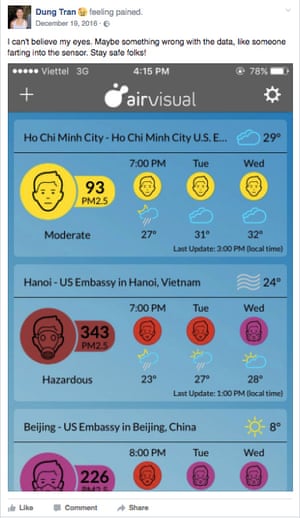
From his high-rise office building in Hanoi, Tran Dung can barely see his city’s skyline behind the thick layer of smog. Before leaving work, the 25-year-old executive assistant checks the pollution reading on his AirVisual app, which provides real-time measurements of PM2.5 – the tiny particles found in smog that can damage your throat and lungs.


Hanoi’s PM2.5 levels typically range from 100 to 200 micrograms per cubic metre – regularly within the globally acknowledged “unhealthy” category. But on 19 December last year, they hit “hazardous levels” at 343μg/m3, which was higher than Beijing.


Shocked by this reading, Dung shared a screenshot with his friends on Facebook, writing: “I can’t believe my eyes. Stay safe folks!”


He’s aware of the limitations of air quality data, which can vary between different parts of the city, but apps like this are the best tools he has.


According to the independent data measurement site AQIVN, there were at least 15 days in 2016 where average PM2.5 levels in Hanoi were “hazardous”, at 300μg/m3 or higher. On 5 October last year Hanoi had the worst air pollution among major cities across the world, generating widespread outcry over public health.


Dinh Nam, a lecturer at the Vietnam National University in Hanoi, does not need an app to tell him that the air quality is bad. “Every day I motorbike over 8km to get to work,” he says. “I can see the smog sitting on my clothing and my skin every night.”


Screen Shot 2017-01-31 at 7.34.25 PM showing air pollution in Hanoi, Vietnam on airvisual app

Hanoi was measured at 343 μg/m3 of PM2.5s in December. Photograph: airvisual

Nam moved to Duong Noi, a new urban area far from the city centre, four years ago hoping to escape the pollution and traffic that the dense centre brings. However, as Hanoi continues its aggressive expansion policy, smog has caught up to his family; the area, which is close to the Yen Nghia industrial zone, has seen a simultaneous boom in high-rise construction and industrial development. The fumes from motorbike exhausts, construction and industry have made breathing a source of fear for Nam’s family. Aside from flimsy face masks, he has no other means to protect himself and his children.


When Hanoi joined a growing group of global cities to launch its first bus rapid transit route on the last day of 2016, it should have been good news for Nam. It was hoped that the new BRT would take some of the 5 million motorbikes and scooters off the roads and reduce congestion and pollution in the city.


Despite now having a BRT stop 500 metres from his house, Dinh Nam remains skeptical of the $ 53.6m development, funded by loans from the World Bank. “When the project was initiated 10 years ago, this area was much less congested than it is now. Now, the roads are so crowded it can’t be effective,” he says.


Dinh Nam’s skepticism represents the backlash BRT has faced in Vietnamese media since its launch. Many are angry that the BRT’s exclusive lane takes up almost half of some roads, exacerbating congestion for other motorbikes and cars. Others have predicted that BRT would never achieve the promise to cut travel time in half, given the challenges faced by keeping the lane free. But long before the launch, questions were already raised on whether the loan would be worth it.


The media’s declaration that BRT was dead upon arrival indicates declining trust towards the government’s handling of environmental and infrastructural challenges.


An ongoing struggle


Despite the brouhaha, many have already incorporated BRT into their daily routine. The 5pm bus towards Kim Ma on Thursday had all of its seats occupied and a handful of people standing. A dozen more gathered behind the shiny automated doors at the Giang Vo station, waiting to get in.


An official report from Hanoi’s transport document concluded that BRT passengers had risen over 62% in the first 12 days of its launch, averaging 41 passengers per trip. However, this means BRT is still operating under capacity, as can hold up to 90. Furthermore, it seems most passengers are students or retirees who are probably already accustomed to using public transport.


Given the low adoption, it is still too early to say whether BRT will have a positive impact on Hanoi’s air quality. The average monthly PM2.5 reading for January 2017, calculated using historical data collected at the US embassy directly on the BRT route, even shows an uptick in air pollution compared with December. However, it could be to do with the changing traffic patterns during the Vietnamese new year at the end of January.


On the BRT system


Hanoi BRT passengers have been mainly students and the elderly who already use public transport. Photograph: Zung Nguyen for the Guardian

Dr Hoang Xuan Co, an expert at the Research Centre for Environmental Monitoring and Modelling in Hanoi, says: “In theory, implementing BRT should improve air quality by reducing the amount of private transportation. However, there are ongoing challenges with implementing BRT: the infrastructure in Vietnam is still incomplete [for example, there are no hard dividers between the BRT lane and the regular street], and people’s transportation habits are unchanged. It has been almost one month, the people have yet to see BRT really impacting air quality.”


Hanoi currently has a declining 1.3 million daily bus users, a small number in comparison to the millions of motorbike drivers. The city also has a growing appetite for cars. It is worrying that many motorbike drivers who live within the BRT route and are highly critical of its construction say they have not even considered trying it.


Motorbike culture has engrained a need for flexibility and control in many Hanoians – some do not even get off their bikes when picking up meat and produce at wet markets. Dinh Nam is afraid that transitioning to BRT would reduce his flexibility in taking care of his family. “BRT is not for me because I sometimes have to pick up my kids,” he says.


Nguyen Dung, meanwhile, avoids the BRT as she does not want to walk to and from the bus stop.


Vu Anh Tuan, director of the Vietnamese-German Transport Research Centre, believes BRT faces the challenge of promoting public transport in a motorbike and car culture.


“BRT is a wise investment because it can complement the planned metro system to form routes throughout the city, while keeping costs low. Its impact needs to be assessed by what the entire public transit network can do in the long term,” he writes in a passionate Facebook post.


“The media … will cause people to develop false perceptions about public transportation, especially BRT.”


It seems Hanoi’s new BRT system will only be able to make an impact on both reducing congestion and air quality if people are willing to change their habits.


Guardian Cities is dedicating a week to exploring one of the worst preventable causes of death around the world: air pollution. Explore our coverage here and follow Guardian Cities on Twitter and Facebook to join the discussion


Hope for Hanoi? New bus system could cut pollution … if enough people use it

16 Şubat 2017 Perşembe

English social care system for elderly facing "complete collapse"

Social care in England is at risk of imminent collapse in the worst affected areas unless urgent steps are taken to address the crisis engulfing the sector, Age UK has warned.


The charity’s latest report on the healthcare of older people calls for a cash injection into the adult social care system in the spring budget and the development of a long-term solution to a problem that will otherwise become more acute.


Analysis previously published by Age UK suggests almost 1.2 million people aged 65 and over do not receive the care and support they need with essential daily activities such as eating, dressing and bathing.


That figure has shot up by 17.9% in just a year and almost by 50% since 2010, with nearly one in eight now living with some level of unmet need, it says.


Age UK’s charity director, Caroline Abrahams, said the report makes for “frightening reading”, adding: “Unless something changes the crisis will certainly deepen this year and next, and we think there is now a real risk of a complete collapse in social care in the worst affected areas. If this happened it would be a disaster that would threaten the health and even the lives of the older people affected. It would also greatly intensify pressure on our hospitals.


“Some older people and their families are already telling us that they simply cannot find any carers where they live, and we are also hearing of vulnerable older people receiving council-funded care whose help has been significantly reduced, leaving them to manage alone for many hours at a time.”


The charity says the government’s three ways of propping up the system – financial transfers from the NHS, a social care precept in local areas, and calling on families and friends to do more – are inadequate and cannot make up for a “chronic” shortfall of public funds. The report, published on Thursday, says the NHS can ill-afford to bail out social care, the amount the precept (an additional council tax charge) can raise does not match the needs in every area, particularly poorer ones, and the number of families and friends becoming carers is not keeping pace with a rising ageing population.


It concludes that the government’s strategy for keeping the social care system from falling apart is not up to scratch. The charity warns that the situation will only deteriorate further as rising demand is accompanied by budget cuts and more care home providers pulling out of the market.


Margaret Willcox, president-elect of the Association of Directors of Adult Social Services, said the report “reflects the concerns of the whole sector united in the belief that adult social care is at risk of failure to chronic underfunding”.


A government spokesman said it was making £7.6bn of new money available for adult social care: “This government has gone further to integrate health and social care than any other before it. We have brought budgets together for the first time through the Better Care Fund and given the NHS an extra £10bn per year by 2020/21 to fund its own plan to build a more responsive, modern health system.”


English social care system for elderly facing "complete collapse"

13 Şubat 2017 Pazartesi

Kenya"s health system on the verge of collapse as doctors" strike grinds on

Kenya’s hospitals have almost ground to a halt, with millions facing a third month in a row without healthcare as doctors strike over low pay and poor working conditions.


The public healthcare system has long been overburdened and underfunded, but has now virtually stopped functioning after 5,000 doctors walk out in December after attempts to reach a compromise with the health ministry stalled.


“The machines break down frequently, the doctors are overwhelmed. The patients, they are so many that they are lying on the ground,” said Dr Judy Karagania, an ophthalmology resident at Kenyatta National hospital (KNH) in Nairobi, who is taking part in the ongoing industrial action.


Karagania and her fellow medics are refusing to return to work until the government makes good on a 2013 agreement to dramatically increase salaries, hire thousands of new doctors and address drug and equipment shortages.


Kenya’s health ministry, as well as its president, Uhuru Kenyatta, has so far unsuccessfully tried to persuade union leaders to renegotiate the agreement, saying it is too costly.


As the crisis continues, seven medical union leaders were jailed on Monday for organising the strike, which had previously been ruled unlawful.


Kenyan doctors’ union leaders Ouma Oluga, left, Samuel Oroko, centre, and Allan Ochanji, right, are led away after a court hearing in Nairobi.


Kenyan doctors’ union leaders Ouma Oluga, left, Samuel Oroko, centre, and Allan Ochanji, right, are led away after a court hearing in Nairobi. Photograph: AP

As the standoff drags on, Kenyans are reeling from the lack of care. Patients at KNH, which is the country’s largest public health facility, face long waits to be seen by military doctors who have been drafted in, the sick lying on stretchers in the corridors of the emergency ward with no one attending to them.


“The army doctors are turning away patients,” said Karagania, who normally works as a resident medical officer at KNH. “They’re only handling the emergencies of emergencies.”


Purity Nyaguthie was sitting in the waiting room holding her one-year-old baby, Tasha, who was having difficulty breathing.


The 23-year-old paid £56 for a three-hour taxi ride from her home in Kirinyaga County in central Kenya. X-rays showed pieces of paper lodged in one of the infant’s lung. Anan operation is necessary to remove the paper.


Several hours later, Nyaguthie and her daughter were still waiting for the procedure, which will cost her 100,000 kenyan shilling (£770) because the the family does not have health insurance. It is money Nyaguthie says she does not have, but more concerning is that every hour they wait the chances increase of Tasha’s lung becoming infected.


Nyaguthie blames both the striking doctors and ministry of health officials for the situations. “The government is not meeting their [doctors’] demands,” she said. “But they’re demanding for a high percentage [increase in pay] which the government may not be able to meet.”


While some national and foreign media have reported that doctors are asking for a 300% rise, the unions maintain that it is 96-125% when accounting for inflation.


Karagania, an ophthalmologist, blames the government for stalling.


“[The agreement] was signed four years ago and they have refused to implement it. It’s really unfortunate that the government has pushed us against he wall,” she said. “It’s the government’s responsibility to make sure that every citizen gets access to health. So it’s up to them to end this – fast.”


As for the millions of Kenyans who are struggling to access public health services in the doctor’s absence, Karagania said she hoped her and her colleagues could return to work soon.


“We really empathise as doctors. More than anyone else in this country, doctors can understand their pain. This agreement is for the long-term it’s to sure our children and grandchildren get good healthcare.”


Kenya"s health system on the verge of collapse as doctors" strike grinds on

8 Şubat 2017 Çarşamba

Deep Underground Base Technology Used in SpaceX HyperLoop Supersonic Tunnel Transit System?

Some technologies are not meant for public view or accreditation until the time is right. When these amazing scientific advances are brought forth it is done slowly and presented as cool and convenient. As with computers, cell phones and the internet among many other modern technologies. Always set in boring terms so the general public doesn’t notice. One rule applies. The military gets it first. Then some civilian corporation with close ties and funding from the U.S. government just happens to “pick up” the research. Military research and development that is many years old has a second market in the public sector. This may be the case with Deep Underground Base and Tunneling technology that has been rumored to exist for decades. These documented subjects are dismissed as theory until they are no longer theory. Now the idea of underground supersonic tunnel transit connecting cities is publicized in the form of Elon Musk’s HyperLoop concept. Being originally tested above ground. Is SpaceX is thinking about taking the idea subterranean?


Elon Musk may actually be serious about tunneling under L.A.


Traffic is driving me nuts. Am going to build a tunnel boring machine and just start digging,” he tweeted at the time, adding, “it shall be called ‘The Boring Company.’”   USA Today


Just going to slap together a tunneling machine and a supersonic train in a month?  Such a boring endeavor being undertaken. It is true he is the only one in the world that can say something like that and actually mean it. Having somehow gotten the keys to the kingdom to many technologies that used to be the sole domain of national governments it would be hard to discount the statement. What is this technology based on and what will it look like in its final version?


Exciting progress on the tunnel front. Plan to start digging in a month or so. Elon Musk@elonmusk Jan 25


One Tweet states he intends to bore a tunnel under the L.A. to save time on traffic. Could there be a pilot project planned for the HyperLoop system? A prototype is currently being tested  at Space X Headquarters. Musk himself leaving much room for speculation with nebulous Tweets about underground tunnels. Possibly even pitching it as an infrastructure project to the new U.S. Administration.


Hyperloop pod race happening this weekend at SpaceX HQ (near LAX). We built a ~mile long vacuum tube on our campus big enough to fit people. Elon Musk@elonmusk Jan 27


It has been speculated that this very same system has been functional for years. The HyperLoop and V.H.S.T. (Very High Speed Transit System) first proposed in 1972 are basically the same idea. Almost identical in concept. An aerodynamic train like pod configuration in a specially pressurized or vacuum sealed tunnel gliding on magnetic levitation or a bed of high speed air. Overcoming air friction. Able to carry both passengers and cargo at supersonic speeds. Crossing the entire U.S. in an hour. Almost every science fiction fan has come across ideas of a supersonic transit system underground connecting major Deep Underground Bases.


Here it is. It couldn’t possibly have existed before but now the same exact design is being tested in the form of the HyperLoop. Teams from around the world are competing for the best civilian version prototype in a SpaceX  sponsored competition.


Many designs have been put forth and all based on the work of Robert M. Salter a lead scientist with the Rand Corporation that wrote the Very High Speed Transit System about the V.H.S.T. in 1972. Another followed in 1978 titled “Trans Planetary Subway Systems: A Burgeoning Capability . These documents form the basis for theories that this technology already exists and has been in use for quite sometime by the government. Salter was interviewed in a June 11 1972 article by L.A. Times science writer George Getz as reported by Intellihub. This along with the documents and patents filed around the same time fueled a lot of questions.


A Rand corporation physicist has devised a rapid transit system to get you from Los Angeles to NY in half an hour for a $ 50 fair. He said existing technology made such a system feasible and so does a cost analysis. The essence of the idea is to dig a tunnel more or less along the present routes of U.S. highways 66 and thirty. The tunnel would contain several large tubes for East West travel of trains that float on magnetic fields, moving at top speeds of 10,000 mph. Passengers would faced forwarded during acceleration, backward during deceleration. According to R. M. Salter Jr. head of the physical sciences department at Rand, the idea of high-speed train travel using electromagnetic suspension was first put forward in 1905 and actually patented in 1912. The trains he suggested now would be single cars rather than actual trains, and would be big enough to carry both passengers and freight, including large containers and automobiles.         LA Times June 11 1972


This article has led many to speculate that Deep Underground Bases and  the Tunnel systems that connect them have been in use for many years. Precious little hard proof has come up that this system actually exists in the capacity described here. Although some of this evidence is very compelling.  The SpaceX concept is very similar to Salter’s design.


The tubes would be emptied of air, almost to the point of vacuum, so the trains would not need much power to overcome air resistance. They would not even have to be streamlined. In addition to an electromagnetic roadbeds, the opposing electromagnetic loops of wires in the floors of the gondolas would be super cooled with liquid Helium to further eliminate electrical resistance.      LA Times June 11 1972


No doubt underground bases such as N.O.R.A.D.,  Weather Mountain and many others have been popularized and tunneling projects are going on all around the world. Some more intriguing than others. Still tantalizing connections come too light from time to time reinforcing the narrative that the public is not being told the whole story.


What may be more telling could be the method of tunneling that may be used if a larger version of SpaceX’s HyperLoop were too be built. Many researchers have pointed to advanced tunneling methods and boring equipment possibly used by the Defense Department. Boring machines first patented by the Atomic Energy Commission and US Energy. These could be used to construct Deep Underground Bases. As depicted in the patents the boring machines melt the surrounding rock leaving a perfectly smooth surface behind. If such boring machines were built, they could make circular patterns at different levels connected by vertical corridors. Forming a multilevel turn key sealed Underground or even Underwater base.


Perfect for a vacuum or semi pressurized tunnel the HyperLoop system needs. Time will tell if these patents get pulled into use for a scaled up project.


Method and apparatus for tunneling by melting US 3693731 A


Apparatus and method for large tunnel excavation in hard rock US 3885832 A


Apparatus and method for large tunnel excavation in soft and incompetent rock or ground US 3881777 A


Salter said many tunnels are dug nowadays almost as they would have been in the dark ages. Drilling holes in tunnel faces, and using machines with rotary bits are methods of tunneling that can be improved, according to him. He said the tunnel could be worked on from a great many “faces,” for instance. Salter suggested, too, that electronic beams or even water be used to drill holes for blasting. The high-powered electrons would drill blasting holes almost instantaneously.     LA Times June 11 1972


Indeed the HyperLoop concept is almost identical to Salter’s work in form and function with a few minor tweaks. The SpaceX design paper gives credit to Rand and Salter’s work.  Even the justifications for such a project are mirrored almost exactly.


Is there truly a new mode of transport – a fifth mode after planes, trains, cars and boats – that meets those criteria and is practical to implement?  Many ideas for a system with most of those properties have been proposed and should be acknowledged, reaching as far back as Robert Goddard’s to proposals in recent decades by the Rand Corporation and ET3.     HyperLoop  Design Concept p 2


What form this project will take in it’s final version is unclear. If it is built to full scale at all. What is clear is that this line of research and development is based off an idea long ridiculed in the main stream. Is this another advanced technology to be mainlined to the public now that it’s time?


And we start digging the tunnel tonight Elon Musk@elonmusk Jan 27


Visit RaptormanReports for news, science, and history


Sources:


http://www.spacex.com/sites/spacex/files/hyperloop_alpha-20130812.pdf


http://www.usatoday.com/story/money/2017/01/25/elon-musk-the-boring-company-tunnels/97030778/


https://twitter.com/


http://www.rand.org/pubs/papers/P4874.html


http://www.rand.org/pubs/papers/P6092.html


https://www.intellihub.com


https://www.google.com/patents/


Deep Underground Base Technology Used in SpaceX HyperLoop Supersonic Tunnel Transit System?

27 Ocak 2017 Cuma

Nutritional & Tasty Turmeric-Ginger Ice Tea Good For Your Heart, Brain and Immune System

Turmeric, this amazing spice has been used in India for more than 2500 years. And more and more studies have found its benefits to health, from treating various diseases to improving organs’ functions.


Here is a list of the remarkable health benefits of using turmeric regularly:


  1. Prevents cancer, especially effective for preventing prostate and skin cancer;

  2. Boosts brain function and prevents Alzheimer’s disease;

  3. Good for your eyes;

  4. Aids in weight loss;

  5. Acts as a natural painkiller due to its strong anti-inflammatory properties; (11 Healthy Foods That Can Block Inflammation and Ease Pain)

  6. Protects your liver from damage;

  7. Prevents Parkinson’s disease;

  8. Cures depression;

  9. Cures skin and dental problems as it has antibacterial properties;

  10. Helps you sleep well.

Ginger


Originally from Asia, ginger is one of the most popular spices. Nowadays, it has been widely used all over the world because of its excellent medicinal properties. Studies are finding that this spice works great to treat various illnesses and improve your health naturally.


  1. Ginger protects you against Alzheimer’s disease;

  2. Prevents cancers such as prostate, lung, colon, skin, breast and ovarian cancers;

  3. Aids in digestion;

  4. Fights obesity;

  5. Relieves migraines;

  6. Cures cold and flu;

  7. Reduces joint pain;

  8. Removes bad breath;

  9. Boosts immune system;

  10. Relieves menstrual cramp.

The combination of these 2 super ingredients makes the nutrients in them more readily accessible for use in the body’s systems.


Ginger: An Amazing Spice That Promotes Healthy Life


How to Combine Turmeric and Ginger For Better Health


Turmeric Ginger Iced Tea


Ingredients:


  • 4 teaspoons dried turmeric

  • 4 teaspoons dried ginger

  • 3/4 teaspoon black pepper

  • 1/4 cup raw honey

  • water

Directions:


Put the turmeric, ginger and black pepper into a saucepan. Pour in 1 cup water and boiling them.


Simmer for a while with a lower heat. Turn off the heat and let it cool for some minutes and then add honey.


Cover the saucepan and let the mixture steep for some hours.


Strain the mixture to remove the gritty powder out.


Save this concentration in the fridge and add some to your water to drink.


The join of a small amount of black pepper and honey will make the drink more tastier, and you’ll get more nutrients at the same time.


Sources:


healthdiaries.com
ncbi.nlm.nih.gov


Nutritional & Tasty Turmeric-Ginger Ice Tea Good For Your Heart, Brain and Immune System

25 Ocak 2017 Çarşamba

AI system as good as experts at recognising skin cancers, say researchers

Computers can classify skin cancers as successfully as human experts, according to the latest research attempting to apply artificial intelligence to health.


The US-based researchers say the new system, which is based on image recognition, could be developed for smartphones, increasing access to screening and providing a low-cost way to check whether skin lesions are cause for concern.


“We hope that this is a first step towards early detection,” said Andre Esteva, an electrical engineering PhD student from Stanford University and co-author of the research.


According to the World Health Organisation, skin cancer accounts for one in every three cancers diagnosed worldwide, with global incidence on the rise.


In the UK alone, 131,772 cases of non-melanoma skin cancer were recorded in 2014. In the same year there were 15,419 new cases of the deadliest skin cancer, melanoma, making it the fifth most common cancer, according to Cancer Research UK.


As the disease is often initially spotted by a visual examination, Esteva teamed up with colleagues in fields ranging from dermatology to artificial intelligence to create a computer system that would aid screening.


Their approach, described in the journal Nature, is based on deep learning – a class of algorithms used for artificial intelligence. When fed with a large set of ready-sorted data these algorithms pick out and “learn” patterns and relationships. Once trained, the algorithms can then be used to categorise new, unsorted data.


To create the system, the team harnessed a deep learning algorithm built by Google that had already been presented with 1.28 million images of objects such as cats, dogs and cups. Esteva and colleagues then fed the system more than 127,000 clinical images of skin lesions, each already labelled, encompassing many different skin diseases.


Once trained, the team then tested the system’s ability to classify skin cancer by presenting it with just under 2,000 previously unseen images of skin lesions, whose nature had previously been determined by biopsy, and further compared the results for nearly 400 of the images against the judgement of at least 21 dermatologists.


The results reveal that the system is on a par with – if not better than – the experts in telling apart carcinomas from common benign skin growths and melanomas from moles.


For melanomas, the average dermatologist classified around 95% of malignant lesions and 76% of harmless moles correctly. By comparison, the algorithm is capable of correctly classifying 96% of malignant lesions, and correspondingly 90% of benign lesions.


“The aim is absolutely not to replace doctors nor to replace diagnosis,” said Esteva. “What we are replicating [is] sort of the first two initial screenings that a dermatologist might perform.”


While Esteva and colleagues admit the system needs further testing in clinical settings they believe the approach has great promise, suggesting it could be applied to a host of other medical fields.


Boguslaw Obara, a computer scientist at Durham University and expert in image processing, said that the size and complexity of the dataset used to train the system was impressive. The work, he adds, shows we are likely to see algorithms cropping up more and more in everyday life.


Dr Anjali Mahto, consultant dermatologist and spokesperson for the British Skin Foundation also welcomed the research. “This is an exciting new technology that has the potential to increase access to dermatology at a time where there is a national shortage in this speciality and the rates of skin cancer continue to rise,” she said.


But, Mahto warned, the system will need to be carefully assessed for its benefits before it can be rolled out. The approach is also unlikely to replace the role of dermatologists, she adds, pointing out that during a full-body examination experts often discover skin cancer at different sites to those that initially concerned the patient. “There is therefore a possibility that if you rely on people to self-report what they are worried about, other skin cancers – particularly in hard to see sites, e.g. the back – may be missed,” she said.


AI system as good as experts at recognising skin cancers, say researchers

9 Ocak 2017 Pazartesi

Scientists Plan to Send First Interstellar Greetings to the Star System in the Movie Avatar: Link to the Scientific Research

An organization called METI short for Messaging Extra Terrestrial Intelligence has announced that there is a project under way to send Greetings by way of powerful radio or laser signals to Proxima Centauri, our nearest stellar neighbor. Sitting just 4.3 light years away Proxima Centauri is a Trinary star system consisting of three stars. Laser or radio signals would take 4.3 years to get there in a first attempt at contacting different worlds. These messages would be repeated for months or years in hopes of a reply. Proxima Centauri hosts the closest known exo-planet to Earth, Proxima Centauri b. This exo-planet was discovered by the European Southern Observatory in August of 2016, and it appears to lay within the habitable zone of its Red Dwarf star. This is one the targets for the Greetings signals scientists from METI plan on sending. No one is claiming that it is habited, but it is the best and closest chance. Good for practice but their are many more targets in the future according to METI’s President Douglas Vakoch. He hopes to send greetings to many star systems. Another interesting side note is….


The fictional moon called Na’vi set in the Proxima Centauri system is the backdrop of James Cameron’s 2009 movie Avatar. You couldn’t make this stuff up.


Scientists plan to send greetings to other worlds Phys.org December 26, 2016


Signaling to other worlds is a bold and historic move that is unprecedented in history.  Stephen Hawking has recently warned if we pick up alien signals don’t answer back. It could be a deadly move. The subject is full of controversy.


Like much else in science, the project has turned controversial. Some ask: If aliens are hostile, do we really want them to know where we are?


We shouldn’t draw attention to ourselves, say science fiction writer David Brin and theoretical physicist Stephen Hawking.


Stephen Hawking warns that humanity should not respond to aliens in case they kill us all


“We have almost zero idea of whether aliens are likely to be dangerous,” physicist Mark Buchanan wrote in journal Nature Physics in Looking for Trouble.


Who gave these people permission to start signaling possible alien civilizations. Anyone?


METI works closely with SETI the Search for Extraterrestrial Life scanning in the optical range to look for signs of alien civilizations. Seth Shostak, senior astronomer with the SETI Institute, is all for the idea despite the possible implications.


Others endorse the effort. “I’d be happy to see this done,” said Seth Shostak, senior astronomer with the SETI Institute. “I think there’s something to be learned, nothing to be feared, and at least the possibility of discovering something truly revolutionary: We have company nearby.”


How would this be accomplished and what are the possible future targets?


About this question, it was entirely coincidental in that this author wrote an academically linked article detailing this very answer published at Blogs.NaturalNews on December 22, 2016. Four days before the METI announcement with the original information published months before. Using research from two Canadian scientists from the University of Laval in Quebec, Canada, E.F. Borra and E. Trottier. The Blogs.NaturalNews piece points out that astronomers may have picked up the exact laser signals being described, that astronomers plan on sending, from 234 star systems quite similar to our own. Going into great detail about the power of lasers needed, what an alien signal may look like and how to structure our own signal. Pulsing the beam by nanoseconds so it would not be mistaken for anything natural in a routine sky survey by an alien civilization.


Alien Contact. Can We Answer Back?


Clearly explaining the technology has been available as early as 2004 that could transmit 1000 light years to about 1 million Sun-like stars.


For this, we shall use the analysis in Howard et al. (2004), who considered the energy requirements for an ETI trying to communicate with nanosecond optical pulses. They considered the feasibility of interstellar communications with technology available at the time the paper was written. They assumed communications within a 1000 lt-yr diameter region surrounding Earth that would contain about 1 million Sun-like stars. They assumed that a diode-pumped laser similar to the Helios laser designed at Lawrence Livermore National Laboratory for inertial confinement fusion would be used


SEARCHING FOR EXTRATERRESTRIAL INTELLIGENCE SIGNALS IN ASTRONOMICAL SPECTRA, INCLUDING EXISTING DATA.


Shouldn’t the whole world have a say in this? It would seem that elected leaders from around the world would convene to make such a decision. Probably one the most important collective choices the world could ever make. Again quoting from Phys.org.


There have been plenty of other efforts to connect with aliens, but they’ve come in fits and starts. There are no regulations for sending signals into space.


Hey if a couple of astronomers say it’s OK. Everything will be just fine. Right?   Never mind what the smartest people in the world say.


Visit RaptormanReports for news, science, and history.


Sources:


http://www.meti.org/


http://phys.org/news/2016-12-scientists-worlds.html


http://www.nature.com/nphys/journal/v12/n8/full/nphys3852.html


http://iopscience.iop.org/article/10.1088/0004-6256/144/6/181#aj447722r4


http://blogs.naturalnews.com/


Scientists Plan to Send First Interstellar Greetings to the Star System in the Movie Avatar: Link to the Scientific Research

19 Aralık 2016 Pazartesi

A Miracle Immune System Booster: Make This Juice to Combat Diabetes, Infections, Heart Diseases and Even Cancer!

The immune system plays a significant role in keeping you healthy and in fighting against illnesses and infections. As people today have to deal with many virus and toxins from the environment, all of us realize the importance of a healthy immune system, which protects and improves both physical and emotional health.


There are some lifestyle habits you should adopt to protect your immune system, the first line of defense for diseases.


  1. Sleep enough for maintaining balanced hormones;

  2. Limit the alcohol intake, as well as cigarette;

  3. Include proper nutrition into your diet, and lower the amount of fats and sugar;

  4. Exercise regularly;

  5. Drink enough water.

A healthy diet is vital to boost a healthy immune system. Here is a natural homemade drink you can make with some common ingredients in your kitchen to stimulate your immune system in a great way.


An Amazing Juice to Make Your Immune System Work Properly


Ingredients:


  • 1 kg fresh beets

  • 1/2 kg carrots

  • 1 medium lemon

  • 1 kg raw honey

  • 2-3 apples

  • 2-3 oranges

Directions:


Wash the beets, carrots, and apples, cut them into small pieces.


Juice the oranges and squeeze the juice from the lemon.


Mix all ingredients in a blender and blend them to get a homogeneous drink.


Put the drink in a glass bottle and save in fridge.


How to use:


Drink 1 glass of this juice before breakfast every morning.


It’s especially good for people with a weaker immune system. You will feel more energetic after 10 days of keeping drinking it.


The main ingredients are beets and carrots of this drink, both of which are great foods that are loaded with nutrients.


Eat beets to own a healthy immune system to fight against chronic diseases.


Beets are rich in betalains, an antioxidant that has anti-inflammatory properties to help battle inflammation-related chronic health problems, including obesity and even cancer. This sweet vegetable also benefits to you in other ways:


Carrot – The health benefits of this super power food are countless


Carrot provides great amounts of vitamins and a host of other essential nutrients for a healthy immune system, it’s such a miracle plant that slows down aging, improves vision (Natural Foods &Home Remedies in Protecting and Improving Your Eyes), prevents cancer and other diseases.


It also assists the liver function to flush out the toxins out of the body, clean organs give you a healthy immune system to protect you from the illnesses. And carrot has been found to be able to reduce the risk of stroke, a study from Harvard University showed those who consumed 5 or more carrots every week had fewer chances to suffer from a stroke than people who consumed fewer carrots.


Make this juice and drink it when you feel a lack of energy. Natural solutions are always top-picks, a healthy and happy immune system to all!


Additional sources: healthguidance.org, care2.com


Related Reading:


9 Herbal Approaches to Cleanse Your Lungs and Respiratory System


10 Foods That Will Lower Your Cholesterol


5 Healthy Foods to Eat For Treating Chronic Health Issues


A Miracle Immune System Booster: Make This Juice to Combat Diabetes, Infections, Heart Diseases and Even Cancer!

22 Kasım 2016 Salı

The Central Nervous System Responds to Toxins

Research has proven disrupting chemicals that target our central nervous system can upset the communication between our endocrine and metabolic systems and organs including our skin and microbiome.


Why is microbiome important? “Gut bacteria produce hundreds of neurochemicals that the brain uses to regulate basic physiological processes as well as mental processes such as learning, memory and mood. For example, gut bacteria manufacture about 95% of the body’s supply of serotonin, which influences both mood and GI activity.” (1)


Here are 8 toxic exposures that can be found to be disruptive


1-Caffeine is undeniably a central nervous system stimulant and disrupts microbiome.” It stimulates the brain, increases the secretion of adrenaline and boosts heart rate.  It can cause “adrenal fatigue.”  Long-term use in excess of 250 to 300 mg daily may cause numerous health problems” according to Mark Mayell, author of ‘Off The Shelf Natural Health How To Use Herbs And Nutrients To Stay Well’  page 112. “Caffeine depletes the body of B Vitamins, which you need for proper brain and nervous system functioning and for converting food to energy, says Michael Murray, N.D., a naturopathic physician in Seattle and author of Chronic Fatigue Syndrome: Getting Well Naturally.”


2-Breathing in toxic scents can harm our central nervous system. These toxic scents include petroleum candles, incense or perfumes.  These scents can cause internal toxicity within our brain, microbiome, liver and heart heath.(2)


In the book “The Brain Wash” by Michelle Schoffro Cook, there are seven most common chemicals found in dryer sheets and their effect on the central nervous system. These include:


Alpha-Terpineol


Benzyl Alcohol


Camphor


Chloroform on the EPA’s


Ethyl Acetate


Linalool


Pentane


3-Exposure to mercury can cause negative effects to our central nervous systems, kidneys, microbiome, and cardiovascular health. According to Environmental Health Sciences Center,”the nervous system is the principal target for a number of metals. Inorganic compounds of aluminum, arsenic, lead, mercury, and thallium are well known for their neurological and behavioral effects in humans.”(3)


4-Gluten related products have a negative effect on good gut bacteria, our immune system, digestive system and nervous system and therefore affects the brain cells. Gluten also adds to an acid internal environment. More information can be found in the book, ‘Brain Grain’ by Dr Perlmutter.


5-Alcohol depresses almost every brain function, contracts brain tissues, shrinks the brain, and destroys brain cells. It disrupts microbiome, and interferes with balance and breathing.


6-Psychological stress and sugary foods, (that increase stress) affects the immune system, skin and  microbiome. “The microbiome-brain-gut axis is emerging which suggests that modulation of the gut microflora may be a tractable strategy for developing novel therapeutics for complex stress-related CNS disorders.”(4) The exciting news is we can use this information to fight Parkinson’s disease according to World Journal of Gastroenterology.(5)


7-Pesticides found in foods can disrupt our central nervous system and gut microbiome. The University of Washington, Department of Medicine explains how the brain is disrupted by pesticides and can be linked to most Central Nervous System Disease.(6)  The herbicide Glyphosate™ the active ingredient in Roundup® is also very disruptive to cellular systems throughout the body causing inflammation, neurotoxicity and increased risk for Alzheimer’s.


8-Medications such as antibiotics are xenobiotics in humans.” (7)  have been noted to cause central nervous system toxicity.(7a) “For instance, Levaquin which was the best-selling antibiotic in 2010, faces thousands of lawsuits a year from people who have been seriously harmed after taking it. The reactions can be body-wide, impacting the central nervous system, microbiome, musculoskeletal, visual and renal systems, sometimes simultaneously.”(8)


“It is well documented that tricyclic antidepressant drugs act on 5-HT and NA receptors both in the central nervous system and in the cardiovascular system. Fluoxetine is also known to interfere with 5-HT receptors and/or signal transduction pathways in central nervous system.”(9)


Research  evidenced that Acetaminophen is found disruptive in the central nervous system.(10)


“For more than 15 years, experts have known that NSAIDs increase the risk of heart attack and stroke. Vioxx, a type of NSAID called a COX-2 inhibitor caused as many as 140,000 heart attacks in the U.S. during the five years it was on the market. Vioxx was removed from the market in 2004. The regrettable experience with Vioxx raised awareness about the cardiovascular risk of NSAIDs, and led to further studies by Harvard Health Publications showing that the risk is not limited to Vioxx but is associated with all NSAIDs.” (11)


Corticosteroids have been used since the 50s as anti-inflammatory and immunosuppressive drugs for the treatment of several pathologies such as asthma, and rheumatoid arthritis. Central Nervous System side effects include, psychiatric and cognitive disturbances.”(12)


Humira is approved for rheumatoid arthritis and psoriasis but has several side effects including, congestive heart failure and neurological diseases.(13)


What can we do now to improve our health?


Ask your doctor about the side-effects from your prescribed medications.


Know your farmer. Eat more foods that are full of antioxidants. These include colorful organic berries and green leafy veggies such as spinach and kale. Organic Beets are good for our heart and central nervous system.


Ditch the toxic scents including perfume and dryer sheets.


Learn what heavy metals you are exposing yourself to. Mercury is found in foods, vaccines, cosmetics and dental amalgams.


Let’s not forget the importance of drinking more water for the health of our nervous system. The brain is about 75% water. Water is vitally important for communication to the central nervous system, microbiome and the skin. Dehydration can actually increase premature aging.


It may be time to visit your chiropractor. According to The Journal of Canadian Chiropractic Association, “scientific studies used animal preparations for physiological effects of spinal manipulation. Biomechanical changes caused by spinal manipulation are thought to have positive physiological consequences to our central nervous system.”(14)


Self care is important. Talk to your certified health coach. She can encourage positive ways to help you work through stress and eliminate toxins.


Connie Rogers is a Certified Integrative Holistic Health Coach and Published Author of Path to a Healthy Mind & Body


Websites www.bitesizepieces.net   and  www.thehealthguru.net


footnotes:


1- http://www.apa.org/monitor/2012/09/gut-feeling.aspx


2- http://www.scsu.edu/news_article.aspx?news_id=832  see also https://nepis.epa.gov/Adobe/PDF/P1009BZL.pdf


3- https://www.ncbi.nlm.nih.gov/pmc/articles/PMC1474439/


4- https://www.ncbi.nlm.nih.gov/pubmed/24281320


5- https://www.ncbi.nlm.nih.gov/pmc/articles/PMC4588083/


6- https://www.ncbi.nlm.nih.gov/pubmed/18032333  see also  http://www.scielo.br/scielo.php?pid=S0100-736X2011000700009&script=sci_arttext


7- https://www.ncbi.nlm.nih.gov/pmc/articles/PMC3552296/


7a- https://www.ncbi.nlm.nih.gov/pubmed/24275175


8- http://www.fda.gov/Drugs/DrugSafety/ucm365050.htm


9- https://www.ncbi.nlm.nih.gov/pmc/articles/PMC1566050/


10- https://www.ncbi.nlm.nih.gov/pubmed/11531168


11- http://www.health.harvard.edu/blog/fda-strengthens-warning-that-nsaids-increase-heart-attack-and-stroke-risk-201507138138


12- https://www.ncbi.nlm.nih.gov/pmc/articles/PMC3853679/


13- https://www.ncbi.nlm.nih.gov/pubmed/16011443


14- https://www.ncbi.nlm.nih.gov/pmc/articles/PMC4045034/


The Central Nervous System Responds to Toxins

Samer Nashef: "Understanding the healthcare system is a matter of life or death"

So you’ve been told you need an operation. Can you be sure that you really should go under the knife? What is the risk of having surgery? Or the risk of not having it? Is the timing of the operation ideal for you? Is your hospital any good? Is your smart and smooth-talking surgeon with an excellent bedside manner competent?


More than 30 years have passed since I stood as a mere medical student before an audience of distinguished surgeons and delivered a talk in which I examined the success rates of their operations. I did not expect to be ostracised for daring to bring this into the open and I would never have anticipated this early skirmish with the medical establishment would lead to a lifelong dedication to the evaluation and improvement of surgical outcomes.


The subsequent two decades brought about a revolution in medical care in the UK. For the first time, the quality of care became measurable and, as a direct consequence, my own speciality of heart surgery made a quantum leap towards better and safer outcomes for patients.


Why write a book about it? Well, the public has a right to know what happens behind the operating room door. The “patient” is evolving into a “healthcare consumer”. There are reams of data available about the myriad medical and surgical treatments and the people who dish them out. My book provides you with the tools to interpret this information. Also, the study of medical risk is a young science that is constantly breaking new ground – and it is fascinating.


Not so long ago, even the most eminent doctors treated patients with absolutely no evidence that their treatments did any good. In fact, many treatments did a lot of harm. Nowadays, doctors practise evidence-based medicine, meaning that the effectiveness and safety of the treatment is backed by solid, scientific facts. The next step on the ladder towards even better medicine is how well these treatments are administered. This covers everything from performance of an operation through to the preoperative and postoperative care. It also includes the safety and quality mechanisms integrated into the structure and the governance of the hospital providing the treatment. This medical “breakthrough” is recent and has only just begun, in the last 20 years or so, to receive the attention it deserves.


Many things contribute to your surviving an operation. Discoveries in this field have been true eye-openers. Good technical surgery is very important, but surprisingly human factors, including holidays, recent events, communications and surgeons’ personalities, play a part. In fact, the only factor that seems to make not a scintilla of difference to whether you survive an operation is your choice of anaesthetist.


Data about surgical outcomes are now in the public domain in Britain. We are now beginning to have true transparency in healthcare and, in that regard, heart surgery leads the way. Transparency, although generally considered a good thing, also has unintended and nasty consequences that can cause patient harm. In The Naked Surgeon, I show the benefits of transparency, but also draw attention to the many pitfalls. In addition, I hope to give you insight into my world of heart surgery, one full of drama and humanity.


At one time or another we all have to make decisions about our health. Understanding the system, its mechanisms and thought processes, can help us make the right decisions about what can often be a matter of life or death. That’s why I wrote The Naked Surgeon.


Extract


What is amazing about heart surgery is not that it exists and works, but that it took so long to appear. After all, the heart is a pump, pure and simple. When something goes wrong with a pump, it is a plumbing problem, needing plumbing solutions. How else do you fix a blockage in a pipe, or a leaky valve? Yet, for more than 2,000 years, the heart was exclusively the domain of the physician, not the surgeon, and woe betide the surgeon who dared touch it. The taboo on operating on the heart was so strong that Theodor Billroth, one of the great founding fathers of modern surgery, stated in 1889 that “a surgeon who tries to suture a heart wound deserves to lose the esteem of his colleagues”.


More about The Naked Surgeon


Doctors are supposed to have a bedside manner: Nashef has the authorial counterpart, a knack of even making you care, for instance, about the mechanical properties of the suture material Prolene (this isn’t a mere technicality but a life-and-death matter about which Nashef cares deeply). – Peter Forbes


Buy the book


The Naked Surgeon by Samer Nashef is published by Scribe Publications at £8.99 . and is available from the Guardian Bookshop for £7.37.


Samer Nashef: "Understanding the healthcare system is a matter of life or death"