scientists etiketine sahip kayıtlar gösteriliyor. Tüm kayıtları göster

6 Mayıs 2017 Cumartesi

Getting lost may be the first sign of Alzheimer’s, scientists discover

Losing your navigational skills or getting lost even though you are in a familiar setting may provide some of the first indications that Alzheimer’s disease could affect you in later life. This is a preliminary discovery of a remarkable long-term study being carried out by scientists who are searching to uncover how dementia first affects the brain.


The Prevent project – based at Edinburgh University, though it involves several other UK research centres – is intended to detect signs of Alzheimer’s in people while they are still relatively young. Usually, the disease does not show its symptoms until individuals are in their 60s, by which time it has already done profound damage to the brain.


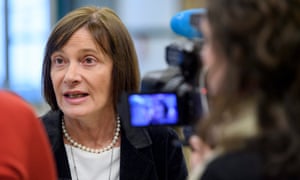
“Alzheimer’s is considered to be a disease of memory but we now think from our early work that the difficulty people are really having – at least to begin with – is not to do with declining memories but to do with their declining ability to visualise the location of objects or themselves,” said Karen Ritchie, one of the researchers. “They are losing their ability to navigate.”


A classic example is the character of Alice Howland, played by Julianne Moore in the film Still Alice, said Ritchie.Alice first suspects she has Alzheimer’s when she gets lost, in familiar terrain, while jogging. “That early scene captures it perfectly,” said Ritchie, who was involved in setting up the project with Professor Craig Ritchie (no relation) of Edinburgh University. “It is a loss of navigational skill.”


The project – funded by the Alzheimer’s Society – involves the study of two groups. The first consists of people aged 41 to 59 with close relatives who have developed Alzheimer’s and who are considered to be at relatively high risk. The second is made up of individuals whose lives have not been touched by the disease.


One of the earliest findings, outlined in a paper to be published in the journal Alzheimer’s and Dementia, shows that those who were at higher risk were poorer at tests that measured ability to visualise their position. They also tended to have a small hippocampus, a region of the brain involved in navigation.


Julianne Moore on Still Alice: ‘The idea our inner self could be taken away is very frightening’

The Four Mountains test developed by Cambridge University neuroscientist Dennis Chan is a key ingredient. It involves showing people a picture of a mountain and asking them to identify it in a selection of four other landscapes. There is considerable variation in ability and it provides scientists with a powerful tool to pinpoint those suffering hippocampal degradation. “At present we use computer screens to administer the test but in future we plan to use virtual reality headsets,” said Ritchie.


Cate Latto, who volunteered to take part, feels that loss of navigational ability reflected an important symptom of Alzheimer’s. “My mother developed the disease in late life but even when she was relatively young she could never remember where she put her car keys or where she left her car. As children, we spent our lives hunting through car parks trying to find where she had left it.”


It remains to be seen how effective tests based on measuring navigational prowess will be in predicting who will develop Alzheimer’s in later life. It would also raise ethical issues. If there is no effective treatment for Alzheimer’s why pinpoint those at risk in middle age? What could be gained?


There are several answers, say scientists. Drugs that are currently ineffective may prove far more potent if given during the disease’s early stages. In addition, it is now known that regular exercise, healthy eating and giving up smoking – which improves cardiovascular health – can also help. “There are life-style changes that can help reduce the risk of the disease,” said Ritchie.


This point was stressed by Doug Brown, research director of the Alzheimer’s Society, which has just launched its Unite Against Dementia campaign. “Dementia isn’t just an issue for older people, it will affect us all, and all of us can help find the solutions. As this study shows – people in their 40s and 50s can make a huge research contribution that could help shape the future.”


Getting lost may be the first sign of Alzheimer’s, scientists discover

1 Mart 2017 Çarşamba

Major effort needed to make cannabis use less harmful, say scientists

Scientists are calling for a major effort to make cannabis use less harmful as a rising number of countries look to replace long-standing and outright bans on the drug with more relaxed legislation.


A number of countries and US states have softened laws around cannabis use against a backdrop of rising drug potency and an apparent increase in the number of people in treatment for cannabis-related problems.


Researchers at King’s College London and UCL said it was now crucial for health officials to consider measures to reduce the harm from cannabis use. Many of the health risks that users face could be reduced by discouraging people from smoking it with tobacco, and using vapourisers instead.


In regions that have legalised cannabis, health interventions could target the drug through caps that enforce a limit on the strength of cannabis, and higher taxation on the most potent varieties. Tinkering with the chemical composition of cannabis could also make the drug safer without altering the pleasurable effects users want, they add.


Writing in the journal Lancet Psychiatry, Amir Englund and other researchers say that with laws around cannabis rapidly changing, the need to protect users from the most harmful effects has never been greater, while more research is urgently needed to inform fresh drug policies.


It is hard to be sure what varieties of cannabis people use and in what amounts because the data tends to be based only on drugs that are seized by the police. But the best estimates suggest that on the global market, cannabis use has on average doubled in the past four decades. In many countries, including the UK, high potency cannabis now dominates sales on the black market.


In the past eight years, the number of Europeans entering specialist treatment for cannabis-related problems has increased by more than 50%. It is unclear how many people refer themselves for treatment and how many are sent to clinics by the legal system, but the scientists believe the evidence that cannabis can cause harm to some users is strong enough to justify efforts to make it safer.


Several European countries have relaxed their laws around cannabis use, including the Netherlands, Spain and Portugal, and in the US eight states have formally legalised recreational use of the drug. Canada is due to follow suit this year. Many other regions now allow the drug to be used for medicinal reasons.


While legalising the drug is expected to cut the costs of cannabis-related crime, it is unlikely to reduce the number of users, the researchers write. “A lot of countries are deciding to change their cannabis policies to more permissive ones and we don’t know whether that will lead to significantly more use and problems, but we do know there are vulnerable groups out there,” said Englund.


The main compounds found in cannabis are THC (delta-9-tetrahydrocannabinol) and cannabidiol (CBD). The THC produces the “high” from cannabis, but greater levels of the chemical are also linked to a higher risk of psychosis. There is some evidence that CBD can combat the negative effects of THC, such as poor memory and paranoia, but in high strength cannabis levels of CBD are often minimal.


One option the scientists propose is to boost levels of CBD in high potency cannabis, so that users can get their hit without being at such risk of mental harm.


“We don’t always have the luxury of waiting for a lot of research and we can sometimes use the scant evidence we have to try and make some kind of best case judgment,” said Englund. “We are fairly confident that higher THC levels in cannabis are not a good thing, and it does seem that higher CBD levels in cannabis are protective, at least to some extent.” Later this year, Englund will launch a study funded by the Medical Research Council to test whether different levels of CBD can reduce the harmful effects of THC.


Ian Hamilton, a lecturer in mental health at York University, said the European habit of smoking cannabis with tobacco was the greatest health risk users faced, but this had largely been ignored by public health. He said there was “a real opportunity to minimise such harms by adapting the strategies that have proved to be effective in reducing smoking incidence and prevalence in the general population.”


Major effort needed to make cannabis use less harmful, say scientists

9 Ocak 2017 Pazartesi

Scientists Plan to Send First Interstellar Greetings to the Star System in the Movie Avatar: Link to the Scientific Research

An organization called METI short for Messaging Extra Terrestrial Intelligence has announced that there is a project under way to send Greetings by way of powerful radio or laser signals to Proxima Centauri, our nearest stellar neighbor. Sitting just 4.3 light years away Proxima Centauri is a Trinary star system consisting of three stars. Laser or radio signals would take 4.3 years to get there in a first attempt at contacting different worlds. These messages would be repeated for months or years in hopes of a reply. Proxima Centauri hosts the closest known exo-planet to Earth, Proxima Centauri b. This exo-planet was discovered by the European Southern Observatory in August of 2016, and it appears to lay within the habitable zone of its Red Dwarf star. This is one the targets for the Greetings signals scientists from METI plan on sending. No one is claiming that it is habited, but it is the best and closest chance. Good for practice but their are many more targets in the future according to METI’s President Douglas Vakoch. He hopes to send greetings to many star systems. Another interesting side note is….


The fictional moon called Na’vi set in the Proxima Centauri system is the backdrop of James Cameron’s 2009 movie Avatar. You couldn’t make this stuff up.


Scientists plan to send greetings to other worlds Phys.org December 26, 2016


Signaling to other worlds is a bold and historic move that is unprecedented in history.  Stephen Hawking has recently warned if we pick up alien signals don’t answer back. It could be a deadly move. The subject is full of controversy.


Like much else in science, the project has turned controversial. Some ask: If aliens are hostile, do we really want them to know where we are?


We shouldn’t draw attention to ourselves, say science fiction writer David Brin and theoretical physicist Stephen Hawking.


Stephen Hawking warns that humanity should not respond to aliens in case they kill us all


“We have almost zero idea of whether aliens are likely to be dangerous,” physicist Mark Buchanan wrote in journal Nature Physics in Looking for Trouble.


Who gave these people permission to start signaling possible alien civilizations. Anyone?


METI works closely with SETI the Search for Extraterrestrial Life scanning in the optical range to look for signs of alien civilizations. Seth Shostak, senior astronomer with the SETI Institute, is all for the idea despite the possible implications.


Others endorse the effort. “I’d be happy to see this done,” said Seth Shostak, senior astronomer with the SETI Institute. “I think there’s something to be learned, nothing to be feared, and at least the possibility of discovering something truly revolutionary: We have company nearby.”


How would this be accomplished and what are the possible future targets?


About this question, it was entirely coincidental in that this author wrote an academically linked article detailing this very answer published at Blogs.NaturalNews on December 22, 2016. Four days before the METI announcement with the original information published months before. Using research from two Canadian scientists from the University of Laval in Quebec, Canada, E.F. Borra and E. Trottier. The Blogs.NaturalNews piece points out that astronomers may have picked up the exact laser signals being described, that astronomers plan on sending, from 234 star systems quite similar to our own. Going into great detail about the power of lasers needed, what an alien signal may look like and how to structure our own signal. Pulsing the beam by nanoseconds so it would not be mistaken for anything natural in a routine sky survey by an alien civilization.


Alien Contact. Can We Answer Back?


Clearly explaining the technology has been available as early as 2004 that could transmit 1000 light years to about 1 million Sun-like stars.


For this, we shall use the analysis in Howard et al. (2004), who considered the energy requirements for an ETI trying to communicate with nanosecond optical pulses. They considered the feasibility of interstellar communications with technology available at the time the paper was written. They assumed communications within a 1000 lt-yr diameter region surrounding Earth that would contain about 1 million Sun-like stars. They assumed that a diode-pumped laser similar to the Helios laser designed at Lawrence Livermore National Laboratory for inertial confinement fusion would be used


SEARCHING FOR EXTRATERRESTRIAL INTELLIGENCE SIGNALS IN ASTRONOMICAL SPECTRA, INCLUDING EXISTING DATA.


Shouldn’t the whole world have a say in this? It would seem that elected leaders from around the world would convene to make such a decision. Probably one the most important collective choices the world could ever make. Again quoting from Phys.org.


There have been plenty of other efforts to connect with aliens, but they’ve come in fits and starts. There are no regulations for sending signals into space.


Hey if a couple of astronomers say it’s OK. Everything will be just fine. Right?   Never mind what the smartest people in the world say.


Visit RaptormanReports for news, science, and history.


Sources:


http://www.meti.org/


http://phys.org/news/2016-12-scientists-worlds.html


http://www.nature.com/nphys/journal/v12/n8/full/nphys3852.html


http://iopscience.iop.org/article/10.1088/0004-6256/144/6/181#aj447722r4


http://blogs.naturalnews.com/


Scientists Plan to Send First Interstellar Greetings to the Star System in the Movie Avatar: Link to the Scientific Research

4 Ocak 2017 Çarşamba

Living near heavy traffic increases dementia risk, say scientists

[unable to retrieve full-text content]


Study tracking 6.6 million people estimates effect on one in 10 cases of Alzheimer’s while those living by busy roads are 12% are more likely to be diagnosed with dementia


People living near a busy road have an increased risk of dementia, according to research that adds to concerns about the impact of air pollution on human health.


Roughly one in 10 cases of Alzheimer’s in urban areas could be associated with living amid heavy traffic, the study estimated – although the research stopped short of showing that exposure to exhaust fumes causes neurodegeneration.


Related: Ageing test could highlight patients at risk of dementia


Continue reading…


Living near heavy traffic increases dementia risk, say scientists

23 Aralık 2016 Cuma

Ebola vaccine is safe and effective, scientists declare after trials

A vaccine for Ebola which has completed successful trials in Guinea and Sierra Leone means the virus should never again be able to wreak the havoc it did during the recent epidemic in west Africa, say scientists.


More than 11,000 people died in the outbreak, which began unnoticed in December 2013 and spread across the region, infecting at least 28,600 people and triggering a global response, including a race to get an effective vaccine tested and into use.


Final results for the vaccine that was rushed into trials in Guinea and later Sierra Leone show that it was highly effective against one of the most lethal known pathogens in existence. Ten days after vaccination, none of the trial subjects developed Ebola virus disease. The very few who did, in the days immediately following vaccination, are thought to have been infected already.


“While these compelling results come too late for those who lost their lives during west Africa’s Ebola epidemic, they show that when the next Ebola outbreak hits, we will not be defenceless,” said Dr Marie-Paule Kieny, the World Health Organisation’s assistant director general for health systems and innovation, and the study’s lead author.


Dr Marie-Paule Kieny of the WHO announces the results at the United Nations in Geneva on 22 December.


Dr Marie-Paule Kieny of the WHO announces the results at the United Nations in Geneva on 22 December. Photograph: Martial Trezzini/EPA

Merck, Sharp & Dohme, the company manufacturing the vaccine, has received permission to go through fast-track procedures for a licence from the US and European regulatory authorities. It has committed to making 300,000 doses that will be ready for any emergency even before formal approval, with $ 5m (£4m) in funding from Gavi, the Vaccine Alliance.


The trial began in the coastal region of Basse-Guinée, which still had cases in 2015, even though the numbers were abating across the region. Writing in the Lancet medical journal, the scientists say it was not easy.


“A devastating outbreak of Ebola virus disease is clearly not the ideal situation for doing a vaccine trial. The healthcare system in Guinea was strained, potential trial participants were worried about a candidate vaccine made by foreign people, and the Ebola virus disease response teams were facing security issues,” they write.


They collaborated closely with the government and local authorities in Guinea and chose a “ring vaccination” design for the trial, which was unusual but had been successful in helping stamp out smallpox decades ago.


When a new case of Ebola was diagnosed, the teams offered vaccination to everybody who had been in contact with that person in the previous three weeks, from family to friends and neighbours. They also offered vaccination to the closest contacts of those contacts. This cluster – or ring – amounted to around 80 people on average. Altogether, 117 such rings or clusters were identified. At first, adults were randomly assigned to get the vaccine immediately or three weeks later, but when it became clear that the vaccine was protecting most people, everybody was offered immediate vaccination, including children.


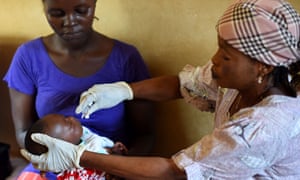
A baby receives a vaccine in Freetown, Sierra Leone, November 2014. The trial found that a ‘ring vaccination’ programme was effective in controlling Ebola.


A baby receives a vaccine in Freetown, Sierra Leone, November 2014. Photograph: Francisco Leong/AFP/Getty Images

Among the 5,837 people who received the vaccine, still known only as rVSV-ZEBOV, no Ebola cases were recorded 10 days or more after vaccination. Among those who were not vaccinated, there were 23 cases. There were very few serious side-effects – one case of fever and one of anaphylaxis (allergic reaction) thought to be related to the vaccine.


The authors of the study say the ring design was also helpful in ending the outbreak and suggest it could be a useful way to tackle the disease in future.


Co-author John Edmunds, professor of infectious disease modelling at the London School of Hygiene and Tropical Medicine, whose team helped design the trial, said: “This novel and historic trial, conducted under the most difficult of circumstances, has demonstrated that the rVSV-ZEBOV vaccine is safe and effective. When Ebola strikes again we will be in a much better position to offer help to affected communities, as well as protect the brave volunteers who help control this terrible disease.”


Jeremy Farrar, director of the Wellcome Trust, which supported the trial, said the outcome was “simply remarkable” and demonstrated what was possible even in the midst of a raging epidemic.“We’ve shown that by working collaboratively, across international borders and sectors, we can develop and test vaccines rapidly and use them to help bring epidemics to an end,” he said.


“Had a vaccine been available earlier in the Ebola epidemic, thousands of lives might have been saved. We have to get ahead of the curve and make promising diagnostics, drugs and vaccines for diseases we know could be a threat in the future. My hope is that this success story provides the inspiration we need to make this happen and change the way the world prepares for epidemics.”


Dr Sakoba Kéita, coordinator of the Ebola response and director of the National Agency for Health Security in Guinea, said: “Ebola left a devastating legacy in our country. We are proud that we have been able to contribute to developing a vaccine that will prevent other nations from enduring what we endured.”


Ebola vaccine is safe and effective, scientists declare after trials

22 Aralık 2016 Perşembe

Three genes could explain why some people are obese but healthy, say scientists

Scientists have offered a genetic explanation for why some people are obese and healthy while others develop diabetes and heart disease as a result of their weight.


The study identified three genes, which appear to influence whether fat is compartmentalised and stored around the outside of the body or whether it spills into the circulatory system. Higher levels of fat in the blood supply increase the risk of type 2 diabetes and can lead to fatty deposits around the heart and liver.


Professor Haja Kadarmideen, a geneticist who led the work at the University of Copenhagen, said: “People who have the ability to store large amounts of fat are able to be fat, but not unhealthy.”


Previous studies have found that while being overweight or obese is a risk factor for diabetes, liver disease and heart disease, about 15-20% of those who are obese appear to suffer no health consequences.


Other research, involving more than 100,000 adults in Denmark, found that those with an “overweight” body mass index (or BMI) were more likely to live longer than those in the “healthy”, “underweight”, and “obese” categories, suggesting that the relationship between weight, health and lifespan is not straightforward.


“We wanted to ask what is it that allows some people to be overweight and remain healthy,” said Kadarmideen.


The findings suggest that an individual’s genetic makeup influences the weight threshold at which health problems begin to emerge – and for some people this will fall outside a “healthy” body mass index (BMI), as defined by public health guidelines. Conversely, a small proportion of people within the healthy BMI range are so-called TOFIs (thin on the outside, fat on the inside) and develop metabolic problems normally associated with obesity.


The study involved 60 men and women, all of whom were morbidly obese (average BMI of over 45), half of whom had metabolic disease and half of whom were healthy. The participants were all undergoing elective bariatric surgery.


The scientists scanned tens of thousands of genes for variations between the two groups. They identified three genes that showed very different profiles between the two groups, both in terms of the gene activity and the underlying genetic sequence. When the activity of the genes was examined more closely in fat and tissue samples, the scientists concluded that the genes played a significant role in regulating how fat is transported and stored in cells. The team are now hoping to replicate the findings in a larger population study.


In the future, it may be possible to give personalised estimates for a healthy BMI based on a person’s genetic profile and other biomarkers, the scientists said. “This paves the way for being able to diagnose, develop drugs and target treatment at the specific genes,” said Kadarmideen.


He added that the findings should not be interpreted as an excuse for abandoning guidelines for a balanced diet or forgoing exercise, because these lifestyle factors have an impact on health, regardless of a person’s weight.


The findings are published in the journal PLOS One.


Three genes could explain why some people are obese but healthy, say scientists

4 Kasım 2016 Cuma

MDMA may pose greater danger to women than men, say scientists

Women are more likely to end up in emergency rooms than men after taking ecstasy, scientists say, with research suggesting this may because of the way the drug interacts with the body’s chemistry.


According to this year’s Global Drugs Survey, there has been a four-fold increase in British female clubbers seeking emergency medical treatment after taking MDMA in last three years, and women are now two to three times more likely to seek emergency treatment than men.


Dr Adam Winstock, the founder of the Global Drugs Survey that investigates drug use habits, said that gender differences in the effects of the drug were becoming increasingly clear.


“What I would say to female ecstasy users is that you need to more careful than men,” he said. “Women appear to be more at risk of harm. Everyone has to be careful, but I think women need to pay extra attention to things like how much they are using, how they are mixing, where they are and who they’re with.”


One theory is that MDMA, the active ingredient in ecstasy, causes users’ bodies to retain more water, which in some cases can lead to dangerous brain swelling. Oestrogen, the female hormone, impairs cells’ ability to release water, meaning that women are particularly at risk from the effect.


The warnings come after 10 young women died this year having taken ecstasy pills or MDMA powder – more than double the number last year – as high-strength products swamp the market after a drought that lasted several years.


The effects of MDMA doses are less predictable than other drugs, Winstock said. Even a small dose could, in the wrong set of circumstances, kill a user. However, he was keen to stress that the risk posed by the drug could be minimised by careful use.


With an estimated 200,000 Britons using ecstasy every weekend, overstating the harms of the drug was simply not realistic, he said.


Fiona Measham, a professor of criminology at Durham University, said that whereas previous deaths linked to ecstasy were the result of adulterated pills, problems now were more likely to be the result of users accidentally taking more MDMA than they intended.


Measham is the founder of the drug-testing charity The Loop, which checks the strength and content of drugs handed in by users at nightclubs and festivals across the UK.


She said: “With ecstasy-related deaths approaching the highest they have ever been, alongside some of the highest and most variable strength ecstasy pills in circulation, it’s more important than ever this coming party season to take extra care.”


MDMA may pose greater danger to women than men, say scientists

25 Ekim 2016 Salı

Scientists find "chink in armour" of aggressive childhood cancer

Scientists believe they may have found a way to treat a rare but devastating cancer that kills young children often within months of their diagnosis.


There is currently no treatment for malignant rhabdoid tumours, which usually develop in the kidneys and have no symptoms in the early stages. By the time they are diagnosed, the cancer has often spread to other organs and is fatal. Most of those affected are infants and toddlers.


The mutated gene that causes the cancer is well known, but scientists have not been able to find a way to target it. However, scientists working for the Institute for Cancer Research (ICR) believe they have a made a breakthrough. They have now identified two other genes that appear to be implicated in driving the growth of the tumour, which produce proteins that can be inhibited by drugs that are already in use in other cancers or are in the development pipeline.


Prof Paul Huang, team leader of the protein networks laboratory at the ICR, says they have found “a chink in the armour” of these very aggressive tumours, using drugs that attack proteins known as kinase inhibitors.


“There are a lot of kinase drugs out there, so we don’t have to re-invent the wheel,” he said. “In many cases in drug discovery you find a new target and spend 10 to 20 years developing drugs against it.”


In this case, they hope that will not be necessary . “We have been able to re-purpose existing drugs, some of which are already approved.”


So far, the drugs have been tested against cancer cells in the laboratory. The scientists, who have published their results in the journal Cell Reports, found that inhibiting proteins produced by one of the genes had little effect, but attacking both of them killed the cancer cells.


The drugs pazopanib, dasatinib and sunitinib were all successful at inhibiting the protein from the PDGFRA gene – but if high levels of protein from the other gene, called FGFR1, remained, the cancer returned and would not respond to treatment even at higher doses. This may explain why, when doctors have tried chemotherapy with their young patients, even where it has worked at first, resistance has quickly set in.


An existing drug called ponatinib, currently in use as treatment for leukaemia, can target both proteins at once. But there are questions over the safety of the drug in children, so there will be a need to screen other drugs to find one with fewer side effects that works.


The cancer is very rare – there is one case in 2 million children – but the work the ICR is doing will pay dividends in other cancers too. About 20% of all cancers have genes from this class.


Studies in mice will now be necessary before the drugs can be tried in children. The ICR is leading the world in the hunt for treatments for very rare children’s cancers, which are very unlikely to make a profit and are not a field that private drug companies are keen to enter.


Prof Paul Workman, chief executive of the ICR in London, said: “We need to see much better, more targeted treatments for children with cancer, that further drive up survival rates and spare children the serious long-term side-effects that conventional chemotherapy can cause.


“This study provides an exciting pointer for how we might treat more effectively an aggressive childhood cancer for which there is currently no cure. It’s crucial, when as here there is a strong scientific rationale for a new treatment approach in children, that we can assess them as rapidly as possible in clinical trials. At the moment, it’s much too easy for pharmaceutical companies to avoid evaluating their drugs in children, even when there is good evidence that they could benefit.”


Jennifer Kelly’s four year-old daughter Grace was diagnosed with malignant rhabdoid tumours two years ago and died soon afterwards. Her mother set up the Grace Kelly Ladybird Trust to fundraise research into childhood cancers.


“Grace went from being a happy, healthy schoolgirl to passing away within three weeks,” said her mother. “She started school in September and didn’t make it to half-term. She was an athlete – she was the monkey hanging upside down from the monkey bars. Even when she was admitted to hospital initially she seemed quite well. It progressed very rapidly.


“It is basically a diagnosis of death, whether they try to hold it at bay with chemotherapy for a while or not. They simply can’t treat them. There is a lack of funding for childhood cancers as a whole. People don’t realise childhood cancer is the biggest medical cause of death in children in the UK. People think it is rare and it actually isn’t. It is that that shocked us more than anything else.”


One in 500 children get some kind of cancer before the age of 14, according to figures from Cancer Research UK. In the UK, 1,700 children under 14 get a diagnosis each year, and 2,300 between the ages of 14 and 20.


Scientists find "chink in armour" of aggressive childhood cancer

14 Eylül 2016 Çarşamba

Why can"t scientists agree on e-cigarettes?

Earlier this year, Michael Gove claimed Britain’s had enough of experts. Now I don’t agree with Gove on much, but when it comes to e-cigarettes, he may have a point. We’re bombarded with stories about these products, but most just add to the confusion, with perceptions of vaping risks rising year on year. Just recently the Sun informed us that experts are saying “e-cigs are just as bad for your heart as smoking fags”, but read a couple lines down and you’ll find other experts reasserting the claim that e-cigarettes are 95% safer than tobacco. So which is it? Why can’t the scientists agree? And will they ever?


Cochrane is a global non-profit group that reviews all the evidence on healthcare interventions and summarises the findings so people making important decisions – you, your doctor, the people who write medical guidelines – can use unbiased information to make difficult choices without having to first read every study out there. This week, the latest Cochrane review of e-cigarettes was published. I’m its lead author. While our conclusions are limited because there aren’t many high quality studies available yet, overall the evidence suggests that (1) e-cigarettes with nicotine can help people quit smoking, (2) they don’t seem to have any serious side effects in the short- to mid- term (up to 2 years), and (3) in some cases, switching to them leads to changes in your blood and breath that are consistent with the changes you’d see in people who give up smoking altogether.


This is good news. But other systematic reviews and studies have drawn very different conclusions, and I’m going to try to shed some light why that is.


Can e-cigarettes help people quit?


Our Cochrane review (and others, like this one published in PloS One) suggest they can. But a review published in the Lancet Respiratory Medicine earlier this year, which received a lot of attention, suggests they actually make it harder. The reason for this difference is the types of studies the authors include.


Randomized controlled trials are the best way to see if a treatment works. As Ben Goldacre, author of Bad Science, explains, by randomly assigning people to one intervention or another and measuring the outcome in the same way across both groups, you can rule out alternative explanations for differences between groups. The reviews that find e-cigarettes help people quit smoking only include randomized controlled trials. The studies (like this one and this one) that find that e-cigarettes stop people from quitting aren’t randomized controlled trials – instead they survey smokers and ask if they are using e-cigarettes. Then, some months later, they ask the same people if they are still smoking. We don’t know if the results from these studies reflect the effect of vaping, or if something else about the vapers makes it harder for them to quit. For example, it might be reasonable to imagine they are more dependent smokers, which is why they vape as well as using regular cigarettes. This would make quitting harder.


Are they safe?


The issue here isn’t so much the study type, but the way you ask the question. By ‘safe,’ do you mean completely without risk? No, they’re not – not much is. We’ve seen stories about people catching fire and puppies with nicotine poisoning. Plus, in general, it’s not a great idea to inhale chemicals into your lungs if you can avoid it. Experts basically agree on that – I’ve yet to come across a tobacco researcher or policy maker who would recommend you start using e-cigarettes if you aren’t already a smoker.


The crucial question here is – safe compared to what? Cigarettes are uniquely deadly. They kill one in two people who use them regularly. So, if you’re asking whether e-cigarettes are safer than regular cigarettes, most experts would, after briefly hesitating, lean on the side of yes. The hesitation is there because e-cigarettes are new to the scene. We don’t know their long-term safety profile, so we have to look for clues elsewhere – for example, studies that measure side effects of short-term use (results from these are promising) and studies about how e-cigarettes affect your blood, lungs and heart. Interpreting these measures is complicated. For example, a recent study found that vaping affects the same blood vessel in your heart as smoking regular cigarettes. This isn’t necessarily surprising – we know nicotine, the active agent in both, affects this vessel. We also know that nicotine isn’t responsible for the harms associated with smoking. So how to interpret these results? The gamut of expert reactions ran from “[e-cigarettes are] far more dangerous than people realise” to “vaping carries a fraction of the risk of smoking.” When it comes to long-term safety, experts are making their best guesses in the absence of solid data, and that’s where room for disagreement creeps in.


So what’s next?


The good news is there’s lots of research going on – finally. The most recent update of the Cochrane review found 26 studies in the pipeline that will help answer questions about the safety and effect of using e-cigarettes to quit smoking. The more studies we have looking at a question, the more certain we can be about the answer. The irony is that until we have the answer, narrow interpretations of the results of individual studies risk doing further harm, undermining public confidence in science and possibly discouraging quit attempts. Fundamentally, tobacco researchers on both sides of the argument want the same thing – to reduce death and disease. We’re in the same boat. If you’re reading this as a member of the public, please don’t be put off by the conflicting headlines – we all agree cigarettes are bad for you, most of us agree vaping is probably much safer than smoking regular cigarettes, and if you’re a smoker we all really want our research to help you to quit. Don’t let us get in the way.


Jamie Hartmann-Boyce is an author and editor of the Cochrane Tobacco Addiction group, based at the Nuffield Department of Primary Care Health Sciences, University of Oxford, Radcliffe Observatory Quarter, Oxford, UK. She works as part of the Health Behaviours team, reviewing the most recent evidence to help people stop smoking and manage their weight. You can find her on twitter at @jhb19. Her words stated and expressed in this blog are entirely personal, and do not represent any official views or opinions of Cochrane.


Why can"t scientists agree on e-cigarettes?

12 Eylül 2016 Pazartesi

Sugar lobby paid scientists to blur sugar"s role in heart disease – report

Influential research that downplayed the role of sugar in heart disease in the 1960s was paid for by the sugar industry, according to a report released on Monday.


With backing from a sugar lobby, scientists promoted dietary fat as the cause of coronary heart disease instead of sugar, according to a historical document review published in JAMA Internal Medicine.


Though the review is nearly 50 years old, it also showcases a decades-long battle by the sugar industry to counter the product’s negative health effects.


The findings come from documents recently found by a researcher at the University of San Francisco, which show that scientists at the Sugar Research Foundation (SRF), known today as the Sugar Association, paid scientists to do a 1967 literature review that overlooked the role of sugar in heart disease.


SRF set an objective for the review, funded it and reviewed drafts before it was published in the New England Journal of Medicine, which did not require conflict of interest disclosure until 1984. The three Harvard scientists who wrote the review made what would be $ 50,000 in today’s dollars from the review.


Marion Nestle, a nutrition, food studies and public health professor at New York University, said the food industry continues to influence nutrition science, in an editorial published alongside the JAMA report.


“Today, it is almost impossible to keep up with the range of food companies sponsoring research – from makers of the most highly processed foods, drinks, and supplements to producers of dairy foods, meats, fruits, and nuts – typically yielding results favorable to the sponsor’s interests,” Nestle said. “Food company sponsorship, whether or not intentionally manipulative, undermines public trust in nutrition science, contributes to public confusion about what to eat, and compromises Dietary Guidelines in ways that are not in the best interest of public health.”


The cushy relationship between food companies and researcher has been captured in recent investigations by the Associated Press and New York Times. The AP revealed in June that candy trade groups were funding research into sweets. And in 2015, the New York Times showed how Coca-Cola has funded millions in research to downplay the link between sugary beverages and obesity.


The Sugar Association said in a statement that SRF “should have exercised greater transparency” in its research, but also accused the study authors of having an “anti-sugar narrative”.


“We question this author’s continued attempts to reframe historical occurrences to conveniently align with the currently trending anti-sugar narrative, particularly when the last several decades of research have concluded that sugar does not have a unique role in heart disease,” the Sugar Association said. “Most concerning is the growing use of headline-baiting articles to trump quality scientific research – we’re disappointed to see a journal of JAMA’s stature being drawn into this trend.”


The findings were based on documents found by Cristin Kearns, a postdoctoral fellow at UCSF, in library archives.


The scientists and executives involved are no longer alive.


In recent years, the link between fat and heart disease has become a more contentious topic – a 2010 review of scientific studies of fat in the American Journal of Clinical Nutrition found that “there is no convincing evidence that saturated fat causes heart disease”. The role of sugar in heart disease is still being debated.


Sugar lobby paid scientists to blur sugar"s role in heart disease – report

9 Eylül 2016 Cuma

"Feed a cold, starve a fever" could be right, scientists find

The traditional advice to “feed a cold and starve a fever” might have an element of truth, say scientists.


Research shows that the old adage appears to be based on sound science when a fever is caused by bacterial infection.


Scientists put the folk wisdom to the test using laboratory mice with bacterial and viral infections. They found that mice with flu – like the common cold, caused by a virus – were helped to recover and survive when they were fed. In contrast, feeding animals infected by bacteria only hastened their death.


The lead researcher Prof Ruslan Medzhitov, of the Yale School of Medicine in the US, said: “We were surprised at how profound the effects of feeding were, both positive and negative.


“Anorexia – not eating – is a common behaviour during sickness that is seen in people and all kinds of animals. Our findings show that it has a strong protective effect with certain infections, but not with others.”


In the first of a series of experiments, mice were infected with listeria bacteria, a common cause of food poisoning. The animals stopped eating naturally, and eventually recovered. However, when they were made to eat, they died.


Sugary food was the culprit, the researchers discovered – the mice survived when they were fed protein and fats but no glucose.


A similar study of mice infected with the flu virus showed an opposite effect. In this case, the mice lived when they were force-fed glucose, but died when they were denied food.


Giving the animals a drug called 2-DG, which prevents glucose metabolism, saved the listeria-infected mice but proved fatal to those with flu.


Further research indicated that the different outcomes related to an interplay between metabolism and the immune system.


“Almost everything we know about infection is based on immune response studies and looking at how the immune system eliminates pathogens (harmful agents),” said Medzhitov. “But that’s not the only way we defend ourselves. There are also cases where we change and adapt so that microbes don’t cause harm.


“Our study manipulated the ability of these mice to tolerate and survive infection without doing anything that had an effect on the pathogens themselves.”


His team is now looking at how changes in sleep behaviour during illness influence the way the immune system fights infection.


The researchers also want to investigate why people sometimes display food cravings when they are sick.


The findings, published in the journal Cell, have implications for the design of clinical trials evaluating the benefits of nutrition to patients with sepsis, say the scientists.


Sepsis is a life-threatening condition caused by a response to infection that damages the body’s tissues and organs.


Medzhitov said: “Sepsis is a critical problem in hospital ICUs [intensive care units] that defies most modern medical approaches. A number of studies have looked at nutrition in patients with sepsis, and the results have been mixed. But these studies didn’t segregate patients based on whether their sepsis was bacterial or viral.


“The implication is that patients should be stratified by the cause of their sepsis, and trials should be designed based on that.”


"Feed a cold, starve a fever" could be right, scientists find

23 Ağustos 2016 Salı

Why scientists are losing the fight to communicate science to the public

A video did the rounds a couple of years ago, of some self-styled “skeptic” disagreeing – robustly, shall we say – with an anti-vaxxer. The speaker was roundly cheered by everyone sharing the video – he sure put that idiot in their place!


Scientists love to argue. Cutting through bullshit and getting to the truth of the matter is pretty much the job description. So it’s not really surprising scientists and science supporters frequently take on those who dabble in homeopathy, or deny anthropogenic climate change, or who oppose vaccinations or genetically modified food.


It makes sense. You’ve got a population that is – on the whole – not scientifically literate, and you want to persuade them that they should be doing a and b (but not c) so that they/you/their children can have a better life.


Brian Cox was at it last week, performing a “smackdown” on a climate change denier on the ABC’s Q&A discussion program. He brought graphs! Knockout blow.


And yet … it leaves me cold. Is this really what science communication is about? Is this informing, changing minds, winning people over to a better, brighter future?


I doubt it somehow.


There are a couple of things here. And I don’t think it’s as simple as people rejecting science.


First, people don’t like being told what to do. This is part of what Michael Gove was driving at when he said people had had enough of experts. We rely on doctors and nurses to make us better, and on financial planners to help us invest. We expect scientists to research new cures for disease, or simply to find out how things work. We expect the government to try to do the best for most of the people most of the time, and weather forecasters to at least tell us what today was like even if they struggle with tomorrow.


But when these experts tell us how to live our lives – or even worse, what to think – something rebels. Especially when there is even the merest whiff of controversy or uncertainty. Back in your box, we say, and stick to what you’re good at.


We saw it in the recent referendum, we saw it when Dame Sally Davies said wine makes her think of breast cancer, and we saw it back in the late 1990s when the government of the time told people – who honestly, really wanted to do the best for their children – to shut up, stop asking questions and take the damn triple vaccine.


Which brings us to the second thing.


On the whole, I don’t think people who object to vaccines or GMOs are at heart anti-science. Some are, for sure, and these are the dangerous ones. But most people simply want to know that someone is listening, that someone is taking their worries seriously; that someone cares for them.


It’s more about who we are and our relationships than about what is right or true.


This is why, when you bring data to a TV show, you run the risk of appearing supercilious and judgemental. Even – especially – if you’re actually right.


People want to feel wanted and loved. That there is someone who will listen to them. To feel part of a family.


The physicist Sabine Hossenfelder gets this. Between contracts one time, she set up a “talk to a physicist” service. Fifty dollars gets you 20 minutes with a quantum physicist … who will listen to whatever crazy idea you have, and help you understand a little more about the world.


How many science communicators do you know who will take the time to listen to their audience? Who are willing to step outside their cosy little bubble and make an effort to reach people where they are, where they are confused and hurting; where they need?


Atul Gawande says scientists should assert “the true facts of good science” and expose the “bad science tactics that are being used to mislead people”. But that’s only part of the story, and is closing the barn door too late.


Because the charlatans have already recognised the need, and have built the communities that people crave. Tellingly, Gawande refers to the ‘scientific community’; and he’s absolutely right, there. Most science communication isn’t about persuading people; it’s self-affirmation for those already on the inside. Look at us, it says, aren’t we clever? We are exclusive, we are a gang, we are family.


That’s not communication. It’s not changing minds and it’s certainly not winning hearts and minds.


It’s tribalism.


Why scientists are losing the fight to communicate science to the public

4 Ağustos 2016 Perşembe

Scientists edge closer to creating effective Zika virus vaccine

Scientists have edged closer to an effective Zika virus vaccine after demonstrating that three different formulations can protect monkeys from the disease.


The results suggest that the virus can be repelled by even low levels of immunity and have boosted confidence that a viable vaccine for humans is on the horizon.


Tests on 16 animals found that all three experimental vaccines offered complete protection against Zika infection one month later, though how long the protection could last for remains an urgent question for longer-term trials.


“We don’t want to overstate it, but we hope for protection that is long-lasting,” said Dan Barouch, who co-led the studies at Beth Israel Deaconess Medical Center in Boston. “Ideally we’d have protection induced by a single shot vaccine or a two shot vaccine and for that to last for years.”


When vaccinated, the animals churned out antibodies that were more than sufficient to overwhelm the virus.


The Zika virus has swept through Latin America and left behind a trail of birth defects, such as microcephaly, which causes children to be born with small heads. This week, Florida reported the first US cases of local transmission of Zika virus. All previous cases were in people who had travelled to affected regions.


Of the three vaccines tested by Barouch and others, the most conventional and ready for development is a whole, killed Zika virus, which is being pursued by the Walter Reed Army Institute of Research in Maryland.


The other two vaccines are more novel. In one, a single and harmless Zika virus gene is stitched into a loop of DNA. When injected into the body, cells take up the DNA loop and from it produce Zika proteins that trigger an immune response against them.


The third and final vaccine adds the Zika virus gene to a harmless adenovirus. This behaves like a Trojan horse and smuggles the DNA into cells, which then produce antibodies to wipe out the whole virus.


No DNA or adenovirus vaccines have been approved for use in humans before, but clinical trials are underway. The vaccine based on the whole, killed virus will go into human trials this autumn.


Barouch said the findings increase optimism that a safe and effective human vaccine against Zika virus might be successful. “Our data encourage the development of these vaccines in clinical trials as quickly as possible,” he said. Details are reported in the journal Science.


Gavin Screaton, an immunologist at Imperial College London, said the results were “positive early steps”, but whether the vaccines will work in humans and offer long term protection against Zika must still be determined. “A human response will need to last years to be useful,” he said.


Despite the encouraging progress, the path to a viable vaccine in humans may not be straightforward. Recent work by Screaton’s group found that previous exposure to dengue virus could potentially make Zika infections more serious. If the opposite holds too, as some researchers suspect, a vaccine that floods the body with antibodies against Zika virus could make common dengue infections life-threatening.


The problem arises because Zika and dengue, which both belong to a group called flaviviruses, are so similar at the genetic level. This can confuse the immune system. Should a person catch dengue and later catch Zika virus, their body may attempt to fight off Zika with “old” antibodies raised against dengue. Rather than overwhelming the Zika virus, the antibodies might simply draw them into cells and cause the infection to take hold more quickly. Known as cross-reactivity, this raises a second potential hurdle: a person who has fought off dengue or similar flavivirus infections may have antibodies that destroy the Zika vaccine before it has had time to work.


Another issue scientists face comes from the natural immunity people will acquire to Zika as the infection spreads through the population. When people are already immune to a virus, it can be very hard to tell whether a vaccine on trial is helping to protect them.


“Whilst these vaccine studies are promising there are some really important questions that need to be addressed,” said Jonathan Ball, professor of molecular virology at the University of Nottingham.


Scientists edge closer to creating effective Zika virus vaccine

1 Ağustos 2016 Pazartesi

Scientists discover 17 genetic variations that raise risk of depression

Scientists have discovered 17 separate genetic variations that increase the risk of a person developing depression.


The findings, which came from analysing DNA data collected from more than 300,000 people, are the first genetics links to the disease found in people of European ancestry.


The scientists say the research will contribute to a better understanding of the disease and could eventually lead to new treatments. They also hope it will reduce the stigma that can accompany depression.


According to Nice, up to 10% of people seen by practitioners in primary care have clinical depression, with symptoms including a continuously low mood, low self-esteem, difficulties making decisions and lack of energy.


Both environmental and genetic factors are thought to be behind depression, with the interaction between the two also thought to be important. But with a large number of genetic variants each thought to make a tiny contribution to the risk of developing the condition, unravelling their identity has proved challenging.


Related: Antidepressant prescriptions in England double in a decade


While previous studies have turned up a couple of regions in the genome of Chinese women that might increase the risk of depression, the variants didn’t appear to play a role in depression for people of European ancestry.


But now researchers in the US say they have identified 17 genetic variations associated with the condition in Europeans, spread across 15 regions of the genome.


“It just underscores that depression really is a brain disease,” said Roy Perlis, the co-author of the research from Massachusetts general hospital. “Depression is about biology and I think that will be helpful for some people in reducing stigma and changing how we think about depression.”


To unpick possible genetic associations, the researchers examined data collected by the consumer genetic testing company 23andme. Of the 300,000 people studied, 75,607 self-reported a clinical diagnosis of depression or were receiving treatment for the condition.


By comparing the frequency of common genetic variations in the people with depression compared to those without, the scientists discovered two genomic regions associated with the condition, one of which has previously been linked to epilepsy and intellectual disability.


Further analysis, including 23andme data from another 150,000 individuals, as well as clinical data from a worldwide multi-institutional collaboration involving nearly 19,000 individuals, threw up more results, with scientists identifying 17 genetic variants in 15 genome regions associated with depression. The findings are published in the journal Nature Genetics.


While the genetic variants found are thought to contribute, at most, a few percent to the overall risk for depression, the results are valuable, said Perlis. “It is a very small proportion of risk, this is not the sort of finding that can be used to make a diagnostic test or predict depression. The reason this kind of genetics is important is it points us towards a biology of disease,” he said.


Understanding what the genes do and how they interact could lead to better treatments for depression, Perlis continued. “In general that would tend to make it less likely rather than more likely that we would find [genetic] associations,” he said, adding that the researchers found a strong link in the cohort between depression and other related conditions such as anxiety, obesity and sleeplessness. “These are the people who ultimately we would like to be able to develop other treatments for – not research participants, but people who get diagnosed with depression and treated for depression.”


Elisabeth Binder from the Max Planck Institute of Psychiatry in Germany, and who was not involved in the study, agrees. “With this paper alone we cannot explain very much about depression but it is the first really substantial and valid genetic hits and now we can go in and look at these hits, look at connected hits and really start to understand the disease,” she said.


But, says Binder, the new research doesn’t shed light on sub-groups of depression, while it is likely that there are many genetic variants associated with depression that have not yet been found. However, she believes the new results could help researchers probe how genetic and environmental risk factors are connected.


What’s more, she says, with each genetic variant thought to contribute only a minuscule increase in risk for the disorder, and huge sample sizes needed to spot them, the research highlights the value of data from genetics companies. “I think the beauty of this study is that they were using data from the company 23andme and thereby really boosted the sample sizes in numbers that were unachievable using other types of studies that were ongoing in the regular research community,” she said.


But Jonathan Flint, from the University of California in Los Angeles, warns that the use of data based on self-reports of diagnosis is problematic. Not only are many individuals with major depressive disorders likely to never have received a diagnosis, others might have been diagnosed who do not meet the criteria for the condition.


“What we might be identifying here is something much more to do with help-seeking behaviour than anything to do with a psychiatric illness,” he said.


Scientists discover 17 genetic variations that raise risk of depression

28 Temmuz 2016 Perşembe

Scientists Make the World’s First Discovery on the Cause of Many Types of Birth Defects

For the first time in world history, scientists believe they have discovered a cause of many types of birth defects.  This recent groundbreaking discovery holds the key to understanding why many babies are born with defects of the heart, vertebrae, and kidney, among other congenital abnormalities.


New Research on the Cause of Birth Defects


A team of scientists at the Victor Chang Institute conducted research under the leadership of world-renowned professor Sally Dunwoodie.  The group of experts analyzed the effects of short-term oxygen deficiency on heart development in an embryo.


For the first time, the scientists were able to show that reduced oxygen levels damaged the heart while it develops.  Most significantly, the scientists worked out exactly how low oxygen was damaging the developing heart.


Professor Dunwoodie explains.


“We obviously know that smoking is terrible for an unborn baby’s health. But oxygen deficiency in an embryo can be caused by many things, for example prescription medications, high blood pressure, high altitude, a tangled umbilical cord, as well as carbon monoxide.”


World’s First Discovery


Childhood heart disease is the most common form of birth defect in the world.  It affects 1 in 100 babies.  However, even though birth defects are so common throughout the world, researchers and scientists have struggled in trying to understand the genetic and environmental causes of this serious malady.


Nevertheless, this group of scientists initiated a new study and attempted to find the cause of congenital heart disease (CHD).  This landmark discovery came when the team of scientists used a mouse model.  For eight hours, they lowered oxygen levels inside a chamber from the normal level of 21 percent to as low as 5.5 percent.


Professor Dunwoodie clarifies the groundbreaking discovery process.


“We discovered that reduced oxygen triggered a stress response in the embryonic cells. The cells try to relieve the stress by stopping protein production. Suddenly those proteins aren’t available to make the heart at a critical time and the heart couldn’t develop properly.”


It’s important to note, oxygen deficiency is not the only trigger of this cellular stress. There are a number of other factors, which can set it off — including pollution, poor nutrition, high blood glucose, increased temperature, or viral infections.


Professor Dunwoodie elaborates.


“This cellular stress response could be the key to a variety of birth defects, not just heart defects. Now, we strongly suspect it’s an underlying mechanism for many different types of birth defects — including those of the vertebrae, kidney and others.  Surprisingly this cellular stress response has been used for hundreds of millions of years and it is only now that we have discovered that it can cause organs, such as the heart, not to form properly.”


Prevention


According to the U.S. Centers for Disease Control and Prevention (CDC), birth defects are common and critical conditions that affect one in every 33 babies born in the U.S. each year.


Every four ½ minutes, a baby is born with a birth defect in the U.S.  And each year, nearly 120,000 babies are affected by birth defects.


Unfortunately, not all birth defects are preventable.  However, the CDC recommends there are steps a woman can take before and during pregnancy to increase her chance of having a healthy baby.


Here are the CDC’s recommended prevention steps


  • Be sure to see your healthcare provider regularly and start prenatal care as soon as you think you might be pregnant.

  • Get 400 micrograms (mcg) of folic acid every day, starting at least one month before getting pregnant.

  • Do not smoke, drink alcohol, or use “street” drugs.

  • Talk to a healthcare provider about any medications you are taking or thinking about taking. This includes prescription and over-the-counter medications and dietary or herbal supplements.  Don’t stop or start taking any type of medication without first talking with a doctor.

  • Learn how to prevent infections during pregnancy.

  • If possible, be sure any medical conditions are under control, before becoming pregnant. Some conditions that increase the risk for birth defects include diabetes and obesity.

Living with a Birth Defect


Babies who have birth defects often need special care and interventions to survive and develop.  State birth defects tracking programs provide one way to identify and refer children for the type of services they may require. Early intervention is very important when it comes to improving outcomes for these babies.


If your child has a birth defect, you should ask his or her doctor about local resources and treatment. Geneticists, genetic counselors, and other specialists are another resource.


Finding Support


Having a child with a birth defect can affect the entire family.  For some people, it’s helpful to talk with families or other people who share the same type of birth defect as you or your family member.


Other people might have learned how to address some of the same questions and concerns you may have.  Additionally, most of the time, they can give you advice about good resources and share what is working best for them.


Talking with other people may also provide hope and emotional support.  There are a variety of ways to connect with other people.  One way to connect with a person is by telephone.  You may also find support on reliable websites and social media groups on the Internet.


But it’s important to note that the choices of one family might not be the best for another family.  So it’s vital to understand and consider all options and discuss them with a health care provider.


This recent study titled, “Gestational stress induces the unfolded protein response, resulting in heart defects,” is published in the journal Development.


Scientists Make the World’s First Discovery on the Cause of Many Types of Birth Defects

18 Ağustos 2015 Salı

Depression is not contagious but an upbeat mood is, say scientists


Sad close friends will not deliver you down but upbeat moods are contagious a new study has shown.


Researchers at the universities of Manchester and Warwick studied 2,000 teenagers to see if their social groups could influence how they felt about lifestyle.


They found that obtaining mentally secure, pleased buddies helped to boost the mood of people who were depressed. But crucially depressed people did not appear to have an effect on the state of thoughts of people close to them.


The analysis team utilized statistical methods generally utilised to keep track of the spread of infectious ailments to discover out how mood spread by way of social networks above 12 months.


The results display that becoming pals with someone who is depressed does not put a man or woman at danger of turning into depressed themselves, but it will be useful to a glum mate.


“We know social variables, for illustration residing alone or having knowledgeable abuse in childhood, influences no matter whether an individual turns into depressed,” stated Dr Thomas Property, senior lecturer in utilized mathematics from the University of Manchester.


“We also know that social support is essential for recovery from depression, for example having folks to speak to.


“Our review is somewhat diverse as it appears at the impact of getting close friends with people on whether or not you are probably to build or recover from currently being depressed.


“This was a large impact that we have witnessed right here. It could be that obtaining a more powerful social network is an efficient way to treat depression. Much more function wants to be accomplished but it could that we could substantially reduce the burden of depression via inexpensive, low-risk social interventions.”


The results suggest that all friendships amongst youngsters can lessen depression considering that obtaining depressed close friends does not place them at danger, but possessing healthful pals is protective and curative.


University of Warwick social science specialist Professor Frances Griffiths and utilized Mathematician Edward Hill collaborated on the examine. Edward Hill stated: “We’ve ensured that the method we utilised was not confounded by homophily – that is the tendency for folks to be close friends with other people like themselves.


“This would have impacted our study. For example if several adolescents drink a lot of alcohol and their close friends drink a lot as well it may possibly be that alcoholic drink lead to depression between the youthful people rather than who they are pals with.”


The investigation was published in the journal Proceedings of the Royal Society B.


Depression is not contagious but an upbeat mood is, say scientists

16 Ağustos 2015 Pazar

Scientists: keep away from fats, not carbs, if you want to get rid of excess weight


Writing in the Cell Metabolism journal, scientists said that cutting excess fat resulted in far more entire body fat loss than cutting carbohydrates when measured by metabolic stability.


Nineteen adults with obesity were put on the two a diet program that avoided carbohydrates and a diet program that avoided fats for six days each. The researchers located that the two diets led to entire body excess fat reduction, although men and women lost more on the diet program that diminished fat consumption.


A full English breakfastLower out fatty meals to lose fat  Photo: Alamy


Following six days on each diet, the final results showed that these on the diet regime that lowered carbohydrates had lost an common of 245g of physique excess fat, while these on the reduced fat consumption diet program had misplaced 463g.


Lead researcher Dr Kevin Hall, from the US Nationwide Institute of Diabetes and Digestive and Kidney Ailment, stated there was no metabolic explanation for individuals to opt for a lower-carb diet plan: “With carb reduction you do get rid of entire body fat, but not as significantly as when you reduce out the unwanted fat.”


However, Dr Hall concluded that people should nonetheless attempt to stick to the diet regime they come to feel most comfortable with, as some people could get rid of a lot more bodyweight by lowering their carbohydrate intake. He told BBC Information: “If it is simpler to stick to 1 diet regime than one more, and to ideally do it permanently, then you ought to decide on that diet.


“But if a low-body fat diet regime is far better for you, then you are not going to be at a metabolic disadvantage.”


Professor Susan Jebb, from the University of Oxford, extra: “The investigators rightly conclude that the very best diet program for fat loss is the diet program you can stick to.


“All diets ‘work’ if you stick to an eating prepare that cuts calories, whether from excess fat or carbohydrate, but sticking to a diet regime is easier explained than done, specially provided the prolonged time it will take to shed fat.”


Scientists: keep away from fats, not carbs, if you want to get rid of excess weight

Scientists: steer clear of fats, not carbs, if you want to shed bodyweight


Creating in the Cell Metabolism journal, scientists mentioned that cutting body fat resulted in a lot more entire body excess fat loss than cutting carbohydrates when measured by metabolic stability.


Nineteen adults with obesity have been put on the two a diet that prevented carbohydrates and a diet program that prevented fats for 6 days each. The researchers identified that both diet plans led to body unwanted fat loss, even though folks misplaced a lot more on the diet that reduced body fat intake.


A full English breakfastMinimize out fatty foods to get rid of weight  Photograph: Alamy


Soon after six days on every single diet plan, the benefits showed that people on the diet regime that lowered carbohydrates had misplaced an average of 245g of body unwanted fat, even though people on the decreased fat intake diet program had lost 463g.


Lead researcher Dr Kevin Hall, from the US National Institute of Diabetes and Digestive and Kidney Condition, stated there was no metabolic cause for men and women to opt for a minimal-carb diet: “With carb reduction you do shed entire body body fat, but not as much as when you lower out the excess fat.”


Even so, Dr Hall concluded that folks ought to nevertheless try to stick to the diet program they really feel most relaxed with, as some individuals may possibly drop much more bodyweight by decreasing their carbohydrate consumption. He informed BBC News: “If it is less complicated to stick to one diet program than an additional, and to ideally do it completely, then you should decide on that diet program.


“But if a low-unwanted fat diet is better for you, then you are not going to be at a metabolic disadvantage.”


Professor Susan Jebb, from the University of Oxford, additional: “The investigators rightly conclude that the very best diet regime for weight reduction is the diet regime you can stick to.


“All diets ‘work’ if you stick to an eating strategy that cuts calories, no matter whether from fat or carbohydrate, but sticking to a diet plan is easier said than carried out, specifically provided the prolonged time it takes to shed bodyweight.”


Scientists: steer clear of fats, not carbs, if you want to shed bodyweight

Scientists Say The Unique Paleo Diet program Had A Massive Dose Of Carbs

[unable to retrieve complete-text content]


It&rsquos weirdly ironic that the paleo diet is one particular of the great dietary fads of the minute, embraced most notably by Jeb Bush. Simply because fads come and go, but the real Paleolithic time period&nbspstarted about 3 million many years in the past and ended about ten,000 many years in the past. And a great deal occurred in that [...]


Scientists Say The Unique Paleo Diet program Had A Massive Dose Of Carbs

26 Ocak 2015 Pazartesi

Hayfever medicines raise chance of Alzheimer"s disease, say scientists


In excess of-the counter hayfever tables, sleeping pills or asthma drugs drastically increase the chance of establishing dementia, a study has shown.


Taking a everyday dose of capsules like Benadryl, Piriton and Nytol, for at least 3 many years, can improve the possibility of obtaining Alzheimer’s condition by a lot more than 60 per cent.


Researchers at the University of Washington stated pensioners taking over-the-counter drugs must tell their physicians and end taking medicine instantly if it is not needed.


The drugs are identified as ‘anticholinergics’ which operate by blocking acetylcholine, a chemical involved in the transmission of electrical impulses among nerve cells. People with Alzheimer’s disease are acknowledged to lack acetylcholine and it is feared the pills might exacerbate or set off the situation.


Other medication on the risk-record include older antidepressants such as doxepin, and the bladder manage treatment method Ditropan.


Numerous of these medicines are taken by vulnerable older folks, according to the scientists, who say their findings have public wellness implications.


“Older grownups must be aware that numerous medicines – like some available with out a prescription, such as above-the-counter rest aids – have robust anticholinergic results. And they must inform their overall health-care companies about all their in excess of-the-counter use,” stated US research leader Professor Shelly Gray, director of the geriatric pharmacy system at the University of Washington College of Pharmacy.


“Of program, no a single need to end taking any treatment without consulting their wellness-care supplier.


“Health-care providers should often evaluation their older patients’ drug regimens – such as over-the-counter drugs – to appear for chances to use fewer anticholinergic prescription drugs at lower doses.”


Prior investigation has raised issues about the use of anticholinergic medicines and psychological impairment in the elderly.


But the new review, published in the journal Jama Internal Medicine, is the first to show a dose response linking greater use of the medicines with an escalating chance of dementia.


The scientists tracked the wellness of 3,434 guys and ladies aged 65 and over for around seven many years even though monitoring their use of anticholinergic medication.


Of the total, 637 created Alzheimer’s disease and 160 other types of dementia.


For individuals taking the highest doses of anticholinergic medicines in excess of the research time period, the relative threat of dementia was enhanced by a statistically important 54 per cent in contrast with no use. The danger of Alzheimer’s alone was raised by 63 per cent.


The findings showed that men and women taking at least 10 milligrams per day of doxepin, four milligrams per day of diphenhydramine (Nytol, Benadryl) or 5 milligrams per day of oxybutynin (Ditropan) for a lot more than three years would have an enhanced chance of creating dementia.


Accessible substitutes that did not have anticholinergic results incorporated selective serotonin re-uptake inhibitor (SSRI) antidepressants this kind of as Prozac and newer anti-histamine allergy remedies which includes loratadine (Claritin), said Prof Gray.


“If providers need to have to prescribe a medicine with anticholinergic results since it is the very best therapy for their patient, they need to use the lowest effective dose, keep track of the treatment routinely to make sure it is operating, and cease the treatment if it truly is ineffective,” additional Professor Gray.


Earlier investigation has identified that anticholinergic results in animals had been shown to improve levels of beta-amyloid protein in the brain, one particular of the hallmarks of Alzheimer’s.


The authors conclude: “These findings .. have public wellness implications for the education of older grownups about possible security risks because some anticholinergics are obtainable as above-the-counter items.


“Given the devastating consequences of dementia, informing older adults about this probably modifiable risk would allow them to choose different items and collaborate with their overall health care specialists to minimise total anticholinergic use.


“Added scientific studies are essential to verify these findings and to understand the underlying mechanisms.”


Charities explained that elderly folks need to seek suggestions from their medical professionals prior to stopping their medication.


Dr Simon Ridley, Head of Investigation at Alzheimer’s Analysis United kingdom, the UK’s major dementia analysis charity, stated: “This large research adds to some current proof linking anticholinergic medicines to a modest increased chance of dementia, but the results really don’t inform us that these medicines trigger the condition. Continued investigation to shed light on these links will be crucial for assisting realize the positive aspects and prospective hazards of these drugs.


“In the meantime, any person who is concerned about the medication they are taking need to look for guidance from a medical professional or pharmacist before stopping a course of remedy. Investment in investigation is essential if we are to discover far more efficient approaches of treating and avoiding dementia.”


Hayfever medicines raise chance of Alzheimer"s disease, say scientists