Getting etiketine sahip kayıtlar gösteriliyor. Tüm kayıtları göster

6 Mayıs 2017 Cumartesi

Getting lost may be the first sign of Alzheimer’s, scientists discover

Losing your navigational skills or getting lost even though you are in a familiar setting may provide some of the first indications that Alzheimer’s disease could affect you in later life. This is a preliminary discovery of a remarkable long-term study being carried out by scientists who are searching to uncover how dementia first affects the brain.


The Prevent project – based at Edinburgh University, though it involves several other UK research centres – is intended to detect signs of Alzheimer’s in people while they are still relatively young. Usually, the disease does not show its symptoms until individuals are in their 60s, by which time it has already done profound damage to the brain.


“Alzheimer’s is considered to be a disease of memory but we now think from our early work that the difficulty people are really having – at least to begin with – is not to do with declining memories but to do with their declining ability to visualise the location of objects or themselves,” said Karen Ritchie, one of the researchers. “They are losing their ability to navigate.”


A classic example is the character of Alice Howland, played by Julianne Moore in the film Still Alice, said Ritchie.Alice first suspects she has Alzheimer’s when she gets lost, in familiar terrain, while jogging. “That early scene captures it perfectly,” said Ritchie, who was involved in setting up the project with Professor Craig Ritchie (no relation) of Edinburgh University. “It is a loss of navigational skill.”


The project – funded by the Alzheimer’s Society – involves the study of two groups. The first consists of people aged 41 to 59 with close relatives who have developed Alzheimer’s and who are considered to be at relatively high risk. The second is made up of individuals whose lives have not been touched by the disease.


One of the earliest findings, outlined in a paper to be published in the journal Alzheimer’s and Dementia, shows that those who were at higher risk were poorer at tests that measured ability to visualise their position. They also tended to have a small hippocampus, a region of the brain involved in navigation.


Julianne Moore on Still Alice: ‘The idea our inner self could be taken away is very frightening’

The Four Mountains test developed by Cambridge University neuroscientist Dennis Chan is a key ingredient. It involves showing people a picture of a mountain and asking them to identify it in a selection of four other landscapes. There is considerable variation in ability and it provides scientists with a powerful tool to pinpoint those suffering hippocampal degradation. “At present we use computer screens to administer the test but in future we plan to use virtual reality headsets,” said Ritchie.


Cate Latto, who volunteered to take part, feels that loss of navigational ability reflected an important symptom of Alzheimer’s. “My mother developed the disease in late life but even when she was relatively young she could never remember where she put her car keys or where she left her car. As children, we spent our lives hunting through car parks trying to find where she had left it.”


It remains to be seen how effective tests based on measuring navigational prowess will be in predicting who will develop Alzheimer’s in later life. It would also raise ethical issues. If there is no effective treatment for Alzheimer’s why pinpoint those at risk in middle age? What could be gained?


There are several answers, say scientists. Drugs that are currently ineffective may prove far more potent if given during the disease’s early stages. In addition, it is now known that regular exercise, healthy eating and giving up smoking – which improves cardiovascular health – can also help. “There are life-style changes that can help reduce the risk of the disease,” said Ritchie.


This point was stressed by Doug Brown, research director of the Alzheimer’s Society, which has just launched its Unite Against Dementia campaign. “Dementia isn’t just an issue for older people, it will affect us all, and all of us can help find the solutions. As this study shows – people in their 40s and 50s can make a huge research contribution that could help shape the future.”


Getting lost may be the first sign of Alzheimer’s, scientists discover

3 Nisan 2017 Pazartesi

The lazy person’s guide to getting (a bit) fitter

The trouble with health warnings – the latest of which comes from the British Heart Foundation, suggesting that 20 million couch potatoes are risking an early death – is that they seem so abstract. How do you go from knowing you should exercise more, to actually doing it? Especially when you still have flashbacks to school sports day humiliation, or worry that the solitary pair of shorts in your wardrobe may no longer fit.


1 Walk more


Just get off your bum and on your feet. It sounds obvious, but research shows that walking can reduce the risk of heart disease, type 2 diabetes, stroke and more. As soon as it becomes habitual, you won’t even consider it as exercise – just try and do at least 30 minutes a day. Get off the bus early and catch up with a podcast or immerse yourself in an audiobook and time will pass much quicker. If you hate walking alone, Walking for Health has an online group finder.


Running packs in a lot of exercise in a short time.


Running packs in a lot of exercise in a short time. Photograph: Ryan Edy/Getty Images

2 Do it in intervals


Sometimes people feel they need to set aside hours to feel the benefits of exercise. But scientists have long extolled the virtues of short, hard workouts. A study from McMaster University in Canada comparing health markers for a group doing longer, steady workouts with another doing short, intense ones showed virtually identical gains. A sample session on an exercise bike would be a gentle warmup of five minutes, then 30 seconds of all-out cycling four to six times, with a four-minute easy pedal between the efforts. Though you do really have to make those 30 seconds count …


3 Try the NHS’s Couch to 5km programme


Running might seem an unlikely recommendation to the lazy-at-heart, but it has the great advantage of being time-efficient – you get a lot of exercise done in a short time, with minimal faffing with kit, equipment or facilities. Now is the ideal time to start, with lighter evenings and warmer weather. The brilliant Couch to 5k app from the NHS offers a way in for the most reluctant runner. And if you need a last push out the door, a recent study showed that even five minutes running a day can significantly lower your risk of dying prematurely.


4 Hit the weights


Despite study after study proving its benefits for all, strength training is still sometimes viewed as something that is only for bulky guys in old-school gyms. But lifting light weights won’t bulk up your muscles – it will just keep them strong, and help you to burn more fat, reduce your risk of type 2 diabetes, and improve insulin sensitivity. It’s particularly important for women, as it cuts the risk of osteoporosis – and it may also be effective for reducing low back pain.


Lifting weights helps burn more fat.


Lifting weights helps burn more fat. Photograph: Mike Harrington/Getty Images

5 Set targets


Study after study has shown that incentives can help you stick with plans. Why not reward yourself every time you exercise – get a jam jar and put in a £1 coin for every class you attend – or, if you prefer, sign a binding online contract, or make a bet with a friend you really, really want to prove wrong. Sometimes, stubbornness is the most powerful force of all. And if that’s not enough, remind yourself of this: a National Institutes of Health study that followed 250,000 men and women between 50-71 found that those who were just slightly active but didn’t manage to exercise 30 minutes five times a week, were still 30% less likely to die earlythan those who were totally inactive.


The lazy person’s guide to getting (a bit) fitter

27 Mart 2017 Pazartesi

What are your experiences of getting help for gynaecological problems? | Sarah Marsh

GPs are failing to treat women with common gynecological complaints, according to MPs. A report by the all-party parliamentary group on women’s health (WHAPPG) said female issues are not being treated with dignity or respect. They discovered that many women were left feeling they were “going mad” after being turned away by doctors despite painful symptoms.


A survey of 2,600 women found that 40% of those with endometriosis, when the womb tissue grows outside the uterus, had to visit their GP 10 or more times before getting treatment. This is a condition that affects about 2 million women, with symptoms including stomach aches and painful bleeding.


As a result, women were left doing their own research to understand the illness. The WHAPPG recommended more training for GPs, calling for more information for women in surgeries.


What are your experiences with your GP? Were you turned away or did you get really good care? Did you eventually get the help you need? Share your stories with us in the form below.


What are your experiences of getting help for gynaecological problems? | Sarah Marsh

16 Mart 2017 Perşembe

3 Benefits of Getting More Sleep

As an adult, you may have put sleep on the backburner as far as priorities go. This isn’t unusual, in part because of the overcrowded schedules that most of us have. It is important to give yourself the occasional reality check that you are human and sleep deprivation will have negative effects on you in the long run. Here are some benefits of getting the sleep you need, so that you might be motivated to hit the sack a little earlier each night (1).


1) Be Heart Healthy- One of the most constant effects of sleep deprivation is heart problems. This is thought to be caused by worsening of cholesterol and blood pressure. This also may explain why heart attack and stroke usually occur in the early morning hours. Getting enough sleep will prevent these negative effects and keep you healthier for longer!


2) De-Stress- You have probably noticed that you are more stressed out when you are tired, but it turns out there is more to it than that. Sleep deprivation actually puts your body in a state of stress. One way this manifests itself is through high blood pressure, which can have other negative implications as well. Also, your body will increase the production of stress hormones. As well as ruining your day, these hormones can keep you awake at night, making the problem even worse. To prevent this vicious cycle, try your best to get eight hours of sleep every night. Your mood will benefit greatly, helping everyone around you as well as yourself.


3) Help Your Brain- Probably the most obvious benefit of getting a good night’s sleep is that you are more alert the next day. This is because sleep is a restorative process for your mind and body. When you wake up feeling refreshed, you are more likely to go out and do something with your day. This will make you tired by the time night rolls around, and you’ll be ready for another night of high quality sleep. Now there’s a cycle you want to get caught up in. Also, sleeping enough will improve your memory. While your body is resting at night, your brain is busy processing your day. It consolidates everything from smells to emotions and primes your mind for whatever information it will need to process the next day. This will allow you to learn and retain information better in your daily life.


  1. http://healthysleep.med.harvard.edu/healthy/matters/benefits-of-sleep

  2. http://www.health.com/health/gallery/0,,20459221,00.html


Dr. Serge Gregoire

Dr. Serge is a clinical nutritionist. He owns a doctorate degree in nutrition from McGill University in Canada. In addition, he completed a 7-year postdoctoral training at Harvard Medical School in Massachusetts where he studied the impact of fat as it relates to heart disease.

He has authored a book on this topic that is awaiting publication with Edition Berger publishers in Canada. He holds an advance certification in Nutrition Response Testing (SM) from Ulan Nutritional Systems in Florida and he is a certified herbalist through the Australian College of Phytotherapy.


His personalized nutritional programs allow to help individuals with a wide variety of health concerns such as hormonal imbalance, digestive issues, heart-related conditions, detoxes/cleanses, weight loss, fatigue, migraines, allergies, among others.


3 Benefits of Getting More Sleep

8 Mart 2017 Çarşamba

3 Benefits of Getting More Sleep

As an adult, you may have put sleep on the backburner as far as priorities go. This isn’t unusual, in part because of the overcrowded schedules that most of us have. It is important to give yourself the occasional reality check that you are human and sleep deprivation will have negative effects on you in the long run. Here are some benefits of getting the sleep you need, so that you might be motivated to hit the sack a little earlier each night (1).


1) Be Heart Healthy- One of the most constant effects of sleep deprivation is heart problems. This is thought to be caused by worsening of cholesterol and blood pressure. This also may explain why heart attack and stroke usually occur in the early morning hours. Getting enough sleep will prevent these negative effects and keep you healthier for longer!


2) De-Stress- You have probably noticed that you are more stressed out when you are tired, but it turns out there is more to it than that. Sleep deprivation actually puts your body in a state of stress. One way this manifests itself is through high blood pressure, which can have other negative implications as well. Also, your body will increase the production of stress hormones. As well as ruining your day, these hormones can keep you awake at night, making the problem even worse. To prevent this vicious cycle, try your best to get eight hours of sleep every night. Your mood will benefit greatly, helping everyone around you as well as yourself.


3) Help Your Brain- Probably the most obvious benefit of getting a good night’s sleep is that you are more alert the next day. This is because sleep is a restorative process for your mind and body. When you wake up feeling refreshed, you are more likely to go out and do something with your day. This will make you tired by the time night rolls around, and you’ll be ready for another night of high quality sleep. Now there’s a cycle you want to get caught up in. Also, sleeping enough will improve your memory. While your body is resting at night, your brain is busy processing your day. It consolidates everything from smells to emotions and primes your mind for whatever information it will need to process the next day. This will allow you to learn and retain information better in your daily life.


  1. http://healthysleep.med.harvard.edu/healthy/matters/benefits-of-sleep

  2. http://www.health.com/health/gallery/0,,20459221,00.html


3 Benefits of Getting More Sleep

5 Mart 2017 Pazar

NHS poll finds public think service getting worse

Growing numbers of Britons think the NHS is getting worse and fear for its future, a survey has found.


Ipsos Mori polling last month found that 57% of people believe that the NHS’s ability to deliver the care and services it provides worsened over the last six months, up from 52% in January. One in four (24%) said it had got “much worse”, 33% “slightly worse”. Only 8% said “better”. The same proportion – 57% – were pessimistic about the NHS’s future. Asked how they expected it to fare in the next few years, 37% said “worse” and another 20% “much worse”; 21% said better.


The polling may reflect the NHS’s worst winter crisis in years. Record numbers of patients were forced to endure long waits – often on a trolley – and more than half of hospitals went on alert because they could not cope.


The over-75s were the only group in which more people thought the NHS would get better (41%) than worse (35%). Conservatives were less pessimistic (50%) than Labour voters (61%).


“This survey shows the public is realising that the NHS is buckling under the strain of meeting rising demand for services and maintaining standards of care,” said Chris Ham, chief executive of the King’s Fund health thinktank.


Chris Ham of the King


Chris Ham, chief executive of the King’s Fund health thinktank. Photograph: Frank Baron for the Guardian

A separate international study by Ipsos Mori found that Britons are more pessimistic about their healthcare system than people in 22 other countries. Almost half (47%) of Britons believe the quality of the healthcare they and their families can access will get worse in coming years.


However, Britons are also among the most positive internationally about the care they currently receive. Some 69% say that they and their family get good quality healthcare, well above the 47% seen across the 23 countries.


“Britain’s love for the NHS is one of our defining characteristics, and we remain among the most positive countries in the world about the quality of care we receive. But we’re also the most worried for the future of the service. This fear has been growing and is now at record levels”, said Kate Duxbury, Ipsos Mori’s head of healthcare research.


A spokesman for NHS England said: “It’s welcome news that a far higher proportion of people in Britain than in other countries rate the quality of their healthcare highly. And it’s noticeable that those people who use the NHS most and who therefore know most about it – the over-75s – are in fact the most optimistic about its future.”


He pointed to the very high scores recorded by 12 different types of NHS services in December under the “friends and family” ratings test. Dental care got the highest patient satisfaction rating, at 97%, while even the lowest scores – 86% for both A&E and mental health care – were still high.


Meanwhile, doctors and hospital bosses want some of the £700m-£1bn of extra government money expected to be given to social care in this week’s budget to be used to help cover the cost of “bed blocking”. They want to ensure that local councils do not use the cash to fill other holes in their budgets and ensure that any extra funding benefits both social care and the NHS.


The call has come from NHS Providers, which speaks for hospitals, and medical royal colleges representing A&E doctors, surgeons and hospital physicians. They want Philip Hammond, the chancellor, to make the money conditional on councils spending it on people who have had a spell in hospital, so that it reduces the 723,000 bed-days a year lost because patients who are medically fit to leave cannot be safely discharged for lack of social care support.


“If extra money is coming into social care it should either be spent on local authority packages of care or, if this doesn’t happen, on the alternative – the cost of keeping patients in hospital,” the four organisations said, in a joint statement to the Observer.


“Any solution to benefit NHS patients must be clear, simple and not capable of being manipulated. Local authorities would receive more funding if they support the NHS and less if they don’t.”


NHS poll finds public think service getting worse

22 Ocak 2017 Pazar

The chemo’s too much, but getting on a clinical trial is gruelling enough

Saturday 7 January


Now sharp-eyed readers may have spotted that this diary starts the day before the last one was published! By way of a little back story, my doctors have been trying to get me on to a clinical trial featuring new immunotherapy treatments, on the basis that my first line of chemotherapy worked well initially and then failed completely, and the second-line chemo, while it did show signs of working, was proving pretty hard for me to tolerate. But getting on to clinical trials has proved more than a trial in itself!


By the time of the last column I’d been consented for a really promising trial and come through all the necessary tests with flying colours. And because my New Year’s Eve heart scare – actually it was a complete false alarm (and thanks again to the staff at University College Hospital in London for sorting me out on their busiest night of the year!). But because there was nothing to it and it preceded my being consented for the trial – no reason why it should affect my trial status.


But that brings me to Saturday 6 January. I got up not feeling too great but set about the Observer diary for the next day’s paper. Finished the column early afternoon and set off to Hertfordshire to see my boys. But by the time I arrived there my fingers were absolutely freezing cold and I was getting really powerful rigors (I think they’re called …) right into my core – so much so I couldn’t stop my teeth chattering. After about an hour under a very warm blanket with a hot-water bottle the symptoms abated but I felt very odd indeed. So we started taking my temperature – which failed to produce a single reading under 38C and plenty up in the 39s and even 40. Temperatures at this level are a huge red flag for someone undergoing chemotherapy because it can indicate a systemic infection – occasioned by weakened immune system, low white blood cell counts etc, which can overrun your system in no time at all. In other words temperatures in this range are definitely potentially life-threatening for many cancer patients.


So another call to the Royal Marsden MacMillan helpline – who for some reason were nowhere near as efficient as they were the previous weekend – and instructions to go to nearest A&E – in this case Luton and Dunstable. Again, I got there and appeared to have been put to the front of the queue – the national protocol has it that potentially “neutropenic” cancer patients (those with low white blood cell counts) should be on intravenous antibiotics within an hour – but wasn’t seen for nearly 90 minutes. However once I was seen they were absolutely amazing. Blood tests, painkillers, fans to cool me down (temp still 39.4C) a bed on an intermediate ward and intravenous antibiotics and fluids in no time at all.


Sunday 8 January


On the upside it turns out according to the consultant I saw (yes L&D turns out consultants on Sunday mornings – and good for them!) that I do not have “neutropenic sepsis”, but I do have a “small pneumonia” at the bottom of my left lung. Which is a bit of an odd one because I had no indications of any signs or symptoms until the shivers started on Saturday early evening. Anyhow, signs are that the (very) strong antibiotics are overhauling the infection and that all being well I’ll be let out Monday afternoon with six days’ worth of oral antibiotics. Actually while I’m hugely grateful for the antibiotics they really don’t seem to agree with me – stomach pains and no appetite – again!


Monday 9 January


Still feeling antibiotic rotten but doctor comes at 2pm and says I can go. I just have to wait for my drugs from the pharmacy and for the final paperwork to be signed off. To cut a long story short – and remember this is a hospital with capacity issues – three hours later I was still sitting on my bed waiting. So late in fact that I had to do my regular interview with Radio 4’s PM programme from the ward! Can’t fault the treatment but these kind of system delays, especially when the staff and the NHS are under so much pressure, must be driving everybody mad!


Tuesday 10 January


Back to Marsden for blood tests before what might well have been my first dose of immunotherapy trial drugs on Thursday. But oh no! Unless my pneumonia infection has basically gone away then I can be excluded from the trial. And because this episode has occurred after I was consented to, the drug company (trial sponsors) has to be told about it. Medical team clearly a little exasperated – with me I think! What else can possibly happen? They’ve got me a spot on a high-profile trial – actually a relatively rare spot at that (120 places available via 50 centres in the US, Australia and the UK) So they’re clearly worried that if the sponsors start to feel I might be a bit flaky or especially sensitive to infections etc etc, we might lose our rare and valuable place.


For me this really is becoming stress city – which isn’t just psychological but produces actual pains in my stomach and oesophagus. What if I lose out on this trial as well? When might the next one come along? What will have happened to me in the meantime? So no treatment on Thursday – one of the genetic tests is not back, apparently.


Thursday 17 January


Back to the Royal Marsden for blood tests and good news! Blood tests all good – no outward sign of infection and I’m feeling OK. So nothing to frighten the horses at the trial sponsor there. But now it appears their “medical monitor” – in Poland apparently – has to say yea or nay to my inclusion in the trial. Stress levels definitely rising all round now. All data sent off and consultant Dr Starling firmly of the view that there are no solid grounds for excluding me.


Wednesday 18 January


Ordinarily this should be BBC Media Show day. But the stress is really getting to me – and as I say it requires painkillers to control the effects – so I decide not to do the show this week. BBC as always was amazingly considerate. Another issue now bubbles up. Can the pharmacy prepare the drugs in time for treatment tomorrow – still no word from Poland. At 4.30pm I call the senior research nurse Tracy to see if there’s any news. She says no. She then calls me at 6pm to say we still haven’t heard. Now, no one’s saying this – least of all me – but everyone’s thinking: is there a problem?


By 7pm Wednesday – the night before the treatment is supposed to start – and Tracy calls to say I’ve finally been accepted and “randomised” into that part of the trial who get both drugs. She’s thrilled. But all I could do was cry.


Thursday 19 January


First doses of nivolumab and GS-5745. The lists of side effects are long and some are potentially fatal but fortunately not that often – so fingers crossed on that front. But the thing I noticed most? They don’t make your hair fall out – so goodbye to the amazing Paxman “Coldcap”!


The chemo’s too much, but getting on a clinical trial is gruelling enough

14 Aralık 2016 Çarşamba

Getting better all the time? Not any more… | Brief letters

“We continue to push VW to take action to compensate the UK consumer,” says the Department for Transport (Report, 12 December). But why is it that comment on the “dieselgate” scandal focuses on compensation to owners? It is city residents in general that suffer the health impacts, and it is the NHS that bears the costs of caring for them. VW should make payments that reflect these costs, and city leaders (including London’s mayor) should be holding Chris Grayling to account for achieving this.
Alan Wenban-Smith
Board member, Transport Planning Society, and former chairman of Birmingham Health Authority


“Whatever happened to convalescent homes?” asks Mary Conn (Letters, 7 December). First we need to ask “Whatever happened to the concept of ‘convalescence’?” I haven’t heard this word used in decades. Perhaps there’s been the odd PhD about its demise; if not there ought to be. Its bizarre disappearance coincides to some extent with the ever-increasing brutality (and short-term stupidity) of government policies and practices that oblige people to function fully before they are recovered (whether being prematurely discharged home before they are ready, and/or prematurely forced back to work).
Jill Rakusen
Leeds


I am a wheelchair user who has been very impressed by the help provided by platform staff and train guards. They help me board the train, show me to the right seat, and phone ahead to advise staff at my destination that I will need help leaving the train. If guards are abolished (Q&A: Why Southern rail passengers are facing such travel misery, 14 December), who will provide this service – or will I no longer be able to travel by train?
Sarah Benton
London


So there is to be a leadership election in Unite (McCluskey rival attacks focus on Labour, 14 December). I’m not a Unite member myself; but I wonder if I would be allowed to register as a “supporter” and vote for Gerard Coyne?
Simon Elliott
Brighton


A self-sown Helleborus x hybridus has been in flower since September. One giant leap for plantkind (Letters, 13 December)?
Margaret Waddy
Cambridge


“Antwerp passes London as cocaine capital” (15 December). Is this another unforeseen Brexit effect?
Anders Clausager
Birmingham


Join the debate – email guardian.letters@theguardian.com


Read more Guardian letters – click here to visit gu.com/letters


Getting better all the time? Not any more… | Brief letters

30 Kasım 2016 Çarşamba

Good luck getting healthcare in Donald Trump"s America | Miranda Yaver

After an election dominated by rhetoric and anti-establishment sentiment more than policy specifics, the upset of 8 November left open many questions as to how President-elect Donald Trump would steer the nation. More questions still were raised when it was suggested that, contrary to his campaign promise, some aspects of the Affordable Care Act might, indeed, be salvaged. Such hopes have been dashed.


Among Trump’s cabinet announcements this week is that of health and human services, for which he has chosen representative Tom Price, a staunch ACA and reproductive choice opponent. While qualified for the position as a long-time physician and member of Congress, much of his political record is deeply troubling in looking to the future of the American healthcare system.


To a long-time observer of American politics, it comes as little surprise that there is ample politics in policy. But that can be troubling when it comes to healthcare. After all, cancer, heart disease and diabetes do not discriminate among Democrats and Republicans. Physicians treat patients of different ideologies and socioeconomic status, and following the Hippocratic oath, they look after the safety and wellbeing of those who are in their care.


To be sure, physicians have their own policy and partisan preferences, though typically they are not (or should not be) on display in an exam room. Indeed, there are matters of healthcare that may well be in contest with a doctor’s partisan politics, such as the virtues of Medicaid expansion under the ACA or access to women’s health clinics that provide abortions alongside cancer screenings. While scaling back the ACA and restricting access to clinics such as Planned Parenthood is a popular talking point for members of the Republican party, many physicians see the benefit that their patients reap from obtaining insurance regardless of preexisting conditions.


Yet Price’s voting history places partisanship above patient wellbeing. In 2015 he co-sponsored HR 3134, the Defund Planned Parenthood Act of 2015. He has additionally voted against Infant Mortality Pilot Programs (2010), Funding to Combat Aids, Malaria and Tuberculosis (2008); Children’s Health Insurance Reauthorization Act of 2007, and he has voted in favor of repeals of provisions of the ACA.


Among the most deeply partisan issues of the recent election cycle was the expansion versus repeal of the ACA which – for all its faults, like the continued underinsurance of millions – expanded the number of insured Americans by approximately 20 million. Price, who practiced as an orthopedist for over 20 years, should know the impact that insurance coverage has on someone’s willingness to pursue treatment for injuries, and the sometimes dire consequences of going untreated due to lack of insurance.


Despite this, he has sought to repeal the ACA, challenging the “stifling and oppressive federal government,” with the GOP replacement plans, which are all estimated to reduce the number of insured Americans. If there were any doubt as to Trump’s seriousness about dismantling the ACA, those doubts have now been vanquished.


Moreover, while opposition to abortion access is a position commonly held among those on the right, the Planned Parenthood clinics that Price has sought to defund provide a range of affordable family planning services that contribute to the physical and economic well-being of the nation. The National Campaign to Prevent Teen and Unplanned Pregnancy estimated that the cost to taxpayers associated with teen childbearing was $ 9.4bn in 2010 alone.


My own research has demonstrated that greater access to Planned Parenthood clinics is associated with marked declines in teen childbearing, with additional effects of curbing sexually transmitted diseases and HIV. These are outcomes that are surely beneficial from both medical and economic standpoints, and yet even as a physician this information has yet to sway Price from his vehement support for defunding the organization. He has even going so far as to dispute that any women struggle to afford birth control.


One cannot expect a cabinet appointee to be devoid of partisan preferences. And unlike the selection of Jeff Sessions for attorney general, Price, for all his staunch conservatism, does not present existential threats to democratic institutions, but rather strident challenges to policy issues.


But the consequences of Price consistently ignoring empirical evidence in favor of widely-used healthcare programs – despite his medical expertise – have both vast economic and human consequences that will be all the graver upon his presumptive confirmation.


Good luck getting healthcare in Donald Trump"s America | Miranda Yaver

24 Ekim 2016 Pazartesi

Solder on: we need men to keep getting vasectomies

Vasectomies are much less popular than they used to be, “down 64% in the past 10 years”. What a pity. It would be such a relief for women not to have all the bother, fiddling about and responsibility. But apparently “worrying myths” about pain and the end of sex as they know it frightens men, as does the word “snip”. That sounds a bit weedy. It isn’t even a snip. It’s just a bit of soldering “with a red-hot implement”, under anaesthetic, and probably two or three days swelling and resting.


A breeze compared with common proceedures for women: think episiotomy – ripping, cutting and sewing, lumps of rubber regularly stuffed up and pulled out, internal examinations, pokings and grovellings about for this that and the other, hormonal implants, with possible nasty side-effects and bleeding. Or coils – mine went through to my stomach. Not pleasant. The removal was also pretty grim.


Mavis’s didn’t work and she got pregnant again, so she had an abortion, which was no fun either. And then there’s childbirth – usually much tougher than a quick bit of soldering.


There are other cuts probably putting the dampeners on vasectomies – government cuts, because they cost £400 each. But to reassure anyone contemplating a vasectomy and egg them on: it only takes 15 minutes, it’s 99.9% effective, it’s reversible (sometimes), and afterwards you can be at it like the clappers, just as you always were. All right, you may meet a new partner and long for more children, but you could regard the vasectomy as your own voluntary biological clock. Just like women, but ourrs is mandatory, inescapable, panic-inducing and irreversible.


Fielding still doesn’t fancy one. Ever. Because he still has his dreams. What if he’s in Paris one day, goes into Scarlett Johanssonn’s gourmet popcorn shop for some truffle parmesan popcorn, and she’s actually in there herself, serving; she falls in love with him and longs for a baby. Then what? Pigs will fly. But we can all have our mad fantasies. Like mine: one day all men, worldwide, will take on the burden of contraception.


Solder on: we need men to keep getting vasectomies

8 Ekim 2016 Cumartesi

Getting To The Root Cause Of Autoimmune Conditions

Every day in my practice, I come across patients suffering from autoimmune conditions like lupus, crohn’s, celiac, rheumatoid arthritis, multiple sclerosis, Type 1 Diabetes and so many more.  Many of them have tried conventional approaches without much success and they are left with more questions than answers.  The point of this paper is discuss how autoimmune conditions are created, who gets them and how our practice would determine the best approach to improving them.  We look at many different paradigms that have been successful in our practice and many functional medicine offices from around the world.  They are different than just suppressing the immune system to limit the inflammatory response.  We will only provide high level explanations due to timing but they will give you a general idea on how you can address your disease.


There are three primary reasons why you get an autoimmune condition in my opinion.  The first is a genetic predisposition to the disease.  You must have the genes in your DNA that can be potentially activated in the future.  For example, “celiac patients have HLA DQ2/DQ8” 1  Crohn’s disease is related to “chromosomes 5 and 10.  Variations of the ATG1GL1, PRGM, and NOD2 genes increase the risk of developing Crohn disease. The IL23R gene is associated with Crohn disease. “ 2  The second reason why autoimmune conditions get activated are due to environmental triggers or lifestyle preferences.  For example, when celiac patients eat gluten, they inflame their intestines and cause harm to their microvilli and intestinal lining.  Smoking and stress have been known triggers that I see in my practice of causing flare ups with crohn’s patients.    The last point that must addressed when dealing with autoimmune conditions is leaky gut.  In layman’s terms, this is where your small intestine is not bound by tight junctions and antigens or other foreign substances can pass through your small intestine and into the bloodstream.  The intestinal lining of the small intestine is only one cell deep so when it is compromised, the toxins, microbes and undigested food particles have complete access to your bloodstream and subsequently your immune system.


So What tests would we run to get to the root cause?  There are so many at our disposal like your typical blood panel from your primary care physician, vitamin D, vitamin B status, etc.  This will give you a great idea on plasma levels, immune system response, etc.  However the two best labs and methods of testing I find helpful are a gut test for parasites, bacteria and yeast infections as well as a toxicity panel that measures the levels of toxins in your system with mercury being a main one.  The best lab that we use now is called the GI MAPS lab and this is excellent for looking at your gut flora, potential pathogens and the overall health of your gut.  Many autoimmune conditions are exacerbated by parasites or bad bacteria present in your gut.  Once we eradicate them, many patients feel much better.  The second lab I want to focus on here is the Quicksilver Blood Metals Panel which checks for toxicity and mercury in the body.  Mercury and toxicity have been shown in my practice to cause issues for autoimmune patients.  I highly recommend them.


Without divulging too much information on a short paper, there are different approaches to treating the patients once we have all of this information back.  The information we ascertain from the aforementioned labs gives up the necessary data augmented with the clinical presentation of the client to create a specific protocol.  This will include nutrition, sleep recommendations, physical fitness, lifestyle modifications and so much more.  We are always here to help people from around the world as health and vitality are paramount to a fulfilled life.


1 http://emedicine.medscape.com/article/1790189-overview?pa=XyQtRwkkjjXzPKjqaNX9FAjPWcUIG8%2BUHzy%2F58fxOGN%2BnYPcglMzZEXmIHKcsHNzoiPw6aj8Zj28%2Fy2KIvi7JbMb2%2BAxf%2Fl0jKoGV08O1Sc%3D


2 https://ghr.nlm.nih.gov/condition/crohn-disease


Mike, FDN, PT


www.mikedaciuk.com


info@mikedaciuk.com


About the Author:


After completing his Degree at Ryerson University and spending 15 years in Corporate, he graduated from the Functional Diagnostic Nutrition program in California and is now the CEO of Interactive Body Balance where he oversees a vibrant functional medicine health practice. Transitioning from Corporate to the entrepreneurial paradigm has involved seeing patients and clients via the conventional method but also virtually. He has authored the popular self-help book titled “The Transformation From Within” and the Functional Medicine Book ” How To Restore Your Health”, hosts the highly ranked ITunes Podcast called Interactive Body Balance, is creating multiple online health courses while also presenting to audiences around the world.


Getting To The Root Cause Of Autoimmune Conditions

17 Eylül 2016 Cumartesi

It"s getting harder for us health inspectors to protect you from bad landlords

In the last hour our small team has received two phone calls from tenants desperate for help. One is a young mother of two children exasperated because she has been without any hot water for three weeks and the second is a tenant with water pouring into the bedroom every time it rains. In both cases their landlords refuse to do anything about it – and this is far from an exception.


As an environmental health officer, I work for a district council to uphold the health and safety of tenants in both private and social housing. Every day, frustrated and angry renters rely on us to step in and help. The demand for our help has increased substantially, but we face continual cuts. We have to make hard decisions about who to visit, because we simply don’t have enough people. And it’s worse from October and March, when the colder weather leads to a significant rise in complaints of cold, damp and mould.


My team should be growing to meet this demand, not shrinking. The shortage of social housing means many families with young children now have no choice but to rent privately. In the past 10 years the private rented sector has grown by 120% in my area – and one in three of these properties carry potential health risks. Poor maintenance is a common problem, leading to accidents, while cold and damp can both cause and worsen circulatory and respiratory conditions. I worry about how many young children will develop preventable, life-long respiratory conditions such as asthma this winter, which will prove costly to the NHS over their lifetime.


Many new landlords seem shocked when inspectors like me have the audacity to ask them to spend money making the property safe. There are now many such new landlords in the private rented sector who have been tempted by the “easy” money to be made, but who have little or no knowledge or understanding of their legal responsibilities.


As funding cuts bite further, more landlords will recognise the chance to get away with doing less than the bare minimum. Only this week two landlords admitted that they knew what they needed to do to their properties, but were waiting to be told by us to make improvements. Officers like me are increasingly frustrated at not being able to help the people who need it most.


Most of the tenants calling on our help live in solid brick houses that in our area are cheaper to rent but expensive to heat. I inspected a terrace property the other day where the tenant was putting a crippling £300 on their electric meter every month as well as falling well behind on their rent.


Worse still, we know that many tenants who have the audacity to complain to the council will instantly be given their notice by the landlord and told to leave, whether the complaint is justified or not.


Changes in the law have been made, but it is unlikely to encourage tenants to call us. The fear of the consequences will remain for a long time to come. Just one recent example was the tenant who had asked us for support to get improvements and as a result found his possessions out on the street.


You might well ask why we don’t prosecute more landlords who break the law, but prosecutions consume considerable resources that just don’t exist. And even when our prosecutions are successful, often they only result in very small fines. We have prosecuted landlords and will continue to do so, but the risk of being caught and levels of fines are not the deterrent that they should be.


With all the cuts and staff shortages, I just hope there are enough of us left to help when you or your family need us most.


This series aims to give a voice to the staff behind the public services that are hit by mounting cuts and rising demand, and so often denigrated by the press, politicians and public. If you would like to write an article for the series, contact kirstie.brewer@theguardian.com


Talk to us on Twitter via @Guardianpublic and sign up for your free weekly Guardian Public Leaders newsletter with news and analysis sent direct to you every Thursday.


It"s getting harder for us health inspectors to protect you from bad landlords

12 Ağustos 2016 Cuma

The female strength on display in Rio is worth getting excited about | Van Badham

It’s not only Leslie Jones who’s having an emotional Olympics experience. While the Ghostbusters star has achieved a happy notoriety for her pro-Games enthusiasm – and fellow actor Samuel L. Jackson impressed for something best described as tweet-length joyous fury – the intensity of peak international sporting competition seems to provoke in the famous and unknown, supporters and detractors, a collective psychological thrall both of some mass and diversity.


— Samuel L. Jackson (@SamuelLJackson) August 8, 2016

Most MUTHAFUKKA OF A LEG by AquamanPhelps!!! Hella swim by All!! Go USA!!!!


The tender instrument of social media has exposed to me those spectators who tremor with an unexpected patriotism in moments of national victory. And that others are moved to Scrooge-sized humbug of the expense, the scale, the spectacle, the sponsorships. And yet others whose habitual stoicism crumbles amid the sporting narratives of personal triumph and disappointment.


Related: Rio Olympics: Phelps v Lochte in the 200m individual medley – live!


I write this as one among many surprised at the depth – and the type – of my own emotional reaction to the Games, for they’ve inspired in me a sudden, confusing contradiction in my feminist politics. Watching female athletes sweat and jostle, leap, thrust, charge and tear in sporting competition, I am, for the first tangible time in my adult life, consumed with female body envy.


I am short, bespectacled and – otherwise happily – a little plump. As a teenager I was never quite sincere in any expressed admiration for the willowy models, actors and popstars that contemporary pop culture encouraged me to ape.


It always struck me as odd – when it was, more than once, suggested to my face in change rooms – that to remedy a dress that didn’t stretch over my breasts I should cut myself to fit the garment rather than, you know, alter the material.


When the late-teenage realisation dawned that a little plumpness was no disincentive at all to the attentions of young gentlemen, I dispensed self doubt entirely, and helped myself to many pies.


Egypt’s Doaa Elghobashy controls the ball in front of Canada’s Kristina Valjas during the women’s beach volleyball


Egypt’s Doaa Elghobashy controls the ball in front of Canada’s Kristina Valjas during a women’s beach volleyball qualifying match. Photograph: Yasuyoshi Chiba/AFP/Getty Images

But I gaze at today’s Olympian women, like the extraordinary Simone Bines, and I suddenly regret almost all my physical choices in life, longing to have worked out, toughened up, added muscle. Perhaps it is a combination of Bines, as well as the inclusion of women’s rugby this Olympiad, the harder competition demanded of those working to break records on the track or in the pool, the exposure given the brutality of women’s cycling, the singular physical adeptness of Caster Semanya or the refreshing recontextualisation given beach volleyball by the Egyptian women who took proudly to the sand to play their game well covered up, but this year like no other have I been attuned to the Olympics as a showcase of growing pride in female bodily strength.


It could just be me; I’m hitting my 40s, one of my knees is a little wobbly, and the demands of mid-life domestic duty has left me more than disappointed that I’m strained and out of breath. But it could be a silent zeitgeist of feminist realisation that one of the final great taboos restricting the agency of women – the social policing of femininity – is finally, finally starting to wither.


In the west, we inherit terrible, powerful messages that disassociate what it means to a woman from what it means to be physically strong. The New Testament’s insistence that women should be desired for being “weaker vessels” obliging men to dominate and steer them is an example of what’s created if we perform gender as one of only two cultural options, defined in opposition. As Australian gender theorist Jamila Rosdahl puts it: “that men should be strong, aggressive and in control and women should be weak, passive and powerless.”


It’s why the Victorians found erotic appeal in the corset for fetishising womanly “physical weakness and vulnerability … juxtaposed with man’s strength.” It’s why in the second world war, the American military purposely excluded “masculine” women from service in the belief that physically strong women performing in traditionally male roles would “produce lesbians” and destabilise the social order. Ooh, imagine.


Serena Williams playing at the Rio Olympics.


Serena Williams of the United States in action against Elina Svitolina of Ukraine during a women’s singles third round match. Photograph: Cameron Spencer/Getty Images

Related: Mack Horton has set something in motion. Is this the line in the sand on doping in sport? | Caroline Riot


And it’s informed an outspoken sexism that persists in sport: like in 1999, when Martina Hingis described a teenage Amelie Mauresmo as “half a man”, or in 2012 when Dominika Cibulkova said playing Sam Stosur was “like playing a man”, or 2014, when a Russian tennis official referred to Serena and Venus as “the Williams brothers”. And that’s just in the sport of tennis where, by the way, Tomasz Wiktorowski, the coach of Agnieszka Radwanska, boasted – in 2015! – of a decision to keep his player “as the smallest player in the top 10.” Why? “Because, first of all she’s a woman, and she wants to be a woman.”


But maybe it’s the sport of tennis that’s also helped to de-lace the cultural corset of the old gender binary, because when I think of the woman I want to be, it’s Serena Williams’s example to which I aspire, not Agnieszka Radwanka’s.


Because while Williams may be leaving Rio after a shock upset to the Ukraine’s Elina Svitolina, the cultural victory is already hers. As one of the most decorated athletes, of either gender, in any sport, of all time, her example is proudly one amid the many women of this Olympic generation unafraid to define what it means to be a woman, free from the old traditions that oblige weakness – and entirely on her own terms. And that, more than any race, heat, triumph, loss or medal in this Olympics, is worth being excited about.


The female strength on display in Rio is worth getting excited about | Van Badham

31 Temmuz 2016 Pazar

Think the Aids epidemic is over? Far from it – it could be getting worse | Sarah Boseley

Sixteen years ago, an 11-year-old boy and a judge alerted a shocked world to the terrible reality of Aids in Africa, where hospitals were overflowing with the dying and children were orphaned.


Related: Hope for ‘end of Aids’ is disappearing, experts warn


The international Aids conference, held in 2000 in Durban, KwaZulu-Natal – the world’s worst-hit region – was billed as a scientific meeting. It became a week-long, vibrant, impassioned, singing, dancing, drumming and marching mass rally. Scientific neutrality disappeared as researchers became campaigners too.


The cry was for drugs to save lives. It was too late for Nkosi Johnson, the boy who spoke at the opening ceremony. He died the next year. Judge Edwin Cameron stunned his native South Africa by declaring he was gay and HIV positive, and said it was iniquitous that he could buy drugs from Europe or the US to save his own life while his countrymen and women died in their thousands. Nelson Mandela called on the world to act.


Their calls were heard. Campaigners, in collusion with generic drug makers, brought down the price of a three-drug cocktail to suppress the virus and keep people well, the cost dipping from $ 10,000 a year then to $ 100 (£76) today. Last week the conference was back in Durban, with 17 million people on treatment. But it’s not over. Far from it. There is a real possibility that Aids will re-emerge as the mass killer it was at the turn of this century.


It is a complete crisis. The message of the conference is that there is all this hope – and it is not sustainable


Deenan Pillay, virologist


There are about 38 million people with HIV, so more than 20 million are not yet on treatment. About 2 million more get infected every year. Antiretroviral drugs not only keep people well but also stop them being infectious. The World Health Organisation now advises that anyone with HIV should take drugs as quickly as possible, not just for their health but to protect their sexual partners. In September, South Africa will introduce test and treat.


However, this year’s conference heard disturbing news from researchers at the Wellcome-funded Africa Centre for Population Health in KwaZulu-Natal, which has been trialling test and treat in a population where nearly one in three people have HIV. They found that while most people agreed to be tested by health workers visiting their homes, only half of those who were diagnosed with HIV then went to a clinic to get the treatment that would stop them infecting their partners.


Test and treat


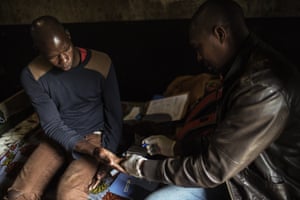
A sugar cane plantation farm worker gets tested for HIV by an health worker working with Doctors withour borders (MSF) at her house in Gwegwe on November 6, 2014 on the outskirt of Eshowe. The World Health Organization (WHO) says there were some 35 million people around the world living with HIV by the end of 2013, with some 2.1 million new infections during the course of that year. Sub-Saharan Africa is the most affected region, with almost 70 percent of new infections.


A sugar cane farmer gets tested for HIV by an MSF health worker in Gwegwe on the outskirts of Eshowe, 2014. Photograph: Gianluigi Guercia/AFP/Getty Images

In Eshowe, a town of 14,000 people set among rolling hills and sugar plantations, Médecins Sans Frontières has been pioneering testing by health workers who go door to door. MSF has also opened testing booths next to the butcher’s and by the taxi rank, where working men pass by on payday. They have found the same thing as the researchers in KwaZulu-Natal. They can get high proportions of people tested – but not to the clinic to get the drugs.


“We give them referral letters to the clinic. Then you find they don’t go,” says Babongile Luhlongwane, who walks miles every day on rough tracks with her kit in a backpack to reach those who live in this rural community. “Last Monday I had three men who tested positive. Two went to the clinic. The other said he didn’t have time.”


Dr Carlos Arias leads MSF’s initiative to set up monthly clinics on sugar plantations, testing workers for HIV and delivering medication. He says they see people with Aids who have virtually no immune system left.


Related: Village girls fight scourge of the ‘blessers’ – whose gifts ruin their lives


South African guidelines say people should be treated when their CD4 count – a measure of the strength of their immune system – drops below 500. “We see CD4 counts of less than 100 – CD4s of five or six,” he says. A serious infection would kill them. He tells of one man who arrived with a CD4 of 13 but did nothing about it. Two years later he was tested again and had a CD4 of 8. That means the virus in his body will be rampant and he will be highly infectious to a sexual partner. “HIV prevalence here is enormous,” he says. “In KwaZulu-Natal, among women aged 15 to 29, it is 56.8%.”


The Africa Centre trial in northern KwaZulu-Natal compared what happened in 22 clusters of 1,000 people: half were randomly allocated to test and treat, half told they would be given drugs when their CD4 count dropped below 350 (500 when government guidelines later changed). The trial set up a mobile clinic in each of the 22 clusters.


The trial investigated whether immediate treatment led to a drop in the numbers becoming infected. The answer, to their dismay, was no.


“Disappointingly, we found no difference in the number of new infections between these two randomised sets of clusters,” says Deenan Pillay, director of the Africa Centre and professor of virology at University College London.


Sex in the cities was an issue. People were travelling away from home into Durban and Johannesburg a lot more than expected, and having sex there. But more problematic are the social and cultural mores that have long beset HIV response in Africa. Far fewer men went to the clinics for treatment than women. “It is a hierarchical society. It is about being seen to be positive. There is stigma associated with it,” says Pillay.


He has been working with this community for more than 10 years, he says, and saw the huge change when people stopped dying. “Treatment was first used for people who were very ill and dying – and they lived. Now we talk about people who appear well and look well and you are asking them to medicalise themselves, to go to this government clinic where you have to queue up all day and you see other people you know there.”


People walk by a Doctors withour borders (MSF) HIV testing mobile clinic on November 6, 2014 in Ngudwini on the outskirts of Eshowe. The World Health Organization (WHO) says there were some 35 million people around the world living with HIV by the end of 2013, with some 2.1 million new infections during the course of that year. Sub-Saharan Africa is the most affected region, with almost 70 percent of new infections.


An MSF mobile clinic to test people for HIV in Ngudwini, on the outskirts of Eshowe, 2014. Photograph: Gianluigi Guercia/AFP/Getty Images

Pillay thinks more must be done to target the sugar daddies or “blessers” – the older, working men who give gifts and money to impoverished young girls in exchange for sex. About 60% of new cases are women. “It is horrendous. In our setting, a 15-year-old girl today has an 80% chance of being infected in her lifetime,” he says. At antenatal clinics where pregnant women are all tested for HIV, half are positive.


The government has launched a campaign telling young girls not to sleep with older men. But, says Pillay, “the real problem is the men who are not being tested and treated”.


“It is a complete crisis. The message of the conference is that there is all this hope – and it is not sustainable.”


Cost is a huge and growing issue. If test and treat worked, it would slash the bills by preventing new infections. But that assumption now seems premature and funding from donors has dropped for the first time. A report by the Kaiser Family Foundation and UNAids says they gave $ 7.5bn last year, compared with $ 8.6bn in 2014.


The drugs bill is going to rise dramatically, not just because of the increase in infections and the fact that everybody must take antiretroviral therapy for life, but also because resistance is spreading to the basic three-drug combination available in Africa for as little as $ 100 a year. Hospital beds are once more taken up by Aids patients whose treatment has failed. Africa cannot afford the newer drugs available in Europe and the US.


MSF has found resistance levels to the basic combination of 10% in its South Africa projects. There has been worse news in other parts of Africa. A study covering Kenya, Malawi and Mozambique found 30% of people on second-line treatment, which costs at least $ 300, were resistant. The lowest cost of a third-line drug regime – or salvage therapy – in Africa is $ 1,859 a person annually.


“I think we are seeing the tip of the iceberg,” says Dr Vivian Cox of MSF. “A lot of countries are not doing routine viral load monitoring in the first place. They are moving towards it and then you can imagine what they will find.”


Youth focus


Related: Under the shadow of ‘dirty’ HIV, South African children offered a refuge


Nobody at this year’s conference was talking about the end of Aids, as they were only four years ago when the conference was held in Washington DC. Bill Gates expressed real concern. If it is difficult now to treat and prevent HIV infections, he said, the demographic bulge could make things worse.


“If we only do as well as we have been doing, the number of people with HIV will go up even beyond its previous peak,” Gates said. “We have to do an incredible amount to reduce the incidence of the number of people getting the infection. To start writing the story of the end of Aids, new ways of thinking about treatment and prevention are essential.”


A vaccine is still a long way off. Pre-exposure prophylaxis works for the partners of people with HIV in the global north. Taking an antiretroviral drug guards them against infection. But that looks very hard to implement for young women in Africa who barely own their own bodies and could face accusations of either having HIV or being a prostitute.


There are brave attempts to change behaviour and the subservience of women and girls. Actor Charlize Theron is funding projects to educate, help and support young people. MTV’s Staying Alive Foundation is attempting to reach young people through its mass media campaign Shuga, sharing the sexual lives of more affluent young Africans. After two series in Kenya and two in Nigeria, the fifth will be filmed in South Africa.


Surveys carried out in South African schools to determine the issues facing 14- to 20-year-olds before the new series offer a glimpse of the dangers they face. A third of girls said a girl does not have the right to ask a boy to stop kissing her. A quarter of the boys said they had “sexually forced” someone. A fifth of the girls said they were sexually active and most of those had been forced into sexual activity at some point.


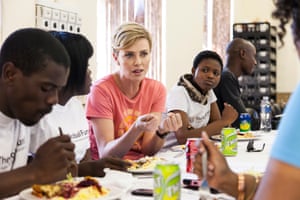
Charlize Theron visits a project to create youth ambassadors in KwaZulu-Natal, 2013


Charlize Theron visits a project to create youth ambassadors in KwaZulu-Natal in 2013. Photograph: Justin Barlow/Getty Images/The Global Fund

“The figures point to 86% of sexually active girls experiencing being sexually forced by their boyfriends,” say the researchers. “These figures … reflect a need to understand what is going on within heterosexual relationships and the experience and position of risk within those relationships. It also calls for HIV prevention efforts to help build safe and supportive norms within relationships.”


Of the girls among the 3,000 students surveyed in three provinces over two years, 15% said they had been pregnant – which equates to 70% saying they are sexually active. Nearly half the young people – 46% – said a young couple who went public about one of them becoming HIV positive would be openly judged and 4% thought they would be physically harmed. “This indicates the fear-filled environment South African young people are still growing up in when it comes to HIV,” says the report. “Fear keeps people silent and silence feeds everyone’s risk for HIV and for not getting the care and support they require to address HIV infection.”


Research is showing that Shuga does have an impact on young people’s behaviour. “Where we see behaviour change work really well is when the audience see their own lives reflected in the storylines,” says Georgia Arnold, executive director of the MTV Staying Alive Foundation, who says she wants to get a DVD to every one of the 6 million high school students in South Africa.


“We’ve had a recent World Bank study that was done on … series four in Nigeria. It was a random, cluster study of 5,000 young people and what it proved was that if you watched MTV Shuga you are twice as likely to get tested for HIV.”


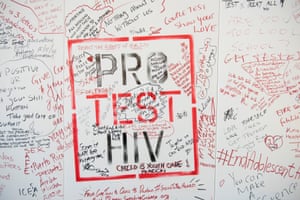
A slogan reading pro test hiv from the 2016 aids conference in Durban


The biggest challenge in fighting HIV is stopping people becoming infected. Photograph: Steve Forrest/International Aids Society

Behaviour change could stop the epidemic – although it is not doing so in Europe or the US – and initiatives could help improve young people’s lives. But it is difficult and slow. Aids will be with us for far longer than anybody used to imagine.


Professor Peter Piot, the first head of UNAids and director of the London School of Hygiene & Tropical Medicine, says the biggest challenge is keeping people from being infected. “It is as if we’re rowing in a boat with a big hole and we are just trying to take the water out. We’re in a big crisis with this continuing number of infections and that’s not a matter of just doing a few interventions.


“We will not end HIV as an epidemic just by medical means. People are not robots. Sex happens in a context. It is about power. Southern African girls and young women are infected by men who are much older than themselves. It’s about poverty. It’s also about a culture of machismo. There are also gay men all over the world who are discriminated against and underground, and there’s no way you can prevent infections if something is underground.”


He believes that it was a mistake to foresee the end of the epidemic a few years ago. “I don’t believe the slogan ‘the end of Aids by 2030’ is realistic and it could be counter-productive. It could suggest that it’s fine, it’s all over and we can move to something else. No. Aids is still one of the biggest killers in the world.”


Think the Aids epidemic is over? Far from it – it could be getting worse | Sarah Boseley