GPs are failing to treat women with common gynecological complaints, according to MPs. A report by the all-party parliamentary group on women’s health (WHAPPG) said female issues are not being treated with dignity or respect. They discovered that many women were left feeling they were “going mad” after being turned away by doctors despite painful symptoms.
A survey of 2,600 women found that 40% of those with endometriosis, when the womb tissue grows outside the uterus, had to visit their GP 10 or more times before getting treatment. This is a condition that affects about 2 million women, with symptoms including stomach aches and painful bleeding.
As a result, women were left doing their own research to understand the illness. The WHAPPG recommended more training for GPs, calling for more information for women in surgeries.
What are your experiences with your GP? Were you turned away or did you get really good care? Did you eventually get the help you need? Share your stories with us in the form below.
The government’s austerity programme is squeezing funding to both social care and the NHS – leading to serious problems in both. The Care and Support Alliance this month has found almost 9 out of 10 GPs think reductions in social care are leading to extra pressures in their surgeries. Even more (93%) think that the lack of social care is leading to extra pressure on A&Es and contributing to increased delayed hospital discharges.
We’re looking for NHS staff who have been affected by the cuts for Frances Ryan’s Hardworking Britain column, which looks at the stories of individuals whose lives have been negatively impacted by government policy.
Share your experiences
Are you a GP seeing the impact of social care cuts? Or do you work in A&E and cannot discharge patients because there’s no support for them at home? Share your stories and views.
The cosmetic surgery industry has seen relatively consistent growth over the years, but in 2016 the number of people going under the knife fell to a near-decade low. So what’s going on?
The British Association of Aesthetic Plastic Surgeons, which compiles the annual audit, put the decline down to financial constraints in a climate of global fragility. But industry observers think social media-savvy presenters and models have been shifting the focus away from appearances to “relatability”.
The news comes as some celebrities are turning their backs on cosmetic surgery. Take Katie Price, for example, who has had earlier work reversed.
We want to hear from people who have had cosmetic surgery about how they feel now. Do you have regrets about going under the knife? Or do you feel happy with what you had done? Do you think the landscape has now changed? Why do you think cosmetic surgery numbers are down? Please tell us your thoughts and share your experiences.
This week, the Guardian reported that NHS England is sending patients who are seriously ill with eating disorders to Scotland for treatment. Chronic bed shortages mean there is nowhere for them to get help closer to home.
Mental health experts have expressed concern about this, saying it’s compromising the quality of care for those in need.
It’s not the first time there have been reports of mental health patients being sent miles from home for treatment. Earlier this year, research by Community Care and BBC News found that in 2015 more than 5,400 mental health patients had to travel out of area for a psychiatric bed.
There are also reports of specialist mental health services turning away almost a quarter (23%) of children and young people seeking help. The Education Policy Institute Independent Commission on Children and Young People’s Mental Health, which did the report, said it is often because there are “high thresholds” for accessing services.
Research suggests that cultural factors can make it harder to get help too. Professors at Brighton and Sussex Medical School found black and minority ethnic groups struggle to access services, partly because of a communication breakdown between healthcare users and providers.
What are your experiences of accessing mental health services? We want to hear from people of all ages and backgrounds, across the UK, about any challenges you faced or help you received. Were you able to access help as soon as it was necessary, or was there a waiting period? If you had to wait, how did this affect you? Were your concerns met by your GP? Were you moved miles from home for treatment? Or perhaps you want to thank professionals for looking after you. What were the best aspects of your care? Share your stories and experiences with us in the form below.
Do you look at other people’s lives and compare them to your own? Does this make you question whether you are smart, fit or happy enough?
If so, then you may be a perfectionist. Writing for the Guardian earlier this year, clinical psychologist Linda Blair described a perfectionist as a person: “who strives for flawlessness, for a perfect creation, outcome or performance … They find it difficult to delegate, even if that means neglecting their health, relationships and wellbeing in pursuit of a ‘perfect’ outcome.”
According to some studies, this is something that largely affects women. A US survey in 2009 found that women are also more likely than men to experience feelings of inadequacy at home and at work, and a larger proportion felt they failed to meet their own high standards.
These insecurities are well-documented in the world of work: in 2011, the Institute of Leadership and Management found half of female managers, compared with fewer than a third of the male ones, reported self-doubt in their performance. An internal survey of women working at Hewlett-Packard also found women applied for a promotion only when they met 100% of the qualifications. Men applied when they met just 50%.
The desire to be perfect seems to influence thinking from a young age: research by Girlguiding UK found that a quarter of seven- to 10-year-old girls felt the need to be perfect.
Perfectionism can have serious implications: it’s been linked to anxiety and depression, and the health and happiness of young women is a growing concern. In fact a NHS study found 28.2% of 16- to 24-year-olds have a mental health condition, with one in four women aged 16 to 24 experiencing anxiety, depression, panic disorder, phobia or obsessive compulsive disorder.
We decided to explore this topic with our readers, asking for young women’s experiences and stories of perfectionism. We received 134 responses – with an average age of 25. For a lot of young women who contacted us, body image was a huge preoccupation and many said they felt undervalued unless they met society’s expectations of beauty. The pressure to be perfect also extended to the workplace, withmany respondents talking about feeling inadequate at their jobs or experiencing impostor syndrome. They also complained of feeling the pressure to have it all: juggling being a mother with career and other personal pressures.
Social media has a big role to play in influencing women’s outlook on this issue. Miranda, 18, from Cambridge summed this up: “I certainly feel the pressure to be perfect and it has got to the point where it’s damaging my health. Social media is the main culprit. I had to delete my Instagram account because it would actually make me cry. I am a mature person with a firm grip on reality, but I have so many peers whose lives seem so perfect and sociable that it left me feeling worthless and lonely.”
The impact of all this pressure on women’s mental health and wellbeing was notable, with many experiencing anxiety, eating disorders and depression. We approached five women to find out more. Here are their stories:
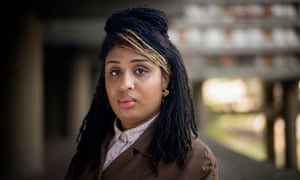
Chardine Taylor-Stone, 31, who works in the arts in London
‘The pressure to be perfect feels heightened to me as a black woman.’ Photograph: Sarah Lee for the Guardian
As a child I felt pressure to be a certain kind of perfect, so I wanted to look pretty and nice while my male cousins were running riot, that sort of nonsense. I wanted to marry a man and get a job.Now I am an adult my aspirations have changed and I am a lot more confident about who I am. I’ve broken out of those narrow expectations, but I still feel a lot of pressure in terms of my career.
I am one of few black working-class womenin my industry,which is dominated by white men. Most of the black women I see in the arts are personal assistants;none of them are working in a position that gives them autonomy – although they usually end up running a lot of things anyway.
I definitely have impostor syndrome; that’s defined as self-doubt and a sense of intellectual fraudulence thatoverrides any feelings of success. I didn’t have this so much before, when I was working in call centres, but I feel it now in a predominantly upper-middle-class environment. It’s weird being the only person of colour or the only one with a certain accent – it makes you feel as though you shouldn’tbe there. I sometimes suffer so much anxiety about sending an email, worrying about whether I will phrase it correctly. It’s silly because I’ve done well and proven myself, I have my own flat and a good job, yet that doesn’t feel good enough.
The pressure to be perfect feels heightened to me as a black woman because my mum always told me I would have to work harder than a white person to get ahead. It is true but it’s a self-defeating aspiration.
Perfection, or what society deems perfect, is not attainable for everyone, but it feels even further away for a woman of colour. The image of perfection is a certain physical type: a skinny woman with blond hair etc. Those things are not even half attainable to you, and you sometimes feel you were born imperfect.
Salma Al-Hassan, 18, student at Warwick University, from Oxford
‘I wish I could be more relaxed about how I look.’
I feel the need to look perfect all the time. I am not sure where this obsession comes from but social media definitely makes it worse.
I got Instagram when I was 14 and growing up with it has really affected me. I spend ages scrolling through the site and seeing images of women with perfect hair and makeup, thinking I should look like them – even though a lot of the time the pictures have been altered. I have always felt self-conscious about my hair because it wasn’t long and straight like the girls I saw online. I would see all my friends with their silky long hair, so easy to brush, and think: “I want that.” I got hair extensions to make my hair longer, which cost a lot but now I am trying to love my natural afro hair again. I want to embrace my natural curl.
Social media also brings the pressure of getting lots of likes; a lot of people post at “prime time”, which is about 5pm, when everyone is online. I know friends who will say: “If I don’t get 40 likes I am deleting the picture.” I’m not majorly worried about this, although I have deleted photos before, but afterwards thought: “That was stupid and I shouldn’t care what other people think.”
Another source of pressure for me, personally, comes from the fact that the media has become obsessed with a particular aesthetic for mixed-race and black women. We are only deemed attractive if we have tiny waists and large hips and lips. Over the past few months I have started to become very self-conscious about my lips, which are not as full and beautiful as other black women’s. I don’t have plans to get plastic surgery, but if I did get anything done it would be lip fillers because it just seems to be a fashion thing now – lot of celebrities get it done.
I wish I could be more relaxed about how I look: I am getting better gradually but I still always try to look good, and always put on makeup. While nowadays there is definitely a much more diverse idea of what beauty is, there are still stupid stereotypes which people are stuck in, myself included. There is still a long way to go for women to accept themselves for who they are.
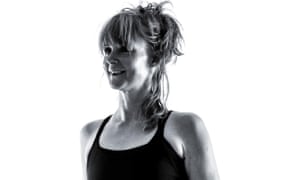
Anna Robertshaw, 37, a yoga teacher from Tunbridge Wells
‘From the outside my life looked great, but inside I was struggling.’
My early 20s were a bit of a whirl. I got pregnant with my eldest at 23, which was wonderful; at the time I was still together with my husband,who was my childhood sweetheart. After our son was born we set up home in Tunbridge Wells and I quit my job to become a full-time mother. My husband had a wonderful and well-paid job and so we moved into a beautiful home, and it wasn’t long before my second son came along. Then, when he was five months old, I got pregnant with my third boy.
From the outside my life looked great, but inside I was struggling. I felt a lot of pressure to be a perfect mum, and this got worse when my boys started school. I couldn’t help but compare myself to other mothers, and to think their children were really polite and wellbehaved. I felt lost and had no confidence in my ability to raise my boys in a way that was right for me.
Depression and anxiety came on thick and fast. I was prescribed antidepressants, but I soon realised they were not for me. I remember sitting out in the garden, feeling so detached from my boys. It was like I was looking at them through a screen. I stopped medication and sought other means of help, eventually finding homeopathy and yoga.
My life took a different course after this, and I separated from my husband. Part of my recovery was letting things go, and starting to take charge of my life and think about what was right for me. For so long, I had fitted into everyone else’s idea of who I should be, and I was so afraid of breaking that image, but it was making me miserable.
With age comes wisdom and now I am happy with my new partner and my life in general. I am much less harsh on myself and have realised everything cannot be perfect all the time.
The biggest lesson for me, in terms of losing the urge to try to be perfect, was becoming a mum: it taught me that it’s not all about me, it’s all about them. Kids have their own views and sometimes speak more truth than grownups. They also taught me that I couldn’t possibly maintain a tidy, clean house all the time and neither could I maintain my body shape or appearance because of the effect being pregnant for years has had on them.
My advice to young people today would be to find a hobby or passion that brings you joy and don’t compare yourself to others. Sometimes it’s our biggest failures that teach us the most valuable lessons and letting things fall apart isn’t the end of the world – it’s a chance to rebuild it.
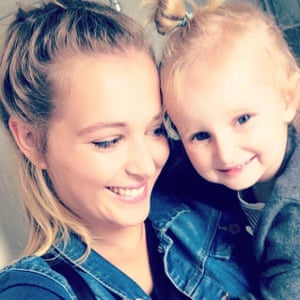
Lotta Sampson-Stone, 22, a student and single mother from Plymouth
‘Being a mum, in particular, is a lot of pressure.’
I am quite critical of myself as a single parent. I am conscious of trying to portray myself online and to family as the perfect mother and now I am at university I also want to be a perfect student. It can be hard to juggle everything.
I moved to Plymouth from Lancashire for universitylast yearand have been desperate to make it work, but it’s hard. I worry that I’ve not spent enough time with my daughter and too much time in the library, or that I’ve spent too much time with her and not enough time socialising.
Being a mum, in particular, is a lot of pressure. On Facebook I see mothers saying: “I baked with my boy today and we made pasta necklaces.” When you’ve just plonked your kid in front of the telly it makes you think: “Should I be doing that?” But it’s hard to be a full-time student, single parent and do baking and arts and crafts activities as well.
I made a conscious decision only very recently to limit time spent on social media. I did not want it to impact on how I viewed my life with my daughter and what I could and could not provide for her. The best thing I can give her is a mum who’s totally happy and present in the here and now – she doesn’t care that her mum isn’t a size six or that the flat gets cluttered..
I hope my daughter won’t grow up as insecure as me. I hope she never negatively compares herself to others and that if she recognises differences she embraces them and does not feel they make her less of a mother, student, woman or human being.
Kate Goodrum, 18, a student at Cambridge University, from London
‘One thing I have learned is that being perfect doesn’t always make you happy.’
Even as a girl I always had a perfectionist streak. While other children went out and got cheerfully muddy I would be held back by a fear of looking scruffy, and even in primary school I worried about not getting good grades. So the drive for perfection was always there, but as I got older it took hold in a more negative way and led to an eating disorder. I became very critical of how I looked, to the point where my body mass index got really low and I was told by doctors that I wouldn’t be able to sit my GCSEs if my health didn’t improve.
This was so hard to take because I’ve always striven for perfection, academic as well as physical. In fact, it was the wake-up call I needed and I went for treatment. By the time my A-levels came around I’d put on weight and was much better physically, but there were still underlying issues and insecurities.
Eating disorders never really go away, and even four years later, although I’m much better, I still compare myself to others and feel bad about how I look, thinking I am too fat or not tall enough and I don’t have abs.
I have sort of come to terms with the fact that being a perfectionist is part of my personality. I’m never content with anything I have achieved. I got into Cambridge University last year and while I am excited about starting I am also worried about the workload. I hate not being the best at everything and I worry I will be the dumb one there as other people will be so clever and multi-talented. I am worried I won’t be able to keep up.
Despite this, all I’ve experienced has taught me to try to be less harsh on myself. One thing I have learned is that being perfect doesn’t always make you happy. You can have a great body and do well in exams but it doesn’t solve all your problems – even my response to getting into Cambridge has made me see that.
In my mind the perfect woman is successful, happy and not stressed. Someone with a good social life and lots of friends. I suppose someone who has everything really, but then the older I get the more I realise that this ideal probably doesn’t exist. Maybe it’s time we stopped striving for something else and started celebrating what we have now.
The government’s abolition of the disability living allowance (DLA) and its replacement with personal independence payments (PIP) means that people with disabilities – many of whom had been told their support would be for life – are being forced through a process of reassessment. But what’s the impact of this?
It’s a topic that Frances Ryan covered in her Hardworking Britain series last week. She wrote: “The retesting of PIP claims means, in practice, blind people, paraplegics and those with Down’s syndrome will be put through reassessment: forced to provide information about their disability that the government already has and cannot possibly have changed.”
We asked for your experiences of this. Here, five people share their stories.
‘It’s hard to understand why we have all had to go through this’ – Angelene Wright, 66, from Lincolnshire
I’m a carer for my 64-year-old husband who is in the final stages of multiple sclerosis.
My husband received a lifetime DLA award about 15 years ago. He is now unable to walk and we are dependent on our home carers for most of his personal care. I have lasting power of attorney as he can no longer sign his name. He can just about feed himself with special cutlery, as long as the food is soft and cut up small. He is totally dependent on others for all his needs.
We went through the reassessment process earlier this summer. With the help of our social worker and rehabilitation consultant, my husband was granted the new benefit without having to go through a face-to-face interview – only a phone call for extra details from the assessor was required.
The whole thing was very stressful. The initial letter, announcing that his DLA was to stop and telling us to phone the number within 14 days or face losing the benefit, was scary. I have to say that all of the people I had to speak to were extremely courteous and helpful. The 40-page form was a pain to contend with – I’m a retired teacher but it was formidable. Also my original registration of lasting power of attorney was required and was not returned – thankfully, I had it scanned. All they actually needed was our registration number.
When you have been given a lifetime award it’s hard to understand why we have all had to go through this. If a person is incapacitated to the level that a lifetime award was thought appropriate, they are not going to get better. They clearly designed it to try to catch people out and it seems to have caught a lot of the wrong people.
‘Irreversible brain damage is irreversible. I don’t understand why I am being reassessed’ – Anonymous, 31, from Glasgow
I have cerebral palsy, a visual impairment, dyspraxia and epilepsy. I’ve been on disability living allowance (high mobility and medium care), receiving around £450 a month, since I was 16. That’s all my adult life. I thought DLA would always be there and am profoundly shocked that it’s now changed and I am due to be reassessed soon.
I am so scared of what this may bring that it keeps me awake at night. When my DLA money comes in each month, I am very relieved. I have had periods when it was my only source of income and I don’t know how I will manage if it goes away.
Reassessment of lifelong conditions makes no sense to me. It is a waste of money and energy and it is cruel.
I am profoundly shocked about being reassessed. I do not understand why this has to happen – cerebral palsy and epilepsy do not go away. They do not change in any way. My balance is as bad now as it was when I was 16 (in fact my joints are probably in a slightly worse condition). I still don’t have a lower field of vision. I’m still having fits. Irreversible brain damage is irreversible. Reassessment of lifelong conditions makes no sense to me. It is a waste of money and energy, and it is cruel. I know I will never get better. I’ve accepted that and am getting on with my life. I feel ashamed and helpless in a way I never did before.
‘The whole process was costly and demeaning’ – Anonymous, 38, from Staffordshire
I am writing on behalf of my daughter who has a personality disorder and complex mental health needs classed as severe and enduring. She had been given a lifetime award, but last year we had to submit a claim for PIP, which meant reassessment. It was incredibly painful for her to go through this process again, and we submitted medical evidence for every question on the form.
The enhanced living component was awarded, but the standard mobility component was taken away on the grounds that she could walk 10 metres unaided. However, eventually we challenged this and won. We were very relieved and pleased, but the whole process was costly and demeaning. What’s more, no one has actually met with my daughter and every decision has been made on paper. It feels like she has no voice. I am the one who has to pick up the pieces when ignorant bureaucrats treat a fragile, seriously ill person so badly.
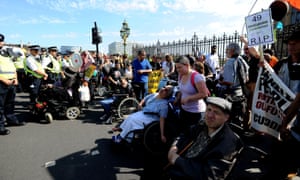
Protesters gather in Westminster in 2014 to demonstrate against disability benefit cuts. Photograph: Nick Ansell/PA
‘The arbitrary nature of the system infuriates me’ – Charlie Saben Fox, 61, from Edinburgh
My son has autism, global learning difficulties and epilepsy.
How much help you get really is a lottery and many people seem to be losing out.
He has been in receipt of DLA since he was two and was awarded an indefinite award at 16. He was “invited” to migrate to PIP, taking a paper-based assessment. After this he was awarded enhanced daily living and mobility components, but only for five years. I couldn’t understand the length of award as the assessor stated his condition might only change marginally. I called the Department for Work and Pensions to ask for a mandatory reconsideration and they weren’t very helpful. First they told me I couldn’t challenge the five-year award, but eventually I got it extended to 10 years.
I’m pretty strong-minded and wasn’t scared of challenging it, but a lot of people might have been bullied into submission. I’m still angry when I think about it. The arbitrary nature of the system infuriates me most. How much help you get really is a lottery and many people seem to be losing out.
‘By the time I got into the room I was a nervous wreck’ – Catherine Hart, 36, from Sheffield
I have serious mental health problems and my DLA was not a lifetime award, but a long-term one – after being assessed every three years it was extended to every 10 years. That changed under PIP. I had to fill in a very long form within three weeks, but it took them several months to tell me if I had been awarded PIP. This severely affected my mental health.
I was starting to get myself back on track when I was told I had to go in for a face-to-face assessment. My care coordinator was off work ill so I had a stranger from mental health services take me, because I don’t do well getting out of the house on my own.
By the time I got into the room I was a nervous wreck. The person I saw was very sympathetic, understanding and patient. He didn’t rush me for answers when I was struggling to speak, was delicate with his questions about my suicide attempts. He even told me he was sorry to be putting me through this.
It took less than two weeks for the letter telling me that nothing had changed in my award. The letter itself was entitled “Changes to your personal independence payment”, which scared me, until I read further and found out that it would be the same.
All the people I had contact with throughout the PIP process were kind and sympathetic. The problem I had was with the paperwork – there was a lot of it at all stages. To truly reflect how bad a mental illness can be, you have to talk about your darkest times, and this process takes you right back there.
Cancer is no longer the death sentence it once was – people are now twice as likely to live at least 10 years after being diagnosed than they were 35 years ago.
Related: Thousands of cancer sufferers surviving decades after diagnosis
That is according to new research by Macmillan Cancer Support, which found more than 170,000 people in the UK who were diagnosed in the 1970s and 1980s are still alive – something the charity described as an “extraordinary” number.
More people now survive because of better treatment, the charity said, although it acknowledged that there was still a huge variation in survival rates according to cancer type.
Did you survive cancer? Tell us about how it shaped your life. Did you learn any valuable lessons? How did it change your relationships? What did it feel like to beat it?
‘We truly have a program for accurate co-production with sick and disabled folks, a reformed test that appears at the true globe of operate.’ Photograph: Image Supply/Rex Features
The Labour shadow function and pensions staff of Rachel Reeves and Kate Green have this week taken their very first measures in defining how employment and help allowance (ESA) and the now infamous Atos “match for perform” tests may possibly be reformed beneath a Labour government.
It has been a extended and torturous approach to get to this level. For far as well extended, policymakers from all events refused to see the inherent flaws in a tick-box technique designed to generalise, punish and restrict. Despite mind-boggling evidence that the exams had been failing, the very concern of welfare reforms is so politically charged that no one had any want to admit it was incorrect.
But as I read through the article by Reeves and Green in the Independent, I was tremendously disappointed. Possessing waited so extended, campaigners like me could be forgiven for expecting a detailed plan, packed complete of recommendations and recommendations. Instead, as is so typically the case, Labour appear wary of their own message, neither saying 1 factor nor an additional in a bid to placate that ever dominant middle ground.
Nevertheless, if we overlook about the message for a second and actually seem at the content, factors never appear almost as bad. Lurking beneath the caution is a total assortment of tips that sick and disabled men and women have been calling for. For instance:
• Labour says it would transform the way the perform capability assessment is designed to make it more powerful at helping disabled people into employment. The recent technique is a crude assessment of people’s impairment, with small info about how this has an effect on their potential to perform.
• Labour would redesign the check, which is presently based mostly on a computerised factors program, to incorporate a comprehensive examination of jobs that men and women could truly carry out.
• Beneath new ideas, disabled individuals would receive a copy of the assessor’s report of how their health situation may possibly influence their potential to operate, and data about the support accessible in their neighborhood location to help them.
• Sick and disabled individuals would be given a central position in monitoring the way the exams are run, providing them a statutory role in monitoring the operation of the exams and drawing up tips for improvements.
• New contracts to run the fitness-to-operate tests would be a lot far more closely tied to the accuracy of assessments, measured by the quantity of occasions that selections are overturned, with clear penalties for bad efficiency.
So we really have a strategy for correct co-production with sick and disabled folks, a reformed test that looks at the actual globe of work, punishments for failing contractors and involvement in the assessment itself.
Maybe most importantly, Kate Green says that:
“We want the evaluation to be element of the approach of guaranteeing disabled people who can function get the support they require to do so, not to threaten or punish them. The check need to be a gateway to identifying and assembling that assistance. We also recognise not every person can perform and we’re committed to guaranteeing the support’s in spot for these who cannot.”
It really is tough not to be annoyed that we’re so far from the place we must be. Every day, far more lives are ruined, and it’s clear from Wednesday’s write-up that any actual reform will be by child measures. There will be no “large bang”, no moment of cathartic triumph. But if we seem back at a Labour celebration who three many years in the past had been defining the dilemma as one of “shirkers” who could function but didn’t, the path of travel is clear.
It seems that Labour has lastly accepted that the employment and assistance allowance need to modify. That alone is result in for celebration. Nonetheless, we even now appear to be a really long way from realizing how or when.
Disabled men and women protest at Westminster against cuts in their advantages Photograph: Martin Argles for the Guardian
Employment and support allowance (ESA), the benefit that offers support if you are too unwell or grow to be so disabled that you cannot operate, is failing on each level.
These days, the Spartacus network of disability campaigners – all sick or disabled ourselves – launches its report Beyond Barriers, the most up to date evaluation of how the ESA, the Work Programme and the workplace itself is avoiding disabled men and women from discovering employment, reaching their total potential and is failing to conserve the taxpayer cash.
The assumptions on which the ESA was founded in 2008: that the caseload was also large that incapacity advantage was too simply available that there had been folks claiming IB who weren’t ill enough to merit it that work is fairly significantly universally “excellent for you” are unsound. The framework, set by the Department for Operate and Pensions, that decides who does or isn’t going to qualify is inadequate, inconsistent and incomplete health-related proof is not sought in sufficient instances numerous centres are inaccessible to the disabled people they must assess and effective appeals have hit an all-time large of 43%, the highest of any advantage.
But perhaps the biggest failure of all is the lack of support for people told they have to locate function and assured they will be “supported at every single stage”. Just 5% of these referred to the Work Programme on ESA have located sustained function. Companies are accused of “cherry-picking” the best to assist claimants even though “parking” people with higher demands with small or no speak to. There is no communication between ESA and the Function Programme, which means that, astonishingly, a perform supplier hardly ever has any knowledge or understanding of the disability affecting someone’s potential to perform. In practice they typically treat the sick or disabled particular person just like any other jobseeker.
To comprehensive the cycle of failure, it is clear that the workplace is all also often nonetheless not a welcoming location for individuals who suffer from long-phrase health situations, mental well being concerns or disabilities. Disabled people with similar abilities and qualifications to non-disabled people are significantly less very likely to be in work, are paid significantly less, are a lot more most likely to live in poverty and they report high amounts of discrimination awhen searching for perform.
In the 21st century it is achievable to do so a lot a lot more: flexible functioning modern schemes much more fluid help with less complicated transition on and off social protection. We could make certain that somebody attempting to access help can discover all the information they require – work support, training, rehabilitation, rewards tips and health care in a single place from one particular supportive adviser or caseworker. We could improve the capability of people who nevertheless require some support to do a minor work and make that operate pay out.
But if we don’t engage employers and companies and guarantee that they do more than “aspire” to like sick and disabled people in their structures, just how much can the state do to ensure that every person achieves their full potential?
Our report sets out our vision for what need to exchange ESA, how the marketplace can much better accommodate all employees, regardless of impairment and how a operate programme may possibly perform that really offered the help now promised but not delivered.
Crucially, the report concludes: “A program that works for sick and disabled people, while also making worth for taxpayers, need to have not be a contradiction in terms. But to achieve it, we need to very first be prepared to pay attention.”
Adhere to #BeyondBarriers on Twitter and Facebook these days and join us in calling for a far better deal for people living with illnesses or disabilities and their carers.
Disabled people protest at Westminster towards cuts in their benefits Photograph: Martin Argles for the Guardian
Employment and help allowance (ESA), the advantage that supplies assistance if you are as well sick or turn into so disabled that you cannot work, is failing on every single level.
Nowadays, the Spartacus network of disability campaigners – all sick or disabled ourselves – launches its report Beyond Barriers, the most up to date evaluation of how the ESA, the Perform Programme and the workplace itself is preventing disabled people from discovering employment, reaching their total potential and is failing to save the taxpayer cash.
The assumptions on which the ESA was founded in 2008: that the caseload was as well large that incapacity benefit was as well simply available that there were people claiming IB who weren’t ill adequate to merit it that perform is rather considerably universally “excellent for you” are unsound. The construction, set by the Division for Function and Pensions, that decides who does or isn’t going to qualify is inadequate, inconsistent and incomplete health care evidence is not sought in ample circumstances many centres are inaccessible to the disabled men and women they should assess and successful appeals have hit an all-time high of 43%, the highest of any advantage.
But possibly the best failure of all is the lack of support for people informed they must discover work and assured they will be “supported at every single stage”. Just 5% of individuals referred to the Perform Programme on ESA have identified sustained perform. Suppliers are accused of “cherry-picking” the best to support claimants even though “parking” those with greater demands with small or no make contact with. There is no communication amongst ESA and the Perform Programme, which means that, astonishingly, a perform provider hardly ever has any knowledge or comprehending of the disability affecting someone’s potential to operate. In practice they often treat the sick or disabled individual just like any other jobseeker.
To comprehensive the cycle of failure, it is clear that the workplace is all also typically nevertheless not a welcoming spot for folks who suffer from long-phrase wellness conditions, mental well being troubles or disabilities. Disabled people with equivalent abilities and qualifications to non-disabled individuals are much less probably to be in perform, are paid significantly less, are a lot more most likely to dwell in poverty and they report high ranges of discrimination awhen seeking operate.
In the 21st century it is possible to do so much far more: flexible operating revolutionary schemes far more fluid help with less complicated transition on and off social safety. We could make certain that a person making an attempt to accessibility help can uncover all the information they require – work assistance, coaching, rehabilitation, benefits advice and well being care in one particular spot from 1 supportive adviser or caseworker. We could improve the capacity of individuals who nevertheless want some assistance to do a little function and make that operate pay.
But if we don’t engage employers and organizations and make certain that they do more than “aspire” to like sick and disabled folks in their structures, just how much can the state do to ensure that absolutely everyone achieves their full potential?
Our report sets out our vision for what need to replace ESA, how the marketplace can far better accommodate all staff, irrespective of impairment and how a operate programme may function that in fact provided the help now promised but not delivered.
Crucially, the report concludes: “A system that performs for sick and disabled folks, although also generating value for taxpayers, want not be a contradiction in terms. But to achieve it, we have to very first be prepared to listen.”
Stick to #BeyondBarriers on Twitter and Facebook today and join us in calling for a better deal for men and women living with illnesses or disabilities and their carers.