Going into a career in nursing can be challenging, exhausting and demoralising, yet also rewarding and full of opportunities.
But while headlines scream about nursing shortages, funding problems and cuts to bursaries, the profession is still attracting talent.
For those entering a career in nursing, pay, education and advancing the nurse’s role are important issues. Staffing levels and the mix of qualified and support workers; nursing’s response to the changing healthcare agenda; and the recurring accusation that the profession has somehow lost its soul have also come into the mix in recent years.
To mark Nurses’ Day on Friday 12 May, we’ll be asking an expert panel how to make a success of a nursing career. Topics will include:
Can compassion be taught and how to be compassionate on a long shift
How to talk about death with colleagues and patients
Burn-out and how to avoid it
Who to turn to for support
The impact of cutting student bursaries
The role of nursing associates
The live chat is not video or audio-enabled but will take place in the comments section (below). If you would like to feature on the panel or propose questions, please get in touch via alfie.packham@theguardian.com or @GdnHealthcare (#GdnNursing) on Twitter.
Discussion commissioned and controlled by the Guardian, funded by Bucks New University
The panel so far
Anne Corrin, head of education, Royal College of Nursing
Donna Thomas, A&E nurse
Becky Platt, matron for children’s services, West Herts hospitals NHS trust
Prof Ian Norman, executive dean, Florence Nightingale faculty of nursing & midwifery, King’s College London
Sue West, qualified as a registered nurse in 1982, dean of the faculty of society and health, Buckinghamshire New University
It speaks volumes about government priorities that the Treasury briefed journalists ahead of Wednesday’s autumn statement that an extra £1.3bn would be spent on roads. Yet we have been kept in the dark over any rescue package for the tottering social care system, on which the chances of the NHS getting through the winter so critically depend.
As it happens, £1.3bn is also the price of a basic rescue for social care. It is the calculation by the Local Government Association (LGA) of the gap between what care providers in England say they need now to sustain threadbare state-funded services for older and disabled people and what councils say they can afford. To meet rising demand, inflation and the costs of the “national living wage” next year would require the same sum again.
Pretty much everyone outside the government understands the perilous position of the social care system, highlighted again this week by withdrawal from the market of another leading homecare provider, Mitie, and by a survey of councils suggesting that four in five local authorities do not have enough provision in their areas – especially for care at home, “extra care” housing with support and specialist nursing homes for dementia.
Relations between social care and the NHS have frequently been awkward and testy. Yet health leaders have been queueing up to say that if there is any spare cash going, give it to the poor folks next door (provided they spend it on keeping people away from hospitals already bursting at the seams two months before winter pressures traditionally bite). Even the health and social care regulator, the Care Quality Commission, has bravely stood up and warned of a system almost at tipping point.
Expectations are modest. While sector leaders say there must be a far bigger long-term settlement, for now they are looking realistically for renewal of the power English councils were given this year to add up to 2% to council tax bills for adult social care, ideally increasing that amount. They also want the extra funding, under the so-called Better Care Fund, already earmarked for the end of the decade brought forward to next year.
That there has been no word on this from the Treasury, even obliquely from the usual sources, is worrying. In a reply last week to Sarah Wollaston, chair of the Commons health select committee – who had warned that NHS reforms would be undeliverable without urgent action to improve social care – the chancellor, Philip Hammond, said he recognised that conditions were challenging and would “continue to closely monitor the position”.
Most observers still think he will find something for social care. But their faith in that extends little beyond rationalising that “he must, mustn’t he?”. Treasury officials are notoriously deaf to special pleading and, let us be frank, social care has done rather a lot of that over the years, not always very well.
One problem is the sector’s apparent inability to make a unified case. Even now, various figures are put on the scale of the funding gap it faces, from the LGA’s £1.3bn (or is it £2.6bn?) to £1.6bn advanced by social services directors and £1.9bn put forward by three leading health thinktanks.
While the size of a water bottle may be immaterial to a man dying of thirst, The Treasury expects precision and rigour in the cases it considers. Another problem is that the evidence of crisis isn’t entirely consistent. Even as care-home chains are privately warning ministers that up to a quarter of beds are at risk of closure, a leading property consultancy is reporting that profitability of homes is rising. Our Treasury friends will not have missed that. A key reason, paradoxically, is that closure of some homes – and overall capacity is falling – is increasing occupancy rates in the others.
But if there should be nothing for social care in Hammond’s statement, or if there is too little to make much difference, the consequences can only be bad: bad for councils, which are braced for an onslaught of legal challenges as it becomes clear that they cannot fulfil their duties under the Care Act; bad for the NHS, as hospital beds fill this winter with older people who could and should be receiving care and support at home; and, above all, bad for anyone who cannot afford to pay for their own care and support.
The distressing scenes of ill-treatment seen in BBC Panorama’s secret filming inside two Cornish care homes this week will only be repeated again and again as long as the care system remains underfunded, underskilled and undervalued by the rest of society.
Even the Care Quality Commission has stood up and bravely warned of a system almost at tipping point
The shock may have started to subside, but the despair is just beginning. For non-Americans, the aftermath of the US election feels like being in mourning, but perhaps in that detached way we feel when a beloved musician or actor dies (and goodness knows we’ve had enough of that this wretched year) – it was not our election; Donald Trump is not our president. And yet it does affect us, not just in whatever economic impact is to come, or because the president-elect couldn’t care less about climate change. The seeding of fear and hate, the misogyny that has been condoned, the attacks on our most vulnerable: this affects us all. It is time, therefore, to get to work – even from over here. You could retreat to a bunker, but fighting back will probably make you feel better, as long-time activists confirm.
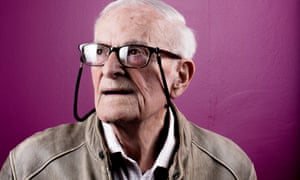
“I’ve learned that when society and politics disappoints, I can’t spend too long grieving about the dying of the light,” argues the 93-year-old social justice activist Harry Leslie Smith. “The only way I feel injustice can be defeated is by staring evil or indifference in the face and shouting: ‘You won’t have me, I’ll come back tomorrow and have another go at you.’ Nobody can live as long as I have and not have faced much disappointment and loss. So when I encounter things like the madness of Brexit or the election of Donald Trump, I mourn for a short while and get back on my bike and figure out how I can lay seeds in the imagination of people for them to harvest a better world.” In many ways, he says, “activism allows me to give purpose to the suffering I endured along with my parents and my siblings. Fighting for social justice allows me to connect with younger people, people who are vulnerable, and people who are hurting, and that allows me, at 93, to feel I am still part of the human race.”
Volunteering and activism can bring personal benefits. There are four areas the Institute for Volunteering Research looks at, says its research manager Jurgen Grotz: human, economic, social and cultural capital. “In human capital, the ones we describe are personal development, such as growth in confidence and self-esteem. Young people [might experience] leadership roles. It can also result in transferable skills – public speaking, how to work in a team. If we look at social capital, especially if people become more engaged and active, we look for new networks and friendships, which sometimes leads to greater involvement in the local community.”
‘As long as there is breath in my body, I will always stand for social justice, because one day we will get it right’ … campaigner Harry Smith, 93. Photograph: Graeme Robertson for the Guardian
Under the cultural capital category, “we’d be looking for a better understanding of identity, and an increased expression of values, a greater appreciation of other cultures and interests. With economic capital, depending on the activity, it can be linked to better employability.”
Older volunteers are more likely to see health effects. “Some studies have suggested that especially older people who volunteer live longer than those who don’t, but the question is do they do so because of things like getting out of the house and having more physical activity? But certainly wellbeing – the sort of outcomes like self-esteem – are reasonably well-documented.”
“Being part of a movement for social change is an idealistic, altruistic act,” says activist Peter Tatchell, who has been campaigning for 50 years. “You do get an emotional uplift to participate in a campaign that changes your life, and the lives of others, for the better. But it can be very frustrating and dispiriting when change takes a long time to happen. You need to be psychologically ready for the long haul.”
Protests against Donald Trump continue across US – video
There will be aggressive opponents, and pedantic critics. “That can get very demoralising unless you steel yourself to be ready for those brickbats,” Tatchell says. What’s kept me going for the last 50 years has been a vision of what society could be, and a series of successes along the way. I’ve always taken the long view. When you’re up against great historical inequalities, they’re very unlikely to be remedied overnight. We need to be prepared to think in terms of months, years and in extreme cases, decades. Working together with others in a campaign is mutually reassuring and empowering – knowing you’re not alone will give you the strength to carry on despite delays and setbacks.”
What has kept Smith going is firm belief. “I am six-and-a-half years short of 100 years old, so I don’t know how long I’ve got, but as long as there is breath in my body and memory in my head, I will always stand for social justice, because one day we will get it right. And even I am not there to see, it will still be worth it.”
So what can we do? You may not be able to join or donate to the Democrats, but there are other practical steps you can take. Some are extreme – you could consider boycotting the US. Some are not so extreme – you could certainly boycott Trump’s businesses, such as his golf courses in Scotland and Ireland, without experiencing any sacrifice.
You could turn your attention to the US supreme court and send vitamin supplements and encouraging words to insist the ageing liberal judges Ruth Bader Ginsburg (83) and Stephen Breyer (78), and the moderate Republican Anthony Kennedy (80), carry on. There is already one open slot, and allowing Trump the opportunity to appoint (rightwing) replacements could have terrifying consequences. Here are some marginally better ideas:
Donate to Planned Parenthood
Photograph: Mark Wilson/Getty Images
Grabbing ’em by the pussy is only the start of Trump’s assault on women’s bodies. Repealing the Affordable Healthcare Act, which Trump wants to do, will end free contraception. He has said women who have abortions should receive “some form of punishment”, and is against late-term abortions (which are usually performed when the woman’s life is in danger). He has said he will appoint anti-abortion judges to the supreme court. Mike Pence, who will be vice-president, is fiercely anti-abortion, and has said he would like the Roe v Wade ruling, which legalised abortion, to be “sent to the ash heap of history”.
Congressional Republicans have repeatedly tried to strip Planned Parenthood, the family-planning and education organisation, which also provides terminations, of $ 500m of federal funds – which accounts for nearly half its revenue. With a Trump government, they are seriously under threat. If you can afford it, donate to PP, to the National Abortion Federation, or to any number of local organisations that help women access abortion services – the National Network of Abortion Funds has a list online.
Join the American Civil Liberties Union
The ACLU describes Trump as “a one-man constitutional crisis”. It was founded in 1920 to defend rights supposedly guaranteed in the US constitution. Trump’s proposals, says the group, violate several amendments, and if he attempts to see them through, it promises to unleash the “full firepower of the ACLU at every step”. Non-US residents can become members and donate.
Support campaign groups
There are a huge number of organisations stepping up their work to protest Trump’s presidency and protect vulnerable people. The websites Jezebel and The Cut have good lists, but you could consider donating to the National Association for the Advancement of Colored People, the Council on American-Islamic Relations, progressive Jewish group Bend the Arc and The Trevor Project, which supports young LGBTQ people. Of course, there’s a limit to what people outside the US can do for these organisations. You can’t go on protests or host events, but you can join in virtually – share their information, news and events. Again, if it’s possible, what really helps is cash.
Join a protest
Photograph: Andy K/Pacific/Barcroft
Protests have been held in cities in the US, including Chicago, Minneapolis, Baltimore and New York, but also outside the US. There will be a rally in Berlin on Saturday , and on Wednesday, a protest was held outside the US embassy in London by the organisation Stand Up to Racism. There will be more. Look out for events, especially to mark Trump’s first state visit to the UK, whenever that is. Or create your own.
Pay for news
In February, Trump, singling out the New York Times and Washington Post, said that if he won he would declare war on the press: “We’re going to open up libel laws, and we’re going to have people sue you like you’ve never got sued before.” As with other Trump threats, he will come to realise that a president can’t do everything he wants (it would be a supreme court decision – another reason to be worried about ageing justices). Still, if you believe a robust press is going to be vital in the years ahead, it has to be paid for. Otherwise, one day, all we’ll end up with is the Trump Times, the Peter Thiel Gazette and fake “news” reports on Facebook.
Fight climate change
Trump does not believe humans are responsible for climate change and has promised to “cancel” the Paris agreement on climate change and Obama’s Clean Power Plan. He has also said he will withdraw all funding from the UN Framework Convention on Climate Change. The US is the second-biggest emissions producer after China, and if it withdraws from the landmark agreement to reduce emissions, it could derail the whole thing. Why should the 192 other countries stick to their promises if the US doesn’t? Well, not to be dramatic, but because the future of life on Earth is at stake. It might seem futile to forgo that car journey or do a bit more recycling when it is predicted that a two-term Trump presidency would actually increase US carbon emissions by 16%, but we all need to do our bit – and more.
Start at home
If Brexit wasn’t enough of a wake-up call that the left is in serious trouble, maybe the US election will be. Now is the time to get involved in politics – join a political party, participate in meetings, recruit supporters. Insist progressive parties work together and do something to connect with people who believe them to be the preserve of out-of-touch, liberal elites. Donate to and volunteer with organisations such as Refugee Action, Calais Action, and Women for Refugee Women. Become a foster carer for unaccompanied minors. Stand up to rape culture. Support groups such as Hope Not Hate. True, not everyone who voted for Brexit or Trump is a rabid misogynist racist, but these wins allow rabid misogynist racists to believe people are behind them. It doesn’t have to be like that.
As a well-adjusted middle-aged man, I like to define myself by the things I don’t have. I don’t have a scarlet Lamborghini or a conspicuous tattoo or a 22-year-old girlfriend to jumpstart my libido. Nor do I possess a penchant for extreme sports or expensive psychotherapy. Midway through my fifth decade, I’ve avoided the obvious pitfalls and reckon I’m coping quite well, which is why I am on my way to discuss the male midlife crisis with the therapist Andrew G Marshall, who has written a book on the subject. It’s a task that requires a cool and dispassionate eye. We will be like two doctors, I decide, objectively diagnosing the problems of others.
Inside his therapy room, Marshall directs me to an armchair and stoops to pour out some water. First impressions could hardly be more reassuring: Marshall is a soothing, sober man in colourful clothes. He asks about my background and my health, moving from my childhood to my present circumstances. I respond as honestly as I can, still confident I’ll be given the all-clear. I tell him I sailed past my 40th birthday with no problem at all. After that, admittedly, there was a difficult spell, one that lasted perhaps four years. I list all the things that happened. I tell him that my relationship broke down and I moved out of my home. I tell him my best friend died suddenly, which threw me for a loop. I mention that my father fell ill. Oh, and that I also got married. I tell him that I then had a second child to set alongside my 11-year-old daughter from the previous relationship. I tell him I quit my job and quit London, and that we now live out west. I tell him I think that’s about it, although there might be some stuff I’ve forgotten. But by now I’m out of breath, shaken. Recited as a list, those past four years sound positively existential.
Marshall jots notes in his pad. He asks who I turned to for help during this difficult period. I tell him I didn’t really turn to anybody: I went through the worst parts alone. Why would I want to have people seeing me as a mess?
“It’s quite interesting,” he says. “You belonging to what we nowadays call the metropolitan elite. Most of my clients, by your age, have had at least three therapists. Whereas you went through this incredible period and not only did you not seek professional help, you actually detached yourself from your friends.”
Lots of people flunk the test. They anaesthetise themselves – with drink, generally. Or computer games, or porn. Or work
I nod dutifully, and yet something he said has already stuck in my craw. I don’t consider myself part of the metropolitan elite, and I’m annoyed that he would blithely stick me in that box. Nor, for that matter, am I convinced I’ve had a midlife crisis, despite the bald evidence of those torrid four years. But that’s the nature of cliche. We may see ourself as one thing, unique and specific; the world sees us as another – as a social demographic or a cluster of symptoms.
Marshall’s own interest is based on both personal and professional experience. His partner died when he was in his late 30s and this pitched him into what he describes as “the bleakest period of my life”. Meanwhile, all around, his patients were navigating a similar set of hurdles. The Office for National Statistics reports that 40- to 59-year-olds are the most anxious age group. Marshall believes this anxiety is sparked by a sudden awareness of mortality and a fear of failure; the nagging, nightmarish sense that we will never fulfil our true potential.
No one wants to own up to a midlife crisis: the condition is redolent of too many bad jokes. On setting out to write his new book, Marshall even deliberated before putting the term in the title, concerned that the mere mention might scare readers away. Finally, he opted for a cunning disguise, referencing the condition while denying its existence. The book is called It’s Not A Midlife Crisis, It’s An Opportunity, subhead: “How To Be Forty- Or Fifty-Something Without Going Off The Rails”.
Marshall has seen many casualties in his time – people who, when faced with the challenges of middle age, promptly crash and burn. “A lot of people flunk the test,” he says. “They anaesthetise themselves – with drink, generally. Or with computer games, or pornography. Or with work. And if you don’t answer the questions, you become bitter, closed off and cynical.”
Fail and you suffer an L-shaped life, you plummet and flatline. Pass, and win the U-shaped life: a brilliant late bloom
I start to wonder whether I flunked the test. Marshall certainly seems to think I was guilty of closing myself off. He says, “I’m getting a very strong message that you’re not allowed to be vulnerable. That you need to be loved, yet, when things get difficult, you withdraw from everybody. It’s a strange dichotomy. Because on the one hand you’re an open book in a rather controlled way, in that you’re a journalist and therefore in charge of the words. But the rest of you is completely closed.”
“I don’t think I was completely closed,” I say. “I just didn’t want people to see me in disarray.”
“I’m sorry,” he says firmly, “but that’s completely closed. You only wanted people to see the mask.”
“OK,” I say. “Fine.”
And yet, actually, it’s not fine: his whole premise is bullshit. Look at us here. Look at what we are doing. Almost shouting, I say, “It’s a ridiculous thing, you saying I’m closed. I’m going to write this bloody session up for everybody to read.”
Marshall smiles, unperturbed. “Yes, well,” he says. “Often in the second half of our lives, we have to do all of the things we didn’t do in the first.”
***
The term “midlife crisis” was coined in 1965 by the Canadian psychologist Elliott Jaques. Marshall believes the label has now outlived its usefulness. He prefers to call it “the midlife passage”. Approached in the right spirit, he says, this is a chance to engage with the big questions: who am I? What are my values? What gives my life meaning? You can meet your true self. You can become your own person.
Marshall has devised exercises to smooth our progress. He describes a simple counting meditation to reduce anxiety, explains how to “record your feelings”, and the events that trigger them. He also invites us to chart the highs and lows of our lives on a graph, moving from infancy through to middle age. I try this last one myself. The line leaps and dips with abandon. It makes my life look like a series of cardiac arrests.
The way Marshall tells it, there are three obvious routes through the midlife passage. Fail the challenge, and you suffer what he describes as an L-shaped life, where you plummet to Earth and then essentially flatline until death. Pass the test, and you win the U-shaped life: a glorious upswing, a brilliant late bloom. Then there is the third option, the joker in the pack, the switchback ride of the W-shaped life. This occurs when you reach for the quick-fix solution (the thrilling affair, the scarlet Lamborghini), or what Marshall calls “the myth of the great other”. The effect can be instant, galvanic. But it’s an artificial high, a dead cat bounce that leads only to more heartache.
Naturally, this makes me wonder about my own circumstances. The storm has passed; I have a new life in a new city. My days are a whirl of nappy changes and country rambles, augmented with odds and sods of semi-regular work. I’m pretty sure it’s not an L-shaped life. But is it a W or is it a U?
Is the midlife crisis a first-world problem? Marshall disagrees: ‘It’s intrinsic in mankind. It hits you over the head’
Out of the blue, I find myself telling Marshall about a man named Miroslav Novotny. I think he’s originally from the Czech Republic; he speaks rudimentary English. I picture Miroslav Novotny as something out of an Edward Hopper painting, a study in urban loneliness. He wears his trousers too high on his waist. He uses too much hair tonic, smokes discount cigarettes. I explain that my wife and I devised a game we would play when driving the outskirts of south London, in which we work out where Novotny would most like to live. So we place him in that impersonal block of flats out by the A20, or eating egg and chips inside some sad greasy spoon. Novotny, of course, does not exist – we made him up – yet the uncomfortable truth is that he’s the alternative me. He asks nothing of anyone and gives nothing in return.
All at once, I can see it clearly. “If I had taken a different route out of all this, I’d be Miroslav Novotny,” I say. “And I’m glad I’m not. But there’s a certain comfort in being Miroslav Novotny.”
Marshall nods. He says, “Life is small but it’s safe.” And I nod back in relief, because that’s it exactly.
Did I have a midlife crisis, I ask Marshall.
“Yes, you did.” He adds that it is not always advisable to throw absolutely everything in the air, as I seem to have done. But that’s by the by. Stable door, horse bolted. “You have been through it and navigated it and have had a reasonably soft landing.”
He asks if I have any further questions. So I ask whether he sees the midlife crisis as a peculiarly first-world problem, a kind of luxury accessory afforded to those with too much time on their hands. I’m not sure you have one if you’re under siege in Aleppo.
Marshall has his doubts. “It’s not a case of having too much time on your hands,” he insists. “It comes with a great mallet and hits you over the head. So I think it’s something intrinsic in mankind. The first world-third world distinction is the wrong idea.”
My second question is more personal: I ask if he believes it’s possible to be both horribly anxious and basically happy, because that’s how I’ve been feeling for the past year or so.
“Yes, I think you can,” he answers. “But if we were to continue working together, the anxiety is something we would be looking at. I think that anxiety and anger could be the keynotes for you.”
If you’ve done the work of the middle passage, then you’re in a very good place, the sunny uplands of life
He is keen to accentuate the positive, though. “It sounds to me like you have completely transformed your life. You’ve gone from closed to open. From work focused to family focused. From self-sufficient to more connected. From the small world of…
“Miroslav Novotny.”
“From the small world of Miroslav Novotny to the larger world of family and children and a new city. But the anxiety is something I would be working on. Anxiety and depression are like brother and sister.”
I walk back to the tube in something of a daze. I feel as though I’ve spent the past 90 minutes being dangled upside down by the ankles, watching all the detritus falling from my pockets. Some of this clutter was harmless ephemera, but other bits were jagged and rusted. Some were foul-smelling, some smeared with dried blood. With them gone, I feel lighter.
***
One month later, I meet Marshall again, this time in a bookshop above a cafe. It’s late August, and the therapist is on holiday. He’s bare-kneed in tan shorts, with a natty straw hat perched on his pink scalp, a copy of Graham Swift’s Waterland parked in the crook of one arm. Seeing him here is slightly disconcerting, like bumping into a teacher away from school.
He asks how I’ve been and I assure him I’m fine. I tell him, in fact, that I’ve been suspiciously fine. I’ve started to wonder whether the session itself was a kind of quick fix. I worry I painted myself in too positive a light; I worry he moved too quickly to endorse my depiction. This would normally be about a six-month process. We went through it in about 90 minutes flat.
“Well, yes,” Marshall agrees. “It’s not the best way of doing it, so you have to be careful. I mean, if I had been aware of some really horrible stuff, I would have skated over it, because I don’t want to open up that can of worms. If we saw there was a total car crash in the wings, I might well have acknowledged it – but I wouldn’t go up and peer through the window.
“But, happily, there wasn’t. And even if there was, I had the sense you’d come through it relatively unscathed.”
I feel I’ve made peace with my crisis, but what comes next? I want to know what other hurdles I’m going to face in my 50s, to steer clear of more trouble, if I can.
But the therapist grins. He’s in holiday mode. “What comes next? Well, wonderful times. If you’ve done the work of the middle passage, then you’re in a very good place, the sunny uplands of life. The next question is not what gives your life meaning, but what gives meaning to everyone’s life. It’s a more spiritual inquiry: the self versus the infinite.” Another grin. “I’m not even sure whether therapy is the right place to answer those questions. You may need to roll up your sleeves and go and do it yourself.”
The house where I now live is perched high on a hill, a steep 15-minute climb from the nearest train station. I try to make this journey on foot as often as I can (if I’m losing my hair, I figure I can at least shed some weight along with it). Sometimes I wonder how I must look to the motorists driving by. A sweaty, middle-aged man with a red face and bad posture, sometimes pushing hard at a buggy for added comedy value. The man is a wreck. Every step’s an ordeal. But near the top of the hill, the road swings out from the shadows. The city drops away and the horizon is endless. And this, I decide, is my favourite part of the journey. One might almost be entering the sunny uplands of life, approaching a house that feels very nearly like home.
Cancer is no longer the death sentence it once was – people are now twice as likely to live at least 10 years after being diagnosed than they were 35 years ago.
Related: Thousands of cancer sufferers surviving decades after diagnosis
That is according to new research by Macmillan Cancer Support, which found more than 170,000 people in the UK who were diagnosed in the 1970s and 1980s are still alive – something the charity described as an “extraordinary” number.
More people now survive because of better treatment, the charity said, although it acknowledged that there was still a huge variation in survival rates according to cancer type.
Did you survive cancer? Tell us about how it shaped your life. Did you learn any valuable lessons? How did it change your relationships? What did it feel like to beat it?
At the height of the Cold War, a group of health-related specialists swapped stethoscopes for placards in a bid to highlight the risk posed by nuclear weapons.
The Medact archive has just been catalogued at the Wellcome Library, and tells the story of a group of physicians, nurses and other professional health care practitioners, who joined collectively to protest against nuclear weapons, making use of their healthcare knowledge to argue that the bomb was the best threat to human well being and survival.
They were drawn to activism via a sense of specialist responsibility, and I have picked a handful of hidden gems from the assortment which I feel best capture the spirit of this courageous group.
This is the Enemy poster. Photograph: /Medact/Wellcome Library, London
This poster exhibits how Medact– or the Health care Campaign Against Nuclear Weapons (MCANW) as it was then identified –tried to strip the nuclear situation of East versus West dogma, campaigning as an alternative from a place of healthcare authority.
It also provides a nod to the origins of the Worldwide Doctors for the Prevention of Nuclear War (IPPNW), an umbrella organisation born out of an unlikely alliance among two cardiologists from either side of the Iron Curtain: Bernard Lown from USA and the Russian Evgeni Chazov.
Leaflet satirizing government suggestions on nuclear war. Photograph: /Medact/Wellcome Library, London
This leaflet responds to a 1985 government circular outlining programs for the NHS and the treatment method of casualties in case of war. The advice was heavily criticised by several physicians for offering unrealistic expectations of how the healthcare profession would cope with an assault.
It charts the tongue-in-cheek, but deeply serious, response of one doctor to the total inadequacy of civil defence preparing. It reveals specialist anger at the reassuring tone of the now-infamous Property Office public information video, Safeguard and Survive (accessible below).
BMA Board of Science and Education, “Choice of casualties for treatment after nuclear attack” (1988). Photograph: /Medact/Wellcome Library, London
Spurred on by the lack of concrete evidence about the health-related impact of a nuclear attack, the British Health-related Association’s Science and Training Board launched its very own inquiry in 1981, seeking at the health-related effect of nuclear weapons and assessing whether civil defence could ever be satisfactory.
The BMA’s initial report fully contradicted the claims created in Defend and Survive. It identified that the results of a single megaton explosion more than the United kingdom would lead to casualties which would overwhelm the NHS.
The BMA published two additional reviews in excess of the program of the 1980s, which nonetheless make for chilling reading through. Supplying a stark and devastating evaluation of what daily life after a nuclear explosion would be like, they also highlighting the ethical dilemmas about the treatment of nuclear casualties, including the not possible question of choosing who would be permitted to live and who would be left to die.
The BMA reports have been a wake-up contact. They have been crucial evidence for the anti-nuclear campaign, and supplied a potent counter-argument to the Government’s civil defence programme.
Coventry and Warwickshire Medical Campaign Against Nuclear Weapons, Arms or Overall health? The Effect of the Arms Race on Health (1986). Photograph: /Medact/Wellcome Library, London
One argument deployed in defence of nuclear weapons was that their manufacture stored people in jobs.
The Health care Campaign’s Arms Conversion special panel attempted to counter this declare, focusing on how the capabilities and companies utilised for military industries could be converted for peaceful functions.
The Arms Conversion Panel, along with the Coventry Alternative Employment Research (CARE), argued that extremely skilled defence contractors could simply be retrained. They known as for military business to be redeployed toward socially beneficial manufacturing, like the building of health-related devices and disability aids.
This publication demonstrates how the Healthcare Campaign adopted financial, as properly as emotive arguments, addressing fears of unemployment and challenging the standing quo.
Aberdeen Health care Campaign Towards Nuclear Weapons. 1980s. Photograph: /Medact/Wellcome Library, London
There is a excellent collection of images in the Medact archive, some of which have lately been digitised and will soon be freely available on Wellcome Pictures.
These photos demonstrate the human side of the Campaign, capturing the environment of protests, meetings and rallies. Tucked away in these files are a couple of pictures of the Campaign’s exhibitions and displays. As an archivist, it is uncommon to get a sense of the layout of exhibitions or how men and women responded at the time.
These photographs give us a sense of just that, helping us to recognize how Medact used campaigns and exhibitions to engage the public. My favourite pictures are individuals aboard the group’s legendary Medical Campaign buses.
Medact is nonetheless lively these days, and campaigns for global wellness on issues relevant to conflict, poverty and the environment. If you want to locate out much more about the work of this fascinating organisation, the archive is now accessible for analysis at the Wellcome Library, and searchable on our online catalogue.
Elena Carter is a venture archivist at the Wellcome Library. More than the previous 6 months, she has been cataloguing the Medact archive.
The clock is ticking: ‘the mildest winter on record nonetheless noticed 3% much more emergency admissions. So far deft NHS management has contained an explosion’. Photograph: Christopher Thomond for the Guardian
Magical thinking and false accounting constantly hit the crash barriers at some point. That is what happened this week as the Guardian exposed belated panic in excess of the Greater Care Fund (BCF) prepare to slice £2bn out of hospitals to give to nearby government to integrate with social care. Every little thing about this scheme illustrates this government’s phenomenal ineptitude in the essentials of policy delivery.
There was absolutely nothing wrong with the objective: every person agrees that pooling NHS and social care funds is the only way to cope with the soaring numbers of older and disabled men and women. But the policy leapt from very good notion to fantasy and fraud. It was Tony Travers from the London School of Economics who spotted it: George Osborne’s spending evaluation for 2015-sixteen creatively accounted a total including up to more than a hundred%. In devising the BCF, Osborne shifted funds out of overall health into social care, but he double-counted so that it nonetheless appears in the two columns. This meant he could fool the two sides: nearby government cut by 27% and in crisis over social care eyed the “ring-fenced” plenitude of the NHS, even though the NHS was advised it was new income – prior to it found that £2bn was getting stripped from its funding. The fantasy was that merging two bankrupt outfits – the NHS and social care – miraculously creates 1 solvent services.
Following April, the NHS loses £2bn to nearby government Wellness and Wellbeing Boards who, collectively with nearby clinical commissioning groups (CCGs), should style local community providers to lessen hospital admissions. Practically no hospitals have been consulted, regardless of losing £15m every. Developing up the neighborhood indicates beefing up GP providers, extra nurse practitioners, some Darzi polyclinics, reopening misplaced Walk-in centres and day centres, much more property adaptations, and community and mental nurses locating the regular hospital end users prior to they reach a crisis. Professor Azeem Majeed, creating in the BMJ, calls for the NHS to directly employ GPs, which may iron out enormous variations in hospital referrals and prescribing routines. But none of this is low-cost.
To make the sums operate, NHS England tiny print demands 15% fewer emergency hospital admissions in the very first yr: every single CCG has to stop a fixed number, which no one particular thinks is remotely achievable. Beds are beneath this kind of stress that they will go on currently being filled with no saving. No hospitals strategy to cut beds or workers post the Mid Staffs scandal they are rightly employing more. Nuffield Believe in research shows that 15,000 much more beds are necessary more than the following 7 many years just to hold tempo with ageing individuals and a lot more premature babies surviving with disabilities. With virtually half of hospitals already in deficit, the BCF calls for that from next year each and every should minimize yet another 7%, although none succeeded in cutting the four% ordered for each and every of the past four years, since it really is extremely hard.
Does switching to community care ever save money? The very best illustration is the excellent closure of psychological hospitals. It took 10 many years with double-funding to construct the local community services just before shutting the hospital doors the new system never grew to become less expensive. Well being economist Professor Alan Maynard factors to scores of evaluations of integrated care experiments, such as the health department’s personal, which he says identified no evidence of financial savings. On the contrary, “extra neighborhood companies reveal large unmet want, costing a lot more, with more hospital bed use.”
Nigel Edwards of the Nuffield Believe in says it is frequently more affordable to treat individuals in a ward rather than travelling to care for the frail at home. “Our evaluations show you can stop some admissions, but they are replaced by other folks as far more neighborhood require is unveiled. Hospitals have 80% fixed charges, so fewer admissions do not conserve much.” Everyone, except the magical thinkers, says the exact same: switching to the local community is no get-out-of-jail card. The Cabinet Workplace panicked more than a report that stays below lock and key: however the BCF plan is delayed it will appear to proceed to cease hospitals easing up on the squeeze.
All NHS organisations are sending up distress flares. The King’s Fund calls subsequent year’s price range “totally unrealistic” the Nuffield Trust talks of “flawed logic” and “wishful thinking”. Hospitals undergoing more and more savage Care High quality Commission inspections (as the CQC covers its own back) refuse to take the blame for deficits. Waiting lists are swollen to nearly three million, waiting instances are lengthening, and A&E targets are starting up to be missed: the mildest winter on record nonetheless noticed 3% a lot more emergency admissions. So far deft NHS management has contained an explosion. Can it hold to up coming May?
ONS figures last week showed that amid G7 countries only Italy spends less per head on wellness than the United kingdom. Tony Blair pledged to raise us to the EU average, which Labour did briefly with an eight% yearly improve. Now the NHS has had 4 years of the lowest funding rises ever.
The British Social Attitudes survey finds fulfillment is still quite higher at 60%, but not recovered from the fantastic drop brought about by Andrew Lansley’s upheaval. The Commonwealth Fund regularly scores the United kingdom substantial on fulfillment and paying efficiency. Unsurprisingly, with this kind of minimal investing we still score reduced on numerous avoidable deaths – often excellent ammunition for NHS opponents. Wiltshire GPs calling a BMA vote on charging for appointments will be resoundingly trounced by the excellent majority, but they are a vanguard for rightwingers permanently claiming that NHS deficiencies can only be cured by privatisations.
The NHS and its thinktanks say that every celebration going into the up coming election pretending that the services will stick to current paying ideas is “wildly optimistic” – or, frankly, lying. A cut of seven% next year and another 5% or a lot more every single of the following three many years is never ever going to happen – so who will get the credit for fiscal honesty by saying so? Simon Stephens, new NHS England supremo, politely told parliament he hoped a growing economic climate would increase NHS revenues let us hope that behind the scenes his message is much more urgent.
Labour rushed to reject any suggestion of a hypothecated 2p on national insurance coverage or income tax, regardless of the Wellness Service Journal reporting that two-thirds of voters are inclined to shell out more for the NHS. Labour can’t keep warning of the crisis without having saying how it will cope. Andy Burnham’s plans for integrated health and social care are evolutionary and neighborhood – but Labour can’t pretend they will conserve ample to rescue the NHS. Which is the exact same homeopathic accounting as the BCF, on which Jeremy Hunt has waxed uncharacteristically silent. Amount 10 has advised him to pipe down and hold the NHS out of the information, just praying it doesn’t explode just before next Might.
• Feedback on this report will be launched later this morning (United kingdom time)
Nigeria has 1 of the highest maternal mortality rates in the planet. Photograph: SCHALK VAN ZUYDAM/AP
Why did you start the Wellbeing Basis (WBF)?
I started out off in the retail sector with a chain of children’s shops and ventures in home. But soon after I acquired married, I had a extremely unfortunate knowledge in the course of childbirth. A parent is not supposed to bury their youngster. I didn’t have any closure and I was angry simply because I felt, strongly, that this is a death that could easily have been prevented.
It was a defining second because I realised that our public well being infrastructure truly wasn’t what it ought to be. I grew to become interested in health from a rights point of view and started out WBF. The query was how to make issues far better for pregnant females so that they and their infants could survive childbirth?
What are the costs of maternal mortality in Nigeria?
When I first approached the federal ministry of health and presented to join forces with them to start off gathering data on maternal mortality, what we discovered was shocking. The figures were saying that this is some thing that should be declared a nationwide emergency. Nowadays, in spite of enhancements, we have about 40,000 preventable maternity deaths (pdf).
As we looked for options we also targeted on brings about, and the concern of kid brides became quite a substantial factor in the 19 northern states, and in the southeast. A little one is not a lady and is not in the greatest position to give birth. Providing birth when the entire body is not totally designed, compounded by lack of medical services, puts our ladies at danger of death.
How is WBF addressing the concern?
We operate via a coalition of women’s groups and societies. We focus on strategies this kind of as awareness constructing, advocacy and education. I think that education is central to growth. Women who are educated will make sure that their youngsters are educated, get healthcare and have very good nutrition. So we have a programme that money school buildings and distributes the studying materials packs.
We have also created tools like ‘Mamakits’, which we distribute to midwives to guarantee they have what they need to have to increase the possibilities of a protected delivery. And an integrated maternal, new-born and little one well being record – which I take into account a hand-held bill of rights. If you know the high quality of care you are supposed to be obtaining when you are pregnant, you can increase an alarm when you are not obtaining that care.
What sort of influence do religious conflicts and threats from militants like Boko Haram have on your function?
The recent bombings and kidnaps generate an atmosphere of dread. We battle for ladies to have entry to schooling without having that worry, now more than 200 school women have been snatched from their families. A handful of days ago I hosted a panel with three youthful ladies from the north, who could have simply been the ladies that were abducted. As they spoke about their amazing aspirations it highlighted just how significantly is at stake.
These conflicts should not stop us from performing what we require to do. They ought to inspire us to rise. I just lately signed my help to the Woman Declaration which is going to be a motion of hundreds of thousands from all close to the planet operating to ensure that women are safe, are nurtured and can thrive and contribute to financial development and their personal growth.
What is WBF’s biggest challenge?
1 of the hurdles we are consistently coming up towards is attaining scale on successful nearby initiatives. It can look impossible with out political will, but I never ever see a challenge as anything to lie down and hide behind or to use as an excuse – the lesson possibly that we need to search a lot more to the private sector.
What do you think about to be the organisation’s best achievement?
I could count my achievements by the number of well being kits or training packs we distribute, but for me what really issues is the lives that are actually saved.
The World Bank and WHO reviews show that maternal mortality prices have dropped by about twenty% in Nigeria. We are nonetheless far off, we nevertheless rank within the best 10 highest prices in the world, but the drop is a substantial achievement.
What is your vision for WBF?
My vision is to proceed to assist individuals and to turn out to be a national, house-grown grant creating organisation. I also see us getting to be a bridging point for people who wish to be on the frontline and will not know how to get there, since our frontline is enormous – it is our lady and our youngsters. The function in progress is how to translate that vision and make it work and sustainable.
Study a lot more stories like this:
• Women brave violence for their education in northern Nigeria
•Human trafficking: “We are haunted by the horror that we have witnessed”
• Bringing schooling to young mothers by means of mobiles
Join the local community of international advancement pros and authorities. Turn into a GDPN member to get more stories like this direct to your inbox
But without having them potential NHS leaders would preside in excess of a ”managed decline”.
Sir David explained: ”I will not consider the wheels are going to come off tomorrow. But we’ll see a position the place people have to reduce the quantity of nurses on the wards and have to lessen the drugs that we give to men and women.
”I can see all of these factors occurring unless we embrace this modify.”
The reformation – to delivery of care rather than the construction of the overall health service – is crucial to make sure the NHS can cope with increasing demand, he said.
Among the crucial alterations is the require for a significant centralisation of hospital providers to improve top quality of care.
Sir David suggested that rather of each hospital obtaining a classic accident and emergency unit, there would be ”between forty and 70 main emergency centres across the country, with all other centres feeding into them in a network”.
That would not mean people other hospitals losing their emergency departments altogether, he explained, but they would no longer deal with the most significant of circumstances.
”The other individuals will (nevertheless) take 70 per cent or 80 per cent of the sufferers who at present turn up at A&E units and deal with them as normal.”
The 300 organisations that offer specialised NHS solutions, such as cardiac or cancer care or organ transplantation, should be reduced to among 15 and thirty.
A big proportion of hospital care ought to also be transferred to local community settings to support the NHS cope with an ageing population, a rise in patients with one or far more lengthy-term issue this kind of as asthma or diabetes, and demand for new remedies. GP providers should also be accessible every hour of each and every day.
Sir David advised the Guardian: ”We know this modify can be carried out. And we know that a lot more preventive operate in the community decreases demand on hospitals and that concentrated specialised solutions prospects to much better outcomes for individuals.
”But it’s tough to picture carrying out all those issues without having some monetary flexibility to allow us to do that, some type of adjust fund that would allow us to do that.”
This further funds would permit existing hospitals to be run whilst new solutions are designed in the community.
Sir David stated that without having the overhaul there could be a decline in quality in the NHS, which could lead to a collapse in public support for the well being support and a rise in private healthcare.
He explained it was ”unavoidable” that the up coming government would have to uncover extra funds to fund the adjustments.
NHS chief executive Sir David Nicholson: ‘We know alter can be done. But it is difficult to imagine undertaking all these items with out some monetary flexibility.’ Photograph: David Levene
Billions of further funding will be necessary for the NHS to assist push via “unpleasant and unprecedented” modifications for the duration of the following parliament, the outgoing boss of the health support warns.
In a frank interview with the Guardian, Sir David Nicholson mentioned that whoever formed the next government would need to give the NHS extra funds simply because it could not survive if it had to continue to be in the straitjacket of austerity-era flat budgets following 2015.
The income would be necessary so the NHS can dramatically rationalise hospital providers, and concentrate its expert and GP solutions – enabling an NHS Nicholson calls “unsustainable” to ditch its outmoded reliance on hospital-based remedy and switch to a new model of neighborhood-primarily based care.
Nicholson declined to say how a lot far more cash he believed would be essential, but an additional senior NHS leader privately advised it could be up to £5bn additional a 12 months for several many years.
The NHS chief executive’s call for a “alter fund” on prime of the service’s present £110bn spending budget has sparked a renewed debate about no matter whether the NHS should continue to be a unique case for ministers confronting additional many years of tight public finances – and how much it wants to cope with the ongoing and long term rise in demand for healthcare.
Hospital services would also have to be centralised on a massive scale, he warned. GP surgeries essential to give up their part as the NHS’s equivalent of “corner stores” and a huge proportion of hospital care ought to be delivered in neighborhood settings if the NHS is to cope with the pressures posed by the ageing population, rise in the amount of sufferers with a single or much more lengthy-phrase conditions this kind of as asthma or diabetes, and demand for new remedies, Nicholson mentioned.
In long term there needed to be no more than 40-70 major centres of A&E care, even though the variety of organisations providing specialised services like cardiac care and transplantation had to shrink from 300 to just 15-30, he explained. He declined to put a figure on what would be the perfect quantity of GP surgeries in a streamlined organisation.
“We know this change can be completed,” he mentioned. “And we know that much more preventive operate in the local community minimizes demand on hospitals and that concentrating specialised solutions prospects to much better outcomes for sufferers.
“But it truly is challenging to envision doing all these issues without some monetary versatility to enable us to do that, some kind of modify fund that would enable us to do that”, explained the NHS boss, who leaves his publish at the end of the month soon after eight years to be replaced by Simon Stevens, former adviser to Tony Blair and Alan Milburn.
The further funds would enable the NHS to run existing hospitals although new solutions in the community had been created and created up with the intention of supplying a big sum of care.
It utilised a “adjust reserve” when it moved psychological well being care in the 1980s from standard asylums, which were closed, to new neighborhood-based providers – and that proved effective, he explained.
With out the NHS undertaking an overhaul in the way it delivered care it would encounter “managed decline above a period”, with fewer nurses on wards, rationing of medicines, longer waiting occasions for treatment method and a general decline in the good quality of care, he mentioned.
The alterations required had been important but are also “enormous, massive [and] unprecedented industry-broad change”, and would be “unpleasant for workers” and tough to persuade the public to accept. But failure to push them by means of could consequence in a decline in the high quality of NHS care – triggering a boom in personal healthcare and a collapse in public support for the support, he warned.
It is “unavoidable” that the next government would have to supply additional money to smooth that transition, he mentioned.
Paul Burstow, a Liberal Democrat health minister in the coalition right up until late 2012, explained that Nicholson’s message was “a reasonable evaluation of what’s essential to make change occur” but “will be unwelcomed by folks in all the events responsible for Treasury policies”.
Nicholson’s intervention comes as the tightness in the NHS’s finances will be illustrated when Danny Alexander, the chief secretary to the Treasury, announces on Thursday that all NHS staff will not be getting the 1% across the board spend rise from subsequent month promised final 12 months by the chancellor, George Osborne.
It is understood that the well being secretary, Jeremy Hunt, determined to block the award because he believed the NHS could not afford the expected £600m expense involved. Some workers are still expected to get an enhance.
Christine McAnea, head of overall health at the Unison trade union, stated: “If this rumour is true, NHS employees will be really angry. Their spend has fallen behind above the previous number of years and they deserve a respectable shell out improve and not to be treated with contempt by the coalition.
“I cannot feel that the government would be so foolish as to deny even a paltry one% to nurses, paramedics and therapists – it would be electoral suicide.”
Professor Chris Ham, chief executive of the King’s Fund overall health thinktank, also backed Nicholson.
“Our examination confirms that it is now inevitable that the following government will require to discover added funding for overall health and social care. The substitute is to accept important cuts to solutions that will harm care,” explained Ham, a former adviser to David Cameron on the NHS.
I’ve been receiving a lot of questions recently about chocolate. Cookies to be certain. “Don’t you eat cookies, cake, or candy?!?!”
Two years ago I was what you would phone a “cookie monster.” My favorites were homemade no bake oatmeal, chocolate chip, peanut butter, OREOS, frozen thin mints, and tagalongs.
When I was forced to reduce out sugar due to complications from prolonged phrase antibiotics I soon learned cookies had been my KRYPTONITE. I was intelligent adequate not to get them at the store, but if someone gave me three boxes of girl scout cookies I certain wasn’t gonna just throw them away!!
When I’d go to a friend or family’s house they’d usually carry out the cookies…. it’s fairly significantly like telling a drug addict, “I know you do not do meth anymore, but it’s proper over here if you change your mind!”
It wasn’t straightforward ditching sugar. I binged on oreos a couple of times, till I produced rheumatoid arthritis practically overnight and began to understand how horrible I felt eating sugar once again. When you start off to connect the dots it’s a good deal simpler to steer clear of particular meals once you turn out to be conscious of the signs they lead to.
Certain cauliflower, onions, green apples, and berries contain little quantities of sugar, but for the most part I dwell sugar cost-free and symptom free of charge. I’ve realized to survive with out juices, candy, ice cream, cake, and my kryptonite cookies. It can be carried out, it is just not how I grew up. It will take time and dedication but see if you can consume just one piece of valentine’s day candy or go for dark chocolate alternatively. If you cannot avoid sugar on valentine’s day try to maintain track of how you really feel the up coming day.
I’m not perfect and I don’t advise attempting to be. I indulge when I need to have to and depend on my closest girlfriends to support me uncover inspiration when I’ve lost my very own. I hold my sanity by sometimes indulging in 90% dark chocolate and Qookies. At very first I did not want to inform anybody about my preferred cookies simply because I was honestly afraid they’d promote out. But I’m just going to go ahead and inform the globe in the hopes that truRoots can make me their spokesperson or sends me some Qookies to share.
These superfood cookies are made from natural quinoa, chia, and hemp seeds. They use brown sugar, which I wish they’d make a stevia version, but still only 3 grams of sugar per Qookie vs. six.5 grams in one double stuf oreo. With the superfood Qookies I can be pleased and just consume two. Do you know anybody who can just consume 2 oreos??
So now that you know of a healthier option, let’s speak about the approaching …..lady scout cookie season.
The woman scouts site states their cookies have GMO’s or genetically modified substances. They are really promoting the security of gmo’s on their web site. Truthfully, I’m ASHAMED to have ever been a lady scout. I would never want my young children to be concerned in an organization advertising this kind of garbage to, for, and from kids. Animals stomachs explode when fed gmo’s… and my final gmo filled binge had me vomiting blood.
My hope is not to ruin your woman scout cookie season, but to make you end and think before you have your youngsters sell toxic merchandise from the makers of agent orange.
I hope that you will consider about what your kryptonite is and what your existence would be like with no signs or medicines. Please leave me a comment what YOUR KRYPTONITE is down under. If you need to have help finding a healthful alternative I’d be pleased to aid.
To discover far more about the writer pay a visit to OrganicHolisticHealing.com
Secondly, the NHS has to modify since, like each and every main well being technique in the world, we encounter a huge monetary issue for the long term: the sums don’t add up. If we don’t modify, we encounter a funding gap that could be £30 billion by 2021.
Our costs are increasing as folks live longer and we continuously boost our capacity to treat and manage conditions that have been once daily life-threatening. We dwell in a time of austerity and we can not bet on more funding increases.
Some will level out that we not too long ago embarked on a key NHS reorganisation, which took impact only final 12 months. But this government’s Well being and Social Care Act centered, with good explanation, on administrative structures. These subsequent changes should focus on the practical techniques we provide front-line care in our communities, and they have to be recommended, led and developed by clinicians on behalf of sufferers, from the bottom up rather than the best down.
In my ultimate yr at NHS England, I have worked with sufferers and clinicians to create what we need to see inside of five years’ time if this kind of care is to be attained.
Bruce Keogh has presently set out his vision for urgent and emergency care, with a solid base of diverse ways to get aid for minor problems more than the telephone, on the internet or close to residence, and coordinated networks of emergency departments, with designated units for the most serious situations. We have to put this into location. We know centralised, big units, with concentrated knowledge and technologies, function ideal in delivering the most efficient care, so we need to have to guarantee this technique is utilized to other components of the support, for folks with quite unusual situations, and for important planned surgical treatment.
For instance, people with several lengthy-phrase circumstances want a senior clinician taking accountability for energetic coordination of the total assortment of help, from life-style help to a stay in hospital.
And those folks should have accessibility to a broad selection of GP, nurse and other primary care providers. Underpinning all of this, we need to have a new technique to making certain citizens are fully empowered and integrated in all factors of the NHS.
This indicates giving the public a lot more handle more than their care, booking appointments on the web for illustration, and doing much more to appear following themselves.
It also means strengthening the way we pay attention to patients and act on their issues. And it means providing people still much more data about the top quality of solutions and making certain the energy of data is harnessed and used far more intelligently. Our NHS does a excellent work, but it are not able to stand even now – it demands to adapt to survive.