childbirth etiketine sahip kayıtlar gösteriliyor. Tüm kayıtları göster

27 Mart 2017 Pazartesi

The everyday trauma of childbirth made me stop at one child

I once caught a glimpse of my medical records moving from trolley to receptionist’s desk at the GP. Perhaps they have long been computerised, but then they were housed in a large, weary-looking file. They had the heft of a first draft of a novel, a comprehensive and messy catalogue of pains and breaks, results and dead ends and cures. They were nothing unusual for a woman my age. One thing not in there, though, was any reference to or diagnosis of the dominant ill of our time: depression. Nor anxiety, insomnia, or any mental struggle whatsoever. No antidepressant has passed my lips; I have troubled only one counsellor briefly – when my father died.


However, I know for sure that, after the birth of my daughter and for a few years after, I was not in the world as I knew it previously.


I occupied an alternative reality, one that encompassed me and my baby and made sense of the onslaught that new motherhood brings. I was, in the words of a friend, “stark staring bonkers”. But I got up in the night as required, fed and cared for my baby, and attended all required groups, classes and appointments. I remained married and held down a job. My baby was healthy and seemed unaware that her mother was not mentally present in the ways society demands.


No one noticed that I had vacated the space I once occupied, and I know now that, as long as you don’t actually drop and break your baby, no one cares at all about your behaviour.


I am probably fairly typical of my generation of women: I married quite late and started a family late. I had had a lot of years of being an individual. I had all sorts of notions about independence: I thought my ability to think independently and solve problems was my primary asset. Combine this with a profound ignorance of children and babies and, indeed, most aspects of a woman’s traditional role, and it is plain I was ill-prepared for what awaited me.


I wanted my baby more than anything in the world. I loved her before she was even conceived. I longed for a family and wanted to have responsibilities and duties: these give life its meaning. I wasn’t a reluctant mother at all. But I had no notion of being simply a vessel: I stubbornly continued to think that, as an individual, I still mattered. What a vision I must have presented to the steady stream of officials who began to enter my life when I was pregnant: determined, articulate and believing myself the leader of the burgeoning team of two. Perhaps it was no surprise that other pregnant women grew scolding and told me to throw away my books, and from now on avoid any pleasure I had previously enjoyed for the sake of my baby.


I had a dangerously well-developed sense of self. It is this basic identity that new motherhood would destroy.
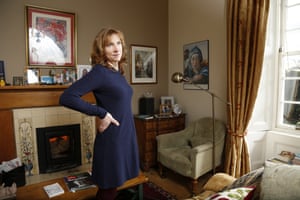


Polly Clark at home on Scotland’s west coast.


Polly Clark at home on Scotland’s west coast. Photograph: Murdo Macleod for the Guardian

Unlike every other woman I know who gave birth around then, I had what the doctor called “the experience we hope for everyone”. My baby was premature, which meant an emergency, and so the NHS pulled out all the stops: in the room at the moment of birth were a consultant paediatrician, an obstetrician and two midwives. One of the strongest memories I have is of the consultant paediatrician painstakingly explaining everything to me and checking I understood, even as I was writhing half naked and unable to form a coherent sentence.


He treated me as a person, even though I did not look like one at that moment. Mostly women are left alone for long periods and give birth without anything like that amount of skilled attention. But, although that doctor’s kindness is a standout moment in my experience of birth, nothing, not even a full complement of caring staff and being treated with dignity, can change the hard fact that birth is painful and frightening, a facing of one’s mortality and a loss of innocence akin to an experience of war. Most women will have not come so close to understanding death before that moment. It is a profound shock, and no less shocking for being an everyday occurrence.


I re-entered the world of the maternity ward, and the pressure began – to leave the hospital to make room (no seven to 10 days of lying-in these days) and to breastfeed on demand. There was no recognition of the enormity of the experience that had just occurred. It’s my belief that many women after birth have post-traumatic stress disorder: instead of being offered rest and help, they are sent home to be perfect mothers on no sleep.


Part of being a perfect mother in those early days is breastfeeding on demand. This did not feel like an “option”, it was official guidance, and to defy it set you against all the community health professionals who visited your home in the days and weeks after birth. My own baby was too premature to breastfeed. This did not prevent the midwives trying to make me, and questioning my commitment to my baby when I stayed on the feeding routine when I brought her home.


Having cyclical disagreements about the same thing when you are vulnerable and exhausted makes you doubt your own mind like nothing else. I had no family nearby to offer help, and experienced this period as a time without kindness, where everyone seemed to view me as an obstacle to the fulfilment of their own aims regarding my child.


Nevertheless, while in the fog of those early months, I knew enough not to admit I was struggling to cope. Every new mother knows that when the midwife comes round looking for signs of postnatal depression, you don’t answer honestly. In these days of anonymous reporting to social services and general paranoia about child welfare, any admission that you may not be coping could lead to your child being taken from you. For, as my friend summarised pithily, everything is now both your fault and your responsibility, and all of it must be achieved perfectly on levels of sleep that would normally be considered a torture weapon.


My baby is now 10. My medical records are thicker, but still they have no reference to any problems with my mental state. Almost to a woman, my friends will nod enthusiastically and agree they too were “not themselves” for months or years. Some of us will have flirted with drinking too much, or self-medicating in other ways; others of us may simply have been in a very bad mood, enjoying nothing about our lives for a long time.


Though we are, for the most part, no longer at odds with reality, I would posit that we are all profoundly changed by the experience. My identity as a person before motherhood has been obliterated. I have glimpsed that other country, that scary Handmaid’s Tale one, where women are nothing but vessels and slaves. I have experienced unkindness of the sort only doled out to third-class citizens. I may be a lucky mother of a happy child, but I have glimpsed what lies beneath our civilised veneer and it frightened me enough to be a factor in stopping at one child.


As one mother told me, it is the ones who don’t go mad who are weird. For when the world as you know it has vanished, is it really madness to try to escape? I “checked out” in some profound way, became instead a machine for caring, with a beady focus on detail. It’s a survival tactic employed by the kidnapped, the incarcerated. Do not reflect on what you have lost. The loss is so great and sudden it cannot be properly comprehended. Find a way to exist through time, to keep the time passing, to fulfil the obligations. Your mind, your soul, they can go where they will, and something of them will return. Just don’t drop your baby.


• Larchfield by Polly Clark (riverrun, £14.99). To order a copy for £11.24, go to bookshop.theguardian.com or call the Guardian Bookshop on 0330 333 6846. Free UK p&p over £10, online orders only. Phone orders min. p&p of £1.99.


The everyday trauma of childbirth made me stop at one child

26 Kasım 2016 Cumartesi

NHS to create specialist centres for childbirth mental health problems

The NHS is set to overhaul services for women who develop mental health problems around childbirth in a bid to ease the suffering caused by postnatal depression and reduce the number of new mothers who kill themselves or their baby.


NHS England is putting £40m into new specialist treatment centres for the one in five women whose pregnancy, birth or experience afterwards triggers serious psychological problems, including anxiety, depression and psychosis.


Claire Murdoch, its national mental health director, said these centres would end a “postcode lottery” in which two in three women currently affected missed out on vital help. While 14,000 new mothers each year received specialised support, the planned expansion of care would enable another 30,000 to do so by March 2021, said Murdoch, a former mental health nurse who also runs the Central and North West London NHS foundation trust in London.


“It’s self-evidently true that the current provision of these services is inadequate. There is a big postcode lottery. Some areas just do not have specialist community perinatal services available,” she added.


The money will be put into new community mental health units solely for women with perinatal mental health problems in 20 parts of England. They will be staffed by consultant psychiatrists specialising in such conditions, nurses with experience in the field, occupational therapists, psychologists and nursery nurses. Each will also run a buddying service in which women who have already experienced childbirth-related mental health problems will support those going through that or at risk of that.


Childbirth-related mental health conditions are estimated to cost the UK £8.1bn a year, or about £10,000 per birth.


Prof Lesley Regan, the president of the Royal College of Obstetricians and Gynaecologists, said: “Around one in five women develop a mental illness during pregnancy or in the first year after delivering their baby, and one quarter of all maternal deaths between six weeks and a year after childbirth are related to mental health problems.


“Despite these alarming figures, in almost half of the UK, pregnant women and new mothers have no access to specialist maternal mental health services and only 3% of [NHS] clinical commissioning groups [in England] have a maternal mental health service strategy,” she added.


The Royal College of Midwives backed the move but said that every maternity unit needed to have a specialist maternal mental health midwife on staff to help women in sometimes desperate need.


“We cannot continue to read the constant reports of the number of women killing themselves because they were not identified earlier and treated or because of the lack of trained staff or as a result of lack of services. It’s heartbreaking and we can do better as a country,” said Janet Fyle, the college’s professional policy advisor.


The NCT, the parenting charity, welcomed the NHS’s “positive plan” but warned that even if all 20 units were set up by 2021 as promised, there will still be “a long way to go” before all mothers who need help get it, said Elizabeth Duff, its senior policy adviser.


“There are nearly 300,000 women in the UK who suffer from mental health problems postnatally or when pregnant each year and the funding aims to reach 30,000 women in 20 areas, so there’s still a long way to go,” she added.


NHS England is also pledging to spend another £120m putting psychiatrists and specialist nurses into A&E units so that patients undergoing a mental health crisis when they turn up at an emergency department get better help.


NHS England plans to introduce new waiting-time standards to ensure that any such patient is seen by a mental health specialist within an hour of their arrival in A&E and also given a plan for their care within four hours.


NHS to create specialist centres for childbirth mental health problems

26 Eylül 2016 Pazartesi

Female playwrights deliver Manchester"s global festival of childbirth

In 2010, the UN secretary general Ban Ki-moon wrote that every year millions of women and children die from preventable causes. “These are not mere statistics,” he said. “They are people with names and faces.”


His remarks were part of the inspiration for Birth, a four-day festival of “drama and debate” to be held next month at the Royal Exchange theatre in Manchester. Planned to coincide with Manchester’s year as European city of science, Birth presents seven new works by female playwrights from around the world (Kenya, India, China, Syria, UK, the US and Brazil), all focusing on different experiences of childbirth.


‘Theatre doesn’t give answers, it provokes questions’ … Emma Callander


‘Theatre doesn’t give answers, it provokes questions’ … Emma Callander

The playwrights, including Stacey Gregg, Mũmbi Kaigwa and Kirsten Greenidge, have examined issues as wide-ranging as modern maternity intervention (IVF, caesarean, Pitocin), population control and the socio-economics of birth in some of the world’s most densely populated countries. “We wanted to talk about global health inequality and the place that it really comes into sharp focus is in birth practice,” says the festival’s creative director Emma Callander, co-founder of the global theatre movement Theatre Uncut.


She cites statistics that show the US is the most expensive country in which to give birth, but it also has some of the highest maternal mortality rates in the developed world;and that every year 3,000 Kenyan women develop fistula during childbirth – a tear between the rectal and vaginal passages that leaves women incontinent – and only 7.5% of them receive treatment.


One of the commissioned playwrights, 24-year-old Swati Simha, has used her play to look at the subject of mass sterilisation in India. The work focuses on a doctor haunted by her role in the country’s population control effort, where women are often given incentives to be sterilised and doctors have targets to reach in insanitary conditions.


“The big question is why spend so much money and resources on birth control as opposed to providing [better] healthcare,” says Simha. “Of course the birth rates are very high, but so are the infant mortality rates. It’s an agrarian society so you do require hands in the field and you know that at least three of your five kids are going to die in the first 10 years of their life, so of course the birth rate is going to be high in those regions. Why not provide medical facilities?”


To research her play, Simha spent two weeks in a rural village in the state of Jharkhand. “It was quite revealing,” she says. “There’s no electricity in the primary health centres and there’s no transportation. Women in labour can have to walk 10 kilometres to get to the nearest health centres.”


[embedded content]

Swati Simha talks about the Birth festival

Liwaa Yazji, a playwright, documentary film-maker and poet, left Damascus in 2013 and her mother, a gynaecologist, still lives in the war-torn city. Her play looks at the lives of three Syrian women – one in Damascus, one in Lebanon and one in Calais – and how they deal with the effects of conflict, displacement and the cruelty of war.


She says her play is not about documenting one woman’s story, but about bringing together lots of the stories she came across during her research. “It’s a kind of collage of so many details that I’ve heard,” she says.


Yazji says that the reasons women become pregnant in war and as refugees are complicated. “Some of them want to have children because it’s a very natural and instinctive reaction to people dying in the war,” she says. “There are women in the camps for six years and they are really doing nothing. They are sitting there and waiting for when they can move, so they decide ‘why not live?’”


[embedded content]

Liwaa Yazji talks about the Birth festival

Callander says that theatre is the richest area for such complex conversations to be had. “Having a person standing on stage, live, speaking to another person, is so provocative in terms of the element of debate,” she says. “Theatre doesn’t give answers, it provokes questions and if we want to provoke debate and provoke action then being in the same room as somebody and looking them dead in the eyes seems to be the most effective way to do that.”


After each play, experts from science, the arts, academia and politics will discuss the issues raised. Panellists for these debates will include human rights campaigner Shami Chakrabarti, Chinese-born British artist Aowen Jin and Professor Lesley Regan, who was elected as the first female president of the Royal College of Obstetricians and Gynaecologists in May.


Callander stresses that the festival is not supposed to function as a campaign, though there will be charity stalls promoting volunteering opportunities at the venue. Instead, she says, “we’re hoping that it will feel like a celebration of this incredible miracle. Because, in my view, [birth] is the only thing you can really say is a miracle.”


Female playwrights deliver Manchester"s global festival of childbirth

8 Mayıs 2014 Perşembe

"All girls and babies must survive childbirth"

Amina Lawal and her baby Wasila in Katsina, Nigeria

Nigeria has 1 of the highest maternal mortality rates in the planet. Photograph: SCHALK VAN ZUYDAM/AP


Why did you start the Wellbeing Basis (WBF)?


I started out off in the retail sector with a chain of children’s shops and ventures in home. But soon after I acquired married, I had a extremely unfortunate knowledge in the course of childbirth. A parent is not supposed to bury their youngster. I didn’t have any closure and I was angry simply because I felt, strongly, that this is a death that could easily have been prevented.


It was a defining second because I realised that our public well being infrastructure truly wasn’t what it ought to be. I grew to become interested in health from a rights point of view and started out WBF. The query was how to make issues far better for pregnant females so that they and their infants could survive childbirth?


What are the costs of maternal mortality in Nigeria?


When I first approached the federal ministry of health and presented to join forces with them to start off gathering data on maternal mortality, what we discovered was shocking. The figures were saying that this is some thing that should be declared a nationwide emergency. Nowadays, in spite of enhancements, we have about 40,000 preventable maternity deaths (pdf).


As we looked for options we also targeted on brings about, and the concern of kid brides became quite a substantial factor in the 19 northern states, and in the southeast. A little one is not a lady and is not in the greatest position to give birth. Providing birth when the entire body is not totally designed, compounded by lack of medical services, puts our ladies at danger of death.


How is WBF addressing the concern?


We operate via a coalition of women’s groups and societies. We focus on strategies this kind of as awareness constructing, advocacy and education. I think that education is central to growth. Women who are educated will make sure that their youngsters are educated, get healthcare and have very good nutrition. So we have a programme that money school buildings and distributes the studying materials packs.


We have also created tools like ‘Mamakits’, which we distribute to midwives to guarantee they have what they need to have to increase the possibilities of a protected delivery. And an integrated maternal, new-born and little one well being record – which I take into account a hand-held bill of rights. If you know the high quality of care you are supposed to be obtaining when you are pregnant, you can increase an alarm when you are not obtaining that care.


What sort of influence do religious conflicts and threats from militants like Boko Haram have on your function?


The recent bombings and kidnaps generate an atmosphere of dread. We battle for ladies to have entry to schooling without having that worry, now more than 200 school women have been snatched from their families. A handful of days ago I hosted a panel with three youthful ladies from the north, who could have simply been the ladies that were abducted. As they spoke about their amazing aspirations it highlighted just how significantly is at stake.


These conflicts should not stop us from performing what we require to do. They ought to inspire us to rise. I just lately signed my help to the Woman Declaration which is going to be a motion of hundreds of thousands from all close to the planet operating to ensure that women are safe, are nurtured and can thrive and contribute to financial development and their personal growth.


What is WBF’s biggest challenge?


1 of the hurdles we are consistently coming up towards is attaining scale on successful nearby initiatives. It can look impossible with out political will, but I never ever see a challenge as anything to lie down and hide behind or to use as an excuse – the lesson possibly that we need to search a lot more to the private sector.


What do you think about to be the organisation’s best achievement?


I could count my achievements by the number of well being kits or training packs we distribute, but for me what really issues is the lives that are actually saved.


The World Bank and WHO reviews show that maternal mortality prices have dropped by about twenty% in Nigeria. We are nonetheless far off, we nevertheless rank within the best 10 highest prices in the world, but the drop is a substantial achievement.


What is your vision for WBF?


My vision is to proceed to assist individuals and to turn out to be a national, house-grown grant creating organisation. I also see us getting to be a bridging point for people who wish to be on the frontline and will not know how to get there, since our frontline is enormous – it is our lady and our youngsters. The function in progress is how to translate that vision and make it work and sustainable.


Study a lot more stories like this:


• Women brave violence for their education in northern Nigeria


•Human trafficking: “We are haunted by the horror that we have witnessed”


• Bringing schooling to young mothers by means of mobiles


Join the local community of international advancement pros and authorities. Turn into a GDPN member to get more stories like this direct to your inbox


"All girls and babies must survive childbirth"

7 Mayıs 2014 Çarşamba

Margie Abbott urged to help minimize deaths in childbirth in PNG

Margie Abbott ought to use her position as wife of the prime minister to take action towards the shockingly high levels of death in childbirth amid females in Australia’s neighbouring countries, a doctor has told the Nationwide Press Club.


Speaking at the mother’s day event in Canberra, Barry Kirby, who functions in Papua New Guinea to deliver down the “unacceptably” substantial charges, stated much more lobbying was required.


“If females in Australia could join collectively with Papua New Guinean ladies that would be a fantastic issue,” mentioned Kirby.


“We want girls who are way up there – ministers’ wives, perhaps our very own prime minister’s wife – obtaining in and saying ‘ok what can we do here?’.”


More than 800 ladies around the globe die for the duration of childbirth every single day – 99% of them in developing countries. In PNG, Australia’s nearest neighbour to the north, 220 females die in the course of childbirth per a hundred,000 dwell births, with estimations that it could be as large as 450. By comparison, Australia’s price is 6.


In the Milne Bay province exactly where Kirby and his group of PNG staff operate, more than 700 mothers die for every one hundred,000 births, he said on Tuesday.


Nine out of 10 deaths in childbirth around the world are preventable with access to the most simple of medical care. Maternal overall health in PNG is additional difficult by a lack of education, health care education, and extremely large rates of domestic violence.


“The big problem we’re coming up against is male dominance,” stated Kirby, including that women with a “high-risk” partner are a lot significantly less most likely to seek out health-related care or assistance.


“The attitude of guys towards ladies in PNG wants to increase, as it does in several spots,” he explained.


Australia currently provides a lot more than $ 500m a yr in assist to PNG, like to especially handle the epidemic of violence. Kirby mentioned that even though support is reaching the nation, there are often troubles with its distribution.


“When I go out I see a lot of boxes out there from a variety of aid donors and they’re not open,” he said.


“You do require someone like me to get close to and comply with up on the perform that is completed.”


Kirby became a physician right after an incident whilst he was in PNG working as a builder. One particular evening he identified an really sick female lying by the roadside and stopped to support her. She had been accused of witchcraft and left there by villagers. He took her to the hospital but she died overnight, and Kirby realised her death could have been prevented with standard early medical care.


Kirby returned to Australia to grow to be a doctor and take his expertise back to PNG. He realised one of the crucial health care problems he would deal with was pregnancies.


“I knew to be a rural medical doctor in PNG you necessary to know your obstetrics.”


With the assistance of Australian organisation Send Hope Not Flowers, which asks men and women to make donations as a congratulatory present to a new mother or father, Kirby’s group distributes “baby bundles” to mothers, containing necessary objects for both the mom and kid which would otherwise be unaffordable.


They also train local maternity care employees in emergency response and with more superior health-related equipment, and facilitate family members planning possibilities for ladies.


As he watched the variety of ladies seeking medical support increase each 12 months, Kirby launched a effective bonus scheme for nearby workers who delivered a lot more infants than the earlier year’s average, as the reduced shell out for regional wellness staff did not increase with the workload.


The Australian ambassador for women, Natasha Stott Despoja, told Guardian Australia she discovered Kirby’s Press Club deal with effective, but “gripping and unsettling”.


“It also struck a particular chord, offered I have just returned from Port Moresby and Goroka and have observed first-hand the function at the hospital at the latter,” she mentioned.


“We’ve assisted 111 experienced midwives graduate in PNG more than the previous two many years by way of our help for eight clinical midwifery amenities, but as Dr Kirby talked about, there are several aspects that play a portion in addressing maternal mortality charges. These include multiple overall health program issues such as lack of infrastructure, lack of referral systems and transport and a lack of family planning.


“I am passionate about maternal and child overall health. I find it deeply regarding that women in the least produced nations are a hundred-300 occasions more probably to die throughout pregnancy and childbirth than these in Australia.”


Margie Abbott urged to help minimize deaths in childbirth in PNG

4 Nisan 2014 Cuma

Drug to avert extreme bleeding soon after childbirth could conserve 1000"s of lives

MDG : A maternity ward in Katine, Uganda

A maternity ward in Katine, Uganda. Reduction of blood following childbirth claims about 130,000 lives annually around the world. Photograph: Dan Chung for the Guardian


The trial of a new drug to stop excessive bleeding in women after childbirth, which could probably conserve 1000′s of lives annually, is to get started in 12 nations in June.


The clinical examine, which will be performed by the Planet Overall health Organisation (WHO), will include about 29,000 ladies in Argentina, Brazil, Egypt, India, Kenya, Nigeria, Pakistan, Singapore, South Africa, Thailand, the Uk and Uganda. The trial, which is expected to final 18 months, will test the effectiveness of a new medicine developed by Ferring Pharmaceuticals, which can be stored at room temperature in scorching and tropical areas.


Oxytocin, the drug most typically used to stop bleeding right after childbirth, needs refrigeration, which is a main obstacle for wellness centres in nations with unreliable energy supplies. The difficulty is notably acute in poorer countries, which may lack not only cold storage services but also good roads, producing journeys to far more remote places significantly slower, specifically for the duration of rainy seasons.


According to the WHO, postpartum haemorrhage is the top cause of death for the duration of childbirth, killing about 130,000 girls worldwide every single yr.


The millennium advancement goal of a 75% reduction in maternal deaths by 2015 is amid the most off-track of the eight global targets, and is unlikely to be met in the vast majority of poorer nations. However, all areas have manufactured gains in cutting prices. In accordance to the UN, the ratio of maternal deaths per a hundred,000 live births fell from 400 to 210 in between 1990 and 2010.


If the WHO trial is effective, the agency will collaborate with Ferring and the pharmaceutical firm Merck to check out how to make the medicine cheaply obtainable to poorer nations.


Michel Pettigrew, president of Ferring’s executive board, said he wished the drug to be as low-cost as achievable. A vial of oxytocin expenses about £1 Pettigrew hoped the new formula would not price considerably more.


“For several years, 1 of the concerns expressed to us by our health care committee was how we don’t have a climate-sensitive item, which would be easier to hold. So we began hunting into this two and a half years in the past, and have been in a position to develop a formulation which would be acceptable for these temperatures,” he stated.


“We considered, let’s make sure we consider to make a product at a really lower price to make it accessible at a really lower value to minimal-resource countries. That way, at least we have done our component to aid girls get by means of pregnancy and reside a typical life afterwards with their kids.


“We feel we have created a drug which can conserve lives. We are not a big pharmaceutical firm, we’re privately owned, so the monetary determination [for us] is extremely different. The commitment from shareholders is [that] we ought to help men and women all around the globe.”


Kenneth Frazier, chairman and chief executive at Merck, stated: “Working with our partners, we can support make a greater answer a actuality. It would be a true breakthrough to stop the amount one particular result in of ladies dying in childbirth in the most vulnerable elements of the globe.” By way of its Merck for Mothers initiative, the business has committed $ 500m (£300m) above 10 years to locate ways to lessen maternal mortality.


Drug to avert extreme bleeding soon after childbirth could conserve 1000"s of lives