In 2010, the UN secretary general Ban Ki-moon wrote that every year millions of women and children die from preventable causes. “These are not mere statistics,” he said. “They are people with names and faces.”
His remarks were part of the inspiration for Birth, a four-day festival of “drama and debate” to be held next month at the Royal Exchange theatre in Manchester. Planned to coincide with Manchester’s year as European city of science, Birth presents seven new works by female playwrights from around the world (Kenya, India, China, Syria, UK, the US and Brazil), all focusing on different experiences of childbirth.
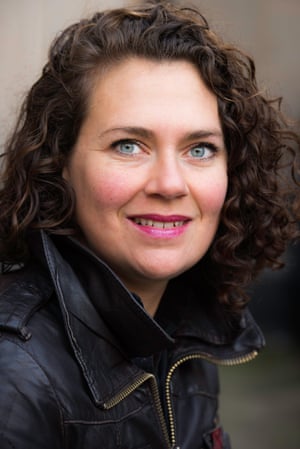
The playwrights, including Stacey Gregg, Mũmbi Kaigwa and Kirsten Greenidge, have examined issues as wide-ranging as modern maternity intervention (IVF, caesarean, Pitocin), population control and the socio-economics of birth in some of the world’s most densely populated countries. “We wanted to talk about global health inequality and the place that it really comes into sharp focus is in birth practice,” says the festival’s creative director Emma Callander, co-founder of the global theatre movement Theatre Uncut.
She cites statistics that show the US is the most expensive country in which to give birth, but it also has some of the highest maternal mortality rates in the developed world;and that every year 3,000 Kenyan women develop fistula during childbirth – a tear between the rectal and vaginal passages that leaves women incontinent – and only 7.5% of them receive treatment.
One of the commissioned playwrights, 24-year-old Swati Simha, has used her play to look at the subject of mass sterilisation in India. The work focuses on a doctor haunted by her role in the country’s population control effort, where women are often given incentives to be sterilised and doctors have targets to reach in insanitary conditions.
“The big question is why spend so much money and resources on birth control as opposed to providing [better] healthcare,” says Simha. “Of course the birth rates are very high, but so are the infant mortality rates. It’s an agrarian society so you do require hands in the field and you know that at least three of your five kids are going to die in the first 10 years of their life, so of course the birth rate is going to be high in those regions. Why not provide medical facilities?”
To research her play, Simha spent two weeks in a rural village in the state of Jharkhand. “It was quite revealing,” she says. “There’s no electricity in the primary health centres and there’s no transportation. Women in labour can have to walk 10 kilometres to get to the nearest health centres.”
Liwaa Yazji, a playwright, documentary film-maker and poet, left Damascus in 2013 and her mother, a gynaecologist, still lives in the war-torn city. Her play looks at the lives of three Syrian women – one in Damascus, one in Lebanon and one in Calais – and how they deal with the effects of conflict, displacement and the cruelty of war.
She says her play is not about documenting one woman’s story, but about bringing together lots of the stories she came across during her research. “It’s a kind of collage of so many details that I’ve heard,” she says.
Yazji says that the reasons women become pregnant in war and as refugees are complicated. “Some of them want to have children because it’s a very natural and instinctive reaction to people dying in the war,” she says. “There are women in the camps for six years and they are really doing nothing. They are sitting there and waiting for when they can move, so they decide ‘why not live?’”
Callander says that theatre is the richest area for such complex conversations to be had. “Having a person standing on stage, live, speaking to another person, is so provocative in terms of the element of debate,” she says. “Theatre doesn’t give answers, it provokes questions and if we want to provoke debate and provoke action then being in the same room as somebody and looking them dead in the eyes seems to be the most effective way to do that.”
After each play, experts from science, the arts, academia and politics will discuss the issues raised. Panellists for these debates will include human rights campaigner Shami Chakrabarti, Chinese-born British artist Aowen Jin and Professor Lesley Regan, who was elected as the first female president of the Royal College of Obstetricians and Gynaecologists in May.
Callander stresses that the festival is not supposed to function as a campaign, though there will be charity stalls promoting volunteering opportunities at the venue. Instead, she says, “we’re hoping that it will feel like a celebration of this incredible miracle. Because, in my view, [birth] is the only thing you can really say is a miracle.”
Female playwrights deliver Manchester"s global festival of childbirth

 Video games for Change will host their 11th yearly festival “as part of the 2014 Tribeca Movie Festival, presented by AT&T