Film etiketine sahip kayıtlar gösteriliyor. Tüm kayıtları göster

9 Mart 2017 Perşembe

Roe v Wade: Suffragette producers to make film about abortion ruling

The producers of Suffragette are to make a film telling the story of Roe v Wade, the landmark 1973 ruling that gave every woman in the US the right to have an abortion.


According to Deadline, Alison Owen and Debra Hayward’s Monumental Pictures is set to produce the film, which will be written by the Bafta-winning screenwriter Jennifer Majka.


The story will centre on Sarah Weddington, the lawyer who represented “Jane Roe” (real name Norma McCorvey), the pregnant woman who challenged a Texan law that restricted her access to abortion. The case ultimately reached the US supreme court, whose ruling paved the way for universal women’s rights across the country. McCorvey, who died last month, claimed she had been misled by her lawyers and became a fierce opponent of abortion rights in the years following the ruling.


Owen, whose credits include Elizabeth, Shaun of the Dead and The Other Boleyn Girl, produced Suffragette in 2015. Majka co-wrote The Bigger Picture, which won the Bafta for best short animation in 2015 and was nominated for best animated film at the 2015 Academy Awards in the same year.


“Women’s reproductive freedom is just as contested now as it was before this case, and this is a story that everyone should know,” Owen said.


The announcement comes at a time when abortion rights are under concerted assault by legislators in the US following the election of Donald Trump. Last month the House of Representatives voted to permit states to withhold funds from affiliates of Planned Parenthood and other healthcare providers that offer abortions.


Weddington herself has warned that abortion rights may be under threat. “I think everyone who cares about the Roe v Wade issue and other reproductive rights is very concerned about what will happen,” she told NBC News earlier this year.


Roe v Wade: Suffragette producers to make film about abortion ruling

13 Kasım 2016 Pazar

Hollywood film studios beat lawsuit over smoking in PG-rated films

Hollywood film producers have beaten a lawsuit which alleged that the depiction of tobacco use in films rated as appropriate for children led directly to deaths from smoking.


A class action launched by Timothy Forsyth claimed that the rating system used by the Motion Picture Association of America (MPAA) amounted to misrepresentation, since it was established that viewing tobacco imagery caused children to smoke.


“In 2012 the surgeon general concluded that the scientific evidence established that exposure of children to tobacco imagery in films causes children to smoke,” the lawsuit said.


“In 2014, the Centers for Disease Control and Prevention concluded based upon the scientific evidence that if defendants continued to assign the PG and PG-13 ratings to films with tobacco imagery the youth ratings would cause 3.2 million children to become addicted to nicotine and one million of those children would die prematurely from tobacco related diseases.”


In its defence, the MPAA, a trade body that represents the six major Hollywood studios, argued that film ratings amount to opinions, and cited the first amendment protecting freedom of speech. It said the ratings system is not intended to “prescribe socially-appropriate values”, but to offer guidance based on what most American parents would think about a film’s suitability for children.


Forsyth contended that all films depicting smoking should receive the restrictive R rating, meaning that anyone under 17 should be accompanied to cinemas by a parent or guardian.


“Saying that some material ‘may’ not be suitable when defendants know that some material is not suitable – that it will kill kids by the hundreds of thousands – is false and misleading,” the lawsuit claimed.


But the judge rejected that argument. The Hollywood Reporter quoted him as saying: “Forsyth insists that a rating less stringent than R is a representation that ‘the film is suitable for children under 17 unaccompanied by a parent or guardian’. The ratings plainly make no such representations. Rather, the PG and PG-13 ratings caution parents that material in such movies may be inappropriate for children … as such, neither intentional nor negligent misrepresentation claims are tenable as pleaded.”


The World Health Organisation has called in the past for films featuring smoking to be restricted to adult audiences, noting that 44% of all Hollywood films, and 36% of films rated for young people in 2014 contained smoking.


There have been laws in place restricting paid product placement of tobacco since 1998, and the MPAA’s rating system has taken instances of smoking into account since 2007.


The ratings board, which is made up of parents, now considers three questions where smoking is depicted: whether it is pervasive in the film, whether it glamorises the act, and whether there is a historic or other mitigating context.


Hollywood film studios beat lawsuit over smoking in PG-rated films

1 Ekim 2016 Cumartesi

Sally Phillips’s film on Down’s is ‘unhelpful’ for families, warns antenatal specialist

One of Britain’s leading antenatal experts has strongly criticised a BBC film about children with Down’s syndrome, before its broadcast this week.


The documentary, A World Without Down’s Syndrome?, will be shown on Wednesday and is presented by the actress Sally Phillips, who has a child with Down’s herself. In the programme Phillips, known for her role as Tilly in Miranda, makes the case against the introduction of a new NHS pregnancy screening test that would detect with 99% accuracy the foetal abnormalities indicating Down’s syndrome.


Jane Fisher, director of Antenatal Results and Choices, an organisation set up to support parents affected by foetal screening and its consequences, said she thought the programme – in which she is interviewed – was “not at all helpful” to people facing difficult decisions around a prenatal diagnosis of disability.


“Sally is a very compelling presenter,” Fisher told the Observer, “and – absolutely – it’s great to have the positive images of people [with Down’s] who are already here. But it’s very personal, and it’s an extra layer of difficulty for couples and families who might be making the decision now about whether to end their pregnancy. It risks offering the suggestion to those who have [decided to end a pregnancy] that they have made the wrong decision.


“It’s too problematic to have one individual representing that choice – one who is an advocate for not screening, who has a high-functioning, much-loved child. A woman who admits she has the resources for extra help with her absolutely lovely little boy.” She added: “No one is casting aspersions on Sally’s son. Or trying to invalidate his right to be here.”


People with Down’s have an extra copy of a chromosome and have learning and developmental difficulties ranging from mild to severe. Some are more prone to serious health conditions, especially heart and thyroid problems.


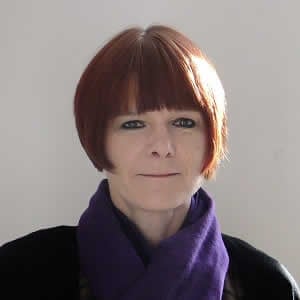
Jane Fisher, director of Antenatal Results and Choices.

Jane Fisher, director of Antenatal Results and Choices.

Current testing for the condition takes place after 12 weeks, at which point women are told if they are at high or low risk. They can also be invited to have a more accurate – but invasive – amniocentesis test, which carries a one-in-100 risk of miscarriage.


The new test, non-invasive prenatal (NIPT), is a blood test that boasts a detection rate of 99%. Currently 90% of people informed that their child has Down’s choose to terminate the pregnancy. Anti-screening campaigners fear that rate will rise if the more accurate, non-invasive NIPT is made available on the NHS, something ministers are currently considering. When NIPT was introduced in Iceland, the termination rate rose to 100%. The test is already available in private clinics, costing around £400.


About 750 babies are born each year with Down’s syndrome in the UK, and there are an estimated 40,000 people living with the condition.


In a joint statement with the BBC, the programme’s makers, Dragonfly, said the film was intended to “bring difficult questions into the public arena. This film follows Sally Phillips as she explores what effect the test could have on our society, drawing not only from her first-hand experience but also by meeting several families who give an insight into their experiences of having a child with Down’s syndrome, as well as people with Down’s syndrome themselves. She also talks to health professionals and experts with a wide variety of views.”


Phillips, who is a Christian, is pro-choice, but says women are pressurised into having abortions by medics, and that the positives and rewards in parenting a disabled child are ignored. “Nobody knows what Down’s syndrome children can achieve,” she says.


There will always be people who choose not to screen, who choose to have the child. The point is choice


Jane Fisher


Anti-abortion groups are involved in the Don’t Screen Us Out (DSUO) campaign, calling on MPs not to introduce NIPT. Lynn Murray of DSUO has called the test the “new eugenics”.


But, according to Fisher, the programme’s warning of a potential “world without Down’s”, if NIPT screenings are introduced, is an over-simplification.


“Full respect for Sally,” said Fisher. “You can see her empathy and her love for her son, and wish for people to have a more positive attitude towards the condition. But it’s important we don’t get too simplistic about this. There will always be people who choose not to screen, who choose to have the child. The point is choice.


“We want to make sure that women who take the decision to end the pregnancy are not perceived somehow as saying they do not value people who are here – they are saying this is not something they can do, that it is not right for them or for their families.


“Not only does no one know how their child would be affected by Down’s, but the big conflict for women is the adult the child will be 20 or 30 years down the line. For most women, that is the bit that tips them to end the pregnancy. An adult who will be, at best, vulnerable,” she said.


Sally Phillips in a scene from A World Without Down’s Syndrome?


Sally Phillips in a scene from A World Without Down’s Syndrome? Photograph: Brian Ritchie/BBC/Dragonfly

The Down’s Syndrome Association has not taken a position either for or against the proposed new screening regime, focusing instead on its own Tell It Right, Start It Right educational campaign, which calls for better training and information provided for health professionals.


Carol Boys, chief executive of the charity and mother of a young man with Down’s, said: “For a long time, we’d been receiving calls from families who are going through the screening process and want more information. Quite a number complain about the way they have been treated.


“Our organisation wasn’t set up to make judgments, but you cannot make an informed decision if you don’t have all the facts. The problem with testing is that people go along and don’t really know what they are being tested for or the implications of the result.


“They find themselves in a high-risk category and don’t know what it means. The screening committee have asked us to help them with training, and we are happy to do that.


“We are essentially here for people with Down’s and their families. As far as life for people with Down’s goes, things have come a long, long way in the past 30 years. Life is always going to be more challenging. They have a learning disability, and they are always going to need extra help and support – but then so do a lot of other people in our communities.”


A World Without Down’s Syndrome? is on BBC2 at 9pm on Wednesday


Sally Phillips’s film on Down’s is ‘unhelpful’ for families, warns antenatal specialist

13 Haziran 2014 Cuma

"The Fault In Our Stars," a Film About Youthful Cancer Sufferers, Does Properly

Till last week, The Fault In Our Stars was just a greatest-selling novel about teenagers with cancer. The runaway, actuality-biting Youthful Adult book by John Green had taken Penguin and tens of millions of readers for a extended sufficient, jolty trip. Now the story, advised from the point of view of a sixteen-12 months outdated woman with thyroid cancer in her lungs, has become a significant motion picture.


Early on in The Fault In Our Stars, you will catch children with cancer texting, driving, enjoying video games, reading and flirting. They go in and out of hospital emergency rooms and scanning machines even though their mothers and fathers view, anxiously, uncertain what to do or what will occur up coming.


Fox Fox’s T.F.I.O.S. – as people in-the-know refer to what I may get in touch with “The Massive Cry” – is a hit.  Perhaps against the odds, this movie took the amount 1 spot at box offices last weekend, and it’s nevertheless operating robust. A side result, probably, as judged by my Facebook feed, is a run on Kleenex Kleenex


‘The Fault In Our Stars,’ Fox


I liked this significant movie, despite all the sentiment and blatant over-use of metaphors. Kids who frequent hospitals and live near death lead fascinating lives. They don’t mince words they call spades, spades. And they’re Ok, is element of the messaging amongst the afflicted fictional youngsters. They want their genuine audiences in theaters to know that significantly about their conditions. The dilemma is, what Green’s kids with cancer decide on to say, and the movie reveals about them, could not be real. Surely it is not the same for all youngsters with serious illness. Okay-ness won’t, always, final.


Hope lives. As do parents, following youngsters die. Supreme sadness.


Feel of Otto Frank, the only Holocaust survivor among his family members. Following all that hiding, and wishing, it is he who lives to study Anne’s diary and share the story. Not surprisingly, he pops up in TFIOS. This film is loaded.


The protagonist, Hazel Grace Lancaster, worries about her parents’ really like for her and their long term nicely-getting. Gingerly portrayed by the actress Shailene Woodley, she suffers from flashbacks from age 13 or so, right after her cancer diagnosis, when she was bald and remedies were failing and her mom was crying. Hazel feels accountable for ache she may well deliver, unwittingly or generously by opening up, or by letting down the barriers for receiving to know her, intimately, prior to she dies.


“I’m a grenade” she tells the handsome younger guy she meets at the cancer support group. Augustus (“Gus”) Waters, smilingly played by Ansel Elgort, has lost a leg to osteosarcoma. He’s unafraid.


An oncologist viewing this slick movie may possibly get this – what it is like to get to technique a particular person with terminal sickness. The closer you get, the harder it is. For this purpose, some medical professionals hold a distance. Others lean in. They thrive, genuinely, on the privilege of getting “near.” But it can be a pleasure to hold the hand of a individual who’s seriously sick. You really feel like, perhaps, you can support them, if not physically, in other techniques. And that is component of what this movie is about.


Hazel has a preferred guide, “An Imperial Affliction” by the fictional writer Peter Van Houton. She grapples with the fact that his book stops mid-sentence. Hazel wants, practically far more than anything, to make contact with the writer to uncover out what occurs to the characters right after the “Affliction” ends. Willem Dafoe terrifically depicts a joyless man, the guide-within-the-book’s creator. Not to give it away, I must leave his pained, self-destructive soul at that point.


image with trailer, from TFIOS Facebook page

picture with official film trailer (TFIOS Facebook web page)


A detail I loved in this story is Hazel’s oxygen tank. She carries it close to, like small luggage on wheels, literal “baggage,” wherever she goes. She needs oxygen simply because her lungs are impacted by the thyroid cancer. With no it she fatigues and would, within minutes, endure organ harm. A quirk is that she drags it all around virtually constantly with no support, such as from her mother and father. Gus gets this. He does not right away offer you to carry it for her. He perceives that Hazel wants to deal with it on her personal, and that she’s capable of asking for help when essential. He treats her with no condescension, as she likes to be taken care of.


Last but not least, I should mention that the social media phenomena occurring all about TFIOS. There is a blurring of boundaries between individuals and the stories that encompass or adhere to them. John Green, the author of the unique guide says he was inspired by Esther Earl, a teenager in Quincy, Massachusetts. She created a actual-existence following on YouTube and Twitter Twitter before dying from metastatic thyroid cancer.


Like many movies, The Fault has a YouTube channel, Facebook web page and Twitter account. A number of of the characters are assigned their exclusive virtual spaces.


Only you can make a decision if you like this film. And the only way of deciding, to know if you can manage it, is to be inclined to get nearer to the subject of children with cancer, to invest a short interval of time there, in a theater. Not to worry – the framed, carefully layered picture is nowhere shut to the place exactly where Hazel and Gus and their buddies genuinely dwell. But it might give you a clue, an insight, or a excellent cry.


"The Fault In Our Stars," a Film About Youthful Cancer Sufferers, Does Properly

12 Mart 2014 Çarşamba

College Lunch Film Says Unhealthy Cafeteria Fare Is Everyone"s Issue

In his new documentary Lunch Hour, director James Costa’s cri de coeur about college lunch is not accompanied by slaughterhouse footage worthy of Upton Sinclair—though offered schools’ dependence on so-known as “factory farms,” it surely could. As an alternative, some of its most unsettling visuals demonstrate a common fluorescent-lit day in the cafeteria, the place several little ones pass on the nutrition-bad offerings. Numerous U.S. colleges, his movie factors out, invest as small as 90 cents per meal.


That penny-pinching (in spite of federal subsidies) helps them meet budgets amid privatization of services and tight state budgets and that feat will get far more complicated by the day. But it comes at a steep price, specifically for the roughly 17 million children whose primary entry to meals is at college. Alternatively of green greens and balanced meals, they get mystery meat, fries, and an overwhelming sum of sugar and dairy. Tiny wonder, then, that the nation faces a spiraling


A scene from the new documentary

A scene from the new documentary ‘Lunch Hour’


epidemic of weight problems. “We have no budgets and no concern about what we’re pumping into our little ones, and we wonder why they really don’t like foods,” marvels Rachael Ray, 1 of the film’s notable speaking heads. “We dumbed down their palates.”


Rachel Ray, TV host, entrepreneur and voice in the film

Rachael Ray, Tv host, entrepreneur and voice in the movie ‘Lunch Hour.’


Costa’s movie, which is out this month on iTunes and other streaming platforms, is riding a wave of interest in food that has brought books like Quick Food Nation, The Omnivore’s Dilemma and movies like Food Inc. to broad audiences. And it doesn’t have the college lunch group to itself. A fourth grader named Zachary Maxwell just lately produced a brief film, succinctly titled Yuck, about his lunchroom trials. A 2011 feature documentary, Lunch Line, examined the Nationwide School Lunch Plan.


Costa’s tack is exclusive, nevertheless, in that it does not seek to overwhelm with depressing stats or information (thought there are a lot) and it also foregrounds the ambiguity of a dilemma that has crept in with also-minor fanfare. A school principal frets about the ethics of educating little ones proper from wrong in the classroom and then serving up unhealthy and unappetizing meals. A medical doctor confesses to plying her little one with hot fudge sundaes when he was handled for a broken arm. And many of the speakers admit their personal culpability in the issue and the film, particularly in its cautiously hopeful 2nd half, diligently avoids turning out to be an activist polemic, even however Costa is a prominent figure in schooling circles. He is board chairman for the Hunt’s Point Alliance for Youngsters, which emphasizes collaborative relationships in neighborhoods and colleges.


“I did not want audiences to truly feel like they have no energy or they’re just overwhelmed,” the director informed me. “What I attempted to do is say, ‘I’m at fault, you are at fault. We just want to repair this.’ If you just start blaming folks, then nothing will get done.”


One frequent narrative in well-known culture is to demonize the cafeteria workers, but Lunch Hour makes the clear stage that they are a faulty target. “You actually can’t blame the lunch individuals. They are just provided these quite restricted substances to work with and an unrealistic fiscal target to hit.”


He stated the light bulb came on once he did the easy thing of visiting college cafeterias and having to pay focus to kids’ reactions and misgivings in excess of what’s on the tray – which gets to be a recurring motif in the film.


“It manufactured me so unhappy,” he explained. “The youngsters looked so unhappy going up there. I just started asking yourself, ‘what are we saying when we give children food that looks like that?’”


First Lady Michelle Obama works with kids from...

Very first Lady Michelle Obama functions with little ones from Washington’s Bancroft Elementary School to break ground for a White House garden. (Photo credit: Wikipedia)


Initial Lady Michelle Obama has had similar queries, and has garnered help but also accusations of nanny-ism just by planting an natural garden outdoors the White House.


“The status quo likes every little thing precisely how it is,” Costa says. “It’s big business performing school lunch. When men and women assault her for being the food police, they are really just safeguarding the status quo, which is one thing we cannot do any longer.”


College Lunch Film Says Unhealthy Cafeteria Fare Is Everyone"s Issue

10 Mart 2014 Pazartesi

Film theatre noise ban sought in Connecticut

Cinema audience

Quiet please! … Sound ban sought in cinemas. Photograph: Rich Legg/Getty Photos/Vetta


Connecticut is aiming to grow to be the initial US state to impose a ban on extreme sound ranges at public film screenings, it has been reported. A bill is at the moment before the state legislature’s Public Safety and Safety Committee that would ban the exhibiting of any movie or trailer that exceeds 85 decibels.


The ban attempt was initiated by chemical industry advisor William Younger, a Stamford resident who was quoted as saying: “Why they need this kind of loud sounds is past me … Hopefully this will be a wakeup phone to the theater owners and the MPAA to get their act collectively and do anything which is excellent for the public and still will satisfy their wants.” Democratic senator Carlo Leone, who helped introduce the bill, explained: “I help the notion moving forward … If there are other corrective measures with out legislation and it requires care of the problem, that would be the better decision.”


However, other people do not see the necessity of a ban. AP quote Dr Robert Dobie, a professor at the University of Texas who is described as an professional in noise-induced hearing reduction, who explained the 85-decibel regular is for prolonged publicity, not occasional loud sounds. “The exposure is so quick and intermittent that no one with any expertise would ever say that they have any genuine danger of hazard or harm,” he explained. “I feel quite comfy that the exposures are not anywhere close to hazardous. It really is the combination of degree and duration that matters.” For comparison, 85 decibels is identical degree as regular traffic sound, whilst a hair dryer is one hundred decibels, according to the American Tinnitus Association.


The business physique Movement Picture Association of America also oppose a ban, with senior vice president Vans Stevenson saying: “Surely no 1 is going to do anything at all that would have a hint of currently being hazardous … We have gone to wonderful lengths to make certain that average is in an acceptable range that is not harmful.” In 1999 the Nationwide Association of Theatre Owners launched the TASA (Trailer Audio Requirements Association) standard, a voluntary certification to restrict sound strain to 85 Leq


Young, however, says a limit is necessary as cinemas do not stick to the TASA normal, claiming his tests have shown sound levels have risen to a hundred decibels. “Who would like to sit there in ache? These businesses should not topic folks to dangerous sounds.”


Film theatre noise ban sought in Connecticut

21 Ocak 2014 Salı

Tribeca Film Festival To Explore The Transformative Potential Of Video Video games

TFF_GFC_marqueeVideo games for Change will host their 11th yearly festival “as part of the 2014 Tribeca Movie Festival, presented by AT&ampT AT&ampT. In addition, the Video games for Modify Arcade, which is open to the public, will be held at the Tribeca Film Festival Family members Festival Street Fair, taking spot on Saturday, April 26.”


The festival, which focuses on social impact games will take place on April 22-24, 2014 at the NYU Skirball Center for the Carrying out Arts.


Video games for Alter is New York City’s biggest gaming occasion.


The Tribeca Movie Festival is extremely effectively identified thanks to the involvement of Robert De Niro, who founded the festival along with Jane Rosenthal and Craig Hatkoff “in 2001 following the attacks on the Planet Trade Center, to spur the economic and cultural revitalization of the reduced Manhattan district via an yearly celebration of film, music and culture.”


The Tribeca Film Festival aims to deliver “industry and community with each other all around storytelling.” With the inclusion of Video games For Alter, the festival is implicitly acknowledging that the future of storytelling includes interactive mediums.


“Tribeca recognizes the transformative energy of gaming that goes far past the conventional entertainment value of video games. The impact and integration has been spreading rapidly across almost all domains. Of particular interest is how gaming has scaled to social great, from education to healthcare, and from conflict resolution to religion,” said Craig Hatkoff, Co-Founder, TFF. He continued: “By partnering with Games for Adjust, we hope to carry with each other the most cutting-edge creators of video games, educators, and the world’s biggest story-tellers. With each other, they will produce the newest innovations in gaming for the social good to even wider audiences. We look forward to further expanding our romantic relationship with Games for Change in the future.”


“The new romantic relationship with the Tribeca Film Festival is an amazing opportunity to attain a new audience for the ‘games for good’ sector,” mentioned Asi Burak, President of Video games for Adjust. “Games are typically talked about in the context of entertainment, but with this event, we’ll be capable to share our message that this medium can be very strong in generating constructive alter in the world.”


I routinely attend Games for Modify and I constantly discover it thought provoking. As opposed to ordinary business conferences that aim to promote, market place, and promote new video games, Video games For Adjust is interested in exploring the expressive and transformative possible of gaming.


Although the commercial gaming sector dominates the business, there are a plethora of developers who see games as capable of a lot more than just entertainment. They acknowledge that video games are usually teaching and influencing individuals who perform them, and as a result, we should strive to intentionally harness their energy for social impact. For this purpose, the Games For Alter Festival is constantly complete of impressive uses of interactive storytelling. These who attend see examples of how games can be political, educational, emotional, and much more.


Plan highlights from this year’s Video games For Modify festival will consist of: the Yearly Video games for Alter Awards, the Games for Alter Showcase at the NYU Skirball Center for the Carrying out Arts, as nicely as the Video games for Modify Arcade (open to the public).


If you strategy to attend, hit me up on twitter and say hello even though you are there.


For a lot more data about the festival click here: http://www.gamesforchange.org/


Jordan Shapiro is writer of  FREEPLAY: A Video Game Guide to Optimum Euphoric Bliss. For info on his upcoming books and events click here.


Tribeca Film Festival To Explore The Transformative Potential Of Video Video games