child etiketine sahip kayıtlar gösteriliyor. Tüm kayıtları göster

10 Mayıs 2017 Çarşamba

"Shattering stigma starts with simple conversations": tackling the child mental health crisis

Public concern around child and adolescent mental health is at an all-time high. The prime minister, Theresa May announced in January her intention to better identify and help the growing number of young people in schools who are at risk of developing mental health issues. Prince Harry and the Duke and Duchess of Cambridge, meanwhile, are using their profiles to convince the public that “shattering stigma on mental health starts with simple conversations”.


And yet, despite growing awareness of the issue, child and adolescent mental health services (Camhs) are under an increasing amount of pressure. Healthcare professionals bemoan a lack of resources and staff while the health secretary, Jeremy Hunt, has described Camhs as the “biggest single area of weakness of NHS provision”.


What are some of the issues facing children and young people today? What problems are services confronted with? What examples of best practice are there and how can the health, education and social care sectors provide better mental healthcare for children and young people? These were some of the questions addressed by experts in mental health at a roundtable discussion, chaired by the Guardian’s health policy editor Denis Campbell and supported by online counselling service XenZone.


“For children, there are so many messages about what to be, what to look like, how you should present yourself to the world. It’s 24/7 and social media judges most things,” said Anne Longfield OBE, children’s commissioner for England. “There’s anxiety around exams, schools and increasingly linear expectations. That all builds up.”


Sarah Hulyer, an activist from YoungMinds, the young people’s mental health charity, agreed that exams and stress are part of the problem. She also talked about the considerable effect of social media on young people’s mental health. “I think social media is negative in several ways in that your public life never ends. You’re always being watched,” she said.


Hulyer pointed out that social media can glamorise mental health problems and emphasised how important it is to start a conversation about mental health at a young age. “A lot of young people learn about mental health in the media, but often the only things talked about are anxiety and depression,” she said. “Young people don’t know [the range of] problems there are until they’ve had them explained to them.”


Attendees also discussed the problems facing services. Norman Lamb, Liberal Democrat MP and former mental health minister, said: “We’re faced with a dysfunctional system with awful access, which leads to people taking their own lives. We’re not going to solve the whole problem if we focus on the system giving treatment. It has to be about prevention and a fundamental shift of emphasis.”


Most agreed that there were significant problems facing the Camhs workforce. “We do not have an available workforce with sufficient morale to deal with the problem,” said Dr Bernadka Dubicka, consultant child and adolescent psychiatrist and chair-elect of the child and adolescent faculty, Royal College of Psychiatrists. She believes there are vast numbers of children and adolescents who could have been helped before they were referred to Camhs.


Sean Duggan, chief executive of the Mental Health Network at the NHS Confederation, claimed that the importance of child and adolescent mental health has not been properly recognised in the sustainability and transformation plans (STPs) that have been drafted to improve health and care in England. “STPs are here to stay and are a vehicle for setting priorities,” he said, adding that child and adolescent mental health is an urgent priority that needs to be addressed.


Although many around the table underlined the role that schools can play in reducing mental health problems among pupils, Malcolm Trobe CBE, general secretary for the Association of School and College Leaders, pointed out that there is a gap between what schools can deal with and their access to external support.


“Teachers have workload pressures – they just don’t have the time [to offer additional support],” he said. But he also asked where children with mental health problems were going to get that extra support: “We’ve got to move from talking about it to actually doing something. Health and education departments have got to work together so we have a strategic view of this.”


While the majority of those in attendance bemoaned the state of child and adolescent mental health services in the UK, Dr Matt Muijen, adviser in international mental health, painted a different picture. “There’s an unusual publicity about poor mental health in England. That creates demand,” he said.


“When you look at the supply side, you have remarkably good standards. There is no separate budget for child mental health but you’re the second highest funder of mental health services after the Netherlands. As a proportion of the health budget, you are by far the highest.” He went on to criticise local authorities for their inability to commission services, adding: “I always feel like health services in England are constantly changing, with a total lack of stability with no one quite knowing what they’re expected to do.”


Given the huge demand on services, attendees agreed that action was needed and floated possible solutions and examples of best practice. Elaine Bousfield, founder and chair of XenZone, suggested a digital approach could help, as long as it is tied into the wider health and social care system.


Bousfield spoke about XenZone’s online counselling and emotional wellbeing platform for children and young people. It’s used by them to talk to someone – generally for one to three sessions. “The beauty is they’re not then ruminating and adding to their anxiety,” she said. “Quite often young people don’t know what’s going on. They just feel terrible and they might not know why. They need a space where they can talk about that.”


Hulyer said a large part of the solution lies in the digital world, as that is how young people communicate. She said young people have a despondent view of Camhs and don’t believe that services will ever be there for them. She stressed the importance of learning about mental health at school and how it should be part of the curriculum. “You learn about physical health, so you should learn about resilience; how to deal with stress.” Hulyer also said that parents need support and talked about a helpline set up by YoungMinds that they can call for information and advice.


Dr Emma Blake, paediatric mental health consultant and chair of the Child Mental Health Committee at the Royal College of Paediatrics and Child Health, also highlighted MindEd, an online service for adults designed to provide help with, and information on, child and adolescent mental health.


Lamb and Duggan, meanwhile, cited some areas of the country where services are working well to tackle child and adolescent mental health. In Oxfordshire, mental health professionals go into schools every week and work with teachers to increase their understanding. Lamb said they had seen a drop in referrals to Camhs because they are intervening much earlier.


In Northamptonshire, a referral management centre was developed in 2015, which includes a consultation line open to young people and families, a texting service offered by school nurses, online chat for young people to talk to a mental health professional, self-referral, a children’s crisis home treatment team and two adolescent in-patient wards. Duggan also highlighted a new programme at Sussex Partnership NHS foundation trust – the Discovery College.


The concept is based on the existing recovery college, which involves free courses developed and delivered by health professionals. The discovery college applies the same principles for children and young people. It involves free courses for 13- to 20-year-olds, providing knowledge and skills to maintain and manage mental health.


Despite these positive schemes, there is still frustration over the lack of action relative to the tone of the conversation around child mental health.


During his time in government, Lamb produced a blueprint for mental health services, Future in Mind, which brought together a number of key proposals. Two years on, the government is now producing a green paper on the same subject. “This is an excuse to carry on talking rather than doing,” he said. “I’ve said to the health secretary to create incentives around the country to make urgent progress. The green paper can provide some value, but we need to do what we said we were going to do.”


At the table


Denis Campbell (Chair)
Health policy editor, the Guardian


Anne Longfield OBE
Children’s commissioner for England


Noman Lamb MP
Liberal Democrat health spokesman


Prof Miranda Wolpert MBE
Director, Evidence Based Practice Unit, UCL and Anna Freud Centre


Dr Emma Blake
Chair, Child Mental Health Committee, Royal College of Paediatrics and Child Health


Dr Bernadka Dubicka
Chair-elect, Child and Adolescent Faculty, Royal College of Psychiatrists


Sean Duggan
Chief executive, Mental Health Network, NHS Confederation


Elaine Bousfield
Founder and chair, XenZone


Sarah Hulyer
Activist, YoungMinds


Tony Hunter
Chief executive, Social Care Institute for Excellence


Dr Matt Muijen
Adviser in international mental health


Charlotte Ramsden
Chair, Health, Care and Additional Needs Policy Committee, ADCS


Prof Helen Stokes-Lampard
Chair, Royal College of General Practitioners


Malcolm Trobe CBE
General secretary (interim), Association of School and College Leaders


"Shattering stigma starts with simple conversations": tackling the child mental health crisis

21 Nisan 2017 Cuma

Sanofi epilepsy drug linked to over 4,000 child deformities

The epilepsy medication valproate is responsible for “severe malformations” in up to 4,100 children in France since the drug was first marketed in the country in 1967, according to a preliminary study by health authorities.


Women who took the drug during pregnancy to treat epilepsy were four times more likely to give birth to babies with congenital malformations, said the report, jointly issued by the medicines regulator ANSM and the national health insurance administration.


The study confirmed that the drug was “highly teratogenic”, which means it is capable of causing birth defects, said Mahmoud Zureik, scientific director of ANSM and a co-author of the report.


He said the estimated number of babies born with severe malformations, which ranged between 2,150 and 4,100 was “very high”. The types of birth defects attributed to the drug included spina bifida – a condition in which the spinal cord does not form properly, and can protrude through the skin – as well as defects of the heart and genital organs.


The risk of autism and developmental problems was also found to be higher, and will be quantified in a follow-up report later this year.


An earlier estimate suggested that 30-40% of children exposed in the womb could suffer such disorders.


From 1967 to 2016, between 64,100 and 100,000 pregnancies in France were exposed to valproate, resulting in 41,200 to 75,300 live births, according to the report.


The vast majority of the birth defects occurred for women under treatment for epilepsy.


But starting in the late 1970s, valproate – marketed around the world including the US, UK and Australia as Depakine, Depakote, Stavzor and other trade names – was also prescribed in France to treat bi-polar disorder.


Bi-polar women taking the drug were twice as likely to give birth to children with major birth defects, the study found.


The lower risk compared with women treated for epilepsy probably stems from the fact that for pregnant bi-polar women doctors stopped prescribing valproate early in the pregnancy, Zureik said.


“The risk of severe malformation is limited to the first two trimesters of pregnancy,” said Alain Weill, a researcher at the French health insurance administration and a co-author of the report.


The risk of birth defects associated with valproate has been known since the 1980s, especially for spina bifida, which occurs 20 times more frequently in foetuses exposed to the medication.


But the drug can still be prescribed to pregnant women when all other forms of treatment for epilepsy fail. That ruling, however, was put in place only in 2015.


Valproate is sold in France under the brand name Depakine by pharmaceutical company Sanofi, but is also available in generic forms.


Some French families of children with birth defects born to women who took the drug while pregnant – grouped under an umbrella association called APESAC – have sued the company, claiming that it did not adequately warn about the risks.


“The number of victims is potentially huge,” said APESAC president Marine Martin, who says two of her children – a girl and a boy – suffered physical defects brought on by valproate.


“We need to take into account children with malformations and autism, as well as families that lost a baby due to treatment during pregnancy,” she told AFP.


Her association estimates a total of 30,000 to 50,000 victims – children and families included.


In a statement, Sanofi said it had been “totally transparent with health authorities”


“We are aware of the painful situation confronting the families of children showing difficulties that may have a link with the anti-epileptic treatment of their mother during pregnancy,” the drugmaker said.


Sanofi epilepsy drug linked to over 4,000 child deformities

10 Nisan 2017 Pazartesi

Revealed: girl of 13 is first child in Britain to receive artificial heart

A 13-year-old girl from Worcester is the first child in Britain to have received an artificial heart, the Guardian can reveal, after doctors decided it was the only way to save her life.


Chloe Narbonne had the device installed in a complex nine-hour operation that involved 30 NHS staff at the Royal Brompton, a specialist heart and lung hospital in London. The artificial heart kept the then 12-year-old girl alive until a human heart became available a few weeks later.


While others have had a device known as a “Berlin heart”, which replicates its functions outside of the body, Chloe is the youngest person in Europe to have had an artificial heart implanted. With her fourth heart now beating in her chest almost a year on, she told the Guardian: “I feel well, like my normal self, but not quite my normal self, not after what I’ve been through. I guess the artificial heart was my lifesaver; it’s what kept me alive until I got another heart. What I’ve been through is life-changing.”


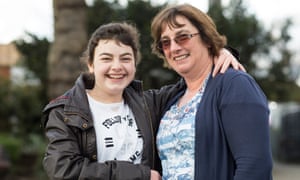
Chloe and her mum, Fabienne.


Chloe and her mum, Fabienne. Photograph: David Levene for the Guardian

Chloe was diagnosed with dilated cardiomyopathy when she was four weeks old. Her heart failed when she was 11 and still at primary school. She then had a stroke while waiting for a new heart, and when that first transplant failed to work, she was left close to death.


At that point, medics decided an artificial heart was the only option to keep her alive until another heart could be transplanted. André Simon, the director of heart and lung transplantation at the Royal Brompton and Harefield specialist hospitals, flew back early from a conference in the US to operate on Chloe last May.


What doctors said was an “extremely risky” surgery involved two medical firsts. Chloe was the first person in the world to be transferred from one hospital to another with her chest open and while on a life-saving extracorporeal membrane oxygenation machine, which delivers oxygen to a patient from outside the body. And Simon had to rebuild her heart’s atrium, or upper chamber, which had been removed during the failed transplant days earlier. A few weeks later, after her health stabilised on the artificial heart, she received the new heart.


Chloe’s mother, Fabienne Narbonne, said: “How they saved Chloe should be recognised for what it is – a miracle. Without the artificial heart she would be dead. It kept her alive for those crucial few weeks. By the time she got it she had run out of options.”


Simon, who has carried out all 13 artificial heart surgeries that have occurred in London hospitals, believes the success of Chloe’s operation should prompt other specialists to consider the devices for more children.


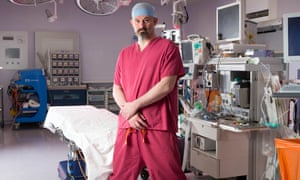
Heart surgeon André Simon.


Heart surgeon André Simon. Photograph: Richard Saker for the Observer

Chloe’s long waits for a transplanted heart have made her and her parents, Fabienne and Todd, passionate advocates for a change in the law on organ donation. Chronic shortages of donated hearts, lungs, livers and kidneys result in thousands of people a year dying while on the transplant waiting list. The family want the rest of the UK to follow the example of Wales, which in December 2015 switched from the opt-in system of organ donation to one of opt-out, where people have to specifically refuse consent for organ retrieval if they die.


Fabienne Narbonne said: “We owe eternal thanks to the donors and their families, without whom none of this would be possible as without donors there is no point being on a waiting list, however long you have to wait. We cannot thank them enough for offering Chloe a second chance at life, no words can explain how it feels and we have nothing but respect and gratitude for their gift of life.”


how it works

Only 1,690 people in the world have ever received an artificial heart. Of those, 34 were under 18. The oldest person in the UK to receive one was 62. Chloe is the third youngest in the world, after a nine-year-old and an 11-year-old in the US.


“Chloe is an example of a patient who would have been out of options without the 50cc total artificial heart,” said Michael Garippa, the president of SynCardia, the American firm which makes the devices. “It was the only device that could save her.”


Revealed: girl of 13 is first child in Britain to receive artificial heart

27 Mart 2017 Pazartesi

The everyday trauma of childbirth made me stop at one child

I once caught a glimpse of my medical records moving from trolley to receptionist’s desk at the GP. Perhaps they have long been computerised, but then they were housed in a large, weary-looking file. They had the heft of a first draft of a novel, a comprehensive and messy catalogue of pains and breaks, results and dead ends and cures. They were nothing unusual for a woman my age. One thing not in there, though, was any reference to or diagnosis of the dominant ill of our time: depression. Nor anxiety, insomnia, or any mental struggle whatsoever. No antidepressant has passed my lips; I have troubled only one counsellor briefly – when my father died.


However, I know for sure that, after the birth of my daughter and for a few years after, I was not in the world as I knew it previously.


I occupied an alternative reality, one that encompassed me and my baby and made sense of the onslaught that new motherhood brings. I was, in the words of a friend, “stark staring bonkers”. But I got up in the night as required, fed and cared for my baby, and attended all required groups, classes and appointments. I remained married and held down a job. My baby was healthy and seemed unaware that her mother was not mentally present in the ways society demands.


No one noticed that I had vacated the space I once occupied, and I know now that, as long as you don’t actually drop and break your baby, no one cares at all about your behaviour.


I am probably fairly typical of my generation of women: I married quite late and started a family late. I had had a lot of years of being an individual. I had all sorts of notions about independence: I thought my ability to think independently and solve problems was my primary asset. Combine this with a profound ignorance of children and babies and, indeed, most aspects of a woman’s traditional role, and it is plain I was ill-prepared for what awaited me.


I wanted my baby more than anything in the world. I loved her before she was even conceived. I longed for a family and wanted to have responsibilities and duties: these give life its meaning. I wasn’t a reluctant mother at all. But I had no notion of being simply a vessel: I stubbornly continued to think that, as an individual, I still mattered. What a vision I must have presented to the steady stream of officials who began to enter my life when I was pregnant: determined, articulate and believing myself the leader of the burgeoning team of two. Perhaps it was no surprise that other pregnant women grew scolding and told me to throw away my books, and from now on avoid any pleasure I had previously enjoyed for the sake of my baby.


I had a dangerously well-developed sense of self. It is this basic identity that new motherhood would destroy.


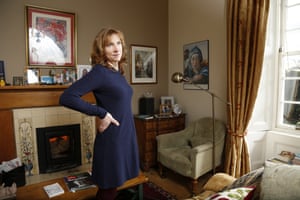
Polly Clark at home on Scotland’s west coast.


Polly Clark at home on Scotland’s west coast. Photograph: Murdo Macleod for the Guardian

Unlike every other woman I know who gave birth around then, I had what the doctor called “the experience we hope for everyone”. My baby was premature, which meant an emergency, and so the NHS pulled out all the stops: in the room at the moment of birth were a consultant paediatrician, an obstetrician and two midwives. One of the strongest memories I have is of the consultant paediatrician painstakingly explaining everything to me and checking I understood, even as I was writhing half naked and unable to form a coherent sentence.


He treated me as a person, even though I did not look like one at that moment. Mostly women are left alone for long periods and give birth without anything like that amount of skilled attention. But, although that doctor’s kindness is a standout moment in my experience of birth, nothing, not even a full complement of caring staff and being treated with dignity, can change the hard fact that birth is painful and frightening, a facing of one’s mortality and a loss of innocence akin to an experience of war. Most women will have not come so close to understanding death before that moment. It is a profound shock, and no less shocking for being an everyday occurrence.


I re-entered the world of the maternity ward, and the pressure began – to leave the hospital to make room (no seven to 10 days of lying-in these days) and to breastfeed on demand. There was no recognition of the enormity of the experience that had just occurred. It’s my belief that many women after birth have post-traumatic stress disorder: instead of being offered rest and help, they are sent home to be perfect mothers on no sleep.


Part of being a perfect mother in those early days is breastfeeding on demand. This did not feel like an “option”, it was official guidance, and to defy it set you against all the community health professionals who visited your home in the days and weeks after birth. My own baby was too premature to breastfeed. This did not prevent the midwives trying to make me, and questioning my commitment to my baby when I stayed on the feeding routine when I brought her home.


Having cyclical disagreements about the same thing when you are vulnerable and exhausted makes you doubt your own mind like nothing else. I had no family nearby to offer help, and experienced this period as a time without kindness, where everyone seemed to view me as an obstacle to the fulfilment of their own aims regarding my child.


Nevertheless, while in the fog of those early months, I knew enough not to admit I was struggling to cope. Every new mother knows that when the midwife comes round looking for signs of postnatal depression, you don’t answer honestly. In these days of anonymous reporting to social services and general paranoia about child welfare, any admission that you may not be coping could lead to your child being taken from you. For, as my friend summarised pithily, everything is now both your fault and your responsibility, and all of it must be achieved perfectly on levels of sleep that would normally be considered a torture weapon.


My baby is now 10. My medical records are thicker, but still they have no reference to any problems with my mental state. Almost to a woman, my friends will nod enthusiastically and agree they too were “not themselves” for months or years. Some of us will have flirted with drinking too much, or self-medicating in other ways; others of us may simply have been in a very bad mood, enjoying nothing about our lives for a long time.


Though we are, for the most part, no longer at odds with reality, I would posit that we are all profoundly changed by the experience. My identity as a person before motherhood has been obliterated. I have glimpsed that other country, that scary Handmaid’s Tale one, where women are nothing but vessels and slaves. I have experienced unkindness of the sort only doled out to third-class citizens. I may be a lucky mother of a happy child, but I have glimpsed what lies beneath our civilised veneer and it frightened me enough to be a factor in stopping at one child.


As one mother told me, it is the ones who don’t go mad who are weird. For when the world as you know it has vanished, is it really madness to try to escape? I “checked out” in some profound way, became instead a machine for caring, with a beady focus on detail. It’s a survival tactic employed by the kidnapped, the incarcerated. Do not reflect on what you have lost. The loss is so great and sudden it cannot be properly comprehended. Find a way to exist through time, to keep the time passing, to fulfil the obligations. Your mind, your soul, they can go where they will, and something of them will return. Just don’t drop your baby.


Larchfield by Polly Clark (riverrun, £14.99). To order a copy for £11.24, go to bookshop.theguardian.com or call the Guardian Bookshop on 0330 333 6846. Free UK p&p over £10, online orders only. Phone orders min. p&p of £1.99.


The everyday trauma of childbirth made me stop at one child

26 Mart 2017 Pazar

Child who died was let down by NHS, Jeremy Hunt tells memorial

Jeremy Hunt, the health secretary, has told the private memorial service for a one-year-old boy who died from blood poisoning that the child was let down by the NHS and the government.


Speaking at the service in Cornwall, Hunt said he had “come here to say sorry” to the family of William Mead, who died after the emergency services failed to diagnose a fatal case of septicaemia.


Hunt told those gathered at Truro Cathedral in Cornwall: “I as health secretary, the government, and the NHS, let down William.


“I’ve come here to say sorry. This weekend William should have been enjoying beautiful Cornish sunshine with his parents.


“We didn’t spot his sepsis before it was too late.”


William’s mother, Melissa Mead, has become a prominent campaigner for better diagnostics of sepsis, saying last year that the NHS system was “broken”.


She has also described her son’s final hours, his symptoms and her repeated pleas to health services in painstaking detail on her blog site.


William Mead


An NHS England report revealed there were 16 mistakes associated with William Mead’s death. Photograph: PA

The health secretary became aware of the case last year and has taken a personal interest in Mead’s campaign, a Department of Health spokesman said.


The spokesman added: “He went down at the request of the family and was also down there to visit a hospital. He had obviously become quite close to Melissa and they have worked quite a lot on the campaign on sepsis.”


An NHS England report last year found there were four missed opportunities to save William’s life in December 2014. Doctors and the 111 non-emergency helpline failed to diagnose pneumonia and the common but lethal infection of sepsis, and he died within 12 hours of Melissa Mead’s last call.


The report found there were 16 mistakes contributing to his death, which included that the “tickbox” system used by call handlers failed to include “sepsis red flags”.


It added that doctors were under constant pressure not to prescribe antibiotics and that doctors working out of hours were unable to access patients’ medical records.


Melissa Mead (@amotherwithout)

RT: Official Sepsis Public Awareness Campaign Video. Do you know the #SymptomsOfSepsis Please watch & RT to help us save thousands of lives. pic.twitter.com/5jV6ePxBaO


December 14, 2016


Sepsis – which includes common symptoms of fever, increased heart rate and confusion – kills approximately 37,000 people each year in England.


Melissa Mead said on Sunday: “We invited Jeremy to William’s memorial as he’s played a pivotal part in the sepsis campaign and we couldn’t have got it off the ground without his government support.


“Jeremy agreed to come in a personal capacity and it was a very intimate event for friends and family. The relationship that we have shows how productive a constructive approach can have.


“We know William was let down, but William didn’t know blame or regret, only love, and it is with this love that we keep putting one foot in front of the other.”


Hunt has admitted letting the family down and in January 2016 Mead welcomed his apology then.


She said: “We are quite overwhelmed, to be honest. We are just a little family from Cornwall but William is going to make an impact on the world and we are very thankful for that.”


The Department of Health spokesman added that Hunt was working with Mead’s awareness campaign in conjunction with Public Health England and the UK Sepsis Trust.


Child who died was let down by NHS, Jeremy Hunt tells memorial

21 Mart 2017 Salı

Plight of child workers facing cocktail of toxic chemicals exposed by report

Children as young as eight, working in the tanneries of Bangladesh producing leather that is in demand across Europe and the USA, are exposed to toxic chemical cocktails that are likely to shorten their lives, according to a new report.


Approximately 90% of those who live and work in the overcrowded urban slums of Hazaribagh and Kamrangirchar, where hazardous chemicals are discharged into the air, streets and river, die before they reach 50, according to the World Health Organisation.


Their plight spurred the volunteer doctors of Médicines Sans Frontières (MSF) to set up clinics in the area to diagnose and treat those who are the victims of their workplace. It is, says a paper published in BMJ Case Reports, “the first time they have intervened in an area for reasons other than natural disasters or war”.


MSF’s intervention was triggered by “the widespread industrial negligence and apathy of owners of tanneries and other hazardous material factories” towards the more than 600,000 largely migrant population who have no access to government-funded healthcare.


MSF set up and ran four main clinics for 5,000 workers in 2015, located in the centre of communities involved in four different manufacturing processes at factories for tanning, plastics recycling, garment-making and metals.


The hazards of the 250 or so tanneries in Hazaribagh – which are 30 to 35 years old and discharge 6,000 cubic metres of toxic effluent and 10 tonnes of solid waste every day – are best known. In 2012, Human Rights Watch produced a report called “Toxic Tanneries” which revealed the flouting of Bangladesh’s own laws as well as international law in the employment of children under 18 in work that is harmful or hazardous.


The factories douse animal skins in cauldrons of chemicals as part of the processing of “Bengali black” leather, which is exported to European leather goods manufacturers in Italy, Spain and elsewhere.


“Apart from heavy metals like chromium, cadmium, lead and mercury, a conglomerate of chemicals are discharged by the tanneries into the environment,” says the paper. “Workers aged eight and older are soaked to the skin, breathing the fumes for most of the day and eat and live in these surroundings throughout the year. Personal protective equipment [is] not provided.”


Child workers clad in no more than loin cloths and wellington boots are exposed to chemicals including formaldehyde, hydrogen sulphide and sulphuric acid, write Venkiteswaran Muralidhar, associate professor at the Sri Balaji Medical college in Chennai, and colleagues.


The other factories– for plastics recycling, garments and metals – are in Kamrangirchar, an urban slum which is not officially part of Dhaka city. “In these, there are complex risk hazards from cotton dust, heavy metals and chemicals like mercury, phthalates, acids and dioxins and ergonomic hazards,” says the paper.


Chronic skin and lung diseases are common, say the authors. Within six months of the setting up of the clinics, 3,200 of the 5,000 eligible workers had come forward for at least one consultation. Among them, 468 (14.6%) were diagnosed with suspected work-related diseases, and 30 (0.9%) had work-related injuries.


The figures do not reflect the overall harm to the population, however, said Muralidhar. Those who are severely injured by chemicals or accidents would not go to one of the clinics. “They will probably be taken by rickshaw to a hospital in Dhaka,” he told the Guardian. And the clinics were only open four days a week, during the daytime, and workers needed the owner’s permission to go for a consultation.


He feels strongly that a hospital should be set up in the slum to help its people. “They are the most horrible conditions you can imagine,” he told the Guardian. “I work in this area. I have never seen anything as bad as this.”


Plight of child workers facing cocktail of toxic chemicals exposed by report

18 Şubat 2017 Cumartesi

Sarfraz Manzoor: Our long, hard battle to have a second child

One morning at breakfast our daughter, Laila, looked up from her cornflakes and said: “Why am I the only child in this family?”


We had always known we wanted more than one child. Laila was born in 2011, a year after Bridget and I married. I loved being a dad. Children are hope in human form and while parenthood was often challenging, it also gifted us an addictive joy.


Soon after Laila turned one, Bridget suggested we try for a second baby. We wanted another child because, to us, having only one made us feel as if our family were incomplete. We wanted Laila to have a sibling and felt we would be failing her if we did not give her the chance of being someone’s big sister.


Bridget got pregnant easily the first time, so we assumed she would do so again. To begin with, we did not pay much attention to the monthly disappointments. But, in time, I came to dread the sound of heavy footsteps as Bridget returned from the bathroom having spotted the blood that indicated her period was coming and a baby was not. She would curl back into bed with me and I would hear her quietly crying.


Sarfraz Manzoor with his daughter, Laila, when she was eight months old.


Sarfraz Manzoor with his daughter, Laila, when she was eight months old. Photograph: Graham Turner for the Guardian

We moved from trying and then struggling and then failing to fall pregnant. The more we tried, the less fun it became. Sex went from pleasure to duty, from spontaneous to scheduled. It did not matter if we had had a fierce row earlier in the evening – by the time we got to bed we would somehow need to kiss and make up. Meanwhile, friends’ pregnancies produced new siblings for Laila’s friends.


After more than a year of failure, we saw our doctor. No single factor appeared to explain why Bridget was not getting pregnant. It had never occurred to us that we might have fertility problems – we already had a baby – but having failed to conceive naturally, we were advised to consider IVF. The fact that we had Laila meant the NHS would not pay and that we would have to go private – at a cost of thousands of pounds. It would eat up my savings, and there was no guarantee of success, but we felt we had at least to try, so that Laila could have her longed-for younger sibling.


We agreed to start on IVF and a few days later two large cardboard boxes arrived at our home filled with drugs for Bridget. There were also fearsome-looking syringes for injecting drugs into her stomach. Meanwhile, I signed up for weekly acupuncture sessions that aimed to boost the mobility of my sperm, and started taking special sperm-enhancing vitamin tablets. The drugs worked: within a couple of months, Bridget had produced a cluster of eggs, two of which were then fertilised. On 26 June 2015, the two embryos were transferred into Bridget’s uterus.


We then had to wait two weeks for the all-important pregnancy test. We hardly slept the night before. That morning, with Laila still asleep in her bedroom, I pulled out a framed photograph of our wedding day. We stared at it. What we were going through was nothing compared with those having IVF who did not already have children. Whatever the result of the pregnancy test, we had a huge amount to be grateful for.


A blood test revealed that it was good news: Bridget was pregnant. We were elated: all that money and all the pills and needles had been worth it.


The following weekend, I headed off to the Latitude festival, while Bridget was booked in to have some blood tests. On the Sunday, I noticed a missed call from Bridget. She had heard from the clinic: her pregnancy hormones were not increasing as fast as was expected. It could be ominous or it could be nothing – the only way to know was to book in for a scan.


The scan revealed that there was a gestational sac – a first sign of early pregnancy – but in order to tell whether it was still growing, a follow-up scan was needed. At the second scan, the nurse said, “I can see the heart beating.”


Bridget burst into tears of happiness and we hugged each other as the nurse said we should book for a third scan to track the rate of the embryo’s growth. It felt like a formality. The scan was scheduled for 10 August, the day before Laila’s fourth birthday. It would, we thought, make a perfect pre-birthday present if she came with us and got a glimpse of her future sister or brother.


That summer morning, we walked into the room full of sunny confidence. I sat next to Laila holding her hand and Bridget lay on her back as the nurse examined her. She worked in silence, studying the cloudy images on the monitor. We had become used to the routine. The nurse completed her tests and then said, “I’m so sorry but it’s bad news: there is no heartbeat.”


I thought I had heard wrongly but Bridget understood. I was mute from shock – I could not believe what I had heard. Laila was wondering what had happened. “Are those happy tears, Mummy?” she asked.


When I recall the days after the news, what I most remember is Bridget and me weeping, sometimes together and at other times apart while trying to keep our distress from our daughter.


Bridget felt it was worth having one more attempt. She didn’t have the desire to keep going endlessly, failed round after failed round. It would be too hard on her body and mind, but she wanted to have one more try. The failed round of IVF had cost more than £12,000. We couldn’t afford a second cycle. It was then we had an unexpected stroke of good fortune: an uncle of Bridget’s generously offered to help to pay for a second round of IVF.


The whole business started again – the drugs and injections, the hope and the waiting.


One morning in mid-March the following year we did the pregnancy test and although the news was good, we could not allow ourselves to believe that success was inevitable. In the past, miscarriages had been something that happened to others, but they were now part of our story: we were too frightened to take anything for granted again.


I had a miscarriage. Why can’t we talk about losing a baby?

Even when blood tests confirmed the pregnancy and the scan revealed the tiny beating pulse of a heart, we could not allow ourselves to get too excited. Only when we went to the 12-week scan, which showed the embryo growing normally, did we feel safe enough to believe that our luck had changed.


It was a Saturday night and Bridget and I were at a friend’s wedding in the Devon countryside. She was 13 weeks pregnant and starting to show. The wedding disco had just begun and I was on the dancefloor. When I stepped outside the hall for some air, I saw Bridget. She had a stricken expression and I knew instantly that something had happened. “I’ve started bleeding,” she said.


Minutes later, she was sitting on the toilet in our hotel room, blood streaming between her legs. An ambulance crew advised us there was little point in being driven to A&E because they would not be able to confirm a miscarriage.


The next day we found ourselves in our local hospital as a sonographer smeared lubricating gel on Bridget’s belly. I am not sure we would have coped with a second miscarriage but, thankfully, the baby was fine – apparently the sort of bleeding Bridget had experienced was common but rarely discussed.


It was Sunday evening, 20 November, and Bridget was due to be induced the following day. She had been having minor contractions during the afternoon and by the evening they were becoming more intense. While we were having dinner, she said we should call for a taxi to take us to hospital. We reached the hospital at 9pm; an hour later, our son, whom we would later name Ezra Zakariya Manzoor, was born.


The following day, Bridget’s cousin brought Laila to the hospital. Bridget was in bed cradling our baby son when our daughter walked up to him. Bridget smiled broadly and said: “Laila – say hello to your little baby brother.”


Sarfraz Manzoor: Our long, hard battle to have a second child

13 Şubat 2017 Pazartesi

Wild sea swimming in my 60s: "it erases problems, it"s being a child again" – video

A workaholic with grown-up children, Julia found herself lonely and facing retirement without a plan. Living in Italy, she visited England to see her daughter living in Plymouth and decided to stay, but her first winter saw her hibernating from the cold and she put on 20kg. But now the 66 year old says the sea has become a symbol for her re-invigorated life, after she took up daily cold water swimming at Porthcurno beach, near Penzance – ‘it’s freedom, joy, pleasure’


Wild swimming in the UK: 10 top spots


Wild sea swimming in my 60s: "it erases problems, it"s being a child again" – video

6 Şubat 2017 Pazartesi

Treating former child soldiers and refugees is tough yet fascinating

My first client of the day is Ahmed. He witnessed around 30 people, including family members, drowning when the boat in which they were crossing to Europe, sank in a storm. He feels guilty for surviving. He was one of the youngest on the boat, so was wearing one of the few life jackets.


This morning I’ll try to help Ahmed with the flashbacks he has every time it rains, with the nightmares that wake him every night about drowning, people calling his name in the darkness, bombs falling, bodies on the street. He is claiming asylum in the UK. He knows that some people don’t want him here, but he’s frightened of going home. His home town is being bombed, and he doesn’t feel wanted there either.


For all the stories of human suffering, these are also narratives of survival


After Ahmed, I’ll see Erica, who was beaten so badly by her husband that she has a metal plate in her skull; Louise, who regained consciousness in the middle of an operation, able to feel everything but unable to move or raise the alarm; and Alex, who dreams every night about the colleague he could not save when their vehicle was hit by an IED in Afghanistan.


As a trauma therapist, this is a normal day for me. Some people associate post-traumatic stress disorder (PTSD) only with military veterans, but my clients come from a huge range of backgrounds. Almost any life-threatening experience can cause PTSD, as can sexual assaults, witnessing terrible things happen to someone else, or hearing about them repeatedly as part of your job.


There is still a stigma associated with many mental health problems, and PTSD is no exception. Some people feel it is a sign of weakness, and they should just be able to get over what has happened. Others are unaware that help is available, or that treatments are effective.


There is no shortage of referrals, and managing the waiting list is a constant struggle. Trauma therapists spend their days listening to some of the most heartbreaking and horrifying stories imaginable. Confidentiality prevents us talking about what we have heard outside of the therapy room, but we support each other with time, care, biscuits and humour.


NHS trauma services exist in various cities across the UK, but service provision is patchy and postcode-dependent. Cuts over the years have put further pressure on mental health services which are already spread thin, leaving many therapists feeling burnt out by unachievable targets and endless waiting lists. Insidious measures to cut costs, such as limited session numbers, freezes on recruitment and service restructures (another word for cuts) continue to whittle away services, and lead to patients waiting longer for less treatment.


Why would I choose to work in this field? It is fascinating. I’ve heard firsthand accounts of what it is like to be recruited as a child soldier, to survive the Rwandan genocide, to travel Basra’s road of death. Perhaps not experiences everyone would want to hear but, for all the stories of human suffering, these are also narratives of survival. My clients have escaped, endured and overcome events which can, and have, killed many others. I bear witness to their fortitude, and help them mend the mental scars.


Thankfully, many of my clients recover. Trauma memories are not forgotten, but they can fade. Through treatment, clients achieve goals which many of us take for granted, like sleeping through the night without nightmares, or meeting new people without fearing they will be attacked. Things which were previously out of reach because of their symptoms, like working and having relationships, become achievable.


There is no magic pill or quick fix to treat PTSD. The most effective treatments are trauma-focused. Rather than avoiding the horrific memories, therapy involves talking about them, processing what happened, and making sense of what can feel senseless. We spend some sessions out of the office, helping clients to overcome situations and places which they have been avoiding, teaching them to discriminate the past from the present.


As a therapist, seeing someone who has been so mentally, emotionally, and often physically, damaged, begin to heal is incredibly rewarding. On a gloomy day, I read the cards and letters that clients have written to me after treatment. They tell stories of recovery and hope.


Knowing the potential for recovery will help me in my session with Ahmed today. At the moment he feels that he lost everything worth living for in that storm over the Mediterranean. Today, we’ll start picking up the pieces. We’ll talk about what happened, and grieve for the losses. We’ll try to put the bad memories in the past, so that he can look towards a future. When that happens, it will remind me again why I do my job.


Some details have been changed


If you would like to write a blogpost for Views from the NHS frontline, read our guidelines and get in touch by emailing sarah.johnson@theguardian.com.


Join the Healthcare Professionals Network to read more pieces like this. And follow us on Twitter (@GdnHealthcare) to keep up with the latest healthcare news and views.


Treating former child soldiers and refugees is tough yet fascinating

11 Ocak 2017 Çarşamba

Child "sugar scourge": thousands having teeth removed in hospital

More than 40,000 children and young people a year are having rotten teeth removed in hospital in further evidence of what doctors call the “costly scourge of sugar”.


New NHS figures obtained by the Local Government Association (LGA) show that 40,800 under-18s in England had at least one tooth taken out last year under general anaesthetic because of decay. Performing the procedures cost £35.6m.


The children involved had such advanced decay that they could not be treated by a dentist and had to go to hospital instead. NHS surgeons carried out 161 such operations each working day.


“These figures are a stark reminder of the damage excessive sugar consumption is doing to our children’s teeth,” said councillor Izzi Seccombe, chair of the LGA’s community wellbeing board.


“It is deeply worrying that the type of dental treatment required is beyond the capacity of a local dentist, due to the severity of the tooth decay, and as a result has to be done in hospital,” she added.


The 161 operations a day should serve as “a wake-up call” to ministers to introduce tougher curbs on sugar, not just the planned levy on sugary soft drinks, said Prof Nigel Hunt, the dean of the faculty of dental surgery at the Royal College of Surgeons.


“The awful impact sugar is having on our children’s teeth is brutally evident in the number of under-18s we are seeing daily that need more than one tooth extracted due to tooth decay. It is shameful that a problem which is 90% preventable continues to plague our children in this way,” Hunt said.


“Having teeth removed can be very traumatising for children and requires time away from school for them, as well as time away from work for their parents.


“The government’s sugar tax will go some way to cutting sugar consumption that leads to tooth decay, but it also needs to support public health campaigns that remind parents of good oral health,” Hunt added.


The LGA, which represents councils in England and Wales, wants ministers to let it help decide how proceeds from the sugar tax should be spent.


Child "sugar scourge": thousands having teeth removed in hospital

25 Kasım 2016 Cuma

What is your experience of working with child mental health services?

The health secretary, Jeremy Hunt, has described children and adolescent mental health services (Camhs) as the “biggest single area of weakness in NHS provision”.


Hunt told the Health Service Journal that too many families were being let down because of what he described as “big problems” in the capacity of services to support and treat children earlier in their lives.


Healthcare professionals are also painfully aware of the issues facing Camhs. Those working in and with the service admit failing to provide adequate care because of time pressures, a lack of staff and a shortage of beds. Teachers and social care professionals also feel the effects.


We want to hear from healthcare professionals, both those working in Camhs and in other areas of the health service, about what the situation is really like. What challenges are you faced with? How does it have an effect on you personally?


We’d also like to hear from teachers, social workers and any other professionals who have dealings with children or adolescents with mental health problems and/or with services. How is your job affected? Does it take a toll on you?


You can remain anonymous. If you prefer, you can email sarah.johnson@theguardian.com with your thoughts.


What is your experience of working with child mental health services?

17 Kasım 2016 Perşembe

Psychiatrists attack "scandal" of child mental health spending

NHS bodies are spending as little as £2.01 per child on mental health care for young people, despite the big spike in anxiety, depression and other serious problems among under-18s.


Psychiatrists claim the small sums being spent by GP-led clinical commissioning groups (CCGs) in England constitute a national scandal at a time when youth self-harm and suicide are rising.


“It is a national scandal that opportunities to prevent mental illness from occurring in childhood are being missed because of unacceptably low investment,” said Prof Sir Simon Wessely, the president of the Royal College of Psychiatrists.


“Our analysis shows that in many parts of the country, the proportion of money that NHS clinical commissioning groups are planning to spend on the mental health of our children and young people is negligible,” he added.


Luton CCG is spending the least amount of money for every under-18 in its area this year – just £2.01 – according to research into CCGs’ spending plans undertaken by the royal college.


Other CCGs spending notably small sums on children and adolescent mental health services (CAMHS) include the London boroughs of Enfield (£2.33), Tower Hamlets (£4.45) and Ealing (£6.39) and North Somerset (£5.89).


In contrast, Birmingham South and Central CCG has allocated the most for such services of any of England’s 209 CCGs – £135.85 – while the figure is £131.37 in Corby CCG and £126.76 in South Tyneside.


Ten CCGs are spending less than £10 a head this year treating the growing number of psychological and psychiatric illnesses which are occurring in under-18s. Twenty-five will spend £25 or less per head. Experts say that exam stress, body image issues, the negative effects of social media and pressure to succeed are among the key factors behind the increase in mental illness.


“The tiny sums being spent in some areas of the country are disgracefully low, particularly in light of sharply rising need,” said Luciana Berger, the MP and former shadow mental health minister who is now the president of the Labour campaign for mental health.


“This is yet further evidence of the gap between Jeremy Hunt’s continued promises for increased funding and the reality on the ground for our young people’s mental health services.”


The Guardian disclosed last month that NHS mental health services were treating 234,000 children and young people in England every month, and that the real figure was much higher because 40% of mental health trusts had not yet said how many patients under 18 they had.


Claire Murdoch, NHS England’s national director for mental health, said it was putting more money than ever before into CAMHS services.


“Improving mental health for children and young people is an absolute priority for the NHS, and councils, third sector organisations, schools and social care all have a role to play in this. The additional £1.4bn invested last year is helping us to make progress on our ambition to treat 70,000 more children and young people each year by 2021,” said Murdoch.


CCGs increased their spending on mental health overall by 8.4% during 2015-16, she added, but acknowledged that there was “variation around the country” in the exact sums invested.


But research earlier this week by the Education Policy Institute said much of the extra £250m a year which the coalition government pledged to put into CAMHS care during each of the five years of this parliament was not reaching the frontline. Specialist children’s psychiatrists in many areas agree.


Berger said that underfunding CAMHS care was “a false economy” because 75% of adults who developed mental health problems first exhibited symptoms in childhood, and problems left unaddressed cost the NHS more.


The NSPCC said the wide variation in the amounts put into CAMHS care reflected a “postcode lottery”.


A spokesman for the charity said: “It is a sad state of affairs if vulnerable children and young people are subjected to a postcode lottery when it comes to getting mental health support.


“It’s really concerning that some areas of the country will only spend a fraction on mental health services for children and young people compared to what others will spend elsewhere. It should go without saying that children and young people should be able to get proper support for mental health conditions regardless of where they live.”


  • In the UK, the Samaritans can be contacted on 116 123.
    In the US, the National Suicide Prevention Hotline is 1-800-273-8255.
    In Australia, the crisis support service Lifeline is on 13 11 14.


Psychiatrists attack "scandal" of child mental health spending

3 Kasım 2016 Perşembe

Child obesity rising again, NHS report reveals

A growing number of children are becoming obese as young as four or five years old, NHS figures have shown, sparking renewed concern about the obesity crisis.


Obesity is rising among children both in their first and last years at primary school, according to the latest annual measurements of child body mass index (BMI) in England.


Overall, 9.3% of four and five-year-olds in primary reception class in England in 2015-16 were classed as obese, up from 9.1% the previous year, according to the national child measurement programme (NCMP).


The number of obese ten and 11-year-olds in their last primary school year also rose from 19.1% to 19.8% last year – nearly one in five.


Richmond upon Thames in south-west London has the fewest fat children in England. In the borough, 11% of year six pupils are classed as obese. In contrast, in the east London borough of Barking and Dagenham 28.5% of children that age were found to be obese.


More boys are dangerously overweight than girls. Among reception pupils, 9.6% of boys were obese compared to 9.1% of girls. Similarly, 21.7% of boys in year six were obese compared to 17.9% of girls, according to the latest NCMP results published by NHS Digital.


The figures reveal that child obesity is rising again after falling slightly in 2014-15.


The statistics also underlined the stark class divide. NHS Digital’s report found thatobesity prevalence for children in reception living in the most deprived areas (12.5%) was more than double that of those living in the least deprived areas (5.5%). In year six, 26% of children living in the most deprived areas were obese compared to 11.7% in the least deprived areas.


Nationally, the number of reception children who are either overweight or obese has also risen, from 21.9% to 22.1%. The same picture emerges with year six pupils, the number of whom found to be overweight or obese rose from 33.2% to 34.2%.


The figures come after Theresa May’s government was criticised for watering down the childhood obesity strategy that her predecessor, David Cameron, intended to publish. Health organisations, charities and campaigners such as Jamie Oliver have accused May of putting the interests of big business above those of public health and letting down children and families by publishing a “weak” action plan in August.


Experts voiced deep unease at the figures and upward trend. “It is deeply worrying that more children are leaving primary school overweight or obese than ever before and levels are increasing”, said Professor Kevin Fenton, the national director for health and wellbeing at Public Health England, which advises the government.


The number of obese ten and 11-year-olds is the highest since children began being routinely weighed and measured in 2006-07. In that year 17.5% Year 6 pupils were found to be in that category. Last year it was 19.8%, even higher than the previous record of 19.2% in 2011-12.


Alison Cox, Cancer Research UK’s director of prevention, said: “Our nation has hit a devastating record high for childhood obesity. The trend over the last decade is showing no signs of slowing down, and this worrying news is something that could have been prevented with more government action.


“But the government still has a chance to save lives. It has already recognised the influence of junk food marketing on children by banning junk food advertising during children’s programmes. It’s time now to stop this influential marketing before 9pm.”


The Obesity Health Alliance, a coalition of health charities and medical organisations, said the figures should act as a wake-up call to ministers. “Year upon year, we are faced with sobering figures that reveal an increasingly worrying trend – the number of obese and overweight children in the UK is not falling and is in fact rising,” a spokesperson said.


“Today’s figures provide yet another wake-up call for all those intent on stemming the obesity epidemic – the alarm bells are ringing and there’s simply no time to hit the snooze button. These poor health outcomes mean we are failing our children, and future generations, if this trend continues”, said an alliance spokesman.”


It wants the government to introduce its levy on highly-sugared soft drinks on time as planned in 2017 and “without dilution”, to restrict the marketing of junk food to children, both online and before the 9pm TV viewing watershed, and to push food manufacturers to introduce “ambitious” targets to reduce the amont of sugar i their products.


Child obesity rising again, NHS report reveals

27 Ekim 2016 Perşembe

11 health innovations to drastically cut maternal and child mortality rates

Achieving the ambitious target to end maternal and child deaths, enshrined in the sustainable development goals (SDGs), will require ingenuity. The good news is that 11 health innovations could save more than 6 million mothers and children by 2030, if they are invested in and used widely in 24 priority countries.


When I began working in global health (at the World Health Organisation in 1990) 12.7 million children under five and 532,000 new mothers died every year. The challenge looked insurmountable. But in the two decades that followed, unprecedented global cooperation resulted in annual child deaths being cut by more than half, to 5.9 million in 2015, and annual maternal deaths to just over 300,000.


As impressive as the progress has been, it’s not enough. The current rate of decline in maternal and child mortality will not get us to the ambitious SDG targets by 2030. We need innovative tools and approaches to accelerate progress.


The 11 innovations modelled in our analysis, crowdsourced from experts around the world, are gamechanging health technologies and approaches that will have wide-scale impact, ensure healthier babies, protect mothers, and secure better health in the long term.


1 Injectable contraceptives


A new formulation that combines a widely used long-acting contraceptive in an easy-to-use injection is already improving access to this life-changing intervention by allowing community health workers to bring the drug directly to women. Several countries are even studying the potential for women to self-inject, further empowering women and their choices.


Modelling showed that this innovation, making long-acting contraception more accessible, could save more than 3 million lives – including women, newborns, and children – by helping women space their pregnancies in a healthy way.


Estimated lives saved graph
Estimated lives saved graph.

2 Better pneumonia treatment


Accurately diagnosing pneumonia in young children is very difficult. New tools to diagnose and treat the condition, including better respiratory rate monitors and portable pulse oximeters, can save many more lives from this disease, which is the leading infectious killer of children under five.


3 Kangaroo mother care


There is so much we can do now to give newborns a better chance at a healthy life. Studies have shown that kangaroo mother care, or skin-to-skin contact between the newborn and mother immediately after birth, improves breastfeeding and thermal regulation of newborns, both critical for survival in low-resource settings.


4 Chlorinators for water treatment


Beyond traditional interventions for mothers and newborns, we also need to ensure access to clean water. New technologies, like a chlorinator for community water treatment, are making the use of chlorine for disinfecting water easy and economical.


5 Antiseptic gel


Chlorhexidine, a low-cost antiseptic, is a very simple gel that, if applied to the newborn’s umbilical cord, can prevent deadly infections.


Despite widespread distribution of mosquito nets, malaria is still one of the world’s biggest killers


Despite widespread distribution of mosquito nets, malaria is still one of the world’s biggest killers. Photograph: Pius Utomi Ekpei/AFP/Getty Images

6 Single-dose anti-malarial drugs


Better drugs to protect against diseases like malaria are in the works, including a potent single-dose anti-malarial drug.


7 Neonatal resuscitators


As many as one in 10 newborns need help breathing at birth, new, simple, neonatal resuscitators can help prevent deaths.


8 Low-cost balloon tamponade


Women with postpartum haemorrhage can also be stabilised and treated by a balloon tamponade, a common tool in high-income countries. Recently, this tool has been adapted using readily available materials in low-income countries. Using the materials at hand, a healthcare provider can create a tamponade out of condoms and rubber tubing. Now simple low-cost kits and pre-assembled versions are available, that make this solution more accessible and effective.


9 Drugs to stop blood loss after childbirth


New forms of the drug oxytocin are currently being developed and tested that could increase coverage because they won’t require skilled health workers to administer or refrigeration for storage. These innovations could help ensure this highly effective drug reaches and treats hundreds of thousands of women at risk of death from postpartum haemorrhage (or severe bleeding after delivery) each year.


10 Rice fortification


For children who live in areas where rice is a staple food, we are seeing amazing developments in rice fortification, a process that enriches rice with vitamins and iron supplements. Better nutrition is at the core of better health and smarter ways to supplement staples and introduce foods with more nutritional value are essential.


11 New tests for a life-threatening maternal condition


Preeclampsia is another danger that affects more than one in 20 pregnant women. It is associated with dangerously high blood pressure that can lead to seizures. New diagnostic tools to treat preeclampsia will help identify at-risk women so that they can receive low-cost treatment.


How will these life-saving innovations be funded? Traditional donors cannot do it alone. Governments in low- and middle-income countries have a critical role to play and so do local entrepreneurs with the potential to take forward affordable solutions. The private sector and social impact investors, also want to engage. But all these groups need better data to assess what is available, what is coming soon, or where there is a gap that requires new ideas.


To achieve the goal of ending preventable maternal and child deaths, the world must invest in new and emerging health innovations so that bright ideas turn into real solutions. The lives of millions of women and children depend on it.


Join our community of development professionals and humanitarians. Follow @GuardianGDP on Twitter. Join the conversation with the hashtag #Dev2030.


11 health innovations to drastically cut maternal and child mortality rates