Tells etiketine sahip kayıtlar gösteriliyor. Tüm kayıtları göster

26 Mart 2017 Pazar

Child who died was let down by NHS, Jeremy Hunt tells memorial

Jeremy Hunt, the health secretary, has told the private memorial service for a one-year-old boy who died from blood poisoning that the child was let down by the NHS and the government.


Speaking at the service in Cornwall, Hunt said he had “come here to say sorry” to the family of William Mead, who died after the emergency services failed to diagnose a fatal case of septicaemia.


Hunt told those gathered at Truro Cathedral in Cornwall: “I as health secretary, the government, and the NHS, let down William.


“I’ve come here to say sorry. This weekend William should have been enjoying beautiful Cornish sunshine with his parents.


“We didn’t spot his sepsis before it was too late.”


William’s mother, Melissa Mead, has become a prominent campaigner for better diagnostics of sepsis, saying last year that the NHS system was “broken”.


She has also described her son’s final hours, his symptoms and her repeated pleas to health services in painstaking detail on her blog site.


William Mead


An NHS England report revealed there were 16 mistakes associated with William Mead’s death. Photograph: PA

The health secretary became aware of the case last year and has taken a personal interest in Mead’s campaign, a Department of Health spokesman said.


The spokesman added: “He went down at the request of the family and was also down there to visit a hospital. He had obviously become quite close to Melissa and they have worked quite a lot on the campaign on sepsis.”


An NHS England report last year found there were four missed opportunities to save William’s life in December 2014. Doctors and the 111 non-emergency helpline failed to diagnose pneumonia and the common but lethal infection of sepsis, and he died within 12 hours of Melissa Mead’s last call.


The report found there were 16 mistakes contributing to his death, which included that the “tickbox” system used by call handlers failed to include “sepsis red flags”.


It added that doctors were under constant pressure not to prescribe antibiotics and that doctors working out of hours were unable to access patients’ medical records.


Melissa Mead (@amotherwithout)

RT: Official Sepsis Public Awareness Campaign Video. Do you know the #SymptomsOfSepsis Please watch & RT to help us save thousands of lives. pic.twitter.com/5jV6ePxBaO


December 14, 2016


Sepsis – which includes common symptoms of fever, increased heart rate and confusion – kills approximately 37,000 people each year in England.


Melissa Mead said on Sunday: “We invited Jeremy to William’s memorial as he’s played a pivotal part in the sepsis campaign and we couldn’t have got it off the ground without his government support.


“Jeremy agreed to come in a personal capacity and it was a very intimate event for friends and family. The relationship that we have shows how productive a constructive approach can have.


“We know William was let down, but William didn’t know blame or regret, only love, and it is with this love that we keep putting one foot in front of the other.”


Hunt has admitted letting the family down and in January 2016 Mead welcomed his apology then.


She said: “We are quite overwhelmed, to be honest. We are just a little family from Cornwall but William is going to make an impact on the world and we are very thankful for that.”


The Department of Health spokesman added that Hunt was working with Mead’s awareness campaign in conjunction with Public Health England and the UK Sepsis Trust.


Child who died was let down by NHS, Jeremy Hunt tells memorial

4 Ocak 2017 Çarşamba

Avian flu: Defra tells owners to keep poultry indoors until spring

Poultry owners across Britain have been told they must keep their chickens, ducks and geese away from wild birds until the start of spring to counter the threat of avian influenza.


Keepers, including people with just a few backyard hens, must place poultry indoors or take other measures to reduce the chances of them coming into contact with wild birds.


The prevention measures were initially imposed on 6 December but keepers had been hoping that birds used to roaming free would be allowed out this month.


On Wednesday, the Department for Environment, Food and Rural Affairs (Defra) announced that the restrictions would be maintained in England until 28 February. Similar moves were made in Scotland and Wales and there is a Britain-wide ban on poultry shows and gatherings.


It comes a day after the Welsh government said a backyard flock in south-west Wales had been slaughtered after catching avian flu.


The H5N8 strain of avian influenza has been circulating in Europe for several weeks. An outbreak was confirmed in turkeys at a farm in Lincolnshire on 16 December. The disease has also been found in wild birds in Wales, England and Scotland.


Public Health England advises that the risk to public health remains very low and the Food Standards Agency is clear that bird flu does not pose a food safety risk for UK consumers.


England’s chief veterinary officer, Nigel Gibbens, said: “Anyone who keeps poultry such as chickens, ducks and geese, even as pets, must take action to stop them coming into contact with wild birds to protect them from avian flu.


“Birds should be moved into a suitable building, or if that isn’t possible owners must take sensible precautions to keep them away from wild birds, like putting up netting to create a temporary enclosure and keeping food and water supplies inside where they cannot be contaminated by wild birds.


“Even when birds are kept indoors a risk of infection remains so keepers must also practice good biosecurity, for example by disinfecting footwear and equipment and washing clothing after contact with birds.”


The chief veterinary officer in Wales, Christianne Glossop, said: “Even when birds are housed, there remains a risk of infection and keepers of poultry and other captive birds should ensure that every effort is made to prevent contact with wild birds.”


Avian flu: Defra tells owners to keep poultry indoors until spring

25 Ekim 2016 Salı

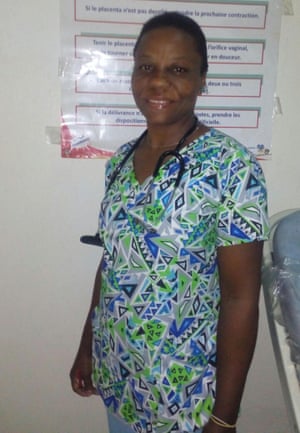
Midwife in Haiti tells of delivering babies knee-deep in water by torchlight

A midwife in Jérémie, Grand’Anse, one of the worst-hit towns in Haiti during Hurricane Matthew, has told how she delivered six babies, two boys and four girls, in a blackout during the night of the storm.


Marie-Lyrette Casimir, a midwife at St Antoine hospital, worked by flashlight as the fiercest Caribbean storm in almost a decade ripped though the south-west tip of the country, killing more than 500 people and causing widespread devastation.


Casimir, who was trapped in the hospital with her patients for hours after the storm, due to rising floodwater, said: “During the deliveries, the mothers were saying: ‘Miss Casimir, please save us. You’re going to save us.’ I was worried a lot, but I tried to calm them down, to be reassuring. I said to them: ‘Even in this desperate situation, you have to play your role, in the interests of the baby.’”


In a town where 80% of the buildings have reportedly been destroyed, St Antoine’s maternity unit, housed in one of three buildings that make up the hospital, emerged relatively unscathed. One of the hospital’s adjacent buildings was flattened by winds of up to 145mph, the other suffered extensive damage.


Casimir, who works for the United Nations Population Fund (UNFPA), described how windows were shattered and doors wrenched off their hinges during the storm and, amid fears the building itself would collapse, mothers were screaming and crying. There were two nurses in the ward that night, but she was the only midwife, she told the Guardian.


“I was very sad and worried … At first, the wind wasn’t very strong but the hurricane became really strong around midnight.”


When a power cut plunged the hospital into total darkness, she carried on using a rechargeable lamp and a flashlight, she said. “I was afraid, there was a lot of noise and I was worried I could be injured. But I had to stay – my work was to help women give life.”


Casimir, 46, said that by dawn the floodwater in the hospital had reached her knees. At one point she had to raise the bed in the delivery room, which was becoming contaminated with floodwater.


But her fears that falling debris or, worse, the collapse of the building, could risk all their lives, went unrealised. “I’m very proud of what I achieved that night. There were no deaths. The deliveries went well and none of the babies needed to go to paediatric care. Everything was great.”


Casimir’s story emerged after an assessment by the UNFPA and Haiti’s ministry of women’s affairs revealed the scale of devastation in Grand’Anse and Nippes, two of the country’s hardest-hit departments. It found most of the population affected were living in appalling conditions, with 176,000 in temporary shelters. Almost 100% of crops were destroyed in what is one of this impoverished country’s most fertile areas.


Up to 1.4 million people, 40% of them children, are in need of humanitarian assistance, according to a report (pdf) by the Office for the Coordination of Humanitarian Affairs (Ocha), with 806,000 people being at what it described as at “extreme-impact level” of food security (near-famine conditions), mainly in Grand’Anse and Sud. A further million people were at a “very high” or “high” level, it said.


Marie-Lyrette Casimir, a midwife at St Antoine hospital


Marie-Lyrette Casimir, a midwife at St Antoine hospital. Photograph: Courtesy UNFPA

Maternal health facilities were badly hit, particularly St Antoine and the City Med hospital in Beaumont. All seven of the main health facilities in the area were flooded and remain without power, water, equipment and short of staff. The directorate of civil protection of the Haitian government has reported 11 of the 33 hospitals in Grand’Anse, Nippes and Sud were damaged.


Along with the unmet basic needs of food and shelter for thousands, an estimated 13,650 women – among the most affected people – are due to give birth in the next three months, according to Ocha.


Vavita Leblanc, reproductive health programme manager of UNFPA in Haiti, said the agency has sent two teams of six midwives into the affected areas.


“In Grand’Anse, we found none of the health facilities have power [or] water, and all are flooded,” said Leblanc. “They have problems with medical supplies. Human resources have also been affected as nurses and doctors are facing their own problems, with their houses and with food.”


Leblanc said the devastation caused by the hurricane would severely affect the country’s maternal mortality rate – it is already the worst in the Americas but had been falling due to more hospital births.


“People will now stay in their communities to give birth,” said Leblanc. “It will set us back a decade.”


Two-thirds of babies in Haiti are delivered without qualified help. The country’s maternal mortality rate stands at 359 per 100,000 births in 2105. Cuba has a maternal mortality rate of 39 per 100,000.


Amid warnings by aid agencies of the risk of a fresh cholera outbreak, the storm also damaged most of the cholera treatment centres of Grand’Anse, according to the Ocha report. The country’s cholera epidemic began in 2010, when UN peacekeepers unwittingly introduced the disease shortly after a devastating 7.0 magnitude earthquake. The disease, previously unknown in the country, went on to kill more than 9,000 people.


This week, a UN official said he was concerned the scale of the cholera outbreak may be under-reported because remote areas are cut off. He also warned that protests, by desperate people angry about the slow pace and uneven distribution of aid, were impeding progress.


A spokesman for the World Food Programme’s Haiti operation told the Guardian it had so far managed to get food assistance to just 10% of the 800,000 estimated to urgently need it. “Initially, the response took time,” the WFP spokesman said. “We started distributing on 8 October and so far, 80,000 people have received assistance.”


He said the damage to infrastructure and roads delayed trucks going to the peninsula until 7 October, four days after the hurricane. It is now sending out between two and four trucks a day to the hardest-hit areas, as well as helicopters, he said. They plan to use boats to get out to the coastal areas.


There have been a few security issues, he said, but they represent a small proportion of the response. “People are really suffering, they are desperate and hungry, but we expect safe passage so that we can get to the communities that need it.”


To support the government-led response, the humanitarian community in Haiti launched an appeal for $ 120m, only $ 15.1m of which, according to the latest Ocha report, has been raised.


Paul Brockman, MSF head of mission in Haiti, speaking from Baradères, around 50km from Jérémie, said that while cholera is not as bad as they feared, significant risks remain. Brockman said: “There is a great need for shelter and drinkable water everywhere. Cholera could be a very substantial risk. It’s important to remember, that, as a small country, Haiti was very affected by the rain in the hurricane, even in the areas where the wind did not devastate – and with cholera still present everywhere, it increases the risk when treatment centres [have been] flooded.


“In every coastal area we’ve been in, there has been partial or total destruction of the cholera treatment centres.”


Midwife in Haiti tells of delivering babies knee-deep in water by torchlight

14 Ekim 2016 Cuma

No extra money for NHS, Theresa May tells health chief

Theresa May has told the head of the NHS that it will get no extra money despite rapidly escalating problems that led to warnings this week that hospitals are close to breaking point.


The prime minister dashed any hopes of a cash boost in next month’s autumn statement when she met Simon Stevens, the chief executive of NHS England, senior NHS sources have told the Guardian. Instead she told him last month that the NHS should urgently focus on making efficiencies to fill the £22bn hole in its finances and not publicly seek more than the “£10bn extra” that ministers insist they have already pledged to provide during this parliament.


She told him the NHS could learn from the painful cuts to the Home Office and Ministry of Defence budgets that she and Philip Hammond, the chancellor, had overseen when they were in charge of those departments, according to senior figures in the NHS who were given an account of the discussion.


Senior Whitehall sources have confirmed that Hammond’s statement on 23 November will contain no new money for the NHS, despite increasingly vocal pleas from key NHS organisations and the public’s expectation of extra health spending if Britain voted to leave the EU.


NHS Providers, which represents 238 NHS trusts, last week accused ministers of perpetuating “a bit of a fantasy world” on how well the NHS is doing after the worst-ever performance figures for key waiting time targets for A&E care, planned hospital operations and cancer treatments led to warnings that it was starting to buckle under the strain of unprecedented demand.


Health experts warned that the NHS would have to ration treatment, shut hospital units and cut staff if it gets no extra money soon.


Nigel Edwards, chief executive of the Nuffield Trust health thinktank, said: “If the government has firmly decided not to revisit NHS funding, this underlines that the health service faces four very difficult years. In particular, balancing the books in 2018 and 2019 when funding will flatline looks all but impossible with the current level of services.


“If more money from tax or borrowing is ruled out, the only choices left may be even less attractive, including reducing access and services, closures and reductions in staff,” he said.


Jeremy Hunt, the health secretary, and Jim Mackey, the chief executive of the health service’s financial regulator, NHS Improvement, also attended the 8 September meeting, which was Stevens’ and Mackey’s first encounter with the prime minister.


“No 10’s message at the meeting was quite blunt and stark, that there will be no more money. Theresa May and Philip Hammond say that they presided over big efficiency programmes at the Home Office and MoD and didn’t whinge about it. Their view is that the NHS is already doing very well, but that’s head in the sand stuff,” said one NHS insider who was among those briefed on the meeting.


NHS leaders privately fear that May’s remarks indicate that she will be much tougher on the service’s pleas for more cash than David Cameron and does not appear to appreciate the extent of its deepening problems. She is said to be sympathetic to the view of many senior Treasury officials that, as one NHS source put it, “always giving the NHS more money is throwing good money after bad, like pouring water on to sand”.


May’s stance raises questions over the future of Stevens, who is preparing to give evidence on the NHS’s finances to the Commons health select committee on Tuesday. The NHS boss, who had a close relationship with Cameron and George Osborne, has recently irritated No 10 by publicly questioning the accuracy of the government’s claim – which May repeated at prime minister’s questions on Wednesday – that the NHS will receive £10bn extra by 2020.


He told the public accounts committee last month: “The government would record it as £10bn. The health committee recorded it a little differently. There is an apples and pears issue there.”


Stevens has welcomed the fact that the £8bn boost Osborne pledged during last year’s general election campaign was “frontloaded” to give the NHS £3.8bn more this year, a rise of 1.7%, as he had requested. But he highlighted that the service had not got the sums it needed for 2017-18, 2018-19 and 2019-20. On current plans, it is due to receive increases of just 0.6%, 0.2% and 0.1% respectively, even though demand for core NHS services such as A&E care is rising at 3% or 4% a year.


Chris Ham, chief executive of The King’s Fund thinktank, said that any policy of providing no more money was unwise, “simply not credible” and would threaten standards of NHS care. “If these accounts are true, then it is clear that Downing Street does not yet fully understand the impact on patients of the huge pressures facing the NHS.


“The view from the top of government appears to be that the NHS has been given the extra money it asked for and should deliver what is expected of it. But this misses the point that demand for services is rising rapidly and the NHS is managing with the lowest funding increases in its history,” he said.


A Downing Street spokesman said he could not comment on what May, Stevens and Mackey had discussed because it had been a private meeting .


No extra money for NHS, Theresa May tells health chief

13 Ekim 2016 Perşembe

MP Vicky Foxcroft tells Commons how she lost her baby – video

The Labour MP for Lewisham and Deptford moves several members of the Commons to tears as she recounts her baby daughter’s death. Speaking during a debate on stillbirths, Vicky Foxcroft describes being pregnant at 16 and losing her baby after just five days


MP Vicky Foxcroft tells Commons how she lost her baby – video

1 Ağustos 2016 Pazartesi

Everyone tells me the NHS is in crisis – but that"s not what I see

It’s no secret that the NHS is fighting a battle. We see it every day in the arguments to and fro, between the NHS and the government.


Every time I log on to Facebook I’m invited to another protest against the junior doctor contracts, or about the NHS student bursaries. At one point every single message in my inbox was a petition, I spent the whole evening signing, sharing and sending them around. I wanted to save the NHS too.


Clearly, the NHS is in crisis, right? This is what the media tells me. My friends bring the topic with them when we go out to dinner, an unwanted guest at the table. Patients express their concerns and opinions. But I do not agree.


Related: Our grassroots campaign is fighting NHS bursary cuts


I’m a second-year student, a year away from being a qualified mental healthcare professional. I don’t feel my NHS is in crisis: when I walk through the doors on a placement, I don’t see the bad, I don’t see a weak NHS shaking at its knees and I most definitely don’t see a crisis.


Instead, yesterday I saw an older woman. Sitting with her and listening to her stories made me wonder what stories I would tell when I was as old and wise as her. I helped to bathe her, feed her and laughed as we watched the TV. After hours of caring for her, she asked: “Who are you?” I won’t deny that it hurt, but I knew that her need for me to care for her was more important than my need for her to remember what I did.


Yesterday I saw a young woman. I became her friend for the day. Her numerous medical requirements meant I had to work much harder to keep her safe. She wouldn’t let me do her physical observations, but I persevered. She wouldn’t come for her medication, so we brought it to her. She didn’t want to eat alone, so I got some dinner and we ate together. Then, at the end of the shift, she didn’t want me to go home.


Related: Neonatal nursing is an amazing job, but it takes an emotional toll


I saw a child. Scared and afraid, she cried out for her parents, but they weren’t there. I sat up with her in the patients’ living room at 2am. I brought her a hot chocolate and sat with her in silence as she didn’t want to speak. She wanted to be free of the pain she felt. “Why am I here?” she asked. “Do my family hate me because they think I’m crazy?” Nothing I could say would reassure her, but I didn’t give up. I stayed with her until she fell asleep at 7am.


Instead of seeing a crisis, I see an NHS that needs more support, more love and more care. The NHS that has cared for all of us is asking us to care for it too. It’s daunting being for students caught up in this crossfire, yet we continue to stay because we want to make a difference.


Next time you are about to say “the NHS is in crisis”, replace it with “the NHS is in need of care, love and support”. Help to build your NHS and don’t contribute to its destruction. Not every baby who cries is in a crisis, it may just require some nurturing before the wails pass.


If you would like to write a blogpost for Views from the NHS frontline, read our guidelines and get in touch by emailing sarah.johnson@theguardian.com.


Join the Healthcare Professionals Network to read more pieces like this. And follow us on Twitter (@GdnHealthcare) to keep up with the latest healthcare news and views.


Everyone tells me the NHS is in crisis – but that"s not what I see

29 Temmuz 2016 Cuma

"My baby in a box": Irish GP tells of trauma of travelling to UK for abortion

A Dublin doctor has spoken of the trauma of returning the foetal remains of her baby from England after Ireland’s near total ban on abortions forced her to travel to Liverpool to terminate her pregnancy.


Dr Lara Kelly is one of the first members of the Irish medical profession to speak publicly about travelling to the UK for an abortion. The 35-year-old GP said her decision to speak out was motivated by the blocking of a bill in the Irish parliament earlier this month that would have allowed for abortions in Irish hospitals in cases of fatal foetal abnormalities.


Kelly and her husband, Mark, learned in March that their baby’s brain had not developed properly, that it only had half of a heart, and that it would die shortly after birth.


After receiving confirmation from their consultant around Easter, they travelled to a Liverpool clinic, where the termination took place a fortnight before their first wedding anniversary.


Kelly wanted to take the foetal remains home to be cremated, a process she described as traumatic and unfair.


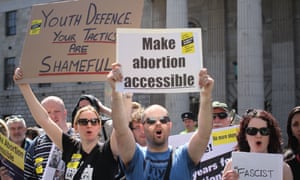
Pro-choice activists protest against a pro-life march on Dublin’s O’Connell Street.


Pro-choice activists protest against a pro-life march on Dublin’s O’Connell Street. Photograph: Alamy

“The Tottenham Hotspur football team were staying at our hotel [in Liverpool],” Kelly said. “I remember carrying the remains past the entire Spurs squad. It was the weirdest thing, walking past them and some of their fans in the packed lobby.


“There was me with my little plastic bag and the baby’s remains in a cardboard box. It was just so bizarre passing by the players with the remains of our baby under my arm.”


At Liverpool airport, Kelly and her husband decided to carry the remains on to the plane, rather than have them placed in the hold, in case the luggage went missing. Passing through security brought on further trauma, she said.


“We were queuing at security for ages and I wasn’t feeling physically great after the procedure the day before,” she said. “When we got to the top we said to the security guy that we had to declare foetal remains. The guy said, ‘What?’ He didn’t seem to understand and so we said it out loud again. He didn’t know what foetal remains meant so Mark said, ‘It’s a baby in the box’, and the man said out loud, ‘A baby in the box?’ Half the queue heard that, probably some of those who were getting on our flight to Dublin heard that.”


Related: UN calls on Ireland to reform abortion laws after landmark ruling


The whole experience was an ordeal, she said. “People – from the hotel clerk to the taxi man taking us to the clinic – kept asking us what we were doing over in Liverpool. Having to avoid those questions was the start of it all feeling so unfair.


“I didn’t even let the taxi drop us right outside the clinic and instead got out before the entrance further down the road. It was all about keeping it secret and to ourselves. I wasn’t questioning what I was going to do, I just didn’t want people to know. We had to lie to people about why we were really over in Liverpool, a series of lies and I couldn’t stop. You lied because you were supposed to lie.”


Kelly and her husband said they had not taken the decision to have an abortion lightly. “We discussed the termination and we felt it was absolutely the best decision for us,” she said. “This was very much a wanted baby. It was an enormous decision that we took very seriously.”


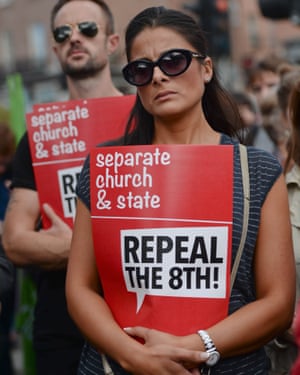
Protesters demand the abolition of the eighth amendment in Dublin in 2014.


Protesters demand the abolition of the eighth amendment in Dublin in 2014. Photograph: NurPhoto/Rex Shutterstock

According to statistics compiled by the UK’s Department of Health between 1980 and 2015, at least 165,438 Irish women and girls accessed UK abortion services. Last year, the figure was 3,451.


However, the Irish Family Planning Association pointed out that these figures underestimate the real numbers, as not all women will provide Irish addresses for reasons of confidentiality. Thousands of other Irish women access abortion through pills bought online, the IFPA adds.


Two incidents from Kelly’s experience bore out the high numbers. When Kelly found the website for the clinic in Liverpool that dealt with fatal foetal causes, she noticed there was a specific section called Travelling from Ireland.


“Bizarrely, the terminations are cheaper for women coming from Ireland because they are mindful about the costs of going over to England,” Kelly said. “It shows how many Irish women use their services.”


On her way back to Dublin, Kelly approached a member of staff at Liverpool airport to ask for advice about travelling with foetal remains. “The girl was Irish as it happened and she said something astonishing to me. ‘It’s fine,’ she said. ‘You need to go over to the gentleman at customs and declare the remains at security. It’s fine, I did it a few weeks ago.’ That’s what she said to me. It was said with such normality because she had done it herself.”


After landing in Dublin the couple drove straight to a funeral home. Once home, Kelly was upfront about her termination within her wider family, who she said supported her decision fully.


However, she said she would have preferred to have had the termination in her home city, adding: “I could have gone to my local hospital that morning, I could have been with my mum and dad recovering that night after it; in my own bed under supervision of my own doctor. I was made to get on a plane to go to a different country because I was not allowed to be here.”


Related: ‘I’ve seen horrible things’: photographer Laia Abril on her history of misogyny


Kelly supports demands by pro-choice campaigners for a referendum aimed at abolishing the eighth amendment to the Irish constitution. It was passed in a previous plebiscite in 1983, under pressure from powerful anti-abortion groups, and effectively makes the embryo an Irish citizen with full constitutional rights from the moment of conception.


Pro-choice reformers believe that there can be no liberalisation of Ireland’s strict anti-abortion laws until the amendment is abolished, as it generates a climate of fear among Irish medical teams even considering terminations allowed under current legislation. Abortions are only legal in Irish hospitals if there is a direct threat to a mother’s life or the woman is suicidal.


Kelly said her experience underlined the need to abolish the amendment. “I would like the people of this country to have the right to vote on this. Give us our referendum. None of the people of my generation got to speak in 1983. I was 18 months old the last time this was voted on,” she said.


“As for politicians, I would say to them that I have a story and they should speak to the women who have gone through it instead of just exporting the problem.”


"My baby in a box": Irish GP tells of trauma of travelling to UK for abortion

26 Mayıs 2014 Pazartesi

"Trigger" that tells cancers to invade body recognized


But a new examine, from the Albert Einstein School of Medicine of Yeshiva University, in New York, has identified the signalling pathway that allows this to happen. The scientists argue that stopping the inner workings of invasive tumour cells could assist avert cancer deaths.


To migrate from a major tumour, a cancer cell should 1st break through surrounding connective tissue known as the extracellular matrix (ECM). It does this by forming invadopodia – foot-like protrusions – which release enzymes that degrade the ECM.


Making use of a fluorescent protein biosensor, the researchers had been in a position to search at extremely invasive breast cancer cells and reveal specifically in which and when the protein is activated within the cancer cell.


Dr Hodgson explained: “So substantial amounts of Rac1 induce the disappearance of ECM-degrading invadopodia, although low ranges permit them to stay – which is the comprehensive opposite of what Rac1 was thought to be carrying out in invadopodia.”


The study, published in the on the web edition of Nature Cell Biology, discovered that when the Rac1 gene was silenced, ECM degradation improved.


"Trigger" that tells cancers to invade body recognized

21 Mayıs 2014 Çarşamba

Prince Philip tells household preparing clinic personnel: "At least you happen to be legitimate"


It is the third time in 45 years Prince Philip, famed for his playful sense of humour, has opened the sexual health centre, as it has moved house 3 occasions since its founding in 1969.


Claire Murdoch, chief executive of the Central North West London NHS Basis Trust which runs the centre, thanked the Prince for attending.


She mentioned: “It’s to be admired that your Royal Highness supported our function when it was a lot more controversial and ground-breaking.


“This tends to make your return these days all the a lot more impressive and appreciated.”


The centre, which is visited by about 750 people a week, gives family members planning advice and help as nicely as supplying gynaecological care at Holloway Prison and working with younger men and women, homeless women and intercourse workers.


Prince Philip tells household preparing clinic personnel: "At least you happen to be legitimate"

14 Mayıs 2014 Çarşamba

Joe Hockey tells Australians $7 physician charge is more affordable than "a couple of beers"

Joe Hockey has taken aim at Australians who are “screaming” about the end of cost-free visits to the physician, declaring the new $ 7 charge was the value of “only a couple of beers or 1 third of a packet of cigarettes”.


And in a blunt response to a question about how a youthful man or woman who had misplaced unemployment benefits would be capable to afford it, the treasurer said: “I would count on you’d be in a work.”


Hockey made the remarks for the duration of a radio interview on Thursday as he continued to push the case for the hard measures outlined in the Abbott government’s first price range, including a new $ seven co-payment to check out a GP or accessibility out-of-hospital pathology and diagnostic imaging companies from July following 12 months.


The doctor will be allowed to pocket $ 2 of the charge, while $ five goes to the government, raising $ 3.5bn more than four many years. For sufferers with concession cards and kids aged underneath sixteen the fee will apply for only the first ten services in each and every yr.


The opposition leader, Bill Shorten, who will provide his price range reply speech on Thursday night, has indicated Labor will vote towards the measure, as will the Greens and Palmer United party, making certain it can’t pass the Senate.


Hockey told the ABC’s AM plan he was stunned about criticism of the measure, with the income paid to go to a new health-related analysis fund.


“One of the issues that really astounds me is some men and women are screaming about [the] $ 7 co-payment,” the treasurer mentioned.


“One packet of cigarettes costs $ 22 that gives you 3 visits to the medical professional. You can invest just in excess of $ 3 on a middy of beer so that’s two middies of beer to go to the medical professional. Let’s have some point of view about the fees of taking care of our health, and is a mother or father really going to deny their sick child a check out to the physician which would be the equivalent payment of a couple of beers or a single third of a packet of cigarettes?”


The interviewer, Chris Uhlmann, replied that a 27-yr-old who had misplaced his or her task and could not accessibility unemployment rewards may not have the selection of a middy of beer, a packet of cigarettes or a go to to the medical professional. The budget outlined changes to Newstart and Youth Allowance for unemployed people beneath 30 that would see them get no revenue help for six months at a time.


Hockey stated: “I would anticipate you’d be in a occupation. That would be the starting level, you’d be in a task, and we require you to work … Almost everything we are performing is about lifting the tide so that we can get much more folks into jobs.”


Pressed on the plight of folks on fixed incomes, such as pensioners, Hockey explained: “Well we do have to make selections and undoubtedly our health care [has] received to be our primary consideration. The point is we make selections each and every day. I think people require to target on their wellness over the medium and prolonged phrase and to do so we’ve got to invest a little bit and a co-payment is going to support to do that.”


Hockey stated he and Abbott have been ready to talk to senators about the budget measures.


“Senators are human beings and they do have their own special way of passing legislation. We’re often prepared to speak to them,” Hockey stated.


Joe Hockey tells Australians $7 physician charge is more affordable than "a couple of beers"

12 Nisan 2014 Cumartesi

The $750 Check that “Tells You How Long You’ll Live”

While most are employed to fretting above their chronological age, a new test has the capability to demonstrate your biological age—the age your body has in fact progressed to, and even more revealingly, tell you how long you may possibly have to live beneath you existing life situations.


The controversial testing, called telomere testing, measures structures on the ends of a person’s chromosomes, called telomeres.  Based on major investigation, the longer these are, the longer the individual may possibly have to live, and the shorter these are, the shorter the particular person has.


“We know that individuals who are born with shorter telomeres than normal also have a shorter lifespan.  We know that shorter telomeres can result in a shorter lifespan.  But we do not know whether or not longer telomeres are going to give you a longer lifespan.  That’s not actually identified in humans,” in accordance to Maria Blasco, the inventor of the business telomere test, who works at the Spanish National Cancer Study Centre in Madrid.


Although Blasco stopped quick of claiming longer telomeres always indicate longer lifespan, much investigation points in this direction.  A 2003 study of 20-year-olds located that telomere length is a dependable indicator for no matter whether someone is likely to reside fifteen many years or much more past the age of 60.  A 2004 research located that women underneath the stress of caring for a sick child had shorter telomeres than other folks.  A 2007 examine of Scottish males located that individuals with the longest telomeres were half as very likely to produce heart condition than people with the shortest, and moreover, that telomere length was an as exact a predictor of heart condition as cholesterol amounts.


Stated Professor Shay, scientific advisor for Existence Length, “This check devised by Blasco is so correct that it is very likely to supply much more valuable details than some of the other exams out there right now.  What’s important in aging is the shortest telomeres.  What helps make cells quit developing is the shortest telomeres, not the common telomere length, which is what other tests seem at.  Everybody talks about the chronological age, but there is also a biological age, and telomere length is in fact a quite great representation of your biological age.”


Supply:


http://naturalsociety.com/the-400-check-that-tells-you-how-lengthy-youll-live/


The $750 Check that “Tells You How Long You’ll Live”

9 Nisan 2014 Çarşamba

What the Tamiflu saga tells us about drug trials and big pharma

These days we located out that Tamiflu isn’t going to operate so properly right after all. Roche, the drug business behind it, withheld essential information on its clinical trials for half a decade, but the Cochrane Collaboration, a worldwide not-for-profit organisation of 14,000 academics, finally obtained all the details. Putting the proof together, it has found that Tamiflu has tiny or no impact on complications of flu infection, this kind of as pneumonia.


That is a scandal since the United kingdom government invested £0.5bn stockpiling this drug in the hope that it would help prevent significant side-effects from flu infection. But the bigger scandal is that Roche broke no law by withholding important details on how well its drug performs. In reality, the approaches and benefits of clinical trials on the medicines we use these days are even now routinely and legally currently being withheld from medical professionals, researchers and individuals. It is straightforward poor luck for Roche that Tamiflu grew to become, arbitrarily, the poster child for the missing-information story.


And it is a excellent poster kid. The battle in excess of Tamiflu properly illustrates the want for total transparency all around clinical trials, the relevance of entry to obscure documentation, and the failure of the regulatory system. Crucially, it is also an illustration of how science, at its best, is created on transparency and openness to criticism, since the saga of the Cochrane Tamiflu review began with a easy on-line comment.


In 2009, there was widespread concern about a new flu pandemic, and billions had been getting spent stockpiling Tamiflu around the planet. Due to the fact of this, the Uk and Australian governments exclusively asked the Cochrane Collaboration to update its earlier critiques on the drug. Cochrane reviews are the gold-common in medicine: they summarise all the information on a provided treatment, and they are in a continual review cycle, simply because proof modifications above time as new trials are published. This need to have been a quite every day piece of work: the previous evaluation, in 2008, had discovered some evidence that Tamiflu does, indeed, minimize the rate of problems such as pneumonia. But then a Japanese paediatrician referred to as Keiji Hayashi left a comment that would set off a revolution in our knowing of how proof-based mostly medication ought to operate. This was not in a publication, or even a letter: it was a basic on-line comment, posted informally beneath the Tamiflu evaluation on the Cochrane site, nearly like a blog comment.


Tamiflu being made by Roche The United kingdom government invested £0.5bn stockpiling Tamiflu. Photograph: Hanodut/EPA


Cochrane had summarised the data from all the trials, explained Hayashi, but its good conclusion was driven by information from just one of the papers it cited: an market-funded summary of ten preceding trials, led by an writer referred to as Kaiser. From these ten trials, only two had ever been published in the scientific literature. For the remaining eight, the only offered data on the approaches utilized came from the short summary in this secondary source, developed by business. That is not reputable adequate.


This is science at its greatest. The Cochrane assessment is readily available on-line it explains transparently the approaches by which it looked for trials, and then analysed them, so any informed reader can pull the review apart, and understand exactly where the conclusions came from. Cochrane offers an simple way for readers to increase criticisms. And, crucially, these criticisms did not fall on deaf ears. Dr Tom Jefferson is the head of the Cochrane respiratory group, and the lead author on the 2008 evaluation. He realised immediately that he had created a blunder in blindly trusting the Kaiser data. He said so, with out defensiveness, and then set about receiving the data necessary.


First, the Cochrane researchers wrote to the authors of the Kaiser paper. By reply, they had been told that this staff no longer had the files: they must contact Roche. Right here the troubles began. Roche said it would hand more than some info, but the Cochrane reviewers would need to sign a confidentiality agreement. This was tough: Cochrane critiques are built close to showing their functioning, but Roche’s proposed contract would call for them to preserve the data behind their reasoning secret from readers. More than this, the contract explained they have been not allowed to talk about the terms of their secrecy agreement, or publicly acknowledge that it even existed. Roche was demanding a secret contract, with secret terms, requiring secrecy about the strategies and outcomes of trials, in a discussion about the safety and efficacy of a drug that has been taken by hundreds of thousands of men and women all around the planet, and on which governments had invested billions. Roche’s demand, worryingly, is not unusual. At this stage, a lot of in medication would both acquiesce, or give up. Jefferson asked Roche for clarification about why the contract was required. He never ever obtained a reply.


Then, in October 2009, the firm modified tack. It would like to hand in excess of the data, it explained, but yet another academic evaluation on Tamiflu was being carried out elsewhere. Roche had provided this other group the study reports, so Cochrane could not have them. This was a non-sequitur: there is no purpose why numerous groups must not all operate on the exact same question. In truth, because replication is the cornerstone of very good science, this would be actively desirable.


Then, a single week later, unannounced, Roche sent 7 paperwork, every single all around a dozen pages prolonged. These contained excerpts of inner firm paperwork on each and every of the clinical trials in the Kaiser meta-evaluation. It was a begin, but nothing like the details Cochrane needed to assess the benefits, or the charge of adverse events, or totally to recognize the design and style of the trials.


Packets of Tamiflu Packets of Tamiflu in a drawer at a German pharmacy. Photograph: Wolfgang Rattay/Reuters


At the same time, it was swiftly becoming clear that there had been odd inconsistencies in the info on this drug. Crucially, distinct organisations around the globe had drawn vastly different conclusions about its effectiveness. The US Food and Drug Administration (FDA) explained it gave no advantages on complications this kind of as pneumonia, although the US Centers for Ailment Management and Prevention stated it did. The Japanese regulator manufactured no claim for problems, but the European Medicines Agency (EMA) explained there was a benefit. There are only two explanations for this, and each can only be resolved by full transparency. Both these organisations noticed different information, in which situation we need to have to build a collective list, add up all the trials, and work out the results of the drug all round. Or this is a close call, and there is realistic disagreement on how to interpret the trials, in which case we need total accessibility to their methods and outcomes, for an informed public debate in the healthcare academic community.


This is particularly crucial, considering that there can often be shortcomings in the style of a clinical trial, which suggest it is no longer a honest test of which therapy is best. We now know this was the situation in numerous of the Tamiflu trials, exactly where, for instance, participants have been often really unrepresentative of true-planet patients. Similarly, in trials described as “double blinded” – where neither doctor nor patient need to be in a position to tell whether they’re obtaining a placebo or the real drug – the active and placebo pills have been distinct colours. Even much more oddly, in virtually all Tamiflu trials, it would seem a diagnosis of pneumonia was measured by patients’ self-reporting: a lot of researchers would have anticipated a clear diagnostic algorithm, probably a chest x-ray, at least.


Because the Cochrane team have been even now becoming denied the data required to spot these flaws, they decided to exclude all this data from their analysis, leaving the review in limbo. It was published in December 2009, with a note explaining their reasoning, and a small flurry of activity followed. Roche posted their brief excerpts online, and committed to make total review reviews accessible. For four many years, they then failed to do so.


Throughout this time period, the global medical academic neighborhood started to realise that the short, published academic papers on trials – which we have relied on for a lot of years – can be incomplete, and even misleading. A lot more detail is obtainable in a clinical study report (CSR), the intermediate document that stands between the raw data and a journal report: the exact program for analysing the information statistically, comprehensive descriptions of adverse occasions, and so on.


By 2009, Roche had shared just little portions of the CSRs, but even this was sufficient to see there have been problems. For example, looking at the two papers out of ten in the Kaiser review that had been published, 1 explained: “There were no drug-relevant severe adverse occasions”, and the other isn’t going to mention adverse occasions. But in the CSR documents shared on these identical two research, 10 critical adverse occasions were listed, of which 3 are classified as currently being possibly relevant to Tamiflu.


Roche HQ in Basel, Switzerland Roche HQ in Basel, Switzerland. Photograph: Bloomberg/Bloomberg through Getty Photos


By setting out all the identified trials side by side, the researchers were capable to identify peculiar discrepancies: for example, the largest “phase three” trial – a single of the big trials that are accomplished to get a drug on to the market – was in no way published, and is seldom described in regulatory documents.


The chase continued, and it exemplifies the frame of mind of industry in the direction of transparency. In June 2010, Roche advised Cochrane it was sorry, but it had imagined they already had what they needed. In July, it announced that it was worried about patient confidentiality. By now, Roche had been refusing to publish the examine reviews for a year. Abruptly, it started to raise odd individual worries. It claimed that some Cochrane researchers had created untrue statements about the drug, and about the organization, but refused to say who, or what, or exactly where. “Specified members of Cochrane Group,” it said, “are unlikely to strategy the overview with the independence that is both necessary and justified.” This is difficult to credit, but even if correct, it ought to be irrelevant: poor science is often published, and is shot down in public, in academic journals, by people with excellent arguments. This is how science works. No organization or researcher must be permitted to choose who has access to trial data. Even now Roche refused to hand in excess of the examine reports.


Then Roche complained that the Cochrane reviewers had begun to copy in journalists, including me, on their emails when responding to Roche personnel. At the very same time, the business was raising the broken arguments that are eerily acquainted to anyone who has followed the campaign for higher trials transparency. Important among these was 1 that cuts to the core of the culture war between proof-based mostly medicine, and the older “eminence-primarily based medicine” that we are supposed to have left behind. It is merely not the work of academics to make these selections about advantage and threat, mentioned Roche, it is the job of regulators.


This argument fails on two fronts. Very first, as with many other medication, it now appears that not even the regulators had witnessed all the information on all the trials. But more than that, regulators miss things. Several of the most notable problems with medicines in excess of the past number of many years – with the arthritis drug Vioxx with the diabetes drug rosiglitazone, marketed as Avandia and with the proof base for Tamiflu – weren’t spotted largely by regulators, but rather by independent medical professionals and academics. Regulators never miss factors because they are corrupt, or incompetent. They miss issues because detecting signals of chance and benefit in testimonials of clinical trials is a difficult company and so, like all hard inquiries in science, it positive aspects from obtaining numerous eyes on the issue.


Although the battle for accessibility to Tamiflu trials has gone on, the planet of medication has begun to shift, albeit at a unpleasant speed, with the European Ombudsman and many British choose committees joining the push for transparency. The AllTrials campaign, which I co-founded last 12 months, now has the help of practically all health-related and academic skilled bodies in the United kingdom, and numerous much more around the world, as effectively as far more than 100 patient groups, and the drug business GSK. We have noticed new codes of carry out, and European legislation, proposing enhancements in accessibility: all riddled with loopholes, but enhancements nonetheless. Crucially, withholding information has grow to be a headline concern, and much much less defensible.


Final yr, in the context of this wider shift, underneath ceaseless questions from Cochrane and the British Health-related Journal, soon after half a decade, Roche lastly gave Cochrane the details it essential.


So does Tamiflu function? From the Cochrane examination – totally public – Tamiflu does not decrease the number of hospitalisations. There wasn’t ample information to see if it minimizes the amount of deaths. It does decrease the variety of self-reported, unverified circumstances of pneumonia, but when you search at the 5 trials with a comprehensive diagnostic type for pneumonia, there is no important advantage. It may possibly assist avert flu signs and symptoms, but not asymptomatic spread, and the evidence here is mixed. It will consider a couple of hrs off the duration of your flu signs. But all this comes at a important value of side-results. Given that percentages are hard to visualise, we can make those numbers more tangible by taking the figures from the Cochrane review, and applying them. For example, if a million people consider Tamiflu in a pandemic, 45,000 will encounter vomiting, 31,000 will expertise headache and 11,000 will have psychiatric side-results. Don’t forget, although, that individuals figures all assume we are only giving Tamiflu to a million folks: if issues kick off, we have stockpiled ample for 80% of the population. Which is fairly a great deal of vomit.


Roche has issued a press release saying it contests these conclusions, but providing no motives: so now we can last but not least allow science get started. It can shoot down the details of the Cochrane overview – I hope it will – and we will edge in direction of the truth. This is what science seems like. Roche also denies currently being dragged to transparency, and says it merely did not know how to react to Cochrane. This, once more, speaks to the tempo of modify. I have no thought why it was withholding details: but I rather suspect it was simply simply because that’s what individuals have usually completed, and sharing it was a hassle, requiring new norms to be produced. That’s reassuring and depressing at the identical time.


Must we have invested half a billion on this drug? Which is a tough query. If you picture your self in a bunker, viewing a catastrophic pandemic unfold, confronting the end of human civilisation, you could probably persuade oneself that Tamiflu may well be really worth getting anyway, even understanding the hazards and positive aspects. But that final clause is the important. We often pick to use treatment options in medication, realizing that they have limited advantage, and significant side-effects: but we make an informed choice, balancing the dangers and rewards for ourselves.


And in any case, that £500m is the tip of the iceberg. Tamiflu is a side present, the one particular spot exactly where a single crew of dogged academics stated “enough” and the firm caved in. But the benefits of clinical trials are nevertheless being routinely and legally withheld on the medicines we use right now and absolutely nothing about a final reply on Tamiflu will assist plug this gaping hole.


Star anise Star anise offers the principal component of Tamiflu. Photograph: Adrian Bradshaw/EPA


A lot more importantly, for all that there is progress, so far we have only sentiment, and half measures. None of the alterations to European legislation or codes of carry out get us entry to the information we need, since they all refer only to new trials, so they share a loophole that excludes – remarkably – all the trials on all the medicines we use nowadays, and will proceed to use for decades. To take a single concrete and topical illustration: they would not have made a blind bit of distinction on Tamiflu. We have observed voluntary pledges for higher transparency from several person companies – Johnson &amp Johnson, Roche, GSK, now Roche, and a lot more – which are welcome, but similar promises have been given before, and then reversed a handful of many years later on.


This is a pivotal second in the background of medicine. Trials transparency is ultimately on the agenda, and this might be our only opportunity to fix it in a decade. We can’t make informed choices about which remedy is ideal although details about clinical trials is routinely and legally withheld from physicians, researchers, and sufferers. Any person who stands in the way of transparency is exposing sufferers to avoidable harm. We want regulators, legislators, and expert bodies to demand total transparency. We need to have clear audit on what data is missing, and who is withholding it.


Finally, far more than anything at all – simply because culture shift will be as effective as legislation – we need to do some thing even a lot more difficult. We want to praise, encourage, and support the companies and folks who are beginning to do the correct issue. This now consists of Roche. And so, paradoxically, right after everything you have read above, with the outrage fresh in your thoughts, on the day when it feels more difficult than any other, I hope you will join me in saying: Bravo, Roche. Now let us do better.


• Ben Goldacre is a physician and the author of Poor Pharma.


What the Tamiflu saga tells us about drug trials and big pharma
13 Mart 2014 Perşembe

Uk help watchdog tells DfID to concentrate on quality of healthcare in Kenya

Kenya healthcare

Women wait to see a doctor at a maternity hospital in Nairobi. The Uk has been urged to address shortcomings in the Kenyan healthcare technique. Photograph: David Levene


A government watchdog has named on the Department for Global Growth (DfID) to do a lot more to enhance the top quality of care at Kenyan overall health facilities right after recording patient complaints of petty corruption and “physical and emotional abuse” by employees.


In a report published on Friday, the Independent Commission for Assist Affect (Icai) explained it heard that some sufferers had been subjected to abuse by overall health employees even though investigating DfID’s contribution to tackling kid deaths in the country, which receives hundreds of thousands of pounds in Uk support each and every year.


“Beneficiaries complained of petty corruption and medicines not being given out, regardless of getting obtainable. They wanted to be handled with respect by health specialists but were frequently subjected to bodily and emotional abuse,” says the report.


“Several females with whom we spoke reported realizing a person who had died in labour or who had lost her little one during pregnancy or labour. Severe examples cited to us incorporated youngsters dying in queues at the hospital. A single girl described how her cousin died after delivering late in the evening when there were couple of workers. Staff had failed to deal with this girl effectively after delivery.”


Icai commissioner Mark Foster, who travelled to Kenya as component of the watchdog’s investigation, explained he noticed minor evidence that programs had been in place to gather suggestions from communities. “We heard an awful great deal of quite true and heart-rending stories about the high quality of care that folks are receiving,” he mentioned, adding that the rollout of cost-free healthcare has place a huge strain on providers.


Icai’s report, which acknowledges that DfID is operating below tough problems in Kenya, warns that programmes appear to have focused a lot more on the department’s personal functionality targets than the concerns and priorities of nearby communities.


“The emphasis on quantitative outputs risks losing connection with the most crucial outcomes for intended beneficiaries. It promotes a target on the provision of bednets and other commodities rather than working on core health programs,” it says.


Foster stated DfID funding had made a distinction in the nation. But, he argued, the department must focus far more on strengthening the high quality of care, expanding companies in bad and remote places, and the “more difficult process” of building regional techniques for the lengthy-term.


DfID could, for example, supply technical assistance to aid communities hold service suppliers to account, said Foster.


In addition to reviews of abuse by wellness workers, particularly at larger referral centres, Icai explained it spoke to people who claimed they had been asked to buy medicines outside well being amenities, at substantial charges, that should have been available for totally free.


Other individuals reported difficulties in accessing overall health providers, higher consumer charges and lack of workers, especially at night.


Icai targeted its evaluation on 5 core wellness programmes funded by Uk assist totalling £163m. The programmes, which tackle a range of troubles which includes malaria and vaccinations, have been working considering that 1999. The watchdog gave DfID’s contribution to reducing youngster mortality in Kenya an overall “green-amber” rating, meaning that programmes execute “reasonably well” on effectiveness and worth for money but that improvements are essential.


“[DfID"s] programmes have achieved impact in a tough context, and enhanced immunisation and the provision of bednets have saved lives. There are, even so, substantial weaknesses and regional disparities in standard wellness systems. DfID should focus much more on neonatal mortality, sustainability, overall health techniques strengthening and tough-to-reach areas,” it concluded.


The United kingdom is the third largest aid donor to healthcare in Kenya, but stopped investing cash via the government right after the 2007 elections and the discovery of significant fraud in the schooling sector in 2009. Other donors have also selected to bypass the government, and now roughly three-quarters of global support for healthcare in Kenya does not go through its price range.


Icai mentioned that worries about corruption meant it was the “proper choice” for DfID not to finance the Kenyan government right, and demonstrated the department’s dedication to great governance.


Nevertheless, this technique has its charges and has led to “parallel delivery programs which are effective but not sustainable,” said the report. “Every new generation needs immunisation. Malaria gains can very easily be reversed, with catastrophic benefits, if spraying, treatment or bednet usage are lowered. Bednets need to have to be replaced about every single three many years.”


In response to Icai’s report, a DfID spokesperson mentioned: “Working with partners like the International Fund and the International Alliance for Vaccinations and Immunisations, Britain has played a substantial role in helping to reduced youngster mortality charges around the planet.


“We will function with Kenya’s government to develop a sustainable and independent healthcare technique and continue to look for standard feedback to make sure no a single is left behind.”


Uk help watchdog tells DfID to concentrate on quality of healthcare in Kenya

It really is time for GM crops, adviser tells David Cameron

GM crops have polarised viewpoint considering that they had been 1st made by American scientists in 1982.


Activists declare they could trigger cancer, harm ecosystems and cross-pollinate with grasses to generate “super-weeds”.


No GM crops are at present grown in Britain. Sir Mark is calling for a new physique to approve GM crop manufacturing on a case-by-situation basis, in the exact same way that the National Institute for Overall health and Clinical Excellence regulates new medication. At present GM crops need to be passed by the European Meals Security Authority (EFSA) and then accepted by the Advisory Committee on Novel Foods and Processes — an independent entire body of scientific professionals.


But scientists have accused the EFSA of becoming increasingly “hostile” to GM plants.


Nonetheless, other academics mentioned that the European Union regulations have been critical. Prof Joe Perry, of the University of Greenwich, stated: “The regulatory method inside of the EU gives confidence to consumers.”


Previous studies have recommended that some modified crops could trigger tumours and early death. But a report published on Thursday by academics from Cambridge and Studying Universities ruled out any hyperlink to cancer.


A spokesman for the Division for Environment, Foods and Rural Affairs explained the government was doing work to enable GM crops to be grown in Britain.


GM Crops: Q&ampA


It really is time for GM crops, adviser tells David Cameron

18 Şubat 2014 Salı

Schoolboy, 11, tells of determination to refuse cancer therapy in Facebook status

He broke the latest news in a posting, final Thursday, entitled “The Beginning of the End”, creating: “As you know soon after the most current scan benefits I was sent house to rest and believe over the 2 attainable options …


“I could opt for another trial, but this would suggest travelling a great deal to the hospital and coping with the side effects, but could also hopefully lengthen my life, or …


“I could basically do practically nothing, remain at home and allow nature get its program which would lead to me loosing my existence slightly earlier than if I’d had far more remedy.”


He then stated he was taking the second option. His mom, Kay Puddington, who assists him to publish his website, stated: “The complete family members was in agreement, it would be unfair on him to continue trying to treat him.


“I had to know when ample was ample. Reece has been so great, he in no way moans really. Reece is exhausted. He favored currently being home and just got exhausted of the entire regime. So the rest of the family members took on board how he felt and we made the decision to finish his treatment.


“He would have gone onto new medicines, but they all are created of something related. The side influences are usually sickness, fatigue and nausea. He didn’t want to maintain performing it, he was fed up.”


She additional: “The choice has been a breath of fresh air for Reece, not to have to go to the hospital implies a good deal to him.”


Following his diagnosis in Could 2008, Reece underwent chemotherapy remedy at the Royal Marsden Hospital, in Sutton, Surrey. After remedy, the cancer, which had started out in a gland over his kidney, went into remission.


Nonetheless, he fell unwell yet again in August 2012 and his family were told that this time the condition would be terminal. Tests uncovered it had spread to his bone marrow, chest, the left side of his pelvis and his proper thigh bone.


Considering that then, Reece had drawn up a “bucket list”, of items he needed to do before he died. This integrated seeing his mother learn to drive so they could go out on day journeys, and also go out for a breakfast at a Wetherspoons.


Mrs Puddington, forty – who is her son’s full time carer – passed her check when she was 17, but forgot how to drive when she could not afford a auto. It meant that she and Reece were housebound in the course of the day when her husband Paul, 48, was at operate as a income assistant for Sainsbury’s.


She has now learned to drive after far more. “I’m so glad I learned to drive in that time. We haven’t been capable to go on any journeys just yet, as Reece has had a rough number of days. But we’re hoping to go on a drive along the coast,” she added.


The only excellent objects on Reece’s record are: a bedroom of his personal, to see the film, The Hobbit: The Desolation of Smaug, a vacation to Sun City, South Africa, and to meet the actor Johnny Depp, dressed as the character Captain Jack Sparrow, from the Pirates of the Caribbean.


Mrs Puddington additional: “Unfortunately Reece will not be in a position to control the holiday. He has been so extremely brave and I’m so proud of him.”


Reece mentioned: “I’ve been overwhelmed by all the help. It’s genuinely made a difference to me. All the letters and small presents folks have sent have truly assisted me by means of every little thing. I’m quite grateful.”


Right here is Reece’s “Bucket List” in total:


An Alienware Laptop …(as I can no longer get out of bed)


A bedroom of my very own.


An Xbox one particular (I am gaming mad)


To see the Hobbit – Desolation of Smaug film.


To acquire £1000 in £20 notes (I’ve presently acquired to £540!)


A cash clip to hold all the cash


A vacation to Sun City in South Africa (I have usually wanted to go given that seeing the destination on Worlds Strongest Man)


Meet Johnny Depp dressed in character as Captain Jack Sparrow (my favourite films)


A Whetherspoons(sic) breakfast with my favourite individuals


A Wikipad gaming pad (just lead to they appear very awesome)


To have a Hobbit House in my back backyard (how cool is that )


I’d enjoy to see my mum understand to drive (it is been too extended)


A black beats pill.


A blue PS4 controller.


To go to Reece’s Facebook website, click here


Schoolboy, 11, tells of determination to refuse cancer therapy in Facebook status

Schoolboy, eleven, tells of determination to refuse cancer treatement in Facebook status

He broke the latest news in a posting, final Thursday, entitled “The Beginning of the End”, writing: “As you know following the latest scan final results I was sent property to rest and consider in excess of the 2 possible alternatives …


“I could opt for an additional trial, but this would suggest travelling a whole lot to the hospital and coping with the side results, but could also hopefully extend my daily life, or …


“I could merely do absolutely nothing, keep at property and allow nature get its program which would lead to me loosing my existence somewhat earlier than if I’d had a lot more treatment.”


He then mentioned he was taking the second choice. His mom, Kay Puddington, who assists him to write his website, explained: “The total family was in agreement, it would be unfair on him to proceed striving to treat him.


“I had to know when adequate was adequate. Reece has been so very good, he never ever moans actually. Reece is exhausted. He preferred becoming residence and just received exhausted of the complete regime. So the rest of the loved ones took on board how he felt and we produced the determination to finish his treatment.


“He would have gone onto new drugs, but they all are created of one thing related. The side has an effect on are always sickness, fatigue and nausea. He didn’t want to preserve undertaking it, he was fed up.”


She added: “The determination has been a breath of fresh air for Reece, not to have to go to the hospital implies a great deal to him.”


Following his diagnosis in May 2008, Reece underwent chemotherapy remedy at the Royal Marsden Hospital, in Sutton, Surrey. Soon after treatment method, the cancer, which had commenced in a gland over his kidney, went into remission.


Nevertheless, he fell unwell once more in August 2012 and his loved ones were told that this time the issue would be terminal. Exams unveiled it had spread to his bone marrow, chest, the left side of his pelvis and his correct thigh bone.


Since then, Reece had drawn up a “bucket list”, of things he wanted to do just before he died. This included seeing his mom learn to drive so they could go out on day journeys, and also go out for a breakfast at a Wetherspoons.


Mrs Puddington, 40 – who is her son’s full time carer – passed her test when she was 17, but forgot how to drive when she could not afford a vehicle. It meant that she and Reece have been housebound during the day when her husband Paul, 48, was at function as a sales assistant for Sainsbury’s.


She has now learned to drive as soon as far more. “I’m so glad I realized to drive in that time. We haven’t been capable to go on any journeys just nevertheless, as Reece has had a rough handful of days. But we’re hoping to go on a drive along the coast,” she extra.


The only exceptional objects on Reece’s checklist are: a bedroom of his own, to see the movie, The Hobbit: The Desolation of Smaug, a vacation to Sun City, South Africa, and to meet the actor Johnny Depp, dressed as the character Captain Jack Sparrow, from the Pirates of the Caribbean.


Mrs Puddington added: “Unfortunately Reece won’t be able to control the vacation. He has been so incredibly brave and I’m so proud of him.”


Reece explained: “I’ve been overwhelmed by all the assistance. It is really produced a distinction to me. All the letters and tiny gifts folks have sent have truly aided me through every little thing. I’m really grateful.”


Right here is Reece’s “Bucket List” in full:


An Alienware Laptop …(as I can no longer get out of bed)


A bedroom of my own.


An Xbox one particular (I’m gaming mad)


To see the Hobbit – Desolation of Smaug film.


To acquire £1000 in £20 notes (I’ve already received to £540!)


A funds clip to hold all the cash


A holiday to Sun City in South Africa (I have usually desired to go considering that seeing the location on Worlds Strongest Guy)


Meet Johnny Depp dressed in character as Captain Jack Sparrow (my favourite movies)


A Whetherspoons(sic) breakfast with my favourite folks


A Wikipad gaming pad (just lead to they search really cool)


To have a Hobbit House in my back backyard (how amazing is that )


I’d enjoy to see my mum understand to drive (it is been as well lengthy)


A black beats pill.


A blue PS4 controller.


To check out Reece’s Facebook website, click here


Schoolboy, eleven, tells of determination to refuse cancer treatement in Facebook status