money etiketine sahip kayıtlar gösteriliyor. Tüm kayıtları göster

25 Nisan 2017 Salı

How a digital NHS saves time and money – and transforms care | Afzal Chaudhry

Imagine this scenario: a patient arrives at hospital for an appointment or an emergency, or is admitted for treatment and the clinical team can see their medical record in its entirety, wherever and whenever they need to.


At Cambridge University hospitals NHS foundation trust, that is what we set out to achieve when, seven years ago, we decided to invest in a sustainable digital future for our hospitals. Rather than relying on paper-based processes and simply replacing outdated technology as it became obsolete, we wanted to transform the way we care for our patients.


In 2013 we began a 10-year eHospital digital programme, to create a fully integrated electronic patient record (EPR) system, andset in motion a modernisation of our networking and computing infrastructure. More than 100 colleagues from various clinical areas were seconded to the eHospital team, so our EPR was built by our staff, for our staff.


In October 2014 our EPR went live across both hospitals in our trust: Addenbrooke’s and the Rosie. It spans all clinical areas – both inpatient and outpatient – including A&E, critical care, clinics, wards, surgery, pharmacy, laboratory and radiology services.


It was a big undertaking. More than 175,000 hours of training were delivered to about 12,000 staff in nine weeks as we prepared to make the system live. Around 5,500 old computers were replaced with 6,750 new ones, and we connected another 500 laptops, 395 workstations on wheels and 420 handheld devices, such as iPods with barcode wristband scanners. We also installed 1,350 wifi access points across all clinical areas.


For some of our staff the transition from paper to digital was not simple, even though they had access to the same information as before, just presented in a different way. Having “super users” – hospital staff who volunteered to have extra training so they could help others – proved invaluable.


The EPR has 3,200 concurrent users and every single one looks at the most up-to-date version of patient records


Today our EPR is vital to better patient care. It has helped us improve quality and safety, reduce duplication and eliminate unnecessary delays. Inpatients do not have to stay in hospital for longer than necessary as the time taken to prepare discharge medications has halved. Every inpatient has a barcoded wristband, which links directly to the EPR, and allergy-related prescribing alerts in the system have reduced adverse medication reactions, saving around 2,500 inpatient bed days per year.


Outpatients now only come in to hospital if it’s necessary as clinicians can review their patients’ notes and x-rays virtually. In orthopaedics this has freed up 4,500 appointments a year. Patients attending the surgical pre-assessment clinic complete their initial documentation on tablets, meaning this department now sees approximately 20% more patients than before.


Integrated handheld and mobile devices enable clinicians to document information in the EPR in real time at a patient’s bedside. This has released the equivalent of 120 nursing posts, allowing staff to spend more quality time with patients.


We typically have 3,200 concurrent users of the EPR at peak times and every single person is looking at the most up-to-date version of their patient’s record. Overall, we have reduced the use of paper records by 99%.


Moving forward, we are introducing a patient portal, MyChart, which will give patients secure access to parts of their medical record, so they can be more in control of their health information. The future of electronic healthcare is coming with the forthcoming launch of Care Everywhere and EpicCare Link, which will allow us to share key patient information electronically with other hospitals and primary care services.


As one of the UK’s highest rated trusts for the effective use of technology in providing high-quality patient care, not only will we continue to focus on using technology to deliver further improvements for our patients, but also as a global digital exemplar hospital we are committed to sharing our learning with others and helping the NHS embrace its digital future.


Dr Afzal Chaudhry, chief medical information officer at Cambridge University hospitals NHS foundation trust, will be speaking at eHealth Week on 3-4 May. The Guardian Healthcare Professionals Network is media partner for the event.


Join the Healthcare Professionals Network to read more pieces like this. And follow us on Twitter (@GdnHealthcare) to keep up with the latest healthcare news and views.


How a digital NHS saves time and money – and transforms care | Afzal Chaudhry

20 Nisan 2017 Perşembe

Virgin Money chief: "I have battled with mental health all my life"

When Jayne-Anne Gadhia was once turned down for a promotion, her boss provided two reasons for his decision: she lacked a thick skin and the ability to bullshit. Twenty five years on – and after making it to the top of the banking sector to become chief executive of Virgin Money – Gadhia reckons she still doesn’t possess either of those characteristics.


Rather than growing a thick skin, Gadhia sticks her fingers in her ears to illustrate her own “la la la” approach to put-downs. And she insists her motto of “ebo” (wanting to make everyone better off) is not nonsense.


“I hope I haven’t got a thick skin and don’t bullshit,” said Gadhia in her office above one of Virgin Money’s branches – which the lender insists are called “lounges” – just off London’s Piccadilly. “That’s for somebody else to judge. I do think the culture that required [those characteristics] has changed”.


The anecdote is one of the many in Gadhia’s autobiography, in which she also talks candidly about her battle with depression, particularly after the birth of her daughter Amy in 2002, after six attempts at IVF, and again three years ago when she had to suppress suicidal thoughts at the same time as Virgin Money was preparing for a stock market flotation three years ago.


“I judge my own mental health these days by my weight. I have battled with it all my life,” she writes in the book, the proceeds of which are going to Heads Together, the mental health charity that has recently been benefiting from the high profile support of the Duke and Duchess of Cambridge and Prince Harry.


“When I am slim and physically fit, then I am in good shape mentally,” says Gadhia. “And when I am struggling mentally, I decrease the running and increase the chocolate. But, if that is as bad as it gets, then I can manage – despite the wardrobe problems this creates.”


Gadhia says that revealing her mental health problems was not the purpose of the book, which she wrote on her Blackberry during last year’s summer holiday. The idea was to tell the story of Virgin Money, which is backed by Sir Richard Branson. The business started in 1994 when the insurer Norwich Union – her then employer – linked up with Branson’s Virgin Group to launch a savings and pensions product.


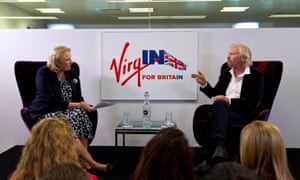
Jayne-Anne Gadhia talks to Sir Richard Branson about his views before the EU referendum.


Remain voter Jayne-Anne Gadhia talks to Sir Richard Branson about his views before the EU referendum. Photograph: Ben Pruchnie/PA

In 2001 part of Virgin Money was taken over by Royal Bank of Scotland and Gadhia went with it. But she quit in 2006, blaming the culture at the Edinburgh-based bank and returned to the core Virgin business..


At RBS she claims she raised the alarm about accounting issues, the sale of payment protection insurance, and rejected attempts to package up mortgages in the style of securitisations which were later to be the undoing of Northern Rock, the bank that was nationalised in 2008. Gadhia eventually took over the “good” part of Northern Rock in 2011.


With hindsight she points to four reasons for RBS’s demise: it grew too quickly, did not have enough capital, lacked diversity at the top – run by “white Scottish men”, she says – and developed a culture where managers thought they were masters of the universe.


The RBS bankers also partied hard, she says. Gadhia tells how she saw bankers with blisters and bandages on their thumbs after setting them alight in sambuca drinking games – events she did not attend – and describes a female colleague who believed she was expected to sleep with her manager.


Her personal profile rose after the Northern Rock deal. More accustomed to being an outsider trying to break into the City establishment – at one point in the interview she describes herself as “this rather strange woman” – Gadhia sat next to George Osborne when he was delivering his high-profile Mansion House speech two years ago, was one of David Cameron’s business advisors, and still leads a Treasury-backed initiative to boost diversity in financial services.


She was also a vocal supporter of their Remain campaign, but she insists she is not now a remoaner. While Virgin’s shares lost a third of their value in the immediate aftermath of the referendum, they have since regained much of that dip and are back above their float price. The bank’s first quarter results on Tuesday will be an indicator of any hit from Brexit.


Branson’s Necker Island home in the Caribbean


Gadhia visits Branson’s Necker Island home in the Caribbean about once a year and clearly admires the entrepreneur. Photograph: Virgin Limited Edition/PA

Gadhia says that in writing the book “I was learning quite a lot about myself” and that to be successful, you need supporters. In her own case, a key supporter was the late Sir Brian Pitman who ran Lloyds Bank before becoming the chairman of Virgin Money after he retired. Unsuprisingly, she names Branson as another supporter.


About once a a year she visits Branson’s Necker Island home in the Caribbean and she clearly admires the serial entrepreneur who appeared via video link at this week’s book launch – held in the Virgin Group’s Roof Gardens in Kensington.


“All of this – I hope this doesn’t sound naff, the whole thing is a privilege. I’ve got a completely normal background, with working class parents, married to guy who didn’t have shoes to put on his feet when he came to this country from Kenya at the age of nine.”


Her husband Ashok – she took his name on marriage – gave up his career to look after their daughter. Gadhia draws upon their experience of being a mixed-race couple for her hopes for women’s’ equality and mental health.


She wants those issues to become as unquestioningly accepted as her mixed race marriage now is. “Over the 30 years Ash and I have been married that change has been profound.”


Virgin Money chief: "I have battled with mental health all my life"

4 Nisan 2017 Salı

Are hospital chaplains a waste of NHS money?

Kole Morgan was on holiday in Plymouth when she was involved in a serious car accident. The 47-year-old gardener from Bristol sustained extensive injuries including multiple fractures to her back, which kept her in intensive care for 48 hours and in hospital for a fortnight. The other driver, who was found to have caused the accident, died.


Away from her family, in pain and feeling alone, she struggled to process all that had happened. When a nurse suggested she ask the chaplain to visit, Morgan agreed, despite not having any religious affiliations of her own.


“The chaplain came within half an hour and listened to me while I thought out loud about what had happened,” says Morgan. “She didn’t suggest I pray, there was no pushing religion on me, it was just somebody really gentle and kind to talk to when I was having a really hideous time.”


Morgan describes the care she received as “invaluable”, but in these times of austerity, are chaplains really worth the expense to the NHS and by extension the taxpayer? NHS funded chaplains cost an estimated £25m annually, with 916 full and part time posts in 2015.


Staff nurse Jodi Norman, who works part time at Southmead hospital in Bristol, believes the chaplaincy plays an important role, not just for patients but also for staff. “When I first started, they would always come by on a weekend and say, ‘If you need a chat, we’re here’ and ‘Have a good shift’ – it made you feel someone’s thinking about us.”


She hasn’t seen them around as much in recent years, she adds, and patients and their families don’t seem to use the service as often as they used to. “When I’ve had patients pass away I’ve offered [colleagues] the service of a chaplain,” she says. “Most people decline. It’s so sad. Faith is becoming less talked about. Honestly I think that the younger generation of nurses and medics wouldn’t even consider the service or how to access it.”


One way that the chaplaincy has tried to engage with people more is by increasing the diversity of its faith offerings to reflect the communities it serves. The lead chaplain at Tameside in Manchester is a Muslim, for example, while Free Church ministers hold lead posts in Leicester and Cambridge, and at Kings London the lead is an Anglican priest.


Imam Yunus Dudhwala has worked within the chaplaincy service for 19 years and is currently head of chaplaincy and bereavement services at Barts health NHS trust. He was the one of the first Muslims to join the service and the first non-Christian appointed as a chaplaincy head.


“It’s very difficult to explain the value of the chaplaincy service,” he says. “It’s about compassion, it’s about support, it’s about kindness. It’s difficult to measure because it’s not very tangible.”


But with almost half the population of England and Wales identifying as having no religion, there are those who feel the NHS shouldn’t be funding a religious offering of any kind, such as the National Secular Society. The non-party-political organisation maintains that no service should be provided within an exclusive religious context and that religious and pastoral care should remain distinct.


“For the minority of patients who would desire specifically religious care, this can continue to be provided by religious groups – possibly through a charitable trust,” says campaigns director Stephen Evans. “But these groups should have no part in deciding who can be employed as chaplains.”


Mark Burleigh, head of chaplaincy and bereavement services at Leicester’s hospitals and president of the College of Health Care Chaplains, disagrees. He believes putting chaplains on the payroll has a number of key benefits. Not only does it ensure that they are accountable to the same policies as other NHS staff – for example, with a restriction on converting people to their faith or challenging them over lifestyle choices – it also ensures a higher quality of candidate.


“Because the chaplains are working in the hospital day in and day out, they know how the hospitals work, they know how to support people in their darkest hour,” he explains. “For local clergy, a baby death is something they might not have to face regularly, whereas for a professional hospital chaplain that’s something they have a lot of experience in dealing with.”


Finally, he argues, it makes the service more reliable. “If a chaplain is paid to be on call, if he or she is asked to come in, they will do so. To rely on ringing up people in the local community at 1am because a baby has died, you can’t necessarily guarantee they will come out.”


If the chaplaincy service were dismissed altogether, there are those who would definitely miss out. For Morgan, the fact that the chaplain who visited her in hospital was a religious representative was important.


“I couldn’t tell you why I found it comforting that she was a vicar, but I did,” she says. “If it had been an imam or a rabbi, I would have possibly felt the same way. It was a sense of comfort and of reassurance.


“I haven’t been to church since I got out of hospital, I haven’t followed up on religion, but I did find it comforting when I was going through a particularly unpleasant time. Chaplains are invaluable. I would hate to see them got rid of.”


Join the Healthcare Professionals Network to read more pieces like this. And follow us on Twitter (@GdnHealthcare) to keep up with the latest healthcare news and views.


Are hospital chaplains a waste of NHS money?

16 Mart 2017 Perşembe

Money earmarked for mental health diverted to balance NHS books

Ministers have been accused of breaking their promises on mental health after £800m earmarked to improve services was diverted to shore up hospitals’ finances.


A leading mental health charity and the Labour party said redirecting the money would hit patient care and hinder the drive, backed by Theresa May, to improve care for people with serious mental health problems.


“It would be incredibly worrying if mental health investment was being sacrificed so that [NHS bodies] can balance their books,” said Paul Farmer, the chief executive of Mind, who chaired the NHS taskforce on mental health that last year recommended sweeping changes, including to funding.


The move has emerged in a letter written by NHS England’s finance chief, Paul Baumann, which has been seen by the Health Service Journal. In it he makes clear that the £800m, which NHS England held back from its 209 clinical commissioning groups this year, will help stabilise NHS finances.


Simon Stevens, the chief executive of NHS England, last year said the money was “funding that would have been available from CCGs for mental health services, community health services, primary care and other things”. It was being held as a “contingency reserve” in case hospital trusts recorded huge deficits this year comparable to the overspend of £2.45bn they made in 2015-16, he said.


In his letter, Baumann confirms that NHS England now intends to use the “full amount” of the contingency fund to offset overspends by NHS acute hospital trusts in 2016-17.


“The aggregate effect of this will be to increase the surplus across the whole of the commissioning [CCG] sector by around £800m, which will help to offset the provider deficit position and help us to secure a balanced position for the NHS overall,” he writes.


“As expected, provider [hospital] financial position is such that we now require each commisisoning organisation to release the full amount of the 1% non-reccurent reserve to its bottom line. This is an essential element of the risk management strategy agreed across the health sector for 2016-17, and it is vital that we secure the full expected benefit from the release of the risk reserve.”


NHS trusts in England were initially told to overspend by no more than £250m this year. That target was revised to £580m, but trusts are now forecast to end 2016-17 about £873m in the red, according to NHS Improvement, the service’s financial regulator.


Diverting the contingency money will help the health secretary, Jeremy Hunt, avoid the embarrassment of his department busting its budget for this year. It needed an emergency injection of £205m last year.


“The news that the government is using mental health funding to plug the gaps in other NHS spending flies in the face of Tory government pledges for improved funding for mental health,” said Barbara Keeley, shadow minister for mental health.


“Jeremy Hunt has said that children’s mental services are the NHS’s biggest failing. It is of no use pledging improved funding for children’s and other mental health services if the NHS is going to divert funding for trust deficits,” she said, adding that ministers should ringfence mental health funding to ensure it reaches the frontline.


NHS England played down the impact on key services. “As we’ve been saying since the start of the year, we set aside £800m to cover provider deficits if needed, and we do now need to. This is uncommitted money that would otherwise have been invested at the discretion of commissioners. It will be important to get the trust deficit down next year so planned investments can take place,” a spokesman said.


Money earmarked for mental health diverted to balance NHS books

18 Ocak 2017 Çarşamba

On mental health, the Tories need to put their money where their mouths are | Alastair Campbell

What is it about the mental health debate that makes me go all Malcolm Tucker, effing and blinding at the gap between what politicians say about it and the reality on the ground? And why do I want everyone else to get as angry as I am about it? Because every time there is pressure on health spending, mental illness slips down the priority queue.


We are frankly light years away from the parity between mental and physical healthcare that is set out – in law – in the NHS constitution. In the last week, I have spoken to a mother at her wits’ end because her daughter is being treated in Scotland when she lives 80 miles south of the border; a young man I persuaded to get help for his anxiety and depression who has been given some pills and told he might get cognitive behavioural therapy (CBT) in six months; a student who has dropped out of education after two failed suicide attempts, one of which followed a long wait in a crowded room waiting to see an overstretched university psychiatrist.


I recently got a letter from someone who said that my urging people to be open in a radio interview had led him to seek help for what he worried was a drink problem. But when he got to his GP he was told the alcohol support service had been cut and was instead given a list of local Alcoholics Anonymous meetings. It makes you wonder what is the point of fighting to change attitudes if the services are not there to help people who, despite all the stigma and taboo, make that first step to be open about a mental health problem.


May and Cameron presided over 8% cuts in spending on mental health, and the loss of more than 6,000 mental health nurses


There are of course many people who do get good treatment. But my worry is that the battle against stigma is seen as a substitute for the services we need, rather than an accompanying policy goal, and a genuine government priority.


So for all Theresa May’s fine words, and David Cameron’s before her, they have presided over 8% cuts in real spending on mental health, the loss of more than 6,000 mental health nurses and a fall to a lower per-capita number of psychiatric beds than France, Germany or the OECD average.


According to findings from mental health research charity MQ, more than four out of 10 people believe that mental illnesses such as anxiety and depression are now an inevitable part of life. Even with more prevalent physical illnesses we don’t have the same expectation, because we just don’t think about mental health in the same way. That has consequences for care, and the pressures politicians feel to provide it.


Sadly, young people seem to be hardest hit; only one in four young people referred to a professional actually gets the treatment they need. When you consider that 75% of mental illness starts before the age of 18, that’s a lot of young people surrounded by their own concerns and the inabilities of others to help them. Yet where is the anger? Suicide is the biggest killer of young men in Britain – replace “suicide” with any physical illness or any other aspect of our national life, and you would have outrage aplenty. Walk past all those people living on the streets, as we all do, and imagine they were lying there untreated, not with a psychiatric illness but a broken leg or a heart attack – we would have an ambulance there in no time.


The demand for parity must include research. To make progress, we need research that focuses on mental illness in young people. You only need to consider the progress in HIV treatment over the past 20 years to see that research is a huge part of the answer.


May is right that mental health care is not all about the money. But a lot of it is. For every person affected in the UK we spend just £8 on research. For dementia – £110. For cancer – £178. Good for cancer. The impacts of mental health problems can last a lifetime. If we were funding mental health research like we have other physical illnesses, things would look very different.


If you bump into May or Jeremy Hunt, point out that by not investing in care, by not investing in research, by not taking seriously the growing mental health needs of younger people in particular, we are storing up much bigger problems – and costs – for the future. That much, surely, is so obvious, it’s unbelievable we even have to say it.


Malcolm Tucker coined the phrase “not my fucking problem”. This is our problem, because we all have mental health and we need to do a better job of getting the services, understanding and research we need.


On mental health, the Tories need to put their money where their mouths are | Alastair Campbell

13 Ocak 2017 Cuma

NHS crisis: more money must be linked to reform

The biggest crisis facing the NHS is that, no matter how high or low the funding, transformational change fails to happen. It is easy to justify why reform is so slow and patchy currently, but neither did it happen in the years following the NHS Plan in 2000, when the annual real funding increases were among the highest in NHS history.


The same promises were made – risk stratified prevention, involving people in their own care, a digital revolution, a massive expansion of primary care. Waiting lists tumbled, A&E treatment times were slashed and there was huge capital investment, but the underlying shape of the service remained largely unchanged.


That history is one reason why the Treasury is so resistant to injecting more cash. After the NHS England chief executive, Simon Stevens, appeared in front of the Commons public accounts committee this week former permanent secretary Nick Macpherson tweeted: “NHS bottomless pit. Money should be linked to reform.”


Nick Macpherson (@nickmacpherson2)

Simon Stevens a good guy but he should not determine health spending. NHS bottomless pit. Money should be linked to reform. #soundmoney


January 11, 2017


In other parts of the public sector, the current “burning platform” of sustained and substantial real-term funding cuts has driven major restructuring. Councils have been merging management teams and back-office systems, selling buildings and consolidating staff in fewer centres and engaging with the public online rather than face-to-face. This is been delivered by facing up to tough decisions and planning ahead, knowing that they have to break even each year.


But there is a difference between tight control of public spending and setting the NHS up to fail. Undermining prevention by cutting public health budgets, driving people to A&E through inadequate primary care, and stopping hospital patients returning home by eating away at real-term social services spending for seven years is a triple assault on the NHS that is overwhelming the system. Add in the efficiencies – cuts – being driven through the payment system and the pressures become intolerable.


Our health spending as a proportion of our national wealth has always been low. According to the Health Foundation, we would need to increase our spending as a proportion of GDP by around 10% to catch up with France and Germany. Health spending should be seen as an investment. Mental health services in particular have a direct economic benefit.


More cash is needed to break the vicious circle. The vortex of acute sector deficits is sucking in funds from the rest of the system, undermining precisely the developments that can help to avoid emergency admissions. It has swallowed up virtually all the money intended for service transformation. Beyond this, cuts to local government funding for social care and public health need to be reversed.


Leaving aside the politics of the health secretary, Jeremy Hunt, trying to wriggle off the four-hour A&E target by applying it only to the most serious cases, it is the right move for the health service. When the entire system is under such pressure there is no sense in prioritising rapid treatment of minor ailments.


But Nick Macpherson is right. More money has to be linked to reform. Numerous hospitals are still failing on basics such as effective management of patient flows through the hospital, driving efficiencies in A&E and on wards, managing their estates and driving down the cost of back-office systems – including by outsourcing.


Too few managers and clinicians have the skills to design and implement improvements to care pathways. Simple ideas that have been around for years such as social workers stationed in A&E to divert older people from hospital admissions are still under-exploited.


The NHS and the rest of the health and care system desperately needs more cash, but this cannot be swallowed up in funding business as usual. Firm commitments need to be made and kept across the hospital sector to ensure organisations are as lean and efficient as possible. That is the only way to ensure the endlessly discussed investments in primary, community and mental health care are finally delivered.


Join the Healthcare Professionals Network to read more pieces like this. And follow us on Twitter (@GdnHealthcare) to keep up with the latest healthcare news and views.


NHS crisis: more money must be linked to reform

16 Aralık 2016 Cuma

What I want to tell my boss: ‘You"re ruled by money, not patient care’

You harass my team constantly while we’re trying to do our job. When I am with a patient, non-clinical staff call me every half hour asking for updates – and apply pressure for the crew to move on to other 999 calls.


What you say on the phone is overheard by patients, often the elderly and vulnerable, which makes them feel guilty about having an ambulance – and at times patients refuse to go to hospital even though they should, so the ambulance can be available for someone else.


You want us to work quicker and quicker, yet this means reporting accidents and safeguarding vulnerable patients can be missed. There’s never time – as the shifts often over-run and the exhausted crews go home without completing the necessary paperwork. Ambulances are also often denied the opportunity to restock drugs, potentially leaving other patients without the care they need.


There are no government targets for this though, so under your leadership the staff, who are caring by nature, become increasingly disillusioned and frustrated – up to the point they need to leave the profession for their own sanity.


The bullying doesn’t end there. There are staff employed by the NHS to pressurise crews at hospital to turn calls around quicker, whether they are in a position to do so or not – yet again chasing a government target.


You revel in having good figures and use all the tactics you can to get them. You chase any government or Department of Health targets, such as sickness rates and flu vaccination rates. You pressurise your management team to harass staff to have the influenza vaccination against their wishes, and instruct managers to sack people on long-term sick leave. This leads to dread, fear, and plummeting moral.


Recruitment and retention of paramedics is a constant, national problem. Pay is being reviewed at a national level, but it’s not just about pay: your management is part of the problem, which is not being addressed. The number of people currently leaving the profession shows this. No amount of money can persuade people to continue to be on the receiving end of unattainable targets and bullying.


There is a cumulative effect: you bully your directors, they bully the more junior managers, who bully the staff. So experienced paramedics leave and take years of practical knowledge and experience with them, to be replaced with inexperienced new staff on significantly less pay.


You pretend in public to focus on patient care and welfare, but then make cuts that leave parts of the community with a second-class service. Bigger is not necessarily better. When the government merged ambulance services, from county services to regional ones, standards went down the pan.


Money is the true deciding factor here, not best practice, so the best care won’t be rolled out on a regional basis. Is it any wonder so many people are leaving, to be replaced by less experienced but, most of all, cheaper, staff?


What I want to tell my boss: ‘You"re ruled by money, not patient care’

12 Aralık 2016 Pazartesi

Happiness depends on health and friends, not money, says new study

Most human misery can be blamed on failed relationships and physical and mental illness rather than money problems and poverty, according to a landmark study by a team of researchers at the London School of Economics (LSE).


Eliminating depression and anxiety would reduce misery by 20% compared to just 5% if policymakers focused on eliminating poverty, the report found.


Lord Richard Layard, who led the report, said on average people have become no happier in the last 50 years, despite average incomes more than doubling.


The economist and former adviser to Tony Blair and Gordon Brown said the study, called Origins of Happiness, showed that measuring people’s satisfaction with their lives should be a priority for every government. The researchers analysed data from four countries including the US and Germany.


Extra spending on reducing mental illness would be self-financing, the researchers added, because it would be recovered by the government through higher employment and increased tax receipts together with a reduction in NHS costs from fewer GP visits and hospital A&E admissions.


“Tackling depression and anxiety would be four times as effective as tackling poverty. It would also pay for itself,” he said.


The report supports the arguments put forward by Layard over several decades that social and psychological factors are more important to the wellbeing of individuals than income levels.


“Having a partner is as good for you as being made unemployed is bad for you,” he said.


The report claims that state-run organisations, including schools, must become more focused on tackling anxiety and mental health issues.


“This evidence demands a new role for the state – not ‘wealth creation’ but ‘wellbeing creation’,” Layard said. “In the past, the state has successively taken on poverty, unemployment, education and physical health. But equally important now are domestic violence, alcoholism, depression and anxiety conditions, alienated youth, exam mania and much else. These should become centre stage.”


The economist said it was a curse on children that they were judged by society solely on their educational attainment. The report adds: “The strongest factor predicting a happy adult life is not children’s qualifications but their emotional health. There is also powerful evidence that schools have a big impact on children’s emotional health, and which school a child goes to will affect their emotional wellbeing as much as it affects their exam performance.”


Layard rejected accusations that he was arguing against closing income inequalities but said improvements in mental health services would have a greater impact.


The health secretary, Jeremy Hunt, has pledged to increase funding for mental health services. In September he said the care offered to children and young people was the service’s biggest weakness.


But the Department of Health admitted last month that the number of mental health nurses working in the NHS in England has dropped by almost a sixth since the Conservatives came to power in 2010, from 45,384 in England to 38,774 in July this year.


The report will be presented to a conference in London on Monday that has been organised by the LSE and the Organisation for Economic Co-operation and Development.


Happiness depends on health and friends, not money, says new study

30 Kasım 2016 Çarşamba

Jeremy Hunt says calls for more NHS money are a "misjudgment"

Jeremy Hunt has said calls for more money for the NHS are a “misjudgment” less than a year after the health service received a “good settlement” from the government.


The health secretary was reacting to comments from Chris Hopson, the head of NHS Providers, the body that represents hospitals across England, who said on Tuesday that NHS trusts “simply cannot deliver all that they are being asked to deliver on the funding available”.


There have been repeated calls for more money, with charities, thinktanks and royal colleges all saying the NHS requires extra funding.


The chancellor, Philip Hammond, offered no extra cash for the NHS or social care in his autumn statement. He repeated the government’s claim that the NHS will receive an extra £10bn in funding to 2020-21 – a figure that has been challenged by MPs on the Commons health committee and health experts.


MPs have said the government is misleading the public over the “incorrect” figure, saying it is only being achieved through reductions in other areas of health spending outside of NHS England’s budget, such as public health and investment in training.


They said the real increase was £4.5bn while the King’s Fund thinktank has put the figure at £4.2bn.


According to the Health Service Journal (HSJ), Hunt, who is attending the NHS Providers conference in Birmingham, said of Hopson’s speech: “I read Chris’s speech, and I thought it was a very thoughtful speech, and indeed I think he’s a very thoughtful person when it comes to the challenges facing the NHS.


“But I did think it was a misjudgment for NHS Providers, less than a year after they had a settlement for the NHS which they themselves described as a good settlement, to say that there isn’t enough money.


“And the reason is that when we’re negotiating with the Treasury for extra support for the NHS, if less than a year ago you’ve got the biggest settlement that any government department got, in a period when most government departments have seen their budget cut, and less than 12 months later you’re saying, ‘there isn’t enough money, please sir can I have some more’, then you devalue the currency.


“What you do is you risk the NHS not being at the table in these discussions going forward because people will say, ‘whatever we do it’s not enough’.”


Jeremy Hunt says calls for more NHS money are a "misjudgment"

22 Kasım 2016 Salı

Private money is the NHS’s saviour, not its bogeyman | Stephen Dalton

Recent headlines about the NHS drawing up secret “sustainability and transformation plans” have led to speculation about widespread cuts to local services and allegations of an orchestrated attempt by the NHS to keep the public in the dark. For the record, indiscriminate closures are neither planned nor legal. But the need for a rational, national debate about how we secure a viable health and care system is urgent, and made more difficult by partisan and party-political arguments.


What’s more, and with this week’s autumn statement highly unlikely to offer anything other than jam tomorrow, we must shift the focus away from hospitals. I don’t know any NHS leaders who believe that more hospitals are the answer. Quite a few hospitals and services could do with shifting to where they’re most needed, but the NHS has no appetite for solutions reliant on more institutional settings.


Right now NHS leaders are calling for the priority to be social care. But with the country’s most publicly treasured institution facing unprecedented demand, exponential growth in high-cost complex care and a post-Brexit economic landscape that leaves little room for optimism, what are our political leaders talking about? The threat posed to the service by the private sector.


What was seen a decade or so ago as a sensible way of attracting investment, and what helped get average waiting times down from 18 months to 18 weeks, is now seen as a political no-go area, with the Tories and Labour locked in an arms race over who has used the private sector least while in office. This is a con trick, as in reality the private sector has been used for decades to help sustain a health service that is free at the point of use and available to all based on need and not ability to pay.


Currently, NHS leaders are working through how to bridge the quality, access and finance gaps in their areas, and it’s not unusual for these plans to be predicated on the need for multimillion-pound injections of capital. Across the country, funding requirements run into billions, and there will need to be significant private investment if plans for transforming the NHS care landscape are to be realised. This raises the spectre of the rightly discredited PFI schemes. Acknowledging and learning from their failure, rather than being paralysed by past events, is the way forward.


Independent-sector healthcare providers, which increase the system’s capacity to respond to demand, help meet waiting-time targets and enable investment to bring important benefits for patients – most of whom are relaxed about who provides their care, so long as it’s high-quality and free at the point of use. This is particularly important at a time of lengthening waiting times and unprecedented demand, and in advance of winter, which always adds to existing pressures.Examples of beneficial private sector involvement include quicker access to treatment through the use of private hospitals paid at NHS prices, more rapid discharge from hospital through well-established “recovery at home” services, and access to private sector community diagnostic facilities for scans, tests and examinations, again at NHS prices.


There will need to be significant private investment if plans for transforming the NHS care landscape are to be realised


We need to remember too that the public sector does not have a monopoly on caring. I have more than 40 years of public sector clinical and leadership experience, and in that time we have seen high-profile failures in the private, public and voluntary sectors. I don’t seek to deny the incidence of failure, but providing choice beyond a single, public option, introducing personal budgets and enabling different forms of independent sector provision has more often been a force for good, and improved people’s lives.


And this is still the NHS – free at the point of use, with strong safeguards over quality and safety.


So let’s stop pretending that private sector involvement in the NHS is a uniformly bad thing: it isn’t. Around 10 million NHS patients per year are treated by private sector organisations operating across nearly 2,000 sites. Patient feedback and Care Quality Commission inspection reports demonstrate that these services are generally safe, responsive and high-quality.


The political debate over the future of the NHS urgently needs refreshing, and portraying private sector healthcare organisations as bogeymen that should either be pushed out of the NHS or never spoken about simply serves to bind the hands of NHS leaders who want to bring about change in partnership with others.


As long as this political negativity exists, it will be patients who feel the consequences.


Private money is the NHS’s saviour, not its bogeyman | Stephen Dalton

14 Kasım 2016 Pazartesi

In NHS management being fired means you continue working for more money

When I had to leave my role as a senior NHS manager, I discovered that the health service has a well-used but little-known system for easing people out of top jobs. And I learned that it doesn’t work well for anyone: trusts, our healthcare system, managers, patients or the taxpayer.


It’s quite common for senior leaders to have to step down, even when there are no performance issues and their actions haven’t risked patient safety. Sometimes, as in any sector, people simply end up in jobs that aren’t right for them. And just as often, managers, keen to support NHS bodies through difficult change projects, take on tasks that prove impossible to accomplish.


My case is typical. Individual hospitals are being pushed to group together in larger organisations, centralising specialist care and closing some common services with overlapping coverage. And the timetables for these ambitious reforms are sometimes built around political cycles, rather than good medical care or change management. I ended up overseeing a major change programme – but the deadline was unrealistic, and staff shortages were so acute that we couldn’t recruit enough experienced medics. After a period we got things under control; but senior management made clear that they wanted a change of leadership, believing that it would draw a line in the sand and signal a fresh start.


In the private sector, I’d have been given a fat pay-off and sent on my way. But in UK public healthcare it’s not acceptable to spend taxpayers’ money that way, and departing managers have nowhere else to go: the NHS is the only game in town. So I was summoned to a meeting, and offered a sideways move into a national role at NHS Improvement: the agency responsible for improving practice across the health service.


I soon learned that most such roles at NHS Improvement are one-year contracts, where people do useful work that is rarely followed through into delivery. Working there, some people apply for other NHS jobs and eventually move into senior roles elsewhere in the system. But many, wounded by their treatment and unsure of their chances in the job market, instead use the role as a springboard into interim work; and the NHS is desperately short of skilled, experienced leaders, so it ends up paying them £1,000 a day to plug gaps in its management structures.


Many people offered a one-year job at NHS Improvement would instead be willing to take a less senior job with their current employer, if it meant a permanent job and the chance to stay in the locality. But few are offered this option, and there’s a stigma attached to dropping grades. It’s seen as a sign of personal failure, and there’s an expectation that careers only ever go upwards – which, in these days of long careers and merging organisations, isn’t realistic.


Political leaders and senior management need to recognise that, while not all appointments work out, these people still have skills the NHS needs. And they should understand that failing in an impossible job is a verdict on the job, not the person. After all, those jobs only become impossible because managers are trying to both keep their staff happy, and push through the systemic changes required by national policymakers. The NHS needs to reform, and ministers have a democratic mandate to reshape the system; but currently, the best way to protect your career is to keep your head down, build support among your staff, and resist risky reforms.


With budgets in decline, demand rising, a growing recruitment crisis, and an endless series of new policies and organisational changes, it’s easy for organisations to become over-stretched and leaders to fall out of favour. If the NHS wants people to be ambitious in these very difficult jobs, it shouldn’t push those who run into trouble into temporary non-jobs – and then into an interims market where the NHS must rent their skills back at exorbitant cost.


National leaders need to be more open about the difficulty of succeeding in these hugely challenging jobs, and do everything they can to retain good managers who’ve taken a step back – offering them permanent employment in less high-profile roles. Then people would be more willing to take on the most difficult jobs in NHS management, and there would be less gaps in management grades. That, in turn, would cut the interims bill and improve continuity in organisations that can ill afford excessive staff costs and unstable leadership.


The current system evolved to help protect NHS staff while facilitating necessary leadership changes, but it’s a huge waste of talent as well as money. Politicians and the Department of Health need to be more open, both about the flaws in redeployment processes, and about the pressures that brought us to this point. That would take courage; but if they’re ready to have that conversation, the benefits will be felt by patients and taxpayers as well as NHS managers and policymakers.


If you would like to write a blogpost for Views from the NHS frontline, read our guidelines and get in touch by emailing sarah.johnson@theguardian.com.


Join the Healthcare Professionals Network to read more pieces like this. And follow us on Twitter (@GdnHealthcare) to keep up with the latest healthcare news and views.


In NHS management being fired means you continue working for more money

6 Kasım 2016 Pazar

Health secretary says NHS issues aren"t just about money but also standards

Jeremy Hunt sought to play down a row about the amount of new funding available for the NHS, saying the health service’s challenges are not “just about money”.


The health secretary was challenged by the BBC’s Andrew Marr over the gulf between the government’s claim that the NHS has been awarded an additional £10bn of funding, and estimates by independent organisations that have put the “true” figure at about £4.5bn.


Last month, MPs on the health select committee threw their weight behind the lower figure, with Tory parliamentarian Dr Sarah Wollaston warning the government’s £10bn figure “is not only incorrect but risks giving a false impression that the NHS is awash with cash”.


Last week, Nigel Edwards, the Nuffield Trust’s chief executive, warned: “The NHS is going into its toughest winter yet with the odds stacked against it. Demand for healthcare is on the rise, funding for both health and social care is being squeezed and A&E departments are missing their targets.”


Hunt dismissed a suggestion from Marr that the NHS’s performance was suffering because of a lack of funding: “We do tend to get in the run-up to the autumn statement a coalition of people who will say that the answer to all the NHS’s problems is more money from government.”


He said: “The big question is, does the NHS have enough money, and the answer to that is that we do need more resources – we are looking after a million more people aged over 75 than five years ago, that’s why we are putting in £4bn more.”


But he added: “It isn’t just about money – it’s also about standards.”


Ensuring that lessons were learned from medical accidents could help save the NHS on legal bills, Hunt said. “There’s lots of things we can do in terms of helping to ensure we are better at learning from mistakes, so that we don’t have this huge legislation bill of £1.5bn because of some of the mistakes we have made – that all helps on the money front.”


He added: “There are, of course, financial pressures, but I think it’s a mistake to say this is only about money. It’s also about getting the culture right.”


Winter is “extremely tough” for the health service, Hunt said: “I can say I think we are better prepared this year than we’ve ever been.”


But he added: “There’s always the unpredictable, the cold spells, the flu outbreaks and so on … I think it would be wrong for any health secretary in the run-up to winter to say everything’s tickety-boo.”


Health secretary says NHS issues aren"t just about money but also standards

17 Ekim 2016 Pazartesi

Hospital deficits could force NHS to divert money meant for improving care

The NHS expects hospitals to go on racking up such large deficits in the next few years that it will have to divert £5.4bn earmarked for improving patient care to prop them up, experts claim.


NHS trusts in England, which recorded a collective deficit of £2.45bn last year, are meant to reduce their overspending this year to only £580m to help tackle the service’s acute financial problems.


But the Nuffield Trust thinktank has discovered that the £1.8bn trusts will receive this year to help wipe out their deficits will be made available to them again in 2017-18 and 2018-19, despite NHS pledges that they will have got close to balancing their books by the end of March.


However, using that £5.4bn for deficit reduction will threaten the chances of success of the NHS’s plan to ensure its own future, according to Sally Gainsbury, the thinktank’s senior policy analyst who unearthed the planned diversion of funds.


That is because the money will be swallowed up by cash-strapped hospitals and will not be available to be ploughed into overhauling how care is delivered, which NHS England chief executive Simon Stevens has made clear is vital if the health service is to stem the rising demand for care and ensure it remains sustainable.


The disclosure of a cash shortage in the NHS comes as Stevens and health secretary Jeremy Hunt prepare to face tough questioning from MPs on the Commons health select committee on Tuesday about the state of the service’s finances.


MPs are likely to ask about Theresa May’s decision, revealed by the Guardian last weekend, that the NHS will not get any extra money in next month’s autumn statement, despite fears that it is coming under unsustainable pressures.


If the NHS cannot stop demand for A&E and other care rising from the current 3% increase a year to the 2% increase it hopes to achieve by 2020 – which giving the extra £1.8bn a year bailouts to trusts makes more unlikely – then hospitals will fail to get their finances back on track, Gainsbury added.


“The risk is the NHS starting the next decade with a recurrent overspend of more than £2bn a year, even after the painful cost cuts providers are currently being asked to make to reduce their deficits,” said Gainsbury.


“The fact that there is now less money available for investing in service transformation than originally envisaged matters because the NHS desperately needs to slow the pace at which the demand on its hospitals is growing. If that doesn’t happen through careful investment in alternative services and public health improvement then the risk is it will happen instead through crude rationing and service closures.”


The planning guidance which NHS England issued to the service last month made clear that the sustainability and transformation fund, which Hunt created last year, will “focus on supporting sustainability rather than transformation, aiming not to fund service enhancements but to sustain services”.


NHS England confirmed that all the £1.8bn in the fund this year will help cover hospitals’ deficits; and that of the £2.9bn it has set aside for sustainability and transformation activities in both 2017-18 and 2018-19, of that £1.8bn each year will be used to help ease the financial situation of NHS providers of care and the other £1.1bn to transform how it cares for patients.


Meanwhile, a survey has found that 70% of Britons are prepared to pay an extra one pence in income tax to help fund the NHS, and almost half (48%) would pay an additional two pence.


An extra penny on the basic rate of income tax would raise around £4.5bn, and 70% of those questioned for ITV1’s programme The Agenda said they would be happy to see a tax hike on this scale if it was guaranteed that all the money would go to the NHS.


The same poll found that almost half of Britons (46%) think that the NHS is performing badly, double the number (23%) who think it is performing well.


There is little public support for charges being introduced for NHS services to help ease its financial problems. Just one in four (27%) of those questioned said they would be willing to pay £5 to see their GP, while 66% said they would not. If that cost £10 then only 15% would be happy to pay, while 79% said they would not.


Chris Hopson, chief executive of NHS Providers, which represents hospitals, said: “We know the NHS is under the greatest pressure in a generation. Patients can see this pressure. They’re saying very clearly that they are happy to pay a bit more income tax to get the right quality of care and relieve the pressure on the NHS. We elect governments to make decisions on the NHS budget and we hope the new prime minister and chancellor are listening.


“And an extra penny on income tax would only give the NHS a quarter of the extra £350m a week patients were promised in the Brexit referendum campaign.”


Hospital deficits could force NHS to divert money meant for improving care

14 Ekim 2016 Cuma

No extra money for NHS, Theresa May tells health chief

Theresa May has told the head of the NHS that it will get no extra money despite rapidly escalating problems that led to warnings this week that hospitals are close to breaking point.


The prime minister dashed any hopes of a cash boost in next month’s autumn statement when she met Simon Stevens, the chief executive of NHS England, senior NHS sources have told the Guardian. Instead she told him last month that the NHS should urgently focus on making efficiencies to fill the £22bn hole in its finances and not publicly seek more than the “£10bn extra” that ministers insist they have already pledged to provide during this parliament.


She told him the NHS could learn from the painful cuts to the Home Office and Ministry of Defence budgets that she and Philip Hammond, the chancellor, had overseen when they were in charge of those departments, according to senior figures in the NHS who were given an account of the discussion.


Senior Whitehall sources have confirmed that Hammond’s statement on 23 November will contain no new money for the NHS, despite increasingly vocal pleas from key NHS organisations and the public’s expectation of extra health spending if Britain voted to leave the EU.


NHS Providers, which represents 238 NHS trusts, last week accused ministers of perpetuating “a bit of a fantasy world” on how well the NHS is doing after the worst-ever performance figures for key waiting time targets for A&E care, planned hospital operations and cancer treatments led to warnings that it was starting to buckle under the strain of unprecedented demand.


Health experts warned that the NHS would have to ration treatment, shut hospital units and cut staff if it gets no extra money soon.


Nigel Edwards, chief executive of the Nuffield Trust health thinktank, said: “If the government has firmly decided not to revisit NHS funding, this underlines that the health service faces four very difficult years. In particular, balancing the books in 2018 and 2019 when funding will flatline looks all but impossible with the current level of services.


“If more money from tax or borrowing is ruled out, the only choices left may be even less attractive, including reducing access and services, closures and reductions in staff,” he said.


Jeremy Hunt, the health secretary, and Jim Mackey, the chief executive of the health service’s financial regulator, NHS Improvement, also attended the 8 September meeting, which was Stevens’ and Mackey’s first encounter with the prime minister.


“No 10’s message at the meeting was quite blunt and stark, that there will be no more money. Theresa May and Philip Hammond say that they presided over big efficiency programmes at the Home Office and MoD and didn’t whinge about it. Their view is that the NHS is already doing very well, but that’s head in the sand stuff,” said one NHS insider who was among those briefed on the meeting.


NHS leaders privately fear that May’s remarks indicate that she will be much tougher on the service’s pleas for more cash than David Cameron and does not appear to appreciate the extent of its deepening problems. She is said to be sympathetic to the view of many senior Treasury officials that, as one NHS source put it, “always giving the NHS more money is throwing good money after bad, like pouring water on to sand”.


May’s stance raises questions over the future of Stevens, who is preparing to give evidence on the NHS’s finances to the Commons health select committee on Tuesday. The NHS boss, who had a close relationship with Cameron and George Osborne, has recently irritated No 10 by publicly questioning the accuracy of the government’s claim – which May repeated at prime minister’s questions on Wednesday – that the NHS will receive £10bn extra by 2020.


He told the public accounts committee last month: “The government would record it as £10bn. The health committee recorded it a little differently. There is an apples and pears issue there.”


Stevens has welcomed the fact that the £8bn boost Osborne pledged during last year’s general election campaign was “frontloaded” to give the NHS £3.8bn more this year, a rise of 1.7%, as he had requested. But he highlighted that the service had not got the sums it needed for 2017-18, 2018-19 and 2019-20. On current plans, it is due to receive increases of just 0.6%, 0.2% and 0.1% respectively, even though demand for core NHS services such as A&E care is rising at 3% or 4% a year.


Chris Ham, chief executive of The King’s Fund thinktank, said that any policy of providing no more money was unwise, “simply not credible” and would threaten standards of NHS care. “If these accounts are true, then it is clear that Downing Street does not yet fully understand the impact on patients of the huge pressures facing the NHS.


“The view from the top of government appears to be that the NHS has been given the extra money it asked for and should deliver what is expected of it. But this misses the point that demand for services is rising rapidly and the NHS is managing with the lowest funding increases in its history,” he said.


A Downing Street spokesman said he could not comment on what May, Stevens and Mackey had discussed because it had been a private meeting .


No extra money for NHS, Theresa May tells health chief

6 Ekim 2016 Perşembe

Alcohol continues to be sold at "pocket money prices", report finds

Alcohol continues to be sold at “pocket money” prices across the UK, with white cider on offer for pennies, according to a report.


The study from the Alcohol Health Alliance (AHA) concluded that little has changed in recent years when it comes to people being able to buy cheap booze from supermarkets and off-licences.


Meanwhile another study has found that British teenage girls are more likely to get drunk than their male counterparts. The Organisation for Economic Co-operation and Development (OECD) study found 31% of 15-year-old girls reported having been drunk at least twice compared with 26% of boys of the same age.


Researchers from the AHA analysed 480 products to find the cheapest drink on sale across the UK. The team found that high-strength white cider, which they say is mostly drunk by dependent and underage drinkers, is being sold for as little as 16p per unit of alcohol.


They said: “The conclusion is clear – alcohol continues to be sold at pocket money prices in supermarkets and off-licences across the UK.”


They found a wide range of cheap alcohol being sold by major supermarkets – including Asda, Tesco and Sainsbury’s.


Their report said: “Both Asda and Tesco were found to be selling perry at 19p per unit, while Morrisons were selling cider at 20p per unit and Sainsbury’s stocked perry at 22p per unit.


“In our research, we also found an abundance of summer-focused promotions. The promotions included deals on multi-packs and free giveaways with alcohol purchases, enticing people to buy.”


The report said that for the cost of a standard off-peak cinema ticket (£8.24), people could buy 7.5 litres of the cheapest white cider – the equivalent of 53 shots of vodka.


“The minimum hourly wage for those aged under 18 is £3.87,” the study went on. “After just an hour’s work, you would still have 38p change after buying a three-litre bottle of Frosty Jack’s containing 22.5 units of alcohol.


“For the cost of a monthly Netflix subscription at £7.49, you would have change from buying two three-litre bottles of Frosty Jack’s.


“Today, £10 will not buy you a large Domino’s pizza, but you would have a penny left over from a 700ml bottle of 40% Putinoff vodka at £9.99.”


The report concluded: “Cheap booze can be found on every street corner. Fundamentally, very little has changed since the last report was carried out five years ago.


“While the lowest price we report is 16p per unit, we found a broad range of products on sale for 25p or less, which is half the 50p minimum unit price recommended by health bodies and alcohol charities.


“At the cheapest price per unit for white cider (16p), the low-risk drinking limit of 14 units per week for both men and women could be purchased for just £2.24.”


Chairman of the AHA and former president of the Royal College of Physicians, Professor Sir Ian Gilmore, said: “In spite of a government commitment to tackle cheap, high-strength alcohol, these products are still available at pocket money prices. Harmful drinkers and children are still choosing the cheapest products – predominantly white cider and cheap vodka.


“We need to make excessively cheap alcohol less affordable through the tax system, including an increase in cider duty. It’s not right that high strength white cider is taxed at a third of the rate for strong beer.


“In addition, we need minimum unit pricing. This would target the cheap, high strength products drunk by harmful drinkers whilst barely affecting moderate drinkers, and it would leave pub prices untouched.”


Each year, there are almost 23,000 deaths and more than 1 million hospital admissions related to alcohol in England.


More than two-thirds of alcohol sold in the UK is purchased in supermarkets and off-licences.


Another report has found that British teenage girls are more likely to get drunk than their male counterparts. The Organisation for Economic Co-operation and Development (OECD) study found 31% of 15-year-old girls reported having been drunk at least twice compared with 26% of boys of the same age.


Alcohol continues to be sold at "pocket money prices", report finds

4 Ekim 2016 Salı

Nine Tips for Watching Your Weight and Saving Money When Traveling Away from Home

Traveling and eating out are synonymous with one another. When you’re on the road, you’re not planning meals as you normally would at home, and you typically have less time to prepare anything healthy to eat. Most of the time you opt to eat out at restaurants, fast-food joints, or go for snacks throughout the day rather than full meals. While the convenience of these practices is undeniable, it can have a noticeable effect on your health (and on your wallet). Below are nine helpful tips and strategies to keep your heart healthy and your bank account happy.


1. Shop at Local Grocery Stores


While we typically associate traveling with eating out, you would never eat three meals per day at restaurants if you were at home. Eating out not only costs more than buying from a grocery store, but it also pulls funds away from experiencing the area you’re visiting beyond the local cuisine. You can save a substantial amount of spending money by simply saving 1 or 2 (even 3) meals per day from the grocery store. Plan out your grocery lists for breakfast, lunch, and dinner, and leave space for yourself to go out once or twice for each daily meal (so you can still get the local culinary experience). A good hybrid strategy is to find a local market that you can get both groceries and locally grown/distributed items.


2. Try to Avoid Restaurants When Possible


Whether you’re traveling for business or pleasure, being away from home can mean that eating out at diners and restaurants could be your only option. As mentioned above, eating out can drain your finances fast, and according to an article published on OneCape Health News, those meals may be packing more calories than you may be aware of. In fact, “More than 92 percent of the meals studied exceeded caloric recommendations for a single meal.” So eat out sparingly, because your wallet and your health can be affected adversely.


3. Look for Housing with a Kitchen


Many hotels and Airbnbs have kitchens that are available if requested. While this will not always save you money, you will have greater control over your health and calorie intake. This is also a good way to maintain a natural/specialized diet if you’re looking to eat healthier as well as save money.


4. Pack Smart Snacks


Bring what you can. If you’re able to take a box of healthy granola bars on the plane, you should do so. If you can keep your motor running throughout the day and keep everyday meals small, you’ll be able to control your spending, appetite, and health all at once.


5. Don’t JUST Snack – Eat Full Meals, Too


Even though it’s a great penny saver, it’s not always realistic to pack a full set of snacks and meals for a trip. If you can’t avoid spending money on food as you travel, or if you’re unable to carry snacks with you, make sure to consume real meals. A bag of chips, coffee, a scoop of yogurt, and a piece of fruit can end up costing more than a heartier and more satisfying meal. While it might seem cheaper when you look at the lower prices of each item, it also adds up quickly. Ideally, you’re looking for best value (nutritional and price) which isn’t found in the snack section alone (and especially not in an energy drink).


6. Find a Free Lunch


Many conferences and hotels have some free meal that they’ll give away throughout the day. While you won’t be able to control your diet as easily, this can be a good way to supplement eating out and cooking wit


7. Combine Food with Entertainment


Try to keep an eye out for areas where you can combine your meals with an experience. This doesn’t mean you have to go to a fair or a hotdog stand.  You can take a cooking class, or visit a farmer’s market or specialty store. These activities can be a perfect way to ensure cost-effectiveness and personal health/diet.


8. Bring Reusable Water Bottles


This is rather self-explanatory, but the hidden costs of water bottles can add up quickly. Staying hydrated is critically important to living healthy, and can come in handy throughout the day during meals when you’re looking for something to quench your thirst or wash down a sandwich.


9. Find Deals in Advance


You can leverage deal sites like Groupon, Yelp Deals, and TravelZoo to find packages and discounts for restaurants and other meal solutions for a good cost.


Sources:


21 Reasons to Avoid Energy Drinks


16 Ways to Eat Cheap & Save on Food While Traveling on Vacation


How to eat healthy on the road


Nine Tips for Watching Your Weight and Saving Money When Traveling Away from Home

22 Eylül 2016 Perşembe

This EpiPen Hack Can Save You Money, But Is It Safe?

Most people who depend on the drug epinephrine to treat potentially fatal allergic reactions (whether their own, a child’s, or a loved one’s) are well aware of the price-gouging scandal surrounding Mylan Pharmaceuticals’ EpiPen. And despite recent adjustments by the company to make the auto-injector more affordable, many still worry about how much it will cost to keep the life-saving medication on hand.


That’s left some people wondering if they really need an auto-injector after all. Wouldn’t it be much cheaper, some have asked, to just get a prescription for epinephrine and inject it with a regular old syringe?


The question of this so-called EpiPen hack has been raised on social media, health blogs, and even the local news. So to get an idea of how realistic this scenario is (and if it’s actually a good idea) we asked Bob Lanier, MD, executive medical director of the American College of Allergy, Asthma, and Immunology. Here are his thoughts on DIY epinephrine—the good, the bad, and the downright scary.


First things first: Do you really need epinephrine?


“The first question to always ask is whether a patient really needs epinephrine,” says Dr. Lanier. “A lot of people are given EpiPens by their pediatrician or primary care doctor because they have a positive lab test to some allergen, but they’re never really evaluated by an allergist.”


Unfortunately, this can lead to a lot of unnecessary worry. “There’s been a media blitz around anaphylaxis, and there’s concern now that every sign of hives or swelling is equivalent to potential death,” he says. “In many cases, that’s not true.”


If you or a loved one has been given an EpiPen, make sure you know it’s truly needed before you start considering alternatives, says Dr. Lanier. Once you’ve seen an allergist and your condition is definitively diagnosed, read on.


RELATED: Your 12 Worst Allergy Mistakes


DIY doses are a good idea in theory


Before 1987, when EpiPens hit the market, epinephrine was pretty much only delivered via standard syringes. “For the most part, we survived pretty well back to the beginning of time without auto-injectors,” says Dr. Lanier.


Epinephrine is cheap, and so are syringes. “I could make up a kit with a pre-filled syringe for about 35 cents that could have the same effect as a $ 400 auto-pen,” says Dr. Lanier. That’s one reason he only uses syringes himself when he treats allergic reactions in his practice.


There’s another advantage to the DIY approach, too, at least for a trained professional: While EpiPens are only available in two doses, a syringe allows for customized doses—less for small children and more for larger, heavier adults, for example. It even allows for smaller or larger needles, which can also be helpful for different size patients.


But in an emergency, there can be serious downsides


One of the best things about EpiPens is that they can be used with one hand, while measuring liquid medicine into a syringe requires two. “That may not seem like a big difference, but there are certain situations, on the playground or while you’re driving a car, for example, that one-handed operation is crucial,” says Dr. Lanier.


Not to mention, breaking open a vial of medicine and drawing out the correct dosage isn’t something most people want to be doing in an emergency situation.


“The question is, can a doctor teach someone adequately to do this?” asks Dr. Lanier. “We’ve found that even nurses have a little trouble with this, so you can imagine what it might be like for a panicked parent or someone having an allergic reaction themselves.”


We don’t have to imagine, actually: One 2001 study found that it took parents nearly two and a half minutes, on average, to draw a dose of epinephrine for infants using a syringe. Many of those doses were inaccurate, even then.


RELATED: 31 Everyday Things You Didn’t Know You Could Be Allergic To


Can’t my doctor make me a pre-filled syringe?


Carrying a pre-filled syringe everywhere you go can solve some of these problems, Dr. Lanier says, but they bring up additional concerns. A teacher or school nurse may be unwilling to inject a syringe of unknown material into a child, for example. Even if a doctor or pharmacist labels it and includes prescription information, the process would be more daunting for a typical bystander than the practically foolproof EpiPen.


(Then again, Dr. Lanier says, many people are afraid to use the EpiPen. “People show up all the time at the ER with the auto-pen in hand, wanting for someone else to do it for them,” he says. “In that sense, a syringe kit may not actually be that different.”)


Epinephrine can also be easily damaged by light and heat, so a DIY kit would have to be prepared and carried very carefully, and refilled more often than an EpiPen, in order to make sure the medicine doesn’t become ineffective.


Preparing a pre-filled syringe could also open doctors and pharmacists up to legal challenges if something did go wrong with the medication, Dr. Lanier adds. As a matter of fact, he says, pre-filled syringes used to be commercially available until a few isolated problems forced the manufacturers to shut down.


Dr. Lanier recommends that people talk with their doctors about the pros and cons of these low-cost alternatives, and decide together whether they’re worth considering.


“I think the chances of an average family physician or pediatrician prescribing this option are remote,” he says. The possibility of an allergist prescribing it to a well-established patient, he adds, is much better.


Which takes us back to Dr. Lanier’s original point. “First and foremost, you should only be considering this if you have a condition serious enough to be seeing an allergist,” he says. “Once that’s established, a doctor who knows your condition can help you decide what’s best.”


This EpiPen Hack Can Save You Money, But Is It Safe?

16 Eylül 2016 Cuma

Statins–beneficial or big money maker?

Statin drugs are a multi-billion dollar industry, despite the fact that study after study questions their use and safety.


Surely if your medical doctor understood healing the body at the cellular level; the method of action of statin drugs; and the enormous amount of lawsuits resulting from their use —he would not even consider them a viable option.


Hormones are chemical messengers that tell every cell, organ, system, etc. what to do. All hormones are made from cholesterol. In order to carry out the hormonal commands on time and correctly, every hormone has specific enzymes and co-factors that must be present. One of those cofactors for the production of cholesterol is Coenzyme Q10.


There is no such thing as good or bad cholesterol. If cholesterol is made in your liver—then logic would tell you that the quality of that cholesterol would be dependent upon what type of oil you put into your liver. You wouldn’t put used junkyard oil in your expensive sports car would you? If you put oil from a junkyard in your expensive sports car, you could expect it to stick to the valves and eventually burn out your engine. And yet—many people eat bad oil like five-day-old French fry grease on a daily basis and wonder why they have clogged arteries and inflammation. Good oil, on the other hand, produces healthy cholesterol, which is critically necessary for every cell in your body to run smoothly and is the precursor to all your hormones. Good oil, like coconut, avocado, fresh pressed olive oil in glass bottles—will produce good cholesterol.


Statins have absolutely nothing to do with producing good oil that lubricates or bad oil that inflames. Statins work by blocking the coenzyme factor Q10 that is necessary to produce all cholesterol in the liver. The reason being, that by blocking all cholesterol, you block “bad” for sure.


Isn’t that like giving every kid at the lunch table after school detention because one kid was talking? Statins are flawed science. Why are they still being prescribed to millions of humans?


“Lipitor is by far the most profitable drug in the history of mankind among all pharmaceutical products, let alone being the most profitable cholesterol drug before its patent expired at the end of 2011. Sales to date from this one particular cholesterol-lowering statin drug have exceeded $ 140 billion.” (Health Impact News listed below)


Find your truth.
Resources:


https://metabolichealing.com/cholesterol-your-body-is-incapable-of-making-hormones-without-it/


http://complete-health-and-happiness.com/big-pharma-suffers-another-major-blow-as-study-debunks-high-cholesterol-myths-admitting-statins-are-totally-worthless/


http://healthimpactnews.com/2014/thousands-sue-for-damages-against-cholesterol-drugs-as-big-pharma-defends-billion-dollar-industry/


Statins–beneficial or big money maker?