life etiketine sahip kayıtlar gösteriliyor. Tüm kayıtları göster

24 Nisan 2017 Pazartesi

"Life improved when I left London": readers on tackling air pollution

About 40 million people in the UK are living with illegal air pollution levels, according to analysis commissioned by the Labour party.


Earlier this month the Guardian reported thousands of children across England and Wales are exposed to illegal levels of air pollution from diesel traffic, putting the health of young children at risk in the long term.


Under pressure to lower pollution levels and improve the quality of the country’s air, the government is facing criticism for a last-minute bid to delay the publication of its clean-air plan, which the high court had said must be produced by 24 April.


After a call-out asking readers for their experiences of air pollution, some of them tell us how they’re tackling the issue.


‘Despite being let down by our council we are determined to fight on’
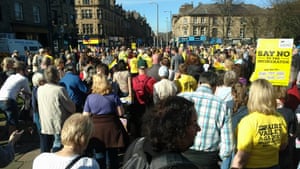


A march attended by Aire Valley Against Incineration (AVAI) supporters


A march attended by Aire Valley Against Incineration (AVAI) supporters.

We currently have quite high levels of air pollution in the areas around Bradford and Leeds. Our council has given the go-ahead for a private company to build an incinerator in the bottom of the Aire Valley – near homes, schools and a sports facility. The incinerator is not for household waste, but for industrial waste that will be shipped in from all over the country by 70 HGVs a day. One of the roads that these lorries will use is Hard Ings Road, Keighley, which is already on the Greenpeace energy desk’s map as being over the legal pollution limits.


We are campaigning hard to stop the building of this incinerator. We are also very concerned about the location – at the bottom of a valley that experiences regular temperature inversions which will make it very difficult for the pollution to disperse. We have nearly 6,000 members on our Facebook group, more than 8,500 signatures on the online petition and more than 2,100 objections have been made on the council’s planning portal. A recent march that we organised was attended by over 600 local people. Despite the fact that our council has let us down, we are determined to fight on!


Rachel Shimbles, 47, from Keighley


‘I’d encourage people to seriously consider leaving London. My quality of life shot up when I did’


As an ex-Londoner, I know how bad air pollution can be in the capital. Kendal air is much cleaner – but we still have places where legal levels of pollution are being routinely breached. I campaign with 20’s Plenty for Kendal as a way to encourage people to walk and cycle more in our compact little town – to make Kendal less congested, safer, cleaner, quieter and even more attractive as a place to live and to visit.


I’d encourage anyone to seriously consider leaving our capital. My quality of life shot up when I moved up here – and clean air was definitely a part of that. But – and it’s a big but – no one should be under the illusion that everything is rosy outside our big cities. It isn’t.


Paul Holdsworth, 57, from Kendal


‘I have lobbied local politicians, Defra and my MP’


We live in a densely populated urban environment and have been badly affected by the smoke and particulate pollution from a neighbour’s wood burner coming into our home for months at a time. As a result and after investigating the associated pollution issues we have become acutely aware of the significant health risks and damage regularly breathing this pollution causes, its effect on our quality of life and the long-term health risk. However, after we complained to our local authority we have found our hands have been tied behind our backs with the council failing to act.


I am active on Twitter, have lobbied local politicians, Defra, our MP, and contacted Gary Fuller (the senior lecturer in air quality measurement at King’s College, London). Having grown up during the implementation of the Clean Air Act, we mistakenly believed it had put an end to the blight of air pollution. A new Clean Air Act for the 21st century is needed to impose proper balanced controls. Pollution is a choice, breathing is not.


cleanairforall2, 55, from London


‘I switch off air fresheners when I can’
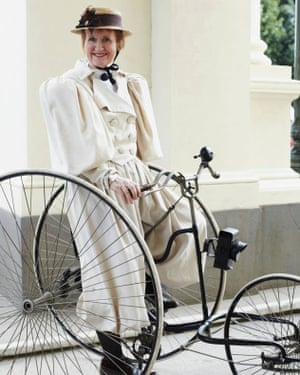


Cecilia taking part in a vintage bike parade


Cecilia taking part in a vintage bike parade. Photograph: Rita Platts

I set up a campaign called Gasp in 1980 (Group Against Smoking in Public). We achieved most of our goals but my intolerance to other forms of air pollution has caused me to run one-woman campaigns against other unwanted forms of air pollution. More recently I have campaigned against so-called “air fresheners” which pump out noxious fumes in an effort to cover everyday smells. They make me heady and nauseous. I often go into local shops and switch them off if I can find them hidden. I now won’t go to a hotel or get in a taxi that uses plug in air fresheners. I wish there was a national campaign to stop the sale and use of these things. I’m also a lifelong cyclist and have campaigned over many years on the benefits of cycling including the positive impact of cycling on air pollution.


Cecilia Farren, 67, from Bristol


‘We’re in the process of moving away to get away from the traffic’


The road on which we live has very high levels of traffic. It is a poor area, with many families renting their accommodation. My wife’s asthma has definitely worsened and the noise from the road is constant, as the traffic includes many HGVs and buses. Recently, the road was closed for a month to replace the mini-roundabout at one end with a traffic-light system.


The month was bliss for the residents, but once the road reopened the traffic worsened with a corresponding effect on the quality of air. We are now in the process of moving away to a location that is quiet, but one that we are not sure we can afford. Right now, we feel like the gamble is worth it to get away from this road.


Craig Hambling, 34, from Colchester


"Life improved when I left London": readers on tackling air pollution

21 Nisan 2017 Cuma

Life with Cancer and the Steadfast Courage in the Face of Death

When I was first diagnosed ( Karen’s Journey ) I couldn’t help myself but to feel afraid, somehow I felt shame for feeling this emotion because I thought as a believer of God I had to be strong in every area of my life despite the challenges I may face. After all the word of God says in His perfect love there is no fear. Could it be then that I really didn’t know of His love? Or perhaps, I’m a normal human being with normal emotions? God gave us emotions right? Let me tell you… Yes!! It is normal to feel afraid!! Now, the question is… what do we do in the midst of that emotion? Do we allow it to paralyze us or do we move from it? So many questions and yet, the bible, pastors, therapists, family, relatives, friends, colleagues, will have their own very unique answer to this complex question. Would they all coincide that Steadfast Courage is a must?


Emotions?


You may be wondering why is this woman talking about emotions on this site? Very simple! Emotions play such a significant role in our everyday life consequently these emotions have a great impact in our over all health. I have personally found a great void in the medical community addressing this very important area of life. Somehow doctors have been trained to separate this vital component of health and detached it from patients healing practices and protocols.


My healing journey has embarked me into a journey of self discovery and I believe this is true for most cancer patients regardless of their treatment preference. Somehow we focus a great deal on our physical being, which of course must be addressed but how about our emotional health? It is known that our emotions have perhaps a greater impact on our health than what we eat. One of the doctors on my team whom I greatly admire once said “A negative thought can kill you faster than a bad germ. One of the main things to detoxify is your mind” (Dr. Antonio Jimenez, 2014).


I am not a doctor nor do I claim to know what is right or wrong for any cancer patient needing medical advice. However, as a cancer thriver myself I can say that I prefer to believe and hope that things can change for me in my reality. Believe I can heal and hope I will live a long life as it was intended by God the creator of the universe.


Settling?


Why should I settle for what the doctors say or what the medical reports reflect. We ALL have an expiration date on our lives and what matters is how we choose to live daily now. I reject fear as it drains my immune system and it puts me in an unnecessary anxiety mode. Think about it… Does fear change the medical report or the doctor’s opinion on your life? Of course not. But what if your positive thoughts and words you intentionally choose to speak over yourself are filled with Steadfast Courage? This choice alone will have an immediate impact over your situation. What if you choose to be vigilant in your emotional awareness just as you are with your diet, exercise, therapies, supplements, relationships, etc. What if you choose to face death with Steadfast Courage? What if you choose to overwhelm your circumstances with hope and faith vs fear? And even if things don’t change for you, would you spend your remaining days alive as an slave of fear?


YOU CHOOSE


You choose what will fill your mind and heart and allow it to take over you… Thankfulness, Peace, Hope, Love … No cancer can ever take that away from you. I don’t claim to be fearless but it is a daily choice I must make to live in gratitude, peace, joy, love and in hope. I have been told that I am an idealist and I don’t live in reality. To be honest if reality means to live in fear, anxiety, hopelessness, faithlessness, unhappiness, pressured with time and allowing life to happen instead of living life, well than yes I am an idealist. I choose to create this other reality for me filled with joy peace hope and love, I choose to believe I can heal. I believe you and I are powerful people and we must choose Steadfast Courage in the Face of Death.


Karen Berrios on BloggerKaren Berrios on Facebook

Karen Berrios

Blogger


After much thought I took the path less travelled, a path on which I strongly believe the Lord is walking right alongside of me.

I started my healing path in 2014 as a 41-year-old wife, mother of three and business owner. I’m still holding these titles as I travel on my new cancer journey. The C diagnoses has given me an invitation to live again, allowing me to learn so much about myself, health, relationships, lifestyle and of course this awful disease… cancer…


I decided to start a blog to share my experiences with you. Of course, many of you may ask why? Why would this woman make herself open and vulnerable to thousands of strangers on the internet? Simple! An amazing invitation was given to me, to embark myself into a healing journey, not only to bring back physical order but to heal my mind and soul, to develop and grow into a new season of change. Although I don’t have all the answers and I don’t have it all together, I want to share, ignite and declare the works of that healing light that dwells in all of us.


No, I cannot say that I am completely “cancer free.” But things are definitely moving in the right direction. Tumor has shrunk, and blood flow to it has been reduced. Looking at my blood work through the eyes of the (conventional) medical community, I can say that my immune system is stronger and my level of tumor markers is lower. I know in my heart that I’m on my way to discover, heal and fully live in thankfulness for every blessing I have, embracing the journey with joy and hope and intentionally loving people everyday of my life. I don’t know how it is all going to end but I know I can choose how I want to live today.


It is my hope and prayer that by sharing my journey, you and others can benefit from what I’ve learned and what I’m still going through. If you, too, are searching for answers, I want you to know that you are not alone, that I am right here with you. But most importantly I want you to know that the power to heal is within you.


Life with Cancer and the Steadfast Courage in the Face of Death

20 Nisan 2017 Perşembe

Virgin Money chief: "I have battled with mental health all my life"

When Jayne-Anne Gadhia was once turned down for a promotion, her boss provided two reasons for his decision: she lacked a thick skin and the ability to bullshit. Twenty five years on – and after making it to the top of the banking sector to become chief executive of Virgin Money – Gadhia reckons she still doesn’t possess either of those characteristics.


Rather than growing a thick skin, Gadhia sticks her fingers in her ears to illustrate her own “la la la” approach to put-downs. And she insists her motto of “ebo” (wanting to make everyone better off) is not nonsense.


“I hope I haven’t got a thick skin and don’t bullshit,” said Gadhia in her office above one of Virgin Money’s branches – which the lender insists are called “lounges” – just off London’s Piccadilly. “That’s for somebody else to judge. I do think the culture that required [those characteristics] has changed”.


The anecdote is one of the many in Gadhia’s autobiography, in which she also talks candidly about her battle with depression, particularly after the birth of her daughter Amy in 2002, after six attempts at IVF, and again three years ago when she had to suppress suicidal thoughts at the same time as Virgin Money was preparing for a stock market flotation three years ago.


“I judge my own mental health these days by my weight. I have battled with it all my life,” she writes in the book, the proceeds of which are going to Heads Together, the mental health charity that has recently been benefiting from the high profile support of the Duke and Duchess of Cambridge and Prince Harry.


“When I am slim and physically fit, then I am in good shape mentally,” says Gadhia. “And when I am struggling mentally, I decrease the running and increase the chocolate. But, if that is as bad as it gets, then I can manage – despite the wardrobe problems this creates.”


Gadhia says that revealing her mental health problems was not the purpose of the book, which she wrote on her Blackberry during last year’s summer holiday. The idea was to tell the story of Virgin Money, which is backed by Sir Richard Branson. The business started in 1994 when the insurer Norwich Union – her then employer – linked up with Branson’s Virgin Group to launch a savings and pensions product.


Jayne-Anne Gadhia talks to Sir Richard Branson about his views before the EU referendum.


Remain voter Jayne-Anne Gadhia talks to Sir Richard Branson about his views before the EU referendum. Photograph: Ben Pruchnie/PA

In 2001 part of Virgin Money was taken over by Royal Bank of Scotland and Gadhia went with it. But she quit in 2006, blaming the culture at the Edinburgh-based bank and returned to the core Virgin business..


At RBS she claims she raised the alarm about accounting issues, the sale of payment protection insurance, and rejected attempts to package up mortgages in the style of securitisations which were later to be the undoing of Northern Rock, the bank that was nationalised in 2008. Gadhia eventually took over the “good” part of Northern Rock in 2011.


With hindsight she points to four reasons for RBS’s demise: it grew too quickly, did not have enough capital, lacked diversity at the top – run by “white Scottish men”, she says – and developed a culture where managers thought they were masters of the universe.


The RBS bankers also partied hard, she says. Gadhia tells how she saw bankers with blisters and bandages on their thumbs after setting them alight in sambuca drinking games – events she did not attend – and describes a female colleague who believed she was expected to sleep with her manager.


Her personal profile rose after the Northern Rock deal. More accustomed to being an outsider trying to break into the City establishment – at one point in the interview she describes herself as “this rather strange woman” – Gadhia sat next to George Osborne when he was delivering his high-profile Mansion House speech two years ago, was one of David Cameron’s business advisors, and still leads a Treasury-backed initiative to boost diversity in financial services.


She was also a vocal supporter of their Remain campaign, but she insists she is not now a remoaner. While Virgin’s shares lost a third of their value in the immediate aftermath of the referendum, they have since regained much of that dip and are back above their float price. The bank’s first quarter results on Tuesday will be an indicator of any hit from Brexit.


Branson’s Necker Island home in the Caribbean


Gadhia visits Branson’s Necker Island home in the Caribbean about once a year and clearly admires the entrepreneur. Photograph: Virgin Limited Edition/PA

Gadhia says that in writing the book “I was learning quite a lot about myself” and that to be successful, you need supporters. In her own case, a key supporter was the late Sir Brian Pitman who ran Lloyds Bank before becoming the chairman of Virgin Money after he retired. Unsuprisingly, she names Branson as another supporter.


About once a a year she visits Branson’s Necker Island home in the Caribbean and she clearly admires the serial entrepreneur who appeared via video link at this week’s book launch – held in the Virgin Group’s Roof Gardens in Kensington.


“All of this – I hope this doesn’t sound naff, the whole thing is a privilege. I’ve got a completely normal background, with working class parents, married to guy who didn’t have shoes to put on his feet when he came to this country from Kenya at the age of nine.”


Her husband Ashok – she took his name on marriage – gave up his career to look after their daughter. Gadhia draws upon their experience of being a mixed-race couple for her hopes for women’s’ equality and mental health.


She wants those issues to become as unquestioningly accepted as her mixed race marriage now is. “Over the 30 years Ash and I have been married that change has been profound.”


Virgin Money chief: "I have battled with mental health all my life"

29 Mart 2017 Çarşamba

Fifth Bristol university student takes own life this academic year

A third-year languages student is understood to have killed herself in the fifth case this year of suspected suicide involving students at the University of Bristol.


Elsa Scaburri, who was studying for a degree in French and Italian, was halfway through her year abroad. According to a statement released by the university, she died last week near her home, which is understood to be in Wiltshire.


An inquest has been opened and adjourned. A University of Bristol spokesperson said: “We were very saddened to hear that one of our third-year students, Elsa Scaburri, sadly died near her home last week.


“We understand from her family that Elsa took her own life, although it will be for the coroner to determine the cause of death.


“Elsa was halfway through a year abroad as part of her French and Italian degree. The university offers its condolences to her family and friends and our thoughts are with them at this very sad time.”


Her death will once again raise concerns about mental health among students and the capacity of universities to address growing demand for support.


Three Bristol students – philosophy student Miranda Williams, 19, history student Daniel Green, 18, and Kim Long, 18, who was studying law, died late last year in their first term at university. Final-year neuroscience student Lara Nosiru, 23, also studying at Bristol and originally from Essex, was found dead in Avon Gorge in January.


Following last year’s deaths, the university said it did not believe there was a link between any of the incidents and insisted annual figures did not show any trends. In the last academic year Bristol had one death by suicide; there were none the year before that, and one the previous year.


A review has been under way at Bristol to find out how best to support students with mental health needs. The number of staff in support services has been increased and additional funding has been put into the system to meet growing demand.


A Guardian investigation last year revealed that the number of students seeking counselling at university has risen by 50% in the past five years. And a report in September by the Higher Education Policy Institute thinktank said some institutions needed to triple their spending on mental health services to meet increased demand.


Students have a lower suicide rate than the general population, but it appears to have grown. Figures from the Office for National Statistics show that in 2014 there were 130 deaths by suicide of full-time students aged 18 and over in England and Wales. This compares with 112 in 2011, and 75 in 2007. The increase can be explained in part by the growing university population, which has doubled since 1997 and now stands at 2 million.


“The welfare of our students and staff continues to be our highest priority and it is distressing for all members of the university community that one of our students has died,” the University of Bristol spokesperson said. “We would urge any students affected by this tragic incident to seek support from university services, friends or family.


“In the context of increasing national concerns about student mental health we have been working with our staff and students to review how best to support all students including those with enduring mental health difficulties.


“We have increased staffing levels in our support services and have committed to invest an additional £1m per year to provide wellbeing support for students in each academic school. We will also be signing the Time to Change pledge to help reduce the stigma of discussing mental health issues.”


In the UK, the Samaritans can be contacted on 116 123. In the US, the National Suicide Prevention Hotline is 1-800-273-8255. In Australia, the crisis support service Lifeline is on 13 11 14. Hotlines in other countries can be found here


Fifth Bristol university student takes own life this academic year

16 Mart 2017 Perşembe

Noise-cancelling headphones: the secret survival tool for modern life

There’s one thing other than my wallet and my travel card I wouldn’t be without in a big city, and it’s my headphones. But I don’t actually listen to music that much: I just activate the noise-cancelling feature, and leave it at that.


No sound plays into my ears – instead a quiet fills my head, as if the sounds of the world have been turned down. Until I got noise-cancelling headphones, I had no idea how loud the city always was, and just how hungry I’d been for silence.


On public transport, using the noise-cancelling feature will soften the roar of engine and traffic. In the open-plan office, it eliminates the constant chatter and limits interruptions. On an airplane, it’s a revelation. I’m not alone in using state-of-the-art headphones not for music, but to tune out the constant drone of urban living – it’s becoming a modern life survival tool.


‘It was like that moment in a film where the sound cuts out’


Matt Thomas, an animator and motion graphics designer in London, is a convert. He discovered he could use the silencing feature on its own one day by accident, when his music cut out on the tube: “I thought, wait a minute, there’s this really nice peace and quiet. It was like that moment in a film where the sound cuts out and everything goes into slow motion.”


Heavy traffic generates noise levels of up to 85 decibels (dB), which the Health and Safety Executive deems sufficient to cause permanent hearing damage if we’re exposed to it for several hours every day. Underground trains can pass the 100dB mark when roaring around a loud corner.


Thomas often puts his headphones on silent when on public transport (he no longer does this in the street after nearly getting run over), but prefers music for work. For Johanna Vogel, an economist in Vienna, Austria, it’s the opposite: she plays music on the bus but works in silence. Vogel bought her noise-cancelling headphones hoping they would help her concentrate in an open-plan office. “It’s so relaxing,” she says. “At first I was doubtful it would make a big difference, but now couldn’t live without them. In noisy environments I really need some way to create quiet for myself.”


Noise damages more just our ears. Research studies have found links between long-term noise exposure and increased risk of heart attack and stroke, as well as low mood and difficulties with sleeping and concentrating. Adverse effects on mental and physical health can start at just 65dB, a level that seems moderate: a refrigerator hums steadily at 40dB, and an open plan office buzzes at around 60dB.


A train passing the platform at speed at Hatton Corner


Underground trains can pass the 100dB mark when in transit. Photograph: Dinendra Haria/REX/Shutterstock

Josi Livingston, a developer at a technology startup in London, often uses the silencing feature to block out office chatter while she’s coding, but likes how she can still hear if someone talks to her. “I’m trying to minimise distraction. I need to focus, and any kind of extra stimuli will detract from that,” she says. “I think of it as engineering my environment to be the most comfortable.”


Unwanted noise can cause irritation and anger if it feels like an invasion of privacy, says Stephen Stansfeld, a Professor of Psychiatry at Queen Mary University of London who focuses on noise and health. “Having a lot of background noise when you’re doing something is tiring. Without noticing, you’re putting in a lot more effort in order to block out the noise. So when you shut it out, there’s a sense of relief.”


Getting worked up about noise can raise stress levels and leads to ill health. “But there’s no doubt that even if you’re not focused on the noise, it can still have an effect. If you’re asleep you may not wake up, but your body is still responding if you hear a loud sound,” says Stansfeld. “The body responds to noise as a stressor.”


Bethany Temple, an attorney in Raleigh, North Carolina, sometimes uses her headphones to avoid having to hear the TV when she’s at home with her husband. Temple says the silencing feature helps her feel more centred in herself: “When you realise just how much ambient noise there is everywhere: the refrigerator is running, the dishwasher, the washing machine and air conditioner, cars are going by outside. When that goes away, and you have the ability to be silent with your thoughts – once you realise that exists in the world, you start craving more.”


From airline pilots to urban dwellers


Noise-cancelling headphones were originally created for airplane pilots to improve their comfort on long flights, and the first consumer versions were also intended for travellers.


The technology, known as active noise-cancellation (ANC), works by using microphones to pick up low-frequency noise and neutralise it before it reaches the ear. The headset generates a sound that’s phase-inverted by 180 degrees to the unwanted noise, resulting in the two sounds cancelling each other out.


ANC headphones turn down the volume of the world by about 30dB, says Brian Brorsbøl, Director of Product Management at Sennheiser Communications – the reduction ranges between 20dB and 45dB, as the technology is more efficient against low-frequency sounds. “Using noise-cancelling technology on its own is something we’ve heard some people are doing,” he says.


When my partner, who even uses the silencing function when walking down the street, first told me these headphones would change my life, I was skeptical. How could it possibly be so revolutionary? But I get it now.


These headphones let me create breathing room in a busy city. They let me hear myself think. Every time I put them on and switch on the quiet, the feeling is one of relief.


Noise-cancelling headphones: the secret survival tool for modern life

13 Mart 2017 Pazartesi

"My vulva cupcakes were confiscated" - a day in the life of an anti-FGM campaigner

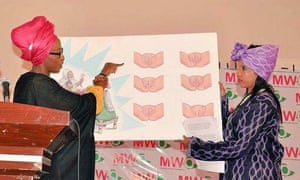
Smuggling vulva-decorated cupcakes into the Somali region of Ethiopia was one of those moments where I thought: “My work as an anti-FGM campaigner gets me into interesting situations sometimes.”


Three years earlier I’d made vulva cupcakes as part of a documentary about FGM that I’d done for Channel 4. “We need you to bring them with you,” said Sagal Abdi, vice executive director of Maandeeq, when she invited me to an event in Jijiga, the capital of the region, part of 16 days of activism against gender-based violence.


Honestly, I was taken aback. I grew up in the UK as part of the Somali diaspora, and I’d assumed the people of Jijiga would not be ready for vulva cupcakes. But Abdi, also part of the diaspora, reassured me that the Ethiopian women had requested them. “Leyla, they watched the documentary and loved the concept of using art for campaigning,” she said.


On reflection, the fact that he recognised the icing decoration as vulvas was good


Abdi filled me in on the current status of the women from Jijiga. It was the usual story of inequality, gender-based violence, lack of employment and access to healthcare. But Abdi gave me hope as she described these negative situations. By the end of that phone call I couldn’t wait to meet her. The only snag was, how would I carry vulva cupcakes from London to Jijiga?


I am always up for a challenge. I managed to carry the cupcakes, made in London, in my hand luggage all the way to Addis Ababa. I really began to think I was going to pull this off. But just as I was about to embark on my final flight to Jijiga, one of the officers told me to step aside and opened the box. When he saw the cakes staring back at him he made a sound halfway between a gasp and a giggle. “Why would you bring these here?” he asked. “Oh, you know what they are then?” I thought. He said I needed permission to carry them and he needed to investigate. My flight was taking off in 10 minutes, so I sadly had to leave the cakes behind.


On reflection, the fact that he recognised the icing decoration as vulvas was good – many men and women don’t know what women’s genitals look like. I hope he enjoyed eating those red velvet pussies.


Something extraordinary came out of that trip. On the flight to Jijiga I suddenly realised that everyone around me was speaking Somali. My family isn’t from that region but the last time I was in Somalia was 25 years ago, when I was 10 years old. The heat hit me and felt so familiar. Tears streamed down my face. I tried to hold them back but it was overwhelming.


Abdi and her colleague, Hodan, were very sweet and comforted me when they picked me up. They were disappointed about the cakes, but as Somali women we weren’t going to let that setback stop us from getting our message getting across.


On my way to my hotel I felt a sense of belonging to a city I’ve never been to before, but also the fear that I would be targeted with threats, as I am known as an outspoken advocate for women’s and girls’ rights.


The next day I presented my work on gender equality and female genital mutilation (FGM), exploring how to create safe spaces for survivors of violence free from shame. I got a positive reaction from the local women and young people, even from the politicians in attendance. They asked me to come back as often as I could. I was deeply touched to be appreciated by my own people.


Leyla Hussein presenting in Jijiga

Leyla Hussein teaching young people and senior politicians about FGM. Photograph: Leyla Hussein

I was truly impressed with Hafsa Mohamed, the founder and director of Maandeeq. She, a diaspora born and raised in North America, has galvanised grassroot support and policy influence for many years to get to this point. As she shared a joke with the president of the Ethiopian Somali region, I could see she has built a respectful relationship with local politicians. It didn’t happen overnight, she told me. She had to work hard and prove herself to the local people. She knows that in order to make a change and build a safer world for women/girls we have to work with politicians to influence policies and ensure funding and resources are directed to this area.


She told me that she and her colleagues had got into physical fights with men to ensure they provided what the local women/girls needed. “At times we need get physical to get what we need for our women,” she said. I realised I needn’t be afraid when I was with such brave women.


The number of FGM cases are decreasing. Gender equality is becoming more and more a reality


Abdi M Omar, president of the Ethiopian Somali regional state


To have the most senior politician of this region attend and open this conference spoke volumes of Somali women’s leadership skills. Abdi M Omar, president of the Ethiopian Somali regional state, even made a statement: “We must prioritise the welfare and empowerment of women,” he said. “In the Somali region of Ethiopia, almost half of the regional parliament are women. The number of businesswomen are growing. The number of girls and women partaking in education are tremendously increasing. The number of FGM cases are decreasing. Gender equality is becoming more and more a reality.”


I had a strong sense of Somali sisterhood with Mohamed (from Jijiga), Abdi (originally from Somaliland) and Hoden (from Djibouti). We had a group hug to recognise this important moment in our lives. We women all face similar challenges and we are stronger by coming together.


There’s an assumption that diaspora who move back home are living the life of luxury. But these three women were living in a one-bedroom apartment. When I asked why they choose to live this way, their response was simple. They said they all left their privileged lives in the west, and have the option to go back, but they can’t leave the sisters who need them here.


The next steps for these amazing women is to keep building the grassroots movement for gender equality in Ethiopia. I urge you all to support these east African warriors by donating, volunteering or becoming their allies in this battle.


For me, the trip brought up feelings about how I can make the most of my skills and privilege to improve life for women and girls all over the world, particularly in the land where I was born.


On my flight out of Jijiga I got tearful again. I started thinking about how my mum and many families must have felt when they left their home without knowing when or if they are going to see it again. But I know for sure that I’m going to go back to that region. And next time, hopefully, I’ll get all the way with the vulva cupcakes.


Join our community of development professionals and humanitarians. Follow @GuardianGDP on Twitter. Join the conversation with the hashtag #SheMatters.


"My vulva cupcakes were confiscated" - a day in the life of an anti-FGM campaigner

12 Mart 2017 Pazar

The art of surgery: life drawing and leprosy

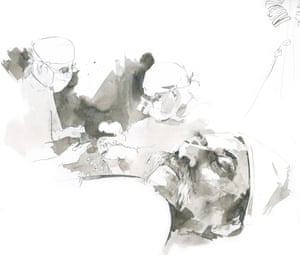
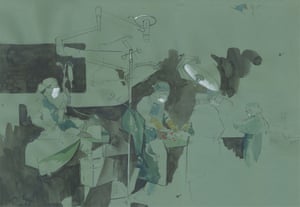
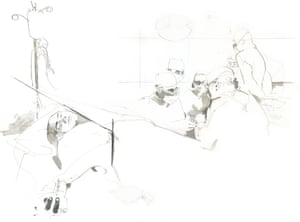
‘Life drawing”, “still life” and “life class” are all fairly mundane terms I thought only applied to nude figures or fruit bowls in an art studio. However, in November, I stood and drew in the corner of a plastic surgeon’s theatre in Lalgadh hospital, near Janakpur in Nepal. The theatre was set up to operate on the paralysed hands of leprosy patients. “Life drawing” became very appropriate very quickly.


Like many infectious diseases that predominantly affect those in poverty, leprosy is alive and well; there were more than 200,000 new cases were reported in 2015. The sad fact is that the disease is difficult to contract and relatively straightforward to treat. Many patients present late, when paralysis sets in. Although medication can make patients non-infective, the paralysis requires surgery to correct.


Ram being cleaned with iodine before his operation.


A patient being cleaned with iodine before his operation.

Each year, Working Hands – a Bristol-based charity run by hand surgeon Donald Sammut – spends two weeks, pro bono, operating on the backlog of patients in Lalgadh, training staff and providing hundreds of kilos of medical equipment and consumables. The work is highly skilled, but in many cases the objective is simple: to generate enough movement and power in a hand for the patient to go back to work, or to eat, or to look after themselves in a society where stigma is attached to those with the disease. Most of these patients are illiterate farmers whose only means of support depends on how much they can dig, or carry.


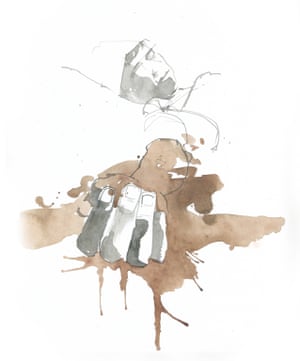
Raj is 60 and undergoing an opponensplasty to give more strength and movement to his right thumb.


Raj undergoing an opponensplasty to give more strength and movement to his right thumb.

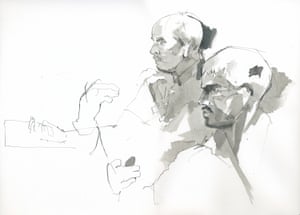
As I was drawing Raj, a 60-year-old man having an opponensplasty (an operation to restore strength and movement to a paralysed thumb), it occurred to me that there have been many crossovers between surgery and art. Leonardo da Vinci and Henry Tonks were two of them, both using drawing as a way of comprehending the human body.


Leprosy surgery in Nepal surgery


The team amputating a lower limb under local anaesthetic.

Watching Sammut, I could see why surgeons often make great artists. The value of being bold, with highly tuned hand-eye coordination, an obsessive understanding of what looks beautiful and a consideration for symmetry were all tips from the drawing books. But it doesn’t end there. Surgery is also performed under great time pressure; these procedures are all done under local anaesthetic, including the amputations, with a tourniquet to stem blood flow. The shorter the tourniquet time, the less damage to the tissue.


Gulshan, a 21-year-old, was having the gangrenous and mummified fingers removed from both of her hands – a procedure done under local anaesthetic.


Gulshan, a 21-year-old, was having the gangrenous and mummified fingers removed from both of her hands – a procedure done under local anaesthetic.

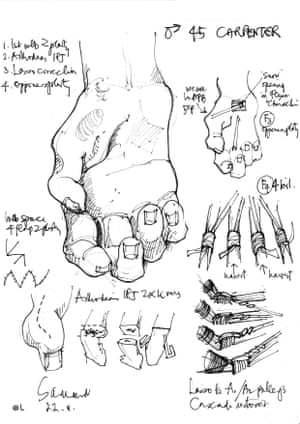
Before each surgery, Sammut spends several minutes drawing the patient’s hand; scar tissue shown with cross-hatching, deformity by weight of line, cut lines with dotted lines. “Those few minutes of examining and drawing the hand are invaluable,” he says. “While drawing, one is obliged to examine every millimetre, the texture and suppleness of the tissues one is about to rearrange. And it also gives one a few moments to plan the surgery, running it through one’s head like choreography steps.” The drawing is the beginning of a relationship built on trust, and a life-changing procedure.


Surgery notes for a 45-year-old male carpenter needing Lasso correction and opponensplasty. Drawing by Donald Sammut, Working Hands charity.


Surgery notes for a 45-year-old male carpenter needing Lasso correction and opponensplasty. Drawing by Donald Sammut, Working Hands charity.


Leprosy surgery in Nepal lalgadh hospital

Leprosy patients here are treated at Lalgadh hospital for free, supported by the 400 paying outpatients the hospital treats each day.


Leprosy surgery in Nepal haycollecting

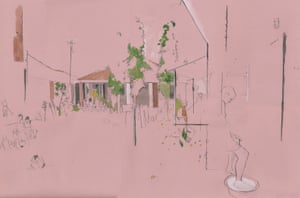
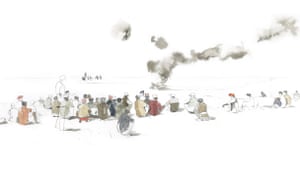
An entire family collecting hay, typical of the sort of agricultural society that many of the leprosy patients work in.


Leprosy surgery in Nepal physio

Two patients waiting in line for physiotherapy after corrective surgery on their hands.


Leprosy surgery in Nepal funeral

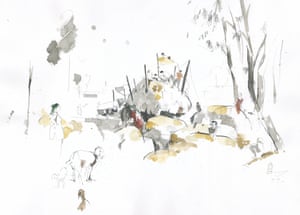
A Hindu funeral pyre for 55-year-old Krishna Bikram Chauhan on the bed of the river Sundari near Janatpur. The names of those watching the pyre are taken and they are invited to a celebration 10 days later.


Leprosy surgery in Nepal mother and child

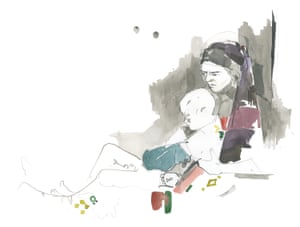
A mother comforts her child after his operation.


Leprosy surgery in Nepal theatre

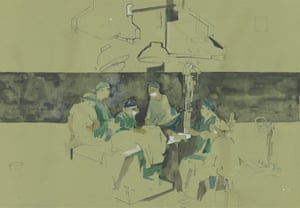
Working Hands team and local doctors in the middle of a procedure in Lalgadh hospital.


The art of surgery: life drawing and leprosy