A third-year languages student is understood to have killed herself in the fifth case this year of suspected suicide involving students at the University of Bristol.
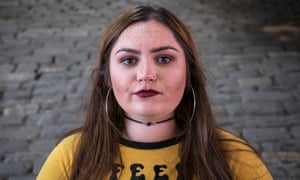
Elsa Scaburri, who was studying for a degree in French and Italian, was halfway through her year abroad. According to a statement released by the university, she died last week near her home, which is understood to be in Wiltshire.
An inquest has been opened and adjourned. A University of Bristol spokesperson said: “We were very saddened to hear that one of our third-year students, Elsa Scaburri, sadly died near her home last week.
“We understand from her family that Elsa took her own life, although it will be for the coroner to determine the cause of death.
“Elsa was halfway through a year abroad as part of her French and Italian degree. The university offers its condolences to her family and friends and our thoughts are with them at this very sad time.”
Her death will once again raise concerns about mental health among students and the capacity of universities to address growing demand for support.
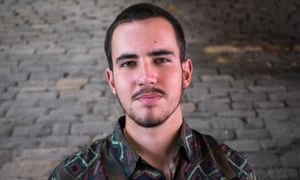
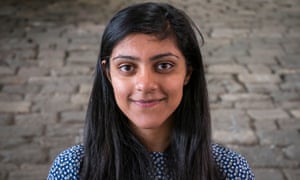
Three Bristol students – philosophy student Miranda Williams, 19, history student Daniel Green, 18, and Kim Long, 18, who was studying law, died late last year in their first term at university. Final-year neuroscience student Lara Nosiru, 23, also studying at Bristol and originally from Essex, was found dead in Avon Gorge in January.
Following last year’s deaths, the university said it did not believe there was a link between any of the incidents and insisted annual figures did not show any trends. In the last academic year Bristol had one death by suicide; there were none the year before that, and one the previous year.
A review has been under way at Bristol to find out how best to support students with mental health needs. The number of staff in support services has been increased and additional funding has been put into the system to meet growing demand.
A Guardian investigation last year revealed that the number of students seeking counselling at university has risen by 50% in the past five years. And a report in September by the Higher Education Policy Institute thinktank said some institutions needed to triple their spending on mental health services to meet increased demand.
Students have a lower suicide rate than the general population, but it appears to have grown. Figures from the Office for National Statistics show that in 2014 there were 130 deaths by suicide of full-time students aged 18 and over in England and Wales. This compares with 112 in 2011, and 75 in 2007. The increase can be explained in part by the growing university population, which has doubled since 1997 and now stands at 2 million.
“The welfare of our students and staff continues to be our highest priority and it is distressing for all members of the university community that one of our students has died,” the University of Bristol spokesperson said. “We would urge any students affected by this tragic incident to seek support from university services, friends or family.
“In the context of increasing national concerns about student mental health we have been working with our staff and students to review how best to support all students including those with enduring mental health difficulties.
“We have increased staffing levels in our support services and have committed to invest an additional £1m per year to provide wellbeing support for students in each academic school. We will also be signing the Time to Change pledge to help reduce the stigma of discussing mental health issues.”
In the UK, the Samaritans can be contacted on 116 123. In the US, the National Suicide Prevention Hotline is 1-800-273-8255. In Australia, the crisis support service Lifeline is on 13 11 14. Hotlines in other countries can be found here
It was the case of the superstar surgeon, the prestigious Swedish institute and the ill-fated windpipe transplants that escalated into allegations of misconduct, dismissal and a criminal investigation.
Now, a leading British university has launched an inquiry into its own links with the endeavours of Paolo Macchiarini, the surgeon at the centre of the trachea operations following which six patients died.
The surgery, pioneered five years ago with the world’s first synthetic windpipe transplant at Stockholm’s prestigious Karolinska Institute, appeared to mark the beginning of an era in which artificial organs could be created from scratch by scientists and seamlessly integrated into the human body.
However, the remarkable success story began to unravel. In March, the Italian surgeon was dismissed from the Karolinska Institute amid an unfolding medical scandal and Swedish prosecutors are conducting a criminal investigation.
Now, in a case that has sent ripples across the scientific world, University College London has launched an inquiry into links with the controversial surgeon.
The latest investigation will probe its relationship with regenerative medicine research that may have taken place at Karolinska. Several of its senior scientists contributed to the procedures pioneered by Macchiarini, in which donor or synthetic tracheas were seeded with the patient’s own stem cells with the aim of creating new, functioning organs.
There is no suggestion that the UCL academics are implicated in any misconduct.
The regenerative surgery initially appeared to have gone well, and was described as successful in high profile journal articles, but it later emerged that six of the eight patients to receive synthetic tracheas had died, while another remains in intensive care. Karolinska’s vice chancellor resigned and its entire board were sacked earlier this year after they continued to back the Italian surgeon despite warnings of clinical and scientific misconduct.
Karl-Henrik Grinnemo, a surgeon who worked alongside Macchiarini at Karolinska, said of his former colleague that there was always a sense of emergency that led to him bypassing standard ethical safeguards in international collaborations.
“It was ‘They’re severely ill and they will die very soon and … we can’t wait to get the permissions from the regulators’,” he said. “Everything was always in a hurry when it came to Paolo Macchiarini.”
Alexander Seifalian, a former UCL professor of biomaterials, created the first synthetic trachea to be transplanted into a patient. The 36-year old Eritrean man, Andemariam Beyene, had been suffering from advanced tracheal cancer and died two-and-a-half years after the transplant. Seifalian was dismissed from UCL in July, after a tribunal in an unrelated case found that he had dishonestly obtained £24,000 from an overseas student.
Seifalian, who had developed a polymer material to make artificial ears and noses, said he agreed to produce a synthetic trachea in just 10 days after being approached by Macchiarini, who told him his patient had only two weeks to live. In a 2013 TED talk, Seifalian recalled asking his PhD student to obtain sheep and pig tracheas from the butchers, because they did not know what the organ looked like.
“I said ‘Go on Google and type in trachea’,” he recalled in the talk.
According to Grinnemo, who assisted in the operation, “none of the [Stockholm] patients needed an operation that urgently. They would have survived even years. You could have waited for the regulators to look at the material and the cells.”
Grinnemo later concluded that the entire synthetic trachea concept was doomed to fail because the plastic would inevitably become infected as it was exposed to bacteria and viruses with each breath, adding that he now views the synthetic transplant as a “death tube”.
While the material was approved as safe for clinical use, the actual trachea was never formally assessed as a new medical device, meaning this risk was not fully considered.
Seifalian told the Guardian: “At the time he came to our laboratory and he said this is the only chance of survival for this patient … Yes if we had a longer time, we would have made a better scaffold. Everything was in a rush.”
Seifalian later made a synthetic trachea for a 20-year-old British woman, Keziah Shorten, who was treated at University College Hospital London in 2011.
Martin Birchall, a UCL professor of laryngology who coordinated the surgery, said that on the back of positive reports from Karolinska, the team were given approval to perform a synthetic trachea transplant under compassionate use rules. The surgery allowed Shorten, who had been in a critical condition in intensive care following cancer treatment, to return home for a brief period, but she died three months later.
“At the time it was the rational thing to do,” said Birchall. “We wouldn’t do it again now.”
Birchall had collaborated with Macchiarini on a transplant carried out in a Spanish clinic in 2008.
He too recalls a sense of urgency when helping to prepare the donor trachea that had been stripped of its cells and re-populated with stem cells taken from the bone marrow of the 30-year-old patient, Claudia Castillo.
Birchall, then at Bristol University, was given permission by the Human Tissue Authority to prepare the cells in a veterinary laboratory, that was not licensed for clinical applications. In a 2008 letter the HTA said it would not stand in the way of what “could in this particular case be life-saving therapy” for a “carcinoma patient”.
The surgery was required because one branch of Castillo’s windpipe (the bronchus) had been damaged by a TB infection. Her left lung was at risk of being surgically removed, but she was not at immediate risk of dying, according to the Barcelona clinic where she was treated.
Birchall told the Guardian that he believed the additional risk this carried was justified because “my firm belief was her life was in danger and we needed to move quickly”, adding that even so he would not have carried out the work without HTA approval.
There is no suggestion that the cells caused any health problems, but Castillo suffered extensive complications and ultimately had her lung removed earlier this year, raising questions about whether the risk was warranted.
In a statement, UCL said: “Following recent events at the Karolinska Institute in Sweden relating to some aspects of regenerative medicine research, UCL’s Vice Provost (Research) has instigated a special inquiry in order to establish the nature and scope of regenerative medicine research at UCL and to establish the nature of UCL’s relationship with regenerative medicine research that may have taken place at the Karolinska Institute.”
Macchiarini rejected claims that he misrepresented the clinical condition of patients to collaborators. Of the first synthetic transplant, he said: “All of us involved in Andemariam Beyene’s care wanted to give him the very best chance possible, and he and his family expressed their gratitude for the extra years we gave him.”
A coroner is investigating the circumstances surrounding the sudden deaths of three students, all believed to be first years, at one of Britain’s top universities within weeks of the new academic year beginning.
Though the causes of the deaths will have to be established by the Avon coroner, online tribute and fundraising pages for two of the three suggested they had taken their own lives.
The University of Bristol said the deaths were not being treated as suspicious and were not connected but it would carry out its own investigations to find out if lessons could be learned.
According to a survey by the National Union of Students (NUS) published last year, eight out of 10 students said they had experienced mental health issues in the previous year and a third said they had had suicidal thoughts.
One of the students who died has been named as Miranda Williams, 19, from Chichester, who was just three weeks into her first term.
An online fundraising page set up to raise money for the charity Papyrus, which works to prevent young people from killing themselves, said Miranda had died three days after she “decided to take her own life”.
A message on the page said: “Miranda suffered with depression and anxiety a lot of her teenage life … We blame the stigma of her illness for her death. It restricted the help she got, the support and the understanding.”
She was studying philosophy and was a member of the Jazz Funk Soul Bristol society, according to an email to students from the students’ union announcing her death.
It said support was available for students and added: “Shock, grief and understanding what has happened will affect us all differently.
“It is important to let this happen in its own time. Talk to each other, to your school, to your residence pastoral team and to your friends.”
The second first year student who died was the law student Kim Long, 18, from Penzance in Cornwall.
On an online tribute page his family wrote: “We have lost our dearest, loveliest and only son. Kim took his own life last week. He was considerate to the end by leaving us a loving letter which helps us to respect and accept his choice. May he rest in peace.”
A university spokesperson said: “Sadly we can confirm there have been three unrelated student deaths this term. These events are always extremely upsetting and our thoughts are with the students’ families and friends.
“Our student welfare services are offering support to anyone affected. It would be inappropriate for us to comment on the cause of these deaths until the coroner has undertaken independent inquests, although we understand that there are no suspicious circumstances surrounding them.
“The University of Bristol has around 22,000 students. We will, of course, be investigating if there is anything we need to do to learn from these sad events but we have no reason to believe they represent a wider issue.”
Bristol University students’ union’s student living officer, Stephen LeFanu, said the organisation was working hard to improve pastoral care.
He said: “Starting university can be extremely difficult. Some new students are without their support networks from home for the first time, and will be experiencing new academic and social pressures.
“Rising fees mean that students are also increasingly under a great deal of financial pressure, with many taking on part-time work alongside their studies. Many people will also experience complex mental health difficulties, regardless of their environment.”
In the UK, the Samaritans can be contacted on 116 123. In the US, the National Suicide Prevention Hotline is 1-800-273-8255. In Australia, the crisis support service Lifeline is on 13 11 14. Hotlines in other countries can be found here.
The number of students seeking counselling at university has rocketed by 50% in the last five years, according to figures obtained by the Guardian.
As tens of thousands of teenagers leave their family homes this week and begin to arrive on campuses for freshers’ week, research shows that university counselling services are under increasing pressure as demand grows.
Heads of university counselling services say they are seeing more students arrive with existing psychological or mental health conditions. Some counselling services are under-resourced, and students are seeking help against a backdrop of mounting pressure to get the best possible degree, in order to secure a good job to pay off their debts from student loans.
“What used to happen was that in the first year people played hard,” said one head of counselling. “But now they are coming in already worried that they need to do well. They are far more vulnerable.”
The increasing number of international students is also a factor, with many under even greater pressure to succeed, coming from families who may have saved up for years to send one of their children to a UK university.
But though the overall trend is up, experts in the sector say part of the increase in demand is down to a new willingness among young people to ask for help. Many universities have also become far more proactive in reaching out to students.
The figures, obtained through a series of freedom of information requests to higher education (HE) institutions across the UK, indicate that at some universities young men, who are traditionally hard to reach, are increasingly using services as some of the taboo surrounding mental health dissipates.
For instance, at the University of Edinburgh, the number of male students approaching support services – including chaplaincy, disability and mental health services – between 2010-11 and 2014-15, more than doubled, with numbers up from 274 a year to 623.
Numbers of men approaching services also almost doubled at Glasgow University over the same period, thanks in part to male staff working on the counselling team, and a peer-to-peer support network which attracted a significant number of male students.
University counselling
University College London was the only institution in the sample to include figures for transgender students seeking counselling. The figures were collected for the last three years and have increased slowly to 12 in 2015-16.
Catherine McAteer, the head of UCL’s student psychological services, said: “We have 39,000 students, soon to go up to over 40,000. There are 13 clinicians in my team. The reality is 13 people cannot meet that kind of demand.”
McAteer said her team had looked after 3,022 students in 2015-16, some of whom had lengthy waits before being seen, the longest being 15 weeks. “The problem is the longer they have to wait, the more likely it is that the problem will escalate,” she said.
When McAteer took over as head of the department in 2002, just 9% of students who accessed the service had existing psychological or mental health conditions. Last year it was 53%, who had previously been seen by therapists for a variety of issues including depression, anxiety and eating disorders.
The 50% increase in the number of students accessing counselling is based on figures comparing uptake of services in 2010-11 and 2014-15 provided to the Guardian by 37 higher education institutions, including many leading Russell Group universities such as Oxford, Durham, Liverpool and Sheffield.
In numerical terms, the number of students accessing counselling services in the Guardian sample rose from just under 25,000 five years ago to more than 37,000 in the 2014-15 academic year, a 50% rise.
This trend persists even when an overall increase in student enrolment is taken into account. Among those institutions which provided comparable enrolment and counselling figures, the proportion of students accessing these services rose by 47% in the same period.
“What’s happening is that students are now coming to university when previously they would not have come,” said McAteer. “When they come to a university like UCL or Oxford or Cambridge – one of the top 10 universities – the pressure is enormous.”
Swansea University, which recorded just 80 students seeking counselling in 2010-11, saw figures shoot up to more than 1,000 five years later, largely as a result of the university’s efforts to raise awareness among students and to destigmatise mental health issues.
Swansea University Photograph: Swansea University
Kevin Child, the head of student services at Swansea University, said: “The significant increase in demand for mental health support is a national trend, with all HE providers identifying the issue as a significant challenge.
“We have attracted students to our services who may traditionally have attempted to manage mental health issues for longer periods without coming forward, especially males. This has enabled us to make earlier interventions and provide more specific and effective support at an earlier stage.”
Ruth Caleb, the head of counselling services at Brunel University London (which was not part of the Guardian sample), and chair of the mental wellbeing in higher education working group, said there had been a 22% increase in demand for counselling at her university last year alone, with young men coming forward in greater numbers – 42.5% of Brunel students seeking counselling were male in 2015-16.
“Now that students are paying higher fees and are coming away with quite a lot of debt, there’s a lot more concern about getting a job and paying that debt off. They come in with the anxiety that they need to get a good degree,” said Caleb. “If the first few assignments don’t go brilliantly, it’s far more of a concern to them than it used to be.
“The other issue is the enormous growth in international students and widening participation students. It’s much harder to be a student if you are the first in your family or community to go to university.”
International students are often reluctant to join in social activities because they feel they should work all the time. Caleb cited “students who are coming from sometimes unstable societies – Syrian students Skyping their families and hearing the guns going off behind the Skype picture”.
Caleb said it was good that more young people felt able to come forward and ask for help, but resources for counselling services had not always grown sufficiently and in some cases had gone down in spite of the growth in demand. A report on Thursday by the Higher Education Policy Institute said that a number of universities needed to triple their spending on mental health to meet demand.
Some universities are prioritising mental health care. The University of York announced on Thursday it was investing £500,000 in mental healthcare provision across its campus after a six-month review, prompted by an increasing demand for services from students and disruptions to mental health provision in the city.
The university is planning to expand its in-house counselling service, with two new members of staff to ensure that those who need urgent appointments can be seen quickly. Its vice-chancellor, Prof Koen Lamberts, said: “As the number of students considering higher education grows, we must work hard to encourage openness between staff and students to talk about these issues in a supportive environment.”
The Nightline Association, which offers counselling services to roughly 18,000 students a year through its 39 branches, said in the last year alone calls to Nightline rose by 78% in Leicester, 46% in Sheffield, 40% in Durham and 35% in Leeds.
Katie Nicoll Baines, a volunteer at Nightline, said: “The rise is perhaps because people are becoming willing to use our services, and perhaps they just need them more because university is becoming such a competitive and trying environment for a lot of young people.”
Alan Percy, who is head of counselling at Oxford University and on the executive of the Heads of University Counselling Services, warned against “catastrophising” student mental health.
“A lot of these things are normal emotional responses to life challenges,” he said. “A lot of students are feeling overwhelmed by life and the pressures of life in terms of having to be perfect. A lot of them feel they’ve got to get everything right.”
But he added: “It’s not universities that are causing this. It’s a wider social problem.”
‘You know that you’re going to come out with around £50,000 of debt. I stress about that all the time’
Struggling to be heard over the din of excited freshers, a small group of students has gathered in Sheffield University’s students’ union to talk about mental health. The committee of the Mental Health Matters Society are not in the least surprised by new statistics showing university counselling services around the country to be under huge pressure.
They all say they love their university, describe it as “welcoming” and are sure it’s better than most at providing services but have joined the society, set up a decade ago, to be part of a student support network, and to campaign for more awareness and funding for mental health.
Joseph Bonnett, a final-year geography student and the society’s men’s health representative says he found help with his friends by talking about his problems and also with the society.
Joseph Bonnett Photograph: David Sillitoe for the Guardian
He says that though such societies cannot provide treatment or counselling, offer a support network outside the official structures for those suffering from mental health problems.
With £9,000-a-year tuition fees and a tough graduate jobs market, the group agree that modern student life involves more pressure. When the society’s president, Reena Staves, was managing the society’s various online accounts last year she was inundated by people needing help, with depression, anxiety and eating disorders being among the most common problems.
Reena Staves Photograph: David Sillitoe for the Guardian
“I just really wanted to say to them: ‘I’ve been in a similar place,’ but I couldn’t because that would have been unprofessional, so I just had to point them in the direction of the various services available,” she says.
Gracie Marlow, a second-year English and philosophy student, says she is constantly stressed about her job prospects when she graduates. “You know that you’re going to come out with around £50,000 of debt. I stress about that all the time,” she says. “And you’re probably going to end up with a job that doesn’t pay much more than it would if you didn’t have a degree.”
Gracie Marlow Photograph: David Sillitoe for the Guardian
A common issue raised is the pressure to have the stereotypical student experience, with all the heavy drinking and late nights that that entails. “I remember during the first week of uni there was a kind of intro tour and they told us this was going to be the best three years of our lives and that we were going to have the most amazing time,” says Lucy Baldwin, the society’s vice-president, who is in the final year of a zoology degree.
“My uni experience has not been the same as a lot of people’s and you think: ‘Have I wasted this? Should I have tried harder?’ And a lot of people can get in a rut thinking that their experience hasn’t been what it was supposed to be and feeling like everybody else around them is having the best time ever. I don’t think social media helps with that.”
The group acknowledges that the growing burden put on university mental health services is also partly the result of a greater willingness to talk about the issue. “[Society] is becoming more open, but if we can’t provide support for the people who now feel that they can speak up about [mental ill health], that’s a really difficult position to be in,” says Megan Myer, who is doing a master’s in English literature.
Myer argues that universities should be prioritising funding for mental health services above all else. “It’s great to have the infrastructure and the resources, but if you as a person don’t have the resources to get through university then there’s no point having the big expensive buildings,” she says. “People should be the priority.”
Louise Knowles, the head of the University Counselling Service, says the wellbeing of students and staff is paramount and that the service works hard to ensure its “free, confidential service is one our students have confidence in”.
“It is our work in this area that helped us become the first university counselling service – and one of only seven organisations nationally – to be awarded a new quality assurance accreditation badge through the Accreditation Programme for Psychological Therapy Services last year,” she says.
“Our accreditation recognises both the extremely short wait times – which have almost halved since 2011-12 – as well as our talented and clinically robust team who offer a varied range of treatments and interventions in a challenging environment.
“We are committed to continually improving the quality and standard of the service we deliver, balancing this against increasing numbers accessing our service and looking at new and innovative ways of working with students.”
Additional reporting by Pamela Duncan and Sophia Schirmer.
As a student, I used to have a ritual. I would wake up and immediately jump up and down 100 times. Then I would start work at 9.21am precisely. I would eat dinner at 5pm on the dot, and I’d finish work at 10pm. Before going to bed, I would touch wood five times. Whenever the cycle was broken, I would break down.
I would tell myself that this was normal, that this was how you make a success of yourself. I wouldn’t be doing my academic work any justice if I wasn’t constantly on the verge of a breakdown, right?
My OCD routine was damaging. I didn’t feel I could seek help because my problems seemed so trivial compared to others’.
It is often said that when it comes to mental health, ignoring your problem – if it is even recognised in the first place – is not the solution. But dealing with it alone isn’t either, since certain neuroses will intensify in solitude. Mine certainly did. I never ate with people, and in a way it helped to lower my anxiety levels in the short term. I was “managing”.
But over time I became more and more anxious, until one day I had a panic attack while walking to university. I didn’t want to face this alone anymore; I had to be brave and get help without feeling I was merely attention-seeking.
But going to the doctors didn’t help much. It was an impersonal experience, where I was told to fill out forms on how to “rate” my level of anxiety. I knew full well that I’d been suffering from OCD, a borderline eating disorder and depression for around four years. I was at breaking point, I was suicidal, I couldn’t face the day anymore without becoming overwhelmed with emotion.
That is where the role of university counselling comes in, or at least it should have. The value of speaking to someone external about your problems is often overlooked – but I wasn’t even aware of this service as an undergraduate student.
The large number of students on campus can make it difficult for individuals to form their own support networks, to fit in and to feel like they are part of a wider whole. The prevalence of mental illness in students will likely become worse without adequate funding for support. A new report that came out today recommends that some universities increase their spending in this area threefold.
There needs to be a more open and inclusive dialogue on campus about mental health, and where students can get support – whether that is through formal counselling services or peer-support networks. This would work to break down the stigma I found myself trapped by when I was at my lowest ebb.
Support should not come as the last resort when students are at breaking point. Problems need to be tackled as early as possible, no matter how small the students – or their peers – believe them to be.
Only 13% of the NHS budget is currently committed to mental health services, despite the fact that mental ill-health accounts for 28% of the total burden of disease. The problem in many universities across the UK is the same: the underfunding of support services doesn’t accurately reflect today’s reality. We need to debate this openly, and more often so that students don’t suffer in silence like I did.
Keep up with the latest on Guardian Students: follow us on Twitter at @GdnStudents – and become a member to receive exclusive benefits and our weekly newsletter.
Dad and mom must commit much more quality time with children and not substitute or change interaction with screens, the Royal School of Paediatrics and Little one Well being (RCPCH) has claimed.
Dr Tim Ubhi, a spokesman for RCPCH, stated mother and father need to have good quality time with their children, and encouraged them to have greater dialogue with their children.
The consultant paediatrician said: “Currently in the western world, the parent/little one romantic relationship is substituted or replaced by technologies- Tv, DVDs, iPads- utilised to occupy young children although we lead active lives.”
The comments come right after the American Academy of Paediatrics announced new guidelines for the 62,000 paediatricians it represents to tell dad and mom they need to go through to their youngsters from birth.
Dr Ubhi gave his informal assistance for the proposals in the US but stated that it did not indicate it would grow to be official policy right here.
He explained: “We haven’t made it policy, there would have to be investigation but what I would say is dad and mom need to commit quality time with kids and this is a way to have quality time.”
The spokesman for RCPCH praised the guidelines for “trying to enhance mother or father/youngster interaction” because of what he claimed was a “clear disparity among social lessons”. Dr Ubhi pointed to the truth that young children from wealthier backgrounds have a clear benefit and the American proposals had been a way to “address the balance”.
He explained the review behind the recommendations highlighted “an concern that wants addressing” and additional that the proposals “raised the profile of the want to devote good quality time with children”.
“It truly is an extraordinary honour. There are so many men and women that deserve it more than me, not least all the individuals I work with at Wellington College and Wellington Academy. They are the real heroes.”
Erica Peinaar, who runs the Leathersellers’ Federation of Colleges, in Lewisham, south-east London, is also to be knighted, alongside Barry Day, who runs the Greenwood Dale Basis Believe in in Nottingham, one particular of a handful of academy heads to have obtained the honour.
Sir John Dunford, the Government’s training champion, who will also be knighted, mentioned: “Head teachers now are carrying out a brilliant task, usually under very hard situations.”
Robert Francis QC, who oversaw the public inquiry into the Mid-Staffordshire hospital scandal, will also be knighted for “services to health care and patients”.
The healthcare lawyer’s report, published in 2013, concluded that the hospital oversaw the “appalling and needless struggling of hundreds of people” amongst 2005 and 2009. He named for a “zero tolerance” approach to bad care and produced 290 recommendations for regulators.
A leading neuroscientist who has become a detest figure for animal rights activists will also be knighted. Prof Colin Blakemore, a fellow of the Royal Society and director at the Centre for the Study of Senses at the University of London, has published breakthrough investigation on problems such as stroke and Huntington’s illness.
He has been outspoken in supporting animal testing in health care study.
Despite the emotions of isolation and misery, you not alone, says a pupil blogger
Getting accepted into university was the proudest minute of my existence. Nerves turned to delight and my thoughts spun as I believed about what was to come up coming. I anticipated newfound freedom and discovery: three many years of life with near-total independence.
Nevertheless, just a handful of months later, I was in the darkest of locations.
I was currently being forced to come to terms with the realisation that my grandmother, who was instrumental in my upbringing, was dying.
A cruelly protracted grieving period ensued and I became severely depressed. I was unable to function academically or socially.
I confined myself to my bedroom in halls, barely attended lectures, and alienated myself from friends. Most days I felt emotionally crippled – even the contemplation of possessing to make eye contact with an additional man or woman was unbearable.
While the forging of new friendships is a fantastic thing, closeness and knowing take time to produce. It can be difficult to find solace in an unfamiliar peer group which could in no way have skilled grief themselves.
This, says Géraldine Dufour, head of counselling at Cambridge University, is why it is vital for grieving students to be guided to the help offered to them: “Some college students can struggle obtaining themselves at university, when away from their support network, and with no person with whom to share their grief,” she explains.
When in the midst of serious depression your senses are distorted. Deep down I knew that I was almost certainly mentally unwell, but I still had niggling doubts – was I just being pathetic? Only when I last but not least spoke to a person, did I really accept that I was depressed. It was unspeakably relieving.
My university’s pastoral tutor, whom I had contacted, alleviated my anxieties instantaneously. Of program, I was extremely concerned that my lack of attendance would see me eliminated from my degree programme – my inability to demonstrate up, and get in touch with my lecturers about my properly-being, had grow to be a vicious cycle.
The mitigating conditions procedure was explained to me, and I was put in touch with my university’s counselling service. I eventually opened up about my sickness, and my recovery started.
Talking therapies – such as counselling, and cognitive behavioural therapy (CBT), each of which I underwent – can be hugely effective in managing the effects of losing a loved one. CBT attempts to alter the imagined processes surrounding your grief: in recognising the emotional triggers to your problems, you are capable to manage them in a far a lot more good way.
Additionally, numerous counselling solutions provide grief assistance groups – it is important to bear in mind that grieving is a universal method. Regardless of the feelings of isolation and misery, you not alone and hearing the stories of others can be comforting and supportive.
Everyone reacts to loss in a different way. The bereavement charity Cruse explains there are a number of diverse sorts of grief. I had endured a prolonged, or anticipatory, bereavement which was produced all the worse as I was at a time of enormous transition in my life.
There is no set pattern of mourning. Every single individual’s response can depend on their personality, cultural background, and previous experiences of bereavement. For people who uncover themselves feeling trapped by their grief, Nightline providers are now obtainable at in excess of 90 United kingdom universities for these going through emotional distress.
I spent months persuading myself that my university would not be interested in my welfare. I was afraid of currently being misunderstood, embarrassed, and a burden.
In hindsight I now appreciate that my dread was without having basis. The right assist was available – I only wish I had taken it sooner. Talking does support.
Dealing with a challenging skin situation at university can come to feel isolating. Photograph: Alamy
Think about becoming woken up in your student accommodation by an intolerable itch and then finding red, scaly skin spanning swathes of your body. That happened to me about mid-way through my initial phrase at university.
I was suffering my latest outbreak of psoriasis, a skin condition which has an effect on all around 2% of folks in the Uk, and has been linked to heart ailment. It is a persistent, debilitating difficulty that can cause sufferers distress physically and psychologically.
I noticed university as a time to meet new individuals and develop new bonds, but my issue produced that harder.
Joining a sports society? Red card to that: wearing shorts and a T-shirt implies displaying your arms and legs. A film or enjoyment society? Lights down, I say. Even alcohol was off limits soon after hearing from fellow sufferers that drinking created their issue worse.
But for people of us who have skin circumstances –psoriasis, eczema, acne and other people – it truly is all about embarrassment and worry.
“You are in a pressured surroundings,” says one pupil, who suffers from a skin difficulty and wishes to stay anonymous. “You want to go out, have exciting, join societies and do every little thing every person else does, but it truly is hard, especially if your situation impacts the encounter, as that is what you’re presenting to the planet.
“You find it can be hard for folks who will not suffer to understand. You truly feel extremely alone.”
Sometimes I am questioned in a seminar or lecture, and quickly find out that my condition is not just challenging to deal with, but also to speak about. Even however there are remedy alternatives, it really is nonetheless not easy to make clear to men and women that it truly is not a rash or burn and it will not go away completely.
But pupil daily life, I’ve discovered, is what you make of it. It truly is no use sitting here and currently being upset about what is a very uncomfortable point to have to expertise.
Residing with a skin problem is hard and will constantly remain so. Not a day goes by when I do not want I could experience university lifestyle to the full.
I nevertheless will not join a sports society and I am apprehensive about joining in with other college students taking photos on nights out, but accepting that this problem is component of me and something I will have to dwell with for the rest of my daily life is an every day uphill struggle that I’m beginning to overcome.
Surgical intruments at Papworth hospital for the duration of a heart valve replacement and coronary bypass operation. Photograph: Sean Smith/The Guardian
The potential of Papworth hospital, the renowned centre of healthcare advances, has been secured following the Treasury finally approved its prolonged-planned move to Cambridge.
Underneath Treasury programs, Papworth had been dealing with a move to Peterborough to support prop up the reduction-making regional hospital.
But following sustained lobbying by MPs, medical doctors, senior NHS figures and Cambridge University, ministers have endorsed the company case for Papworth moving to the new Cambridge Biomedical Campus of medico-scientific analysis.
An independent clinical review located the case for Papworth moving to Cambridge to be compelling and that there would be “minimal patient and clinical positive aspects” to it getting in Peterborough, where it would have taken above the unused fourth floor of Peterborough City Hospital.
The chancellor, George Osborne, said final week that there was a “really strong case” for Papworth getting to be component of the campus, which will ultimately utilize 30,000 men and women, to “produce a hub of top-edge medication, investigation and pharmaceutical development” .
A economic assessment of that program by Keep track of, the NHS financial regulator, concluded that it was cost-effective, regardless of the planned new Papworth hospital currently being portion-funded via one more PFI deal.
Prof Sir Leszek Borysiewicz, the vice-chancellor of Cambridge University, welcomed the “very good news for patients, good information for analysis and great news for United kingdom PLC” and praised Papworth’s pioneering position in heart and lung transplants.
As soon as once more, the Kentucky Wildcats have sophisticated to the NCAA men’s basketball finals with a starting up lineup consisting of five freshmen.
Nevertheless, University of Kentucky basketball coach John Calipari nonetheless thought it would be sensible to publish an post in the Wall Street Journal, arguing that the NBA must not enable university freshmen to enter the NBA draft. According to Calipari’s post, ”very number of [freshmen] are truly prepared for the rigors of the NBA,” and college freshmen would advantage from “more class time and much more time on a university campus.”
Since then, NCAA President Mark Emmert has reiterated Calipari’s message in a nationwide press conference — explicitly calling for the NBA and its players union to modify its age requirement to preserve school freshmen out of the league.
Nevertheless sadly, this argument for trying to keep school freshmen out of the NBA draft looks fraught with NCAA leaders’ unclean hands.
With respect to Calipari’s claims that most freshmen basketball gamers are not ready for the rigors of playing in the NBA, the accomplishment of his personal staff led by freshmen would seem to entirely rebut that stage.
In addition,with regards to Calipari and Emmert’s suggestion that university freshmen want far more time in the classroom just before turning pro, then perhaps it is time for NCAA men’s basketball packages to stop pulling their own students out of class for up to 25% of spring semester days, just to play in nationally televised basketball games on channels this kind of as ESPN ESPN, CBS CBS, and Turner Sports.
Kentucky coach John Calipari desires to maintain university freshmen in college, even if NCAA schedules hold them out of class. (Photograph credit score: Wikipedia)
At present, the NCAA men’s basketball tournament is scheduled on Monday evening, exclusively for television functions. This implies the two teams in the championship game need to miss class on Monday for the game, as properly as on Tuesday for travel and sleep.
If school freshmen really necessary more class time, the NCAA could simply move the championship game to a Sunday afternoon.
College basketball players could also simply perform the initial 3 rounds of the NCAA men’s basketball tournaments exclusively on Saturday and Sundays (back to back style, as is done in the Ivy League), obviating the require to miss up to six further class days throughout the first these rounds of the NCAA men’s basketball tournament.
Yet, these basic adjustments to give university freshmen much more class time also have constantly been rejected by the NCAA’s membership since it would cost the trade association useful tv dollars.
With that stated, it is tough to dispute the argument that several school basketball players would advantage from acquiring a conventional training before turning professional. For numerous, a college education is a valuable experience. And, as trite as it might sound, we only get to be younger once.
But as prolonged as the NCAA and its member schools carry on to pull school basketball gamers out of class for functions of maximizing their very own television revenues, it is hard to fathom a good faith purpose for these athletes to remain in college longer than the absolute minimum necessary.
Beneath the recent way that university basketball operates, NCAA men’s basketball players from day one have lost the innocence of amateurism.
They just are not obtaining paid for it.
____________________________
Marc Edelman is an Associate Professor of Law at the City University of New York’s Baruch College, Zicklin College of Business, in which he has published a lot more than 25 law assessment articles on sports activities law issues. His most latest articles contain “A Quick Treatise on Amateurism and Antitrust Law” and “The Future of Amateurism following Antitrust Scrutiny.”
In the wake of Wednesday’s Nationwide Labor Relations Board ruling that Northwestern University football players are staff and have the legal appropriate to unionize, the leaders at Northwestern University have a golden possibility to be on the correct side of labor history. However, it is an opportunity that they really do not look ready to embrace.
Wednesday’s ruling by NLRB Regional Director Peter Sung Ohr provides Northwestern University a bona fide choice of how to proceed in light of this ruling. The university could both to appeal this ruling to the complete Nationwide Labor Relations Board, or accept its football players’ appropriate to unionize and move towards the potential of coming into collective bargaining negotiations with its football players.
The NCAA obviously would like Northwestern University to maintain litigating. In current years, college sports’s unique trade association has remained steadfast in its refusal to accept legal rulings that encourage the rights of pupil-athletes, irrespective of regardless of whether these rulings involve publicity law, antitrust law, or now even labor law.
However, Northwestern University’s greatest public relations move might be to just let Wednesday’s ruling be, not to file an appeal.
By not fighting Wednesday’s ruling, Northwestern University could choose to take control of their personal public relations and become seen as a national leader for pupil-athlete rights. The university could also commence to concentrate on its very likely collective bargaining negotiations with its football players, and a affordable evaluation of where compromise may possibly make sense.
The Rock at Northwestern University with University Hall in the background (Photograph credit score: Wikipedia)
If the NCAA as a result had been to attempt to banish Northwestern University for its actions, the university would have an extraordinarily powerful antitrust situation towards the trade association. Indeed, if the NCAA had been to them banish Northwestern University for its compliance with a National Labor Relations Board order, it appears most likely the courts would strike down factors of the NCAA bylaws as speedily as a post-touchdown added stage.
There is even some precedent for NCAA member university standing up for their student-athletes rights and getting constructive press for doing so. Most notably, in the early 1990s litigation Hill v. NCAA, Stanford University intervened and took their players’ side in a lawsuit difficult the NCAA’s necessary drug testing guidelines under California’s state privacy protections. Stanford University’s willingness on occasion to stand alongside its athletes is one particular of its numerous draws for premier students and athletes.
If Northwestern University makes the brave decision not to appeal Wednesday’s NLRB ruling in favor of its football gamers, the university would right away garner positive brand equity amongst amongst athletes for its willingness to stand up for adjust.
If only Northwestern University leaders weren’t so darn afraid of how the NCAA would react!
____________________________
Marc Edelman is an Associate Professor of Law at the City University of New York’s Baruch College, Zicklin School of Business, where he has published a lot more than 25 law overview articles on sports activities law matters. His most latest articles include “A Short Treatise on Amateurism and Antitrust Law” and “The Future of Amateurism after Antitrust Scrutiny.”
Students will get component in pursuits for university psychological overall health day. Photograph: Alamy
College students at universities all around the nation will take portion in pursuits like zumba and singing on Wednesday, to raise awareness of mental overall health concerns for university psychological well being day.
The day, set up in 2012 by the university psychological wellness advisers network and supported by Student Minds, is created to market the mental well being of people who dwell and work in higher training.
Routines on offer on campuses close to the United kingdom include jumping on a bouncy castle in Loughborough, drinking free of charge smoothies in Northampton and “laughter yoga” as effectively as tweeting about whether or not you are getting a #goodday or a #badday in York. Other occasions incorporate “tea and chat” and wearing onesies in Sheffield.
Rosanna Hardwick, communications officer at Pupil Minds, says: “Lots of universities are holding occasions on campus, like movie screenings, speaker occasions, meditation and yoga.
“The aim is to draw attention to the particular needs of students when it comes to psychological well being and to get men and women talking about it.
“Students are specifically vulnerable to mental health issues. The transient nature of pupil daily life can generate issues and items like moving away from home for the initial time, being independent and coping with the academic pressures of university, make it difficult.
“The week is made to let college students know what aid is available, like counselling and peer assistance groups.”
The day comes as the Priory group publishes the findings of its survey of 200 students who have mental wellness troubles and come from 18 diverse universities. The research discovered that a single in four students with psychological overall health concerns surveyed was not comfy talking about their difficulties with their peers.
A lack of comprehending, intimidation and the media have been all provided as causes for the social stigma that a lot of felt remained connected to psychological well being problems in the United kingdom.
Almost half of people surveyed said they had skilled a unfavorable backlash as a result of talking about their problems: sixteen% believed they had misplaced friends as a end result of admitting their psychological well being troubles. The exact same variety also explained that talking about their situation led their peers to “not get them seriously”.
First-12 months students had been the most vulnerable to unfavorable therapy by their fellow peers, with half of those diagnosed saying that they had been taken care of in a different way as a consequence.
Depression, anxiousness, tension, anorexia and bulimia have been the most frequent illnesses found in the survey.
In accordance to investigation by the National Union of Students (NUS), 20% of individuals studying consider themselves to have a psychological wellness dilemma. And the quantity of college students searching for counselling on campus has risen by 33% since 2008.
Dr David Kingsley, advisor adolescent psychiatrist at Priory hospital Cheadle Royal says: “Psychological wellness problems are remarkably common in students, like depression, self-harm, anxiety problems and consuming disorders.
“As this is often the first time that they have been away from property, they can really feel isolated and unable to accessibility help for their difficulties. Universities and schools usually offer you counselling and assistance for this kind of students and it is important that they really feel ready to accessibility this.
“It is also crucial that universities and schools aid other college students to understand psychological wellness troubles better. That way college students can access the help they require from their peers and their problems are not compounded by misunderstanding or prejudice from their close friends.”
A spokesperson from Time to Modify says: “We require to do a lot more in colleges and universities to educate and raise awareness about mental health troubles to show just how frequent they are and to aid men and women to come to feel relaxed talking about them.”
University psychological wellness day aims to draw all students’ attention to psychological sickness. Individuals involved intend to get people talking and to stage out that there is assistance obtainable on campus if it is essential.
• To discover out what is going on at your university click right here.
London South Bank University’s fake pub is staffed by the psychology department’s college students. Photograph: Linda Nylind for the Guardian
From the flock wallpaper, bar stools and beer pumps, it looks like a standard, if a minor dated, regional.
Except this is a Big Brother-esque bar in which a drinker’s each and every move is captured on camera to be scrutinised and analysed in the title of analysis.
Area J-407, on the fourth floor of London South Financial institution university’s primary block, is an elaborate set, constructed at a value of £20,000 by the psychology department a lab bar, exactly where consumers are guinea pigs and the contents of bottles are undoubtedly not what it says on the label. As for its cheery bar employees, they are all psychology students researching the results of alcohol on behaviour.
Bar labs have been used for conducting study at a handful of US universities, but this is believed to be the 1st in the United kingdom.
Dr Tony Moss, head of psychology, recreated the really feel of a proper pub in order to test reactions in as authentic a setting as possible but where conditions could be entirely controlled.
Lighting, music, even the pre-recorded background chatter played via hidden speakers, go towards convincing people participating in experiments that they are in a true bar, “rather than in a lab area with 4 grey walls”, mentioned Dr Daniel Frings, senior lecturer in psychology. It even smells like one, as glasses are lightly rubbed with a small quantity of ethanol.
Order up a beer, however, and you might finish up with a placebo.
“The glass will smell of alcohol, but no matter whether there is any actual alcohol in the drink will depend,” said Moss.
His specialist area is the cognitive factors of addiction and the application of selection theory for comprehending the onset, maintenance and offset of addictive behaviours. Study such as this, he said, is critical in gaining greater knowing of why, and how, men and women drink.
Every single experiment has to be rubber stamped by the university’s ethics committee. The sum of alcohol dispensed is very carefully managed up to the drink-drive restrict.
Props consist of a fruit machine, to test chance-taking behaviour, and wire loop games will test eye-hand co-ordination. There will, ultimately, be a juke box to figure out what sort of music helps make folks drink more speedily.
Hidden CCTV cameras will relay behaviour in actual time to students in nearby rooms. Breathalysers are stored under the bar. Mobile eye tracers – in which participants put on Google glass sort tools – will check exactly exactly where a man or woman is searching. This is specifically helpful in figuring out regardless of whether men and women truly seem at and read posters with info about how to securely eat alcohol, mentioned Moss.
“It is not the type of investigation you can carry out in a real pub. There are too several other influences and a lack of experimental handle”, he said.
The beer pumps, too, are a prop. They are not hooked up to actual beer kegs. “We are not going to be serving beer each single day and it goes off relatively rapidly,” explained Moss.
As nevertheless, space J-407 has no title. It also has no licensee, as the booze is totally free. “I would really like my identify above the grey door,” joked Moss. Oh, and there is also no giant Tv display showing sport. “I just hate that in pubs. So, not in my pub,” he laughed.
NCAA leaders have continued to proclaim that a single roadblock to paying student-athletes is Title IX of the Patsy T. Mink Equal Opportunity in Education Act.
Fellow Forbes writer Alicia Jessop not too long ago agreed — proclaiming that Title IX is “the elephant in the room” that could stop male pupil-athletes from unionizing and bargaining for much better doing work situations.
Even so, upon mindful evaluation of the two related situation law and the NCAA’s own company practices, 1 could fairly argue that Title IX isn’t really the pink elephant in the debate about compensating student-athletes. It is a lot more like a red herring.
Title IX of the Equal Possibility Act, in pertinent element, states that “[n]o individual in the United States shall, on the basis of sex, be excluded from participation in, be denied the rewards of, or be subjected to discrimination underneath any education program or action receiving Federal economic assistance.” While this statute was originally drafted to apply to “any schooling plan,” most Title IX lawsuits right now involve school athletics.
Past case law explains that Title IX prevents discriminatory practices by colleges in creating athletic teams and supplying athletic scholarships. Nonetheless, Title IX does not directly touch on whether there is a necessity of equal monetary terms for all student-athletes, over and beyond their athletic scholarships.
Courts have seldom analyzed Title IX in terms of shell out — maybe because NCAA members have historically fixed student-athlete pay at $ in spite of the apparent antitrust dangers of performing so.
Nonetheless, in people unusual instances where pay issues have emerged under Title IX, courts have normally viewed the act as coextensive with the Equal Pay Act of 1963 and the Civil Rights Act of 1964. Thus, courts have upheld better pay for male coaches where the male coaches’ perform has been located to involve greater “skill, work or responsibility.”
While the terms “skill, effort or responsibility” are rather opaque, the potential to make income is one aspect that seems to fall reasonably within this criteria. For instance, in Stanley v. University of Southern California, 13 F.3d 1313 (9th Cir. 1994), the U.S. Court for Appeals for the Ninth Circuit noted that it could be permissible for the University of Southern California to offer you increased pay out to its men’s basketball coach simply because the men’s group generated far greater annual revenues.
Stanley was not a Supreme Court case, nor did it take into account these troubles in its later on proceedings. Nevertheless, NCAA members appear to rely on Stanley based on their historical past of allowing disparate pay out based mostly on coaches’ revenue making abilities.
As a outcome, because Stanley the NCAA’s already large pay out gap in between male and female coaches has only continued to widen. For instance, statistics obtained by the New York Occasions from the U.S. Department of Training display that from 2003 to 2010 the typical shell out of NCAA Division I men’s group coaches increased by 67 %. For the duration of this very same time period, the common shell out for NCAA Division I women’s staff coaches increased just 16 %.
Irrespective of whether or not one believes the gender shell out gap amongst university coaches to be just, it indubitably shows that NCAA members are prepared to pay out much more to individuals coaches that make revenues even if it indicates having to pay a lot more to men’s coaches.
If NCAA members are previously ready to spend much more to those coaches that make revenues, what is genuinely stopping them from adopting the same company practices with respect to their athletes?
Is it truly Title IX, or just member self-curiosity?
___________________________________
Marc Edelman is an Associate Professor of Law at the City University of New York‘s Baruch College, Zicklin College of Organization, exactly where he has published far more than 25 law review content articles on sports activities law matters, which includes “A Quick Treatise on Amateurism and Antitrust Law” and “The Future of Amateurism after Antitrust Scrutiny.” A significant element of this post is based on p. 34 and pp. 37-39 of “The Long term of Amateurism right after Antitrust Scrutiny.”
The American School of Cardiology announced the lineup of late-breaking clinical trials for its approaching yearly meeting in Washington, DC. The opening session will incorporate the most eagerly anticipated trials– the main outcomes of Symplicity HTN-three and the comparison of Corevalve and surgical procedure in substantial threat sufferers. Subsequent sessions will include many phase 3 trials of PCSK9 inhibitors. Right here is the total record of trials:
ACC.14 Opening Showcase and the Joint ACC/JACC Late-Breaking Clinical Trials
March 29, 2014, eight:00 – ten:00 AM
Chair: John Gordon Harold
Panelists: Valentin Fuster. David E. Kandzari. Sanjay Kaul. Michael J. Mack
9:ten – 9:25 AM 451-13 - A Randomized Comparison of Self-expanding Transcatheter and Surgical Aortic Valve Substitute in Individuals with Significant Aortic Stenosis Deemed Higher-Risk for Surgical procedure
David H. Adams, Michael J. Reardon, Steven J. Yakubov, Joseph S. Coselli, G. Michael Deeb, Thomas G. Gleason, Maurice Buchbinder, Blase Carabello, James Hermiller, Jr., Patrick W. Serruys, Neal S. Kleiman, Stanley Chetcuti, John Heiser, William Merhi, George Zorn, Peter Tadros, Newell Robinson, George Petrossian, G. Chad Hughes, J. Kevin Harrison, John Conte, Jae K. Oh, Jeffrey J. Popma, Mount Sinai Healthcare Center, New York, NY, USA
9:35 – 9:50 AM 451-15 - The Principal Benefits of SYMPLICITY HTN-three
Deepak L. Bhatt, David Kandzari, William O’Neill, Ralph D’Agostino, Murray Esler, John Flack, Barry Katzen, Martin Leon, Minglei Liu, Laura Mauri, Manuela Negoita, Suzanne Oparil, Krishna Rocha-Singh, Paul Sobotka, Raymond Townsend, George Bakris, for the SYMPLICITY HTN-3 Investigators, Brigham and Women’s Hospital Heart and Vascular Center, Boston, MA, USA, University of Chicago, Chicago, IL, USA
Joint American University of Cardiology/Journal of the American Medical Association Late-Breaking Clinical Trials
March 30, 2014, eight:00 – 9:15 AM Hall D (Primary Tent)
Co-Chairs: Howard C. Bauchner, Prediman K. Shah
Panelists: Joseph S. Alpert, Roger S. Blumenthal, Jeffrey T. Kuvin, Roxana Mehran, Nathan D. Wong
8:00 – eight:10 AM 402-08 - Result of Inhibition of Lipoprotein-Linked Phospholipase A2 with Darapladib on Ischemic Events in Sufferers with Chronic Coronary Heart Condition: The STABILITY (STabilisation of Atherosclerotic plaque By Initiation of darapLadIb Therapy) Trial
Harvey D. White, Claes Held, Ralph Stewart, Philippe Steg, Andrzej Budaj, Robert Harrington, Elizabeth Tarka, Rebekkah S. Brown, Christopher Cannon, Lars Wallentin, the STABILITY Investigators., Green Lane Cardiovascular Service, Auckland City Hospital, Auckland, New Zealand, Uppsala Clinical Analysis center, Uppsala, Sweden
8:15 – eight:25 AM 402-ten - The Low-density Lipoprotein Cholesterol Evaluation With PCSK9 Monoclonal Antibody Inhibition Combined With Statin Therapy – 2 Trial: A Phase 3, Double-blind, Randomized, Placebo and Ezetimibe Managed, Multicenter Review to Assess Security, Tolerability and Efficacy of Evolocumab (AMG 145) in Combination With Statin Treatment in Subjects With Primary Hypercholesterolemia and Mixed Dyslipidemia
Jennifer Robinson, Bettina S. Nedergaard, William Rogers, Jonathan Fialkow, Joel Neutel, David Ramstad, Ransi Somaratne, Jason Legg, Patric Nelson, Robert Scott, Scott Wasserman, Robert Weiss, for the LAPLACE-2 Investigators, Amgen Inc., Thousand Oaks, CA, USA
8:30 – 8:40 AM 402-twelve - Evaluation of the Dual PPAR-αγ Agonist Aleglitazar to Minimize Cardiovascular Occasions in Individuals with Acute Coronary Syndrome and Sort 2 Diabetes Mellitus: the AleCardio Trial
A. Michael Lincoff, Jean Claude Tardif, Bruce Neal, Stephen Nicholls, Lars Ryden, Gregory Schwartz, Klas Malmberg, John Buse, Robert Henry, Hans Wedel, Arlette Weichert, Anders Svensson, Ruth Cannata, Diederick Grobbee, AleCardio Examine Investigators, Cleveland Clinic, Cleveland, OH, USA
8:45 – eight:55 AM 402-14 - Two-yr End result of a Trial Comparing Second Generation Drug-eluting Stents Making use of Either Biodegradable Polymer or Resilient Polymer: the NOBORITM Biolimus-Eluting versus XIENCETM/PROMUSTM Everolimus-eluting Stent Trial (Up coming)
9:00 – 9:10 AM 402-sixteen - A Phase 3 Double-blind, Randomized Review to Assess the Security and Efficacy of Evolocumab (AMG 145) in Hypercholesterolemic Subjects Unable to Tolerate an Successful Dose of Statin
Erik S.G. Stroes, David Colquhoun, David Sullivan, Fernando Civeira, Robert Rosenson, Gerald F. Watts, Eric Bruckert, Ricardo Dent, Allen Xue, Robert Scott, Scott Wasserman, Michael Rocco, GAUSS-two Investigators, Amgen Inc., Thousand Oaks, CA, USA
Late-Breaking Clinical Trials III
March thirty, 2014, ten:45 – 12:00 PM Hall D (Principal Tent)
Co-Chairs: Rick A. Nishimura, Evan M. Zahn
Panelists: George L. Bakris, Massimo Imazio, Allan S. Jaffe, Michael Shehata, Ronald G. Victor
ten:45 – 10:fifty five AM 403-08 - Efficacy And Safety Of Colchicine In Patients With Several Recurrences Of Pericarditis: Final results Of A Multicenter, Double-blind, Placebo-managed, Randomized Research (corp-two Trial).
Massimo Imazio, Riccardo Belli, Antonio Brucato, Roberto Cemin, Stefania Ferrua, Yehuda Adler, David H. Spodick, Rita Trinchero, Cardiology Division, Maria Vittoria Hospital, Torino, Italy
11:00 – eleven:10 AM 403-ten - The Worldwide SYMPLICITY Registry: Security and Effectiveness of Renal Artery Denervation In Actual Globe Individuals With Uncontrolled Hypertension
Michael Bohm, Markus Schlaich, Krzysztof Narkiewicz, Luis Ruilope, Bryan Williams, Roland Schmieder, Felix Mahfoud, Giuseppe Mancia, Universitätskliniken des Saarlandes, Klinik für Innere Medizin III, Homburg/Saar, Germany
eleven:15 – 11:25 AM 403-12 - A single 12 months Adhere to-up of the Melody Transcatheter Pulmonary Valve Multicenter Publish Approval Review
Aimee K. Armstrong, David Balzer, Allison Cabalka, Robert Gray, Alexander Javois, Jacqueline Kreutzer, John Moore, Jonathan Rome, Daniel Turner, Thomas Zellers, University of Michigan C.S. Mott Children’s Hospital, Ann Arbor, MI, USA, Children’s Hospital of Pittsburgh, Pittsburgh, PA, USA
eleven:thirty – eleven:40 AM 403-14 - Lengthy-term Survival with Cardiac Resynchronization Treatment in Individuals with Mild Heart Failure
Ilan Goldenberg, Valentina Kutyifa, Helmut Klein, Scott McNitt, Scott Solomon, Arthur Moss, MADIT-CRT Executive Committee, University of Rochester Health-related Center, Rochester, NY, USA, Sheba Healthcare Center, Tel Hashomer, Israel
11:45 – eleven:55 AM 403-16 - Adverse High-Delicate Troponins in the Emergency Department and Risk of Myocardial Infarction
Nadia Bandstein, Magnus Johansson, Rickard Ljung, Martin Holzmann, Karolinska Institutet, Stockholm, Sweden
Joint American University of Cardiology/New England Journal of Medicine Late-Breaking Clinical Trials
March 31, 2014, eight:00 – 9:15 AM Hall D (Primary Tent)
Co-Chairs: John A. Jarcho, Steven E. Nissen
Panelists: Yochai Birnbaum, Scott Cunneen, Michael H. Davidson, D. Craig Miller, Freek W. A. Verheugt
eight:00 – eight:10 AM 404-08 - The Influence of Acetyl-Salicylic Acid on Main Arterial and Venous Problems in Patients Undergoing Noncardiac Surgery
P.J. Devereaux, POISE-two Investigators, Population Health Research Institute, Hamilton, Canada
eight:15 – 8:25 AM 404-ten - A Big Global Trial Assessing the Results of Clonidine on Significant Arterial Events in Individuals Obtaining Noncardiac Surgical treatment
Daniel I. Sessler, P.J. Devereaux, POISE-2 Investigators, Outcomes Research, Cleveland Clinic, Cleveland, OH, USA
8:30 – 8:40 AM 404-twelve - Steroids in Cardiac Surgical procedure Trial (SIRS)
Richard Whitlock, Population Overall health Study Institute, McMaster University/Hamilton Overall health Sciences, Hamilton, Canada
eight:45 – 8:55 AM 404-14 - Metformin in Acute Myocardial Infarction
Chris PH Lexis, Iwan CC van der Horst, Erik Lipsic, Jan Tijssen, Pim van der Harst, Dirk van Veldhuisen, GIPS-III Investigators, University Medical Center Groningen, University of Groningen, Groningen, The Netherlands, Academic Health care Center, University of Amsterdam, Amsterdam, The Netherlands
9:00 – 9:ten AM 404-16 - Effect of Bariatric Surgical procedure vs. Intensive Medical Treatment on Extended-phrase Glycemic Manage and Complications of Diabetes: 3-Year STAMPEDE Trial Final results
Philip Raymond Schauer, John Kirwan, Kathy Wolski, Stacy Brethauer, Sankar Navaneethan, Ali Aminian, Claire Pothier, Steven Nissen, Deepak Bhatt, Sangeeta Kashyap, Cleveland Clinic, Cleveland, OH, USA
Late-Breaking Clinical Trials V: TCT@ACC-i2
March 31, 2014, 10:45 – twelve:00 PM Hall D (Major Tent)
Co-Chairs: Cindy L. Grines, David E. Kandzari
Panelists: David L. Brown, David E. Kandzari, Dean J. Kereiakes, Roxana Mehran, William W. O’Neill
10:45 – 10:55 AM 405-08 - One Year Outcomes from the STS/ACC Transcatheter Valve Therapy (TVT) Registry
David R. Holmes, J. Matthew Brennan, John Rumsfeld, Dadi (David) Dai, Fred Edwards, John Carroll, David Shahian, Frederick Grover, E. Murat Tuzcu, Eric Peterson, Ralph Brindis, Michael Mack, Mayo Clinic, Rochester, MN, USA
11:00 – eleven:10 AM 405-10 - A Randomized Comparison of Self-Expandable and Balloon-Expandable Prostheses in Patients Undergoing Transfemoral Transcatheter Aortic Valve Substitute – The Choice Trial
Mohamed Abdel-Wahab, Julinda Mehilli, Ulrich Schäfer, FJ Neumann, Thomas Kurz, Ralph Toelg, Bettina Schwarz, Ken Gordian, Volker Geist, Steffen Massberg, Christian Frerker, Mohamed El-Mawardy, Gert Richardt, Heart Center, Segeberger Kliniken, Bad Segeberg, Germany
11:15 – eleven:25 AM 405-12 - Unfractionated Heparin versus Bivalirudin in Main Percutaneous Coronary Intervention: A Exclusive Randomized Controlled Trial with Consecutive, Unselected Patient Enrollment (using Delayed Consent), Developed to Reflect True-Planet, Contemporary Practice
Adeel Shahzad, Ian Kemp, Christine Mars, Rob Cooper, Claire Roome, Keith Wilson, Rod Stables, HEAT-PPCI investigators, Institute of Cardiovascular Medicine and Science, Liverpool Heart and Chest Hospital NHS Believe in, Liverpool, United Kingdom
11:thirty – eleven:40 AM 405-14 - Bare Metal vs. Zotarolimus-eluting stent in Uncertain Drug-eluting Stent Candidates: A Randomized Controlled Trial
Marco Valgimigli, ZEUS investigators, , Thoraxcenter, Erasmus MC, Rotterdam, The Netherlands
eleven:45 – eleven:fifty five AM 405-16 - Autotransplantation of Bone Marrow Derived Mesenchymal Stromal Cells in Individuals with Extreme Ischemic Heart Failure: The MSC-HF Trial
Anders Bruun Mathiasen, Abbas Qayyum, Erik Jørgensen, Steffen Helqvist, Anne Fischer-Nielsen, Klaus Kofoed, Mandana Haack-Sørensen, Annette Ekblond, Jens Kastrup, Rigshospitalet, Copenhagen University Hospital, Copenhagen, Denmark, Denmark