three etiketine sahip kayıtlar gösteriliyor. Tüm kayıtları göster

12 Mayıs 2017 Cuma

Ebola outbreak declared in Democratic Republic of Congo after three die

An Ebola outbreak has been declared in north-east Democratic Republic of the Congo, the World Health Organization (WHO) has said, after the virus caused three deaths since 22 April.


WHO said the outbreak had affected an equatorial forest region in Bas-Uele province, bordering Central African Republic.


The last Ebola outbreak in Congo in 2014 was quickly contained and killed 49 people, according to official figures.


In a television address, the country’s health minister, Oly Ilunga, confirmed the outbreak and urged the population not to panic.


“[The DRC] has taken all necessary measures to responde quickly and efficiently to this new outbreak,” he said.


WHO said it was working closely with Congolese authorities to help deploy health workers and protective equipment in the remote area to “rapidly control the outbreak”.


In 2013, an Ebola epidemic began in west Africa that killed 11,300 people in Guinea, Sierra Leone and Liberia and has left thousands more survivors with long-term health problems.


WHO was criticised at the time for responding too slowly and failing to grasp the gravity of the outbreak. An experimental vaccine was recently developed that WHO said could be used in emergencies.


Ebola outbreak declared in Democratic Republic of Congo after three die

9 Mayıs 2017 Salı

Labour expels three members over attempt to unseat Jeremy Hunt

Labour has expelled three senior members in Surrey for trying to unseat the health secretary, Jeremy Hunt, by forming a progressive alliance with local Greens and Liberal Democrats to unite behind an NHS doctor standing against him.


Kate Townsend, the South West Surrey party secretary who stood in last week’s local elections, and Steve Williams, a party member for 46 years who sits on the constituency party’s executive committee, were notified of their expulsion this week.


Robert Park, a Labour member for almost five decades who chaired the Surrey Fabians and ran the regional remain campaign, has also been expelled.


Townsend and Williams have been leading figures in the campaign for a progressive alliance between local parties, where the Conservative cabinet minister has a 28,000 majority.


Williams has been working on behalf of Compass, the centre-left thinktank and champion of grassroots progressive alliance initiative, in defiance of the national party, which has said it will not entertain any notion of local party cooperation at election time. Party rules state that members must not support any other candidate for election who is running against Labour.


“We have massive support from the local party,” Williams told the Guardian. “It is such an overkill reaction to a group of people who are trying to unseat the health secretary. There was a campaign meeting last night, we only found out a few hours before that we had been expelled from the party so we weren’t able to go. People were storming out of the meeting, really very, very upset and angry.”


In a letter from the party’s head of disputes, Sam Matthews, Williams was told: “It has been brought to our attention with supporting evidence that you have publicly stated your support for a party that is standing against the Labour party in the 2017 general election, which is incompatible with membership of the Labour party.”


Williams was “ineligible to remain a member of the Labour party and have been removed from the national membership system”, the letter said, adding that he was no longer entitled to attend local Labour party meetings.


The party will consider an application for readmission only after five years, the letter said, though Williams said he was planning to appeal. The letter included supporting evidence, including Williams’ appeal for signatures for a letter to the Guardian supporting Irvine’s candidacy.


“We have been doing our best to unseat Jeremy Hunt, to hold him to account on his record because of what he has done to the health service over the last five years,” Williams said.


The initiative to back the National Health Action party’s Dr Louise Irvine, who received just over 8% of the vote in 2015, has the backing of local Labour leaders, including Townsend. Irvine, a GP, was the chair of the Save Lewisham hospital campaign, which defeated the government in court over the proposals to downgrade A&E and maternity units.


Williams said Irvine was “able, articulate, very capable of being able to hold Jeremy Hunt to account, when the NHS is such a key issue in his constituency”.


Local Lib Dem activists have also agreed not to campaign, after a meeting in Farncombe organised by Compass with members from progressive parties. The Green party has said it will not field a candidate.


Neal Lawson, chair of Compass, said: “Steve Williams has given 46 years of service to Labour and was backing a local doctor to take on Jeremy Hunt and defend the NHS. For this he got expelled by email. Labour is a tribal party in a non-tribal age.”


Park, who also stood for election for Labour last week, told the Guardian he had been expelled after an interview with the BBC’s Today programme in which he expressed cautious support for Labour standing aside.


“I have to say, I was upset,” he said. “It was a blunt, legalistic email message, I joined the party as student in 1963, I had thought particularly that somebody might have phoned to talk to me first, I’ve spent most adult life helping the cause.


“The irony is that [we are] three most loyal Labour members you could hope to get; when people were attacking [Labour leader Jeremy] Corbyn, we’ve stuck by him. Now we’re all out on our neck.”


Park said he still intended to volunteer to help Labour MPs in marginal seats, as well as considering campaigning to help the Lib Dem former cabinet minister Vince Cable regain his seat in Twickenham, south-west London.


“Whatever we do, the likelihood is that Jeremy Hunt going to win,” he said of his constituency. “Nonetheless we’re tired of having a small share of the vote and we do feel that if we get behind one candidate we can stand some chance of denting his majority.”


Labour has selected IT manager David Black to fight the seat for the party after the CLP chair, Howard Kaye, the party’s candidate in 2015, has said he would not stand again. The Lib Dems have also selected a candidate, Ollie Purkiss.


The Green party co-leader Caroline Lucas has called for talks with Corbyn, and the Lib Dem leader, Tim Farron, to make a “series of electoral alliances” in some areas against the Conservatives before the election, though both have publicly rejected her entreaties.


Local Greens made the decision to stand down in the recent Richmond Park byelection, in which the Lib Dems’ Sarah Olney unseated the former Tory mayoral candidate Zac Goldsmith.


The party has also decided to stand aside in several seats at the general election in June, including Ealing Central and Acton, to bolster the chances of Labour’s Rupa Huq in the marginal.


Lucas has called for Labour and the Lib Dems to respond similarly to strengthen her party’s chances of taking the Isle of Wight, where the party hopes to capture the traditionally Conservative seat after its good showing in local elections.


Labour expels three members over attempt to unseat Jeremy Hunt

9 Şubat 2017 Perşembe

The three questions that every patient should ask their doctor | Ranjana Srivastava

An unimpressed nurse summons the oncology fellow to the chemotherapy chair. “I am not prepared to treat him with chemo. He can barely stay awake.”


“But his oncologist wants to push on,” the fellow responds.


“The patient doesn’t seem to understand how sick he is or how chemotherapy is doing harm. You’ll need to sort this out, I am afraid.”


The fellow sighs, caught on the horns of a dilemma.


Elsewhere, an elderly woman has taken warfarin, a blood thinner, for some time, and now presents with a massive cerebral bleed. She was going to the kitchen one moment and unconscious the next; she is expected to die shortly. As I console her stricken son, it emerges that she had sustained 50 falls that year leading up to the fatal one. There had been many doctor visits but no one had asked specifically about falls.


At the desk, as I solemnly write a note, I overhear the same exchange that’s going on in my head.


“Fifty falls!” one dismayed resident says. “Why would you put her on warfarin?”


“Because someone wanted to reduce stroke risk and someone else watched her heart disease but no one thought of the whole patient.”


“What were they thinking?”


If you listen to doctors and nurses, this is one of the most common questions you will find them grappling with and grumbling about. It reflects part genuine puzzlement and part exasperation that what one doctor has recommended seems ill-advised or even inappropriate to another.


The Grattan Institute estimates the cost of wasted healthcare dollars to be in the order of a billion dollars and the figure stings clinicians but as a disillusioned young doctor sighed, in the age of super-specialisation, it seems expedient to let every doctor manage “their own organ”. Except the practice harms patients who are after all, more than a collection of organs.


If highly trained doctors don’t understand their colleagues’ intentions it stands to reason that most patients feel even more hapless, caught in an endless tangle of tests and explanations but the knowledge and power asymmetry is such that it’s impossible to question the doctor, who must surely know better (if not best).


Physicians overestimated the effect of some interventions on life expectancy by as much as 30%


Unnecessary and expensive medicine is at an all-time high and the usual reasons given are patient expectations, financial incentives, therapeutic uncertainty, medico-legal fears and the sustenance of hope. Now a new study in JAMA Internal Medicine authored by two Australians points out that when it comes to unsound medicine, there is another element at play. It turns out that when prescribing a drug or ordering a procedure doctors are actually quite bad at estimating the benefit and harm associated with it.


In a systematic review of 48 studies performed in 17 countries and involving more than 13,000 clinicians, they found that doctors rarely had accurate expectations of benefits or harms. The inaccuracies were in both directions but more often, harm was underestimated and benefit overestimated.


No group of doctors fared well. As a result, children with acute ear infections may be overprescribed antibiotics and women with troublesome postmenopausal symptoms may be deprived of hormone replacement therapy. Obstetricians and neurologists underestimated the risk of birth defects from antiepileptic drugs and GPs overestimated the benefit of prostate cancer screening and underestimated the benefit of warfarin for atrial fibrillation, a common heart condition. Transplant surgeons were biased towards an inaccurately low estimate of graft failure and all types of doctors were unaware of the risk of radiation exposure from imaging.


Physicians overestimated the effect of some interventions on life expectancy by as much as 30% and for elective but by no means inconsequential surgery on the thyroid, lung, prostate and uterus, there were clinicians who believed that complications “never occurred or had a rate of zero”. Dermatologists couldn’t agree on psoriasis treatment and psychiatrists differed on the risk of harm from long-term antipsychotics. There was a reluctance to convey a numerical estimate of benefit and worryingly, clinicians “overwhelmingly recommend the interventions they provide”.


This study is a wake-up call for doctors because it speaks to our collective failure to appreciate that in prescribing more for our patients we don’t always help, and indeed, commonly inflict harm. The goal of good medicine is not only to avoid harm but also to provide actual benefit, a distinction that’s commonly blurred, including in oncology. Chemotherapy at the end of life improves neither quantity nor quality of life. It leads to more invasive procedures and greater likelihood of dying in an intensive care unit but patients continue to receive it.


In the reign of evidence-based medicine it is discomfiting news that doctors may not understand the data in the form of hundreds of thousands of studies poured upon us.


First, as any patient knows, the art of medicine matters as much as its science. Evidence applied without tact, consideration, empathy and an understanding of the patient’s perspective can be as harmful as evidence not applied at all. Doctors are increasingly exhorted to provide collaborative care and practice shared decision-making. The catch is that both art and science suffer when we don’t know the facts or struggle to convey them.


Part of the problem is the sheer volume of publications. Entwined in increasing bureaucratic demands many doctors lack the time and also the confidence to interpret academic research so we turn to (commonly paid) expert opinion, “peer influencers” and biased pharmaceutical advertising.


Medical schools run the obligatory statistics course but don’t ingrain in doctors that their interpretation of a journal article or more commonly, an “advertorial”, and their participation in marketing disguised as “literature” peddled by pharmaceutical representatives has a direct impact on patient experience, the cost of care and wasted healthcare dollars. Hospitals who should care even more about such education virtually ignore it and when it’s volume, not quality of care that’s rewarded, it all but extinguishes the desire to do better.


Meanwhile, what should patients do? The JAMA study suggests that doctors frequently don’t know and certainly, don’t know best. This is vexing but not all doom and gloom because doctors now have at their disposal an unprecedented number of sound guidelines, robust protocols and genuinely plain-language information for patients, not to mention easy web-based access to experts. When it comes to doctors seeking advice the world really is a global village. In a world of rapidly evolving information, patients should be prepared for a doctor to say, “I don’t know” provided this is followed by, “but I’ll find out.”


Here are three questions that every patient should ask of every new proposed drug or intervention:


  • What are my options?

  • What are the specific benefits and harms to me?

  • What happens if I do nothing?

If patients asked these questions more often and doctors took it upon themselves to answer faithfully, medicine might yet experience a new dawn.


The three questions that every patient should ask their doctor | Ranjana Srivastava

8 Şubat 2017 Çarşamba

Bed-blocking three times worse than NHS figures show – study

The number of patients trapped in hospital despite being fit to leave is three times higher than official data shows, according to a study.


Nuffield Trust, a health thinktank said far more hospital beds were taken up by patients classed as “delayed transfers of care” than NHS England’s counting system detected.


NHS bosses said the findings bore out their own experience and the official figures hugely underestimated how many people had to stay in hospital because of problems elsewhere.


Nigel Edwards, Nuffield Trust’s chief executive, who undertook the research, said: “Our audits show that up to two-thirds of the patients stuck unnecessarily in hospital beds aren’t actually being counted in the official figures.


“That means that a typical 650-bed hospital may actually have only around 250 beds available for all its emergency patients, once you’ve taken out all the people who could go home if they had more support, and discounted maternity, paediatric and cancer beds.”


Delayed transfers – which some call bed-blocking – are running at their highest ever level, with 193,680 bed days lost because of it in November, according to the most recent official NHS figures.


Edwards cited his thinktank’s own research about bed occupancy trends at three small and medium-sized hospitals NHS hospitals and a separate study of 7,500 bed days in a large number of bigger hospitals.


In one small rural hospital, only 40 (24%) of the 277 patients examined were counted as delayed transfers of care (DToCs). However, 80 others (30%) were also fit to leave, and another 35 (13%) were not medically fit to be discharged but could have been safely looked after in a nursing home if places in them had been available.


Separate research by the Oak Group, a firm that reviews inpatient stays, found the same picture in the bigger hospitals it analysed. “These audits confirmed that significant numbers of patients could be cared for elsewhere; for typically 50%-60% of the acute bed days examined,” Edwards said.


He said 19% could have gone home without receiving any support afterwards, 28% needed nursing or social care support in order to get out of hospital, and 12% needed long-term supported live-in nursing or residential care.


“This failure to record the true situation is significantly increasing the pressure hospitals are facing. Speeding up the discharge of patients who would be better cared for elsewhere needs to be the top priority for the NHS and social services departments,” Edwards added.


Chris Hopson, the chief executive of NHS Employers, which represents NHS trusts, said: “Our hospital members tell us that because the official definition of delayed transfers is so specific, the actual number of patients medically fit to discharge, or who could be cared for in other settings, is much greater than the definition implies. So in that sense the problem of blocked hospital capacity is significantly greater than the DToC figures by themselves suggest.”


Separately, Whitehall’s spending watchdog has concluded that a £5.3bn reserve designed to relieve strain on overcrowded hospitals by integrating health and social care is failing to save money or stem the rise in admissions.


The Better Care Fund has not achieved the main targets set for it when it was established two years ago by the health secretary Jeremy Hunt, according to a report by the National Audit Office.


Health officials hoped to use the fund to reduce emergency admissions by 106,000, but the report discloses that admissions instead rose by 87,000. The fund was supposed to be used to make savings of £511m, but instead spent an additional £311m, the report says.


Officials had aimed to reduce the days lost when patients are ready to leave but cannot do so by 293,000, but instead that figure rose by 185,000, costing £146m more than planned, it adds.


Norman Lamb, the Liberal Democrats’ health spokesman, who helped draw up plans for the fund when a coalition minister, said the report showed the NHS was hurtling towards a “catastrophe” without a bigger financial injection.


“This does not undermine the case for joining up health and social care and ending the irrational divide which too often lets patients down. But it is a clear warning that with demand rising so rapidly, more funding is needed,” he said. “It would be unforgivable for the government not to act in light of these warnings.”


Meg Hillier, the chair of the public accounts committee, which scrutinises public spending for parliament, said the “deep flaws” in the fund were first highlighted two years ago but the warnings had not been heeded by ministers.


Under the Better Care Fund, councils receive money, mainly from the NHS budget, in return for introducing schemes to reduce demand for hospital care.


Auditors found that the Department of Health and NHS England were both over-optimistic about what the fund could achieve.


The NAO did notice some benefits from the fund, such as 90% of local areas agreeing or strongly agreeing that delivery of their plan had improved co-operation between different bodies.


A Department of Health spokesperson said: “The Better Care Fund is just one element of this government’s programme to integrate health and social care for the first time – and as the report recognises, it has already incentivised local areas to work together better. We will build on this for the future in making care even more joined up.”


An NHS England spokesperson said the NAO report was a “statement of the obvious” because the NHS never believed or claimed that cutting hospital budgets to fund social care would by itself save money.


“The obvious lesson for next phase of care integration is that joining up local NHS and council services may be worthwhile, but is not by itself a silver bullet solution to wider pressures on health and social care,” she said.


Bed-blocking three times worse than NHS figures show – study

6 Ocak 2017 Cuma

Three die at Worcestershire hospital amid NHS winter crisis

Extreme pressures facing NHS accident and emergency departments have been thrown into stark relief by the revelation that two patients died after lengthy waits on trolleys in corridors while a third was found hanged on a ward at the same hospital.


It has been claimed that one woman died of a heart attack after waiting for 35 hours on a trolley at the Worcestershire Royal hospital and another man suffered an aneurysm while on a trolley and could not be saved. It is also claimed that a patient was found hanged on a ward. Worcestershire Acute Hospitals NHS Trust confirmed that the hospital was under pressure.


The cases emerged following the publication of an analysis that revealed the NHS was on the brink of a winter crisis. A larger than expected increase in patient numbers caused a third of hospital trusts in England to warn they needed urgent action to cope.


The BBC commissioned the Nuffield Trust health thinktank to look at four weeks of hospital data in the run-up to Christmas and found that 50 of the 152 English trusts were at the highest or second highest level of pressure


During the time period, seven trusts had to declare the highest level of emergency 15 times, meaning they were unable to give patients comprehensive care.


Official NHS figures published on Friday also showed that for the period from 28 December to 2 January, two trusts declared the highest level of emergency on one day each and 17 trusts declared the second highest level, indicating they were experiencing major pressures and “urgent action” was needed, on at least one occasion.


A spokesperson for Worcestershire Royal hospital, where the three patients died, said: “We can confirm that both of our A&E [departments] experienced an extremely busy Christmas and new year period and these pressure are continuing. We have robust plans to deal with such demand and partners across the NHS have supported us in ensuring that patient safety and emergency care maintained.


“These pressures have unfortunately led to patients waiting longer than we would aim for. However, all A&E patients continue to be seen and treated in order of clinical priority. Our focus continues to be on providing safe emergency care.”


It declined to comment on individual cases, citing patient confidentiality. The spokesperson added: “In relation to the specific issues raised we will not comment on individual cases for a number of reasons including protecting the privacy and dignity of our patients and their families.”


The BBC reported that the three deaths took place between New Year’s Day and Tuesday this week. It said that on Wednesday 30 patients were forced to wait in corridors, while 23 had to so so on Thursday.


One man told the Guardian his wife had to wait for 54 hours on a hospital trolley at the Worcestershire Royal this week after suffering a stroke. John Freeman said his wife Pauline, 66, suffered a “horrendous time” as she waited on a trolley in an A&E corridor.


“My wife woke me up at 4.30am and said she couldn’t feel her left side. The ambulance was there in record time and she was on a trolley at the hospital by 5.30am. And there she stayed.”


Freeman, who is from Worcester, said his wife was close to a doorway and was woken up every time it opened. At one point she was moved to the plaster room so she could get some peace. She also struggled to get enough to eat. “I went and got her a sandwich and a flask of tea,” he said.


“The nurses were brilliant. They did all they could but the place was in meltdown. It was manic. At times the corridors were three trolleys deep. There were at least 20 people on trolleys for much of the time. It was very difficult to manoeuvre around them. A porter told me they were putting some patients in a decontamination room – basically a big shower room – to cram in more beds. They ran out of pillows and blankets.”


Freeman said the patients on trolleys were mainly elderly people and that he had written to the hospital and his MP to complain. “They should kick the executives out of their offices and put in more beds,” he said. Freeman’s wife eventually made it to the stroke ward on Wednesday. “Recovery is going to be a long process,” her husband said. “What she has gone through will not help.”


The Worcester MP Robin Walker has expressed his concern about the situation and is seeking an urgent meeting with the health secretary, Jeremy Hunt.


Relatives of patients used BBC Hereford and Worcester’s Facebook page to express concern about the situation, but to praise frontline staff.


One said: “My dad was in the corridor Tuesday evening through to yesterday afternoon … The staff, from cleaner, porters, nursing staff, ambulance staff and doctors were all amazing. They were clearly overworked and in need of more staff and space.”


It is not the first time the hospital’s performance has come under scrutiny during periods of pressure. In April 2015, paramedics, including a “medical incident officer” – usually only deployed to major disasters – were used to help treat patients in the hospital’s corridors.


Coincidentally, Worcestershire’s three clinical commissioning groups were launching a 12-week consultation on the future of acute care in the county on Friday.


Nigel Edwards, the chief executive of the Nuffield Trust, said the situation could deteriorate further in the next two weeks when the NHS was usually most stretched. “The real crunch point generally comes in week two or three after the Christmas break … there are early signs that there is a problem,” he told BBC Radio 4’s Today programme.


NHS England insisted hospitals were coping, but Edwards said “there are reasons to be really quite concerned”.


He pointed out that hospitals were having to cope with a 4% increase in A&E attendance, which is more than expected from population growth. At the same time problems in social care was making it “really tricky” for hospitals to free up beds, he said.


Three die at Worcestershire hospital amid NHS winter crisis

22 Aralık 2016 Perşembe

Three genes could explain why some people are obese but healthy, say scientists

Scientists have offered a genetic explanation for why some people are obese and healthy while others develop diabetes and heart disease as a result of their weight.


The study identified three genes, which appear to influence whether fat is compartmentalised and stored around the outside of the body or whether it spills into the circulatory system. Higher levels of fat in the blood supply increase the risk of type 2 diabetes and can lead to fatty deposits around the heart and liver.


Professor Haja Kadarmideen, a geneticist who led the work at the University of Copenhagen, said: “People who have the ability to store large amounts of fat are able to be fat, but not unhealthy.”


Previous studies have found that while being overweight or obese is a risk factor for diabetes, liver disease and heart disease, about 15-20% of those who are obese appear to suffer no health consequences.


Other research, involving more than 100,000 adults in Denmark, found that those with an “overweight” body mass index (or BMI) were more likely to live longer than those in the “healthy”, “underweight”, and “obese” categories, suggesting that the relationship between weight, health and lifespan is not straightforward.


“We wanted to ask what is it that allows some people to be overweight and remain healthy,” said Kadarmideen.


The findings suggest that an individual’s genetic makeup influences the weight threshold at which health problems begin to emerge – and for some people this will fall outside a “healthy” body mass index (BMI), as defined by public health guidelines. Conversely, a small proportion of people within the healthy BMI range are so-called TOFIs (thin on the outside, fat on the inside) and develop metabolic problems normally associated with obesity.


The study involved 60 men and women, all of whom were morbidly obese (average BMI of over 45), half of whom had metabolic disease and half of whom were healthy. The participants were all undergoing elective bariatric surgery.


The scientists scanned tens of thousands of genes for variations between the two groups. They identified three genes that showed very different profiles between the two groups, both in terms of the gene activity and the underlying genetic sequence. When the activity of the genes was examined more closely in fat and tissue samples, the scientists concluded that the genes played a significant role in regulating how fat is transported and stored in cells. The team are now hoping to replicate the findings in a larger population study.


In the future, it may be possible to give personalised estimates for a healthy BMI based on a person’s genetic profile and other biomarkers, the scientists said. “This paves the way for being able to diagnose, develop drugs and target treatment at the specific genes,” said Kadarmideen.


He added that the findings should not be interpreted as an excuse for abandoning guidelines for a balanced diet or forgoing exercise, because these lifestyle factors have an impact on health, regardless of a person’s weight.


The findings are published in the journal PLOS One.


Three genes could explain why some people are obese but healthy, say scientists

1 Aralık 2016 Perşembe

Planned Parenthood and ACLU mount abortion law challenges in three states

Reproductive rights advocates announced a significant slate of challenges to anti-abortion laws on Wednesday, taking aim at major restrictions in three states which advocates say are unconstitutional.


Planned Parenthood, the American Civil Liberties Union, and the Center for Reproductive Rights, a legal advocacy group which argued a landmark abortion case earlier this year, filed three lawsuits in Alaska, Missouri and North Carolina. In Missouri, the groups will challenge a pair of abortion restrictions that have reduced the number of abortion providers to just one. They are taking aim at a similar clinic restriction in Alaska. In North Carolina, they will mount a challenge to a 20-week ban on abortion that has some of the nation’s strictest exceptions.


The two Missouri restrictions are highly similar to laws in Texas that the US supreme court struck down in June. They require abortions to be performed in expensive, hospital-like facilities and require abortion providers to have certain professional relationships with a local hospital.


The supreme court ruled that such restrictions served no medical purpose and were unconstitutional. But similar restrictions remain on the books in several states. In Missouri, where 1.2 million women of reproductive age live, the laws have forced two Planned Parenthood clinics, in Columbia and Kansas City, to stop providing abortions in recent years. The only remaining clinic is located in St Louis, forcing many Missouri women seeking an abortion to travel long distances.


“Because of laws like the ones we are challenging today, for too many women across our country the constitutional right to have an abortion is more theoretical than real,” said Jennifer Dalven, the director of the ACLU’s Reproductive Freedom Project.


But it is the North Carolina challenge that may have the bigger impact on abortion rights nationwide. This is only the second time reproductive rights advocates have challenged a 20-week ban on abortion in federal court – potentially setting the table for these restrictions to go before the supreme court.


North Carolina’s law bans abortions after 20 weeks except in a medical emergency where a woman’s condition is so grave that she requires an abortion immediately. That is stricter than other 20-week bans, which have health exceptions but don’t require there to be a medical emergency.


The bill defines medical emergency as a condition which “so complicates the medical condition of the pregnant woman as to necessitate the immediate abortion of her pregnancy to avert her death or for which a delay will create serious risk of substantial and irreversible physical impairment of a major bodily function” not including mental health.


In their lawsuit, the ACLU, Planned Parenthood and the Center for Reproductive Rights argue that the language essentially forces women having an abortion for health reasons to wait until she becomes gravely ill.


Laws banning abortion several weeks before a fetus is viable outside the womb are increasingly common. Across the country, more than a dozen states ban abortion two weeks before viability on the medically dubious grounds that the fetus can feel pain.


But despite the fact that Roe v Wade prohibits states from banning abortion before the point of viability, most of those laws have not faced a legal challenge. Only Arizona’s 20-week ban, passed in 2012 and struck down permanently over the next two years, was ever the subject of a legal battle in federal court.


The challenge is especially significant now that Donald Trump has been elected president. Trump, in a wholesale embrace of the anti-abortion movement’s top priorities, has promised to sign into law a nationwide ban on abortion at 20 weeks.


One reason is that very few abortion providers have standing for such a challenge. “To challenge these laws, you would have to be actually doing abortions after 20 weeks,” said Priscilla Smith, an abortion rights advocate and a senior fellow at Yale law school. “And there are just so few states where you can obtain abortions at that stage of pregnancy. Despite the anti-abortion world’s focus on post-20-week abortions, they’re very rare.”


But another reason may be that reproductive rights advocates have been hesitant to launch a lawsuit that could reach the supreme court. In the past several decades, many such legal challenges have resulted in the supreme court chipping away at abortion rights.


That changed this summer, when the court ruled 5-to-3 to strike down a set of harsh Texas abortion restrictions. The ruling prohibited states from enacting abortion restrictions based on medically questionable arguments about protecting women’s health. Justice Anthony Kennedy, who is often skeptical of abortion rights, joined the majority.


With Trump potentially empowered to shift the balance of the court rightward, Smith said, reproductive rights advocates are probably facing the friendliest bench possible under the new president.


Courts have struck down early bans on abortion before, including an Arkansas law banning abortion at 12 weeks and a North Dakota law banning abortion at six weeks – before many women realize they are pregnant. In defense of 20-week bans, abortion foes commonly argue that fetuses at that stage of development will feel pain during the procedure. But the evidence is slim. While select studies have found evidence for this, the most recent systematic review of studies on this topic concluded that the fetal nervous system is not developed enough to feel pain until the third trimester.


Still, bans on abortion at 20 weeks occupy fraught emotional territory. Public support for abortion restrictions grows with gestational age, and a substantial portion of Americans are ambivalent or opposed to abortion rights in the second trimester.


Anti-abortion activists place an emphasis on these cases, even though they account for only 1% to 2% of all abortions in the US. Abortion rights advocates argue that many women obtaining later abortions are doing so for health reasons or after discovering a severe or fatal fetal anomaly – although the evidence suggests these are not the majority of cases.


On Wednesday, representatives for Planned Parenthood, the ACLU and the Center for Reproductive Rights said the three lawsuits were the beginning of a spate of legal challenges the groups would mount jointly.


“We are going to fight back state by state and law by law until every person has the right to pursue the life they want,” said Dr Raegan McDonald-Mosley, Planned Parenthood’s chief medical officer.


Planned Parenthood and ACLU mount abortion law challenges in three states

28 Kasım 2016 Pazartesi

One prison suicide every three days in England and Wales, say reformers

More than 100 people have killed themselves in prisons in England and Wales so far this year, , according to penal reform groups, prompting warnings of a mental health epidemic within the incarcerated population.


The Howard League for Penal Reform said it had been notified of the deaths by suicide of 102 people up until 18 November – the equivalent of one every three days and breaking the record for frequency of suicides.


“With five weeks remaining until the end of the year, it is already the highest death toll in a calendar year since recording practices began in 1978,” said Frances Crook, the director of the Howard League. “The previous high was in 2004 when 96 deaths by suicide were recorded.”


Crookwho is meeting the justice secretary, Elizabeth Truss, on Monday, said: “The number of people dying by suicide in prison has reached epidemic proportions. No one should be so desperate while in the care of the state that they take their own life and yet, every three days, a family is told that a loved one has died behind bars.


“By taking bold but sensible action to reduce the number of people in prison, we can save lives and prevent more people being swept away into deeper currents of crime and despair.”


The current rate of self-inflicted deaths in prisons across England and Wales of nearly 10 a month means the final toll for 2016 could be as high as 115, compared with 89 in 2015.


A joint report, Preventing Prison Suicide by the Howard League and the Centre for Mental Health, links the rise in the number of prison suicides to cuts to staffing and budgets and the rise in the number of people in prison that has resulted in overcrowding.]


Prison deaths
Prison deaths

“Violence has increased and safety has deteriorated. Prisoners are spending up to 23 hours a day locked in their cells, the imposition of prison punishments has increased and a more punitive daily regime was introduced in prisons at the same time as the number of deaths by suicide began to rise,” it says. “The prison suicide rate, at 120 deaths per 100,000 people, is about 10 times higher than the rate in the general population.”


The report calls for a recently revised incentives and earned privileges regime to be scrapped and for an undertaking that prisoners with mental health problems or at known risk of suicide should never be placed in solitary.


The Howard League’s figures show that the highest number of self-inflicted deaths – six – this year have been at Woodhill prison, Buckinghamshire, which is at the centre of a high court legal battle.


Mr Justice Lavender gave permission on Thursday for a judicial review case to be heard, saying that evidence of repeated failures to implement policies to prevent self-inflicted deaths at Woodhill could not be dismissed as “operational failures”.


It has also emerged that an independent monitoring board at Bedford prison, which has had four deaths so far this year, wrote “an urgent letter of concern” to the prisons minister about the “alarming rise in prisoners attempting to hang themselves” at the jail before its recent riot. They highlighted that staffing shortages were “beyond crisis point”.


An independent monitoring board report published on Monday into Bullingdon prison in Oxfordshire warns that inadequate staffing is also damaging morale and relationships with prisoners.


“The board is concerned about increasing difficulties in recruiting and retaining sufficient officers to maintain levels defined as acceptable by the prison service. It has also observed that indiscipline and violence have increased noticeably since staff cutbacks were implemented in 2013,” says the Bullingdon report.


The chancellor, Philip Hammond, confirmed in the autumn statement last week that an extra £555m over the next three years would be made available to fund prison safety measures, including the recruitment of 2,500 extra prison officers.


A Ministry of Justice spokesperson said that mental health in custody was taken extremely seriously: “Providing the right intervention and treatment is vital to improving the outcomes for people who are suffering and all prisons have established procedures in place to identify, manage and support people with mental health issues.


“But we recognise that more can be done. That is why have invested in specialist mental health training for prison officers, allocated more funding for prison safety and have launched a suicide and self-harm reduction project to address the increase in self-inflicted deaths and self-harm in our prisons.”


One prison suicide every three days in England and Wales, say reformers

24 Kasım 2016 Perşembe

Three Bristol University students die within weeks of term starting

A coroner is investigating the circumstances surrounding the sudden deaths of three students, all believed to be first years, at one of Britain’s top universities within weeks of the new academic year beginning.


Though the causes of the deaths will have to be established by the Avon coroner, online tribute and fundraising pages for two of the three suggested they had taken their own lives.


The University of Bristol said the deaths were not being treated as suspicious and were not connected but it would carry out its own investigations to find out if lessons could be learned.


According to a survey by the National Union of Students (NUS) published last year, eight out of 10 students said they had experienced mental health issues in the previous year and a third said they had had suicidal thoughts.


One of the students who died has been named as Miranda Williams, 19, from Chichester, who was just three weeks into her first term.


An online fundraising page set up to raise money for the charity Papyrus, which works to prevent young people from killing themselves, said Miranda had died three days after she “decided to take her own life”.


A message on the page said: “Miranda suffered with depression and anxiety a lot of her teenage life … We blame the stigma of her illness for her death. It restricted the help she got, the support and the understanding.”


She was studying philosophy and was a member of the Jazz Funk Soul Bristol society, according to an email to students from the students’ union announcing her death.


It said support was available for students and added: “Shock, grief and understanding what has happened will affect us all differently.


“It is important to let this happen in its own time. Talk to each other, to your school, to your residence pastoral team and to your friends.”


The second first year student who died was the law student Kim Long, 18, from Penzance in Cornwall.


On an online tribute page his family wrote: “We have lost our dearest, loveliest and only son. Kim took his own life last week. He was considerate to the end by leaving us a loving letter which helps us to respect and accept his choice. May he rest in peace.”


A university spokesperson said: “Sadly we can confirm there have been three unrelated student deaths this term. These events are always extremely upsetting and our thoughts are with the students’ families and friends.


“Our student welfare services are offering support to anyone affected. It would be inappropriate for us to comment on the cause of these deaths until the coroner has undertaken independent inquests, although we understand that there are no suspicious circumstances surrounding them.


“The University of Bristol has around 22,000 students. We will, of course, be investigating if there is anything we need to do to learn from these sad events but we have no reason to believe they represent a wider issue.”


Bristol University students’ union’s student living officer, Stephen LeFanu, said the organisation was working hard to improve pastoral care.


He said: “Starting university can be extremely difficult. Some new students are without their support networks from home for the first time, and will be experiencing new academic and social pressures.


“Rising fees mean that students are also increasingly under a great deal of financial pressure, with many taking on part-time work alongside their studies. Many people will also experience complex mental health difficulties, regardless of their environment.”


In the UK, the Samaritans can be contacted on 116 123. In the US, the National Suicide Prevention Hotline is 1-800-273-8255. In Australia, the crisis support service Lifeline is on 13 11 14. Hotlines in other countries can be found here.


Three Bristol University students die within weeks of term starting

28 Ekim 2016 Cuma

Vagina Dispatches episode three: the orgasm gap – video

Women are less likely to orgasm than men – but is it really more difficult for women? There’s still ambiguity about what the female orgasm even is, let alone how to have one. In episode three of Vagina Dispatches, we (Mona and Mae) go into the lab with a neuroscientist who measures orgasms. Then we speak to a psychologist, a sex educator and a pelvic floor therapist to find out how we can increase our sexual pleasure, and our chances of coming


Vagina Dispatches episode three: the orgasm gap – video

18 Ekim 2016 Salı

Three in five people in Northern Ireland want abortion decriminalised

Nearly 60% of people in Northern Ireland believe abortion in the province should be decriminalised, a new survey has found. When asked whether abortion should be permitted for victims of rape, and in cases where the foetus cannot survive outside the womb, three-quarters of those polled agreed.


Northern Ireland is the only part of the UK where abortion is illegal, except in the limited circumstances where continuing a pregnancy would put the mother’s life in direct danger. The 1861 Offences Against the Persons Act, which makes abortion a criminal offence, is punishable by a life sentence in prison.


Attempts by individual members of the Northern Ireland assembly to introduce limited abortion reform in the Stormont parliament have been met by opposition from the biggest party, the Democratic Unionists, as well as members of the nationalist Social Democratic and Labour party.


The public attitudes survey was conducted last month by local pollsters Millward Brown on behalf of Amnesty International, which backs abortion reform in Northern Ireland. The polling of 1,000 adults, carried out in September, found:


72% of people think abortion should be available if the pregnancy is the result of rape or incest; only 15% are opposed.


67% of people think abortion should be available in cases of fatal foetal abnormality; just 17% are opposed.


58% of people think abortion should be decriminalised so that there would be no criminal penalty for women who have abortions in Northern Ireland; 22% are opposed to this change.


59% of people think abortion should be decriminalised so there would be no criminal penalty for doctors and medical staff who assist women to have abortions in Northern Ireland; 21% are opposed to this change.


68% of people think the fact that in most cases abortion is classified as a crime in Northern Ireland adds to the distress of women seeking an abortion; 14% disagree.


75% of people think the fact that women from Northern Ireland who are seeking a lawful abortion must travel to Britain adds to their distress; 11% disagree.


Adrianne Peltz, Amnesty International’s Northern Ireland campaigner, said the findings reflected how the people were ahead of politicians in terms of liberalising abortion laws.


“These poll findings demonstrate an overwhelming demand for change to Northern Ireland’s draconian abortion laws,” she said. “This is not a small margin of support for women’s access to abortion – it’s a definitive landslide. Northern Ireland has changed.


“Not only do a huge majority of people in Northern Ireland want to see abortion made available to women and girls in the tragic circumstances of rape, incest or fatal foetal diagnosis, but they also want to see abortion decriminalised for all women. It’s time for these outdated laws to be brought into the 21st century.


“Decisions about women’s bodies should be made by women themselves, never by politicians, who should be aware that voters from all parties – including those who have previously blocked change – want to see a radical overhaul of these inhumane laws.”


Last November, Northern Ireland’s high court ruled that the region’s restrictive abortion laws breached the European convention on human rights in cases of fatal foetal abnormality and where the pregnancy resulted from sexual assault. The Northern Ireland executive has appealed against the judgment and a decision from the court of appeal is pending.


In April this year, a 21-year-old Northern Irish woman was given a three-month suspended prison sentence after being found guilty of taking abortion pills to end her pregnancy. The court was told that the woman, aged 19 at the time of the offence, could not afford to travel to England to have a lawful abortion.


On Tuesday, Amnesty International activists will hand over a petition of more than 45,000 names to the Northern Ireland executive at Stormont calling for a loosening of anti-abortion laws in the region.


Three in five people in Northern Ireland want abortion decriminalised

13 Ekim 2016 Perşembe

Tuberculosis kills three people a minute, as case numbers rise

Tuberculosis is killing more people than thought, yet governments are not doing enough to bring the debilitating infectious disease under control, the World Health Organisation has said.


The latest WHO figures show TB has been taking a much greater toll in India than previously believed and that the number of cases worldwide last year was 10.4m , up from the 9.6m estimated before more detailed investigations were done.


The disease claims the lives of 1.8 million people worldwide each year, not the 1.5 million it was previously thought.


Drug-resistant TB, which is more difficult and very expensive to treat with combinations of the latest antibiotics, has also risen, to more than half a million cases globally.


Dr Margaret Chan, director general of the WHO, warned that much more needed to be done if the world was to have any hope of stopping the disease in its tracks.


“We face an uphill battle to reach the global targets for tuberculosis,” she said. “There must be a massive scale-up of efforts, or countries will continue to run behind this deadly epidemic and these ambitious goals will be missed.”


The UN has set a target of cutting TB deaths by 90% and cases of the disease by 80% between 2015 and 2030.


Unlike Aids and malaria, most TB cases are not in the poorest countries so there is less funding available from the rich nations, which donate through conduits like the Global Fund to fight Aids, Tuberculosis and Malaria only to the poorest – even though they face the threat of the disease which spreads in water droplets and cannot be confined to specific countries in an age of global travel.


The US does not have special funding for TB programmes as it does for HIV, whilethe EU puts in little by comparison with contributions for HIV and malaria.


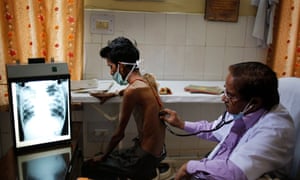
A doctor examines a tuberculosis patient in a government TB hospital in Allahabad, India.


A doctor examines a tuberculosis patient in a government TB hospital in Allahabad, India. Photograph: Rajesh Kumar Singh/AP

India has about a quarter of all the cases in the world, followed by Indonesia and then China, which have about 10% each. Nigeria and Pakistan each account for 5% of cases and South Africa has a little less.


“These [six] countries have 60% of the burden. TB is not like malaria, which is 90% in Africa, or HIV,” said Dr Mario Raviglione, director of WHO’s global TB programme. “It is a disease of the Brics [Brazil, Russia, India, China and South Africa] and middle-income countries. We are talking of a disease that eventually is financed largely by domestic funding.”


But health ministers cannot argue the case for funds for TB with governments that feel they have other priorities. WHO is hoping that a meeting of the UN general assembly will be held to focus heads of state on what must be done to end the threat of TB.


“We are saying there is dismal progress on commitment,” said Raviglione. “TB is not something that will just come down if you have development. It is a dangerous game. It is not going to go away slowly. It will take generations.”


The true scale of TB in India has remained hidden because no national survey has been carried out. The government has now agreed to conduct one but the results will not be known until at least 2019. But a survey in Gujarat, one of the richest Indian states, established a far higher prevalence of TB than had been thought and together with other evidence, it has been possible to come up with a better estimate than in previous years.


Work has been going on to encourage doctors in the private sector to report TB cases, which they are not obliged to do and have not done in the past. In the slums of Mumbai, Ayurvedic doctors and healers who see most of the patients have been encouraged to give out the free antibiotics to treat TB alongside traditional remedies, and to report the numbers of patients they see. A digital reporting system has been introduced with some success.


India wins praise from WHO but its actions have served to highlight the scale of the problem. Of the 10.4m cases worldwide, only 6.1m were detected and treated in 2015. Those undetected risk passing the bacteria that causes TB to their families. Countries do not have the rapid testing equipment they need.


There is particular concern over drug-resistant TB, which affects 580,000 people. Only half of those who get a strain resistant to the standard antibiotic combination of drugs survive. Only one in five of those with resistant TB get the newer combination of antibiotics that can cure it.


“We absolutely must solve the crisis of drug resistance – both treating it and preventing it by implementing basic TB programmes effectively,” said José Luis Castro, executive director of the International Union Against Tuberculosis and Lung Disease.


“There’s an effective new regimen available for treating multidrug-resistant TB and that needs to get to patients as quickly as possible. If we are to end the TB epidemic by 2035, we need to triple our rate of progress in a short period of time and that means tackling MDR-TB head on.”


Tuberculosis kills three people a minute, as case numbers rise

3 Ekim 2016 Pazartesi

Three natural remedies for the flu

Top three things you should take if you get the flu this year


In the September 16, 2016 Parade Magazine there was an article on “Boost your Flu IQ”.  While the article had some good points such as reduce the amount of times you touch your face and to thoroughly dry your hands after washing, it was the number one thing they stated “You should do to prevent the flu” that as a nutrition professional I beg to differ with.


Dr. Grohskopf, a medical officer in the Influenza Division of the CDC said “getting the flu shot is the single best thing you can do to protect yourself against the flu and prevent its spread”  She went on to say that if you do get the flu, your symptoms “could be” less severe.


Hmm.  I was recently asked to go back to work on a very part time basis at the nursing home where I used to work.  The reason I am unable to return is because I opt out of the flu vaccine.  In all my years working in long term care I have never gotten the flu.


From my perspective, there are many things you can do if you get the flu but what you should be doing is supporting your immune system year round so that you don’t get the flu!  Why do doctors not discuss this with their patients?


In the Parade Magazine article there was no mention of healthy eating and supporting your immune system (nor your gut health, and those of you who read my posts know by now that over 80% of your immune system is in the gut).


So here is what I, as a nutrition professional, recommend for flu prevention.  Please remember however that this is for educational purposes only since you are not a current client and as always seek medical attention when necessary.


Four tips for Year Round Immune Support to avoid getting the Flu


  • Probiotics: either take a probiotic supplement daily or eat fermented foods. It is best to rotate, so say eat fermented vegetables one day, kefir the next and probiotic supplement the next day.  This way you get a variety of strains for immune health.  The more variety in your strains the better.  Either purchase your probiotic from the refrigerated section of the store or one that says it is freeze dried.  Look at the label on the back to see how many strains it contains. Ideally you want to see a long list, not just a couple of strains listed.


 Study #1


  • 18 month study on children from ages 3-5 showed that those taking probiotic lactobacillus acidophilus strain had 53% fewer fevers, 41% fewer coughs, and 28% fewer runny noses than placebo group

  • Another group of children given the acidophilus and Bifidobacterium animalis strain has 72% fewer fevers, 62% fewer coughs, and 59% fewer runny noses than placebo group

Study #2


  • In 198 college students: 97 received a placebo, 101 received bifidum and lactobacillus strains for 12 weeks.-all got colds at same time but the probiotic group experienced a shorter duration in colds, symptoms were 34% less severe, fewer missed school days

Take away-take probiotics or eat fermented foods on a regular basis. You can look for products that contain the strains mentioned but more importantly consume a wide variety of probiotic rich foods.


  • Replace the refined carbs, sugar, and excess alcohol with less processed foods, more vegetables and fruit and filtered water. The sugar and alcohol lowers your white blood cell count which in turn lowers your immune resistance.  Sugar and grains upset the balance of the gut flora which in turn will weaken your immune resistance to germs.  Alcohol will also deplete your body of nutrients such as your B vitamins and magnesium.

  • Try to get more sleep. If you have difficulty sleeping get evaluated for possible liver or blood sugar issues. Try calming herbs such as passion flower, valerian (only at bed time), Kava Kava, chamomile and lavender. There are many “sleepy time” herbal tea blends or try one herb at a time in tincture form.

  • De-stress. Add in what works for you, such as an infrared sauna, yoga, meditation, walks, journaling and/or exercise.  Add in the herbs mentioned above to help calm and relax the body during times of high stress.  Stress of any kind (including exercise and “good” stress such as getting married) depletes the body of vitamins and minerals especially zinc, vitamin C, and your B vitamins

Top 3 things to add in if you do get the flu


Sometimes even with best intentions and doing everything right, we still get sick.  I think of it as the body’s way of telling us at times that we need a break, and forces us to rest and recover.  We live in a society that rewards that “go, go, go attitude”.  We can’t do this non-stop.


But that being said, you don’t want to feel miserable for weeks, which for some the flu can leave you still at the 2 week mark feeling exhausted and drained.


Add these in:


  • Master Tonic: this is my “go-to” when the flu or a cold strikes. I take a small bottle with me when a I travel and also send bottles of it to my adult son’s.  Ideally you want to make this a month before cold/flu season.  I typically make it at the end of the summer and then let it sit and ferment for 4 weeks.  You can do a search online for the recipe and they all vary a little but the principle ingredients are the same (garlic, onions, ginger, turmeric, hot peppers, horseradish and apple cider vinegar).  We have had great results with it and I get calls from people in a panic saying they “need some right away”.   So do yourself a favor and make some to have on hand.  It is good for 2 years but I usually have to make a new batch every year. Take it as soon as you feel run down.  Only take during the course of the cold or flu.  The herbs in this product can be very drying to the body so while they are ant-fungal, antibacterial and antiviral in nature and great for excess mucus too, you don’t want to dry out your system too much.

  • Vitamin C: Along with the Master Tonic, if I am feeling run down I will take 1,000 mg. of vitamin C as often as I remember.  Some will take it every 15 minutes on that first day.  I usually end up taking a dose every couple of hours.  With this protocol typically in less than 24 hours, sometimes only a few hours later, I am feeling much better.  Look for vitamin C with bioflavonoids.  Take up to bowel tolerance, meaning for some people you may not be able to take this high of a dose as it may cause diarrhea.  Just take the amount your body can handle at that time and instead add in citrus foods to your diet as well as plenty of other fruits and vegetables.  Kiwi is exceptionally high in vitamin C along with red bell peppers, broccoli, Brussels sprouts, butternut squash, sweet potatoes and tomatoes.

  • Homeopathic Oscillococcinum: This homeopathic remedy can take effect quickly when used at first sign of symptoms. While many are skeptical of homeopathic products, this has been shown in clinical trials to help reduce the severity and shorten the duration of flu-like symptoms. Take this remedy as soon as you feel yourself getting run down.  With homeopathic pellets, do not touch the pellets and allow them to dissolve in your mouth and do not drink any water or use any lozenges or food for 15 minutes before and after the dose.

Additional Support


Bone Broth: This is another one I make in advance.  I let my organic chicken bone broth cook for 24 to 48 hours so I don’t want to be making this when I am already sick.  I make a batch in late summer and keep it in the freezer. This way if I or someone else is sick I can just heat up the amount needed and sip through the day.  If you are sick and don’t want to eat, this is a great way to get your protein, some of your electrolytes and nutrients in while supporting your gut health at the same time.  For how to make and easy recipes I suggest reading Nourishing Broth by Fallon Morell and Daniel.


Bottom Line


Fluctuation in temperature is not the reason why we get sick.  We get sick more often in colder, winter months because we are in more confined spaces in colder months, we eat more sugar (comfort foods) in colder months, our stress levels increase around the holidays, we tend to drink more alcohol and less water in the winter and skip workouts more often in colder weather.  This adds up to the perfect storm for getting run down and susceptible to germs. Take care of gut and immune system year round to avoid getting sick this season.


Sources


Bauman, E. & Friedlander, J. (2104) Therapeutic Nutrition.  CA: Bauman College


Fallon Morell, S. & Daniel K. (2014) Nourishing Broth.  NY: Grand Central Life & Style.


Papp, R. et. al. Oscillococcinum in patients with influenza-like syndrome: A placebo-controlled,          double-blind   evaluation. Br. Homeopath J. 1998,87;69-76.


UMDNJ. (10/22/12) Probiotics are secret weapon for fighting symptoms of the common cold in college students, study suggests.  www.sciencedaily.com


Winters, C. (9/18/16) Stay Healthy: Boost your Flu IQ.  Parade Magazine www.parade.com/flu


Karen Brennan, MSW, CNC, Board Certified in Holistic Nutrition (candidate), author of the E book Tru Foods Depression Free Nutrition Guide; How Food Supplements and herbs can be used to lift your mood and owner of Tru Foods Nutrition Services, LLC believes in food first when addressing the root causes to your health conditions.  For more information and for her free food swap guide visit her website at www.trufoodsnutrition.com


As a nutrition professional, Karen does not treat, cure nor diagnose. This information is for educational purposes


Three natural remedies for the flu

2 Ekim 2016 Pazar

Blind guests fear for future of three specialist hotels sold by charity

The futures of the UK’s three remaining specialist hotels for the blind are in doubt, sparking fears that visually impaired people could be left isolated.


Action for Blind People is selling the Cliffden in Teignmouth, Devon; the Lauriston in Weston-super-Mare; and Windermere Manor, in the Lake District, because it can no longer justify the running costs.


The charity is hopeful that the hotels will stay open under new management, but critics of the sale believe that closure is more likely and that blind and partially sighted people will suffer.


David Haynes, 69, from South Milford, Yorkshire, said: “Without this sort of facility, I don’t know what people will do. You can’t imagine what it’s like leaving your house without any sight at all. People go there because all the staff are trained with regard to working with visually impaired people. It’s safe and secure.”


As well as being a regular visitor, Haynes sits on the Action for Blind People customer council. He is angry the council was not consulted over the decision, which was made by senior management and approved by the charity’s trustees, most of whom are blind or partially sighted.


The three hotels have swimming pools, textured surfaces, talking alarm clocks, large button phones, braille menus and facilities for guide dogs. They also provide a pick-up service from nearby stations and run supervised trips.


Action for Blind People said 2,000 visually impaired people used the hotels last year – just under half the total number of guests – although many went more than once. The charity said an increase in sighted guests is one reason it cannot justify the extra expenditure of £950,000 needed to run and maintain the hotels over the next three years.


But Haynes said the hotels provided an invaluable opportunity for the visually impaired to talk to each other and interact with the sighted. “We all learn from each other,” he said.


“It’s an indictment of 21st-century Britain that there’s no provision for the visually impaired to go to a hotel. All hotels have to have access for people in wheelchairs but they don’t all have to have staff trained to work with the visually impaired, to do small things like saying your meat is at eight o’clock [on your plate], your potatoes are at four o’clock.”


Christine Newcombe, vice-chair of Guide Dogs Circle, is another patron angry about the decision. She describes the hotels as a lifeline, particularly for the most vulnerable, who are completely blind, like herself.


“People are going to be isolated,” she said. “There’s been no consultation. No one has actually asked blind people what they actually want. The hotels offer peace of mind, health and safety.


“I just go with a friend and and leave John [her husband] at home. We have both got guide dogs. We just have a nice time. They do trips during the stays, [and] that would be difficult in an ordinary hotel.”


An Action for Blind People spokeswoman said: “We’re doing everything we can to find suitable buyers for the three Vision hotels to make sure they stay open, but we do understand that a lot of people are upset by the news that Action for Blind People will no longer be running the hotels.


“This has been a very difficult decision to make as we know how much Vision hotels mean to customers, staff and volunteers. To have kept the hotels open, we would have had to divert funds from other services and after careful consideration, we decided that this was not the right thing to do.”


She said the hotels were still taking bookings.


Blind guests fear for future of three specialist hotels sold by charity

30 Eylül 2016 Cuma

Suicide kills six men a day. Here are three strategies that can help stop it | Glen Poole

Suicide kills eight people a day in Australia, six of them men, and the latest figures released by the Australian Bureau of Statistics on Wednesday, revealed that male suicides have increased by 41% in the past decade, from 1,624 deaths a year in 2006 to 2,292 suicides in 2015.


Male suicide costs the economy an estimated $ 13.75bn a year. If we closed the gender suicide gap and reduced male suicide to the same level as female suicide, we could save the lives of more than 1,500 Australian men a year and save the economy an annual $ 9.3bn.


With stakes this high, why are we consistently failing to stop male suicide?


According to the American suicidologist, David Lester, all of the main strategies currently used to prevent suicide, are more effective at helping suicidal women. With two women a day dying by suicide, it’s vital we continue to develop our capacity to prevent female suicide and when three-quarters of Australians who kill themselves are men, we can and must more to stop male suicide.


Doing more doesn’t necessarily mean spending more. As Senator Penny Wong said in June, existing funding and resources are failing to reach men. Earlier this year, for example, the Black Dog Institute launched Lifespan, a $ 14.7m suicide prevention project which aims to reduce suicide by 21% with a range of strategies such as training GPs. Yet we all know that men make fewer GP visits on average and are less likely to benefit from such approaches. Even the most sophisticated suicide prevention initiatives, it seems, are failing to consider the gendered impact of their strategies.


It’s not that the suicide prevention sector is unwilling to think about gender. Lifeline’s CEO, Pete Shmigel, has spoken passionately about the need to tackle female suicide by understanding “what’s driving despair and what builds resilience so women are empowered in their emotional lives, as well as their political, social and economic lives”. Yet when it comes to talking about male suicide, he becomes oddly monosyllabic, saying things like “we have to do a better job, us blokes, of talking about our stuff”.


When it comes to suicide and gender, we’re great at pointing the finger at “blokes” for not talking, but don’t reflect on the irony that while many of us can talk freely and fluently about women’s issues, even smart, powerful men like Shmigel, appear to find talking about men’s issues a bit awkward and uncomfortable.


So what could we do differently? When writing the book, You Can Stop Male Suicide, I concluded that there are three simple, but by no means easy, strategies that can help us stop male suicide.


Firstly, we need to get better at tackling the social issues that men and boys face, rather than falling back on tired, ineffective stereotypes of stubborn, stoical blokes, who refuse to talk or get help.


Male suicide is a solution-based behaviour that some men turn to when dealing with problems they can neither fix, nor cope with. It is the product of a whole host of men’s issues we are collectively failing to solve, leaving too many distressed men viewing suicide as the best possible solution to the problems they face.


There are a number of social issues that affect men more profoundly in terms of suicide risk, including unemployment, relationship issues, being separated from their kids, being a victim of violence or abuse, alcohol and substance abuse, long-term illness, homelessness, social isolation and mental health disorders.


We also know that Aboriginal and Torres Strait Islander men and males who identify as gay, bisexual, transgender and intersex are at increased risk of suicide. Our failure to tackle men’s issues in general or consider how gender intersects with factors like culture and sexuality, is hindering our efforts to prevent male suicide.


Secondly, we need to get better at helping men. In Queensland, for example, the department for health has acknowledged that around one in four men who suicide, die within a week of receiving help from the health service. We need to stop saying “why are men so useless at getting help” and ask ourselves “why are we so useless at helping men”.


Finally, we need to shift the balance of suicide prevention work from generic approaches that are better at helping women and girls, to gendered approaches that are better at helping everyone, men and boys included.


Such a task requires progressive thinkers to look beyond the binary narrative of gender issues, that tells us that “women HAVE problems and men ARE problems”.


Every time we put the blame for male suicide on men not talking or getting help, we re-enforce unhelpful, macho beliefs that men should be strong, powerful and self-reliant.


A more evolved view of masculinity requires us to ask ourselves how we get better at helping men, how we get better at listening to men and how we get better at tackling the social issues that men and boys face, not least of which is the fact that suicide kills more than 2,000 Australian men a year.


  • Readers seeking support and information about suicide prevention can contact Lifeline on 13 11 14 or Suicide Call Back Service 1300 659 467.


Suicide kills six men a day. Here are three strategies that can help stop it | Glen Poole

9 Eylül 2016 Cuma

Three in four Britons unclear on obesity link to​​ cancer – poll

Three out of four Britons do not know the types of cancer that are linked to obesity, a poll suggests, raising concerns that widespread ignorance is hampering efforts to encourage people to adopt healthier lifestyles. Men and poorer people are most likely not to know about the connection. However, almost 80% of women are unaware that being dangerously overweight can cause female-only forms of cancer such as ovarian and womb cancer.


“Cancer isn’t at the forefront of people’s minds when talking about obesity, and that’s really concerning,” said Alison Cox, director of cancer prevention at Cancer Research UK. “Few understand that excess weight increases the risk of several cancers, including some of the most common, such as breast cancer.”


The charity undertook a survey of 3,293 adults selected to be representative of the whole UK population. It found that 23.8% of men and 26.9% of women indicated that they knew of the link between obesity and cancer.


Broken down by social grades, 30.1% of ABs (middle and upper middle class), 19.2% of C2s (skilled working class) and 22% of DEs (working class and unemployed) were aware of the extra risks associated with obesity.


When asked about specific forms of cancer, 60.1% of respondents said they knew obesity could cause bowel cancer and 55.2% said they were aware of a link with liver cancer, while far fewer knew of obesity’s link to womb cancer (21.5%), ovarian cancer (22%), prostate cancer (27.5%), breast cancer (31.1%), oesophageal cancer (31.2%) and bladder cancer (32.4%). CRUK says obesity is a contributory factor in 10 forms of cancer, and estimates that obesity causes about 18,100 new cases of cancer each year in the UK.


Cox said: “It’s the government’s responsibility to inform the public of the link and also to take action to tackle the obesity epidemic, starting with the health of the nation’s children.” She said adverts for foods high in fat, salt or sugar should be banned during all family programmes before 9pm, not just children’s shows.


Sarah Toule, head of health information at the World Cancer Research Fund, said the survey findings confirmed its own research that “people just don’t know enough about the dangerous links between obesity and cancer”. She added: “We live in a society where we are surrounded by advertising and offers for unhealthy junk food. Just eating an extra 100 calories a day can lead to gaining a stone within a year. It is therefore important that the public understand that they need to make conscious healthy choices for themselves and their children.”


Simple, inexpensive measures could help people live more healthily and reduce their cancer risk, such as walking an extra 15 minutes or eating a piece of fruit instead of a packet of crisps, Toule suggested.


Excess body fat can cause cancer for several reasons. Fat cells release hormones such as oestrogen, which can increase the risk of cancers including breast cancer. Research has also found that storing too much fat around the body prompts the body to produce growth hormones. Higher levels of those have been linked to a higher risk of developing cancer.


A Department of Health spokeswoman said the link between obesity and cancer was part of the motivation for its recent childhood obesity “plan of action”, which has been widely criticised. “Our obesity plan is world-leading, with more far-reaching and comprehensive measures than anything pursued by any other western government”, she said.


Three in four Britons unclear on obesity link to​​ cancer – poll

11 Aralık 2015 Cuma

three Simple DIY Drinks That Cure Your Cold, Clear Sinuses and Ruin Throat Irritation Immediately

Colds are so widespread and collectively with many unpleasant symptoms: fever and headache, sore muscle tissue and effortless to feel fatigue, sore throat and cough, runny nose and sneezing. Typically you will truly feel better inside of 3-4 days and no need to go to to your doctor, as some homemade remedies can support relieve the symptoms.


Following time when you get a cold, try these three basic recipes, all you require is some widespread ingredients which you can find simply in your kitchen:


one. Hot Pineapple Elixir


Ingredients:


  • one cup pineapple juice

  • one/two tablespoon organic apple cider vinegar

  • one pinch cayenne pepper

  • one teaspoon raw honey


Mix all these substances in a saucer and heat gradually to preference. Drink it for an quick relief for the cold signs.


Why It Works:


  • Pineapple juice has powerful anti-inflammatory properties to sooth the sore throat.

  • Apple cider vinegar assists your entire body maintain a healthy alkaline state, as a result creating the bacteria can’t survive.

  • Cayenne pepper assists clear up your sinus properly and with anti-viral, anti-bacterial and anti-fungal properties, honey fights towards colds and fevers as well.


2. The Hot Tea


Combine one component garlic, two components peppermint, one element cayenne pepper and four portion Echinscea. Mix them effectively and include a tablesppon of the mixture to a huge cup of scorching water to make a tea. Drink this tea to recover from a cold.


Why It Operates:


  • Garlic has anti-viral, anti-biotic and anti-microbial properties, merely eat a spoonful of raw garlic can support you truly feel greater. And for flus and colds, garlic also offers decongestant and expectorant effects to deal with the sore throat.

  • Peppermint helps to remedy coughs, colds, allergy symptoms and asthma as it offers rewards to the respiratory technique.

  • Echinacea encourages the immune system and minimizes the signs and symptoms of colds, flu and other difficulties.


three. The Cold-fighting Tea


Elements:


  • one teaspoon lemon juice

  • one/2 teaspoon finely grated ginger

  • one/two tablespoon organic apple cider vinegar

  • one/4 teaspoon ground turmeric

  • one/two teaspoon honey

  • 1 pinch cinnamon


Place all the substances in a cup of boiled water and stir well to drink.


Why It Performs:


  • Each honey and cinnamon are antiviral, antifungal and antibacterial, provides them potential to ruin viral bacteria and fight with colds and flus.

  • As an antioxidant, ginger soothes the throat and has properties to suppress a cough and enhance general immunity.

  • Lemon is one particular of the most effective therapies to enhance the immune method and battle off a cold or flu. The wealthy Vitamin C in it has sturdy anti-viral and anti-bacterial properties. And it  also alkalize the physique to preserve an alkaline-forming setting.


Remember these tiny tricks and remedies can not remedy the colds, but will make you feel better for certain. Though most house remedies are risk-free for us, even now speak to your medical professional just before attempting. As some remedies may possibly lead to allergic reactions for some men and women, and some ingredients you use in the treatments may possibly influence the way other medicines perform.


Colds are not so terrible, consider treating it at residence with these normal treatments 1st, and if it even now critical after 3-four days, get in touch with your medical doctor for aid.


Sources:


thechalkboardmag.com


medicalnewstoday.com


ehow.com


Much more Posts By Author Heidi Kristoffer.


three Simple DIY Drinks That Cure Your Cold, Clear Sinuses and Ruin Throat Irritation Immediately

5 Kasım 2015 Perşembe

three Confirmed Hacks To Amp Up Your Nutrition

To anybody who has been paying out consideration, it is clear that the “nutrition” of our meals has went straight down the toilet (in a lot more techniques than a single). From depleted and toxic soils to overly processed meals, the possibilities of obtaining ample nutrition at a typical grocery store has grow to be very slim.


These days, it merely might not be sufficient to shop organic due to growing entire body debt that demands a small “extra” to uproot well being issues, and extreme anxiety that would seem to strip away nutrients as swiftly as we can consume them. This is a recipe for rapid degradation of your good quality of daily life.


So how do we fight this nutrient depleted world? To commence, use these 3 proven hacks to get a lot more out of your foods.


Superfood Powders


A single way to crank up your nutrition is to supply a High high quality superfood powder. These powders go fantastic in smoothies and can supply a lot more nutrition in a single serving than most individuals will get in a week. Unfortunately, a lot of businesses have jumped on the “greens” bandwagon and commenced generating inferior greens powders that are overpriced for the value they deliver.


A good green superfood powder will spot emphasis on a mixture of large good quality algae, seaweeds, grasses, sprouts, leafy greens, cruciferous vegetables, high quality fruits, medicinal mushrooms, enzymes, probiotics, and a lot more. The elements will also be natural or wildcrafted, to make certain optimum potency and nourishment.


To hook up to a higher top quality, integrity driven, and “best bang for your buck” superfood powder, verify into this very reliable product.


Fermented Foods and Drinks


Fermented food items such as sauerkraut, kimchi, kvass, kefir, and kombucha, are exceptional methods to deliver much more nutrients into your physique with much less energy and energy needed by your digestive system. When you consume them, these probiotic wealthy food items and beverages start off to stability your gut bacteria and abdomen acids, and release lots of enzymes to help ease and increase digestion, which tends to make it Much less complicated for your body to extract far more nutrients from the foods you eat.


Preserve in thoughts, fermented meals are essentially “pre-digested” so unlocking the nutrients of the fermented meals is previously partially completed for you, and these food items can also help break down other parts of your meal so the nutrients are far more very easily assimilated that way as properly.


Learn more about the electrical power of probiotic food items and get recipes, right here.


Betaine Hydrochloric Acid (HCL)


Betaine hydrochloride is also identified as hydrochloric acid (HCL) or “stomach acid”. HCL aids digest foods by breaking up fats and proteins, and destroying ingested bacteria and other micro-organisms that can later on interfere with appropriate nutrient uptake. Satisfactory levels of HCL are necessary in purchase to adequately absorb protein, calcium, magnesium, phosphorus, iron, and B-12.


If you are struggling from heart burn, indigestion, acid reflux, SIBO, undigested foods in stool, fuel, GERD, and nutrient deficiencies, probabilities are your abdomen acid is too minimal which is impairing the 1st significant physiological perform of breaking down your food for correct absorption of nutrients.


When taking an HCL supplement, be mindful of the directions on the bottle and use caution if you are on any anti-inflammatory drugs, due to harm that may possibly currently have been triggered by individuals prescription drugs, which HCL could aggravate.


These are 3 wonderful approaches to start to improve your nutrition, but in all likelihood, will not be ample to sufficiently change your nutrient uptake to conquer any physiological troubles brought on by it. That requires much more knowledge of all the holistic way of life variables that can affect nutrient uptake, which are completely addressed in this eight week on the internet overall health program.


Sources for this post consist of:


http://www.healingthebody.ca/7-factors-you-need-to-know-about-fermented-foods/
http://scdlifestyle.com/2013/10/4-widespread-betaine-hcl-mistakes/
http://www.foodrenegade.com/hcl-not-just-supplement/


About the author:


Derek Henry took a deadly wellness challenge that conventional medicine couldn’t remedy and self-directed a one-in-a-million overall health journey that found him happier and more healthy than he had been in his entire daily life. As a consequence of this rewarding journey, he created Healing the Physique and became a effectively revered holistic health coach who now spends his time creating, coaching, and educating 1000′s of individuals every single month who want to enjoy similar results.


His Wellness Transformation E-Guide and THRIVE Online Overall health Plan are two essential assets for any person who wishes to have the intelligence and solutions to turn out to be genuinely effectively.


three Confirmed Hacks To Amp Up Your Nutrition