I’m sitting on a blue plastic, wipe-down mattress with my back to a wooden pillar. Within arm’s reach on the floor is a small torch to light my way to the toilet during the night, on the other side an orange plastic bucket to puke into. As the light fades my four companions, each with his or her own plastic mattress and bucket, disappear from view while on every side the barks, croaks, growls and cries of jungle life grow louder. Twenty minutes ago I gulped down a draught of the bitter psychedelic brew known as ayahuasca and I have convinced myself that I can feel its hot, unstoppable progress through my body, from my seething guts into my veins and onwards to my brain.
This is hardly a recreational drug experience, what with the nausea, vomiting and diarrhoea, not to mention the possibility a truly terrifying trip, yet thousands now beat a path to Peru, Ecuador and Brazil every year to drink ayahuasca. Some are just looking for an exotic thrill, but others hope for enlightenment and healing from this ancient plant medicine. In the past few years, many of them have been war veterans desperate to escape the nightmares of post-traumatic stress disorder.
Combat-related PTSD is notoriously difficult to treat and in theory ayahuasca can work as a form of drug-assisted exposure therapy. When traumatised people repeatedly avoid fear-inducing situations this only serves to maintain and reinforce the deeply ingrained conditioning that underlies their illness. The idea is that by dredging up traumatic memories and exposing them to conscious awareness within a safe, controlled environment, ayahuasca allows the brain to reassess and extinguish conditioned fear responses.
Classic psychedelics such as DMT – an active component of ayahuasca – break the control that the prefrontal cortex normally holds over more primitive parts of the brain, triggering vivid hallucinatory memories and emotions. “That lets us go to places in our psyche or internal landscape that we wouldn’t normally allow ourselves to go,” says Gerald Thomas, who researches addiction at the University of Victoria, British Columbia. “In psychotherapy, it’s how we reconcile past events that have traumatised us.”
Thomas has conducted preliminary research suggesting that ayahuasca can reduce dependence on addictive drugs. Part of the explanation may be that it helps ease the pain of traumatic memories that people sometimes “self-medicate” with substances such as alcohol, tobacco and cocaine.
To date, any evidence that ayahuasca can do the same for people with PTSD has been anecdotal. But an ambitious study now under way at the Temple of the Way of Light in the Peruvian Amazon is monitoring its long-term effects on psychological wellbeing and may provide some answers. The research is a collaboration with the International Center for Ethnobotanical Research and Service in Spain and the Beckley Foundation in the UK. Around 580 retreat participants a year – among them combat veterans suffering from PTSD – are being recruited, making it the largest psychedelic study of its kind ever undertaken.
But the study highlights a problem. The Temple of the Way of Light rigorously screens applicants for any history of psychosis or mania, which can be triggered by ayahuasca. Adverse effects like these are rare, says bookings manager Karin Gingras, but the temple is in a remote jungle location far from the nearest hospital. “We have seen how difficult it can be to recover from psychosis for some of these folks and are very aware that we are not equipped with the professional psychological staff to safely support these individuals.”
Most ayahuasca retreat centres in Peru do not go to such lengths to screen applicants, and the cheaper ones advertised on the streets of tourist hotspots such as Iquitos and Cusco will take anyone’s money, no questions asked. They provide little or no psychological support.
“People should pursue using ayahuasca with great care and do thorough research to find reputable retreat centres,” advises Alli Feduccia of MAPS, the Multidisciplinary Association for Psychedelic Studies. “Counselling and support during and after ayahuasca retreats are necessary to integrate the intense experiences that can emerge,” she says. “People have been traumatised by ayahuasca experiences because this very needed support is lacking.”
Then there’s the risk of interactions with prescription drugs. In addition to DMT, ayahuasca contains potent monoamine oxidase inhibitors (MAOIs), which block an enzyme that usually breaks down neurotransmitters in the brain, including serotonin. As a result, taking ayahuasca while on an SSRI or MAOI antidepressant can cause potentially fatal “serotonin syndrome”. Under normal circumstances the enzyme also breaks down tyramine – found in pork, pickles, smoked and fermented foods, chocolate and alcoholic drinks – and excess tyramine can trigger a dangerous spike in blood pressure.
If you’ve got PTSD, it’s unlikely your doctor will send you on an ayahuasca retreat any time soon (you are more likely to be offered psychotherapy under the influence of MDMA). In the US, where DMT is outlawed as a schedule one drug, Feduccia says MAPS has faced major obstacles in its efforts to gain approval for a clinical trial of ayahuasca for PTSD. A perverse effect of the lack of research may be to drive desperate patients into the arms of dubious retreat centres in South America that will fail to screen them adequately, offer advice on potentially dangerous dietary and drug interactions, or provide the necessary psychological support.
My own encounter with ayahuasca was a happy one. I felt nauseous but didn’t vomit. I witnessed no earth-shattering visions, though I did experience perceptual distortions and a temporarily enhanced sense of meaning and beauty. The only long-term effect on my physical and psychological wellbeing appeared to be a persistent bout diarrhoea that lasted several days. Retreats like those at the Temple of the Way of Light usually involve a series of ceremonies over several days, but I attended just this one – at another reputable retreat centre near Iquitos – and requested a very low dose of the medicine. I have a family history of bipolar disorder, which can involve psychosis, so even though I don’t have the condition myself I was unwilling to take a major gamble with my mental health.
This article was edited on 6 April 2017 to make it clear that the author did not participate in a ceremony at the Temple of the Way of Light.
James Kingsland is the author of Siddhartha’s Brain: Unlocking the Ancient Science of Englightenment
“This is a way of working that’s so obviously beneficial that I’m not sure why we didn’t do it before. We’ve gone from uncoordinated, fragmented care that was very unsatisfactory for patients, to wraparound care that takes into account the holistic needs of the patient.” Dr Karen Kirkham, a GP in Weymouth, is describing how Dorset has been quietly implementing a different way of providing healthcare which, if it works out, might just help save the NHS.
Sitting in a side room at Weymouth’s Westhaven community hospital, Kirkham outlines an approach that is simultaneously radical and commonsensical, and also controversial, despite being backed by all those whose job is to improve the health of Dorset’s 750,000 residents. “In Dorset, necessity has been the mother of invention. We’ve taken the issue of relentlessly rising demand and proposed bold action to adapt what we do for our patients,” she adds. While all this sounds novel, it is also one of the oldest tunes in the jukebox of NHS great policy ideas.
By bold action she means integration – both of health services and also health services with social care – reconfiguration of acute hospital services and the creation of 10 “hubs” to coordinate or deliver a recently extended array of out-of-hospital services. Dorset’s push to modernise how health and social care work is so advanced that on Friday NHS England’s chief executive, Simon Stevens, will name it as one of the official microcosms of the “new NHS” he has pledged to create by 2020.
Dorset will be one of between six and 10 areas of England in which Stevens will give the green light to the local NHS sustainability and transformation plan (STP). These will be the first wave of what he still hopes will ultimately be all 44 regional STPs, each doing their bit to implement the “five-year forward view” he originally set out in October 2014. Its mission: to make the NHS sustainable as a system of healthcare by both improving quality of care and preventing illness occurring in the first place, while simultaneously somehow bridging the £22bn gap in the service’s finances expected by 2020. Stevens’s “delivery plan” this week will hail Dorset as a pioneer from whom the wider NHS can learn a lot.
Karen Kirkham, a GP in Weymouth: ‘This is so obviously beneficial, I’m not sure why we didn’t do it before’. Photograph: NHS England
Kirkham has played a key role in recent years in building agreement between Dorset’s three acute NHS trusts, one community services trust, 97 GP practices, three local councils and 30,000 clinical staff – and Dorset NHS clinical commissioning group (CCG), with which she is the assistant clinical chair – that working together is the right direction of travel. NHS and town hall chiefs across the country recognised in 2015 that they had to transform how they provided health and social care if services were, in her words, to avoid being “overwhelmed with demand” caused by the ageing population.
Dorset CCG’s Your NHS document, which explains what it admits are “large-scale changes to health and care services in both community and hospital settings”, is admirably no-nonsense on the urgent need for change. “Doing nothing is not an option, because by staying the same our healthcare would get much worse. Doing nothing would mean lower safety standards, worsening health [and] reduced survival rates,” it says.
Integrated community services are a key element of the STP’s ambition to keep people out of hospital, provide much more care in or near people’s homes and ensure that the anticipated £229m deficit in Dorset’s NHS finances does not emerge as expected by 2021. And the 10 “community hubs” are the key to making integration itself work. They are all similar in that they all coordinate the delivery of care; but while seven have beds attached for patients, three do not.
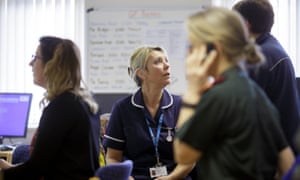
The hub for Weymouth is no more than a room at Westhaven hospital full of desks, computers and telephones. But this is where different types of care professionals – including GPs and personnel from the ambulance service, local acute hospital, social care and district nursing services – work together to take calls from fellow professionals, discuss individual patients’ needs and decide how each is cared for.
“It’s a simple idea – that when GPs need to refer a patient, for surgery or a home visit or a residential home placement, they ring one number and refer the problem to the team in the hub, and they decide what to do. It’s a one-stop shop,” explains Dr Riaz Dharamshi, a consultant geriatrician who works two and a half days a week with the hub team, including paying home visits to frail, elderly people.
Louise Clark, head of occupational therapy at Dorset healthcare NHS foundation trust, explains: “If we need to discharge someone from the local acute hospital we refer them to the hub. They arrange the care that someone needs – therapy, district nurses or mental health input, so that the person can go home safely. They wrap the care around them in a way that didn’t happen before.”
The service is aimed primarily at frail elderly people, who comprise about 80% of all hospital inpatients these days and are therefore a huge driver of the increasing costs facing the NHS as a whole. Dorset’s coastline and quality of life means it has far more over-75s and more over-85s than the average for England, with those numbers due to swell in coming years.
Intermediate care nurse Jackie Goldsmith discusses a patient’s case during a team meeting at Westhaven hospital. Photograph: Sam Frost for the Guardian
If one of them needs an investigation, or rehabilitation after a spell in hospital, then they go into Westhaven’s 34-bed ward. “That might be someone who has become confused or had a fall but not broken a bone,” says Dharamshi. The average age of those admitted here is 86.
A similarly joined-up, multidisciplinary approach elsewhere in Dorset, coupled with the opening last September of a frailty unit at Royal Bournemouth hospital, has seen the average length of stay for acutely frail elderly people treated in its older people’s medicine wards fall from 10.3 days as recently as April 2016 to just 5.87 days now – a difference of 4.43 days. As it costs £400 a night to keep a patient in an acute hospital, that means the average cost of treating a patient has fallen from £4,120 to £1,772.
Dr Andrew Williams, the hospital’s clinical director of older people’s medicine, stresses that the motivation for everyone working together to support medically vulnerable older people is not financial. “The project was about improving patient outcomes, not cash savings,” he says. Stopping older people becoming inpatients unnecessarily means they are much less likely to get “deconditioned” – to lose vital muscle mass due to being in hospital – which makes them more likely to fall over, lose their independence and have further complications, he adds.
There are other big benefits, too. Extra care at home means the average length of time for which such patients need support after discharge has fallen from 32 to 24 days. And this means the hospital has more spare beds, is more likely to hit its four-hour A&E target and less likely to have to cancel operations due to overcrowding.
Other elements of Dorset’s STP are certainly proving controversial: Bournemouth becomes the main acute hospital, while Poole will play the lead role for non-urgent care. As a result, Poole is set to lose its A&E unit and maternity and paediatric services. In all, 100 acute beds are due to go across the county, at least three community hospitals face the axe, while the number of beds in the remaining community hospitals will also be dramatically scaled back. Poole residents and campaign groups 38 Degrees and the NHS Support Federation are among those that have voiced concern.
But Stevens sees Dorset as a trailblazer, a crucible of how the entire NHS across England needs to work. “Dorset’s NHS has been ahead of the game in spotting that the local NHS needs to join forces to be more than the sum of its parts. They are proposing important changes for patients.
“It has been clear for a long time that the traditional divide between GPs, hospitals and community services is increasingly a barrier to the personalised, coordinated healthcare patients need. We can see in Dorset that this is the kind of practical improvement that many doctors, nurses and carers are now beginning to create.”
A royal commission should be set up to examine the long-term future of the National Health Service, a senior Tory peer has said.
Former Conservative chairman Lord Saatchi said a commission could take the issue out of politics and “detoxify” any changes that needed to be made.
His recommendation comes before the publication of a report that is expected to show the parlous state of English NHS finances.
In a paper for the Centre for Policy Studies thinktank, Lord Saatchi said: “There is a wide range of perspectives on the current performance of the NHS, and varied confidence in its long-term future, from the pessimistic view that the system is in crisis, to the optimistic position that its only threats are meddling politicians. A royal commission offers significant benefits regardless of the position taken.
“A royal commission is an opportunity to help reverse a deterioration in some clinical outcomes, to identify and eliminate barriers to equal access, and to ensure that trusts are adequately funded to cope with current demand pressures. The solutions it arrives at could help to avert the kind of distress seen throughout the system over the 2016-17 winter.”
Saatchi said the advantages of a commission, rather than any other sort of inquiry, included “the ability to secure the bipartisan support needed to embed lasting changes, to detoxify reforms that otherwise may be too politically dangerous to pursue, and to deploy its unique investigatory power to establish what reforms are needed to ensure that we have a world-class, 21st century, health system”.
“A commission’s investigatory powers and capacity to provide evidenced-based review, free from the constraints of the immediate political cycle, allow it to craft solutions that command the support of practitioners and politicians alike. When set up properly, its recommendations carry a unique legitimacy that could be essential to securing a lasting, bipartisan settlement on the NHS.
As the NHS approaches its 70th birthday he said it “would be reckless not to seek a full body check-up – the first in decades”.
On Monday, NHS Improvement’s figures for the third quarter of 2016-17 will be published.
NHS Improvement’s chief executive, Jim Mackey, has acknowledged that trusts would miss the £580m deficit “control target” and forecasters have predicted the combined hole in their finances could reach nearly £1bn by the end of the year.
Responses to the King’s Fund thinktank’s latest survey of NHS finance directors, carried out in late January and early February, made for “uncomfortable reading”, its director of policy, Richard Murray, said.
“They suggests that the forecast net deficit has risen by about 30% since the autumn, when NHS Improvement’s quarter two report showed a net deficit for the year of £669m. Simply applying one number to the other would give a 2016-17 net provider deficit somewhere between the £820m to £920m mark.”
Murray suggested it was a “big ask” to expect trusts to recover ground over the remainder of the year, given the scale of the winter crisis.
A transportable brain-scanning helmet that could be used for rapid brain injury assessments of stroke victims and those felled on the sports pitch or battlefield is being tested by US scientists.
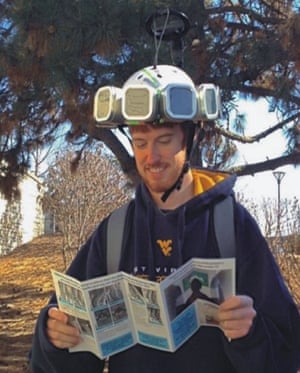
The wearable device, known as the PET helmet, is a miniaturised version of the hospital positron emission tomography (PET) scanner, a doughnut-shaped machine which occupies the volume of a small room.
Julie Brefczynski-Lewis, the neuroscientist leading the project at West Virginia University, said that the new helmet could dramatically speed up diagnosis and make the difference between a positive outcome and devastating brain damage or death for some patients.
“You could roll it right to their bedside and put it on their head,” she said ahead of a presentation at the American Association for the Advancement of Science’s (AAAS) annual meeting in Boston. “Time is brain for stroke.”
Despite being only the size of a motorbike helmet, the new device produces remarkably detailed images that could be used to identify regions of trauma to the brain in the ambulance on the way to hospital or at a person’s bedside. The device is currently being tested on healthy volunteers, but could be used clinically within two years, the team predicted.
Despite being only the size of a motorbike helmet, the new device produces detailed images that could be used to identify regions of trauma to the brain in the ambulance on the way to hospital or at a person’s bedside. Photograph: Stan Majewski
Rapidly diagnosing stroke patients, who often wake up unaware of what has happened, is crucial as every passing minute without treatment can result in more extensive and permanent brain damage.
In the hours after a stroke, the brain tissue surrounding the main injury hangs in the balance as it is starved of oxygen due to blockages in the brain’s blood vessels. A rapid surgical intervention, within two to four hours of a stroke, can salvage neurons in the so-called “penumbra” area. After that the risks of brain surgery tend to outweigh any potential benefits to the patient.
“The more you wait, the more that penumbra area gasps and dies,” said Brefczynski-Lewis. “If you can see there’s a bit of activity you might say let’s do an intervention.”
Depending on the brain region affected by stroke, a patient’s speech and language abilities could be saved or paralysis prevented.
In the future, the team said it may be possible to diagnose sports concussion “within minutes”.
“If one can determine quickly whether a head injury is a concussion, then one might be better able to assess if the player, or the soldier, should continue or take time to heal,” said Brefczynski-Lewis.
The device, which can be worn while walking around could also enable scientists to study people’s mental patterns as they move about, socialise and respond to threats in their day-to-day environment. Photograph: Stan Majewski
The helmet was developed in the lab and Brefczynski-Lewis describes it as the equivalent of “going from a big computer to a smartphone”.
The wearable scanner works on the same basic principle as a conventional PET scan. The patient is injected with glucose that has been tagged with a radioactive tracer. Radiation emitted by the tracer is captured by sensors on the helmet, allowing scientists to pinpoint which brain regions are metabolising glucose most rapidly, providing a heatmap of brain activity.
The team were able to miniaturise the scanner by using much smaller detectors fitted with crystal arrays designed to turn PET radiation into measurable electrical signals with a high degree of efficiency.
The device, which can be worn while walking around could also enable scientists to study people’s mental patterns as they move about, socialise and respond to threats in their day-to-day environment. Brefczynski-Lewis said it could also be useful for understanding addiction, where people can respond very differently in a lab setting to in their day-to-day lives where environmental triggers suddenly set off cravings.
“You could put [addicts] in a room similar to where they’ve used drugs before and ask what allows you to have the willpower to walk away,” she said.
A potential limitation is that the helmet is cumbersome, weighing nearly 3kg (6.6lbs) in its current form and up to 9kg (20lb) in an upgraded version designed to give full-brain coverage. The scientists have developed a counterweight system that is pushed along on a stand or carried in a rucksack to avoid the patient being crushed, but Brefczynski-Lewis acknowledges: “you’re probably not walking down the street in Manhattan wearing it”.
Modernising and securing the future of the health service in England would cost at least £9.5bn in upfront spending, money that the NHS does not have, the British Medical Association has said.
Health managers in 44 areas have been charged with creating sustainability and transformation plans (STPs) to help the NHS repair its crumbling finances and meet clinical and organisation challenges.
But such an overhaul would need significant capital investment, according to the BMA. The doctors’ union sent freedom of information requests to all the areas asking for their estimates to implement the STPs and 37 replied, with the figures quoted in responses totalling £9.53bn.
Dr Mark Porter, the BMA’s chief, said: “These figures are especially concerning given that everyone can see a huge crisis unfolding within our NHS, with record numbers of trusts and GP practices raising the alarm to say they already can’t cope.
“The NHS is at breaking point and the STP process could have offered a chance to deal with some of the problems that the NHS is facing, like unnecessary competition, expensive fragmentation and buildings and equipment often unfit for purpose. But there is clearly nowhere near the funding required to carry out these plans.”
More than half of the STP areas have told NHS England they would each need more than £100m of upfront funding to make changes. Six – Cambridgeshire and Peterborough, Cheshire and Merseyside, Greater Manchester, North Central London, North East London and West Yorkshire – have quoted capital needs of £500m or more.
The BMA says that NHS leaders are unlikely to have anything near the cash required to deliver the projects, with budgets already under severe pressure. The annual capital allocation of £4.8bn granted to the Department of Health from 2016/17 to 2020/21 is being used in part to cover large hospital deficits, it says.
At a hearing last month of the public accounts committee – which scrutinises government expenditure, the NHS Providers chief executive, Chris Hopson, said a quarter of the capital budget (£1.2bn) had been taken “to prop up revenue”, and the health department’s finance director, David Williams, said raids on the capital budget were likely to continue.
The BMA says there will be other demands on the budget, pointing to an NHS Digital report published last year which said that more than £2bn was needed to pay for significant or high-risk outstanding maintenance needs.
Although the NHS says the STPs are vital to the future of the service, they have proved highly controversial as they are likely to lead to the axing of thousands of hospital beds, A&E units being downgraded or closed and women facing long trips to give birth.
Porter said: “These plans are fast becoming completely unworkable and have instead revealed a health service that is unsustainable without urgent further investment, and with little capacity to ‘transform’ in any meaningful way other than by reducing the provision of services on a drastic scale.”
Tom Sandford, the Royal College of Nursing director of England, said: “We have always supported the aims of the plans – preventing ill health, joining up services, delivering care closer to home.
“But proper funding – and consultation – is key to making sure STPs solve instead of exacerbate the problems of England’s health and care system.”
An NHS England spokeswoman said: “Rather than just commenting from the sidelines, local health and care leaders and clinicians are coming together to actually try and solve some deep-seated problems by identifying practical ways to improve services.
“Yes, there are well known pressures and constraints facing the NHS, but for patients’ sake we should obviously all try and make the best of the situation, rather than just stand to one side and say ‘well I wouldn’t start from here’.”
The £9.5bn cost was revealed as an analysis by the i newspaper of the 44 STPs suggested that they will lead to the closure of 19 hospitals, including five acute ones.
Areas where acute hospitals are under threat include Leicestershire and south-west London. The STPs have previously been criticised by the BMA as a stealthy way of cutting NHS services, dressed up as modernisation.
The i investigation also found that nearly 3,000 jobs could be lost under proposals to create a “smaller, more agile” workforce.
Other mooted changes under the plans include cutting prescription costs, rationing care and operations and slashing costs through use of technology, for example, doctors using video links to assess and discharge patients and even “virtual doctors” in an attempt to boost out-of-hospital care.
In the remote western plains of Texas, the Midland-Odessa region is separated from the nearest major city by hours of open road. So when the Planned Parenthood clinic in Midland closed down in late 2013 – a casualty of legislative cuts that targeted Planned Parenthood directly – it served as an isolated experiment in what happens when the government defunds the largest women’s healthcare provider around.
“I hate to say it, but I think an awful lot of women just opted to go without care,” said Mike Austin.
Austin is chief executive of Midland Community Healthcare Services (MCHS), a federally-funded network of providers that has emerged as the only major alternative to Planned Parenthood in the area. His clinic offers all of the same services the Midland Planned Parenthood once did, including contraception, cancer screenings and STI tests, to the same kind of patients, low-income women who rely on the public safety net for their healthcare.
In fact, just before the Planned Parenthood clinic shut down, the two providers made a plan to minimize the fallout. Planned Parenthood sent nearly 5,000 patient medical records – up to 1,000 belonging to active patients – directly to MCHS.
But to Austin’s dismay, only about 100 former Planned Parenthood patients ever showed up at his door.
“We are seeing a subsequent rise in STDs and a subsequent rise in unplanned pregnancies,” Austin said. He believes they could be linked. “And I’m sitting here going, ‘See? I told you so. This is what happens.’”
In the weeks ahead, members of Congress will replicate Midland’s experiment on a grand scale by defunding Planned Parenthood across the country. They will do so in the form of a budget that blocks Planned Parenthood from accepting Medicaid, the government-funded insurance for low-income individuals.
It’s a move Republicans have long framed as a rebuke of Planned Parenthood’s role in providing abortions – even though Medicaid is prohibited from covering abortions by law, and only half of Planned Parenthood clinics even offer the procedure.
What Medicaid does do is allow Planned Parenthood to provide contraception, cancer screenings and STI tests to 1.5 million patients in the public safety net at some 650 health centers for no cost. About two-fifths of the organization’s $ 1.3 billion annual budget derives from public funding. Without the reimbursements Medicaid provides, a spokeswoman for the Planned Parenthood said, an unknown number of those centers will have to close.
House Speaker Paul Ryan of Wisconsin recently predicted that federally funded health centers – like the one in Midland – could pick up where Planned Parenthood left off. “They’re in virtually every community,” he said at a recent town hall, “providing the same kinds of services.”
But public health officials such as Austin, who work in states where Planned Parenthood’s presence is already in decline, are sounding the alarm. They say the loss of Planned Parenthood would imperil the health of thousands of women who already face high barriers for care.
And some of the strongest voices in opposition come from Ryan’s own backyard.
“They’ve never replaced the services of Planned Parenthood,” said Gail Scott, director of health in Jefferson County, Wisconsin. Her county, which lost the Johnson Creek Planned Parenthood in 2013, bumps up against Ryan’s congressional district. “I’m not pro-abortion or anything,” she said. “But I can tell you nothing ever replaced those services for uninsured people.”
The clinics in Johnson Creek closed because lawmakers in Wisconsin, as in Texas, approved a series of family planning cuts targeted directly at Planned Parenthood. Today, Scott said, when the Jefferson County health department gets calls from low-income women looking for a place to obtain contraception, staff recommend they travel to another county – where there’s still a Planned Parenthood.
Chippewa County, Wisconsin, also lost its Planned Parenthood clinic. Jean Durch, the county health director at the time who is now retired, recalled that after the closure, there was no place in Chippewa for women to receive STI tests, even though her department sought the funding to make it happen.
“We never were able, before I retired, to pick up the full complement of services” of Planned Parenthood, she said.
And Shawano County, Wisconsin, which is experiencing a flare-up in gonorrhea and which the state government recently designated a hot-spot for new chlamydia infections, is still feeling the pressure. After the Planned Parenthood there closed, former patients faced significant waiting lists to see a doctor at local community health clinics. The health department didn’t know where to send women for certain services.
“The clinic that closed in Shawano served the whole county,” said Jaime Bodden, the Shawano County health director. Not just women on Medicaid, she said, but women with stingy insurance and women with no insurance at all. Now, the county health department is virtually on its own as it combats the region’s rising STI rates.
“It’s something that we still often talk about,” she said. “We say, ‘Wouldn’t it be nice to have Planned Parenthood in town?’”
‘A national healthcare disaster’
Planned Parenthood officials say Wisconsin would continue to be hard-hit if Congress went through with its plans for defunding. A disproportionate number of its patients there are Medicaid beneficiaries and women of color – groups of people who already face barriers to accessing care.
Already, some of their patients are worried about gaps in their health care if Planned Parenthood were to disappear.
“I have to get that care,” said Courtney Kessler, 22, of Madison, Wisconsin, who has a family history of ovarian cancer and has gone to Planned Parenthood for cancer screenings and contraception for seven years. She is on a public safety net program that covers the costs. “I don’t know where else I would go. I would have to spend time finding somewhere else to go, and worry about, can I afford it? And worry about, am I getting the same quality of care I get with Planned Parenthood? It’s only making it more difficult for people already having struggles.”
Planned Parenthood operates 22 locations in 15 Wisconsin counties, with just two providing abortion services. A new survey conducted by Health Management Associates, a healthcare consulting firm, and paid for by Planned Parenthood, concluded that in seven of those counties there are no viable alternatives to Planned Parenthood for family planning services. In four other counties, there is only one viable alternative. Two counties that would have no alternative if Planned Parenthood were to close – Racine and Walworth – comprise part of speaker Ryan’s district.
The notion that overnight they can serve two million more people who need reproductive health services is absurd
The survey also concluded that many alternatives offer limited hours and do not stock all the most effective contraceptives – making it questionable that they are truly alternatives to Planned Parenthood.
Raegan McDonald-Mosley, Planned Parenthood’s chief medical officer, said this pattern holds across the country. In 332 of the 491 counties where it had locations in 2010, the latest year numbers were available, Planned Parenthood served at least half of the women obtaining contraception through the public safety net. In 103 of those counties, Planned Parenthood was the only safety net provider for family planning.
“We play a hugely important role in family planning safety net around the country,” said McDonald-Mosley. If those clinics were no longer options for many women, “It would truly be a national healthcare disaster.”
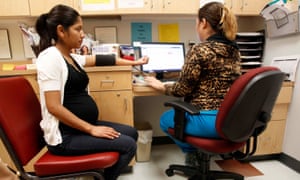
A woman has her blood pressure checked at a women’s clinic in San Juan, Texas. Photograph: Delcia Lopez/Reuters
Proponents of defunding Planned Parenthood have circulated their own surveys. In 2015, lawmakers and anti-abortion activists distributed maps and lists claiming there were thousands of government-funded health clinics able to take on Planned Parenthood patients. Several news outlets revealed that these lists included dentists, jails and food banks.
Still, many of the dots on such maps represent clinics that really do offer the same services as Planned Parenthood. The question is, can they take on potentially millions of new patients?
Many public health advocates are skeptical.
“Planned Parenthood treats about 2 million women on Medicaid and community health clinics in total serve about 25 million – everybody from infants to 90-year-olds,” said Sara Rosenbaum, a professor of health policy at George Washington University who has worked in the field of community health for several decades.
“They have wait lists for the people they’re serving today, much less having to absorb all of Planned Parenthood’s patients as well,” she continued. “The notion they can suddenly ramp up their capacity to absorb all of the services Planned Parenthood can offer, the notion that overnight they can serve two million more people who need reproductive health services is absurd. It displays, to my mind, an astounding ignorance of how the health system works.”
‘Texas illuminates what may happen’
Planned Parenthood hasn’t produced an estimate of how many of its clinics might close, and where if the group were defunded.
In Texas, though, a nascent body of research suggests that excluding Planned Parenthood from the safety net has negative consequences even when the cuts don’t force clinics to shut their doors.
These studies have measured what happens not when Planned Parenthood clinics closed, but when women enrolled in Texas’ Medicaid-like program can no longer use their insurance at Planned Parenthood. One study, from the Texas Policy Evaluation Project of the University of Texas-Austin, followed women in Midland (before the clinic shut down) and Houston who relied on Planned Parenthood for Depo Provera, an injectable contraceptive. They found that 20% of women who wanted to stay on Depo-Provera missed their next dose.
These women faced a small but real increase in their odds of getting pregnant. About 25% became pregnant – versus just 8% of the women who didn’t miss their next dose.
The other four out of five women in the survey who wanted another dose, got one. But it wasn’t always free, and it wasn’t always straightforward. Forty-three percent of these women reported that it cost them time or money to find a new provider. In Midland, because other providers were scarce, 65% of the women surveyed kept going to Planned Parenthood, even though it now meant paying out of pocket.
Republicans trade blows with Planned Parenthood president Cecile Richards, in a congressional hearing in September 2015.
Defunding Planned Parenthood, in other words, didn’t necessarily stop women from relying on Planned Parenthood for health care – it just forced them to replace the state’s money with their own.
“These results should be cautionary to states considering similar measures,” the study warned. “They contradict the claim that Planned Parenthood could be removed from a statewide program with little or no consequence.”
Another study found that after Texas kicked Planned Parenthood out of the Women’s Health Program, there were drops of more than 30% in reimbursement claims for some of the most effective methods of contraceptives (although not birth control pills). The drops were only observed in counties where women had previously used local Planned Parenthood affiliates. That study also measured a small but real uptick in births by women on Medicaid, although there are other explanations besides the loss of Planned Parenthood.
“Texas’s experience illuminates what may happen on a larger scale,” said Joe Potter, a UT Austin researcher. “Each person involved in the program had to go find a new provider. And whether or not the new providers have the training, experience, and bureaucratic set up so women can get care promptly is a big question mark.”
Austin, who runs the clinic in Midland, says the problem isn’t just that local health clinics might not have the capacity. In fact, he was one of few public health officials interviewed who felt that federally funded healthcare clinics really could provide for Planned Parenthood’s patients – eventually.
“Logistically, yes, it can happen,” he said. “But it can’t happen for free or overnight. In Dallas or Austin, you could be talking about 10,000 people being displaced into the community health system. I’m sure [local clinics] would do their best, but it would take a ramp-up to do it.”
A Texas health department survey of the state indicates that the capacity to absorb Planned Parenthood patients might exist. But the problem, as Austin’s experience attests, is getting all of the same patients that Planned Parenthood once served through the door. Clinics like his also have an extremely limited ability to advertise their existence. Women know what Planned Parenthood is and the services it offers. And MCHS doesn’t employ the same medical professionals as Planned Parenthood – people that patients have trusted for years with personal and sometimes embarrassing issues.
All these could be reasons why hundreds of Planned Parenthood patients, unless they moved or found other care, never transferred to Austin’s clinic.
Recently, MCHS moved most of the 5,000 records it inherited from Planned Parenthood into storage.
“It broke my heart,” Austin said. “Here’s 5,000 people who have basically been thrown out on the street. What happened to them? I can only account for about a hundred of them. What happened to the rest?”
Plans for a new fleet of UK nuclear power plants are under way. Last month, for example, Hitachi and the Japanese government confirmed a plan to construct 5.4 gigawatts of generating capacity at UK sites. But what about the waste? And what happens when, in thousands of years, our descendants – who may not read any current human language – find a store, and put themselves in danger?
A panel of scientists and linguists asked this question in 1981 when the US Department of Energy commissioned them to find a method of ensuring that whatever is left of humanity in 10,000 years’ time is warned off the sites we’ve been filling with radioactive sludge.
The panel reasoned that since few people can read texts that are only 1,000 years old, written warnings guaranteed to be understood by future humanity could be difficult to create.
The answer may lie in “nuclear semiotics” – future-proof signs. Other options include hostile architecture, obelisks – or cats.
In 1984, writer Françoise Bastide and semiotician Paolo Fabbri suggested the answer could lie in breeding animals that “react with discoloration of the skin when exposed” to radiation. “[Their] role as a detector of radiation should be anchored in cultural tradition by introducing a suitable name (eg, ‘ray cat’).”
In short: cats that turn, say, green when near radioactive material. A legend, passed on through the millennia, would trigger a response in humans to get out as soon as possible.
The idea has recently gained fresh traction: the Ray Cat Solution movement, formed in 2015, is working to “insert ray cats into the cultural vocabulary”. They say it may be possible to harness some animals’ innate capacity to become fluorescent, or to absorb and emit light – but cats don’t have the physiology to do that. Another way would be to engineer cats to glow using enzyme interaction – a mechanism used to study cellular activity. Far fetched, but it could just work.
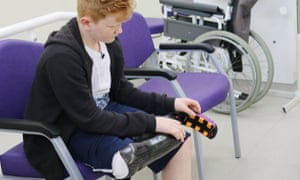
Children who are missing an arm or leg are being helped to run, swim and play sport after getting prosthetic sports limbs on the NHS.
The roll-out of sports prostheses on the NHS is part of a £1.5m fund to help child amputees and others across England get active. There are also hopes that it might help create Britain’s future Paralympians.
Ben Moore, 13, from Brighton, has already put his new running blade into action to jog and play football. Now his sights are on the Paralympics, according to his mother Kate.
She said: “We’re really pleased Ben has been fitted with a new running blade. After watching the success of Team GB last year, this blade means Ben can develop his interest in sport and could become part of the next generation of Team GB.
Ben Moore tries on his race blade. Photograph: Department of Health/PA
“We hope more children and young people like Benjamin will be able to benefit too.”
Double-leg amputee Richard Whitehead, who successfully defended his Paralympic title in the 200m T42 at Rio last year, said: “Having run thousands of miles on prosthetics myself, I’m delighted to see the next generation take their first steps in experiencing the freedom of running whether just for general enjoyment or towards achieving their own Paralympic ambitions.”
Running blades, swim fins and arm attachments to help children play basketball are among some of the equipment that will be shared out.
Richard Whitehead retains his men’s 200 metre T42 title at Rio Games. Photograph: Matthew Stockman/Getty Images
Rolled out over 2016/17 and 2017/18, the money is being divided between NHS limb centres to fund requests for the equipment, and research to improve sports protheses.
The fund, which the health secretary, Jeremy Hunt, announced during the Rio Paralympics, was earmarked after a campaign to highlight the issue by Sarah Hope.
Hope’s two-year-old daughter, Pollyanna, had to have her right leg amputated below the knee after she was hit by a bus on a pavement in south London.
Kiera Roche, the chief executive of LimbPower, the national disability sports organisation for people with limb impairments, described the fund as “a really positive step” in supporting children to be more confident and sociable.
She said it gave them the equipment to participate and “immerse themselves fully in school PE and community activities”.
Hunt said: “Every child should be able to participate in sport. Team GB surpassed everyone’s expectations at last year’s Paralympics and this investment will ensure the next generation of children who have either been born without a limb or who have lost a limb will be able to lead an active life.
“It’s wonderful that the first children are now receiving their blades and that they will be able to reach their sporting potential. I hope some may even be selected in the future as members of Team GB.”
As health and care leaders, we believe passionately in the NHS, one of this country’s proudest achievements. Since its creation in 1948, it has constantly adapted to improve care for patients. Today is no different. Staff in health and social care do a superb job treating record numbers, but they are under pressure as our nation’s needs increase rapidly. There are also new opportunities to improve care by making practical changes to the way the NHS works (A&E, cancer and maternity units to close in major NHS overhaul, 19 November).
The good news is that NHS bodies and local councils have come together for the first time across England to develop shared, long-term proposals to improve health and care in the communities they serve, based on collaboration not competition. Their aim is to make real-world improvements for patients: making it easier to see a GP, providing more specialist care in people’s homes, speeding up the diagnosis of cancer and offering help faster to people with mental ill health. The NHS has begun to set out its own stall to meet the challenges of the future. We have a good plan in the Five Year Forward View, and are beginning important conversations with the public about how to make its vision a reality through sustainability and transformation plans (STPs). Now is not the time to go back to the drawing board – instead, we hope that all who value our health and care system will support local leaders getting on with the important task at hand. Sir Andrew Cash Chief executive, Sheffield Teaching Hospitals, Dr Amanda Doyle Chief clinical Officer, Blackpool CCG, Sir Andrew Morris Chief executive, Frimley Health NHS Foundation Trust, David Pearson Sustainability and transformation plan (STP) lead for Nottinghamshire
• The Guardian is right to expose the scandal unfolding regarding plans for the NHS in many areas of the UK . Local campaigners have mounted vociferous opposition to try to protect vital services such as consultant-led maternity and A&E. Many are also promoting Save our Beds campaigns to try to preserve hospital beds in places with poor public transport links. Although people are allowed to speak at local forums, or respond to glossy consultation documents, they wonder whether anyone is really listening to their concerns.
It feels as if there is a hidden agenda and that the lives of those who live in locations with scattered populations and poor infrastructure are not important. It may be the case that Jeremy Hunt and the government are trying to shift the responsibility on to those working at local level, but local people know where the blame lies. Further investment in the NHS is vital: the alternative is unthinkable. The plan to save £22bn by 2020 must be abandoned. Gillian Telford Cockermouth, Cumbria
• As a former nurse and now a grandmother I completely agree with Cumbrian campaigner Annette Robson (Report, 19 November) that thousands of people, including mothers and babies, will die if further NHS cuts go ahead. The feasibility examination of the policy must have told the government at least some of this. It is no surprise that mothers along with other carers are taking action. We are defending the children we have carried for nine months, given birth to and raised, invested our hearts and minds in, and others in our families and communities. You report that Theresa May told a health chief to ensure hospital closures “did not become a big issue in the newspapers”. But she cannot hide the widespread opposition. Caroline Barker London
• Centralised health services impose greater demands upon remaining hospitals. As catchment areas and their populations increase, so do hospital workloads – but there is little present evidence of any hospital having capacity to serve more people. Hospitals are required to have capacities to provide ambulance and A&E services not only to individuals, but sometimes to large numbers of people affected by industrial accidents, large fires, multiple vehicle collisions, bridge and building collapse, storm damage, or by river or sea flooding. And the additional transferred workload of a centralised hospital shutting down, not an unprecedented possibility, is clearly beyond conception.
The proposed centralisation, easy on paper, diminishes essential services of whatever kind and for contingencies of whatever cause, at times when immediate assistance is essential and close by. James Lewis Marshfield, South Gloucestershire
• When Simon Stevens announced the Five Year Forward View he said it would cost £30bn. He said he could make £22bn savings in this time and needed £8bn more from the government. As the Commons health select committee has shown, the NHS is not getting the £10bn that Jeremy Hunt insisted it was getting over six years and, as the BMA says, savings are to be made using STPs (NHS plans may be cover for cuts, BMA warns, 21 November). Hospitals are in deficit because the tariff has been set too low to cover costs and they cannot control the demand for A&E services, or the flow of patients trapped in hospital because of lack of social care. GPs have had their share of the NHS budget cut and are buckling under the strain – which increases pressure on emergency services.
The chief executive of NHS Providers, Chris Hopson, told the health committee that STPs would not work because there were insufficient funds. Thinktanks such as the King’s Fund and Nuffield Foundation also say that the NHS needs more money. One would hope that a prime minister who promised to fight against “the burning injustice that, if you’re born poor, you will die on average nine years earlier than others” would accept that the NHS and social care need more money. We spend 9.9% of our GDP on health, while France and Germany spend 11%. If we spent another 1% we would have another £20bn each year to spend on health. Wendy Savage President, Keep Our NHS Public
• So NHS England says that sustainability and transformation plans are to “drive genuine and sustainable transformation in patient experience and health outcomes of the longer term”. What a wonderful double meaning. Our patient experience in North Devon will be transformed alright, but not by a fairy godmother. And the health outcomes will be transformed as, for example, women in labour are forced to travel for anything up to two hours to receive obstetric care.
The government is insulting our intelligence over social care, on which the STP sums depend so heavily, by discharging patients from hospital more rapidly (a main source for its alleged savings). Local government was indeed allowed to increase council tax for 2016-17 by 2% for social care. But that figure did not even cover the cost of the rise in the minimum wage, so was actually another cut, following six years of cuts. Sustainability means underfunding and transformation means cutting services. The NHS is being destabilised – staff will not apply for jobs at a hospital under threat. We need to speak out now. Ruth Funnell Save Our Hospital Services
• What a shame that Margaret Thatcher didn’t live to see her successors implement her plan to dismantle the NHS (Thatcher pushed for breakup of welfare state despite NHS pledge, 25 November). Dr Bob Bury Leeds
• It was deeply disappointing to see the inaccurate reporting on proposals under the Bedfordshire, Luton and Milton Keynes sustainability and transformation plan (Report, 19 November). Our plans to date are all publicly available. Nowhere does it say that any A&E, maternity department or indeed any other hospital service is being closed or moved. We have repeatedly said that no decision about any service has been made, nor will any decision be made without full public involvement and consultation.
Of course none of these messages make for exciting headlines. But it is irresponsible and misleading for the reality – that plans are in their early stages of being developed and that no decisions about any service have been made nor are they a forgone conclusion – to be misrepresented. This is causing unnecessary anxiety for local people and for staff. Our commitment is to providing the best possible health and social care services for our area. We will be working hard to make sure we get clear, consistent information out to local people to ensure they are well informed and can get involved in how health and social care services are designed and delivered. Pauline Philip CEO, Luton and Dunstable University hospital, lead for the Bedfordshire, Luton and Milton Keynes STP
• There’s nothing new about the inadequate provision of hospital beds in this country. In Miranda Seymour’s book Noble Endeavours, which examines the relations between England and Germany over many centuries, reference is made to the state of hospitals in 1843. “Berlin, with a population of 365,000, offered 3,000 hospital beds. Paris with a population of 1 million offered 20,000. London, with an enormous population of 2 million could supply a mere 5,000 beds.” It seems we are determined to cling to Victorian values. John Watkins Blackwood, Caerphilly
• I am wondering if there has been any modelling on the ability to staff those hospitals which will take over functions of hospitals being downgraded. It cannot be assumed that nurses in downgraded hospitals will undertake to travel tens of miles each way or relocate nearer to their new jobs. A strong reason to pilot this experiment in one area first. Dr John Watt Ormskirk, Lancashire
• Dr Griffith’s assertion (Letters, 24 November) that for private companies profit comes before patients is correct. This can be demonstrated in Cambridgeshire where ENT outpatient referrals were awarded to a private company by the clinical group commissioners. Its performance was so dire that in September it had to suspend accepting any new referrals for four weeks because of its failure to deal with waiting lists. Yet in 2015 the company paid out £1m in dividends, director’s fees and profits – money that should have been spent on patient care. Ian Arnott Peterborough, Cambridgeshire
• A bit rich of Andrew Lansley (Plea for NHS funding, 25 November) to criticise lack of extra funding for NHS in the autumn statement. Remind me, who was it who saddled it with massive spending on needless costly reorganisation? Chris Baker Minety, Wiltshire
• Join the debate – email guardian.letters@theguardian.com
• Read more Guardian letters – click here to visit gu.com/letters
“If my children were ever taken off me, I wouldn’t survive the day,” was my sister’s emotive, yet understandable, comment when we were discussing the impact losing your children could have on your mental health. It made me think of a woman I had worked with, Emily.
Emily had her son taken off her after she had attempted to kill herself. The boy, Jacob, was pre-school, and the decision by social services was made in her best interests. Emily had been in an abusive relationship and was struggling to cope. She had serious mental health problems as well as a history of childhood abuse, so coping was not something she was good at. She had always refused to engage with mental health services for fear that it would result in Jacob being taken away. The tragedy is that engaging with services was probably the only thing that would have kept their family together.
After further attempts to take her own life, Emily was detained under the Mental Health Act and admitted to the mental health ward where I worked. At this point, Jacob had been taken away by social services. Emily was told Jacob would be adopted; she could have phone contact until then and one final visit to say goodbye.
Initially she could not accept this and just wanted to die. It was one of the hardest cases I have experienced. She was right – what did she have to live for now she had lost Jacob? How could she continue feeling this pain and despair for life? As a team – nurses, doctors, occupational therapists and psychologists – we worked tirelessly with her to instil some sense of a future. Jacob was going to grow up loved, in a safe and secure environment unlike anything Emily had ever experienced. Her son had a positive future and she could take some comfort in that.
We focused on preparing Emily for her last contact with her son. She made her own plans about what she wanted for the two of them, and we supported her to achieve it. Emily was brave and made sure she could hold it together until Jacob had left, and then her world came crashing down.
Part of the preparation included talking to Emily about her suicidal thoughts and talking to her about what we could do to minimise the risk. We kept her safe while she grieved the loss of her daughter. We then worked with her to create the positive future she wanted for herself. This started with her keeping herself safe on the ward, one day at a time. We then looked at a longer term placement where she could get the intensive psychotherapy she needed to manage her mental health issues, heal from the hurt of the past and come to terms with losing Jacob.
Every day mental health nurses help people like Emily, who feel they have nothing to live for. Every day mental health nurses save lives. According to a report by the Mental Health Taskforce Strategy (2016) more than 14,000 people who have killed themselves between 2003 and 2013 had been in contact with mental health services; this is only just over a quarter of all suicides in that time. The same report acknowledges that suicide rates for mental health inpatients are declining, but sadly it is only the people we don’t manage to save that make the headlines. I am glad that we were able to help Emily and she hasn’t become another statistic.
Names and some details have been changed
If you would like to contribute to our Blood, sweat and tears series which is about memorable moments in a healthcare career, please read our guidelines and get in touch by emailing sarah.johnson@theguardian.com.
Join the Healthcare Professionals Network to read more pieces like this. And follow us on Twitter (@GdnHealthcare) to keep up with the latest healthcare news and views.