without etiketine sahip kayıtlar gösteriliyor. Tüm kayıtları göster

6 Mayıs 2017 Cumartesi

‘I don’t know who I am without it’: the truth about long-term antidepressant use

Sarah never planned to take antidepressants for 14 years. Three years after she began taking them, when she was 21, she went to her GP and asked to stop: 20mg of Seroxat a day had helped her live with anxiety and panic attacks, but she began to feel uncomfortable about being on medication all the time. Her doctor advised her to taper down her medication carefully.


At once, “I was a mess,” she says. “I thought I was losing my mind. My appetite completely went. I lost the best part of two stone. I was anxious constantly. My mouth was dry. It was difficult to sit and be calm.” She became withdrawn, refusing to see friends, and remembers asking her mother to get her a couple of boxes of paracetamol, thinking, “I’m going to have to take all these tablets, because I can’t live like this.”


Sarah’s doctor encouraged her to go back up to 20mg. “Within a week, I was much better. I feel anger when I look back. That wasn’t me relapsing, that was withdrawal. But I was so unwell, I didn’t stop to think, ‘I’ve never had this before.’ I truly thought it was me. Now the only reason I am on the drug is because I am dependent upon it. And that is not good enough.”


Prescriptions of SSRIs (selective serotonin reuptake inhibitors), the most common type of antidepressant, have doubled in the past decade. There are now more than 70m prescriptions dispensed in the UK in a year, the “greatest rise” of any drug in the last year, according to NHS research. But while the side-effects of starting and then withdrawing from these drugs are reasonably well known (the patient information leaflet accompanying the SSRI Seroxat is six pages long), there is very little research into the long-term effects of using antidepressants.


Last year, an all-party parliamentary group began hearing evidence as to whether there is a link between a measurable rise in mental health disability claims – 103% between 1995 and 2014 – and that in antidepressant prescriptions. (Claims for other conditions fell by 35% in the same period.) “We need to have a serious rethink about current levels of prescribing, because it may well be that the drugs are in fact contributing to the disability burden,” Dr Joanna Moncrieff, a consultant psychiatrist and senior lecturer at University College London, told the committee.


Reports both anecdotal and clinical have included side-effects such as constant pain, an altered sense of smell, taste or hearing, visual problems, burning hands and feet; food or drug intolerances and akathisia (the medical term for a deep inner restlessness). When a patient begins tapering down their dosage, these effects are generally ascribed to the drug leaving their system; if it is long after withdrawal is supposed to be over, however, patients are often disbelieved (according to the drug companies, withdrawal should take just two weeks for most people, though they acknowledge that for some it can be months).


Professor David Healy, director of the department of psychological medicine at Cardiff University and author of 22 books on psychopharmacology, believes that antidepressants are overprescribed. “If you go into your average doctor – if you’ve been off the drug for half a year or more – and you complain [of a range of symptoms] and say, ‘I think it’s caused by this pill I was on’, he or she would say, ‘It’s been out of your body for months. You’re neurotic, you’re depressed. All we need to do is put you on another pill.’”


GPs, Healy says, are “relying on your word, and if it’s a choice between believing what you say and relying on what drug companies say to them, they [tend to] believe the drug companies”. Healy, who has been a consultant for, and expert witness against, most of the major pharmaceutical companies, has long argued that long-term side-effects are routinely ignored or misunderstood.


But many experts believe these drugs do more good than harm. “Most of the people I see who have moderate to severe depression benefit from them,” says Daniel Smith, a professor of psychiatry and researcher into bipolar disorder at the University of Glasgow. For some, medication can be no less than “transformative. It can get them through a really critical period of their life.”


However, when it comes to long-term impact, especially after a person stops taking SSRIs,Smith says it can be hard to work out which symptoms relate to the drug use and which to the underlying conditions. “There’s obviously an issue of cause and effect. How can we be certain the SSRI caused it? Depression affects libido and sexual interest. How much [of the reported effects] is depression and/or anxiety symptoms coming back?”
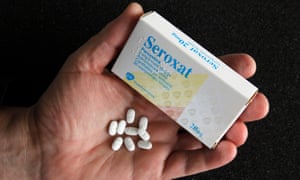


A Seroxat box and pills


By 2003, worldwide sales of Seroxat, manufactured by GlaxoSmithKline, were worth £2.7bn. Photograph: Alamy

SSRIs have beenaround for more than 40 years, but grew in popularity in the late 1980s and 90s after pharmaceutical companyEli Lilly launched fluoxetine, otherwise known as Prozac. Time magazine put the drug on its cover twice, asking, “Is Freud finished?” and describing SSRIs as “mental health’s greatest success story”. In 2001, a landmark report on a clinical trial into paroxetine (sold as Seroxat in North America and Paxil in the UK), called Study 329, concluded that it demonstrated “remarkable efficacy and safety”. Study 329 led directly to a massive increase in prescriptions: by 2003, worldwide sales of Seroxat (manufactured by GlaxoSmithKline) were worth £2.7bn.


But concerns were raised about the study –the US food and drug administration (FDA) officer who reviewed the data disagreed with the findings, calling it a failed trial – and in 2015 the British Medical Journal published a re-evaluation. Seven authors went through as many of the thousands of individual case reports as they could, and found not only that “the efficacy of paroxetine… was not statistically or clinically different from placebo”, but that “there were clinically significant increases in harms, including suicidal ideation and behaviour”. The original study reported 265 adverse reactions; the BMJ found 481. The re-evaluation also found that psychiatric responses were grouped together with “dizziness” and “headaches”, rather than given their own category. In 2003, the UK banned the use of Seroxat by anyone under 18; and in 2004 the FDA required a “black box warning” on all antidepressants, its strictest level of patient warning.


“Patient safety is our number one priority,” a GlaxoSmithKline (GSK) spokesperson tells me. “We believe we acted responsibly in researching paroxetine, monitoring its safety once it was approved and updating its labelling as new information became available.”


It’s more reliably predictable that they’re going to get rid of sexual function than get rid of depression


Many SSRI users report blunted emotions, even long after they have ceased taking pills, and an impact on sexual function. “They should be called anti-sex drugs rather than antidepressant drugs,” says Jon Jureidini, a child psychiatrist of 30 years’ standing, a professor of psychiatry and paediatrics at the University of Adelaide and co-author of the BMJ study, “It’s more reliably predictable that they’re going to get rid of sexual function than it is that they’re going to get rid of depression.” Again, some people find this persists long after they cease taking the drug. One person I spoke to, Kevin, had taken Prozac for six months when he was 18; now 38, he hasn’t had an erection since.


Last September, Healy and colleagues published a further examination of the data gathered for Study 329. This data followed the trial participants for six months after they started taking paroxetine (the “continuation phase”) and while they were tapered off it. GSK, which in 2004 published a clinical study report, had argued that “the long-term safety profile of paroxetine in adolescents appears similar to that reported following short-term dosing”. Healy and co, however, concluded that the “continuation phase did not offer support for longer-term efficacy”. More alarmingly, they found that the taper phase, when patients were being taken off the drugs, was the riskiest of all, showing a “higher proportion of severe adverse events per week of exposure”. This, they said, opens up the risk of a “prescribing cascade”, whereby drug side-effects are thought to be symptoms, so are treated with further drugs, causing further side-effects and further prescriptions – thus increasing the risk of long-term prescription drug-dependency.


In October, the British Medical Association published its response to a two-year fact-finding exercise into long-term use of psychoactive drugs. It noted that while benzodiazepines, z-drugs, opioid and antidepressants are “a key therapeutic tool”, that their use can “often lead to a patient becoming dependent or suffering withdrawal symptoms… the evidence and insight presented to us by many charity and support groups… shows us that the ‘lived experience’ of patients using these medications is too often associated with devastating health and social harms”; it was therefore, the report concluded, a “significant public health issue”.


The BMA made three key recommendations: first, and most urgently, that the UK government establish a 24-hour helpline for prescribed drug dependence; second, that it establish well-resourced specialist support units; and third, that there should be clear guidance on prescription, tapering and withdrawal management (they found the current approach to antidepressants, in particular, to be inconsistent: too many patients were suffering “significant harm”). There are also increasingly urgent calls for studies into long-term effects that are not funded by drug companies, because, Moncrieff says: “We don’t have very much data. This research is really important, but hasn’t been done. It’s a massive blind spot. It’s extraordinary – or maybe, given the pressures and interests at work, not extraordinary at all – that it hasn’t been filled.”


In March this year, members of the BMA, along with MPs and researchers from Roehampton University, went to parliament to lobby Public Health England, armed with research estimating that there are 770,000 long-term users of antidepressants in England alone, at a cost of £44m to the NHS per year (a figure that does not account for the cost of GP appointments, or the impact of side-effects, withdrawal effects and disability payments).


“I think you have to adopt a very conservative approach,” says psychiatrist Jon Jureidini. “These are brain-altering drugs, and our overall experience with brain-altering drugs of all kinds is that they tend to have a detrimental effect on some proportion of people who take them long term. All we know about the benefits is from short-term symptom-reduction studies. The careful prescriber needs to say, ‘Well, in balancing the likely benefits and harms, I need to be very cautious about how much benefit I’m expecting, and I need to be very generous about the possibility that the harms might be more than they appear to be.’”


Quite a few long-term users, such as those I spoke to below (and who wished to be anonymous), would agree.


‘Tapering off is the hardest thing I’ve ever done’: Sarah, 32; has taken Seroxat for 14 years


I was prescribed Seroxat when I was 18, the year I started university. I grew up with a disabled sister, so things at home were very stressful, and I had a history of anxiety and panic attacks. I had counselling, but the problems persisted, so I went back to the GP. I don’t remember everything that was said, but there was no conversation about side-effects.


Within the first two weeks of starting Seroxat, I remember I was sitting in the front room watching TV when out of nowhere I had this intense feeling of heat, like an electric shock. It started in my hands, went all the way up my arms and through to my head.


The GP said it was probably just my body getting used to the drug. And after a few weeks the weird sensations did ease off. I had a fabulous time at university. I still had panic attacks, and there were certain situations I would avoid – as I still do – so it wasn’t a wonder drug, but there were no major problems.


But in 2006 I tried to come off it. There were a couple of Panorama documentaries about the side-effects and I was starting to become concerned. The GP said, “That’s fine, but do it gradually, over three weeks.”


I thought I was losing my mind. I was going to work, but it was difficult to get through the day. My mouth was so dry


I immediately became incredibly unwell. I thought I was losing my mind. I was going to work, but it was difficult to get through the day. My mouth was so dry, I was constantly drinking water. I had bizarre thoughts – not hallucinations – that were frightening or distressing. I had a strong sense of detachment from reality.


Eventually, the doctor said, “Look, you coming off is obviously not working: we need to get you back to 20mg.” Within a week I was much better.


A few years later, when I realised my mental health was getting worse, even though I was on the medication, I started to do some research, reading case studies about withdrawal. I find it so offensive when a GP says, “This is who you are.” I didn’t have these symptoms 10 years ago. I didn’t have this sense of detachment. I saw various psychiatrists. They just kept saying, “The drug is safe, you need to be on it.” A couple of others told me the reason I was having these problems was because I wasn’t taking enough. Another said, “If you were diabetic, you’d take insulin and you wouldn’t have an issue. Why are you so bothered about taking this drug?”


I’ve been on it since I was 18, so I don’t know who I am without it, as an adult. Who knows? I might have all kinds of problems, but I need to know I’ve tried. Tapering off is the hardest thing I’ve ever done. It’s taken me three years just to get from 20mg to 5mg. I’m no longer with my partner – we were together for six years. I believe Seroxat has played a part: it affected my moods, it made my anxiety worse and, by necessity, I’ve had to be selfish, really. I don’t want to say all my problems are to do with Seroxat, because they’re not. But I do believe that it has caused me harm.


‘I don’t have much of an interest in interacting romantically or physically with the opposite sex’: Jake, 24; took SSRIs for eight years


I had been dealing with symptoms of OCD and anxiety for a lot of my childhood. It’s in my family, affecting two siblings and one parent. I was prescribed Zoloft when I was 12; I took a variety of SSRIs, Zoloft to Prozac to Lexapro, and then two others, for eight years.


Did they help? You know, I can’t really tell you, because I got through school. I got high marks, I had a lot of friends. So, in that sense, they must have helped. That’s the thing: for people with major depression, it’s easy to say, this has a measurable effect. But I kept taking them just because that’s what I’ve always done.


I went to university right out of school. I did very poorly. I had a bit of a breakdown, isolating myself, not sleeping. I was still on medication. I came home and enrolled at a community college. That was my worst period – I was very depressed. And I started to think, “I’ve been on these medications a long time. I’m not doing well – why not get off them?” I don’t recommend this at all to anyone, but I stopped going to a psychiatrist and took myself off.



prozac


Prozac. Photograph: Getty Images

For months I had trouble sleeping. I was jittery. I had brain zaps. My anxiety was pretty ramped up. I would feel numbness in my extremities – generally my arms. My psychiatrist told me these were just normal withdrawal symptoms, and they’d be gone in four to six weeks: “Anything you feel beyond that is your anxiety and depression returning.” Basically, if you still feel anything beyond this window that the medical community has established, it’s all in your head.


Eventually I went back to school full-time, and I remember doing OK, feeling somewhat better.


I’ve now been drug-free for four years. What’s lasted are the sexual side-effects. They were definitely worse in withdrawal than they had been on the drug, even though I didn’t really realise or understand it at the time, primarily because I started to take SSRIs at 12. While my brother took the same medicine over the same period and had a normal sexual life, I had a lack of sexual interest. I had erections, and I have regularly masturbated my entire life. But I don’t have much of an interest in interacting romantically or physically with the opposite sex.


I didn’t even start thinking about sex until a couple of years ago. It’s almost like I woke up one day and thought, “OK!” I started getting these windows – days or weeks – when normal sexual feelings would appear. But they’re new to me and I don’t know what to do about them. And because I don’t know what to do, I get anxious, and the anxiety kills any feeling – and then I’m anxious because I’ve lost all my feeling.


Online, I’ve come across a big asexual community. Some also took antidepressants; I think there are a lot of people like me out there. I’d like to think that if I keep going to counselling and sleeping and eating properly, I can rectify these things.


In the end, it’s about pros and cons. If you’re lying in bed and can’t get up, is it better to function? If it was up to me, I’d say that, barring extreme circumstances, nobody under 18 should be prescribed these things. Your brain develops around them. Drug companies should be thinking of the long-term effect on people who can’t even consent.


‘If I missed a dose, I’d get shocks down the side of my body’: Chris, 43; has been taking Seroxat for 26 years


I was originally prescribed Seroxat for mild anxiety about my GCSEs. It was 1991, about the time GlaxoSmithKline released Seroxat. I was one of the first people to be given it.


I was prescribed 20mg, the basic dose, to start with. It helped me: I got through school, I went to uni, I went to work. But I had side-effects from the off: profuse sweating, low libido. I’m quite a placid person, but I became aggressive. I never suffered, in the beginning, with the suicidal thoughts that people talk about now, but what I did notice was that if I missed a dose – especially after eight years of taking it – I’d get shocks down the side of my body. I’d be nauseous, my limbs would become weak. I’d be in a constant state of confusion and was very impatient. I couldn’t communicate well with people. I said this to the doctor, and he said, “We’ll up the dose to 40mg.” That was 1998.


I tried to go back to 20mg, but my words became slurry, so the doctor put me back up to 60mg


The 10 years after that weren’t too bad. I managed to work, as a sales rep, for 18-20 years. But by 2012, by which time I was up to 60mg, I had tried on numerous occasions to withdraw. I tried to go back to 20mg, but my words became slurry, so the doctor put me back up to 60mg.


By the time I was 38, even that wasn’t enough. I tried to take my life. The doctor wouldn’t prescribe a higher dose. I couldn’t do my job, I couldn’t concentrate, I couldn’t drive. A psychiatrist once said to me that coming off Seroxat is harder than quitting heroin. That really hit home.


I have now been unable to work for four years. I’m still seeing a psychiatrist. I’ve also been diagnosed with fibromyalgia: constant tiredness, aches in the neck, and in the lower back and lower limbs. I’m 43 and still live with my mum and dad.


I also have no libido. Since the age of 30, I have had no feelings in that regard whatsoever. I have had relationships, but they’ve all failed. I haven’t been in a relationship for 10 years, which is a long time to go without sex, but I just don’t get the urge.


I don’t really have emotions, to tell you the truth. The drug takes your emotions away. I’m sort of existing, not living.


And when the drugs do work…


‘I wanted to be able to feel good when good things were happening, bad when bad things were happening’


BySimon Hattenstone


I suppose I was a depression snob. A purist. Why should I take antidepressants? Yes, there was something rubbish about crying all the time, not functioning, being unable to answer simple questions because of the fug in my head. But, hey, at least I was true to myself.


My depression went back to my late teens. I didn’t like to think of myself as depressive, because depressives were losers. And I didn’t think I fitted the bill: I was pretty funny and able, and I could get girlfriends. I guess most depressives don’t think they fit the bill.


It might have been genetic. My dad had paralysing depression, and so did his father. As a young boy, I’d spent three years off school with encephalitis – an inflammation of the brain that is often fatal. Survivors are often left with depression.


I remember as a teenager being on holiday in Greece with friends. The weather was gorgeous, and I thought, “Why can’t it piss down, because then at least I’d have a reason to feel this way?”


That is what I always craved – objectivity. To be able to feel good when good things were happening, to feel bad when bad things were happening. I hated the fact that my feelings rarely correlated to what was going on in my outer world.


In my 20s, I got by. I held down a good job, fell in love, had kids, made friends, had a pretty good life. But things came to a head when my best friend killed herself. I’d find myself weaving in between traffic wondering what the impact would be like. I took a period off work and gratefully accepted my Prozac prescription.


Things had changed since I first rejected them. Prozac looked cool (lovely green-and-white pills) and rock bands wrote great songs about it (even if REM’s Shiny Happy People was supposed to be dystopic). After telling people I was off work with depression, I ended up feeling like a priest at confessional. It turned out that virtually everybody I knew was a depressive and pilling their way out of it; now it was “our secret”.


I would try to come off the pills and felt rubbish again – not more rubbish than before, but the same. So I returned


Initially, Prozac made me feel sick. And then magically, after a couple of weeks, I felt lighter, as if something had been lifted. I could hear questions properly, answer logically, enjoy a sunny day.


My partner said I was transformed. Occasionally, I would try to come off the pills and felt rubbish again – not more rubbish than I had before, but the same. So I returned, and after a while, I thought, “What’s the point of even thinking about coming off the pills if they make life work for me?”


There are times now when I wonder if I weep and fret and withdraw too much, and whether I’m becoming immune to the Prozac. But on balance I think not, because life is still so much better than it was.


If Prozac was no longer working for me, would I stop taking it? Probably. Would I stop taking antidepressants full stop? I doubt it. I’d simply look for another super pill.


Are you a long-term user of antidepressants? Tell us about your experiences


  • If you are affected by the issues raised in this piece, contact the Samaritans here.


‘I don’t know who I am without it’: the truth about long-term antidepressant use

20 Mart 2017 Pazartesi

Pregnant women without legal status "too afraid to seek NHS care"

Hundreds of pregnant women without legal status are avoiding seeking NHS antenatal care because of growing fears that they will be reported to the Home Office or face high medical bills, according to charities that work with vulnerable migrant women.


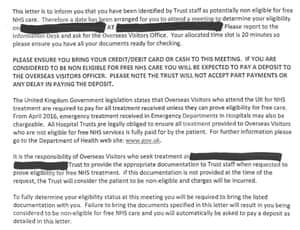
The Guardian has seen letters from one NHS trust sent to women with complex asylum claims warning they will have their antenatal care cancelled if they fail to bring credit cards to pay fees of more than £5,000 for maternity care. These letters contravene NHS guidelines, which state that maternity care should never be denied.


Doctors of the World, which runs clinics for trafficked women, undocumented migrants and asylum seekers whose claims have been rejected, is seeing increasing numbers of women seeking medical help at its clinic in east London in the late stages of pregnancy, who say they are too scared to go to the NHS for fear of high bills or of being reported to the Home Office.


In January, a woman came to the charity’s east London clinic already in labour, having received no antenatal care. “She was very fatigued, she was pale. She had been too frightened to go to hospital because of her immigration status,” said Deman Le Déaut, who runs the women’s and children’s clinic in Bethnal Green.


She was the second woman in four months who had come to the clinic for the first time, at the end of the pregnancy, who had not sought mainstream healthcare. “We are seeing a lot of women six months’ pregnant onwards not accessing medical care. That is incredibly dangerous,” Le Déaut said.


One patient, an asylum seeker from Eritrea, was homeless and living in a bus shelter when she visited the clinic in early pregnancy, having been wrongly turned away from a GP because she had no proof of address.


A number of women have visited the clinic, alarmed by debt-collection letters they have been sent by NHS trusts that instruct them to come to their antenatal appointments with money to make deposit payments of several thousand pounds for maternity care.


An extract from a letter sent out by the NHS.


An extract from a letter sent out by the NHS.

“Please ensure you bring your credit/debit card or cash to this meeting. Please note the trust will not accept part payments or any delay in paying the deposit,” one letter sent by Barking, Havering and Redbridge University Hospitals NHS trust states. “Failure to pay a deposit for treatment may result in your future appointments being cancelled. In addition, overseas visitors who incur costs for treatment and do not pay will be reported by the trust to the Home Office and debt collecting agencies. The Home Office will review all records of bad debt and this could be detrimental to any future applications to visit the UK.”


NHS rules stipulate that it is legitimate to ask for payment from those who are not eligible for free care (because they are not ordinarily resident in the UK or because they are living here illegally), but emergency treatment cannot be withheld if a patient cannot pay.


A Department of Health spokesperson said staff should be “especially careful to inform pregnant patients that further maternity healthcare will not be withheld, regardless of their ability to pay … our guidance specifically says that maternity care should never be denied or delayed while a patient’s eligibility is established”.


The Barking, Havering and Redbridge University Hospitals NHS trust said that it had recently “updated” the standard letter to make “it clearer that maternity care would never be withdrawn or appointments cancelled”.


Le Déaut said: “It is bad practice to send these letters demanding credit cards. You are not supposed to threaten pregnant women – documented or undocumented – that you are going to withhold services. We are seeing this kind of letter quite often now. These people have no means whatsoever to pay this debt.”


One patient was telephoned weekly by a debt collection agency, which had a negative effect on her mental health, according to staff at the charity.


The pregnancy discrimination charity Maternity Action runs a helpline for women in this situation and has also noted a rise in demand for its services. “We regularly hear from women who are very distressed about receiving large bills from the NHS for their maternity care. It is pointless sending letters of demand to women who can’t afford to pay for their food and housing,” said its director, Ros Bragg.


The Department of Health spokesperson said no one should be denied urgent treatment and “vulnerable people, including those seeking asylum and refugees, are not charged for NHS care they receive”.


The case of a Nigerian woman who gave birth to quadruplets at London’s Queen Charlotte’s and Chelsea Hospital and incurred a bill of several hundred thousand pounds triggered popular hostility earlier this year, but the charity stressed that its patients had not travelled to the UK in search of free medical treatment.


Sarah Pillai, a volunteer GP who works at the east London clinic, said: “This is not health tourism by any stretch of the imagination. These are people at the outer reaches of society, cleaning, cash in hand jobs, providing the infrastructure for society, but unable to access healthcare.


“The women I’ve seen tend to be very anxious and nervous. A lot of these have been women in hiding until now. Lots of these women present late in pregnancy, which has an adverse effect on their pregnancy because delayed antenatal care can create problems for the mother and baby.”


Staff said there was growing awareness among patients of a controversial memorandum of understanding jointly published by the Home Office and NHS Digital that came into effect on 1 January and set out how the Home Office could request information on immigration offenders from the NHS.


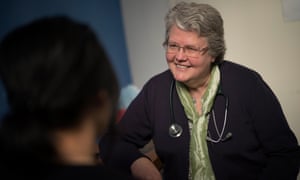
Dr Sarah Pillai


Dr Sarah Pillai, a volunteer at the east London clinic: ‘A lot of these have been women in hiding until now.’ Photograph: Sarah Lee for the Guardian

“When they hear if you go to the doctors, the Home Office might be knocking on your door, they choose to stay away,” Le Déaut said. “The results have serious implications; we see women who are nine months’ pregnant coming to our clinic. We assume that some people are giving birth at home”


She said she understood the need to ensure health tourists paid “but a trafficked woman or an undocumented migrant, who has no way of paying bills should be refused care when she is at her most vulnerable?”


Binta, a pharmacist from Sudan, arrived in 2010 to visit her husband, a doctor from Sudan who had a British passport and who had fled Sudan for political reasons. While she was trying to organise permanent residencyshe became pregnant. She was told by the Home Office that she needed to return home to apply for a new visa but did not feel able to travel because she was in the late stages of pregnancy. She was given leave to remain on appeal, but the papers did not come through immediately so she found herself ineligible for NHS treatment.


When the GP referred her for a scan, she was sent a bill for £2,669. “I was very frightened. I thought that they would deport us or that I would be sent to jail,” she said.


Her husband, who has now requalified and is working as an NHS doctor, was unemployed while he studied for UK medical exams and was receiving only £65 a week. “They kept resending the invoice; we received many letters. We couldn’t afford to pay. It distracted me from that beautiful moment of giving birth – all the time I was thinking about the money, are they going to take me to court? It is a part of my life I don’t want to remember again.”


Li arrived in the UK in 2012 after fleeing China because she was being targeted for promoting Christianity. She paid traffickers to get her out of China and arrived in the UK on a false passport. She spent more than a year locked in a house, forced to work for her traffickers, who produced illegal DVDs, to pay back some of her debts. Later she was freed and moved to live with a boyfriend. During her pregnancy, she was wrongly turned away by a GP when she tried to register because she had no papers.


“They asked me to pay £5,000 before I delivered the child. At one of my antenatal appointments, they brought me to a small room and explained I would have to pay more if I needed a caesarean. I felt very scared. There’s no way I can pay that much. I thought about not going to hospital, but I knew I couldn’t deliver a child by myself. I couldn’t cut the umbilical cord.


“When I was in the little room, explaining about the payment plan, I had to fill in a form with my immigration status, my names and address. They said they would hand that to the Home Office. I didn’t know what the Home Office would do – if they could deport me back to China. When I was in labour I was thinking about money all the time.”


She has subsequently begun the process of applying for asylum. She is not working because she is looking after a baby, so is not yet able to begin paying back her debts to the NHS.


Pregnant women without legal status "too afraid to seek NHS care"

7 Mart 2017 Salı

Funding to two Indigenous sexual health programs cut without consultation

The federal government decided to stop funding two long-running Indigenous sexual health programs without consultation or analysis, and despite a growing sexual health crisis in the Top End, Senate estimates has heard.


Both organisations have accused the government of shortsightedness, and said without their services or any feasible replacement Indigenous LGBTQI people will be less likely to seek medical care.


The Northern Territory Aids and Hepatitis Council’s Aboriginal Sexual Health program, and the Queensland Aids Council’s 2 Spirits program have run for more than 20 years addressing the disproportionately high rate of sexually transmitted infections among Aboriginal and Torres Strait Islander populations.


Both organisations were told last year they should seek alternative funding to continue operating beyond June 2017.


In Senate estimates last week, Department of Health officials said they had done a “desktop review” of programs, which found “really limited evidence that these programs, which we’ve been funding for decades now, have really had any impact”, according to Bobbi Campbell, the first assistant secretary at the department.


Asked if the department had asked the NT and Queensland programs to partner with the department for an evaluation, Campbell said no. “We need to look at this from national perspective.”


The Queensland Aids Council’s executive director, Michael Scott, said his organisation had more than two decades of experience and community rapport, and their annual funding of $ 451,000 was a “drop in the ocean” for the work they did.


“We employ four Indigenous staff and they work from a whole-of-community approach, which means even though we’re funded to work with Indigenous gay men and sistagirls, we do remote outreach to Indigenous remote populations, to the entire community,” he said.


“It is a really important service because we also do training for other organisations, such as Aboriginal medical services, on how to appropriately work with Indigenous gay men and sistagirls.”


During the estimates hearing department officials also pointed to the rising rates of STIs and HIV in Indigenous populations, particularly the remote communities where the two organisations work. While the rate of new cases of HIV among non-Indigenous men and women stabilised in the four years to 2015, the rate among Indigenous men doubled.


Aboriginal and Torres Strait Islander men were twice as likely to have HIV than non-Indigenous men, according to the University of New South Wales Kirby institute for infection and immunity in society, which also reported rates of chlamydia, gonorrhoea and syphilis were, respectively, three, 10, and six times greater than among the non-Indigenous population in 2015. Remote and very remote areas saw even more substantial differences.


Last year the number of syphilis cases in the NT increased to 229 from just 14 in 2012. The high rate is set to continue in 2017, with more cases reported in January than for the whole of 2012.


Scott said his employees had been told people in the community would probably not seek care elsewhere once 2 Spirits closed.


“They forgo health care because they’re not comfortable walking through the door,” he said. “They’ll be living with STIs because they aren’t getting tested. That’s not just a health issue for them but for their communities as well.”


Daniel Alderman, a care and support coordinator for the Northern Territory Aids and Hepatitis Council, said his organisation had heard similar reports.


“This directly affects the most marginalised population we work with, Indigenous clients, [who] as you know suffer significant trauma,” he told Guardian Australia.


“Then we have seen more marginalised communities – sistagirls, brotherboys … they’re shunned from their communities that they live in and suffer significant stigma and discrimination.


“It’s cutting funding to Indigenous employment and one of the common things we hear from our Indigenous clients is they don’t want to access general or Aboriginal medical services because they fear they’ll be discriminated against.”


The Labor MP Warren Snowdon said the government didn’t just fail to perform an evaluation but “ignored the fact that these organisations had been operating for 21 years and providing an important service”.


“It beggars belief they can be canning these programs without any transition to other programs and leaving exposed these people who are involved [to] sexually transmitted infections and Aids,” he told Guardian Australia.


He said the cost of prevention far outweighed the cost of treating someone with HIV, and accused the government of “wiping its hands” of the responsibility.


“You’re prepared to pay for the treatment of HIV … but you’re not prepared to pay upfront for the prevention programs,” he said. “It doesn’t make sense.”


The office of Indigenous health minister, Ken Wyatt, was contacted for comment.


Funding to two Indigenous sexual health programs cut without consultation

14 Şubat 2017 Salı

‘I love the NHS. Without it, I wouldn’t be here’

I attempted suicide. Without the NHS, I wouldn’t be here


When I was 20 I attempted suicide. I ended up in A&E where every staff member I came into contact with was patient, kind, and calm, even though the department seemed busier than usual. I was treated with compassion and respect, and one nurse even succeeded in making me laugh on what was the worst day of my life. I could feel the support all around me. They made me feel less alone and I can’t thank them enough.Even though a couple of years have passed, I still think about how fantastically I was treated in my vulnerable state, and how different my life could have turned out if it hadn’t been for their kindness and understanding. Without them, I don’t think I’d be here.
Student, Gloucestershire


I’ve lived in the US. I’ve seen what worse care for more money looks like


The first time the NHS saved my life I was trapped under a car after an accident with a fractured pelvis, skull and three crushed vertebrae as well as a haemorrhaging liver. The eight days I spent in hospital would have bankrupted my family if I had been living in the US. I was 13 and by the time I was discharged I didn’t even want to leave. The care was so good they even brought in school work so I didn’t fall behind in class.


The second time my appendix burst and I underwent an operation. I missed the first day of my finals but the surgeon gave me the smallest appendectomy scar of anyone I’ve ever seen. They obviously took immense pride in it and I thought that was very cool.


I’ve lived in the US. I’ve seen what worse care for more money looks like. I’ve seen people die of preventable cancers because they were too poor to go to a doctor.
Huw Gildon, 40, marketing professional


It’s amazing when patients that have nearly died several times walk out of hospital


I love the NHS because every day I see people who are at their most vulnerable and the sickest they will ever be. The standout stories for me are when patients have been through the biggest fight of their lives, have nearly died several times, have been hooked up to a ventilator for months on end and they then walk out of our unit and hospital.
Jenny, ITU nurse, 32, Liverpool


My consultant came in to operate on me on his day off


I had a radioactive plaque fitted into my eye five days after a diagnosis of eye cancer. A while later, I was lying on a theatre trolley waiting for surgery to remove it. The consultant who had fitted the plaque previously warned me that he had a day off and so would not be doing the removal. Obviously all surgeons are perfectly qualified; I had no need to be fearful. But, it had been a stressful week so I lay having a silent sob about how I was about to die and only one person could save me but they weren’t here. Just as I was being pushed into theatre, someone touched my arm; it was my original consultant. “I’ll be doing your operation today Mrs Dimmock,” he said. Those words are now up there with my husband saying “I do” and my kids first saying “mumumum”.
Victoria Dimmock, 41, Brighton


As a doctor it is marvellous to be able to treat everyone without worrying about them having to pay


I remember about 30 years ago a baby was born in severe heart failure. She was transferred to a specialist heart hospital and then had to be transferred to another hospital in Scotland. Sadly the treatment failed and the doctors explained that the baby was going to die. The parents asked if they could be transferred back to their hometown so the grandparents could see the baby before she died. She was accordingly helicoptered back to where her family was and she died surrounded by them.


The marvellous thing was no one argued about financial matters – it just happened. As a doctor, it is marvellous to be able to treat everyone without worrying about them having to pay.
Anonymous


Woe to the British citizen who doesn’t vigorously defend the NHS


My favourite story is the birth of our third child which was our first to happen through the NHS. Our eldest were born in the US and even though we had “good” health insurance we still received bills for about $ 1,300 after each child was born.


And the NHS has midwives who have the goal of making birth as easy and humane as possible for mum and baby. In the US, birth is much more an assembly line situation that feels like some sort of costly corporate emergency. In the UK, our son swam out into a big birth tub while my wife sucked on some gas and air (which they don’t have in the US). It was just a kinder, gentler experience and while there were doctors nearby if we needed one, we never even had to see one. My wife was coached through labour by a lovely young woman while I tried to stay out of the way and shout nice things or grab a flannel when asked, that type of thing.


Woe to the British citizen who doesn’t vigorously defend the NHS. You do not know how lucky you are. Do NOT take it for granted and fire politicians who you think don’t take care of your nation’s most precious achievement, the NHS.
Rob Delaney, 40, comedian, from the US but lives in London


Sometimes there are wonderful stories of survival


When I was an intensive care nurse, I looked after a patient for several weeks who had a number of setbacks along the way to recovery. One day, it was decided by the doctors that he had reached a stage where survival was unlikely and that, should the time come, he should be allowed to die with dignity. It was agreed to transfer him to a hospice.


I ensured that I was his nurse on each day. He started in a catatonic state. I made enquiries about transferring to a hospice nearer his home, but none of them had any beds. We were told to try again in a few days. Three days later, he had made a strong recovery and was sat out in a chair eating breakfast when his family came to visit.
Nurse practitioner, 40, Cheshire


I have seen HIV go from a death penalty to chronic manageable illness in my time working in the NHS


I worked on a HIV ward in London in the early 90s. We cared for patients who were slowly dying as their immune systems were attacked by the virus and they succumbed to various infections. It was a heartbreaking time with so many people affected and no hope in sight.


There were various drugs being trialled, and the patients were happy to be guinea pigs – they had nothing to lose. There was a breakthrough in the late 90s and I witnessed the introduction of triple therapy. I saw the illness go from a death penalty to chronic manageable illness.
Anonymous


  • In the UK, the Samaritans can be contacted on 116 123. In the US, the National Suicide Prevention Hotline is 1-800-273-8255. In Australia, the crisis support service Lifeline is on 13 11 14. Hotlines in other countries can be found here.

Join the Healthcare Professionals Network to read more pieces like this. And follow us on Twitter (@GdnHealthcare) to keep up with the latest healthcare news and views.


‘I love the NHS. Without it, I wouldn’t be here’

3 Şubat 2017 Cuma

Doctors shortage left 4 million patients without cover last year

At least 4 million people were left without access to an out-of-hours doctor at some point last year because of inadequate staff cover and pressure on resources, it has been revealed.


The figures, which have raised alarm about patient safety in the NHS, were obtained by the GP’s magazine Pulse in a freedom of information request to 104 out-of-hours commissioners of care.


Ten of the providers, covering about 4 million people, admitted that on some occasions last year shifts had been left unfilled, leaving patients with no out-of-hours cover.


In the areas hit, patients were told to go to A&E, while services had to rely on non-medically qualified urgent health practitioners, or nurses and paramedics.


Pulse identified five of the areas worst hit in 2016 as:


  • Peterborough, where there were nine shifts and 230,000 patients were left without access to an out-of-hours GP. All children under the age of four were “defaulted” to A&E, the magazine said.

  • Tower Hamlets, east London, where no GP was available on 12 occasions. This meant a population of more than 250,000 was told to contact A&E or the “community night team”.

  • Doncaster, where nurses and paramedics had to cover a population of 300,000 patients on three occasions, with no GP available by phone on one occasion.

  • The Highlands, which has a population of 340,000, where there were 31 times when out-of-hours centres were closed due to lack of staff. Shifts there had to be covered by centres up to a 30-minute drive away.

  • In southern and western Northern Ireland, the survey found that one GP regularly had to cover 370,000 patients overnight.

Many of the doctors in those areas spoke of their concern for the safety of patients.


Dr Frances O’Hagan, who works for the out-of-hours service in southern and western Northern Ireland told Pulse the system was “broken”. She added: “Having only one doctor on call used to be rare but is becoming the norm.”


Dr Dean Eggitt, medical secretary for Doncaste’sr local medical committee, said “the system is not safe”. He added: “I think 24-hours-a-day patients should be able to contact a senior clinician, a GP. If that is not available that is a very serious situation that must be remedied asap.”


Dr Alan Woodall, an out-of-hours GP in England and a GP partner in Wales, told Pulse: “The pressures on the out-of-hours service are approaching critical.


“I cover an area that stretches 800 sq miles on the evening shift because there is nobody else. It only takes two sick people at either end of the patch to result in doctors having to be pulled in from other patches, leaving their area uncovered. We are constantly trying to firefight demand.


“Because of the rota gaps and pressure on resources, we will have to employ a lot of urgent care practitioners and paramedics to help us cope.”
Other GPs told Pulse high insurance costs were a factor in why doctors turned down shifts.


Dr Emma Rowley-Conwy, who works in south-east London, said: “Indemnity is a deterrent as it costs about 10 an hour to get insurance from a defence organisation.”


The Royal College of GPs urged the government to do more to make out-of-hours working more attractive to family doctors.


Prof Helen Stokes-Lampard, chair of the organisation, said more GPs were needed to tackle a national shortage, but the high cost of insurance was also to blame.


She said patients should be able to access GPs when they need it, and that it “very concerning” that this was not always the case.


Stokes-Lampard said the Pulse report “hammers home how important it is for the government to make good on its promise to deliver 5,000 more extra GPs by 2020”.


Ruth Rankine, deputy chief inspector of general practice at the Care Quality Commission, said


“If we find on our inspections that staffing levels are leading to patients receiving unsafe care and treatment, including delays in response times, then we have a range of enforcement powers we can use to ensure that appropriate action is taken.”


Doctors shortage left 4 million patients without cover last year

26 Ocak 2017 Perşembe

Meet the woman who lived for six days without lungs – video

Doctors saved a Canadian woman’s life by removing her lungs for six days while she waited for a double lung transplant. In what is believed to be the first procedure of its kind in the world, Melissa Benoit arrived at Toronto hospital with just hours to live when staff and her family decided to take the unprecedented procedure


Meet the woman who lived for six days without lungs – video

25 Ocak 2017 Çarşamba

9 Unique Ways to Clean Your Teeth and Gums without Using Toothpaste

Taking care of our bodies is an important daily routine. From washing our hair to eating properly, it’s necessary to take care of ourselves. Dental hygiene is also a vital step. However, sometimes the tools we use can be harmful. The chemicals in toothpaste, like fluoride and titanium, can have damaging effects like causing acne or even cancer. There are a host of healthier, natural options for cleaning your teeth. Here are nine unique ways to clean your teeth and gums without toothpaste.


1. Coconut Oil


Coconut oil is a great addition to any beauty or health regimen. It’s an excellent hair and skin moisturizer, and can be used as a natural cleaner for your teeth. Coconut oil has antibacterial and antifungal properties which makes it great for preventing oral conditions like gingivitis or cavities. It can also be combined with baking soda or used for oil pulling.


2. Dry Brushing


This will definitely feel a little strange at first. But dry brushing is a great option if you can’t be bothered to search through all the natural options. Be mindful of using a toothbrush with soft bristles in order to avoid any scratches or damage to your teeth and gums.


3. Baking Soda


This is easily one of the most popular alternatives to traditional toothpaste. You can either use it without adding anything; just coat your brush in it, then brush as normal. Another option is to dissolve the baking soda and then brush with the solution. This is also a great method for cleaning your Invisalign aligners or dentures. Just let them soak in the solution. If the idea of brushing with baking soda is too far-fetched for your taste, you can use it instead to make your own mouthwash.


4. Oil Pulling


This is a fairly recent trend that is a great way to maintain your oral health without any expensive additions. You can use a variety of oils but coconut oil is the most popular. Swish the oil around your mouth for about a minute and a half before brushing with plain water or another healthy alternative like baking soda.


5. Strawberries and Tomatoes


Using fruit as a natural substitute is an effective solution in various aspects of life, generally for diets. But they can also be beneficial for your oral health, as well. Both strawberries and tomatoes have high levels of Vitamin C. The Vitamin C will stimulate your body’s natural healing. Apply the fruit pulp directly to your teeth and let it sit for roughly 5 minutes to soften the plaque that’s built up from daily eating. Afterwards, rinse with a mix of warm water and baking soda.


6. Aloe Vera


Aloe Vera is a great natural ingredient that is used for a variety of ailments. People generally think of hydrogen peroxide as a cleaner for wounds or cuts. That’s why it’s great for dental maintenance. While also helping to maintain your oral health, it will help keep your teeth white, as well. Dip your toothbrush in the hydrogen peroxide before brushing. You can combine this with other natural remedies, too.


7. Green Tea


This one works as both an external and internal remedy. You’ll want to drink one or two glasses of green tea extract per day. Studies have shown that doing so will help reduce the rate of periodontal disease and protect your oral health in the long-term.


8. Clove Oil  


This is a great option if you have problems with bleeding gums or any other form of periodontal disease. You’ll find clove oil in many of the treatments for gum so using it alone makes for an even stronger solution. The best and easiest way to use this is to gently rub it into your gums. While initially, there is a slight burning situation it will disappear with continued use.


9. Sea Salt


Sea salt is not just a benefit to your diet. It’s also a great addition to your oral routine. Because the granules are large, they do a great job of rubbing away debris. If you’re worried that the grains might do damage, you can dissolve the salt into warm water before brushing.


Sources:


9 Unique Ways to Clean Your Teeth and Gums without Using Toothpaste

17 Ocak 2017 Salı

Healthcare without Planned Parenthood: Wisconsin and Texas point to dark future

In the remote western plains of Texas, the Midland-Odessa region is separated from the nearest major city by hours of open road. So when the Planned Parenthood clinic in Midland closed down in late 2013 – a casualty of legislative cuts that targeted Planned Parenthood directly – it served as an isolated experiment in what happens when the government defunds the largest women’s healthcare provider around.


“I hate to say it, but I think an awful lot of women just opted to go without care,” said Mike Austin.


Austin is chief executive of Midland Community Healthcare Services (MCHS), a federally-funded network of providers that has emerged as the only major alternative to Planned Parenthood in the area. His clinic offers all of the same services the Midland Planned Parenthood once did, including contraception, cancer screenings and STI tests, to the same kind of patients, low-income women who rely on the public safety net for their healthcare.


In fact, just before the Planned Parenthood clinic shut down, the two providers made a plan to minimize the fallout. Planned Parenthood sent nearly 5,000 patient medical records – up to 1,000 belonging to active patients – directly to MCHS.


But to Austin’s dismay, only about 100 former Planned Parenthood patients ever showed up at his door.


“We are seeing a subsequent rise in STDs and a subsequent rise in unplanned pregnancies,” Austin said. He believes they could be linked. “And I’m sitting here going, ‘See? I told you so. This is what happens.’”


In the weeks ahead, members of Congress will replicate Midland’s experiment on a grand scale by defunding Planned Parenthood across the country. They will do so in the form of a budget that blocks Planned Parenthood from accepting Medicaid, the government-funded insurance for low-income individuals.


It’s a move Republicans have long framed as a rebuke of Planned Parenthood’s role in providing abortions – even though Medicaid is prohibited from covering abortions by law, and only half of Planned Parenthood clinics even offer the procedure.


What Medicaid does do is allow Planned Parenthood to provide contraception, cancer screenings and STI tests to 1.5 million patients in the public safety net at some 650 health centers for no cost. About two-fifths of the organization’s $ 1.3 billion annual budget derives from public funding. Without the reimbursements Medicaid provides, a spokeswoman for the Planned Parenthood said, an unknown number of those centers will have to close.


House Speaker Paul Ryan of Wisconsin recently predicted that federally funded health centers – like the one in Midland – could pick up where Planned Parenthood left off. “They’re in virtually every community,” he said at a recent town hall, “providing the same kinds of services.”


But public health officials such as Austin, who work in states where Planned Parenthood’s presence is already in decline, are sounding the alarm. They say the loss of Planned Parenthood would imperil the health of thousands of women who already face high barriers for care.


And some of the strongest voices in opposition come from Ryan’s own backyard.


“They’ve never replaced the services of Planned Parenthood,” said Gail Scott, director of health in Jefferson County, Wisconsin. Her county, which lost the Johnson Creek Planned Parenthood in 2013, bumps up against Ryan’s congressional district. “I’m not pro-abortion or anything,” she said. “But I can tell you nothing ever replaced those services for uninsured people.”


The clinics in Johnson Creek closed because lawmakers in Wisconsin, as in Texas, approved a series of family planning cuts targeted directly at Planned Parenthood. Today, Scott said, when the Jefferson County health department gets calls from low-income women looking for a place to obtain contraception, staff recommend they travel to another county – where there’s still a Planned Parenthood.


Chippewa County, Wisconsin, also lost its Planned Parenthood clinic. Jean Durch, the county health director at the time who is now retired, recalled that after the closure, there was no place in Chippewa for women to receive STI tests, even though her department sought the funding to make it happen.


“We never were able, before I retired, to pick up the full complement of services” of Planned Parenthood, she said.


And Shawano County, Wisconsin, which is experiencing a flare-up in gonorrhea and which the state government recently designated a hot-spot for new chlamydia infections, is still feeling the pressure. After the Planned Parenthood there closed, former patients faced significant waiting lists to see a doctor at local community health clinics. The health department didn’t know where to send women for certain services.


“The clinic that closed in Shawano served the whole county,” said Jaime Bodden, the Shawano County health director. Not just women on Medicaid, she said, but women with stingy insurance and women with no insurance at all. Now, the county health department is virtually on its own as it combats the region’s rising STI rates.


“It’s something that we still often talk about,” she said. “We say, ‘Wouldn’t it be nice to have Planned Parenthood in town?’”


‘A national healthcare disaster’


Planned Parenthood officials say Wisconsin would continue to be hard-hit if Congress went through with its plans for defunding. A disproportionate number of its patients there are Medicaid beneficiaries and women of color – groups of people who already face barriers to accessing care.


Already, some of their patients are worried about gaps in their health care if Planned Parenthood were to disappear.


“I have to get that care,” said Courtney Kessler, 22, of Madison, Wisconsin, who has a family history of ovarian cancer and has gone to Planned Parenthood for cancer screenings and contraception for seven years. She is on a public safety net program that covers the costs. “I don’t know where else I would go. I would have to spend time finding somewhere else to go, and worry about, can I afford it? And worry about, am I getting the same quality of care I get with Planned Parenthood? It’s only making it more difficult for people already having struggles.”


Planned Parenthood operates 22 locations in 15 Wisconsin counties, with just two providing abortion services. A new survey conducted by Health Management Associates, a healthcare consulting firm, and paid for by Planned Parenthood, concluded that in seven of those counties there are no viable alternatives to Planned Parenthood for family planning services. In four other counties, there is only one viable alternative. Two counties that would have no alternative if Planned Parenthood were to close – Racine and Walworth – comprise part of speaker Ryan’s district.


The notion that overnight they can serve two million more people who need reproductive health services is absurd


Sara Rosenbaum, professor of health policy


The survey also concluded that many alternatives offer limited hours and do not stock all the most effective contraceptives – making it questionable that they are truly alternatives to Planned Parenthood.


Raegan McDonald-Mosley, Planned Parenthood’s chief medical officer, said this pattern holds across the country. In 332 of the 491 counties where it had locations in 2010, the latest year numbers were available, Planned Parenthood served at least half of the women obtaining contraception through the public safety net. In 103 of those counties, Planned Parenthood was the only safety net provider for family planning.


“We play a hugely important role in family planning safety net around the country,” said McDonald-Mosley. If those clinics were no longer options for many women, “It would truly be a national healthcare disaster.”


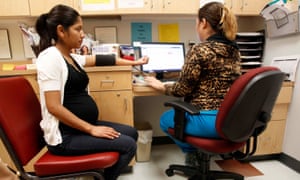
A woman has her blood pressure checked at a women’s clinic in San Juan, Texas.


A woman has her blood pressure checked at a women’s clinic in San Juan, Texas. Photograph: Delcia Lopez/Reuters

Proponents of defunding Planned Parenthood have circulated their own surveys. In 2015, lawmakers and anti-abortion activists distributed maps and lists claiming there were thousands of government-funded health clinics able to take on Planned Parenthood patients. Several news outlets revealed that these lists included dentists, jails and food banks.


Still, many of the dots on such maps represent clinics that really do offer the same services as Planned Parenthood. The question is, can they take on potentially millions of new patients?


Many public health advocates are skeptical.


“Planned Parenthood treats about 2 million women on Medicaid and community health clinics in total serve about 25 million – everybody from infants to 90-year-olds,” said Sara Rosenbaum, a professor of health policy at George Washington University who has worked in the field of community health for several decades.


“They have wait lists for the people they’re serving today, much less having to absorb all of Planned Parenthood’s patients as well,” she continued. “The notion they can suddenly ramp up their capacity to absorb all of the services Planned Parenthood can offer, the notion that overnight they can serve two million more people who need reproductive health services is absurd. It displays, to my mind, an astounding ignorance of how the health system works.”


‘Texas illuminates what may happen’


Planned Parenthood hasn’t produced an estimate of how many of its clinics might close, and where if the group were defunded.


In Texas, though, a nascent body of research suggests that excluding Planned Parenthood from the safety net has negative consequences even when the cuts don’t force clinics to shut their doors.


These studies have measured what happens not when Planned Parenthood clinics closed, but when women enrolled in Texas’ Medicaid-like program can no longer use their insurance at Planned Parenthood. One study, from the Texas Policy Evaluation Project of the University of Texas-Austin, followed women in Midland (before the clinic shut down) and Houston who relied on Planned Parenthood for Depo Provera, an injectable contraceptive. They found that 20% of women who wanted to stay on Depo-Provera missed their next dose.


These women faced a small but real increase in their odds of getting pregnant. About 25% became pregnant – versus just 8% of the women who didn’t miss their next dose.


The other four out of five women in the survey who wanted another dose, got one. But it wasn’t always free, and it wasn’t always straightforward. Forty-three percent of these women reported that it cost them time or money to find a new provider. In Midland, because other providers were scarce, 65% of the women surveyed kept going to Planned Parenthood, even though it now meant paying out of pocket.


Republicans trade blows with Planned Parenthood president Cecile Richards, in a congressional hearing in September 2015.

Defunding Planned Parenthood, in other words, didn’t necessarily stop women from relying on Planned Parenthood for health care – it just forced them to replace the state’s money with their own.


“These results should be cautionary to states considering similar measures,” the study warned. “They contradict the claim that Planned Parenthood could be removed from a statewide program with little or no consequence.”


Another study found that after Texas kicked Planned Parenthood out of the Women’s Health Program, there were drops of more than 30% in reimbursement claims for some of the most effective methods of contraceptives (although not birth control pills). The drops were only observed in counties where women had previously used local Planned Parenthood affiliates. That study also measured a small but real uptick in births by women on Medicaid, although there are other explanations besides the loss of Planned Parenthood.


“Texas’s experience illuminates what may happen on a larger scale,” said Joe Potter, a UT Austin researcher. “Each person involved in the program had to go find a new provider. And whether or not the new providers have the training, experience, and bureaucratic set up so women can get care promptly is a big question mark.”


Austin, who runs the clinic in Midland, says the problem isn’t just that local health clinics might not have the capacity. In fact, he was one of few public health officials interviewed who felt that federally funded healthcare clinics really could provide for Planned Parenthood’s patients – eventually.


“Logistically, yes, it can happen,” he said. “But it can’t happen for free or overnight. In Dallas or Austin, you could be talking about 10,000 people being displaced into the community health system. I’m sure [local clinics] would do their best, but it would take a ramp-up to do it.”


A Texas health department survey of the state indicates that the capacity to absorb Planned Parenthood patients might exist. But the problem, as Austin’s experience attests, is getting all of the same patients that Planned Parenthood once served through the door. Clinics like his also have an extremely limited ability to advertise their existence. Women know what Planned Parenthood is and the services it offers. And MCHS doesn’t employ the same medical professionals as Planned Parenthood – people that patients have trusted for years with personal and sometimes embarrassing issues.


All these could be reasons why hundreds of Planned Parenthood patients, unless they moved or found other care, never transferred to Austin’s clinic.


Recently, MCHS moved most of the 5,000 records it inherited from Planned Parenthood into storage.


“It broke my heart,” Austin said. “Here’s 5,000 people who have basically been thrown out on the street. What happened to them? I can only account for about a hundred of them. What happened to the rest?”


Healthcare without Planned Parenthood: Wisconsin and Texas point to dark future