I almost didn’t write this. It wasn’t from not wanting to. I cradled my head in my hands, desperate to contribute to the reams of social media positivity I had seen surrounding Mental Health Awareness Week.
I almost didn’t – couldn’t – because I was depressed.
There came a certain point in my experience of being LGBT where I accepted that I had to be strong and uncompromising in the face of disapproving glances and withering remarks. I made a pact to throw myself into my community with zeal, no matter how exhausting, and to make full use of the privileges I was afforded in the tolerant metropolis I’d landed in.
And yet, for some reason, I find this an incredibly difficult attitude to transfer over to my struggle with depression. I will share with my co-workers that I am going on a date with a man or going to an LGBT-themed event with an almost belligerent pride, but am overwhelmed with fear in having to admit to those same people that I’m leaving slightly early to see my therapist or that I need to take some time off due to another episode.
Indeed, the word “depression” still has a bite to it, in the way that the word “gay” did when I first dared to say it to someone else in reference to myself. The tone of my voice takes on an odd quality as I approach it in a sentence, to the point where I sound intolerably meek by the time “depression” tumbles out.
The thing is, in many cases, mental illness and being queer go hand in hand. It’s an uncomfortable but important reality that LGBT youth are four times more likely to kill themselves than their heterosexual counterparts. More than half of individuals who identify as transgender experience depression or anxiety. Even among Stonewall’s own staff, people who dedicate themselves to the betterment and improved health of our community, 86% have experienced mental health issues first-hand. It’s a morbid point to make, but it makes perfect sense that we, as a community, struggle disproportionately.
At a recent event I attended, set up to train LGBT role models to visit schools and teach children about homophobia, no one explicitly mentioned their struggles with mental illness. We told one another stories of how we had come to accept ourselves in the face of adversity, talking in riddles about “dark times” or “feeling down” or being a “bit too much of a party animal”. But these problems have other names – depression, anxiety, addiction – that we consistently avoid, despite being in a community in which a large percentage of us will have undergone similar experiences.
And this phenomenon replays itself over and over. Despite there being a common understanding between me and my queer friends that we’ve probably all been vilified in the same way and made to feel a similar flavour of inadequate, we will rarely acknowledge, even within the safe boundaries of friendship, that this has had a lasting impact on our ability to maintain a healthy self-image.
But part of being proud of who we are as LGBT people is being able to be open about the struggles we’ve faced. It’s in naming and wearing the uncomfortable badges of anxiety, depression and addiction that we take the first step towards fully accepting mental illness as an important part of our collective identity. After all, how can we be true role models to the next generation if we refuse to tell the whole story?
And so, this Mental Health Awareness Week, I’m issuing a challenge to my community. If you are LGBT and suffer from a mental illness, be defiant in your acceptance of it in the same way that you would about your sexuality or gender identity. Bring it up, speak it out and feel sure that your voice, however seemingly small or insignificant, is a valid one. After all, we have been, and will always be, a community of fighters – it’s about time we dared to show our battle scars.
Like church and state, medicine and politics are traditionally seen as a queasy mix. The last thing you want in your flimsy hospital gown is some zealot with a stethoscope trying to sway your vote. Doctors, at the bedside, should clearly stick to doctoring. But – in a world of ever more outlandishly spun health statistics – where, outside of clinical encounters, do the limits of doctors’ duty to act in our patients’ best interests lie?
I made the sobering discovery, in my first few weeks as a doctor, that serving patients in the modern NHS was at least as much to do with advocacy as medicine. It has to be, in a system that’s stretched beyond breaking point. With resources so scarce, speaking out counts.
Once, I actually stalked a professor, in sheer desperation to provide an inpatient with decent care. He did a double take at the steely-eyed junior doctor, sat perched outside his clinic, fired up to plead her patient’s case. With everyone run ragged, overwhelmed by patients, no one had believed me or cared enough to act when I’d insisted my patient was suffering from a rare diagnosis, adult-onset Stills disease, that had left her heart swamped in fluid, her temperature soaring, her circulation so fragile it might need intensive care. “Please,” I begged. “Just see her for yourself.” As the pre-eminent professor of rheumatology in my hospital, he was the one man I knew who might act. And he did. He confirmed the diagnosis and whisked my patient off to his specialist care, possibly saving her life.
When almost every statistic about today’s NHS depicts a system quietly imploding around us, advocacy writ large has never mattered more. Doctors, like nurses, bear daily witness to the facts behind the spin. Our testimony is a vital corrective to a government hell-bent on airbrushing away the truth about today’s underfunded NHS. We look the patients in the eye as they languish on trolleys in hospital corridors. We apologise, shamefaced, to the families whose loved ones are stranded in hospital, because no social care exists to support their safe discharge home. We turn away the elderly who sob in A&E because the pain in their hip is beyond endurance, yet who haven’t even made it on to a waiting list for surgery. If we turned a blind eye and kept our heads down, would Hippocrates nod his assent?
Having to break bad news to a patient is never easy. But unflinching conversations are a cornerstone of good medicine
The state of the NHS in 2017 demands that doctors speak out about the human cost of underfunding since it clear our political leaders will not. Only this week, Theresa May made an election manifesto commitment of 10,000 more staff in mental health. Unfunded, needless to say, but also – more audaciously – a promise made on the back of the 6,700 mental health staff already culled since the Conservatives came to power in 2010. It’s this kind of political doublespeak that compels doctors to challenge loudly the government line that – despite the most brutal funding squeeze in NHS history – everything is going swimmingly.
In microcosm, we already know what happens when cost-cutting is prioritised above patient care. The scandal of Mid Staffs – a stain upon the history of the NHS, in which patients in their thousands were subjected to inhumane care – arose when one hospital trust strove to slash costs by millions. Yet currently, the government is enforcing £22bn of “efficiency savings” across the NHS, while insisting excellence of care can somehow continue.
Doctors should call out this claptrap for what it is. We are, after all – perhaps more than anyone – trusted to tell unpalatable truths. In this case, the hard medicine is more taxes. A world-class health service requires world-class funding. Either we provide the budget to fit the health care we want, or we cut the NHS to fit the amount we’re willing to spend on health. With a government too cowardly to confront this simple truth out loud, doctors should force an honest debate.
Yet – with a few notable exceptions (Taj Hassan and Neena Modi, for example, the presidents of the Royal Colleges of Emergency Medicine and of Paediatrics and Child Health respectively), the medical establishment is loath to rock the boat. Where is the joint statement from the Royal Colleges, for instance, urging increased taxation to bring our NHS and social care spend to at least the levels of Germany and France? Where are the hospital medical directors brave enough to speak out in public against the ever more fanciful diktats from on high to keep on delivering as their funding dries up?
Having to break bad news to a patient is never easy. But unflinching conversations are a cornerstone of good medicine. Nationally, doctors should be telling it like it is: without more money, our NHS is in relentless, terminal, and wholly avoidable decline.
Sarah never planned to take antidepressants for 14 years. Three years after she began taking them, when she was 21, she went to her GP and asked to stop: 20mg of Seroxat a day had helped her live with anxiety and panic attacks, but she began to feel uncomfortable about being on medication all the time. Her doctor advised her to taper down her medication carefully.
At once, “I was a mess,” she says. “I thought I was losing my mind. My appetite completely went. I lost the best part of two stone. I was anxious constantly. My mouth was dry. It was difficult to sit and be calm.” She became withdrawn, refusing to see friends, and remembers asking her mother to get her a couple of boxes of paracetamol, thinking, “I’m going to have to take all these tablets, because I can’t live like this.”
Sarah’s doctor encouraged her to go back up to 20mg. “Within a week, I was much better. I feel anger when I look back. That wasn’t me relapsing, that was withdrawal. But I was so unwell, I didn’t stop to think, ‘I’ve never had this before.’ I truly thought it was me. Now the only reason I am on the drug is because I am dependent upon it. And that is not good enough.”
Prescriptions of SSRIs (selective serotonin reuptake inhibitors), the most common type of antidepressant, have doubled in the past decade. There are now more than 70m prescriptions dispensed in the UK in a year, the “greatest rise” of any drug in the last year, according to NHS research. But while the side-effects of starting and then withdrawing from these drugs are reasonably well known (the patient information leaflet accompanying the SSRI Seroxat is six pages long), there is very little research into the long-term effects of using antidepressants.
Last year, an all-party parliamentary group began hearing evidence as to whether there is a link between a measurable rise in mental health disability claims – 103% between 1995 and 2014 – and that in antidepressant prescriptions. (Claims for other conditions fell by 35% in the same period.) “We need to have a serious rethink about current levels of prescribing, because it may well be that the drugs are in fact contributing to the disability burden,” Dr Joanna Moncrieff, a consultant psychiatrist and senior lecturer at University College London, told the committee.
Reports both anecdotal and clinical have included side-effects such as constant pain, an altered sense of smell, taste or hearing, visual problems, burning hands and feet; food or drug intolerances and akathisia (the medical term for a deep inner restlessness). When a patient begins tapering down their dosage, these effects are generally ascribed to the drug leaving their system; if it is long after withdrawal is supposed to be over, however, patients are often disbelieved (according to the drug companies, withdrawal should take just two weeks for most people, though they acknowledge that for some it can be months).
Professor David Healy, director of the department of psychological medicine at Cardiff University and author of 22 books on psychopharmacology, believes that antidepressants are overprescribed. “If you go into your average doctor – if you’ve been off the drug for half a year or more – and you complain [of a range of symptoms] and say, ‘I think it’s caused by this pill I was on’, he or she would say, ‘It’s been out of your body for months. You’re neurotic, you’re depressed. All we need to do is put you on another pill.’”
GPs, Healy says, are “relying on your word, and if it’s a choice between believing what you say and relying on what drug companies say to them, they [tend to] believe the drug companies”. Healy, who has been a consultant for, and expert witness against, most of the major pharmaceutical companies, has long argued that long-term side-effects are routinely ignored or misunderstood.
But many experts believe these drugs do more good than harm. “Most of the people I see who have moderate to severe depression benefit from them,” says Daniel Smith, a professor of psychiatry and researcher into bipolar disorder at the University of Glasgow. For some, medication can be no less than “transformative. It can get them through a really critical period of their life.”
However, when it comes to long-term impact, especially after a person stops taking SSRIs,Smith says it can be hard to work out which symptoms relate to the drug use and which to the underlying conditions. “There’s obviously an issue of cause and effect. How can we be certain the SSRI caused it? Depression affects libido and sexual interest. How much [of the reported effects] is depression and/or anxiety symptoms coming back?”
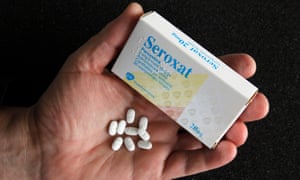
By 2003, worldwide sales of Seroxat, manufactured by GlaxoSmithKline, were worth £2.7bn. Photograph: Alamy
SSRIs have beenaround for more than 40 years, but grew in popularity in the late 1980s and 90s after pharmaceutical companyEli Lilly launched fluoxetine, otherwise known as Prozac. Time magazine put the drug on its cover twice, asking, “Is Freud finished?” and describing SSRIs as “mental health’s greatest success story”. In 2001, a landmark report on a clinical trial into paroxetine (sold as Seroxat in North America and Paxil in the UK), called Study 329, concluded that it demonstrated “remarkable efficacy and safety”. Study 329 led directly to a massive increase in prescriptions: by 2003, worldwide sales of Seroxat (manufactured by GlaxoSmithKline) were worth £2.7bn.
But concerns were raised about the study –the US food and drug administration (FDA) officer who reviewed the data disagreed with the findings, calling it a failed trial – and in 2015 the British Medical Journal published a re-evaluation. Seven authors went through as many of the thousands of individual case reports as they could, and found not only that “the efficacy of paroxetine… was not statistically or clinically different from placebo”, but that “there were clinically significant increases in harms, including suicidal ideation and behaviour”. The original study reported 265 adverse reactions; the BMJ found 481. The re-evaluation also found that psychiatric responses were grouped together with “dizziness” and “headaches”, rather than given their own category. In 2003, the UK banned the use of Seroxat by anyone under 18; and in 2004 the FDA required a “black box warning” on all antidepressants, its strictest level of patient warning.
“Patient safety is our number one priority,” a GlaxoSmithKline (GSK) spokesperson tells me. “We believe we acted responsibly in researching paroxetine, monitoring its safety once it was approved and updating its labelling as new information became available.”
It’s more reliably predictable that they’re going to get rid of sexual function than get rid of depression
Many SSRI users report blunted emotions, even long after they have ceased taking pills, and an impact on sexual function. “They should be called anti-sex drugs rather than antidepressant drugs,” says Jon Jureidini, a child psychiatrist of 30 years’ standing, a professor of psychiatry and paediatrics at the University of Adelaide and co-author of the BMJ study, “It’s more reliably predictable that they’re going to get rid of sexual function than it is that they’re going to get rid of depression.” Again, some people find this persists long after they cease taking the drug. One person I spoke to, Kevin, had taken Prozac for six months when he was 18; now 38, he hasn’t had an erection since.
Last September, Healy and colleagues published a further examination of the data gathered for Study 329. This data followed the trial participants for six months after they started taking paroxetine (the “continuation phase”) and while they were tapered off it. GSK, which in 2004 published a clinical study report, had argued that “the long-term safety profile of paroxetine in adolescents appears similar to that reported following short-term dosing”. Healy and co, however, concluded that the “continuation phase did not offer support for longer-term efficacy”. More alarmingly, they found that the taper phase, when patients were being taken off the drugs, was the riskiest of all, showing a “higher proportion of severe adverse events per week of exposure”. This, they said, opens up the risk of a “prescribing cascade”, whereby drug side-effects are thought to be symptoms, so are treated with further drugs, causing further side-effects and further prescriptions – thus increasing the risk of long-term prescription drug-dependency.
In October, the British Medical Association published its response to a two-year fact-finding exercise into long-term use of psychoactive drugs. It noted that while benzodiazepines, z-drugs, opioid and antidepressants are “a key therapeutic tool”, that their use can “often lead to a patient becoming dependent or suffering withdrawal symptoms… the evidence and insight presented to us by many charity and support groups… shows us that the ‘lived experience’ of patients using these medications is too often associated with devastating health and social harms”; it was therefore, the report concluded, a “significant public health issue”.
The BMA made three key recommendations: first, and most urgently, that the UK government establish a 24-hour helpline for prescribed drug dependence; second, that it establish well-resourced specialist support units; and third, that there should be clear guidance on prescription, tapering and withdrawal management (they found the current approach to antidepressants, in particular, to be inconsistent: too many patients were suffering “significant harm”). There are also increasingly urgent calls for studies into long-term effects that are not funded by drug companies, because, Moncrieff says: “We don’t have very much data. This research is really important, but hasn’t been done. It’s a massive blind spot. It’s extraordinary – or maybe, given the pressures and interests at work, not extraordinary at all – that it hasn’t been filled.”
In March this year, members of the BMA, along with MPs and researchers from Roehampton University, went to parliament to lobby Public Health England, armed with research estimating that there are 770,000 long-term users of antidepressants in England alone, at a cost of £44m to the NHS per year (a figure that does not account for the cost of GP appointments, or the impact of side-effects, withdrawal effects and disability payments).
“I think you have to adopt a very conservative approach,” says psychiatrist Jon Jureidini. “These are brain-altering drugs, and our overall experience with brain-altering drugs of all kinds is that they tend to have a detrimental effect on some proportion of people who take them long term. All we know about the benefits is from short-term symptom-reduction studies. The careful prescriber needs to say, ‘Well, in balancing the likely benefits and harms, I need to be very cautious about how much benefit I’m expecting, and I need to be very generous about the possibility that the harms might be more than they appear to be.’”
Quite a few long-term users, such as those I spoke to below (and who wished to be anonymous), would agree.
‘Tapering off is the hardest thing I’ve ever done’:Sarah, 32; has taken Seroxat for 14 years
I was prescribed Seroxat when I was 18, the year I started university. I grew up with a disabled sister, so things at home were very stressful, and I had a history of anxiety and panic attacks. I had counselling, but the problems persisted, so I went back to the GP. I don’t remember everything that was said, but there was no conversation about side-effects.
Within the first two weeks of starting Seroxat, I remember I was sitting in the front room watching TV when out of nowhere I had this intense feeling of heat, like an electric shock. It started in my hands, went all the way up my arms and through to my head.
The GP said it was probably just my body getting used to the drug. And after a few weeks the weird sensations did ease off. I had a fabulous time at university. I still had panic attacks, and there were certain situations I would avoid – as I still do – so it wasn’t a wonder drug, but there were no major problems.
But in 2006 I tried to come off it. There were a couple of Panorama documentaries about the side-effects and I was starting to become concerned. The GP said, “That’s fine, but do it gradually, over three weeks.”
I thought I was losing my mind. I was going to work, but it was difficult to get through the day. My mouth was so dry
I immediately became incredibly unwell. I thought I was losing my mind. I was going to work, but it was difficult to get through the day. My mouth was so dry, I was constantly drinking water. I had bizarre thoughts – not hallucinations – that were frightening or distressing. I had a strong sense of detachment from reality.
Eventually, the doctor said, “Look, you coming off is obviously not working: we need to get you back to 20mg.” Within a week I was much better.
A few years later, when I realised my mental health was getting worse, even though I was on the medication, I started to do some research, reading case studies about withdrawal. I find it so offensive when a GP says, “This is who you are.” I didn’t have these symptoms 10 years ago. I didn’t have this sense of detachment. I saw various psychiatrists. They just kept saying, “The drug is safe, you need to be on it.” A couple of others told me the reason I was having these problems was because I wasn’t taking enough. Another said, “If you were diabetic, you’d take insulin and you wouldn’t have an issue. Why are you so bothered about taking this drug?”
I’ve been on it since I was 18, so I don’t know who I am without it, as an adult. Who knows? I might have all kinds of problems, but I need to know I’ve tried. Tapering off is the hardest thing I’ve ever done. It’s taken me three years just to get from 20mg to 5mg. I’m no longer with my partner – we were together for six years. I believe Seroxat has played a part: it affected my moods, it made my anxiety worse and, by necessity, I’ve had to be selfish, really. I don’t want to say all my problems are to do with Seroxat, because they’re not. But I do believe that it has caused me harm.
‘I don’t have much of an interest in interacting romantically or physically with the opposite sex’: Jake, 24; took SSRIs for eight years
I had been dealing with symptoms of OCD and anxiety for a lot of my childhood. It’s in my family, affecting two siblings and one parent. I was prescribed Zoloft when I was 12; I took a variety of SSRIs, Zoloft to Prozac to Lexapro, and then two others, for eight years.
Did they help? You know, I can’t really tell you, because I got through school. I got high marks, I had a lot of friends. So, in that sense, they must have helped. That’s the thing: for people with major depression, it’s easy to say, this has a measurable effect. But I kept taking them just because that’s what I’ve always done.
I went to university right out of school. I did very poorly. I had a bit of a breakdown, isolating myself, not sleeping. I was still on medication. I came home and enrolled at a community college. That was my worst period – I was very depressed. And I started to think, “I’ve been on these medications a long time. I’m not doing well – why not get off them?” I don’t recommend this at all to anyone, but I stopped going to a psychiatrist and took myself off.
Prozac. Photograph: Getty Images
For months I had trouble sleeping. I was jittery. I had brain zaps. My anxiety was pretty ramped up. I would feel numbness in my extremities – generally my arms. My psychiatrist told me these were just normal withdrawal symptoms, and they’d be gone in four to six weeks: “Anything you feel beyond that is your anxiety and depression returning.” Basically, if you still feel anything beyond this window that the medical community has established, it’s all in your head.
Eventually I went back to school full-time, and I remember doing OK, feeling somewhat better.
I’ve now been drug-free for four years. What’s lasted are the sexual side-effects. They were definitely worse in withdrawal than they had been on the drug, even though I didn’t really realise or understand it at the time, primarily because I started to take SSRIs at 12. While my brother took the same medicine over the same period and had a normal sexual life, I had a lack of sexual interest. I had erections, and I have regularly masturbated my entire life. But I don’t have much of an interest in interacting romantically or physically with the opposite sex.
I didn’t even start thinking about sex until a couple of years ago. It’s almost like I woke up one day and thought, “OK!” I started getting these windows – days or weeks – when normal sexual feelings would appear. But they’re new to me and I don’t know what to do about them. And because I don’t know what to do, I get anxious, and the anxiety kills any feeling – and then I’m anxious because I’ve lost all my feeling.
Online, I’ve come across a big asexual community. Some also took antidepressants; I think there are a lot of people like me out there. I’d like to think that if I keep going to counselling and sleeping and eating properly, I can rectify these things.
In the end, it’s about pros and cons. If you’re lying in bed and can’t get up, is it better to function? If it was up to me, I’d say that, barring extreme circumstances, nobody under 18 should be prescribed these things. Your brain develops around them. Drug companies should be thinking of the long-term effect on people who can’t even consent.
‘If I missed a dose, I’d get shocks down the side of my body’:Chris, 43; has been taking Seroxat for 26 years
I was originally prescribed Seroxat for mild anxiety about my GCSEs. It was 1991, about the time GlaxoSmithKline released Seroxat. I was one of the first people to be given it.
I was prescribed 20mg, the basic dose, to start with. It helped me: I got through school, I went to uni, I went to work. But I had side-effects from the off: profuse sweating, low libido. I’m quite a placid person, but I became aggressive. I never suffered, in the beginning, with the suicidal thoughts that people talk about now, but what I did notice was that if I missed a dose – especially after eight years of taking it – I’d get shocks down the side of my body. I’d be nauseous, my limbs would become weak. I’d be in a constant state of confusion and was very impatient. I couldn’t communicate well with people. I said this to the doctor, and he said, “We’ll up the dose to 40mg.” That was 1998.
I tried to go back to 20mg, but my words became slurry, so the doctor put me back up to 60mg
The 10 years after that weren’t too bad. I managed to work, as a sales rep, for 18-20 years. But by 2012, by which time I was up to 60mg, I had tried on numerous occasions to withdraw. I tried to go back to 20mg, but my words became slurry, so the doctor put me back up to 60mg.
By the time I was 38, even that wasn’t enough. I tried to take my life. The doctor wouldn’t prescribe a higher dose. I couldn’t do my job, I couldn’t concentrate, I couldn’t drive. A psychiatrist once said to me that coming off Seroxat is harder than quitting heroin. That really hit home.
I have now been unable to work for four years. I’m still seeing a psychiatrist. I’ve also been diagnosed with fibromyalgia: constant tiredness, aches in the neck, and in the lower back and lower limbs. I’m 43 and still live with my mum and dad.
I also have no libido. Since the age of 30, I have had no feelings in that regard whatsoever. I have had relationships, but they’ve all failed. I haven’t been in a relationship for 10 years, which is a long time to go without sex, but I just don’t get the urge.
I don’t really have emotions, to tell you the truth. The drug takes your emotions away. I’m sort of existing, not living.
And when the drugs do work…
‘I wanted to be able to feel good when good things were happening, bad when bad things were happening’
BySimon Hattenstone
I suppose I was a depression snob. A purist. Why should I take antidepressants? Yes, there was something rubbish about crying all the time, not functioning, being unable to answer simple questions because of the fug in my head. But, hey, at least I was true to myself.
My depression went back to my late teens. I didn’t like to think of myself as depressive, because depressives were losers. And I didn’t think I fitted the bill: I was pretty funny and able, and I could get girlfriends. I guess most depressives don’t think they fit the bill.
It might have been genetic. My dad had paralysing depression, and so did his father. As a young boy, I’d spent three years off school with encephalitis – an inflammation of the brain that is often fatal. Survivors are often left with depression.
I remember as a teenager being on holiday in Greece with friends. The weather was gorgeous, and I thought, “Why can’t it piss down, because then at least I’d have a reason to feel this way?”
That is what I always craved – objectivity. To be able to feel good when good things were happening, to feel bad when bad things were happening. I hated the fact that my feelings rarely correlated to what was going on in my outer world.
In my 20s, I got by. I held down a good job, fell in love, had kids, made friends, had a pretty good life. But things came to a head when my best friend killed herself. I’d find myself weaving in between traffic wondering what the impact would be like. I took a period off work and gratefully accepted my Prozac prescription.
Things had changed since I first rejected them. Prozac looked cool (lovely green-and-white pills) and rock bands wrote great songs about it (even if REM’s Shiny Happy People was supposed to be dystopic). After telling people I was off work with depression, I ended up feeling like a priest at confessional. It turned out that virtually everybody I knew was a depressive and pilling their way out of it; now it was “our secret”.
I would try to come off the pills and felt rubbish again – not more rubbish than before, but the same. So I returned
Initially, Prozac made me feel sick. And then magically, after a couple of weeks, I felt lighter, as if something had been lifted. I could hear questions properly, answer logically, enjoy a sunny day.
My partner said I was transformed. Occasionally, I would try to come off the pills and felt rubbish again – not more rubbish than I had before, but the same. So I returned, and after a while, I thought, “What’s the point of even thinking about coming off the pills if they make life work for me?”
There are times now when I wonder if I weep and fret and withdraw too much, and whether I’m becoming immune to the Prozac. But on balance I think not, because life is still so much better than it was.
If Prozac was no longer working for me, would I stop taking it? Probably. Would I stop taking antidepressants full stop? I doubt it. I’d simply look for another super pill.
• Are you a long-term user of antidepressants? Tell us about your experiences
If you are affected by the issues raised in this piece, contact the Samaritans here.
This summer marks 25 years since one of the greatest moments of my career, winning Olympic gold in Barcelona. It often feels like the last 25 years have flown by as quickly as the 9.96 seconds it took to run the race!
A quarter of a century on and I’ve just turned 57. In my mind, I don’t feel any different to how I felt on that day in 1992. I still feel in good shape and to this day I spend more time at the track than I do in my house. However, as I’ve grown older, I’ve become much more mindful of the potential threats to my health than I ever was then.
I’ve recently started working with the men’s health charity Prostate Cancer UK and have learned some startling statistics. As a black man over 50, my risk of prostate cancer is double that of a white man the same age. One in four black men will be diagnosed with prostate cancer in their lifetime – the equivalent of one member of a 4×4 relay squad.
The prostate is an invisible gland; you can’t see it, you can’t feel it. In fact, 17% of men don’t even know they have a prostate.
If I’m being honest, until lately, I was one of the many thousands of men who knew next to nothing about the vital, walnut-size, reproductive gland inside me. More than 11,000 men die from prostate cancer every year in the UK, but over the next 10 years Prostate Cancer UK is ramping up its investment in research and has set a goal to transform the disease into one that the next generation will not fear.
Despite the odds being stacked against black men, just saying the word “prostate” within many black communities remains a massive taboo subject. Still, in 2017, the disease is simply not spoken about and, if it is, it’s in a “hush-hush, don’t tell anyone” type of way. How can it be that something that affects so many black fathers, uncles, sons and friends is continually swept under the carpet and ignored?
My health has always been important to me. When I was in the prime of my career, it was the most important thing. I was conscious of my diet and keeping myself in shape. I had to; other than a pair of running spikes, my physical and mental fitness was all I had – my career depended on it. Unbeatable; indestructible; that’s what I wanted to be, and I believed I was.
As I’ve grown older, my diet is still vital, but I’ve come to realise that no matter how well I eat or how fit I am, I am not indestructible – nobody is. But there are defence measures I can take and arming myself with knowledge is by far the most important.
If prostate cancer is caught early, more often than not, it can be successfully treated. The problem lies in the fact that when it’s in its early stages the disease is just as invisible as the gland itself – it has no symptoms.
This is why awareness of the potential threat, talking to your doctor and spreading the word among men is so important – it saves lives.
I’m currently fronting Prostate Cancer UK’s campaign, Stronger Knowing More, to get black men to face up to their risk of prostate cancer and take action. If you’re a black man, you’re not only more likely to get prostate cancer, you’re more likely to be diagnosed at a younger age.
This challenge is a marathon, not a sprint, and if we’re going to beat it we need to break down the taboos and start talking. It’s only by doing this that we can put a stop to the number of men who die from the disease every year.
Last year, I quit teaching. I had completed my NQT induction, and despite the years of self-doubt and tears I’d finally come to recognise that I was a competent teacher, and had started to believe my positive feedback.
I had also come to realise, however, that teaching was an unhealthy career choice for me. I am a perfectionist – or now, I hope, a recovering perfectionist – who is prone to anxiety. Unfortunately, I could not reconcile these aspects of my mentality with the never-ending pressures of being a teacher.
My health was poor while I was in the classroom. I was on medication, undergoing therapy and had to twice take time off sick when I couldn’t leave my house without breaking down. As the end of the year approached, I knew I would be leaving teaching.
But as the end of term loomed, I wondered: “What will I tell my students?” I remember standing in front of my lovely class, with whom I had developed an extremely good relationship, trying to find the words to explain why I was leaving them in the middle of their GCSEs.
They were a wonderful bunch – curious, energetic and high-achieving. But many were also anxious and stressed. I saw myself in so many of them. Their perfectionism and ridiculously high standards were a mirror of myself. I stood before them, without having learned to deal with those issues, about to give up on my dream career after two years of mental anguish.
And so, on my last lesson I stopped, looked them in the eye, and said:
Guys, I am leaving because I have never tackled my perfectionism – that same perfectionism that you think will get you A*s and make you happy.
I am leaving because I have not yet learned how to cope with failure or deal with negative emotions. I have not yet worked out how to tackle my faulty thinking. I have achieved so much academically and have a wonderful social life, but I have been suffering with poor mental health. I am anxious and depressed, and so I can’t carry on being your teacher at this moment in time.
But that’s OK. Our lives will go on. I am already receiving help, both through medication and therapy. I’ve talked to my family and my friends and it’s helping. I’m taking small steps to manage my lifestyle, to make sure I’m getting enough sleep. Mindfulness helps. Exercise helps. For me, music helps. There are so many ways you can mend yourself.
I am a not a doctor. I cannot tell you how to recover if you are suffering from poor mental health – not now or in the future. This is just my experience, but I think you should be aware of it.
Mental health issues are not something to be ashamed of. They are not always obvious. They can express themselves in many different ways. I think there is a scale; some mental health issues are life-threatening and totally debilitating. Mine, fortunately, are not. But had I carried on without talking and reaching for help, they may well have become so.
There is little that’s more important than your own health – physical and mental. Look after yourself, look after each other and talk. Build yourself a support network when times are good, just in case things get harder. Work on challenging negative thought patterns and disputing irrational thinking. Research what makes your brain work, investigate mindfulness, work on yourself.
And if you ever find yourself tempted to lie about a natural, normal period of ill health because you are ashamed, stop and think: “What would you tell a class of 15-year-olds? What would your 15-year-old self have benefitted from hearing?” Don’t be ashamed, use your journey to help others.
But I didn’t say that. Of course I didn’t.
I made up a different illness, in the same way I tell friends that I can’t come to their party because I have a migraine, when the truth is that I cannot see past the tears to make it out the front door.
Even in 2017, mental health stigma still exists and few people are brave enough to talk about it out loud to those kids who need to hear it. I certainly wasn’t. I passed up on perhaps the most “teachable moment” of all.
And so, I’m sorry I lied. I’m sorry we are not yet in a time or place where it is acceptable for me to have shown such weakness. I hope you do not suffer from mental health issues, but the reality is that many of you will. And I hope, if you do, you are brave enough to share your story when you can.
Follow us on Twitter via @GuardianTeach. Join the Guardian Teacher Network for lesson resources, comment and job opportunities, direct to your inbox.
Let’s face it. For many of us, that cup of coffee in the morning is the only way to start the day. As the coffee market has diversified more and more, we have all turned our attention towards flavored coffee. But how safe is that sweet and flavorful beverage? The research comes from the University of Illinois, after a 12-year study, regarding coffee drinking habits in the US. As you will have the opportunity to see in the following paragraphs, the number of calories per cup increases significantly, when you add sweeteners, flavors, etc.
Coffee, from blessing to potential problem
A simple cup of coffee does not have too many calories, which makes it a perfect choice for those who are weight conscious. However, flavored coffee is another matter. When you add your favorites, such as sugar/sweeteners and cream, you are suddenly face-to-face with a beverage that contains a whooping amount of calories. The study undertaken by the specialists working at the University of Illinois confirmed that adding flavors to your coffee also means an additional intake of 69 calories per cup. Now comes the question: is it really worth it?
What did the study reveal?
We live in an age where obesity is a common problem, leading to life-threatening complications, such as heart attack, stroke, and even death. In such situations, more and more people turn to the best diet plan, to lose that extra weight and enjoy a good state of health. However, as it turns out, many of them have a hard time giving up their morning brew, not to mention the additional flavors used for its making.
Researchers at the University of Illinois analyzed 12 years worth of information, regarding coffee and tea drinking habits in the US. The data was provided by the National Health and Nutrition Examination Survey, encompassing more than 20.000 people and their coffee/tea drinking habits. It was revealed that approximately 51% of the Americans drink coffee on a regular basis, while only 26% have tea as their daily preferred beverage.
As it was mentioned above, drinking plain coffee is good and even healthy. The problems appear when you add flavors and sweeteners, upping the calorie intake. Two-thirds of the response prefer flavored coffee, adding sugar/sweeteners, cream, and other flavors to their daily coffee. By comparison, only a third of those who drink tea have the same habits. For many people, coffee is a must in the morning; in fact, there are many women who swear that this beverage is their number one weapon against the nasty morning sickness.
Why should you never drink flavored coffee?
The reason why you should never drink flavored coffee is simple. There are simply too many hidden calories in such a beverage. Even if you use sweeteners, such as half-and-half and honey, you are still taking in more calories than normal (by comparison to plain, black coffee). You might be enjoying more flavors with your coffee, but, at the same time, you are increasing your risks for weight gain. Moreover, such a flavored beverage interferes with diets, affecting your overall ability to reach a certain weight-loss goal.
Many would argue that the milk or cream added to the coffee provides the body with calcium, but the quantity is limited, while the calories are not. Apart from that, many of the calories come from sugar, which we all know, is all about empty energy. Black coffee remains the best alternative for a healthy start in the morning, as it provides all the benefits of this delicious beverage, without any additional calories.
In recent years, there was a trend to add butter to one’s coffee, to enjoy a unique flavor. This is even more damaging, as, aside from the empty calories that come from sugar, you are also taking in more fat than it is necessary. The same is valid for cream, which has a high content of fat. At first, it might seem like the added intake is not that big but, if you are already battling with excess weight, it matters. Even if you do not have such problems, you might still find yourself gaining weight, as the intake is daily and the body cannot use such calories.
What is the solution?
The obvious solution to the problem is to quit adding all these things to your coffee. At first, it might seem impossible, especially if you have already formed a habit of ordering your coffee from one of those fancy places (you cannot even begin to imagine how many calories there are in those blended, flavorful drinks). However, if you are persistent and committed to maintaining a healthy weight, you will learn to reduce the daily intake of sugar/sweeteners, cream, and other flavors, little by little.
A plain cup of coffee can guarantee that you start your day in a healthy manner. Say goodbye to sugar, as it contains only empty calories and it strips away your energy, affecting the proper functioning of the body. Eliminate artificial sweeteners, as these are just as damaging to your health and, please, forget all about flavors that can be added to coffee or cream/butter, as you do not need those additional fats. If you want to stop gaining weight, remember that black coffee is the best way to go. No calories, only pure energy.
Final word
Tomorrow, when you wake up, try a black cup of coffee. Remember that you are taking in unnecessary calories, which will have a negative impact on the weight loss process. Keep your coffee simple and, soon, you will see a genuine difference. Your brain might be tempted to go back to its old habits, as sugar can be pretty addictive but you are stronger than that. Use your willpower in the right direction and learn how to say no to flavored coffee. On the long-term, this is one of the best decisions you can take for your body and health in general.
When you see your cat suffering from a serious case of painful flea bites, you want to ease their discomfort as soon as possible. Running to the nearest store and picking up a topical cat flea treatment seems likes the quickest and easiest solution, but it might just be tossing your cat out of the frying pan and straight into the fire.
The fact of the matter is that the simple, easy-to-buy flea medications lining the shelves of most pet and grocery stores are not as benign as they appear. These pesticides have been linked to thousands of pet deaths and little has been done to make these products safer. The packaging is seemingly harmless. The directions are simple and straightforward. Just squeeze out a few drops onto your cat’s neck and eliminate those pesky fleas. Unfortunately, there’s more to the story.
What the packaging fails to mention is that, in far too many cases, the treatment doesn’t just poison fleas. It could poison your cat, too.
There’s no way around it. When you treat your cat with a topical pesticide, you are exposing them to chemicals formulated to kill. The low doses our cats are exposed to can lead to a variety of complications: damage to the nervous system, skin rashes, sores, and seizures. In 2008, the EPA (Environmental Protection Agency), received approximately 43,000 reports of pets who were negatively affected by topical flea products. The reports included a number of different brands of products, including various pesticides and ingredients. The same year, it was determined that about 1.4% of those incidents resulted in death.
Reactions to these flea medications vary. Risk factors include allergies, age, pregnancy, and previous drug use. In some cases, the reaction happens when the product is used improperly. In others, the product was used correctly and the reaction occurs anyway. Some cats just experience itching and skin irritation, while a severe reaction could end in death. The symptoms of an adverse reaction vary, but tend to include excess salivation, pupil dilation, muscle tremors, vomiting, shivering, skin irritation, and behavioral changes.
If you’re willing to take the risk and use an over-the-counter flea medication, please take the necessary precautions. Be certain that you are using a flea treatment designed specifically for cats. If you have a multiple cat home, don’t allow the cats around one another for at least a day after being treated. It’s possible that your cats will groom one another. The pesticides in topical flea treatments, if ingested, are very dangerous.
Remember, dosing according to the instructions is not a guarantee that your cat will not have a negative reaction to the poison. Some cats are more sensitive than others, especially kittens and older cats.
In 2008, the EPA received approximately 43,000 reports of pets who had experienced a negative reaction to a topical flea product. The reports included a number of different brands of products, including various pesticides and ingredients.
There is no single pesticide that you can avoid to ensure your cat’s safety. All pesticides could potentially harm your cat.
The large number of reports caused the EPA to review the state of the topical pet insecticide industry. This evaluation concluded that most reporting their cat’s illness or death caused by spot-on flea treatments were using the products incorrectly – treating their cats with a solution made for dogs. Dog flea treatments contain stronger pesticides that cats simply cannot handle, even in miniscule doses. This prompted some reforms. By 2010, they were urging manufacturers to improve labeling and possibly increase testing before releasing these products to the public.
The state of cat flea medication has improved since then thanks to these investigations and packaging reform.
But they didn’t solve the problem. Reports of cats suffering from the side effects of topical flea treatments are still popping up. These reports aren’t only coming from people who can’t read the packaging. They’re also coming from people who used the chemical flea treatments properly. Even if you use them as directed, these treatments for cats are still not 100% safe.
First of all, stay calm! Not all cats react negatively to these medications. In fact, it’s more than likely that your cat will be fine.
Watch your cat closely. If you do notice any effects after the application of a topical flea treatment, immediately wash your cat with a gentle dish soap, like Dawn. Continue to monitor your cat and consider contacting a veterinarian if they start to show symptoms of a serious reaction.
However, if your cat has ingested the flea medication, this will not help. You will need to get your cat to a veterinarian for treatment as soon as possible.
A perfectly natural, easy to use, and effective flea treatment is food-grade diatomaceous earth. This natural powder is comprised of the fossilized shells of ancient sea creatures. When observed under a microscope, diatomaceous earth particles resemble shards of glass. These sharp edges are the secret to diatomaceous earth’s power. The particles penetrate bug skeletons, then cuts up or dehydrates them to death. It is simple, mechanical, and it really works. Plus, if you use food grade diatomaceous earth, it’s completely safe for your cat.
While some people choose to use it topically, it can dry out your cat’s skin when used that way. We recommend sprinkling it in your cat’s favorite areas. Diatomaceous earth does a great job of getting rid of pests in your home before they can get to your cat.
And best of all: unlike OTC flea and tick medication, there’s no chance that it will leave patches of raw skin or cause damage to their nervous system.
The WildernessCatLady is crazy about happy, healthy cats fueled by nature. Start changing your cat’s life today with natural health solutions for adventurous cats at Wildernesscat.com. And while you’re here, go ahead and download our free PDF: 5 Natural Home Remedies for Cats.
It’s the most important, meaningful and – for many – anxiety-provoking day of your life. You’re going to experience the rare privilege of being at the centre of the action as a new life begins. Added to this, you may well be naked and somewhat indisposed. Who would you choose to be with you? Someone you know and trust? Or a total stranger? It’s a no-brainer, isn’t it?
And yet a report published today by the National Federation of Women’s Institutes (NFWI) and childbirth charity the NCT has shown, yet again, that this most obvious of human needs is simply not being met for women. Rather than being accompanied by a familiar and trusted figure, most women (88%) surveyed did not know their midwife when they went into labour or gave birth. Of these women, 12% said this made them feel alone and vulnerable, and 6% said they felt unsafe. Comments were made comparing treatment to that of cattle, and like being on a conveyor belt.
One solution women could opt for – an independent midwife –has also just been removed
The report also highlights that as many as 50% of women are experiencing so-called “red flag events” in their labour – situations which are seen as warning signs of understaffing, such as women having to wait more than 30 minutes for pain relief, or more than an hour to receive the stitches they need.
Midwife shortages have long been highlighted; the last estimate by the Royal College of Midwives in 2016 suggested that 3,500 more were needed to meet the rising birth rate. And the impact of shortages reaches far beyond red flag events. The effect of not being able to establish a relationship with your midwife begins long before you are in stirrups waiting for stitches: research has shown, for example, that women who know their midwife are 24% less likely to experience pre-term birth, and are 16% less likely to lose their baby during the pregnancy.
Knowing your midwife also means you are more likely to have a vaginal birth, and less likely to experience interventions such as forceps or episiotomy. And women who experience continuity of care repeatedly report higher levels of satisfaction, an increased sense of agency and control, and more positive birth experiences. After the birth, as the NFWI/NCT report highlights, almost one in five women are not seeing a midwife as often as they need to, let alone one with whom they have a relationship. This is a vital yet neglected time for maternal mental health.
We know this – all of this – and have done for some time. We know that relationship-based care is better for women, and we know that we need many more midwives to raise services up to this standard. We also know that this is what midwives themselves want, with many feeling burnt out by a system that – as one person who had left after 30 years in the NHS anonymously told me – demands that they are “with computer”, rather than, “with women”.
Indeed, the recent Maternity Review highlighted “continuity of carer” as one of the key priorities in improving birth. And yet, in the current system, it seems to be harder and harder to come by. Women who I meet via my organisation, the Positive Birth Movement, often report fragmented care experiences in which they have to repeat their histories to each new midwife, a situation which is at best frustrating, and at worst dangerous. Getting the birth you want in the setting you wish for can also be a tough battle: home births can be denied due to lack of staff, midwife-led units closed or full, and higher-risk women such as those with twins or breech babies left feeling they have limited options in a system that is over-stretched and depersonalised.
One solution women could opt for, and which I chose for my own second and third births, has also just been removed: the option of an independent midwife. These self-employed midwives with huge expertise in normal birth, can – for a fee – attend you personally at every step of your pregnancy, birth and postnatally, in your own home. However, this week the Nursing and Midwifery Council has ruled that their insurance arrangements are insufficient and has effectively shut them down overnight, with many of their clients being left without a midwife. The charity Birthrights has said that the decision “directly jeopardises the health and safety of the women it (the NMC) is supposed to safeguard”.
NHS England has today offered assurance that the Better Births initiative, now being rolled out in pilot schemes following the recommendations of the Maternity Review, will provide women with “access to a small team of midwives for continuity throughout pregnancy, birth and postnatally”. We can live in hope, but right now, this level of care – which both women and midwives want and deserve – seems a long way off, and conveyor-belt care, or worse still, being treated like cattle, is more likely.
The truth about prescription drugs – Are you aware of them?
As reports show a quarter of Americans are taking potentially harmful prescription drugs, we ask – is there another way?
You may think that the medical industry’s primary concern is to aid you to improve your overall health but sadly, this is not necessarily the truth. The medical establishment is, in fact, much better at treating disease than they are at getting you healthy, as this is where they make colossal amounts of money. Improving your health is sometimes the last thing that medical establishments want, as they much prefer making you pay for pharmaceutical drugs and therapies that treat only the symptoms of disease rather than the cause.
Heart disease and statins
One of the leading causes of death in America is heart disease; killing around 610,000 people every year in the US. The medical industries believe that cholesterol is the primary factor in the development of heart disease and this has led to the pharmaceutical industry developing drugs called statins, which were designed to lower cholesterol and reduce the risk of heart disease. Accompanied by a large marketing campaign, these drugs have turned into huge money makers for the pharmaceutical companies that create them. In 2013 alone, statins created around $ 29 billion of sales for the pharmaceutical industry. This is the kind of return you can expect from convincing 1 in 4 Americans over the age of 45 that they need to take statins – but does everyone really NEED them?
Are statins all they’re cracked up to be?
There is a wide range of detrimental health effects that have been linked to statin drugs, but, as a regular Joe Public, you are likely not to have heard of many of the below:
Interference with the production of coenzyme Q10, which supports the body’s immune and nervous systems, boosts heart and other muscle health, maintains normal blood pressure, and much more.
Weakening the immune system and increase the production of cytokines, which trigger and sustain inflammation.
They make some patients unable to concentrate or remember words, and are linked to muscle and neurological problems.
Reduction of the beneficial effects of omega-3 fatty acids by promoting the metabolism of omega-6 fatty acids, which increases insulin resistance and the risk of developing diabetes.
Reduction in the benefits of exercise. Exercise increases the activity and numbers of mitochondria, cells’ “power plants” that process sugars and fat. The study found that with statin use, mitochondrial activity actually decreases with exercise.
Reduction of the body’s ability to produce cholesterol, which is essential to brain health—the brain is 2% of the body’s weight, but contains 25% of the entire body’s cholesterol.
Higher incidence of nerve degeneration and pain, memory loss, confusion,depression, and a higher risk of ALS and Parkinson’s.
An increase in likelihood of overeating.
An animal study linked statin use to muscle damage. Animals that exercised on statins had 226% more muscle damage than those not given statins.
They affect the quality of sleep.
Increased risk of prostate and breast cancer.
Result in liver damage by increasing the liver’s production of digestive enzymes.
Speed aging and lower sex drive.
Linked to aggressive and violent behavior in women.
Statins, the media and the AHA
It is very rare that the media actually question or critically analyze the press releases they receive from medical establishments, and this is why you very rarely hear about any negative side effects of statins. When you do, they are closely followed by the published opinion that the risks are greatly outweighed by the benefits of the drugs.
However, this is not necessarily true.
Even those at the forefront of heart disease prevention sometimes get it wrong. The American Heart Association (AHA) published a study based on the over-simplified and out-dated notion that there are just 2 types of cholesterol – “good” (HD) and “bad” (LDL). The AHA also centered their dietary recommendations on the debunked theory that “bad” cholesterol causes heart disease and that saturated fats raise LDL and should therefore be avoided.
What the AHA and other medical establishments don’t seem to realize is that cholesterol is actually vital to human health. It is too simplistic to think that “bad” cholesterol is the route of all heart disease evil. It can be harmful to health if the is an excess of cholesterol but we should also be worried if there isn’t enough cholesterol in our bodies as we age; even “bad” cholesterol is essential.
Numerous studies have linked an insufficient amount of cholesterol to deaths caused by heart attacks and gastrointestinal and respiratory diseases. A study of over 15,000 patients over 18 years found that those with a higher LDL count and overall cholesterol level had a reduced chance of developing atrial fibrillation, an irregular heart rate which reduces blood flow to the body.
Government agencies are finally realizing that cholesterol isn’t the time bomb it has been made out to be. The Dietary Guidelines Advisory Committee is about to withdraw its longstanding advice to avoid all high cholesterol foods.
How to really live a healthy life
It is perfectly clear that all the independent science and studies, not those paid for by the pharmaceutical and medical industries, show that the way to a healthy and longer life is a simple balance of eating well, exercising regularly and taking natural and healthy supplements instead of pharmaceutical drugs.
Poor eating habits, lack of exercise and obesity are direct causes of most metabolic diseases and these problems can all be addressed in a natural and simple way without the intervention of pharmaceutical drugs. Regular exercise and a good balanced diet, such as the ketogenic diet, can help you to live a long and healthy life without handing over your hard earned cash to pharmaceutical giants.
Remember, the way you manage your own health is your decision and no doctor can force you to take any drugs that you don’t want to. Don’t always assume that the medical industry has your best interests at heart, as they are more than likely more concerned with the state of your wallet than of your health.
Given the pharmaceuticals’ influence over the mainstream media, it is not surprising that the media is full of misinformation. To make sure you are fully informed about ways to improve your health you should always do your own research into the real side effects of drug therapies and the many benefits of more holistic natural approaches to healthcare.
Do you want to know how I cured my own prostate disease naturally without any harmful pharmaceutical drugs or invasive surgery? Click Here to find out.
I Wish You Good Health,
Ben
References
Ong, Ben. All About The Prostate. USA: bensprostate.com, 2016. Print.
You know the scenario: you invite some close friends more than for dinner and they graciously accept. But then the caveats commence: “Elspeth is gluten- and dairy-intolerant, and I really do not consume meat, fish or eggs.”
Bread, milk, butter, cheese – the nation seems to have turn into intolerant of the food items that utilized to be home staples. Entire supermarket aisles are now devoted to “free-from” merchandise, with the British market place for gluten-free alone anticipated to increase to £561m by 2017. No matter whether it is due to a real rise in foods allergy symptoms, or basically since of a perception that “free from” is healthier, the trend for dairy- and gluten-free seems right here to stay.
Nevertheless humans have been eating wheat and dairy items for millennia, apparently without having harm. Has one thing altered, or are the “free-from” advocates taking us for an costly – and rather joyless – trip? Part of the confusion stems from a muddling of the distinction among meals allergy and intolerance. Foods allergy symptoms do seem to be on the rise, but these are distinct from intolerances, for which there is no powerful proof of an increase – and in some circumstances, no specific medical explanation for their cause. A 2008 study published in the journal Allergy unveiled that despite the fact that 34% of parents reported meals allergic reactions in their children, only 5% of youngsters had been discovered to have a genuine allergy.
Relevant: Gluten-free of charge: well being fad or existence-saving diet program?
So what is the distinction? Allergic reactions, such as reactions to specific proteins in wheat or milk, involve the immune program, and can be life-threatening. Signs typically kick in within minutes of eating a problem meals, and can include vomiting, lip swelling, a rash, wheeze, and a blocked or runny nose. They are also relatively uncommon – at least amongst adults. In accordance to an Australian review, wheat allergy affects close to .two% of adults, while cow’s milk allergy influences .one-.5% of adults. For young children, study suggests two-3% of infants are affected in their first yr of existence.
Then there’s coeliac condition, which has an effect on 1% of the population, and is an autoimmune situation that causes serious harm if sufferers eat even little amounts of gluten-containing meals. Antibodies are generated against the gluten, but these also assault cells lining the gut, resulting in malnutrition.
Around 13% of adults declare to react when they eat gluten food items: only .eight% of these have coeliac ailment
Foods intolerances, on the other hand, have a tendency to generate signs and symptoms such as bloating or abdominal discomfort, and these set in far more gradually – often many days after eating a issue foods. They also are not imagined to involve the immune method. “Although a great deal of the symptoms can be extremely unpleasant, they generally are not daily life-threatening and really don’t do any lasting harm,” says Maureen Jenkins, clinical director of the charity Allergy UK.
Among the most commonly reported intolerances are individuals relating to dairy and gluten, but precise numbers are difficult to obtain because studies often depend on people self-reporting sensitivities to these meals. And whilst reliable diagnostic exams exist for food allergy symptoms and coeliac disease, there are no reliable exams for meals intolerances (with the exception of that for lactose). That is not to cease them getting marketed, even though. The tennis player Novak Djokovic, for instance, was diagnosed with gluten intolerance employing a strategy referred to as utilized kinesiology. Here, the person undergoing testing holds a meals substance in his or her hand or mouth, while the practitioner seems for indicators of muscle weakness. The American School of Allergy, Asthma and Immunology has stated that there is “no evidence of diagnostic validity” for the strategy.
Photograph: Getty Photographs
Other exams may possibly sound a lot more scientific, but they are not always any much more trustworthy. Take IgG (immunoglobulin G) testing, which looks for antibodies against meals substances in the blood. Unlike IgE antibodies that mediate allergic reactions, IgG antibodies are made by most of us in reaction to the food items we eat. But, “there is no evidence that foods-certain IgG antibodies are involved in any ailment processes,” says Stuart Jones, principal biochemist at King George hospital, London. The European Academy of Allergy and Clinical Immunology similarly states that IgG testing “does not indicate foods allergy or intolerance”. And Tariq el-Shanawany, advisor clinical immunologist at Cardiff and Vale NHS Trust, says: “For the patients I’ve witnessed who have had it done, it hasn’t given them the response that indicates their signs and symptoms go away.”
That is not to say that intolerance to foods substances this kind of as gluten doesn’t exist. Around 13% of British adults claim to experience symptoms when they eat gluten-containing foods, in accordance to one recent research – however only .eight% of the population have been formally diagnosed with coeliac disease. “There are non-coeliac individuals who are reporting signs when they consume gluten. If you look at their gut tissue employing a substantial-magnification microscope, you can see the tiny bowel is having a extremely speedy response to it,” says David Sanders, advisor gastroenterologist at Sheffield Educating Hospitals NHS Basis Trust. “This is not an allergy or coeliac condition, but anything is taking place to them.”
But is it in fact the gluten that they are reacting to? Peter Gibson of the Alfred Hospital and Monash University in Melbourne carried out the world’s very first randomised-managed trial of gluten in non-coeliacs with gut signs and symptoms, which discovered they felt better when they went gluten-free. Even so, subsequent research have convinced him that it’s not the gluten they are reacting to, but a set of sugars dubbed Fodmaps (fermentable oligo-, di-, mono-saccharides and polyols). These sugars entice water and feed gas-generating bacteria in the little intestine, resulting in bloating, flatulence and loose stools. Men and women with sensitive bowels appear to have worse symptoms. “There’s no doubt that wheat is a significant trigger of bloating and abdominal difficulties. The difficulties is that wheat has a lot more than just gluten in it,” says Gibson. Although there may possibly be a tiny subset of non-coeliacs who react to gluten by means of some as nevertheless undiscovered pathway, he believes that for the huge majority, decreasing the fodmap articles of their diet regime could go a prolonged way to easing their symptoms.
But this doesn’t imply they have to reduce out all wheat, barley and rye, as individuals with coeliac illness do. “You can probably still have a schnitzel with breadcrumbs on it, but you couldn’t have a bowl of pasta,” says Gibson. And fodmaps are located in other food items, also: notably onions. Eliminating all fodmap-containing food items would be the initial stage, but these could steadily be reintroduced till you discover the degree that triggers your symptoms.
Spaghetti sauce? A gluten-intolerant individual may tolerate a garnish of breadcrumbs, but not a plate of pasta. Photograph: Alamy
Many of these opting to buy gluten-totally free items are not performing it due to the fact of abdominal symptoms, nevertheless. A recent survey of one hundred British gluten-totally free buyers identified that 28% had been doing it to enhance their energy ranges and 24% to lose excess weight nevertheless there’s no very good proof to assistance these purported wellness benefits. “A gluten-totally free diet plan is not more healthy than any other diet,” Sanders says.
Starch is the main supply of calories in grains this kind of as wheat, but the starch content of wheat is related to that of other carbohydrates, such as rice or potatoes. “I think the notion that wheat or gluten is related with bodyweight obtain has genuinely come from the opposite angle if you commence to cut these goods from your diet, then you begin to drop fat,” adds Gary Frost, chair in nutrition and dietetics at Imperial School London. This is specifically true of large-calorie foods such as cakes, biscuits, or cheeseburgers.
Apart from rubbing dinner party hosts up the wrong way, giving up gluten is unlikely to cause you significantly harm – offered you are not solely reliant on produced gluten-cost-free products, which can be high in salt or sugar. The identical can not automatically be said about avoiding milk and dairy items, nevertheless. These offer all around a quarter of our daily protein necessity and up to 60% of other essential nutrients such as calcium and phosphorus. “My biggest be concerned about the recent trend for ditching cow’s milk relates to bone growth in youngsters and adolescents, and its long-term effect on bone strength in postmenopausal ladies,” says Ian Givens, professor of meals chain nutrition at the University of Reading through. Dairy intolerance is at least a condition for which there’s an established mechanism: approximately 65% of the world’s population carries a genetic variant that implies they are unable to digest the lactose in milk. Instead, this sugar passes into the little intestine in which it feeds bacteria that produce gas and bloating. But lactose intolerance between Brits is less common, affecting roughly five% of the population. Short-term lactose intolerance can also produce as a result of gastroenteritis and other illnesses, or after repeated programs of antibiotics. Even if you are lactose intolerant, scientific studies suggest that you might be in a position to drink up to close to 250 millilitres of milk in one particular sitting with no signs, and potentially twice this amount spread through the day if consumed with meals.
Related: Is gluten undesirable for your health?
So why are so many folks ditching cow’s milk in favour of plant-based mostly choices this kind of as soy or almond milk? “I believe a good deal of men and women are buying merchandise because they believe it is fashionable, or they presume individuals varieties of alternative milks are superior goods,” says Sioned Quirke, a dietitian and a spokeswoman for the British Dietetic Association. “They are not a superior item in any way, shape or type.” With the exception of soy milk, plant-primarily based milks are far reduced in protein than cow’s milk. And unless they have been fortified, they are also poor sources of calcium and vitamin D. There’s also emerging evidence that people who eat massive quantities of milk and dairy products are at reduced threat of diabetes, cardiovascular ailment, and colorectal cancer, possibly due to the fact of the calcium in milk. Yet another possibility is that widespread publicity about foods intolerance is prompting many people with unexplained signs such as bloating or abdomen cramps to self-diagnose dairy intolerance. A latest survey by Allergy United kingdom exposed that 44% of people who class themselves as dairy intolerant have not been diagnosed as such by a medical professional instead, they have utilised online information or undergone non-typical tests. Seventy two per cent have removed all dairy from their diets, even although yoghurt and difficult cheese contain really little lactose and are unlikely to trigger symptoms.
Why then, are so several of us apparently eager to blame frequent meals for our ailments? “It’s a good point that people are more conscious of circumstances like irritable bowel syndrome and lactose intolerance, but I consider it tends to make men and women jump to conclusions when they’ve absolutely nothing wrong with them,” says Quirk. “Our bowels are really delicate organs. If we have been unwell, or if we’re stressed or run down, we frequently will have some type of bowel symptom.”
Meanwhile, leaping on the food-intolerance bandwagon, when you’d really just prefer not to eat gluten or dairy, can make it more difficult for folks with real meals-connected sickness. “If a person goes into a catering outlet and claims that they have a dairy allergy, but then says ‘Well truly, I can eat some sorts of dairy but I cannot eat other individuals,’ it may possibly give caterers the impression that meals allergy symptoms really do not need to be taken significantly,” says Moira Austin, helpline and info manager at the Anaphylaxis Campaign. “It can give men and women with accurate foods allergies a bad title.”
If you do suspect you have a foods intolerance, a key very first stage is to pay a visit to your GP. This is particularly essential if you think your symptoms are currently being triggered by gluten the coeliac condition test for coeliac ailment only performs if you’ve been consuming the stuff daily for at least 6 weeks.
Assuming that meals allergies and coeliac disease are ruled out, getting rid of suspect meals from your diet regime is the logical subsequent phase. “If your signs and symptoms enhance and you then reintroduce the foods and they come back, then that proves you are intolerant,” says Jenkins. And however several individuals who attempt this kind of elimination diet programs aren’t undertaking them appropriately, she cautions: “Often individuals really do not exclude for lengthy adequate you require to do it for about a month. And if it doesn’t make a variation, you need to have to reintroduce that meals into your diet program. Most men and women really don’t have sufficient dietary expertise to change [foods] with other things to get the crucial nutrients they need to have.”
If you can hold up your hands and say you have been through these steps and you’re specific that gluten or dairy is the supply of your issues, you’re most likely appropriate: food intolerance is a true problem that deserves to be taken seriously. And, as a bonus, if you receive a correct diagnosis you may find your sceptical friends abruptly turn out to be a lot much more tolerant of your intolerance.