NHS etiketine sahip kayıtlar gösteriliyor. Tüm kayıtları göster

28 Mart 2017 Salı

The fog of Brexit is engulfing the NHS. It’s up to Theresa May to provide clarity | Jonathan Ashworth

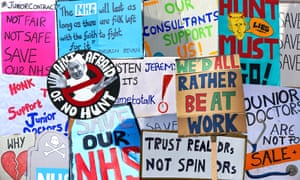
Everyone knows that after seven years of neglect from the Conservative government, the NHS is undergoing a serious crisis of funding and staffing. The last thing needed is more uncertainty. That is exactly what the NHS faces with Brexit.


On Wednesday Theresa May will trigger article 50 and later this week health bosses publish the updated Five Year Forward View. It is time for the prime minister and the health secretary, Jeremy Hunt, to give the NHS and its patients the certainty needed through the Brexit process. May has already turned her back on the promise of £350m a week for our NHS and now she is walking away from her responsibilities to protect the health service through a turbulent Brexit process that will hit it hard.


The complacency in government is astounding. Last week Hunt published the department of health’s Mandate to NHS England to set “the government’s objectives and any requirements for NHS England”. Amazingly, the 24-page document made no mention of Brexit whatsoever.


It should come as no surprise that the NHS is not a priority for the government. Hunt isn’t even a member of the cabinet committees managing the exit strategy. Yet Britain’s health and social care system is dependent on tens of thousands of European staff, many of whom have settled and built lives here while caring for our sick and elderly. Safeguarding the future of these staff should be an absolute priority in the Brexit negotiations. But in the House of Commons last week Hunt failed to offer any reassurance that he’s prepared to stand up for this essential section of the workforce he oversees.


Will health professionals from other EU countries be able to come to work in our NHS after Brexit, or will there be a cap on their numbers? As long as the issue is left unclear, more and more EU workers are voting with their feet and leaving on their own terms. In a recent survey, 42% of European health staff working here said they are now thinking of leaving the UK. Almost 5,500 have left since the Brexit vote according to NHS Digital, a 25% increase on the 2015 figures. And others are being put off from coming here at all: only 96 European nurses registered to work in the UK in December – that figure was 1,304 for last July.


So our first test of the government plans will be whether they deliver a right of remain for the 140,000 EU nationals working in the NHS and social care system. Secondly, on funding, we know that the EU’s Horizon 2020 scheme is due to invest £7.5bn in health research across the EU over the next five years, and the UK will be by far the largest recipient of those funds. We also receive EU funding from the Innovative Medicines Initiative, the European Cooperation in Science and Technology programme, and the Active and Assisted Living programme for older people.


This long-term funding is vital in giving security to those medical institutions and universities planning major research projects. They cannot just wait and see what will happen after 2019. So we need to know whether access to these funding streams will continue after Brexit. If not, how do the government propose to make up the shortfall?


Our third test is on reciprocal healthcare arrangements. It is a key principle that British citizens can obtain free healthcare elsewhere in Europe, just as they would at home. That is an important safety net for British holidaymakers, and for UK citizens living elsewhere in Europe. Does the government intend to maintain those arrangements? If not, how will it address the increased insurance costs for UK holidaymakers?


Our fourth test is on EU healthcare collaboration. Working effectively with our European partners, on everything from infectious disease control to the licensing and regulation of medicines, has been vital for the NHS in recent years. The sector desperately needs to know whether it’s the government’s intention to maintain the UK’s participation in pan-European public health initiatives after Brexit. Will the UK continue to participate in the centralised marketing authorisation procedure for the licensing, sale and regulation of medicines, governed by the European Medicines Agency? The government needs to be clear about how Brexit will affect the UK pharmaceutical industry when exporting medicines to other member states in future.


These are difficult and detailed questions, but they are all of absolute importance to the future of our health service and of our medical research sectors. There is no reason why May should refuse to give us the answers. That will allow us to understand with greater clarity what the impact of Brexit will be on the NHS – and most importantly, it will allow patients and staff the opportunity to scrutinise the government’s plans closely over the next two years.


The NHS is already in crisis over funding and staffing. But Brexit has the potential to tip those crises into disasters. Patients and NHS staff should not be bargaining chips in May’s hard Brexit negotiations. They want a world-class NHS delivering the best quality healthcare. As article 50 is triggered, the very least the public deserves is clarity and certainty from its government.


The fog of Brexit is engulfing the NHS. It’s up to Theresa May to provide clarity | Jonathan Ashworth
14 Şubat 2017 Salı

‘I love the NHS. Without it, I wouldn’t be here’

I attempted suicide. Without the NHS, I wouldn’t be here


When I was 20 I attempted suicide. I ended up in A&E where every staff member I came into contact with was patient, kind, and calm, even though the department seemed busier than usual. I was treated with compassion and respect, and one nurse even succeeded in making me laugh on what was the worst day of my life. I could feel the support all around me. They made me feel less alone and I can’t thank them enough.Even though a couple of years have passed, I still think about how fantastically I was treated in my vulnerable state, and how different my life could have turned out if it hadn’t been for their kindness and understanding. Without them, I don’t think I’d be here.
Student, Gloucestershire


I’ve lived in the US. I’ve seen what worse care for more money looks like


The first time the NHS saved my life I was trapped under a car after an accident with a fractured pelvis, skull and three crushed vertebrae as well as a haemorrhaging liver. The eight days I spent in hospital would have bankrupted my family if I had been living in the US. I was 13 and by the time I was discharged I didn’t even want to leave. The care was so good they even brought in school work so I didn’t fall behind in class.


The second time my appendix burst and I underwent an operation. I missed the first day of my finals but the surgeon gave me the smallest appendectomy scar of anyone I’ve ever seen. They obviously took immense pride in it and I thought that was very cool.


I’ve lived in the US. I’ve seen what worse care for more money looks like. I’ve seen people die of preventable cancers because they were too poor to go to a doctor.
Huw Gildon, 40, marketing professional


It’s amazing when patients that have nearly died several times walk out of hospital


I love the NHS because every day I see people who are at their most vulnerable and the sickest they will ever be. The standout stories for me are when patients have been through the biggest fight of their lives, have nearly died several times, have been hooked up to a ventilator for months on end and they then walk out of our unit and hospital.
Jenny, ITU nurse, 32, Liverpool


My consultant came in to operate on me on his day off


I had a radioactive plaque fitted into my eye five days after a diagnosis of eye cancer. A while later, I was lying on a theatre trolley waiting for surgery to remove it. The consultant who had fitted the plaque previously warned me that he had a day off and so would not be doing the removal. Obviously all surgeons are perfectly qualified; I had no need to be fearful. But, it had been a stressful week so I lay having a silent sob about how I was about to die and only one person could save me but they weren’t here. Just as I was being pushed into theatre, someone touched my arm; it was my original consultant. “I’ll be doing your operation today Mrs Dimmock,” he said. Those words are now up there with my husband saying “I do” and my kids first saying “mumumum”.
Victoria Dimmock, 41, Brighton


As a doctor it is marvellous to be able to treat everyone without worrying about them having to pay


I remember about 30 years ago a baby was born in severe heart failure. She was transferred to a specialist heart hospital and then had to be transferred to another hospital in Scotland. Sadly the treatment failed and the doctors explained that the baby was going to die. The parents asked if they could be transferred back to their hometown so the grandparents could see the baby before she died. She was accordingly helicoptered back to where her family was and she died surrounded by them.


The marvellous thing was no one argued about financial matters – it just happened. As a doctor, it is marvellous to be able to treat everyone without worrying about them having to pay.
Anonymous


Woe to the British citizen who doesn’t vigorously defend the NHS


My favourite story is the birth of our third child which was our first to happen through the NHS. Our eldest were born in the US and even though we had “good” health insurance we still received bills for about $ 1,300 after each child was born.


And the NHS has midwives who have the goal of making birth as easy and humane as possible for mum and baby. In the US, birth is much more an assembly line situation that feels like some sort of costly corporate emergency. In the UK, our son swam out into a big birth tub while my wife sucked on some gas and air (which they don’t have in the US). It was just a kinder, gentler experience and while there were doctors nearby if we needed one, we never even had to see one. My wife was coached through labour by a lovely young woman while I tried to stay out of the way and shout nice things or grab a flannel when asked, that type of thing.


Woe to the British citizen who doesn’t vigorously defend the NHS. You do not know how lucky you are. Do NOT take it for granted and fire politicians who you think don’t take care of your nation’s most precious achievement, the NHS.
Rob Delaney, 40, comedian, from the US but lives in London


Sometimes there are wonderful stories of survival


When I was an intensive care nurse, I looked after a patient for several weeks who had a number of setbacks along the way to recovery. One day, it was decided by the doctors that he had reached a stage where survival was unlikely and that, should the time come, he should be allowed to die with dignity. It was agreed to transfer him to a hospice.


I ensured that I was his nurse on each day. He started in a catatonic state. I made enquiries about transferring to a hospice nearer his home, but none of them had any beds. We were told to try again in a few days. Three days later, he had made a strong recovery and was sat out in a chair eating breakfast when his family came to visit.
Nurse practitioner, 40, Cheshire


I have seen HIV go from a death penalty to chronic manageable illness in my time working in the NHS


I worked on a HIV ward in London in the early 90s. We cared for patients who were slowly dying as their immune systems were attacked by the virus and they succumbed to various infections. It was a heartbreaking time with so many people affected and no hope in sight.


There were various drugs being trialled, and the patients were happy to be guinea pigs – they had nothing to lose. There was a breakthrough in the late 90s and I witnessed the introduction of triple therapy. I saw the illness go from a death penalty to chronic manageable illness.
Anonymous


  • In the UK, the Samaritans can be contacted on 116 123. In the US, the National Suicide Prevention Hotline is 1-800-273-8255. In Australia, the crisis support service Lifeline is on 13 11 14. Hotlines in other countries can be found here.

Join the Healthcare Professionals Network to read more pieces like this. And follow us on Twitter (@GdnHealthcare) to keep up with the latest healthcare news and views.


‘I love the NHS. Without it, I wouldn’t be here’

2 Ocak 2017 Pazartesi

Junior doctor Nadia Masood: "Hunt"s driven a lot of us out of the NHS"

Dr Nadia Masood’s public involvement in the junior doctors’ dispute began in a layby somewhere in north-east London on 11 January. “I was driving to Essex to see my mum, who was in hospital with sepsis after having chemotherapy for breast cancer. I was listening to LBC and James O’Brien was talking about the first junior doctors’ strike, which was due the next day,” she recalls. “I pulled over, phoned in and ended up on air, trying to explain to listeners why we were going on strike. I was feeling very emotional both because of my mum and because of the strike.”


It was unusual behaviour for the 35-year-old anaesthetic registrar. “I’m from a completely apolitical background. I didn’t have a political bone in my body until the health secretary, Jeremy Hunt, decided to impose an unfair and unjust contract on 54,000 junior doctors,” Masood says. “At first I saw the contract as an ethical, not political, issue. It wasn’t right to impose a contract on a workforce who give up their entire lives and pour blood, sweat and tears into their jobs and have no choice but to work under the conditions the NHS gives us, because that’s the only way we can become consultants, which is our goal. I was shocked Jeremy Hunt had the balls to do it.”


The next day brought the first of what would be eight strikes between January and May. They pitted young medics renowned as workhorses of the NHS against a health secretary regarded with deep suspicion by the medical profession for his disparaging comments about GPs and consultants. Doctors in scrubs on picket duty outside their hospitals vied with Hunt for public sympathy over his insistence that juniors had to work more at weekends to deliver the government’s promised “truly seven-day NHS”.


Striking wasn’t easy for the doctors, who realise the uniqueness of their jobs, which they love, says Masood. On day one she was among the pickets outside Great Ormond Street hospital in London, where she worked at the time. “We were all feeling really bad about refusing to work that day. But parents brought their children outside from the wards to say hello and said they supported us, and our consultant colleagues kept everything running smoothly, which all helped.”


Did junior doctors expect to win? “Yes. That 98% of junior doctors who took part in a ballot organised by the British Medical Association backed strike action to oppose a contract we argued was unfair and unsafe – that made us realise that we all felt the same shock and horror at what Hunt was doing. We all felt justified in our resistance. Maybe I can call this naivety, but I think that the right thing – truth, honour, justice – always prevails in the end,” says Masood.


As walkouts, on-off negotiations and the war of words rolled on, opinion polls showed the medics were winning the battle for hearts and minds, even when they escalated their action to include withdrawal of cover from areas of life-or-death care, such as A&E and maternity units.


“The RMT give the impression that they don’t care [about the impact the rail strikes by their members has on the public], and people think they are being selfish and not handling things right,” Masood says. “But as junior doctors we felt that our motivation was really pure. We were genuinely concerned about the wellbeing of the NHS and genuinely believed that what we were doing was to protect it.


“It wasn’t about money, though Jeremy Hunt portrayed us as money-grabbers by constantly stressing that we’d be getting a pay rise. It was about patient safety and the sustainability of the NHS. Some people thought we were against a seven-day NHS, but most doctors – especially junior doctors – already work seven days a week.


“We spoke about how the NHS was already at breaking point, with too few staff and too little money to do its job properly. But no one took notice of us. But a year on, people like [the NHS England chief executive] Simon Stevens and [the NHS Providers chief executive] Chris Hopson, who distanced themselves from us a year ago, are now saying publicly what we were saying then, that the NHS is struggling with the lack of funding that it has.”


Posters made and carried by junior doctors during the strikes.


Posters made and carried by junior doctors during the strikes. Photograph: Photomontage/Roger Tooth

Hunt has insisted hospitals have to be able to roster doctors to work more at weekends to enable the NHS to treat more patients on those days, though precisely what services he wants to be expanded remains unclear. Eight strikes did not force him to backtrack. Masood repeats what junior doctors argued repeatedly throughout the dispute: “There’s not enough doctors at the moment to staff the current service we’re trying to deliver over five days, so why has Jeremy Hunt brought in the new contract when he knows that? It’s madness to stretch a workforce that’s already too small across seven days.”


In May the then chair of the BMA’s junior doctors committee endorsed a revised version of the contract, but members rejected it by 58% to 42%. In August the union threatened a series of five-day walkouts between then and Christmas, but abandoned the plans in the face of huge opposition, both internal and external. Juniors began moving on to the contract in October.


So who won? “They did,” says Masood quietly, her voice trailing away. “The government have won in the short nterm and I’m worried that they will now do the same thing to nurses, consultants – to all NHS staff. But long term I fear that more junior doctors will decide not to train to be NHS consultants and quit, and that more people will be burned out mentally and physically.” She was one of five junior doctors who in September challenged in the high court the legality of Hunt’s decision to impose the contract. That action ended in defeat too.


The dispute has left junior doctors feeling miserable and demoralised, Masood says. She is still so outraged by Hunt’s behaviour that she stepped away from her training last month, even though she is close to becoming a consultant. Her decision means an understaffed NHS is one more medic short. She is taking a career break and now works as a locum in various London hospitals.


“There’s a big need for locums because there are rota gaps in every specialty in every hospital,” she says. “What Jeremy Hunt has done is driven a lot of us out of the NHS, either temporarily – like me – or permanently. He says he values us, but everything he has done has made us feel devalued. I just worry that he will do to other NHS workers what he did to us and if he does, that will kill us as a workforce, and that will kill the NHS, because there will be no one to work in it.”


Junior doctor Nadia Masood: "Hunt"s driven a lot of us out of the NHS"

28 Kasım 2016 Pazartesi

Brexit means "only major crisis will focus ministers on to NHS"

The NHS and social care are at risk of being downgraded as a priority by a government distracted by Brexit unless there is a major public health crisis, the former chief executive of the NHS has warned.


Nigel Crisp, who ran the NHS and Department of Health for six years, said the government’s need to concentrate on the economics of leaving the EU would be one of the three biggest risks to health and social care posed by the referendum vote, along with loss of staff who are EU citizens and a brain drain from medical research.


The crossbench peer issued the warning in evidence to the House of Commons health committee inquiry into the impact of Brexit on health and social care, at a time when senior politicians and medical leaders have been sounding the alarm that care for the elderly is close to collapse.


Last week, Philip Hammond, the chancellor, refused to bow to pressure to give more funding to social care or NHS at the autumn statement, prompting anger from Labour MPs and even some Conservatives.


In his evidence to the new inquiry, Crisp said the NHS and social care were already “dealing with major problems and facing an uncertain future” but the uncertainty of Brexit only makes it even more important that the government sets out a clear direction and strategy.


Listing the possible risks of Brexit in his evidence, he said: “Pressures on the economy will bring pressures on all public services, adding to existing ones. Moreover, the emphasis in government policy will of necessity be on addressing economic rather than social issues with the result that health and social care will become a lower priority – unless, of course, there is a major public crisis.”


He added: “My most immediate concern is that we haven’t yet seen any adequate mitigating strategy or actions being taken by the government. NHS England and local employers have attempted to reassure staff but we need to see a government-led comprehensive and well supported risk mitigation approach adopted and publicised.”


Whitehall sources have told the Guardian that Downing Street is well aware of the funding difficulties in the NHS and social care but believes the government’s position on funding can hold at least until after the major hurdle of triggering article 50 is out of the way at the end of March.


However, there are already warnings about the risk of a winter crisis in the NHS as cuts to social care places mean many elderly people are not being discharged from their hospital beds.


Senior figures in the medical profession, together with Tory, Labour and Liberal Democrat leaders in local government, wrote to the Observer this weekend demanding a reversal of Philip Hammond’s decision not to offer more funding for social care in last week’s autumn statement.


They argued that the safety of millions of elderly people was at risk because of an acute financial shortfall in adult social care, which is in turn putting pressure on the NHS.


On Sunday, Stephen Dorrell, the former Conservative health secretary and chair of the NHS Confederation, also said that Hammond made a mistake in failing to give more funding to social care in the autumn statement.


His voice adds to other senior Tories, including fellow former health secretary Andrew Lansley and Sarah Wollaston, the chair of the Commons health select committee, in expressing fears that social care cuts are having a worrying effect on the NHS.


Responding to the warnings, a Treasury spokeswoman said: “The government has committed to increase NHS funding by £10bn above inflation by 2020/21, going beyond what the NHS requested.


“In addition, we have given local councils £3.5bn extra funding by 2020 for social care. Many councils are already providing high-quality social care services within existing budgets.”


Labour MPs expressed anger after Hammond did not mention social care once during his autumn statement speech to the Commons.


It prompted Jeremy Corbyn, the Labour leader, to launch a national “Care for the NHS” campaign on Saturday.


Brexit means "only major crisis will focus ministers on to NHS"

18 Ekim 2016 Salı

Jeremy Hunt can’t fix the NHS. No one now believes a word he says | Polly Toynbee

Expect trouble. On Tuesday, health secretary Jeremy Hunt and NHS England head Simon Stevens appear before the Commons health committee. Sarah Wollaston, GP and chair, has already said she wants no one quoting the mythical “£10bn extra” the government pretends the NHS has received, yet Hunt brazenly used it again on the Today programme.


Thankfully, Stevens is unlikely to indulge in the same delusional fantasies about the state of his service. He already warned the public accounts committee in September of this “incredibly financially challenging period”, and “incredible” is the word he should cleave to. As every trust is forced to produce a financial plan that balances on paper, most – in private – admit these are fairy-tales; Chris Hopson of NHS Providers makes plain these pigs won’t fly. Hunt relies on threats and micro-managing. Just yesterday he put another three debt-ridden trusts into “special measures” to warn others their heads will be on Whitehall spikes. But there’s safety in numbers: he can’t sack them all.


Theresa May has said there is no more money: the NHS must save £22bn by 2020, despite three quarters of trusts being up to their ears in debt and missing waiting targets by miles. If she could cut police costs by 20%, why can’t the NHS, she asks. Because crime has dropped like a stone over recent decades while NHS need heads skywards, with growing numbers of the old, and collapsing social care. She risks a brutal brush with NHS reality before long.


But that’s not all. By Friday all 44 areas have to produce a sustainability and transformation plan (STP), unleashing vehement local protest against any mergers or closures.


After Lansley’s catastrophic 2012 act blew the NHS into myriad competing fragments, this re-reorganisation was meant to repair the damage and glue the fractured parts together again – a good idea. Stevens devised STPs to bind each area into a single unit, combining GPs, mental health and hospital services in one budget as a coherent whole. That might mean amalgamating maternity or A&E departments, rationalising stroke or cardiac care. Good idea, in theory.


Junior doctors protest in London during April.


Junior doctors protest in London during April. Photograph: Joe Pepler/Rex/Shutterstock

But these plans collide with the £22bn “savings”, so how will local people trust the good intentions of these plans? NHS England has rightly taken fright: the Health Service Journal reveals there have been orders requiring each area to send every STP announcement to the headquarters communications team to make sure they “articulate tangible benefits for patients” in language that is “clear and compelling”. But it may take more than “compelling” language to assuage local fears.


Few of these plans have yet been agreed, allowing rumours and fears to fester – and when they do emerge, the government can expect no backing, not even from their own MPs and councillors. Expect every politician, irrespective of party, to dash to join the local “Save Our Hospital” demo. Any who pause to suggest some plans might be good for patients will be mown down in the stampede. Bandwagon campaigners will join every protest, regardless.


A cluster of hospital protesters went to Downing Street and the Commons last week, with petitions about closures from Barnstaple, Dewsbury, Chorley, Huddersfield, Grantham and St Helier. Each has their own circumstance, so it’s well-nigh impossible for local people to know which units should be “saved” and which rightly closed.


Among them were protesters about the Horton hospital in Banbury. At last week’s prime minister’s questions, the Tory MP for North Oxfordshire, Victoria Prentis, asked an impassioned question: “Does the prime minister share my sadness that the majority of Banbury’s babies cannot be delivered, as I was, at the Horton general hospital? Will she join with me to put pressure on the trust to reopen the unit?” The PM replied: “Every effort is being made …”


Horton swears they’ve moved heaven and earth to hire doctors but none would come: there’s a 24% vacancy rate


The Horton maternity unit closed abruptly this month after failing to hire middle-grade doctors, leaving a midwife-led unit. Part of the Oxford University Hospitals, its HR director swears they have moved heaven and earth to hire doctors but none would come: there’s a 24% vacancy rate in the district. The Horton obstetric unit lost its validation for training doctors as too few babies were being born there to qualify, so junior doctors won’t apply. They are still advertising, promising to reopen if they can recruit. Managers spell out the situation in painstaking detail, answering every possible query. But all this is to no avail.


A vociferous local Keep the Horton General campaign gathered 5,000 people to hold hands round the hospital, amid longstanding suspicions that it might be axed despite a plan to rebuild it. Every party supports the protest, with their Tory MP as militant as the rest. She says she doesn’t trust the management: “They make decisions about us without us.” She and the campaigners mistrust whatever they are told.


The Banbury Guardian relishes the story, as the local press always does. “It’s lovely how the community has come together,” Prentis says. Banbury businesses are offering any obstetric doctor recruited free shirts, free beer, cheap accommodation and discounted fees at a local private school. A packed meeting roasted NHS managers about the journey time for mothers in labour to travel to the John Radcliffe in Oxford. Nothing creates such feelgood community cohesion as a local NHS threat.


Talking to both sides, I am inclined to believe the managers’ good faith. But with deeper cuts scheduled for the years to 2020, can anyone know for certain where they might fall? At the Witney byelection, the Horton and other Oxfordshire NHS closures feature prominently. How Tory MPs get away with it beats me: they voted for these NHS cuts.


Watch this pattern repeated around the country as STP plans unfold. “Clear and compelling” language may not be enough when the NHS professionals, even the doctors, struggle to be believed. In the fog of war, with suspicions rife, local people have no way of detecting the good plans from dangerous cuts. As Stevens warned MPs: “Let’s be clear, there are going to be significant challenges, there will be choices, there will be controversies.”


The tragedy is that STPs were a progressive way to reunite NHS community, hospital, GP and social care services. But with no capital for rebuilding and even less for day-to-day spending, they risk wreckage. The cuts dig deep. How long before Simon Stevens decides to walk away?


Jeremy Hunt can’t fix the NHS. No one now believes a word he says | Polly Toynbee

22 Eylül 2016 Perşembe

We can afford the NHS. The question is whether we are willing to pay for it | Polly Toynbee

What can the NHS afford? Every week one pressure group after another protests at rationed treatments, as the NHS suffers its greatest funding shortfall since it was founded.


Today, it’s Breast Cancer Now – and its case is exceptional. Usually rows over cancer drugs involve extraordinarily expensive new treatments, often not properly proven, offering a few months’ extension at the end of life. But here is a cheap drug – bisphosphonates to be taken for three years at a cost of just 43p a day – that would prevent one in 10 deaths if given to all eligible breast cancer patients. A study in the Lancet shows it cuts the risk of cancer returning by 28% and the risk of death within 10 years by 18% – a significant effect. But it has been caught in a money row that is a typical symptom of the fragmented, competing service created by the 2012 NHS Act, where everyone offloads costs on to everyone else: should it be paid for locally (yes, says NHS England), or funded nationally (yes, say local clinical commissioning groups – CCGs – and providers). The National Institute for Health and Care Excellence (Nice) – excellent but often too slow due to lack of resources – will not adjudicate until 2018.


And what of IVF? It’s constantly picked on as if it were a mere lifestyle choice, like cosmetic surgery. But Nice decrees that every woman who needs it should get three free cycles of infertility treatment on the NHS. A survey shows only one in four areas in Britain offers all three cycles: who gets a baby is a postcode lottery as arbitrary as delivery by stork. Instantly on the Today programme, IVF campaigners were grilled as to whether desire to have a baby should really be a priority compared with, say, cancer treatments?


That’s the way it always goes – one lot of NHS needs pitted against another, when the answer of course, is both. The pain of childlessness – a health malfunction – can be a lifelong agony, far worse than minor ailments that are treated unquestioningly. Nice recognises it and it is the best judge we have of value for money treatments when even a well-funded NHS always has to prioritise. Rationing is inbuilt in every health system – and it’s far more brutal under US private insurance plans. The only question is only how much are we willing to pay for what? The RNIB reported this week that people are waiting up to 15 months for cataract treatment, as cash-strapped CCGs, ordered to cut their debts, ration non-life-threatening treatments, even if delay may be life-crippling.


What can we afford? A strong report emerged on Wednesday from the Office for Budget Responsibility – the government’s getting and spending arbiter. Yes, it concludes, the NHS will still be affordable in 2030 and it could increase its share of GDP by almost a fifth. Just as growing numbers of politicians thrash around for new ways to pay – insurance or top-up fees – here come the official budgeteers saying the growth the NHS needs is affordable. Leading health economist Professor John Appleby, of the Nuffield Trust, says the OBR report shows the NHS can comfortably be paid for through general taxation.


We spend 7.4% of GDP on the NHS, but that’s due to fall to just 6.9% by 2020: can that be kept to in the current crisis? Though Theresa May has told top health officials that there will be no more money, she may be forced to relent. The OBR says spending could rise to 8.8% by 2030, an annual real-terms increase of 3.5% a year, still less than the NHS’s 4% average increase since 1948. Appleby says: “The real debate the UK needs to have is over how much more we want to spend on the NHS, not whether we need to change the way the health service is funded.” The OBR figure for 2030 simply puts us in line with most equivalent countries – such as France, Japan, Germany and the Netherlands.


The House of Lords long-term sustainability of the NHS committee will report in March. This is a never-ending story, as the cost of the NHS has caused untold anguish to one government after another. Only five years after its foundation, the Tory government set up a commission to look into whether its long-term funding would meet future demand, though it only cost 3% of GDP then.


The NHS always had enemies – and its affordability is a 1950s question very like grammar schools. However often the evidence shows that the cheapest and most efficient way to pay for health is collectively through general taxation, there are some who imagine private insurance, or some kind of complex semi-private system, or top-up fees would magically see us all pay less for more. Year after year the US Commonwealth Fund points to the UK system as being the best bang for the buck – but mere evidence seems to count for less and less.


The one big question is how much tax we will pay for what standard of treatment. The NHS tops public concerns right now, and so it should. What politicians should really be asking themselves is how best to put this honest question to voters – what will you pay?


We can afford the NHS. The question is whether we are willing to pay for it | Polly Toynbee

26 Ağustos 2016 Cuma

Politicians have failed the NHS. We need people power to save it | David Babbs

“I have a teenage daughter with heart and kidney failure,” says Jo from Wolverhampton. “Regardless of the great care she receives, her condition can and does suddenly become critical. Her mother lives in constant fear of changes to the NHS and her support system. We must keep a tight hold on our very precious NHS.”


The story of Jo’s family is moving. But it’s not that surprising – most of us have some experience of the NHS as a true life-saver. And sadly, many of us will also recognise the anxiety Jo describes about the future of the NHS.


Elizabeth, from north-west London, has a rare autoimmune disease that requires regular visits to hospital, including overnight stays. She echoes Jo’s fears. “It is imperative that numbers of beds are not cut,” she says, “my last wait for a bed, following complications with an outpatient procedure, was approximately seven hours.” Valerie from Dorset gave 33 years of her career to the NHS as a registered nurse. “Now I am possibly facing cardiac surgery,” she says, “and I need the NHS to support me.”


Many of us have gradually started to feel less confident than our parents and grandparents were that we will be able to rely on the NHS into our old age – let alone that our children or grandchildren will have a service they can trust.


Not all the pressures on today’s NHS are the fault of politicians. We’re living longer. There are more of us. Demand has risen in hospitals and in health centres. But at the same time, government funding for the health service has been dangerously squeezed. Social care is continually neglected, putting even more pressure on hospitals. And successive ministers have refused to listen to doctors, nurses or patients when pushing through politically motivated NHS reorganisations.


Conventional politics has failed us when it comes to the NHS. The voice of ordinary people – the likes of Jo, Elizabeth and Valerie – has never been more needed. And that’s why they and hundreds of thousands of us are taking matters into our own hands. Think back to David Cameron’s costly and damaging NHS reorganisation. Without a people-powered campaign to prevent the worst elements of Cameron’s legislation, the Health and Social Care Act would have had far more harmful consequences.


A new investigation commissioned by the campaign organisation 38 Degrees, where I work as executive director, is published today. Carried out by a team of health policy experts at Incisive Health, it exposes new plans being drawn up for the NHS across England, called “sustainability and transformation plans” (STPs). The investigation has been funded by hundreds of thousands of people making individual donations via the 38 Degrees website. People like Jo, Elizabeth and Valerie have shared their personal stories, signed the campaign petition and donated to fund the research. Independent of party politics, we’ve chipped in to protect the health service we value so much by putting these plans under the spotlight.


The research finds huge funding gaps for local services, which, the experts say, could lead to A&E closures, cuts to beds and mergers of hospitals. Put together, the projected funding shortfalls across England would see a £23bn deficit in health and social care spending by 2021.


Where Jo lives, in the Black Country, there are plans for major changes at Midland Metropolitan hospital, including the closure of A&E. The plans also include the proposal to shut one of two district general hospitals. By 2021, the health and social care system in the Black Country is projected to be £476.6m short of the funds it needs to balance its books while maintaining the same level of care. Where Elizabeth lives, the draft plan indicates “reducing demand for acute services by approximately 500 beds”. That’s health manager-speak for cutting 500 hospital beds.


Our crowdfunded investigation shows that this worrying plan for the Black Country is typical of many others across England.


These kinds of cuts aren’t the fault of local NHS leaders. They’re being planned all across the country, the result of a growing black hole in the funding provided to the NHS by the government. Whether or not Theresa May allows these cuts to go ahead will be a key test of her commitment to protecting the NHS.


The NHS belongs to all of us. So before these plans go any further, local people should have a say on any changes to their services. That’s why almost 250,000 people have already signed the 38 Degrees campaign petition to the health secretary, Jeremy Hunt, calling for full public disclosure of the STPs for each and every one of the 44 areas across England.


No one is suggesting that all changes to NHS services are bad. There may be a good case for some of the changes that are being proposed. But because the plans are not out in the open – we have had to hire specialist researchers to give us even a partial picture – there’s every reason to fear that many of these will be about cost cutting at the expense of patient care and patient safety.


One thing is certain: we know that when we leave the politics of the NHS to the politicians, it doesn’t end well. Now, more than ever, people-powered campaigning is critical to the future of the NHS.


Politicians have failed the NHS. We need people power to save it | David Babbs

22 Ağustos 2016 Pazartesi

Secret documents reveal official concerns over "seven-day NHS" plans

The health service has too few staff and too little money to deliver the government’s promised “truly seven-day NHS” on time and patients may not notice any difference even if it happens, leaked Department of Health documents reveal.


Confidential internal DH papers drawn up for Jeremy Hunt and other ministers in late July show that senior civil servants trying to deliver what was a totemic Conservative pledge in last year’s general election have uncovered 13 major “risks” to it.


While Hunt has been insisting that the NHS reorganise around seven-day working, the documents show civil servants listing a string of dangers in implementing the plan – as summarised by a secret “risk register” of the controversial proposal that has prompted a bitter industrial dispute with junior doctors.


The biggest danger, the officials said, is “workforce overload” – a lack of available GPs, hospital consultants and other health professionals “meaning the full service cannot be delivered”, they say in documents that have been obtained by the Guardian and Channel 4 News.


The risk register and other documents also show that the DH sees the NHS’s 1.5 million staff, especially doctors, as a “barrier” to the high-profile but controversial ambition of increasing patients’ access to hospitals and GP surgeries at weekends “because they do not believe in the case for change”.


Hunt has angered hospital consultants and junior doctors over the last year by ordering them to work more at weekends in order to help deliver the seven-day goal, even though both groups are often on duty on Saturday and Sunday.


Juniors have held eight days of strikes to protest against a new contract Hunt is imposing on them which they claim ignores the need for extra doctors to enable the expansion of care he wants – a claim that the BMA said was vindicated by the documents.


Dr Mark Porter, leader of the British Medical Association, said the papers proved that government had ignored warnings from healthcare organisations, especially that a lack of extra staff and more funding would hinder progress. That it has also “disregarded its own risk assessment’s warnings about the lack of staffing and funding needed to deliver further seven-day services, is both alarming and incredibly disappointing”, he added.


He also seized on the DH’s admission in the documents that it still has not worked out what No 10’s objectives were. In pushing ahead with implementing the plan, Porter said: “[It] only goes to show that this was nothing more than a headline-grabbing soundbite set to win votes rather than improve care for patients.”


Shortly after the May 2015 election, David Cameron, the then prime minister, made a speech in which he referred on 18 separate occasions to his “plan” for a seven-day NHS. Fourteen months later, the BMA added, that the documents show that there was still a painful lack of detail.


The papers also show that senior officials at the Department of Health:


Fear the seven day plan might fail to deliver its stated aims, which include improving the quality of hospital care at weekends and reducing death rates among those admitted for treatment as an emergency on Saturday or Sunday. “It is possible that the programme delivers the planned outputs, but this does not result in the desired change (delivering against the plan but missing the point),” one states.


Voice concern that there is also a risk that even if weekend services are successfully enhanced, that “patients do not report any difference/improvement in their experience [of] out of hours and at the weekend”.


Worry that Britain’s decision on 23 June to leave the European Union “may adversing (sic) impact upon the delivery of the 7 Day Services programme, particularly with regards to workforce and finances” because the NHS employs 55,000 staff from around the EU.


A DH spokesman said: “Over the past six years eight independent studies have set out the evidence for a ‘weekend effect’ – unacceptable variation in care across the week. This government is the first to tackle this, with a commitment to a safer, seven day NHS for patients and£10bn to fund the NHS’s own plan for the future, alongside thousands of extra doctors and nurses on our wards.”


A department source added: “A risk register by definition details all potential issues under a worst-case scenario to help the government develop robust plans to ensure we meet our promises to the electorate, but we are confident our programme for a safer seven-day NHS is on track‎, and will deliver real benefits for patients.”


Hunt has persistently championed the idea of a seven-day NHS. On 25 April the health secretary told MPs of “the government’s determination to be the first country in the world to offer a proper patient-focused seven-day health service”. In that speech he specifically rejected “the concern that a seven-day NHS might spread resources too thinly”.


That was unfounded, Hunt said, because the government has increased doctor numbers by 10,100 since 2010 and would add a further 11,420 to the headcount by 2020.


The documents also show that privately some of Hunt’s most senior civil servants worry that the pledge to increase the NHS budget by £10bn by 2020-21 will not be enough to deliver the promised NHS expansion by 2020. The risk register notes that much of the £10bn will not reach the NHS until near the end of this parliament and thus not be immediately available to fund the changes. “This could result in ‘back loaded’ delivery increasing the risk that deadlines for completing roll-out [between now and 2020] are missed,” they say.


Several of the risks reveal damaging internal disagreements among those taking forward the seven-day drive, including over what the purpose of the plan is. That included tension between the DH and Downing Street in May when Cameron was still in power. In a section of the risk register headed “scope creep”, which was last reviewed on 10 May, it says: “The planned objectives and scope of the programme do not meet the expectations of No10/Cabinet Office, meaning that they may continue to change. This could lead to an inability to deliver the desired outcomes to the agreed timescales.”


Prof Chris Ham, the chief executive of the King’s Fund, rejected Hunt’s insistence that the £10bn was enough to deliver a seven-day NHS by 2020.


“It is not credible to argue that it can continue to meet rising demand for services, maintain standards of care and deliver new commitments such as seven-day services within its current budget,” he said. “Implementing seven-day services is a laudable ambition but is not realistic unless additional funding becomes available and workforce challenges can be overcome.”.


The shadow health secretary, Diane Abbott, said: “This is a shocking indictment of the Tory government’s plans. They pressed ahead with their proposals even when campaigners and NHS staff argued they were unworkable. It has now been confirmed by the advice the government received from its own civil servants.


“This is a scandal. The government is undermining the NHS with plans it knew to be unworkable.”


Abbott said she would be contacting Hunt to see if he had misled parliament.


Secret documents reveal official concerns over "seven-day NHS" plans

16 Ağustos 2015 Pazar

Diabetes "threatens to carry down the NHS"


Diabetes “threatens to carry down the NHS”, a leading Uk charity has warned after the number of people with the condition rose to more than three million.


Cases in England and Wales have risen by 59.8% in the previous decade – as an further 1.2 million grownups are now living with the situation compared to ten many years in the past.


The figures, extracted from NHS data and analysed by the charity, demonstrate that 3,333,069 people have been diagnosed with the illness.


Diabetes United kingdom warned that there is an urgent need to have for efficient care for sufferers, while a lot more have to be accomplished to highlight the importance of prevention.


The charity stated that six in ten individuals in England and Wales acquire the eight care processes recommended by the National Institute for Health and Care Excellence (Wonderful), and additional that poorly managed diabetes can lead to “devastating and high-priced health issues” including amputation and stroke.


“This is why it’s crucial that the Government will take urgent action to make certain that everyone with diabetes receives the eight care processes, lowering their threat of even more well being issues and the fees these incur for the already strained NHS spending budget,” the charity explained.


Barbara Youthful, chief executive of Diabetes United kingdom, explained: “Over the previous decade, the amount of folks residing with diabetes in the United kingdom has increased by more than 1 million men and women, which is the equivalent of the population of a tiny nation such as Cyprus. With a record quantity of people now living with diabetes in the United kingdom, there is no time to waste – the Government must act now.


“We require to see far more individuals with diabetes getting the eight care processes suggested by Wonderful. It is unacceptable that a third of people residing with the issue do not presently get these, putting them at enhanced danger of creating complications, this kind of as amputations, heart assault or stroke.”


She added: “Diabetes previously fees the NHS nearly £10 billion a 12 months, and 80% of this is invested on managing avoidable problems. So there is massive prospective to conserve funds and minimize stress on NHS hospitals and solutions via supplying much better care to avert people with diabetes from building devastating and pricey complications.


“The NHS should prioritise delivering greater care, along with improved and more flexible schooling options, for men and women with diabetes now, and give them the very best achievable chance of residing long and healthier lives. Till then, avoidable human struggling will proceed and the costs of treating diabetes will continue to spiral out of handle and threaten to bankrupt the NHS. Now is the time for action.”


The charity predicts that if present trends continue, 5 million folks will have diabetes by 2025.


Diabetes "threatens to carry down the NHS"

Diabetes "threatens to bring down the NHS"


Diabetes “threatens to deliver down the NHS”, a leading Uk charity has warned following the number of people with the illness rose to a lot more than three million.


Situations in England and Wales have risen by 59.8% in the past decade – as an added 1.2 million adults are now residing with the issue in contrast to ten many years ago.


The figures, extracted from NHS data and analysed by the charity, present that three,333,069 individuals have been diagnosed with the ailment.


Diabetes Uk warned that there is an urgent need for successful care for sufferers, even though a lot more should be carried out to highlight the value of prevention.


The charity said that 6 in 10 individuals in England and Wales obtain the eight care processes advised by the National Institute for Well being and Care Excellence (Great), and additional that poorly managed diabetes can lead to “devastating and costly health complications” including amputation and stroke.


“This is why it is crucial that the Government requires urgent action to ensure that everybody with diabetes receives the eight care processes, reducing their chance of even more well being issues and the fees these incur for the currently strained NHS budget,” the charity stated.


Barbara Younger, chief executive of Diabetes United kingdom, explained: “More than the previous decade, the quantity of men and women residing with diabetes in the United kingdom has enhanced by over one particular million people, which is the equivalent of the population of a little nation this kind of as Cyprus. With a record quantity of people now living with diabetes in the United kingdom, there is no time to waste – the Government need to act now.


“We need to see more folks with diabetes getting the eight care processes suggested by Good. It is unacceptable that a third of people residing with the condition do not at present get these, placing them at improved risk of creating issues, this kind of as amputations, heart attack or stroke.”


She added: “Diabetes presently costs the NHS nearly £10 billion a yr, and 80% of this is invested on managing avoidable issues. So there is enormous likely to conserve income and minimize pressure on NHS hospitals and services through delivering greater care to avoid men and women with diabetes from developing devastating and pricey issues.


“The NHS need to prioritise offering much better care, along with enhanced and more flexible education choices, for men and women with diabetes now, and give them the best possible chance of living long and wholesome lives. Right up until then, avoidable human struggling will carry on and the fees of treating diabetes will continue to spiral out of handle and threaten to bankrupt the NHS. Now is the time for action.”


The charity predicts that if present trends carry on, 5 million men and women will have diabetes by 2025.


Diabetes "threatens to bring down the NHS"

4 Temmuz 2014 Cuma

"I want to see a a lot more open, listening and engaging culture in the NHS"

Mark Newbold

Mark Newbold became a chief executive after functioning for 20 years as a histopathologist.


Describe your function in one sentence: I run the Heart of England NHS basis believe in, which includes 3 hospitals and a selection of local community well being solutions in the Birmingham and Solihull places.


Why did you want to perform in healthcare? At school I loved human biology, and was attracted to medicine by the blend of applied science and vocation. I was a histopathologist for a lot more than twenty years right up until I became a hospital chief executive in 2007.


How do you want to see the sector change in the up coming five years? A shift from our best down, narrowly centered and target-primarily based culture to 1 that is much more open, listening and engaging, and with clinical outcomes, security and compassionate care as real priorities.


My proudest achievement at function was … currently being appointed to my current work 3 years ago.


The most challenging factor I’ve dealt with at perform is … the understanding that I am nevertheless finding out and could have carried out important things greater, earlier or quicker.


The greatest challenge facing the NHS is … the want to change from a reactive support to one that defaults to homecare rather than hospital, and prioritises the energetic servicing of well being in these with frailty and persistent conditions.


The people I operate with are … challenging-working, resourceful and completely committed.


I do what I do due to the fact … it is worthwhile and it challenges me, and I can make a big difference.


At times folks consider that I … am mad for giving up a secure healthcare profession to turn into a chief executive, but I think it is just a different way of using my knowledge and knowledge in the NHS.


At work I am always understanding that … however considerably I talk, it is in no way sufficient!


The 1 thing often on my mind at perform is … the degree of emergency pressure in our hospitals.


If I could go back 10 many years and meet my former self I would tell them … to consider much more job risks, and to adhere to my instincts about what is crucial to me.


If I could meet my long term self I would expect them to be … articles that I had done the really greatest task I could.


What is the best part of your job? Meeting employees that radiate pride in the services they are supplying to individuals.


What is the worst element of your task? Blockers, box-tickers and the unsupportive culture.


What makes you smile? Following the ideas and actions of my children as they increase into grownups.


What keeps you awake at night? I frequently believe about whether or not I am pushing hard and rapidly ample for the adjustments that are essential.


Dr Mark Newbold is chief executive of Heart of England NHS foundation believe in


Are you a member of our online community? Join the Healthcare Experts Network to receive standard emails and exclusive provides.


"I want to see a a lot more open, listening and engaging culture in the NHS"

2 Temmuz 2014 Çarşamba

Ed Miliband: "NHS is getting worse on David Cameron"s watch"


The Labour leader stated following the NHS reforms, have the quantity of men and women waiting much more than two months for cancer therapy had gotten worse and the numbers of folks waiting on trolleys had increased from 61,000 to 167,000.


He claimed the Prime Minister had promised that the reorganisation would boost the NHS, but that it was “obtaining worse on his observe”.


Mr Cameron replied saying that A&ampE waiting occasions were down and extra that if Mr Miliband could not do much better than that on the NHS he “actually is in problems”.


Ed Miliband: "NHS is getting worse on David Cameron"s watch"

31 Mart 2014 Pazartesi

Charge individuals "£10 a month for using NHS", examine suggests


The research, which is co–authored by the former Labour health minister Lord Warner, named for radical adjustments to how the NHS is funded.


Under the proposals, published by the centre-Proper believe tank Reform, every single resident would acquire “NHS membership” at a month-to-month charge of £10.


These getting free prescriptions would be exempt from the fees, the report extra. It argued that NHS funding from general taxation ought to only rise with inflation to steer clear of starving the rest of the public sector of sources.


Individuals need to also contribute “co-payments for the hotel expenses of some inpatient hospital care”. The report mentioned: “By the end of the subsequent Parliament, it is possible to envisage these changes in entitlements yielding more than £6billion a year.”


Lord Warner explained: “We can no longer pay out homage to an out–of–date and unaffordable NHS which is unfit for today’s and tomorrow’s care needs.”


A Department of Overall health spokesman mentioned: “The founding concepts of the NHS make it universally totally free at point of use and we are clear that it will carry on to be so.”


Practically half of politicians think the NHS could no longer remain free of charge at the level of require if the issues it faces are not tackled, a poll has located.


Wellness leaders have previously warned that the NHS will only survive if there are radical adjustments in the delivery of wellness care.


The poll of one hundred MPs, performed by the NHS Confederation, found 48 per cent agreed that a cost-free NHS would be unsustainable if some of its troubles are not tackled.


Charge individuals "£10 a month for using NHS", examine suggests

14 Şubat 2014 Cuma

Pay attention, NHS. Stuart Rose isn"t just any retailocrat. This is an M&S retailocrat | Marina Hyde

M&ampS Boss Sir Stuart Rose

‘I preserve imagining individuals currently being wheeled into theatre for a bypass only to learn that this week it is a world foods cafe.’ Photograph: Bloomberg/Bloomberg via Getty Photos


You’ve quite much admitted to ruling by dare the minute you hire Philip Green to publish a report on government profligacy. (The Topshop boss’s most current birthday celebration reportedly value £6m.) So it’s not the best shock to understand that Stuart Rose, former M&ampS chief executive and recent Ocado chairman, is now to be tasked with fixing the NHS.


Sir Stuart has been engaged by Jeremy Hunt, and will advise the overall health secretary on transforming the management of failing hospitals, on the tantalisingly intangible basis that he is “one of the country’s most inspirational leaders”. And maybe he is – sadly, his tenure at M&ampS coincided with my neighborhood store’s apparent insistence on moving every single stock item to a different place every number of days, so I keep imagining individuals currently being wheeled into theatre for a heart bypass only to learn that this week it truly is a planet meals cafeteria.


When did it take root, this bizarre concept that the fantastically complex apparatus of the state is analogous to a store? The observation popularised by Napoleon, that England was “a nation of shopkeepers”, has grow to be a governmental axiom. They’ve all had a crack – or rather, the main crossover stars have: the ones of whom governments imagine Ordinary People may well have heard. There was Mary Portas off the telly, and the aforementioned Philip Green.


Now there is Stuart Rose, who is reduce from equivalent cloth. Relatively above-optimistically, Ordinary Folks are deemed to know about him, simply because he was as soon as the chief executive of Marks &amp Spencer, a keep which is usually mentioned as although it had been one of the cornerstones of British life. It really is a bit like Manchester United these days. Each have to be addressed as even though a dip in their fortunes have been a dip in all our fortunes, akin to the country’s whole harvest possessing failed. A run of poor final results is not merely a run of bad outcomes – it have to be swept up into wider and grander factors about the standard loss of believe in in our best institutions: politicians, police, banking institutions, the media, United’s back 4. And, certainly, M&ampS hosiery. Do you sense a gathering darkness, serfs? That would be your lodestars currently being extinguished.


As for the form guide on shopkeepers possessing a go at government, it does not augur immensely well for individuals hoping the Rose commission will be the response. We have already dealt with the savage self-parody of a government employing Philip Green to lecture it on wastefulness, but I suppose the nicest point you could say about that appointment was that it scrupulously averted costs of a conflict of interests. Ninety-two per cent of Sir Phil’s Arcadia Group is in his wife’s name, and she is resident in Monaco, so you could hardly say he had any influence over how her taxes would be invested.


As for Phil’s conclusions, nicely, the ones that hadn’t been advised in at least 3 preceding reports have been both pointlessly evident or plainly unscalable. Centralised procurement was his massive notion – who knew he was a Marxist? – but the apparent total failure to grasp the chasm in between the state and a shoe division was boggling.


Mary Portas was subsequent, and however the former inventive director of Harvey Nichols would seem to have accomplished her really best, a You and Yours investigation for BBC Radio 4 last yr located that ten of the 12 “Portas pilot” towns – which obtained government funding to regenerate their high streets according to the suggestions of Portas’s report – had truly noticed a fall in the variety of occupied retail units.


Rose has at least differed from his retailocrat predecessors in that he acknowledged the distinction among his old life and the job that will occupy him for an unspecified proportion of the next couple of months. “Obviously the NHS is a very distinct institution from M&ampS,” he stated, in case any person was under the impression that the latter also employed 1.3m staff (even which includes self-service tills).


Still, just as soon as, maybe as a humorous experiment, it would be wonderful to believe we were appointing someone who was actually considered an professional in the discipline. Forgive the repetition in this space, but I can’t support feeling that David Freud should actually have been the final hurrah of this concept that being aware of naff-all about a topic was a plus, due to the fact you deliver that fabled “fresh point of view” to it. David Freud – now Lord Freud, of program – was the former investment banker charged by the Blair government with solving welfare. Shortly following the publication of his report, he defected to the Tories, and is now the government’s minister for welfare reform.


“I did not know anything at all about welfare when I started out,” he breezed just after delivering that initial report, “but that may have been an benefit … In a funny way, the answer was obvious.”


Without a doubt it is humorous, is not it, that anything that has tied up the best political minds since its inception could have appeared so transparently simple to Freud – and to view the triumphant dealing with of universal credit score, or his lordship’s faintly clueless physical appearance before the operate and pensions pick committee into housing costs final week, it is clear the fruits of his labour have left welfare thinkers from Adam Smith to Beveridge with historical egg all more than their faces.


You could recall it took Lord Freud just the three weeks to analysis and compose his report, but let us hope that Sir Stuart will indulge the wellness service with at least double that. Following all, these are not just solutions. These are M&ampS answers.


Twitter: @MarinaHyde


Pay attention, NHS. Stuart Rose isn"t just any retailocrat. This is an M&S retailocrat | Marina Hyde

11 Şubat 2014 Salı

"NHS has to adapt to survive", says chief executive

Secondly, the NHS has to modify since, like each and every main well being technique in the world, we encounter a huge monetary issue for the long term: the sums don’t add up. If we don’t modify, we encounter a funding gap that could be £30 billion by 2021.


Our costs are increasing as folks live longer and we continuously boost our capacity to treat and manage conditions that have been once daily life-threatening. We dwell in a time of austerity and we can not bet on more funding increases.


Some will level out that we not too long ago embarked on a key NHS reorganisation, which took impact only final 12 months. But this government’s Well being and Social Care Act centered, with good explanation, on administrative structures. These subsequent changes should focus on the practical techniques we provide front-line care in our communities, and they have to be recommended, led and developed by clinicians on behalf of sufferers, from the bottom up rather than the best down.


In my ultimate yr at NHS England, I have worked with sufferers and clinicians to create what we need to see inside of five years’ time if this kind of care is to be attained.


Bruce Keogh has presently set out his vision for urgent and emergency care, with a solid base of diverse ways to get aid for minor problems more than the telephone, on the internet or close to residence, and coordinated networks of emergency departments, with designated units for the most serious situations. We have to put this into location. We know centralised, big units, with concentrated knowledge and technologies, function ideal in delivering the most efficient care, so we need to have to guarantee this technique is utilized to other components of the support, for folks with quite unusual situations, and for important planned surgical treatment.


For instance, people with several lengthy-phrase circumstances want a senior clinician taking accountability for energetic coordination of the total assortment of help, from life-style help to a stay in hospital.


And those folks should have accessibility to a broad selection of GP, nurse and other primary care providers. Underpinning all of this, we need to have a new technique to making certain citizens are fully empowered and integrated in all factors of the NHS.


This indicates giving the public a lot more handle more than their care, booking appointments on the web for illustration, and doing much more to appear following themselves.


It also means strengthening the way we pay attention to patients and act on their issues. And it means providing people still much more data about the top quality of solutions and making certain the energy of data is harnessed and used far more intelligently. Our NHS does a excellent work, but it are not able to stand even now – it demands to adapt to survive.


"NHS has to adapt to survive", says chief executive