Jonathan etiketine sahip kayıtlar gösteriliyor. Tüm kayıtları göster

28 Mart 2017 Salı

The fog of Brexit is engulfing the NHS. It’s up to Theresa May to provide clarity | Jonathan Ashworth

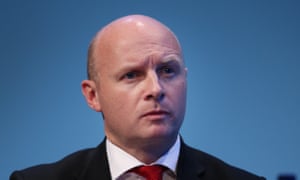
Everyone knows that after seven years of neglect from the Conservative government, the NHS is undergoing a serious crisis of funding and staffing. The last thing needed is more uncertainty. That is exactly what the NHS faces with Brexit.


On Wednesday Theresa May will trigger article 50 and later this week health bosses publish the updated Five Year Forward View. It is time for the prime minister and the health secretary, Jeremy Hunt, to give the NHS and its patients the certainty needed through the Brexit process. May has already turned her back on the promise of £350m a week for our NHS and now she is walking away from her responsibilities to protect the health service through a turbulent Brexit process that will hit it hard.


The complacency in government is astounding. Last week Hunt published the department of health’s Mandate to NHS England to set “the government’s objectives and any requirements for NHS England”. Amazingly, the 24-page document made no mention of Brexit whatsoever.


It should come as no surprise that the NHS is not a priority for the government. Hunt isn’t even a member of the cabinet committees managing the exit strategy. Yet Britain’s health and social care system is dependent on tens of thousands of European staff, many of whom have settled and built lives here while caring for our sick and elderly. Safeguarding the future of these staff should be an absolute priority in the Brexit negotiations. But in the House of Commons last week Hunt failed to offer any reassurance that he’s prepared to stand up for this essential section of the workforce he oversees.


Will health professionals from other EU countries be able to come to work in our NHS after Brexit, or will there be a cap on their numbers? As long as the issue is left unclear, more and more EU workers are voting with their feet and leaving on their own terms. In a recent survey, 42% of European health staff working here said they are now thinking of leaving the UK. Almost 5,500 have left since the Brexit vote according to NHS Digital, a 25% increase on the 2015 figures. And others are being put off from coming here at all: only 96 European nurses registered to work in the UK in December – that figure was 1,304 for last July.


So our first test of the government plans will be whether they deliver a right of remain for the 140,000 EU nationals working in the NHS and social care system. Secondly, on funding, we know that the EU’s Horizon 2020 scheme is due to invest £7.5bn in health research across the EU over the next five years, and the UK will be by far the largest recipient of those funds. We also receive EU funding from the Innovative Medicines Initiative, the European Cooperation in Science and Technology programme, and the Active and Assisted Living programme for older people.


This long-term funding is vital in giving security to those medical institutions and universities planning major research projects. They cannot just wait and see what will happen after 2019. So we need to know whether access to these funding streams will continue after Brexit. If not, how do the government propose to make up the shortfall?


Our third test is on reciprocal healthcare arrangements. It is a key principle that British citizens can obtain free healthcare elsewhere in Europe, just as they would at home. That is an important safety net for British holidaymakers, and for UK citizens living elsewhere in Europe. Does the government intend to maintain those arrangements? If not, how will it address the increased insurance costs for UK holidaymakers?


Our fourth test is on EU healthcare collaboration. Working effectively with our European partners, on everything from infectious disease control to the licensing and regulation of medicines, has been vital for the NHS in recent years. The sector desperately needs to know whether it’s the government’s intention to maintain the UK’s participation in pan-European public health initiatives after Brexit. Will the UK continue to participate in the centralised marketing authorisation procedure for the licensing, sale and regulation of medicines, governed by the European Medicines Agency? The government needs to be clear about how Brexit will affect the UK pharmaceutical industry when exporting medicines to other member states in future.


These are difficult and detailed questions, but they are all of absolute importance to the future of our health service and of our medical research sectors. There is no reason why May should refuse to give us the answers. That will allow us to understand with greater clarity what the impact of Brexit will be on the NHS – and most importantly, it will allow patients and staff the opportunity to scrutinise the government’s plans closely over the next two years.


The NHS is already in crisis over funding and staffing. But Brexit has the potential to tip those crises into disasters. Patients and NHS staff should not be bargaining chips in May’s hard Brexit negotiations. They want a world-class NHS delivering the best quality healthcare. As article 50 is triggered, the very least the public deserves is clarity and certainty from its government.


The fog of Brexit is engulfing the NHS. It’s up to Theresa May to provide clarity | Jonathan Ashworth

30 Aralık 2016 Cuma

"Dad was an alcoholic": MP Jonathan Ashworth urges action on drinking

Childhood memories of growing up with an alcoholic father have prompted the shadow health secretary to call for greater recognition of the damage done by excessive drinking.


Jonathan Ashworth said there was a need for urgent action because the cost of alcohol-related harm was not just the £3.5bn NHS price-tag, but up to £7bn in lost productivity for the British economy.


During an interview with the Guardian, the Labour MP said he also wanted there to be much more focus on the needs of families affected by alcoholism, claiming the issue would be a priority for him and Labour in 2017.


Ashworth said he was surprised to find himself disclosing, for the first time to a national newspaper, the reason he felt so passionately about the issue.


“It’s quite personal for me, because my dad was an alcoholic,” he said, suddenly spilling out early memories of his father falling over drunkenly at the school gates and of returning home to a fridge stacked with cheap booze and no food.


Ashworth said he had never really considered his experience as something relevant in policy terms. “You didn’t think there was a problem, you just thought ‘that is the life I’ve got’,” he said.


Then he came across the work being carried out by his Labour colleague, Liam Byrne, whose childhood was affected in a similar way.


The MP’s all-party parliamentary group dedicated to the children of alcoholics has revealed that local authorities across the country tend to have no specific strategies to help young people affected in this way.


The group, which is publishing research on the issue in the new year, said that millions of children were “suffering in silence”.


Inspired by Byrne’s work, Ashworth felt he wanted to make the issue a priority in 2017. “I wanted to do something on alcoholism so that if nothing else I’ll have done something on that,” he said, before adding: “I know it’s cliched.”


As well as backing Byrne’s ideas he wants to support a phoneline run by the National Association for Children of Alcoholics to help make it a nationwide service. He also wants more specialised training for professionals to support children and for councils to be properly funded to be able to reach out to families affected by alcoholism through schools, via community nurses and in Sure Start children’s centres.


Liam Byrne


Ashworth was inspired by Labour MP Liam Byrne who has set up an all-party parliamentary group dedicated to the children of alcoholics. Photograph: Peter Macdiarmid/Getty Images

Ashworth talked about his own experience as an only child in a working-class part of north Manchester after his mother, who worked as a barmaid, and his father, a croupier in a Salford casino, divorced.


He spoke vividly about the days that he stayed with his father – whom he said he loved dearly.


“I remember him falling over when he picked me up at the school gates and we’d get home and there would be nothing in the fridge other than bottles of wine – he drank cheap horrible bottles of white wine … and cans of lager and Stone’s bitter,” said Ashworth.


“When I got to 11 or 12 then I was effectively looking after him on the weekends because he was drunk all weekend,” he said, pausing before adding: “And eventually he died.”


Ashworth recalled trying to persuade his father not to move to Thailand one Christmas. The MP said he knew in his heart it would end badly, but his father replied: “No, I’m going,” and he went.


“I never saw him again,” said the MP.


About a year later he received a call telling him to travel to the small apartment where his father had been staying. When he got there he found his bed surrounded by empty whisky bottles. “He was in Thailand for that last year drinking a bottle of whisky a day … I had to clear it up. That was my life. He was 60.”


Ashworth said his father, also called Jon, had not been offered formal help, although he himself had tried to raise the issue of his drinking as an adult. He said his dad thought he was OK because he didn’t touch alcohol during his working hours. “But as a child I didn’t see him at work,” he said.


Ashworth, who was politically active for the Labour party from the age of 15, through college and on into a job advising Gordon Brown, said the experience with his dad left him feeling “not damaged but determined”.


The MP for LeicesterSouth – who was promoted to shadow health secretary by Jeremy Corbyn after his second victory in a leadership contest – now feels he has an opportunity to take action.


As well as the work he outlined with charities and councils, he believes that part of the solution must also be a cultural drive to have alcoholism taken more seriously. Ashworth recalled how “people used to think it was funny – a right laugh” that his dad was a drinker.


He remembered his father in goal in the work football team and people pointing off the pitch and shouting: “Oh Jon Ash is in goal – just throw a crate of Stella in that direction and he’ll go after that.”


“And I was like ‘oh yeah that’s funny’, but actually that was my dad and for my teenage years I was looking after him. It just became a norm. I had to grow up very fast.”


But he is not just concerned about alcohol. “Public health has been cut back by the Tories but they are storing up huge problems,” he said. “Obesity is a huge problem that costs the NHS billions. The debate on obesity and diabetes hasn’t punched through.”


Ashworth said there were lessons to be learned from the bold action to ban smoking in public places, which had a massive impact. He called for much more direct action on poor diet.


“I think we have to be bold about what we say to the advertising industry – not just with kids programmes but families sitting down watching The X Factor. Think of the hundreds of thousands of calories being advertised this winter in the run-up to Christmas,” said Ashworth, arguing that fast food and supermarkets selling “tasty treats” were all over family viewing times.


“The government watered this down. There were going to be stricter restrictions on the industry, [David] Cameron was going to go for it and the story is that Theresa May got her red pen out and cut it out. I think we have got to be bold.”


"Dad was an alcoholic": MP Jonathan Ashworth urges action on drinking

18 Nisan 2014 Cuma

Jonathan Trott"s situation demonstrates we nevertheless are extended way off accepting imperfection

Sadly for Trott, commentators are suggesting his job at worldwide degree now seems to be more than with the ECB hugely unlikely to thrust him into a high-strain circumstance that is creating him so numerous problems.


But he is dealing with criticism as well – former England captain Michael Vaughn has stated that if Trott’s exit was not for mental health factors as critical as then suggested, he for one feels “conned”.


Trott’s story apparently demonstrates numerous of the problems nevertheless surrounding mental overall health: the difficulty of labels, uncertainties about severity, the non-patient’s need to have for a “cure” – all of which may possibly be amplified when the patient is heroic – and very profitable.


Element of the dilemma is that mental sickness, which influences 1 in 4 Britons, is broad-ranging: it encompasses a whole host of diagnoses from relatively brief episodes of lower mood (which might not need specific intervention, although help from loved ones is beneficial) to the sort of severe enduring mental illnesses this kind of as schizophrenia with which the public is much much more au fait.


Recent healthcare orthodoxy is that psychological sickness, thanks to advances in talking therapies and pharmacology, can be handled or managed. This is all very good information. But probably our optimism goes as well far?


Because the actuality is that medical professionals can not usually intervene and make our individuals much better – or manage their condition – for great.


Actually, we know now that in some circumstances, mental illness can be a recurring illness with episodes – of depression, say – which come and go, irrespective of therapy.


And despite the fact that the public is much far more conscious of psychological illness and a lot more compassionate towards these with it, there really is a great deal much less sympathy for someone who just keeps falling unwell.


It is understandable. If you knew a person who stored breaking the same leg in the very same place, wouldn’t you shed patience with them?


There is a theory that society can be understanding towards the sick as lengthy as the sick play by the guidelines – in other words, if you get assist, you must then get much better. Fail to do that, or fall sick again, and you breach the guidelines, and society starts to turn away.


This is exacerbated in circumstances of workplace tension. “Stress” itself is a nebulous term – is it an sickness, a symptom, a fashionable complaint? It is utilized indiscriminately.


How much worse this perspective is when the perpetual patient transpires to be well-known as well – like an international cricketer. Here, we see a guy who has a life so several of us aspire to (or did).


His inability not to get greater – especially from an illness that is neither defined or noticeable – can appear almost insulting to anybody whose personal life or profession is mundane. Why can’t he try harder?


Yet, possibly we need to be making use of them as an instance for why this variety of unpredictable, difficult to diagnose, recurring metal illness should be regarded as a lot more kindly. Elite athletes are put underneath incredible strain – considerably of it monetary.


They are mindful of possessing devoted thousands of hrs to getting great at a single, often really narrow, skill. If that ought to fail, it is not just a match that could be lost, but an whole occupation. This in turn, piles on a lot more inner nervousness.


Plus – unlike the instructor or physician who will take time off for mental health issues with privacy – sports activities folks are publicly exposed. We all come to feel some type of ownership and the correct to comment.


Thankfully, there are therapies that can assist with performance-associated anxieties, which are useful no matter whether you are an England cricketer or run your own organization.


I’ve discovered straightforward suggestions about work can help: pointing out that you can stroll away from your recent occupation to yet another which may possibly be more satisfying and profitable has been liberating for some anxious individuals.


Usually if a patient feels it is Ok to get a break, that can totally free them from nervousness ample to get back to operate.


Certainly, we are acquiring far better at accepting and comprehending psychological well being troubles – but Jonathan Trott’s case exhibits that there is even now a prolonged way to go before the public can accept imperfection.


Jonathan Trott"s situation demonstrates we nevertheless are extended way off accepting imperfection

31 Ocak 2014 Cuma

We now believe in no one particular with our data – not even our physicians | Jonathan Freedland

Medical records

‘if there’s one particular point we would want to maintain behind substantial walls, it’s definitely the intimate histories of our psychological and bodily wellness.’ Photograph: David Sillitoe for the Guardian


If you imagined somebody snooping around your emails and listening to your cellphone calls was negative, imagine them seeking at your health-related data. The personal realm may possibly be ever-shrinking – in an age when we reveal so a lot of ourselves on the web and when we know the eavesdroppers of the NSA and GCHQ are never far away – but if there is a single thing we’d want to keep behind high walls, it really is definitely the intimate histories of our psychological and physical wellness.


So there can be minor surprise that privacy campaigners are recoiling at the expansion of NHS England’s data assortment, which from this spring will get in data from the spot exactly where most folks expertise the NHS: their GP’s surgical procedure. Until now, the NHS in England stored the stats from hospital visits but not from people day-to-day encounters with your local medical doctor. As 26.5m leaflets pop through letterboxes, explaining the new “care.data” venture, groups such as medConfidential.org are urging sufferers to opt out in the identify of simple privacy. A single survey located that up to forty% of GPs plan to preserve their personal individual information out of the scheme. My very first, unreflective instinct would be to stay out also – and other individuals will surely come to feel the same way. Without a doubt, the appeal of that stance says significantly about the times we dwell in, each on the internet and in the physical planet.


For one particular point, less than a year right after Edward Snowden’s revelations of mass surveillance, the notion that our health-related records will remain closely guarded, viewed only by these physicians and scientific researchers who require to see them, arouses instantaneous scepticism. Confident, we believe. They said the identical about our emails. Following Snowden, a lot of will presume that if the authorities want to know no matter whether we are HIV-optimistic or when suffered from depression, they will be in a position to discover out with just one click. As medConfidential’s Phil Booth advised the FT: “Everyone agrees healthcare research is a good issue but, right after the NSA scandal, men and women are receiving smart to the dangers of these enormous information sets.” [paywalled link]


It does not even have to be that sinister. It wasn’t that lengthy ago that government ministers had been apologising from the floor of the Home of Commons after Income &amp Customs mislaid two discs containing the names, dates of birth, national insurance coverage numbers and, the place appropriate, financial institution specifics of 25 million people. What, one wonders now, is to cease the geniuses who brought us that catastrophe messing up once again, except this time dropping not our tax specifics but the stories of our lives and bodies?


Campaigners be concerned as well about who may well want to consider a appear at all that information. Won’t the huge drug businesses be desperate to pore more than that data, the greater to profit from our frailties? And if private well being and lifestyle insurance companies get accessibility to that data, won’t they begin charging larger premiums if they know what when took us to see the doctor?


Given all individuals worries, you can see why some want to opt out. And yet that 1st, gut instinct may well be wrong. It’s not just that the vast bulk of the information will be rendered anonymous, with people blurred out in all but the most managed circumstances, or that there are rigid rules in area more than entry to this data. Nor even that there is an explicit declaration that this data will not be shared with insurance or advertising and marketing companies – so no prospect of a Strepsils ad popping up on your display just following you’ve observed your GP in excess of a sore throat.


Rather, it really is the fantastic achieve that this details will offer. Small, clinical studies only tell you so a lot. Sometimes it’s mass data you want. It was mass data that disproved the link between MMR and autism, or that spotted the connection in between Thalidomide and birth defects, or amongst smoking and cancer. Ethically you can not conduct trials on pregnant females or youngsters, so you happen to be reliant on realizing what is occurring in the population. If you can know that swiftly and at scale, you can act faster and more successfully. As the leaflet popping via the door puts it: “Greater info means better care.”


The pragmatic truth is that this logic extends even to the private drug companies. Like it or not, it’s by means of pharmaceutical companies that new medicines are produced: they are the ones who fund the trials, turning analysis into medicine. As Nicola Perrin of the Wellcome Believe in, which strongly backs care.information, place it to me: “If we want entry to the very best feasible medication, the drug businesses want accessibility to the best feasible info.”


There is a principle at stake here also. In a subtle piece for the Socialist Health Association, Prof Dave Byrne recalls the conventional strategy of educating health care students, in which a senior medical doctor on a ward-round would urge them to search at and learn from true-life people and their treatment: care.information is just a hi-tech model of that approach, says Byrne, gathering with each other doctors’ expertise of treating sufferers. Viewed this way, our individual experience of remedy – suitably anonymised – is not our personal house, even if it must continue to be personal. These who treated us have the right to use that expertise to benefit other people, to help the collective great.


But anonymity is the essential. None of these arguments in favour of care.data works unless of course we can be certain people rules on accessibility hold firm and that the identity of personal individuals stays concealed – and not very easily hacked as some at the moment dread. And but on-line anonymity remains vexed. All too usually it would seem we do not have it when we need to, whether by way of data reduction or NSA-style state intrusion. At the identical time, we have as well considerably anonymity when we shouldn’t: witness the social media trolls and abusers, or phoney, astroturf campaigners, able to keep hidden when they would absolutely shrivel if exposed to the daylight and forced to reveal their correct identities.


The bigger obstacle confronting this new scheme goes past the virtual realm. It is a modify that is infecting virtually each and every aspect of our shared lives: reduction of trust. So the government can issue guarantees of privacy safety and our first imagined is of missing discs, GCHQ eavesdroppers or maybe hacked phones. Too a lot of institutions have been exposed as possessing betrayed their unspoken guarantees, regardless of whether it’s MPs, the safety services, the police, the banks or the BBC.


For many years the NHS stood alone, immune to this trend, medical doctors topping every index of believe in. But thanks to Mid-Staffs and scandals like it, the NHS also has been found wanting. Which is why a very good notion like a task to share our broad, unnamed data can encounter such resistance. We get absolutely nothing on trust these days – not even the word of a doctor.


Twitter: @Freedland


We now believe in no one particular with our data – not even our physicians | Jonathan Freedland