Provide etiketine sahip kayıtlar gösteriliyor. Tüm kayıtları göster

29 Mart 2017 Çarşamba

‘Communities provide the best solutions to their own problems’ | Rachel Pugh

Rachel Pugh


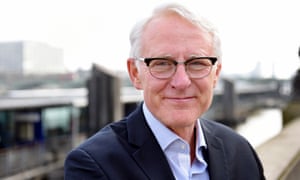
A year since Greater Manchester became the first region in England to take control of its £6bn health and social care budget, Jon Rouse is pleased at the progress already made, pointing to figures showing that 62-day cancer waits for Greater Manchester were among the best in the country, referrals to treatment targets are better than the England average and access to mental health services exceeds that of the north and of England as a whole. “I am proud,” he says. “In our first year, we have set up more than 20 programmes – and we are performing better overall in these areas than other parts of the country. It is quite an achievement. The key is to make sure the programmes deliver what we intend.”


As chief officer of the Greater Manchester Health and Social Care Partnership, Rouse is responsible for all the region’s health and social care that previously came under Greater Manchester’s 10 local authorities, 15 NHS trusts and foundation trusts, and 12 clinical commissioning groups. The 37 organisations are pooling their budgets to jointly organise, buy and provide health, care and support services for 2.8 million people across the region.


“Technically what we have in Greater Manchester is delegation,” says Rouse. “But what really matters is what we do. Devolution allows more flexibility on how the budget is allocated.”


Rouse has big ambitions for 2017. He wants to see further reductions in the number of unnecessary hospital admissions, GPs providing quality care to those who really need it through a new focused care programme aimed at the most deprived populations – and he wants to beat national standards on mental health.


But improving the basics are also vital, he says. “Devolution does not, however, mean that poor performance will be tolerated.” Greater Manchester has not met the 95% target for patients to be seen within four hours in A&E over the past 17 months, despite rigorous planning, including reducing hospital occupancies in the run-up to Christmas. The average in England is 85.1%, but Greater Manchester’s worst performing area, Stockport, only reached 70.5% and none of the others even reached the England average, except for Central Manchester (88.9%).


Rouse believes proposals announced this week to reform how urgent care is delivered will change all that. “We need to improve the routine GP service and out-of-hours care, but in return we need the public not to turn up to A&E when they do not need to,” he says. “For that to happen, we need to make it as easy as possible for them to know what the alternatives are. In the past we have not done that.” The plans include an app to inform the public which services are open and how busy they are – and a centralised operational hub in south Manchester, which will coordinate how hospitals respond to demand for urgent care across the region. “We are not downgrading any of our A&Es,” says Rouse. “However, we have designated four of our A&Es as higher acuity hubs.” These, which would treat the sickest patients, are Royal Oldham, Central Manchester, Stockport and Salford Royal.


An acute clinical services strategy is also under way, which aims to standardise and consolidate clinical services. Rouse says all hospitals will continue to provide general services, but would also have specialist roles for particular services. “We want to make sure that each hospital has a distinctive role, playing to its strengths. For example, at present Wigan is renowned for orthopaedics and south Manchester for coronary care,” he says.


Rouse points to the Greater Manchester cancer plan as one of devolution’s top achievements. With the exception of the Christie and Central Manchester University NHS foundation trusts, all the hospitals in Greater Manchester exceeded the 85% standard for patients to receive their first treatment within 62 days.


He admits that delayed discharges from hospital are more problematic, with 312 patients across Greater Manchester clocking up 6,729 days for January 2017 alone. “At the moment we are scrambling and it is not sustainable,” says Rouse. “Every day of every week we are being as creative as possible to find more community capacity.”


With the cumulative social care funding gap in the region predicted to reach £2bn by 2021, what can Rouse do practically to reduce this? He speaks with passion about the region’s new social care plan, launched in February, which aims to provide more support for carers, improve care home standards and encourage more people into social care through a new apprentice scheme. At least 70,000 people across the region are carers for more than 50 hours a week. If even 5% withdrew their support, it would leave an additional 3,500 people suddenly in need of the provision of full-time care from the state.


But in the end it is down to money, he says. “Integration is not the panacea. We need a new settlement in return for the way that social care is administered.” Whether Greater Manchester’s share of the £2bn extra funding announced this month is enough remains to be seen.


What about those who say “Devo Manc” is undemocratic and centralising? Rouse agrees that there was no referendum to introduce it, but he insists that there are benefits: “When something goes wrong in one part of the system, it is owned collectively. We treat it as one NHS and social care.


“Our strongest assets are our communities,” he continues. “Communities have the strength and provide the best solutions to their own problems. You have to facilitate that. I want an end to paternalism and talking shops, and to see the release of the power of the community.” It all sounds a bit Pollyannaish. What does he worry about? “There is the danger that the plans and discussions become disconnected and do not translate into changes at ground level,” Rouse admits. “My measure of success will be what people’s experience of healthcare is and whether it has improved. Devolution is not magic dust.”


Additional reporting by Anna Bawden and Pamela Duncan


CV


Age: 48.


Lives: Altrincham.


Family: Married, two daughters.


Education: Latimer Comprehensive school, Kettering; University of Manchester: law degree; London Metropolitan University: MA urban policy; University of Nottingham: MBA.


Career: 2016 to present: chief officer, Greater Manchester Health and Social Care Partnership; 2013-2016: director general, social care, local government and care partnerships, Department of Health; 2007-2013: chief executive, London Borough of Croydon; 2004-2007: chief executive, the Housing Corporation; 2000-2004: chief executive, Commission for Architecture and the Built Environment; 1998–99: secretary, the government’s Urban Task Force; 1995–98: policy and communications manager, English Partnerships; 1994–95: private secretary to housing minister; 1993–94: policy analyst, Energy Saving Trust;


1992–93: principal policy officer, Ealing borough council.


Interests: Playing clarinet, watching Queens Park Rangers FC away and Altrincham FC at home, family life and planning great holidays.


‘Communities provide the best solutions to their own problems’ | Rachel Pugh

28 Mart 2017 Salı

The fog of Brexit is engulfing the NHS. It’s up to Theresa May to provide clarity | Jonathan Ashworth

Everyone knows that after seven years of neglect from the Conservative government, the NHS is undergoing a serious crisis of funding and staffing. The last thing needed is more uncertainty. That is exactly what the NHS faces with Brexit.


On Wednesday Theresa May will trigger article 50 and later this week health bosses publish the updated Five Year Forward View. It is time for the prime minister and the health secretary, Jeremy Hunt, to give the NHS and its patients the certainty needed through the Brexit process. May has already turned her back on the promise of £350m a week for our NHS and now she is walking away from her responsibilities to protect the health service through a turbulent Brexit process that will hit it hard.


The complacency in government is astounding. Last week Hunt published the department of health’s Mandate to NHS England to set “the government’s objectives and any requirements for NHS England”. Amazingly, the 24-page document made no mention of Brexit whatsoever.


It should come as no surprise that the NHS is not a priority for the government. Hunt isn’t even a member of the cabinet committees managing the exit strategy. Yet Britain’s health and social care system is dependent on tens of thousands of European staff, many of whom have settled and built lives here while caring for our sick and elderly. Safeguarding the future of these staff should be an absolute priority in the Brexit negotiations. But in the House of Commons last week Hunt failed to offer any reassurance that he’s prepared to stand up for this essential section of the workforce he oversees.


Will health professionals from other EU countries be able to come to work in our NHS after Brexit, or will there be a cap on their numbers? As long as the issue is left unclear, more and more EU workers are voting with their feet and leaving on their own terms. In a recent survey, 42% of European health staff working here said they are now thinking of leaving the UK. Almost 5,500 have left since the Brexit vote according to NHS Digital, a 25% increase on the 2015 figures. And others are being put off from coming here at all: only 96 European nurses registered to work in the UK in December – that figure was 1,304 for last July.


So our first test of the government plans will be whether they deliver a right of remain for the 140,000 EU nationals working in the NHS and social care system. Secondly, on funding, we know that the EU’s Horizon 2020 scheme is due to invest £7.5bn in health research across the EU over the next five years, and the UK will be by far the largest recipient of those funds. We also receive EU funding from the Innovative Medicines Initiative, the European Cooperation in Science and Technology programme, and the Active and Assisted Living programme for older people.


This long-term funding is vital in giving security to those medical institutions and universities planning major research projects. They cannot just wait and see what will happen after 2019. So we need to know whether access to these funding streams will continue after Brexit. If not, how do the government propose to make up the shortfall?


Our third test is on reciprocal healthcare arrangements. It is a key principle that British citizens can obtain free healthcare elsewhere in Europe, just as they would at home. That is an important safety net for British holidaymakers, and for UK citizens living elsewhere in Europe. Does the government intend to maintain those arrangements? If not, how will it address the increased insurance costs for UK holidaymakers?


Our fourth test is on EU healthcare collaboration. Working effectively with our European partners, on everything from infectious disease control to the licensing and regulation of medicines, has been vital for the NHS in recent years. The sector desperately needs to know whether it’s the government’s intention to maintain the UK’s participation in pan-European public health initiatives after Brexit. Will the UK continue to participate in the centralised marketing authorisation procedure for the licensing, sale and regulation of medicines, governed by the European Medicines Agency? The government needs to be clear about how Brexit will affect the UK pharmaceutical industry when exporting medicines to other member states in future.


These are difficult and detailed questions, but they are all of absolute importance to the future of our health service and of our medical research sectors. There is no reason why May should refuse to give us the answers. That will allow us to understand with greater clarity what the impact of Brexit will be on the NHS – and most importantly, it will allow patients and staff the opportunity to scrutinise the government’s plans closely over the next two years.


The NHS is already in crisis over funding and staffing. But Brexit has the potential to tip those crises into disasters. Patients and NHS staff should not be bargaining chips in May’s hard Brexit negotiations. They want a world-class NHS delivering the best quality healthcare. As article 50 is triggered, the very least the public deserves is clarity and certainty from its government.


The fog of Brexit is engulfing the NHS. It’s up to Theresa May to provide clarity | Jonathan Ashworth

16 Mart 2017 Perşembe

Lib Dems call for 1p income tax rise to provide NHS funding boost

Income tax should be increased by 1p to deliver a £4.6bn boost to the struggling NHS while a long-term funding solution is found, the former Liberal Democrat health minister Norman Lamb has said.


As the Lib Dems seek to woo traditional Labour voters and win back public trust, after being reduced to just nine MPs, Lamb will urge his party’s spring forum this weekend to back higher taxes to pay for health and social care.


“You have to be straight with the public about what you say you will raise and then do it,” he told the Guardian, in the wake of a government U-turn over the national insurance contributions rise that was proposed by Philip Hammond in last week’s budget.


He would like to see income tax increased by 1p immediately while a new system is phased in. Lamb has asked a committee of health experts to make recommendations, but he suggests rebranding national insurance and earmarking it for health and social care is likely to be his preferred solution.


“You can have a mature discussion about why this is necessary,” Lamb said. “The bottom line is: it comes down to our loved ones. That hour of need when there is that real anxiety that there may be a cancer and you are not sure if you will get treated on time – that is something most people will find intolerable. That stake we all have in a system that works properly is very powerful.”


Lamb leads a cross-party group of Lib Dem, Labour and Conservative MPs, including the chair of the health select committee, Sarah Wollaston, who recently met the prime minister and pressed her to put the funding of the NHS and social care on a more sustainable footing.


Theresa May has agreed the group can consult her health adviser, Dr James Kent – a former medical doctor turned management consultant. Lamb said he will make the case for a cross-party investigation, lasting roughly a year, into long-term reforms.


Though Lamb said he ultimately believed the solution to the health crisis would be found in cross-party collaboration, he said his party had to be “audacious” with their own policy proposals, “because if we don’t, we’re nothing, there’s no point to us”.


He said Labour had failed to say where it would find the money to fund the NHS more generously, despite its leader, Jeremy Corbyn, regularly making the issue a key theme at prime minister’s questions.


“They are crushed by caution because this is difficult and they are worried about saying people will pay more tax under Labour,” Lamb said. “That is everybody’s fear about Labour, that they will expect everyone to pay loads more tax. So they, the leadership, resort to shouting.”


Norman Lamb MP.


Norman Lamb MP, a former health minister. Photograph: Linda Nylind for the Guardian

Though he stressed his support for the NHS as a tax-funded health system, Lamb said it was an “uncomfortable truth” that European social insurance models had kept better pace with demand.


“In Germany they just put the premium up and it doesn’t feel the same as increasing tax,” he said. “I think a dedicated health and social care tax, independently assessed, would work as a hybrid, a tax-funded health system which you see going into the care system.”


Lamb, who has devised the new proposals with a panel of health advisers including David Nicholson, the former chief executive of NHS England, will also propose an “OBR for mental health” to make independent assessments either once a year or the start of a parliament, of the funding the health service needs.


That approach would echo George Osborne’s creation of the Office for Budget Responsibility, which checks the Treasury’s economic forecasts and tax and spending plans.


The MP admitted that any new system would take several years to implement and that tax rises would be necessary in the interim. “My view is that we as a party should make the case for a 1p increase in income tax, raising about £4.6bn,” he said. “That would make a massive difference.”


Lamb said the extra funds raised should be ringfenced for health and social care, with an emphasis on investment on prevention, particularly in digitisation of systems. “It’s unbelievable we still have faxes flying around the NHS,” he said.


Other priorities should be improving general practice and investing in social care – giving people better treatment at home rather than deterioration, which results in hospital admissions, he said.


The Treasury has traditionally been sceptical about hypothecation – the practice of earmarking the revenue from particular taxes for one purpose. But former permanent secretary Nick Macpherson recently advocated five-year budgets for healthcare, paid for by a dedicated tax.


The Lib Dem vote collapsed in the 2015 general election, after the party joined the Conservatives in coalition and broke a manifesto pledge not to increase tuition fees.


The leader, Tim Farron, hopes his party can make a comeback as the champion of pro-remain voters, but believes it must be upfront about the need to raise taxes.


Lamb, who has been a vigorous campaigner for mental health during his time in politics and as a health minister during the coalition, has spoken out about his family’s struggles to get swift treatment for his son’s mental illness.


Archie Lamb, who subsequently founded a music label that launched the careers of stars including rapper Tinchy Stryder, had obsessive compulsive disorder and the family paid for private treatment after being told the waiting list for the NHS would be too long.


“If you can pay, you’re not going to watch your child deteriorate, but there are families who can’t pay and I can’t tolerate that,” he said. “That’s what makes me very driven. I came across so many cases as a minister where families are desperate and being completely let down by the system, with teenage girls with eating disorders told their BMI wasn’t low enough, so basically go away and get sicker.


“It is morally wrong and economically stupid but this is happening in our country and we have to confront it.”


Lib Dems call for 1p income tax rise to provide NHS funding boost

7 Mart 2017 Salı

NHS forced to provide 4,500 extra beds a day

Hospitals had to provide 4,500 extra beds a day at the height of the pressures this winter to avoid “a full-blown crisis”, NHS bosses have revealed.


That is the equivalent of creating more than eight extra hospitals to cope with unprecedented demand in recent months when large numbers of patients were stuck on trolleys and in the back of ambulances outside A&E units.


The NHS in England came under such intense pressure that patients found hospitals “distressing and potentially dangerous”, according to a report from NHS Providers.


The organisation, which represents the majority of NHS trusts in England, claims hospitals are close to “breaking point” as they become overcrowded all year round.


Its analysis of NHS England data on how hospitals performed during December, January and February shows they had to add sometimes dozens of “escalation” beds at short notice so they could admit every patient who needed to stay in. Some used rehabilitation gyms and other areas not usually used for patients.


Chris Hopson, the chief executive of NHS Providers, said: “This has been the busiest winter ever for the NHS. Be in no doubt, these figures show a system running hot and – in particular times and places – overwhelmed by the demands placed on it, risking patient safety.”


In the NHS’s busiest week this winter, between 30 January and 5 February, hospitals opened up a total of 32,558 additional beds. They created almost as many overflow beds in the first half of February, when cold weather added to existing pressures.


Patients had to be diverted from one hospital A&E unit to another 476 times over the winter – almost double the 266 of last winter, NHS Providers says.


“As pressure continues to grow, the likelihood of more trusts reaching and moving beyond breaking point increases,” said Deborah Gulliver, a senior research analyst with NHS Providers. “For patients these difficulties are distressing and potentially dangerous. They are also demotivating and demoralising for the clinical workforce. It is thanks to the extraordinary efforts of frontline staff that we have made it through this winter period without a full-blown crisis. However, trusts are telling us that it was a close-run thing.”


The heavy demand on the NHS all year round was leading to worryingly high levels of bed occupancy, she added. Bed occupancy reached 96% this winter, above the 85% considered safe.


“So the resilience of trusts to deal with unexpected spikes in pressure, such as flu outbreaks and norovirus, is compromised. We cannot afford to ride our luck indefinitely,” Gulliver said.


Jonathan Ashworth, the shadow health secretary, said: “This stark warning from NHS Providers makes clear this has been an NHS winter like never before.


“Theresa May’s refusal to take seriously the twin threat of NHS underfunding and rising demand has pushed services to the brink. The direct result of the prime minister’s stubbornness has been a collapse in standards of patient care, with the worst performance on record for A&E and most hospitals dangerously overcrowded.”


NHS Providers is urging Jeremy Hunt, the health secretary, to order a review of how the NHS coped this winter in order to learn lessons and prevent hospitals from coming so close to not coping in future. The current situation is “not sustainable” for the NHS or patients, it argues.


Meanwhile, a poll of 96 MPs of all parties by the Royal College of Emergency Medicine, which represents A&E doctors, has found that only 33% of them believe A&E departments have enough money and staff to provide safe care. More than six in 10 MPs believe A&E departments need more money, said the college.


NHS forced to provide 4,500 extra beds a day

21 Kasım 2016 Pazartesi

Four in five UK councils struggle to provide older people"s care – survey

Four in five UK local authorities have insufficient care for older people in their area, with the shortage most acute for some of the most vulnerable in society, research suggests.


The Family and Childcare Trust surveyed councils across the country and found they are struggling to meet needs amid a background of growing demand, budget cuts and recruitment difficulties.


The survey is published on the same day as an undercover investigation by BBC Panorama is to be broadcast, exposing shocking neglect at two Cornwall care homes, including vulnerable people being left unattended and a nurse saying she will use morphine to “shut up” a resident.


The deficit identified by the Family and Childcare Trust means more than 6.4 million people aged 65 and over are living in areas that do not have enough older people’s care to meet demand.


Only one in five councils reported having enough older people’s care in their area to meet demand, the survey found.


Just under half (48%) of the 182 councils (out of 211) that responded said they had sufficient availability of home care and a similar proportion (44%) reported having enough places in extra care homes, which allow people to live independently with 24-hour emergency or on-site support.


Only a third of local authorities said they have enough nursing homes with specialist support for dementia, which is predicted to affect one million people in the UK by 2025.


Claire Harding, head of research at the Family and Childcare Trust, which works closely with the government and local authorities, said: “It is inexcusable that vulnerable people are left unable to find the care that they need.


“We urge government to make sure there is enough care for everyone who needs it. In order to do this, we need robust data on where there are gaps in care, a funding system that truly meets the cost of providing care, and clear information for families.


“Without these steps, families will continue to struggle to find care and to meet the numerous care costs on their shoulders.”


The survey also highlighted large regional variations, with just 7% of outer London councils reporting enough older people’s care to meet demand. The only area where more than half of local authorities reported sufficient care was the north-east, where 57% responded positively.


The findings will add to the sense of crisis surrounding social care, with delayed transfers of care – when patients are medically fit to leave hospital but unable to be safely discharged – at record levels.


Council and NHS leaders, as well as the Care Quality Commission, have called for urgent action, with the chancellor, Philip Hammond, facing pressure to increase social funding in Wednesday’s autumn statement.


Inner London councils pay the highest rates for residential care for older people, at £649 a week per place, compared with the lowest rate of £464 in north-west England, according to the survey. The UK average for a residential place was revealed to be £27,113 a year.


A Department of Health spokeswoman said: “This government is committed to making sure older people throughout the country get affordable and dignified care. That is why we are significantly increasing the amount of money local authorities have access to for social care, by up to £3.5bn by 2020.”


Monday’s Panorama sees reporters go undercover at Clinton House in St Austell, and St Theresa’s, in Callington, near Plymouth, both owned by the Morleigh Group.


Hidden camera footage captured one resident left on a bed pan for 40 minutes and an out-of-date prescription supplement relabelled for use by another resident.


Clinton House is being closed as a result of safety concerns and St Theresa’s is under investigation by authorities along with two other Moreleigh Group homes.


Moreleigh Group said it had already removed the staff involved and reviewed its systems and procedures, prior to receiving information from Panorma. Cornwall council apologised for the failings.


Four in five UK councils struggle to provide older people"s care – survey

6 Haziran 2014 Cuma

How Gilead Sciences Can Provide A Double

Gilead Sciences’ (NASDAQ:GILD) drug portfolio has 16 medications, and generates gross margins above 70% with net margins constantly above 30%. It is newest drug, Sovaldi, is significantly boosting revenues and earnings, and two of our Masters, Eugene Groysman and Mike Koza, have noticed. This week I talked to Eugene to find out why he thinks GILD, which is up 49% in the last year, can double from here.


Eugene has a twelve-year track record with Marketocracy with his average yearly return of 18.3%. You can see Eugene‘s prime five holdings, learn a lot more about his approach, and track his progress with monthly Overall performance Insights emailed immediately to you at the end of each month by visiting our site.


Ken Kam:  Eugene, do you consider Gilead has the potential to double in the up coming handful of years.


Eugene Groysman:  Yes, Gilead has a varied drug portfolio. Sovaldi has proven remarkable success towards Hepatitis-C.  This is great for Gilead’s bottom line.  According the Health and Human Solutions Department, there are 3.2 million Americans who have Hep-C. The Lancet estimates 9 million Europeans also have the virus, with only half that have been diagnosed.  There is a remarkable potential marketplace for the drug.


Ken Kam:  Sovaldi was just introduced.  How are income going?


Eugene Groysman:  Last year’s Q1, revenues from product product sales had been close to $ 2.four billion. This most recent quarter, solution sales were $ 4.8 billion. Product income more than doubled, and 46% of those sales came from Sovaldi. Usually, I really do not like to examine quarters, due to the fact I favor to examine yr more than 12 months, but it is definitely a good start off.


Ken Kam: Exactly where is the likely marketplace growth going to come from?


Eugene Groysman:  First of the all the drug works. That is why Gilead can charge $ 84,000 for a 12 week course of therapy. So far this 12 months, there has only been a tiny in excess of 32,000 prescriptions issued. There are still a great deal of individuals who have Hep-C in the U.S. who may possibly benefit from this drug. In addition, Sovaldi was just accepted in Europe. Gilead only offered $ 163 million of Sovaldi in Europe final quarter, however there are a lot more Hep-C individuals in Europe than in the U.S., so European product sales need to surpass U.S. revenue.  The World Well being Organization estimates that at least 130 million people throughout the world have Hepatitis-C.  That is a enormous prospective market place, and Gilead is positioning itself to be the principal player in that industry.  With only $ twelve million in revenue outside the U.S. and Europe, there is a lot of possibility to expand worldwide income.


Ken Kam:  Using some of your favored metrics, what do you like about Gilead now that Sovaldi is element of their drug portfolio?


Eugene Groysman:  As you know, I like cash flow from operations.  I particularly like to use Cash Movement/Income as a ratio to make confident that the revenues and cash are growing at the same price.  Gilead’s Funds Movement/Income was .27 in 2013.  Since the introduction of Sovaldi, the business presently additional $ 1.57 billion in cash from operations.  They now have above $ 4 billion in funds, and their Funds/Revenue is now .29.  That implies their money flow is expanding more quickly than their revenues.


Ken Kam:  I see that Gilead is your fifth biggest holding. Do you see it staying at that level?


Eugene Groysman:  I anticipate retaining it at 6% of the portfolio.  If it approaches six.five%, I may possibly decrease I will definitely pare down the position if is seven% of my portfolio.  I really don’t want to overexpose the rest of the portfolio if it gets overweighted, and I really do not mind taking some income.


Ken Kam:  Thanks Eugene. This appears promising.


My Consider


I consider Eugene can make a quite robust situation that Gilead’s revenue can double in the next handful of years, and I think that with these kinds of margins, the stock price tag could double as nicely. GILD, nonetheless, is a volatile stock. The stock fell approximately 20% in the biotech selloff this previous March. Most individuals discover it challenging to get a stock right after its suffered a massive loss, but if you’ve done your homework, it is exactly at individuals occasions that you can get the very best entry factors. It is a truth of life that even if you are appropriate about the organization, the stock could still fall twenty% because of factors outdoors of the company’s handle.  I’ve seen Eugene trade the two Apple (NASDAQ:AAPL)  and Tesla (NASDAQ:TSLA) to capture gains from these kind of value swings and it accounts for a good portion of his general gains. Eugene believes that a effectively allotted portfolio can execute better in any industry than one particular in which the manager is only centered on selecting the next best stock. He advocates that the positions need to be acting for the better very good of the overall portfolio rather than acting independently of each and every other.


GILD by itself is as well volatile to be regarded as a core holding. But when it is 6% of a portfolio of stocks in other industries that have the very same development likely, it can be a sound addition to a core portfolio.


Connect with Ken Kam on LinkedIN.


Disclosure: I am the portfolio manager for mutual and hedge money advised by Marketocracy Capital Management, an SEC registered investment advisor. Before relying on the opinions expressed in this report, you ought to assume that Marketocracy, its affiliates, clients, and I have materials financial interests in these stocks and could hold or trade them contrary to these opinions when, in our see, industry circumstances change.


How Gilead Sciences Can Provide A Double

13 Mart 2014 Perşembe

Cegedim and Docnet Provide "Purposeful Collaboration" To Redefine The Physician Social Network

Cegedim has taken a dive into doctor social networks.  Recently, I spoke with Angela Miccoli, President – North America for Cegedim Relationship Management, to get a better sense of how Docnet will engage physicians and Cegedim’s expectations for the US and worldwide marketplace.  Cegedim has deployed Docnet effectively in almost a dozen other nations, and the investments in Docnet are far more than two many years previous. But its launch into the US market will be each an essential services providing and a important barometer for accomplishment.


A network designed especially for daily life sciences, Docnet is centered on providing time back to today’s occupied doctor. It maximizes crucial providers from income representative engagement and solution sampling – to networking and continuing medical schooling. Miccoli sums up Docnet in basic, however compelling terms:


For doctors right now, there are numerous “distraction activities” they nonetheless have to do in an analog way that take time and attention away from improving their practices and benefitting patients. Docnet gives time back to medical professionals. When a physician can use Docnet to buy samples, discover, facilitate co-pay out cards, look up medication, and go via other processes – in a digital, frictionless, worth oriented method – they can focus much more on individuals and practice transformation.


The bottom line for Cegedim:  Docnet and the doctor audience is worth. Connecting doctor-to-physician like Facebook and LinkedIn is essential, but Docnet will strive, according to Miccoil, to connect doctor-to-articles, physician-to-goal, and sooner or later, physician-to-value.   And it’s this value that can make Docnet much less of another social media network, and a lot more of an crucial practice tool.  And beyond material and engagement, Docnet can make it “safe to be social.” With above 40 many years of compliance information and equipment, Miccoli points out that Cegedim is uniquely positioned to deliver a platform of compliance that meets the strictest expectations and suggestions in the business.


From easy sharing to advancing healthcare care, social networks have the prospective to turn out to be essential equipment for doctors.  Alan Lepofsy, VP and Principal Analyst at Constellation Analysis is a effectively-established advocate of advancing the nature of collaboration, summarizes this central idea in the context of healthcare. “Social networks can be a fantastic way to learn data and connect with men and women, but without having a defined objective, participation in these networks usually swiftly fizzle out. In the healthcare industry, collaboration platforms require to allow doctors to function together close to processes like study, clinical practice and continued schooling.”


In a clinical environment exactly where efficiency is important, Cegedim is leveraging their skills to build a platform that moves past facts and figures to provide the value.  This value will make physicians see social networks with much less apprehension and a greater sense of the two logistical and clinical worth.


Keep Critical! Stick to me on Twitter, LinkedIn and Google+!


Cegedim and Docnet Provide "Purposeful Collaboration" To Redefine The Physician Social Network