Junior etiketine sahip kayıtlar gösteriliyor. Tüm kayıtları göster

19 Nisan 2017 Çarşamba

Nasal tampons, black alerts and Peppa Pig: junior doctors confess all

From as young as 23, junior doctors work in every department of a hospital, from the corridors of A&E to the operating theatres. A new Channel 4 series, Confessions of a Junior Doctor, explores the story of these NHS frontliners as they deal with unprecedented difficulties for public healthcare. Four of them, writing anonymously, describe these early years.


The junior paediatrician


“Doctor! There’s seven in the waiting room, a child upstairs has pulled his cannula out and A&E say you’ve got 20 minutes left to see that child with a burn,” the nurse in charge barks furiously. I’m interrupted by a screeching bleep. “Better answer that,” I say, with a thinly veiled whimper. “Doctor, we’ve got a 75-year-old epistaxis here, on warfarin. I can’t get it to stop, come now!” In plain English, that’s an elderly man who is about to die from an unstoppable nosebleed.


I sprint via children’s A&E to launch a rapid charm offensive and manage to buy time to see the burnt child later. Carnage meanwhile ensues as a hapless elderly gentleman is spraying blood from his nose and mouth. After 45 minutes of tinkering with various sprays, gauze and nasal packs, I manage to stop his bleeding. A nasal pack, by the way, is a tampon with a rough outer surface like a nail file. Imagine that being rammed into your nose at midnight; a necessary evil, I assure you. I bid a curtailed farewell and sprint back to paediatric A&E.



All worth it? A junior doctor takes five.


All worth it? Junior doctor Sam takes five. Photograph: Ryan Mcnamara/Channel 4

There, my heart sinks as three-year-old Oscar weeps in pain. He was victim to curiosity and managed to tip a hot coffee on himself. He breaks the ice by laughing and grabbing my head torch – apparently I’m a cartoon Minion! I give pain relief and fight to dress his wounds, and book him into a specialist clinic for tomorrow morning. We high-five and I send him home. A moment of light relief in an otherwise dreadful night.


I work for the next six hours to clear my waiting room of patients with their relatively minor ailments, sent from the out-of-hours GP. It’s 4am and I’m still getting an onslaught of referrals from all directions. The entire night I am needed in three places at once, firefighting as I go along. I’m not happy, the team isn’t happy and, most crucially, my patients aren’t happy. I’m despondent – we need increased staffing and a fresh change in attitude. It seems as though the current system is optimised for patient flow rather than patient care. As for the elderly chap with the nosebleed, thank God he arrived when my other patients were less urgent, and I got to him when I did.


The paediatric registrar


When asked why you want to do medicine, the stock medical student answer is often: “To help others.” While this is undoubtedly a rewarding bonus, a more realistic question for doctors in the current climate, all of whom have lives and families of their own, is rather: what are you prepared to sacrifice to succeed in medicine?


I’m a paediatric registrar. For me, nothing compares to the unique challenges of managing the care of children and their families. Having an unwell child is a frightening experience for parents and clinicians alike. Treating them, and seeing the majority do very well, is an incredibly rewarding privilege.


As a (now not so) new registrar, “the fear” briefly returned to me as I stepped up to this new level of seniority. My first out-of-hours shift as a new registrar came with an overwhelming sense of awareness that I was responsible for providing the emergency care and leading the junior team.


While I am a doctor to countless little boys and girls, I am also a mum to my own little boy. Settling into my role has therefore been a mixed journey. The shift-based, unpredictable nature of clinical work has made childcare a difficult balancing act – particularly with a surgeon husband whose hours can be as unreliable as mine. I remember seeing my son’s first scan and searching for abnormalities – the downside of knowing what can go wrong. I tucked him into bed before my first registrar night shift, hoping “mummy’s at work tonight” wouldn’t become one of his first phrases. The families I meet on those shifts remind me how precious he is, and he in turn helps me understand the angst that those parents must be experiencing. My son has undoubtedly made me a better doctor, a more insightful version of myself.


Doctor with her young charge.


Twinkle, twinkle little stars … One doctor with a young patient. Photograph: Jude Edginton/Channel 4

Who else gets to calm frightened patients by singing Twinkle, Twinkle Little Star, or gain their trust for a procedure through an encyclopaedic knowledge of Peppa Pig? Despite being around them at home and work 24/7, children are always full of surprises, and that is what keeps me motivated.


The junior doctor on the A&E ward


On-call shifts are usually going to be busy. I knew one night would be hectic when I arrived and there were 26 patients waiting to be seen. The medical team consisted of one other house officer and a registrar, and we were responsible for clerking new admissions, covering two assessment wards and carrying the cardiac arrest bleeps.


That night was particularly tough. It was during winter when the emergency care crisis was at its peak, and the hospital was full. With no beds on the wards, the patients stacked up in A&E and just kept coming. Not only was the volume of patients high, but many were very unwell with complex problems.


When work is that busy you tell yourself: “I can only do what I can do; I need to prioritise and go from there.” With experience, you learn to force yourself to grab something to eat and drink while doing paperwork, as there is no point waiting for a break that never comes. Without sustenance, a 13-hour shift becomes impossible. Sometimes, a kind nurse will make you a cup of tea.


Things get really stressful when several patients simultaneously become acutely unwell and prioritising is almost impossible. I once had five patients all deteriorating – fortunately, they were on the same ward, which helped logistically, but added to the danger that they would “merge into one” and mistakes could be made.


After a day or night like that, I often drive home going through my patient list worrying that I have forgotten something. Yet no matter how tough work has been, I always leave knowing that I have made a difference to patients and their families. That helps me get through the more challenging shifts, when it feels as though there is just not enough time.



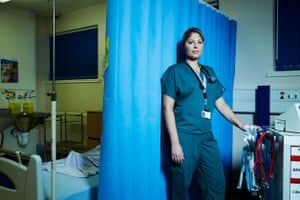
Emily from Confessions of a Junior Doctor.


Thirteen hours later… Emily from Confessions of a Junior Doctor. Photograph: Ryan Mcnamara/Channel 4

The junior doctor on the surgical ward


7.45am: One of the nursing staff tells me the hospital is on “black alert”; there are no beds available anywhere in the hospital. I already know it’s going to be a long day.


The on-call consultant has been up all night in an emergency operation, so ward round is delayed, which has a knock-on effect throughout the day. I get a call at 1pm from the bereavement office to complete a death certificate for a woman who passed away in the night.


My bleep goes. A young patient has become inexplicably confused. I assess and treat him to the best of my ability, but he needs a senior review; I feel helpless. It’s 2pm and I haven’t made it to the bereavement office – they have bleeped again. A nurse tells me a patient can return to her nursing home but transport has been arranged for 3pm. There is a hectic dash to complete all of the paperwork and order the necessary medicines.


It’s now past 3pm and I haven’t yet eaten, but as I collect my lunch, a consultant arrives to review his patients. This generates more jobs, including an urgent investigation for a patient heading to theatre first thing tomorrow morning. It takes more than an hour to request the investigation and find a technician able to perform it, but they are short staffed and cannot guarantee it will happen before the end of play today. My registrar calls; he has organised a scan for the young gentleman with confusion, to rule out stroke, and asks me to chase the results.


It’s gone 4.30pm and I still haven’t eaten. I need to chase test results, so sit in the doctor’s office and plan to eat while I work. However, one of the results shows a patient needs a blood transfusion. He requires a further blood test, so I take the sample and deliver it to the laboratory on the other side of the hospital. I go back to checking results. The report for the confused man identifies a stroke. I contact my registrar and organise an urgent review by the stroke team.


I look at the clock – it has gone 6pm. I should have finished at 5pm. Then I remember the death certificate. Too late. I am tired and hungry, and know I face it all again tomorrow.


Confessions of a Junior Doctor is on Channel 4 at 9pm


Nasal tampons, black alerts and Peppa Pig: junior doctors confess all

6 Ocak 2017 Cuma

I"m a junior doctor in the NHS, and I"m terrified for this winter

Widespread concerns that the NHS will face the “toughest winter ever” are not exaggerated or unfounded – just look at the terrible news today from Worcestershire. We really should be worried for ourselves and our relatives. As a junior doctor and a researcher looking after cancer patients in the NHS, I am terrified by the prospect of what the next few months will bring. But we must not forget this is entirely preventable.


Our current crisis is down to the almost clockwork-like series of reshuffling, rebranding and top-down disorganisation of the services by government. It’s led to an inexorable decline in the quality of care.


I have also become aware of an insidious “takeover” by the private sector. It is both literal – in the provision of services – and ideological, with an overwhelming prevalence of business-speak being absorbed into our collective psyche. But the British public (and even many staff) remain largely unaware that this is happening.


Where the consultant physician or surgeon was once general, they now increasingly play second fiddle to chief executives and clinical business unit managers. Junior doctors such as myself (many of whom have spent 10-15 years practising medicine and have completed PhDs) must also fall in line to comply with business models and corporate strategy put forward by those with no clinical training or experience with patients.


With bad policies accumulating over the years, we are now seeing the crisis come to a climax


It is this type of decision-making (based on little evidence) and seemingly unaccountable policymaking that means patient care is suffering. Blame cannot be laid at the feet of a population of demanding and ageing patients, nor the “health tourists” who are too often scapegoated.


The epitome of such changes is known as the “sustainability and transformation plans”. These will bring about some of the biggest shifts in how NHS frontline service are funded and run in recent history, and yet, worryingly, most of my own colleagues have not even heard of them. Even fewer feel able to influence them.


Sustainability and transformation plans will see almost a third of regions having an A&E closed or downgraded, and nearly half will see numbers of inpatient bed reductions. This is all part of the overarching five-year plan to drive through £22bn in efficiency savings in the NHS. But with overwhelming cuts in social services and community care and with GPs under immense pressure, people are forced to go to A&E because they quite simply do not have any other options.


I have been on the phone with patients with cancer who need to come into hospital with life-threatening conditions such as sepsis, and I have been forced to tell them, “We have no beds here you need to go to another local A&E.” Responses such as, “Please doctor don’t make me go there – last time there were people backed up down the corridors,” break my heart.


According to the Kings Fund, our NHS leaders are choosing to spend less year-on-year on healthcare (as a proportion of GDP) than at any other time in NHS history and yet we are the fifth richest economy in the world. Simultaneously private sector involvement increases and astronomical interest rates from private finance initiatives must be paid, with hospitals such as St Bartholomew’s in London having to pay up to £2m per week in interest alone. No wonder nearly all hospitals are now in dire straits.


This is all the result of intentional policies being made at the top with minimal consultation of those on the frontline. With such policies accumulating over the years we are now seeing the crisis come to a climax. The UK has fewer beds per person and fewer doctors per person than most countries in Europe. Fewer ambulances are now able to reach the highest-category emergencies, which means people having asthma attacks, heart attacks and traffic accidents are being left to wait longer in situations where minutes really matter.


The sustainability and transformation plans for my local area in south-west London show that they plan to cut 44% of inpatient bed stays over the next four years . This is dangerous. It is likely that St Helier hospital in Sutton, which takes many emergencies in the area, will close and patients will then not only have access to critically reduced services, they will then have to travel longer to hospital, having waited longer for the ambulance to get to them.


This will be the straw that broke the camel’s back. I cannot stand by while patients’ lives are put at unnecessary risk this winter. And neither should you.


Health Campaigns Together and the People’s Assembly are organising a national demonstration in support of the NHS on 4 March 2017. I would urge everyone who cares about their families and their own future to get out on to the street and start demanding that better decisions are made on all our behalf.


I"m a junior doctor in the NHS, and I"m terrified for this winter

2 Ocak 2017 Pazartesi

Junior doctor Nadia Masood: "Hunt"s driven a lot of us out of the NHS"

Dr Nadia Masood’s public involvement in the junior doctors’ dispute began in a layby somewhere in north-east London on 11 January. “I was driving to Essex to see my mum, who was in hospital with sepsis after having chemotherapy for breast cancer. I was listening to LBC and James O’Brien was talking about the first junior doctors’ strike, which was due the next day,” she recalls. “I pulled over, phoned in and ended up on air, trying to explain to listeners why we were going on strike. I was feeling very emotional both because of my mum and because of the strike.”


It was unusual behaviour for the 35-year-old anaesthetic registrar. “I’m from a completely apolitical background. I didn’t have a political bone in my body until the health secretary, Jeremy Hunt, decided to impose an unfair and unjust contract on 54,000 junior doctors,” Masood says. “At first I saw the contract as an ethical, not political, issue. It wasn’t right to impose a contract on a workforce who give up their entire lives and pour blood, sweat and tears into their jobs and have no choice but to work under the conditions the NHS gives us, because that’s the only way we can become consultants, which is our goal. I was shocked Jeremy Hunt had the balls to do it.”


The next day brought the first of what would be eight strikes between January and May. They pitted young medics renowned as workhorses of the NHS against a health secretary regarded with deep suspicion by the medical profession for his disparaging comments about GPs and consultants. Doctors in scrubs on picket duty outside their hospitals vied with Hunt for public sympathy over his insistence that juniors had to work more at weekends to deliver the government’s promised “truly seven-day NHS”.


Striking wasn’t easy for the doctors, who realise the uniqueness of their jobs, which they love, says Masood. On day one she was among the pickets outside Great Ormond Street hospital in London, where she worked at the time. “We were all feeling really bad about refusing to work that day. But parents brought their children outside from the wards to say hello and said they supported us, and our consultant colleagues kept everything running smoothly, which all helped.”


Did junior doctors expect to win? “Yes. That 98% of junior doctors who took part in a ballot organised by the British Medical Association backed strike action to oppose a contract we argued was unfair and unsafe – that made us realise that we all felt the same shock and horror at what Hunt was doing. We all felt justified in our resistance. Maybe I can call this naivety, but I think that the right thing – truth, honour, justice – always prevails in the end,” says Masood.


As walkouts, on-off negotiations and the war of words rolled on, opinion polls showed the medics were winning the battle for hearts and minds, even when they escalated their action to include withdrawal of cover from areas of life-or-death care, such as A&E and maternity units.


“The RMT give the impression that they don’t care [about the impact the rail strikes by their members has on the public], and people think they are being selfish and not handling things right,” Masood says. “But as junior doctors we felt that our motivation was really pure. We were genuinely concerned about the wellbeing of the NHS and genuinely believed that what we were doing was to protect it.


“It wasn’t about money, though Jeremy Hunt portrayed us as money-grabbers by constantly stressing that we’d be getting a pay rise. It was about patient safety and the sustainability of the NHS. Some people thought we were against a seven-day NHS, but most doctors – especially junior doctors – already work seven days a week.


“We spoke about how the NHS was already at breaking point, with too few staff and too little money to do its job properly. But no one took notice of us. But a year on, people like [the NHS England chief executive] Simon Stevens and [the NHS Providers chief executive] Chris Hopson, who distanced themselves from us a year ago, are now saying publicly what we were saying then, that the NHS is struggling with the lack of funding that it has.”


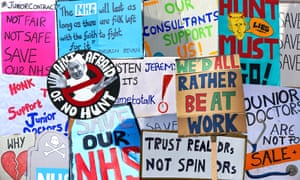
Posters made and carried by junior doctors during the strikes.


Posters made and carried by junior doctors during the strikes. Photograph: Photomontage/Roger Tooth

Hunt has insisted hospitals have to be able to roster doctors to work more at weekends to enable the NHS to treat more patients on those days, though precisely what services he wants to be expanded remains unclear. Eight strikes did not force him to backtrack. Masood repeats what junior doctors argued repeatedly throughout the dispute: “There’s not enough doctors at the moment to staff the current service we’re trying to deliver over five days, so why has Jeremy Hunt brought in the new contract when he knows that? It’s madness to stretch a workforce that’s already too small across seven days.”


In May the then chair of the BMA’s junior doctors committee endorsed a revised version of the contract, but members rejected it by 58% to 42%. In August the union threatened a series of five-day walkouts between then and Christmas, but abandoned the plans in the face of huge opposition, both internal and external. Juniors began moving on to the contract in October.


So who won? “They did,” says Masood quietly, her voice trailing away. “The government have won in the short nterm and I’m worried that they will now do the same thing to nurses, consultants – to all NHS staff. But long term I fear that more junior doctors will decide not to train to be NHS consultants and quit, and that more people will be burned out mentally and physically.” She was one of five junior doctors who in September challenged in the high court the legality of Hunt’s decision to impose the contract. That action ended in defeat too.


The dispute has left junior doctors feeling miserable and demoralised, Masood says. She is still so outraged by Hunt’s behaviour that she stepped away from her training last month, even though she is close to becoming a consultant. Her decision means an understaffed NHS is one more medic short. She is taking a career break and now works as a locum in various London hospitals.


“There’s a big need for locums because there are rota gaps in every specialty in every hospital,” she says. “What Jeremy Hunt has done is driven a lot of us out of the NHS, either temporarily – like me – or permanently. He says he values us, but everything he has done has made us feel devalued. I just worry that he will do to other NHS workers what he did to us and if he does, that will kill us as a workforce, and that will kill the NHS, because there will be no one to work in it.”


Junior doctor Nadia Masood: "Hunt"s driven a lot of us out of the NHS"

1 Aralık 2016 Perşembe

Junior doctors" sleep deprivation poses threat to patients, says GMC

Trainee doctors in the NHS are often so sleep-deprived that they are in danger of harming patients, the medical profession’s regulator has said.


Increasingly heavy workloads and widespread staff shortages mean the UK’s 54,000 junior doctors are being left to look after wards of patients without proper experience, according to the General Medical Council’s biggest annual survey of trainee medics’ experiences


One in four doctors below the level of consultant say their schedule leaves them sleep-deprived and 43% describe their workloads as heavy or very heavy. Those with the most intense schedules are much more likely to encounter patient safety being put at risk, the survey found.


In one unnamed hospital, a junior doctor was the sole medic left in charge of 300 patients overnight – a case the GMC’s chief executive, Charlie Massey, said was extremely concerning. The risk of the doctor being unable to deal with two medical emergencies happening simultaneously meant such lack of cover should never happen, he said.


“Patients who are in hospital overnight are in a hospital for a good reason and if something should happen to one or more patients during that nightshift, and that trainee has been left alone, that creates real potential risk to patients,” Massey said.


He said he was “astonished” to have learned that a single doctor had been left unsupervised and having to handle the care of so many patients.


The proportion of trainees describing themselves as sleep-deprived rose from 21% in 2012 to 24.4% this year. “This is an increasing and worrying trend and it’s very concerning when doctors say that it’s jeopardising their ability to make good judgments and to provide safe care,” Massey told the Guardian in his first interview since taking up his role last month.


“Sleep deprivation matters because [tired] doctors may not remember all of the things that they should remember – for example, all the things to do to safely intubate an individual – because they are so knackered or may not remember all the patient’s history and may therefore make the wrong clinical judgment about them.”


Massey is so worried by the potential for patients being harmed by rising fatigue and workload pressure among hospital doctors that he has written to every NHS provider of care across the UK warning them to take steps to ensure the safety and quality of care are protected.


“Those responsible and accountable for the delivery of medical education locally must take the appropriate steps to ensure the training of doctors remains protected, particularly as medical training is so often a bellwether for the quality and safety of patient care, and because patients are directly at risk if the support and supervision of doctors in training is inadequate,” he wrote in the letter.


A separate survey of junior doctors, undertaken by the Royal College of Physicians and published on Wednesday, found that 80% of trainee medics say their job sometimes or often causes them excessive stress.


One in four of the 498 junior doctors surveyed by the RCP said their job seriously affected their mental health and 54% said it affected their physical health. Pressure on trainees had reached a “harmful and unsustainable level”, the college said.


Massey said the demands being placed on trainees were now so great that there was a risk of some being “used and exploited” by their hospitals because there were too few staff to cope with the work that needed to be done.


“We have seen some signs that that is beginning to happen,” he said. The GMC, which supervises all doctors’ training, fears that some are not getting the training they need and the next generation of consultants may not be as highly skilled as they need to be.


Massey also voiced unease that the quality of handovers from one set of doctors to another – which are integral to patients receiving good care – had emerged as a growing concern. Young doctors’ clinical education is also being interrupted by them being called out of training sessions to attend to problems involving patients, the GMC found.


Key medical specialties that have seen some of the sharpest rises in demand from patients – such as A&E, acute internal and general medicine, respiratory medicine and gastroenterology – are those where trainee doctors’ workloads have increased significantly in recent years, the GMC found. A total of 53,835 junior doctors – just under 99% of the 54,563 across the UK who were eligible to complete the GMC survey – took part.


Dr Pete Campbell, of the British Medical Association’s junior doctors committee, said: “Patients and the public may be shocked by these findings, but no junior doctor will be surprised. It is still far too common that junior doctors are left sleep-deprived after regularly working beyond their rostered hours, on rotas that are desperately short of doctors.”


NHS Employers said the new contract being imposed on junior doctors in England, which prompted the recent year-long industrial dispute between the BMA and the government, would remove or mitigate many of the concerns behind their rising dissatisfaction.


“We want to support our junior doctors,” a Department of Health spokesman said. “That’s why the NHS has employed 11,900 more doctors since 2010. Yesterday, the health secretary announced plans to improve junior doctors’ training, including more support from consultants, more notice of future placements including where couples are placed, reviewing the appraisals process and investing £10m to bring doctors back up to speed when they take time out to have a family or other caring responsibilities.”


Junior doctors" sleep deprivation poses threat to patients, says GMC

28 Eylül 2016 Çarşamba

Junior doctors fail in high court challenge of new contract"s legality

Junior doctors have lost a judicial review challenging the legality of a controversial new contract, which is now set to be introduced by Jeremy Hunt next week.


In a judgment published on Wednesday, Mr Justice Green rejected arguments presented at the high court by five junior doctors that the health secretary had exceeded his powers.


A Department of Health spokeswoman said: “We welcome this clear decision by the judge that the secretary of state acted entirely lawfully. We must now move on from this dispute to the crucial job of making sure patients get the same high standards of urgent and emergency care every day of the week, which involves more than the junior doctors’ contract.


“We urge the BMA to remove all threat of further industrial action so we can work constructively with junior doctors to address their wider concerns and better recognise their vital importance to the NHS.”


The junior doctors nevertheless claimed the judgment as a victory. They said it showed the contract was not being imposed, which they argued meant junior doctors were not legally compelled to sign the new agreement and could continue to negotiate the terms and conditions.


The Department of Health said it would be seeking repayment of taxpayers’ money spent defending the case up to the previously agreed cap of £70,000 and would use the funds to make a charitable grant to NHS charities.


The doctors had argued that the health secretary had no power, whether solely or with others, to take a decision as to the terms on which junior doctors were employed, only to make recommendations, that Hunt had acted in breach of the requirements of transparency, certainty and clarity and that he had acted irrationally.


But Green rejected all three grounds. He further said he did “not accept the claimants’ argument that the evidence base upon which the minister acted was inadequate”, and he rejected the suggestion that Hunt had misled parliament.


In a two-day hearing last week at the Royal Courts of Justice in London, Jenni Richards QC, for Justice for Health, asked the court to quash Hunt’s decision to bring in the new contract, which she maintained he had no power to do, especially since the Health and Social Care Act 2012 reduced the scope of the health secretary’s powers.


The health secretary, Jeremy Hunt


The health secretary, Jeremy Hunt, is now set to impose the new contract next week. Photograph: Toby Melville/Reuters

But Gavin Sheldon QC, appearing for Hunt, rejected the doctors’ arguments and said that their case was without substance. The health secretary had not decided to “compel” NHS trusts to use the new contract, he had merely approved it, Sheldon said.


“The secretary of state has not gone outside the scope of his powers,” he told the court. “The secretary of state has been clear about what his powers are.”


The five doctors’ high court legal challenge was crowdfunded by £300,000 from about 10,000 donors, most of them fellow junior doctors. They hoped that the court’s ruling would embarrass Hunt, and make it difficult for him to execute his threat to impose the contract, by finding that he had acted outside his powers or the law.


Many junior doctors, frustrated that eight days of strike action between January and May had failed to force Hunt to lift his threat of imposition, hoped that the lawsuit might delay or even scupper altogether Hunt’s plans.


The British Medical Association is facing a backlash from its members after first announcing, and then last Saturday calling off, plans for a series of four all-out strikes by junior doctors as a way of increasing the pressure on Hunt.


As things stand, NHS trusts across England will start phasing in the contract from next week in a process that will take about 18 months to put all 54,000 doctors below the level of consultant on to the altered terms and conditions.


This week Sir David Nicholson, who was the chief executive of the NHS in England until 2014, criticised ministers’ handling of the year-long junior doctors’ dispute.


“Clearly the government overall got it wrong,” Nicholson said. He said given that today’s generation of junior doctors wanted to work more flexibly and have more control over their lives, “it seemed to me that the way the conversation was going … I was really worried that it was less to do with the issues around that particular problem and more to do with a general idea that somehow we needed to put the junior doctors in their place.”


Junior doctors fail in high court challenge of new contract"s legality

26 Eylül 2016 Pazartesi

Junior doctors angered by suspension of strike | Letters

Saturday’s decision by the BMA (Junior doctors suspend strike plans due to ‘patient safety’ concerns, theguardian.com, 24 September) has angered junior doctors throughout the country. It was unexpected and, seemingly, unaccountable; despite about 100,000 doctors paying £400 annually to the union that represents us, no one has yet been informed of the breakdown of the vote.


In line with nationwide concerns by junior doctors, consultants and other healthcare practitioners, the Junior Doctors’ Alliance pressure group (JDA) has reaffirmed its commitment to raising public awareness about the dangers to patients in particular, and the NHS as a whole, of the new contract. In the wake of the decision to suspend the strike, it is now more vital than ever to engage in public discussion and affirmative action to ensure this contract is not imposed by health secretary Jeremy Hunt.


We aim to put pressure on the BMA to pursue new action to block the imposition of this contract, and to act as advocates for both doctors and patients alike; to seek transparency and accountability from the BMA to its members; to garner support for further negotiations with the government, and to provide our patients and the wider public with accurate information on how this new contract will devastate the NHS. We urge doctors to support us via our JDA Facebook page.
Dr James Crane, Dr Aislinn Macklin-Doherty, Dr Julia Patterson, Dr Mona Kamal Ahmed, Mr Rishi Dhir, Dr Moosa Quereshi, Dr Benjamin Janaway of the Junior Doctors’ Alliance (JDA)


To determine the extra funding needed for the NHS (We can afford the NHS. The question is whether we are willing to pay for it, theguardian.com, 22 September), we’d have to know what state it’s in, and we don’t.


We need to collect and use data for the running of public services like the NHS in the public interest, rather than to support political rhetoric. When data is collected selectively by the Department of Health, and it no longer describes the collective experience of those using and working in the NHS, this is not in the public interest.


If we want to have an intelligent conversation about the NHS, the politics must be taken out of it. We need an independent national audit to determine the actual state the NHS is in. Only then can we begin balancing the healthcare that we, as a country, want provided and the amount we will have to pay to make it so.
Amanda Harris
Shrewsbury, Shropshire


Join the debate – email guardian.letters@theguardian.com


Junior doctors angered by suspension of strike | Letters

Junior doctors suspend strike plans due to "patient safety" concerns

Junior doctors have suspended plans to go on a series of five-day strikes to protest against changes to their contracts after a “vigorous debate” following a change in leadership.


The British Medical Association’s junior doctors committee (JDC) said it would not go ahead with the industrial action, but was “planning other actions over the coming weeks”.


The decision follows a challenge to the leadership of Dr Ellen McCourt, chairwoman of the committee, by doctors from Justice for Health.


McCourt fought off the challengers but there were changes to other members of the junior doctors leadership, who held a summit on Saturday to discuss their new strategy.


“After a vigorous, passionate, thoughtful and wide-ranging debate this afternoon, the JDC has decided to suspend industrial action while planning other actions over the coming weeks,” the committee said in a statement.


The decision was prompted by “feedback from members from every region in England, as well as the views of the wider profession, patients and the public in considering the next steps on the dispute”.


“Our primary consideration in coming to this decision has been our overriding concern about patient safety, the care we provide every day and the ability of the health service to deliver this care,” it added.


“To be absolutely clear, the JDC still opposes the implementation of the contract … The past few months have been difficult and frustrating and we know that members are anxious for information and practical support.”


Junior doctors have been in a long-running dispute with the government over its decision to change their contracts to make it cheaper for the NHS to provide weekend cover.


The health secretary, Jeremy Hunt, decided to impose the new contract on junior doctors, five of whom last week sought to have the decision overturned in the high court. Lord Justice Green’s ruling on that is due on Wednesday.


Union sources say hundreds of trainee medics voicing their concern about the proposed walkouts had led to serious fears that strike turnout would be poor and that the BMA would end up divided, weakened and lowered in public esteem as a result of the stoppages.


Many junior doctors were also concerned that the long duration of the planned strike would put patients’ safety at risk and risk a backlash from the public if anything untoward happened in a hospital while they were protesting outside. Medics have also voiced confusion about the objectives of the stoppages, given that the union’s leadership backed in the early summer the new contract they had negotiated, only to see grassroots juniors reject the improved terms and conditions by 58% to 42%.


McCourt was elected as interim chair after the former leader, Johann Malawana, resigned after 58% of junior doctors rejected a compromise contract.


One senior BMA official said: “Junior doctors don’t want to put patients at risk and don’t want to go ahead with a five-day strike. Quite a few don’t want any more strike action at all. Even the few JDC members who still think that they can’t give up totally wanted the 5-day strike scaled down.


“Junior doctors don’t have the heart or the stomach for this anymore. They don’t see the point of industrial action. They feel let down and blame both Jeremy Hunt and the BMA equally.”


There is also mounting anger and confusion among junior doctors at what many see as the BMA’s lack of clear strategy in first electing to hold all-out stoppages of unprecedented duration without defining what their purpose was.


The Department of Health welcomed the suspension of the strikes, saying: “The best way to rebuild trust now is for industrial action to be called off permanently in the interests of patients – and we urge the BMA to do so.”


The strike action was originally planned for this month, but the first five-day walkout was cancelled after opposition from other members of the medical profession.


Opposition to the planned strikes came from the Academy of Medical Royal Colleges, which represents all the doctors’ professional bodies.


Junior doctors suspend strike plans due to "patient safety" concerns

20 Eylül 2016 Salı

I"m a hospital consultant and I worry about five-day junior doctor strikes

I am worried. Nothing new, you might say, for a consultant working in acute medicine at a busy district general hospital. This time it is not about the acutely unwell patient in front of me but about the announcement by the British Medical Association junior doctor committee (BMA JDC) that junior doctors in England may take part in more industrial strike action. Five days a month of rolling strikes during which there will be withdrawal of all cover from 8am-5pm. These are planned to happen from October onwards unless the government stops the imposition of the junior doctor contract.


As well as being worried I am puzzled. Back in May 2016 the JDC recommended to its members that they accept the new contract, the now leader of the JDC saying at the time it was safe for patients and junior doctors. Despite this the contract was rejected by the membership due to ongoing concerns about weekend pay and people who work part-time. The membership and the rest of us have been waiting to see what would happen next. Junior doctors tell me they do not even know what would need to change within the contract for the BMA JDC to be happy with it. This is surely a damning insight into the BMA’s lack of communication and leadership at such a critical time.


Then the announcement of the longest and most severe set of strikes the NHS has experienced are announced. They appear to be completely out of proportion to the issues that the BMA JDC and its membership still have with the contract. It is not even the whole contract they want rewriting, but elements of it. Despite that, NHS trusts will have to cancel elective procedures, outpatient appointments and draw up emergency rotas if the strikes go ahead. While the BMA has issues with the employer and the employment contract, it will inevitably be the staff and patients caught in the middle of the strikes who will suffer the most.


I am worried about my junior doctor colleagues, many of whom are starting to lose faith in their trade union, the BMA, but fear repercussions if they voice these concerns. They tell me they cannot see how a full strike will help them. They are stressed as they realise the impact of such strike action. They are battling with ethical and moral dilemmas with many not knowing what to do for the best. Some will lose money during the strike making it hard for them and their families financially. Is this really what the BMA JDC intended? There may be a BMA hardship fund for those junior doctors worst affected but there is no hardship fund to support the staff left behind with added stress and work to contend with at an already busy time of year. I feel the BMA JDC have convinced the membership that the issues of NHS under funding, seven-day services etc can be all put together into the justification for the proposed strike.


Many junior doctors tell me they do not want to strike this time – they are in a profession that cares for patients and they fear harm will come to patients during a full and protracted strike. Did any of the voting that junior doctors took part in earlier this year really give the BMA JDC the mandate for these current proposed strikes?


While other NHS staff will provide all the cover and care they can for patients during the strikes, it is clear that patient harm is a real and valid concern. Junior doctors also feel their training could be extended if they miss more than 14 days of work in a year, which is a possibility. What damage is being done to the profession in the public’s eyes? Public support for junior doctors feels as if it is a surrogate for public distrust of the government. The medical profession is one of the most trusted professions but with industrial action planned, the public support will not last forever.


In every strand of this I worry about the patients who will be unduly affected by this strike. They did not ask for this, they have no contract of employment to negotiate; they simply want to be cared for by the NHS.


If you would like to write a blogpost for Views from the NHS frontline, read our guidelines and get in touch by emailing sarah.johnson@theguardian.com.


Join the Healthcare Professionals Network to read more pieces like this. And follow us on Twitter (@GdnHealthcare) to keep up with the latest healthcare news and views.


I"m a hospital consultant and I worry about five-day junior doctor strikes

Jeremy Hunt acted illegally over junior doctors, court hears


Jeremy Hunt acted illegally and beyond his powers by deciding to impose a new contract on NHS junior doctors, the high court has been told in a legal challenge to the health secretary’s handling of the year-long dispute.


The court on Monday began a two-day judicial review of the legal challenge to Hunt brought by five junior doctors.


Their group, Justice for Health, claims that the health secretary has acted ultra vires (beyond his powers)by choosing to force new terms and conditions on 54,000 trainee medics in England despite their overwhelming opposition.


A barrister leading Hunt’s legal team told the judge, Mr Justice Green, that there was no evidence that NHS employers did not want the contract and that the claim was “wholly without substance”.


Hunt suffered an early setback when the judge rejected a claim by his counsel, Clive Sheldon QC, in pre-hearing legal argument that Justice for Health’s claims should be thrown out. Refusing Sheldon’s plea, Green said at the outset of the first session of legal argument that “this is plainly a serious case” which, in his view, “requires full judicial review”.


Green planned to issue his judgment on 28 September, he said, days before junior doctors across England are due to take part in the first five-day strike in the long-running dispute. The strike is planned to start on 5 October, the day the contract is due to be imposed on all trainee doctors below consultant level. The six previous walkouts held since January have lasted one or two days.


Justice for Health, whose action has received £300,000 in crowdfunding from 10,000 supporters, wants the court to overturn Hunt’s decision to use what he called his “nuclear option” of imposition, and rule that he broke the law in choosing to push it through.


Its legal argument states that the campaign group, consisting of Dr Nadia Masood, Dr Ben White, Dr Francesca Silman, Dr Amar Mashru and Dr Marie-Estella McVeigh, “seeks an order quashing the decision of the secretary of state; [and] declarations that the secretary of state had no power to make the decision which he purported to make on 6th July 2016, that the purported imposition was unlawful and that the secretary of state has acted unlawfully”.


Jenni Richards QC, for Justice for Health, said that while Hunt was entitled to recommend a contract, he did not have the power to impose one. The health secretary had “acted in breach” of his “requirements of transparency, certainty and clarity” and behaved “irrationally”, she told the court.


The junior doctors claim that, despite stating publicly when the dispute began last year that he was imposing the contract, Hunt had then switched tack and insisted he had merely made a non-binding recommendation that revised conditions of employment.


Richards also claimed that Hunt had ignored a series of studies of mortality rates among patients admitted to hospital when he began claiming in July 2015 that as many as 11,000 patients a year admitted on a Saturday or Sunday die unnecessarily because too few doctors are on duty – the “weekend effect”.


Giving evidence for Hunt, Sheldon said the secretary of state had decided not to “compel” NHS employers to use the new contract, but to “approve” it. “This case is redundant,” Sheldon told the judge. “There is no evidence at all that there is any NHS employer who doesn’t wish to introduce these new contracts.”


Jeremy Hunt acted illegally over junior doctors, court hears

16 Eylül 2016 Cuma

Jeremy Hunt has won a battle against junior doctors, but not the war

Junior doctors are used to managing crisis situations. Lifesaving treatments, long hours, dealing with dying patients, and coping with poor resources are all situations they would expect to wrestle with during their training. These young men and women want to cure the world – this is ingrained in their excellent and rigorous training, which might take anything up to 15 years.


So why is this important? You don’t have to live on Mars to know that the British Medical Association (BMA) – specifically, the junior doctors’ arm of it – and the government, namely health secretary Jeremy Hunt, are at odds.


It has become increasingly clear that Hunt has won the battle. Negotiations with the BMA have not just stalled, they have broken down because they failed to deliver the contract junior doctors felt was right for them and safe for patient care.


Hunt has a different view – not only does he think it is safe for patients, but he believes that it doesn’t discriminate against female doctors (over 60% of doctors are women), it offers a good work-life balance, and crucially it will deliver a seven-day service. His case is enhanced by the fact that junior doctors’ leaders endorsed the contract before consulting committee members. To some this is a matter of pay and conditions, while to others (not just within the BMA) it is a broader issue involving the current state of the NHS.


So is all well in the Hunt camp? Probably, insofar as the imposition of the contract is concerned. On the other hand, the BMA came to a rather desperate juncture. Its highest body, the council, backed the junior doctors’ committee’s demand to run an unprecedented series of five-day strikes. There was frustration, anger and even desperation at the inability of the government to see their viewpoint, fuelled no doubt by Hunt’s reappointment as health secretary.


In the cold light of day, the BMA realised that it would fall foul of the very reasons it was against the contract imposition – it had given trusts very little time to put together a contingency plan to safely cover the five days of the September strikes. It risked harm to patients, the very issue its 170,000 members feel is sacrosanct. The General Medical Council waded in, as did some of the medical royal colleges, ensuring the divisions in the senior medical fraternity were played out in the public and the media. A rapid climbdown by the BMA was inevitable, leading to an announcement that the September five-day strikes were off, further playing into Hunt’s hands.


To his credit, Hunt has not been gloating in this victory. He has adopted a dignified approach, welcoming the decision by the BMA but remaining steadfastly rooted in his conviction that the contract imposition would remain regardless. Last week, at Expo 2016 in Manchester he was very cordial, courteous and in consolatory mood. He expressed his wish to move forward.


Even BMA stalwarts might reluctantly agree that he is winning the battle. The imposition will proceed, without any further changes, unless he softens his approach.


However, Hunt should have no illusions. This is a hollow victory. Juniors are now a disaffected, angry, disillusioned and frustrated lot. These are the consultants and GPs of tomorrow, the very doctors the government needs to fulfil its plans for a round-the-clock, stellar NHS. Many feel that their professionalism and dreams have been thwarted by the government, and those who are really hacked off have emigrated.


The dispute is being played out against a background of an escalating funding crisis, trusts being unable to meet increasing demand and a warning that the health service will experience “pockets of meltdown” this winter. We could go on.


In the face of such adversity, the NHS is hardly able to deliver a five-day service, let alone the seven-day NHS Hunt dreams about. He has wrongly aligned his aspirations for a seven-day service to delivering the junior doctors’ contract. The BMA has repeatedly asked him to define his vision to enable a constructive dialogue on what is evidence-based, and what is achievable. What is clear is that both the BMA and Hunt require a highly motivated, energetic and engaged medical workforce to deliver the high-quality care needed to manage complex illnesses and meet rising demand.


The government is responsible for creating the conditions for safe working of our juniors and for providing and delivering safe services. Hunt must work hard to win the hearts and minds of junior doctors to achieve the ultimate goal of providing safe, high-quality services seven days a week. Theresa May should conduct her own appraisal of the state of the NHS and the problems it faces, and make her priority settling this dispute and finding more money for the health service.


Join the Healthcare Professionals Network to read more pieces like this. And follow us on Twitter (@GdnHealthcare) to keep up with the latest healthcare news and views.


Jeremy Hunt has won a battle against junior doctors, but not the war

15 Eylül 2016 Perşembe

Junior was a London Paralympics Games Maker. Don’t talk to him about ‘legacy’ | Frances Ryan

Exactly four years ago, surrounded by placards saying “Equality” and “Rights”, Junior Sterling was performing to millions of people in London’s Paralympic opening ceremony. But despite all the talk of the Games’ legacy for disabled people in Britain, the 55-year-old, who was born with a muscle-wasting disease and club foot, has been left to live in a kitchen covered in mould and with a bucket for his bathroom.


In his one-bed council flat in Shepherd’s Bush, west London, Junior talks avidly about London’s Paralympics in 2012. He was a volunteer Games Maker, working as a steward at the wheelchair tennis, and part of the famed “Spasticus Autisticus!” segment of the opening ceremony. In the run-up to the Games, Junior even had his photo taken with Sebastian Coe after creating a sign spelling out 2012 in braille. What no one realised, however, was that after spending his day around Paralympians, as Junior puts it to me: “I’d go back to my home infested with bugs.”


Junior has been in this flat for 20 years; his first home after eight years of, in his words, “living in cardboard boxes” on London’s streets. The flat is on the top floor of the block, up three flights of steps and there’s no lift, which isn’t ideal for someone who struggles to walk. But Junior took the flat, afraid that if he didn’t he’d be sent to the bottom of the council’s housing list.


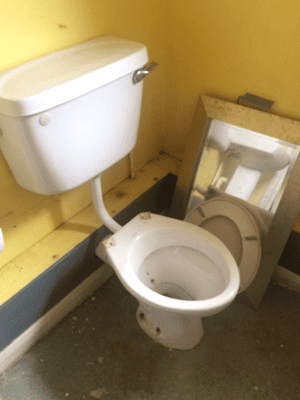
Junior Sterling’s toilet

‘The toilet in his bathroom flushes but because of the damp and the smell, he’s afraid to go in there.’

The problems inside the flat started several years later, in 2002. At first it was a simple problem with his shower. By the time of London 2012, the plumbing had got so bad through the whole flat it had flooded Junior’s downstairs neighbour causing their shower tiles fall off. Filter flies, drawn to drains and sewage, contaminated his bathroom.


Since then, little has changed. In fact, it’s got worse. As of this summer, Junior has been without a working bathroom or kitchen for five years. The shower is disconnected and the bath has a panel missing. Damp and mould cover the ceiling and walls. The housing association responsible for the accommodation, Peabody Trust, got rid of the fly infestation but the stench remains, Junior says. The kitchen sink is still bust; Junior’s been told by the manager of his housing block not to use it (water leaks down the walls of the neighbour beneath him).


The effects of the damp then spread into the front room. The carpet is cut up – a scrap left in the middle of the floor – and a loaf of bread, tinned milk, tuna, and corn flour are stacked on the furniture. The water and mould in the kitchen means Junior has to keep the food where he sits, but flies are attracted to it, especially when it’s hot.


Junior has contacted Peabody housing association repeatedly over the years – he shows me a journal he’s kept of it all, 10 pages going back over a decade – but says he’s barely heard a whisper back. Still, they keep collecting the rent: £129 per week, paid straight from Junior’s council. He says when he does hear back from them, Peabody claims it’s not been able to get in touch with him. “They make so much money, but this? They can’t sort this.”


Junior Sterling’s bathroom


‘With no working shower, if he wants a shave, he gets water from a hose.’

A Peabody spokesman offered to put the wheels in motion to sort the problems out, stating that the team had already tried to resolve them, but that the last contact they had with Junior was in March 2015. “Prior to that we worked extensively with the council and our contractors to draw up a specification of works. These were unable to be completed as the contractor was repeatedly refused entry by the tenant,” he added. “Mr Sterling has declined to deal with us directly, insisting that all communication went through his solicitor. If Mr Sterling would like our contractor to make fresh inspections and carry out repairs, he will need to get in touch and let them into the home.”


Junior says someone from Peabody​ came to take pictures of his flat but he is unaware of anyone trying to the carry out the necessary work. He had a solicitor to help him for three years, but without legal aid he was unable to take the case to court. In the meantime, he can barely keep clean. The toilet in his bathroom flushes but because of the damp and the smell, he’s afraid to go in there. Instead, a toilet for Junior is now “a bag and a box”. With no working shower, if he wants a shave, he gets water from a hose outside the flat. Two buckets for when he needs a wash.


Because of the kitchen leak, it’s the same routine each time he has a hot drink. “If I want tea or coffee, I have to fill up a water bottle,” he says. “Go down [to the hose]. Fill it up with water. And then do it again.”


Anyone’s health would get worse from living like this, but when you’re disabled, it’s devastating. Junior’s two stone lighter now (“I can’t eat in the flat”) and the mould gives him recurring chest infections. Not being able to shower or bathe for years has led to him losing his hair through dry skin, and his feet – already vulnerable – are now covered in callouses.


Junior still has his London 2012 Paralympic band around his wrist. “I can’t tell you the tears I’ve cried,” he says. “I may as well be homeless again.”


Junior was a London Paralympics Games Maker. Don’t talk to him about ‘legacy’ | Frances Ryan

6 Eylül 2016 Salı

Junior doctors suspend planned five-day strike in September

Junior doctors have called off the first of their planned series of five-day strikes after growing alarm from senior doctors and NHS leaders that the action could endanger patients.


In a statement on Monday afternoon, Dr Ellen McCourt, the chair of the British Medical association’s junior doctors committee, said that the doctors’ union was “suspending the industrial action planned for the week of 12 September”.


McCourt told Jeremy hunt, the health secretary, that he now had a month to stop the imposition of the new contract that has sparked such anger among trainee medics in England over the last year. It is due to start being implemented from early October.


However, the BMA is still planning to stage three other five-day- walkouts, in October, November and December, if Hunt does not respond positively.


However, it is unclear what will happen next after the Department of Health’s initial reaction to the call-off did not indicate if Hunt would do what the BMA are urging him to do and suspend the planned imposition of the contract.


A DoH spokesman said only that: “The public will be relieved that the BMA has decided to call off the first phase of these unprecedented strikes, so this is welcome news. But if the BMA were really serious about patient safety, they would immediately cancel their remaining plans for industrial action which, as the GMC says, will only cause patients to suffer.”


Hunt may clarify his position later on Monday, though, when he makes a statement in the Commons on the long-running dispute.


Mc Court added that the BMA decided to call off next week’s planned action, which saw the BMA being heavily criticised by many medical groups including the Academy of Medical Royal Colleges, to ensure that safety of care was maintained.


“Patient safety remains doctors’ primary concern. For the first time in this dispute NHS England have told us that a service under such pressure cannot cope with the notice period for industrial action given,” she said. “We have also listened to the concerns of working doctors, patient groups and the public.”


It comes hours after the General Medical Council, which regulates doctors, warned that “harm and suffering to patients” would inevitably result from the action.


The walkouts were due to include even life-or-death areas of care in hospitals such as A&E, surgery, intensive care and maternity services. An estimated 125,000 planned operations were set to be cancelled as another consequence, leading to fears that patients would suffer pain and distress as hospitals would take months to clear the backlog.


The BMA’s move may be a belated attempt to maintain the profession’s year-long unity over the new junior doctors’ contract, which shattered last week with many leading doctors criticising the intended strikes as disproportionate and likely to threaten patient safety. Junior doctors may also be hoping to keep the public on their side in their bitter dispute with Hunt.


They continued to enjoy around 60% public backing despite the eight days of strikes they staged between January and May in pursuit of their claim that the new contract for England’s 54,000 doctors below the level of consultant was unsafe and unfair.


Junior doctors suspend planned five-day strike in September

BMA calls off September junior doctors" strike after "scores" of protests

A revolt by rank-and-file junior doctors forced the British Medical Association to call off a five-day strike scheduled for next week on Monday, amid worries about the impact it would have on patients and the health service.


BMA insiders say members of the junior doctors committee, who had called the strike last Wednesday, were inundated with “scores, possibly hundreds” of angry protests in the days afterwards, forcing the rethink.


Junior doctors were particularly annoyed and anxious that the BMA had given the NHS just 12 days to prepare for the first of what the doctors’ union later said would be a series of week-long stoppages.


Trainee medics dismayed at the BMA’s decision were worried that the action – which has been due to be the latest protest against health secretary Jeremy Hunt’s new contract for junior doctors – would leave hospitals too little time to arrange to cover gaps in rotas and could compromise patients’ safety, and damage public trust.


Throughout Friday and the weekend, Dr Ellen McCourt, the chair of the junior doctors committee, received a regular stream of emails to her BMA email address from colleagues uneasy at the decision, as did other members of the committee. They demanded an urgent rethink of the union’s position. That played a crucial role in the BMA’s surprise announcement on Monday that it was abandoning its plan to strike next week, even though they had won no fresh concessions from the health secretary.


Ellen McCourt


Dr Ellen McCourt, chair of the BMA’s junior doctors committee. Photograph: Sarah Turton/BMA

McCourt said on Monday that the BMA had called off next week’s strikes to protect patient safety because “for the first time in this dispute, NHS England have told us that a service under such pressure cannot cope with the [12-day] notice period for industrial action given. We have to listen to our colleagues when they tell us that they need more time to keep patients safe.”


The committee’s decision to stage week-long total withdrawals of junior doctor labour across the NHS in England each month until December had prompted such anger that McCourt even received death threats over what some saw as a reckless and indefensible course of action. However, she has not indicated whether those threats came from fellow junior doctors or members of the public.


McCourt revealed in a message she posted on a junior doctors’ Facebook message site on Sunday: “My 64-year-old retired mother has had the press camped outside her house. JDC members’ lives have been splashed across the papers. And I have received threats to my life.” That followed several days of hostile coverage in several newspapers of the planned strikes and of BMA leaders who had endorsed them.


The rolling series of week-long walkouts had been condemned by leading medical bodies such as the Academy of Medical Royal Colleges and the General Medical Council, as well as by some hospital consultants, as disproportionate and risky.


However, Hunt made clear late on Monday that the BMA’s decision to call off next week’s action, while welcome, would not persuade him to lift his threat to impose a new contract on all 54,000 medics working in the NHS in England below the level of consultant from next month. His refusal to accede to the BMA’s plea leaves it unclear as to what the union will now do. Its planned strikes in October, November and December will still go ahead unless he relents, McCourt maintained.


Jeremy Hunt on a bike, leaving his home


While health secretary Jeremy Hunt welcomed the postponement of strike action, he refused to lift his threat to impose a new contract. Photograph: Carl Court/Getty Images

In a statement on Monday in the House of Commons on the long-running dispute, Hunt – whom Theresa May last week praised as “an excellent health secretary” despite unease in the NHS about his handling of the junior doctors row – said: “This afternoon’s news delaying the first strike is of course welcome. But we must not let it obscure the fact that the remaining planned industrial action is unprecedented in length and severity and will be damaging for patients, some of whom will already have had operations cancelled”.


About 100,000 planned operations will be postponed, and around a million outpatient appointments rescheduled as a result of the BMA’s actions, he said. “We cannot give an absolute guarantee that patients will be safe. But hospitals up and down the country will bust a gut to look after their patients in this unprecedented situation and communicate with people whose care is likely to be affected as soon as possible,” he told MPs.


Despite the BMA’s olive branch, relations between it and the Department of Health grew even more strained when the DH circulated a briefing paper contesting many of McCourt’s claims in her statement announcing that next week’s strike was off, six of which it said were categorically untrue. They also sought to embarrass McCourt, an A&E trainee in Hull, by contrasting her opposition to the contract now with her endorsement of it in a BBC Radio 4 interview on 18 May, the day the BMA and DH announced that a deal had been agreed.


For example, the DH denied her claim that the contract is discriminatory on equality grounds. In May, she told the PM programme that “we’ve come away with an offer, with a contract, that emphasises that all doctors are equal, that has put together a really good package of things for equalities so that we are minimising the issues we had with the previous offer with regards to gender and equality.”


BMA calls off September junior doctors" strike after "scores" of protests