Can’t etiketine sahip kayıtlar gösteriliyor. Tüm kayıtları göster

17 Nisan 2017 Pazartesi

"It can"t be much worse than licking a battery." What it"s like to have ECT

I have had depression and anxiety, mainly depression, on and off since I was a teenager. After dealing with it for 10 years I had a particularly bad winter when I was working almost 24-hour shifts at work.


I went to visit my aunt overseas because I got a few weeks’ sick leave. I thought I’ll go, I’ll decompress, but while I was there I got sicker and sicker.


The GP there prescribed something called Lyrica [an anti-seizure medication also known as pregabalin]. I don’t know whether that had anything to do with it, but I went into a psychotic episode – I thought I was going to be deported, I had a lot of paranoia.


I suddenly started getting very, very anxious – and took an overdose. That landed me in hospital. I was a voluntary patient but I think I would have been forced if I wasn’t voluntary.


I was there for a really long time – a couple of months. I saw a lot of people come and leave and I wasn’t really able to do anything. They had an ECT [electroconvulsive therapy]clinic downstairs and the psychiatrist kept on suggesting it.


Eventually it came to the point where they had tried all these medications that weren’t working and I was an absolute nightmare – I was really difficult and I couldn’t do anything. After being really reluctant I finally gave in. I thought either I am going to die this way, or ECT might help. My aunt was like: “Well, we have tried everything else.”


They scheduled it super quick. We said yes on Friday and they scheduled it for Monday, then they did it three times a week for two weeks.


At first I was worried because of the image you get from the horror films of people being strapped up and electrocuted. Then I learned a little more about it, although I couldn’t do any reading on my own because I was so anxious – I couldn’t even cope with the phone. But I talked to my aunt who put it in really simple terms and talked about all the side-effects.


The thing that scared me the most was the memory loss. I went to an elite university and I really pride myself on my brain, so I was worried. Was this going to make me stupid? But I reached the point when I said: “Well, I don’t care if I am stupid. If I’m stupid and happy it’ll be fine.” So that is what made me go for it, even though I had a very bad perception of it.


The doctors talked me through the entire process. I had never been under general anaesthetic before and because I was anxious and paranoid about not being in control of my body, that was something I was really afraid of. I agreed to do it if my aunt could be in the room – but she wasn’t allowed in the room when they gave the electric shock because it is so traumatic for loved ones.


Before the ECT, they showed me the equipment and said: “The amount of electricity we are putting through your brain is enough to light a lightbulb for a second.” I was thinking: “How is that going to do anything? It can’t be much worse than licking a battery.”


After the first session all the nurses said: “You are so much calmer. I think this is really working. This is really good.” I thought: “I don’t know what you are talking about. I am still super-anxious and I hate my life.”


But looking back, the change happened almost immediately. After the first week I had hoped that I was going to leave the hospital and by the end of the sixth session, after two weeks, I was ready to get on with my life.


I had problems though – mainly short-term memory. I compensated for that by using a journal. Whatever my therapist advised, I’d write down and look over every day and try to do it. But I constantly found myself being told that I had already just told people something I had said. I had to monitor my medication very carefully. The memory issue went away in the course of the month. The benefit of ECT stayed for about six months and I needed to keep taking medication to prevent a relapse. But it didn’t work.


I was hospitalised again – this time in the UK.


I really wanted ECT. But they said the memory effects can be worse if you do it again and again and at that point I wasn’t psychotic. It is much harder to reach someone once they are psychotic because you can’t really rationalise with them, whereas I did what people told me to do, so that drastic measure of ECT wasn’t really necessary. But as soon as I mentioned ECT to any medical practitioner in the UK they said: “Oh my God, seriously?” The only semi-positive reaction I had from one of my GPs was: “Wow, how was that? I have never met anyone who had it.” He wasn’t judgmental, just really surprised and fascinated. In hindsight, I don’t think ECT was the right thing to do.


Sometime later I relapsed again. This time I had ECT on the NHS. They then diagnosed me as bipolar.


After I first had ECT I was really freaking out about whether I was going to tell people. But because of my short-term memory problems I was forgetting who I had told what and it was getting really stressful. It got to the point where I was anxious to meet people because I was wondering: “How much do they know? What do I say?” Which is why I put it up on Facebook, because that way everyone knows the same thing. But I am quite reluctant to tell people that I had psychosis. Because although mental health issues are more accepted and depression is quite common, psychosis is like really crazy. Taking medication is more accepted now, going to therapy is more accepted, but ECT … I think people think of One Flew Over the Cuckoo’s Nest.


There is definitely a lot of concrete evidence of ECT working. My aunt was absolutely floored by the results and she talked to the nurses and they said: “It is almost like a miracle but we see it every week.”


(*Name changed for confidentiality)


"It can"t be much worse than licking a battery." What it"s like to have ECT

3 Nisan 2017 Pazartesi

If ketamine helps treat depression, why can’t doctors prescribe it? | Marc Lewis

Antidepressants are among the most commonly prescribed drugs throughout the western world. In fact, they are prescribed more than any other drug for Americans aged 18 to 44, and they are now taken four to five times more frequently than in the early 90s. In the UK, antidepressant use has doubled over the past decade. Either more people are depressed, more people are talking about their depression, or doctors now think they have got a pill that will help.


What are these drugs? Unlike the antidepressants of 30 years ago, they are considered “clean” and well-tailored. They target a certain neurochemical and leave the rest of the brain alone. (Old-school antidepressants were notorious for their scattershot effect.)


First-line antidepressants are almost exclusively what are called selective serotonin reuptake inhibitors (SSRIs), with the emphasis on “selective”. That means they keep serotonin in the connections between neurons (the synapses, where all the action is) far longer than it would normally remain. Serotonin is a neurochemical that appears to moderate the information travelling between neurons. The theory is that depression grows from too much information, consisting mainly of self-criticism, negative memories and negative expectations, cycling in an endless loop. More serotonin should diminish this unhelpful deluge.


But do SSRIs actually work? Despite great promise, the big picture reveals a mixed bag of results – and opinions. Many studies have revealed extremely limited effectiveness for SSRIs when compared with placebos. These disappointing results drew attention to studies conducted by the pharmaceutical companies, in which poor results were systematically buried. (Did we really trust the drug makers to present an unbiased picture?) Yet other well-controlled studies suggest that SSRIs do help depressed people at least some of the time. The final verdict? SSRIs help some people on a good day, according to some studies and not others. Most experts agree that it would be a very good thing to find other drugs that work more reliably.


Along comes ketamine. Ketamine has been around since the early 1960s, when it became available as an anaesthetic for use with humans and animals. Its psychotropic (mind-altering) effects were soon discovered. Ketamine changed people’s perception of themselves and the world around them to a degree comparable to LSD and other psychedelics. Thus began its career as a street drug and its designation as a controlled substance. You know how the reasoning goes: we can’t let people go around changing their reality. Nevertheless, it has been used as a party drug for decades, often under the nickname “K”.


We’re being forced to fix our own mental health. And it’s not working

Ketamine’s potential for fighting depression has been studied for years. Current reviews conclude that it is highly effective against depression – a promising new medicine, but potentially dangerous, both physically (you can lose your balance) and psychologically (it can produce psychotic-like states). But how does it work?


The main neurotransmitter for communicating between brain cells is glutamate. Little bundles of glutamate molecules, sent from one neuron to the next, tell each neuron how rapidly to fire – a very important message. But glutamate molecules have to enter the receiving cell through a doorway designed to welcome them. And one of the main doorways is called the NMDA receptor.


Thanks to swarms of glutamate molecules shooting into NMDA receptors all over the brain, an incredibly complex, incredibly subtle network of firing neurons creates our sense of reality. When the brain is functioning normally, the pattern of firing neurons matches what is going on in the world outside your brain. If you happen to be schizophrenic, then not so much.


What ketamine does is block many of those NMDA receptors, so the glutamate molecules have nowhere to land. Consequently, the network that fashions reality starts to fall apart. The harmony of synchronised neurons breaks down, and your perception of the world starts to drift. That’s why ketamine is called a “dissociative”. Ketamine has been used on the battlefield where wounded soldiers can dissociate from their pain. So ketamine’s main contribution is to free you from what’s in front of your face.


Nobody knows exactly how ketamine nails depression. Yet I don’t think it’s so mysterious. When people are depressed, they undergo the same cycling thought patterns over and over again: I’m no good. Nobody really likes me. I don’t deserve to be happy. I’m too selfish, too greedy, too unpleasant. It’s called rumination. What’s more, the negative self-thoughts reinforced through rumination promote feelings of sadness, shame and hopelessness, while those feelings reinforce the spiralling negative thoughts. A vicious circle indeed.


What ketamine might do is break the cycle, perturb the relentless repetition of depressive self-appraisals. The “reality” that you are a bad, worthless person gets fragmented, because ketamine fragments everything you think you know. Ketamine permits you to sojourn into different psychological realities. That is one of the risks associated with clinically dispensed ketamine, but for depressives, a little holiday from the daily grind of pessimism might be a welcome relief.


It would be great if ketamine-based treatment moves beyond its interminable research phase: is it really safe? Can we be absolutely sure? Let’s not forget that booze can also make you lose your balance, and it’s quite legal. And depression itself can generate psychosis, often for lengthy periods. Ketamine doesn’t look so bad on balance.


I would like to see ketamine become available, at least through the safeguards of the doctor-patient relationship, to the millions who suffer depression. But there is a lesson to be learned from ketamine’s protracted debut. We are so afraid of the drugs people take for fun, to feel good, or at least to feel different for a few hours, that we ban them almost reflexively and punish those who use them. Why? What’s so bad about adults taking a vacation from the imperious reality we call “normal” – a reality that, sorry to say, isn’t decreed by God or nature but by culture, by a semi-arbitrary history of conventions? We should divert some of our hyped-up fear of abuse potential into a societal experiment, a sandbox, so to speak, for exploring the benefits of various popular drugs – drugs (such as ketamine, marijuana, ecstasy and psilocybin) that are illegal because people sometimes want to take them. Surprise, surprise: these drugs might just help people feel better.


If ketamine helps treat depression, why can’t doctors prescribe it? | Marc Lewis

6 Mart 2017 Pazartesi

I worry I can"t be a good mother and a good doctor

I leave the house of my first home visit of the day – a middle aged businessman – and walk back to my car. I recall the heat of his skin on my hand, his yellow, sunken cheeks, his racing pulse.


An ambulance is on its way – I opted for the semi-urgent type, the type that comes within two hours, the type for people who are quite sick but not very sick. I wonder whether I should have chosen the very sick type, the one that races down the road, flashing blue lights and all.


A message lights up the screen of my phone – “I’ve found a button in her poo.”


I often ask myself the question: is it really possible to be a great doctor and a hands-on mother? I’m not sure it is


I think now of my two-year-old daughter. I picture her careering around the room at playgroup, biscuit hanging from her mouth and dribble falling from her chin. Then come the usual worries: is she really enjoying playgroup; is the childminder overly strict with her; does she eat too many biscuits and did she really eat a button? If I’ve chosen to be out at work, do I even have any right to tell the childminder how to look after her? At that age, maybe my daughter doesn’t even know I’m not there.


Back at the surgery, the waiting room begins to fill. Swimming round my head is an endless list of things I need to do that I will never have time to do: the patient cases I should be writing up, the audit I need to conduct, the extra out-of-hours shifts I must work, the exam I need to prepare for – all in order to complete my GP training. I try to forget the morning’s events so that I can prepare for the afternoon ahead. It’s important to give each patient the best version of me.


My pregnant bump presses against the edge of my desk and I feel the familiar kick in the ribs from the one inside. As if she’s saying: “Remember I’m in here, Mummy.”


I have just one week left before I go on maternity leave. I plan to take a year off and then return to work part-time. Already I am wondering how it will be possible for me to do this. It’s not that I don’t want to go back – I love my job – it’s just that I’m not sure it’s the right thing to do for my family. The cost of putting two children in childcare and the worry that I will miss out on their early years are my main concerns. Alongside this, the fact that I am still training means that I have extra work to do outside of my already very busy job. But if I don’t finish my training, all the years of work I’ve done will go to waste.


I often ask myself the question: is it really possible to be a great doctor and a hands-on mother? Personally I’m not sure it is – I feel like I am continually striving to achieve the impossible and never feel satisfied that I am doing either job well. To be a good doctor I need to invest time in keeping my knowledge up to date but simultaneously my two-year-old needs to be the focus of my attention. I know I am in a position of privilege; I have choices women historically would never have had and (potentially) a very rewarding career ahead of me, but it all feels too much.


It’s a dilemma women up and down the country face – to work, to stay at home or to do a bit of both. I have one friend who feels that it is important for her daughter to see her going out to work every day so that she can aspire to the same. I have another who has given up her career to be at home with her child.


For now I have decided that the best way for me is to accept things as they are, to manage my expectations of what I can achieve at both home and work and hope everything works out all right in the long run. I will try my best to forget work on the days I spend at home and to trust that my children are in good hands on the days that I’m not.


That evening, as I try to convince my two-year-old that her princess dress isn’t really suitable attire for bed, I think again of the yellowness of that man’s skin and the look of desperation in his wife’s eyes. I promise my daughter we’ll go for ice-cream in the morning if she will just let me put her pyjamas on. After all, I know only too well that life is short.


If you would like to write a blogpost for Views from the NHS frontline, read our guidelines and get in touch by emailing sarah.johnson@theguardian.com.


Join the Healthcare Professionals Network to read more pieces like this. And follow us on Twitter (@GdnHealthcare) to keep up with the latest healthcare news and views.


I worry I can"t be a good mother and a good doctor

5 Mart 2017 Pazar

Stop pretending we can’t afford the NHS: that’s the message of our march today | Larry Sanders

We are living in a world in which the politics of the leaders of two of the world’s great nations – America and Britain – is built on broken promises. During Donald Trump’s election campaign he promised to “take on Wall Street”. So when just weeks later the president announced a cabinet full of banker billionaires, my brother, Senator Bernie Sanders, said: “With all due respect, Donald Trump is a fraud.”


Meanwhile, here in the UK Theresa May took up her post as prime minister on the commitment to “work for all, not just the privileged few”. Well, it is just weeks since our NHS descended into a humanitarian crisis, and we are already looking at another round of privatisation and cuts. Which is why at midday today we will be marching on parliament in support of the NHS.


We don’t need reminding of the horrors we saw over the winter, with people dying on trolleys and turned away from hospitals, and the British Medical Association warning our most cherished institution has been pushed to breaking point. The NHS is facing a £22bn funding gap, with the demand for care set to rise 4% a year while the health service’s budget will go up by only 0.2% every year between now and 2020.


This crisis in healthcare has been exacerbated by the current Tory government – but its foundations were laid by New Labour and further strengthened by the coalition with the Health and Social Care Act of 2012. The creeping privatisation of the past quarter of a century has introduced vast fragmentation and inefficiency into our health service, and, combined with chronic underfunding, has left the NHS on the brink. Anyone who has visited a hospital recently knows how hard doctors, nurses and all the staff are working to make sure patients are cared for with dignity and compassion, despite the strain on the system. It is time we listened to their concerns.


Prime minister Theresa May pledges to build a ‘better Britain’

Adding to the pressure facing hospitals across the country is the financial crisis in social care. We’re living longer, and that’s a great thing – last year, aged 81, I stood in the Witney byelection after David Cameron resigned. But while there are currently one-third more over-85s than 10 years ago, adult social care budgets have been cut by one third in the same time. And the care funded by local authorities accounts for just a small proportion of the care elderly people in the UK currently receive. Every year family, friends and neighbours provide £55bn of unpaid care, four in 10 people in care homes pay for themselves, and a staggering 1.2 million people over 65 with care needs receive no help at all.


We are simply not providing enough care and support for people in the community, at home and close to where they live. This means elderly people are more likely to end up in hospital, and when they get there it is more difficult to get them home again. People who are medically well are stuck in hospital because there is nowhere suitable for them to go and too little support for them at home. The system is failing these people who could be living at home or in supported accommodation instead of being isolated from their communities on a hospital ward. But it also fails those who desperately need the hospital beds these elderly people occupy.


The government’s response has been to engage in a cruel con where local councils were told there was “new” funding for social care, only to find much-needed funding cut from elsewhere. It is little wonder the system is on its knees – and the prime minister’s insistence on ending free movement as part of Brexit risks starving the NHS and care services of the staff they so desperately need.


Today thousands of people will march in support of the NHS, unwilling to stand by and watch while this government dismantles public healthcare – and I’m proud to be among their number. The government tells us there isn’t enough money but this isn’t true. We are the fifth richest country in the world – we have the money to stop our health service turning into a humanitarian crisis, and to care for people when they grow old: in hospitals, the community and homes. We have the money for a fully funded public health service. If Theresa May is to keep her promise to “work for all, not just the privileged few”, she must not let the NHS and social care crumble on her watch.


Stop pretending we can’t afford the NHS: that’s the message of our march today | Larry Sanders

14 Şubat 2017 Salı

Tens of thousands of new mothers can"t reach a midwife, study finds

Tens of thousands of new mothers a year are seeking help at an A&E unit or GP surgery because they cannot reach a midwife to ask them for advice, a new study has found.


Mothers worried about a problem with their own or their baby’s health are adding to the strain on family doctors, emergency departments and walk-in centres because of midwife shortages and because they have “nowhere else to go”, says the parenting charity the NCT – which undertook the research.


“It’s completely unacceptable that new mums have to get themselves to already fit-to-burst A&E departments,” said Elizabeth Duff, the NCT’s senior policy adviser. “The first weeks are challenging enough for parents without the added stress of waiting around for hours in casualty with their babies.”


The NCT estimates that around 37,000 women every year in England and Wales resort to accessing these services because NHS care in the six weeks after a baby’s birth is so “patchy”.


The NCT’s findings are contained in a survey it conducted alongside the National Federation of Women’s Institutes of 2,500 women who gave birth between 2014 and mid-2016. While women were mostly positive about their experiences, postnatal care emerged as a major concern, including not seeing a midwife as often as they would like soon after their delivery.


Overall, 18% said they did not have the access they wanted to a midwife. Of those, 29% – around 37,000 of the 700,000 women a year who give birth in England and Wales – said they went to a GP, A&E or walk-in centre instead.


Their main concerns were their baby not feeding properly (64%), their own emotional or mental wellbeing (50%), the healing of stitches or sutures (35%) and the healing of the scar from a caesarean section (18%).


“If the NHS provided better postnatal support, new parents would not be adding to the pressure on overburdened A&E departments and GP surgeries,” Duff said.


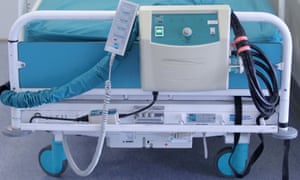
Hospital bed


Almost 37,000 women went to a GP, A&E or a walk-in centre because they didn’t have access to a midwife between 2014 and mid-2016. Photograph: Lynne Cameron/PA

It was worrying that the same proportion of women who could not see a midwife as often as they wanted to postnatally had not improved since the NCT carried out a previous survey four years ago, Duff said. A&E staff and GPs do their best to help women in such circumstances but are not properly trained to help with problems such as those that concerned new mothers typically present with, she added.


One woman told the NCT how she felt obliged to go to her local A&E after her midwife did not come out and see her at home when her legs and feet became swollen, even though they were potential signs of deep vein thrombosis, which her own mother had suffered from after giving birth to her. Another said she had gone to A&E when she and her baby son were discharged too quickly after his birth even though he was not breastfeeding and he soon became dehydrated.


Cathy Warwick, chief executive of the Royal College of Midwives, criticised the NHS’s failure to allocate proper resources to postnatal care as a short-term policy that stored up more problems and longer-term costs.


“Underfunding and under-resourcing postnatal care not only puts pressure on other parts of the NHS, it also fails mothers and babies who may not be getting the care, support and advice they need,” she said. “I am hearing increasing reports of babies requiring readmission to hospital because of lack of breastfeeding support.


“It is also widely acknowledged how critical it is to have early detection of women who are suffering from mental health problems postnatally. Early intervention can prevent very serious problems for the mother as well as separation of mother and baby.”


A series of reports in recent years into weaknesses in postnatal care led to NHS England’s maternity care taskforce and Better Births report last year recommending improvements, including that women can contact a midwife in the weeks after the birth. However, Warwick warned that pressure on hospital maternity units and serious shortages of midwives meant that some midwives are being taken away from home visits to help out there.


NHS England declined to respond directly to the findings, but insisted that it was making progress on implementing the recommendations contained in Better Births.


“It is safer than ever to give birth in this country and the vast majority of mothers report that they received great NHS care,” a spokesman said.


“We are now working to implement the recommendations made by Better Births across the NHS including providing better postnatal care and access to a small team of midwives for continuity throughout the pregnancy, birth and postnatally, ensuring all women receive the best possible care.”


Case study


When Leigh Jerzeyszek, 33, gave birth to her first son, Charlie, last October, the baby didn’t take to breastfeeding at first.


“I’m a new mum, I’d never breastfed before, so I didn’t know what was happening and what was normal,” she said. “He was just very, very gentle, so I thought, this is easy.”


She asked the nurses for some help with breastfeeding, but didn’t receive help before being discharged, the day after giving birth. “For three days, Charlie had barely anything to drink, and every time I tried to breastfeed him he was distressed, like I was trying to poison him,” Jerzeyszek said.


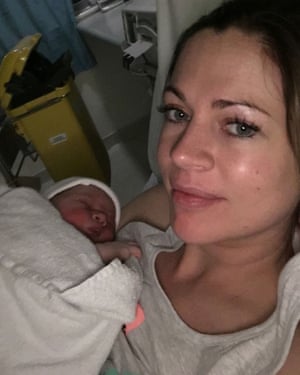
Leigh Jerzyszek and Charlie.


Leigh Jerzyszek and Charlie. Photograph: Leigh Jerzyszek

“I thought, this can’t be right … he’s going to dehydrate if I don’t give him something, so I tried him with formula. He couldn’t latch to my breast, and he couldn’t latch to the normal teat of a bottle, either.”


Unlike many of the mothers in the NCT study, Jerzeyszek did have a visit from a midwife the day after being discharged, and the following day a healthcare visitor, who said she should tickle Charlie to make him try to eat. But it wasn’t until three days after she left the hospital, and becoming increasingly anxious about Charlie’s inability to feed, that she saw an infant feeding specialist.


“As soon as she saw him, she said, ‘get him to A&E, because that’s not a normal cry’,” said Jerzeyszek. “It was really whimpery, just no energy. She looked at his tummy and it was quite sunken. We went back to the hospital in a panic. No one in A&E could feed him.”


Charlie was tested for meningitis and sepsis, and was given lumbar punctures.


Jerzeyszek was exhausted, awash with postnatal hormones and terrified. “I went into the toilet and cried,” she said. “I hadn’t slept, this tiny, innocent little baby’s not feeding, it’s just really surreal.”


Charlie spent three nights in hospital being fed on a tube, as an ear, nose and throat specialist and eventually a speech therapist tried to work out why he wouldn’t feed. He ended up needing special teats until he was four months old.


“I was discharged too soon … they just basically didn’t check that Charlie was feeding properly,” Jerzeyszek said. Although she received frequent visits, “they just didn’t identify the problem … I would have thought as an experienced care professional, rather than thinking he doesn’t want it or he’s lazy, he actually couldn’t feed”.


She remains angry at the impact it had on her family in their very first week. “I think because at the time it’s all a whirlwind … you just deal with it,” Jerzeyszek said.


“But now that he’s settled, sometimes I get upset about it. There was a lot of trauma to him that could have been prevented if they’d only checked [his feeding] in the first place.”


As told to Alice Ross


Tens of thousands of new mothers can"t reach a midwife, study finds

6 Şubat 2017 Pazartesi

Cuts can"t stop genuine people power, but professionals can | Richard Wilson

It is becoming increasingly clear that many of our public service systems undermine people power.


Problems like obesity, depression, addiction and finding a job require us each to take individual action. Of course there are all kinds of support to help us keep fit, ace job interviews, or live without drugs, but control always lies with the individual, not the state. We decide what food to put in our mouths or whether to go to the gym.


But this vital truth seems to have been absent in designing our public services.


Take, for instance, a GP appointment. Most last 10 minutes; the GP asks a few questions and then tells you either to take some medicine, adopt new habits or see someone more qualified. The trouble is, we don’t do what we’re told. The World Health Organisation has estimated [pdf] that only 30%–50% of us take our medication as prescribed, in what is being described as an “epidemic of non-compliance”. Many of the changes required are intimately connected to our sense of who we are and what others think of us – and it’s very hard to change a habit. Anyone who’s tried having a “dry January” will know the challenge.


Ideas about co-producing public services, with professionals and users working together, have been around for years. What’s interesting right now is the new movement of practitioners delivering “people-powered services” that aim to improve self-efficacy at a low cost and with high impact.


One example is homelessness charity Groundswell, which provides peer support to people experiencing homelessness to help them address their health needs. Athol Halle, Groundswell chief executive says that when you provide support in this way, there are health benefits for individuals – and cost savings for the NHS. That’s why Groundswell receives in the region of £500,000 from health commissioners. It is not alone. Club Soda is working to reduce alcohol dependence, Brightside Trust is working in youth unemployment, Community Catalysts in adult social care, and Self Management UK in health. All of these organisations are based on putting users in charge of their service.


However, this is much easier said than done. Supporting people to take control is a subtle discipline in which most people working in public services have not been trained.


Here are five basic principles of how to help people take control that you can adapt according to your circumstances:


  • Accept the user wherever they are.

  • See users as having all the resources they need to start taking action.

  • Change is only possible if the user wants it.

  • Users’ solutions are the best solutions.

  • Never assume users think like you.

At first glance these five principles might seem plain wrong. Not everyone has all the resources they need, especially in this era of deep cuts.


But for services where individual action is a requirement, the essential ingredient is user motivation. So whether they do in fact have everything they need is not what’s important; what matters is that they believe in themselves enough to make a start.


For most professionals it takes a fundamental reorientation to start supporting individuals to take action themselves. Anand Shukla, chief executive of Brightside Trust, says it is often quite a leap for professionals to support people to make decisions and to take action. What’s crucial, says Shukla, is to identify right from the start people’s priorities and wishes, rather than jump in and tell them what you, as a professional, think they should do.


These principles need to inform not just conversations between service professionals and users but the whole way public services are designed: system design. Without that, the work of people like Halle and Shukla will be stifled by systems that claim to want people power but, in fact, work against it.


If you’re a public service professional working in people-powered services – or an individual taking action – drop us a line and tell us how you’ve got on: public.leaders@theguardian.com


Talk to us on Twitter via @Guardianpublic and sign up for your free weekly Guardian Public Leaders newsletter with news and analysis sent direct to you every Thursday.


Cuts can"t stop genuine people power, but professionals can | Richard Wilson

11 Ocak 2017 Çarşamba

Can’t Sleep? Here are 13 Effective Ways to Fall Asleep Faster

Having trouble falling asleep can lead to getting not enough sleep or sleep deprivation, the most signs of which are excessive daytime sleepiness, yawning, and irritability. Chronic sleep deprivation can interfere with balance, coordination, memory, decision-making abilities. Worse still, it suppresses immune system function.


Remedies to the more physical and environmental sleep-deprivers are fairly obvious, even though not always easily employed. So, if you are in the majority of those having trouble to fall asleep and not having a quality sleep, here are some do-it-yourself suggestions:


Avoid eating within 1 ½ – 2 hours of bedtime


Eating or snacking before bedtime is one of many nighttime habits. Eating especially right before your bedtime can be very disruptive to sleep. Salt-filled snacks such as potato chips, for instance, could make you feel thirsty. Drinking too much fluid before bedtime may cause extra trips to the bathroom.


Taking refined carbohydrates and sodas loaded with sugar (especially high fructose corn syrup) before bedtime can also cause disrupted sleep. Eating high-carb diet before bedtime can cause blood sugar to nose dive.


Snack on fats and proteins


Snacking on fats and proteins 2 hours of bedtime are much safer than snacking on carbs especially processed carbs. The reason is these foods would not cause sugar spikes. Fats especially healthy fats such as coconut milk, cheese, full cream milk and most proteins that contain an amino acid tryptophan may help you to feel calm, which in turn make you falling sleep more easily.


Avoid alcohol, caffeine, and nicotine


Caffeine, nicotine, and sugar are stimulants if consumed close to bedtime can prevent you from falling asleep. Caffeine is found in a number of foods and drinks, including chocolate, tea, energy drinks, and some pain relievers. While alcohol sometimes makes users feel sleepy and may speed up the onset of sleep, as the body metabolizes the alcohol, it actually acts as a stimulant, preventing quality sleep and increasing awakenings during the night.


Good nite sleep depends much on parasympathetic nervous system (PSN) dominance. So nicotine, sugar (from table sugar or processed carbs), caffeine, and alcohol (certain amounts) would increase sympathetic nervous system activity resulting in its dominance over PSN and may awaken you as well as disrupt your sleep.


Note: Some people believe that any type of alcohol is bad for health due to ethanol content even only a glass of it at a time. Ethanol is converted to ethanal, a lethal aldehyde. This aldehyde is found to be very cytotoxic, meaning it can destruct and eventually kill cells.


Consider alternative treatment/therapy


 Some medications can cause disrupted sleep. These are the most common ones said to cause it, including alpha-blockers, beta-blockers, corticosteroids, SSRI antidepressants, ACE inhibitors, ARBs, cholinesterase inhibitors, H1 antagonists, glucosamine/chondroitin, and statins.


Write down every drug and supplement you take. If you’re taking any of them and having sleep problems, you may try an alternative treatment or therapy. Gotu Kola and Sensitive Plant, for instance, may be used as alternatives for alpha-blockers and beta-blockers. They may also be used as antidepressants.


Turn off you mind


Convert your concern over something that bothering such as worrying about next day’s event into some kind of action plan and you will rest easier. Take a piece of paper and jot down your top concerns. Then write down the steps you will take to resolve the problems or situations. Don’t forget to include how and when you want to materialize your planned strategies.


Exercise, at least four hours of bedtime


Exercise especially cardio workout helps improve the length and quality of you sleep. 30 minutes of vigorous aerobic exercise, for instance, keeps your body temperature up to 4 hours, thus, inhibiting sleep. When your body cools down, at the same time the stress hormone cortisol follows suit, your brain starts releasing melatonin, so then you will get drowsy.


Comfortable sleeping environment


Use your bed for sleep and sex only. Using your bed for other activities such as studying or watching television would let your brain to associate your sleep spot with being awake and alert.


Blue wavelengths are beneficial during daylight hours as they boost attention, reaction times, and moods, however, when emitted by electronics with screens, as well as energy-efficient lighting during bedtime may cause disrupted sleep. Many people don’t know that LED screen of their mobile phones emits blue wavelengths.


Use dim red lights for night lights as it has the least power to shift circadian rhythm and suppress melatonin.


Have sex


Having sexual activities before bed is seldom discussed as one of the ways to induce sleep and to have a good sleep. Some married couples have routine intercourses performed every night or several nights per week before bedtime as a means to help them to fall asleep more easily. Sexual activities release endorphins, which exert a soothing effect on the brain and nervous system.


Some married couples or individuals practice non-orgasmic sex or at least delayed orgasm, obtained via having intercourse or caressing/fondling genitals or sensual parts. The moderate release of dopamine would not only provide pleasure but also long-term satisfaction to both parties as well as inducing good night sleep.


Start a sleep ritual


When you were a child, your mother read you a bedtime story and tucked you into bed every night. This comforting ritual acts as a signal to your brain to fall asleep. Have sex, drink a glass of warm milk, take a bath, listen to calming music, or recite bedtime prayer are bedtime rituals, which help signal the mind and body that it’s time to sleep.


Make your bedroom smell good


Essential oils such as Ylang-ylang, Lavender, Bergamot, Marjoram, Neroli, Sandalwood, and Sandalwood are said can combat insomnia, two symptoms of which are difficulty falling asleep at night and waking up during the night.


The most convenience way to use them is by applying on your neck or pillow.


Epsom Salt and lemon


If you want to improve your sleep every night, you may want to consider taking lemon water with Epsom salt added to it. Magnesium is believed can help calm your brain and autonomic nervous system by activating parasympathetic nervous system over sympathetic nervous system.


Squeeze ¼ lemon in a glass of water, add ¼ teaspoon of Epsom salt and a pinch of Himalayan salt. Drink it ½ hour of your bedtime. It is useful in inducing sleep for those experiencing insomnia, hypertension, anxiety, and depression.


Alternatively, take Valerian root, Gotu Kola, Chrysanthemum or Lemon Grass tea ½ hour before bedtime. It can help relax your mind and body


Take coconut oil


Surprisingly, consuming coconut oil daily is said can help induce sleep and have a good night sleep. Coconut oil is believed to have the ability to regulate body functions and eventually help one sleep more easily.


Turmeric milk


In the evening, having a warm cup of golden yellow turmeric milk is soothing and can help you sleep soundly through the night. How to prepare: in a small pot, bring almond milk to a boil, turn off the heat and whisk in turmeric, cardamom, and raw honey. Adding 1/8 teaspoon of vanilla would make the turmeric milk taste better and further synergize its calming effect.


Can’t Sleep? Here are 13 Effective Ways to Fall Asleep Faster

10 Ocak 2017 Salı

“Who Rules Over You?—Just Ask Who You Can’t Sue!”

When American soldiers sustain battlefield injuries from faulty military hardware, should they be allowed to sue the hardware manufacturers?  According to one Congressman, “No,” and this has civil rights groups openly accusing Congress and the defense industry of being in cahoots.  


Congressman Mike Acheron, (D) Sacramento, Calif., recently introduced a bill that would eliminate a soldier’s ability to sue companies that manufacturer defective battlefield munitions.  Entitled, “The Safe Battlefield Act of 2017,” the bill would forbid personal injury lawsuits against private companies that manufacture defective military hardware.  


Instead of suing companies like General Dynamics, Lockheed, or Haliburton in a regular courthouse, servicemen and women alleging injuries from defective munitions would be required to sue in a special courthouse – with no judges or juries.  Said Congressman Acheron, “Instead of soldiers being sue-happy, the Act creates a more streamlined process to facilitate the needs of our young men and women who may sustain injuries on those rare occasions when they may have encountered allegedly defective battlefield munitions.”


But some veterans groups say that battlefield injuries from negligently designed explosives are far more common than we are led to believe.  One group, Veterans Injured by Negligent Explosives, (“VINE”), says that battlefield injuries too often go unreported. 


VINE claims that the defense industry intentionally minimizes the nature and extent of battlefield injuries caused by defective explosives.  VINE Founder, Rebecca D. Aubrey, says, “The Army has a reporting system for injuries caused by defective munitions, but the truth is, there’s no consequence for not reporting, which basically means that nobody’s reporting these injuries.”  Aubrey adds, “And the reality is – they just wanna keep it all hush-hush.”    


PFC Audie Murphy, U.S. Army, argues: “There’s no such thing as a safe explosive.”  While serving in Kandahar, Pvt. Murphy lost his right leg in an incident involving an allegedly defective landmine.  Pvt. Murphy says: “If we can’t sue these corporations for their unsafe products, then there’s no incentive for them to make their products any safer.”


The Obama Administration and the War Department show vigorous support for the proposed restrictions on suing the defense industry.  An unidentified State Dept. spokesperson was quoted as saying: “The Earth is round, the sky is blue, and America’s battlefield munitions are both safe and effective.”   


But according to civil rights firebrand, attorney T. Matthew Phillips, the proposed law is unconstitutional.  “The Seventh Amendment guarantees the people’s fundamental right to file lawsuits,” says Phillips, adding, “C’mon!—if our battlefield explosives were truly safe, like the industry claims, then there’d be no need for Congress to immunize the industry from lawsuits in the first place!”


Phillips compares the proposed law to the Vaccine Injury Act of 1986, which forbids personal injury lawsuits against vaccine makers.  “All battlefield explosives – just like all vaccines – are unavoidably unsafe,” claims Phillips, “These companies should be required to face jury trials and class action lawsuits – to keep ‘em honest — because the government won’t!”


The proposed bill is now in the Armed Services Committee…


[Yes, this piece is satire!!  Attorney, T. Matthew Phillips, writes to expose the hypocrisy, fraud, and oppression of the Vaccine Injury Act of 1986 – which forbids lawsuits against vaccine makers!!  If you’re furious about this, then sue to overturn the law! <<<< And THAT is not sarcasm.  We urge others – fight to retain your freedom!!  Sue vaccine makers for vaccine injuries!  Don’t wait for someone else!!  Be the brave plaintiff who changes the course of history!  ::::::: Attorney, T. Matthew Phillips and RevoltRevokeRestore.com are now suing the State of California to stop mandatory vaccination!  The Calif. Court of Appeals will soon determine whether it’s legal for the State to mandate products known to come with appreciable risk of great bodily harm!  Folks – things will never change merely by “liking” and “sharing” on Facebook.  We all should be in court fighting to protect our custodial rights as parents!  Join us in this fight!!  Hire a lawyer and sue Jerry Brown today!]


“Who Rules Over You?—Just Ask Who You Can’t Sue!”

22 Kasım 2016 Salı

Why Can’t I Lose Weight?

Asking yourself ‘Why can’t I lose weight?’ is actually one of the best things you can do for yourself. It says you know that what you’re currently doing isn’t working for you.


You’re at the place where you’re ready to look at alternatives – try something different to get a result you want.


So why can’t you lose weight? Here are 3 possible reasons you may not be losing weight…


#1) Medical Reasons


Now this is not the same as saying you’re genetically programmed to be overweight. That is hogwash. In fact, scientists estimate that even if you do have a genetic propensity to gain weight, your genes only account for 15 – 25% of your current weight. Thus, forget the genetics excuse.


But there are medical reasons that some people can’t lose weight. Low thyroid, adrenal exhaustion, insulin resistance and other medical conditions can make losing weight near to impossible.


There’s nothing more frustrating that trying to lose weight, doing all the right things and not losing an inch – all because of a medical condition. Get the medical condition cleared up first and then address the weight (in fact, the weight may just go down on it’s own once you get the medical condition addressed).


#2) Emotional Eating


I recently read an article where a nutritionist estimated that 75% of overeating was due to emotions. 75%! Can you imagine what would happen if you learned to eliminate emotional eating and cut out all those calories? What a weight loss impact! The weight would be falling off.


Unfortunately, in today’s world, emotional eating is on the rise. Most people today are feeling the pressure of an increasingly hectic lifestyle. We hardly have time to tie our shoes, never mind deal with our emotions.


Because of this, our emotions get stuffed down and ignored until finally they explode and we’re face-down in a bowl of Rocky-Road ice cream with extra chocolate sauce.


Here’s the bottom line: you are human and you have emotions. Your emotional needs are important and need to be addressed properly with love. You need emotional nurturing and proper emotional care.


If that means you take a 5-minute break every few hours at work to regain your emotional balance, do it. If that means you need to unwind by doing a mall walk and window shopping after work – don’t let anything stop you.


Learn to nurture your emotional health and you’ll nip emotional eating in the bud – and start losing weight FAST.


#3) Mismatched Weight Loss Plan


There are many different ways to lose weight and dozens of weight loss programs to choose from. Some plans emphasize a change in diet, others emphasize a change in exercise, others focus on the inner reasons for overeating.


Every person is different and will lose weight in their own unique way. If what you’re doing now isn’t currently working, it may be a simple case of personality-plan mismatch.


Maybe instead of a diet-focused weight loss plan, you would feel better with a fitness-focused weight loss plan or a psychological weight loss plan. There are lots of plans to choose from and you deserve to take your time and find one that fits your personality and lifestyle best.


If you think this is the case, take some time to review different diet or weight loss plans. Find one that you can get excited about, one that makes sense to you and that fits your belief system and personality. That’s when you’ll make real weight loss progress!


So, those are 3 possible reasons for your weight loss plateau. You don’t have to stay stuck in a weight loss rut. You don’t have to keep asking yourself the frustrating question: Why Can’t I Lose Weight?’ Keep believing in yourself and in your dreams. Don’t give up and you will get there!


Why Can’t I Lose Weight?

25 Ekim 2016 Salı

Why can’t the NHS treat my mental health as effectively as my cancer? | Eleanor Taylor-Davis

It’s been an interesting few years for mental health; what was once an ambiguous and silent illness kept out of the public perception has recently found its voice and received an unprecedented amount of attention. Numerous articles questioning the quality of treatment available in the UK and lack of government funding have dominated the media, while an increasing number of public figures campaign against stigma surrounding the subject.


But has all this attention actually made any difference? It’s all very well the government promising radical change and raising awareness of the prevalence of mental illnesses. What remains to be seen, however, is evidence from the frontline of these changes happening.


By way of an unlikely (and unlucky) series of events throughout the past decade I’m now fully acquainted with both the NHS’s physical and mental health services, receiving care for cancer, depression, anorexia/bulimia and borderline personality disorder. Having had first-hand experience of both departments, I can say with some authority that the division between the two is astounding. When my physical health was at risk, the quality and availability of care were exceptional, and I am eternally grateful to my consultants for effectively saving my life. But for the latter, I have been continually let down and disregarded.


Nowhere has this disparity been more evident than in the treatment of my eating disorder, despite the condition having a higher mortality rate than any other psychiatric illness. For the past 10 years this eating disorder has dominated my life, limiting me both personally and professionally. This is something I’ve had to deal with – for the most part – without professional help or intervention, despite the unquestionable role social and cultural factors play in the development of eating disorders. It pains me to say – not least because the NHS is a resource for which I hold the utmost respect and gratitude – that on this occasion the public healthcare system failed to perform. 


But when at 24 I discovered a suspicious lump in my abdomen and presented it to the doctor, the speed at which I was referred to specialist services and consequently treated was in complete contrast to the seemingly interminable lists I was placed on for mental health treatment. Priority of the physical over psychological was in this case irrefutable despite comparable fatality rates between the two. In light of the purported healthcare reform, how can this handling of psychological care still persist?


In recent months my bulimia and anorexia has worsened; rapid weight loss, daily binge-purge episodes and compulsive exercising led to urgent admission to an inpatient eating disorders ward. Although this admission has been one of the most trying experiences of my life I’m all too aware of how lucky I am; these beds are unbelievably limited and had one not become available at that time, my disordered and destructive behaviours – which had already resulted in osteoporosis and arrhythmia – would almost certainly have led to sudden cardiac arrest. It wasn’t until speaking to staff upon arrival that I realised the extent of this scarcity: there are currently 34 beds for the entire area inside the M25, 34 beds for an area with an estimated population of 8.5 million. I’m struggling to find any correlation between the appalling lack of resources for a mental health condition with the highest mortality rate and the government’s grand claims of turning the system around.


As grateful as I am for the treatment I’m receiving, all too apparent is the damage that the systematic privatisation of the NHS having on the service. Building work is now under way on my ward to squeeze more bedrooms into an already overcrowded living space. The results will be staff having to cater and care for more seriously unwell patients in need of round-the-clock supervision, already limited facilities (bathrooms, toilets and dining space) being stretched to accommodate them and bureaucracy taking precedence over patients’s needs.


So five years on from Nick Clegg’s speech calling for mental health reform – and after countless parliamentary promises for a change to the system in the years that followed – radical improvements remain to be seen. Stark inequality between physical and psychiatric care and the subsequent economic and social strain this puts on individuals and communities persists, while underfunded psychiatric wards are under intense strain from lack of beds and facilities to properly care for patients and provide staff with the training they need to treat such complex conditions.


Unfortunately under the current government I don’t see things changing for the better any time soon. The Conservative party’s inexorable privatisation of public services has left the NHS in a precarious position. The hospital bed from which I’m writing sits on a ward in one of London’s largest mental health centres. It is in gradual decline as more and more ground is sold to private developers, which seems symbolic of the gradual death of our once globally esteemed social welfare system.


Why can’t the NHS treat my mental health as effectively as my cancer? | Eleanor Taylor-Davis

The police can’t continue to pick up the pieces of Britain’s mental health cuts | Ian Blair

In my time as the deputy and then commissioner of the Metropolitan police, my primary concerns were with terrorism and issues around diversity. But a constant problem for my officers was dealing with people exhibiting psychotic behaviour in public, which seemed to be getting worse. A main driver of this was the inadequacy and local unpredictability of mental health services.


Since I left office in 2008 the situation has deteriorated more dramatically than I could have imagined, with the latest report suggesting that police across England and Wales are now using powers under section 136 of the 1983 Mental Health Act 50% more than they did a decade ago – nearly 30,000 times in 2014-15. These numbers are a symptom of a crisis in mental health provision.


Section 136 is the power given to police officers to remove individuals who appear to be exhibiting signs of acute mental distress from public places to what is described as “a place of safety”. This should be a hospital but, in an emergency, can be a police station.


There is a similarity here with the much more widely understood crisis in social care for the elderly, with too many simply frail people staying in hospital when they should be being looked after at home. The closure of many psychiatric hospitals in the 1980s under the policy of “care in the community” has put pressure on mental health provision, while the increased geographical mobility of many families makes care by relatives much more challenging


But the real issue, both in social care and mental health, is that money is being spent on crisis-handling rather than on prevention.


The police and hospital A&E units have, in the past decade, become the only 24-hour public services for people in crisis. The police have had severe funding cuts but are still there at the end of a telephone. Anyone working in the NHS will admit that the government’s vaunted “parity of esteem” between physical and mental health has not been honoured, particularly for young people. Meanwhile local authority budgets, which part-fund child and adolescent mental health service and community health teams, have not been protected at all.


In my early service in the 1970s it was a rare sight to see a cell door open with an officer sitting outside, watching


This means funds for services that would have previously been available are being rationed on the basis of seriousness of need. Adult care provision is being refused by cash-strapped local authorities to hundreds of thousands of people who would have previously received it; now they will only get it when their incapacities worsen to the point where they end up in A&E, then in a ward from which they cannot be released because there is no adult social care service to support their recovery at home.


I have lost count of the number of officers dealing with distressed young people – and of friends and acquaintances whose children are so ill as to be taken by police to local psychiatric institutions only to be assessed as not ill enough to be given a bed. All of these are therefore released into the care of community mental health services, whose budgets have also not been protected. Over 200 people took their own life last year while under the care of such services, which lack sufficient resources to prevent difficulties becoming disasters.


Last year the government announced that police cells should never be used for the housing of mentally ill people. Fine, but announcing that something is forbidden is not the same as providing an alternative, as was highlighted during prime minister’s questions last week.


In my early service in the 1970s it was a rare sight in a police station to see a cell door open with an officer sitting outside, watching over a vulnerable person with mental health problems because there was nowhere more suitable to take him or her. Later, it became less rare. Contrary to the government’s intention, that sight will probably remain commonplace for some time, as will cases on the street where officers end up dealing with psychotic individuals without sufficient backup from mental health professionals. It is interesting that the chief constable of Devon and Cornwall is reported to be threatening to sue his local NHS trusts over a lack of mental health beds.


The social care crisis will affect most of us in the coming years, whether as patients or as relatives. Such experiences can be deeply distressing and long-lasting, but unless more money is put into mental health provision, both in residential care and in the community, significant numbers of people will suffer; and families will face the acute and agonising dilemma of how to look after someone at home whose psychotic state is unpredictable, occasionally violent and sometimes self-harming.


Meanwhile the police will continue working to provide a service for which they were not and are not designed. When Robert Peel, who founded the Metropolitan Police in the 1820s, said the police are “only members of the public who are paid to give full-time attention to duties which are incumbent on every citizen in the interests of community welfare”, I don’t think he envisaged them as community mental health workers.


The Home Office judges the success or failure of individual police services by reductions in crime – not on dealing with mental health crises – but unless NHS and council-run mental health services are adequately funded, too much police time will continue to be taken up with a task they are ill-equipped to perform, and which risks jeopardising their role as protectors of the community from crime and terror.


The police can’t continue to pick up the pieces of Britain’s mental health cuts | Ian Blair

18 Ekim 2016 Salı

Jeremy Hunt can’t fix the NHS. No one now believes a word he says | Polly Toynbee

Expect trouble. On Tuesday, health secretary Jeremy Hunt and NHS England head Simon Stevens appear before the Commons health committee. Sarah Wollaston, GP and chair, has already said she wants no one quoting the mythical “£10bn extra” the government pretends the NHS has received, yet Hunt brazenly used it again on the Today programme.


Thankfully, Stevens is unlikely to indulge in the same delusional fantasies about the state of his service. He already warned the public accounts committee in September of this “incredibly financially challenging period”, and “incredible” is the word he should cleave to. As every trust is forced to produce a financial plan that balances on paper, most – in private – admit these are fairy-tales; Chris Hopson of NHS Providers makes plain these pigs won’t fly. Hunt relies on threats and micro-managing. Just yesterday he put another three debt-ridden trusts into “special measures” to warn others their heads will be on Whitehall spikes. But there’s safety in numbers: he can’t sack them all.


Theresa May has said there is no more money: the NHS must save £22bn by 2020, despite three quarters of trusts being up to their ears in debt and missing waiting targets by miles. If she could cut police costs by 20%, why can’t the NHS, she asks. Because crime has dropped like a stone over recent decades while NHS need heads skywards, with growing numbers of the old, and collapsing social care. She risks a brutal brush with NHS reality before long.


But that’s not all. By Friday all 44 areas have to produce a sustainability and transformation plan (STP), unleashing vehement local protest against any mergers or closures.


After Lansley’s catastrophic 2012 act blew the NHS into myriad competing fragments, this re-reorganisation was meant to repair the damage and glue the fractured parts together again – a good idea. Stevens devised STPs to bind each area into a single unit, combining GPs, mental health and hospital services in one budget as a coherent whole. That might mean amalgamating maternity or A&E departments, rationalising stroke or cardiac care. Good idea, in theory.


Junior doctors protest in London during April.


Junior doctors protest in London during April. Photograph: Joe Pepler/Rex/Shutterstock

But these plans collide with the £22bn “savings”, so how will local people trust the good intentions of these plans? NHS England has rightly taken fright: the Health Service Journal reveals there have been orders requiring each area to send every STP announcement to the headquarters communications team to make sure they “articulate tangible benefits for patients” in language that is “clear and compelling”. But it may take more than “compelling” language to assuage local fears.


Few of these plans have yet been agreed, allowing rumours and fears to fester – and when they do emerge, the government can expect no backing, not even from their own MPs and councillors. Expect every politician, irrespective of party, to dash to join the local “Save Our Hospital” demo. Any who pause to suggest some plans might be good for patients will be mown down in the stampede. Bandwagon campaigners will join every protest, regardless.


A cluster of hospital protesters went to Downing Street and the Commons last week, with petitions about closures from Barnstaple, Dewsbury, Chorley, Huddersfield, Grantham and St Helier. Each has their own circumstance, so it’s well-nigh impossible for local people to know which units should be “saved” and which rightly closed.


Among them were protesters about the Horton hospital in Banbury. At last week’s prime minister’s questions, the Tory MP for North Oxfordshire, Victoria Prentis, asked an impassioned question: “Does the prime minister share my sadness that the majority of Banbury’s babies cannot be delivered, as I was, at the Horton general hospital? Will she join with me to put pressure on the trust to reopen the unit?” The PM replied: “Every effort is being made …”


Horton swears they’ve moved heaven and earth to hire doctors but none would come: there’s a 24% vacancy rate


The Horton maternity unit closed abruptly this month after failing to hire middle-grade doctors, leaving a midwife-led unit. Part of the Oxford University Hospitals, its HR director swears they have moved heaven and earth to hire doctors but none would come: there’s a 24% vacancy rate in the district. The Horton obstetric unit lost its validation for training doctors as too few babies were being born there to qualify, so junior doctors won’t apply. They are still advertising, promising to reopen if they can recruit. Managers spell out the situation in painstaking detail, answering every possible query. But all this is to no avail.


A vociferous local Keep the Horton General campaign gathered 5,000 people to hold hands round the hospital, amid longstanding suspicions that it might be axed despite a plan to rebuild it. Every party supports the protest, with their Tory MP as militant as the rest. She says she doesn’t trust the management: “They make decisions about us without us.” She and the campaigners mistrust whatever they are told.


The Banbury Guardian relishes the story, as the local press always does. “It’s lovely how the community has come together,” Prentis says. Banbury businesses are offering any obstetric doctor recruited free shirts, free beer, cheap accommodation and discounted fees at a local private school. A packed meeting roasted NHS managers about the journey time for mothers in labour to travel to the John Radcliffe in Oxford. Nothing creates such feelgood community cohesion as a local NHS threat.


Talking to both sides, I am inclined to believe the managers’ good faith. But with deeper cuts scheduled for the years to 2020, can anyone know for certain where they might fall? At the Witney byelection, the Horton and other Oxfordshire NHS closures feature prominently. How Tory MPs get away with it beats me: they voted for these NHS cuts.


Watch this pattern repeated around the country as STP plans unfold. “Clear and compelling” language may not be enough when the NHS professionals, even the doctors, struggle to be believed. In the fog of war, with suspicions rife, local people have no way of detecting the good plans from dangerous cuts. As Stevens warned MPs: “Let’s be clear, there are going to be significant challenges, there will be choices, there will be controversies.”


The tragedy is that STPs were a progressive way to reunite NHS community, hospital, GP and social care services. But with no capital for rebuilding and even less for day-to-day spending, they risk wreckage. The cuts dig deep. How long before Simon Stevens decides to walk away?


Jeremy Hunt can’t fix the NHS. No one now believes a word he says | Polly Toynbee

23 Eylül 2016 Cuma

Why can’t our leaders learn from 30 years of failure in health and education? | John Quiggin

The inadequacy of competition and the profit motive in the provision human services like education and health has been established by harsh experience with consistent failures like PFI hospitals, for-profit schools and private prisons. This failure presents a puzzle: how is it that (assuming we have an adequate income) we can rely on for-profit corporations to put food on our tables and clothes on our backs, but not to educate our children or preserve our health.


In the hands of many advocates of privatisation, this puzzle is turned into a knock-down refutation: if the profit motive works well in providing something as vital as food, it must work well everywhere. The latest instance of this naive faith in the market is the Australian Productivity Commission’s call to privatise public health and housing.


In fact, there is no puzzle here: economists and public policy scholars worked out decades ago how to answer this question in principle, and solved many of the issues in detail. The problem is that the political class, along with much of the economics profession, have done worse than the Bourbons, of whom Talleyrand observed “they have learned nothing, and forgotten nothing”. Leading economist Paul Romer recently observed, echoing earlier comments by Robert Gordon, that macroeconomics has been going backwards since the early 1980s.


The same is true of the regressive microeconomics underlying the dogma that privatisation and market competition are always and everywhere beneficial. Our leaders, and the economists who advise them, have shown themselves incapable of learning from experience, but they have forgotten much that we once knew. In this case, what we once knew was the analysis of market failure that supported the successful mixed economy that came into being in the mid-20th century.


The basic analytical framework was set out in Francis Bator’s 1958 article, “The anatomy of market failure”, (itself drawing on earlier work by the great British economist AC Pigou). It was developed further by a string of contributions from economists like Kenneth Arrow, Joseph Stiglitz and George Akerlof, all of whom received the Nobel Memorial Prize in Economic Sciences for their work.


Taken together with Keynesian macroeconomic theory, this body of work explained why a properly functioning modern economy must be one in which some goods and services are provided by firms competing for profit and others by governments or publicly-funded non-profit organisations. The result is the “mixed economy”, political and social aspects of which were analysed by scholars such as Karl Mannheim and Andrew Shonfield.


Human services are among the sectors of the economy where markets and competition perform badly. The central problems related to human services involve information and finance. These are most obvious in relation to education. Education is for most of us, a once-only experience, and its value is hard to assess, except in retrospect. To some extent, we can make choices on the basis of the reputation of schools and universities. However, these reputations change only slowly over decades, so slowly that no rational for-profit firm would invest in maintaining them.


Moreover, education is hugely expensive, so that most families can’t afford it in the absence of public provision or a public subsidy. The experience of for-profit education in Australia and the US has been that it is far easier to extract public subsidies through scams of various kinds than to compete on the basis of high-quality education.


Many of the same issues arise in healthcare. Obviously, if we knew what was wrong with our health and how to fix it, we wouldn’t need doctors to tell us. As it is, we need to rely on the judgment of our doctors to give us the right treatment and, equally importantly, to tell us when we will get better without treatment. The greater the role of profit in the system, the greater the incentive to provide unnecessary or overpriced services. The example of the United States, which spends more on healthcare than any other country, with worse results, is an illustration.


Information isn’t a problem, or not much of one, in the case of food supply. We buy food on a weekly or even daily basis and have plenty of chances to determine what we like, and which suppliers offer good value for our money. There are things we can’t easily observe, like the cleanliness of food preparation, but these can be dealt with through regulation rather than through governments getting into the food supply business themselves.


Of course, none of this helps if you don’t have enough money to afford the food you need. But long experience has shown that the best way to help poor people afford necessities like food is to give them more money. Neither general food subsidies nor welfare payments tied to food purchases (food stamps) have ever worked as well as income redistribution.


If markets and profits don’t work well in the provision of human services, why should we expect governments and non-profit organisations to do any better? The answer is that that non-profit provision relies on professionalism and a service ethos. These can’t be combined with reliance on direct financial incentives and managerial control.


The Bourbons who have dominated public policy for the past few decades are resolutely hostile to any kind of professional or service ethos. They take for granted the most simplistic versions of textbook economics, in which only monetary incentives matter. On a more sophisticated view of the question, people care just as much about the respect of their peers and belief in the value of their work as they do about the size of their pay packet.


This is ultimately an empirical question, and after 30 years of failure we have more than enough evidence to reach a conclusion. Across the human services sector, markets, incentives and competition rarely work better than non-profit provision and frequently lead to disastrous failure.


Why can’t our leaders learn from 30 years of failure in health and education? | John Quiggin