mothers etiketine sahip kayıtlar gösteriliyor. Tüm kayıtları göster

15 Nisan 2017 Cumartesi

Mothers with autism: ‘I mothered my children in a very different way’

Being a girl or woman with autism is hard: it’s only in the past two to three years that many professionals have begun to recognise that the condition is not limited to boys and men. But what’s harder is to be a mother with autism – and harder than that, is to be a mother with autism, of children with autism.


Experts say that there is a hidden pool of mothers who have grown up with undiagnosed autism. These women often only recognise their own condition when researching their children’s symptoms.


About a fifth of people with autism are thought to have been diagnosed as adults, although no national figures for adult diagnosis are available. Women with autism are most likely to remain undiagnosed: a survey by the National Autistic Society found that twice as many women were undiagnosed compared with men (10% against 5%).


Even once diagnosed, mothers with autism often hide their condition from the outside world, terrified their children will be removed from them if social workers misinterpret their autistic traits as indicating potential harm to the child.


“Their own autism, often undiagnosed, means they put professionals’ backs up and can be accused of causing or fabricating their children’s condition,” said Dr Judith Gould, the lead consultant and former director of the Lorna Wing Centre for Autism who developed the first and only female-specific diagnostic tests, and who trains doctors in how to recognise late-adult female diagnosis.


Laura James


Married with four children aged 19 to 26 – two of whom are neurodiverse and two neurotypical – Laura James has written Odd Girl Out, the first memoir by a British woman with autism to be published by a mainstream UK publisher. She was diagnosed last year.


“I mothered my children in a very different way to a neurotypical mother. For a start, I never told them off about anything. It just doesn’t seem logical to me. If they’re doing something you don’t like, it’s because you have a preconceived idea of how children should be, behave or look. That’s illogical. If, on the other hand, they are doing something dangerous, then it’s much more effective to sit down and discuss it with them.


If they’re in trouble, I’ll do everything practical I can to help them. It would be illogical to punish them


Laura James


“The consequence of this approach is that I’ve got one child who has always had straight As and is now heading for a first at university – and I have another child who has never passed an exam and doesn’t care. I’m equally proud of them both because I want my children to be content, happy and in a place of safety. To me, academic success isn’t a logical step towards that goal. I love my children desperately and would do anything for them, but I do think I don’t understand that fieriness that comes about when people talk about parenting. I simply don’t feel that sense of passion that neurotypical parents seem to feel.


“It could be because of this lack of passion that I have a different relationship with my children than most parents do: they like to hang out with me and message me just as much as they do their friends, and there’s nothing they would not tell me because they know I would never, ever get angry with them. If they’re in trouble, I’ll do everything practical I can to help them, which means it would be illogical to get angry, upset or punish them.”


Nicola


Nicola, 39, was diagnosed at 34 after stumbling across information on autism and women when researching her son’s symptoms. Her son, Andrew, was diagnosed at two and Nicola received her diagnosis six months later. It took four years, however, to get last year’s diagnosis for her daughter, Marion, now eight (the names of her children have been changed).


“My children are happy and doing well at school. What other measure can there be that I’m a good mother? But because of my autism, I live in fear. Society thinks that autistic mothers are, first and foremost, a safeguarding issue. I’m terrified that social services will take them away from me.


My son loves his squeezes and hugs, and I give them to him even though I find it almost intolerable to do so


Nicola


“I’m not worried about whether I’m a good mother or not. I know I am. I also know that my autism helps me be a good mother: autistic people get obsessions, and my obsession is making sure I’m doing everything I can to give my children everything they need, to love them, fight for them, and get them to adulthood healthy and happy.


“When my husband and I decided to start trying for children, I knew that I didn’t have any idea how to be a mother: my own childhood had been very unhappy. So I did loads of research. That’s how I discovered that children need cuddles and affection, and even though I don’t do touching – my idea of heaven is to live in a parallel non-touching world to everyone else – I make sure my kids get all the physical affection they need. My son loves his squeezes and hugs, and I give them to him even though I find it almost intolerable.


“Being autistic has meant my autistic children have grown up without the usual pressures and stresses that neurotypical parents can unknowingly subject their children to. My parents tried to force me to be ‘normal’ and to conform. They tried to force me to socialise, eat normally, behave normally. It was terrible: I grew up in fear and trauma.


“Before I knew that my children or I were autistic, it was natural to me to give them an autistic-friendly upbringing when they showed signs that was what they wanted. I didn’t think there was anything strange in it at all. And thank God I did: it means my children have never been stressed at home because of their autism.


“I’m not sure I would have been such a good mother to non-autistic children. I find it completely normal that my daughter plays by arranging her rubbers and then looking up more rubbers on the computer. It’s how I play, and I can do that with her for hours. But when my stepson wants to do imaginary play with his dinosaurs, I’m completely at sea.”


Melanie Mahjenta
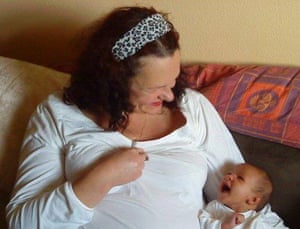


Melanie Mahjenta with Rosie as a baby.

‘My autism was ultimately a good thing’ … Melanie Mahjenta with Rosie as a baby.

Melanie Mahjenta was accused of a rare form of child abuse – fabricated or induced illness (FII) – by paediatricians and social services in 2015 during her fight to get her three-year-old daughter, Rosie, diagnosed with autism.


“Rosie was incorrectly diagnosed as not being autistic in 2013, despite the results from a clinical assessment which found she was on the spectrum,” says Melanie. “I believe the team rejected the assessment results because they had a basic lack of understanding about the different manifestations of autism, particularly in females. They refused me a second opinion, which is unlawful, and accused me of fabricating Rosie’s symptoms.


Part of being autistic is being unable to cope with injustice


Melanie Mahjenta


“The team also failed to recognise that I was on the autistic spectrum, although I told them that I believed I was. They should have been able to recognise my behaviour – which I understand can be challenging – as typical of an autistic parent. Instead, in 2014, they held a safeguarding meeting to discuss whether I was exaggerating Rosie’s symptoms. This single area of concern led directly to a referral to children’s services and to Rosie being made a child in need, a decision that was taken without any formal review.


“When Rosie was made a child in need, my friends and family told me to stop fighting for her diagnosis. But I couldn’t stop: part of being autistic is being unable to cope with injustice.


“I understand that my autism makes me a difficult person to deal with: I don’t know when to back off when I know I’m right. Maybe I can’t always look people in the eye, so perhaps I come over as being shifty. Autistic people do hyper-focus, but they mistook my obsession as a sign I was unstable.


“But although those traits are hard for people to deal with, my autism was ultimately a good thing. Perhaps a neurotypical person would have thought the doctor knew best and backed off. Or they would have stopped fighting because they feared losing their child. But I fought on and because of that, not only has Rosie finally been diagnosed with autism, opening the doors for more support, but the ombudsman found in my favour on all my points, and even awarded us damages.”


Carly Jones


Carly Jones


Carly Jones.

Carly Jones, 35, is a divorced parent of three daughters: Chloe, 18, Honey, 14, and Cherish, nine. “Chloe is neurotypical. Honey was diagnosed in 2008 at six with Asperger’s, and Cherish was diagnosed two years later with autism, at two years old. I was diagnosed four years after Cherish. It was 2014 and I was 32.


“Not knowing what was ‘wrong’ with me until I was 32 was catastrophic for my life in many ways. Not knowing I was autistic meant I didn’t cope at school and left with no GCSEs. I got pregnant at 15, suffered abuse, got into controlling relationships, and mistook users and bad people for real friends.


“But part of me is glad that I didn’t know I was autistic until I had already had children. I don’t know that I would have been brave enough to have had them, had I known I was autistic. I might well have been too cautious to think I could be a good mother.


I only admit that I’m autistic to better support my daughters and jump hurdles on their behalf


Carly Jones


“There is so much judgment against autistic mothers that I consider myself genuinely lucky never to have been subjected to the interrogation of the social service professionals. It’s a constant cause of terror for autistic mothers. I only admit that I’m autistic to better support my daughters and jump those hurdles on their behalf. I’ve done it because what happens when my daughters grow up if they decide to become parents? What hurdles and preventions and heartbreak will they face if autistic mothers do not stand up today and tell people how we can be an utter success for our families?


“The level of care an autistic girl needs to be able to socialise is vast. Because I’m autistic, I understand and will spend the necessary hours helping them, before they go out socially, to work out everything that could possibly happen when they’re out and how they could react. We then work out a contingency plan for if something happens that we have not predicted. A neurotypical mother might not understand this, with the result that their children go out unprepared, or don’t go out at all.


“Because I’ve been the subject of it myself, I also know how common it is for autistic people to be horribly abused. I’ve had to find a way of helping my daughters to be mindful of their vulnerability without them seeing it as a deficit or negative, or becoming cynical. I also know, from my own experience, that autistic people often don’t tell you about the abuse they’ve suffered, because they assume everyone knows what they do. I’ve had to always remember to press my daughters to tell me everything about their days that could be important in keeping them safe and happy.”


Amelia Hill will be in conversation with Laura James, who will answer questions about what it means to be a mother with autism at a Facebook Live event at 1pm on 19 April. Watch the live stream at https://www. facebook.com/theguardian


Mothers with autism: ‘I mothered my children in a very different way’

31 Mart 2017 Cuma

New rules for Indian mothers – so long as the government accepts they exist

The Indian government’s new maternity bill, which comes into force this week, has been branded an elitist policy that will do little or nothing to help the vast majority of the country’s mothers.


According to women’s groups, the new rules – which raise maternity leave from 12 to 26 weeks, putting India ahead of France and the US – will apply only to a small fraction of the female workforce.


“It’s as if, for the government, 95% of India’s women don’t even exist,” said Juin Dutta, from Paatshala, a group helping impoverished female handicraft workers. She pointed out that the extension will only apply to women in the formal sector, which amounts to just 5% of India’s working women.


India’s prime minister, Narendra Modi, hailed the bill as “a step forward for Indian women” when he introduced details of the legislation on his monthly radio address this week.


“The basic aim is to ensure proper care of the newborn, the future citizen of India, from the time of birth,” he said. “The newborn should get the complete love and attention of the mother. That is how these children will become true assets of the country when they grow up. Mothers too will remain healthy.”


Internationally, the bill has been touted as a success for India, which has one of the world’s lowest female employment rates – 25% – and where mothers often feel under pressure to leave their jobs after having children. A headline in Fortune magazine said India’s move “puts the US to absolute shame”.


But most Indian women will never reap the benefits, according to the International Labour Organisation. “India’s informal economy is huge, it employs over 435 million men and women who never see the benefits of government laws,” said Aya Matsuura of the ILO.


“In the informal sector, you never have to sign a formal employment contract and your relationship with the employer is unclear. For example if women work as maids – and up to 10 million Indian women work as domestic cleaners or cooks – they will not have signed a contract. They have a verbal agreement, so in reality they are not really covered by formal rules and are not recognised by law.”


Those working in the informal industries are among the most vulnerable, Matsuura said: “They have problems. If a woman gets pregnant, she has to find a temporary replacement for herself, like a sister or a sister-in-law. Otherwise, she loses the job.”


Pratibha R, of the Garment and Textile Workers Union in Bangalore, said the bill did little to resolve the problems of working mothers. “Our members are entitled to the 26 weeks, but what happens after? According to the new law, workplaces are supposed to provide creches on site, and women are supposed to be able to go see their babies four times a day, but in practice that doesn’t happen.


“The facilities provided are unclean and low quality, women don’t feel comfortable leaving their babies there. Women are very afraid to leave small babies there, and so they just leave after pregnancy.”


A pregnant female worker at a construction site in Ahmedabad, in India’s Gujarat state


A pregnant female worker at a construction site in Ahmedabad, in India’s Gujarat state. Photograph: Dinodia Photos/Alamy Stock Photo

A survey by the Associated Chambers of Commerce and Industry suggests that a quarter of women in India don’t return to work after having their babies.


Reducing that number could increase India’s national income by 27%, according to the International Monetary Fund.


But increasing female participation in India is complex, said economist Rupa Subramanya. Maternity benefits may make women more willing to work, but they also make employers less willing to hire them.


“India is still a developing country. Countries like Norway can afford to give mothers a year’s maternity leave now but they didn’t have that while they were still developing,” Subramanya said.


LocalCircles, a citizen engagement organisation that surveyed more than 4,000 small businesses about the new maternity rules, found that 26% of firms said they would favour men over women because of the new rules.


Yatish Rajawat, chief strategy officer for LocalCircles, said: “There is a lot of political correctness on hiring for diversity. Many people say something and do the opposite. The fact is that business dynamics will take over politically ‘right’ things. Now businesses are looking at women and thinking I’ll have to pay two persons’ salary for one person’s work. Now employers will not just look at women’s qualifications and capability but also the fact that they come with an additional cost.”


One solution, according to Naiyya Saggi, founder of BabyChakra, India’s largest online community of mothers, would be to introduce paid paternity leave. “When an employer is deciding between a man and a woman, the burden of parental leave should be equally shared,” said Saggi. “The government hasn’t put in place proper childcare infrastructure for women, and instead has passed that burden on to employers.”


She said women still feel taking any time off would have a negative impact on their careers. “Six months is a long time in today’s world, with automation and artificial intelligence. Mothers already feel they need to be reskilled after taking that much time off.”


But Nidhi Gupta from the Takshashila Institute, a thinktank, said the law was a step in the right direction despite its limitations.


She said: “Women bring as much skill and talent to the table as men do. We go to the best schools, best colleges, as we are as talented and skilled as men are. So why should we be excluded?”


The argument that employers will be reluctant to hire women over maternity leave is unproven. “In the UK, when they introduced the Equal Pay Act, the same argument was made,” said Gupta. “But actually studies have shown that it has not made employers less willing to hire women.”


New rules for Indian mothers – so long as the government accepts they exist

14 Şubat 2017 Salı

Tens of thousands of new mothers can"t reach a midwife, study finds

Tens of thousands of new mothers a year are seeking help at an A&E unit or GP surgery because they cannot reach a midwife to ask them for advice, a new study has found.


Mothers worried about a problem with their own or their baby’s health are adding to the strain on family doctors, emergency departments and walk-in centres because of midwife shortages and because they have “nowhere else to go”, says the parenting charity the NCT – which undertook the research.


“It’s completely unacceptable that new mums have to get themselves to already fit-to-burst A&E departments,” said Elizabeth Duff, the NCT’s senior policy adviser. “The first weeks are challenging enough for parents without the added stress of waiting around for hours in casualty with their babies.”


The NCT estimates that around 37,000 women every year in England and Wales resort to accessing these services because NHS care in the six weeks after a baby’s birth is so “patchy”.


The NCT’s findings are contained in a survey it conducted alongside the National Federation of Women’s Institutes of 2,500 women who gave birth between 2014 and mid-2016. While women were mostly positive about their experiences, postnatal care emerged as a major concern, including not seeing a midwife as often as they would like soon after their delivery.


Overall, 18% said they did not have the access they wanted to a midwife. Of those, 29% – around 37,000 of the 700,000 women a year who give birth in England and Wales – said they went to a GP, A&E or walk-in centre instead.


Their main concerns were their baby not feeding properly (64%), their own emotional or mental wellbeing (50%), the healing of stitches or sutures (35%) and the healing of the scar from a caesarean section (18%).


“If the NHS provided better postnatal support, new parents would not be adding to the pressure on overburdened A&E departments and GP surgeries,” Duff said.


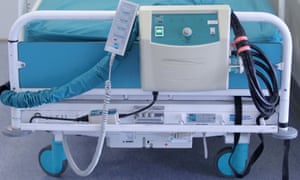
Hospital bed


Almost 37,000 women went to a GP, A&E or a walk-in centre because they didn’t have access to a midwife between 2014 and mid-2016. Photograph: Lynne Cameron/PA

It was worrying that the same proportion of women who could not see a midwife as often as they wanted to postnatally had not improved since the NCT carried out a previous survey four years ago, Duff said. A&E staff and GPs do their best to help women in such circumstances but are not properly trained to help with problems such as those that concerned new mothers typically present with, she added.


One woman told the NCT how she felt obliged to go to her local A&E after her midwife did not come out and see her at home when her legs and feet became swollen, even though they were potential signs of deep vein thrombosis, which her own mother had suffered from after giving birth to her. Another said she had gone to A&E when she and her baby son were discharged too quickly after his birth even though he was not breastfeeding and he soon became dehydrated.


Cathy Warwick, chief executive of the Royal College of Midwives, criticised the NHS’s failure to allocate proper resources to postnatal care as a short-term policy that stored up more problems and longer-term costs.


“Underfunding and under-resourcing postnatal care not only puts pressure on other parts of the NHS, it also fails mothers and babies who may not be getting the care, support and advice they need,” she said. “I am hearing increasing reports of babies requiring readmission to hospital because of lack of breastfeeding support.


“It is also widely acknowledged how critical it is to have early detection of women who are suffering from mental health problems postnatally. Early intervention can prevent very serious problems for the mother as well as separation of mother and baby.”


A series of reports in recent years into weaknesses in postnatal care led to NHS England’s maternity care taskforce and Better Births report last year recommending improvements, including that women can contact a midwife in the weeks after the birth. However, Warwick warned that pressure on hospital maternity units and serious shortages of midwives meant that some midwives are being taken away from home visits to help out there.


NHS England declined to respond directly to the findings, but insisted that it was making progress on implementing the recommendations contained in Better Births.


“It is safer than ever to give birth in this country and the vast majority of mothers report that they received great NHS care,” a spokesman said.


“We are now working to implement the recommendations made by Better Births across the NHS including providing better postnatal care and access to a small team of midwives for continuity throughout the pregnancy, birth and postnatally, ensuring all women receive the best possible care.”


Case study


When Leigh Jerzeyszek, 33, gave birth to her first son, Charlie, last October, the baby didn’t take to breastfeeding at first.


“I’m a new mum, I’d never breastfed before, so I didn’t know what was happening and what was normal,” she said. “He was just very, very gentle, so I thought, this is easy.”


She asked the nurses for some help with breastfeeding, but didn’t receive help before being discharged, the day after giving birth. “For three days, Charlie had barely anything to drink, and every time I tried to breastfeed him he was distressed, like I was trying to poison him,” Jerzeyszek said.


Leigh Jerzyszek and Charlie.


Leigh Jerzyszek and Charlie. Photograph: Leigh Jerzyszek

“I thought, this can’t be right … he’s going to dehydrate if I don’t give him something, so I tried him with formula. He couldn’t latch to my breast, and he couldn’t latch to the normal teat of a bottle, either.”


Unlike many of the mothers in the NCT study, Jerzeyszek did have a visit from a midwife the day after being discharged, and the following day a healthcare visitor, who said she should tickle Charlie to make him try to eat. But it wasn’t until three days after she left the hospital, and becoming increasingly anxious about Charlie’s inability to feed, that she saw an infant feeding specialist.


“As soon as she saw him, she said, ‘get him to A&E, because that’s not a normal cry’,” said Jerzeyszek. “It was really whimpery, just no energy. She looked at his tummy and it was quite sunken. We went back to the hospital in a panic. No one in A&E could feed him.”


Charlie was tested for meningitis and sepsis, and was given lumbar punctures.


Jerzeyszek was exhausted, awash with postnatal hormones and terrified. “I went into the toilet and cried,” she said. “I hadn’t slept, this tiny, innocent little baby’s not feeding, it’s just really surreal.”


Charlie spent three nights in hospital being fed on a tube, as an ear, nose and throat specialist and eventually a speech therapist tried to work out why he wouldn’t feed. He ended up needing special teats until he was four months old.


“I was discharged too soon … they just basically didn’t check that Charlie was feeding properly,” Jerzeyszek said. Although she received frequent visits, “they just didn’t identify the problem … I would have thought as an experienced care professional, rather than thinking he doesn’t want it or he’s lazy, he actually couldn’t feed”.


She remains angry at the impact it had on her family in their very first week. “I think because at the time it’s all a whirlwind … you just deal with it,” Jerzeyszek said.


“But now that he’s settled, sometimes I get upset about it. There was a lot of trauma to him that could have been prevented if they’d only checked [his feeding] in the first place.”


As told to Alice Ross


Tens of thousands of new mothers can"t reach a midwife, study finds

31 Ocak 2017 Salı

Take care of your elderly mothers and fathers, says Tory minister

People have just as much of a duty to look after their elderly parents as they do to care for their own children, a health minister has said.


David Mowat made the comments alongside an admission that the government had no “final answer” on how it was going to cope with the rising costs of social care.


Speaking to the House of Commons’ select committee on communities and local government, the minister said that tackling the care crisis involved “interwoven issues” including the question of how society deals with the care of ageing parents.


“One of the things that has struck me is no one ever questions that we look after our children – that is obvious. No one says that is a caring responsibility, it is what we do,” he said.


“I think some of that logic and some of the way we think about that in terms the volume of numbers that we are seeing coming down the track will have to impinge on the way that we think about caring for our parents. Because it is a responsibility in terms of our life cycle which is similar.”


The comments come as the Local Government Association, which represents more than 370 councils in England and Wales, claimed that the social care system was on the brink of collapse. The group is warning the chancellor, Philip Hammond, before the spring budget that failure to act urgently to plug the funding gap could leave councils open to legal challenges as they fail to fulfil their duties under the Care Act.


“The intentions and the spirit of the Care Act that aims to help people to live well and independently are in grave danger of falling apart and failing unless new funding is announced by government for adult social care,” said Cllr Izzi Seccombe, who chairs the LGA’s community wellbeing board.


She said social care was not just about getting people washed and dressed but aspiring to help people live the fullest of lives and with dignity.


Speaking to MPs on the committee, Mowat admitted that demand was rising and social care would inevitably require the UK to spend a higher proportion of its overall income on supporting elderly and disabled people.


“What we do know when we look at the GDP that we spend on care, we spend more than some countries like Germany that we would consider to be comparative and more than Canada,” he said.


But he admitted the total spend would inevitably rise, partly because of an ageing population and because of rapidly rising life expectancy among people with learning disabilities whose care was very expensive.


Mowat said there were “discussions with the Treasury all of the time” about how to cope with the demand.


“Over a period of time, the amount of money our society will spend on care will increase. You then get into what the options are and that is a wider question. There have been a lot of reviews. We are unusual in Europe in that we don’t have a social insurance system or long-term savings scheme,” he said.


The minister said personally he felt that such schemes could only help in the very long term and suggested there was a more pressing need to tackle the issue, including through societal changes.


Part of the answer was ensuring that people felt the responsibility to care for elderly mothers and fathers, said Mowat. He talked about the high levels of “informal caring” that already take place, saying six million people were taking on some form of care responsibility, including 200,000 children, alongside 1.6 million full-time carers.


“Part of the solution is properly bringing those informal carers into some kind of system,” he said, highlighting plans for a carers’ strategy that could help people get back into the workplace. “If people doing more than 10 hours of care a week, it is hard to get back into work.”


Take care of your elderly mothers and fathers, says Tory minister

5 Ocak 2017 Perşembe

Chiropractic Advice for Expectant Mothers

Any mother can confirm that pregnancy causes significant strain on a woman’s body. Globally, the average female weighs around 150 pounds. Add to this the additional weight of a growing baby and it is understandable why many expectant mother suffer though high levels of discomfort during their pregnancy.


Studies indicate that more than half of soon-to-be mothers suffer from lower back pain, as well as irritation of the sciatic nerve. There are however, many ways to reduce this discomfort. A trained chiropractor – especially one with experience in pregnancy chiropractic care – can by utilized to help make this process more bearable. With regular adjustments, a body can be prepared for a forthcoming delivery with reduced or even complete prevention of many of the pains and aches commonly associated with maternity. Here are some tips on how you can feel your best during the months leading up to childbirth.


Consult a Trained Professional


Most chiropractors are professionally trained when it comes to taking care of pregnant women. Properly trained chiropractors will utilize techniques which are both beneficial and safe for the caring of unborn babies and their mothers. Some chiropractors even specialize in baby chiropractic, which means they will likely have years of reference experience to help make your initial transition into a parent a less painful process.


Chiropractors are trained in pre-natal care to ensure that they don’t put too much pressure on the abdomen while relieving back and nerve pain. They also have knowledge in areas such as nutrition and diet specifically geared towards helping expectant woman, both during and after pregnancy.


Get Regular Treatment


If you are trying to have a baby, even before becoming pregnant it is advisable to visit a chiropractor. A visit to your local professional will help identify any imbalances that may be present in the pelvic region. A chiropractor can also detect any subluxations; partial dislocations or any misalignment of your vertebrae, which can lead to pain and discomfort during pregnancy.


Most medical experts and women who have previously been treated by a preganacy chiropractor agree that spinal adjustments offers non-invasive relief against the back pain caused by pregnancy. The correct techniques and stretches to relieve sciatic pain can reduce pressure and unwanted strain on hips and back. Such care is considered a safer option than medicines, both for the mother and her new born. When combined with exercise and proper nutrition, the mother and the baby are able to experience a drug-free and mostly pain-free pregnancy.


Post Birth Care


After birth many women suffer thorough joint pain in addition to the discomfort because of the childbirth. With chiropractic care, any arising joint problems caused by the additional weight of the baby, together with any strain occurring on the body due to unbalanced or improper lifting can be treated. This reduced the suffering the mother undergoes even after the baby is born.


Various aches and pains including headaches that can occur during and after childbirth can also be treated with the help of a chiropractor. If you manage to maintain regular chiropractic care during the entire period of your pregnancy, then you can minimize or dispel completely some of the severe causes of pain and discomfort. Such discomfort and pain is caused by the huge changes occurring in the body. With a pelvic alignment, more room is created for the baby to grow. It has also been proven that pregnant women who visit chiropractors regularly minimize their chances of having a breech baby, where the baby is born bottom first instead of head first. Chances are also reduced that they will be required to undergo a C-section birth which has been shown to cause evolutionary changes in babies who are now being born with larger heads.


Bottom Line


Consult your regular physician as soon as you become pregnant, if not earlier. They will help you to determine whether you require chiropractic care during your pregnancy. Even for low risk mothers, it is good to visit a pregnancy chiropractor at least once to ensure things go smoothly. Find yourself a local chiropractor who is highly-trained and experienced, and makes you feel at ease, and you’ll be well on your way to a happy, healthy child-birthing process.


Chiropractic Advice for Expectant Mothers

2 Kasım 2016 Çarşamba

French mothers don’t suffer from bladder incontinence. And nor should you | Gillian Harvey

This morning, my three-year-old daughter uttered seven words that fill many mothers with dread: “Mummy, can you come on the trampoline?”


As a mother of five children, having been through four vaginal births, an episiotomy, and natural twin labour (with one breech) – and having had more stitches than Frankenstein’s monster – I should be no stranger to the world of embarrassing leaks and incontinence pads. After all, an estimated one in three women suffer from bladder incontinence, a condition that can come about due to weakened pelvic floor muscles after childbirth.


In fact, having read Nadia Sawalha’s recent admission that she has suffered from incontinence for 13 years, since the birth of her daughter, it seems nothing short of miraculous that, while my stomach might have seen better days, my pelvic floor is as reliable as a Dyson.


Why? I live in France. Here, at each of my eight-week checks following the birth of my children I have been prescribed 20 sessions of physio to “re-educate” my pelvic floor.


The first time this procedure was prescribed (alongside a prescription for something called “vaginal probe”), I did what most sane women would do. Put it at the bottom of my in-tray and tried not to think about it. However, on speaking to French friends I decided to give it a go.


As a nervous, body-conscious Brit, I was terrified when I first walked into the local physio’s office for my appointment. He strolled up, all dark eyelashes, stubble, and the kind of casual chic that only a French man in an unbuttoned white coat can carry off, and instructed me to disrobe and lie on the bench – covering my modesty with a towel – while he left the room.


So far, so dignified.


Then, on his return, he attached my “probe” to the wires on a little machine, covered it in a generous serving of lube and asked me to “put it in”, while he casually averted his eyes.


Fiddling around under my towel, in a desperate attempt to remain dignified in this most disconcerting of situations, I had to blush as I squished the probe into place. I was then asked to squeeze my pelvic muscles, making little lines on the screen jump – measuring the strength of my overworked undercarriage.


Unperturbed by this most awkward of situations, the physio looked at me with his brooding eyes. “I am sorry,” he said. “But if you turn it. It will be better.”


Cue more fumbling; followed by the mother of all squelches.


The physio remained blase. Me, slightly less so. However, after a couple of sessions, I could feel the difference in my pelvic floor. I no longer felt the worrying bounce of a threatened prolapse when I went jogging; I developed a cold and hacked to my heart’s content without fear of urinary feedback.


My embarrassment tipping point, too, became more robust. I was able to whip off my knickers and scoot under the towel as if it were the most natural thing in the world.


Then came part two of the treatment. Stimulation.


The physio adjusted two buttons on the screen and suddenly I could feel a pulse of electricity where no pulse of electricity should ever be felt. “Say when it is too strong,” he said, turning a dial. I duly did. Then lay there for five minutes as my muscles were worked in the manner of a Slendertone, just in a very different place.


Why in the UK are we encouraged by adverts to accept incontinence pads as inevitable?


Of course, while the embarrassment or comic potential of this kind of procedure is high, there is a serious point to make. Although electrical stimulation can be prescribed on the NHS, referrals to special “continence centres” aren’t routine. And an estimated 50% of women don’t seek treatment in the first place. But with the necessary, fairly small equipment, this treatment could even be offered – as it is in France – by local professionals rather than at specialist centres.


So, why in the UK are we encouraged by adverts to accept incontinence pads as inevitable when in France doctors routinely prescribe this treatment (as well as physio for the abdomen)? And since when did incontinence get euphemised with the term “sensitive bladder”?


Whether the problem is our inability to talk about it, or simply that the treatment isn’t commonly offered, it’s hard to say. But, if I, as a serial birther, can now leap on the trampoline with glee – surely British women, too, should be offered the chance to swap a few hours of embarrassment for a lifetime of dry knickers?


French mothers don’t suffer from bladder incontinence. And nor should you | Gillian Harvey

5 Ekim 2016 Çarşamba

Westminster: wealth, opulence and socially isolated new mothers

In a noisy community hall in London, mothers and toddlers sit in a circle shaking tambourines and singing. At first glance it’s just another infant music session, but looking around, a different picture emerges. Nearby a mother, a sleeping baby in her arms, chats quietly to an attentive volunteer known as a maternity champion, while another cheerfully hands out cups of tea to a couple of exhausted-looking women, that tell-tale sign of new motherhood.


The maternity champions project, run by Paddington Development Trust in partnership with the NCT, the UK’s largest parent charity, launched as a two-year pilot in 2014, funded by Westminster council’s public health team. Funding has recently been extended for a further two years and the aim is to roll out the concept nationally. The pilot is part of a wider programme of NCT peer support projects across the country, to provide support, link parents to antenatal and postnatal services, and reduce the social isolation many new mothers feel.


In London’s Queen’s Park, which crosses the boroughs of Brent and Westminster, where the project takes place, wealth and poverty sit side by side. Despite being in central London, a third of the households in Queen’s Park earn less than £20,000 a year and parts of it fall within the top 10% most deprived in England. The volunteers, recruited from the local estates, have been trained through NCT’s Birth and Beyond community peer supporter scheme and run twice weekly drop-in sessions, open to all mothers in the area.


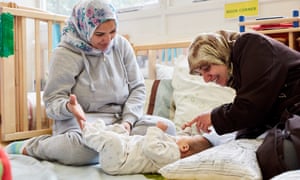
The maternity champions project aims to provide support to new mothers in Queen’s Park, London.


The maternity champions project aims to provide support to new mothers in Queen’s Park, London. Photograph: Oliver Edwards

When Anne Watson, a new mother in her 30s, first came to the drop in, she was sleep-deprived and emotional. Her baby, Oscar, was nearly six months old and having problems sleeping. “I hadn’t slept properly for weeks and I was beyond exhausted,” she says. “I turned up and said I’d like some advice, and promptly burst into tears. He got scooped off me and cuddled, I got taken off and cuddled too. I was given a cup of tea and someone to talk to. It just made me feel not alone to speak to the maternity champion as she had been through it. I got some support and advice. It was just wonderful.”


NCT research has found that 80% of participating parents reported that the project helped them to access local services (including health-visiting services and support groups for new and pregnant parents) and three quarters said they felt more confident about their pregnancy or being a parent.


Sarah McMullen, head of knowledge for the NCT, was involved in the design of the project. She says: “Women often have very specific and personal needs; in some cases it might be around domestic violence or mental health, it’s very individual.” The maternity champions are trained to deal with vulnerable situations and have a good knowledge of local services, which means they are often the first person women choose to talk to, especially as GP appointments are so short. McMullen says: “They are building the trust and the relationship, and they’ve got time for women to open up about things. They can then signpost to different services.”


Not only the mothers have benefited. Most of the volunteers have accessed further education courses since becoming maternity champions; three have won places on midwifery courses and four have gone on to train as NCT breastfeeding peer supporters.


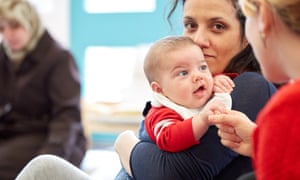
mother and baby


The project makes new mothers feel welcome right away and encourages them to mix with others in a similar situation. Photograph: Oliver Edwards

One is Lina, 33, who has four children of her own. She is originally from Syria and came to the UK aged 16. She married an Iraqi man soon after arriving and had her first child not long after that. “I didn’t have much support. I had problems breastfeeding but I didn’t speak much English so it was really difficult for me to get the information to help. Volunteering and doing all the training has changed my life as a parent and helped me change the lives of my children. I like to share what I’ve learnt with parents like me. That’s why I do it.”


There is a large migrant community in the area – 53% of Queen’s Park residents are from non-white ethnic groups. “Most speak Arabic so I can help and translate for them,” Lina says. “I help them if they are shy or just need advice. I used to be like some of the mums I now help, like a pregnant Moroccan woman I met recently who was really struggling. She doesn’t speak English yet and I helped her access a translation service for all her appointments.”


Caroline Adebayo, 34, from Nigeria, attends drop-ins on the Mozart estate and sums up why the pilot has been so successful. She says: “I was made to feel welcome right away. I met other mothers and the maternity champion told me about other services. I got to learn how to relate to my baby, how to talk to her, songs to sing her.


“I was a little down from staying at home too much but the love they showed me helped. It was like a family.”


Join the Healthcare Professionals Network to read more pieces like this. And follow us on Twitter (@GdnHealthcare) to keep up with the latest healthcare news and views.


Westminster: wealth, opulence and socially isolated new mothers

1 Eylül 2016 Perşembe

Pregnant and diagnosed with HIV: the group providing support for mothers

Thirteen years ago, when Babalwa Mbono was eight months pregnant with her second child, she went to her clinic in Cape Town, South Africa, to have a routine HIV test.


“I went with confidence because my first child was negative and I was negative then,” she says. When the test came back positive, Mbono couldn’t believe it. “When the counsellor who tested me showed me the results I thought, ‘you’re joking!’ I even asked her if she was sure.”


Mbono left the clinic in a daze and went home to reflect on the news, still in denial. She looked healthy and well, unlike her sister who had died three years previously from Aids-related tuberculosis. “For me, [the result] was something that was not real,” Mbono adds.


Nowadays many people in South Africa know about HIV. The country has the biggest and most high-profile epidemic in the world, with an estimated 7 million people living with the condition, according to UNAids figures. But in 2003 it was not a big topic, and discussions usually revolved around death, says Mbono. The fear of what having HIV might mean for her unborn child started to creep in, and she worried that she would not live long enough to care for a baby who might be infected.


When Mbono found out that she had HIV, South Africa’s government was still deciding whether to make antiretroviral treatment (ARVs) available to all, despite a third of pregnant women testing positive. Today, 48% of infected South African adults are on ARVs.


Back at the clinic, Mbono was linked up to a mentor mother through Johnson & Johnson’s mothers2mothers (M2M) programme. The scheme started in 2001 and has helped 1.4 million HIV-positive mothers in nine sub-Saharan African countries. It currently operates in Kenya, South Africa, Malawi, Lesotho, Uganda, Swaziland and Zambia – seven countries where it has virtually eliminated mother-to-child transmission (MTCT) among its patients, with a 2.1% transmission rate (the UN classifies virtual elimination as less than 5%).


Mbono’s HIV-positive mentor allayed her fears about death and her anger towards her husband, whom she blamed for giving her HIV after he tested positive with a much higher viral load. Through M2M,Mbono learned about taking ARVs to reduce the risk of MTCT in the womb and during breastfeeding, and about how to change her lifestyle to live a long and happy life with her children.


Last year, South Africa was one of six priority countries (all in sub-Saharan Africa) to meet a Global Plan target of reducing MTCT by 90%, with 95% of pregnant women with HIV on ARVs and an 84% reduction in new HIV infections among children.


Over the past year, Cuba, Belarus, Armenia and Thailand – non-priority countries – managed to eliminate MTCT altogether. In South Africa, mother-to-child transmission of HIV has fallen to 3.5%, putting the country within reach of eliminating paediatric infections, although maternal mortality remains high.


The M2M programme “makes the person feel supported”, Mbono says. “It’s a sisterhood, and it makes you feel like you have a family to cry on.” Through counselling, which helps to breaks down the stigma still attached to HIV/Aids in South Africa despite its high prevalence, Mbono also found the courage to confide in her parents and siblings.


And six months ago, she decided to disclose her HIV status to her daughter Anathi, who had just turned 13. “It really felt shocking,” says Anathi, who feared that there would be no one to look after her seven-year-old brother, who was born HIV negative. “I was afraid that she would leave us.”


Mbono reassured her daughter that she had tested negative when she was 18 months old, but Anathi decided to go alone to the clinic and be tested anyway, where she also accessed free counselling from health workers.


“I was so, so scared, but eventually they just sat with me and told me to not freak out and to not think negative things about my mum,” Anathi says. Over the two days she waited for her results, she spent time with her mother and learned more about M2M, even reading her mentoring books.


Mbono’s experience with M2M made her give up unhealthy habits, such as not eating properly and drinking alcohol, and inspired her to become a mentor mother in 2003. “The [programme] gave me the strength to go out there and tell people about HIV and correct the mistakes that people are making and [that] I also made when I didn’t have any information.”


She has gone from counselling others on HIV/Aids and family planning, to training other mentors and seeing them become nurses, social workers and students.


“What makes me most happy [is] when I see a woman who had broken up in pieces when she was told about HIV … and when you see her on the next visit she is much better than the day she left.”


Some 95% of babies in M2M’s South Africa programme test negative for HIV at 18 months, and that also makes Mbono proud. “That makes me feel that I’ve done my job, because 18 months is a long time for the mother to be supported and to be educated. There are so many challenges that they come across, and we are there [for them].”


Anathi set up a counselling group at school to discuss HIV and sex with 18 girls and five teachers, as well as a drama group to perform plays to parents and pupils that discuss staying HIV negative and breaking down stigma.


“Most people don’t talk about it … Young people are not getting enough information about HIV,” she says. Anathi has a friend who she says became a recluse after she found out she is positive, and she knows two girls who have gone off the rails since their mothers recently died of Aids.


But for Anathi, dealing with her mother’s HIV has made them stronger and brought them closer together.


She still worries about how well her mother has slept or eaten when they are apart, even though learning about ARVs has lessened her fears of her mother falling ill and not recovering. “I just worry too much and I call,” she says. “She is like my daughter.”


Join our community of development professionals and humanitarians. Follow @GuardianGDP on Twitter.


Pregnant and diagnosed with HIV: the group providing support for mothers

A mother"s world was transformed – and so was my career – all by a baby"s birth

Under my hands were the hands of a midwife with years of experience, and under hers the head of a baby about to be born.


I had never met the woman lying in the bed in the delivery room before, but she gave me the opportunity as a student nurse to experience childbirth with her.


I was in my mid-twenties and had worked in hospital administration for a number of years. At this point I had completed the first year of my general nurse training: modules in care of elderly people, acute medical and surgical, and time in the operating theatre.


It should have been nerve-racking but I knew my hands would be shadowing the midwife’s, and fear turned to astonishment. I could sense through her hands the movement of the advancing baby. The midwife enabled this progress using just the right amount of guiding control. I had no fear, only anticipation.


The labour was at an advanced stage – a small tuft of dark hair was visible. There was no time to discuss anything other than that this was her second pregnancy and her labour had been quick.


The birth seemed more of a spiritual experience than anything I expected. The midwife gently encouraged the woman, with no sense of urgency but calmly and knowledgeably. You only heard a slight change in her tone and saw a hint of a nod to the labouring mother when effort was required.


The midwife cradled the head of the child as he was born, while I stood at her side. It was a defining moment for me to feel the baby part from his mother and take that first gasp. It was as if I had delivered him myself, a moment forever etched in my heart and mind. Nothing else I could do would match the privilege of helping bring another human being into the world.


It would be a number of years after this experience before I would deliver a baby by myself. I’ve never forgotten how much this gentle birth helped influence my career path. That experience in a small rural midwifery-led unit was when I decided to become a midwife. The first day there sealed my future, and not only because I witnessed the birth of a baby. It was because the delivering midwife asked me to step forward. I had no idea what she was going to ask me to do. Having done my theatre experience I knew how to scrub up at least and that was all she asked of me. She was a natural mentor.


Once the baby was born I was allowed to hand the infant to his mother. We were left in awe in the hushed silence of the room. She gently felt him all over counting along with the midwifery sister the tiny toes and fingers. It was as if nothing else in the world existed other than mother and child. The mother cradled her son in her arms as he took his first feed from her. It was a scene of completeness and contentment.


The usual depiction of a baby crying out was not so. The mother murmuring sweet words to her newborn son were calming and no one wanted to break the sense of wonder.


Such hands-on experience changed my world as much as it did that mother’s. Some 30 years on, she is likely to be a grandmother and that baby, a parent himself. To have been a part of that is profound.


I went on to become a midwife in more clinical, acute hospital settings in bustling towns and larger cities. Yet I endeavoured to keep that gentle birth at the forefront of my practice. For in all we do, in our administering to the sick or healthy, there is no greater honour than stepping into another’s life.


If you would like to contribute to our Blood, sweat and tears series which is about memorable moments in a healthcare career, please read our guidelines and get in touch by emailing sarah.johnson@theguardian.com.


Join the Healthcare Professionals Network to read more pieces like this. And follow us on Twitter (@GdnHealthcare) to keep up with the latest healthcare news and views.


A mother"s world was transformed – and so was my career – all by a baby"s birth

23 Ağustos 2016 Salı

Politics is killing mothers in Texas | Jessica Valenti

When it comes to women’s progress, the United States doesn’t exactly bring home the gold. We rank 72nd in women’s political participation, with women holding less than 20% of congressional seats. Paid maternity leave? The United States comes in last. But at long last, we’re number one at something: Texas has the highest maternal mortality rate in the developed world.


This dubious honor is a recent one, with a study showing that the rate of women dying from pregnancy complications doubled from 2010-2014. It’s not a coincidence, of course, that there was another major happening around women’s health in Texas during those years: the deliberate closure of clinics that provide abortion and a drastic funding cut to the state’s family planning budget.


As my colleague Molly Redden points out, Texas gutted the state’s family planning budget by more than $ 73m in 2011, forcing clinics to shut down and dramatically reducing the number of women they could provide services to. By 2014, 600 women had died from pregnancy-related complications.


It’s almost as if what feminists have been saying for years is true: limiting reproductive rights hurts women across the board. Access to reproductive care is necessary not just to prevent or end pregnancies, but to ensure healthy outcomes for those who choose to carry their pregnancies to term.


Sarah Wheat of the Planned Parenthood of Greater Texas told the Dallas Morning News that these clinics were “an entry point into the health care system” for many women, especially those with fewer resources.


“Chances are they’re going to have a harder time finding somewhere to go to get that first appointment.”


It’s an ironic but telling turn of events for the activists and legislators in Texas who insisted that laws shuttering abortion clinics were about protecting women’s health – a claim that the supreme court thoroughly debunked.


In the decision to overturn Texas’ extreme anti-choice law, the opinion read: “When directly asked at oral argument whether Texas knew of a single instance in which the new requirement would have helped even one woman obtain better treatment, Texas admitted that there was no evidence in the record of such a case.”


Instead of helping women, the law hurt women. But for the politicians and activists who want to stop them from accessing their right to abortion at all costs, women’s health was never really the point.


If Texas wants to turn this horror show around, officials need to start supporting women’s choices, give up their transparent and cruel war on reproductive rights, and stop rejecting the expansion of Medicaid, which could provide much-needed help and care to the state’s vulnerable communities. And with Zika becoming more of a risk for Americans, these steps cannot come soon enough.


Women’s health is not a political chip to be played; it’s not an afterthought. Our health and lives – whether we choose to have children or not – are central to the health of our country and communities. Women in Texas, women in America, deserve better than this.


Politics is killing mothers in Texas | Jessica Valenti

25 Temmuz 2016 Pazartesi

Prince Harry: I regret not talking about my mother"s death sooner

Prince Harry has said he regrets not talking sooner about how his mother’s death affected him.


The 31-year-old revealed he only began opening up three years ago about the sudden death of Diana, Princess of Wales.


Harry was hosting an event at Kensington Palace for the mental health charity Heads Together, attended by a group of high-profile sports stars who were invited to speak about their psychological problems.


The former England and Manchester United defender Rio Ferdinand, and Olympic gold medallists Victoria Pendleton and Dame Kelly Holmes were among the guests. Each was accompanied by a partner, relative or sports psychologist who had helped them through their darkest moments.


The BBC reported that Ferdinand, whose wife Rebecca Ellison died of cancer last year, asked Harry about the impact of her death on his children. Referring to the death of his own mother, Harry replied: “I really regret not ever talking about it.”


He added that he did not speak about losing his mother “for the first 28 years of my life”. Harry was 12 and his brother William 15 when Diana was killed in a car crash in Paris on 31 August 1997.


Harry added: “It’s OK to suffer, as long as you talk about it. It’s not a weakness. Weakness is having a problem and not recognising it and not solving that problem.”


Heads Together was founded by Harry and the duke and duchess of Cambridge, and it has brought together eight mental health charities and organisations to tackle the stigma around depression and other psychological problems.


Ferdinand, a father of three, said of the prince: “He’s gone through different stages in his life that my kids are going to be going towards. So to get some of his experiences is very rewarding for me and very educational in many ways.”


Harry added: “The key message here today is that everyone can suffer from mental health [issues]. Whether you’re a member of the royal family, whether you’re a soldier, whether you’re a sports star, whether you’re a team sport, individual sport, whether you’re a white van driver, whether you’re a mother, father, a child, it doesn’t really matter.”


Prince Harry: I regret not talking about my mother"s death sooner