Career' etiketine sahip kayıtlar gösteriliyor. Tüm kayıtları göster

10 Mayıs 2017 Çarşamba

Damian Hopley on the end of his rugby career: "It was like a bereavement"

Damian Hopley knows from bitter experience that being a professional athlete can exact a heavy price on the mind as well as the body. Rugby players have always been in harm’s way and Hopley discovered this as a young man 20 years ago. Playing at centre for English Premiership rugby team Wasps, he won what looked like the first three of many England caps in 1995. Rugby union had just stopped being an amateur sport and the Cambridge graduate had given up his job in the City to ride this first wave of professionalism, but Hopley found himself in troubled waters.


In 1996, playing for England at the Hong Kong Sevens, Hopley injured his knee. He saw a surgeon but he injured the knee again and nine operations and two reconstructions later his professional career was over before it had really begun. “The hardest thing is the huge dent in your self-esteem and purpose and realising that you are not a rugby player. It was like a bereavement. Your sense of worth goes out of the window. I didn’t belong any more. Your personal life then goes into freefall because you become so self-obsessed. I had a girlfriend at the time and she walked out on me. Quite rightly, because I would have been a nightmare to live with.”


At 27, Hopley began working in the media and tried to get his life back on track. He met other sportsmen including the former Coventry City footballer David Busst and the former Gloucestershire and England cricketer David “Syd” Lawrence, whose careers had also been cut short by gruesome injuries. Meeting them, Hopley says, helped give him a fresh sense of perspective.


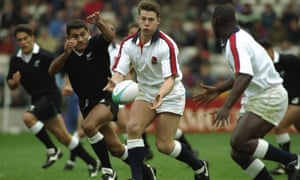
Damien Hopley (centre) in action for England against New Zealand at World Cup Sevens match in 1993.


Damien Hopley (centre) in action for England against New Zealand at World Cup Sevens match in 1993. Photograph: Mike, Hewitt/ALLSPORT

In the summer of 1998 Hopley set up the Rugby Players’ Association (RPA). “I was pissed off with the way I had been treated and that was the catalyst,” he says. There was initial opposition from the RFU and some club owners so Hopley began his project without being paid. But today, he runs an organisation that has about 700 current professional players, both men and women, and about 400 former players on its books.


Outside the sport, the perception of elite rugby players is one of steely alpha males, but the reality is often different. Several players have talked about their battles with depression, linked to the end of a career in the sport. The RPA has a new campaign, Lift the Weight, which includes a 24-hour counselling service. With chilling timing the initiative was launched in the week that Dan Vickerman, a recently retired Australia lock, was found dead at his home in Sydney. The 37-year-old had taken his own life.


Lift the Weight aims to encourage men – and not just elite rugby players – to talk about the issues. “Once people get to share the stories of their frailties it makes all the difference,” says Hopley. “Jonny Wilkinson, for instance, has been very frank about his demons.”


Damian Hopley on the end of his rugby career: "It was like a bereavement"

19 Nisan 2017 Çarşamba

How to survive and thrive in a nursing career – live discussion

Going into a career in nursing can be challenging, exhausting and demoralising, yet also rewarding and full of opportunities.


But while headlines scream about nursing shortages, funding problems and cuts to bursaries, the profession is still attracting talent.


For those entering a career in nursing, pay, education and advancing the nurse’s role are important issues. Staffing levels and the mix of qualified and support workers; nursing’s response to the changing healthcare agenda; and the recurring accusation that the profession has somehow lost its soul have also come into the mix in recent years.


To mark Nurses’ Day on Friday 12 May, we’ll be asking an expert panel how to make a success of a nursing career. Topics will include:


  • Can compassion be taught and how to be compassionate on a long shift

  • How to talk about death with colleagues and patients

  • Burn-out and how to avoid it

  • Who to turn to for support

  • The impact of cutting student bursaries

  • The role of nursing associates

The live chat is not video or audio-enabled but will take place in the comments section (below). If you would like to feature on the panel or propose questions, please get in touch via alfie.packham@theguardian.com or @GdnHealthcare (#GdnNursing) on Twitter.


Discussion commissioned and controlled by the Guardian, funded by Bucks New University


The panel so far


Anne Corrin, head of education, Royal College of Nursing


Donna Thomas, A&E nurse


Becky Platt, matron for children’s services, West Herts hospitals NHS trust


Prof Ian Norman, executive dean, Florence Nightingale faculty of nursing & midwifery, King’s College London


Sue West, qualified as a registered nurse in 1982, dean of the faculty of society and health, Buckinghamshire New University


Andrew Jesson, student nurse


How to survive and thrive in a nursing career – live discussion

30 Mart 2017 Perşembe

I thought my career as a doctor was over. It was the arts that saved me

[unable to retrieve full-text content]


I used to ignore my creative side, but after I was signed off work with depression and anxiety, I made space for the things I loved


As a hospital doctor I am used to working under pressure, and had always felt I thrived on it. But when I took time out of clinical training to pursue a PhD, I found I was intensely unhappy. I suffered a range of physical symptoms: palpitations, early morning waking, nausea, severe headaches, poor appetite, diarrhoea, dizziness, breathlessness and tremors.


My day was constantly interrupted by intrusive negative thoughts; I once walked for 30 minutes with “I hate my life, I hate my life” on a loop of internal monologue that I feared had no end. I listened to podcasts and audiobooks fanatically but could not drown out these thoughts, and no rationalisation of all the wonderful things I had in my life could make them stop.


Continue reading…


I thought my career as a doctor was over. It was the arts that saved me

26 Ekim 2016 Çarşamba

"It"s ruined my career": accounts of bullying in the NHS

A Guardian survey has found that there is a pervasive culture of staff bullying in parts of the NHS and that it has a detrimental impact on staff wellbeing and, in some cases, patient care.


Here are some stories from healthcare professionals submitted in our survey and to the Guardian about their experiences:


I was diagnosed with an acute stress incident with a critically high blood pressure


Everyone was frightened of this one man who thought nothing of sexually harassing female members of staff. When I challenged him on a decision that was not legal, his rage was spectacular. After one [meeting with him], I zoned out, temporarily losing feeling in my right hand and the ability to speak coherently. Thinking I may be having a heart attack or stroke, I attended A&E and was diagnosed with an acute stress incident with a critically high blood pressure. Anonymous manager


A bully almost managed to wreck my career as a doctor


When I was a junior doctor, the consultant I was due to work under had a reputation for having anger issues and suffering no fools. He used to take pride in making juniors cry and had T-shirts made which he used to hand out to people who were on the receiving end of one of his typical public outbursts. For the first few weeks, things were pleasant, fast paced and intense. But then, he became sharp with me – not tolerating mistakes I made, then blaming me and victimising me. I was blamed for not knowing anything about patients who had just arrived. My confidence disappeared. After a few months, I had mild depression. After a difficult crash call where the equipment was not on the trolley in the right place, I had a clinical incident form put in about me, suggesting my abilities as a doctor were insufficient and that I was not fit to progress to specialty training. There was no enquiry into what happened or how to help me. By sheer luck, I had an end of rotation meeting where it came out that I had been bullied like a previous doctor who went through the rotation. I thought I was just a bad doctor. I progressed to specialty training and continued my career. Anonymous doctor


When I reported bullying, I was told I needed to toughen up


Not long after I started on placement at a trust, a senior midwife turned to me and asked me what I would do if she ever withheld care for a woman I was looking after. I told her I didn’t think she would withhold care and that we all have a duty of care to the women we support. She laughed and then said my card was marked, in front of a number of other midwives. After that, I was advised that I needed to apologise to a midwife I had “pushed out of the way” during a delivery. That didn’t happen. I was disciplined for not changing the water often enough for a woman I was caring for despite the jug never being less than half full. I had paperwork torn up and told to rewrite it as it wasn’t worded the way my mentor liked. I was told to stop standing around chatting and to get “my arse in the kitchen” and do some washing up in front of about 20 members of staff at handover. I was spoken to so rudely in front of labouring women that two said they wanted to complain. I was shouted at and told I was stupid. When I reported these incidences, I was told I needed to toughen up. An investigation ensued but the findings were that the bullies said they were unaware that we felt bullied. I will never practise as a midwife despite having a passion for supporting women. Anonymous former midwifery student


I raised concerns after seeing nurses bully me and patients but it got me nowhere


The nurse/nurses that bullied me also bully patients. I raised concerns regarding the bullying and its infringement to patient care and safety using the whistleblowing policy. My superior claimed to have known the bullying had gone on for years; however she did not want to call it “bullying”. She intimidated me to drop the concern and the nurse/nurses in question are still working. My argument is, as a registered nurse, regardless of banding, we have to follow the same Nursing and Midwifery Council code of conduct, and bullying is breaking that code. Not only is bullying illegal in any organisation, it seems to be tolerated in the NHS. No one should be scared to go to their work, and, after a 13-15 hour shift, be emotionally exhausted due to their own colleagues rather than the job itself. Anonymous nurse


Bullying has changed me for life


It’s changed me for life. I’m no longer confident of getting anywhere in my career, the one I have been working at since I was 16; and all because of a group of people who turned my workplace into the film Mean Girls. I’m still on antidepressants, I missed out on promotion, my once exemplary sickness record is tarnished – I’m on a sickness stage that means I’ll eventually have to face a disciplinary. It was all done behind my back, all smiles to my face, so I can’t prove anything. I know some of what went on as people have told me what happened when I walked out of a room, but I can’t prove it. Anonymous allied health professional


I spoke to human resources but they were no help at all


When I spoke to HR their only advice was that I could make a formal complaint, but that that didn’t usually help. My line manager was helpless to do anything about it because we were admin staff and the nurses, who were bullying me, were “above” us. I just didn’t “fit” for some reason, though my colleague was bullied too. I left the job eventually because of health problems. I was previously under the impression that HR was there to help employees but I did not feel helped at all. I also think that in the NHS trust I worked for bullying came from the top of the organisation and worked its way down. Unfortunately we were at the very bottom. Anonymous administrator


Join the Healthcare Professionals Network to read more pieces like this. And follow us on Twitter (@GdnHealthcare) to keep up with the latest healthcare news and views.


"It"s ruined my career": accounts of bullying in the NHS

10 Ekim 2016 Pazartesi

I changed career to do mental health nursing but now I"m drowning

In my late twenties I decided to go back to university to study mental health nursing. I am now several months into my first position as a qualified nurse in an acute psychiatric hospital. There are days I question my decision and think: “What the hell have I done?” I sometimes feel trapped in a position I have worked so hard to achieve and I wonder if this is to be my life from now on.


Before I became a nurse I was a support worker looking after people with learning disabilities. I supported a service user who had physical and communication difficulties and she would fight, bite and scream at staff. However, when we were together we would laugh for hours and we developed an amazing relationship. I realised I had a knack for caring for people who were considered challenging and the whole nursing business escalated from there.


I knew I was entering a challenging yet rewarding career; I just never anticipated how tough it would be


When I first started studying to be a nurse, I admit I was naive and unaware of exactly what the role entailed. I was frustrated having a minimum wage job with no hope of climbing the financial or academic ladder and I wanted a future. I wanted to challenge myself intellectually and expand my education, but also be able to afford nice things without stressing about money. Nursing sounded good and I wasn’t getting any younger.


I had visions of helping vulnerable people and making a difference – supporting challenging patients who are hard to care for and who no one else wants to look after. I knew I was entering a challenging yet rewarding career; I just never anticipated how tough it would be.


The reality is so much harder than I expected and I often leave work feeling like I want to cry. I do cry. My job can be beautiful and wonderful and so rewarding. Some days I leave work and my face hurts from smiling. I can’t sleep some nights as I am replaying the fantastic conversations I have had with the exciting people I have met. I think about the people I have helped and the little conversations or actions that make such a massive impact to a patient’s life. I get to save lives and make a difference, no matter how small that difference may be and I am so fortunate to be able to do that.


The contrast is the tears, the stress, the lack of staff and the inability to help those who desperately need me the most. The loudest patients often get the most attention and the quiet ones who are suffering sometimes get neglected. I wish I could spilt myself into 10 and have 30 hours in day to do what I so desperately want and need to do for my patients but it’s not possible.


In any one day I may have a patient swallow razor blades and have to be sent to A&E, only for them to self-harm when they have passed them. I have had patients headbutt walls until they bleed. Psychotic patients attack staff and scream at other patients because they can’t control their mania. Depressed patients cannot leave their bed and have neglected their personal care for days, sometimes weeks. Patients are consumed by their hallucinations and delusions, unable to communicate what their needs are. Staff are exhausted and defeated but we carry on. The staff are amazing but what we have to deal with is unimaginable and there is not enough of us to do it.


The cuts have made a dramatic impact on the quality of care we provide. There is never enough staff to effectively care for the patients and both the patients and staff suffer as a consequence. The horrible thing is, the patients see how stressed, tired and busy we are and some don’t like to bother us. It is our job to care for them but they don’t want to burden us with their problems and they see we just don’t have the manpower to care for them.


The staff are incredible. We work as a team and support each other because we are going through the same stress together. In the hospital where I work, the support goes right up to the matron and ward managers but their hands are tied. They cannot give us the additional staffing we need as the budget does not allow for it. It feels like it is not safe sometimes. And this is not just in my hospital. Every nurse, healthcare assistant, junior doctor, occupational therapist and social worker I have spoken to says the exact same thing.


There are times I feel burnt out. I reflect on what I have to deal with on a day-to-day basis and question whether this is what I want for my future. I have been told I will get used to it, but I don’t think I should have to. I have fresh eyes to mental health nursing and it doesn’t feel right. Some nurses get burnt out in their careers and they quit, move jobs or develop mental health problems of their own. I am in my first-ever post and some days I feel I am drowning. But then there are days I leave work beaming, my heart is singing and I know I made the right choice. A patient once said to me: “You can’t work in a paint shop without getting paint on yourself”. The question is, how much paint will that be?


If you would like to write a blogpost for Views from the NHS frontline, read our guidelines and get in touch by emailing sarah.johnson@theguardian.com.


Join the Healthcare Professionals Network to read more pieces like this. And follow us on Twitter (@GdnHealthcare) to keep up with the latest healthcare news and views.


I changed career to do mental health nursing but now I"m drowning

15 Eylül 2016 Perşembe

For the first time in my nursing career, I ​think: I can"t do this any more

People often say they couldn’t do my job. I frequently wonder how I do. There are times I dread going in, times I can’t sleep at night because I’m worrying about a patient and days where I can laugh and cry intermittently. Every day feels like a gamble working as a community mental health nurse, not knowing what to expect.


Take Friday as an example. My diary was packed. Any sensible community nurse knows to keep this day as free as possible. With paperwork on the rise, I try to reserve a few hours on Fridays to make referrals to hostels, find people homes, update risk assessments, call carers and check patients have their crisis plans for the weekend.


9.30am


On my way to a visit, my work phone is already ringing non-stop. The day has begun. “Call us. It’s urgent,”the text messages read.I return the call and the duty worker tells me: “It’s Adam; he is threatening to seriously harm a member of the public, then to kill himself. His girlfriend’s not sure whether it’s driven by command hallucinations and is at the hostel now, waiting for the police.”


I rush to the hostel, my heart racing. I had a female patient due in the clinic at 12pm. She has had her children removed and was discharged from a psychiatric ward yesterday. I also had a to-do list the length of my arm of notes and referrals to make before Monday morning.


I arrive at the hostel. Adam has gone. Two police officers arrive as I explain to them the seriousness of the threats Adam has made while describing a worrying relapse in his mental state. With anxious, hastened energy and no idea where Adam is, I inform them of the serious assault on his mother two weeks prior. With some reluctance, they finally agree to go to the addresses we provide, but as they have no powers of arrest, we need to arrange an emergency assessment.


12pm


My phone is going wild, my anxiety through the roof. Worried family members are calling requesting updates on how relatives are doing – I’ve got 46 unread emails since yesterday. What to do about Adam? I text my patient that I was meant to see to tell her I can’t see her today, and reschedule or cancel my other appointments. The all too familiar ‘letting people down’ feeling churns in my stomach and weighs on my shoulders.


1.45pm


I need a doctor, a social worker, a bed in an acute psychiatric unit and a medical manager to authorise all of this.


I can’t find a doctor, the one we deal with is working nights so I call the social workers, who suggest calling the GP.


Feeling alone, stuck and panic stricken, I picture the patient at home with his mother, dreading the worst. Amid an NHS mental-health bed shortage crisis, if finding a doctor was hard, finding a bed felt impossible – they are like gold dust. The bed manager told me they were waiting for 13 male acute beds in my trust alone.


As if by sheer magic, I find one.


I have no idea what is going on with my other patients; a young woman with post-natal psychosis in a domestically violent relationship; another currently on 1:1 observation in hospital following a suicide attempt; another man just discharged from a long psychiatric hospital admission and who has recently stopped taking his medication; and a patient whose antipsychotic injection is due today.


2.45pm


The doctor in the team next door offers to help.


3.30pm


Together we stop off at the police station, briefing the fresh batch of officers.


4.30pm


We go on our way in the back of a police van. The social workers call asking us to hurry as they finish at 5pm. We arrive, the police enter, make the property safe and we manage to get Adam on his way to a hospital bed. The mum screams at me. As a community nurse, everything gets directed at you: blame, violence, tears and pressure.


7.30pm


Tears are in my eyes on the way to the hospital. Sat in front of Adam, still cuffed and surrounded by police, I can’t turn to look at him. I don’t want him to see me crying. I can’t mutter a word. The echoing words of his mother haunt me: “Look what you’ve done to my son, my family. Look.”My stomach was rumbling so hard – I haven’t eaten all day. It is now 8pm, and I only get paid until 5pm. The doctor senses my uneasiness and relieves me of the task of taking Adam on to the ward; instead he puts his hand on my shoulder: “I’ve got this. You get yourself home.”


As I exit the hospital gates, the nurse mask slips from my face. Tears stream down my cheeks and for the first time in my 10 years of nursing I think: “I don’t think I can do this any more”.


Monday morning came. I knew I could do this. I made my way to work not knowing what to expect next …


Names have been changed to protect patient confidentiality


  • In the UK, the Samaritans can be contacted on 116 123. In the US, the National Suicide Prevention Hotline is 1-800-273-8255. In Australia, the crisis support service Lifeline is on 13 11 14. Hotlines in other countries can be found here

If you would like to contribute to our Blood, sweat and tears series which is about memorable moments in a healthcare career, please read our guidelines and get in touch by emailing sarah.johnson@theguardian.com.


Join the Healthcare Professionals Network to read more pieces like this. And follow us on Twitter (@GdnHealthcare) to keep up with the latest healthcare news and views.


For the first time in my nursing career, I ​think: I can"t do this any more

8 Eylül 2016 Perşembe

Why Phlebotomy Is A Great Career To Get Into

Needles! Not many people like being jabbed or having their blood drawn. I sometimes wonder how the people who do the blood drawing feel about it as well though.


What exactly is a Phlebotomist?


Its simple really. A Phlebotomist draws blood from patients for diagnosing diseases, treating illnesses, or just doing an overall check to make sure there are no health issues cropping up. These blood samples get sent off to laboratories to be tested. Doesn’t sound too dramatic, does it?


A Phlebotomist is really a critical part of any healthcare team, a specialized medical assistant who also has a technical role to play as well. They are responsible for the containment and disposal of any hazardous equipment, the management of time sensitive blood collections and the documentation of patient records.


Then there is the care part of the service, where you need to be able to calm a patient, answer their questions and put them at ease when having to take their blood. A Phlebotomist needs good communication skills and a good bedside manner, while balancing the pressures of a job that goes on in a fast paced environment.


Traits of a Phlebotomist


Some of the most important traits a Phlebotomist needs are:


How do you become a Phlebotomist?


As in any medical field, you are required to hold a license for phlebotomy.  While having academic credentials to become certified isn’t a requirement, it can help you along your career path when trying to get hired as a Phlebotomist.


Did you know that the need for Phlebotomists has been on the rise? According to a report done by the Bureau of Labor Statistics, this year saw nearly 6,000 vacancies for Phlebotomists, with the expectation that this figure will rise by 19% by 2020.


Is Phlebotomy the right career for you?


Phlebotomy can be a rewarding career, but it is one that you need to make sure you are making an informed decision about. Make sure you do your research on a career in phlebotomy before jumping in with both feet. The good news is that this is an entry level position, and it doesn’t matter if you are fresh out of school/college or have been out of the work environment for a while. Typically, there are 3 types who usually get into this field of work:


  • People with a general interest in medicine who have a desire for helping others


  • People who are looking to advance their medical career but need a point to start with


  • People who are seeking an entry level job that offers good benefits


Did you know that many lab technicians, nurses and doctors have started out as a Phlebotomist? It’s the fastest way to get a foot in the door if you want to work in the health field. The position is hands on and you deal with patients on a daily basis, so you can get right into the work.


It’s a great option for those who want to work in the medical field while still going through other medical training and education that can take longer. Phlebotomy is also a great choice as a life long career. It no wonder that more and more people are looking at Phlebotomy as a career choice, given the career’s popularity, speediness of formal education and training and the many opportunities for advancement.


Some things to keep in mind


There are a few things to consider before you get started down this career path, such as:


  • The type of training and education it takes


  • Where you are able to look for experience or work


  • What you should expect when you get a job in the field


Most of the training programs are held at accredited technical schools and colleges. You do need to make sure that it is a reputable place that has been accredited. Many places won’t even consider hiring a person who has gone through a course that is unaccredited. Be wary of any course that promises to teach you everything about the field of phlebotomy in a matter of a few days.


You can do some online training, but a program that works with a physical location is a must, so that you can physically practice doing venipunctures.


Most training programs can take anywhere between a few months to a year, depending on whether you are looking to be fully certified or not. So you need to look for a program that will work on a timeline that works for you.


What you should expect in a phlebotomy training program


You will have both classroom learned skills and hands on skills during your training. In the classroom you will train in the following areas:


The hands on side of your training will involve practicing venipuncture on real people, something that is usually done on other students or volunteers. In most cases you will need to have done a minimum of 50 successful venipunctures before you can be certified.


So, there is a lot to consider before you take on a training program, decide if you want to be fully certified or not and choose what direction you want to take with this career. This is why its so important to do your research on a career in Phlebotomy before choosing the course that is right for you.


Why Phlebotomy Is A Great Career To Get Into

1 Eylül 2016 Perşembe

A mother"s world was transformed – and so was my career – all by a baby"s birth

Under my hands were the hands of a midwife with years of experience, and under hers the head of a baby about to be born.


I had never met the woman lying in the bed in the delivery room before, but she gave me the opportunity as a student nurse to experience childbirth with her.


I was in my mid-twenties and had worked in hospital administration for a number of years. At this point I had completed the first year of my general nurse training: modules in care of elderly people, acute medical and surgical, and time in the operating theatre.


It should have been nerve-racking but I knew my hands would be shadowing the midwife’s, and fear turned to astonishment. I could sense through her hands the movement of the advancing baby. The midwife enabled this progress using just the right amount of guiding control. I had no fear, only anticipation.


The labour was at an advanced stage – a small tuft of dark hair was visible. There was no time to discuss anything other than that this was her second pregnancy and her labour had been quick.


The birth seemed more of a spiritual experience than anything I expected. The midwife gently encouraged the woman, with no sense of urgency but calmly and knowledgeably. You only heard a slight change in her tone and saw a hint of a nod to the labouring mother when effort was required.


The midwife cradled the head of the child as he was born, while I stood at her side. It was a defining moment for me to feel the baby part from his mother and take that first gasp. It was as if I had delivered him myself, a moment forever etched in my heart and mind. Nothing else I could do would match the privilege of helping bring another human being into the world.


It would be a number of years after this experience before I would deliver a baby by myself. I’ve never forgotten how much this gentle birth helped influence my career path. That experience in a small rural midwifery-led unit was when I decided to become a midwife. The first day there sealed my future, and not only because I witnessed the birth of a baby. It was because the delivering midwife asked me to step forward. I had no idea what she was going to ask me to do. Having done my theatre experience I knew how to scrub up at least and that was all she asked of me. She was a natural mentor.


Once the baby was born I was allowed to hand the infant to his mother. We were left in awe in the hushed silence of the room. She gently felt him all over counting along with the midwifery sister the tiny toes and fingers. It was as if nothing else in the world existed other than mother and child. The mother cradled her son in her arms as he took his first feed from her. It was a scene of completeness and contentment.


The usual depiction of a baby crying out was not so. The mother murmuring sweet words to her newborn son were calming and no one wanted to break the sense of wonder.


Such hands-on experience changed my world as much as it did that mother’s. Some 30 years on, she is likely to be a grandmother and that baby, a parent himself. To have been a part of that is profound.


I went on to become a midwife in more clinical, acute hospital settings in bustling towns and larger cities. Yet I endeavoured to keep that gentle birth at the forefront of my practice. For in all we do, in our administering to the sick or healthy, there is no greater honour than stepping into another’s life.


If you would like to contribute to our Blood, sweat and tears series which is about memorable moments in a healthcare career, please read our guidelines and get in touch by emailing sarah.johnson@theguardian.com.


Join the Healthcare Professionals Network to read more pieces like this. And follow us on Twitter (@GdnHealthcare) to keep up with the latest healthcare news and views.


A mother"s world was transformed – and so was my career – all by a baby"s birth

16 Temmuz 2014 Çarşamba

The ten Most In-Demand Career Specialties In Overall health Care

Household doctors and family members doctors who deliver babies had been the most requested search of hospitals, clinics, well being centers and other people engaged Merritt Hawkins and AMN Healthcare’s other doctor staffing organizations to conduct during the twelve-month period from April 1, 2012 to March 31, 2013.


The ten Most In-Demand Career Specialties In Overall health Care

6 Haziran 2014 Cuma

The 10 Most In-Demand Career Specialties In Well being Care

Family members doctors and family members doctors who provide infants were the most requested search of hospitals, clinics, well being centers and other folks engaged Merritt Hawkins and AMN Healthcare’s other doctor staffing businesses to carry out throughout the twelve-month period from April one, 2012 to March 31, 2013.


The 10 Most In-Demand Career Specialties In Well being Care

31 Mayıs 2014 Cumartesi

Stress levels higher at home than work for those balancing career and family

In her 1997 book, The Time Bind, the sociologist Arlie Hochschild shook up conventional notions of family life when she argued that work was becoming more like home for many parents, a place of order and belonging where they willingly put in long hours. “I come to work to relax,” one person told her. Home, Hochschild said, was becoming more like work, with sullen children, resentful spouses, endless chores, stress and chaos.


Hochschild blew everyone’s mind by arguing that home, that once-sacred haven of rest and renewal, was in fact more stressful for people than work.


Researchers now have the data to prove she was right. In a study in the Journal of Science and Medicine, researchers carefully examined the levels of the stress hormone, cortisol, of a variety of workers throughout the day. The data clearly showed that both men and women are significantly less stressed out at work than they are at home.


And the women they studied said they were happier at work. While the men said they felt happier at home.


“We found a big gender difference,” said Sarah Damaske, a sociologist and women’s studies professor at Penn State University in the US and one of the report authors. “Women were much happier at work than at home. And men were only moderately happier at home than at work.”


The results, Damaske said, are mind-blowing. Most people blame work as the source of stress in their lives.


Yet their findings – study subjects took saliva swipes five times a day to measure cortisol levels and wore beepers to report on their moods when contacted by researchers – support earlier research that people who work have better mental and physical health than those who don’t. And mothers who work steadily full-time in their 20s and 30s report better mental and physical health at age 45 than mothers who work part-time, stay home with children or have been unemployed.


“At work, people are potentially completing tasks. They’re able to focus their attention and accomplish things, both those with low and high incomes. They’re not multitasking,” she said. “We tend to think that jobs are rewarding if they’re professional, but actually people with lower incomes have more stress reduction at work.”


Those with high incomes, she said, were the only outlier: both men and women had much higher levels of cortisol at work, and both felt happier at home.


Why do most people feel more stressed at home?


“Well, you just have a lot more going on,” Damaske said. “Trying to get anything done is a challenge.”


The findings are disturbing. Stress and elevated levels of hormones like cortisol have been associated with high blood pressure, diabetes, cardiovascular disease, obesity, inflammation and cancer.


Man stressed phone It’s not so much that people prefer to be at work than at home, it’s that trying to do both in the same day is stressful. Photograph: Alamy


But before you go off and think that parents, and mothers in particular, are heartless workaholics who prefer endless hours at the office or on the job to the joys of home and hearth, consider this key point: both men and women were a lot less stressed out on the weekend – when they were home – than on the weekdays.


What does this tell you? It’s not so much that people prefer to be at work rather than at home or with kids. It’s that trying to do both in the same day is stressful. It’s the juggling that’s killing us.


“I don’t think it’s that home is stressful. When you’re home on Saturday, you’re not working. You go to the park, catch up on laundry. The day goes at a slower pace,” Damaske said. “I think it’s the combination of the two, work and home, that makes home feel so stressful to people during the work week.”


It’s something I can relate to. Once, when my husband, Tom, a military reporter, was overseas for another long stint covering the war in Afghanistan, he sent me a photo of himself in the middle of nowhere. He was sitting outside a metal box, his bunk. He was wearing a bullet-proof vest, probably hadn’t showered in days and was beaming. My reaction shocked me: I was jealous. All he had to do when he woke up, I thought at the time, was go to work. And in my world, I was trying to manage work and kids and home and broken appliances.


Tom said he hears the same from soldiers and marines he interviews all the time: that in some ways it’s easier to be deployed, doing one thing, no matter how dangerous, than back in the swirl of work and doctor appointments and bills to pay and unpredictable toddlers.


And, although Damaske said their study findings are counter-intuitive, in some ways, truthfully, they’re entirely predictable. Think about it. Although gender roles have shifted far enough for women to go to work, they haven’t budged much for men to do more at home. So women not only shoulder about twice the housework and childcare, they’re carrying the mental load of planning, organising and keeping track of it all. So home, really, is just another demanding workplace. And without fair help, one that can leave you feeling resentful and unappreciated after a long day at work.


“Women are happier at work because at work they are only performing one role,” said Nannette Fondas, author of The Custom Fit Workplace, who studies the economics and sociology of work. “At home, women juggle multiple roles such as housekeeping, parenting and the emotional work of the family. These have been called the second and third shifts by sociologists. Men certainly have begun to take on more of the second shift [childcare], but they still do far less than women do. So it makes sense that women would be less stressed at work. Many men may be happier and less stressed at home because, relative to their load of responsibilities at work, the home load is light.”


Liz O’Donnell, who interviewed a host of women for her book Mogul, Mom & Maid, said that unrealistic expectations likely play a role in women’s relative unhappiness at home compared to work.


“Women feel pressure to be the kind of mother that is portrayed in media images – on TV shows and in ads – or to be the mother they had growing up. But that’s not a realistic expectation for the modern mother,” she said. “Women today face different pressures and live different lives than the women who came before them. It’s the same for men. There is an expectation that men will perform at work and be the stalwart provider. Maybe men and women are happier in the domain where they face fewer expectations.”


Damaske and her co-authors argue that the best way to lower stress levels is to make the juggle more manageable. And the best way to do that is to foster creative workplace policies like results-only work environments, or Rowe, which measures employees by their performance, not when, where, how or the hours they put in. Research funded by the National Institutes of Health has found Rowe significantly lowers stress levels, improves health, mood, employee commitment and loyalty and has other benefits.


“I know it can feel like we’re stuck, like we’re still in the era of the Organisation Man of the 1950s,” Damaske said. “But the more we learn, the more we listen to people, like millennials, who want to find meaningful work, don’t want to be so devoted to work that they don’t have time for their outside lives, the more we can change.”


For our kids’ sakes if not our own, let’s hope so.


This article appeared in Guardian Weekly, which incorporates material from the Washington Post


Stress levels higher at home than work for those balancing career and family
9 Nisan 2014 Çarşamba

"Yoga Saved My Career" How This Founder"s Day-to-day Practice Influenced A $one.6B Acquisition

Serial entrepreneur Pravin Kothari has invested the previous two decades in Silicon Valley’s enterprise application trenches. He’s had a hand in founding four tech businesses, such as ArcSight, which grew into a $ one.six billion HP acquisition in 2010. Kothari holds more than a dozen patents in security technologies and is the inventor behind his most recent company, CipherCloud’s encryption engineering.


“For me, solving complicated problems by way of innovation is my calling,” says Kothari. “I get immersed into the process of building an idea and passionately pushing it up the steep hill of developing a organization, acquiring funded, going to marketplace and winning market share.”


But the biggest challenge in a startup when you have constrained resources, shifting priorities, also considerably to do and not adequate time can be tension. “Yoga saved my profession,” says Kothari. “In 2004, I knowledgeable a tension-induced digestive program disorder. My physician informed me that I would want to quit start off-ups and consider every day medicine for the rest of my life to counter the situation.”


Beneath his medical professionals advice, Kothari started out yoga to support de-anxiety for a single hour in morning and one particular hour in the evening. He puts the reality that he produced a full recovery and was able to toss out the medicine inside of a yr down to this schedule.


A 2012 review by the Different Medicine Review looked at 35 trials addressing the results of yoga on nervousness and anxiety. It identified that 25 noted a substantial reduce in stress and/or nervousness signs when a yoga routine was introduced, despite the fact that it advised far more stringent controls such as more substantial review populations.


“Yoga actively cleanses and refreshes one’s mind and boosts creativity,” says Kothari. “It assists channel peace into the organized chaos of developing and operating commence ups. By finding their calm, workers are at optimum state for creating the greatest selections and provide best outcomes.”


Kothari says he incorporates a every day routine into his busy day of among thirty-45 minutes. If he will get out of the habit each and every when in the although he says his physique offers him feedback. “I get exhausted less complicated and have less power, which prompts me to go back to my routine,” he says.


“Deep breathing is central to the entire practice. I commence with stretches and finish with twenty-minute meditation. Most folks associate yoga with stretches and poses (Asanas) only, but deep breathing and meditation are much more strong tactics of yoga for better thoughts and tension management,” he says.


Kotari encourages and sponsors yoga for his employees. At ArcSight, he began weekly sponsored sessions at function to help personnel greater handle operate existence balance.


“Ultimately, yoga is a potent medium to get care of oneself, which is crucial simply because we typically fail to remember that in the program of taking care of perform and family members. As you get deeper into the practice, you lengthen that self-awareness into serving your community,” says Kothari. “Yoga brings the balance, calm, staff harmony, creativity and concentrate to aid resolve challenging troubles faced each day in company. It can help attain good results in organization and even fulfillment of personal dreams”.


"Yoga Saved My Career" How This Founder"s Day-to-day Practice Influenced A $one.6B Acquisition