I used to ignore my creative side, but after I was signed off work with depression and anxiety, I made space for the things I loved
As a hospital doctor I am used to working under pressure, and had always felt I thrived on it. But when I took time out of clinical training to pursue a PhD, I found I was intensely unhappy. I suffered a range of physical symptoms: palpitations, early morning waking, nausea, severe headaches, poor appetite, diarrhoea, dizziness, breathlessness and tremors.
My day was constantly interrupted by intrusive negative thoughts; I once walked for 30 minutes with “I hate my life, I hate my life” on a loop of internal monologue that I feared had no end. I listened to podcasts and audiobooks fanatically but could not drown out these thoughts, and no rationalisation of all the wonderful things I had in my life could make them stop.
Harvey’s reaction to his dementia is not what you might expect. “I’m so happy,” he says. “I wouldn’t reverse it for anything.”
Harvey has a relatively rare dementia called posterior cortical atrophy or PCA, a variant of Alzheimer’s disease. Inasmuch as he has difficulty remembering things and can’t do basic arithmetic, his condition conforms to the stereotype of dementia. But PCA particularly affects spatial awareness: it can lead to disorientation, visual illusions, and problems with making your movements coincide with your perception of space. Harvey has trouble with vests; another person with PCA recounts how, aiming to sit in an empty seat, he found himself instead in his vicar’s lap. But for Harvey, who is 78, these are just inconveniences in a wonderful life. He has never, he says, felt so full of love for his wife, Diana, who confirms that his expressions of affection are much more frequent now than before his PCA developed.
Harvey and Diana might be considered the lucky ones. Plenty of people with PCA, and their families and carers, have grimmer stories to tell. But there are many cases that challenge the widespread perception of dementia as a condition to be dreaded. The stereotype of an elderly loved one sitting blankly in a care home, unable to speak or recognise relatives, is not all there is to it. And changing this public perception of dementia is one of the prime objectives of a £1m, two-year project called Created Out of Mind .
Music for Life 360 uses machine learning to analyse interactions between musicians and people with dementia
Supported by the Wellcome Trust and housed in its Hub space at the top of the Wellcome Collection on Euston Road in London, Created Out of Mind is the brainchild of Sebastian Crutch, a neuropsychologist in the Dementia Research Centre of University College London. As well as challenging stereotypes about what it means to live with dementia, the project aims to develop better tools for assessing the value of using arts with people who have these conditions. All too often, such efforts are perceived as “giving them something to do”, or perhaps as utilitarian therapies for sustaining cognitive skills. But if the real personal enrichment of the arts often comes “in the moment”, why should it be any different for people with dementia? And such activities can reveal a creativity obscured by impairment of an individual’s resources for regular communication.
When Crutch asked me to join the research team, I gladly accepted the opportunity to learn more about a condition that will affect most of us in our lifetime – if not as a patient then as a carer or relative. My own experience of having to gently assure my grandmother that she was still living in the house she had occupied since before I was born, and not in some unfamiliar care home where all her knick-knacks had been arranged in a simulacrum of her house, is representative of experiences most of us have had, or will have.
Alzheimer’s disease is the most familiar form of dementia, but it accounts for only about one case in three, and itself has many variants with specific symptoms. There is a galaxy of other dementias, generally diagnosed from their cognitive symptoms and perhaps brain scanning. Other neurodegenerative conditions such as Parkinson’s disease can also progress to dementia. And not all forms of dementia happen in old age – some can appear in people still in their 30s.
Neither are they all about loss of memory. It may be precisely because we are used to the experience of forgetting things like names or where we left our keys that we read the appearance of dementia as forgetfulness. But sometimes the mental disruptions that look superficially like memory loss are actually operating in a more puzzling way. Asked if she can recognise photos of famous faces – Tony Blair, Bill Clinton, Terry Wogan – one person with PCA in a video Crutch shows me can name none of them. But it’s not so much that she doesn’t recognise the face; she struggles to see it as a face. “That’s the face there, isn’t it?” she asks hesitantly as she looks at Wogan.
It’s not a lack of recognition – the patient could say perfectly well who Blair or Wogan is. Her situation seems to be akin to that experience of seeing an image or an object, perhaps when we’re tired, and being momentarily unable to decode its content: is that a face, or the folds in an item of clothing? We can see clearly enough but can’t parse the shapes and shadows. “For a person with PCA, much of the world is of that ilk,” says Crutch.
What’s lost here are not facts, but ways to interpret the world. Some forms of dementia can affect how we label concepts, or our ability to retrieve those linguistic tags. Crutch shows me clinical videos of two people with primary progressive aphasia (PPA), which affects such aspects of semantic processing. One man speaks haltingly, slurring his words, sometimes getting the syllables wrong. The sentences are perfectly coherent but are produced with great difficulty. There’s no impediment to the way his mouth moves, but he’s struggling to connect words to the appropriate sounds. This man, says Crutch, carried a card he could show to explain why he was articulating in this way – otherwise people might think he was drunk.
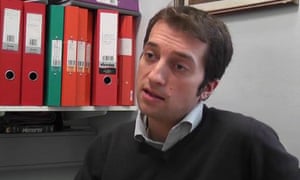
Sebastian Crutch, a neuropsychologist in the Dementia Research Centre of University College London.
The other PPA patient has degeneration a little farther back in the part of the brain where language is processed (the temporal lobes), impairing not word production but access to its semantic content. He is almost hyperfluent, articulating his words accurately and rapidly. The trouble is, he has lost the labels. He explains that he has been tying back his roses, but can’t describe them generically as plants, nor mention concepts like stem and thorn. Instead, with unselfconscious improvisation, he explains with finger gestures that they are things that branch and then branch again, and have those things on them that might puncture holes in your hands. “I can’t remember what you call them now, but we’ve got a thing that comes up, and they’re like that, and they’ve got all little bits on it…”
In such cases, less common words vanish sooner than ones used more often. Testing patients with animal recognition, “iguana” disappears before “dog”. Eventually this leads to extreme category errors: a less familiar image of, say, a gorilla might be interpreted, tentatively, as a car, not because that’s what it “looks like” to the patient but because he has so few categories of any sort to call upon in making an interpretation. This might tell us something about how we encode concepts mentally: perhaps we simply do more of that for familiar ones, so that we still retain some reference points when others are lost.
These are confusions in the brain’s ability to represent the world semantically. By contrast, in conditions like PCA, lesions in a different part of the brain can disrupt the “how?” or “where?” – the sense of space. One patient, asked to grasp the doctor’s right hand, does so easily. But he can’t make out where the left hand is at all, even though it is held just as clearly in front of him. After some guidance, he spots it – but asked then to take hold of it, he misses entirely and grasps the doctor’s shoulder. These spatial tasks are processed by both sides of the brain, each side dealing with the opposite region of space. So the lesions in this patient are probably concentrated on the left-hand side.
It’s hard for us to imagine this – it’s not at all like having only one eye working. “Everyone thinks vision means eyesight – they don’t connect vision problems with dementia,” says Crutch. But most people with Alzheimer’s will experience visual impairment at some stage, he says.
Harvey, a former electronics engineer who played drums and piano in a jazz band for much of his life, has his own experience of such spatial distortions. He was playing the piano when suddenly the keyboard seemed to have risen by four inches. Another time the keys seemed to disappear. As it is, he can no longer remember what the notes are called, nor can he decode written music (“all those lines!”). But like many jazz musicians, he plays primarily by ear, and still practises for several hours a day. In that still poorly understood miracle of the musical mind, he finds his fingers can keep going when his conscious mind cannot, constructing complex jazz chords that surprise him.
The visual illusions of PCA can be deeply disconcerting. Helen, a woman caring for her mother now in an advanced stage of the condition, tells me that her mother would furiously accuse her husband and other relatives of playing tricks on her when the coffee jar suddenly “reappeared” from where it had vanished a moment ago. This kind of irritable response, while wearing for carers, is a natural strategy for rationalising the confusion. Objects don’t disappear without a “reason”! Helen says her mother went through umpteen pairs of glasses, apparently a typical experience in the early stages of PCA.
Object Decision, by the artist Charlie Harrison, 2014, is a series of paintings based on tests used by neuropsychologists to determine how well someone is processing visual information. These tests are used in the diagnosis of posterior cortical atrophy (PCA).Asking the public to try to identify the silhouettes has been a good way to get them involved in a conversation about neuropsychology and people affected by dementia-related visual perception. Photograph: Charlie Harrison/Wellcome Collection
At the beginning, the visual distortions can come and go, often prompting frustration or disbelief from others. Helen explains that her mother would occasionally lose the ability to navigate drinking from a cup – but at other times it was fine. “Even her best friends didn’t believe her,” she says.
Care home workers can’t possibly know all the nuances of dementias, and are generally used to working with people showing the gradual, predictable decline in abilities that comes with Alzheimer’s. It’s understandable, then, that they might not appreciate that because a patient like Helen’s mother has just taken a sip of tea, she might not be able to do so in five minutes’ time. It’s not hard to see how this could lead to suspicions of “playing up”, especially when patients are themselves made grumpy by the difficulties.
Perhaps most disconcerting of all are visual hallucinations of the sort that can be produced by the relatively common condition called “dementia with Lewy bodies” (DLB), which sometimes occurs alongside Alzheimer’s. One person in Seb’s videos talks clearly and calmly about finding his house full of people dashing about.
“I came home one night, and all of a sudden there were people in the room,” he says. “There must have been at least a dozen, running and screaming everywhere. When you see that, you panic yourself – you don’t expect anyone in your own living room. One was dressed like Coco the clown. I thought I was dreaming.”
Seeing people is quite common with DLB, but other hallucinations can be more surreal. One person diagnosed with the condition told Crutch that when he looked at table edges and door frames, he saw them bending. But his rational brain knew that this couldn’t be true.
There’s the problem: it’s not so much that you’re seeing things that aren’t there, but that our brains, still retaining the power of reasoning, have to deal with impossible information. “How do you hold that tension between the two things without driving yourself mad?” Crutch asks. And who can we trust, if we can’t rely on our own senses? Even the man who saw Coco the clown in his living room admitted scepticism about being told he was just hallucinating. How can we go on and on dismissing what we’ve seen if it doesn’t seem to fit with what we know ought to be so?
Seen this way, says Crutch, responses from some dementia patients that might be interpreted as aggressive, paranoid or obnoxious might in some respects be perfectly normal reactions to an unfaithful mind – all the more so when the condition has developed beyond the point of a patient’s conscious ability to rationalise away their hallucinations. If your handbag is “not where you left it”, isn’t it reasonable to conclude that the care home staff have stolen it?
A particularly distressing form of the confusion that DLB can induce is called Capgras syndrome. Here the patient recognizes a carer or family member but loses the ability to connect that individual to the one they remember. They become convinced that he or she has been replaced by an impostor.
One woman described her husband’s experience of this condition. “He said, who are you and what are your duties here? So I said, Well, I’m Betty. And he said, Yes, but you’re not the Betty I know. I said, There’s only me. That’s when he started walking up and down the stairs, going in and out of the rooms, wouldn’t sleep.”
It seems such a bizarre belief that the invitation is to imagine the person has totally “lost their marbles”. But on the contrary, says Crutch, the “impostor” interpretation is also a reasonable deduction. “If it doesn’t feel like the person you know, then you’re not being irrational, you’re trying to use the rationality available to you to explain the experience.”
Dementia is mostly, and rightly, associated with deficits of one kind or another in mental abilities. But the mind is extraordinarily inventive about circumventing difficulties or improvising with what it has to hand, and it’s not so surprising then that these neural gymnastics might introduce new aspects of personality, new interests and capacities. These might be puzzling or bewildering to people who see a loved one change, but as Harvey attests, the results need not be solely negative. Someone might develop a hitherto unseen passion for opera. They might take up painting with almost manic energy. Or they might discover new facets of their creativity.
In the case of British artist William Utermohlen, who was diagnosed with Alzheimer’s in 1995, painting enabled him to create an extraordinarily expressive testament to his disintegrating sense of self. Utermohlen’s self-portraits, produced over the following five years, have been widely hailed as offering an insight into the condition. The final portrait, painted in 2000, seven years before his death, is a pencil-drawn head with two black holes for eyes, suggestive of a soft toy long neglected in the dust of a playroom.
But what remains intact in all these images is a sense of artistic integrity – their increasing abstraction sacrifices nothing of the power. Crutch visited Utermohlen in his flat in late 1999, when he still retained some ability to communicate. He was able to indicate how one striking self-portrait at his desk under a skylight, with one hand clinging to the corner, reflected his sense of desperately trying to hang on and avoid being swept out of the open window. “I suspect that the painting was more eloquent than anything he could have said at the time he painted it,” says Crutch.
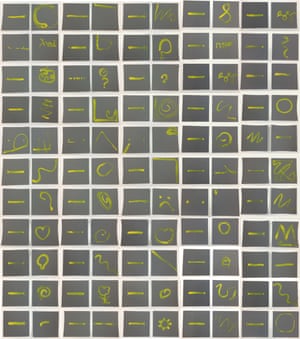
To test the effect of dementias on the way people express themselves through gestures, a Created Out of Mind research project asked participants to paint a line on a pair of canvases: on the first, the straightest line possible, by joining the dots; on the second, an expressive line of their choice. Between the start and end point of the gesture, data is gathered and analysed (heart-rate, eye-tracking, temporal experience etc). Photograph: Charles Harrison
Some see this as no different from the artist’s usual practice of conscious self-expression, albeit with diminishing resources. But Crutch is convinced that not everything in such art might be there by intention; the works might also testify to the nature of the condition. When Utermohlen was in their research centre at UCL, they asked him to draw a man. Far from the stick figure most of us would have produced, Utermohlen produced a beautiful sketch full of charm and wit. But there was something amiss. He knew it, but couldn’t figure out what it was.
To Crutch, and to most of us, it couldn’t be more plain: both of the figure’s arms were coming out of the same shoulder socket. This was a classic example of the spatial confusion of PCA. “I absolutely deny that this was his artistic intent,” says Crutch. “His tools had just been blunted.”
As well as seeking to change public perceptions of dementia, Created Out of Mind hopes to explore the role of the arts in these conditions. In projects such as Music for Life 360, which uses machine learning to analyse interactions between musicians and people with dementia, and a study of psychological and hormonal responses of a choral group, researchers will be seeking new ways to measure the effects of engaging in artistic activities.
Very often, initiatives such as this are seen solely therapeutically: as “good for the patient”. There’s no doubt this can be true, but as Utermohlen showed, they have far greater potential. Because arts may involve different parts of the brain – different communicative pathways – from the faculties of daily interaction such as talking, they might help to keep channels open. It’s very common for patients who might have become nonverbal to respond to music, perhaps even to sing.
The temptation is to respond that “At least she remembers something!” But there could be more to it than that. As conditions like PPA show, loss of language use doesn’t necessarily imply loss of understanding or desire to interact verbally. In fact, the extreme deterioration of that ability can produce some incredibly poignant testimonies to the inventiveness and determination of people to communicate. One man with PPA was, in the late stages of his condition, left with only two words: “Millionaire” and “Bub”. But, says Crutch, he would manage with just those severely depleted resources to express feelings and responses with the tone of his voice.
So arts aren’t just a “way of keeping them occupied”, but may become avenues for releasing genuine creativity. It’s easy to assume with people rendered mute by dementia that their understanding and inner life has gone just as silent. “You hear time and time again from carers who use music with patients that suddenly there’s a reconnection,” says Crutch. They often say not that this has transformed the patient but that it confirms that the awareness they always thought was there really is there.
Susanna Howard, founder of the charity Living Words, works with people with dementia to produce poetry (see panel). The remarkable, often moving results show the form’s capacity to express the person’s experience:
We lost a lot of nice things, all kinds – They go away. A little bit I got here and then All of a sudden there was nothing I could tell you. Could not put two together. I had a lovely story But it took my – you know, when I found out I couldn’t talk mouth ways, like now, I can’t think.
These points of connection are reminders for us, the healthy ones, that the person with dementia, who doesn’t know who we are any more and can’t talk and doesn’t even seem to see us, is still a person.
“Because we focus so much on the verbal, there’s an underlying lack of clarity about what these people actually experience when they can’t tell us any more,” says Crutch.
Lacking their direct testimony, we’re apt to make assumptions about it – which might obscure the person now for what we imagine them to have once been. This engagement with the present is precisely what the arts can offer, says Julian West, an oboist and researcher at the Royal Academy of Music. West has for years made music with people affected by dementia, for example in the Music for Life project at London’s Wigmore Hall.
“A few years ago I was working with a woman who was a Holocaust survivor,” he tells me. “She had very little capacity for verbal communication, and there was a lot of anxiety surrounding her, with carers worrying about how her dementia might ‘unleash’ memories of her experiences. The ‘in the moment’ experience, however, was that she looked at everyone with bright, animated eyes, and was very engaged with the music-making. At a pause, she made eye contact with me and very playfully sang ‘cuckoo’. I and the other two musicians were able to then improvise a piece with her based on her cuckoo motif, which she continued to sing. It was an expression of her playfulness and energy, and let us relate to her as she wanted to be rather than through our worries about her.”
West continues: “The focus of the work I am involved with is not at all about ‘helping people to remember’. I sometimes wonder whether the perceived need for people with dementia to remember things is more important for family, friends and carers. The idea that someone can retain value and identity independent of memory and capacity is outside many people’s thinking, and so the loss of memory is very frightening for them.
“The arts are a powerful vehicle for helping everybody to understand more of the complexity and diversity of people’s experiences,” says Crutch,”and to adjust ourselves to better maintain our social contact. Again and again we come across people who say: what really helped us to understand this person was connecting through music, or sharing in a response to a picture, or a carer seeing someone who can still create something. It can still be about who they are, not just who they were.”
Words unlocked: dementia and poetry
Making poetry with people with dementia takes time, explains Susanna Howard, artistic director of the project Living Words. She typically spends several months in a care home, generally with people with advanced dementia – beyond the point of reminiscence. “We don’t ask any questions,” she says. “We sit in silence in the shared experience with the participant, and as words come we write them down and read them back to the person.
“All words matter. It can be the smallest, seemingly insignificant words a person uses that have the most meaning for them, and we write every word down without trying to ‘make sense’ of them. ‘I don’t know’ or ‘Nothing’ says a lot about how that person is feeling.”
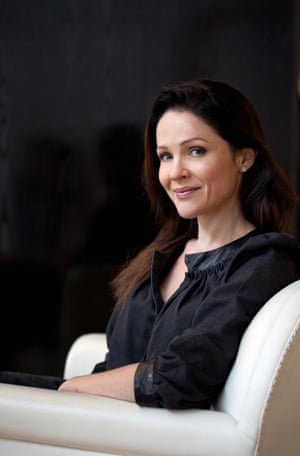
Susanna Howard
One person she worked with recently kept repeating under her breath, “I am the woman no one is watching.”
Then the editing begins. “We slowly start stripping away, reading their words back and seeing whether they resonate with the person. We only remove – we never add or jiggle words and meaning around. The intention is that the pieces are being written for that person, for them to feel validated. Often you can be reading a person’s words to them and they say ‘Yes, that’s just how I feel.’” The titles of these pieces are usually the first response that the person has on hearing their words read to them: Want People To Know What It’s Like, Can’t Think, I’m An Okay, All You Got.
This is deep work, Howard says. “We have the luxury of time to sit with people one-to-one. And it’s about equality of relationship within the creative process – the person is not ‘having art done to them’ but is actively engaged in meaningful shared experience.”
There can be direct therapeutic benefits. “This is like medicine to me,” said one care home resident. It offers social interaction and can encourage better relationships with caregivers, and allows people to feel heard and validated.
The results, however, reach beyond the personal. Like the best poetry, what they offer is a direct, stripped-down truth: a communication where, perhaps, none seemed any longer possible.
Speaking
This place is mad, it is I think, think it’s good To get out, I’m speaking Look at round there They’re wanting me now A mad one, near Don’t say much It will come The lost word
Operatic soprano Greta Bradman was19 years old when she started to self-harm. Intense bullying through high school had coincided with her parents’ divorce. She felt isolated and started skipping school. A year earlier her grandfather, cricket star and national hero Sir Donald Bradman, had died.
Donald Bradman and his grand daughter were close – their relationship has been chronicled in a double episode of Australian Story – and he had instilled in her a love of classical music. Greta saw singing as “a kind of solace” for her pain, and she was accepted into the Elder Conservatorium of Music in Adelaide. But that overwhelming sense of self-loathing stayed with her, and she began trying to destroy the one thing that brought her joy: her voice.
“I wanted to take away the possibility of singing as a career,” she says. She describes it as needing to punish herself – for missing school, for being “completely worthless”, for having the audacity to wrap her identity up in art.
“It was a combination of wanting to hurt my voice and to get that sense of relief that can come from self-harm. But it’s a completely maladaptive coping strategy, which took me further and further down the cycle of self-loathing … It was bound up in me as an artist – not really knowing how to go about it, and not feeling like I could necessarily succeed, but at the same time being terrified of the prospect of success.”
‘I wanted to take away the possibility of singing as a career’: operatic soprano, radio host and psychologist Greta Bradman. Photograph: Pia Johnson
Eventually, Greta climbed out of the cycle. She stopped self-harming when she was 23 and became pregnant with her first child. Today, her voice well and truly intact, she is one of Australia’s leading sopranos, with a radio show on ABC Classic FM, an upcoming principal role as Mimì in La Bohème at the Sydney Opera House, and a plaque on the Adelaide Festival Centre’s walk of fame.
She also practices pro bono as a provisional psychologist, with a masters in clinical psychology. Bradman has combined both passions to consult on a major new industry-first initiative from Arts Centre Melbourne – the Arts Wellbeing Collective – to help others in the creative arts who have struggled in similar ways.
The collective, which launched on Thursday, is unprecedented – if not around the world, then certainly in Australia. It comprises close to 90 Victorian arts and culture organisations, including Melbourne festival, Melbourne Theatre Company, Victorian Opera and Regional Arts Victoria, who have come together with a common aim: to improve mental health and wellbeing for Victorian performing arts workers – those on stage and in front of the camera, as well as those working behind the scenes.
Developed in consultation with prominent psychologist Dr Michael Carr-Gregg, and drawing from the practice of positive psychology, the program, in its pilot phase, will feature a series of workshops and a dedicated website filled with resources tailored to the mental health needs of the performing arts sector – a sector which recent research has shown is in crisis.
Performing arts work: a lethal cocktail
In 2016, a major report was released by Victoria University and Entertainment Assist following an extensive study of entertainment industry workers.
The report – which focused on performing artists and composers, performing arts support workers and broadcasting and media equipment operators – was alarming. Levels of moderate to severe anxiety in the performing arts industry were 10 times higher than the general population; levels of depression in industry workers were up to five times higher; and workers were four to five times more likely to plan to commit suicide, and twice as likely to attempt it.
As Bradman explains, the performing arts industry comprises a unique cocktail of working conditions that, without the right levels of support, can prove deadly.
“As a performer, you’re working when everyone else is working, and then you’re working when everyone else is having fun,” she says. “The work hours are unique, and on top of that you’ve got the lack of work security, and the financial pressures.”
An Australia Council report released in 2010 found more than half the country’s artists were making less than $ 10,000 a year from their creative pursuits, regardless of the hours they put in. Many of those hours come in shifts, Bradman says, which come with their own set of risks – from obesity and cardiovascular disease through to sleep problems and other mental health issues.
There are social factors too, including an imperative to socialise and network at events that revolve around alcohol and drug consumption. “Looking at future work possibilities and career progression can be somewhat tied to that too,” Bradman says.
And all that’s to say nothing of work instability, and what it can do to one’s mental health. “For performing artists, and also for people backstage, you might go through a phase of getting a lot of work, and then all of the sudden the work drops off. That can have a big impact on your sense of identity.”
You have these immense highs of being part of a [big show] … and then suddenly it’s all gone
The extreme highs and lows of the work itself compound the issues. “I’ve experienced this myself,” Bradman says. “You have these immense highs of being part of a family, a community, that comes together for this incredible project – particularly if it’s a long project, like a musical, an opera, a long run of a dance. You’re so close to the people, and you’re all so bound up in it – and chemically, from a neuropsychological and psychological perspective, there is so much going on in those relationships … but it’s all bound up within that world of the show, and suddenly the show ends and it’s gone.
“There’s a huge sense of grief and loss that can come from that – and a sense of needing to renegotiate your identity.”
While Bradman fundamentally disagrees with the myth of the “struggling artist”, which romanticises mental health issues as a creative boon, she says there is something intrinsic to the arts that can make artists and workers particularly at risk.
“To be [an artist] we have to be vulnerable, we have to give of ourselves, hugely, we have to allow ourselves to feel an array of emotions – some of them good, some of them really difficult,” she says. That’s why it’s particularly important that arts workers can access resources and support tailored to their industry – a gap the Arts Wellbeing Collective is hoping to fill.
“What we do [as arts workers] is so bound up with who we are. This is not necessarily a good or bad thing, it’s just a way that a lot of us identify,” Bradman says. “We have to negotiate what that means, so that in the quieter times – in those times when there’s not as much work – we don’t equate a lack of achievement with a lack of self-worth, or an uncertainty about our direction.”
‘I’d spun out of control’
For Simon J Green, it started with scratching. He had been running an independent film company for eight years – a creative investment with huge financial strain, long hours and high responsibility – when his wife noticed him absent-mindedly digging paths across his forearms. “As soon as she mentioned it, I realised I’d been scratching my legs, too. I pulled up my pant legs and we both gasped at the ragged, bloody strips I’d torn in myself.”
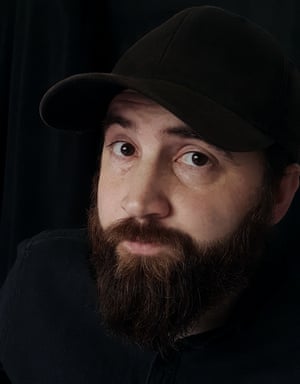
Simon J Green experienced ‘extreme levels of stress and depression’ while managing a film production company in Melbourne for eight years
Green, who is based in Melbourne, was experiencing “extreme levels of stress and depression” combined with long working hours and a lack of sleep, which meant every small problem took on extreme proportions. It’s a spiralling feeling that many performing arts workers identify with.
“Taking on staff, and the pressure of keeping them both paid and creatively satisfied, weighed on me more than I realised,” he said. “Combined with managing [my] cystic fibrosis, and trying but failing to meet my own creative needs, I’d spun out of control to the point I was literally tearing myself up.”
There was another factor too, Green says: a lack of perceived value. “People don’t think our work is worth much, which puts pressure on us to make more for less.”
This is an issue Bradman raises too, which she is looking into with a new, broader survey which soft-launched in January. “Culturally, and particularly in the current climate, [there are questions] over the perceived value of the arts, not only within the performing arts community but the broader community.”
In 2015, the Abbott government slashed funding from the Australia Council – cuts which were handed down, for the most part, to the small-to-medium arts sector. In May 2016, the artistic directors of major theatre companies penned an open letter calling it an “unprecedented assault” on the arts, and individual artists were among the biggest losers.
“When funding is shifting and changing, and there is so much uncertainty, that can really play into one’s sense of where one is going in life, and one’s sense of self-worth,” Bradman says.
The issue of worth came up in the Entertainment Assist report too. “Performers working for free is a huge issue in our industry. It devalues our skills and puts us out of work,” said one participant. “[We need] more government support and to realise the importance of the arts,” said another.
In the film industry, Green says, that devaluation has specific repercussions. “There’s a real scarcity mindset that seems to undermine collaboration – a sense of a zero-sum game of work available, which isn’t true. I think it comes from that feeling that we aren’t really valued by society at large; from all of us being told at school, ‘Don’t be an artist, you’ll never make a living, be something else’, to the tired joke (that we perpetuate) that an arts degree is useless.
I pulled up my pant legs and we both gasped at the ragged, bloody strips I’d torn in myself.
“Performing artists are twice as likely to attempt suicide, and depression is five times higher than the general population. That’s a horrifying statistic,” he says. “Clearly there’s a problem, but no one really cares. If it were a different industry – say, manufacturing – there’d be a national discussion.”
Green remembers when the report came out, alongside an article on how little money is made by actors who are considered famous in Australia. “The comments sections were full of people saying, ‘Boo hoo, get a real job, they chose that life.’ With all this, how can the arts not be fatiguing our mental health?”
Beyond the performing arts
Although the report, and the Arts Wellbeing Collective which has sprung from it, are focused on the performing side, mental health issues in the arts are by no means confined to that. Mental suffering has a long and storied history with visual art, for instance, and a recent callout for arts workers who had experienced mental health flare-ups drew mostly anecdotes from writers, who spoke of anxiety, depression, bipolar disorder, eating disorders and recent, heartbreaking suicides among their community.
Developed by a performing arts company, the focus of the Arts Wellbeing Collective reflects its origins. Upcoming workshops are titled “the Green Room”, “Centre Stage” and “the Show Must Go On”. But Bradman hopes the resources made available will be of use across the industry and beyond, and has aspirations for expansion.
“There is absolutely nothing to preclude it from being broadened out, if it’s successful,” she says. “I think it’s really important to be slowly, slowly about it, to let it build up and evolve, to let this year really inform the shape that it takes in the next.”
Above all, she hopes it achieves a top-down recognition of mental health issues, removing stigma, generating conversation and increasing support: “A real sense of committing, on the part of the organisations, to a nonjudgmental, open and supportive relationship when it comes to mental health in the arts,” she says.
• Find out more about the Arts Wellbeing Collective
Lucy Bennett is artistic director of Stopgap Dance Organization. Photograph: Stopgap Dance Business
Hi Lucy, what can you tell me about Stopgap Dance Company?
Stopgap Dance Firm helps make evocative dance productions with exceptional disabled and non-disabled artists. We nurture and operate with expressive artists who have sturdy personalities and stories to tell. When they get with each other to devise authentic operates, the end result has a genuine emotional punch, which pushes you to look at the globe in a diverse way.
A sense of pioneering spirit and collaboration are really important in our company and we are continually creating discoveries about what kind of productions disabled and non-disabled artists can make. Some of our dancers have been doing work with each other for more than a decade and have large experience in integrated dance. We just lately stepped away from currently being a repertoire organization so that we can actually search at our own choreographic practice in detail and make our distinct artistic voice heard.
What are the implications of integrated dance and how do you approach it as artistic director?
Integrated dance for us is about finding new and unusual dance vocabularies. We use our various physicalities, experiences and studying styles to discover innovative and different methods of expression and motion. We typically convey this by saying: “distinction is our implies and our strategy.”
The approach of innovation at times reveals exciting social dynamics inside of the crew, and I consider to find ways to knit these into the production. Now that we are producing our own perform, we can use our creation approach to reconstruct some established tips about integrated dance – our new perform Artificial Things is total of new and uncommon dance sequences that came from looking at things in a lot more detail.
I think we have gone a small bit additional in questioning the normal shapes and accepted principles of dance. By taking complete control of the inventive approach, a much deeper exploration was achievable. I’m lucky to have a collective of dancers who are inquisitive.
Does this variety of integrated perform present any issues?
We want longer creation periods than most other businesses since we are doing work with various bodies and varying paces of learning. The diversity does make creation of new materials a lot more complicated. Even when we locate new tips, it requires longer to uncover consistency with a varied cast simply because there are so several overall performance variables for wheelchair or learning disabled dancers, but experience has taught us that the material ultimately will tighten with practice.
It truly is frequently tough for new business dancers to adjust to our tempo, so we seek out people who could get utilized to it. But this slower pace and mishaps are not all unfavorable it can motivate a supportive surroundings, which assists to build a great team spirit. The dancers realise they want each and every other to do what they do, and their co-dependence is quite much reflected in our work.
Dance is frequently noticed as a really image and entire body-led artform – how much is integrated dance demanding that?
Dancers like Dave Toole, who had a starring role in the London 2012 Paralympic Games Opening Ceremony, had a large affect in modifying standard suggestions about who can dance. London 2012 raised so significantly awareness of inclusive and integrated functionality. It was quite emotional seeing so a lot of wonderful disabled and non-disabled performers putting on such an amazing spectacle.
Where we need to have to make far better progress is how we involve understanding disabled artists and recognise the contribution they can make. Chris Pavia, who has been operating with Stopgap for 15 many years, devised one particular of my central characters in Artificial Factors by means of a direct dialogue with me. His raw imagination and the potential to be “in the second” is fascinating and I hope that his performance will change perceptions about finding out disabled artists.
What makes for a good artistic director in dance?
For me it really is about the big and little. You have to come up with the big vision, but you also have to be on hand with the tiny concepts that can fix the everyday issues. I have constantly admired artistic directors who are speaking at a conference one particular minute but are pleased to make tea for their colleagues the subsequent. It really is healthier to see factors from various perspectives and be adaptive to circumstances. As artistic director, I practice generating myself large when I require to be heard, and small when I want to quietly observe.
With no what could you not do your task?
A tea break with my dancers. That’s where I get some of my best tips.
Lucy Bennett is artistic director of Stopgap Dance Firm – adhere to the business on Twitter @Stopgapdance
Join our neighborhood of arts, culture and inventive professionals by signing up cost-free to the Guardian Culture Pros Network.
In 1996, Arizona Senator John McCain famously categorized the sport of Mixed Martial Arts (MMA) as absolutely nothing far more than “human cockfighting” and made it his personalized agenda to ban it from the airways. Even so, by 2007, McCain seemed to have softened a bit by saying the “sport has manufactured significant progress.” Flash forward to 2014, and the same Arizona Senator can be noticed doing work closely with MMA promoters to fund brain damage study at the Cleveland Clinic. Even more surprising was his comment that he totally would have participated in MMA as a younger guy in the Navy if it have been close to.
MMA is a total-contact sport that makes it possible for the use of striking and grappling tactics, the two standing and on the ground, from a variety of other fight sports. It consists of a number of diverse disciplines like Brazilian jiu-jitsu, judo, wrestling, boxing, karate, kickboxing, and Muay Thai. The granddaddy of MMA is the Greatest Fighting Championship (UFC), but there are a variety of popular, regional promotions as nicely.
So, what spawned this dramatic Senatorial turnaround from MMA antagonist to advocate? According to Linda Shields, the talented and energetic founder of New England’s common Cage Fighting Extreme (CFX), “MMA’s small talked about secret is its enhanced concentrate on security.”
Shields explained, “MMA was originally promoted as a competition to find the most powerful martial artwork methods for true, unarmed combat scenarios. Due to the fact of this, competitors have been pitted against 1 yet another with minimum guidelines, as would be the case in actual fight circumstances.” MMA debunked a whole lot of fighting myths and showed the actuality of what would and wouldn’t perform in an real battle. The sport has observed improved acceptance with a shell out-per-view company that makes it 1 of the fastest-growing sports activities in America. “Whether at the nationwide or regional level,” Shields additional, “safety is built into the all our guidelines and procedures.”
Let’s not child ourselves right here. No one need to think that MMA is not a unsafe sport and that critical injuries don’t occur. Each and every fighter who measures into the ring understands the risks. Nevertheless, over the past 20 years, real progress has been created to reduce these hazards to ensure safer competitors for the athletes while nonetheless entertaining the supporters.
William Nineve battles John Havel in a CageFX MMA event. (Picture credit: CageFX)
To help us recognize the safety elements that go into each and every match, we had the possibility to talk with Dr. David Worman, who has a distinctive MMA perspective. Not only is Worman an MMA CageFX champion, he’s also an orthopedic surgeon.
Worman explained, “Most of the injuries take place not in the course of the actual competition, but in the course of education. When I watch organized MMA fights, I’m constantly amazed that there are not far more injuries. A lot of that has to do with all of the security precautions that go into these productions.”
The precautions commence months ahead of the actual event and start off with the battle promoter. 1st, the promoter picks two fighters that ought to be evenly matched in coaching level and experience. Then the fighters and the coaches get to assess the opponent and make a decision regardless of whether they want to accept the match-up. The fighters then have months to train and put together for that single battle. They are place by means of a rigorous health-related screening for anything at all that would area them at enhanced danger for critical damage (dilated eye exam, EKG, CT scan of the brain, bodily examination, and blood function for communicable illness, etc.) before they can even show up for the weigh-ins.
“What the casual observer does not understand,” explains Worman, “is that these events are not street brawls or bar fights. The competitors are closely matched in size and are protected with groin cups, mouth guards, and small gloves. They are coming into into a padded, contained, and protected arena.” At anytime, a fighter, his corner guys, or the ref can immediately end the fight verbally, or by just by tapping the mat or his opponent. Outside the cage there are initial responders and a physician waiting to care for the participant should an injury take place.
The security measures proceed after the fight as effectively. Any fighter who does obtain an injury severe ample to warrant health-related treatment, such as a fracture, cut, or most drastically, a concussion, will be suspended from competitors for a minimum volume of time and until finally cleared by a doctor to participate yet again.
“None of this eliminates the risk of this sport,” additional Worman, “but I think the planning, organizing, and precautions that are taken before, for the duration of, and after a manufacturing, make these occasions as risk-free as achievable, whilst nonetheless preserving the perfect of ‘combat sport’ that draws the followers and rivals to MMA.”
At the age of 77, John McCain would seem to have lost his chance to participate in an MMA cage match. However, if a challenge came from one particular of his Senate colleagues across the aisle, it might be a spend-per-view occasion for the ages – an event I’m confident Shields would enjoy to market.
Robert J. Szczerba is the CEO of X Tech Ventures and author of the Forbes column “Rocket Science Meets Brain Surgical treatment.” Follow him via Twitter, Facebook, or LinkedIn.