saved etiketine sahip kayıtlar gösteriliyor. Tüm kayıtları göster

30 Mart 2017 Perşembe

I thought my career as a doctor was over. It was the arts that saved me

[unable to retrieve full-text content]


I used to ignore my creative side, but after I was signed off work with depression and anxiety, I made space for the things I loved


As a hospital doctor I am used to working under pressure, and had always felt I thrived on it. But when I took time out of clinical training to pursue a PhD, I found I was intensely unhappy. I suffered a range of physical symptoms: palpitations, early morning waking, nausea, severe headaches, poor appetite, diarrhoea, dizziness, breathlessness and tremors.


My day was constantly interrupted by intrusive negative thoughts; I once walked for 30 minutes with “I hate my life, I hate my life” on a loop of internal monologue that I feared had no end. I listened to podcasts and audiobooks fanatically but could not drown out these thoughts, and no rationalisation of all the wonderful things I had in my life could make them stop.


Continue reading…


I thought my career as a doctor was over. It was the arts that saved me

16 Mart 2017 Perşembe

The Chokeables has saved babies" lives – here"s how we made it | St John Ambulance

So far, we know of 54 babies whose parents say wouldn’t be alive today if it wasn’t for The Chokeables, St John Ambulance’s first aid film teaching people how to save a choking baby in just 40 seconds.


We’re delighted our film has won charity film of the year, announced at Bafta on 15 March. So what’s the secret of its success?


Before making the film, we carried out research that revealed parents are the people most interested in first aid and what they worry about most is their baby choking. Over 40% of parents had seen it happen, 58% said it was a serious concern and yet 79% didn’t know what to do.


Our previous campaigns had been aimed at getting people to take first aid seriously but our audiences just weren’t taking the next step and learning it.


We realised we needed to teach directly – beam the advice into parents’ lives in a way they couldn’t ignore. And the tone needed to be spot on. Parents don’t want to be browbeaten and made to feel guilty. It’s hard enough being a parent. What we needed was an upbeat, engaging, shareable lesson.


Enter the geniuses at Bartle Bogle Hegarty. They realised that the lesson would come across best if taught by common household items that could potentially choke babies – the kind of things most parents would find under their sofas, like a toy or a pen lid. They crafted a script around the idea that these characters were so fed up with babies choking on them that they have decided to teach parents what to do.


We used animation to make the topic less scary, and pulled in the big guns with David Walliams and Johnny Vegas voicing the characters.


[embedded content]

This was all quite a feat considering the film needed to be 40 seconds long. Our tip with charity films is the shorter the better, to get as many people as possible watching to the end, but also to air it on TV in a cost-effective way.


I wanted a name for the campaign to help parents connect with the characters, and identify the campaign easily so it could trend on social media. Heaps of chocolate and one brainstorm later, The Chokeables was born.


When it came to sharing and promoting the film, we developed close relationships with key media to help create a buzz before we released the video. We focused in particular on those who could help us reach a high proportion of parents, such as ITV’s Good Morning Britain and Mumsnet, as well as nationals like MailOnline and the Mail on Sunday. Facebook was crucial as mums use it to share parenting tips, and we also worked with the mums who’d saved their babies so that even more parents could find out what to do.


Social media was key and we created a Thunderclap so people could mass share the video, flashmob style, as well as social media competitions to increase further engagement, such as a messy baby photo competition with first aid kit prizes. We also produced a whole suite of baby first aid advice videos to inspire further learning.


We entered The Chokeables into the inaugural Charity Film Awards, when entries opened in 2015. The awards have been set up to recognise the best videos created by or on behalf of UK charities, whether for raising awareness, changing attitudes and behaviours or fundraising.


Over 375 charities entered for the first round of public voting. More than 43,000 people voted and the resulting shortlist went to a panel of judges. They whittled it down to the finalists, including household names such as the RSPCA, Barnardo’s, the RNLI, Alzheimer’s Society and Great Ormond Street children’s hospital.


A second round of public voting for the people’s choice award has seen more than 66,000 people vote for the winner – the Soi Dog Foundation’s film about Cola the dog, who was given custom-made prosthetics after his front legs were amputated.


To win the overall award for film of the year for The Chokeables is just incredible. We’d put everything into this and hoped it would make an impact, but the success has knocked us sideways. Not only have we taught millions of people how to help a choking baby but it’s helped people feel that St John Ambulance is relevant to their lives.


The video continues to receive millions of views whenever it’s re-posted on social media. I love these stats but nothing beats getting a message from a mum who has saved their baby thanks to our video. There’s no greater reward than knowing we’ve reassured parents and helped all those babies.


  • Emma Sheppard is head of communications, St John Ambulance. The Chokeables won film of the year at the 2016 Charity Film Awards.

Talk to us on Twitter via @Gdnvoluntary and join our community for your free Guardian Voluntary Sector monthly newsletter, with analysis and opinion sent direct to you on the first Thursday of the month.


The Chokeables has saved babies" lives – here"s how we made it | St John Ambulance

1 Mart 2017 Çarşamba

Premature baby saved by groundbreaking NHS surgical team

A “miracle” baby girl has spent her first two nights at home after becoming what her doctors believe is the world’s youngest patient to survive major abdominal surgery.


Abiageal Peters is expected to lead a normal healthy life after being saved in pioneering operation her parents and doctors say was only possible under the NHS.


“She is always going to be our little miracle,” her mother, Louise Peters, said from her home near Esher, Surrey, with the sound of Abiageal gurgling in the background.


Abiageal was born in October 2016 at St Peter’s hospital, Chertsey. She was three months premature, after a gestation of only 23 weeks. Peters was warned her baby had little chance of overcoming a severe gut condition known as perforated necrotising enterocolitis. Her intestine was torn in three places and her stomach had started turning black.


An operation at a specialist neonatal unit at St George’s hospital, London, was Abiageal’s only hope, despite the risk of surgery on such a young and small baby. She weighed just 609g (1lb 5oz).


“She would have been dead without the surgery,” Peters said. “She was deteriorating so badly at that point. She was struggling to breathe and her skin was turning black. We knew she had a day or two left if that, if they didn’t operate.”


Consultant Zahid Mukhtar, who led the operation, said it was extraordinary that Abiageal managed to pull through surgery. “We have trawled the literature and couldn’t find anyone who has been operated on at that early an age and survived. Her story and her recovery has been really remarkable.”


Speaking to the Guardian, he said: “She was smaller than my hand when we operated on her. But it was her prematurity that was so unusual – her organs were so fragile and jelly-like that as soon as you started operating, even with our small instruments, everything started to bleed or fall apart.”


He spoke of the team’s pride in saving Abigail. “It is beyond the craft of surgery, something more has to come into it, to push boundaries like this. It is an amazing achievement for our team, so we are really proud. The fact that four months later she is a really healthy child, with a good brain, is amazing considering how premature she was.”


Peters, a financial analyst who grew up in South Africa, said: “We can’t thank the doctors enough. I don’t know if she could have survived outside the NHS. Some countries don’t even think about helping babies who are less than 25 or 26 weeks. She would have had very little chance.”


“I come from a country where you have to pay for every cent of your medical aid. This country has been phenomenal. I think the NHS is absolutely wonderful.”


Peters and her British husband, David, also have a two-year old daughter, Tara. “My first daughter was such an easy pregnancy that I just took it for granted that my next baby would be as easy,” she said.


Peters added: “The beginning was especially stressful, but my baby is a fighter. Then it was four months of waiting for her come off breathing support and sort out her feeding. There have been lot of hurdles, infections, blood transfusions along the way.


“Other mothers who have this happen to them, should know there is a chance – don’t give up, these little babies are so strong.”


She added: “It has been wonderful to have her home, but there are all the usual niggles of getting a new born to sleep.”


Mukhtar said the success of the operation demonstrated the NHS at its best.


“Despite the financial pressures and morale challenges, the staff working in the NHS are amongst the best in the world,” he said. “They are really pushing the boundaries. Any patient that comes into our system gets the best we can do for them. It is mindset that is different from other places in the world where I have worked. It is a real honour for me to me working in this system.


“Outside the NHS there is no chance she would have survived. Any child in a private hospital born this prematurely would have been transferred to the NHS immediately.”


Mukhtar, who was born in mountain village in Pakistan, said he wanted to become a doctor after his three-year-old sister died from diarrhoea. “From a simple thing like that she died, because there was so little help for sick kids. From then I have tried to never give up on a child and do whatever is possible.”


He added: “I was a village kid with uneducated parents and yet this country gave me the opportunity to follow my dream and now I am able to give back that education and possibility to affect people’s lives so profoundly. It is a real shame that people are so suspicious of people coming here from other countries.”


Premature baby saved by groundbreaking NHS surgical team

27 Ocak 2017 Cuma

A moment that changed me: last night a Polish DJ saved my life | Rae Earl

The world is full of interesting phobias. Consecotaleophobia, for example, is the terror of chopsticks. Aulophobiacs are scared of flutes. But the irrational fear of my youth – “fear of dying in Peterborough” – has yet to be recognised.


As a teenager, Peterborough was the furthest I could usually make it in the world. It was 15 minutes from my home and I knew I would die there. Nuclear war. Heart attack. Burst appendix. The cause changed but the fear didn’t. I could list a million ways to kick the bucket. All intricately thought out and very, very real. Platform 5 of Peterborough station was the sum of all fears.


Chronic anxiety made me mainly housebound. I tried to move on. I lasted five days at Essex University. They had a special freshers’ week showing of Women on the Verge of a Nervous Breakdown. That was a portent of doom. I couldn’t cope. I wore the same clothes for nearly a week and took the world’s most half-arsed overdose – four co-codamol. I didn’t want to live. I didn’t want to die either.


I returned home a failure. I did some work, but not much. While my mates were raving in Ko Samui my daily routine was based around watching This Morning.


Then my best friend Mort told me that Unesco wanted people to go and teach in summer schools in eastern Europe. Would I like to go with her? I said yes. I was terrified, but at least I’d be terrified with my best mate. I knew I had to do something with my unexpected “year off” so we went to Świdnica in south-west Poland.


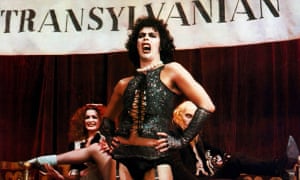
The Rocky Horror Picture Show: ‘I got out of bed and taught the Poles the Hokey Cokey and the Time Warp.’


The Rocky Horror Picture Show: ‘I got out of bed and taught the Poles the Hokey Cokey and the Time Warp.’
Photograph: Allstar/20TH CENTURY FOX/Sportsphoto Ltd./Allstar

There are places in the world where we just fit and our skill set is appreciated. For me that was Poland in 1991. It had just emerged from behind the iron curtain. British pop was revered. I taught English by showing tapes of the BBC series The Rock ‘n’ Roll Years. MTV Europe was pumped in. One girl, transfixed by Paula Abdul’s hit Rush Rush, would dance vigorously, intensely, to it every night. This was a place I could understand. One student asked me to transcribe the song Why? by Bronski Beat. I did it word for word. I was useful. I was having a great time. We partied every night. We had Polish vodka with a buffalo label and a piece of long grass in it. I got drunk. I got very drunk.


I hit my head. I blacked out. I started to die. Yeah, the joke was on me. Finally I’d found a place I could vaguely cope with (there had been panic attacks that Mort had fended off) and now I was definitely dying.


An ambulance that resembled a converted Volvo estate came to pick me up. I made my verbal will, told Mort she could have my vinyl, and went to hospital.


There wasn’t much of a wait at Polish casualty. There were three other people and some bats fluttering merrily in the corner. I don’t think the bats were there for treatment. I remember thinking they probably had rabies though. If brain damage didn’t get me, incurable diseases would. A doctor who looked like a cross between Clark Gable and Gomez from The Addams Family appeared with perfect English. He was snarky yet sweet – an adorable combination. He examined me thoroughly, suggested possible mild concussion, told me to lay off the booze and prescribed bed rest for a few days. I went back to the school to die. I knew he was wrong.


As every minute passed and I remained conscious, a strange, new concept entered my mind. Perhaps I wasn’t going to die and my brain was wrong. Perhaps the next time my head did decide to go into red-alert mode I could remind it of this moment – of the moment I didn’t die in Poland.


‘Back home in Britain, Bryan Adams was still No1, but the world had changed entirely. I had not died.’


‘Back home in Britain, Bryan Adams was still No1, but the world had changed entirely. I had not died.’ Photograph: Sinead Lynch/AFP

I got out of bed and taught the Poles the Hokey Cokey and the Time Warp. They taught me exquisite folk dances. Eventually it was time to leave. One of my students gave me a one zloty coin. At the time there were 18,600 zlotys to the pound. It literally had no economic worth but she told me it was lucky and she wouldn’t forget what I’d taught her (mainly song lyrics).


Back home in Britain, Bryan Adams was still No1, but the world had changed entirely. I had not died. I had managed to do something good. For the first time ever, anxiety had not won. I walked to Morrisons in bare feet. I hadn’t spoken to my mum in weeks. You had to book an international phone call in Poland in those days. My mum looked almost pleased to see me. Things would definitely never be the same again.


Nearly 26 years later there is a one Zloty 1990 coin on a bracelet that is permanently around my wrist. It reminds me of three things – of a best friend who has always understood, of the kindness of strangers who saw me at my worst and tried to help and of the first time I truly told my brain it was talking utter bollocks.


Rae Earl’s latest book, #Help: My Cat’s a Vlogging Superstar, is published in March


A moment that changed me: last night a Polish DJ saved my life | Rae Earl

14 Ocak 2017 Cumartesi

How we ‘fixed’ our diabetic dad – and saved his life

When their father, Geoff, was diagnosed with type 2 diabetes at the age of 50, brothers Ian and Anthony Whitington were not hugely surprised, and for 10 years, they drifted along and watched from the sidelines.


“Dad had always been the ‘big man’,” says Anthony, 39. “As kids, we thought it was funny. Dad could drink more than anyone, he could eat more than anyone. It was his identity. That’s our dad and that’s what he does.”


“As we got older, of course we worried,” adds Ian, 37. “But everyone around us would say, ‘If he doesn’t want to change, you can’t change him. He has to do it himself.’” So nothing much was done – and Geoff joined the 3.5m adults in the UK who manage their diabetes with ever-greater doses of medication and regular check-ups.


“We were all resigned to our family roles,” says Anthony. “I was a busy financial adviser with four kids of my own. Ian was a busy cameraman with jobs all over the world. Dad was a funny fat guy who drank too much.”


The wake-up calls were different for both of them. For Anthony, it was a family trip to Chessington zoo in 2013. By then, Geoff weighed 127kg (20 stone), had high blood pressure, atrial fibrillation (abnormal heart rhythm), plus everything diabetes could throw at him – a swollen prostate, poor circulation, ulcers on one foot and a bone deformity on the other.


“We were walking around this theme park when the bones collapsed through his foot,” says Anthony. “I remember him grabbing a railing, the blood in his sock, getting him back to the car. Suddenly, this thing that the doctor was managing was very clearly something that wasn’t being managed. Dad was seeing people at the foot clinic who had had a limb removed – and the average lifespan after amputation for a diabetic is two years. We were losing him.”


When Anthony called his brother to say time was running out, Ian needed no convincing.


“The rock bottom for me had been my wedding,” says Ian. “Dad stayed up longer than everyone else – he was always the last one in the room, sitting there with a bottle of brandy. I remember looking at him and it was just horrendous. He was crumpled. He couldn’t get up and dance because of his feet, but he was quite emotional. He said something along the lines of: ‘I’ve done my job. You’re my greatest achievement.’ It was as if that was it. He didn’t need to exist any more.”


In 2014, when Geoff was 62, his sons stepped in with their own special intervention that included a complete lifestyle overhaul, multiple health consultations, family holidays and heart-to-hearts, pacts, promises and pretty much constant rows. Two years later and 45kg (seven stone) lighter, Geoff raced through a 100-mile cycle ride from London to Surrey. He has now been taken off all his diabetes medication as well as his blood pressure pills. He says his sons saved his life – and it’s no exaggeration.


As a professional cameraman, Ian filmed most of the journey, and their documentary, Fixing Dad, aired on BBC2 last summer. Anthony’s wife, Jen, a fitness trainer, co-produced the film. There’s also an app for those wishing to do the same, and a book, written by Jen, that includes a meal and exercise programme, plus advice on the mental leaps needed to fix a stubborn family member. The “fixing” terminology couldn’t be more apt for a man like Geoff – who has spent most of his life fixing things for others.


“Everyone described Dad as ‘generous to a fault’,” says Anthony. “He’d pay the parking fines of complete strangers. As kids, we saw him stop the car in the street to chase after muggers. I remember when my wife, Jen, was having a bad day after our first child was born. I was at work so she phoned my dad. We were living in Surrey at the time and Dad said: ‘I’ll come over now. Is there anything you need?’ It turned out he was 100 miles away, but he told Jen he was just down the road.”


“We owed Dad a lot,” Ian agrees. The boys had grown up in Bromley and their parents divorced when they were eight and 10 years old. “It changed the dynamic massively. We were with Mum in the week and Dad at the weekend – and we got into this pattern of Dad not being able to do enough for us. We didn’t miss holidays that richer kids were going on because Dad put it on a credit card. If we wanted to do something, he let us. He was spoiling us, really, and by the time we were adults, his debts were so bad, he was a BT engineer in the day and working nights on the Underground and as a security guard. We felt a lot of guilt about that.”


So why was Geoff so good at looking after others, but hopeless looking after himself? Perhaps, with busy, grown children, he felt a bit redundant. “I think I’d reached the point in my life where my children were happy, they had their jobs, they were OK. I’d worked all my life, I’d done my job and I wasn’t needed,” says Geoff, who has been married to Marilyn, the boy’s stepmother, for 20 years.


“My wife was going to be the one to suffer if anything did happen to me, but I suppose I didn’t give it much thought. My life involved working very long hours, which meant a lot of driving around, and a lot of stopping and eating.” (His sons claim Geoff couldn’t pass a McDonald’s without pulling in, and there was always a can of Coke rolling round the floor of his van.)


So what made him agree to this project? Was it to save himself or to please his sons? “I suppose a little bit of both,” he says. “I certainly didn’t think it could help or change anything – I didn’t know anyone who had reversed diabetes. As far as the filming part was concerned, I ignored it, as that was never going to make it on to the TV. It was another of their little projects that was never going to go anywhere! But they asked me to go along with it for a period of time, like a contract, and I agreed.”


They kicked off with a roadtrip to the Pyrenees. “Dad’s surroundings weren’t helping him, so we wanted to get him away from his takeaways, his TV dinners and fridge full of cellophane,” says Anthony. “The old, fun Dad was disappearing, and we wanted to find that sense of adventure. We got him cooking, cycling, tombstoning. I’m not sure jumping into ice-cold water in the Pyrenees in February is the best thing for someone with atrial fibrillation, but I’ve never seen him as elated as when he got out of that plunge pool.”


While they were away, they talked about Geoff’s mother – a shop worker who would do anything for anyone, and who died from septicemia at 69, when her stomach ulcers went undetected.


“It needn’t have happened and that upsets me more than anything else. I didn’t want my sons to feel like that about me,” says Geoff. On the last night, they went through photo albums and looked at old family pictures, as well as pictures of his grandchildren. “We said: ‘This is all about your family, who don’t want you to be dead in two years,’” says Anthony. “We made a pact and Dad promised to commit to this – we made him swear on the only book he has ever read – Shadow the Sheepdog.”


Back in the UK, the brothers dug out Geoff’s bike and got him back on it – at first with Anthony running behind pushing him up the hills. “After just three weeks, he was at his foot clinic and they said, ‘My God, we’re not having to scrape the ulcers as much. The bloodflow is there – what have you been doing?’,” says Anthony. “That gave Dad hope. It kept him going.”


Discovering a very low-calorie diet that was having some success in reversing diabetes was another breakthrough. The Diabetes UK-funded study by Professor Roy Taylor at Newcastle University put patients on an eight-weeks 800 calories per day diet. This was followed by a long-term, low-carb regime, as close monitoring of Geoff’s blood sugar levels showed that carbs were causing significant spikes.


It wasn’t easy. There were a lot of rows. “We were turning our relationship on its head and it got to the part where we were very obviously being the parents and Dad resisted that,” says Anthony.


“It almost felt like bullying at times, with both of them firing at me together,” agrees Geoff. A typical example is early on when the two were coming to Geoff’s so he bought a Chinese takeaway. “It was a treat and I’d tried to pick foods that were ‘compliant’,” says Geoff.


“But he’d bought enough for 20 people,” says Ian. “The whole table was covered and so we had a go at him. He wouldn’t talk to us for two days!”


This, says Ian, is why families are in a stronger position than health professionals. “The way you eat is incredibly emotional and if you criticise somebody around food, you can upset them very quickly. You need to get over that a bit. Families can cross the line and go where professionals are never going to be able to go. We could say things that a doctor could never dream of saying. You can’t be nicey-nicey all the time. You’ve got to challenge each other. Something we’d say to anybody is don’t be afraid of that conflict.”


When we meet, they are still bickering over a toffee bonbon that Geoff had eaten the previous day while babysitting for Ava, Anthony’s seven-year-old daughter. (Ava had a bag full of them.) Ava promptly told her dad. A series of angry messages were exchanged, with Geoff telling Anthony to find another babysitter. (“He’s not the finished article,” sighs Anthony. “But he’s in reverse gear.”)


Despite the odd slip, everyone appears to be glowing with good health. Anthony and Ian also lost 32kg (five stone) between them – they didn’t ask Geoff to do anything they couldn’t do themselves – while Marilyn has lost 19kg (three stone). The couple cycle together, cook together, and they have ditched the takeaways and TV dinners. “We sit at the table and eat now and we talk about food,” says Geoff. “We really enjoy it.”


With the new book out, the father-and-son team are about to mentor four new families through a similar health overhaul, and are travelling the world as speakers at medical conferences. Anthony has resigned from his career in finance and Geoff has been able to say goodbye to his punishing night shifts.


And in between this, Geoff is back fixing things again. “I just renovated Ian’s shed, rebuilt the roof and I did Anthony’s garage, too. I’ve put shelves up for him. Before all this, I couldn’t have got on a ladder. It has been the best three years of my life – and I just feel terrific.”


Fixing Dad by Jen Whitington (Short Books), £8.99. To order a copy for £7.64, go to bookshop.theguardian.com or call the Guardian Bookshop on 0330 333 6846. Free UK p&p over £10, online orders only. Phone orders min. p&p of £1.99.


fixingdad.com


How we ‘fixed’ our diabetic dad – and saved his life

8 Ocak 2017 Pazar

How dropping acid saved my life

Some time ago – for reasons that will become apparent I am not allowed to say when, exactly – the American writer Ayelet Waldman scored some LSD. She did this, not on a street corner or via the dark web, but middle-class style, through an acquaintance of an acquaintance, for which reason the drug arrived at her home in Berkeley, California, in a stamp-encrusted brown paper package whose sender (an elderly professor, she believed) identified himself only as Lewis Carroll, a “fellow resident” of her town. Mr Carroll had, however, troubled to write her a brief note. “Our lives may be no more than dewdrops on a summer morning,” it said. “But surely, it is better that we sparkle while we are here.” The bottle he enclosed contained 50 drops of “vintage quality” LSD, of which he advised her to take two at a time. Waldman was delighted. Not to put too fine a point on it, she believed this drug might save her life.


‘I was in a dangerous place, doing everything to ruin my own life’


For as long as she can remember, Waldman has been held hostage by her moods. When she is up, she is up; when she is down, she is down. These highs and lows she has managed over the years with the help of therapy and a number of drugs, with which she has had varying degrees of success. At the time of the parcel’s arrival, though, she had entered a new and much more scary phase.


“I was so profoundly depressed,” she says. “It wasn’t the kind of depression where you fall into bed. I’ve been through that before, and while it’s grim, it’s manageable. This was more of a mixed state, a kind of activated depression, and that’s a dangerous place to be. I was doing everything I could to ruin my own life. I was afraid that if I stayed on that track, I would force my husband to leave me, and that I would probably attempt suicide – and being a very capable person, I don’t think a failed attempt was on the cards.”


It was while she was in this state of mind that she stumbled on The Psychedelic Explorer’s Guide, by the psychologist and writer James Fadiman, who since 2010 has been collecting reports from individuals who have experimented with regular microdosing of LSD and psilocybin, a naturally occurring chemical found in a variety of mushrooms. Fadiman’s book is certainly not the result of a scientific research project; there has never been an officially sanctioned study of microdosing.


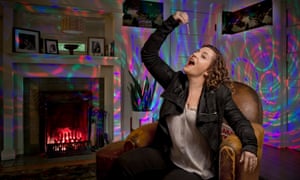
Here comes happiness: Ayelet Waldman at home.


Here comes happiness: Ayelet Waldman at home. Photograph: Barry J Holmes for the Observer

But the people whose accounts it gathered together spoke repeatedly of experiencing, thanks to LSD, increased focus and better mood. They reported rarely losing their tempers, and becoming more fun to be with. None, moreover, had suffered any side effects. To put it simply, they went to bed feeling they had enjoyed that most elusive of things: a really good day. As Waldman read on, she grew envious. How she needed to have one of those! Was this her glimmer of hope? She thought it might be.


‘Within a couple of doses the computer of my brain restarted’


Waldman contacted Fadiman, and received a memo entitled “To a Potential Self-Study Psychedelic Researcher”. The protocol was simple. In order to participate in his international self-study group on the effects of sub-perceptual doses of LSD, she should take a microdose of the drug every third day. The suggested dose was a minuscule 10 micrograms, one 10th or less of what a person would have to take in order to experience an altered state of consciousness (ie to trip).


Meanwhile, she should lead life as normal, pausing only to record her moods, productivity and physical symptoms. Did this sound – to be blunt – preposterous? It did. Waldman is a middle-aged mother of four who, in addition to writing novels, lectures on the criminal justice system (she is a Harvard-educated former lawyer). As someone who is law-abiding and swotty, nothing in the world irritates her more than hippies, slackers, free spirits. Even people who won’t stay on the right hand side of escalators drive her nuts. Ken Kesey she is not. But she was suffering. She had nothing to lose. Why shouldn’t she try it, just for a month?


Having found a supplier, then, she did indeed begin taking the drug, an experience she has now recorded in her own book A Really Good Day: How Microdosing Made a Mega Difference in My Mood, My Marriage, and My Life. Its publication is certain to cause controversy. In fact, the madness has already begun. When we speak via Skype, a month or so before it arrives in bookshops, she tells me that only a few days earlier an excitable reporter got in touch to inform her that his editor had given him permission to “drop acid with Ayelet Waldman”. (Her response to his question about when they might schedule this journalistic endeavour was: “Like, never.”)


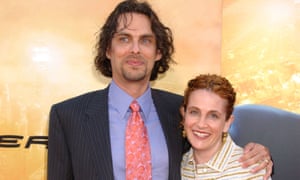
Loved up: Waldman and husband Michael Chabon.


Loved up: Waldman and husband Michael Chabon. Photograph: Albert L Ortega/WireImage

Attitudes to drugs in America are – irrespective of those states that have legalised cannabis – far from liberal. “Trump has appointed to the Department of Justice a war-on-drugs advocate [the Alabama senator, Jeff Sessions] who is so retrograde in his thinking, he believes the US suffers from an under-incarceration problem,” she says. It’s for this reason that she won’t reveal when her experiment ended: there is a three-year statute of limitations on drugs charges. “Do I think a white, middle-class lady will be high on his list of targets? No. But in this crazy new world we live in, you can’t be too careful.”


Its reception will also doubtless be muddied by the fact that she is its author. In America, Waldman is well known as an acclaimed writer in her own right and as the wife of the Pulitzer Prize-winning novelist Michael Chabon, to whom she has been married since 1993. When she writes about herself, moreover – and this is something she does a great deal in A Really Good Day – people have a tendency to respond with unnerving fury.


‘My husband encouraged me to embark on LSD experiment because he was desperate, too’


Most famously, this was the case in 2005, when the New York Times published her essay Motherlove, in which she declared that she loved her husband more than her children (“If a good mother is one who loves her child more than anyone else in the world, I am not a good mother. I am in fact a bad mother.”) In the days that followed, ABC’s daytime show The View hosted an unaccountably vitriolic debate about Waldman, her neighbours could be heard tearing her to shreds in Starbucks, and her inbox filled with emails from strangers threatening to report her to social services, the better that her children might be taken away.


Waldman is clever and funny and open-hearted. But as she readily admits, even her more sympathetic readers may sometimes have cause to wonder, in the case of A Really Good Day, which aspects of her behaviour – her compulsion to tell the world things that others might prefer to keep private among them – are simply the result of her personality, and which can be attributed to her illness. “It is hard to distinguish between them,” she says, almost wonderingly.


Still, she is probably better placed, now, to cope with any onslaught. Waldman is no longer using LSD – her experiment really did last for only a month – but its effects have, in some ways, been lasting. “I miss its anti-depressant quality, and I miss the way it made me focus. It was like Ritalin [a drug commonly prescribed in the US to children with ADHD] without the side effects, which is frankly incredible. But that month got me out of a dark place. Within the first couple of doses, it was like the computer of my brain had been restarted. I was still moody. I had some really good days, but there were also crappy days, and days when it was just the normal shit. Somehow, though, the bad days were not hellish days, and so I had the capacity to work on issues I just couldn’t before. Sure, I was hoping for joy. What I got instead was enough distance from the pain I was in to work on the things that were causing it.”


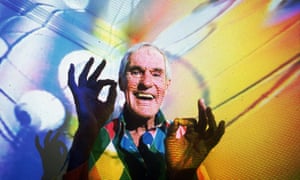
Expand your mind: 1960s LSD advocate Dr Timothy Leary, who advised us to ‘turn on, tune in, drop out’.


Expand your mind: 1960s LSD advocate Dr Timothy Leary, who advised us to ‘turn on, tune in, drop out’. Photograph: AP

That work continues. “I’m still not on an even keel. I’m still struggling with my moods. But I’m committed to that. I’m doing a new kind of therapy that is working quite well, even if not quite so well as it might be if I was still microdosing.” If someone sends her a mean tweet in the coming weeks, she is unlikely to respond as venomously as she might once have done, or even at all.


Given its benign effect on her, why didn’t she just find herself a new supplier, and continue taking it? There were, she says, two reasons. The first was her complete inability to purchase illegal drugs: towards the end of her book, she describes how, having made contact by text with a dealer, she panics, having convinced herself that “Lucy” is a police informant. The second was her determination to write a book about her experience: for that to be safe, she had to no longer be using.


“If I could have overcome those things, there is no doubt in my mind that I would have carried on. Of course, it might not have kept working; I’ve been on medication before that seemed to be working, and then wasn’t. But if it was to be made legal, I’d be the first in the queue, and I periodically remind myself that, if I get desperate again, I do have the option.”


Her book is well-researched and, in the matter of LSD itself, careful and no-nonsense. The drug, a variation on the ergotamine molecule (ergot is the fungus responsible for the disease known in the Middle Ages as St Anthony’s Fire) which was first synthesised in Basel in 1938 by Dr Albert Hofmann, has, she argues, an undeservedly bad reputation. The scare stories it trails – of young men and women whose LSD hallucinations lead them to jump off high buildings – have little basis in reality. Rather, they are largely the result of conservative America’s response to the 1960s counterculture, to Timothy Leary’s suggestion that people “turn on, tune in, drop out”. Twenty million people have used it in the US, and millions more around the world, with no ill effects at all.


It’s complicated, but when it comes to the drug’s possible use in the treatment of mental illness, what you need to know is that LSD stimulates the 5-HT2A serotonin receptor, which in turn leads to the stimulation both of brain-derived neurotrophic factor (BDNF), something a pharmacologist described to her as “like Miracle-Gro for the brain… It stimulates growth, connections, and activity”, and of glutamate, the neurotransmitter most responsible for brain functions, such as cognition, learning and memory. (Hence its supposed new-found popularity in Silicon Valley, though Waldman thinks that, in reality, there are more magazine articles about tech dudes using LSD than there are, well, tech dudes using LSD: “If there were some mass secret movement, it would have been a lot easier for to get hold of my drugs.”)


She believes that during her experiment her neuroplasticity was enhanced, and that this didn’t only enable her to work for hours at a time, to achieve a real sense of “flow” at her desk, but that it also made her happier and less impulsive. What little research has been done backs her up – a study at Imperial College London showed that even a single dose of LSD “produced robust psychological effects” – though scientists still don’t fully understand the relationship between what happens in the brain, and the psyche.


Why isn’t more research carried out? The simple truth is that LSD still carries with it a lot of leftover political baggage. During the writing of her book, the few researchers sanctioned by the FDA (Food & Drug Administration) who are out there were reluctant to allow Waldman to quote them, fearing that to associate themselves with a “personal experiment” would tarnish their hard-won credibility.


So far, so good. However, when her book is on more personal territory, as it frequently is, Waldman is vastly less cautious, and for the reader – especially, perhaps, the British reader – this can be, well, excruciating. “I know!” she says, when I tell her this. “Can you imagine what it would be like for me if I lived in London?” Chabon, a feminist with whom she shares the childcare, has the power of veto over everything she writes. But because he’s a writer, too, this seems not to be something he often invokes. In A Really Good Day, nothing is out of bounds, from their agonising couples therapy (“My husband’s eyes filled… I collapsed in his arms, crying so hard I soaked his shirt”), to their sex life (“‘I know you love me,’ I said, as we made love”), to their periodic use of MDMA, aka ecstasy, as a way of “opening up” their lines of connection. “What we did was talk,” she writes, of the first time they tried it, in a hotel room they’d booked specifically for the purpose. “For six hours, we talked about our feelings for each other, why we love each other, how we loved each other.”


Waldman reveals that her moods can be “triggered” by everything from her writerly insecurities, to the dog, to the sound of her husband eating nuts (she suffers from misophonia, or selective sound sensitivity syndrome): “I handed him a handful of almonds, and walked out of the kitchen… I heard a crunch, the smack of lips; I felt a wave of anger.” She is also fed up that her husband earns more than her, and that she has to share his writing studio, which has an uncomfortable couch: “Though he’s welcomed me in, I feel like a girlfriend who’s been given a drawer in the bachelor pad bathroom.” Poor Michael Chabon. The reader begins to feel he is some kind of saint.


“Well, he is somewhat saintly,” Waldman says. “He makes my friends crazy. He gives great gifts. He has impeccable taste in clothes and jewellery. He is a know-it-all, but then, he does sort of know everything. He’s misanthropic, in that we [the family] are all he has space for; he doesn’t have any close friends, which I think he would benefit from. I was about to say that he’s far better than I deserve, but that’s the pathology speaking, because I am a very good wife for him.”


Isn’t he ever mean to her? “Yeah, sure he is.” He encouraged her to embark on LSD experiment because he was desperate, too.


Before we hang up, I have to ask: does she ever worry her extraordinarily intense relationship with Chabon – on Twitter she has been known to post pictures of her husband, along with a line informing her 15,800 followers just how much she loves him – might be another symptom of her illness? For the first time in our conversation, she is hesitant. The gale of her voice drops to a light breeze.


“Yeah, I have thought about this. I have said to him: ‘If I were to get healthy, would I still love you, and would you still love me?’ There is a way that I’ve confused needing with loving. I don’t want to sound like a Hallmark card, but love is [supposed to be] unselfish, and in my most internal, whirling dark places, I think I need him so badly because he takes care of me, protects me, makes me feel safe. One of the things that saved our marriage in that [dark] period was when I brutally tried to disentangle those things.”


The upshot is that she thinks, now, perhaps it’s OK to need him. “After the LSD, when I was having this intense new therapy, I took a drive one night in northern California, where the countryside is very beautiful. I had this thought: maybe I don’t love him after all. It was terrifying, and I was crying. But then the phone rang, and it was him.” How did she feel then? “His voice filled me like a glass of water.”


‘People have been curious, even excited’: an extract from ‘A Really Good Day’


A fewdays ago, I began tentatively to tell people about this experiment. To my surprise, I encountered few negative reactions. Every once in a while a listener might arch an eyebrow or smile uncomfortably, as if trying to figure out whether her discomfort meant that she wasn’t hip enough, or whether I really was nuts. But those have been in the decided minority. Most people have been curious, even excited.


Those with histories of mood disorders were intrigued to hear that my spirits have lifted, that though I sometimes feel the familiar clutch of anxiety in my chest, I am generally able to use mindfulness techniques to make it dissolve. When I told them that I have not gained weight and that my libido has not withered away, they got really excited. The side effects of SSRIs are so ubiquitous and unpleasant that the idea of a medication protocol with fewer of them is thrilling.


Friends who incline to the spiritual were disappointed when they heard that I’ve experienced no connection to the divine, but reassured when I mention the pleasure I’ve taken in the natural world, the tree outside my window, the smell of the jasmine beside the city sidewalks. Risk takers and hedonists were disappointed that I was unable to provide details of hallucinations. No kaleidoscopic colours, they asked wistfully, no feeling that the floor was shifting beneath your feet? I live in California. The last thing I want to feel is the floor shifting beneath my feet. They urged me to try a ‘real’ dose. It would change my life, they said, as though my problem is that my life has been too devoid of weirdness. Besides, my life is changing.


Tonight, however, was a different story. These two writer friends are about 20 years older than my husband and me, which puts them firmly in the boomer generation. They were in their 20s in the 1960s. They’ve travelled the world, rejected a life of secure conformity in favour of the risks and rewards of art. What better people to confide in? I thought.


‘Well,’ I said, ‘I’ve been writing, but not working on a novel. I’ve been writing about microdosing with LSD.’


What does that mean, the woman of the pair asked? Are you writing some kind of nonfiction article on people who use LSD?


I took a breath and then explained.


Her face froze. If she had been wearing pearls, she would have clutched them. She looked horrified, even disgusted, as if I’d told her that I’d taken up murdering baby seals. Her husband’s reaction was only slightly less disturbing. He smiled uncomfortably and changed the subject. I immediately agreed, yes, the antipasto was delicious, and, no, I didn’t want any more.


Their reaction launched a series of cascading anxieties. Will I be condemned for doing this? Will people reject me as a nutcase, a crank, a deluded acid freak? Will I lose whatever credibility I have in the world? Will parents not let their children come over to our house any more, under the misapprehension that I keep drugs in my home?


As soon as dinner was over, I tried the technique for dissipating anxiety that my cognitive behavioural therapist recommends. I took a few deep breaths, exhaling for half again as long as I inhaled. My chest and throat unclenched. The anxiety ebbed. I was calm again. I was OK.


Also, I had some perspective. This couple were young in the 1960s, when Timothy Leary was spreading the gospel of psychedelic recklessness. For all I know, they had complicated histories with the drug that influenced how they responded to me. In all likelihood, their discomfort had far more to do with them than with me.


A Really Good Day: How Microdosing Made a Mega Difference in My Mood, My Marriage, and My Life by Ayelet Waldman is published by Corsair at £13.99. To order a copy, go to bookshop.theguardian.com


How dropping acid saved my life

5 Ocak 2017 Perşembe

A receptionist saved my life and other love letters to healthcare staff

It was the receptionist who took me seriously when I said I had a headache which turned out to be a brain haemorrhage


I’d gone to A&E in Derby, where I was staying for Christmas, with the most dreadful headache. I’d been a radiographer at St Thomas’ hospital in London for 18 years and knew something wasn’t right. It was the day after Boxing Day and there had been heavy snow so it was busy with people who had fallen over.


I was at the reception desk and I’d already been told how busy it was and asked whether it could wait until after the weekend. The receptionist who eventually booked me in reiterated how busy it was but I pleaded with her and told her I knew something wasn’t right – I didn’t get headaches. She could tell how unwell I was and booked me in.


She kept an eye on me in the waiting room and could see how much pain I was in. She kept checking where I was in the queue and made sure I was ok. She told the nurse in charge that I needed to be seen ASAP.


What none of us knew at that point was that I was having a brain haemorrhage. If she hadn’t believed me I’d probably have gone back home and would not be here today.


I never got the chance to tell her that she was perfect at her job, that she showed me care that I will never forget.


Even when I then saw the triage nurse, he made me feel like I was wasting his time and I’d got a cold and a headache. When I was waiting in the minors area she checked on me to see if I was ok. I waited another hour to see a doctor who referred me for a CT scan which showed a haemorrhage due to a ruptured cerebral aneurysm. I went for surgery at 1pm the next day.


I’ve worked in the NHS and I know how rare it is for patients to say thank you. It doesn’t matter if you’re a doctor or a receptionist, a gesture, care and compassion means an awful lot. Although I was saved by a neurosurgeon, Hillary on reception was the only one to believe me. I’ve never forgotten what she did for me.


Jane Gooch, London


A midwife picked up that my newborn baby had had a stroke after the GP had dismissed me


My newborn baby was due for a routine post-partum check. He had been twitching suspiciously, and we had been to the GP, who had dismissed us. We were so concerned about our son’s random movements and subsequent deep sleep that we took a short film of his movements. When I showed this to the midwife asking for her advice, she looked very alarmed and asked to take the film to be checked by a doctor. She came back within minutes and took us to the neonatal intensive care ward, where my son was admitted and medicated.


It was soon discovered that he had had a stroke during birth, causing the epilepsy-like twitching. The diagnosis was very difficult to come to terms with, but now, a few years on, he appears to have fully recovered, consistently scoring above average on all the many cognitive and motor checks he has undergone. He is a sunny and happy child, without a hint of his difficult start.


We will forever remember that midwife’s quick action and astuteness during those first days of his life. Had she dismissed us as the GP did, his fits would have continued and might have caused more brain damage. Her intervention and quick action allowed him to be diagnosed and medicated early on, giving him the gift of a full life, and us the immense relief of having a healthy and happy child.


Anonymous, south-east England


The care one nurse gave me and the kindness in her heart made every difference to my hospital stay


I live with a rare heart disease and have had several operations, including open heart surgery, aged nine; I now rely on a pacemaker.


I’ve spent a lot of time in and out of hospital over the years and have been treated by many medical professionals – some I have known since birth and others I have met once and never seen again. In June 2016, a mature first year nursing student looked after me and she is someone I will never forget.


She was calm and collected and so attentive to everything she was learning. She asked questions about who I was, removing the patient element and getting to know me, as a person. No matter what she was doing, she always had time. I know she had children of her own, and when she was looking after me, I feel she treated me as one of her own.


At the end of her shift, she always came to say goodbye. We shared giggles and at times I shared the sweets I had been gifted with her. Haribo hearts and cola bottles were her favourite. When in pain, she was the first by my bedside, to hold my hand and stayed until I felt better.


The afternoon I was discharged, she overheard me crying in my bed. My family weren’t there and she came in to see me. While I explained that I was happy to be going, she understood my frustration that I still had no answers. I had been in for a week and no test or procedure had revealed what was wrong with me. She drew the curtain around my bed and while I sat and cried, she cradled me in her arms.


The care she gave me and the kindness in her heart made every difference to my stay. She has two more years to go but I know that she will make the most amazing nurse.


Hannah Phillips, London


I never got the chance to thank the surgeon for saving my life. The event led to me becoming a doctor


When I was 15, I was hit by shrapnel on an army cadet training exercise. I was taken to hospital and had emergency surgery.


I never got the chance to properly thank the surgeon or his team for saving my life. I don’t remember the surgery but I do remember how kind he was in the follow-up appointments and how he laughed and joked with me. He also kept my mum from falling to pieces during the first few days after my accident.


The whole event led to many changes in my life including a career change; from wanting to join the army I decided instead to pursue a career in healthcare. It took me a while longer but I qualified as a doctor in 2008 and have subsequently developed an interest in major trauma surgery.


Alex Bell, Sheffield


I don’t know what I would have done without one nurse. Her hand in mine rescued me


I was living in the US when I sadly had a string of miscarriages. On one occasion one became complicated and I was rushed to the hospital with haemorrhaging. I had an emergency procedure in a cubicle in the emergency room – fast, with no anaesthetic.


There was a nurse who took care of me from the moment I arrived. I was hers, she told me, when she disagreed with a young medical student’s view that I could walk to the bathroom alone. She was going to keep me safe.


The procedure I underwent was quick and successful, but painful and I was terrified by the amount of blood and by the looks on the doctors’ faces. This nurse held my hand the whole way through. I don’t know what I would have done without her. I clung to her. Her hand in mine rescued me.


I never got the chance to tell her that she was perfect at her job, that she showed me care that I will never forget and that her tender kindness helped me heal.


Louise Harland, London


I’m able to deal with my mental health problems thanks to the doctor who encouraged me to get the help I needed


I was visiting my local clinic on a routine appointment to get a contraceptive device removed from my arm, when the doctor told me that she wouldn’t be able to put a new one in unless I lost some weight. I burst into tears and she immediately started comforting me as she thought I was upset about the weight comment. I told her that wasn’t it and so she asked me what was really wrong.


I poured my heart out about everything that had gone wrong for me in the last year or so: my mum dying, the crushing anxiety I was experiencing, my OCD and depression, the massive argument I’d had with my father which meant I hadn’t spoken to him for six months and so much more. She listened to me and then she cried too.


I remember thinking that if I could make a doctor cry with my story, somebody who must see and hear all kinds of things every day, then perhaps this was really bad. After I had recovered myself, she told me that I had been through a lot and that I needed to talk to someone.


Because of her I finally understood that what was happening to me was serious and that I needed help. I felt that I was authorised to go to my doctor and ask for help – she gave me the confidence to do that. I got the help I really needed – therapy and guidance – that enabled me to get my life back on track. I trained to become a teacher not long after and I now live in Beijing and work as a university lecturer there. I still have depression and the rest – I always will, but I’m able to deal with it now thanks to the help she encouraged me to get.


Lorna, Beijing


I’m so grateful to all the healthcare professionals who saved my boyfriend’s life when he tried to kill himself


Years before I would meet met him, my boyfriend tried to kill himself. I owe my most heartfelt thanks to the 999 operative who took his call, the paramedics who arrived, the nurses and doctors who treated him after he’d lost an immense amount of blood, and the team on the psychiatric ward he was then referred to.


I don’t know who they are, or how I would ever start to find the people I owe so much to. But to me, that’s the exact point. Thousands of healthcare professionals across the country work every day to support people who are going through the same struggle, and many other just as important struggles. Without these professionals, my boyfriend’s life would be just a memory.


I would like those who deal with people who may seem to have given up on themselves, to know that by not giving up on them, they make a difference beyond comprehension. Their effort and hard work during years of training, is appreciated and valued by my boyfriend and everyone who loves him. Without the dedication of those professionals, his life would have been so quickly and devastatingly thrown away.


Anonymous


  • In the UK, the Samaritans can be contacted on 116 123. In the US, the National Suicide Prevention Hotline is 1-800-273-8255. In Australia, the crisis support service Lifeline is on 13 11 14. Hotlines in other countries can be found here.

If you would like to contribute to our Blood, sweat and tears series which is about memorable moments in a healthcare career, please read our guidelines and get in touch by emailing sarah.johnson@theguardian.com.


Join the Healthcare Professionals Network to read more about issues like this. And follow us on Twitter (@GdnHealthcare) to keep up with the latest healthcare news and views.


A receptionist saved my life and other love letters to healthcare staff

26 Temmuz 2016 Salı

Jeremy Hunt has saved his own skin but let the NHS sink | Polly Toynbee

How did Jeremy Hunt keep his job? On reshuffle day the BBC reported he was gone, but after an exceptionally long session inside No 10 he saved his skin, emerging with that grin and a tweet saying he was “thrilled”. Junior doctors were less than thrilled, since Hunt’s survival signals no turning back on the dispute he has caused. Full speed ahead to impose a contract, threatening yet more strife.


Related: Jeremy Hunt narrowly survived the cabinet reshuffle – so what now? | Denis Campbell


But here’s the great question: did Hunt tell Theresa May the truth about the NHS? That was the time to warn the new prime minister of just how critical the financial crunch is, building into imminent crisis. He needed to report to her what all the leading health economists say, what Whitehall’s most senior civil servants say and what NHS managers are warning: nine out 10 trusts have deficits from which they can’t escape, with missed cancer waiting times up 56% and no chance of restoring the four-hour A&E waiting time limit. The Department of Health to all intents and purposes busted its budget last year, an extraordinary event only redeemed through one-off wheezes that can’t be repeated.


Simon Stevens, head of NHS England, warns that capital funds needed for “overcrowded and clapped-out buildings in need of a makeover if not a bulldozer” are being diverted to fire-fight day-to-day treatment. His £1.8bn transformation and sustainability money – supposed to be invested in joining up NHS and social care and creating larger conglomerations of care – is being burned up on basic services. That £10bn promised at the general election? Nigel Edwards of the Nuffield Trust says much was Treasury sleight of hand, stolen from other parts of the NHS, and less than half was new money.


The NHS is on life support, but we can still save it

Did Hunt tell her? He has never confronted NHS underfunding, preferring to apply his own screws by naming and shaming inadequate care. By talking up the scandal in Mid Staffs he encouraged the Care Quality Commission to set higher nursing and doctor numbers per ward, but that added to the financial pressure he never mentions. He never took up the cudgels over public health and social care cuts in local councils needlessly filling up hospital beds with the frail.


The word is he instead beamed from ear to ear and told May the NHS was safe in his hands, he could fix it, knock sense into the moaners and shroud wavers, just leave it to him. If he failed to warn her that the Treasury must find big sums very soon, she may not thank him for pretending there are magic solutions.


Nearing its 70th birthday, the NHS has the lowest funding increase ever, with worse to come in the next two years. And Brexit voters will be expecting that fantastical £350m a week NHS windfall.


To prove to the Treasury that NHS heads are “getting a grip”, all trusts have been sent a threatening “reset” letter where fines will be imposed on those in debt – a curious perversity. Of the many in deficit, a handful were chosen for “special measures” to frighten the rest. The letter warns that trusts will also lose 30% of promised funds if they fail A&E, cancer and operation waiting times, with a cap on hiring staff or temps. Cut debts and improve quality – or else.


Related: NHS bosses launch ‘reset’ plan to tackle £2.45bn deficit


Or else what? All the trusts I’ve spoken to regard this threat as showboating for the Treasury, a bit of play-acting, because nobody – including the NHS England and NHS Improvement heads – can think the deficits will be wrung out, or the old waiting targets resumed. Savings are being made by sharing HR and back offices, buying equipment in bulk and shutting down Andrew Lansley’s wasteful plethora of CCGs, commissioners still wasting money on competitive tendering.


But the big cost is people – and more staff are urgently needed. Failing to train enough, still scouring the globe for nurses and doctors, after Brexit the fear is that many here already may depart. Stevens publicly begs for “early reassurance to international NHS employees about their continued welcome in this country”, but May still refuses.


Take one finance director of a major teaching hospital, anonymous because everyone feels intimidated by this “reset” letter. “NHS funding is back to the year 2000 as a share of GDP, so I say to my consultants, think back to how it was then. What do we do now we didn’t do then?” They say back then, before Labour’s investment, “we had 18-month waits, many fewer nurses and doctors, lower pay, winter crises, no Nice and CQC minimum standards”.


Consider what is expected now on the same funding share, such as state-of-the-art drugs costing up to £100,000 a year per patient. There used to be leeway for cutting corners, but in all hospitals the chief executive must report to the board every month that the correct number of nurses and doctors have staffed every shift. This finance director challenges the government, “Come clean, be honest. You tell us what we should ration.”


The National Health Service explained

So how does the NHS burst at the seams? Chorley hospital in Lancashire abruptly shut its emergency department – downgrading it to urgent care for safety – because it could only fill five of its 14 middle-grade doctor posts. The only applicants were unregistered or struck-off doctors. This was not done to save money: ambulances cost as much to ferry serious cases to Preston hospital, which is already under pressure. What’s more, Chorley’s walk-in patients numbers are still rising fast due to 18 local GP vacancies.


Dewsbury hospital in Yorkshire has just done likewise, with many others in similar staffing straits. But those near to downgrading unsafe emergency units fear suffering Chorley’s fate, where managers are under savage personal attack. The public and local MPs accuse them of a closure plot, when government failure to fund the NHS or train enough clinicians should take the flak.


“Reset” will be nothing of the kind and NHS England knows it, despite rattling sabres at trusts and intimidating managers. Most trusts have signed up to “control totals” pledging deficit reductions they know for certain they can never achieve. There is safety in numbers: they know they are a high-calibre cadre doing an impossible job: they can’t all be put into “special measures”, with no army of ultra super-managers to replace them. They will go on trying to do the impossible. What they all say is the public must be presented with the resoundingly obvious truth: pay more or get less from the NHS, that is the choice.


Jeremy Hunt has saved his own skin but let the NHS sink | Polly Toynbee

10 Temmuz 2014 Perşembe

Mom meets guy her son"s heart donation saved six many years earlier

Mrs Carter mentioned: “Scott was studying a tribute and when I sat down and turned the webpage on the purchase of services and noticed his identify there a strange feeling came above me.


“I knew he was the recipient of John’s heart.”


Mr Carter’s loved ones, such as Mrs Carter, her husband John, their son’s widow, Andrea, 37, and his sister, Julie, 43, have been only ever informed the first name of the recipent of their son’s organs soon after they agreed to donate his kidneys, liver and heart.


Mrs Carter additional: “I think it must have been maternal instinct. I was crying and every person started out to stare in excess of at us.


“I have constantly stated given that John passed away that my dying want, the a single issue I wanted to do in existence was to meet the boy who received his heart and to feel our John’s beat again.


“It was a total miracle that he was standing in front of us. His heart could have gone anyplace in the Uk.”


In the course of the ceremony Mr Rutherford sang ‘I dreamed a dream’ prior to he then went on to talk about getting a heart transplant.


The pair met shortly following the ceremony.


Mr Carter, 70, mentioned: “We are over the moon for Scott, John lives on through him. He is not dead really.”


Mr Rutherford, an actor from North Shields, was born with a problem that impacted his arteries which meant they did not function properly. When he acquired the transplant he had been offered just hrs to adore.


He mentioned: “When I was increasing up, I had barely any lifestyle. I was miserable and when my heart problems acquired worse I just wished to die.


“I am unbelievably thankful to John and his family members for everything that they have done for me.


“The difference in my well being is wonderful, I can’t even commence to describe it. My heartbeat is so powerful that it keeps me awake at night – I am a fully diverse person.”


Donor households and recipients are usually recommended to have minimal contact, usually by letter.


Lynn Holt, heart and lung transplant coordinator at the Newcastle Freeman hospital explained: “These conditions are extremely unusual. I can think of a few events when I was involved with the organ donor’s family members meeting their recipient.


“However this is usually done through an arranged go to or by letter which is our business process, and it often has to be instigated by the recipient.


“This situation is a one particular off predicament because it was totally coincidental as Scott was a guest speaker at a services the place John’s loved ones were attending.


“It is an incredible consequence and I know that Scott was so happy that he got to meet the loved ones, even if it was this kind of an uncommon situation. He was above the moon and at some point received round to send them a thank you letter, some thing which he has desired to do for years.”


Mom meets guy her son"s heart donation saved six many years earlier