changed etiketine sahip kayıtlar gösteriliyor. Tüm kayıtları göster

16 Mayıs 2017 Salı

Omid has an incurable condition and wants to die – it’s time the law changed | Saimo Chahal

Omid, a 54-year-old man who lives and works in London, was diagnosed with multiple system atrophy in 2014, a condition that cannot be cured and affects the nervous system. He has a wife and children but rarely sees them in order to spare them the agony. He attempted suicide in 2015 and was then moved to a nursing home. Even with care and family support, Omid wants to die to relieve his suffering. The alternative is to seek assistance to die abroad, but this will cost £10,000-£14,000, and he can’t afford this.


Omid wants to change the assisted dying law in England and Wales – a courageous and selfless act considering his condition. He wants to help others and to leave a legacy. The current law, although it does not criminalise suicide, forbids helping or encouraging suicide.


Omid argues that the law violates his right to private life, in breach of the Human Rights Act. The law does not allow him, and other competent and informed people in his situation, to choose how and when to die. He wants the high court to declare the law incompatible with the concept of human rights.


Rather than being terminally ill Omid has several years to live in this unbearable condition. Previous, failed attempts to change the assisted dying law, by Lord Falconer and Rob Marris, restricted assisted dying to terminally ill people with six months to live. This is a crucial difference with the current, ongoing Noel Conway case. Omid is asking for a change of the law for those with incurable conditions who may have many years of misery and pain ahead. The passing of an assisted dying law for terminally ill people would not have helped him.


The most recent right-to-die case in the UK involved Tony Nicklinson and Paul Lamb in 2014. A majority of judges (5-4) in the supreme court said that, although the court could make a declaration that the law on assisted dying was incompatible with the concept of human rights, they would allow parliament the opportunity to debate the issue first.


Parliament has recently considered the law on two occasions: in 2013, Lord Falconer’s bill proposed that terminally ill, competent adults should be allowed to request and receive assistance in dying after approval by two doctors. The bill did not have enough time for a full review in parliament, but in any case, would have been too narrow to help Omid who has an incurable, yet non-terminal condition.


Rob Marris’s bill was hastily defeated by the House of Commons on 11 September 2015 by 330 to 118 votes. Many found the debate unimpressive, raising questions as to whether parliament is the right forum for such legally complex and morally charged questions.


The main arguments against Omid’s case are that it will lead to a “slippery slope” (for instance, assisted dying leading to the legalisation of euthanasia) and that it will make weak and vulnerable people susceptible to harm. But there is no evidence from other countries that problems of this sort have occurred. It would not be difficult to devise a system that makes sure that the system is not abused – for example by having two independent doctors certify that the decision is freely made and without pressure from relatives.


The courts have tried to duck out of the responsibility once for not making the decision – they cannot afford to do it again if society is to have confidence in the legal system. The pain and misery this is causing is unbearable for people like Omid. They require and deserve the protection of the courts. The time has come for a change in the law.


To find out more about Omid’s case, click here


Omid has an incurable condition and wants to die – it’s time the law changed | Saimo Chahal

12 Mayıs 2017 Cuma

A moment that changed me: realising, aged 16, that I couldn’t handle alcohol | Lou Sanders

I was 16, on holiday in Alicante on my own – my Aunty Sue was due to join me the next day. So in preparation for her arrival, I drank almost a litre of vodka, hit the town and passed out. A Spanish stranger called an ambulance and the local hospital kindly pumped my stomach. “Olé! Olé!” as they say (translation: Oi! Oi!).


I was in a foreign place, didn’t speak the language, and had no idea where my hostel was. I thought I was streetwise but I was a street idiot. Like many people my age, I was a turbulent sea of emotions: a mix of hormones, some unprocessed family happenings, and a classic case of a broken heart. Because of this emotional maelstrom, the male nurse thought he could drop me back to my hostel via his place and have sex with me, since I was too low on self-esteem, and way too out of it, to put up any sort of counter-argument. Turns out he was right. Muchas gracias, maaate!


I’d like to say that this was the moment that changed me, but I still needed another 117 occasions just as murky to decide that maybe drinking wasn’t for me and that, rather than saving me from my problems, it might have actually been causing quite a few of them, or certainly giving them some fertile ground in which to blossom.


A year later, when I was 17, I was working as a bartender in one of the roughest pubs in Margate. To give you some idea, a lot of the clientele had the latest jewellery in electronic tags, and some of the customers were working as local concubines. It was run by a couple called Pam and Bob and they, as you can imagine, had seen all sorts.


The establishment let you accept drinks as tips while you worked. Big mistake, Pam and Bob, big mistake. I’d had some super-strength lager on the bus over, so the double whiskies really topped off the trouble. By 10pm, I had burnt the arm of my jumper, I had one foot stuck in the bounteous fag bin, and I had smashed a whole dishwasher tray full of drinks into a wall. I was not winning any bar-staff awards that night and, of course, got asked to leave. Later on I found out that I was so drunk my bosses thought that I couldn’t have just been intoxicated – I must have been on drugs. I was not on drugs – well, not that night anyhow.


Around this time, I was also arrested for drink-driving. I was driving at 5mph, so as not to arouse suspicion. Then when I realised the police were tailing me, I thought I could trick them by indicating left, and, you guessed it, turned right. They saw through my plan and pulled me over, but drunk me had another scheme; I downed a bottle of lemon grass aromatherapy oil and told them I was “in a rush, so must be getting on”. Needless to say I was prosecuted, and quite right too.


I have lost count of the incidents through the years and the number of times I gave up drinking. But I did get better at controlling it. When I was younger I used to wet myself and pass out, and I’d often come to with a “friend” who had decided that he would try to remove my clothes and insert his penis in me. It’s a shame judges sometimes blame the women in these scenarios, because if a woman was passed out drunk and someone started punching her in the head (another physical violation) would they say – “to be fair she was drunk, so she was asking for it”? She was only asking for “it”, if “it” is a fully clothed snooze, thank you. Or indeed a nudey-snooze if she so fancies.


Anyway, I cleaned up my side of the street and bit by bit became stronger and started working on the trauma and shame. I do believe that if you are lucky and meet the right people, some horrific situations can be an opportunity to grow stronger, and every single person has a spectrum of events happen to them, which don’t have to define them. I’ve forgiven all the people who used me and abused me when I was drunk because, really, they were just as unconscious as me – just in a different way.


There was no knowing when the beast would be unleashed. But, at some point, the beast was always unleashed


I thank them for all the lessons they brought with them – through their “teachings”, as they all helped me to reach that well-documented rock-bottom, so that all I could do was build upwards. And year on year, slowly but surely, I built a rock-solid foundation. I’ve also forgiven myself for everything in the past (I think), and I hope that all the people who I’ve inflicted my pain on have forgiven me too.


Giving up drinking was a slow and gradual thing. In my late 20s, I drank a fair bit, and was for the most part a big, fun drunk without incident. But there was no knowing when the beast would be unleashed. And, at some point, the beast was always unleashed. I had so much shame and guilt that I drank to forget it. Which is a bit like saying you crave exercise so much that you cut off your legs.


Now, finally, I love not drinking. I love the clarity and simplicity of it, but it’s taken a long time to get here, via many, many mistakes. I used to think I was missing out, so inevitably I would always, slowly, creep back to the wine. Then, through a combination of being in the right place at the right time, meeting the right people and finally being ready – I gave up for good. I also read a great book called The Easy Way to Stop Drinking, by Allen Carr (not that one). It somehow made me realise that I wasn’t missing out; in fact, I would only be missing out if I started drinking again.


The word sober sounds so serious. I still love dancing till 2am and talking shit. I still love all the enjoyable things I did drunk, but there’s choice and power in my decisions now. And I’ve also given up drinking lemongrass aromatherapy oil; that was the big one for me.


For information on all of Lou’s upcoming projects please visit lousanders.com


A moment that changed me: realising, aged 16, that I couldn’t handle alcohol | Lou Sanders

28 Nisan 2017 Cuma

A moment that changed me: the loss of my brother to alcohol-related illness | Eve Ainsworth

This year it will be 17 years since my brother died, aged 40. I have so many regrets – regret not only for Kev, who was finally killed by the addiction that overtook him, but regret that I didn’t try to understand him more when he was alive. It is only now that I have begun to appreciate the pain and entrapment inflicted by alcohol addiction and how the man I thought I knew became swamped by this misunderstood and deadly condition. My brother deserved so much more. For so long, I questioned why drink always won, without realising that for him it was never a question of winning or losing. It was just about surviving each day.


One of my earliest memories of Kev was when I was sitting miserable and uncomfortable with chicken pox. I was around five years old and stank of calamine lotion – my entire skin was cracked pink with it. I hated missing school and was bored silly at home. Then my older brother walked into the house, carrying a bag of books. My day suddenly lit up. In my early life, Kev’s long hours as a nurse meant he didn’t often visit, but when he did he brought a different energy to the house, and a kindness.


He was the one who’d take me out for surprise shopping trips, or for weekends away at his house where he and his wife would take me to amazing firework displays and other outings. Kev always seemed full of life – talking, laughing and coming up with ideas. He loved reading and talked about books. He made me appreciate the wonder of words. I didn’t know then that he was working long hours, that he was struggling, and drinking to cope. I just saw the mask he painted on. The happy Kev, rather than the cracks. But of course all cracks deepen in time and the mask begins to slip.


His marriage fell apart and soon his drinking meant Kev was signed off from a job he loved and excelled at. He was forced to move back to our house. That’s when I saw the true problem. I was 10 years old, and I had an older brother who now spent most of his days sitting in his bedroom. His appearance had changed. His face was more red, speech slurred, eyes swollen. We still talked though. He gave me his old computer to type on and encouraged me to write.


Kev didn’t think it was silly that I wanted to be a writer: he actively encouraged me. He talked about the importance of plot structure and leaving the reader wanting more. It was just sad that he didn’t read himself any more. He still listened to music though: to David Bowie, Leonard Cohen and the Clash. He taught me to listen to the words and hear the real meaning. He told me to sound words out loud and hear how they worked. Above all, he told me not to give up on my dreams. He always looked sad when he said that, like he’d already given up on his.


Eve Ainsworth


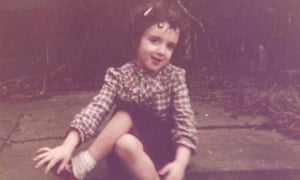
Eve Ainsworth aged 4, around 1982. Photograph: Eve Ainsworth

But as a teenager things changed. I’d changed. I’d become ashamed of him. He’d become bloated and sick and would often do or say things to embarrass or shock people. I’d look at his closed door and imagine a monster behind it, consumed by alcohol, no longer recognisable. I didn’t want to be in his company any more. He frustrated me, and I couldn’t understand why he had chosen this existence. Finally, he moved to a house of his own and I suppose I was relieved. At least now his drinking was contained somewhere else. I could kid myself he was OK really. But he wasn’t. The reality was that he was just getting sicker and sicker.


When I became ill myself, hospitalised with quinsy, I begged my brother not to visit. I didn’t want people to see how bad he was. When I came home, he phoned me. “I’m glad you’re better,” he said. “That should be me in hospital. Not you.”


He collapsed a week later; his liver had finally failed him. I was at work when they made the decision to turn off his life support. I tried to go and see him, but I couldn’t get there in time. Guilt raged through me. I’m not religious but I found myself in a small church, lighting a candle. Praying for forgiveness. Ashamed.


The guilt affected me for a long time afterwards. I resigned from my job. I spent most nights out drinking with friends. I felt like I was lost. One night I drank too much and found myself vomiting in a toilet wondering if this had been what his life was like. I woke up feeling wretched and ill and knew I could never drink to excess again. Even now I struggle being around people who are excessively drunk.


I wish we could have helped Kev. I wish we could have saved him. But we couldn’t


It took me a long time to get over his death and in many ways perhaps I never will. But it changed me because I knew I never wanted to feel like that again. I tried to remember Kev for the man he was, not what the drink made him. And I carried on writing, because I knew then that life was short and cruel, and I had to try and achieve my goals in the time I had. When my first book was published I remembered my brother’s early encouragement and belief in me, and knew how happy he would be.


Now I’m almost at the age my brother was when he died – and that seems wrong somehow. It makes me realise how young he was and how much life he had yet to live. He had so much talent, wisdom and kindness. I wish we could have helped him. I wish we could have saved him. But we couldn’t. And I’ll never stop regretting that. But regrets are wasted. So instead, I just have to be thankful for what he gave us instead.


A few days after he died I had a vivid dream in which my brother appeared in a beautiful, peaceful setting. In the background Bowie’s lyrics played on a loop, like a soothing lullaby – “I’m happy, hope you’re happy too.”


I am happy, Kev. And I’d like to think in some way you are too.


Comments on this story will be premoderated


A moment that changed me: the loss of my brother to alcohol-related illness | Eve Ainsworth

21 Nisan 2017 Cuma

A moment that changed me: when the doctor told me I was psychotic | Anonymous

I was sitting in my living room along with a social worker, mental health nurse and my baffled parents the day the doctor told me I was “psychotic”. It felt like a dream. Just a week before, suffering from anxiety and depression, I had taken leave from the training course I was on. A week of shuffling around the house followed.


Like many people, I was determined to “escape” my unhappiness in any way possible, but thankfully lacked the conviction to do anything about it. Soon I became convinced I had committed some sort of sin that I could never articulate: TV programmes and songs fed a narrative in my mind which was impossible to write down now – it simply made no sense. It involved God, the devil, my boss and the professionals around me, all of whom were part of some major conspiracy reminiscent of The Truman Show. These delusions were common signs of psychosis, a condition that can stem from deep depression.


During my own episode of psychosis I was, in medical terms, detached from reality. But that simple message was not what I heard in the stigma-ridden word, psychotic. It conjured up something very different, and very upsetting: serial killers and fictitious villains. Unsurprisingly, this added more weight to my own delusional and self-loathing narrative.


This was a life-changing moment for me. I didn’t realise it then, but I was experiencing for the first time the true impact of misused words. According to the NHS, somebody who is psychotic will “perceive things differently to those around them; this might involve hallucinations and delusions”. But the word with which “psychotic” is so regularly interchanged is “psychopathic”, defined as a “chronic mental disorder with abnormal or violent social behaviour”.


The two are not linked, and they are certainly not the same. Yet a glance through any film review section, in any newspaper or magazine, will probably suggest something different. As the mental health charity Mind states on its website, “lots of people wrongly think that the word ‘psychotic’ means ‘dangerous’”. As I sat in my living room, being told I was psychotic, I interchanged the word with “dangerous” and felt myself spiral deeper into a delusion of guilt. “So I have done something wrong … maybe I am an evil person,” I thought.


I spent 10 days in a psychiatric hospital, silent and shy. Every patient was a character in my “story”, as were the nurses. I said very little and did even less, but my mind was racing. Like many psychotic patients, I was convinced the nurses were out to get me, and that I was being punished for something. My fantasies of having committed a great sin escalated as I was taunted by one patient who believed she was the devil, and offered salvation by another who sang religious songs and walked around the ward with arms outstretched. We were all orbiting “reality” in our own ways.


Like many people who experience any kind of deep depression I lacked hope, but my warped state of mind took that further


It wasn’t until I had taken the right drugs and rebalanced various chemicals in my brain that I began to listen to the professionals who were there to help me. I read up on psychosis and had several sessions with a community mental health nurse. Listening to my reflections on the negative associations of the word “psychotic”, he explained how common my feelings were in his clients. “That’s the media for you,” he said, brimming with frustration.


He’s right. Examples of journalists’ misuse of the word “psychotic” are everywhere. Trainspotting’s Begbie is described as “psychotic” in practically every review I have read; ranging from the Guardian to the Sun (the latter also describes Begbie as “psychopathic”, using the terms interchangeably). On the Huffington Post, you can find a countdown of The Most Psychotic Movie Villains of All Time, featuring everyone from Freddy Krueger to Norman Bates. A website called allthetests.com, billing itself as “an exciting exploration into your personality and IQ”, allows you to partake in a light-hearted quiz entitled Are You a Psychotic Killer?, claiming it will help you decide “whether or not you should be locked away forever to keep you from killing everyone!” Even if, after all this, you look for a definition of the word in the online dictionary Merriam-Webster, the context given is as follows: “the identity of the psychotic murderer known as the Zodiac Killer remains an intriguing puzzle”.


Meanwhile, Dictionary.com unhelpfully lists “psychopath” as a synonym. I have no doubt that I would have spiralled less, and experienced fewer delusions about my own morality and guilt, were it not for the way mental health terminology is misused.


My life has changed a lot since that day. I’ve returned to work and count myself lucky to be among those who love their job. Yet my life today seemed impossibly out of reach two years ago. Like many people who experience any kind of deep depression I lacked hope, but my warped state of mind took that further. Interpreting my psychotic thoughts with hindsight, I was convinced my future would consist of prison, some sort of pact with the devil and a showdown with lots of malevolent nurses.


Unless I’m in for a big surprise, none of this has or will turn out to be a reality. My mind played tricks on me; the truth was that I was going through an episode, and episodes pass. The life and happiness that felt so out of reach was, in reality, waiting for me just the other side of a hospital spell.


I am fortunate to have been free of psychotic episodes since 2014. But for many people these episodes come and go frequently. The misuse of the word is everywhere, and the associations it carries as a result will only help to escalate people’s symptoms. So please remember: psychotic does not mean psychopathic, violent or dangerous: it is about perceiving things differently to everyone else around you. With the help of the media, and the general public, we could all have a positive change in perception.


Read about psychosis on the Mind website. The NHS explains many aspects on this page


Comments on this article will be premoderated


A moment that changed me: when the doctor told me I was psychotic | Anonymous

7 Nisan 2017 Cuma

A moment that changed me: I was diagnosed with autism at 45 | Laura James

On a hot late-July day two years ago I made my way out of the consulting rooms of the Anchor Psychiatry Group and paused on the pavement wondering what on earth to do next. I was 45 and had just been diagnosed with autism.


I went to the appointment alone. It hadn’t occurred to me to take my husband or a friend with me. I stood motionless, while others ambled past in groups, off to the pub for a Friday night drink. That moment seemed to encapsulate my whole life.


The diagnosis was both a shock and not a shock. Ever since I could remember I had been longing to find out why I behaved the way I did and why I was so unlike my peers. I find it difficult to recognise and name my emotions, but those I experienced that day seemed different to any I had felt before. Good feelings to me are pink. Bad ones are green. These were made up of all the colours of the rainbow. Not mixing together to make a sludge-brown, but rather like the flashes of colour you see when the washing machine spins a mixed load.


A few months before, I had been diagnosed with a genetic condition called Ehlers-Danlos syndrome. It’s a connective tissue disorder that causes digestive issues, easy bruising, limbs to dislocate easily and many other unpleasant symptoms. It seems many of those with EDS are also autistic. My autism diagnosis was the final piece of the puzzle for me. Having waited more than 40 years, in the space of a few short months I learned why both my body and my mind operate differently to those of most others.


With the sun warming my back, I walked slowly to my car, stopping every few moments to process the news. I thought of how in The Sixth Sense Bruce Willis’s character, Dr Malcolm Crowe, replays scenes from the past and it becomes clear to him that he is in fact dead. In my mind, I played episodes from my childhood, my teens and my later life as a mother of four, aware for the first time how my autism explained so much.


They flashed into my consciousness as individual moments. Standing away from the group of girls giggling in the playground. Sitting in tears in an exam room, unable even to write my name on the paper. Walking past bars watching a group of women on a night out and wondering what it felt like. Staring at a plate of food, knowing that because the burger bun was wet from mayonnaise, I could no more eat it than I could run a marathon. Sitting in an office being so distracted by the buzzing of an overhead strip light that I didn’t notice the phone ringing on my desk. Spending an entire Saturday researching a special interest only to realise it was 7pm and I was still in my pyjamas and hadn’t eaten. With each scene came a feeling of context and understanding.


The diagnosis came as a vindication. All my life I had tried so hard to be neurotypical, but in that one moment it became utterly clear that it was never going to happen. I was never going to fit that mould. I had stepped out of the psychiatrist’s consulting room into a new reality. The colours around me seemed brighter, the noises sharper. Finally I had the answer I had been searching for all my life.


Odd Girl Out by Laura James, £16.99, published by Bluebird


Comments on this article will be premoderated


A moment that changed me: I was diagnosed with autism at 45 | Laura James

10 Mart 2017 Cuma

A moment that changed me: having an abortion, aged 17 | Tiff Stevenson

It was 12.30pm on a Wednesday when it happened. I won’t forget it … ever. It wasn’t quite spring. Rainy and gloomy outside. I’m in my surgical gown waiting in the ward. I see a girl I recognise from a local shop, I go to say hello and then realise the abortion clinic probably isn’t the best place for a catch-up: “How you doing? Is it a boy or a girl you are not having?”


Most of the women there don’t look pregnant apart from one; I keep trying to catch her eye so I can smile at her. The nurse comes to collect me; they put me on a gurney and wheel me to the anaesthetist. Lying on my back shivering, I’m not sure if it’s cold or pure dread. The anaesthetist comes over and asks: “Ready?” Just one word. And I cry and cry and cry. Streams of tears, more shivering. The anaesthetist looks at the nurse confused. “What’s wrong with her?”


What’s wrong? This is not how it’s supposed to go down. I’m 17. I already have a blip on the radar … a bump in the road, if you excuse the pun. My life isn’t perfect, but idiotically at 17 I think it will be. The nurse says: “She’s just not sure if it’s the right thing to do.” I’m about to do the scariest thing I’ve ever done. The last thing I see is the nurse’s sympathetic eyes. Next thing I know I’m in recovery, from the first operation I’ve ever had. They call it a vacuum aspiration although there is nothing aspirational about it.


I wake up again, back on the ward. I feel no pain. I don’t know if that’s better or worse. He is sitting on the end of the bed. Crying. Ah, so there will be pain, just not the physical kind. “Why did you kill our baby?” He says those words to a young girl who is not much more than a baby herself. The same girl that he screamed at when she told him she was pregnant and said it wasn’t his problem. He was such a catch at the time, what with his job as a pizza-delivery boy.


When I get home, Mum makes me tea and gives me a hot-water bottle. I crawl into my bed. I had gone into that clinic a girl, but became a woman when I left. Not in the way I would have wanted, not by some beautiful moment of transcendental awareness, but in the most cold and brutal way. I had walked in there with the potential for life inside me, but one that would have almost certainly destroyed mine.


Up until that day I thought that if you wanted something enough it would just happen. I had been in love with this boy since I was 13 years old. He was charming, exotic … well, Spanish, popular, and I knew one day he would be mine. He was the best-looking guy in my satellite town. We started going out when I was 15, it was instant love. The emotional Armageddon of first love.


I found out I was pregnant in the toilet cubicle at work. My friend thought she was pregnant and bought some tests. I took one almost as a joke, never expecting it to be positive. I felt no joy in that moment. Two years in, our relationship was in dire straits. I had to tell my mum, knowing she would be angry and think I was an idiot, even though I was on the pill and I was just very unlucky or very fertile. I couldn’t tell Dad, if I wanted my boyfriend to get out of it alive.


I carried the burden of it all, from paying for my abortion, to driving myself there, to the sweat-drenched nightmares after. He carried on as usual, and with other women. I would dream about her … my child. I dreamed I had a girl: I would take her to the park and push her on a swing. Another dream had us sitting in the kitchen where I would plait her curly brown hair, just like his.


She would be 21 years old now, and I try to imagine what our life would be like. Her father went to prison six months after my termination. I certainly wouldn’t be an actor and stand-up comic. I imagine I’d be surviving on meagre benefits in a tower block, most likely stoned and angry at a world that robbed me of opportunity at the age of 17. Taking my little girl to visit her father in prison. What hope for that child? What a way to bring someone into the world.


I was lucky I had a choice, that’s why I feel so strongly about reproductive rights, because I wouldn’t be here now without them. It has become a strong theme in my stand-up. In 2011 I did an Edinburgh show in which I talked a little bit about this. My dad came along and I had to flag up that there might be a section of the show that would upset him. Afterwards he told me that I was excellent and very brave; I still don’t know if he meant doing stand-up or the operation itself.


I get furious at the suggestion that abortion is somehow this flippant decision, like deciding whether or not to buy a new pair of shoes. I hate it when people suggest that mothers are better people, more responsible, invested and loving than women without children. The decision to not have a child is just as hard and responsible, if you know you aren’t in a position to give that child what it needs.


Women in Ireland are still being denied that choice. It breaks my heart to think there are women like the 17-year-old me: women who are frightened and getting on a plane with no one to hold their hand because they have to go to another country; judged because if a woman books a last-minute trip to Britain, chances are people will guess why she is going; some of them pregnant as a result of rape or incest; some of them risking their own lives if they continue with a pregnancy; some just like me, making a choice, wanting autonomy over their own bodies. If they manage to get an illegal abortion in Ireland they could face up to 14 years in prison: 14 years for the temerity of choice.


I’m proud of the 17-year-old me. I know I made the right decision, even if it was hard. All women should have that choice: let there be no more unwanted children. If I do ever have a daughter, I will stand by her right to choose too, and I’ll hope to have all the necessary tools to support her, no matter what she does.


Tiff Stevenson is on tour with the show Seven. She will be hosting a Stand Up for Choice gig on 28 March at London Irish Centre


A moment that changed me: having an abortion, aged 17 | Tiff Stevenson

1 Mart 2017 Çarşamba

"Nursing makes all the difference in healthcare": how the job has changed

It’s 30 years since Trevor Clay challenged his fellow nurses to rise up and make their voices heard. The profession had been “remarkably insular”, he wrote, and to its lasting cost had taken little heed of the social, political and economic forces that shaped its practice.


Clay, the charismatic leader of the Royal College of Nursing (RCN) during its period of explosive growth in the 1980s, argued that nursing’s great strength – its overriding focus on the needs of the patient – was at the same time its great weakness. “Too many nurses take that suppression of their individual feelings on a daily basis into political life,” he said. “Nursing is perhaps the most unassertive profession in the UK.”


Three decades after Clay made that claim, it’s timely to revisit it. If he was still alive today, would he be satisfied or still frustrated at the standing of nursing in the UK?


Nurses are certainly not the handmaidens of any other profession


Janet Davies


He would certainly find the profession’s agenda changed – or, more to the point, extended. The three core issues he identified as pay, education and advancing the nurse’s role remain valid. But events and trends have added three more: staffing levels and the mix of qualified and support workers; nursing’s response to the changing healthcare agenda; and the recurring accusation that the profession has somehow lost its soul.


The Mid Staffs scandal, which exposed alarming attitudes and practice on the part of some nurses, and the inquiry into fatally poor standards of infection control at the Vale of Leven hospital in Dunbartonshire, Scotland, have unquestionably scarred nursing’s reputation.


Janet Davies, the present chief executive and general secretary of the RCN, argues that care quality, staffing levels and skills mix are inextricably linked. Mid Staffs was as much about insufficient numbers of qualified practitioners as about lack of compassion, she says, and she worries that understaffing – with almost every hospital reportedly now falling short of targets for qualified staff – may be causing “compassion fatigue”.


“Compassion is the absolute essence of nursing, but being one of two nurses with 15 or 20 highly dependent patients is hardly conducive to doing your job in the most compassionate way,” she says.


Compassion was one of the “six Cs” at the heart of the last nursing strategy, led by Prof Jane Cummings, England’s chief nursing officer. That was an approach explicitly designed to help restore the profession’s pride in the wake of Mid Staffs. Her new strategy, launched last summer, shifts the focus to 10 commitments to challenge unwarranted variation in outcomes for patients, their experiences and use of resources.


This represents, in part, a recogniton that nursing must adapt to the new reality of healthcare, with the emphasis shifting away from treating illness towards preventing it, strengthening public health and supporting 15 million people living with long-term conditions.


At the same time, the profession must deal with the implications of Brexit – for recruitment from the rest of the EU – and the likelihood of continued severe pay restraint for the rest of this decade. There is also a raft of workforce reforms coming into effect in England this year, including the end of training bursaries and the removal of a cap on intakes at universities.


The reforms have sparked controversy and nurse leaders have faced criticism for failing to take a clear and united position. Peter Carter, Davies’s immediate predecessor, who is broadly in support of the changes while remaining cautious about the effect of ending bursaries, says: “The profession doesn’t really have a coherent take on these initiatives, but they could ameliorate the shortfall in numbers coming into the profession.”


Davies defends the RCN’s scepticism about the reforms – not least because of the strain they will heap on an already struggling NHS – and insists that the profession overall is in good shape. Since Clay’s era, she points out, it has become graduate-only entry, has adopted three-yearly revalidation and has greatly enhanced its research base. “Skilled nursing is the one thing that really makes a difference in healthcare,” she says. “We’ve always known that, but now we can show it.”


With the advent of a new nursing degree apprenticeship route to complement increased university intakes – as well as the option of becoming a nursing associate – the profession should have no shortage of new blood.


But has nursing found an assertive voice? “Nurses today have much more of a role in the taking of key decisions,” says Davies. “They are certainly not the handmaidens of any other profession.”


Join the Healthcare Professionals Network to read more pieces like this. And follow us on Twitter (@GdnHealthcare) to keep up with the latest healthcare news and views.


"Nursing makes all the difference in healthcare": how the job has changed

24 Şubat 2017 Cuma

A moment that changed me: lashing out at a man who opened the door for the newly thin me | Stacie Huckeba

It was July 2014, Nashville Tennessee. I was walking into a gas station for a bottle of water when the man behind me stepped up to open the door for me. With that act of kindness, something inside me snapped and I flew into a blind rage. I began screaming at him at the top of my lungs.


“No, you can not open this door for me! You wouldn’t have opened it two years ago, so you damn sure can’t open it now!” I scowled and stormed away, completely enraged.


It was the third time that week that a man had done something polite for me. First a man had bought me a drink at a concert, and then there was the nice man who had helped me scoop up my groceries after I dropped my bag, and now this man with the door.


I know all this might leave you wondering if I had had a rough week, or a fight with my boyfriend or was in a terrible mood that had prompted me to lose my temper like that. The truth is more complicated.


Two years before this, in July 2012, I weighed 365lb, which roughly translates into 26 stone. I was enormous, and had been my entire life. I grew up an obese kid, was an obese teenager, an obese young adult, and by my mid-40s I had ballooned into a hugely obese adult.


But that summer I started a massive journey to lose 220lb, or almost 16 stone, over the course of four and a half years. As I sit here today, I’m literally a third of the body mass I used to be. I am an average-sized woman who wears a size medium pretty much across the board. And, I am happy to report, I am also a fairly happy, confident person.


But that day I had just begun experimenting with regular-sized clothes, and I was not confident. I was uncomfortable. I was uncomfortable with the attention my new body was receiving, I was uncomfortable about new social circles, and I was uncomfortable with the unexpected boost to my career.


I was uncomfortable but I didn’t know why. Everything seemed to be going so well. I should have been happy, but I wasn’t. And it wasn’t until I saw that man’s hand reach for the handle of that door that I knew why – and it pissed me off.


The idea that the size of my trousers had had anything to do with simple politeness was heartbreaking to me


I had been disregarded, overlooked and ignored because of my size for so long that I didn’t even realise it until people started being nice to me – until, in other words, I was “normal sized”. No one had ever done those things for me before.


He opened that door for me because I wasn’t physically offensive to him, and I knew. And it was in that moment that I realised how terrible we are as a society to people, based solely on their appearance. This realisation broke me. It broke me in a way that I’ve never been broken before. He certainly didn’t deserve my outburst, but in that moment I couldn’t help myself.


The idea that the size of my trousers had had anything to do with simple politeness was heartbreaking to me. Never mind men actually asking me on dates, career advances, better opportunities and much cheaper clothes (big girls get done over by the fashion world).


In every pair of trousers I have ever owned, I have been the exact same person; with the same thoughts, abilities, talents, intellect and heart. I didn’t just magically become smart, funny, talented and pretty when I could buy smaller jeans. I’ve been in here the whole time. But very few took the time to see me.


And when that realisation came, I grieved for the child, teenager and woman I had been and all she had been deprived of. I grieved for what experiencing that would do to my current self. And I grieved for all of the people who may have missed her along the way because they were too blind to see her. In that moment of grief, I lashed out at a perfectly polite stranger.


That moment changed every single thing about me. It has now become my life’s mission to help people realise their true beauty and strength; right now, in the body they occupy, this second. I’m a photographer and video producer, and it completely changed the way I shoot my clients, as well as prompting me to launch a second career, writing and speaking publicly, so that hopefully I can change the way we all perceive beauty.


I love my ass the size it is now. I love the way I look and feel, and the freedom it gives me. I can breathe. I actually love taking exercise. I love that my feet don’t ache and my back doesn’t crack. My boobs look like two baseballs in sacks but, whatever – they look great in lingerie and I can actually buy it now.


But the thing is, I was amazing before I lost the weight too. That girl had the strength to become this woman. That girl had the courage to leave home at 16 years old in search of a new life. She had the passion to pursue a career in the arts and actually succeed. And she had a big enough heart to not notice that people were mean to her along the way.


People are my business, and I’ve learned a lot about them over the years. I’ve learned that I’ve never met one that wasn’t stunning. No matter what they looked like or what they weighed. I’ve never seen a face or body that I couldn’t find beauty in or a person who didn’t possess compassion, humour and love.


Honestly, people are amazing. You just have to really see them.


A moment that changed me: lashing out at a man who opened the door for the newly thin me | Stacie Huckeba

17 Şubat 2017 Cuma

A moment that changed me: my psychiatrist told me I could be one too | Linda Gask

During my years of medical training I was tense and wound up almost all of the time. Then, just before my finals, things got very much worse. I began to draw up a complex revision timetable, which I obsessed over. I was as fearful of failing as I had been with my A-levels, but there was also a terrible sense of unease about what was happening to me, to which I couldn’t put a name.


I convinced myself that the best way to stay in control of my world was to design a kind of map for my mind and contain everything within it by the time the exams arrived. I ruled out lines on sheets of paper to create a chart to govern every waking hour for the next few months. I did not want to acknowledge the obvious parallels with my brother, whose strange behaviour would later be diagnosed as obsessive compulsive disorder.


The idea of studying medicine had come to me quite suddenly around the age of 15. I had discarded my previous ambition of being a biology teacher, and when I received an offer from Edinburgh medical school I had been determined to make the most of it.


But my confidence was in short supply, and I felt out of place in Edinburgh from the start – like many students, I self-medicated with alcohol. As a working-class girl, the first in my family to ever think of going to university, I didn’t share the same background as most of my fellow students. My mother worked in a factory, assembling transistor radios, my father in an amusement park repairing fairground rides, and my relationship with both had been increasingly difficult in the years before I left home. As a result, I felt even more alone.


I also had problems with anxiety which began before my A-levels. I hadn’t made the grades that Edinburgh asked for in their offer, but unexpectedly they had still given me a place. As the tension built during my years at medical school I had a few appointments with a student counsellor, but didn’t find it very helpful. I couldn’t understand what the problem was, although I know now, having had psychotherapy many years later, that it had a great deal to do with unresolved problems with my family from my childhood.


As I prepared for my finals, with my mind map, and my chart of each available hour, there came a point when I couldn’t go on. I can’t remember exactly what happened. I wasn’t sleeping or able to work. Sometimes I didn’t bother to get dressed, and it felt as if everyone in my year knew that I was a complete failure. My head felt like it was splitting open and I was struggling to hold the pieces of my brain together. I finally went to see my GP and he referred me to a psychiatrist who did sessions at the university health centre. With some medication, a lot of tears, and support from him I managed to pass my final examinations.


I had no idea where to go next with my life. I had wanted to specialise in general medicine, but my attempts at getting a training post were unsuccessful, and deep down I knew I didn’t really have the right talent for it. I began to seriously question my ability once again. The real problem was that the specialty for which I seemed to have the most aptitude as a student now seemed closed to me. During my student attachment in psychiatry I had been able to imagine myself without too much difficulty in the world of the people on the psychiatric unit. However, the fact that I could relate only too well to some of the experiences described by the patients also worried me.


I needed to find out if my fears were warranted, and finally plucked up the courage to telephone the psychiatrist I had seen a few months earlier.


“I wanted to thank you,” I said, “and ask if you thought it would be out of the question, after what happened to me this year, for me to train as a psychiatrist?”


“No,” he said warmly, “I don’t think it would be out of the question at all.”


Those few words of encouragement set me off on a very successful career path in psychiatry. It’s not been without problems. I’ve had recurrent episodes of depression, and at times it’s been hard. But I would not have fitted in better anywhere else in medicine, and I think I’ve been a more empathic doctor because I know what it’s like from both sides. I’m determined that medical students who experience mental health problems and worry about the stigma that still exists in medicine should not assume that they are simply “weak”, or that the door into a career in psychiatry is closed to them. It certainly isn’t.


A moment that changed me: my psychiatrist told me I could be one too | Linda Gask

3 Şubat 2017 Cuma

A moment that changed me: a clump of hair falling out in the shower | Arwa Mahdawi

For what is essentially dead matter, your hair can have an enormous impact on your life. I found that out the hard way.


It started when I was 14. I was at summer camp in Maine. In many respects, this was one of the best summers of my life. At school in New York I was socially awkward and a bit of an outsider. At camp I got the chance to reinvent myself. I became more confident and outgoing; boys suddenly seemed to like me. The new me came with a new body. I’d always been a gangly kid, but that summer I gained weight and filled out. I developed breasts. Puberty seemed to strike all at once and, when I got back home to New York, I realised I wasn’t quite ready for it.


So I did what women often do when they feel uncomfortable in their own skin: I made myself smaller. To begin with I just became “health conscious”. I developed a keen interest in nutrition and started to exercise. I turned into one of those irritating caricatures in magazines; running five miles at 5am then subsisting on handfuls of almonds and smugness for the rest of the day.


I got steadily thinner. Seeing the numbers on the scale going down was exhilarating. Having so much control – measurable control – over something was addictive. So 125 pounds became 115 pounds became 100 pounds. At my lowest point I weighed just under 90 pounds (around 6 stone or 40kg). I was 5ft 6in (1.68m). I looked disgusting.


Want to know just how odd I looked? I grew a tail. I’d spent my entire life blissfully ignorant of the existence of my tailbone. But suddenly I had a bony little protrusion that made sitting down agony. Still, the tail didn’t really bother me. Nor did the fact that my periods had stopped. The constant warnings that my bones were growing brittle, that I was jeopardising my fertility and killing myself – all of this had very little effect on me. Seeing my family upset was upsetting, sure, but I was more preoccupied with my illness. It was the only thing I cared about.


For months I convinced myself that I was fine; that I was in control of my rapidly deteriorating body. Despite being fragile I still exercised feverishly. I did well at school. I’d lost interest in other people but other people seemed to have developed a new interest in me. The popular girls at school suddenly started to pay attention to me. I wasn’t just the dorky girl with an English accent and an Arab name any more. I was skinny – I was the skinniest. I had a brand.


I had regular appointments with a nutritionist, a doctor and a therapist. I read all I could about anorexia and attended these appointments with a certain superiority complex. I knew better than all of these people, I thought. I was in control.


Then, while having a shower one day, a clump of hair came out in my hand. Hair loss often happens with anorexia: the medical name for it is telogen effluvium. Basically your starved body enters crisis mode and concentrates all its energy on staying alive. Luxuries like maintaining a full head of hair are quickly cut from your body’s energy budget.


The popular girls at school suddenly started to pay attention to me. I was skinny. I was the skinniest


I’d suspected for a while that my hair was thinning. There had been a growing trail of evidence on my pillow, on the bathroom floor, on my clothes. But I’d never actually pulled a handful of my hair away from my scalp before. I remember feeling so sick in that instant that I almost threw up. Except, of course, I hadn’t eaten anything, so there was nothing to throw up. Holding a fistful of my hair, something inside me clicked. I realised what I’d done to myself and, for the first time since becoming sick, I actually wanted to get better. So I set about doing that. I changed schools and started over somewhere a little less nurturing of neuroses than New York.


I didn’t get better right away, of course. I gained weight fairly quickly, but my relationship with food remained dysfunctional for a long time. Anorexia isn’t a disease of the body; it’s a disease of the mind. For years I didn’t like to eat in front of people; I treated carbs like they were cancer; I had intermittent bouts of bulimia. But slowly I got better.


Today I can finally say that my relationship with food is normal. Although, in a society that encourages women to treat their bodies as their enemy, I’m sometimes unsure what normal is. I know very few women who don’t have some degree of disordered eating. I know very few women whose self-worth isn’t linked, in some small way, to their weight. And the same, by the way, can be said of our hair. Like many things in life, you don’t realise how important your hair is to you until you start to lose it. You don’t realise how conditioned you are to see your hair as a measure of your worth as a woman.


After years of my body being the enemy, I’ve finally made peace with it. It’s just a shame that it took my hair falling out for me to finally confront what was going on inside my head.


A moment that changed me: a clump of hair falling out in the shower | Arwa Mahdawi

27 Ocak 2017 Cuma

A moment that changed me: last night a Polish DJ saved my life | Rae Earl

The world is full of interesting phobias. Consecotaleophobia, for example, is the terror of chopsticks. Aulophobiacs are scared of flutes. But the irrational fear of my youth – “fear of dying in Peterborough” – has yet to be recognised.


As a teenager, Peterborough was the furthest I could usually make it in the world. It was 15 minutes from my home and I knew I would die there. Nuclear war. Heart attack. Burst appendix. The cause changed but the fear didn’t. I could list a million ways to kick the bucket. All intricately thought out and very, very real. Platform 5 of Peterborough station was the sum of all fears.


Chronic anxiety made me mainly housebound. I tried to move on. I lasted five days at Essex University. They had a special freshers’ week showing of Women on the Verge of a Nervous Breakdown. That was a portent of doom. I couldn’t cope. I wore the same clothes for nearly a week and took the world’s most half-arsed overdose – four co-codamol. I didn’t want to live. I didn’t want to die either.


I returned home a failure. I did some work, but not much. While my mates were raving in Ko Samui my daily routine was based around watching This Morning.


Then my best friend Mort told me that Unesco wanted people to go and teach in summer schools in eastern Europe. Would I like to go with her? I said yes. I was terrified, but at least I’d be terrified with my best mate. I knew I had to do something with my unexpected “year off” so we went to Świdnica in south-west Poland.


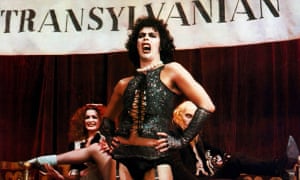
The Rocky Horror Picture Show: ‘I got out of bed and taught the Poles the Hokey Cokey and the Time Warp.’


The Rocky Horror Picture Show: ‘I got out of bed and taught the Poles the Hokey Cokey and the Time Warp.’
Photograph: Allstar/20TH CENTURY FOX/Sportsphoto Ltd./Allstar

There are places in the world where we just fit and our skill set is appreciated. For me that was Poland in 1991. It had just emerged from behind the iron curtain. British pop was revered. I taught English by showing tapes of the BBC series The Rock ‘n’ Roll Years. MTV Europe was pumped in. One girl, transfixed by Paula Abdul’s hit Rush Rush, would dance vigorously, intensely, to it every night. This was a place I could understand. One student asked me to transcribe the song Why? by Bronski Beat. I did it word for word. I was useful. I was having a great time. We partied every night. We had Polish vodka with a buffalo label and a piece of long grass in it. I got drunk. I got very drunk.


I hit my head. I blacked out. I started to die. Yeah, the joke was on me. Finally I’d found a place I could vaguely cope with (there had been panic attacks that Mort had fended off) and now I was definitely dying.


An ambulance that resembled a converted Volvo estate came to pick me up. I made my verbal will, told Mort she could have my vinyl, and went to hospital.


There wasn’t much of a wait at Polish casualty. There were three other people and some bats fluttering merrily in the corner. I don’t think the bats were there for treatment. I remember thinking they probably had rabies though. If brain damage didn’t get me, incurable diseases would. A doctor who looked like a cross between Clark Gable and Gomez from The Addams Family appeared with perfect English. He was snarky yet sweet – an adorable combination. He examined me thoroughly, suggested possible mild concussion, told me to lay off the booze and prescribed bed rest for a few days. I went back to the school to die. I knew he was wrong.


As every minute passed and I remained conscious, a strange, new concept entered my mind. Perhaps I wasn’t going to die and my brain was wrong. Perhaps the next time my head did decide to go into red-alert mode I could remind it of this moment – of the moment I didn’t die in Poland.


‘Back home in Britain, Bryan Adams was still No1, but the world had changed entirely. I had not died.’


‘Back home in Britain, Bryan Adams was still No1, but the world had changed entirely. I had not died.’ Photograph: Sinead Lynch/AFP

I got out of bed and taught the Poles the Hokey Cokey and the Time Warp. They taught me exquisite folk dances. Eventually it was time to leave. One of my students gave me a one zloty coin. At the time there were 18,600 zlotys to the pound. It literally had no economic worth but she told me it was lucky and she wouldn’t forget what I’d taught her (mainly song lyrics).


Back home in Britain, Bryan Adams was still No1, but the world had changed entirely. I had not died. I had managed to do something good. For the first time ever, anxiety had not won. I walked to Morrisons in bare feet. I hadn’t spoken to my mum in weeks. You had to book an international phone call in Poland in those days. My mum looked almost pleased to see me. Things would definitely never be the same again.


Nearly 26 years later there is a one Zloty 1990 coin on a bracelet that is permanently around my wrist. It reminds me of three things – of a best friend who has always understood, of the kindness of strangers who saw me at my worst and tried to help and of the first time I truly told my brain it was talking utter bollocks.


Rae Earl’s latest book, #Help: My Cat’s a Vlogging Superstar, is published in March


A moment that changed me: last night a Polish DJ saved my life | Rae Earl

20 Ocak 2017 Cuma

A moment that changed me: holding the newborn baby I never thought I’d have | David Akinsanya

I never thought I would become a father. I grew up in care and as far back as I can remember I had issues with my sexuality. By the time I was in my 20s I had accepted that I was gay, even though I’d had a couple of heterosexual flings. Over the years, through my work as a mentor and as a foster carer, I met a number of youngsters whom I took care of and some of whom called me Dad. But I’d always wanted to have my own child too.


I met the mother of my child through work. I was delivering health and well-being workshops, and she wanted to talk about the possibility of fostering. We became friends: unbeknown to me pretty early on she decided that I was the ideal candidate to father her child. P was a heterosexual, professional woman in her early 30s. She had always wanted to have a child with a gay man – and someone who really wanted to be a father.


We went ahead without professional advice, gleaning what we could from the internet. For the initial few attempts I produced sperm in east London and took it over to west London. Soon we decided it was best to be in the same place. It was embarrassing to do this in someone else’s home but she blasted a TV programme while I got on with it, which helped. Then a simple syringe was used to insert the sperm.


It took only two attempts like this before we conceived. I remember exactly where I was when I got the news. I was driving, and picked up my phone on hands-free when P told me to pull over. She was pregnant. Sadly, at the 12-week scan we discovered the baby had died. This was one of the saddest days I’d had – to get this far, and for it to end so suddenly. I was comforted by friends who’d had miscarriages and I did consider that maybe it wasn’t to be. The miscarriage wasn’t straightforward, and all I could do was empathise with P. She decided she wanted to try again as soon as possible so we did, and the second attempt was successful.


After the miscarriage it was difficult to accept we were pregnant and there was a lot of worry all the way through the pregnancy. Pregnancy can be an odd thing for men to get their heads around, and it was even stranger for me as I was not in a relationship with the mother. I didn’t see her every day and it was hard for me to be emotionally supportive just through the odd phone call and weekly meet-up.


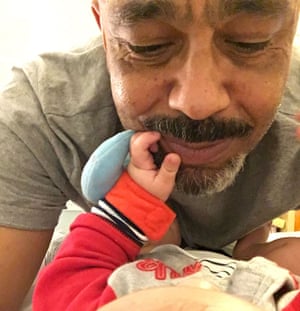
David Akinsanya with his son


‘I’d never felt like this about anyone before – even myself.’ Photograph: David Akinsanya

We did have a minor hiccup during pregnancy where we spent a few days not talking. It was my fault: I was angry about some of the pregnancy purchases and treatments, which I thought were unnecessary and costly. P suggested counselling, so we went to eight sessions, learning how to express our concerns, how to listen to really hear each other and say what we mean.


But none of this really felt real to me until the day my son was placed on to my bare chest by his mother’s birthing partner. I was unable to be in the room during the birth as had been arranged in advance. P was supported by her friend who acted as her birthing partner and had three children of her own. Yes, I felt guilty and lots of my mates who were fathers told me how amazing it was to be present. But I am extremely squeamish and hate blood, pain and hearing people struggle. As it happened, our son was eventually delivered by caesarean section so P was in surgery while I spent my first moments with this child we had made.


It was such an emotional experience for me that I couldn’t stop crying. I was crying for the younger me who was abandoned by my parents into the care system; I was crying for every time I was rejected by foster parents as a child needing a family home; I was crying for all the young people I know who had failed because of a lack of love in their lives. Thankfully, P understood and allowed me to just sit with our little man with tears streaming down my face. These were good tears, healing tears. It felt like my brain was rewiring to allow me to love my son unconditionally.


As I sat alone with my son, this brand new little life in my arms, my life changed. That’s why I cried. I thought about whether I had loved anyone unconditionally before him and the answer was no. I’d never felt like this about anyone before – even myself. I felt an overwhelming sense that this person needed me and will love me back if I do things correctly.


I used to have a cavalier attitude to life. I’d let my career slip as I wasn’t that bothered about taking care of myself after my father died. Now I had someone to work for, someone to impress, someone to think about all the time. After all the rejection and hurt of my past, through my son I finally felt like I had a family of my own.


A moment that changed me: holding the newborn baby I never thought I’d have | David Akinsanya

16 Aralık 2016 Cuma

A moment that changed me: a teacher’s acceptance of my silence | Phoebe-Jane Boyd

Selective mutism wasn’t a diagnosis in common usage among teachers back in the 1980s when I started school; at least, no one ever used the phrase around me. I didn’t hear it until I was an adult, when suddenly it gave a name to “the thing that stopped me speaking for around 25 years of my life”.


It certainly doesn’t feel selective if you’re stuck in it. As described on the website ispeak, selective mutism (SM) is “a severe situational anxiety disorder … [which] generally starts in early childhood but can, if not treated early enough, continue into adulthood. Children and adults with SM are often fully capable of speaking … but cannot speak in certain situations because they are phobic of initiating speech.”


I was just a quiet kid at first – very shy, very jumpy – and I can’t remember exactly why that turned into just not talking any more. There often isn’t a specific reason SM children stop talking; it just happens. I stopped on one of my first days at school, when I mimed colouring a finished picture with a crayon for about an hour, because I couldn’t make myself speak to the teacher. The pretense continued until she realised that no child takes that long to perfect a daffodil.


Physically, I was able to talk. I was fine speaking to my family at home, as soon as the front door closed, but life away from those safe spaces became almost silent, and silent kids who stare wide-eyed at the floor just creep people out after a while. Especially teachers. “She’s very shy” turned into “She won’t answer me”. “She’ll certainly never go to university” in year 2 became “She frequently has a pained expression and does not communicate” in year 5.


Phoebe-Jane Boyd with her family.

‘Selective mutism a lot like being frightened all the time and waiting for the next bad thing to happen that you won’t be able to stop.’ Phoebe-Jane Boyd (centre) with her brother David and sister Tammy.

The problem was, as one of those kids that cared deeply about what adults thought of them, and genuinely valued good behaviour, not speaking was an Ironman challenge of self-destruction. Whenever a new adult with a wavering smile waited expectantly for me to answer them, I’d be torturing myself: “I need to answer her now – I have to, because she’s so uncomfortable, she’s worried. Stay still and she’ll leave.”


It’s difficult to explain the feeling of selective mutism to someone who’s never been trapped in it. It’s a lot like being frightened all the time and waiting for the next bad thing to happen that you won’t be able to stop. It’s not being able to force a decent voice out, even when you desperately try – a tiny whisper will emerge instead, and it hurts. For the kids at school it meant they could press their forearm against my throat in a hallway between classes if they were having a bad day, and it would be OK; they knew I’d just freeze and wait it out. Yelling, punching, stealing, touching – I’d hear my name being whispered as I went to classes, contorting me into a seven-hour school day cringe, adrenaline always raging.


Teacher after teacher would take me aside to gently ask if there were problems at home, did I get on with my parents, had anything changed recently? I’d fume, inside: “You just watched the class dipshit bounce my head off a wall because he doesn’t understand what you’re teaching him, and you’re asking me if the problem is at home?” What would struggle out was a hoarse “No” and I’d mentally file the teacher away as an idiot. Every year, every subject: “Phoebe works hard but never asks for help”, “Must try to discuss ideas more freely”, “If she were not so shy … ”


On a year 10 parent night schedule, I angrily scrawled this note for my mum: “I hate oral work, tell him to be more gentle on me when we do it! Tell him what we did with The Merchant of Venice was stupid and pointless! I get really upset and worried about performing in front of the class! Please tell him!” But teachers are there to prepare you for the world, not protect you by letting you skip reciting Shylock when it’s your turn. The message they’d instilled in me about what would happen outside, after school, had sunk in deep: I was not OK. Until I received a different message, at 17, from my English literature teacher, Mr Pearman.


He had a blank face that showed no concern about whether his classes were taking in the lesson or not. He’d calmly insult kids he didn’t like with words he knew they wouldn’t understand, and enjoy the confused look he’d get back. He told us, while turning on the overhead projector and leaving it empty, about a fun game he liked to play of turning the projector on with nothing on it to see how long the class would stare stupidly at the wall.


“I hear your other teachers saying you don’t talk,” he told me one day, after I’d been in his class a few weeks. “It’s not a problem. I’ve read your work – it’s good. So, it doesn’t matter to me what you say or don’t. You don’t worry me.” He shrugged, and calmly gazed at me; quiet.


Thank you. “Thank you, thank you,” I whispered quickly, mind whirring: “How can I sum everything up to him – he knows already though, doesn’t he? But I want to tell him. I can’t, but I want to do that for him.”


I couldn’t yet. But that was the start.


A moment that changed me: a teacher’s acceptance of my silence | Phoebe-Jane Boyd